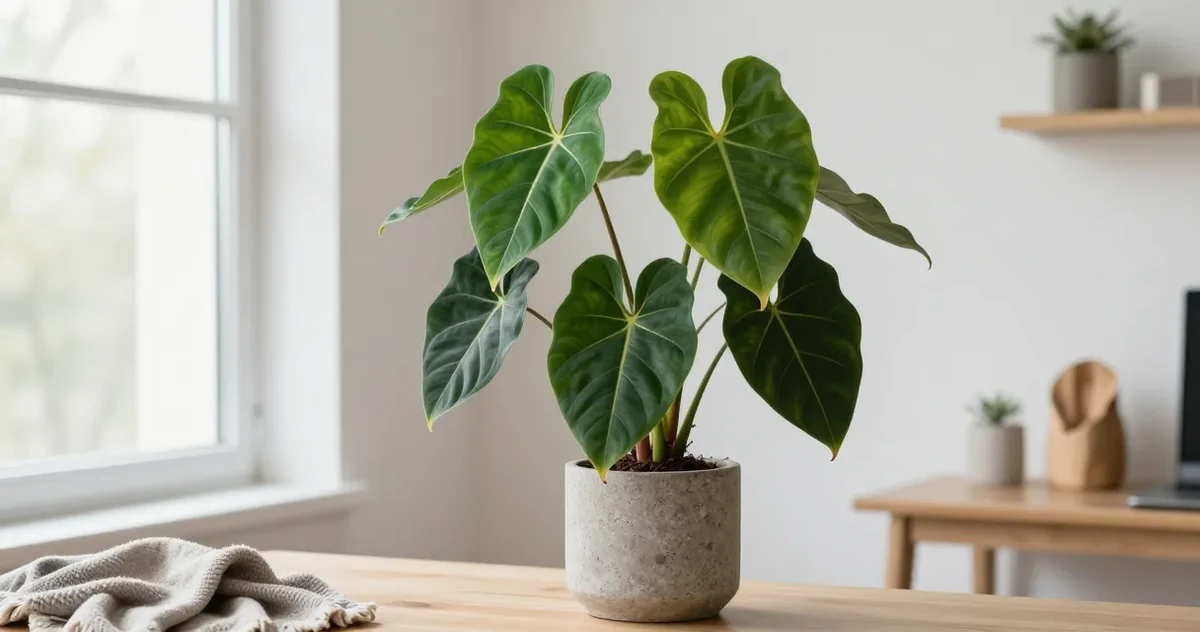
If you’ve ever stood in a garden center staring at a shelf of philodendrons – heart-shaped leaves, velvet leaves, big split leaves, some trailing, some bushy – and thought I have no idea which one I actually want, you’re in very good company. Philodendron types vary so dramatically that two plants with the same name on the tag can look nothing alike once they mature.
The clearest way to think about it before you pick anything: philodendrons divide into two main growth habits – trailing or climbing types, and self-heading types. One group wants to vine along a surface or hang from a basket; the other sits upright without any support. That single distinction shapes where the plant can live, whether it needs a pole, and how much space it will eventually claim.
Quick Pick: Fastest Answer Before the Full Guide
Not everyone needs the deep dive. If you have a spot in mind and want a direct recommendation:
| Your situation | Best first pick |
|---|---|
| Shelf or hanging basket, any light level | Heartleaf philodendron – most forgiving, trails or climbs |
| Shelf with decent light, want color | Philodendron Brasil – variegated but easier than most |
| Floor corner, medium-sized room | Xanadu – compact, self-heading, no pole needed |
| Floor corner, large bright space | Tree philodendron – dramatic, but read the size warning below |
| Want something unusual, patient grower | Pink Princess – slow and needs bright light; read the caveats below |
| “What kind of plant do I even have?” | Jump to the pothos vs. philodendron field guide |
For everyone else, the full guide covers the identification traps, the trailing vs. self-heading breakdown, care difficulty comparisons, and a step-by-step way to narrow your choice.
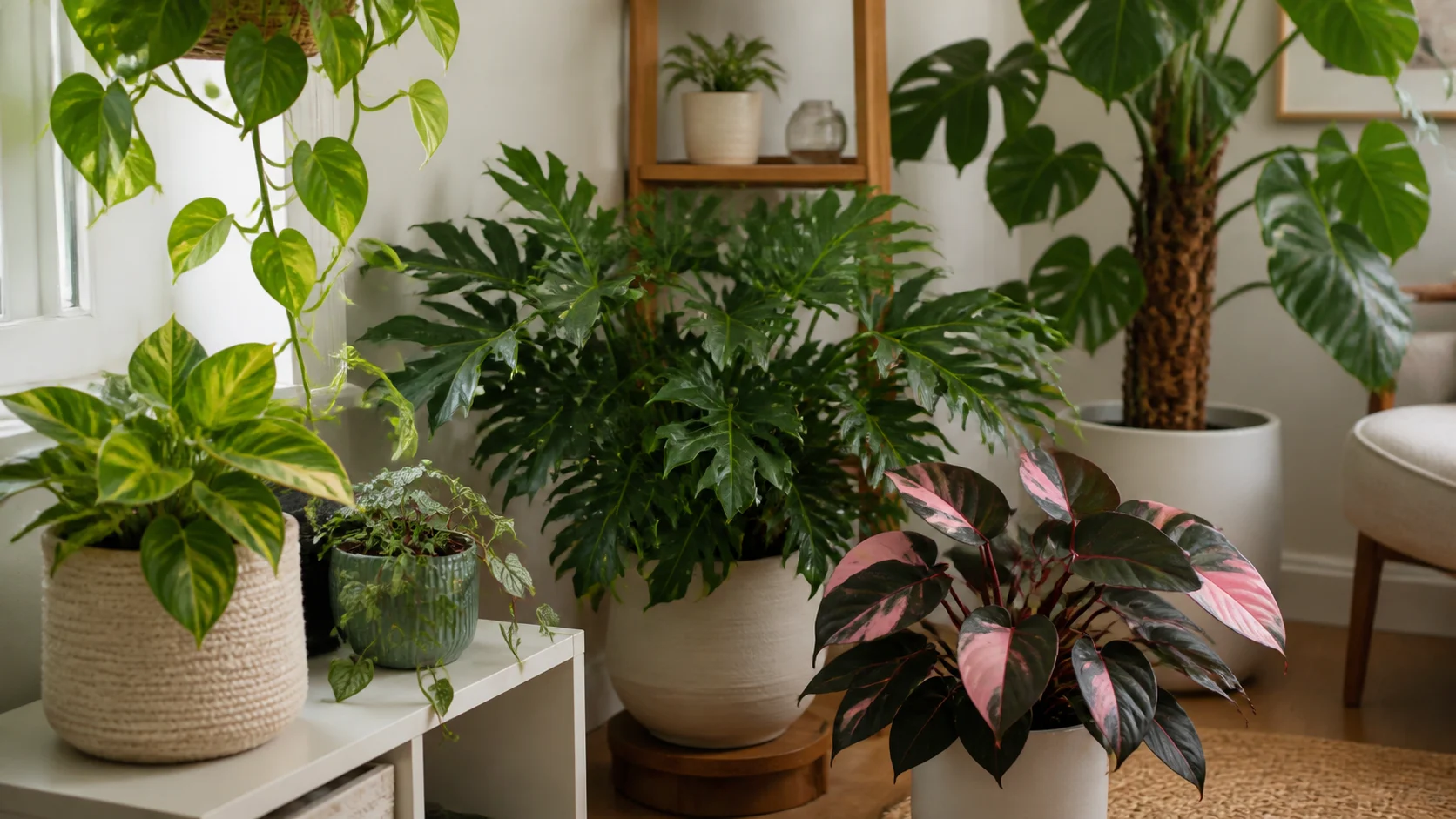
Trailing, variegated, compact, and statement philodendrons each fit a different light level and room position.
Identification Snapshot
Use this quick snapshot before you buy or relabel a mystery philodendron at home:
- Trailing or climbing philodendron: thin vines, spaced nodes, and leaves that stay smaller unless the plant climbs a pole or board.
- Self-heading philodendron: upright, mounding growth from a central base with no need for a pole, even as the plant matures.
- Heartleaf types: smooth petiole, heart-shaped leaves, and a papery cataphyll where new leaves emerge.
- Large floor types: lobed leaves plus a much wider mature footprint, which matters more than the nursery pot size suggests.
- Juvenile vs mature leaves: if the growth habit matches, a change in leaf size or shape is usually maturity, not a wrong ID.
Lookalikes and Confused-With Cases
| Plant mix-up | Why it happens | Quick way to separate them |
|---|---|---|
| Heartleaf philodendron vs golden pothos | Same shelf, same trailing habit, similar green leaves | Pothos petioles have a groove or channel; heartleaf philodendron petioles stay smooth and round |
| Heartleaf philodendron vs scindapsus | Both are sold as trailing foliage plants for shelves | Scindapsus leaves are thicker and more silvery; heartleaf leaves are thinner and usually more matte |
| Xanadu vs tree philodendron | Both are upright and deeply lobed | Xanadu stays denser and more compact; tree philodendron eventually needs real floor space |
| Juvenile climbing philodendron vs mature specimen photos | Leaf size and shape change dramatically with age | Use growth habit and support needs first, not just leaf shape |
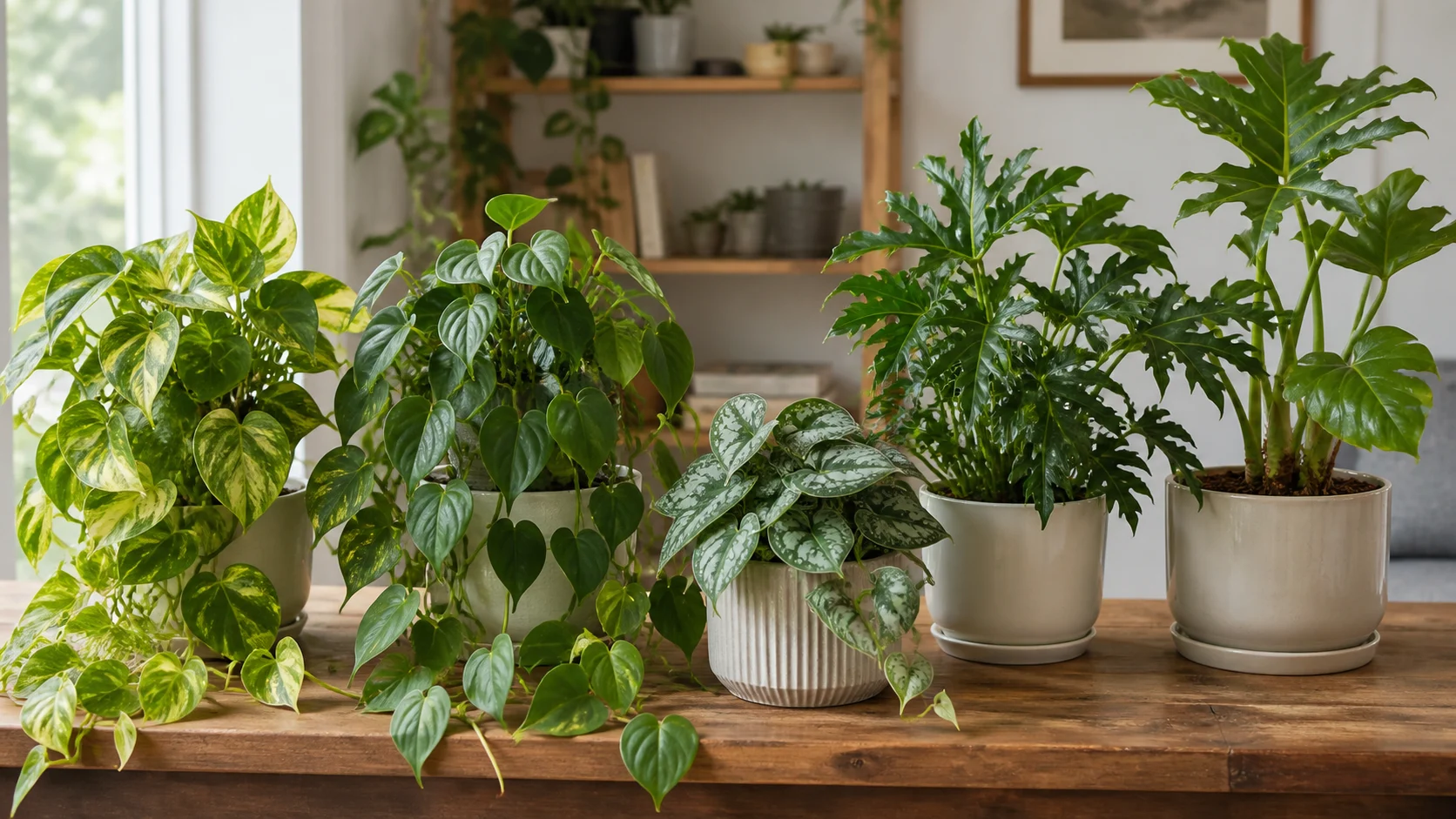
Comparing pothos, heartleaf philodendron, scindapsus, and lobed self-heading plants side by side makes their growth and leaf differences easier to spot.
Care Cards
| Care card | Best baseline | What to watch for |
|---|---|---|
| Light | Bright indirect light for most types; heartleaf handles the lowest light of the group | Faded variegation, tiny new leaves, or stretched vines usually mean the spot is too dim |
| Support | Pole or trellis for climbing types if you want larger mature leaves | A trailing plant with no support stays juvenile-looking even when otherwise healthy |
| Water | Let the mix dry slightly between waterings, then water thoroughly | Constantly wet soil causes yellowing and stalled growth faster than a missed watering |
| Space | Match mature footprint to the room before you buy | Tree philodendron and other large self-heading types outgrow shelves quickly |
| Pet safety | Keep every philodendron variety away from chewing pets | All common indoor philodendrons are toxic to cats and dogs |
Not sure what plant you are caring for?
Open KnowYourPlant, snap a photo, and get the plant name plus care notes matched to the species in front of you.
Identify your plantWhat Most Philodendron Guides Miss
Most philodendron roundups list cultivar names, attach a care blurb, and move on. That format works if you already know what you’re looking for – but it skips the identification problem that catches beginners repeatedly.
The common misdiagnosis: you bring home a heartleaf philodendron, it pushes new growth, and the new leaves look nothing like what it came with. They’re bigger, more deeply colored, differently proportioned. You wonder if you were sold the wrong plant or if something is wrong with it.
It’s neither. Philodendrons produce juvenile leaves in nursery conditions and progressively larger, more mature-form leaves as the plant establishes. According to UF/IFAS (University of Florida Institute of Food and Agricultural Sciences), philodendron identification is complicated by significant differences between juvenile and adult leaf forms, as well as the large number of commercial hybrids in circulation. A heartleaf philodendron at one year and at five years can genuinely look like two separate species. This is where a huge share of “is this even a philodendron?” questions comes from – people compare the young plant they brought home to a photo of a mature specimen and assume something went wrong.
Why generic care advice makes this worse: most care guides and retail labels use photos of mature, established plants. Juvenile plants in nursery conditions look distinctly different. If you’re using leaf shape as your ID anchor, that anchor shifts as the plant matures.
The practical first check: use growth habit as your planning anchor, not leaf shape. Trailing, climbing, or self-heading – the growth habit stays consistent from juvenile to adult even when leaf shape changes dramatically. That’s the most reliable thing to identify at purchase, and it’s the thing most guides skip in favor of listing cultivar names.
The pothos and heartleaf confusion compounds this. At the store, they often sit on the same shelf with similar tags. The fastest diagnostic check is the petiole: run your finger along the stem connecting the leaf to the main vine. If there’s a groove or channel you can feel, it’s pothos. No groove, with a small papery sheath where the leaf meets the stem: heartleaf philodendron. That tactile check takes about three seconds. For the full species-level comparison, the pothos vs. philodendron guide covers where care actually differs between the two.
Want a care schedule you do not have to remember?
KnowYourPlant sends watering, feeding, repotting, and seasonal reminders based on the plants you actually own.
Get care remindersThe Two Groups That Actually Matter
Trailing and Climbing Philodendrons
These are the ones that vine. Leave them in a hanging basket and they’ll trail downward; give them a moss pole or coco coir pole and they’ll climb upward, producing progressively larger leaves as they go.
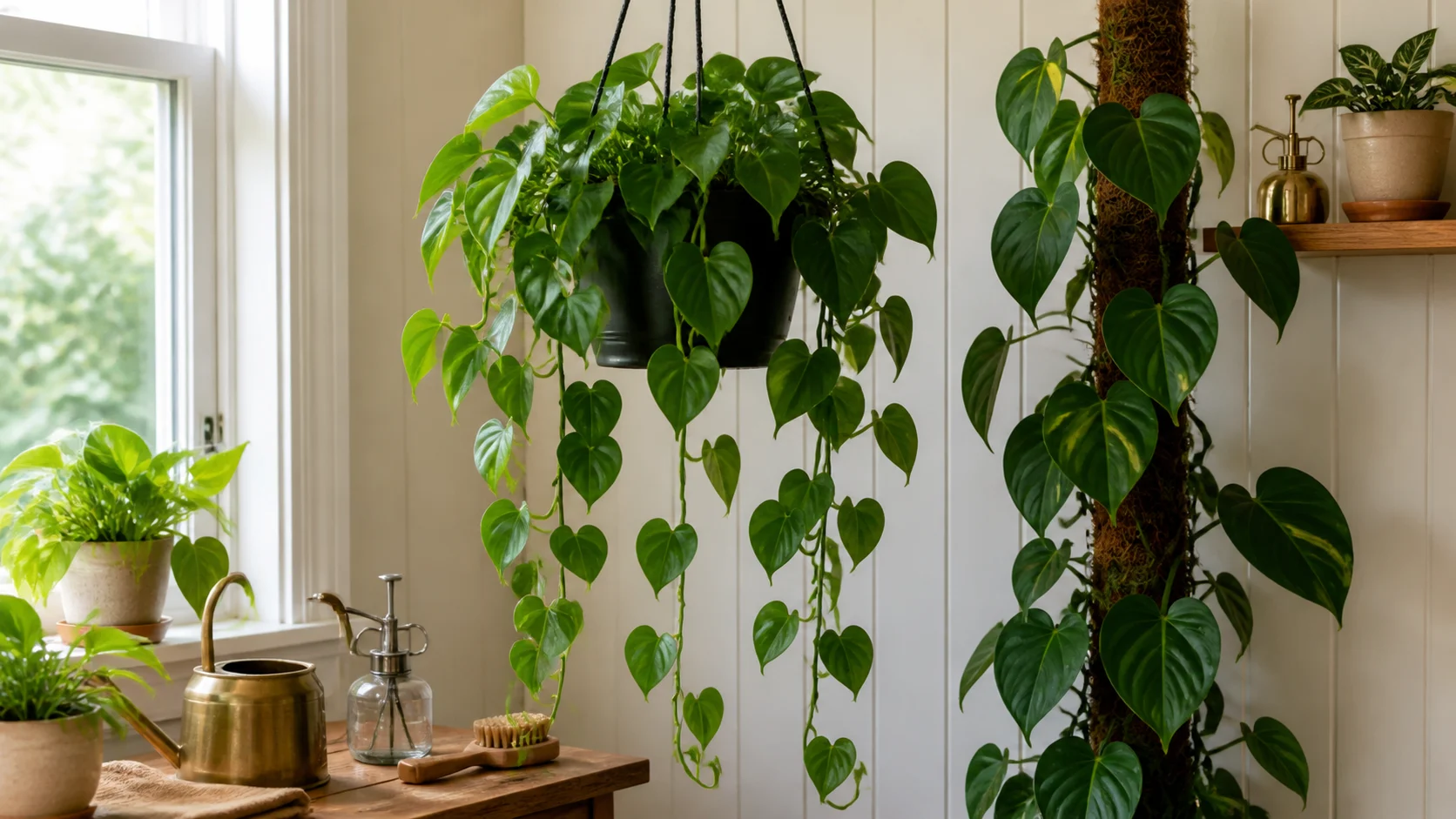
The same vining habit can cascade from a basket or climb a coir pole, where supported growth develops larger leaves.
Heartleaf philodendron (Philodendron hederaceum) is the classic, easiest to find, and the most forgiving of the group. NC State Extension describes heartleaf philodendron as capable of tolerating lower-light conditions where many houseplants would struggle, though growth slows noticeably without a brighter spot. One thing new owners notice and sometimes mistake for a problem: each new leaf arrives enclosed in a small papery sheath called a cataphyll. That sheath dries and browns after the leaf fully opens and stays attached to the stem. It’s structural, not disease – leave it alone.
Philodendron Brasil has the same trailing and climbing habit as heartleaf but with green-and-yellow variegation that needs more light to stay vivid. In too little light, the variegation fades toward plain green – and the new leaves also come out smaller than they should. Moving Brasil to a brighter spot stops the slide; staying in a dim corner means losing what makes it worth growing. The Philodendron Brasil care guide covers what light level actually maintains the pattern without bleaching it out.
Philodendron Micans has velvety, iridescent leaves in a bronze-green that catches light differently depending on the angle. The velvet quality comes from the leaf surface structure and dulls when leaves collect dust or get repeatedly misted. Wiping the leaves gently with a slightly damp cloth brings the sheen back quickly. Micans is slightly more sensitive to dry air than heartleaf, which can cause the leaf edges to brown if humidity in your home is consistently low.
Philodendron Pink Princess is a slow-growing climber with pink variegation that requires bright indirect light to hold its color. The pink sections lack chlorophyll, which means the plant produces energy more slowly and grows at a noticeably slower pace than its all-green relatives. In anything less than bright indirect light, the pink variegation begins reverting toward green – and this can happen within six to eight weeks in the wrong spot. Once a leaf reverts, it doesn’t recover; the approach is to prune back to a node that still shows pink and grow forward from there. The Philodendron Pink Princess care guide explains what to do when the variegation starts shifting.
Avoid Pink Princess if: your brightest spot is more than a few feet from a window, you’re a newer plant owner who gets discouraged by slow progress, or you want something that looks impressive quickly. Brasil delivers similar visual interest with far less maintenance pressure.
For trailing types, a hanging basket works well if you want a cascading effect and are happy with smaller, juvenile-form leaves. A moss pole helps climbing types develop bigger, more mature-looking leaves over time – but it’s not required if you prefer the trailing form. If your brightest spot still isn’t bright enough for variegated types, the grow lights for indoor plants guide covers which spectrum and intensity actually helps philodendrons without burning the leaves.
Self-Heading Philodendrons
Self-heading types don’t trail or vine. They grow outward from a central stem in a rosette or mounding pattern – more like a compact shrub than a climbing plant. These are the ones for people who want a philodendron on the floor or a wide shelf without anything attached to a wall or pole.
Philodendron Xanadu (Philodendron xanadu) has deeply lobed, compact leaves and a tidy mounding shape that stays relatively contained. NC State Extension describes Xanadu as preferring bright indirect light indoors and maintaining its dense self-heading form without any support – a practical choice for growers who want structure and visual interest without a pole. One maintenance detail that matters: as Xanadu matures, outer leaves yellow and die as the plant directs energy to new growth. If you remove those dying leaves when they’re about half-yellow – before they collapse completely – the base of the plant stays cleaner. Waiting until they’re fully dead leaves mushy residue against the stem.
Tree philodendron (Philodendron bipinnatifidum, sometimes sold as Thaumatophyllum bipinnatifidum or “split-leaf philodendron”) is large, dramatic, and capable of becoming very wide indoors. NC State Extension describes it as an upright evergreen shrub that can become very large with age, preferring higher light than trailing heartleaf types. It suits floor space in a bright corner – not shelves.
The tree philodendron is the one that surprises new owners most. It looks manageable in a four-inch nursery pot. Give it two years and decent light and it can spread four to six feet wide, with individual leaves that reach two feet across. The root system also becomes aggressive once the plant is established – roots will push through drainage holes and can crack clay saucers within a couple of growing seasons if you don’t repot before they reach that point. Checking the pot bottom once a year and repotting at first signs of root escape prevents that from becoming a bigger problem.
Avoid tree philodendron if: your room has limited floor space, your light situation is average or worse, or you’re expecting something you can keep contained. If you want the large-leaf, self-heading look in a more manageable footprint, Xanadu fits most homes better.
Save this plant plan before you forget the details.
Keep the plant, diagnosis notes, reminders, and care changes in KnowYourPlant so the next decision is based on your actual plant history.
Open KnowYourPlantBeginner Scorecard: Choosing by Situation
| Philodendron Type | Best Placement | Expected Mature Size | Moss Pole Needed | Beginner-Friendly | Tolerates Lower Light |
|---|---|---|---|---|---|
| Heartleaf | Shelf, hanging basket | 3–6 ft trailing | Optional | Yes | Yes |
| Brasil | Shelf, hanging basket | 3–6 ft trailing | Optional | Yes (needs brighter for color) | Partial |
| Micans | Shelf, hanging basket | 3–5 ft trailing | Optional | Intermediate | Partial |
| Pink Princess | Wall mount, pole | 2–4 ft trailing | Helpful | No – needs bright light and patience | No |
| Xanadu | Floor, wide shelf | 2–4 ft wide | No | Yes | Partial |
| Tree philodendron | Floor corner only | 4–8 ft wide | No | No – outgrows most rooms | No |
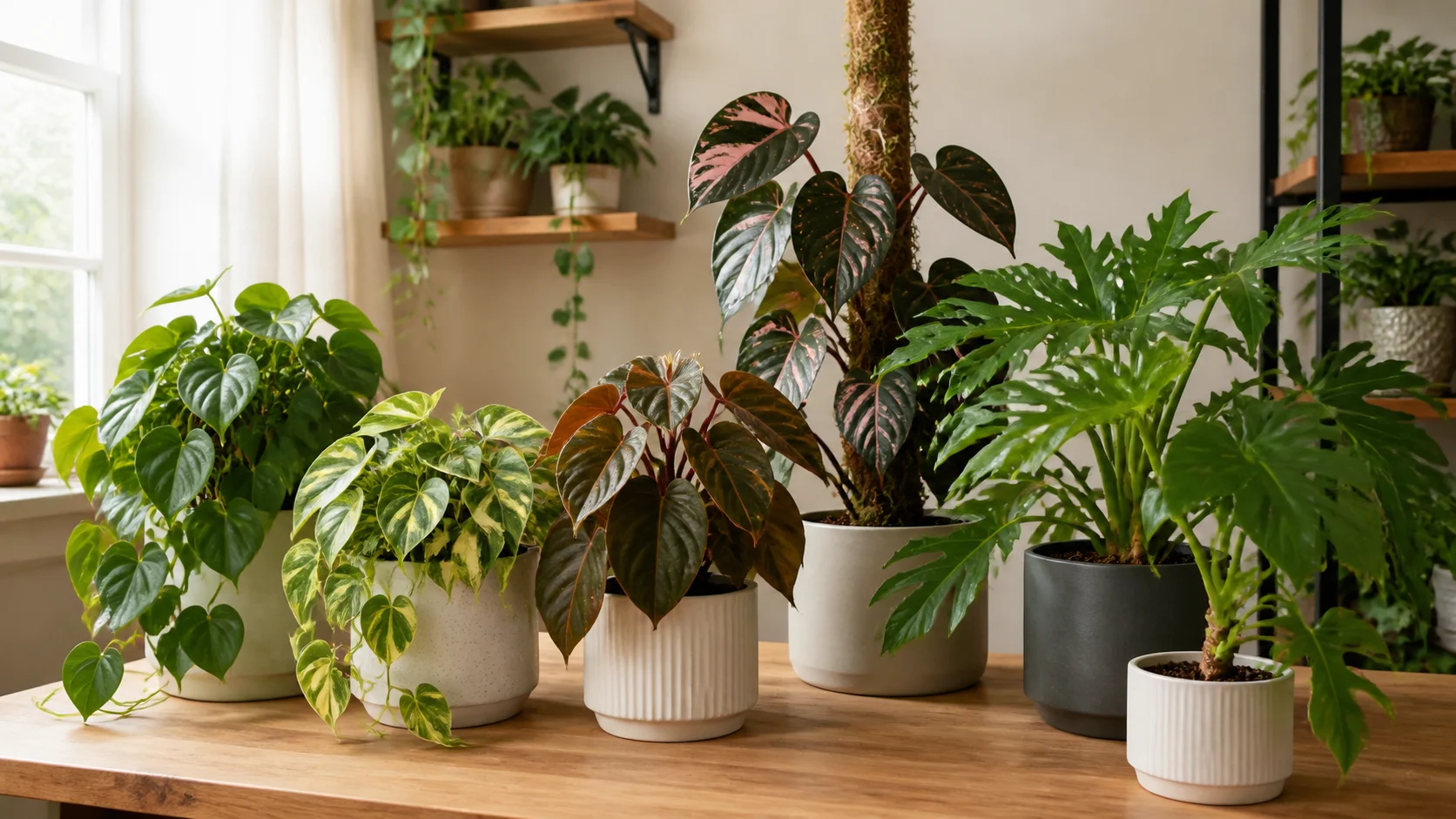
Growth habit, support needs, mature footprint, and available light matter more than choosing a philodendron by color alone.
What to Think About Before You Choose
Four questions will narrow it down faster than any cultivar comparison:
Where is it going? A shelf or hanging hook calls for a trailing type. A floor corner or wide surface calls for a self-heading type. Trying to keep a tree philodendron on a shelf is a losing battle – it will outgrow the space in one to two growing seasons.
How much light does that spot actually get? Heartleaf and Brasil are the most forgiving in lower indirect light. Xanadu and Pink Princess need brighter indirect light to stay healthy. Tree philodendron needs consistent brightness near a window and produces increasingly small leaves until it finds more light.
Do you want to maintain a pole or trellis? Climbing types look their best with support and reward the effort with bigger, more dramatic leaves. If you don’t want to fuss with a moss pole, choose a self-heading variety – they don’t use poles and won’t climb even if you offer one.
Do you have pets? The ASPCA lists philodendrons as toxic to both cats and dogs, with insoluble calcium oxalate crystals present throughout the genus. This applies to every variety in this guide, trailing and self-heading alike. If that’s a concern, the cat-safe indoor plants guide lists alternatives that are safer to keep within reach.
Common First-Time Mistakes, by Variety
These are the specific surprises that catch plant owners off guard – not general care tips, but the patterns that come up most consistently with each type.
Heartleaf: New owners sometimes mistake the dried cataphyll (the papery sheath left after a new leaf fully opens) for disease or damage. It browns and stays attached to the stem near the leaf joint. It’s structural – part of how the plant protects emerging leaves – and not a problem. Leave it alone.
Brasil: The instinct when bringing variegated plants home is to keep them in a “safe” lower-light spot. Brasil’s variegation fades in low light within a few weeks, and new leaves also come out smaller and less patterned than older ones. If you bought Brasil for the look, it needs more light than heartleaf, not less.
Micans: The velvet texture that looks striking at the store dulls when leaves accumulate dust or get repeatedly misted. Misting doesn’t clean them – it leaves residue. Wipe the leaves gently with a slightly damp cloth instead. The sheen comes back.
Pink Princess: Variegation reverts faster than most owners expect – sometimes within six to eight weeks if the light isn’t sufficient. The instinct is to wait and see if it stabilizes. A better response: as soon as new leaves are coming in mostly green, move the plant to a brighter spot immediately. The sooner you act, the less variegation you lose before conditions improve.
Xanadu: Outer leaves yellow and die as the plant matures – this is normal renewal, not a problem. If you leave dying leaves attached until they collapse completely, they can go mushy at the base and create conditions for rot where they meet the stem. Pull them cleanly when they’re about halfway yellow, before they soften.
Tree philodendron: The most consistent mistake is underestimating the root system’s reach. Once established, the roots push through any drainage hole available and can crack clay saucers if they’re ignored. Checking the pot bottom once a year and repotting at the first sign of roots coming through prevents this from becoming a bigger disruption.
Common Problems and Symptom-First Troubleshooting
Small new leaves on a climbing type: usually a support or light problem, not a fertilizer shortage. A heartleaf or Brasil left trailing in dim light keeps producing juvenile leaves. Brighter indirect light and a pole change that faster than feeding does.
Variegation fading on Brasil or Pink Princess: the plant is usually not getting enough light to maintain the patterned tissue. Move it closer to a bright window before the new growth turns mostly green.
Yellow leaves with damp soil: check drainage first. Philodendrons tolerate a late watering better than roots sitting wet for days inside a decorative outer pot.
Leggy vines with long gaps between leaves: classic low-light stretch. Pruning alone will not fix it unless the plant also moves closer to the window.
Self-heading philodendron taking over the room: not a health issue, just a mature-size issue that was easy to underestimate in the nursery pot. Divide the space question from the care question before you blame yourself for bad growing.
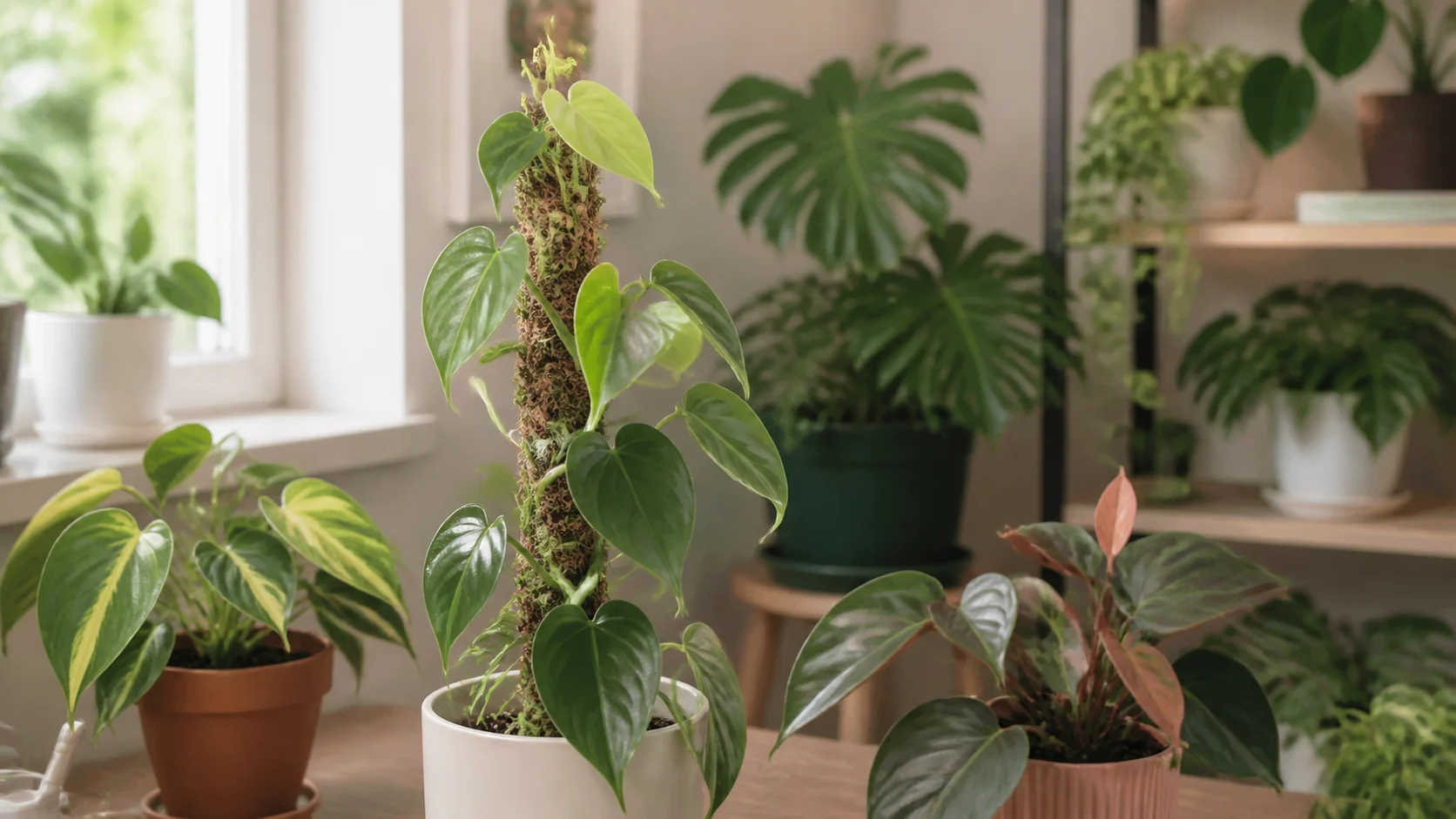
Small climbing leaves, fading variegation, and an oversized self-heading plant point first to light, support, and space rather than fertilizer.
Plant ID + Plant Doctor
Not sure what your plant needs?
Snap a photo in KnowYourPlant to identify the plant, check yellow leaves, spots, wilting, or pests, and get a calm next step before the problem spreads.
The Pothos Confusion: A Quick Field Guide
Since pothos and heartleaf philodendron come up together so often, here’s the fastest way to tell them apart at the store or at home:
| Feature | Heartleaf Philodendron | Golden Pothos |
|---|---|---|
| Petiole | Round, no groove | Has a distinct channel or groove |
| Leaf base | Symmetrical heart shape | Often slightly asymmetrical |
| New leaf sheath | Visible cataphyll present | No cataphyll |
| Leaf texture | Thin, matte finish | Slightly thicker, often shinier |
The petiole check is the fastest. Run your finger along the stem connecting the leaf to the vine. A groove or channel you can feel: pothos. Smooth and round with a small papery sheath at the leaf joint: heartleaf philodendron.
Neither is better than the other – they’re different plants with genuinely similar care needs. If you already have a pothos and love how easy it is, a heartleaf philodendron will feel familiar. If you want something with a sculptural climbing form that develops larger leaves over time on a pole, heartleaf delivers that in a way pothos doesn’t quite match.
The Short Version: How to Choose
The decision sequence that works for most buyers:
- Choose your growth habit first. Trailing vine for shelves and baskets; self-heading mound for floors and corners. This filters out half the options before you read a single care tip.
- Match your light level honestly. Heartleaf tolerates lower indirect light. Everything else – especially Pink Princess and tree philodendron – needs more. Be realistic about what your spot actually gets, not what you wish it got.
- Weigh your maintenance tolerance. Heartleaf and Xanadu forgive imperfect watering and humidity. Micans and Pink Princess are less forgiving when conditions slip. Tree philodendron is patient early on but will eventually demand a very large pot and claim a significant corner of the room.
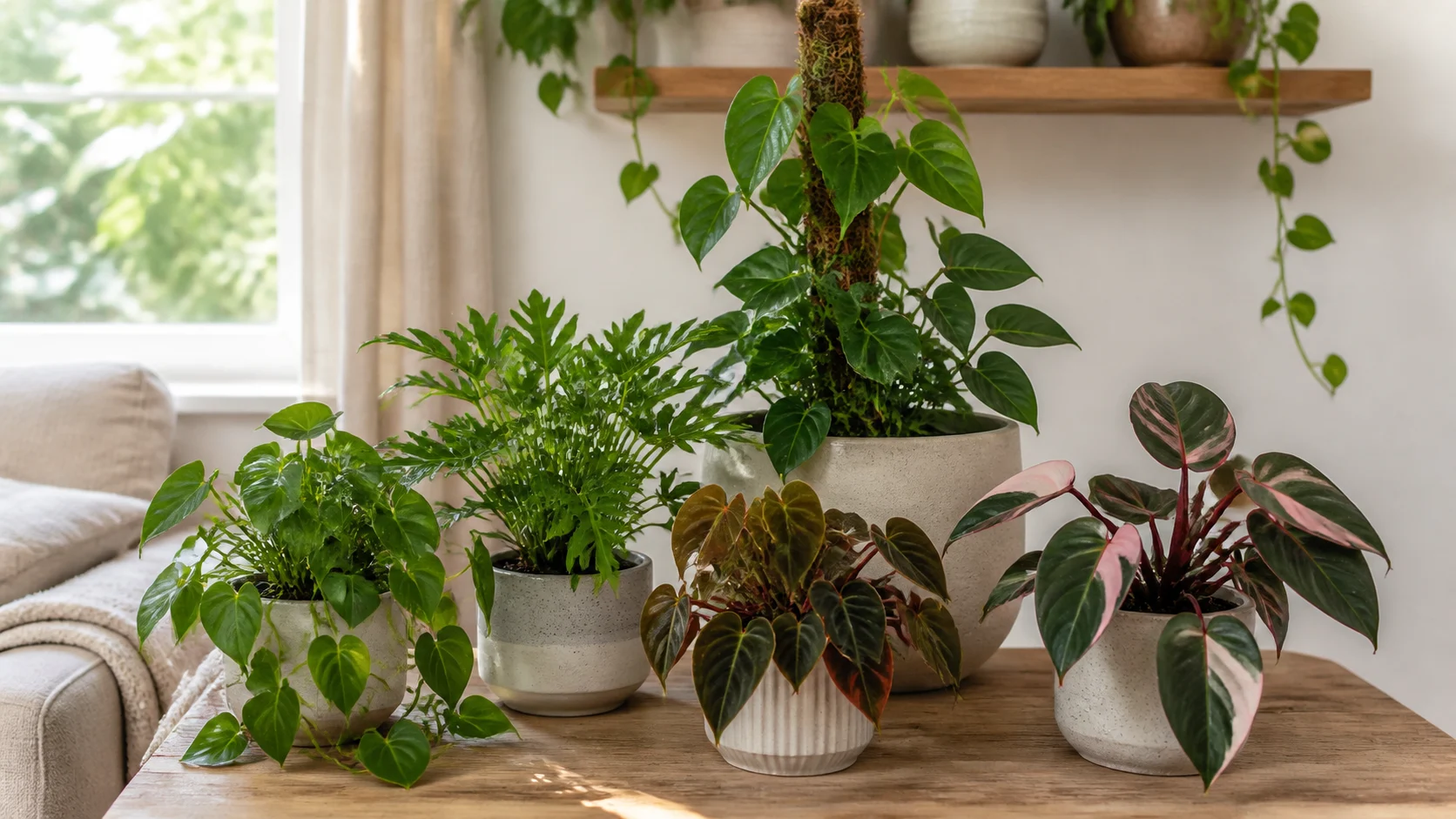
Choose between trailing, climbing, and self-heading philodendrons by matching support, light, and maintenance to the space you actually have.
If you want a trailing plant for a shelf with moderate light: heartleaf. If you want variegation and have a bright window: Brasil over Pink Princess. If you want a floor plant that stays contained: Xanadu. If you have significant floor space and a genuinely bright corner: tree philodendron. Everything else is fine-tuning from there.
More detailed care on the trailing classic: heartleaf philodendron care guide. Once you’ve settled on a type, use the complete philodendron care guide for watering, soil, feeding, and repotting guidance that applies across the genus. For a broader look at tropical houseplants that suit indoor conditions, the best tropical plants for indoors guide is a useful next read.
Real User FAQ
What’s the difference between climbing and self-heading philodendrons?
Climbing philodendrons vine along a surface or hang when unsupported. They produce new leaves on elongated stems and respond well to moss poles or coco poles by developing larger, more mature-looking leaves over time. Self-heading philodendrons grow outward from a central point in a rosette or mounding shape and don’t need any support to hold their form. If you want something on a shelf or in a hanging basket, a climbing type suits that placement. If you want a floor plant that stands on its own, a self-heading type is the more practical choice.
How do I tell heartleaf philodendron apart from pothos at the store?
Run your finger along the petiole – the stem connecting the leaf to the main vine. On pothos, the petiole has a visible groove or channel you can feel with your fingertip. On heartleaf philodendron, the petiole is round without any groove. Also check where the leaf meets the stem: heartleaf philodendron has a small papery cataphyll that dries and stays attached after each new leaf opens, which pothos does not have. According to NC State Extension, these two features – the non-grooved petiole and the visible cataphyll – are the most reliable physical distinguishing marks between the two species.
Which philodendron is best for low light?
Heartleaf philodendron (Philodendron hederaceum) is the most tolerant of lower indirect light among common indoor philodendron types. It will slow down considerably in a low-light spot but rarely drops leaves the way variegated or large-leaf types do. Brasil, Micans, and Xanadu all prefer at least moderate indirect light to stay healthy. Pink Princess and tree philodendron need the brightest spots among the common varieties. None of them thrive in true darkness – “tolerates low light” means away from a direct window, not in a windowless interior room.
Do philodendrons need a moss pole?
Climbing types don’t need a moss pole to survive, but they benefit from one if you want larger, more mature-looking leaves. Without support, a heartleaf philodendron trails and produces smaller, juvenile-form leaves. Give it a moss pole or coco pole to grip, and it will start producing bigger leaves with more defined proportions over time. Self-heading types like Xanadu and tree philodendron don’t use poles at all – they stand on their own by design and won’t climb even if you offer support.
Are philodendrons toxic to cats and dogs?
Yes. The ASPCA lists philodendrons as toxic to both cats and dogs due to insoluble calcium oxalate crystals present throughout the plant. Chewing or ingesting leaves, stems, or roots can cause mouth irritation, drooling, and digestive upset. This applies to the entire genus, including every common indoor variety covered in this guide. If you have curious pets, the cat-safe indoor plants guide lists alternatives that are safer to keep within reach.
How fast do philodendrons grow indoors?
Heartleaf philodendron is one of the faster-growing common houseplants – in a good light spot, it can push several new leaves a month during spring and summer. Brasil and Micans grow at a similar pace. Pink Princess grows noticeably slower because energy goes into maintaining the variegation rather than producing leaf mass quickly. Self-heading types like Xanadu expand gradually, adding a few new lobed leaves each month during the growing season. Tree philodendron grows steadily but its impressive size accumulates over years, not months.
Which philodendron is easiest for beginners?
Heartleaf philodendron is consistently the most forgiving choice for new plant owners. It tolerates lower indirect light, handles slightly irregular watering better than most tropicals, and tends to bounce back quickly when conditions aren’t perfect. Brasil is a close second if you want some visual variety, though it needs a slightly brighter spot to hold its variegation. If you want a self-heading type for a floor corner, Xanadu is a reliable starter that stays compact, doesn’t need a pole, and is more forgiving of imperfect conditions than tree philodendron.
Can I grow a philodendron in a hanging basket?
Yes – climbing and trailing types like heartleaf, Brasil, and Micans all trail naturally without support and work well in a hanging basket. The leaves will stay in a smaller, juvenile form when trailing freely, which suits the cascading look. If you later want larger, more defined leaves, move the plant to a moss pole or wall support and let it climb. Self-heading types like Xanadu don’t work in a hanging basket – they grow outward in a mounding form, not downward.
What’s the difference between tree philodendron and Xanadu?
Both are self-heading types that grow without a support pole, but they differ significantly in mature size and light requirements. Tree philodendron (Philodendron bipinnatifidum) can spread four to eight feet wide indoors and needs consistent brightness near a good window. Xanadu stays much more compact – typically two to four feet wide – and tolerates slightly lower light than tree philodendron. For most apartments or average-sized rooms, Xanadu is the more practical choice. Tree philodendron rewards you with something genuinely dramatic if you have the floor space and the window to match.
My philodendron’s new leaves look different from the older ones – did I get the wrong plant?
Almost certainly not. Philodendrons change leaf shape significantly as they mature. Juvenile leaves in nursery conditions tend to be smaller, simpler in shape, and lighter in color. As the plant grows and its root system establishes, new leaves come in larger, differently proportioned, and often more deeply colored. This is especially pronounced on climbing types given a moss pole – leaves produced higher on the pole can look dramatically different from the original nursery leaves. If the growth habit (trailing/climbing or self-heading) matches what you bought, you have the right plant. The leaf change is maturation, not a problem.
Methodology Note
This guide was refreshed in June 2026 using current search checks for philodendron type and variety queries, plus recurring plant-owner confusion patterns surfaced through public Reddit discussions around pothos mix-ups, self-heading examples, and support choices. Factual care, identification, and pet-safety claims were checked against UF/IFAS, NC State Extension, and ASPCA. Community discussions were used only as qualitative signals about where owners get stuck, not as proof on their own.
Sources: UF/IFAS Gardening Solutions (Philodendrons); NC State Extension Gardener Plant Toolbox (Philodendron hederaceum, Philodendron bipinnatifidum, Philodendron xanadu); ASPCA Toxic and Non-Toxic Plants (Philodendron).