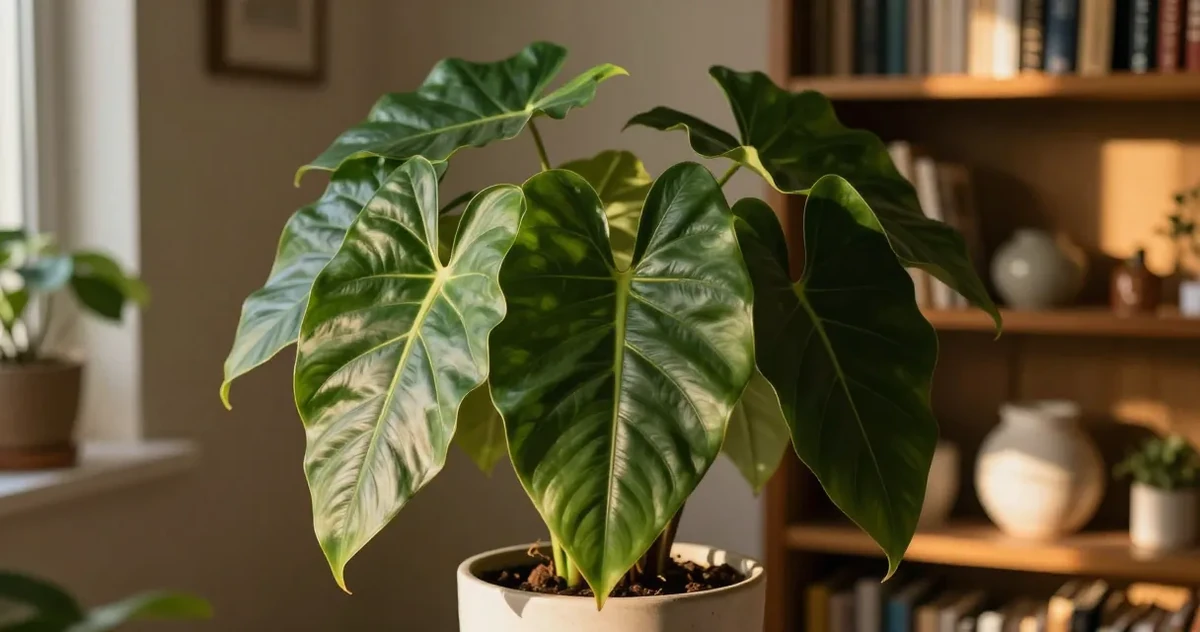
Philodendron Brasil is a good fit if you want a trailing plant that can forgive the occasional late watering, but it is not a great fit for a dark corner. Its yellow-green streaks need brighter indirect light than a plain heartleaf philodendron, and its roots need time to dry between waterings.
The short version: put it near a bright window out of harsh direct sun, water when the top few centimetres of soil feel dry, and watch the newest leaves. Curling usually means the plant is too dry, yellowing often means the soil has stayed wet too long, and brown tips usually point to dry air, fertilizer buildup, or inconsistent watering.
Brasil is a variegated cultivar of the classic heartleaf philodendron. The care is forgiving overall, but there is one thing Brasil needs more than most philodendrons: enough light to keep that variegation vivid. Without it, new leaves can gradually come in solid green. Understanding why that happens and what to adjust is most of what Philodendron Brasil care comes down to.
Species evidence behind Philodendron Brasil
Philodendron Brasil is mapped to the accepted species Philodendron hederaceum. The table describes species-level field climate, not the cultivar’s stripe colour or variegation stability.
The ranges below are the middle 50% (p25–p75), not recommended indoor setpoints.
| Reference taxon | POWO native range | Annual mean temperature | Annual precipitation | Relative humidity | Solar radiation | Evidence |
|---|---|---|---|---|---|---|
| Philodendron hederaceum (heartleaf philodendron) | Mexico to tropical America | 24.0–25.9°C | 1668–2787 mm/yr | 64–68% | 17.0–18.7 MJ/m²/day | 30 climate points / 783 usable records; medium confidence |
What this changes in this guide: Use the broad tropical-American envelope for context, then judge the cultivar from light response, node spacing, roots, and substrate drying in your home.
Sources and method: Philodendron hederaceum in POWO and GBIF; CHELSA V2.1, 1981–2010. GBIF records are limited to POWO-native countries, then filtered for coordinates, establishment signal, licence, precision, and spatial duplication. No community or user-reported care data is used in this module.
Identification Snapshot
- Botanical base: Philodendron Brasil is a variegated cultivar of Philodendron hederaceum, the same species behind plain heartleaf philodendron.
- Leaf shape: heart-shaped leaves with uneven lime, yellow, and mid-green streaking rather than a centered stripe.
- Growth habit: a trailing or climbing vine that stays compact in a hanging pot but can size up on a pole.
- Fast ID clue: if every leaf is solid green, you probably have plain heartleaf philodendron instead of Brasil.
- Variegation clue: if the pattern looks cream-and-silver through the center rather than splashed yellow-green, check whether your plant is actually Philodendron Rio.
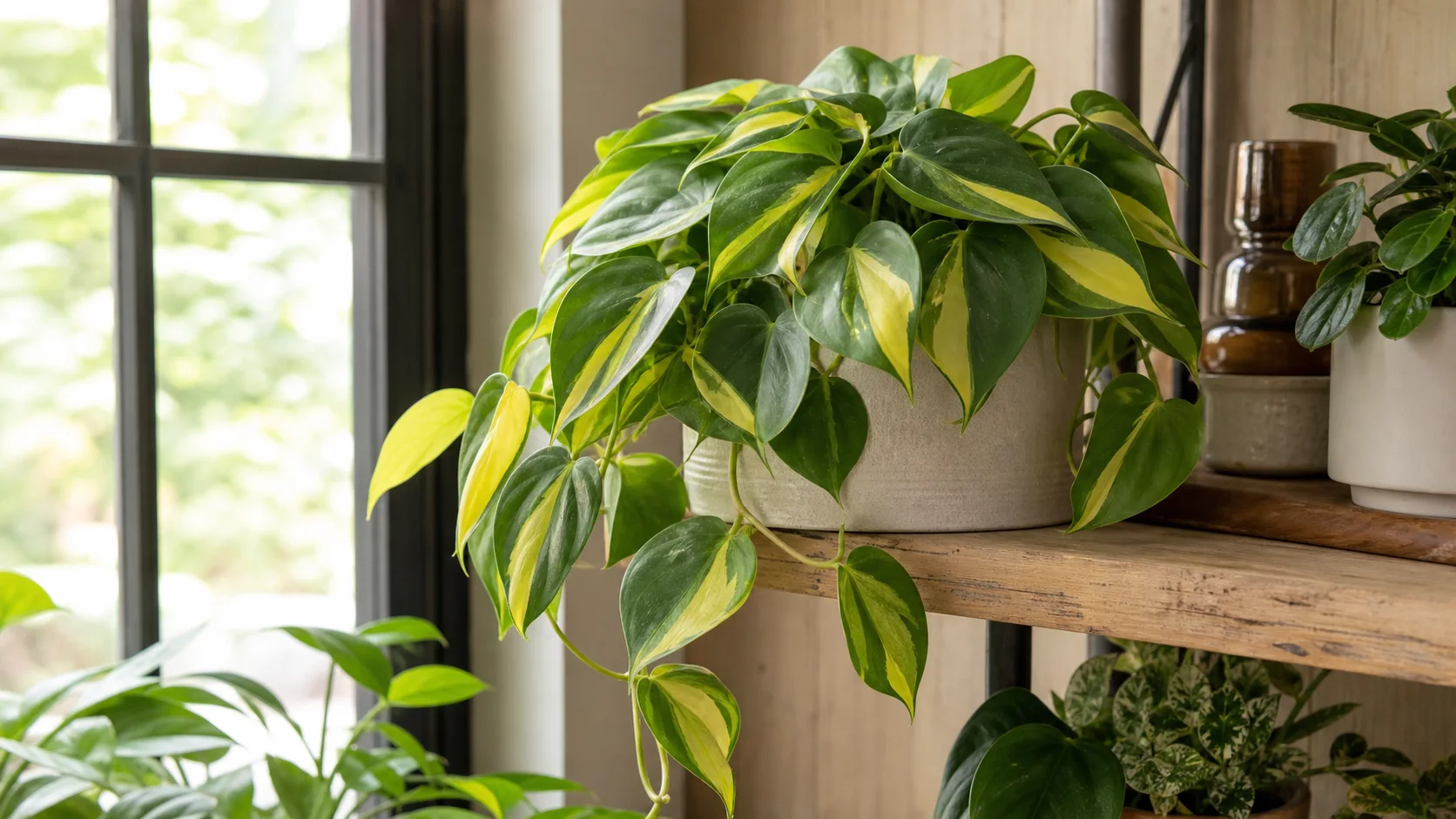
Irregular lime-yellow streaks and a trailing habit distinguish Philodendron Brasil from plain heartleaf philodendron.
Lookalikes and Confused With
| Plant | What it looks like | Why people mix it up with Brasil | What matters for care |
|---|---|---|---|
| Philodendron Brasil | Heart-shaped leaves with irregular lime and yellow-green variegation | This is the reference plant | Needs brighter indirect light than plain green heartleaf to keep the pattern strong |
| Plain heartleaf philodendron | Solid green leaves with the same trailing shape | Stores often label both simply as “heartleaf philodendron” | Tolerates lower light better, but gives you no variegation signal to read |
| Philodendron Rio | Similar trailing habit, but with cream, silver, and dark-green striping | Owners often assume any striped heartleaf is Brasil | Rio usually asks for the same general care, but the variegation pattern and expectations are different |
| Golden pothos | Thicker heart-shaped leaves with yellow or cream patches rather than a central lime stripe | Both are easy trailing vines sold for shelves and hanging pots | Use the pothos vs philodendron comparison to check leaf texture, petiole shape, and new growth |
Care Cards
| Care card | What to aim for indoors |
|---|---|
| Light | Bright indirect light. Iowa State Extension notes that philodendrons prefer indirect or dappled light, and Brasil keeps its color best near the brighter end of that range. |
| Water | Water when the top layer of soil dries, not on a fixed calendar. Soggy soil is a bigger risk than a slightly late watering. |
| Soil | Use a loose potting mix with drainage so the root zone can dry predictably between drinks. |
| Temperature and humidity | Normal home temperatures are fine. Medium humidity helps, but avoiding cold drafts matters more than chasing rainforest conditions. |
| Pet safety | Not pet-safe. ASPCA lists heartleaf philodendron as toxic to cats and dogs if chewed. |
What Most Care Guides Miss
Most guides about Philodendron Brasil describe the ideal care routine. Real homes are messier: light changes by season, pots dry at different speeds, and the same symptom can mean different things depending on where it appears.
Before changing care, check the plant in this order:
- Light: is the plant growing toward the window, fading, or scorching?
- Root zone: is the pot drying predictably, or staying wet in the middle?
- Leaf pattern: did the oldest leaves, newest leaves, tips, or stems change first?
- Recent change: new pot, new location, fertilizer, cold draft, heat vent, or pest exposure.
This keeps you from fixing the wrong problem. One clear adjustment is usually safer than a full care reset.
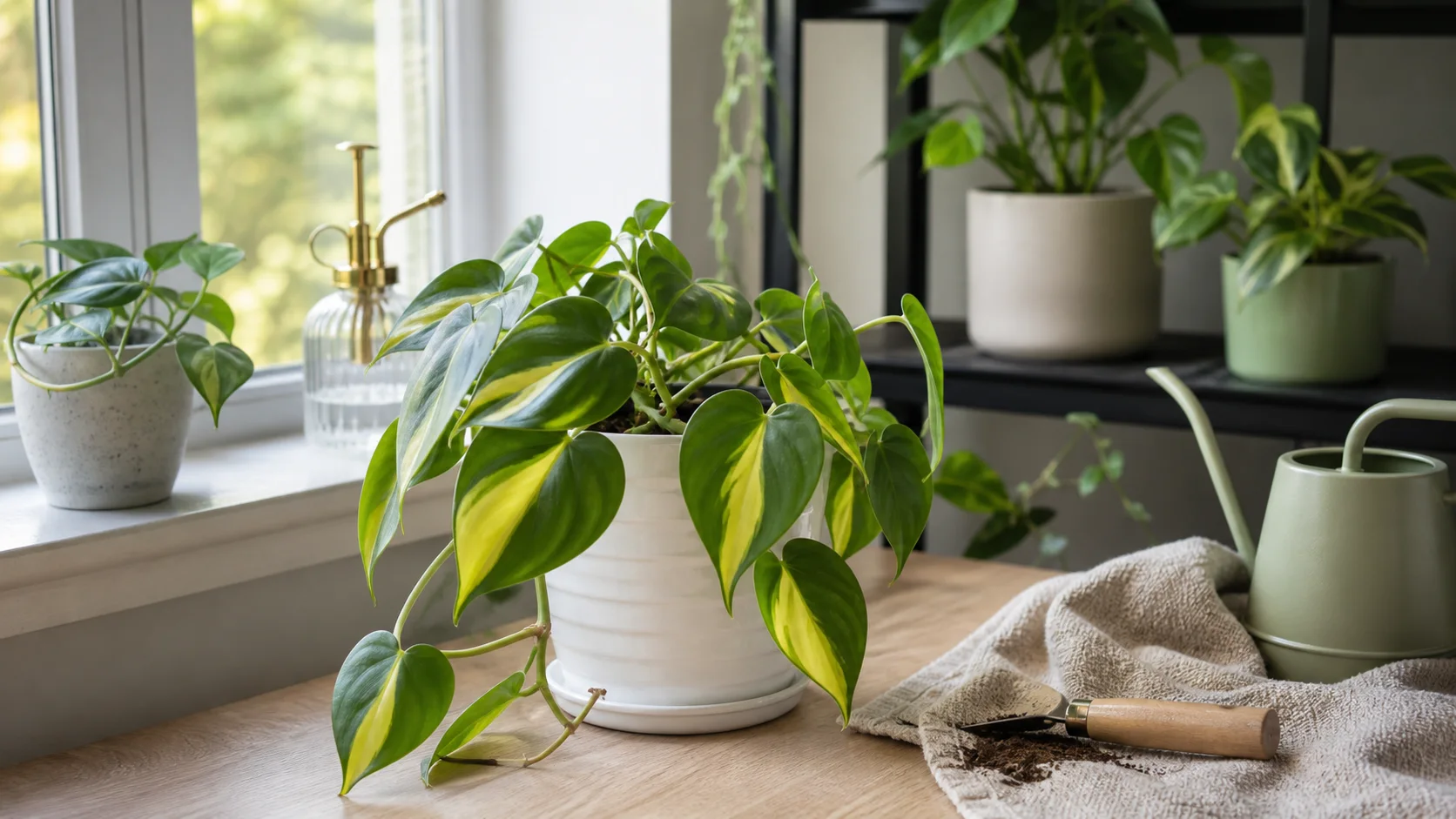
Check light, leaf pattern, and the root zone before changing a Philodendron Brasil care routine.
What Makes Brasil Different
The yellow and chartreuse patterning on Brasil leaves comes from reduced chlorophyll in parts of the leaf. In plain English, the lighter parts of each leaf do less of the plant’s energy-making work than the green parts. That is why Brasil needs a bright spot to keep its color, even though it still hates hot, direct sun on the leaves.
Research on variegated houseplant cultivars has shown that the pale and yellow sections of leaves can contain 40 to 60 percent less chlorophyll than the green portions of the same leaf. That reduced photosynthetic capacity is what makes light access so central to keeping the pattern vivid. In low light, the plant quietly starts producing more chlorophyll to survive, and the variegation fades with each new leaf cycle.
It is also worth knowing that Brasil is not unstable in the way some rare variegated plants are. Its patterning is a stable cultivar trait, which means that with the right conditions, it tends to hold and recover. The variegation is not gone forever just because a few leaves came in solid green.
Is Philodendron Brasil a Good Fit for Your Home?
Choose Philodendron Brasil if you can offer bright indirect light and you are willing to check the soil before watering. It is a strong beginner plant for shelves, hanging baskets, and plant stands near a window. It is less ideal for very dim rooms, homes with curious pets that chew leaves, or anyone who wants a plant that can stay wet all the time.
Use this quick fit check before you buy one:
- Light: best near an east or west window, or set back from a bright south window
- Watering routine: usually weekly in warm months, slower in winter, always based on dry soil
- Growth style: trailing vines unless you give it a pole or support
- Pet safety: not pet-safe if cats or dogs can reach and chew it
- Best reason to choose it: easy-care vines with more color than a plain green philodendron
If you can meet the light and keep the pot from staying soggy, Brasil is one of the easier variegated plants to live with.
Light: The Variegation Question
Philodendron Brasil care starts and ends with light. The University of Florida IFAS Extension notes that philodendrons in the Hederaceum group thrive at light intensities between 150 and 500 foot-candles, with variegated cultivars performing better toward the higher end of that range to sustain the lower-chlorophyll leaf sections.
In practical terms: bright, indirect light. Think of a spot a few feet back from a window that gets good light for most of the day, somewhere you would read comfortably without needing a lamp on. East or west-facing windows tend to work well. South-facing windows work too, as long as direct sun is filtered through a curtain or the plant sits slightly back from the glass.
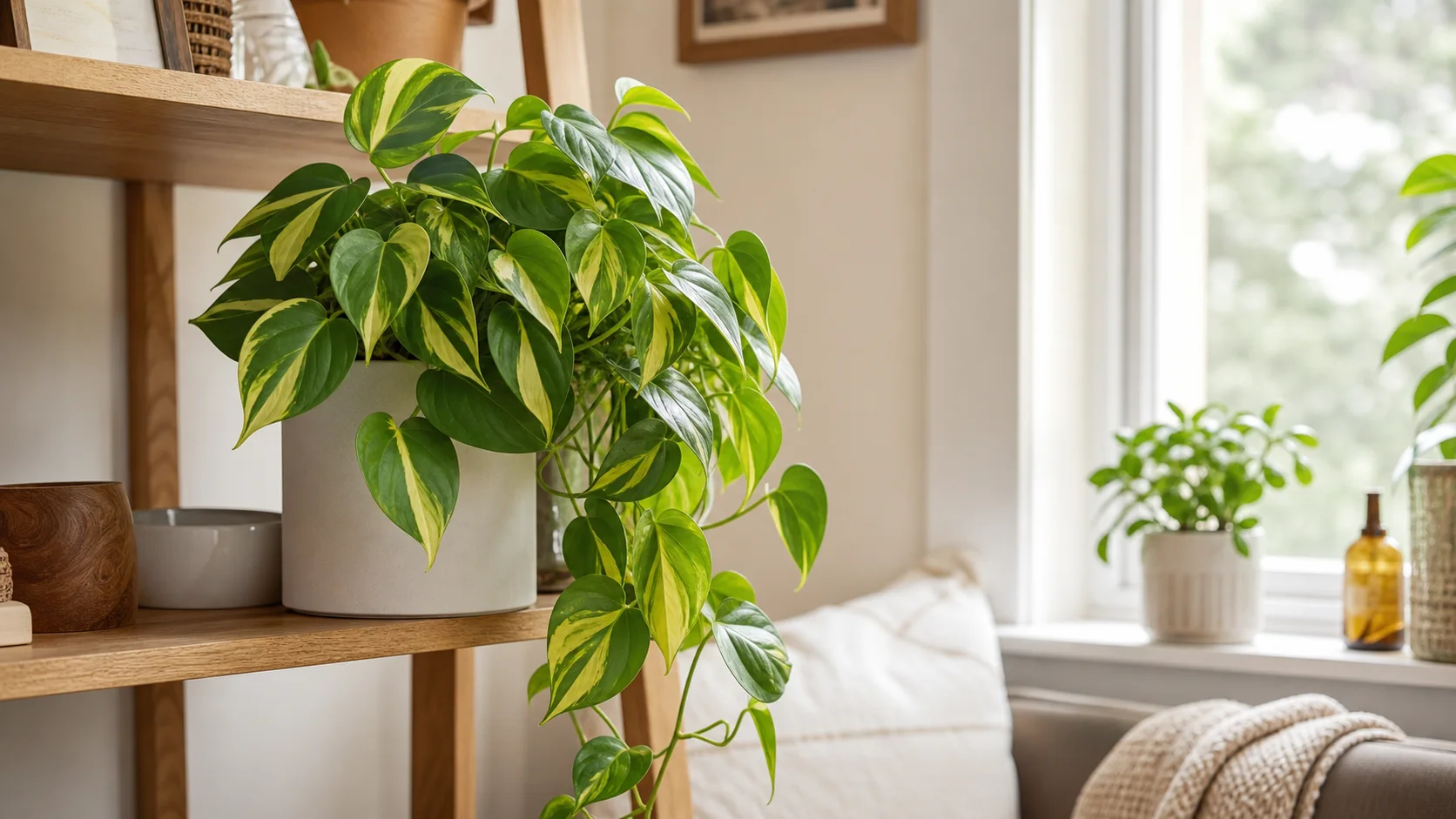
Bright filtered daylight helps Philodendron Brasil sustain its yellow-green variegation without scorching pale leaf tissue.
If the new leaves are coming in more green than yellow-green, that is your cue to move the plant somewhere brighter. It does not have to be dramatic. Even shifting a foot or two closer to the window often makes a difference over the next few growth cycles.
Direct sun for more than an hour or two will bleach or scorch the leaves, especially on the pale sections. Those areas have less chlorophyll and burn faster than the green parts. Bright but filtered is the sweet spot.
If your space does not get great natural light, a grow light is a reliable solution. Brasil does well under grow lights for indoor plants placed close enough to provide real illumination, not just ambient glow. Aim for 10 to 12 hours of grow light per day if it is the primary light source.
Watering
Brasil is not fussy about watering, which is part of why it is such a good beginner plant. For most indoor homes, expect to water about once a week in spring and summer and every 10 to 14 days in winter. Treat that as a starting point, not a rule.
Before watering, press your finger into the soil up to about the first knuckle. If the top few centimetres feel dry, water thoroughly until excess drains from the bottom. If the soil still feels damp, wait another day or two. Empty the saucer after watering so the pot is not sitting in runoff.
Overwatering is the most common mistake. According to Penn State Extension, root rot pathogens become active in soil that stays saturated for more than 24 to 48 hours, and overwatering is the leading cause of houseplant failure indoors. The roots need air between waterings, and sitting in wet soil leads to rot faster than most people expect.
Signs you are overdoing it:
- Several leaves yellow at once, especially lower leaves
- The pot still feels heavy days after watering
- Soil smells sour or musty
- Stems near the soil feel soft or mushy
- Small black flies appear around constantly damp soil
If you see those signs, pause watering, check that the pot has drainage, and let the mix dry more before the next drink. If stems are mushy or the soil smells rotten, unpot the plant and trim away black, soft roots before repotting in a drier mix.
In winter, when light levels drop and the plant is not actively growing much, watering frequency naturally decreases. Let the soil dry a little more than usual before the next drink. The plant is not going anywhere, and it does not need as much during those quieter months.
Common Problems: Yellow Leaves, Drooping, and Brown Tips
This is the part most owners need in real life: not the perfect routine, but the fastest next check when the plant suddenly looks wrong.
Use the newest symptoms to decide what to check first. One damaged leaf is not a crisis. A pattern across several leaves means the plant is asking for a care adjustment.
| What you see | Most likely cause | What to do today |
|---|---|---|
| Leaves curling inward and soil is dry | Too little water or very dry air | Water thoroughly, then check again in a few days |
| Leaves curling but soil is wet | Roots are struggling in soggy soil | Stop watering and check drainage |
| Several yellow leaves at once | Overwatering, low light, or old wet soil | Let soil dry, move brighter, and inspect roots if stems feel soft |
| Brown crispy tips | Dry air, inconsistent watering, or fertilizer buildup | Trim tips if needed, flush the soil, and keep watering more even |
| Pale scorched patches | Too much direct sun | Move back from the window or add a sheer curtain |
| New leaves are mostly green | Light is too low for strong variegation | Move closer to bright indirect light |
The easiest mistake is treating every yellow leaf as a request for more water. Always check the soil first. If the soil is wet, more water will make the problem worse.
Soil and Potting
A well-draining potting mix is all Brasil needs. Standard indoor potting soil works fine, though adding a handful of perlite helps with drainage and keeps the roots from sitting in moisture too long. If you notice the soil staying wet for more than a week after watering, it is probably time to mix in something that drains faster.
Brasil grows at a decent pace during spring and summer. When roots start circling the bottom of the pot or poking through the drainage holes, move up one pot size. Going too large at once encourages the soil to hold more moisture than the roots can use, which creates the same soggy conditions you are trying to avoid.
Humidity and Temperature
Brasil is comfortable in the same range most people keep their homes: 18 to 27 degrees Celsius, with moderate humidity. It tolerates average indoor humidity without complaint, though it will look noticeably better if the air is not too dry. A pebble tray with water underneath the pot, or placing it near other plants, can help without any extra effort.
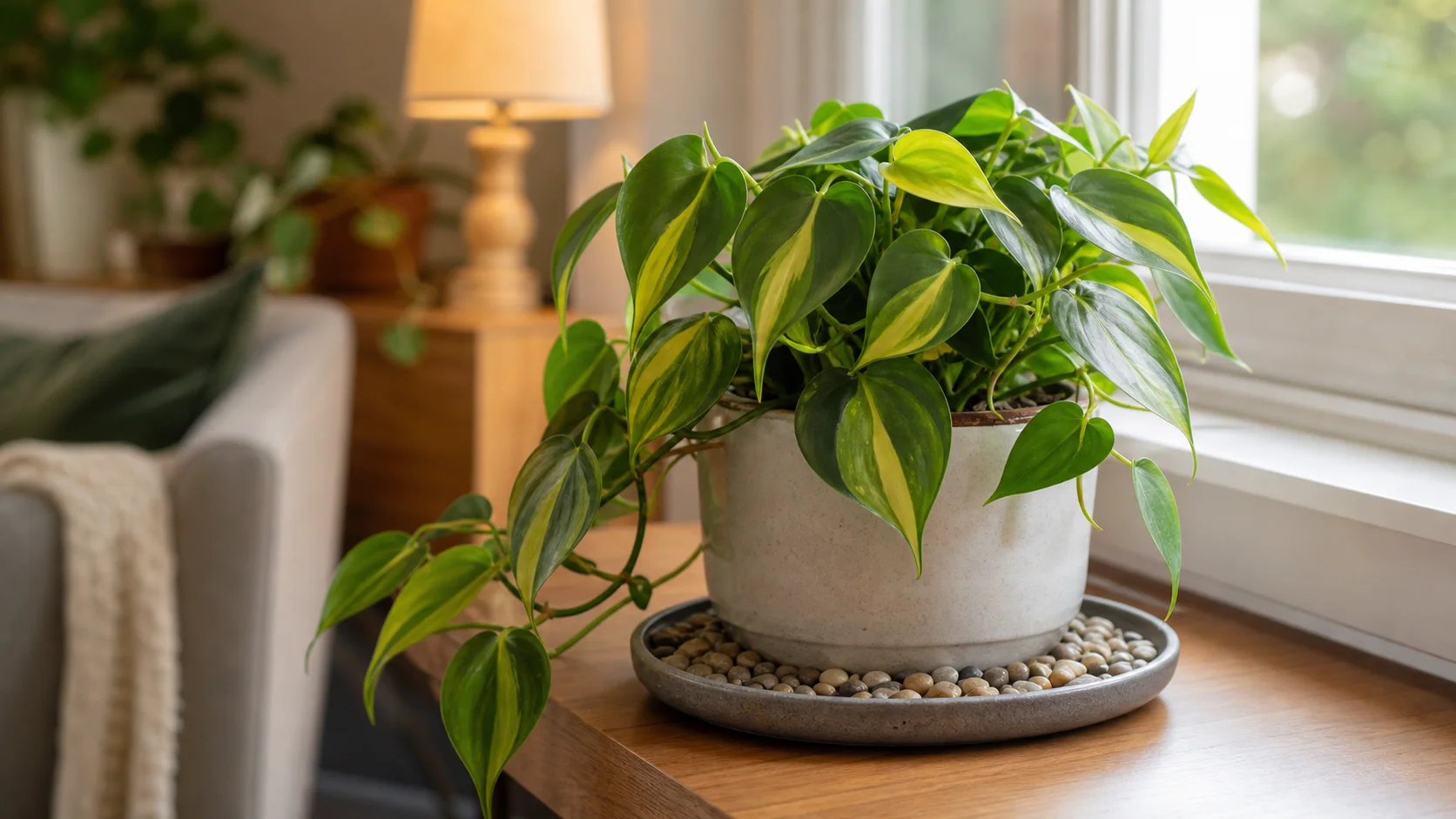
A simple pebble tray and a warm indoor position can support moderate humidity around Philodendron Brasil.
Keep it away from cold drafts and heating vents. Temperatures below about 13 degrees Celsius cause the leaves to droop and eventually yellow. If you move your plants outside in summer, wait until nights are reliably warm before doing so.
Propagation
Brasil propagates easily from stem cuttings, which is one of the more satisfying things about growing it. If you want the full step-by-step routine, the guide on how to propagate plants covers the basics in more detail. Take a cutting with at least one node, the small bump or joint on the stem where leaves and roots emerge, and one or two leaves. Remove any leaves that would sit below the waterline or soil.
You can root it in a glass of water on a bright windowsill, or plant it directly into moist potting mix. Water propagation is slower but lets you watch the roots develop. Soil propagation tends to produce roots that adapt more readily when you eventually pot the cutting up.
Roots usually appear within two to four weeks. Once they are a few centimetres long, pot the cutting into its own container and treat it like a mature plant.
One note worth keeping in mind: take cuttings from sections of the plant that show the variegation you want to preserve. Cuttings from a fully-green stem will root just fine but may continue producing mostly green leaves even in good light.
Variegation Reverting: What to Do
If your Brasil has started producing solid green leaves, the first thing to do is move it to a brighter spot. The already-green leaves will not change back, but new growth has a good chance of returning to the variegated pattern once the plant has more light available. If you are comparing it with another variegated philodendron that behaves differently, the Philodendron Pink Princess care guide is a useful contrast because that plant needs the same bright-light logic for a different kind of variegation.
If reversion continues even in bright indirect light, check whether the plant is producing fast, leggy growth: long stretches of stem with few leaves. That pattern often means the plant is stretching for light and defaulting to higher-chlorophyll growth to survive. Pruning back to a healthier, more compact growth point and ensuring consistent bright light gives the next flush of leaves the best conditions to come in variegated.
Darryl Cheng, author of The New Plant Parent, argues that a plant’s growth pace should dictate how you care for it, not the other way around. With Brasil, this means reading each new leaf as direct feedback:
- New leaf is well-patterned - conditions are working, keep going
- New leaf has less variegation than the last - try more light before the next growth cycle
- New leaf is fully green - light is too low, move it to a brighter spot
- New leaf is small and pale overall - check both light and feeding
Patience is part of it. A few growth cycles in better conditions will tell you whether the variegation is coming back.
Feeding
During the growing season, a balanced liquid fertilizer once a month gives Brasil the nutrients it needs to keep producing new leaves and maintain strong variegation. There is no need to feed in autumn and winter when growth slows down. For more on choosing the right product and timing, the plant fertilizer guide covers the main approaches in detail.
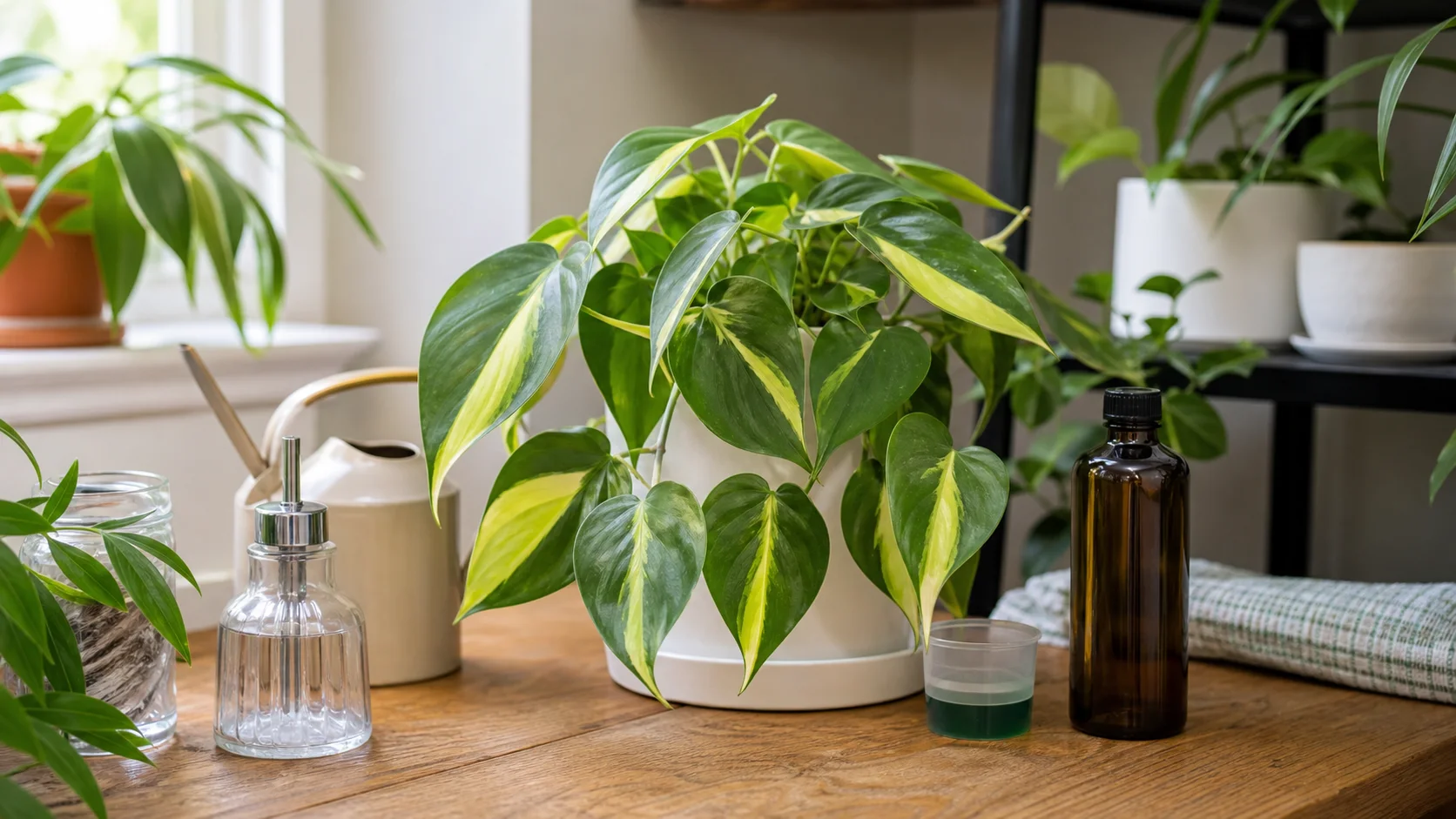
A small measured dose of balanced liquid fertilizer is enough for Philodendron Brasil during active growth.
Keep it simple and consistent rather than heavy. More fertilizer does not mean better variegation. Light does.
Brasil Through the Seasons
Brasil does not ask for much to change through the year, but its needs do shift with the light. Knowing what to expect each season means fewer surprises and less second-guessing what you see.
Spring (March to May)
This is when Brasil wakes up. New leaves start arriving faster, usually one every two to three weeks in good light. If you have been waiting to repot, spring is the right time: check the drainage holes, and if roots are circling or pushing through, go up one pot size. Resume monthly feeding as the days lengthen. If some reversion happened over winter, now is the moment to move the plant somewhere brighter and give new growth the chance to show the pattern again.
Summer (June to August)
Peak growing season. The soil dries out faster, so check it more regularly. Some growers water twice a week during heat waves; others find once a week still works. Go by the soil, not the calendar. Keep the plant back from south or west-facing glass if afternoon sun is strong: the pale sections scorch faster than the green ones. Continue monthly feeding through August.
Autumn (September to November)
Growth slows as the days shorten. Stop fertilizing by late September or early October. Let the soil dry a little more between waterings than you did in summer. If Brasil has been trailing long and leggy, autumn is a good time to prune back and encourage branching before the slower winter months. Root the cuttings now and they will be established by spring.
Winter (December to February)
Brasil goes quiet. New leaves may appear occasionally, but growth is minimal. Water infrequently, letting the soil dry out more than usual before the next drink. No feeding until spring. Watch for cold glass: window panes can drop considerably below room temperature overnight, and a pot sitting right against a cold window will feel it. Moving the plant a few centimetres back from the glass is usually enough.
If variegation becomes paler or new leaves come in greener during winter, it is almost always lower light rather than anything wrong with the plant itself. A grow light on a timer can bridge the gap until the days lengthen again.
Is Philodendron Brasil Safe Around Pets?
Philodendrons, including Brasil, are toxic to cats and dogs. They contain calcium oxalate crystals, which cause mouth irritation, drooling, and digestive upset if ingested. Not something to place within reach of a curious cat or a chewing puppy.
If you have pets and are looking for trailing alternatives, the cat-safe indoor plants guide has a useful list of options. If Brasil stays in a hanging basket or on a high shelf, the risk is much lower, but it is worth knowing about.
Methodology Note
This guide was updated after reviewing Philodendron hederaceum guidance from North Carolina Extension and Iowa State Extension, pet-safety guidance from ASPCA, and recurring owner confusion in Greg.app threads plus Reddit search results. Extension and safety sources were used for care-safe claims. Community posts were used only to identify where people misread symptoms and overcorrect.
Freshness Note
Last updated: 2026-06-16. If your plant is suddenly losing color, drooping in wet soil, or came with a vague plant tag, re-check the light, soil moisture, and cultivar ID before changing everything at once.
Your Simple Brasil Care Rhythm
If you only remember a few things, use this routine:
- Today: check whether the top few centimetres of soil are dry before watering, and move the plant closer to bright indirect light if new leaves are coming in mostly green
- This week: rotate the pot once, wipe dusty leaves, and check the undersides of leaves for pests while you water
- This season: feed monthly in spring and summer, stop feeding in autumn and winter, and repot only when roots are circling or pushing through the drainage holes
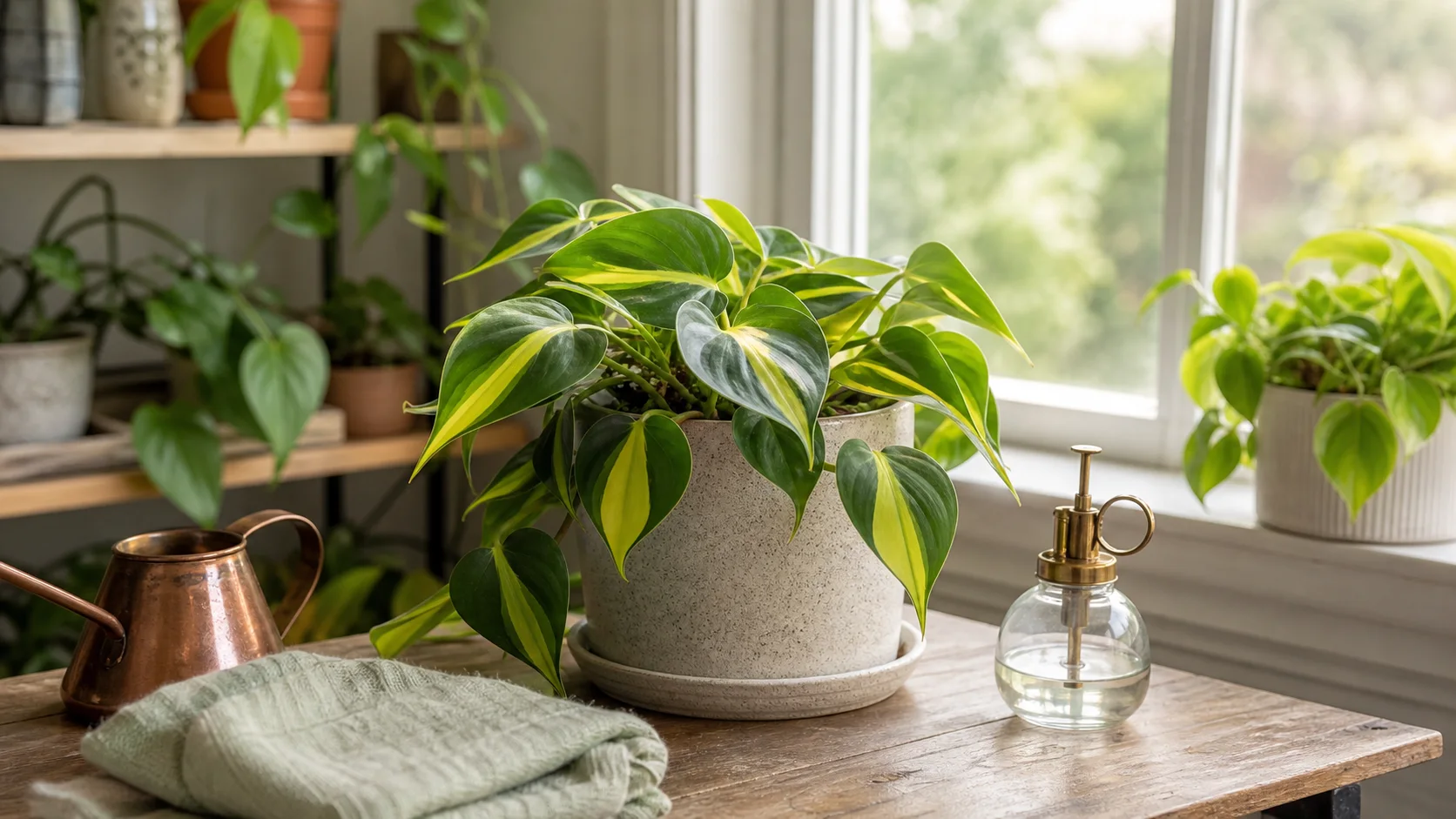
A soil check, occasional pot rotation, and clean leaves keep the Philodendron Brasil routine practical.
This keeps care practical without turning Brasil into a high-maintenance plant.
Real User FAQ
Why is my Philodendron Brasil turning all green?
This is reversion, and it happens when the plant does not have enough light to sustain the lower-chlorophyll variegated cells. The plant compensates by producing more chlorophyll, and new leaves come in progressively greener. Move it to a brighter spot with consistent indirect light. Leaves already turned green will not change back, but new growth should start showing the pattern again within a few growth cycles.
How often should I water Philodendron Brasil?
There is no fixed schedule. Let the top few centimetres of soil dry out between waterings, then water thoroughly. In spring and summer this might be once a week. In winter it might be every 10 to 14 days. Use your finger to check the soil rather than relying on a calendar.
Is Philodendron Brasil toxic to cats and dogs?
Yes. Brasil contains calcium oxalate crystals that are irritating to the mouth, throat, and digestive tract in cats, dogs, and humans if ingested. Keep it out of reach of pets and small children. For pet-friendly trailing plant alternatives, the cat-safe indoor plants guide is a good place to start.
How do I make my Brasil bushier?
Prune the longer trailing stems back to a node. This encourages the plant to branch from lower down, which creates a fuller shape rather than one or two long vines. You can root the cuttings in water at the same time and add them back into the same pot once they have roots, which fills it out even faster.
Can Philodendron Brasil grow in water long-term?
Yes, Brasil can grow in water indefinitely. Keep the container in bright indirect light, change the water every one to two weeks to prevent bacterial buildup, and add a small amount of liquid fertilizer to the water every few weeks. The growth will be slower than in soil, but it is a low-maintenance option that works well.
Why are the leaves on my Brasil turning yellow?
Yellow leaves have several possible causes. Lower leaves yellowing occasionally is normal as the plant sheds older growth. If multiple leaves are yellowing at once, overwatering is the most common culprit: check whether the soil is staying wet too long. If the soil is dry and leaves are yellowing, it could be underwatering or low light. Yellow leaves with brown crispy edges often point to low humidity or dry air near a vent.
Does Philodendron Brasil need a moss pole?
Brasil does not need a moss pole the way larger climbing philodendrons do, but it will appreciate one if you want it to climb rather than trail. Given support, it tends to produce slightly larger leaves. Without support, it trails naturally and looks great in a hanging basket or on a shelf. Either works well.
How fast does Philodendron Brasil grow?
In good light with regular watering through spring and summer, Brasil is a relatively fast grower. A new leaf every few weeks during the active season is common. Growth slows considerably in autumn and winter, which is normal. If growth seems stalled in the warmer months, check light levels first.
Brasil is one of those plants that rewards a little attention without demanding it. Get the light right, let the soil dry between waterings, and the plant tends to handle the rest. The newest leaves are your best feedback: bright variegation means the spot is working, greener growth means it wants more light, and yellowing or curling means it is time to check the soil before guessing.
If you want help tracking watering schedules, seasonal care reminders, and light adjustments for all your plants in one place, download KnowYourPlant for personalized plant care reminders.