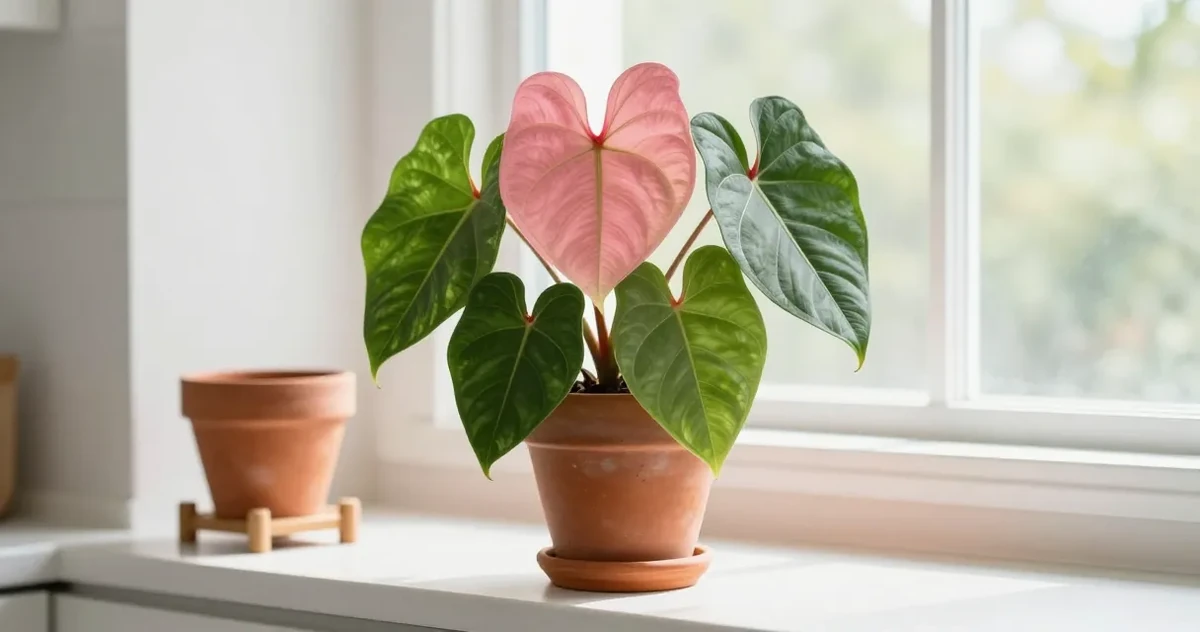
Philodendron Pink Princess is not hard to keep alive, but it is easy to disappoint if you buy it for the pink and then put it in a dim corner. The real care question is simple: can you give it bright indirect light, a pot that drains, and a soil check once a week? If yes, it can fit a normal indoor routine. If you want a plant you can water on a fixed schedule and forget, choose a tougher green philodendron instead.
The Pink Princess is a cultivar of Philodendron erubescens, native to the rainforests of Colombia and South America. Its dark leaves develop pink patches because some leaf cells lack chlorophyll. In plain English: the pink parts are beautiful, but they do not help the plant make much energy. That is why light, watering, and stress show up quickly in the next few leaves. For the baseline routine shared across the genus, see the main philodendron care guide.
Species evidence behind Pink Princess
Pink Princess is tied here to Philodendron erubescens. Its pink variegation is a cultivated trait and is not represented in occurrence or climate pixels.
The ranges below are the middle 50% (p25–p75), not recommended indoor setpoints.
| Reference taxon | POWO native range | Annual mean temperature | Annual precipitation | Relative humidity | Solar radiation | Evidence |
|---|---|---|---|---|---|---|
| Philodendron erubescens (blushing philodendron) | Colombia | 18.5–20.4°C | 1624–2521 mm/yr | 64–70% | 16.7–18.8 MJ/m²/day | 14 climate points; low confidence |
What this changes in this guide: The Colombia-only field sample is limited, so treat the numbers as a bounded baseline. Light response and the balance of green tissue remain cultivar-specific observations.
Sources and method: Philodendron erubescens in POWO and GBIF; CHELSA V2.1, 1981–2010. GBIF records are limited to POWO-native countries, then filtered for coordinates, establishment signal, licence, precision, and spatial duplication. No community or user-reported care data is used in this module.
Identification Snapshot
| Detail | What to look for |
|---|---|
| Plant type | A climbing Philodendron erubescens cultivar with dark burgundy leaves and bubblegum-to-blush pink variegation |
| Growth habit | Upright when young, then vining and much happier with a pole or plank for support |
| Best light | Bright indirect light, close enough to a window or grow light that new leaves do not shrink or revert quickly |
| Water cue | Water when the top 5 cm / 2 in of mix feels dry, not on a fixed calendar |
| Biggest risk | Wet, dense soil plus low light, which pushes the plant toward root stress and greener new growth |
| Pet safety | Toxic if chewed, so keep it away from cats and dogs |
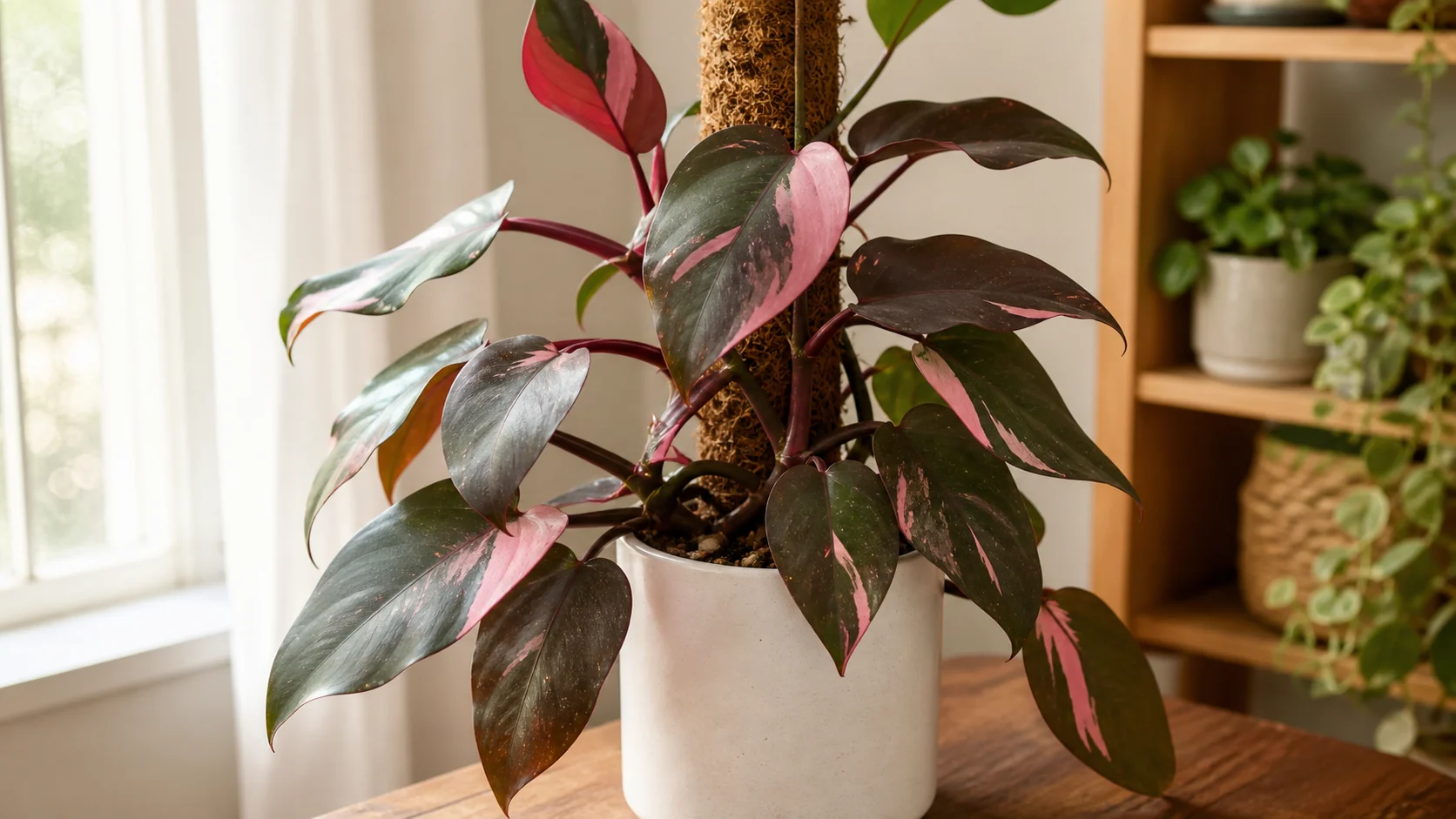
Dark burgundy leaves, blush-pink variegation, and a climbing habit identify a healthy Pink Princess in bright indirect light.
What Most Care Guides Miss
Most guides about Philodendron Pink Princess describe the ideal care routine. Real homes are messier: light changes by season, pots dry at different speeds, and the same symptom can mean different things depending on where it appears.
Before changing care, check the plant in this order:
- Light: is the plant growing toward the window, fading, or scorching?
- Root zone: is the pot drying predictably, or staying wet in the middle?
- Leaf pattern: did the oldest leaves, newest leaves, tips, or stems change first?
- Recent change: new pot, new location, fertilizer, cold draft, heat vent, or pest exposure.
This keeps you from fixing the wrong problem. One clear adjustment is usually safer than a full care reset.
Quick Care Fit Check
Use this before you buy one, or before you move yours again.
- Good fit: You have a bright east window, a spot a few feet back from a south or west window, or a real grow light. You are willing to check the soil before watering.
- Risky fit: The only available spot is across the room from a window, the pot has no drainage hole, or you tend to water every plant on the same day whether it is dry or not.
- Today: Put it in bright indirect light, check whether the top 5 cm / 2 in of soil is dry, and empty any water sitting in the outer pot.
- This week: Watch for curling, yellowing, brown tips, or new leaves turning mostly green. Those are care clues, not reasons to panic.
- This season: Feed lightly in spring and summer, pause fertilizer in winter, and repot only when roots are crowding the drainage holes.
Social Listening: What New Owners Actually Struggle With
Snippet-level Reddit posts about Pink Princess care sound remarkably similar: someone buys a gorgeous plant, notices droop or sulking almost immediately, does a lot of research, and still is not sure which fix matters first. That is why this guide prioritizes recovery order, not just ideal conditions. In real homes, the first good decision is usually to stabilize the plant before chasing stronger pink.
First 7 Days After Bringing It Home
Use this checklist before you repot, fertilize, or start moving the plant around every day.
- Day 1: Put it in bright indirect light and leave it there. Do not force direct sun just because you want more pink.
- Day 1: Check whether the nursery pot actually drains and whether the outer cachepot is trapping runoff.
- Day 2 to 3: Feel the soil before watering. If it is still moist below the surface, wait.
- Day 3 to 5: Watch the newest leaf and the petioles. Mild sulking after a move is common. Escalating yellowing, mushy stems, or a sour smell are bigger warnings.
- Day 5 to 7: Decide whether the mix is airy enough and whether the plant needs climbing support, but repot only if the current setup is clearly failing.
Lookalikes and Confused-With Plants
| Plant | How people confuse it with Pink Princess | Quick difference to check |
|---|---|---|
| Philodendron White Princess | Similar upright juvenile shape and splashy variegation | White Princess usually shows white or cream variegation rather than saturated pink |
| Philodendron Pink Congo | Sold under a similar name and often marketed for dramatic pink leaves | Pink Congo usually shows a broader, more uniform pink wash and is a different growth habit than a climbing Pink Princess |
| Philodendron Red Anderson | Darker foliage and variegated pattern can look similar in online listings | Red Anderson tends to show a more mixed pink, cream, and green marbling rather than Pink Princess-style blocks |
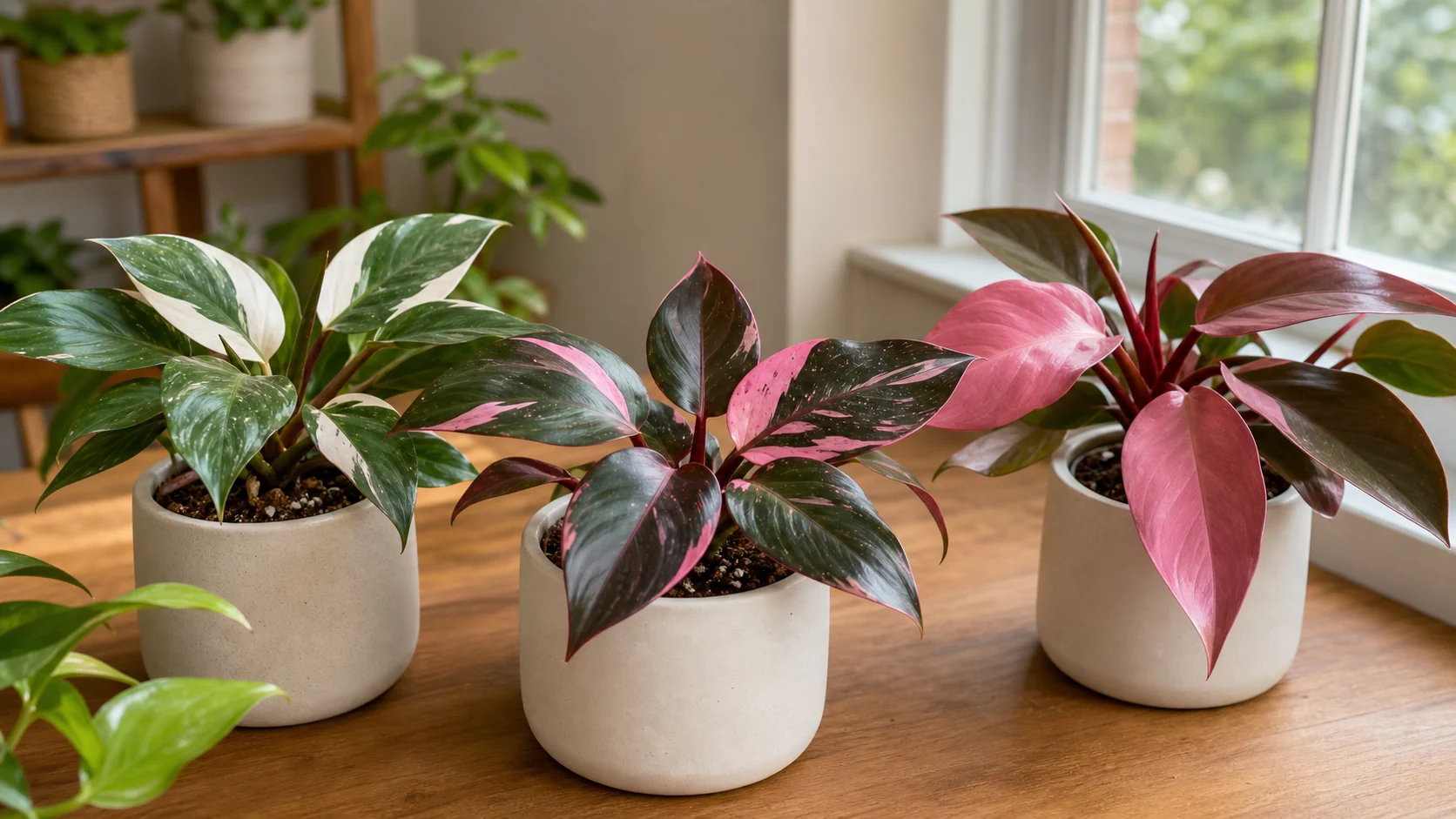
White, sectoral pink, and broadly pink foliage show the visual differences that separate common Pink Princess lookalikes.
Why Variegation Is the Whole Story
With most houseplants, you learn the basics and you’re done. With the Pink Princess, everything revolves around one question: is the variegation stable?
The pink and white sections of each leaf contain no chlorophyll, which means they contribute nothing to photosynthesis. The plant is always working harder than a fully green plant would, relying entirely on the green portions to feed itself. Push conditions in one direction and she starts reverting to green to compensate. Push the other way and new leaves come out almost entirely pink, which sounds like a win until the leaf dies because it can’t support itself.
The goal is balance: leaves that are roughly half pink, half green. That’s where she’s both healthy and beautiful at the same time.
Darryl Cheng of House Plant Journal, who has written extensively on caring for variegated aroids, makes this point clearly: the goal with a variegated plant isn’t to maximize the variegation, it’s to provide conditions where the plant can sustain its natural growth pace. When a variegated plant is under stress, producing more efficient green leaves is how it protects itself. A Pink Princess that’s consistently unhappy will eventually stop being pink.
Light: The Most Important Variable
Getting light right is the single biggest factor in philodendron pink princess care.
She needs bright, indirect light for several hours a day. Think of a spot near a window with good natural light, but where the sun isn’t hitting the leaves directly at midday. A few feet back from a south or west-facing window usually works well. An east-facing window can work too, especially if the morning light is strong.
What Happens Without Enough Light
In low light, the plant increases chlorophyll production to compensate. New leaves come in increasingly green, and the pink shrinks or disappears. This is the most common reason Pink Princess owners find themselves with a plant that was once striking and is now, several months later, just a fairly ordinary-looking philodendron.
Research published by the University of Florida IFAS Extension on tropical aroid care notes that variegated cultivars require meaningfully more light than their all-green relatives, precisely because only the pigmented portions of the leaf are doing photosynthetic work. A plant that’s already running a deficit can’t afford to stay colorful when light is scarce.
What Happens With Too Much Light
Direct sun bleaches the leaves. The pink sections are especially vulnerable because they have no chlorophyll to buffer UV exposure. You’ll see pale, washed-out patches or scorched edges on leaves that caught full midday sun.
If your home doesn’t have great natural light, a grow light placed close enough to provide real intensity makes a genuine difference. This isn’t just a winter solution. If your Pink Princess is sitting in a dim corner because it looks good there, it’s slowly fading. Our guide to grow lights for indoor plants covers what to look for and how close to position them.
Watering: Consistent, Not Complicated
The Pink Princess doesn’t need a special watering routine. Check the soil once a week in spring and summer. Water when the top 5 cm / 2 in feel dry, then water thoroughly until it drains from the bottom. In many homes that works out to every 7 to 10 days during active growth, and every 10 to 21 days in cooler, darker months. The soil check matters more than the number.
What she doesn’t like is sitting in wet soil for days at a time. Roots start to suffocate, and overwatering is one of the fastest ways to stress a plant that’s already working harder than average because of its variegation. Signs you are overdoing it include soil that is still wet four or five days after watering, lower leaves turning yellow, limp stems, a sour smell from the pot, or fungus gnats hovering around the soil.
If the leaves curl inward and the soil is bone dry, water deeply and check again in a few days. If the leaves curl while the soil is wet, do not add more water. Move the plant into brighter indirect light, make sure the pot drains, and let the mix dry down before the next watering.
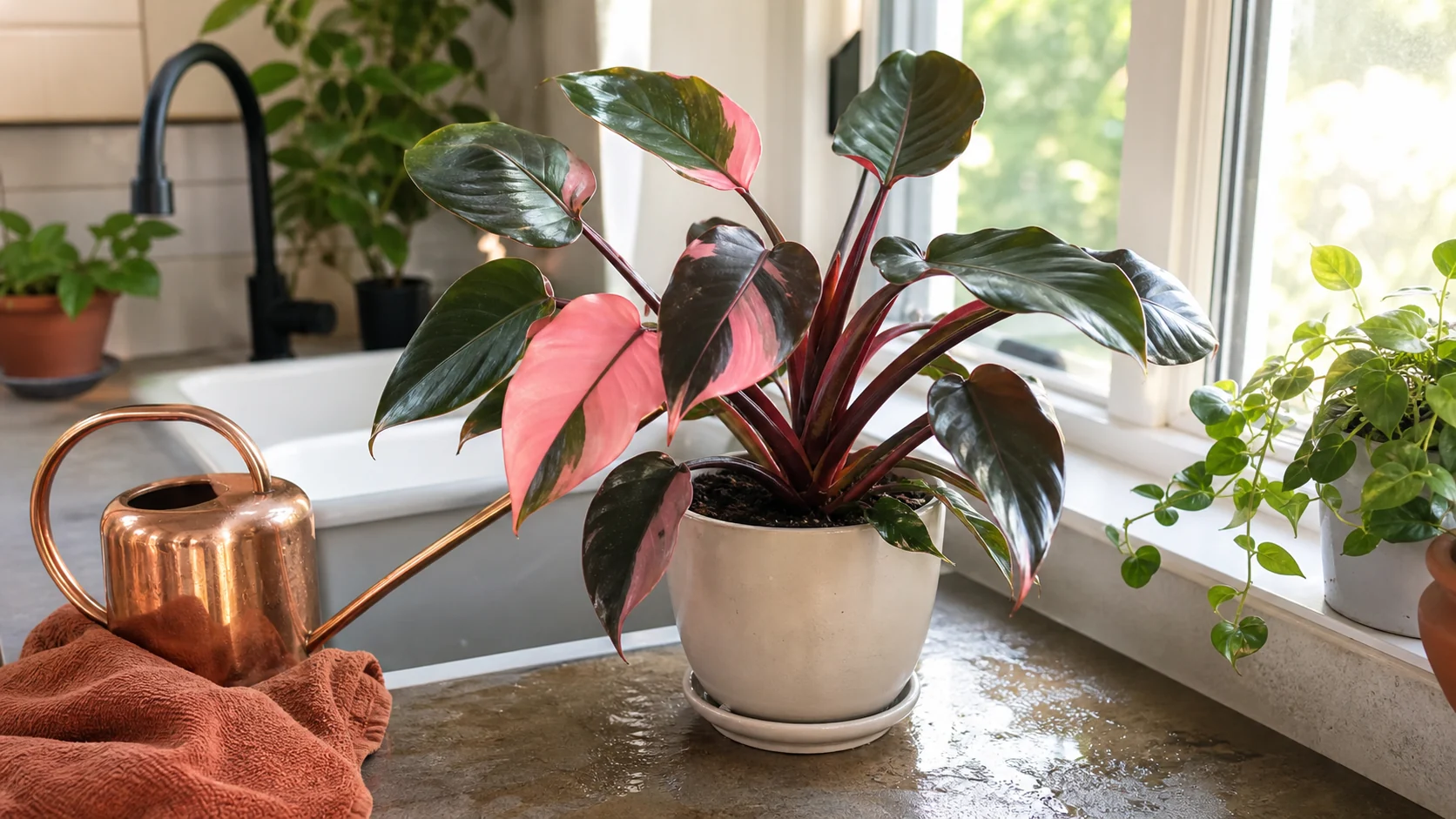
A drainable pot, saucer, and utility-sink setup make thorough watering easier without leaving the Pink Princess in stagnant moisture.
Drainage Matters More Than You Think
Make sure the pot has drainage holes and that you’re actually letting excess water escape. Sitting water at the bottom of a decorative pot without drainage is a slow disaster. If you love a particular cachepot that doesn’t drain, set the nursery pot inside it and lift it out to water, then let it drain fully before putting it back.
Expert Note
University of Maryland Extension recommends watering indoor plants by soil and plant cues instead of a fixed schedule, and NC State Extension guidance for Philodendron erubescens reinforces the same pattern: warm conditions, moisture that is consistent but never stagnant, and fast drainage matter more than calendar-based care.
Humidity and Temperature
The Pink Princess comes from the humid tropical rainforests of South America, so she’s happiest in warm, humid conditions. Room temperature is fine as long as it doesn’t drop below about 13 degrees Celsius (55 degrees Fahrenheit). Keep her away from cold drafts and heating vents, both of which dry the air and stress the leaves.
For humidity, anything above 50 percent is comfortable, with 60 to 70 percent being ideal. If your home is dry, especially in winter, a humidifier nearby makes a real difference. A pebble tray with water under the pot is a lower-effort option that works quietly in the background. Misting the leaves directly is less effective than either of those and can encourage fungal issues if the leaves stay damp overnight.
She’ll be happy grouped near other humidity-loving plants. If you already have a heartleaf philodendron, a Philodendron Brasil, or a Monstera Thai Constellation, they share similar care rhythms and benefit from being in the same part of the room.
Soil, Fertilizing, and Potting
She needs soil that holds some moisture but drains well and stays airy. A good-quality potting mix with added perlite works well. The perlite keeps things loose so roots get oxygen, which matters for a plant that’s prone to overwatering stress.
Fertilize monthly through spring and summer with a balanced liquid fertilizer at half the recommended strength. Skip it in autumn and winter when growth slows. The Clemson University Cooperative Extension advises against over-fertilizing aroids during low-light months, when the plant can’t use the nutrients efficiently and salt buildup in the soil becomes a problem. More fertilizer doesn’t mean more pink. Pushing growth artificially can actually destabilize variegation by encouraging the plant to produce leaves faster than its chimeric cells can keep up.
Repot when roots start coming out of the drainage holes or when the plant drinks water unusually fast. Go up one pot size at a time. Too large a pot holds too much moisture around roots that aren’t ready for it.
Care Cards
| Care area | What works best | Red flag |
|---|---|---|
| Light | Bright indirect light near a strong window or dependable grow light | Mostly green new leaves, stretched growth, or washed-out foliage from direct sun |
| Watering | Let the top 5 cm / 2 in dry, then water thoroughly and drain fully | Soggy mix for days, sour smell, fungus gnats, or limp stems in wet soil |
| Potting mix | Airy mix with drainage, usually potting soil plus perlite or bark | Dense soil that stays heavy and cold in the middle |
| Support | Moss pole, plank, or stake once the plant starts climbing | Long stems flopping with smaller leaves and weak spacing |
| Humidity and warmth | Warm room, steady conditions, and humidity above average indoor dryness | Crispy edges, stalled growth, or stress right beside vents or cold glass |
| Pet-safe placement | Shelf, cabinet, or room pets cannot reach | Leaves within easy chewing distance of curious cats or dogs |
Keeping Variegation Stable
This is where patience comes in.
If your Pink Princess starts pushing out mostly green leaves, check the light first. That’s almost always the cause. Move her somewhere brighter, or add a grow light, and give her a few weeks to respond. New growth should start showing more pink.
If a stem section produces several entirely green leaves in a row, you can cut it back to a node that produced a more balanced leaf. New growth from that point often returns to normal variegation. It feels a bit drastic the first time you do it, but she bounces back. Cut stems can also be rooted to propagate a new plant from a section with better variegation history. If you want the exact node-and-cutting routine, our guide on how to propagate plants walks through the steps.
On the other side, if a leaf unfurls almost entirely pink with very little green, watch it closely. That leaf may not last long. Cutting back from heavily pink growth encourages the plant to produce more balanced leaves next time.
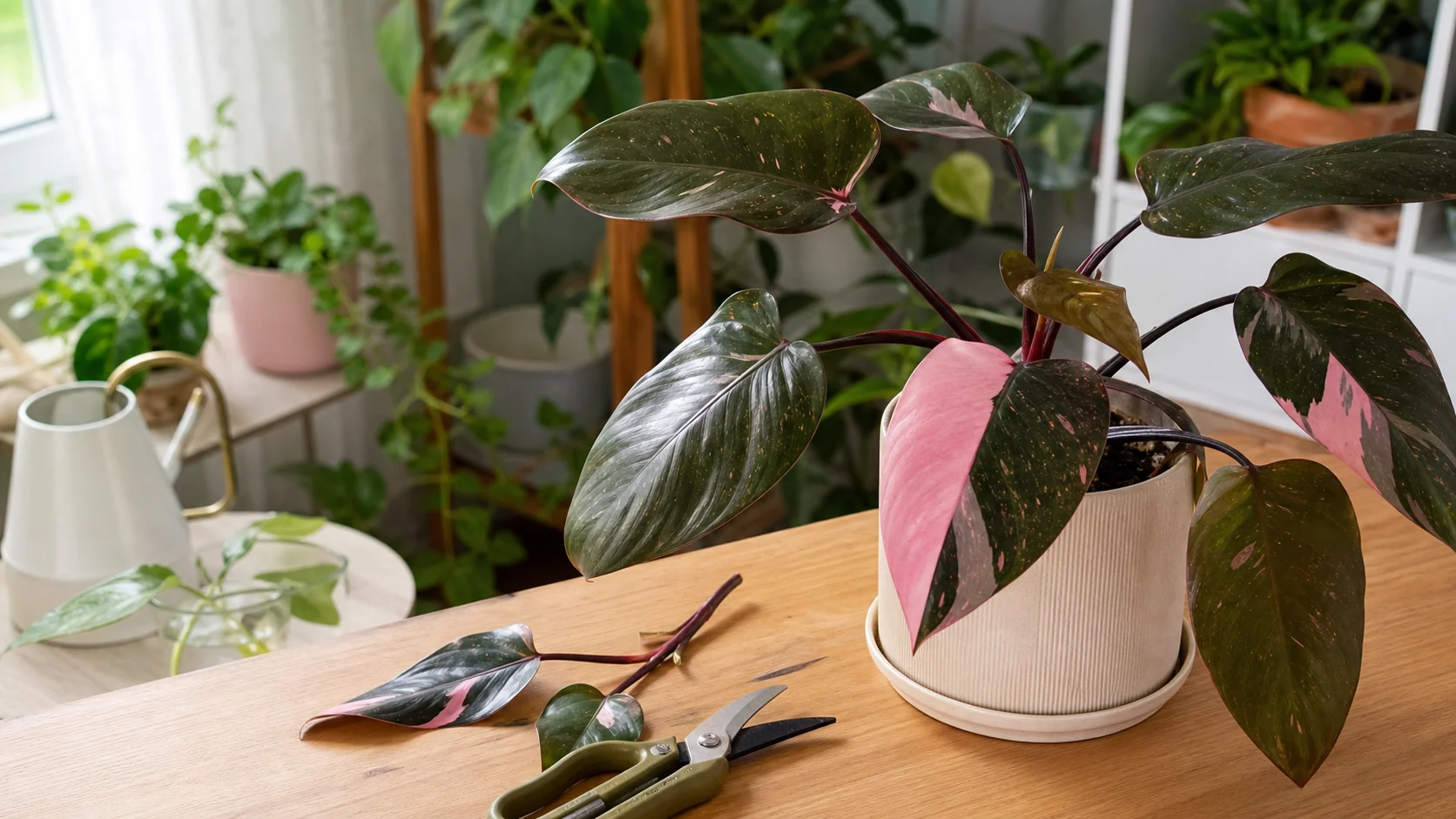
A clean node cut on better-variegated growth can redirect an overly green stem and provide a cutting to propagate.
What New Growth Is Telling You
Each new leaf is feedback. Once you know how to read it, the plant practically tells you what it needs.
New leaves coming in mostly green, pink nearly gone. This almost always means not enough light. Move her to a brighter spot and give it three or four growth cycles before judging. The change won’t show up in existing leaves, only new ones.
New leaves almost entirely pink, barely any green. Looks extraordinary, but that leaf can’t photosynthesize. It will likely yellow and drop sooner than balanced leaves. Cut back to a node that produced more even growth, keep light conditions consistent, and the next flush of leaves should correct itself.
New leaves small and pale, not developing fully. Two possibilities: either the light is too dim, or the plant is root-bound and can’t push full-size growth. Check the drainage holes. If roots are circling, it’s time for a slightly larger pot.
Leaves curling inward. Check the soil first. Dry soil plus curled leaves means the plant is thirsty. Wet soil plus curled leaves points to root stress, poor drainage, or cold air around the plant.
Leaf edges browning and crispy. Usually low humidity, dry soil, fertilizer buildup, or direct sun catching the leaves at certain times of day. The pink sections go first because they have no chlorophyll buffer. Flush the soil with plain water if you have fertilized heavily, then improve humidity or reposition away from strong direct rays.
Lower leaves yellowing while upper growth looks fine. Usually overwatering or old leaves aging out. If more than one lower leaf yellows at once, let the soil dry out more between waterings and check that the pot is actually draining properly.
No new growth at all for several weeks. Check the season first. Winter slowdown is completely normal. If it’s spring or summer with no movement, check warmth, light, and whether the roots are badly pot-bound.
Decision Tree for a Sad or Droopy Pink Princess
- Is the soil wet below the surface? If yes, do not add water. Increase airflow, confirm drainage, and let the mix dry down.
- Is the soil dry and the leaves curled? Water deeply, drain the pot fully, and reassess in 24 to 48 hours.
- Did the plant just move homes or windows? Hold conditions steady for a few days before making three more changes at once.
- Are new leaves shrinking or turning mostly green? Increase light before changing fertilizer or pot size.
- Do you smell rot, see mushy stems, or find roots sitting in cold sludge? Unpot, trim rot, and reset into airy mix only after the root problem is obvious.
Common Problems and What to Do First
| Symptom | Most likely cause | What to do first |
|---|---|---|
| Droopy after purchase | Relocation stress, low light, or overwatering at the store | Give bright indirect light, leave it alone for a few days, and check soil before watering |
| New leaves turning mostly green | Not enough usable light or the plant is protecting itself after stress | Increase light first and wait through the next few leaves before judging |
| Yellow lower leaves with wet soil | Overwatering or a mix that stays dense too long | Dry the mix down, improve drainage, and check roots if the smell is sour |
| Brown crispy edges | Dry soil, low humidity, fertilizer buildup, or direct sun scorch | Recheck moisture, flush excess salts if needed, and move it out of harsh rays |
| Mushy roots or stems | Root rot from stagnant moisture | Remove rot, repot into airy mix, and water much more carefully afterward |
| No pink improvement even in better light | Recovery is still in progress or the stem section has weak variegation genetics | Keep conditions stable and only prune back if several leaves in a row stay plain green |
Seasonal Care Calendar
The Pink Princess follows the rhythm of the seasons more noticeably than some houseplants, partly because any change in conditions shows up directly in new leaf variegation.
Spring (March to May)
Growth picks up, usually from late March onwards. This is the time to resume monthly fertilizing once you see a new leaf unfurling. If roots were circling the drainage holes or the plant drank water unusually fast last summer, spring is the right time to repot. If she spent winter further from the window to avoid cold glass, move her back to your brightest spot as temperatures stabilize.
Summer (June to August)
Peak growing season. In good conditions she may push a new leaf every two to three weeks. Summer growth tends to show the most balanced variegation, particularly if light has been consistent. Water more frequently, but still let the top few centimetres of soil dry before each watering. If your home gets very hot afternoon sun through the windows, make sure she’s not catching direct rays during peak hours.
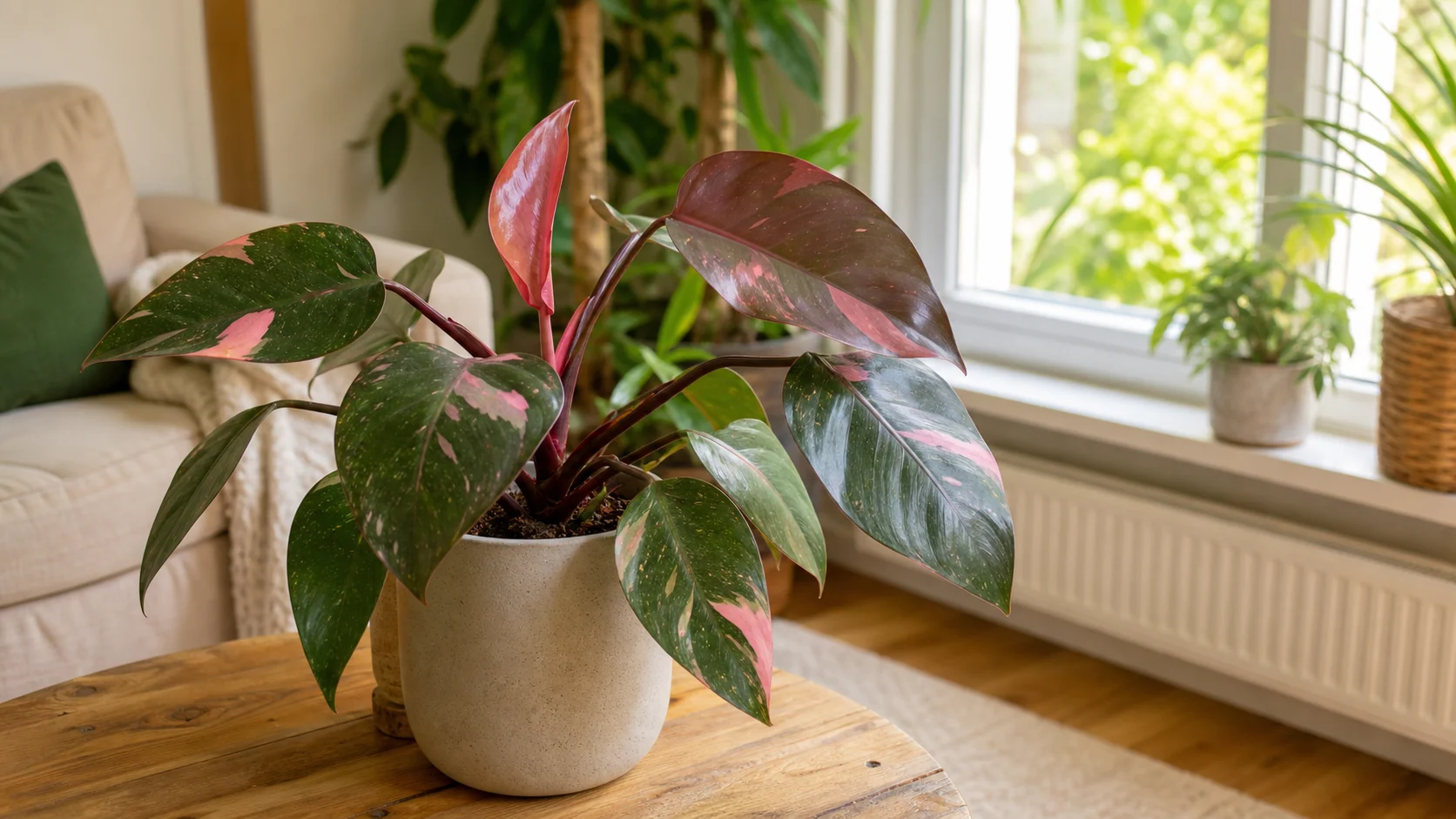
Balanced variegation and a fresh unfurling leaf signal active summer growth in bright light away from direct afternoon rays.
Autumn (September to November)
Growth starts slowing by October. Taper fertilizer in September and stop completely by the end of October. Reduce watering frequency as the soil takes longer to dry out with less light and cooler temperatures. Avoid moving her around during this period. Changes in conditions in autumn can nudge the plant toward green reversion as it adjusts.
Winter (December to February)
Growth slows significantly or pauses entirely. No fertilizer. Water sparingly, checking the soil before every session. She needs considerably less than in summer. Keep her away from cold windows and heating vents, both of which stress the leaves. If natural light is genuinely dim in your home through the winter months, this is exactly when a grow light makes the biggest difference to variegation stability. Our guide to grow lights for indoor plants covers setup and positioning.
Common Mistakes
- Watering on the same day every week whether the pot is dry or not.
- Repotting immediately after purchase when the plant is only dealing with move stress.
- Chasing stronger pink with direct sun instead of brighter indirect light.
- Letting the plant sprawl without support, then wondering why the leaves stay small.
- Fixing three things at once and losing the signal of what actually helped.
A Note on Toxicity
The ASPCA classifies all Philodendron species, including the Pink Princess, as toxic to cats, dogs, and horses. The leaves and stems contain insoluble calcium oxalate crystals, which cause oral irritation, drooling, and difficulty swallowing if chewed. Keep her out of reach of pets, or consider a different plant for a pet-heavy household. Our guide to cat-safe indoor plants has plenty of beautiful alternatives.
Methodology
This guide was refreshed using live SERP review and snippet-level Reddit discovery on 2026-06-13, then checked against NC State Extension for Philodendron erubescens behavior, University of Maryland Extension watering guidance, and ASPCA pet-toxicity guidance. Social discussion was used only as qualitative signal for what owners struggle with most after purchase.
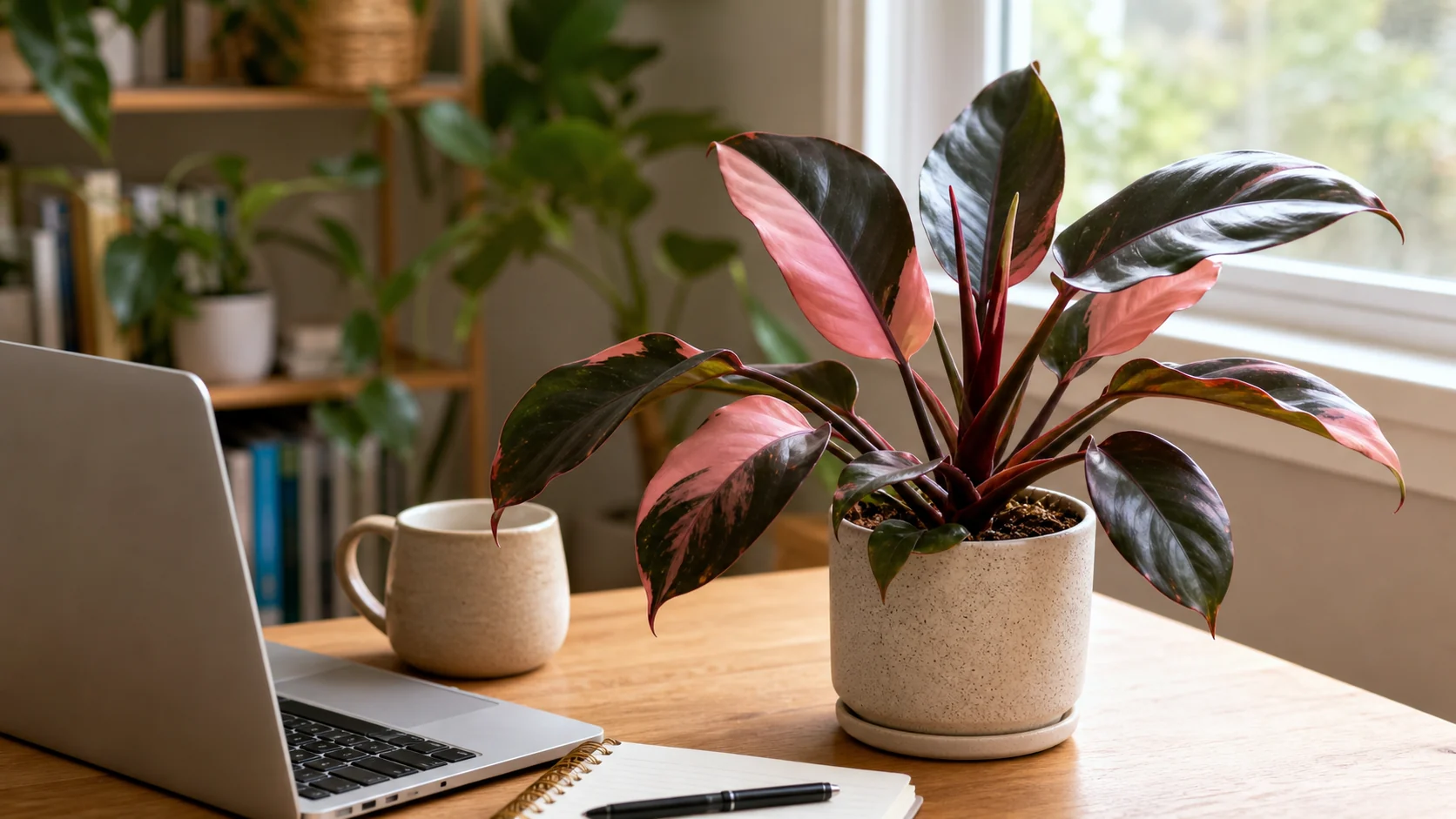
The care recommendations combine current source review with practical observations of the Pink Princess in a real home setting.
Freshness Note
Pink Princess care advice shifts less than app or hardware guidance, but product naming, seller labeling, and common variegation myths change fast online. This article was last reviewed on 2026-06-13 with current extension and pet-safety references.
Real User FAQ
Why are my Pink Princess leaves turning green?
Almost always: not enough light. The plant produces more chlorophyll to compensate for dim conditions, and the pink gradually disappears. Move her to a brighter spot near a window with several hours of indirect light per day, or add a grow light. New growth should start returning to normal variegation within a few weeks.
Can I encourage more pink variegation?
Bright, indirect light is the main lever. You can also cut back sections that are producing consistently green growth, which encourages the plant to regenerate from a node with better variegation history. There’s no fertilizer or supplement that creates more pink. It comes from light and genetics.
What does it mean when a leaf comes out entirely pink?
A leaf with almost no green looks remarkable, but it can’t photosynthesize. It may yellow and drop sooner than balanced leaves. If you’re consistently getting all-pink new growth, the plant is producing leaves it can’t fully support. Cut back to a node that produced more balanced leaves and keep light conditions stable.
How fast does Pink Princess grow?
Slowly, compared to most philodendrons. Expect one to three new leaves per month during the growing season, and little movement in winter. This is partly why patience matters so much with this plant. Each leaf takes time, and each one is worth waiting for.
Is Pink Princess easy to propagate?
Yes. She propagates well through stem cuttings. Take a cutting with at least one node and one leaf, let the cut end callous for an hour or two, then root it in water or moist sphagnum moss. Keep it somewhere warm and bright. Variegation on new growth from the cutting isn’t guaranteed to match the parent exactly, but most cuttings maintain reasonable pink.
Why are my Pink Princess leaves coming in small?
Small new leaves usually mean the plant needs more light, more humidity, or a slightly larger pot. If roots are cramped, new leaves can’t develop fully. If she’s in a dim spot, she’s conserving energy. Brighter conditions and a pot upgrade if roots are crowded tend to make a noticeable difference over the next few growth cycles.
Is Pink Princess toxic to cats?
Yes. All Philodendrons contain calcium oxalate crystals, which cause oral irritation, excessive drooling, and vomiting in cats and dogs if the plant is chewed. Keep her out of reach, or consider an alternative. Our guide to cat-safe indoor plants covers the best options.
Do I need a grow light for Pink Princess?
Not necessarily, but if your home doesn’t have a genuinely bright window, a grow light is one of the best investments you can make for this particular plant. Consistent, bright light is the single biggest factor in keeping variegation stable. Our guide to grow lights for indoor plants covers what specs actually matter and how to set one up.
Philodendron Pink Princess care isn’t complicated once you understand what she’s doing. She’s a variegated plant in a constant negotiation between beauty and survival, and your job is to give her the conditions to do both. Bright light, consistent water, some humidity, and patience. Get those right and those deep pink leaves will keep coming.
For personalized care reminders tailored to your Pink Princess and the rest of your collection, download KnowYourPlant at knowyourplant.app.