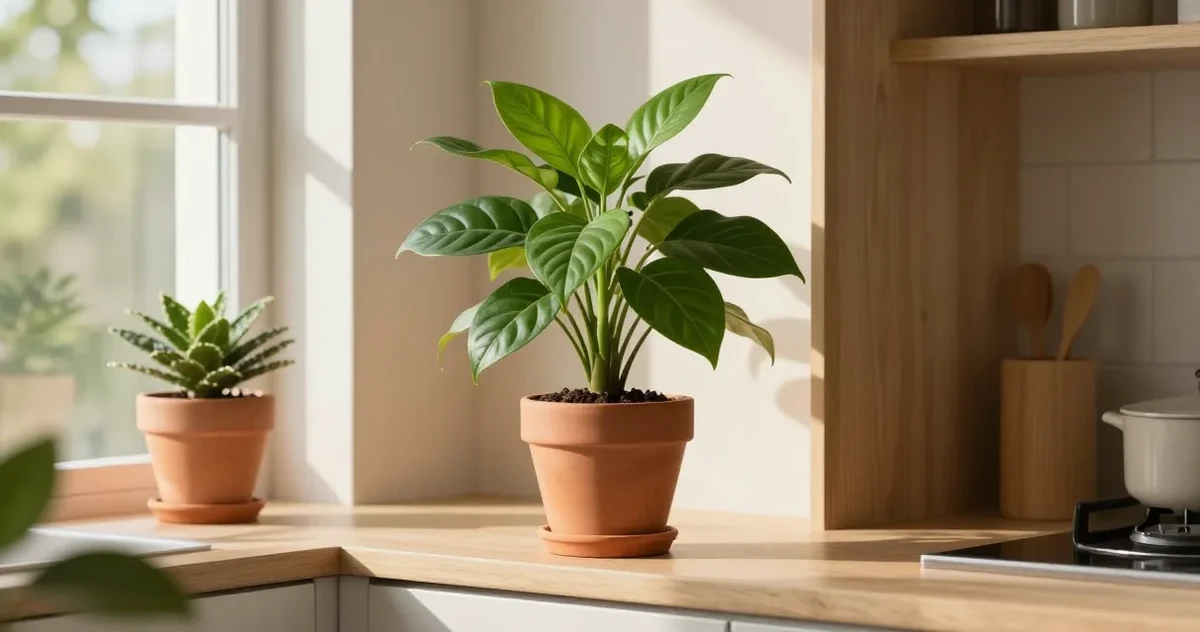
If your plant is leaning hard toward the window, growing long bare stems, making tiny pale leaves, or sitting in wet soil for days, it may not be getting enough light to grow normally. A grow light solves that specific problem: it gives indoor plants steady usable light when your room, window, or season cannot.
If you want the practical answer first: the best grow lights for indoor plants are usually full-spectrum LEDs, matched to the space rather than the plant label. A small clip-on light works for one pot. LED bars work better for shelves. A stronger panel or bar is usually better for herbs, succulents, and winter propagation. Start there, then adjust based on what the leaves do. If you want the broader basics first, our indoor plant care guide for beginners explains how light, watering, and soil work together.
Outdoor solar context is not an indoor light recipe
CHELSA solar radiation can compare native macroclimates, but it is not PPFD at a leaf under a lamp. These plants are included to show why one lamp height and duration should not be treated as universally equivalent.
The ranges below are the middle 50% (p25–p75), not recommended indoor setpoints.
| Reference taxon | POWO native range | Annual mean temperature | Annual precipitation | Relative humidity | Solar radiation | Evidence |
|---|---|---|---|---|---|---|
| Strelitzia reginae (orange bird of paradise) | Cape Provinces to KwaZulu-Natal | 16.9–19.5°C | 643–961 mm/yr | 59–61% | 16.6–18.0 MJ/m²/day | 30 climate points / 79 usable records; medium confidence |
| Monstera deliciosa (Monstera deliciosa) | southern Mexico to Guatemala | 18.6–22.8°C | 1308–2510 mm/yr | 62–67% | 17.8–19.9 MJ/m²/day | 154 climate points; high confidence |
| Epipremnum aureum (golden pothos) | Mo’orea in the Society Islands | 25.7–25.9°C | 2451–2644 mm/yr | 63–64% | 20.0–20.1 MJ/m²/day | 6 climate points; low confidence |
| Dracaena trifasciata (snake plant) | southern Nigeria to west-central tropical Africa and Tanzania | 23.3–25.2°C | 1585–1783 mm/yr | 65–69% | 16.1–18.1 MJ/m²/day | 29 climate points; medium confidence |
What this changes in this guide: Use a meter, manufacturer output data, plant response, and distance from the fixture for the indoor setup; use the table only as ecological context.
Sources and method: Strelitzia reginae in POWO and GBIF; Monstera deliciosa in POWO and GBIF; Epipremnum aureum in POWO and GBIF; Dracaena trifasciata in POWO and GBIF; CHELSA V2.1, 1981–2010. GBIF records are limited to POWO-native countries, then filtered for coordinates, establishment signal, licence, precision, and spatial duplication. No community or user-reported care data is used in this module.
What Most Plant Roundups Miss
Most roundups about grow lights for indoor plants list attractive options. The better question is which choice will still make sense in your actual room three months from now.
Use this filter before choosing:
- Light reality: what the plant receives on a normal cloudy day, not the brightest hour of the week.
- Care rhythm: whether you prefer weekly attention or a plant that can be ignored longer.
- Space: mature height, spread, trailing habit, and whether leaves will touch walls or pets.
- Failure signal: what the plant does first when the match is wrong: yellowing, stretching, crisping, or dropping leaves.
A good recommendation is not just beautiful. It fits the room, the owner, and the first problem you are likely to notice.
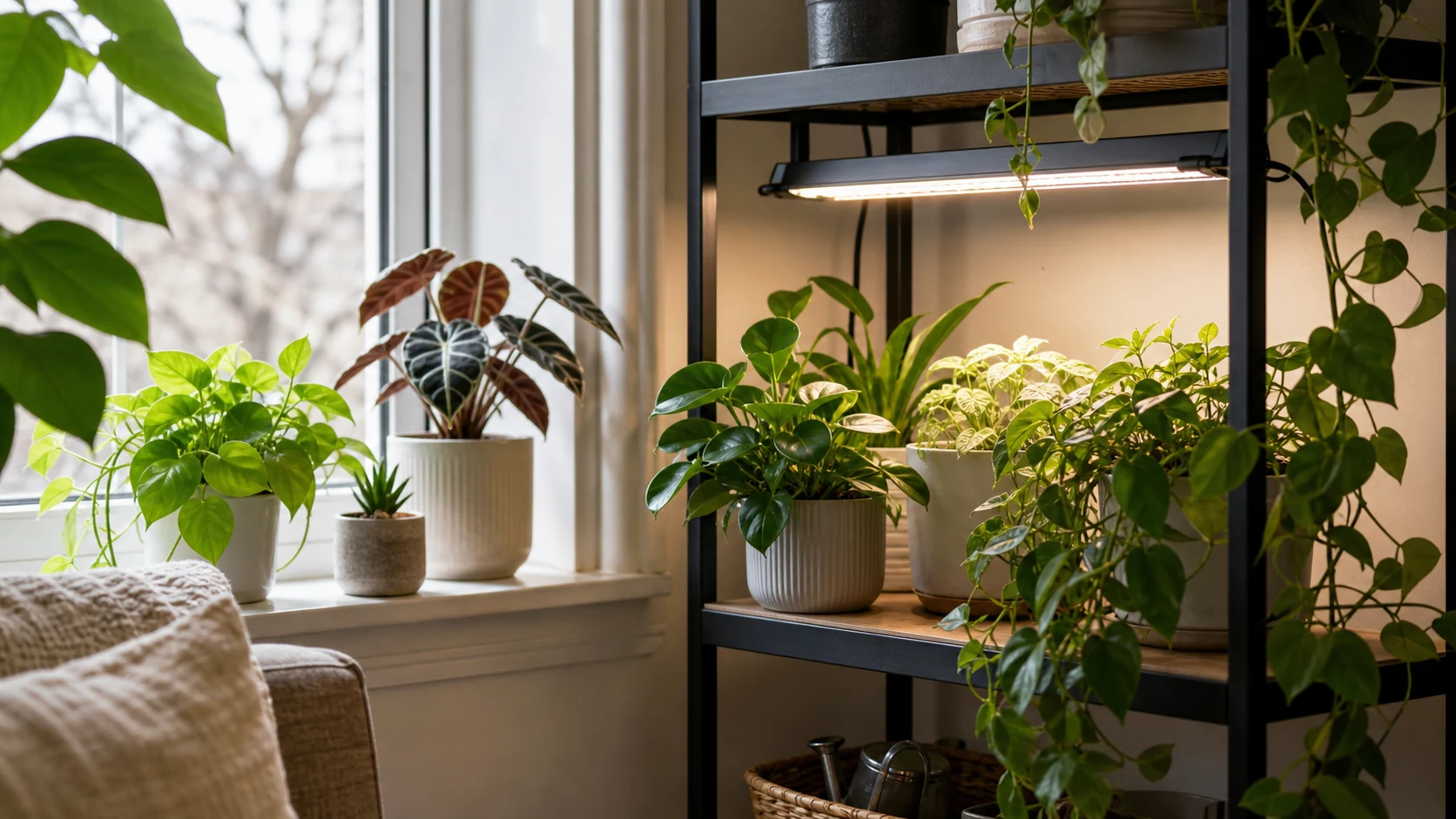
Compare real window light, shelf coverage, and each plant’s growth habit before choosing a fixture.
What Plant Owners Keep Getting Wrong
The same beginner mistakes show up again and again in plant-owner discussions and extension troubleshooting:
- Buyers get stuck on spec jargon and do not know whether wattage, lumens, PAR, or bulb type is the number that actually matters for a houseplant setup.
- Distance mistakes are common. A light that is too far away can act almost like no light, while a strong fixture placed too close can bleach or curl leaves.
- People often buy a light labeled “grow light” and still under-light the plant because runtime, coverage, and plant expectations were never adjusted.
That does not prove one perfect setup for every home. It does explain why this guide is organized around symptoms, placement, and daily runtime instead of brand winners.
Social Listening Snapshot: What Buyers Usually Regret
Across the Reddit threads reviewed for this topic, the regrets repeat in a predictable order:
- Buying for the marketing photo instead of the setup. A tiny clip-on light gets used for a whole shelf, then the back plants still stretch.
- Leaving the fixture too far away. Owners assume a bright-looking lamp is enough, but the plant keeps getting leggy because usable light drops fast with distance.
- Chasing more gadgets before fixing runtime. A second bulb rarely helps if the first light is only on for a few inconsistent hours a day.
- Expecting one weak lamp to replace full sun. Herbs, succulents, and flowering plants usually need a stronger bar or panel, not just a different bulb shape.
That pattern is why the best first fix is usually not “buy a more expensive light.” It is to check coverage, distance, and timer habits before you spend again.
When a Grow Light Will Not Solve the Problem
Buy a grow light when low light is the bottleneck. Do not expect it to fix a plant that is struggling for another reason.
A grow light will not solve these issues on its own:
- Wet roots or compacted soil: if the pot stays soggy for days, light helps less than drainage and watering changes.
- Pests: spider mites, thrips, and fungus gnats can make a plant look weak even when the light is fine.
- Wrong plant expectations: a weak desk lamp will not turn a dark room into full sun for herbs, succulents, citrus, or flowering tropicals.
- Existing root damage: a stressed root ball often needs time and airflow before stronger growth returns.
If the plant smells sour, the potting mix stays wet, or you see webbing, sticky residue, or moving insects, diagnose that first and then decide whether light is still part of the problem.
Best Grow Lights for Indoor Plants: Quick Picks
Use these as setup categories, not lab-tested brand winners. The goal here is to match fixture type, distance, timer schedule, and room conditions before you compare every spec on the box.
- Best clip-on grow light setup: 10-20W full-spectrum LED for one desk plant, cutting jar, or small pothos.
- Best shelf grow light setup: 20-40W LED bar mounted under the shelf above your plants.
- Best grow light bulb setup: 15-36W full-spectrum E26 bulb in a stable lamp for one corner or one large plant.
- Best grow light setup for herbs: 30-60W full-spectrum bar or panel placed closer than you would for most houseplants.
- Best budget setup: A basic 20-30W LED bar with a timer, not a tiny purple lamp with no usable specs.
| Use case | Ambient window light | Starting wattage | Starting distance | Timer starting point | Best type | Watch for |
|---|---|---|---|---|---|---|
| One small houseplant | Weak to moderate daylight nearby | 10-20W | 12-18 inches | 12-14 hours | Clip-on LED or grow bulb | Leaning stems should slow within two weeks |
| Shelf of pothos, philodendron, or cuttings | Low natural light across the shelf | 20-40W | 12-24 inches | 12-14 hours | LED bar | Front and back rows should grow more evenly |
| Herbs in a kitchen | Bright room, but not enough direct sun | 30-60W | 6-12 inches | 14-16 hours | LED bar or panel | New growth should stay tighter and less floppy |
| Succulents indoors | Bright room or winter window backup | 30-60W | 6-12 inches | 14-16 hours | LED panel or strong bar | Stretching should slow before color improves |
| Dark winter room | Very limited daylight | 30-60W | 12-24 inches | 14-16 hours | Full-spectrum panel or bar | Soil should dry faster once growth resumes |
The distance ranges above lean on Iowa State Extension’s guidance that light intensity falls off fast as the fixture moves away from the plant, while the timer ranges are editorial starting defaults for indoor supplemental use rather than one universal rule.
The Only Specs Most Beginners Need
If the product page is overwhelming, screen the light in this order:
- Coverage: can it light the whole plant or shelf, not just the middle leaves?
- Mounting distance: does the listing tell you how close the light should sit?
- Timer: can you run a reliable daily schedule without remembering it yourself?
- Wattage and output: is there enough power for the size of the setup?
- PPFD or PAR details: most useful when you are buying for herbs, succulents, or other higher-light plants.
- Kelvin: helpful, but less important than coverage, distance, and timer control for normal houseplant use.
If a listing skips coverage, timer options, mounting distance, and any output clue, treat it as decor until proven otherwise.
Spec translator: what the labels actually tell you
- Wattage tells you roughly how much power the fixture draws, not whether it will light your whole shelf well.
- Coverage tells you whether the useful light reaches the whole plant or setup instead of just the center leaves.
- Timer matters because an average light on a reliable schedule often beats a stronger light used inconsistently.
- PPFD or PAR details are most helpful when you are buying for herbs, succulents, or other higher-light plants, not as a mandatory requirement for every pothos or snake plant.
For most indoor plant setups, coverage, mounting distance, and timer reliability are still the first things to trust before acronyms on the box.
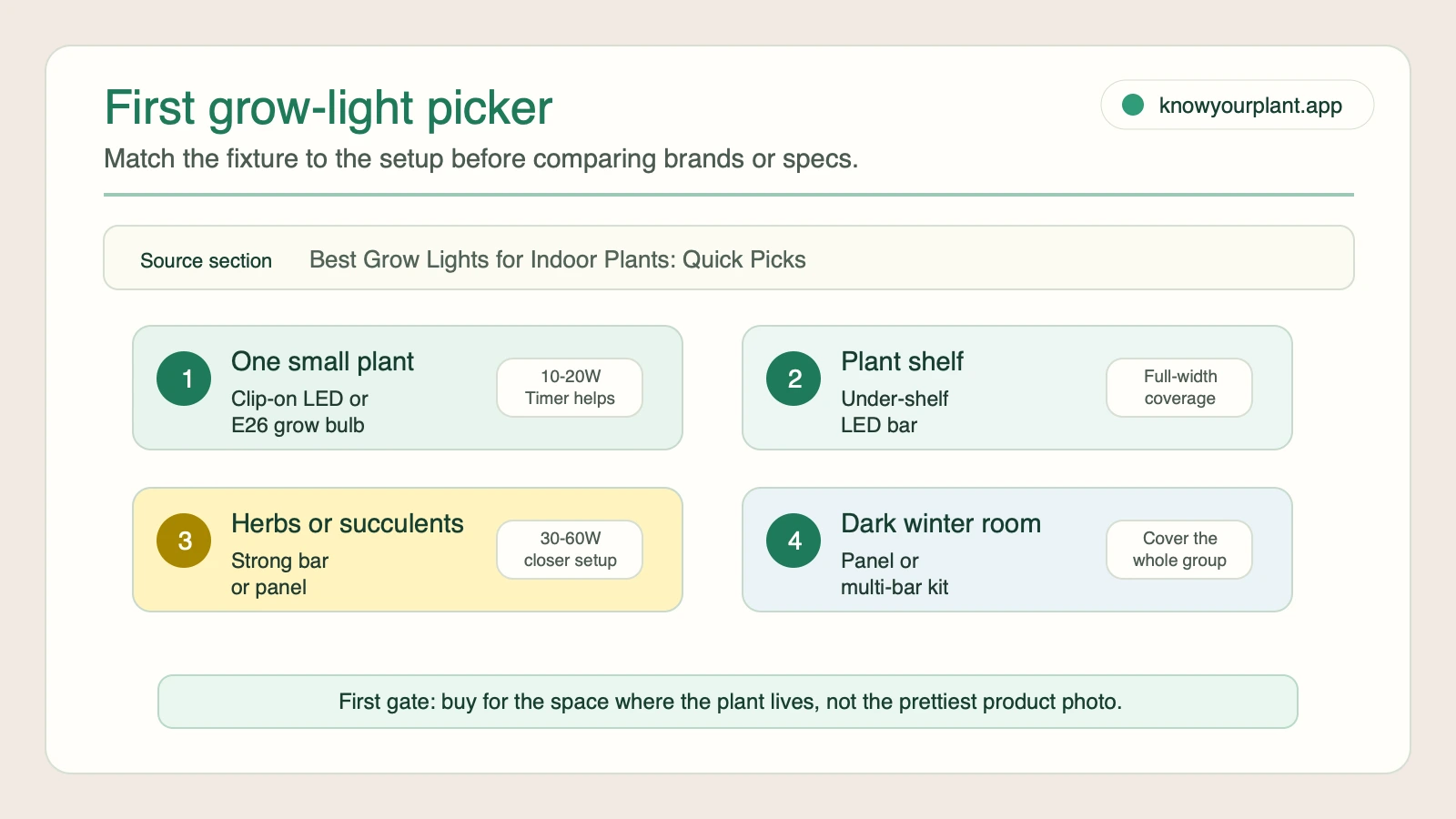
Start with the room and setup before comparing wattage claims or product photos.
Which Grow Light Should You Buy First?
If you only want to make one purchase, buy for the space where the plant will actually live. Most bad grow light purchases happen because the light is too small for the setup, not because the buyer picked the wrong brand.
| Your setup | Buy this first | Minimum spec to look for | Skip this |
|---|---|---|---|
| One desk plant or small trailing plant | Clip-on full-spectrum LED or E26 grow bulb | 10-20W, adjustable neck, timer | Tiny USB purple lamps with no wattage listed |
| Plant shelf with 4-8 pots | Under-shelf LED bar | 20-40W per shelf, full-width coverage | One spotlight aimed at the middle plant |
| Herbs you want to harvest | Strong LED bar or panel | 30-60W, 6-12 inch mounting distance | Decorative white lamp bulbs marketed as “plant friendly” |
| Succulent tray indoors | Panel or strong bar | Published PPFD or strong user proof for succulents | Weak clip-on lights placed 2 feet away |
| Dark winter apartment | Full-spectrum panel or multi-bar kit | Timer, 4000K-6500K, enough coverage for the whole plant group | Buying one lamp for plants spread across the room |
My practical cutoff: if the product page does not list wattage, coverage area, timer settings, mounting distance, or any PPFD/PAR information, treat it as decor until proven otherwise. A cheap light can still work, but it needs enough output to change the plant’s behavior within two to three weeks.
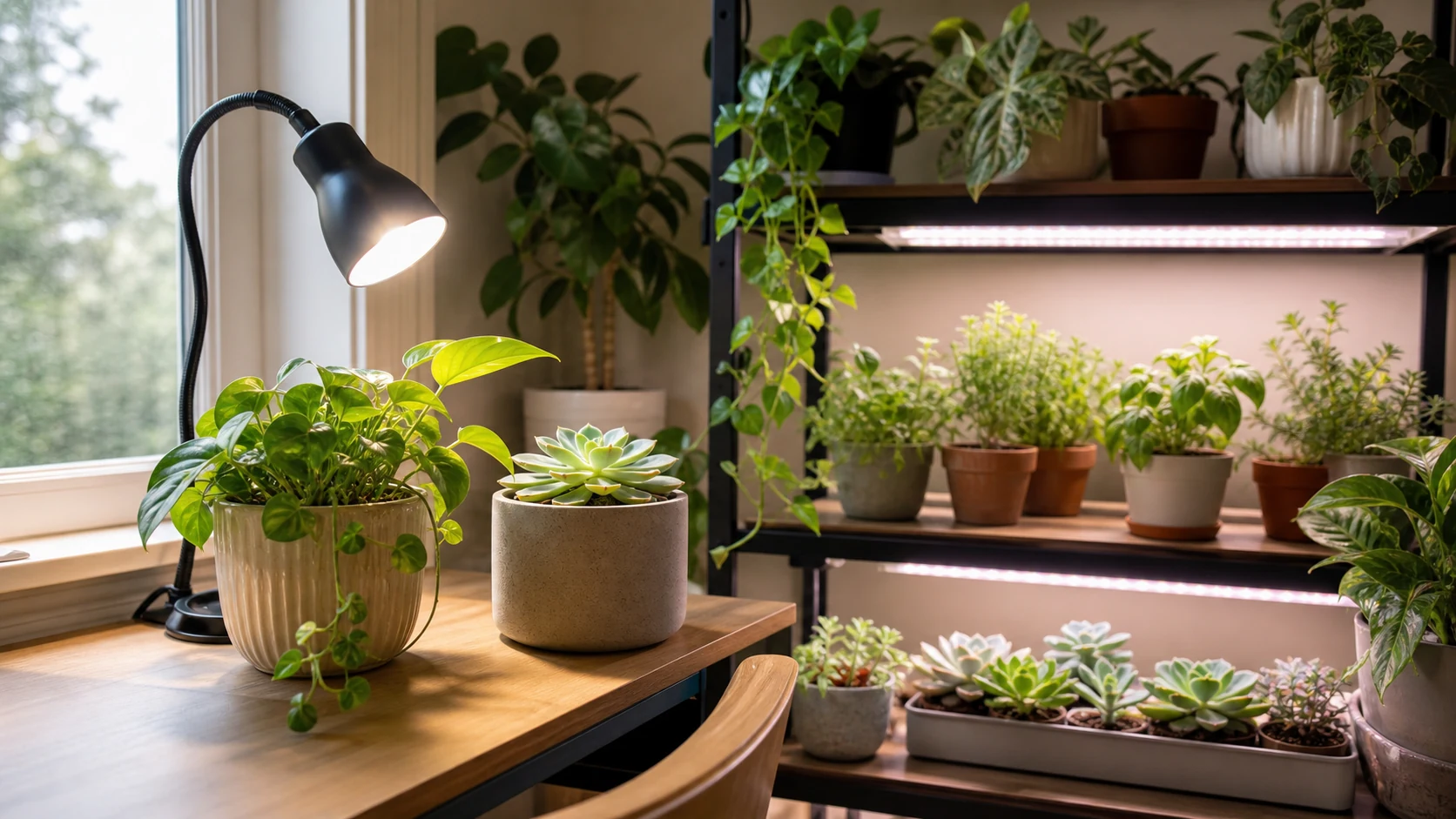
Choose a lamp for one pot, full-width bars for a shelf, and stronger coverage for herbs or succulents.
Grow Light Scoring Rubric
Use this quick score before you buy. Give each option 0 to 2 points per line.
| Criterion | 0 points | 1 point | 2 points |
|---|---|---|---|
| Coverage | Barely covers one plant | Covers one plant well | Covers the full setup evenly |
| Distance control | Fixed position | Adjustable, but awkward | Easy to raise, lower, or angle |
| Timer | No timer and awkward with smart plugs | Basic timer only | Reliable built-in timer or easy outlet-timer use |
| Spec clarity | Marketing words only | Wattage or coverage listed | Wattage, coverage, and mounting guidance listed |
| Heat and stress risk | Runs hot or sits too close | Manageable with caution | Cool enough for routine indoor use |
A score under 6 usually means the light will create more guesswork than progress for a beginner houseplant setup.
Pros and Cons by Fixture Type
| Fixture type | Pros | Cons | Best for | Not for |
|---|---|---|---|---|
| Clip-on LED | Cheap, easy for one pot, simple to reposition | Weak coverage, easy to place too far away | One desk plant, cuttings, small trailing plant | A shelf, herbs, or multiple plants |
| LED bar | Even coverage, easy timer use, better for shelves | Needs mounting space | Plant shelves, medium-light foliage plants, herbs | One isolated floor plant in a corner |
| Grow bulb in lamp | Familiar setup, good for one larger plant | Coverage falls off fast, lamp stability matters | One plant beside a chair, side table, or window | Dense plant groups or succulent trays |
| Panel or strong bar | Better intensity for herbs and succulents | More visible in the room, can be too intense if placed badly | High-light plants, winter setups, propagation | Owners who want a subtle decorative light only |
Symptom Diagnosis Card
| What you see first | Most likely issue | Change first |
|---|---|---|
| Long gaps between leaves, leaning stems, pale new growth | Light too weak, too far, or not on long enough | Move the light closer or extend runtime |
| Bleached patches on the top leaves | Light too close | Raise the fixture or shorten the day slightly |
| Crispy leaf edges nearest the bulb | Too much intensity or long runtime | Back the light off and check soil moisture |
| Plant still sulks in a dark room even with a tiny lamp | Fixture is too weak for the setup | Upgrade coverage, not just hours |
| Soil stays wet for days and growth is slow | Low light is part of the problem, but watering may be too frequent too | Fix light, then water by soil dryness |
Decision Tree: What Should You Change First?
- Is the plant stretching or making smaller pale leaves? Move the light closer before buying a second fixture.
- Is the light already close but the plant still looks weak? Increase coverage or use a stronger bar or panel.
- Are leaves bleaching or curling nearest the bulb? Back the light off a few inches and shorten the timer by 1 to 2 hours.
- Is the plant in a bright window already? Use the grow light to top up morning or evening hours instead of running it all day.
- Is this a herb, succulent, or flowering plant in a dark room? Assume it needs a stronger setup than pothos or snake plant.
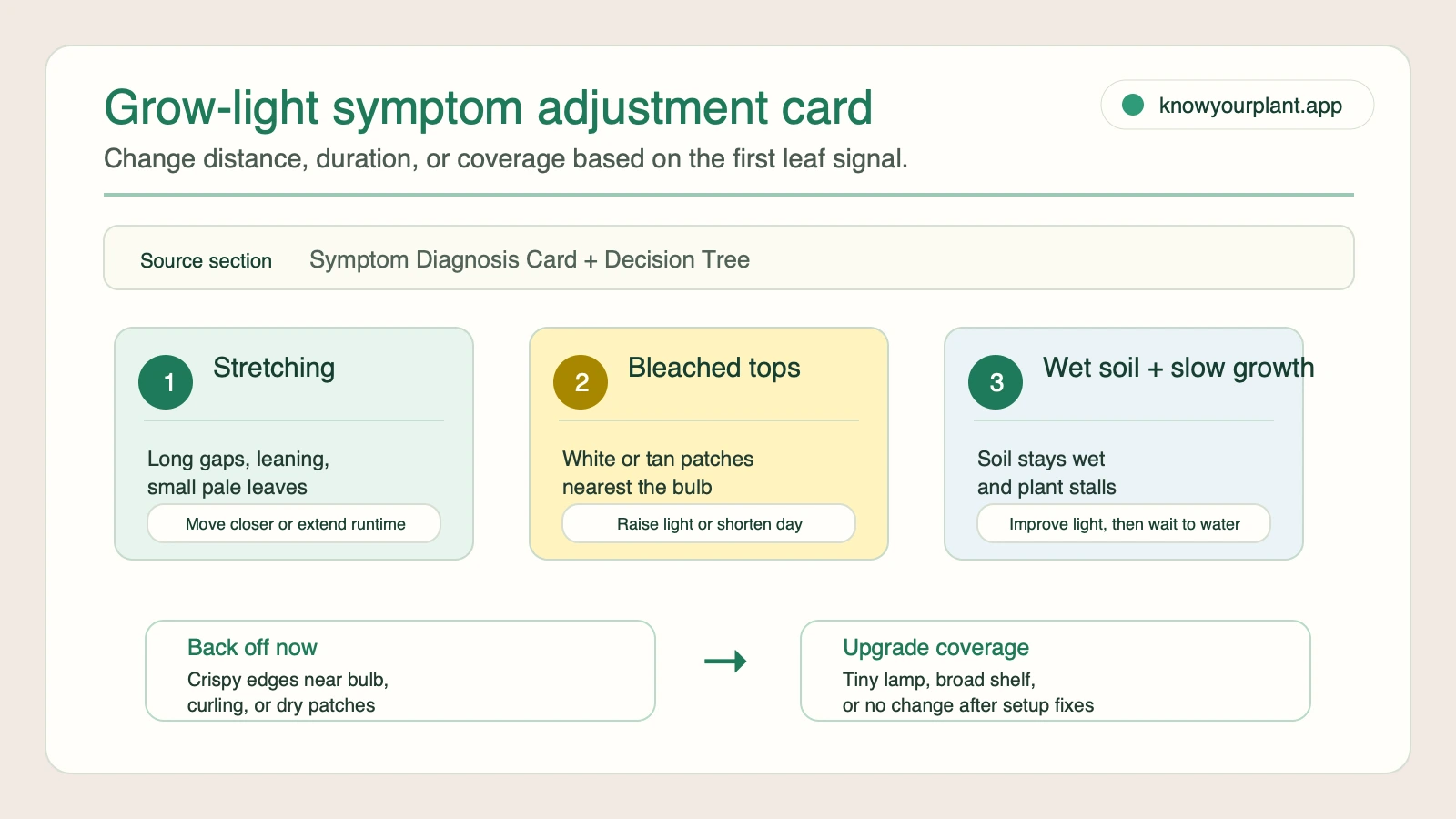
Let the first leaf signal choose the next adjustment: distance, duration, or better coverage.
Testing and Evaluation Method
This is a category-first setup guide, not a bench test of named fixtures. The practical recommendations here were built from four evidence layers:
- Plant symptom guidance: University of Minnesota Extension was used for visible low-light and too-much-light signals such as legginess, pale growth, leaf drop, and scorch.
- Distance guidance: Iowa State Extension was used for the core distance rule, especially the reminder that intensity drops sharply as the light moves away from the plant.
- Spectrum basics: University of Maryland Extension and Illinois Extension were used for the red-blue wavelength explanation and the foliage-versus-flowering distinction.
- Reader pain points: qualitative Reddit threads were used only to identify the confusing parts buyers keep tripping over, especially specs, distance, and timer setup. They were not treated as scientific proof.
Editorial judgment was used for the starter schedules, setup categories, and product-page red flags because those choices depend on room layout, plant mix, and how much natural light is already doing the work.
Expert Note
University of Minnesota and Iowa State Extension agree on the part most product pages under-explain: distance and symptoms matter as much as fixture type. In practice, weak light placed too far away often behaves like no grow light at all, while a strong fixture placed too close can stress leaves quickly. That is why this guide prioritizes setup and adjustment over brand hype.
Freshness note: Source links and setup guidance were reviewed on 2026-07-10. The search presentation and setup table were updated on 2026-09-09 using that existing source set; the sources were not rechecked during the editorial update. Community discussions are used only as qualitative signals about confusing specs and common setup mistakes.
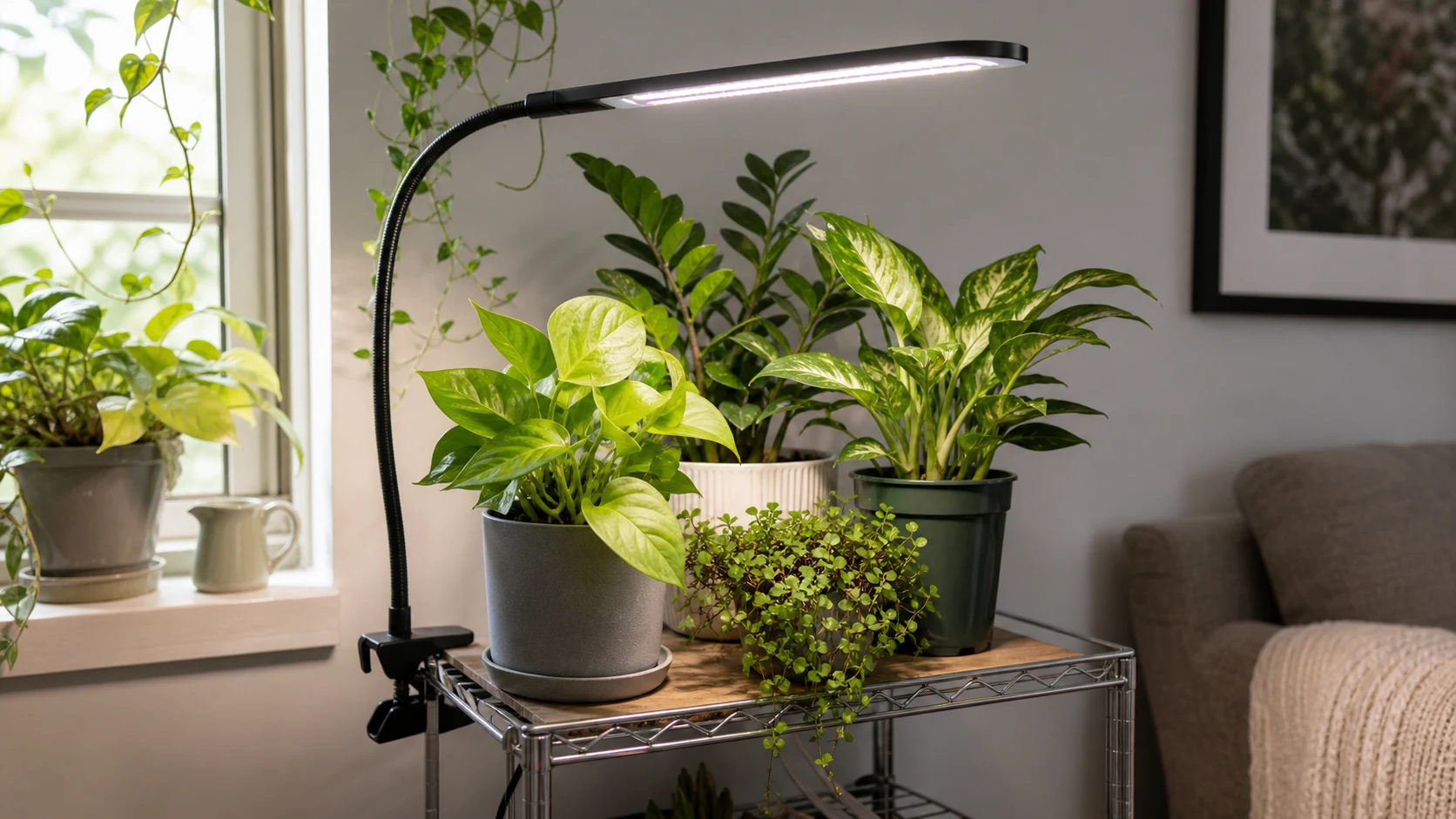
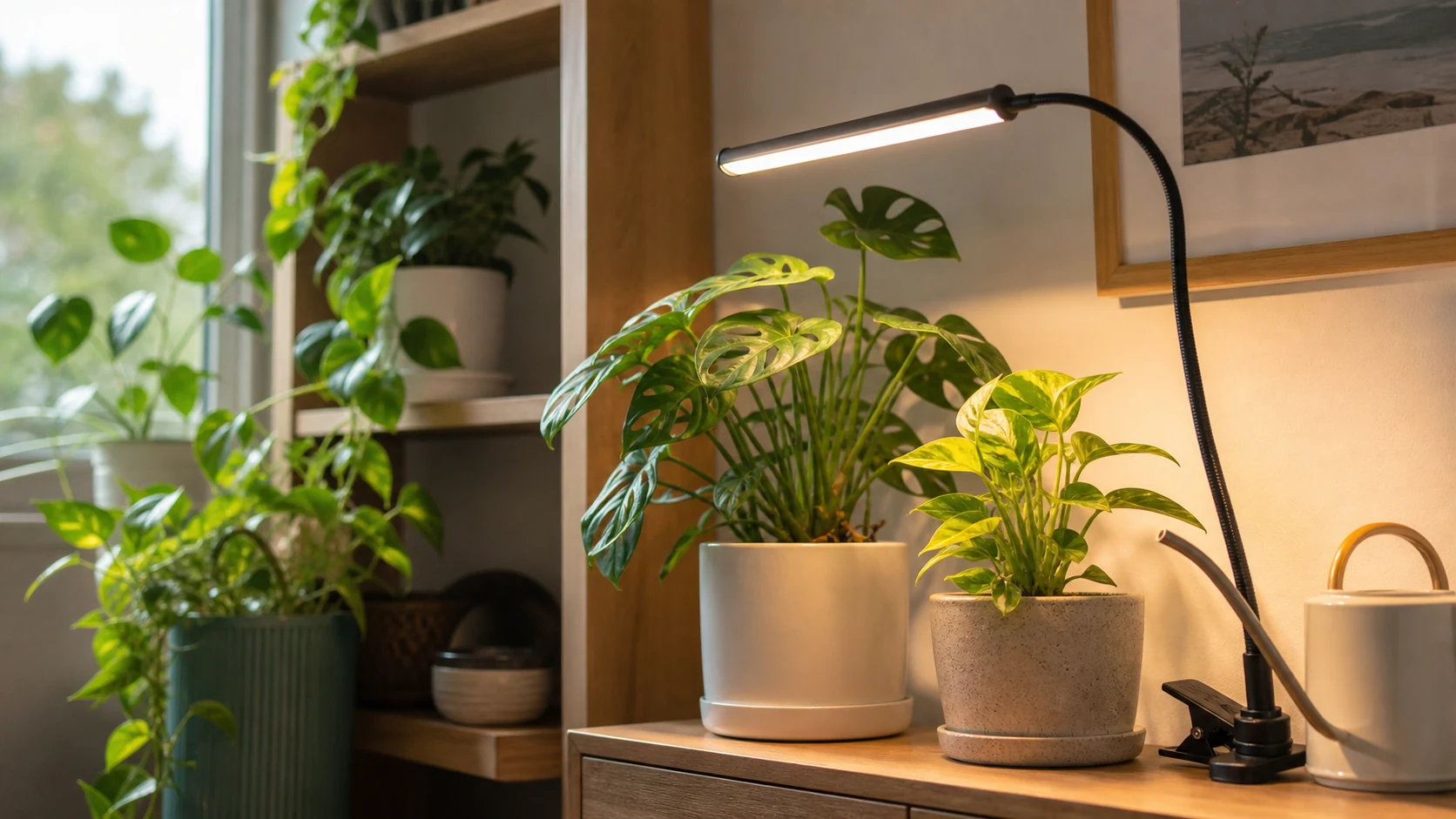
An adjustable clamp light makes it practical to correct the light-to-leaf gap as plants grow.
Do You Actually Need a Grow Light?
Not every plant, not every window situation calls for one. Before spending money, it’s worth being honest about what your space actually offers.
Many indoor rooms simply do not deliver steady enough light for active growth, especially in darker corners or winter windows. That is when a grow light stops being a gadget and starts being the reason the plant keeps making normal, healthy growth instead of slowly stretching or stalling.
Signs your plants could use supplemental light:
- Stems are long and stretched, with wide gaps between leaves
- New growth comes in smaller and paler than older leaves
- A spot you love in the room is too far from any window
- You want to keep herbs productive year-round or overwinter tropicals indoors
Not every plant needs intervention. True low-light plants like ZZ plants and snake plants have evolved to manage on ambient light. If yours look fine, leave them alone. You can read more in our low light indoor plants guide for a realistic picture of what actually survives without supplemental light.
Grow Light Setup for Indoor Plants
If you already know your plant is in a dim spot, use this as your starting plan instead of trying to decode every grow light spec at once.
Today: Put the plant where you want it to live, then place a full-spectrum LED 12–24 inches above the top leaves for most pothos, philodendrons, monsteras, peace lilies, and similar houseplants. Use 6–12 inches for succulents and herbs. Use 24–36 inches for ZZ plants, snake plants, and other low-light tolerant plants. Those distance bands are practical starting points built from Iowa State Extension’s distance guidance, then simplified for everyday houseplant categories.
This week: Set a timer for 14 hours on and 10 hours off. That schedule is an editorial default for supplemental indoor use, not a universal law, because grow lights are weaker than full sun and most beginners under-light their setups. Check the plant every few days. If new growth still looks stretched or pale, move the light 4–6 inches closer. If the leaves get bleached patches, curled edges, or crispy tips nearest the light, use our plant sunburn guide to confirm the pattern, then move the light 4–6 inches farther away.
This season: Run the light more in winter and less in bright summer months. Your goal is steady growth, not blasting the plant with maximum light every day of the year.
Grow Light Setup Starting Points
Treat these distances and hours as starting ranges. Fixture output and ambient window light vary, so adjust one setting at a time from the plant’s response and the manufacturer’s guidance.
| Plant setup | Fixture | Starting distance | Starting hours per day | Signs to adjust |
|---|---|---|---|---|
| One pothos, philodendron, or similar desk plant | 10–20W clip-on full-spectrum LED or E26 grow bulb | 12–18 inches | 12–14 hours | Move closer if new growth stretches or keeps leaning; move farther away if the nearest leaves bleach or curl |
| Dark apartment shelf with several foliage plants | 20–40W full-width LED bar | 12–18 inches above the canopy | 12–14 hours | Improve coverage if the back row stretches; raise the bar or shorten the day if top leaves fade or crisp |
| Indoor herb or succulent station | 30–60W LED bar or panel | 6–12 inches | 14–16 hours | Move closer if growth stays loose and pale; move farther away if upper leaves bleach, curl, or overheat |
| Low-light plant receiving supplemental light | Adjustable LED bulb or bar | Start at the fixture maker’s wider range | 10–12 hours | Reduce the day if the plant was already stable; increase gradually only when new growth remains weak or stretched |
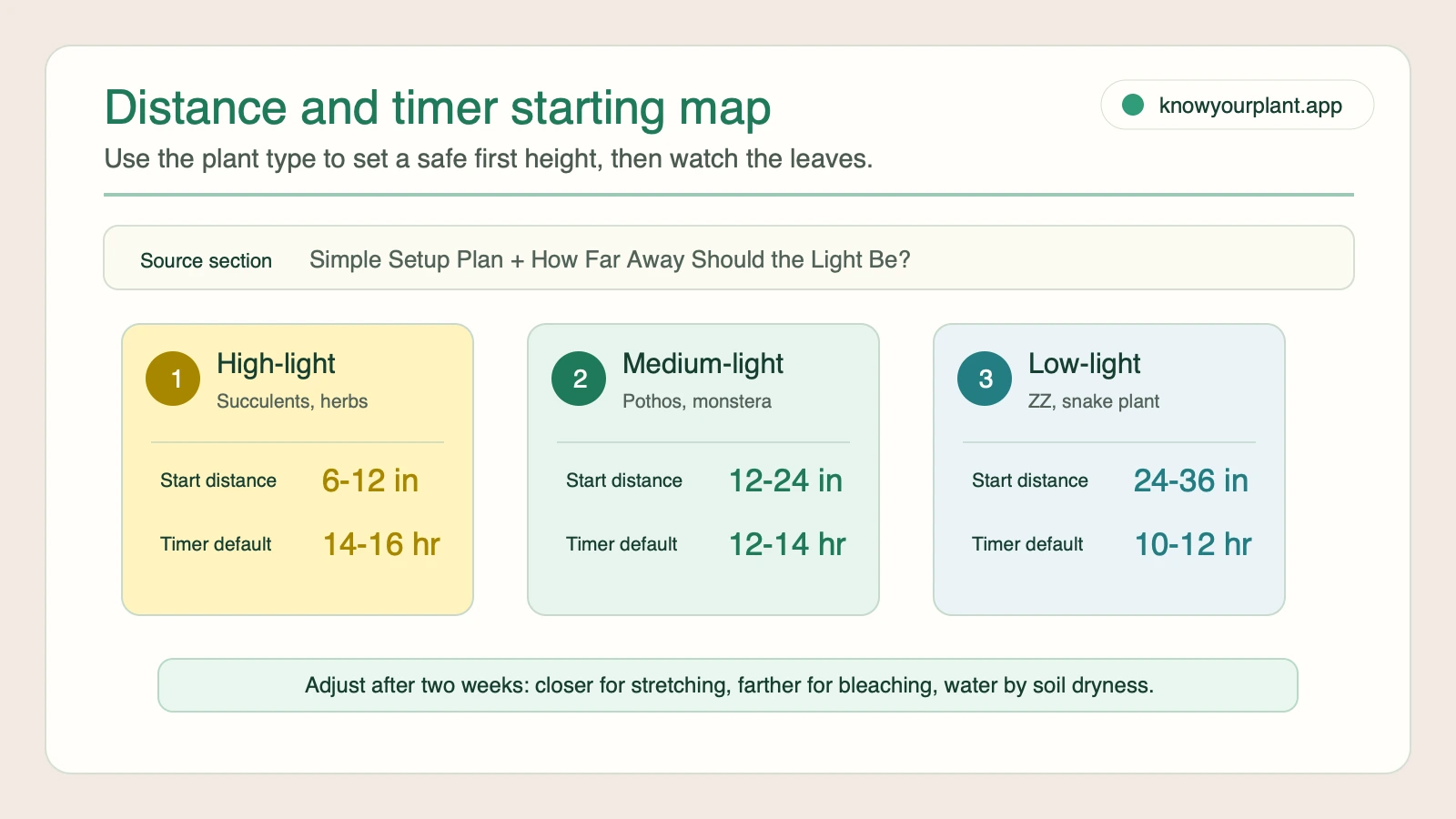
Use the distance as a starting point, then adjust after two weeks based on leaf stretching, bleaching, and soil drying speed.
Types of Grow Lights: What the Options Actually Mean
Full-Spectrum LED (The Default Recommendation)
If you want one honest answer to “what grow light should I buy,” it’s a full-spectrum LED panel or bar. They run cool, use a fraction of the electricity of older systems, last for years, and work for the widest range of houseplants.
“Full-spectrum” means the light covers wavelengths across the visible range and into the red and blue frequencies that plants rely on for photosynthesis. Most products list this as a color temperature range (3000K–6500K), and some also publish PAR output, which is the more meaningful number.
For a typical houseplant collection, monsteras, pothos, ferns, ficus, a well-reviewed full-spectrum LED bar drawing 30–60 watts is enough to make a real difference in a dark corner or a low-light room. For one plant, a small clip-on light can work. For a shelf or several plants, a bar or panel is easier to position evenly.
Fluorescent (T5/T8)
The older standard, still widely used for seed-starting shelves and propagation setups. Fluorescents can still work, especially when placed close enough, but they are bulkier and usually less convenient for everyday houseplant shelves than modern LEDs. If you already have a fluorescent fixture, use it. If you’re buying new, LEDs are usually easier to live with indoors.
If you already own a T5 or T8 shop-light setup, it can still work well for seedlings, cuttings, and leafy houseplants when you keep it close, usually about 6-12 inches above the foliage.
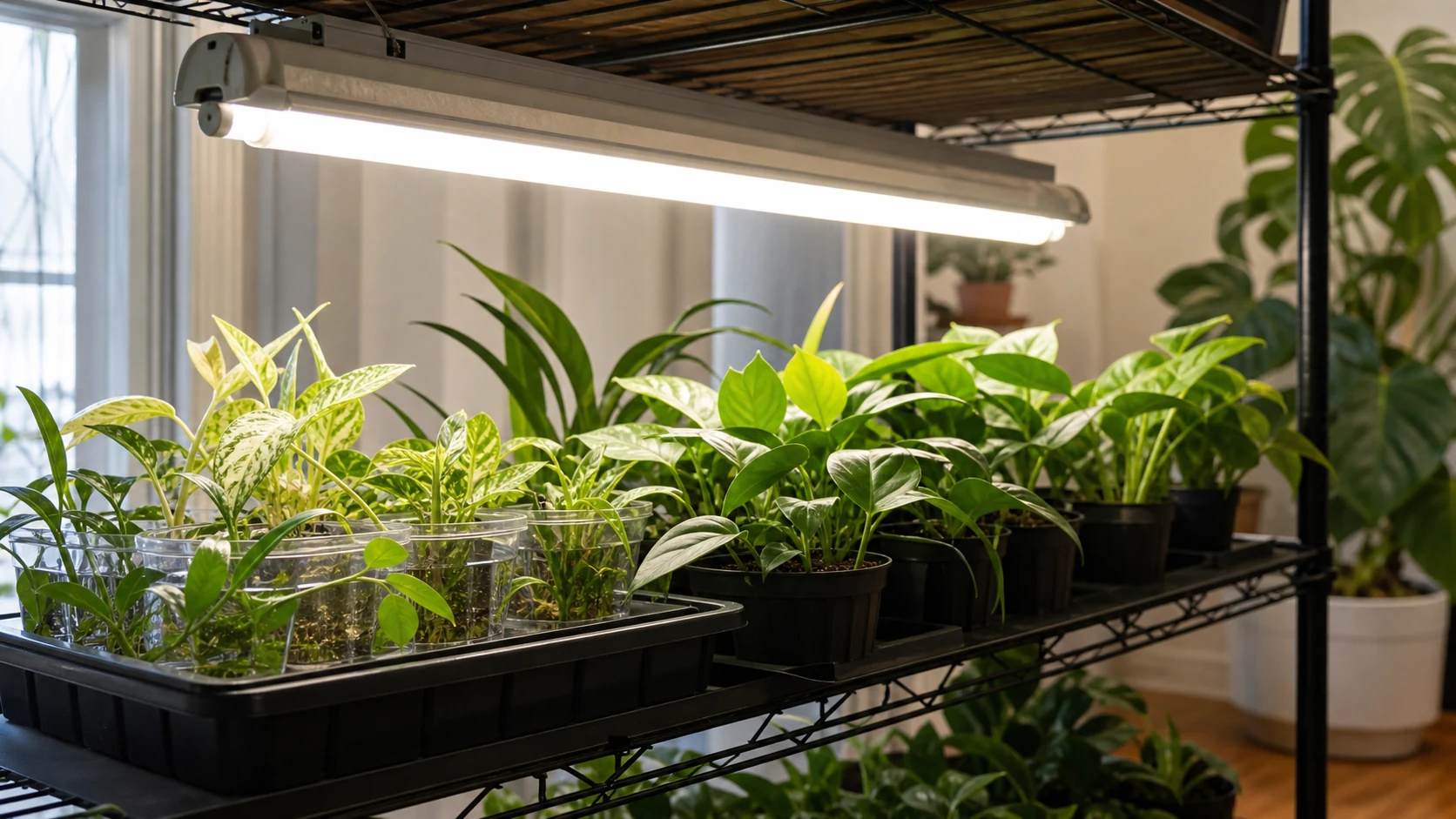
An existing T5 or T8 shop light can still support cuttings and leafy plants when mounted close to the canopy.
HID Lights (HPS and Metal Halide)
High-intensity discharge lights generate significant heat and use a lot of power. They’re for serious indoor growing operations, not for the living room. You almost certainly don’t need one.
What to Look for When Buying
PAR Output and PPFD
This is where most buying guides lose people. PAR refers to the light wavelengths plants use. PPFD is the more practical number because it tells you how much usable light actually reaches the leaf surface.
Not every brand publishes PPFD clearly, so for normal indoor plant use the safer move is to compare fixture strength, coverage, and recommended mounting distance together instead of obsessing over one acronym. If a seller gives you none of that information, treat the listing cautiously.
Color Temperature (Kelvin)
Lower Kelvin (2700K–3000K) is warmer, redder light that supports flowering and fruiting. Higher Kelvin (5000K–6500K) is cooler, bluer light that’s better for leafy growth.
University of Maryland Extension and Illinois Extension both point readers back to the red-blue wavelengths plants use for photosynthesis, which is why most houseplant owners can treat 4000K–6500K as a workable range instead of over-optimizing the exact number.
Timer Compatibility
A built-in timer, or a simple plug-in outlet timer, makes a bigger difference than it sounds. Plants benefit from consistent light cycles: 12–16 hours on, the rest off. You can do it manually, but you’ll forget. Get a timer.
How Far Away Should the Light Be?
This is where people trip up most often. Too close and you risk bleaching or stressing leaves. Too far and most of the benefit disappears. Iowa State Extension is especially useful here because it reminds growers how quickly intensity falls off as the fixture moves away from the plant.
A practical starting point by plant type:
| Plant Type | Examples | Distance from Light |
|---|---|---|
| High-light | Succulents, cacti, herbs, citrus | 6–12 inches |
| Medium-light | Pothos, philodendron, peace lily, monstera | 12–24 inches |
| Low-light | ZZ plant, cast iron plant, snake plant | 24–36 inches |
Watch the plant more than the ruler. Light-colored patches or bleached spots mean too close. Continued leggy growth means move it in.
For peace lilies specifically: they’re often labeled as low-light plants, but they do better with moderate supplemental light if you want them to flower. Our peace lily care guide covers exactly what they need.
How Many Hours Per Day?
Plants need darkness too. They do important metabolic work at night, and continuous light actually stresses most species.
A reliable default schedule for supplemental indoor use is 14–16 hours on and 8–10 hours off. That is an editorial starting range, not an institution-backed universal rule, so adjust it to the plant type and the amount of real window light already reaching the leaves. Set a timer and leave it alone.
- High-light plants: lean toward 16 hours
- Low-light plants: 10–12 hours is plenty
- Supplementing a naturally lit room: 6–8 hours of additional light in morning or evening is often enough. You don’t need to run the light all day if the window already contributes.
In a naturally bright room, use the grow lamp as scheduled supplemental light rather than running it continuously.
How Grow Lights Change Watering
More light usually means the plant uses water faster, but do not start watering more just because you added a grow light. Check the soil first. For most leafy houseplants, water when the top 1–2 inches feel dry. For succulents and cacti, wait until the mix is dry much deeper down.
Watch for these common signals during the first two weeks:
| What You See | Most Likely Cause | What to Do |
|---|---|---|
| Leaves still stretching toward the light | Light is too weak, too far away, or not on long enough | Move it 4–6 inches closer or increase to 14–16 hours |
| Pale or bleached patches on the leaves nearest the bulb | Light is too close | Move the light 4–6 inches farther away |
| Curled leaf edges or crispy brown tips near the light | Too much intensity, too long a day, or dry air | Raise the light, shorten the timer by 1–2 hours, and check soil moisture |
| Yellow lower leaves plus soil that stays wet | Overwatering or roots staying too damp | Pause watering until the top soil dries, then water by feel instead of schedule |
| Drooping even though the soil is wet | Roots may be stressed from staying wet | Let the pot drain fully and check that the container has drainage holes |
The important shift is this: a grow light changes the plant’s energy, but your watering still follows the soil. If the soil is wet, wait.
Seasonal Grow Light Calendar
The amount of supplemental light your plants need shifts across the year, and matching your schedule to the seasons means you’re supporting your plants when it actually matters, without running up your electricity bill when natural light is already doing the work.
Winter (December–February)
This is when grow lights earn their keep. Natural light from even south-facing windows drops significantly above latitude 40°N, and the angle of winter sun means less light reaches plants even near windows. Run your light 14–16 hours a day. Tropical plants, succulents wintering indoors, and any herbs you want to keep productive need consistent supplemental light through these months. If a plant looks like it’s sulking, it probably is.
Spring (March–May)
As days lengthen, start dialing back. By March you can usually move to 12 hours. By May, most medium-light plants near a decent window don’t need the grow light running during daylight hours at all. A few hours in early morning or evening is still helpful for darker rooms, but if plants near a window are looking good, give the light a rest.
Summer (June–August)
If your plants are near a window, most of them don’t need supplemental light during the day. The exception: a genuinely dark north-facing room, or herb shelves far from any window. If plants are getting six or more hours of indirect natural light, the grow light is optional. You’ll often notice the difference: plants that were looking pale all winter suddenly look lush and deep green on natural light alone.
Autumn (September–November)
Add supplemental light back before you notice the plants slowing down. By September in most of North America, days are already shortening noticeably. Start working back toward a 12–14 hour schedule in October, and be at full winter support by November. Getting ahead of the light deficit is easier than catching up after plants have already started struggling.
What Does It Cost to Run?
A reasonable concern before buying. A 45W LED grow light running 14 hours a day uses about 0.63 kWh per day. At the US average electricity rate of roughly $0.16/kWh, that’s around $0.10 per day, or about $3 a month. Running it all winter (November through March, five months) costs roughly $15 total.
Put another way: if you’re spending $40 on a plant, spending $15 to keep it healthy through winter is a straightforward trade.
Which Plants Benefit Most
Some plants respond dramatically to grow lights. Others would rather you just moved them to a better window.
Most benefit from supplemental light:
- Herbs (basil, parsley, cilantro) need bright light to stay productive indoors. Without it, they survive but barely produce. If that is your main setup, our indoor herb garden guide shows which herbs are worth growing under lights and how close to place them.
- Succulents and cacti wintering indoors lose their compact shape without enough light. Etiolation (that stretched, pale look) is hard to reverse. Use the succulent grow-light setup guide for a measured distance, duration, and shelf-coverage test; the broader succulent care guide explains how to pair stronger light with a drier watering routine.
- Venus flytraps need substantially more light than a typical desk plant. If a sunny outdoor position is not practical, use the setup targets in our Venus flytrap care guide before choosing a fixture and distance.
- Tropical plants in north-facing rooms from October through March, plants like monsteras, calatheas, and birds of paradise slow dramatically in low winter light.
- Seedlings and cuttings get consistent light that helps them establish faster and root more reliably.
Less need for grow lights:
- ZZ plants, cast iron plants: evolved for genuine shade, ambient light is usually enough
- Snake plants: surprisingly tolerant of low-light conditions
If you’re looking for air-purifying plants that can handle lower light with just a little supplemental help, our air-purifying plants guide has options that work well under grow lights.
Why Is My Plant Still Struggling Under a Grow Light?
You added a grow light and your plant still looks pale, weak, or isn’t improving. Before giving up on the light, work through these five checks.
1. Distance. The most common issue by far. If your plant is still leggy and reaching, move the light closer. If you’re seeing pale patches or bleached spots on leaves, move it farther away. The distance table above is a starting point, not a fixed rule. Plants vary, and even the same species can respond differently depending on age and health.
2. Duration. Ten hours sounds substantial, but for a plant in a genuinely dark spot, it may not be enough. Try 14–16 hours for a week and see if you notice a change. Some plants need that longer light window to catch up from a light deficit.
3. Light quality. Not all grow lights are equal, and some marketed products simply don’t deliver enough usable light. If your light doesn’t publish PPFD data, or if it’s a basic LED desk lamp someone relabeled as a “plant light,” it may lack the spectrum or intensity plants need. A grow light should feel noticeably brighter than a reading lamp when it’s on, and the plants directly under it should have noticeably better color than plants elsewhere in the room.
4. Other problems. Light deficiency and overwatering produce similar symptoms: pale leaves, weak stems, slow growth. If you’ve added a grow light and nothing is changing, check the roots. A waterlogged, compacted root ball won’t respond to better lighting no matter how good the light is. Same with pests, which can drain a plant’s energy so effectively that it looks like a light problem.
5. The plant’s limits. Some plants simply need more than indoor lighting can realistically deliver. Bird of paradise, citrus, most flowering tropicals, and any plant native to open sunny climates will stay alive and reasonably healthy under a grow light, but getting them to bloom indoors is a different challenge. A grow light is honest about what it can do. It extends the growing season and prevents winter decline. It’s not a substitute for being outdoors.
Common Mistakes Worth Avoiding
Buying based on watts alone. Wattage tells you power draw, not light output. A 45W LED can easily outperform a 100W fluorescent. Look at PPFD, or at least rely on reviews from people who’ve actually used the light on plants.
Leaving lights on 24 hours. It feels generous but it’s not. Most plants stressed by continuous light will show it through leaf curl, browning edges, or slowed growth. “More is better” doesn’t apply here.
Setting and forgetting the distance. As plants grow taller, the distance from the bulb changes. Check your light-to-leaf gap every couple of months and adjust.
Using a regular LED bulb and hoping. Standard household LEDs aren’t designed to emit the right spectrum balance. They’re better than incandescent, but they’re not grow lights. For plants you actually care about, use a product marketed for plant growth with published PPFD data.
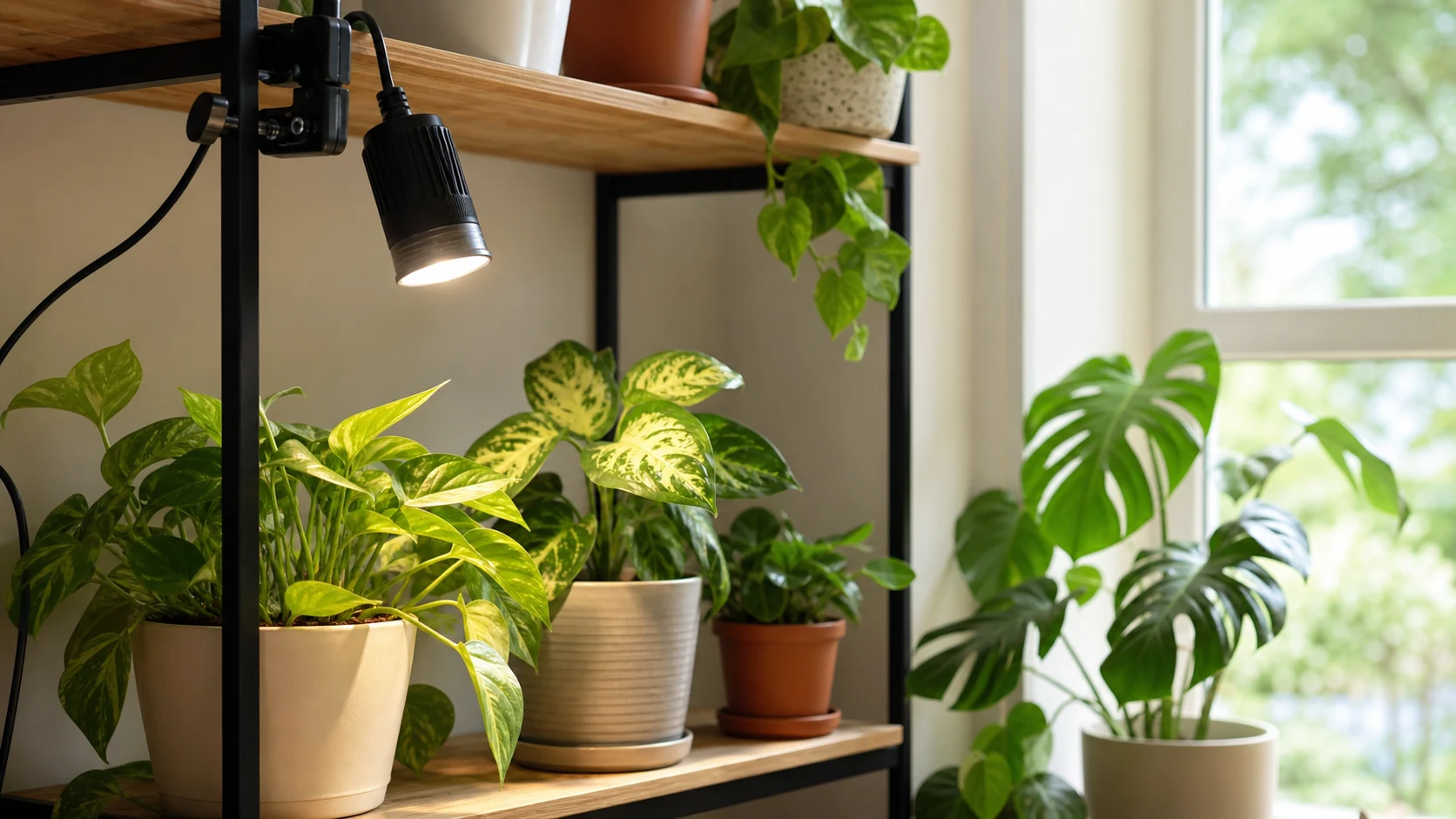
A small spotlight can brighten one pot while leaving the rest of a shelf outside useful coverage.
FAQ: Grow Lights for Indoor Plants
Can you leave grow lights on 24 hours a day? You can, but you shouldn’t. Most plants need a dark period to complete normal metabolic processes, and continuous light causes stress symptoms like leaf curl, edge browning, and slowed growth. Keep your lights on a timer: 14–16 hours on, 8–10 hours off is a good default.
How far should grow lights be from plants? It depends on the plant. High-light plants like succulents and herbs do best 6–12 inches from the light. Medium-light plants like pothos and monstera work well at 12–24 inches. Low-light plants like ZZ plants and snake plants do fine at 24–36 inches. When in doubt, start farther away and move closer if you’re not seeing improvement.
Do grow lights use a lot of electricity? Not really. A quality 45W LED grow light running 14 hours a day costs around $3/month at average US electricity rates. Over a full winter season, that’s roughly $15, significantly less than replacing a plant that didn’t make it.
What color light is best for indoor plants? Most houseplants respond well to a balanced full-spectrum light in the 4000K–6500K range. Bluer light (higher Kelvin) favors leafy growth; redder light (lower Kelvin) supports flowering. For general houseplant use, anything in the 4000K–5000K range works well.
Can any LED light work as a grow light? Standard household LEDs produce some benefit over incandescent, but they’re not optimized for plant growth. They often lack the right balance of red and blue wavelengths, and manufacturers don’t publish PPFD data for them. For plants you actually care about, use a light designed and tested for plant growing.
Grow lights aren’t magic, and they won’t fix a plant that has other problems. But for the right situation, a genuinely dark apartment, a long northern winter, herbs you want year-round, a decent full-spectrum LED makes a real, visible difference. The technology has improved enough and prices have dropped enough that there’s no good reason to watch your plants go pale and leggy through a dim season if you don’t want them to.
Pick a light with published specs, set a timer, and give it a few weeks. If you want the light schedule, watering checks, and seasonal changes tied to the plants you actually own, save them in KnowYourPlant instead of guessing from memory.