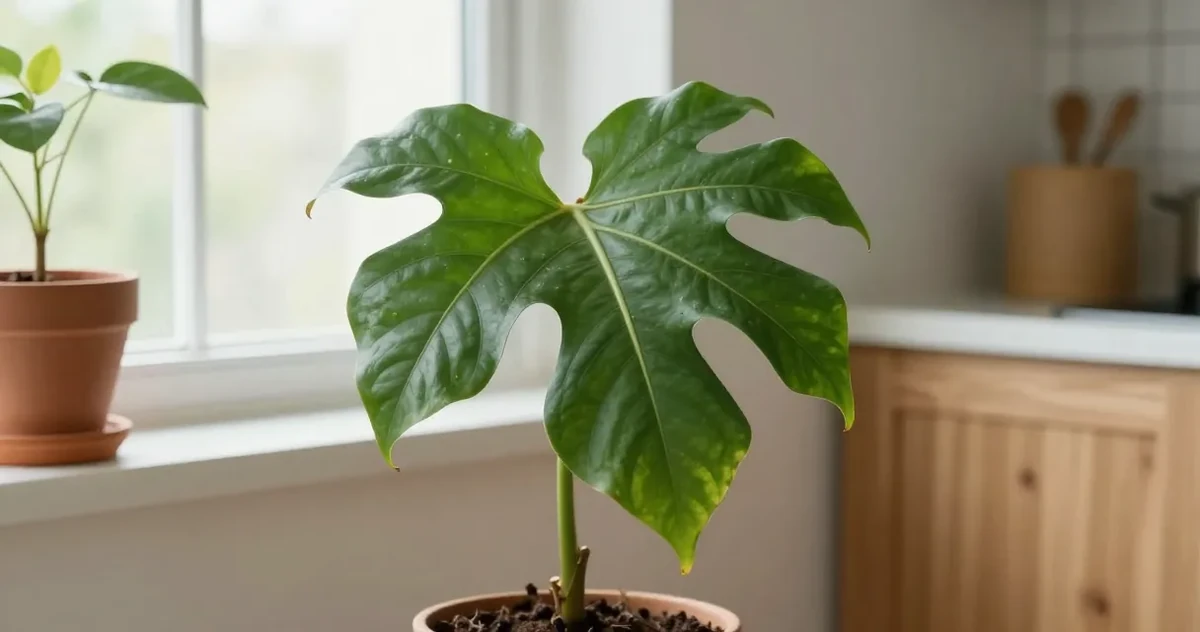
You moved your pothos closer to the window on a sunny afternoon, or brought a new plant home from the nursery and set it on the sill. A few days later you spot it: a pale, washed-out patch on a leaf. Or a crispy brown edge that definitely wasn’t there before. Your first thought is that you’ve done something wrong, and now you’re trying to figure out what before it spreads.
Plant sunburn is direct tissue damage from intense light and heat. Unlike yellowing from too much water or too little, sunburned tissue doesn’t just lose color - it bleaches and breaks down in a way that won’t reverse. That pale patch is not coming back green. But if you catch it early and understand what happened, the rest of your plant will be completely fine.
This guide covers how to recognize plant sunburn, how to tell it apart from three other problems that look nearly identical, what to do in the first few days after it happens, and how to prevent it going forward - including the seasonal shift that catches most people off guard.
If the mark does not match the light-facing, dry, papery pattern described here, use the leaf damage identification guide to compare pest, disease, watering, and physical-damage clues before changing care.
Identification Snapshot
If you are trying to identify whether the mark in front of you is really sunburn, this is the fastest pattern check:
- Color: bleached white, pale tan, or washed-out tissue rather than uniform yellowing
- Texture: dry, papery, or thin instead of soft and mushy
- Placement: strongest on the light-facing side of the leaf or the leaves closest to the window or lamp
- Timing: appears after a sudden light change, a move, or the first stretch of harder seasonal sun
- Recovery clue: damaged tissue stays damaged, but new growth should come in healthy once exposure is corrected
This is a damage-pattern snapshot, not a species ID. The plant itself may be pothos, philodendron, peace lily, or something else entirely, but the visual logic of sunburn usually looks like this across common indoor plants.
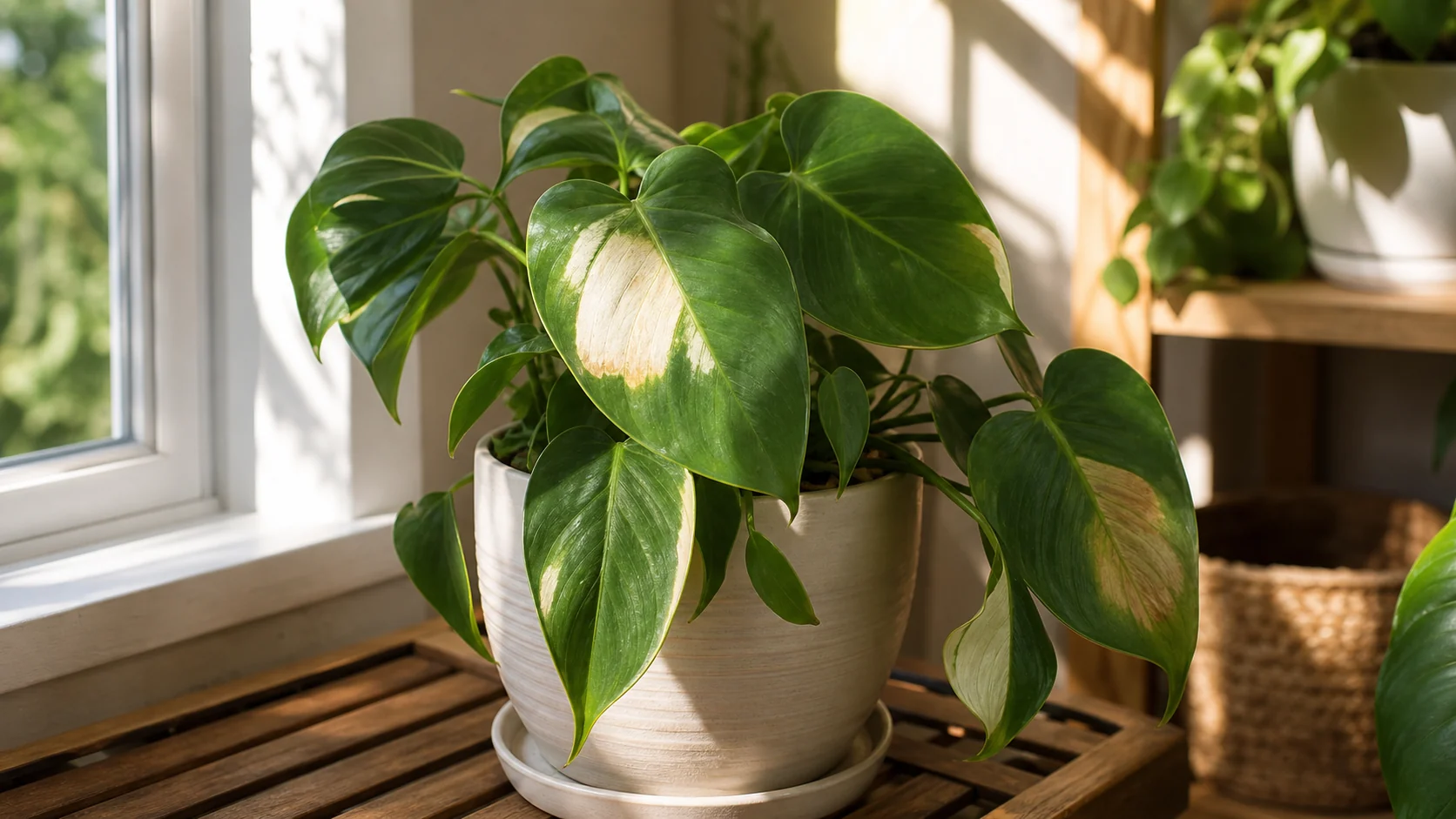
Pale, papery patches on light-facing philodendron leaves show the characteristic pattern of plant sunburn.
What Plant Sunburn Actually Looks Like
The most recognizable sign of plant sunburn is a bleached patch - not yellowing, but a pale, faded, almost white area on the leaf surface. It often looks dry and papery when you touch it. In some plants this appears within a day or two of a light change. In others it builds gradually over several days.
Location is the clearest clue. Sunburned patches almost always appear on the side of the leaf facing the light source. If your plant is sitting against a south or west window and the damage is on the top, sun-facing leaves, that detail matters. Damage from overwatering or root stress tends to appear more evenly distributed, often starting at leaf edges or bases and spreading inward.
Other signs to look for:
- Crispy brown margins - the leaf edge dries out and may curl slightly inward
- Pale tan or whitish center patches on otherwise healthy-looking green leaves
- Leaf tissue that feels papery or thin where it used to feel firm
- Damage concentrated on the uppermost leaves or those closest to the glass
One thing that surprises people: sunburned tissue rarely looks dramatically “burnt” the way you might picture. It looks more like the color drained out of that one spot, and the texture changed with it.
According to Epic Gardening, sunscald typically produces bleached whitish patches that dry out and become papery, while leaf scorch - a related but distinct problem - tends to appear as crispy brown edges tied more to moisture loss and heat exposure than to direct light damage. The difference matters because the care response is not the same.
What Most Care Guides Miss
Most sunburn articles describe what the damage looks like, then tell you to move your plant out of direct sun. That advice is fine as far as it goes, but it skips the part that actually confuses most people: sunburn and overwatering can look remarkably similar, especially in the days right after a plant has been moved, repotted, or given a new spot.
The misdiagnosis usually goes like this. A plant develops yellowing or a brownish soft patch. The owner assumes it was overwatered, cuts back on water - but actually the plant was getting scorched, and reducing water now makes recovery harder, not easier. If you’ve been troubleshooting yellow leaves without landing on a clear answer, light context is often the missing piece.
Here is the practical first check before you change anything else:
Ask yourself: did anything change about this plant’s light recently?
A new spot in the room. A sunnier stretch of weather. A move from a shaded nursery shelf to your windowsill. Seasonal sun angles shifting so that afternoon light now hits a window it didn’t reach in winter. Any of these can trigger sunburn in a plant that was previously fine in the same room.
If the answer is yes - light changed recently - look carefully at where the damage sits. Sun-facing surface, papery dry texture, pale bleaching rather than soft yellowing: that points to sunburn. Soft, mushy, yellowing that starts at the base of leaves and spreads upward? That pattern suggests moisture problems, and checking for root rot may be more useful than adjusting the window.
The two can overlap. But starting with “what changed?” almost always points you in the right direction.
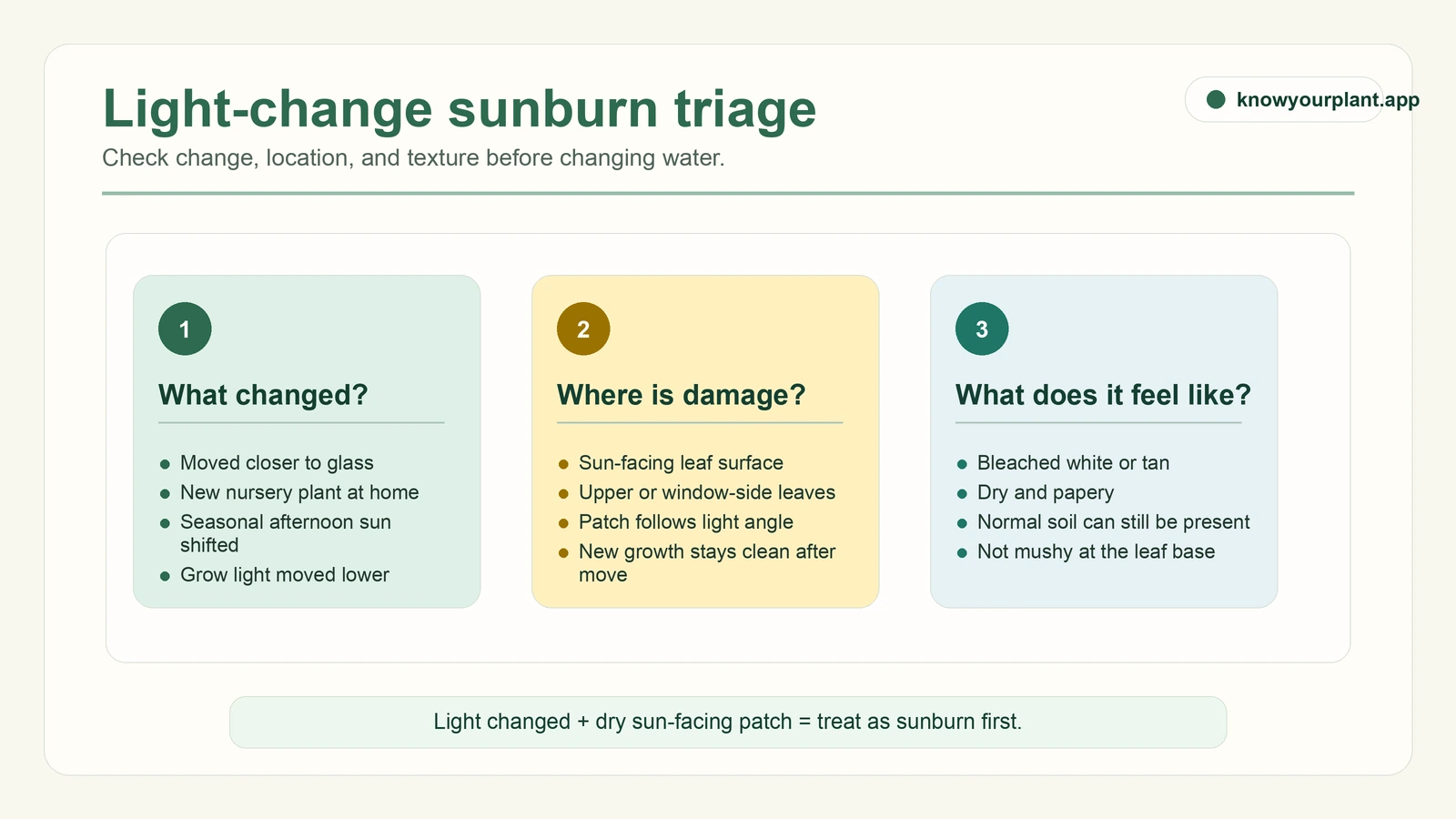
Check the recent light change, where the mark sits, and how the tissue feels before treating a bleached patch as a watering problem.
Is the Damage Still Spreading, or Is It a Scar?
This is one question the generic guides don’t answer clearly, and it makes a real difference in how you respond.
Sunburn damage is typically a one-time event tied to a specific exposure. Once the plant is away from the direct light source, the damage stops. The bleached area does not grow. New leaves come in healthy. That is the normal recovery pattern.
If the pale or crispy patches are continuing to spread - appearing on new leaves, or growing larger on the same leaf over several days - the problem is probably not simple sunburn. Spreading damage usually means one of these is still happening:
- The plant is still in direct sun or reflected heat and keeps getting burned
- A pest like spider mites is causing stippling that looks pale from a distance
- A fungal or bacterial issue is moving through the leaf tissue
To tell the difference: check whether new, untouched leaves are developing the same damage. If only previously affected leaves show the pattern and new growth looks normal, you are likely looking at cosmetic scarring from a single overexposure event. If new leaves are also developing patches, investigate whether the light source is still the problem or whether something else is at work.
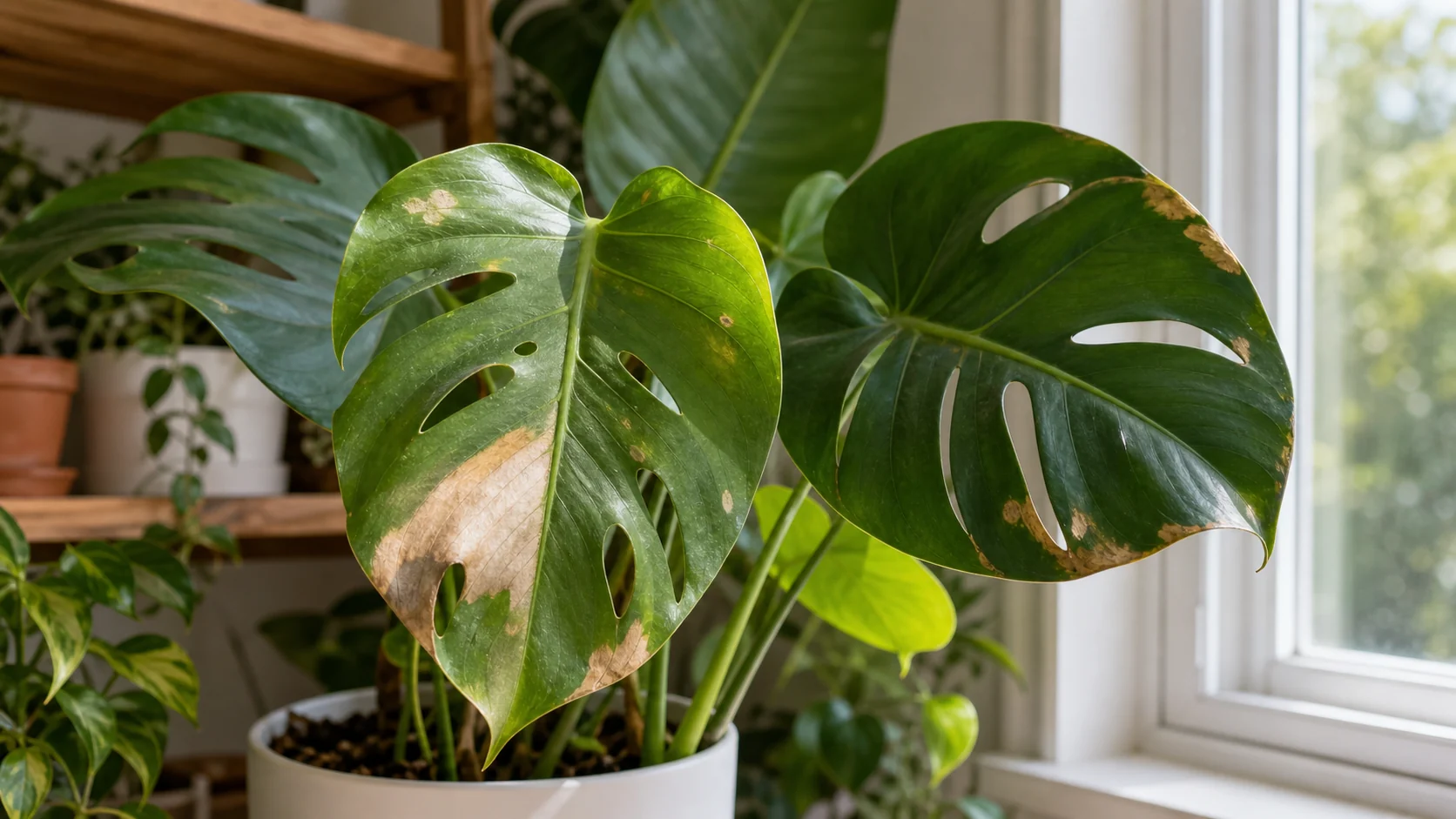
Dry scars remain on older Monstera leaves while healthy new growth signals that the original burn has stopped.
Decision Tree: Is This Active Sunburn or Something Else?
Use this quick sequence before you change watering, fertilizer, or the plant’s permanent location.
- Did the light change in the last week or two? If the plant was moved closer to a sunnier window, taken outdoors, or suddenly started getting stronger afternoon sun, keep sunburn high on the list.
- Is the mark on the side facing the light? Bleached or tan tissue that matches the light-facing surface is more consistent with sunburn or lamp scorch than with root stress.
- Is the patch dry and papery, or soft and mushy? Dry, papery tissue points toward sunburn. Soft yellowing or collapse points toward watering or root trouble instead.
- Are new leaves getting hit too? If only the original damaged leaves are marked and new growth looks normal, the damage is probably cosmetic now. If new leaves are still burning, the light problem is still active.
- Is there another clue that fits better? Very wet soil, a sour smell, or yellowing that starts low on the plant pushes the diagnosis toward overwatering. A hot lamp sitting close to the foliage pushes it toward grow-light scorch.
If you get through those five checks and the answer still feels mixed, stabilize the plant first with bright filtered light and normal watering, then watch whether the next leaf comes in healthy. New growth usually settles the diagnosis faster than a rushed care change.
Lookalikes / Confused-With
Sunburn gets confused with watering stress, lamp scorch, and low-light stretch because the first visible clue is often just a pale or damaged patch. Use the comparison below to separate lookalikes before you change care.
Sunburn vs. Similar Problems: A Quick Comparison
Because several leaf problems share similar symptoms, it helps to know what to rule out. Utah State University Extension notes that leaf scorch is one of the most common abiotic disorders in ornamental plants, triggered by any combination of intense sunlight, heat, drought, wind, and nutrient imbalances - not just one factor acting alone. That multi-cause reality is exactly why a single symptom can point in several directions.
| Problem | Visible pattern | Texture | Soil clue | Key context |
|---|---|---|---|---|
| Sunburn / sunscald | Bleached white or tan patches, sun-facing side | Dry, papery | Normal | Recent move to brighter spot or sunnier season |
| Overwatering | Soft yellow patches, lower or older leaves first | Limp, mushy at base | Soggy, slow to dry | Wet soil for extended period, no recent light change |
| Underwatering | Crispy brown tips or whole-leaf dullness | Dry throughout leaf | Bone-dry, pulling from pot edges | Very dry soil, plant drooping before damage appeared |
| Grow-light heat scorch | Bleached patches similar to sunburn | Dry, papery | Normal | Lamp positioned too close; air feels warm near foliage |
| Etiolation (too little light) | Thin, pale stems; smaller leaves; leaning toward light | Normal - not papery | Normal | Low-light corner; no bleaching; plant reaching visibly |
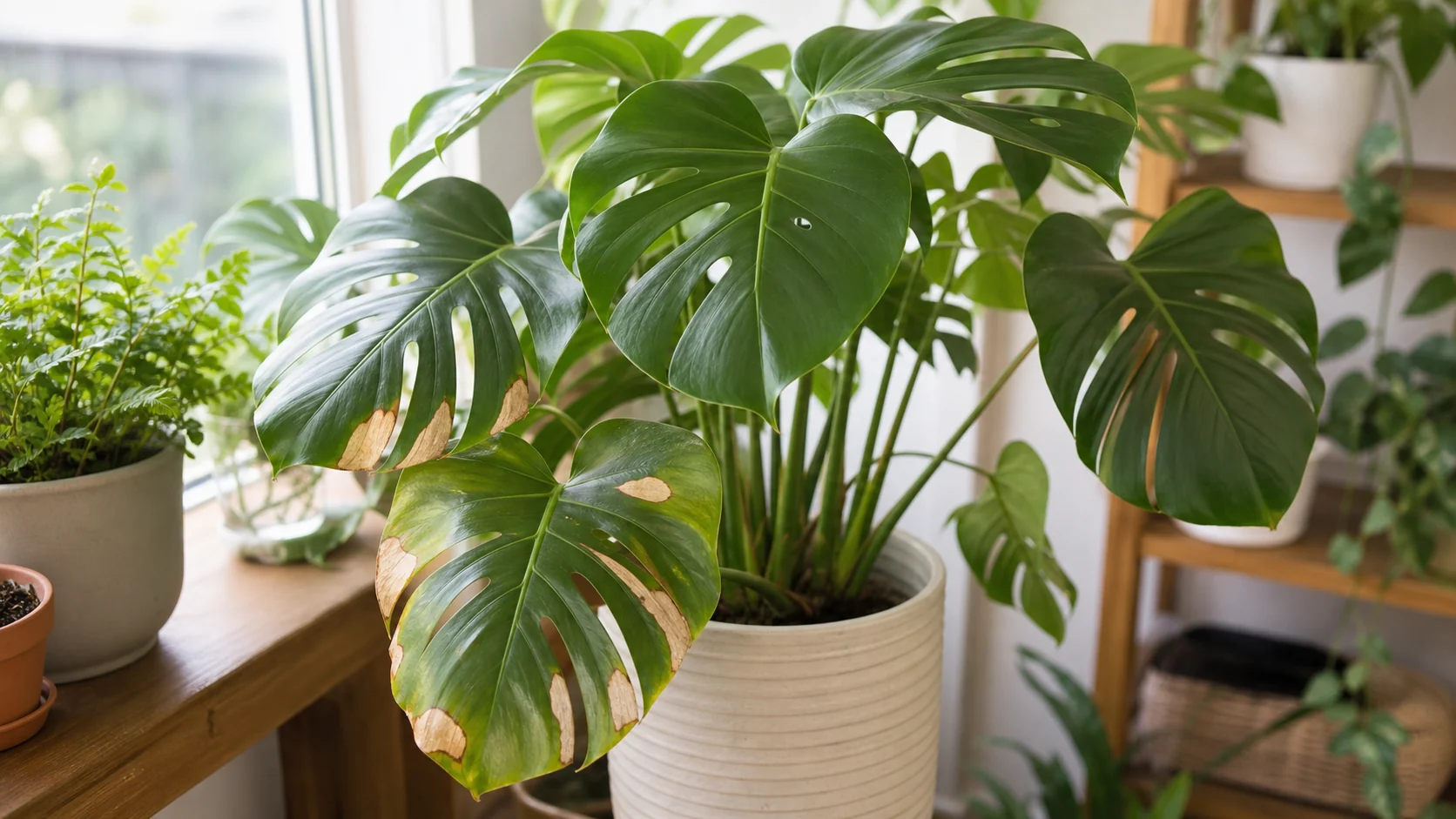
Isolated tan patches on the window-facing leaves help separate sunburn from whole-plant watering stress.
Overwatering tends to produce soft yellowing that starts at older or lower leaves and works upward. The soil usually feels consistently wet and the leaf texture is limp, not crispy.
Underwatering causes crispy brown tips or edges, but the whole leaf looks dull and dry across its surface rather than bleached in isolated patches. If that is the closer pattern, our guide to plant leaves turning brown is a better fit than a sunburn fix. The soil will be bone-dry all the way through.
Grow-light heat scorch happens when a lamp is too close and the heat - rather than light intensity alone - damages the tissue. The pattern follows the light angle just like window sunburn, but the air near the plant may feel noticeably warm. If you are using supplemental lighting, the grow lights guide covers safe positioning distances for common indoor setups.
Etiolation is the opposite problem: stems stretch thin and pale, leaves grow smaller, and the plant leans toward any available light. This is a low-light stress response, not tissue damage from too much light. The stems are the giveaway.
Expert Note: Sunburn, scorch, and heat damage are related but not identical
This is where a lot of indoor troubleshooting goes sideways. Utah State University Extension treats leaf scorch as a broader stress response that can involve drought, heat, wind, intense light, and other abiotic pressure. Epic Gardening separates sunscald from moisture-loss scorch by pointing out that true sunburn often leaves a bleached, papery patch, while moisture-loss scorch shows up more as crispy browning at the margins. If the damage lines up with a bulb instead of a window, heat from the lamp may be the real trigger even when the patch looks visually similar.
That is why the article keeps returning to pattern plus context, not color alone. White or tan tissue is only part of the story. Where the patch sits, how it feels, and what changed recently are what make the diagnosis useful.
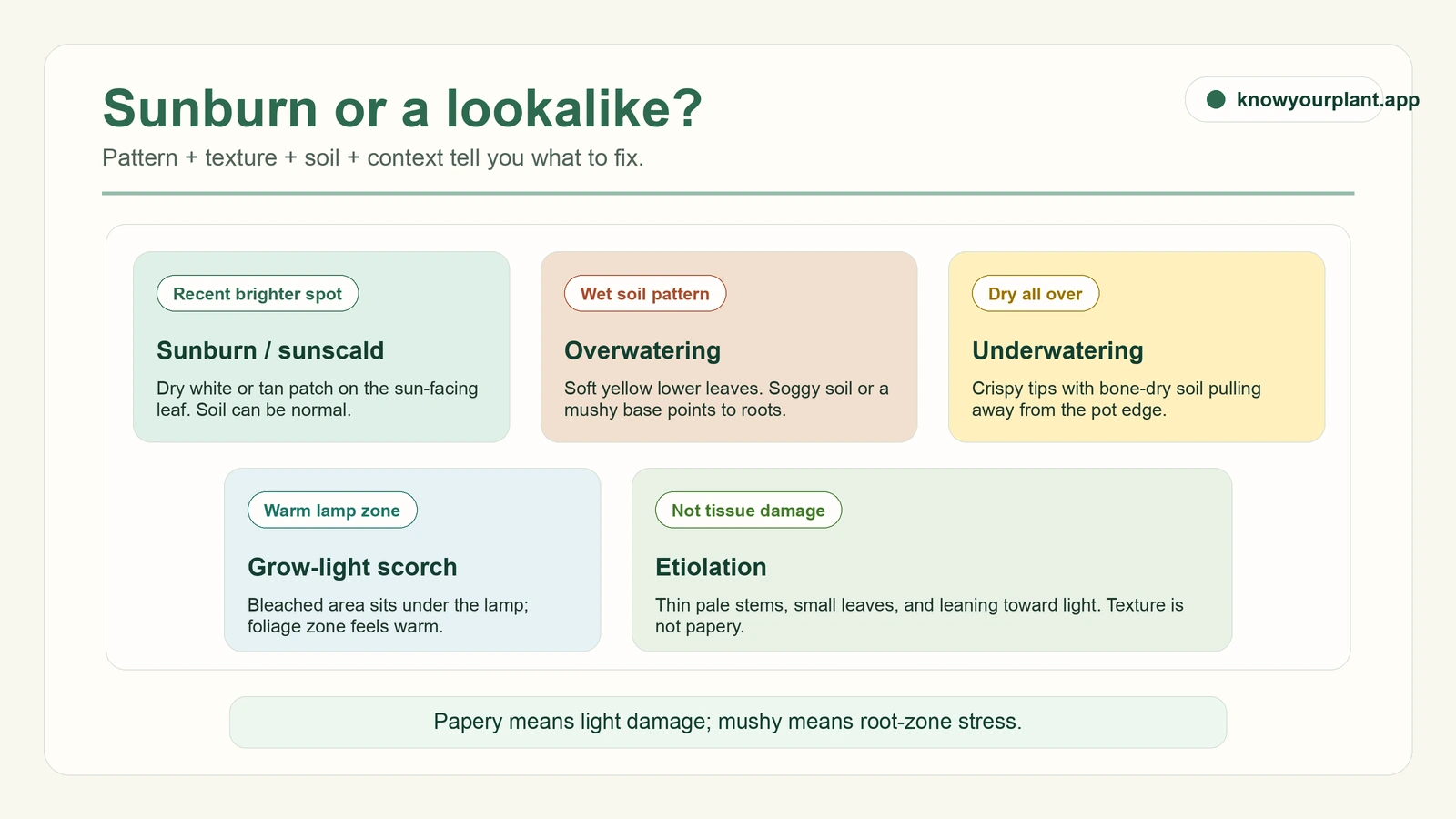
Use pattern, texture, soil, and recent context together so the first fix matches the real problem.
What To Do After Your Plant Gets Sunburned
The most important thing: don’t panic-prune or overwater.
Damaged tissue won’t recover. Those bleached patches are there to stay. But the plant is not in danger - the goal right now is to stop adding stress, not to aggressively fix things.
In the first 72 hours:
- Move the plant to bright but filtered light - out of direct midday or afternoon sun. A spot where the light feels comfortable but not sharp is the right call.
- Water normally. Sunburned plants are sometimes underwatered by owners who assume the crispy look means drought. If the soil is dry, water as usual. If it’s still moist, wait.
- Leave the damaged leaves on for now. They’re still photosynthesizing in their healthy areas, and removing them too soon puts extra stress on the plant.
- Hold off on fertilizer, repotting, or any other major changes while it settles.
- If the window is intense, hang a sheer curtain or move the pot a few inches back from the glass. You don’t need full shade - just diffuse the direct rays.
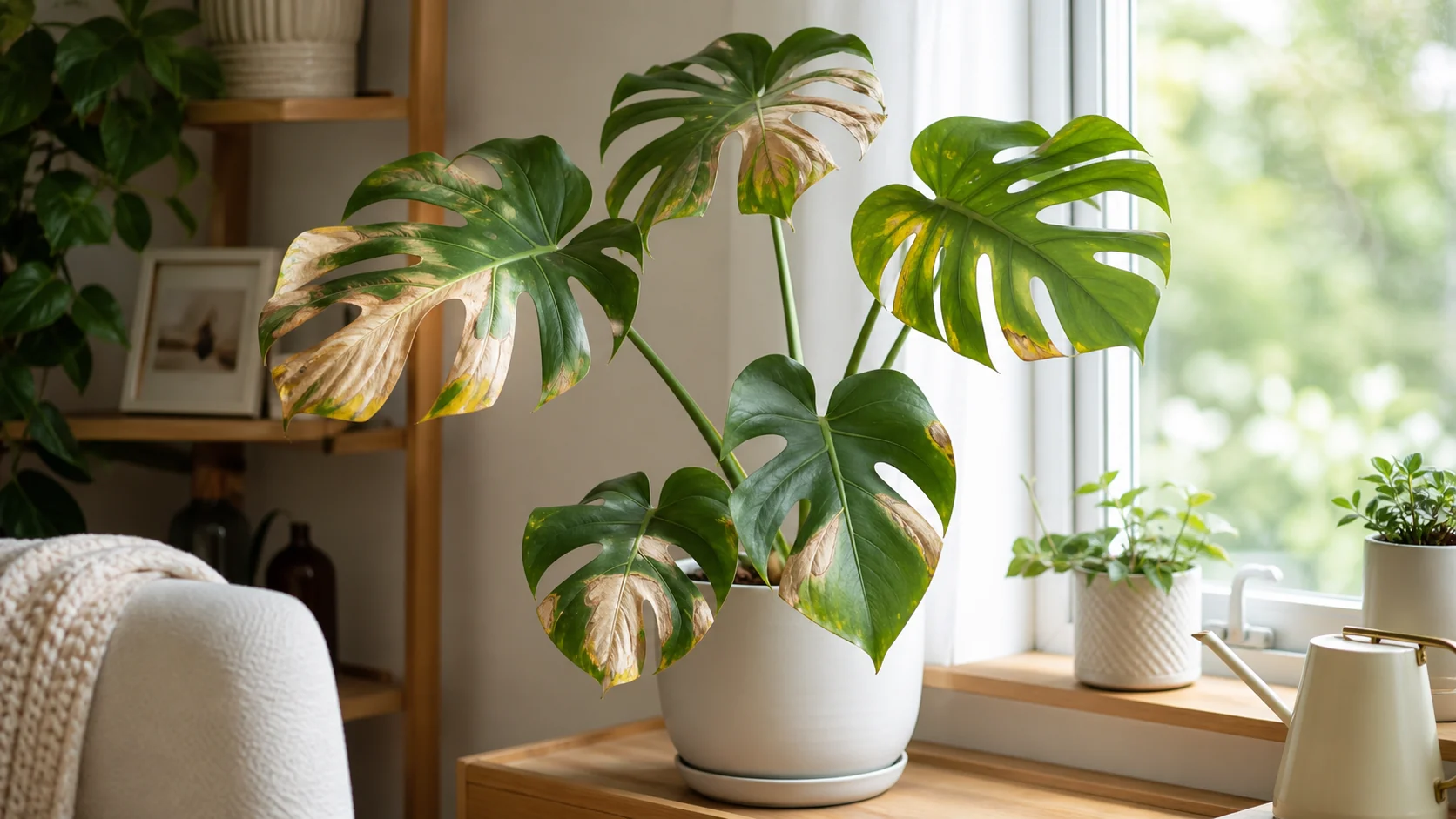
Leave damaged leaves in place and stabilize the plant in bright, filtered light while it recovers.
Watch new growth, not the damaged leaves. Healthy new leaves coming in are your signal that conditions are right and the plant has adjusted.
Care Cards
| Care area | What to do right after sunburn | What to avoid |
|---|---|---|
| Light | Keep the plant in bright filtered light while it stabilizes | Another jump into harsh midday or afternoon sun |
| Water | Water from soil dryness, not from panic about the leaf color | Sudden overwatering just because the leaf looks crispy |
| Humidity | Normal room humidity is fine, and higher humidity can help tender tropical foliage feel less stressed | Misting as a substitute for fixing the light exposure |
| Feeding | Pause fertilizer until the plant is pushing healthy new growth again | Feeding a stressed plant to force a faster cosmetic recovery |
| Pruning | Wait to trim badly marked leaves until the plant is actively growing again | Removing every damaged leaf on the same day it burns |
Common Problems and Mistakes After Sunburn
These are the most frequent ways people accidentally extend the stress after a sunburn event.
Panic-watering. The crispy, papery look triggers an instinct to water more. But sunburn damage is from light and heat, not drought. Soggy soil after sunburn can push the plant toward root rot, which is a harder problem to fix than the sunburn itself.
Removing all damaged leaves immediately. Damaged leaves still contribute photosynthesis from their healthy sections. Stripping them early forces the plant to redirect energy it needs for recovery. Trim them once new leaves are actively growing.
Moving the plant to deep shade. Dropping from a bright windowsill to a dark corner is another sudden stress. Filtered bright light - not dark shade - is what the plant needs while it recovers.
Fertilizing to “help recovery.” Fertilizer does not help a stressed plant heal. It adds salt load to roots that may already be managing heat stress. Hold fertilizer for at least two to four weeks after any significant sun damage.
Assuming the problem is solved once you move the plant. If you moved it but left it somewhere it still gets direct afternoon light for part of the day, you may see new damage appear. Double-check where the sun actually hits at different times of day, not just in the morning.
How to Prevent Plant Sunburn
The most common way indoor plants get sunburned is through a sudden change - not gradual exposure to the same window they’ve always known.
Gardening Know How notes that greenhouse- and nursery-grown plants are among the most vulnerable to sunscald because they are typically raised in shade structures. Even moderate direct sun can cause bleaching within days of moving them to a bright windowsill. If a plant came from a garden center, assume it needs a slower introduction to your sunniest spots.
Practical prevention steps:
- Acclimate slowly. If you’re moving a plant to a brighter location, do it in stages. Start with a few hours of gentle morning light before full-day exposure. Indirect bright light before direct sun. Give it a week before committing.
- Know your window direction. South and west windows in the northern hemisphere get the most intense afternoon sun. East windows get gentler morning light. North windows almost never cause sunburn.
- Watch for reflected heat. Glass amplifies heat, and a plant sitting right against a window in summer may experience much higher temperatures than the air a few feet away. A small gap between the pot and the glass can help.
- Diffuse rather than relocate. For most tropical houseplants, a sheer curtain in front of a south or west window is enough to prevent burning without reducing overall brightness. You don’t need to move the plant to a different room.
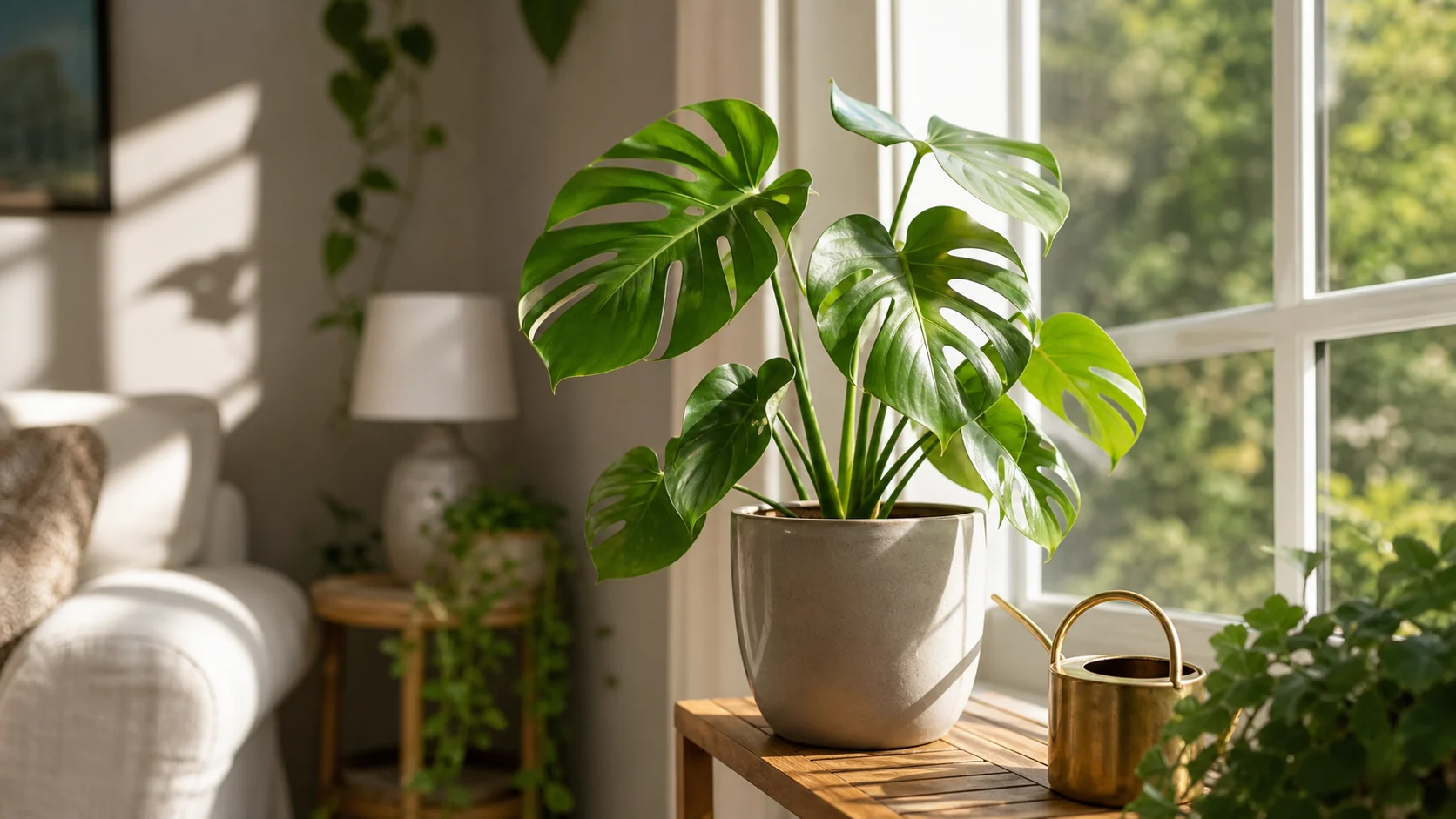
Gentle morning exposure helps a Monstera acclimate before it spends longer periods in a brighter window.
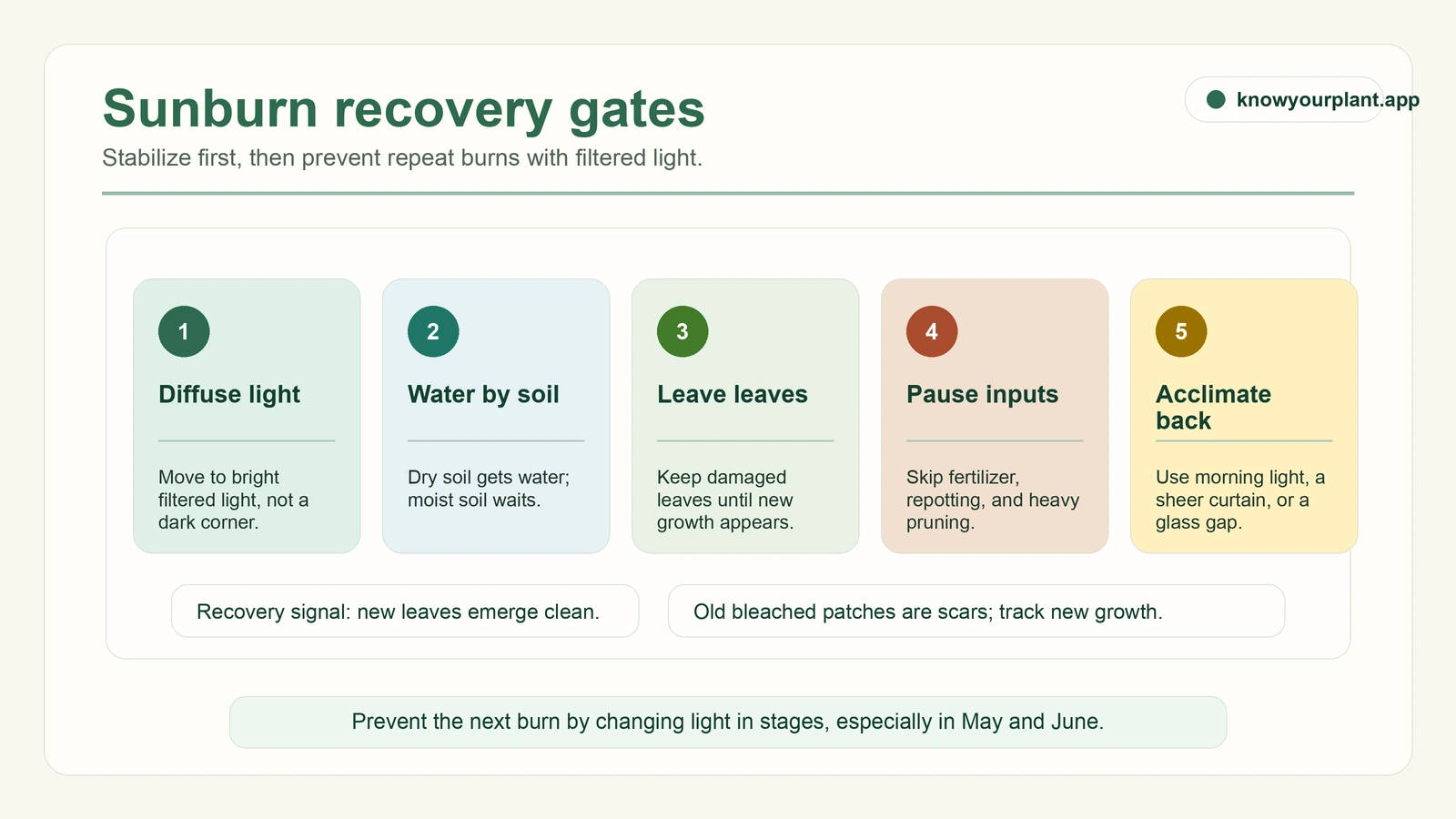
Stabilize the plant first, then prevent the next burn with filtered light, staged exposure, and new-growth checks.
The Seasonal Shift Most People Miss
This one is worth its own note because it catches people every year, usually around May or June.
The sun sits at a significantly higher angle in the sky during summer compared to winter. That means afternoon light enters windows at a different trajectory - and a west-facing windowsill that was perfectly safe from October through March may suddenly receive two or three hours of direct afternoon sun by late May. Your plant didn’t change. The sun did.
If you notice bleaching appearing on a plant that has lived happily in the same spot for months, check when the sun is actually hitting that window during the day. It may be as simple as moving the pot six inches back, or adding a sheer curtain for the summer months. Come September, you can reassess.
This is especially relevant for plants that thrived in their winter spot near a south or west window. Spring and summer sun at those windows is meaningfully more intense, and tropical plants like pothos, philodendron, calathea, and peace lily will feel that difference. If you’re still figuring out which plants suit which light levels in your home, the beginner’s indoor plant care guide covers window-direction basics and which plant families handle direct vs. filtered light best.
Pet Safety
Sunburn itself does not make a plant poisonous, but it also does not make an already toxic plant safe for pets. Many of the houseplants that burn easily indoors, including pothos, philodendron, and peace lily, can still irritate cats or dogs if chewed. If you move a recovering plant to a new spot, make sure the safer light location is also out of reach of curious pets.
Real User FAQ
Will sunburned leaves turn green again?
No. Once leaf tissue bleaches from sunburn, the chlorophyll in that area is gone. The patch stays pale or papery permanently. What you’re watching for is healthy new leaves coming in - that’s your sign that conditions are now right.
How do I tell sunburn apart from overwatering damage?
Location and texture are the most reliable clues. Sunburn damage appears on the sun-facing side of leaves and feels dry and papery. Overwatering damage tends to start at older or lower leaves, creates soft or mushy yellowing, and the soil feels consistently wet. Ask: did the light change recently? If yes, sunburn is the more likely explanation.
Should I cut off the sunburned leaves?
Not right away. Damaged leaves still contribute photosynthesis from their healthy tissue, and removing them too soon adds stress. Once the plant has stabilized and new leaves are growing in, you can trim the most affected ones if you prefer - but there’s no urgency.
My plant was fine all winter and suddenly has bleached patches in June. Why?
Seasonal sun angles shift significantly between winter and summer. A west-facing windowsill that was safe in January can receive two or three hours of direct afternoon sun by May or June. Your plant didn’t change - the sun’s angle did. A sheer curtain or a slight repositioning usually solves it.
Can a grow light cause the same damage as window sunburn?
Heat from a lamp positioned too close can produce patches that look identical to window sunburn. The key difference is usually air temperature near the foliage. If the air near the plant feels noticeably warm, the lamp is likely too close. Most LED grow lights designed for houseplants need to be at least 12 to 18 inches away from foliage to avoid heat scorch.
Which houseplants are most likely to get sunburned indoors?
Plants with large, thin, tropical leaves are the most vulnerable - pothos, philodendron, calathea, peace lily, and fiddle-leaf figs among them. They evolved in forest understories and aren’t built for direct sun exposure. Succulents, cacti, and most herbs can handle far more direct light and are much less likely to burn on a sunny windowsill.
Can I prevent sunburn without moving my plant?
Yes, in most cases. A sheer curtain in front of a south or west window diffuses direct rays significantly without reducing overall brightness. Moving the pot a few inches back from the glass also helps reduce reflected heat. For tropical houseplants, diffusion is usually enough - you rarely need to move the plant to a different room.
Methodology: How This Guide Was Checked
This guide was checked against Utah State University Extension for how leaf scorch presents across different abiotic stresses, then compared with current gardening references that describe the visual difference between bleached sunscald and moisture-loss edge scorch. It was also pressure-tested against plant-owner questions on Gardening Stack Exchange, where the recurring confusion was not just “what is sunburn?” but whether the real issue was overwatering, lamp heat, or a recent move into stronger light. Community examples were used as reader-language and diagnosis-pattern signals, not as scientific proof.
Source checking pairs current horticulture references with the real symptom patterns plant owners describe.
Freshness Note
This article was reviewed on 2026-05-23 against current horticulture references and live symptom-first search results. Exact sun tolerance still varies by species, leaf thickness, and season, so use the pattern here as a diagnosis guide, then sanity-check it against the specific plant you are growing.