Your snake plant has been perfectly fine for months, and now the leaves are leaning, bending, or going soft. The first instinct is usually to water it, check for root rot, or move it closer to the window. The trouble is that all three reactions can make things worse if you guess wrong.
Snake plant drooping usually comes from one of a small set of causes: root trouble, thirsty soil, top-heavy growth, crowding, light imbalance, or recent stress. The right fix depends on which one you actually have. The diagnosis step is not optional here.
What Most Care Guides Miss
Most drooping articles jump straight to a cause list without stopping to ask which cause fits your plant. That is where owners get stuck. Overwatering and underwatering can both produce soft-looking, leaning leaves. A watering schedule by itself will not tell you which one is happening.
The practical first check is simple: press the base of the plant gently at the crown, where the leaves meet the soil. If that area feels soft, spongy, or unstable, root trouble moves to the top of the list. If the base is firm and the pot feels very light, the answer is usually somewhere else.
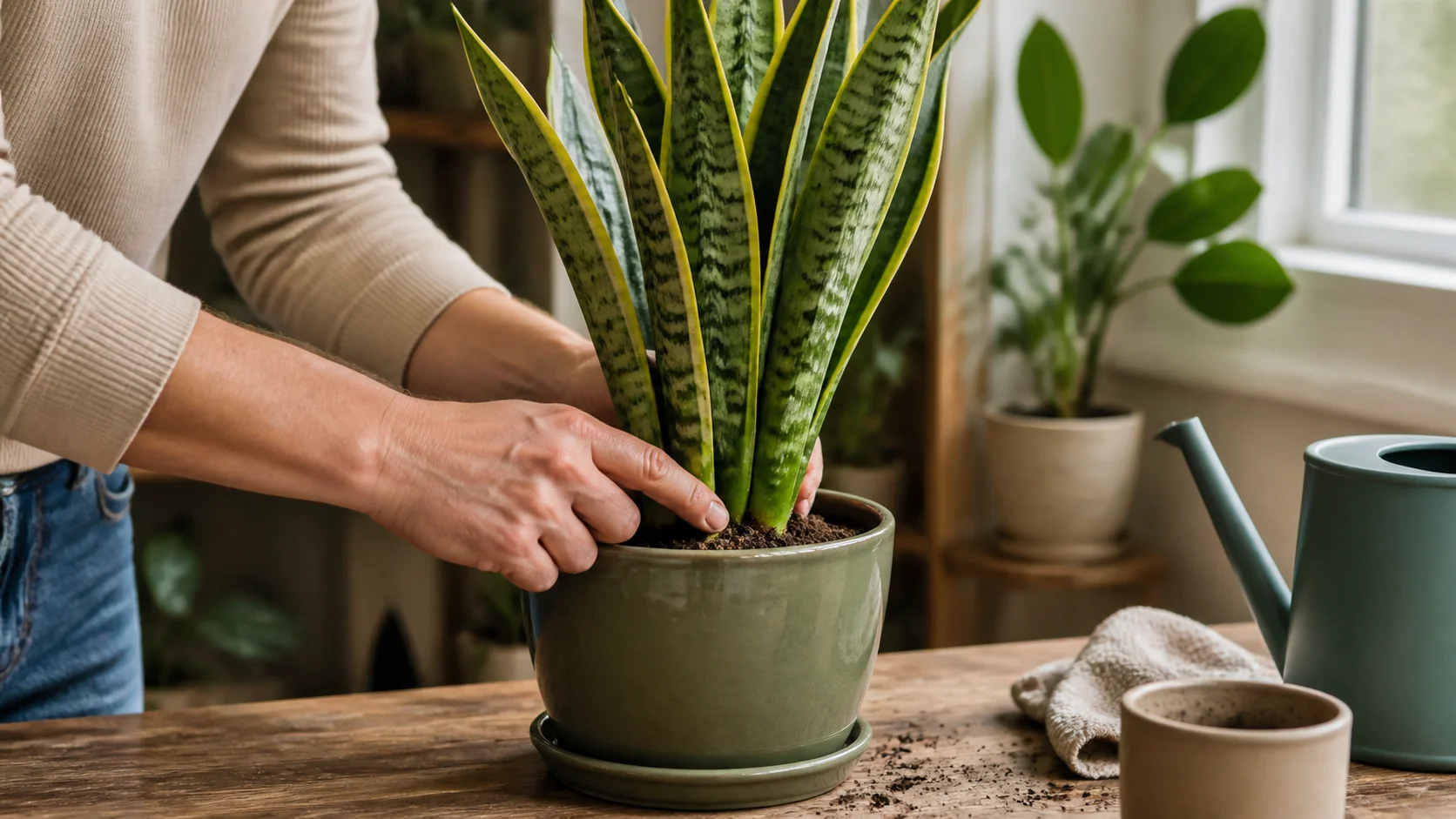
A gentle crown check helps distinguish root trouble from a light, thirsty pot.
Social Listening: Where Owners Get Stuck
The same confusion shows up again and again in owner questions:
- one person says “water it”
- another warns that the wet moss or dense mix may already be rotting the roots
- a leaning plant turns out to be top-heavy, not sick
- a loose or separating pup often points to root damage underneath, not just a cosmetic bend
That pattern is why this guide starts with inspection, not with a watering schedule.
Identification Snapshot
| Detail | What to check |
|---|---|
| Botanical name | Dracaena trifasciata, commonly sold as snake plant or mother-in-law’s tongue |
| Healthy leaf habit | Upright, firm, blade-like leaves rising from the base |
| Main warning sign here | Leaves leaning, bending, or collapsing instead of staying firm and upright |
| Root-zone clue | Firm crown and pale roots suggest structure or thirst; soft crown and dark mushy roots point to rot |
| Pot clue | Tall plants in light nursery pots often lean even when the plant itself is healthy |
| Pet safety | Toxic to cats and dogs if chewed |
Lookalikes and What People Confuse It With
| Plant or situation | How to tell it apart | Why it matters |
|---|---|---|
| Healthy mature snake plant leaning in one direction | Leaves stay firm and the base stays solid | Usually a light or balance issue, not a rescue emergency |
| Snake plant with root rot | Base feels soft or unstable, roots look dark or mushy, soil may smell musty | Needs root inspection and likely repotting, not more water |
| Root-bound snake plant | Leaves splay outward, roots press against the pot, growth looks crowded from the center | Often needs a slightly larger, heavier pot |
| Recently moved or repotted plant | Drooping starts soon after a move, repot, or purchase | Stress can be temporary if the roots and crown still feel firm |
Care Cards
| Care card | Best move | Watch for |
|---|---|---|
| Water | Let the mix dry between waterings, then water thoroughly and drain excess | Damp soil plus drooping is a warning, not a cue to water again |
| Light | Give bright indirect light or steady medium light | One-sided light causes gradual lean over time |
| Pot and soil | Use a free-draining mix in a pot with drainage holes | Dense soil and light plastic pots cause many drooping problems |
| Seasonal rhythm | Water less in cooler, darker months | Fixed summer watering in winter often leads to root rot |
| Stability | Repot into a heavier or wider pot if the plant is tall and top-heavy | Staking alone only hides the underlying issue |
What Snake Plant Drooping Actually Looks Like
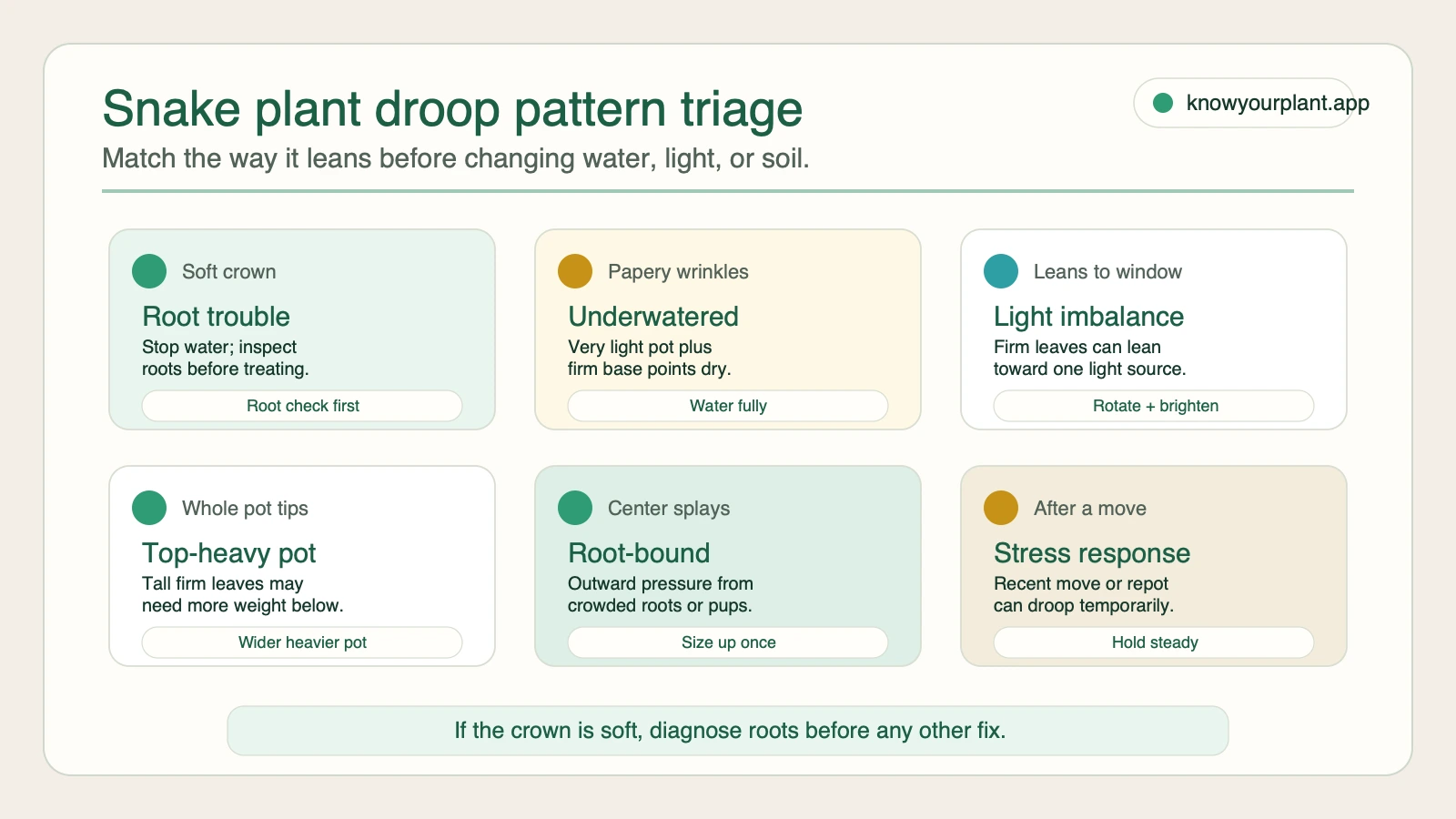
Not all drooping looks the same, and the pattern is often your fastest clue.
| Pattern | What you see | Most likely cause |
|---|---|---|
| Mushy collapse at the base | Leaves soft near the crown, base gives under light pressure | Root rot, overwatering |
| Slow sideways lean | Leaves feel firm, plant tilts toward one window or bends outward as it grows taller | Structural, top-heavy, light-seeking |
| Sudden flop after a change | Plant was fine, then drooped within a week of a move, repot, or purchase | Transplant or relocation stress |
| Wrinkling along the leaf length | Leaves feel slightly papery or creased, pot very light | Underwatering |
| Splaying from the center | Multiple leaves pointing outward from the middle instead of straight up | Root-bound, pot too small |
Knowing which pattern you are working with narrows the fix immediately.
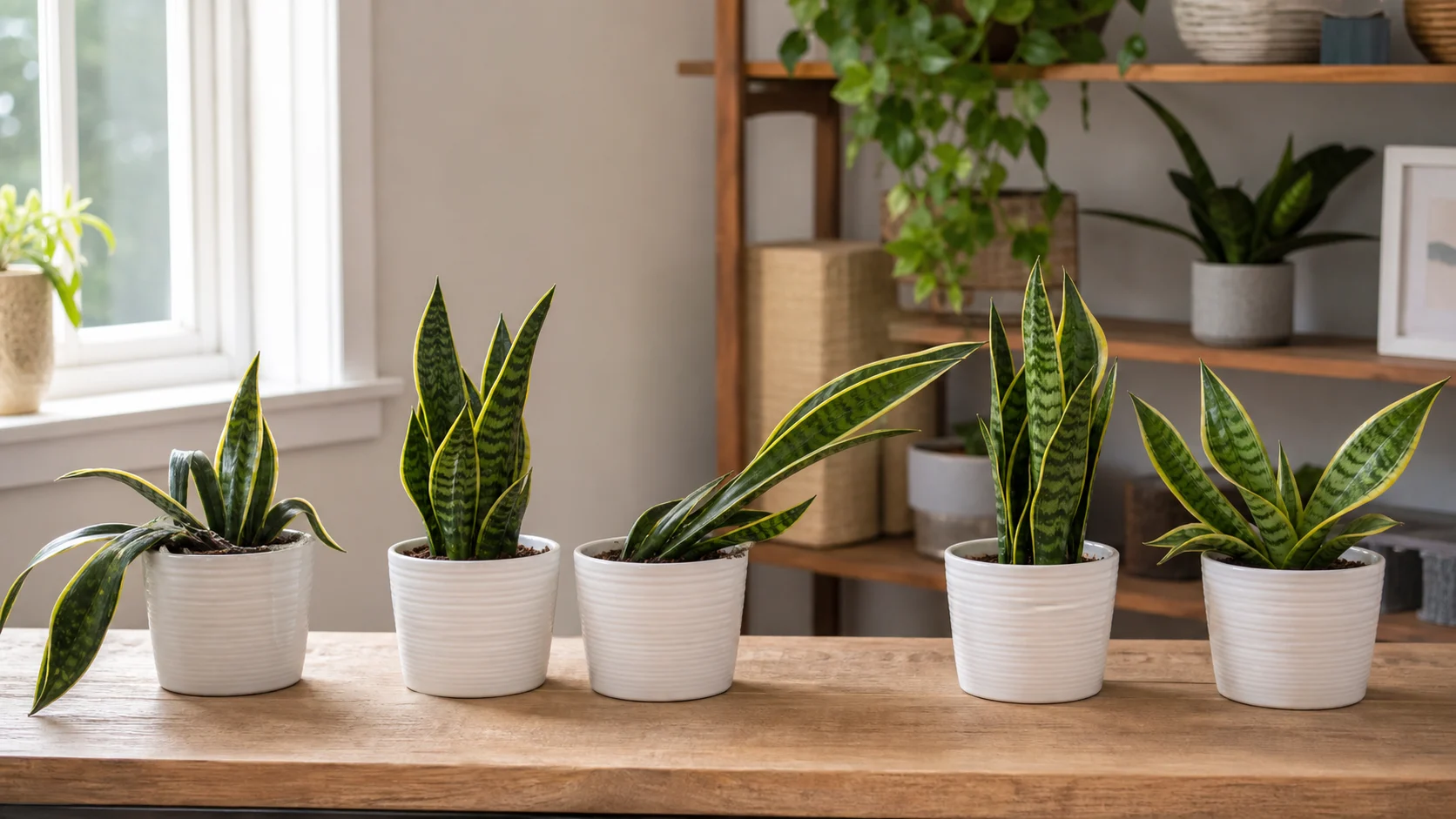
Upright, leaning, collapsed, and splaying leaves point to different first checks.
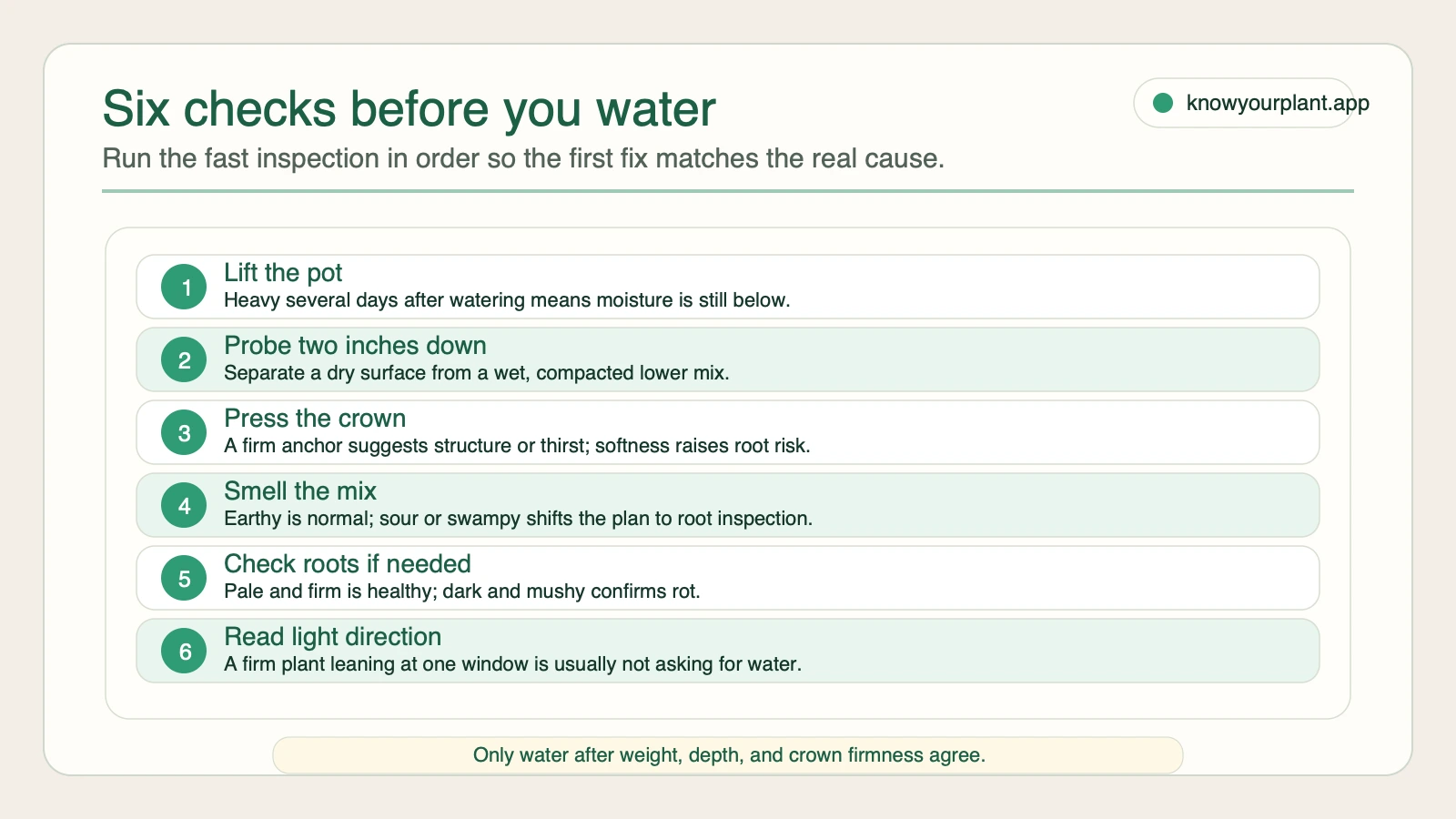
Do Not Water First: Inspection Checklist
This is the step that saves the plant.
- Lift the pot. A heavy pot several days after watering suggests the mix is still holding too much moisture.
- Check two inches down. Dry all the way through, evenly moist, or wet and compacted at the bottom each point to different causes.
- Press the crown. The base should feel firm and anchored. Softness here is a real warning sign.
- Smell the mix. Healthy soil smells earthy. Sour or swampy smell points toward root trouble.
- Check roots if you can. Healthy roots are pale and firm. Dark, mushy roots confirm rot.
- Look at the light direction. A plant leaning toward one window is often responding normally to uneven light.
These checks are more useful than any fixed calendar.
Original Data: A Quick Decision Tree
Use this simple sequence before you treat the problem.
- Base soft or unstable? Treat as root trouble until proven otherwise.
- Base firm, pot extremely light, leaves slightly wrinkled? Water deeply, then wait.
- Base firm, leaves leaning toward one side, pot is light and narrow? Think structure and light before disease.
- Plant recently moved or repotted? Hold steady for one to three weeks if roots and crown still look healthy.
- Leaves pushing outward from the center and roots crowding the pot? Repot one size up into a heavier container.
Cause 1: Overwatering and Root Rot
This is the most damaging cause to miss. NC State, Penn State, and UGA extension guidance all point in the same direction: snake plants need well-drained soil, careful watering, and time to dry between waterings. Consistently soggy soil leads to root rot.
Signs pointing here include rubbery leaves, musty soil, a soft crown, and dark or mushy roots.
What to do:
- stop watering
- remove the plant from the pot if the base feels soft or the roots smell bad
- cut away mushy roots
- repot into dry, fast-draining mix in a clean pot with drainage holes
If the roots are already damaged, follow the step-by-step root rot treatment guide before you water again.
If yellowing is showing up alongside the droop, the snake plant yellow leaves guide helps separate root trouble from normal aging.
Cause 2: Underwatering
Snake plants are drought tolerant, not drought proof. In a hot room or bright window, the mix can dry much faster than expected.
Signs pointing here include bone-dry soil, a very light pot, slight wrinkling, and no mushiness at the base.
What to do: water slowly and thoroughly until excess drains out, then let the mix dry again before the next watering.
Cause 3: Too Much Direct Light
Snake plants tolerate a wide light range, but prolonged direct sun can stress the leaves. Penn State notes that bright indirect light is the safer target indoors.
If the plant started drooping or bending after time in a harsher window, move it slightly back from direct sun and watch for recovery over the next week or two.
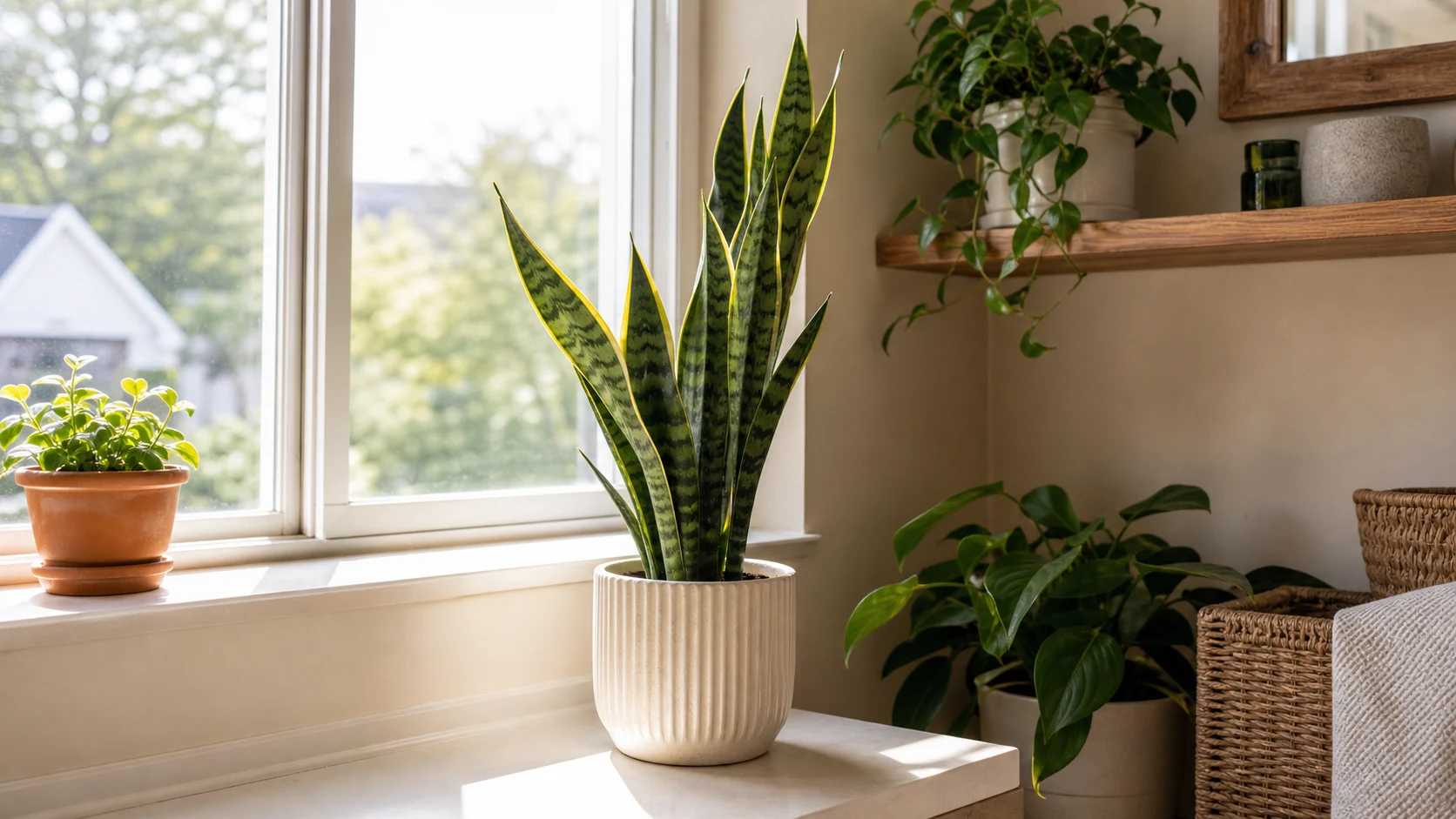
Moving a snake plant back from harsh direct sun keeps the brighter light without the stress.
Cause 4: Top-Heavy Growth in a Light Pot
Penn State and UGA both note that taller snake plants can topple without a heavier pot. This is a structural issue, not a disease problem.
If the leaves stay firm and the base stays solid, repotting into a heavier or wider container is usually a better fix than staking alone.
Cause 5: Roots Running Out of Room
A root-bound snake plant often splays rather than fully collapses. The leaves angle outward because the roots and rhizomes are pressing from underneath.
Check the drainage hole and the inner edge of the pot. If roots are circling or pushing through, repot into a container one size larger with a free-draining mix. The full when to repot plants guide helps you avoid moving up too far.
Cause 6: Repotting or Relocation Stress
If drooping starts soon after a move, new purchase, or repot, the plant may simply be adjusting. Give it stable conditions and do not stack extra changes on top of the stress.
What to do: hold care steady, skip fertilizer, and avoid moving it around again while it settles.
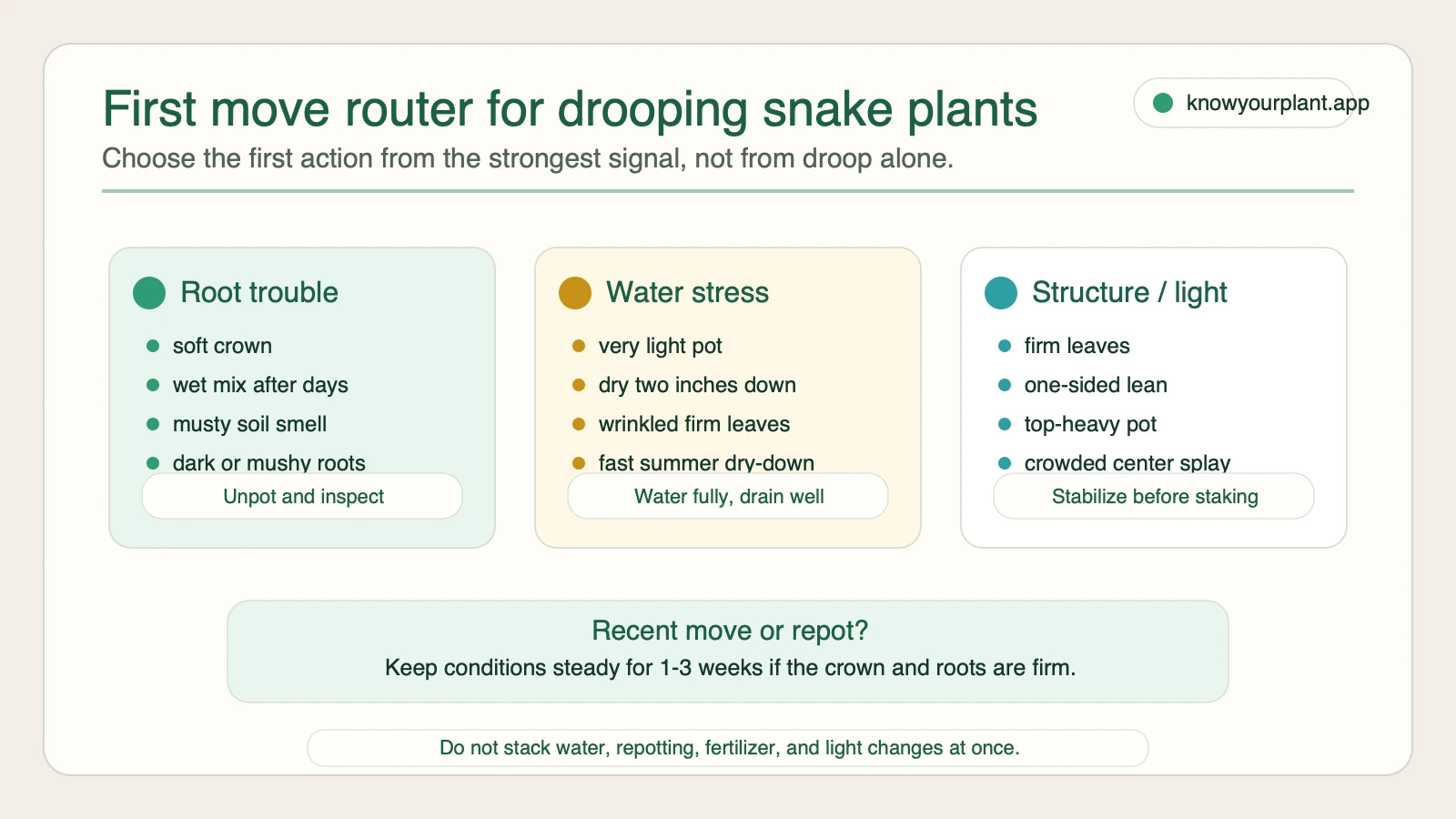
Comparison Table: Structure vs Stress vs Root Trouble
| Symptom pattern | Most likely cause | First move |
|---|---|---|
| Soft base, wet mix, musty smell | Root rot or overwatering | Unpot and inspect roots |
| Firm leaves leaning toward one side | Uneven light | Rotate and improve light balance |
| Firm leaves, whole plant toppling in a light pot | Top-heavy growth | Repot into a heavier or wider pot |
| Outward splaying from the center | Root-bound crowding | Repot one size up |
| Sudden droop after moving | Adjustment stress | Keep conditions steady and wait |
| Papery leaves plus very dry soil | Underwatering | Water thoroughly, then reassess |
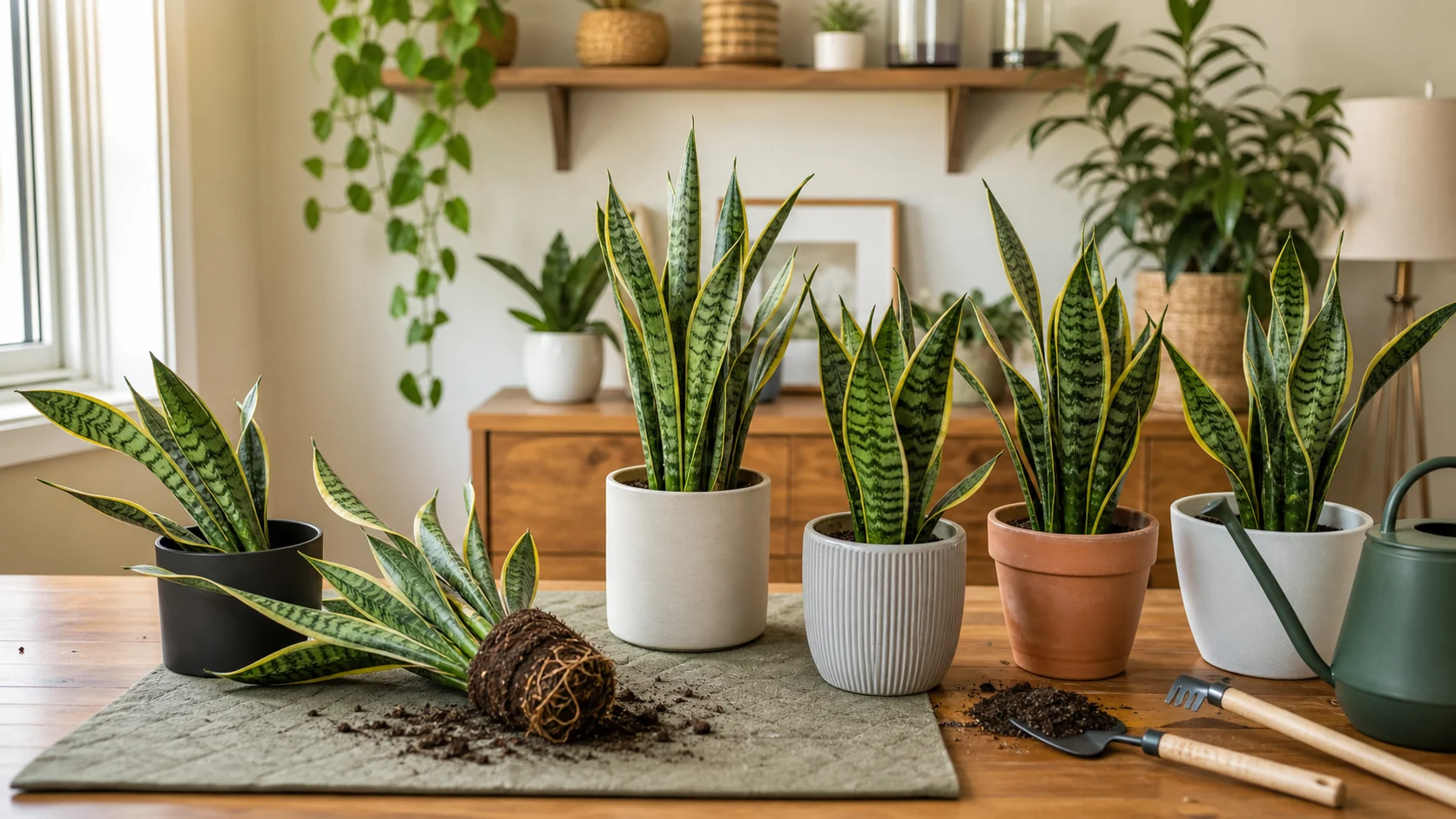
Leaf posture, pot stability, and the root ball together determine the right first move.
Common Mistakes
Watering the moment you see drooping. This is how root rot gets worse.
Staking before diagnosing. Support can hide the symptom while the roots keep failing underneath.
Keeping the same watering schedule year-round. Winter soil dries far more slowly than summer soil.
Using heavy, dense mix with poor drainage. Snake plants tolerate neglect better than trapped moisture.
Common Problems
| Problem | Likely cause | Best next move |
|---|---|---|
| Soft drooping leaves | Root rot or chronic overwatering | Check crown firmness and inspect roots |
| Firm leaves leaning toward a window | Uneven light | Rotate the plant and improve light balance |
| Whole plant tipping in the pot | Top-heavy growth or lightweight container | Repot into a heavier or wider pot |
| Leaves pushing outward from the center | Root crowding | Repot one size up |
| Wrinkled leaves with dry mix | Underwatering | Water thoroughly and let excess drain |
| Musty smell from the soil | Soggy root zone | Stop watering and inspect roots |
Expert and Source Layer
When symptoms overlap, extension guidance is the safest anchor. NC State supports the dry-between-waterings approach. Penn State and UGA both reinforce the need for free-draining soil and note that taller plants may simply need a heavier pot. ASPCA confirms the pet-safety risk if cats or dogs chew the leaves.
Seasonal Note
Late autumn through winter is when overwatering mistakes show up most often because growth slows and the mix stays wet longer.
Summer raises the odds of real thirst and light stress because the pot dries faster and windows hit harder.
After spring repotting or relocation is when temporary adjustment droop is most common.
Pet Safety
The ASPCA lists snake plant as toxic to dogs and cats. If a drooping leaf falls within reach, chewing can lead to nausea, vomiting, or diarrhea. Move the plant out of reach while you diagnose the problem.
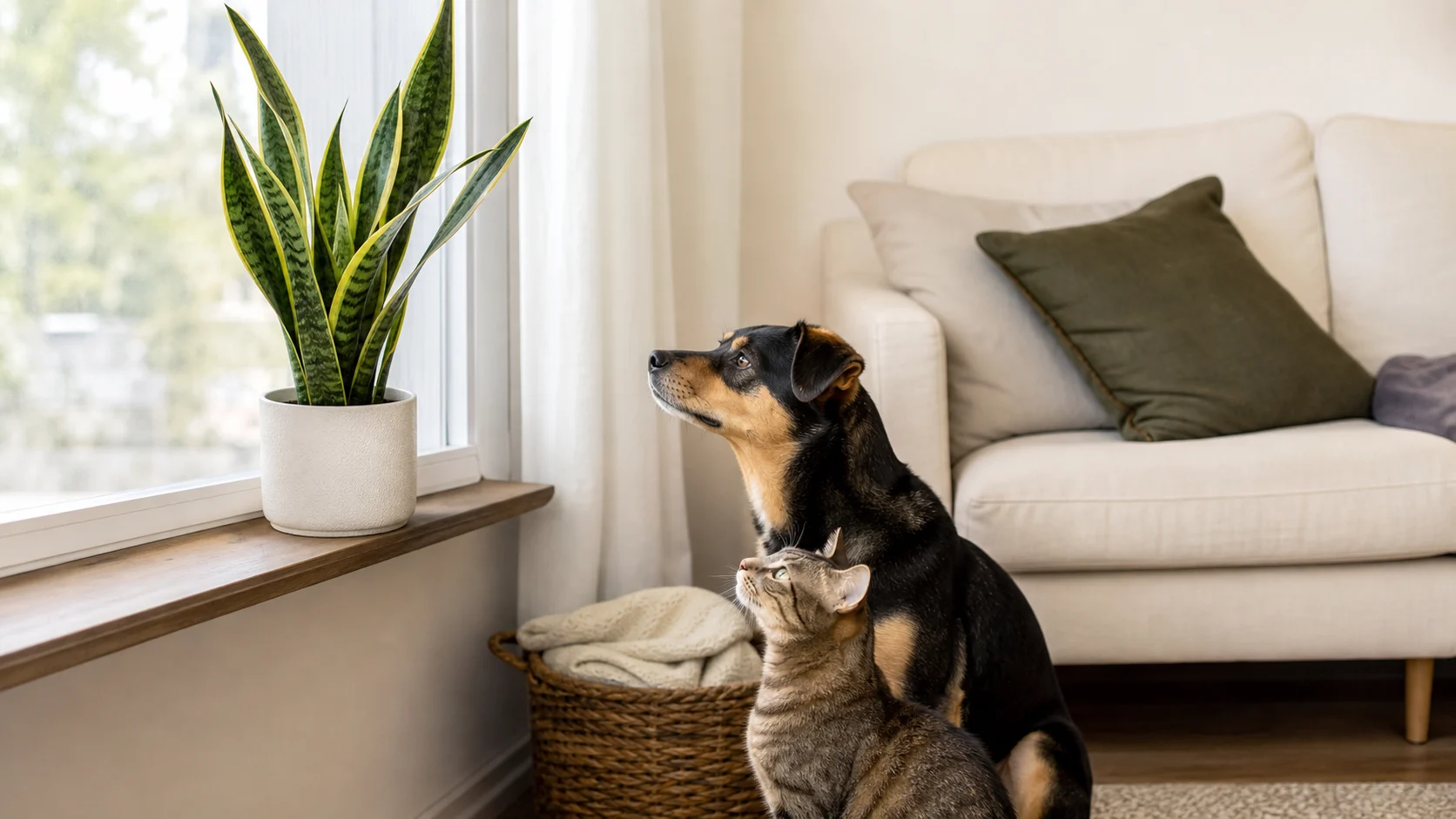
Keep a drooping snake plant elevated and separated from curious cats and dogs.
Pulling It Together
Snake plant drooping is usually fixable. The difference between recovery and decline is whether you inspect before you act.
Check crown firmness, moisture depth, pot weight, root condition, and light direction first. Then match the pattern to the cause.
For the broader routine, including watering rhythm, soil, and long-term care, the snake plant care guide covers the full setup.
For another practical pet-safety check, see Is Snake Plant Toxic to Cats? Signs, Risk, and Prevention for the risk level and the next steps.
If you are troubleshooting another common plant symptom, see Snake Plant Root Rot: Save Firm Leaves and Healthy Rhizomes for a focused diagnosis and recovery plan.
Real User FAQ
Why is my snake plant drooping after repotting?
Some drooping after repotting is normal. The roots were disturbed and the plant is adjusting to a new mix and container. If the crown still feels firm and the soil is not staying soggy, give it one to three weeks of steady conditions before you intervene again.
How do I know if my snake plant has root rot?
Press the crown gently. If it feels soft, unstable, or gives under light pressure, root trouble is likely. Healthy roots are pale and firm. Rotting roots are dark, mushy, and often smell sour.
Can a snake plant recover from overwatering?
Yes, if you catch it early. A plant with wet soil but still-firm roots can often recover by drying out fully and improving drainage. A plant with real root rot needs the damaged roots removed and a reset into fresh mix.
Why are my snake plant leaves bending sideways?
Firm leaves bending sideways usually point to light imbalance, top-heavy growth, or crowding in the pot. Soft bending points more toward root-zone trouble.
Should I stake my drooping snake plant?
Only after you confirm the plant is healthy and the issue is structural. A bamboo support can help temporarily, but it is not a fix for root rot or chronic watering mistakes.
How often should I water a drooping snake plant?
Do not use a fixed schedule to answer that. Check the soil and the pot weight first. If the mix is still moist, wait. If it is dry all the way through, water thoroughly.
Is it normal for snake plant leaves to droop in winter?
It is not ideal, but winter is when overwatering errors show up most often because the plant uses less water. If drooping appears in winter, start by checking whether the mix is staying wet too long.
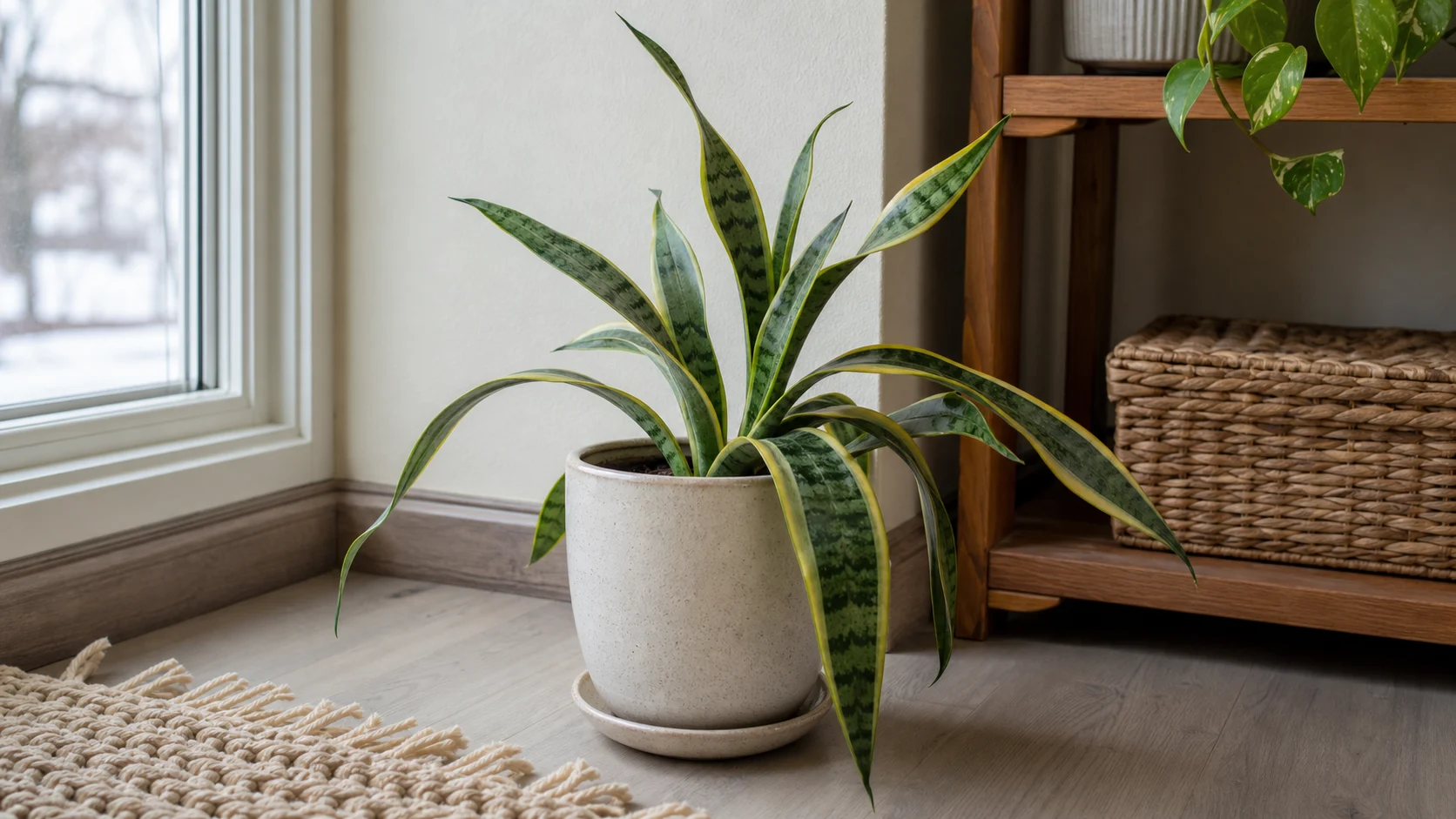
Winter drooping is a cue to check whether the potting mix is staying wet too long.
Why is my snake plant leaning toward the light?
That is a normal growth response called phototropism. Rotate the pot every few weeks so growth stays more even.
Freshness Note
This guide was reviewed in June 2026 against current extension and ASPCA guidance, plus recurring owner questions about drooping, bending, and root-rot confusion.
Methodology Note
This article combines three evidence layers: university extension guidance for diagnosis and care, ASPCA guidance for pet safety, and qualitative owner questions that reveal where drooping gets misdiagnosed in real homes. Extension and ASPCA sources support the factual care and safety claims here. Community examples were used only to surface common confusion patterns.