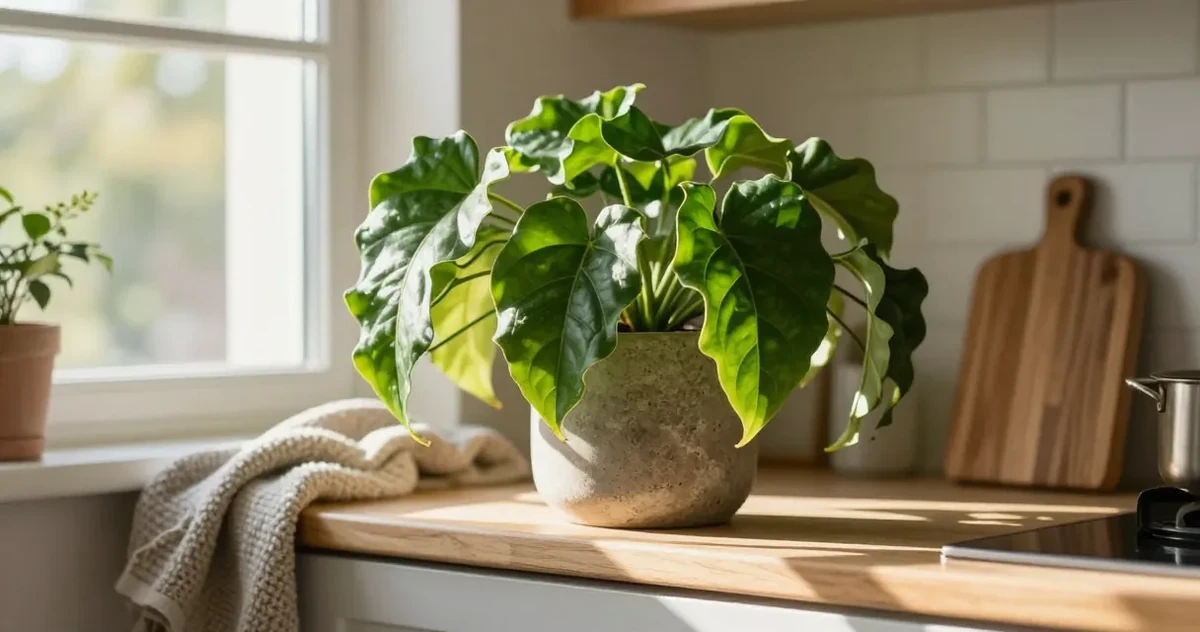
You noticed the leaves curling a few days ago. Maybe you watered it – that seemed like the right call. The curl got worse. Or you held off, waited it out, and nothing improved either way. Now you are looking at the plant and genuinely not sure what you did wrong or what to try next.
That uncertainty is not a gap in your plant knowledge. It is a gap in most plant advice. The two most common causes of curling leaves – genuine thirst and waterlogged roots – look nearly identical from above. Both produce inward curl, softening leaves, and a plant that just looks wrong. The fix for one is the exact opposite of the fix for the other, so treating the wrong cause does not just delay recovery. It makes the problem worse.
Before you change anything: lift the pot. A pot that feels unexpectedly heavy still has moisture in the lower root zone. A pot that feels very light is genuinely dry throughout. That single check takes three seconds and tells you more than a surface touch or a fixed schedule ever will. It is the fastest decision shortcut in plant care, and most curled-leaf guides never mention it.
A curled leaf is the plant narrowing its surface area to reduce water loss or protect itself from stress. It is a signal, not a death spiral. Once you know what to look for, most curled-leaf problems resolve in a few days to a couple of weeks.
Start here: four checks before you do anything else
- Lift the pot. Heavy = moisture still in the root zone. Very light = genuinely dry throughout.
- Probe two inches into the soil. Wet below a dry surface = root-zone stress, not thirst -- stop watering.
- Check leaf undersides for pests. Tiny moving specks, webbing, or sticky residue mean a pest problem, not a care problem.
- Think about what recently changed. New spot, heater turned on, longer stretch between waterings?
Pot heavy and soil wet? Jump to overwatering. Pot very light and soil dry? Jump to underwatering. Calathea or pothos? See the plant-by-plant table.
Symptom Diagnosis Card
| What you see | Most likely cause | Where to start |
|---|---|---|
| Leaves cupping inward across the whole plant | Underwatering or overwatering | Pot weight + soil probe two inches down |
| Inward curl + brown crispy edges or tips | Low humidity | Humidity level (aim for 50%+) |
| Leaf edges rolling under along the margins | Heat or too much direct sun | Distance from window or vent |
| Twisting or curling on new growth only | Pests or sudden environment change | Undersides of leaves for specks or webbing |
| Lower leaves curling, upper leaves look fine | Root zone stress | Slide out of pot, inspect roots |
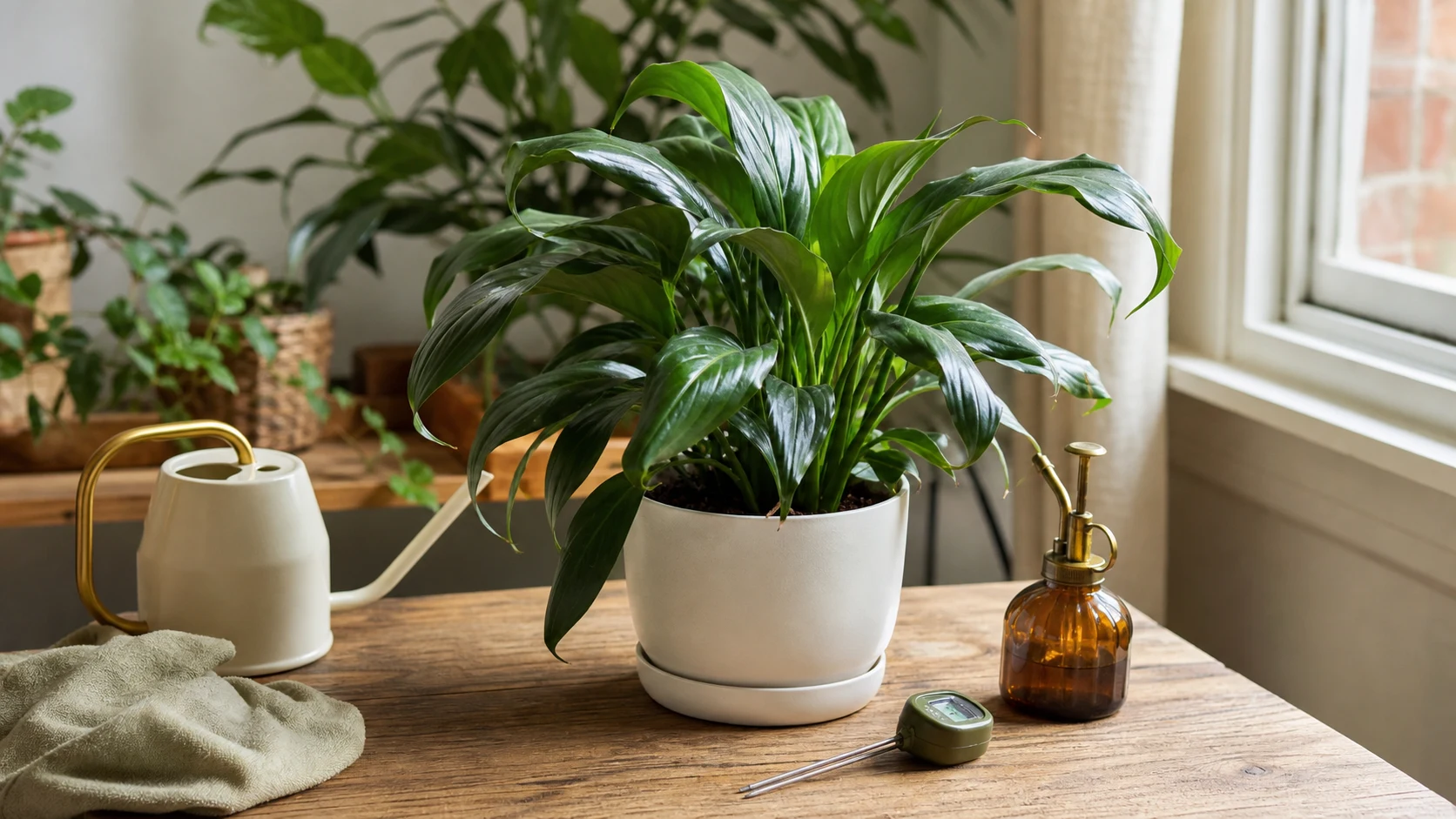
Curl shape is only the first clue; pair it with pot weight and a deep soil check before changing care.
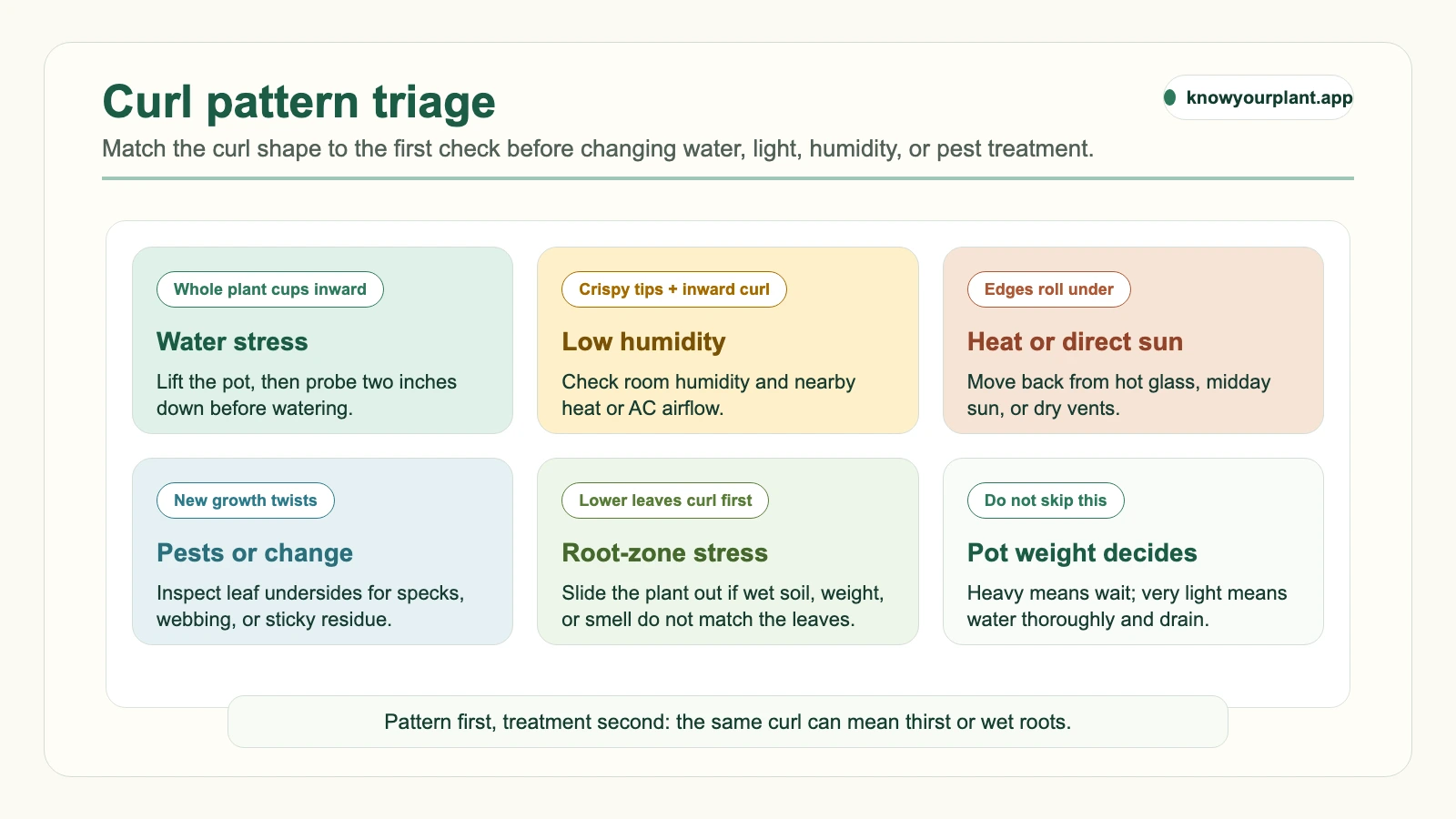
Use the curl shape as a first filter, then confirm it with pot weight, deep soil moisture, and pest checks before changing care.
What Most Care Guides Miss About Curling Leaves
Here is the misdiagnosis that causes the most frustration: you check the top of the soil, feel that it is dry, water the plant, and wait for the curl to improve. It does not.
What you do not realize is that the top two inches of potting mix can feel completely dry while the lower root zone is still holding moisture from the last watering. The roots are sitting in wet soil, struggling to function, and the leaves curl not from thirst but from root stress. More water makes it worse.
Clemson Cooperative Extension notes that most houseplant problems are environmental or cultural rather than true disease, and that root rot from overwatering is one of the leading causes of indoor plant decline. The confusing part: overwatered roots and a genuinely dry plant look nearly identical from the outside, at least at first. This is why the triage order matters – and why adding water before checking is one of the most common ways to turn a recoverable problem into a serious one.
What Owners Commonly Misread First
Recent owner-help threads show the same three mistakes repeating across calathea, pothos, pilea, and other houseplants.
- Dry topsoil gets mistaken for drought. The upper inch can feel dry while the lower root zone is still wet enough to stress roots.
- Apps and search snippets can jump straight to disease. In real cases, curled leaves are often humidity, watering, or draft problems long before they are pathogens.
- One stressor hides another. Direct sun, dry air, and inconsistent watering often arrive together, so a one-variable fix does not fully solve the curl.
Treat those community patterns as qualitative signal, not proof of a universal diagnosis. They are still useful because they help you avoid the first wrong move.
Expert note: Clemson Cooperative Extension says most houseplant trouble starts with environment or care, not disease, and NC State’s guidance for common indoor tropicals like calathea and pothos points back to humidity, drainage, and root health before anything else. That is why the safest first move is always pot weight, deep-soil moisture, and a leaf-underside pest check before you reach for a treatment.
Curl Direction Tells You Something
Before you adjust care, look at which way the leaves are curling and where on the plant it is happening.
Inward curl (cupping toward the center vein): Usually moisture stress – either too dry or too wet – or low humidity. The leaf pulls inward to slow water loss.
Edge curl or rolling under: Often a heat or direct-sun response. Leaves curl under along their margins when they receive too much direct light or sit near a warm, dry vent.
Twisting or curling on new growth only: Points to pests, inconsistent watering, or a sudden environmental change. New leaves are more vulnerable and show stress faster than mature ones.
Lower leaves curling while upper leaves look fine: Worth checking the root zone rather than the surface. Root problems tend to show up at the bottom of the plant first.
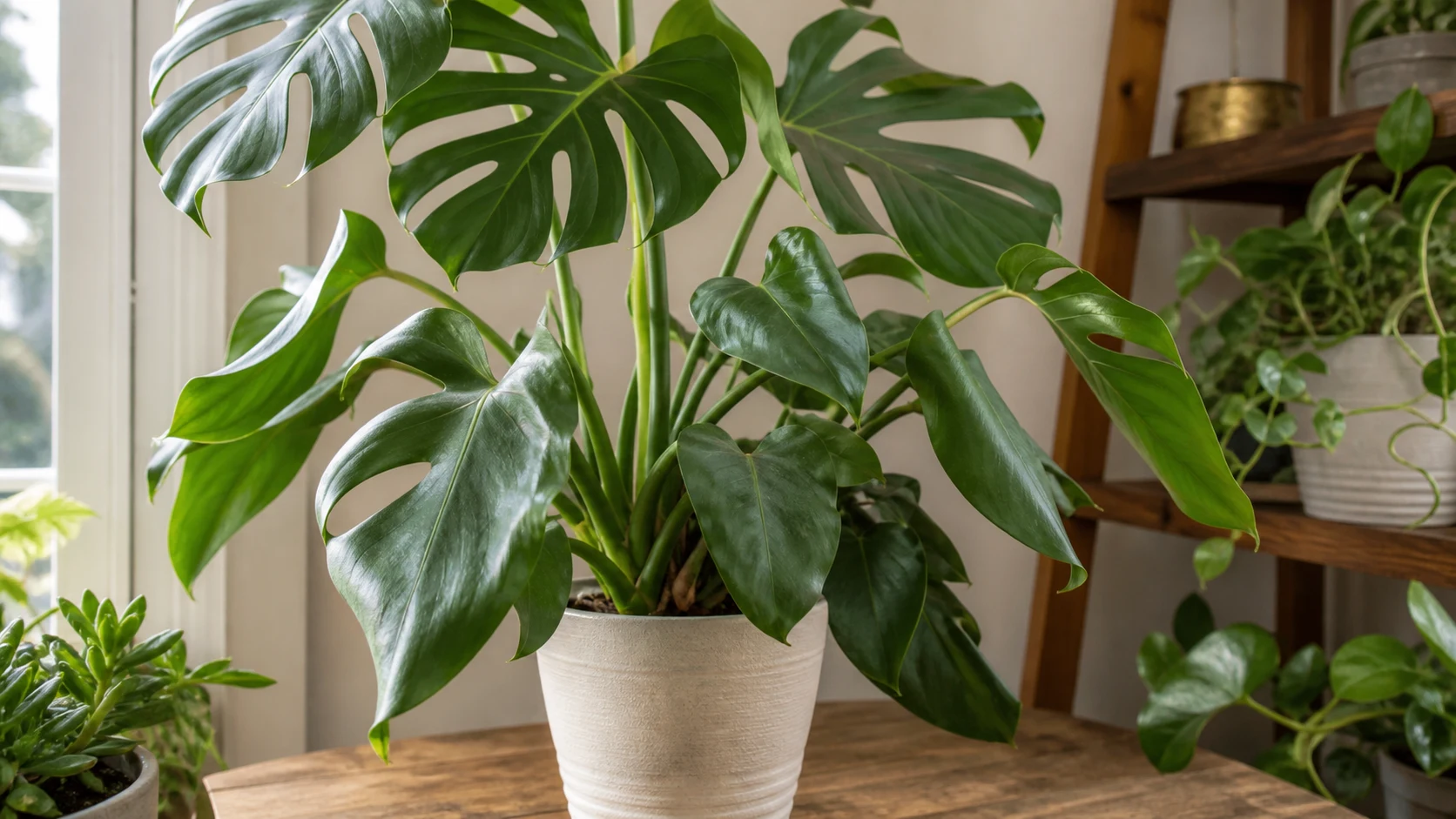
Compare rolled new growth, inward cupping, and edge curl before deciding whether moisture, heat, or roots are responsible.
Leaf Curl Decision Tree
Run through these checks in order before adjusting watering, light, humidity, or anything else. They take under ten minutes and eliminate most guesses.
- Is the pot heavy or very light? Heavy means moisture is still present in the root zone. Very light means the plant is genuinely thirsty throughout.
- Is the soil wet two inches down even if the top looks dry? If yes, treat it as root-zone stress, not thirst.
- Is the curl inward, edge-rolled, or limited to new growth? Inward cupping points to moisture or humidity stress. Edge rolling under points to heat or dry air. New growth distortion raises the pest check.
- Do the leaf undersides show specks, webbing, or sticky residue? If yes, isolate first and treat it as a pest problem before changing watering.
- What changed recently? A new location, a heating vent turning on, harder sun, or a longer gap between waterings usually explains the timing.
Most curled leaves trace back to a care or environment problem. Start with the first failed check instead of stacking several fixes at once.
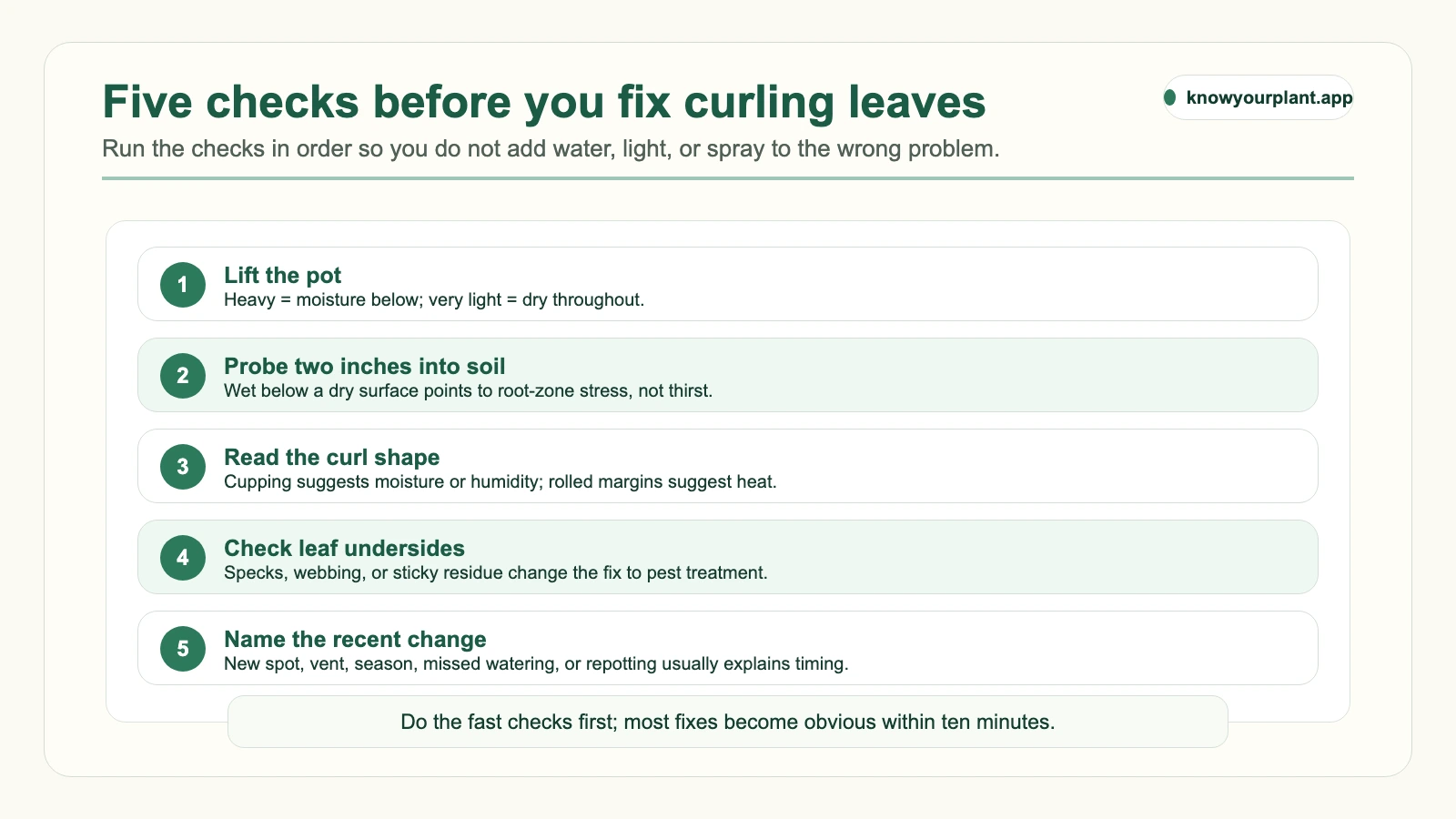
Follow the checks in order so you solve the first failed condition instead of stacking several stressful fixes at once.
Underwatering: The Most Common Reason
When a plant runs short of water, the cells in the leaves lose turgor pressure. They go soft, then the leaf curls inward to slow down water loss through the leaf surface. It is the plant rationing what little moisture it has left.
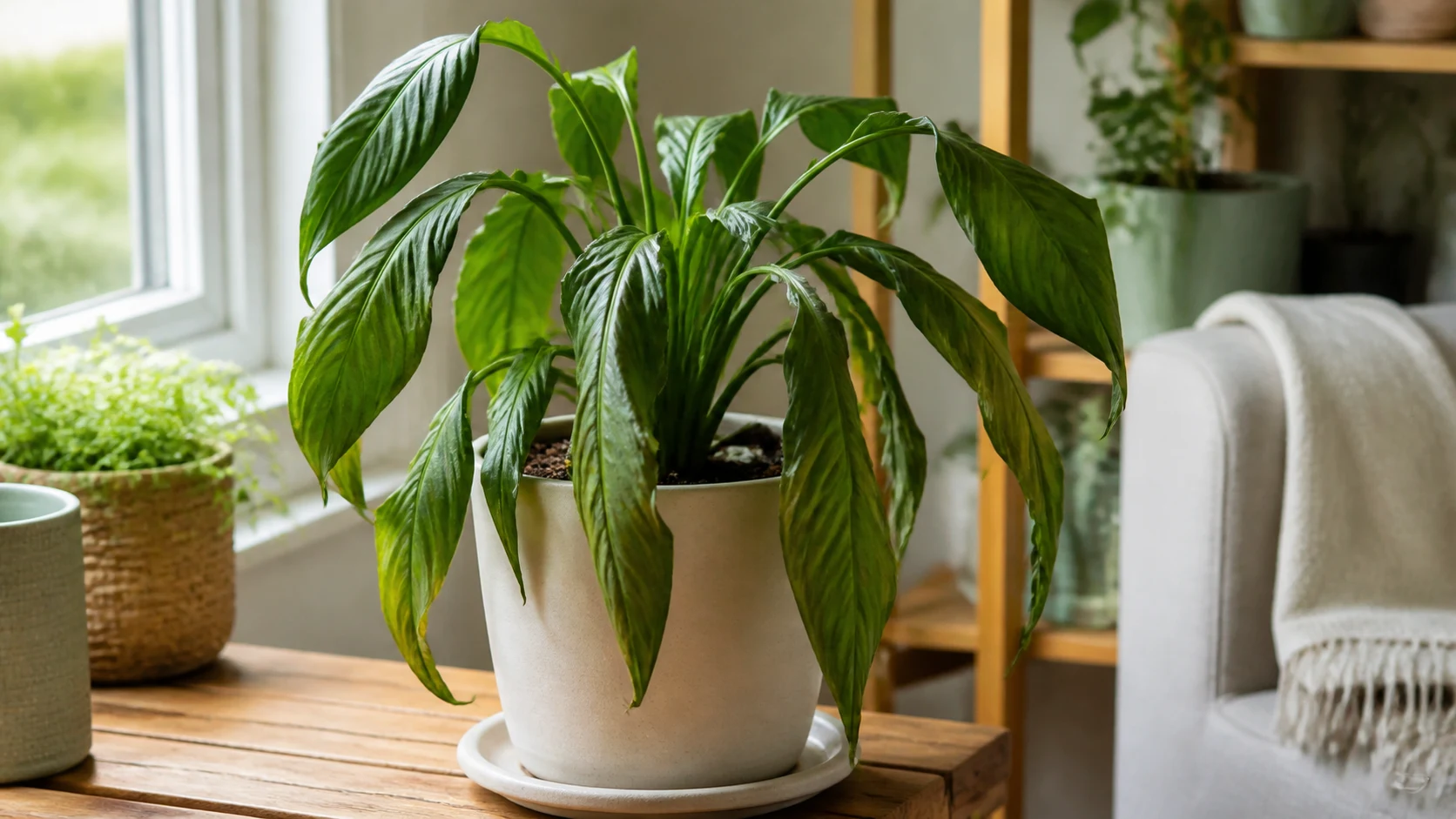
Soft, whole-plant inward curl above dry soil is a stronger thirst signal than one damaged leaf.
Signs you are looking at genuine thirst:
- Leaves curl inward and feel slightly soft or papery, not crisp and stiff
- Soil pulls away from the edge of the pot when you push a finger in
- The pot feels noticeably light when you lift it
- Multiple leaves across the whole plant are affected, not just one side
What to do: Water thoroughly until water runs freely from the drainage hole, let the pot drain completely, then check back in 24 hours. Plants that are genuinely thirsty usually show visible improvement within a day of a proper drink. The key word is thoroughly. Small top-up waterings keep the surface moist while leaving the lower root zone dry, which keeps the stress going without you realizing it.
NC State Extension guidance on pothos and other tropical houseplants consistently emphasizes that plants need a thorough watering followed by a period of drying, rather than frequent light drinks that never fully saturate the root zone and then drain freely.
Overwatering: When the Roots Are the Problem
Overwatering does not always produce soft, yellowing leaves right away. In the early stages, waterlogged roots cannot move water upward through the plant effectively, and the leaves curl inward because the plant is effectively thirsty even though the soil is saturated. It looks identical to drought stress, which is why so many owners make it worse.
Signs the curl comes from overwatering rather than thirst:
- Soil feels wet or damp when you probe two inches in
- The pot feels heavy when lifted
- Lower leaves are yellowing or going soft at the base
- A faint sour or earthy smell rises from the soil
What to do: Stop watering and let the soil dry out fully before the next drink. If lower leaves are mushy or the plant has not improved in a week, remove it from the pot and inspect the roots. Healthy roots are white or tan and firm to the touch. Black, brown, or mushy roots indicate rot. Trim the affected roots cleanly, let them air-dry for thirty minutes, and repot into fresh, well-draining mix in a container with drainage holes. If you want a full rescue sequence for soggy soil, sour roots, and the wait-versus-repot decision, see our overwatered plant guide.
NC State Extension notes that root rot and blackened leaf margins are common consequences of overwatering in pothos, and that a well-drained potting mix that dries between waterings is essential for root health in most tropical houseplants.
If you find root rot, our root rot treatment guide walks through the full recovery steps.
When curling leaves come with yellowing, that combination often points to either root rot or significant underwatering. Our guide to why plant leaves turn yellow separates those causes clearly.
Low Humidity: The Cause Calathea Owners Know Well
Tropical houseplants like calatheas, prayer plants, and certain ferns evolved in humid environments where air rarely drops below 60 percent relative humidity. When indoor air falls to 30 percent or lower – which happens routinely during winter heating season – leaves curl inward and develop crispy edges or brown tips. The curl is the plant reducing its surface area to slow moisture loss to the dry air around it.
NC State Extension notes that browning or curling leaf edges and tips in rattlesnake calathea (Goeppertia insignis) can result directly from low humidity, and that the plant requires high ambient humidity to stay healthy indoors. This applies equally to Maranta prayer plants and most Calathea relatives.
Signs humidity is the cause:
- Leaf edges or tips are brown and crispy alongside the inward curl
- The problem is worst near heating vents, air conditioning units, or south- or west-facing windows in summer
- The plant otherwise looks relatively healthy, with no mushy stems or pest damage
What to do: Move the plant away from air vents and radiators. Grouping plants together raises the local humidity as they transpire together. A pebble tray with water below the pot adds localized moisture without waterlogging roots. For rooms that are consistently dry, a small humidifier near your most sensitive tropical plants is the most effective long-term fix.
A note on misting: it increases surface humidity for about twenty minutes before the water evaporates. It does not meaningfully help calatheas or tropical ferns in dry rooms and can encourage fungal issues on some species. A pebble tray or humidifier is more effective for less effort.
For calathea specifically, our calathea care guide covers humidity, watering, and the most common reasons these plants develop curled or crispy leaves.
Heat Stress and Direct Sun
Strong direct sunlight or hot dry air causes leaves to curl under along their edges as a heat response. This shape is different from inward cupping. The leaf margin rolls downward and under while the center of the leaf may still look relatively flat and green.
This is especially common in summer when the sun’s angle shifts, putting plants that were fine in spring suddenly into direct midday light through the same window.
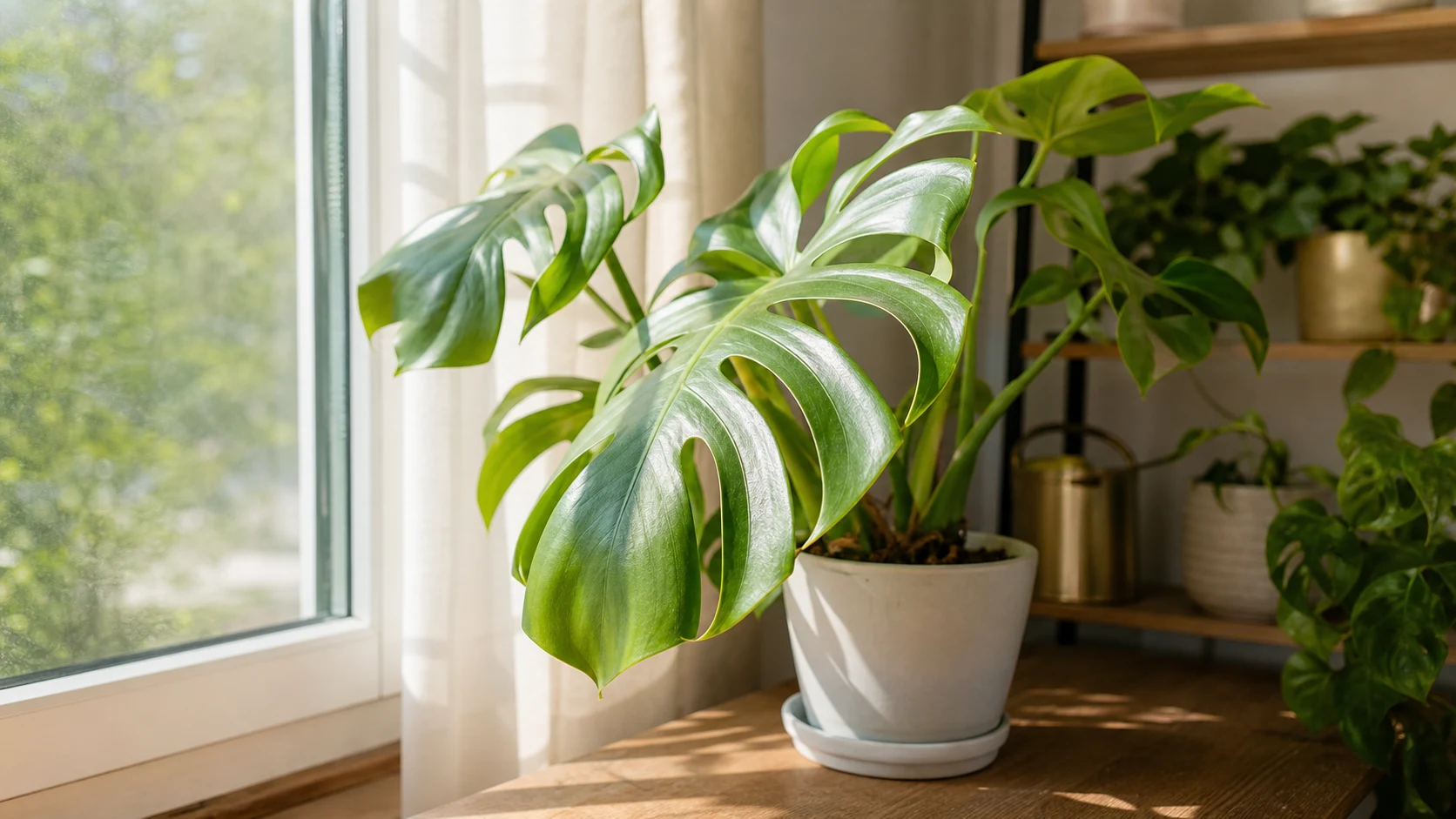
A plant that has drifted into a hard band of midday sun may roll its leaf margins under to limit heat stress.
What to do: Move the plant back from the window or filter the light with a sheer curtain. Leaves damaged by heat stress may not fully unfurl, but new growth should come in normally once conditions improve. Watching new leaves as they emerge is the clearest sign of whether the fix is working.
Pests: Small, Easy to Miss, Worth Checking Early
Spider mites, thrips, and aphids all feed on leaf tissue and disrupt the cells that keep leaves flat and healthy. Mite damage shows up as fine stippling or dusty webbing alongside the curl, usually on the undersides of leaves. Thrips damage tends to appear on new growth first, with leaves emerging twisted or distorted rather than unfurling normally.
Clemson Cooperative Extension notes that stressed plants are significantly more susceptible to pest pressure, and that pest checks should focus on leaf undersides, with early isolation and repeated treatment for spider mites and soft-bodied insects.
What to do: Check the undersides of leaves closely. If you see tiny moving specks, webbing, or sticky residue on the leaf surface, isolate the plant immediately. Treat with insecticidal soap or diluted neem oil, repeating every five to seven days until you see no new damage for two full weeks.
Our guide to getting rid of spider mites covers the full treatment cycle, and our neem oil guide explains how to apply it without burning leaves in the process.
Root Problems Beyond Overwatering
Roots that are severely cramped, damaged by fertilizer salt buildup, or sitting in a pot without drainage holes can produce curling leaves even when your watering looks correct on the surface. The plant cannot move water and nutrients efficiently when the root system is compromised.
Signs to look for: the plant has not been repotted in more than two years, roots are visibly escaping through drainage holes or circling densely near the surface, or you have been fertilizing regularly without flushing the soil occasionally to clear accumulated salts.
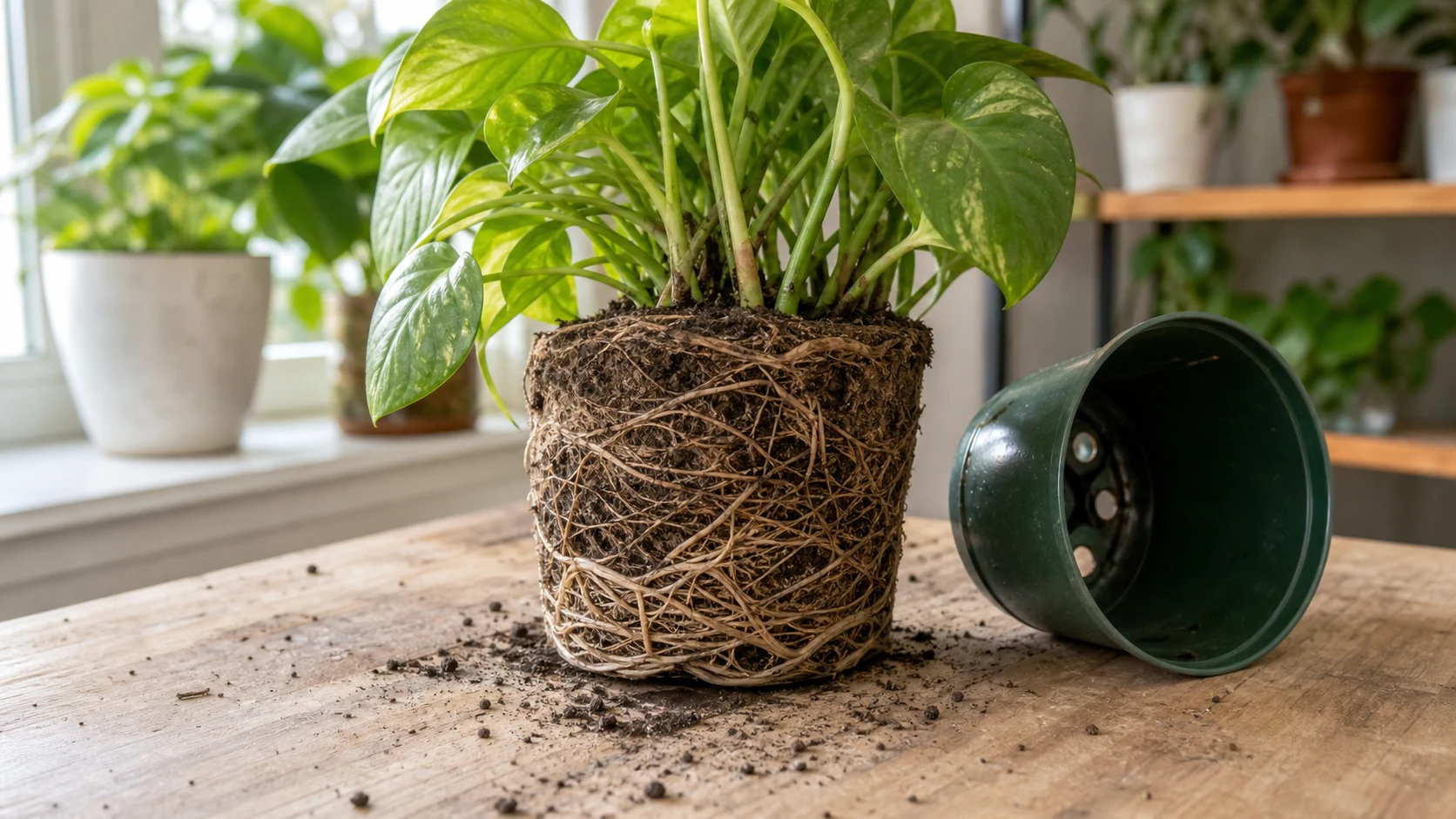
Dense roots circling the entire root ball confirm that the problem is below the soil surface, not simply a missed watering.
If you have ruled out watering, humidity, light, and pests, slide the plant out of the pot and look at the root zone. It takes two minutes and often answers every question the leaves have been raising for weeks.
For step-by-step guidance on whether your plant is ready to move up in pot size, see our repotting guide.
Which Cause Is Most Likely Right Now?
The season shapes the risk significantly, and knowing what to check first based on the time of year saves time.
Winter: Low humidity from heating systems is the leading trigger for calatheas, prayer plants, and tropical ferns. Overwatering becomes more common because growth slows and the soil takes much longer to dry between drinks. A watering schedule that worked in summer often becomes too frequent in winter without anyone noticing.
Spring and Summer: Heat stress and direct sun increase as the sun’s angle shifts. Underwatering becomes more likely as higher temperatures speed evaporation from the soil surface.
Year-round: Overwatering misdiagnosed as thirst is consistent across all seasons. This is why pot weight and a soil probe matter every time, not just when you are unsure.
Plant-by-Plant: What Calathea and Pothos Curl Usually Means
Different plants have different tendencies, and knowing the typical pattern for your specific plant saves real time.
| Plant | Most Common Curl Cause | First Check |
|---|---|---|
| Calathea / prayer plant | Low humidity, inconsistent watering | Humidity level + deep soil moisture |
| Pothos | Underwatering or overwatering | Pot weight + soil probe two inches down |
| Fiddle-leaf fig | Underwatering, draft, or root stress | Soil probe + recent location changes |
| Peace lily | Underwatering (droops dramatically first) | Pot weight: recovers quickly after watering |
| Spider plant | Direct sun or fluoride sensitivity | Light source + water type |
| Rubber plant | Overwatering or low light | Soil moisture + lighting spot |
For calathea and prayer plants: humidity and uneven watering are responsible for most leaf curl in these species. They are not difficult plants once you understand that they want consistent moisture and air that does not dry out like a room with the heating running all winter.
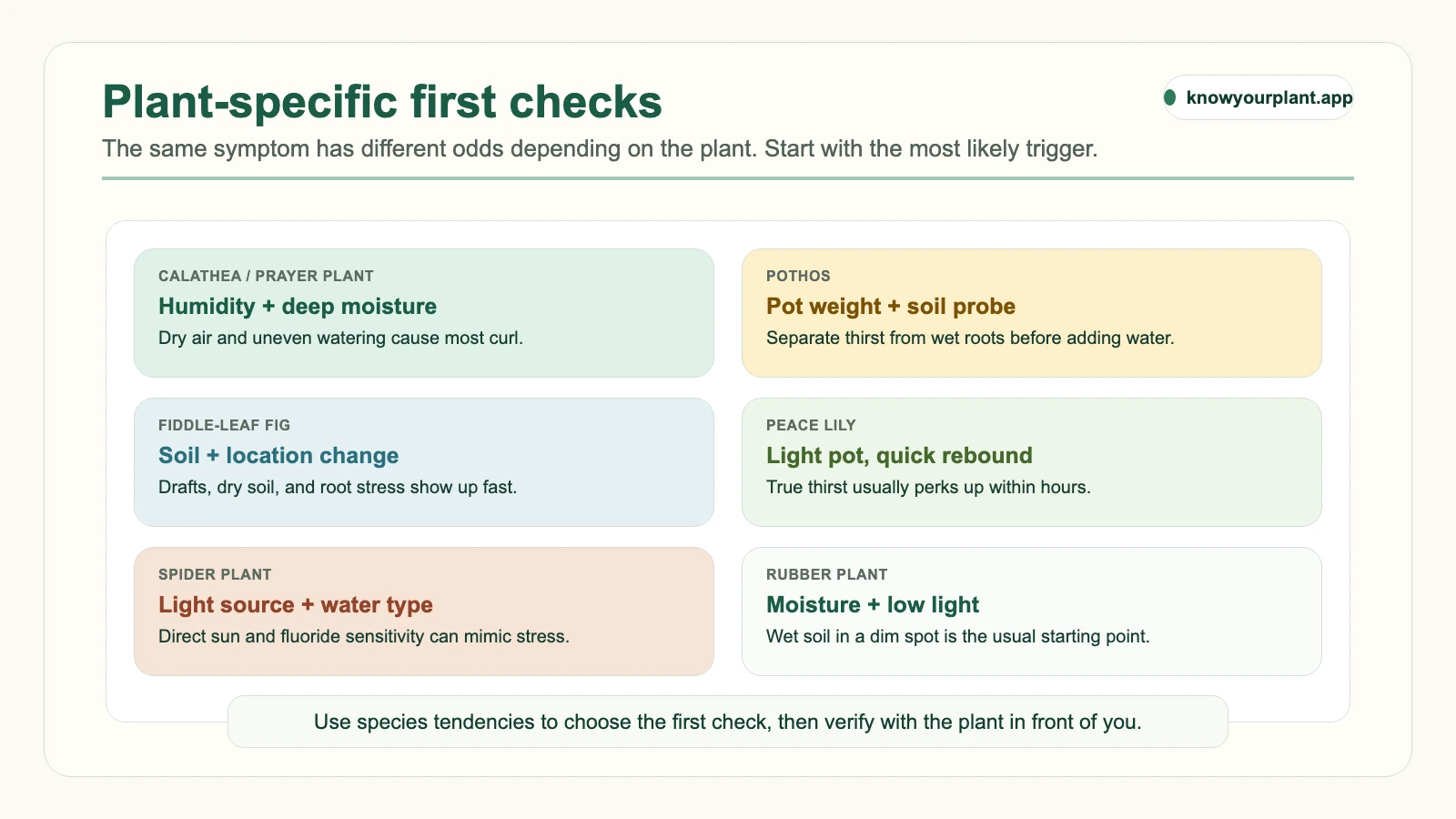
Use the plant-specific pattern to choose the first check, then verify with the actual pot, roots, leaves, and room conditions in front of you.
Common Mistakes That Make Curling Worse
Using misting as a humidity fix. Misting increases surface humidity for about twenty minutes before the water evaporates. It does not help calatheas or tropical ferns in any meaningful way and can encourage fungal issues on some plants. If the curl also comes with browning, our guide to why plant leaves turn brown helps you separate dry-air damage from salt buildup, heat stress, and root trouble.
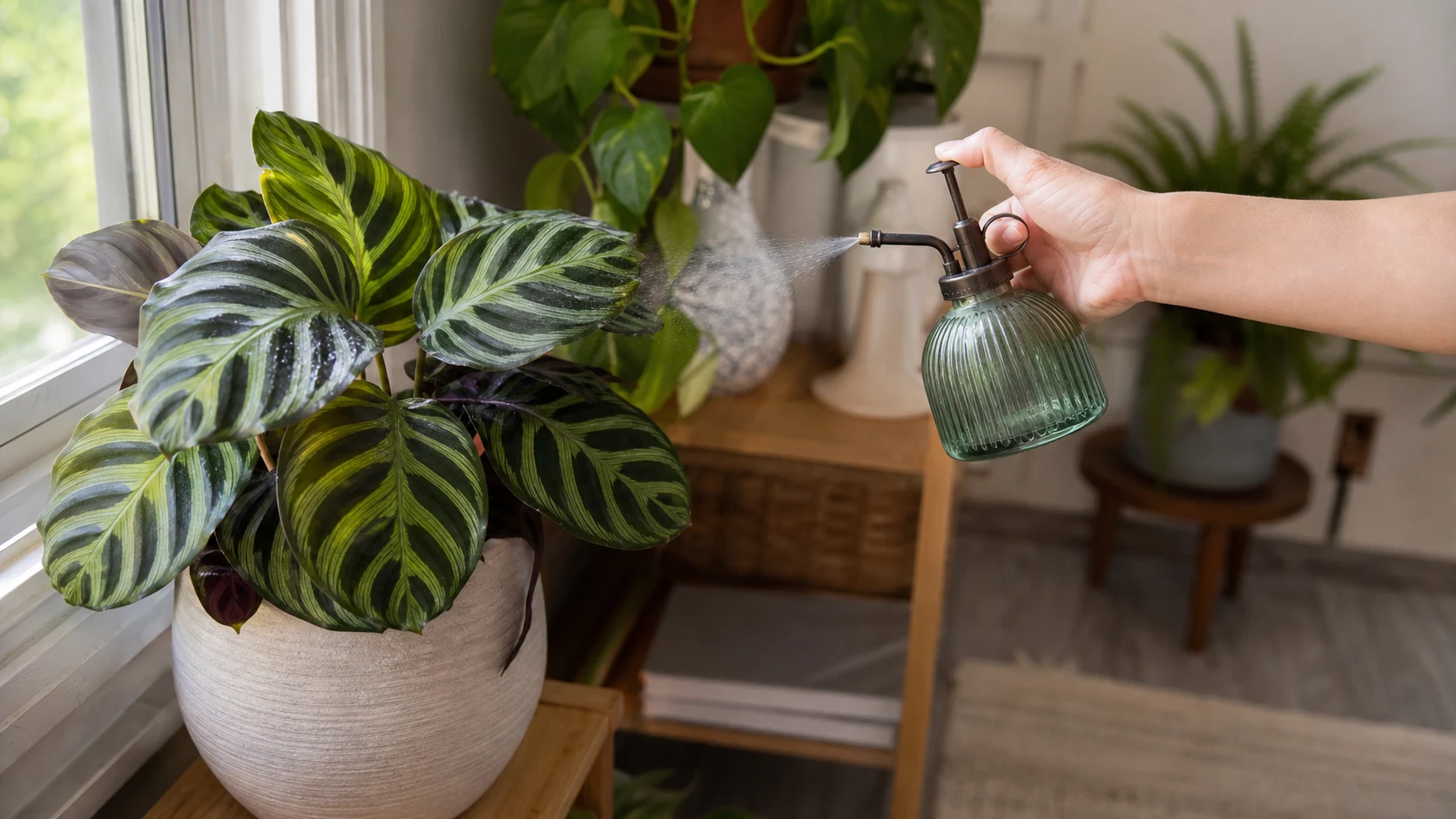
Misting briefly wets a calathea’s leaves but does not replace stable room humidity or a checked root zone.
Watering on a fixed schedule instead of checking the plant. A weekly schedule works well in summer and fails in winter when growth slows and evaporation drops. Check the plant, not the calendar.
Treating every symptom as a watering problem. Curl, wilt, and drooping all look like thirst. Not all of them are. The pot-weight test and soil probe take ten seconds and stop you from adding water to an already-wet root zone; the drooping plant leaves guide helps separate thirst, wet-root stress, heat, and transplant shock.
Fixing one variable and assuming you are done. A calathea dealing with low humidity near a vent and inconsistent watering at the same time will not recover by fixing just one of those. Stacked stressors need stacked fixes, and the plant may need two to three weeks to show improvement once conditions are right.
FAQ
Why are my plant leaves curling inward?
Inward curl – where the leaf cups toward its center vein – almost always signals moisture stress or low humidity. The plant is reducing its surface area to slow water loss. It can mean the soil is too dry, the roots are too wet and struggling to function, or the air around the plant is too dry. Use the pot-weight test and a deep soil probe to tell them apart before you water.
Why are my calathea leaves curling?
Calathea leaves most often curl from low humidity or inconsistent watering. These plants come from humid forest floors, and the dry air in a heated or air-conditioned home stresses them. Check humidity first. If you are below 50 percent, that is very likely your cause. Also check whether the soil is staying consistently moist but not wet, or cycling between soggy and bone dry, which also triggers curl.
Why are my pothos leaves curling?
Pothos are relatively forgiving, so when their leaves curl, the cause is usually significant: prolonged underwatering, overwatering with poor drainage, or root crowding in a pot they have outgrown. Lift the pot and probe the soil. Pothos recover quickly from thirst after a thorough watering, but root rot from overwatering takes longer to turn around.
Do curled leaves go back to normal?
It depends on the severity and the cause. Leaves that curled from thirst usually flatten within 24 to 48 hours after a thorough watering. Leaves curled from low humidity may partially recover once conditions improve. Leaves damaged by root rot or severe pest pressure may not fully flatten, but new growth that comes in after you fix the problem should look normal.
Should I cut off curled leaves?
Not right away. A curled leaf that is still green is still photosynthesizing, even if imperfectly. Fix the underlying cause first. If a leaf turns yellow, brown, or mushy after you have addressed the problem, then remove it. Cutting leaves prematurely adds stress to a plant already dealing with something else.
Can overwatering cause leaf curl?
Yes, and this is the most common misdiagnosis. Overwatered roots cannot move water effectively up through the plant, so leaves curl inward – the exact same visual as underwatering. The difference is in the soil and the pot weight. Wet soil plus curling leaves means root stress, not thirst. Stop watering, improve drainage, and inspect the root zone if the plant does not improve within a week.
Why are only the new leaves curling?
New growth shows environmental stress faster than established leaves. Twisting or curling on new leaves only, with older leaves looking fine, often points to pests like thrips, to inconsistent watering that stresses new growth as it emerges, or to a sudden environmental change like a move to a new location. Check the undersides of both new and old leaves for pest activity before changing anything about care.
How do I raise humidity without a humidifier?
Group your plants together. They release moisture as they breathe, which raises the local humidity around the cluster. A pebble tray with water below the pot adds some humidity without sitting roots in water: the pot should rest on the pebbles, not in the water itself. Moving plants to a naturally humid room like a bathroom with good light can also help. Misting is not effective for sustained humidity improvement.
Sources
- Clemson Cooperative Extension HGIC. Houseplant Diseases and Disorders. hgic.clemson.edu. Accessed 2026-05-22.
- Clemson Cooperative Extension HGIC. Common Houseplant Insects and Related Pests. hgic.clemson.edu. Accessed 2026-05-22.
- NC State Extension Plant Toolbox. Goeppertia insignis (Rattlesnake Calathea). plants.ces.ncsu.edu. Accessed 2026-05-22.
- NC State Extension Plant Toolbox. Epipremnum aureum (Pothos). plants.ces.ncsu.edu. Accessed 2026-05-22.
Methodology and freshness note: This guide was refreshed in June 2026 using Clemson Cooperative Extension and NC State Extension horticultural sources, plus recent owner-help threads on Gardening Stack Exchange and Ask Extension reviewed for recurring misdiagnosis patterns. Extension sources support the care guidance directly. Community threads are used as qualitative signal only. Written by the KnowYourPlant editorial team, with final publish review pending.