By KnowYourPlant editorial team, updated June 2026. We checked current extension guidance on watering and root rot, then compared it with real houseplant-owner confusion patterns so this article helps you narrow the cause before you change care.
You spot it one morning: a leaf, then two, going pale and yellow while the rest of the plant looks perfectly fine. If you’ve been staring at your pot wondering why the leaves are turning yellow, you’re not alone - and the honest answer is that yellowing is one of the most frustrating symptoms in houseplant care precisely because it can mean a dozen different things.
Here’s the thing worth writing down: a yellow leaf is your plant’s distress signal, not its diagnosis. It tells you something is off. It doesn’t tell you what.
This guide helps you read the pattern - where the yellowing starts, how the leaf actually feels, what the soil is doing - so you can narrow in on the real cause and take the right next step instead of guessing.
What Most Care Guides Miss
Every houseplant article has some version of the same list: overwatering, underwatering, low light, pests, nutrient deficiency. Those causes are all real. The problem is most guides stop there.
What gets left out is the part that actually matters: the same yellow color looks and feels completely different depending on the cause. A leaf going soft and translucent because roots are sitting in wet soil has nothing in common with a leaf drying out at the tips because the air is too dry. Treating them the same way - cutting back water, moving to a brighter window - fixes one problem and quietly worsens the other.
The Royal Horticultural Society notes that chlorosis (the technical name for leaf yellowing) can stem from nutrient deficiency, drought, waterlogging, cold injury, viral disease, or other pathogens, and that the position and pattern of yellowing differs between each cause. That variation is the key. You can’t work backward from the color alone.
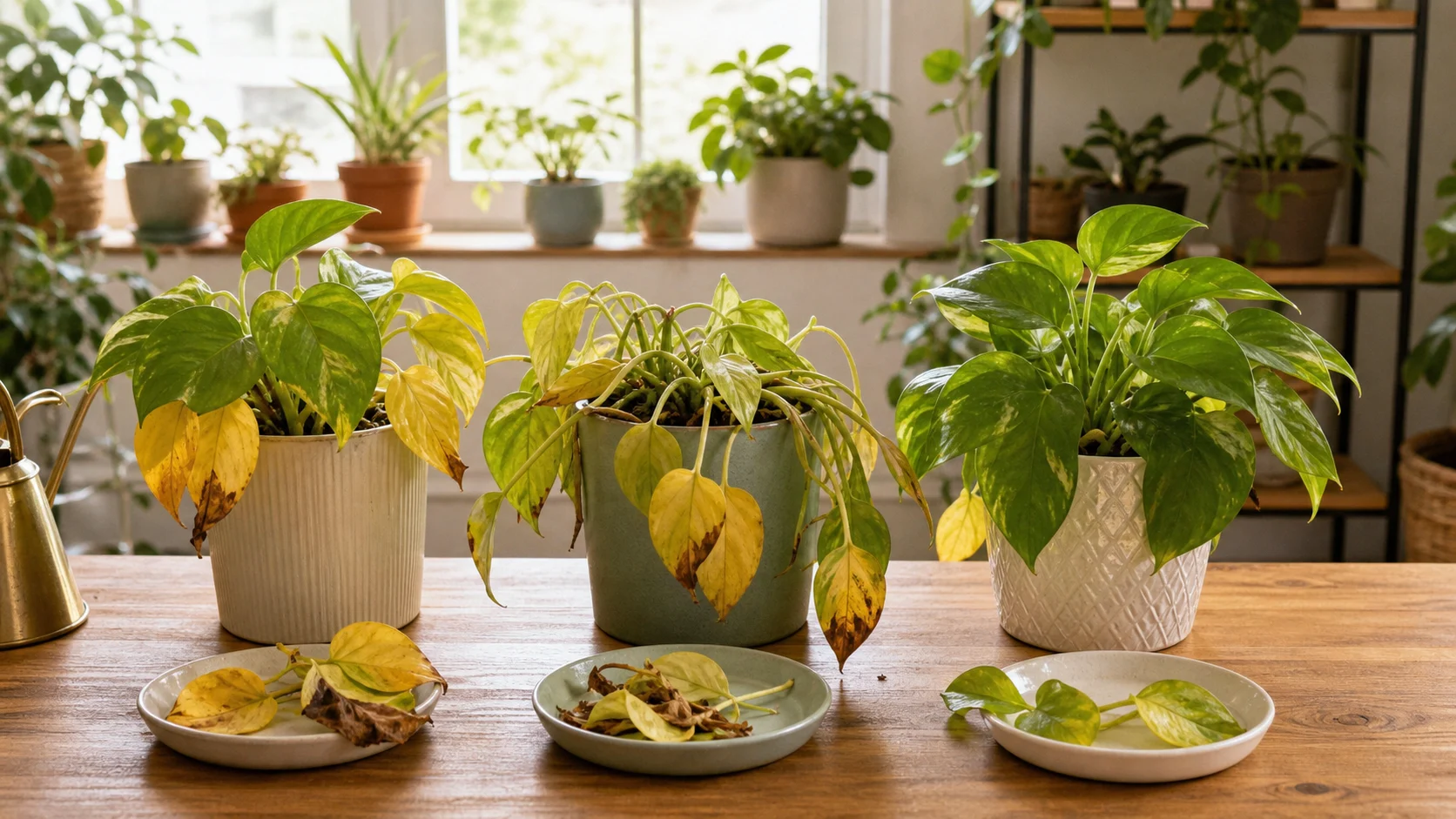
Similar yellow leaves can point to very different causes, so texture, soil moisture, and growth pattern matter more than color alone.
The most common misdiagnosis is jumping straight to overwatering. It’s the first thing most people suspect, and sometimes it’s right. But yellow leaves on a plant that’s actually thirsty, light-starved, or simply finishing a normal leaf cycle get misread as overwatering every single day. The standard overwatering fix - less water, let it dry out - is exactly the wrong move for a plant already stressed by drought or poor light.
Before you change anything, take two minutes to check the pattern. If color alone is not enough to identify it, use the leaf damage identification guide to compare spots, holes, edge damage, and distorted growth.
Symptom Diagnosis Card
Use this quick card when the plant is in front of you and you want the safest first move, not a full theory.
| What you notice first | Most likely direction | Safest next step in the next 24 hours |
|---|---|---|
| Only the oldest lower leaves are yellow | Normal leaf aging or mild light stress | Remove only fully yellow leaves and keep watching new growth |
| Leaves are yellow and soft while the soil is still wet | Overwatering, stalled roots, or early root rot | Stop watering, empty any standing water, and inspect drainage |
| Leaves are yellow and crispy with dry mix | Underwatering or dry heat stress | Water deeply, then let excess drain fully |
| New leaves are yellow while older ones stay greener | Nutrient, root, or light problem | Pause fertilizer changes and review roots, light, and recent repotting |
| Yellowing comes with spots, stickiness, or webbing | Pest or disease layer on top of stress | Isolate the plant and inspect leaves, stems, and roots before treating |
Expert note. University of Maryland Extension recommends checking soil moisture and pot weight instead of watering on a fixed schedule. Wisconsin Horticulture notes that yellowing plus wet soil and wilting can point to root rot, especially when roots turn soft, brown, and foul-smelling.
Start With the Pattern, Not One Cause
Three questions. Run through them before you decide what’s wrong.
Which leaves are yellowing first?
Old lower leaves going yellow one at a time is often normal. Plants drop their oldest leaves as new growth pushes in. If the rest of the plant looks healthy, only the very bottom leaves are affected, and it’s happening slowly - one or two at a time - this usually isn’t worth troubleshooting.
New or top leaves turning yellow is different. When the youngest leaves are pale while older ones stay green, the plant is struggling to support new growth. This tends to point to a nutrient gap - particularly nitrogen or iron - or to roots that can’t pull water and minerals upward efficiently.
Yellowing scattered across the whole plant at once is the most urgent pattern. Multiple leaves at different stages going yellow together usually signals something systemic: sudden overwatering, root damage, a major environmental shock, or sometimes pests feeding at the roots.
How does the affected leaf feel?
Run your fingers across the yellow area. Soft, limp, slightly translucent usually means too much moisture - either soil that’s stayed wet too long, or root rot that’s already taken hold. Dry, papery, or crispy at the edges leans toward underwatering, very low humidity, or heat stress from a nearby vent. Yellow with a firm texture and no wilting at all can point to nutrient issues or early light overexposure.
What is the soil doing right now?
Push a finger about an inch into the potting mix. Wet soil plus yellow leaves is a classic overwatering signal - but only if drainage is working. Wet soil plus yellow leaves plus a full saucer sitting underneath the pot means water has nowhere to go and the roots may already be struggling. Bone-dry soil plus yellow, papery leaves means the plant has been thirsty long enough that it’s shedding foliage to reduce the load it needs to support.
The University of Maryland Extension recommends against watering on a fixed schedule: checking soil moisture by touch - or lifting the pot to feel whether it’s gotten lighter - is a more reliable signal than any calendar reminder. If you want a fuller condition-first watering framework, start with our guide on how often to water indoor plants.
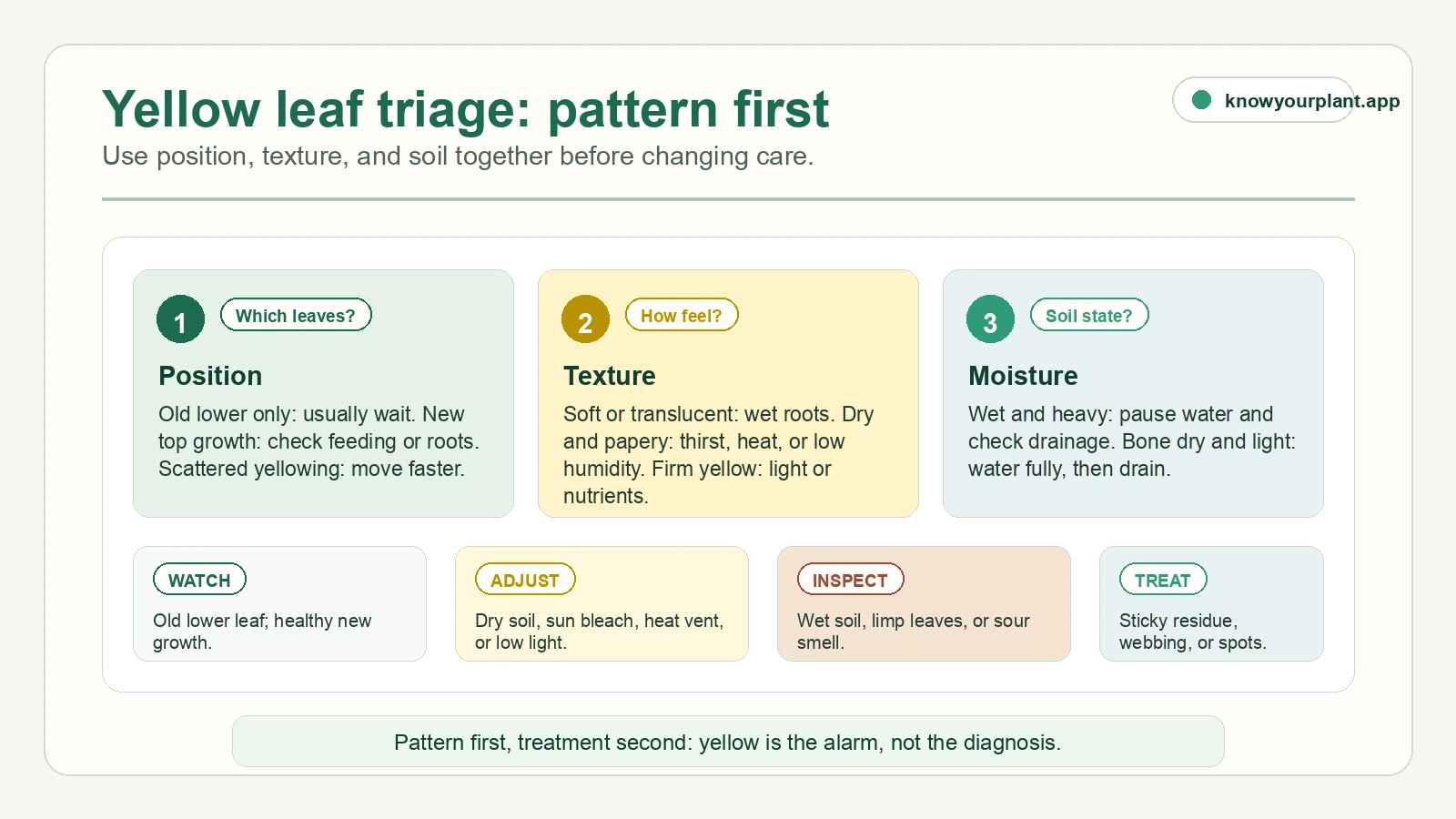
Read the yellowing pattern before treating it: leaf position, texture, and soil state point to different next steps.
Symptom Guide: What the Yellow Leaf Is Actually Telling You
Different combinations of color, texture, position, and soil state point to different causes. Use this to narrow it down before you act.
| What you see | Leaf texture | Soil state | Most likely cause |
|---|---|---|---|
| Lower, older leaves only | Normal or slightly soft | Moist | Natural leaf aging - no action needed |
| Lower leaves, spreading upward | Soft, limp, translucent | Wet | Overwatering or poor drainage |
| Lower leaves, spreading upward | Soft, limp, translucent | Wet + mushy roots | Root rot - inspect roots immediately |
| New top leaves pale or yellow | Firm | Moist to dry | Nitrogen or iron deficiency |
| Scattered across whole plant | Firm | Dry, pulling from pot edge | Underwatering - plant shedding load |
| Yellow patches or bleached spots | Firm | Any | Direct sun scorch |
| Yellow plus dry, brown tips | Dry, papery | Dry | Low humidity or heat vent stress |
| Yellow plus black or dark spots | Soft | Wet | Overwatering combined with fungal issue |
| Yellowing after a recent move | Any | Any | Environmental shock - wait two weeks |
This table doesn’t replace a root inspection, but it gives you a working hypothesis before you change anything.
Decision Tree: What to Check in Order
- Are only the oldest lower leaves yellow? If yes, and the rest of the plant looks healthy, treat it as natural aging first and watch whether the pattern stays limited to those older leaves.
- Is the soil still wet? If yes, stop watering and check whether the pot has drainage holes, whether a cachepot is trapping runoff, and whether the roots smell sour or feel mushy.
- Is the soil dry and the leaf crispy? If yes, water thoroughly, let the pot drain, and review whether the plant has been sitting near a heater or strong afternoon sun.
- Are the newest leaves yellow instead of the oldest ones? If yes, think roots, light, or nutrient availability before you blame watering alone.
- Do you see spots, sticky residue, or webbing? If yes, isolate the plant and inspect for pests or disease, because watering tweaks alone will not fix that layer.
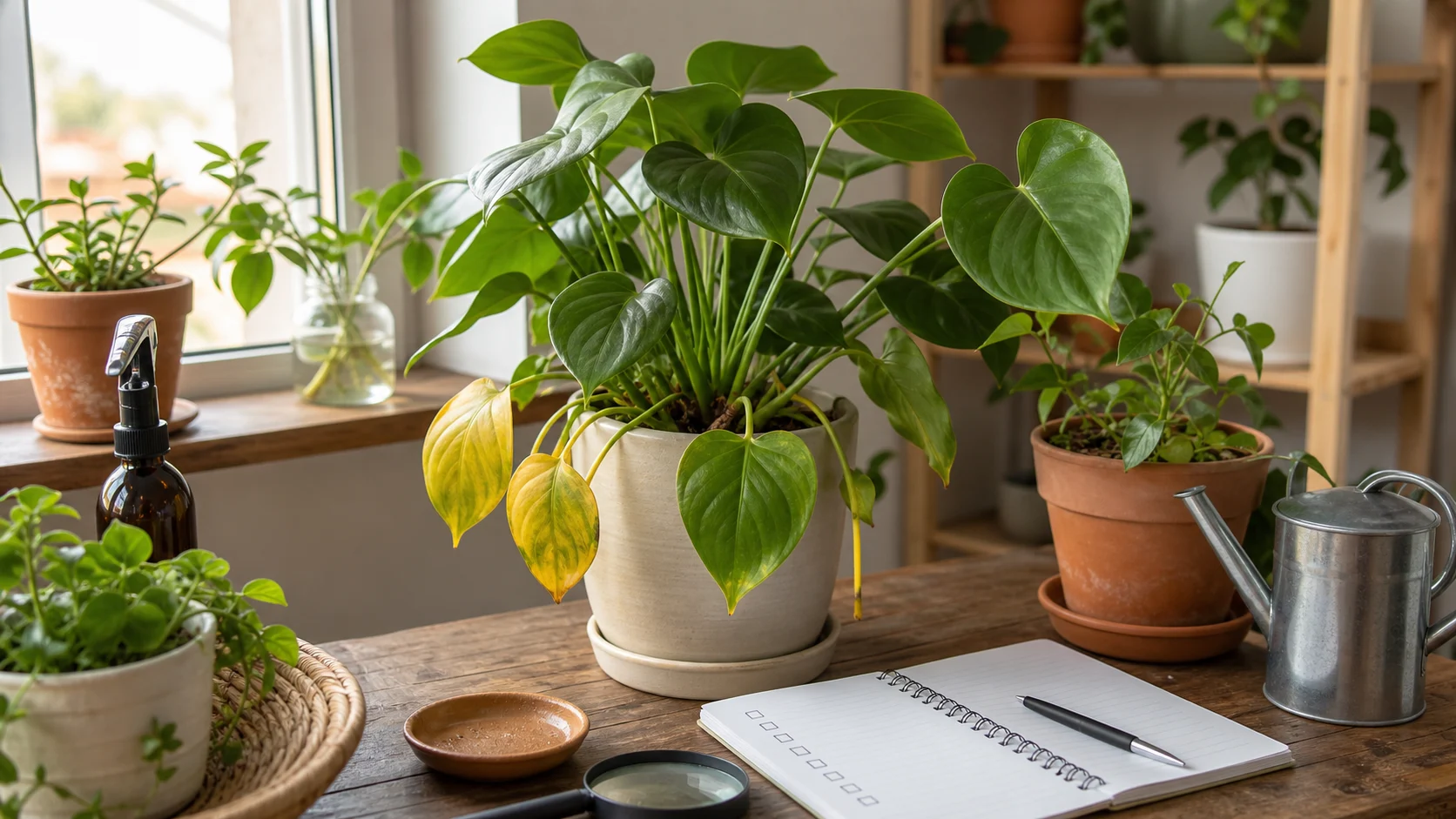
Start with the oldest leaves, soil moisture, drainage, and surface clues before changing the plant’s care.
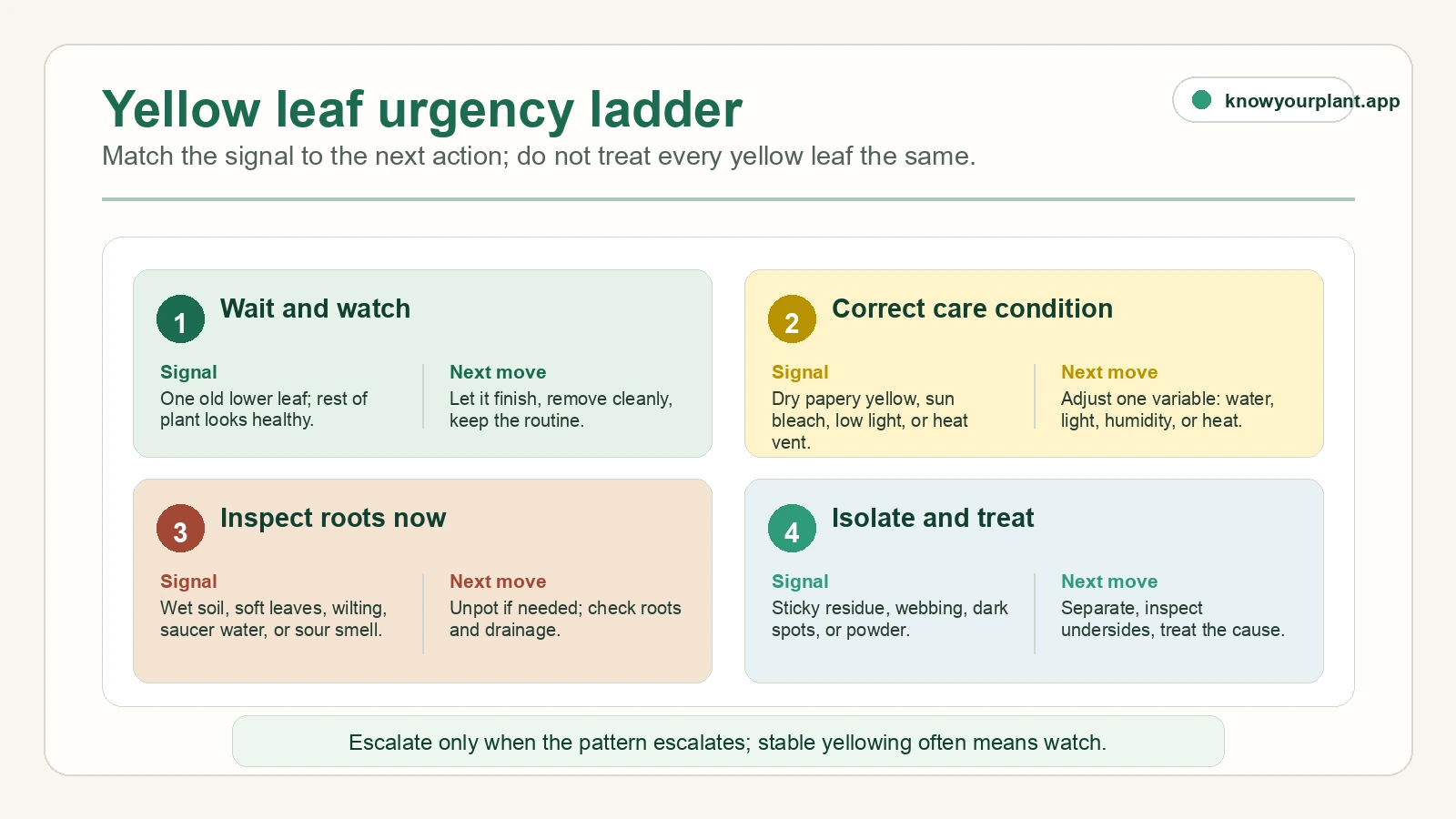
Use the urgency ladder to decide when to wait, when to adjust care, and when to inspect roots or isolate the plant.
The 12 Causes in Detail
1. Overwatering and Poor Drainage
Overwatering is the most commonly cited indoor plant problem - but it’s really a drainage problem more than a frequency problem. If the roots sit in wet mix with no way for excess to escape, they stop absorbing water entirely. The plant looks overwatered even if you haven’t picked up the watering can in a week.
Check two things first: whether the nursery pot has drainage holes, and whether water is pooling in a decorative cachepot underneath. A plant sitting in a decorative sleeve with no drainage is almost always in trouble sooner or later, no matter how carefully you water.
2. Underwatering
Underwatering shows up differently: yellow leaves that are also dry or papery, often starting at the tips, with potting mix that’s pulling away from the sides of the pot. Lift the pot - an underwatered plant feels noticeably lighter than you’d expect.
3. Root Rot
Wisconsin Horticulture Extension describes root rot as a condition where plants are often wilted even though the soil is wet, with leaves that may turn yellow or reddish, and roots that are soft, brown, and smell unpleasant. The combination of wet soil plus wilting plus yellowing is the key signal. A healthy root system in wet soil doesn’t cause wilting; a damaged one does.
When yellowing spreads fast and the soil is wet, ease the plant out of its pot and check the roots directly. Healthy roots are white or light tan and firm to the touch. Brown, mushy, or foul-smelling roots mean root rot - a fungal problem that moves quickly and can’t be fixed by adjusting your watering schedule alone. You’ll need to trim the damaged roots and repot into fresh, dry mix. The full process is in the root rot treatment guide.
4. Too Little Light
Too little light produces a slow, steady pallor across older leaves. The plant doesn’t have enough energy to support all its foliage, so it sheds from the bottom up. This kind of yellowing is gradual - not a sudden flush - and often comes with leggy growth or smaller new leaves.
If you’re not sure whether your plant is getting enough for its position, the guide to grow lights for indoor plants walks through how to assess light levels and when a supplemental grow light is actually worth adding.
5. Direct Sun Scorch
Harsh direct sun - especially through a south or west-facing window in summer - can bleach or scorch leaves, creating yellow patches exactly where the light concentrated. If the yellow areas have a slightly crisp or papery feel and follow the sunbeam pattern across the leaf, this is the likely cause. Move the plant a foot or two back from the glass or add a sheer curtain to diffuse the light.
6. Cold Drafts or Heat Vent Stress
Cold drafts, heat vents, and air conditioning can all trigger yellowing within a few days of exposure. Plants are more sensitive to sudden environmental shifts than most people expect. A single cold night near a drafty window in autumn or a leaf sitting directly in front of an air vent is enough to cause yellowing that looks confusingly like a watering problem.
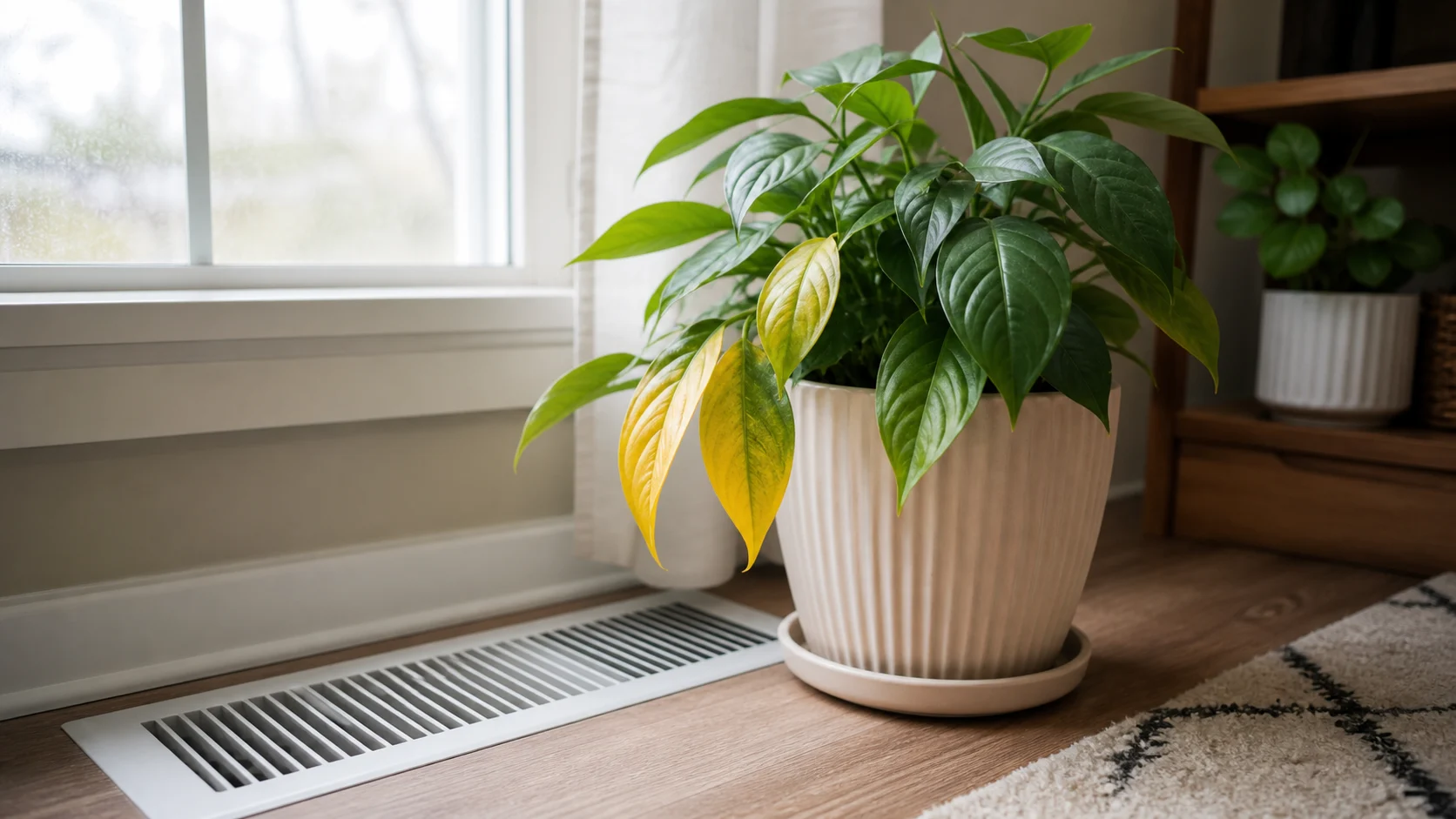
Leaves closest to a drafty window or active heat vent can yellow even when watering is otherwise correct.
7. Nutrient Deficiency
Plants that have been in the same pot for more than a year or two may simply be out of nutrients. Potting mix is not permanent - it breaks down over time and stops holding minerals well. New growth turning yellow while older leaves stay green is a common sign of nitrogen or iron deficiency.
A balanced liquid fertilizer applied during the growing season (spring through early autumn) gives most houseplants what they need. The key: do not fertilize a plant that’s already stressed from root issues. Feeding a struggling root system makes it worse. Get the drainage sorted first, then feed. The plant fertilizer guide covers when and how to fertilize without tipping into over-feeding.
8. Stale or Compacted Potting Mix
Even without a visible nutrient deficiency, very old potting mix stops doing its job. It compresses over time, drains poorly, and stops supporting healthy root activity. If your plant hasn’t been repotted in two or more years and the mix looks more like dirt than fresh potting medium, that’s worth addressing - especially if yellowing comes alongside slow growth or water that doesn’t seem to soak in properly.
9. Spider Mites
Spider mites feed on plant cells and leave tiny stippled or speckled damage that can look like early yellowing. Look for very fine webbing on the undersides of leaves or between stems. Mite populations spike in hot, dry indoor conditions - exactly the environment most heating systems create in winter.
10. Mealybugs and Scale Insects
Both pests feed on plant sap and cause yellowing that tends to start on particular leaves and spread as the population grows. Look on the undersides of leaves, at the stem joints, and along the midrib. Scale looks like small brown bumps on stems; mealybugs look like patches of white fluff at leaf joints. The spider mite guide and the mealybug guide cover identification and step-by-step treatment.
11. Environmental Shock
Moving a plant to a new spot, repotting, fertilizing for the first time, or any significant change to the care routine can trigger yellowing within a few days. This is the plant recalibrating - not necessarily a sign that anything is seriously wrong. Some yellowing after repotting is completely normal and resolves within two to four weeks as long as you don’t overwater during the recovery period.
12. Natural Leaf Aging
Not every yellow leaf is a sign of trouble. Plants shed their oldest leaves as a matter of course. If it’s happening slowly, only on the lowest and oldest leaves, with the rest of the plant looking healthy and actively growing, this is normal. Pull the leaf off cleanly and keep going.
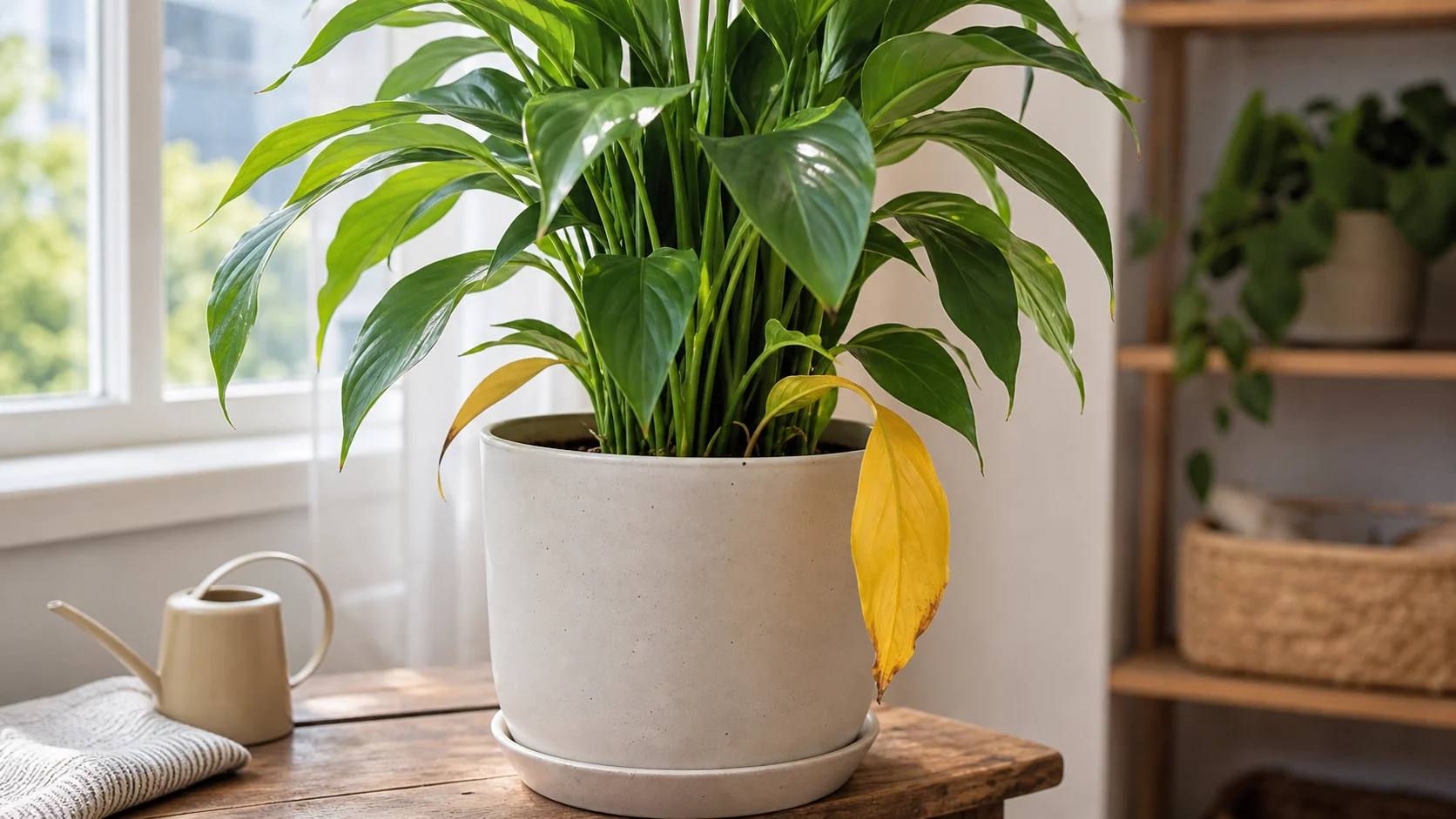
One or two aging lower leaves can yellow naturally while the rest of the plant stays vigorous and green.
When It’s Yellow Plus Something Else
Plain yellowing is one pattern. Combined symptoms often point somewhere more specific.
Yellow plus black or dark spots: Likely overwatering combined with a fungal or bacterial issue. The spots usually start at the edges or near the veins. Stop watering, improve airflow, and check the roots.
Yellow plus sticky residue on leaves or surfaces nearby: Scale insects or aphids. The yellow comes from feeding damage; the stickiness is honeydew. Inspect the undersides of every leaf carefully.
Yellow plus white powdery coating: Powdery mildew, not usually related to watering. Increase airflow and avoid wetting leaves when you water.
Yellow plus wilting despite wet soil: The most urgent pattern. Root rot or compacted soil preventing drainage. Get the plant out of the pot and look at the roots before doing anything else.
Common Mistakes That Make Yellowing Worse
These are the moves most people make when they spot yellow leaves - and why each one can backfire.
Watering more when leaves look dull or droopy. If the soil is already moist, adding water is the worst response to yellowing. Dull leaves in wet soil usually mean root stress, not thirst. Check the soil before you reach for the watering can.
Repotting immediately to solve the problem. Repotting is often the right call eventually, but doing it before you’ve diagnosed the cause adds another stressor on top of an already struggling plant. Inspect first. Repot only if you find root rot, the plant is severely rootbound, or the mix is clearly exhausted.
Fertilizing to perk the plant up. A plant with damaged or waterlogged roots can’t absorb nutrients properly. Extra fertilizer builds up salts in the mix and makes the root environment worse. Wait until you’ve resolved the drainage or moisture issue and the plant shows signs of recovery before adding any feed.
Removing yellow leaves too early. A leaf that’s yellow but still partly green is still contributing a small amount to the plant. Let it go fully yellow before pulling it. Removing it too soon doesn’t help the plant and can create entry points for infection at the cut site.
Blaming the watering schedule before checking the setup. Drainage holes and cachepots matter as much as how often you water. A plant sitting in a decorative sleeve with no drainage will stay wet no matter how carefully you time your watering. Fix the setup before adjusting the schedule.
A Seasonal Note
Yellowing that starts in autumn or early winter is often nothing you did wrong. As natural light drops, heating systems switch on and dry out the air, days shorten, and most houseplants slow their growth substantially. The plant may drop a few older leaves as it adjusts to lower light and reduced root activity - this is normal seasonal shedding, not a signal that your care routine has failed.
The opposite applies in late winter through early spring: as light returns and the plant comes out of its slow season, you might see a short burst of yellowing on lower leaves as old foliage is replaced by fresh growth. If it’s happening on the oldest, lowest leaves only and new leaves look healthy, wait and watch rather than adjusting care.
What to Do Right Now
Before you change your watering schedule or reach for fertilizer, run this five-point check:
- Check the soil - wet, moist, or bone dry?
- Check the drainage - is there a hole in the pot, and is the saucer holding standing water?
- Look at which leaves - oldest and lowest, newest and highest, or scattered across the whole plant?
- Feel the texture - soft and limp, or dry and papery?
- Think back two weeks - did anything change? New location, fertilizer added, watering schedule shifted, cold snap, dry heat turned on?
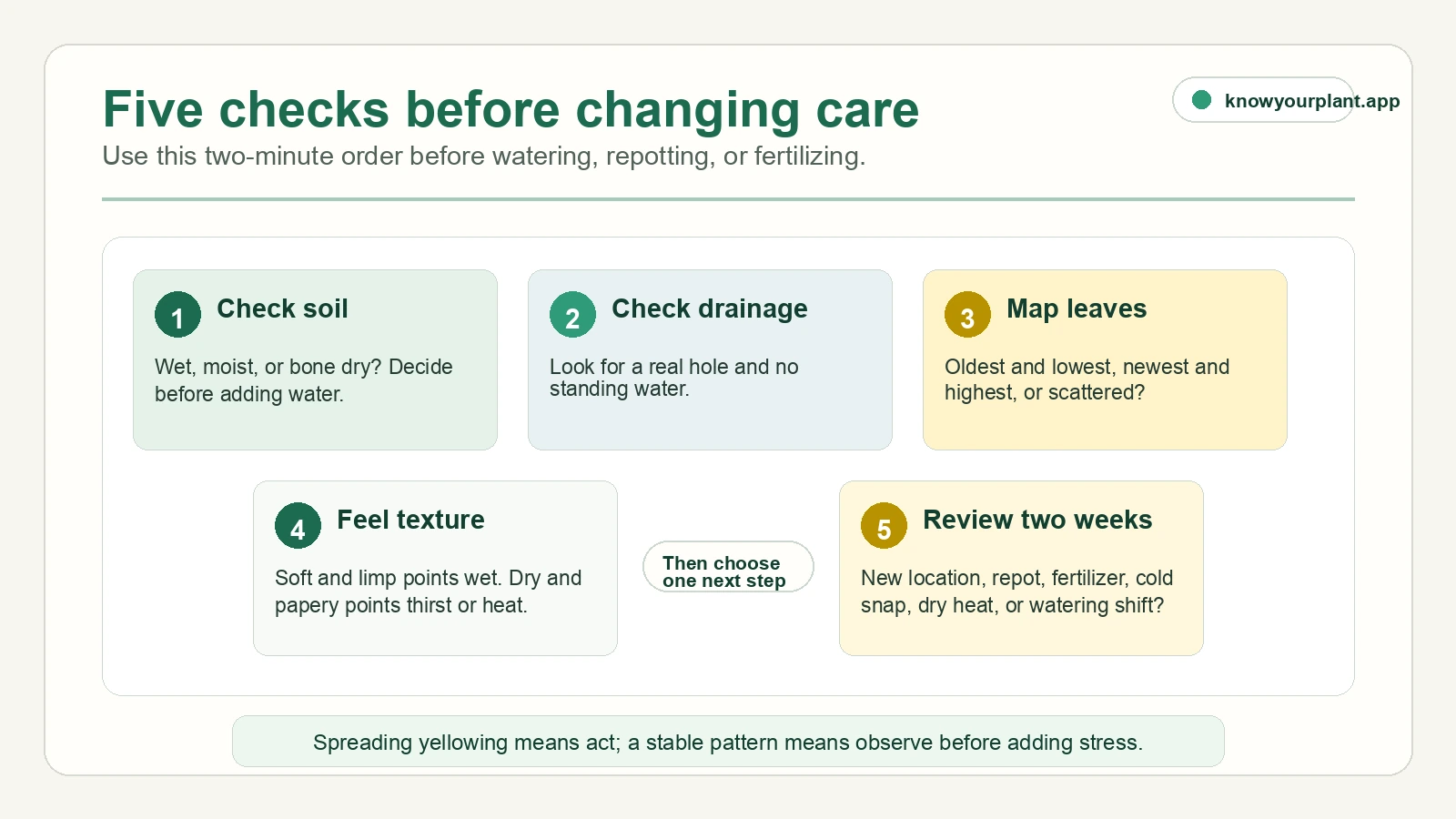
Run the checks in order so you change one care variable at a time instead of adding stress to an already struggling plant.
If the pattern still isn’t clear after that check, the safest next move is to hold off on changes for a few days and watch whether the yellowing is spreading or holding steady. A spreading pattern means something active is happening; a stable one means the plant has already processed the stress and is recovering.
When in doubt about the root situation, repotting gives you a chance to inspect the root zone directly and reset the soil if it’s compacted or waterlogged - sometimes that single step resolves yellowing that nothing else fixed.
Methodology: How We Checked This
We treated university and horticultural guidance as the verified layer for watering, root rot, and chlorosis patterns, then used plant-owner forum and Q&A threads as qualitative signal for where people misread yellowing in real life. That is why this guide focuses so heavily on leaf position, leaf texture, soil moisture, drainage, and recent care changes instead of offering one blanket answer.
Frequently Asked Questions
Can yellow leaves turn green again?
Usually not. Once a leaf has yellowed, the chlorophyll loss is irreversible in that tissue. The goal isn’t to save the yellow leaf - it’s to stop more leaves from following it. Once you’ve corrected the underlying cause, new growth should come in healthy and green.
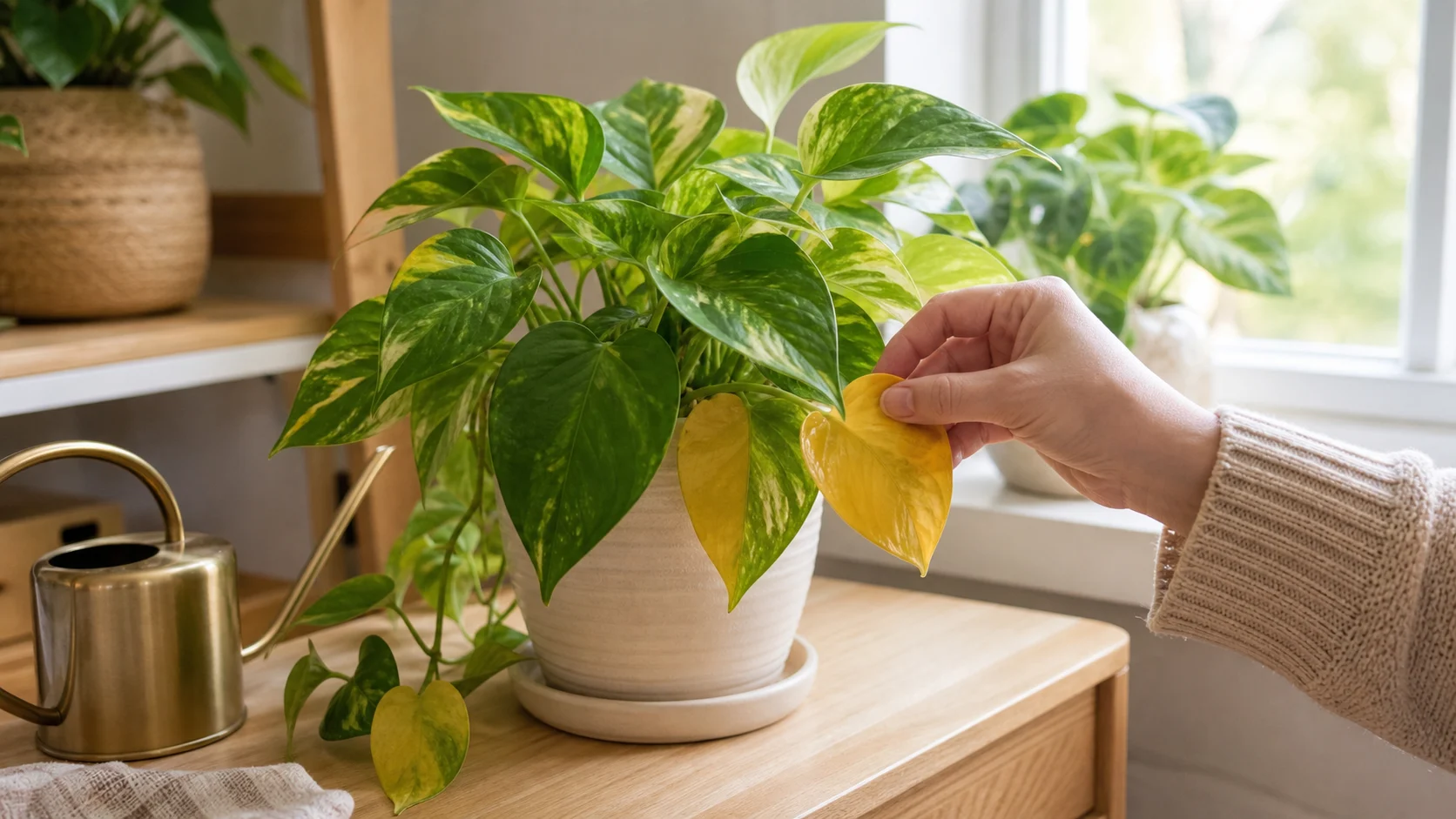
A fully yellow leaf will not recover, so focus on correcting the cause and protecting healthy new growth.
Should I remove yellow leaves from my plant?
Yes, once they’ve gone fully yellow or are clearly dying. Leaving them on doesn’t hurt the plant, but removing them keeps the plant focused on healthy growth and makes it easier to spot new yellowing early. Pull them off with a clean tug or cut at the base of the petiole - don’t rip partway through a green stem.
Why are my plant’s leaves turning yellow even though I haven’t changed anything?
Plants respond to seasonal shifts even indoors. As days shorten in autumn, light intensity drops, heating systems dry out the air, and root activity slows. All of these can trigger yellowing even when your care routine hasn’t changed at all. Check whether the season has shifted recently and whether the plant’s light exposure has changed as the sun angle moved.
Is yellow with brown tips the same as yellow with brown edges?
Not quite. Yellow with dry, brown tips usually means low humidity or mineral build-up in the soil. Yellow with brown, mushy edges - especially on lower leaves - often points to overwatering or root rot. The feel of the brown area tells you which: crispy and dry is environmental stress; soft and wet is water damage.
My plant is yellowing after I repotted it - is that normal?
Yes, some yellowing after repotting is common. Moving a plant disturbs the root system, and the plant may drop a few older leaves while it adjusts. This typically resolves within two to four weeks as long as you don’t overwater during recovery. Hold off on fertilizing until you see new growth.
Could yellow leaves mean my plant needs to be repotted?
Sometimes. A severely rootbound plant can struggle to take up water and nutrients evenly, which can produce yellowing on older leaves. If the plant hasn’t been repotted in two or more years, roots are circling or emerging from the drainage holes, and yellowing is showing up alongside slow growth, size up to a pot one size larger with fresh mix.
How do I tell overwatering apart from root rot?
Overwatering is a condition - roots sitting in wet soil for too long. Root rot is the fungal consequence that follows when overwatering goes uncorrected. The difference shows in the roots: an overwatered plant may have white roots that are waterlogged but intact; a plant with root rot has brown, mushy roots that smell foul. Both produce yellow leaves, but root rot often moves faster and causes wilting even when the soil is still wet.
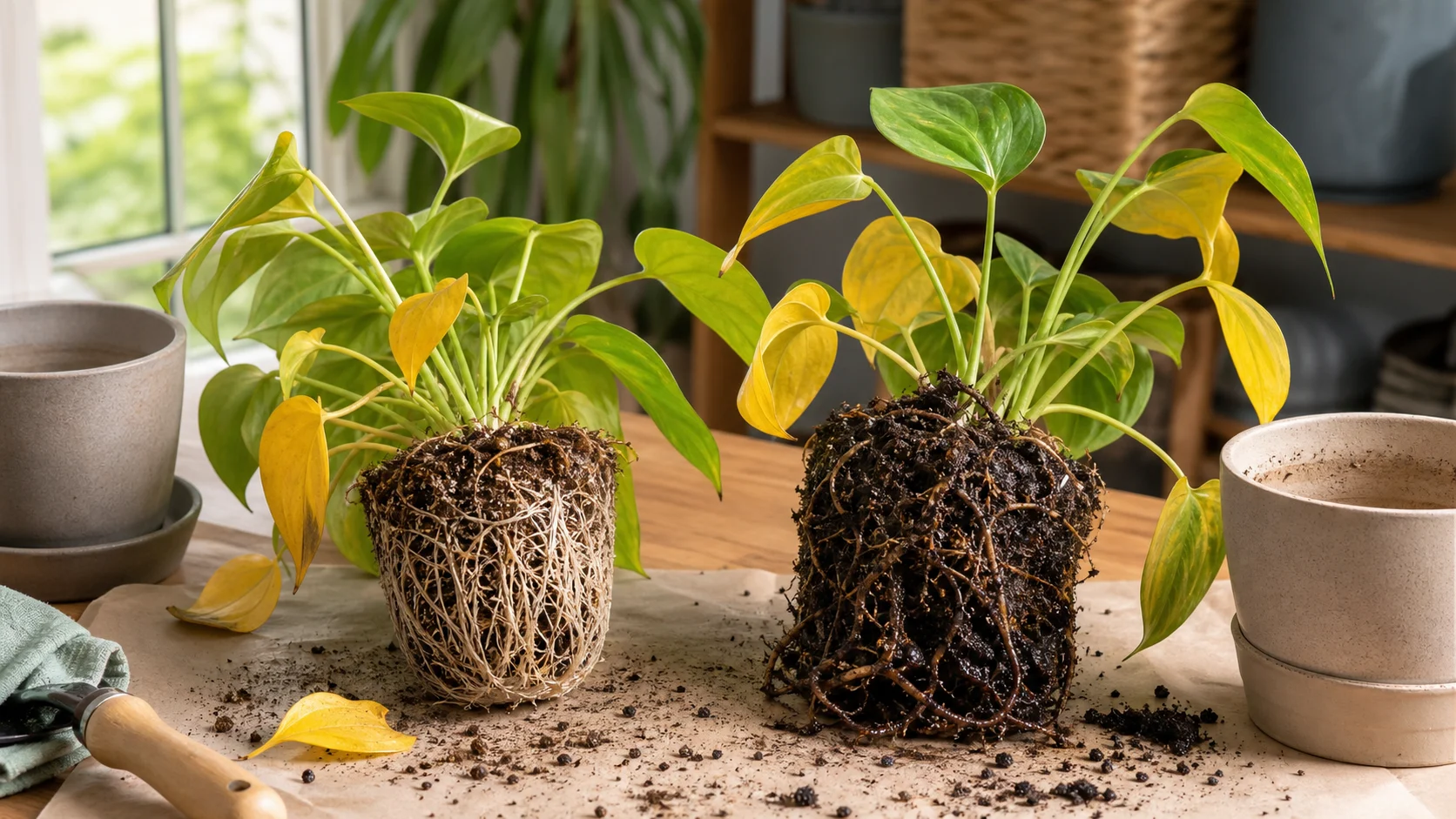
Firm, pale roots remain intact, while dark, soft-looking roots show that prolonged wetness has progressed to rot.
Article last reviewed: June 2026. Plant care guidance is based on University of Maryland Extension, Wisconsin Horticulture Extension, and Royal Horticultural Society chlorosis resources.