You notice one stem on your ZZ plant has gone yellow. The rest of the plant looks completely fine. Your first thought is: did I kill it? Your second thought is: should I water more, or less? If you want the full baseline on watering, light, and drainage around this symptom, the ZZ plant care guide is the broader companion piece.
Here is the thing about ZZ plant yellow leaves: the answer to both questions depends on which pattern you are actually looking at. And most articles skip straight to “you are probably overwatering” before you have had a chance to look at the plant.
ZZ plants (Zamioculcas zamiifolia) store water in thick underground rhizomes. That is what makes them so forgiving, but it is also what makes diagnosis tricky. Because the rhizomes buffer everything, symptoms are often delayed by weeks. By the time a leaf turns yellow, the cause is not necessarily what you did yesterday. It is what the conditions have been like for the past two to four weeks. The right question is not “when did I last water?” It is: what do these leaves actually feel like, and where on the plant did this start?
Once you start there, the fix becomes clear almost immediately.
By KnowYourPlant editorial research worker. Last reviewed against extension guidance, ASPCA safety guidance, and live owner-confusion patterns on June 2, 2026.
Symptom Diagnosis Card
Use this quick read before you water, repot, or fertilize anything.
| What you see first | Most likely cause | First move | Urgency |
|---|---|---|---|
| One older lower stem turning yellow while the rest stays firm | Natural aging | Trim the stem at soil level and leave care alone | Low |
| Several stems yellowing and feeling soft | Overwatering or early root rot | Stop watering, check drainage, and inspect roots if the pot stays heavy | High |
| Yellow leaves that feel stiff, dry, or curled on the window side | Direct-sun scorch | Move the plant out of harsh sun before changing watering | Medium |
| Yellowing soon after repotting | Root disturbance or oversized pot staying wet | Pause watering, let the mix dry, and give the plant time | Medium |
| Pale or yellow tips after a very long dry spell | Underwatering or compacted root ball | Check soil deeper in the pot and water thoroughly only if fully dry | Medium |
| Yellowing with sticky residue, speckles, or visible insects | Pest-related stress | Inspect leaf undersides and isolate the plant if needed | Medium |
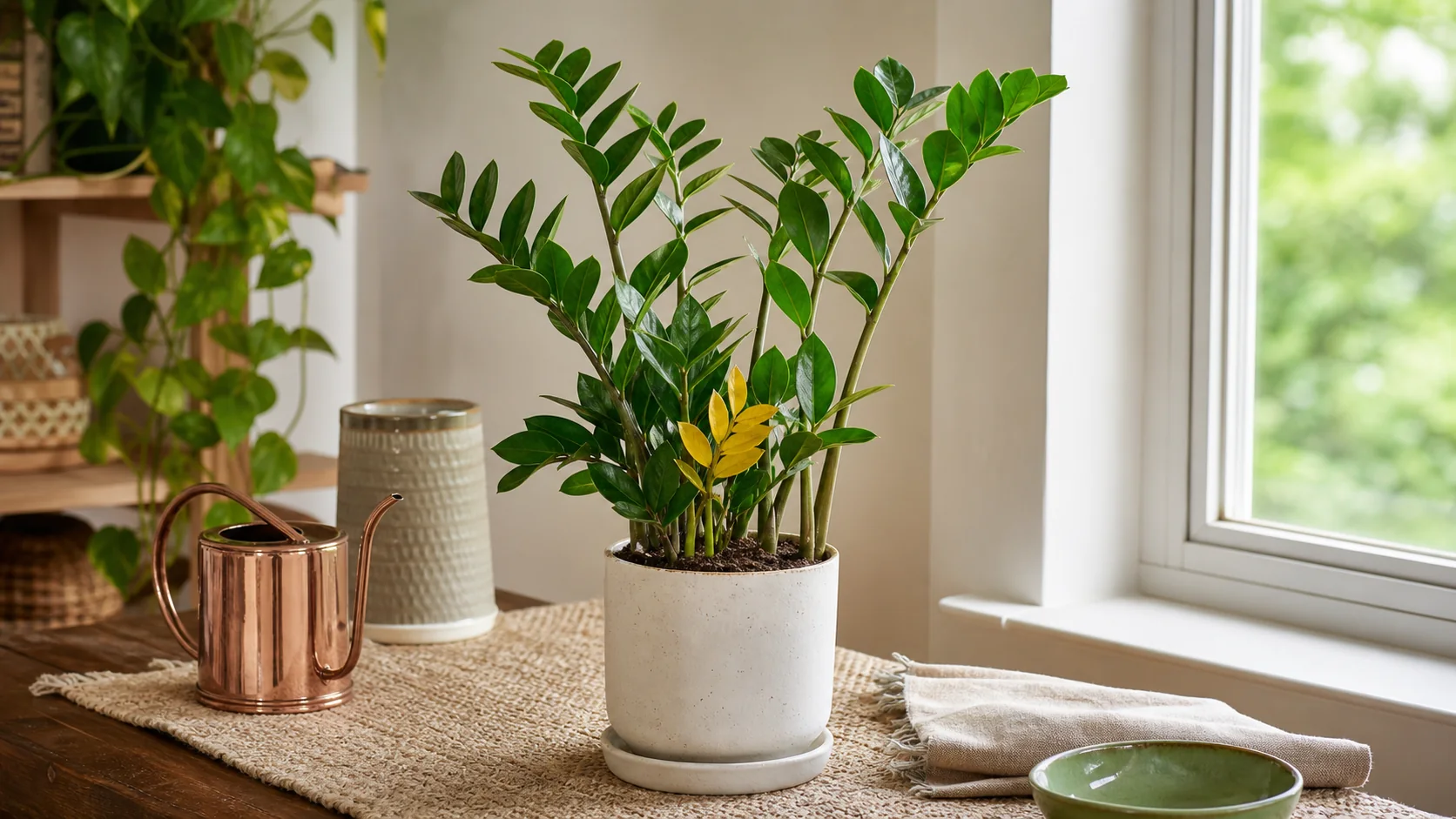
Compare where yellowing starts and how the stem feels before changing the ZZ plant’s watering or light.
What Most Care Guides Miss
Most ZZ plant articles start with overwatering and stay there. And yes, overwatering is the most common cause. But that framing makes it easy to misread two other patterns that look similar but need completely different responses.
The most common misdiagnosis: treating direct-sun scorch the same as soggy-root yellowing. Both produce yellow leaves. But one needs less water and the other needs a different window. If you pull back watering while your ZZ is sitting in direct afternoon sun, nothing improves. You have fixed the wrong thing.
The other easy miss: a single older stem cycling out naturally gets treated like a crisis. One yellow stem near the soil while the rest of the plant looks full and healthy is not a problem. It is the plant retiring old growth, which it does on its own schedule.
If the unusual growth is a pale structure emerging close to the soil rather than a yellowing stem, compare it with the ZZ plant flower guide before treating it as damage.
The UConn Home and Garden Education Center is direct about this: overwatering is the main factor leading to the demise of ZZ plants, with yellow leaves and rotting rhizomes as the signs. But UConn also notes that too much direct light causes leaf scalding, curling, and leaves that may yellow and then brown. These two causes produce similar-looking symptoms and need opposite responses.
The practical first check is not “did I overwater?” It is: which leaves are yellowing, and what do they feel like?
Soft and limp points one direction. Crisp and stiff points somewhere else. A single lower stem with nothing else affected points to a third possibility altogether. Get the pattern right first, and the cause becomes obvious. For a broader look at reading yellow-leaf patterns across houseplants, the guide to why indoor plant leaves turn yellow covers the wider diagnostic approach.
What owners usually panic about first
The recurring owner pattern is not just yellow leaves. It is yellow leaves plus uncertainty about what the pattern means. Search-result snippets from Reddit and Garden.org repeatedly surface the same worries: one older stem yellowing while the rest looks fine, yellowing that begins after repotting, and tip yellowing even though the plant has barely been watered. Those are useful reader signals because they show why generic “overwatering” advice leaves so many ZZ owners stuck.
Start With the Pattern
One older stem, lower on the plant, while the rest looks healthy
Almost certainly natural aging. ZZ plants cycle out older stems as they push new growth from the rhizomes. A single stem going yellow from the base while everything else looks full and green is not a warning sign. It is the plant doing what it does. Trim it cleanly at soil level and that is all it needs.
Multiple stems yellowing, leaves soft to the touch, soil staying wet
This is the overwatering picture. ZZ rhizomes store water, so the plant genuinely does not need frequent watering. When soil stays wet too long, roots and rhizomes begin to rot from the inside. By the time you see soft yellow leaves, the soil has usually been too wet for two to four weeks.
The North Carolina State Extension Plant Toolbox confirms this directly: ZZ plants must have well-drained soil and must be allowed to dry out between waterings. Their water-storing rhizomes mean they simply do not tolerate wet feet, and the consequences of sustained moisture build up slowly before becoming visible above the soil.
The fix is to let the soil dry completely before the next watering. If the roots smell off when you check them, those damaged roots need to come out before repotting into fresh, well-draining mix. The root rot treatment guide covers the full rescue process step by step.
Yellow leaves that are crisp or stiff, possibly with curled edges or a dull, faded look
This is sun stress, not water stress. ZZ plants handle indirect light well, but direct sun, especially afternoon sun through a south or west-facing window, causes leaf scorch. The leaves yellow and stiffen rather than going soft and limp. Moving the plant a few feet back from the window, or filtering the light with a sheer curtain, is the fix here. Adjusting your watering schedule will not change anything.
The University of Illinois Extension notes that ZZ plants tolerate low light but perform best in bright indirect light, and that they are intolerant of sustained soil moisture. Both of those details matter: flexible on light, inflexible on drainage.
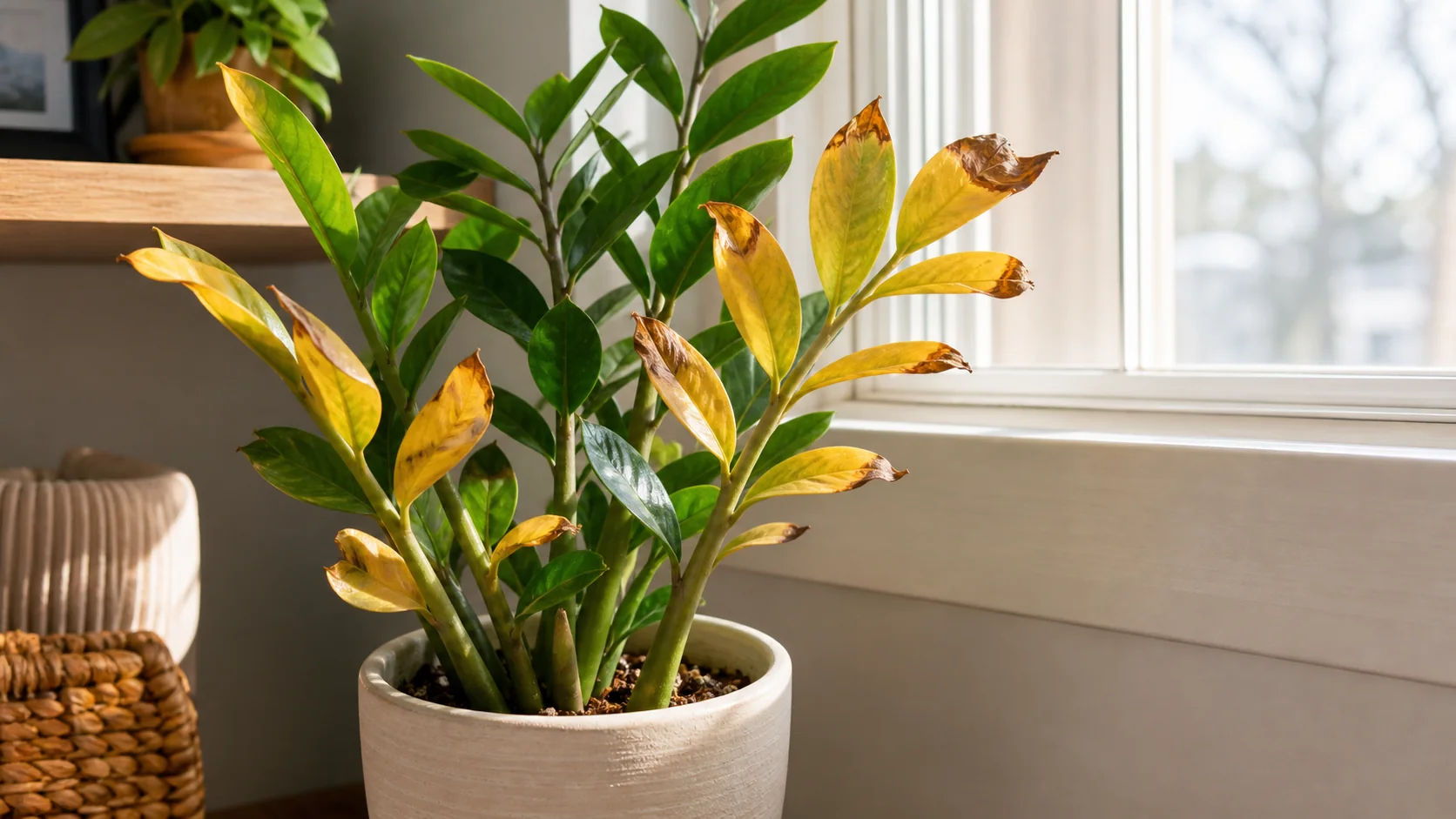
Crisp, curled yellow leaflets concentrated beside a bright window point to sun scorch rather than wet roots.
Yellowing that started shortly after repotting
ZZ plants dislike having their rhizomes disturbed. Some leaf yellowing after a repot is normal, especially if the new pot is significantly larger. A bigger container holds more wet soil around the rhizomes, and that moisture persists longer than you would expect. The temptation is to water more to help the plant settle. Resist that completely. Let the soil dry fully between waterings and give the plant three to four weeks before drawing any conclusions.
If you want to reduce the stress of the next repot, the guide to repotting plants without stressing the roots walks through timing, pot sizing, and soil choice.
Yellow tips or pale newer growth when you have barely watered
This one trips people up because everything online points toward overwatering. But if you are already stretching watering to every three or four weeks and newer leaves are still going pale at the tips, the plant might actually need water, especially in warmer months or if the rhizomes have outgrown the pot. Check the soil a few inches down, not just the surface. Bone dry all the way through is a different situation than slightly damp at depth.
According to UF/IFAS, ZZ plants are drought tolerant but can show leaf drop during extended drought. The rhizome storage delays visible symptoms, so by the time tips are fading on new growth, the plant may have been too dry for longer than it looks.
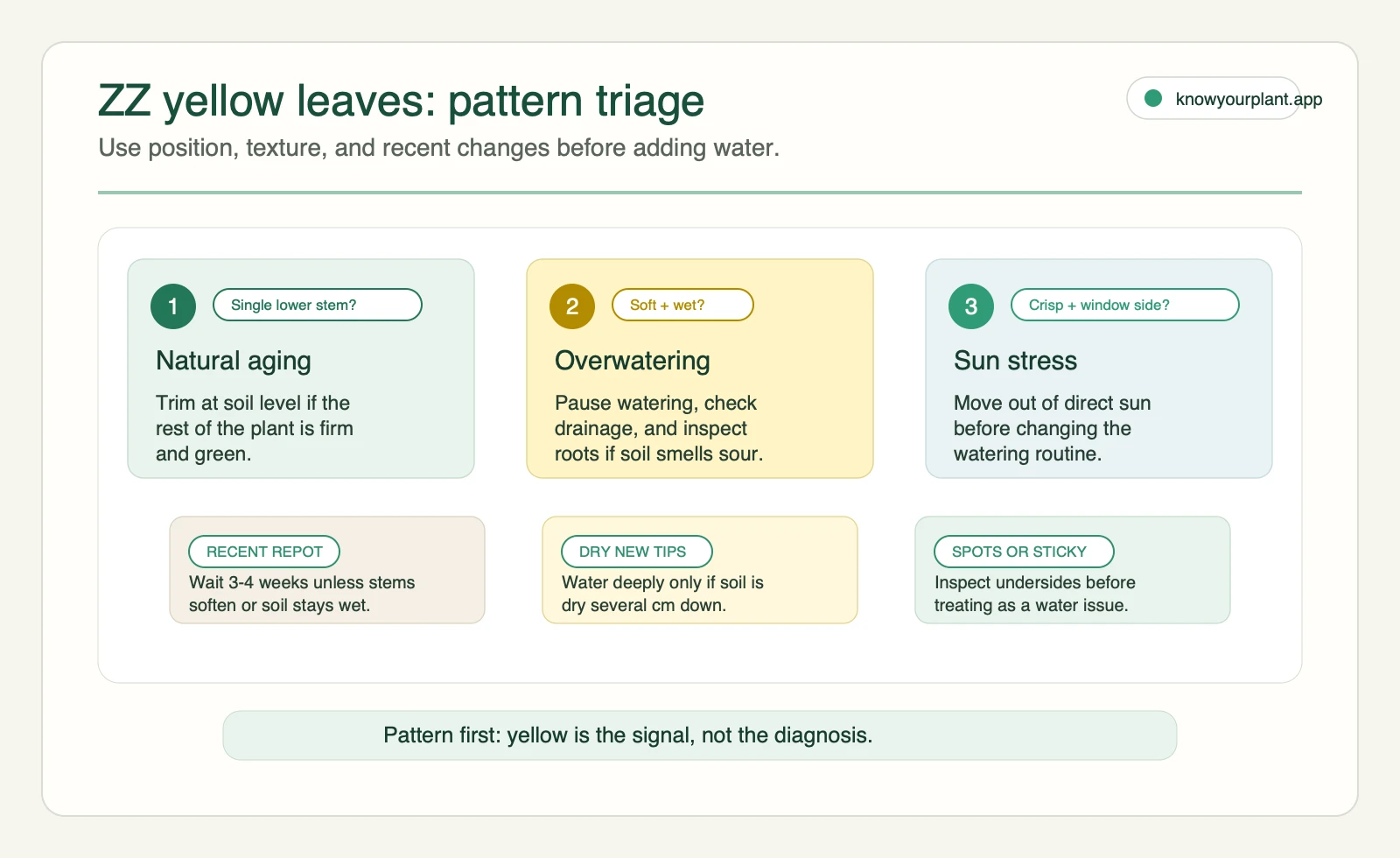
Use the pattern triage before changing care: one old lower stem, several soft wet stems, and crisp window-side yellowing need different first moves.
Root-Zone Audit: 5 Checks Before You Change Anything
Before you adjust your watering routine, move the plant, or add fertilizer, run through these five checks in order. Most yellow-leaf situations get diagnosed correctly within the first three. If the audit points to slow dry-down rather than watering frequency, use the ZZ plant soil guide to match the mix and container to the room.
- Lift the pot. Feels unusually heavy for its size? The soil is still holding water. A light pot means it is drying down correctly.
- Check the drainage holes. Standing water in the saucer, or holes that are clogged or blocked, means the roots have been sitting in water even if the surface looks dry.
- Push your finger 3-4 cm into the soil. Still damp? Wait. Dry all the way to your knuckle? The plant can be watered. Use this check, not a schedule.
- Look at where yellowing started. One old stem from the base: natural aging. Multiple soft stems at once: root zone issue. Crispy leaf surfaces facing the window: light stress.
- Smell the soil near the base. Fresh earthy smell is fine. A sour or slightly sweet smell means root rot is beginning. That is the point to unpot, inspect, and trim damaged roots before repotting into dry, well-draining mix.
Yellow-Leaf Decision Tree
Use this order so you change one variable at a time instead of guessing.
- Is it just one older stem near the base? If yes, start with natural aging. Trim it and watch the rest of the plant for a week before changing care.
- Are multiple stems yellow and soft? If yes, treat it as a root-zone problem first. Pause watering, check pot weight, then inspect roots if the mix is still wet.
- Are the yellow leaves crisp, curled, or all facing the brightest window? If yes, move the plant out of direct sun before you touch the watering schedule.
- Did the yellowing start within a few weeks of repotting? If yes, assume root disturbance or extra-wet soil volume until proven otherwise. Let the pot dry more fully and avoid repotting again.
- Are the tips paling after a long dry spell, while the pot feels light all the way through? If yes, underwatering is more plausible than rot. Water thoroughly and reassess after the soil rehydrates.
- Do you see sticky residue, fine webbing, or small insects? If yes, switch to a pest check and isolate the plant from others until you know what you are treating.
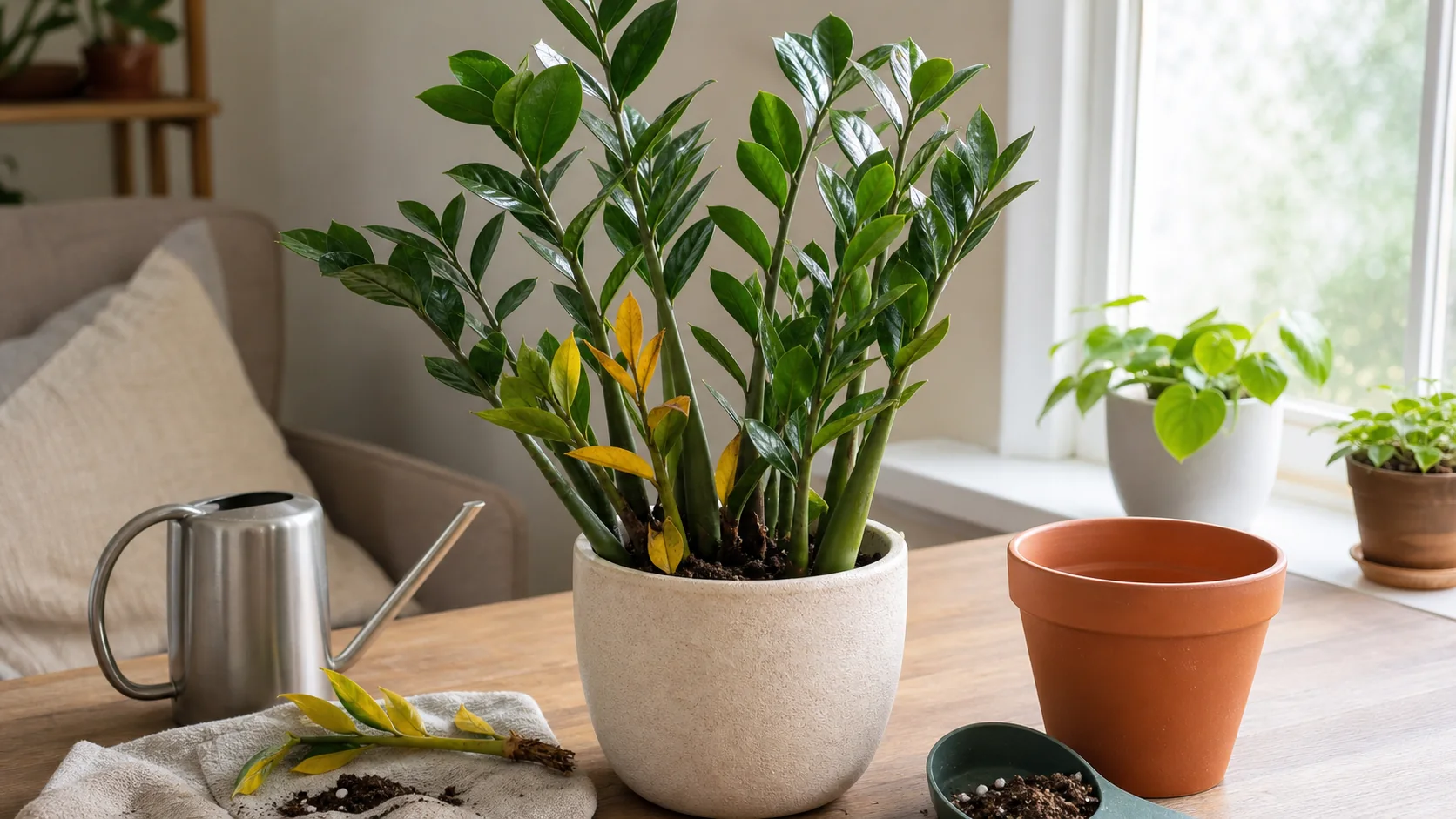
Work through one clue at a time—lower-stem aging, pot moisture, recent repotting, and light—before choosing a fix.
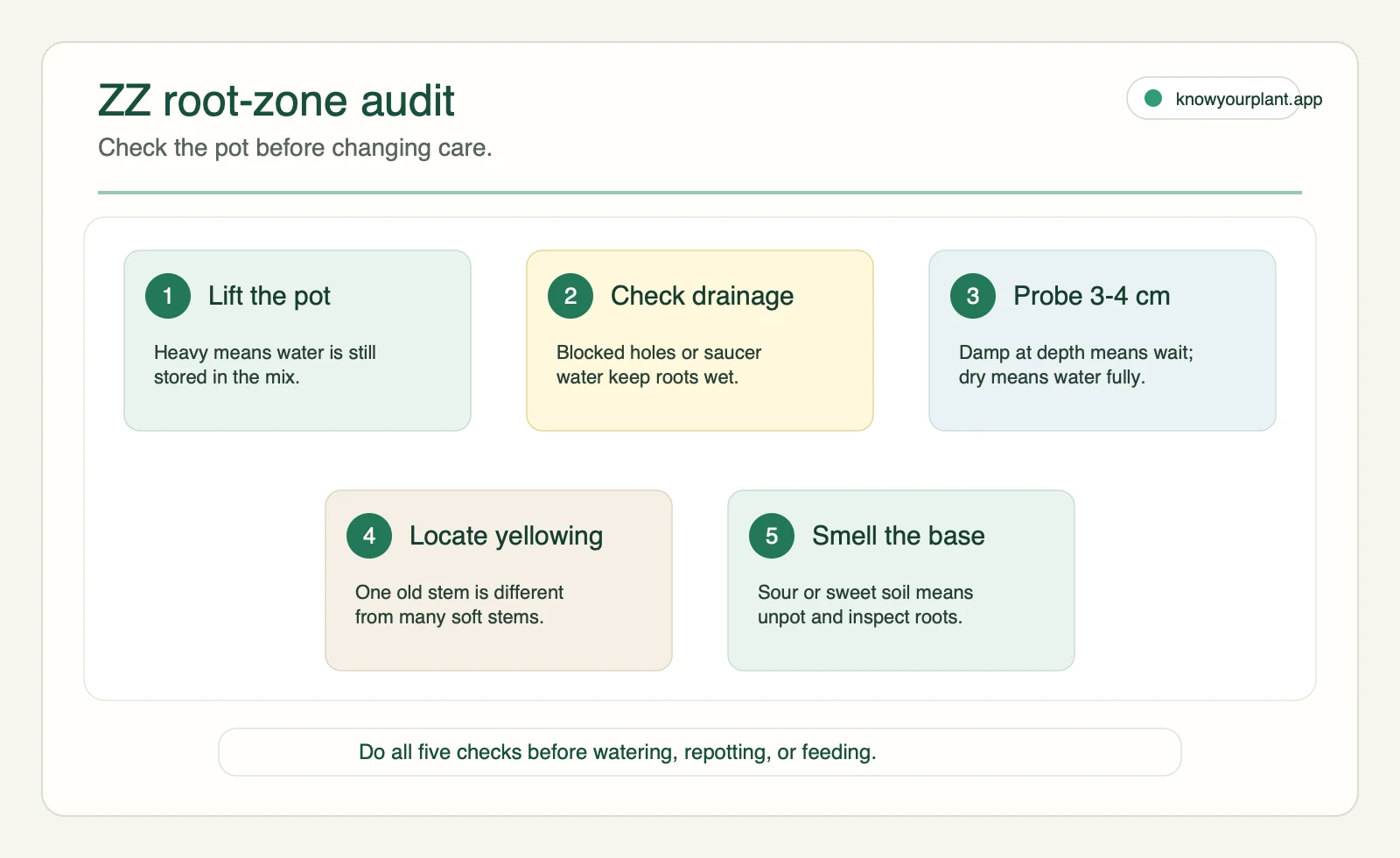
Run the root-zone audit before watering, repotting, or feeding so the fix is based on pot conditions, not only leaf color.
Common Mistakes and What to Stop Doing First
Before you repot, prune, or reach for fertilizer, there are a few things worth stopping immediately. This rescue order reduces how much damage the plant takes while you work out what is actually wrong.
If you suspect overwatering: Stop watering entirely until the soil is fully dry 3-4 cm down. Do not add fertilizer. Do not mist. Do not move the plant to a darker spot hoping that will help it rest. Darkness slows evaporation and keeps the soil wet longer, which is the opposite of what you want.
If you suspect direct-sun scorch: Move the plant before doing anything else. Crispy yellowing does not improve until the light source changes. Getting it out of direct sun is step one, not an optional follow-up.
If the plant was recently repotted: Stop treating normal transplant stress like an emergency. Do not water more, do not fertilize, and do not repot again. ZZ plants need time to settle after root disturbance. Three to four weeks of minimal intervention is often all that is needed.
In all cases: Do not fertilize a plant showing yellow leaves. Fertilizer in a stressed root zone causes more damage, not less. Wait until you see new healthy growth before feeding again. Once things stabilize, the plant fertilizer guide covers what ZZ plants actually need and when to start.
The common thread across these mistakes is reacting too fast to a color change without checking the root zone, light direction, and recent repot history first.
Cause Comparison at a Glance
| Cause | Leaf texture | Where it starts | Best first action |
|---|---|---|---|
| Overwatering / root rot | Soft, limp | Older stems, multiple at once | Stop watering; let soil dry; check roots |
| Direct sun scorch | Crisp, stiff, may curl | Leaves facing the window | Move plant or add sheer curtain |
| Natural aging | Normal texture | One lower stem only | Trim at soil line; no change needed |
| Repot stress | Normal or slight droop | Any stem, after repot | Ease watering; wait 3-4 weeks |
| Underwatering | Dry tips, slight crisp | Newer growth tips first | Water thoroughly; check soil depth |
| Pest damage | Mottled, sticky, or spotted | Variable; check undersides | Inspect under leaves for insects |
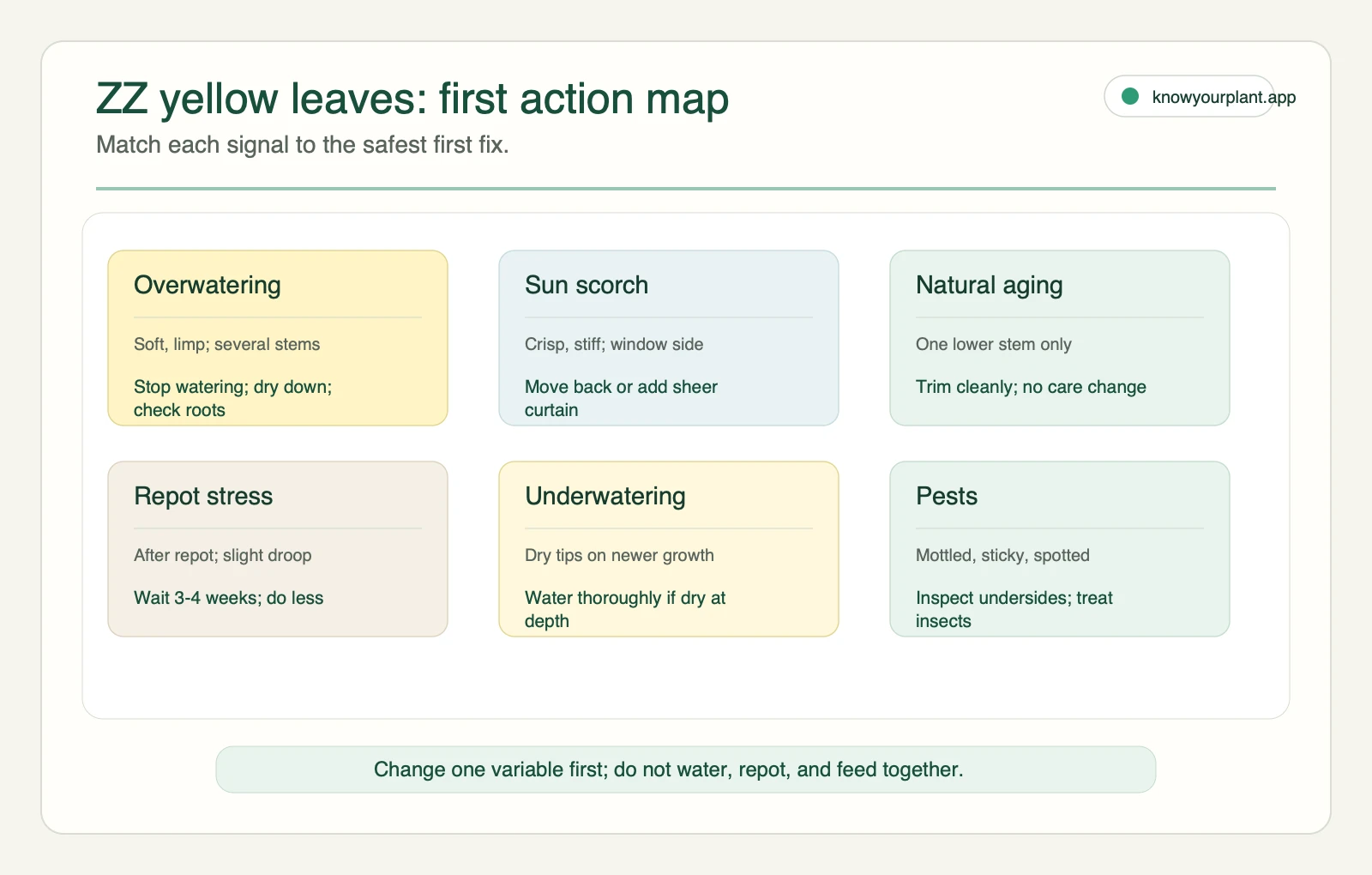
Use the first-action map to change one care variable at a time instead of watering, repotting, feeding, and moving the plant in the same week.
Seasonal Care: When Yellow Leaves Are More Likely
ZZ plants respond to seasonal changes more than most low-maintenance houseplants, even if those responses are slow and delayed.
Late autumn and winter: This is when overwatering risk peaks. Growth slows or pauses completely, which means the plant pulls even less water from the soil than usual. Watering intervals that worked fine in September can become too frequent by November. If yellow leaves appear in winter, the first check is always whether the soil is staying wet too long. Stretch your watering interval, let the soil dry fully between waterings, and skip any fertilizing until spring.
Spring: ZZ plants often push new growth in spring, and this is when some yellowing on older lower stems is most common. The plant is directing energy into new rhizomes and retiring old growth at the same time. If you are considering repotting, spring is the safest window to do it.
Summer: Watch for sun scorch if the plant is near a window that catches direct afternoon light in summer. The sun angle changes seasonally, and a spot with perfectly filtered light in winter may get harsh direct rays from a west window in July and August. If yellow leaves appear in summer and the soil seems fine, check whether the light quality has changed before anything else.
Year-round: The finger-test watering method, 3-4 cm down, dry before watering, works in every season and adjusts automatically for temperature and humidity shifts. It is more reliable than any fixed weekly or monthly schedule.
Expert Note: Why ZZ plants are easy to misread
Extension guidance is unusually consistent here. NC State, UConn, UF/IFAS, and Illinois Extension all treat sustained wet soil as the main structural risk because ZZ plants store water in rhizomes and dislike wet feet. The same sources also warn that direct sun can scorch foliage, which is why leaf texture matters so much. Soft yellowing points back to the pot. Crisp yellowing points back to the window. That is the distinction most quick answers skip.
A Note on Less Common Causes
Pests are a less frequent cause of ZZ plant yellowing but worth checking if the patterns above do not fit. The University of Illinois Extension lists aphids, mealybugs, thrips, and whiteflies as possible concerns. Check the undersides of leaves for small insects, sticky residue, or fine webbing. If you spot something, the guide to getting rid of mealybugs covers soft-bodied insect treatment for houseplants.
Nutrient deficiency can also cause pale or yellowing new growth, but it is almost always secondary to a root-zone problem. If roots are damaged by rot or compressed in dry soil, the plant cannot absorb nutrients regardless of what you add. Fix the root environment first.
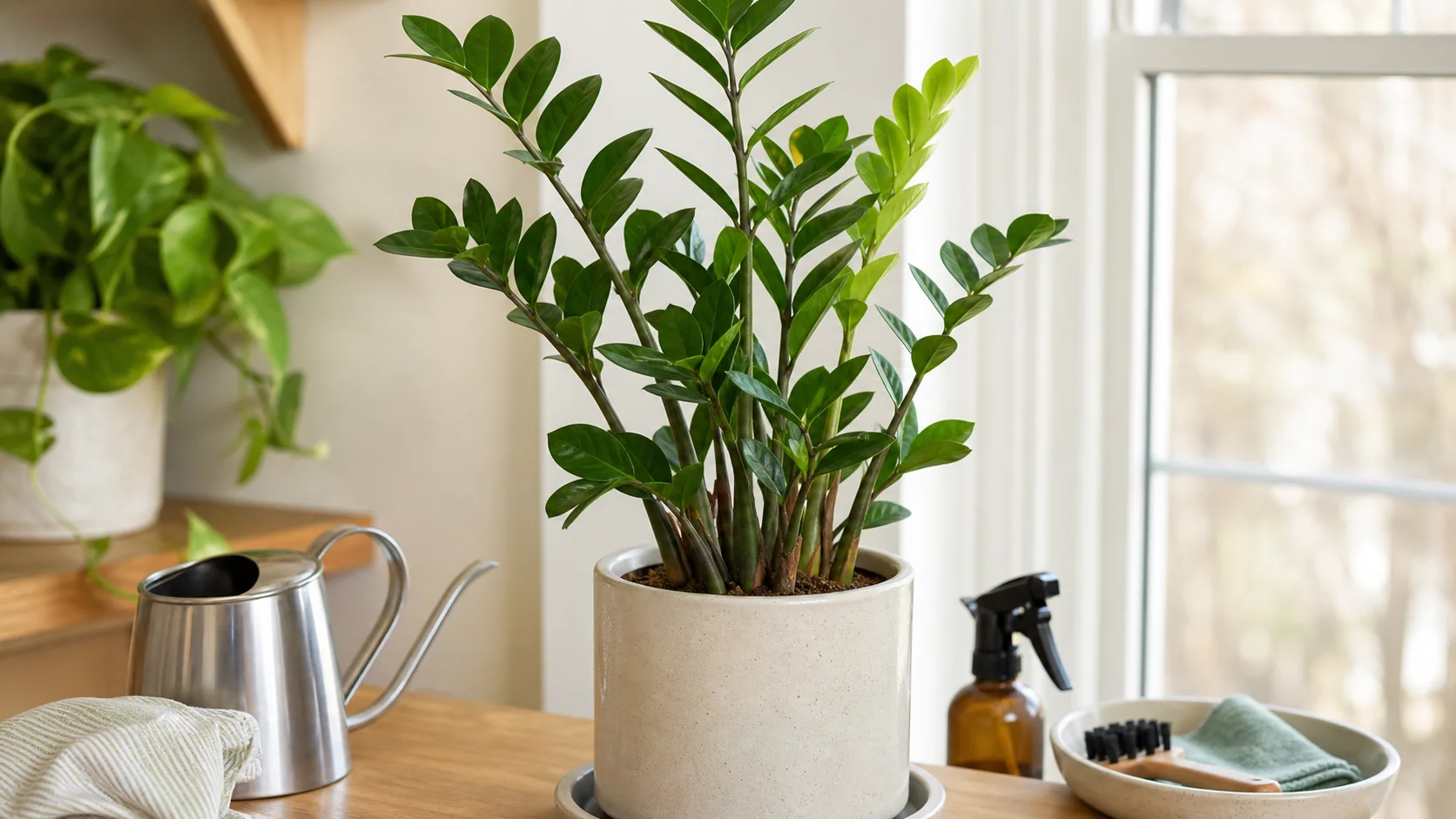
When the usual moisture and light patterns do not fit, inspect leaf surfaces and the root zone before treating pests or adding nutrients.
A Note on Pets
ZZ plants contain calcium oxalate crystals throughout their tissue, which the ASPCA lists as toxic to cats and dogs. If you are trimming yellow leaves or handling the plant, wash your hands afterwards and keep cuttings and fallen leaves away from pets. If you suspect ingestion, contact your veterinarian. For a broader list of houseplants that are safer around animals, the cat-safe indoor plants guide covers the most common options by room.
Frequently Asked Questions
How often should I water a ZZ plant?
There is no fixed schedule that works reliably. Instead, push your finger 3-4 cm into the soil. If it still feels damp, wait. If it is completely dry at that depth, water thoroughly until it drains from the bottom, then wait again. In practice, this often means every two to four weeks in warmer months and even less in winter. The rhizomes store water between waterings, so consistent under-watering is far less likely to cause problems than consistent over-watering.
Can a ZZ plant recover from overwatering?
Yes, if you catch it before root rot becomes widespread. Remove the plant from its pot, shake off wet soil, and inspect the rhizomes and roots. Trim any sections that are soft, mushy, or smell sour. Let the trimmed roots air for a few hours, then repot into dry, fast-draining mix and hold off watering for at least a week. Yellow leaves from the overwatered period will not turn back to green, but new growth from healthy roots will come through in time.
Why are only the lower leaves on my ZZ plant turning yellow?
If it is one older stem yellowing from the bottom while everything else looks healthy, that is natural aging. ZZ plants retire older stems as they push out new growth, and this does not require any change to your care. Trim the stem cleanly at soil level. If several lower stems are soft and yellowing at once, that is more likely overwatering or root rot building from below.
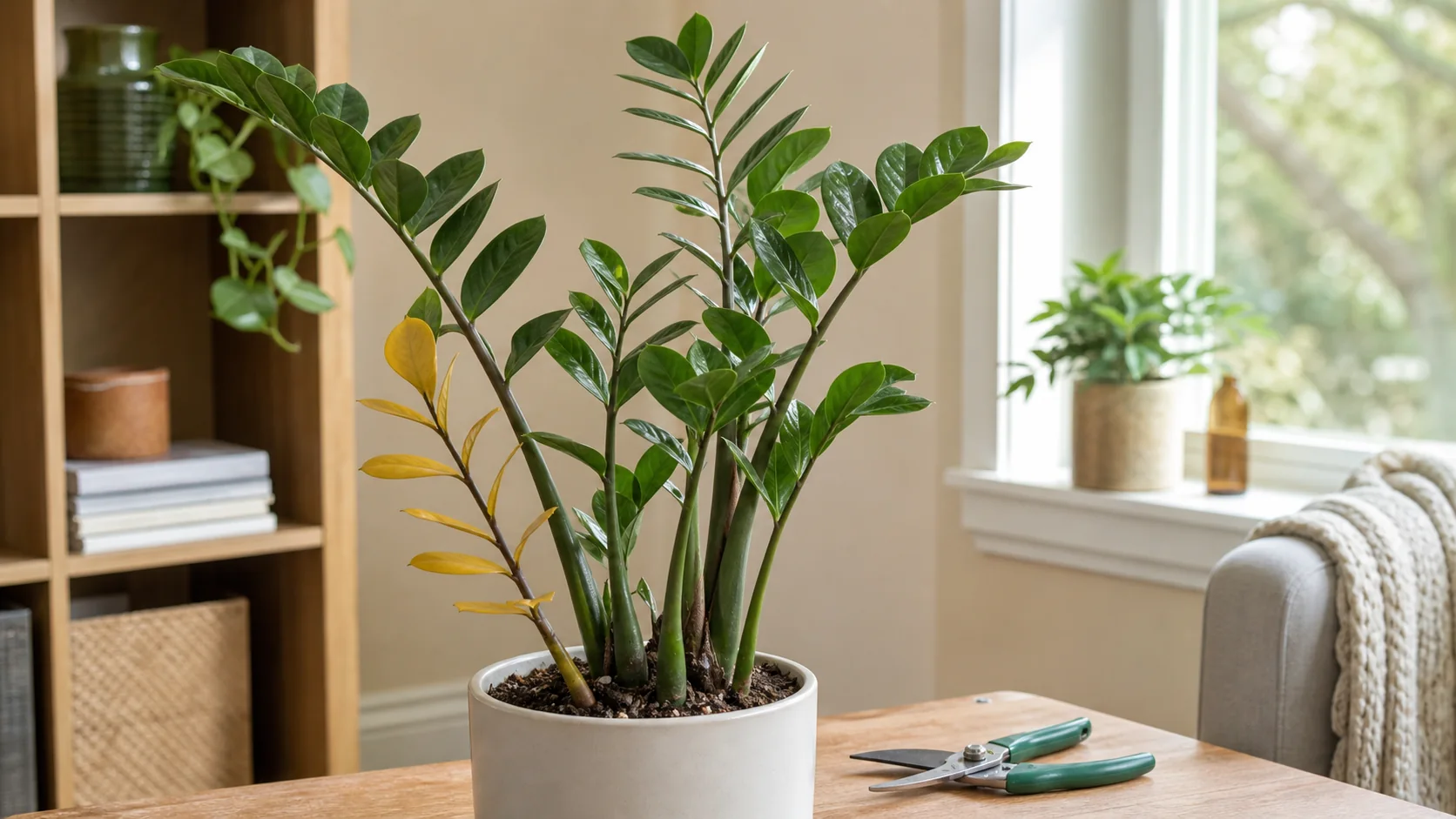
One yellow lower stem against a firm green canopy usually signals natural aging and only needs a clean trim.
Do ZZ plants need direct sunlight?
No. They handle a wide range of indirect light well. Direct sun, especially afternoon sun from a west or south window, causes leaf scorch: the leaves yellow, stiffen, and may curl at the edges. Bright indirect light near a window gives the best growth without the scorch risk. If your space is quite dim, a grow light for indoor plants can supplement without the damage risk of a direct sun position.
My ZZ plant was repotted recently. Is the yellowing normal?
Some yellowing after repotting is common, especially in the first few weeks. ZZ rhizomes do not like disturbance, and if the new pot is significantly larger, the extra soil volume stays wet longer and increases the risk of root stress. The temptation is to water more to help the plant settle. Resist that. Let the soil dry completely between waterings and give the plant a month to adjust before changing anything else.
Why are the tips of my ZZ plant turning yellow when I barely water it?
A few possibilities. If the plant is in active growth during summer and you are on a very long watering interval, it may actually need water more than you think. Check the soil depth, not just the surface. Alternatively, tip yellowing on newer leaves can point to very low humidity, very low light, or a compacted root system struggling to absorb water properly. If none of those fit, check the undersides of leaves for small pests like spider mites, which can cause similar tip stress.
Is a ZZ plant safe for cats and dogs?
No. ZZ plants contain calcium oxalate crystals throughout their tissue, which the ASPCA lists as toxic to both cats and dogs. Contact with the plant can cause irritation, and ingestion may cause vomiting or oral discomfort. Keep the plant out of reach of pets, wash hands after handling, and clear up any fallen or trimmed leaves promptly. If you suspect your pet has ingested any part of the plant, contact your veterinarian or an animal poison control line immediately.
Methodology
This article was checked against extension guidance from NC State, UF/IFAS, UConn, and Illinois Extension, plus ASPCA’s pet-safety listing for ZZ plant. To make the diagnosis flow more useful, it also incorporates qualitative owner-confusion patterns surfaced in live Reddit and Garden.org search-result snippets, especially around single-stem yellowing, post-repot stress, and yellow tips after long dry spells. Those community patterns are useful for reader language and triage order, not as stand-alone proof.
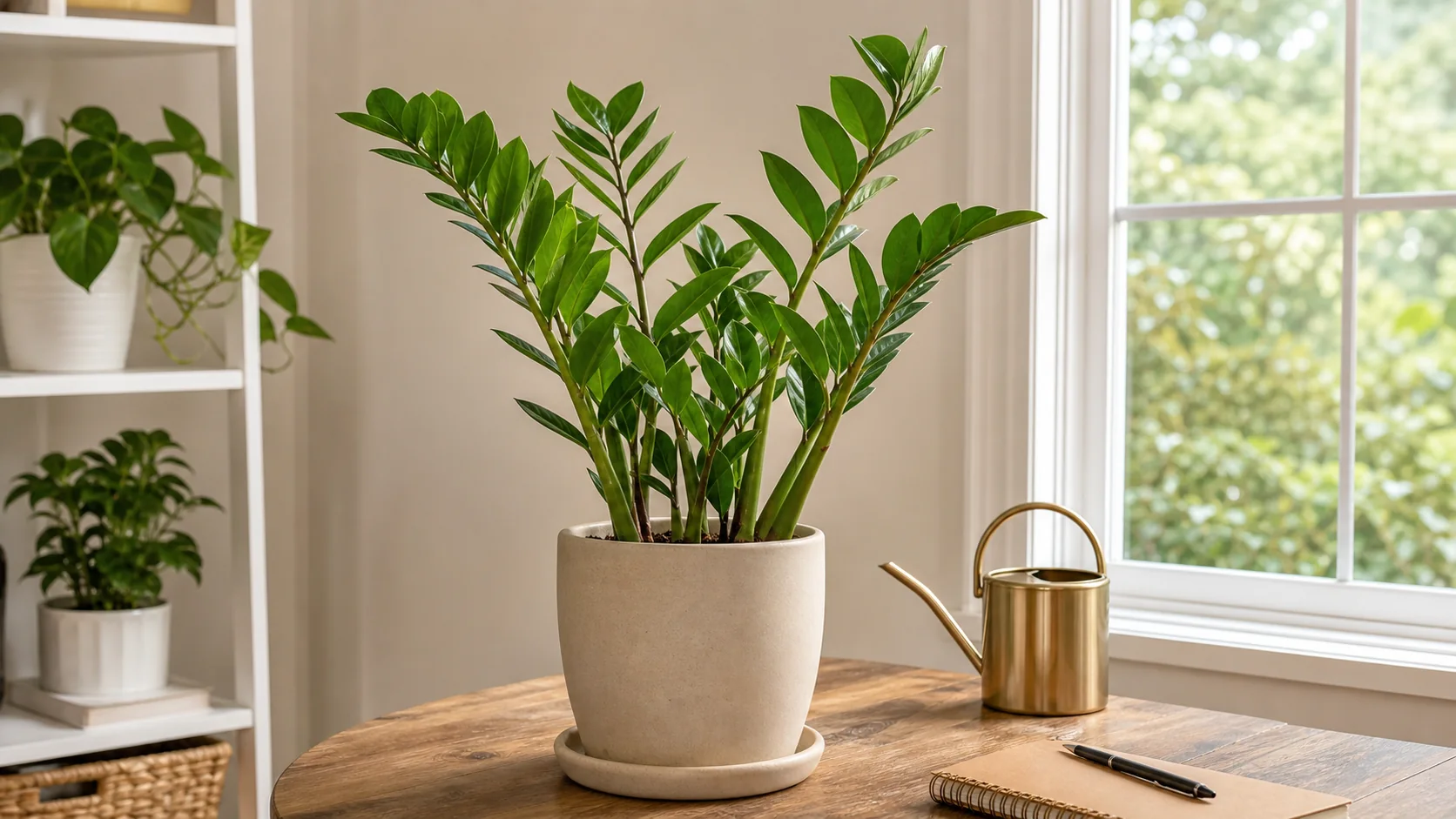
Visible plant observations were organized into a repeatable diagnosis flow, then checked against extension and pet-safety sources.
Sources: NC State Extension Gardener Plant Toolbox (Zamioculcas zamiifolia), UF/IFAS Florida Foliage House Plant Care, UConn Home and Garden Education Center, University of Illinois Extension, ASPCA Toxic and Non-Toxic Plants database. Last reviewed June 2, 2026.