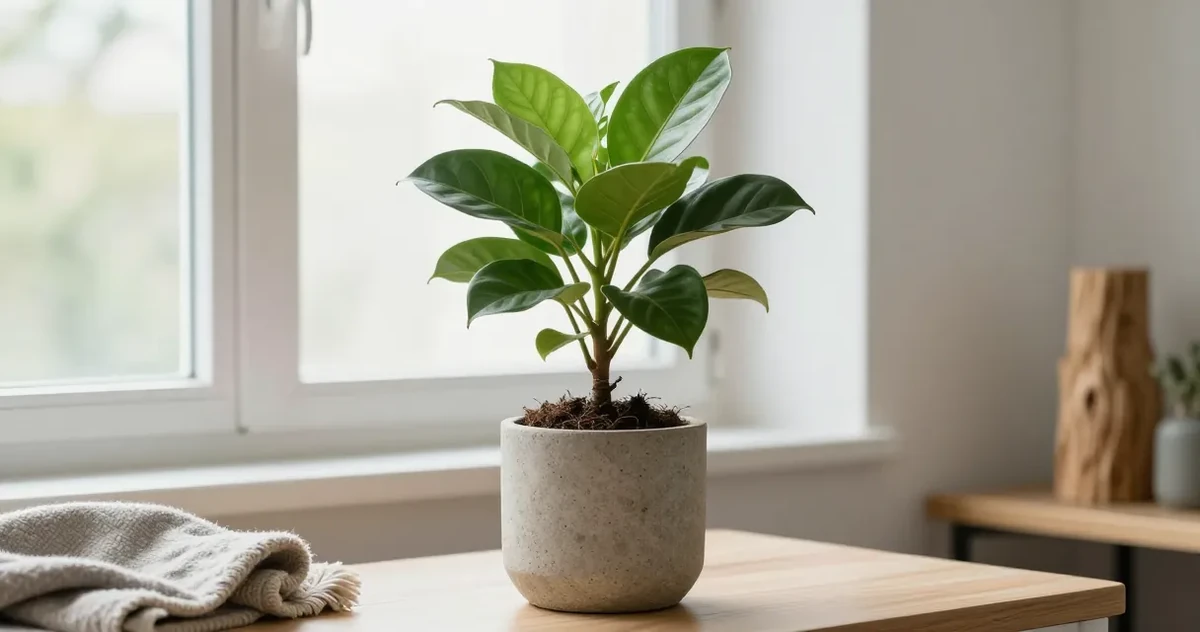
You notice roots coming out of the drainage hole. Or the soil dries out completely two days after watering. Or the plant just looks tired, like it has been sitting in the same spot too long and quietly asking for something different.
Those clues tell you to inspect the root ball; they do not automatically mean a bigger pot. If you are still deciding whether the move is necessary, start with when to repot plants. It separates strong root-bound evidence from seasonal slowdown, old mix, and post-purchase stress.
Repotting sounds more intimidating than it is. At its core, it’s simple: repotting is moving a plant into fresh soil and, when needed, a larger container so its roots have room to grow, access more nutrients, and drain properly. Most houseplants need attention every one to two years. Get it right and the plant rebounds with visible new growth within a few weeks.
This page starts once the answer is yes. It covers the mechanics: preparing the pot and mix, handling the roots, settling the plant, and deciding how to water afterward.
What Most Step-by-Step Guides Miss
Most guides about repotting a plant explain the steps. The missing piece is adapting those steps to the root ball in front of you: how wet it already is, how much root work you did, and whether the new mix absorbs water evenly.
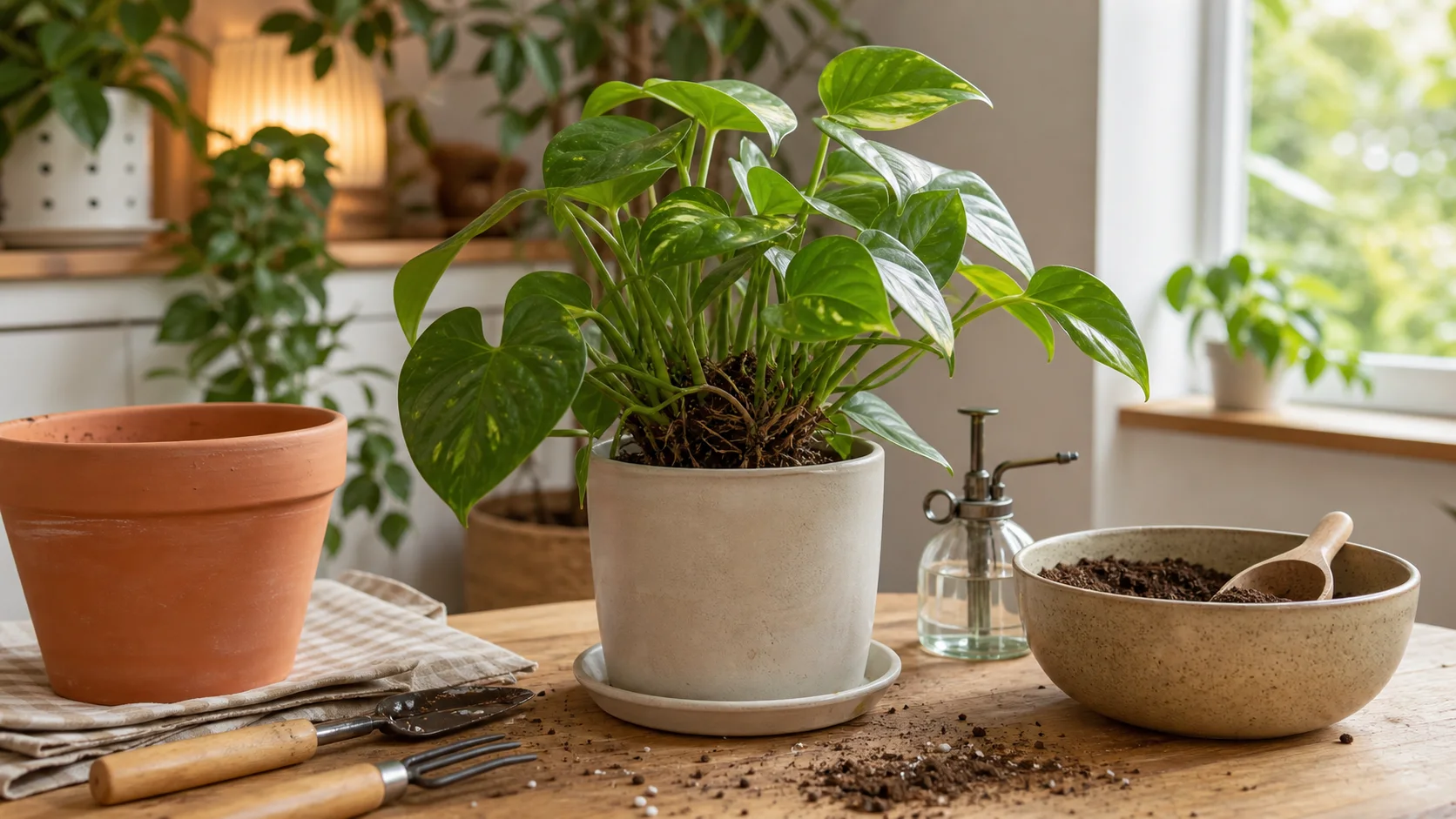
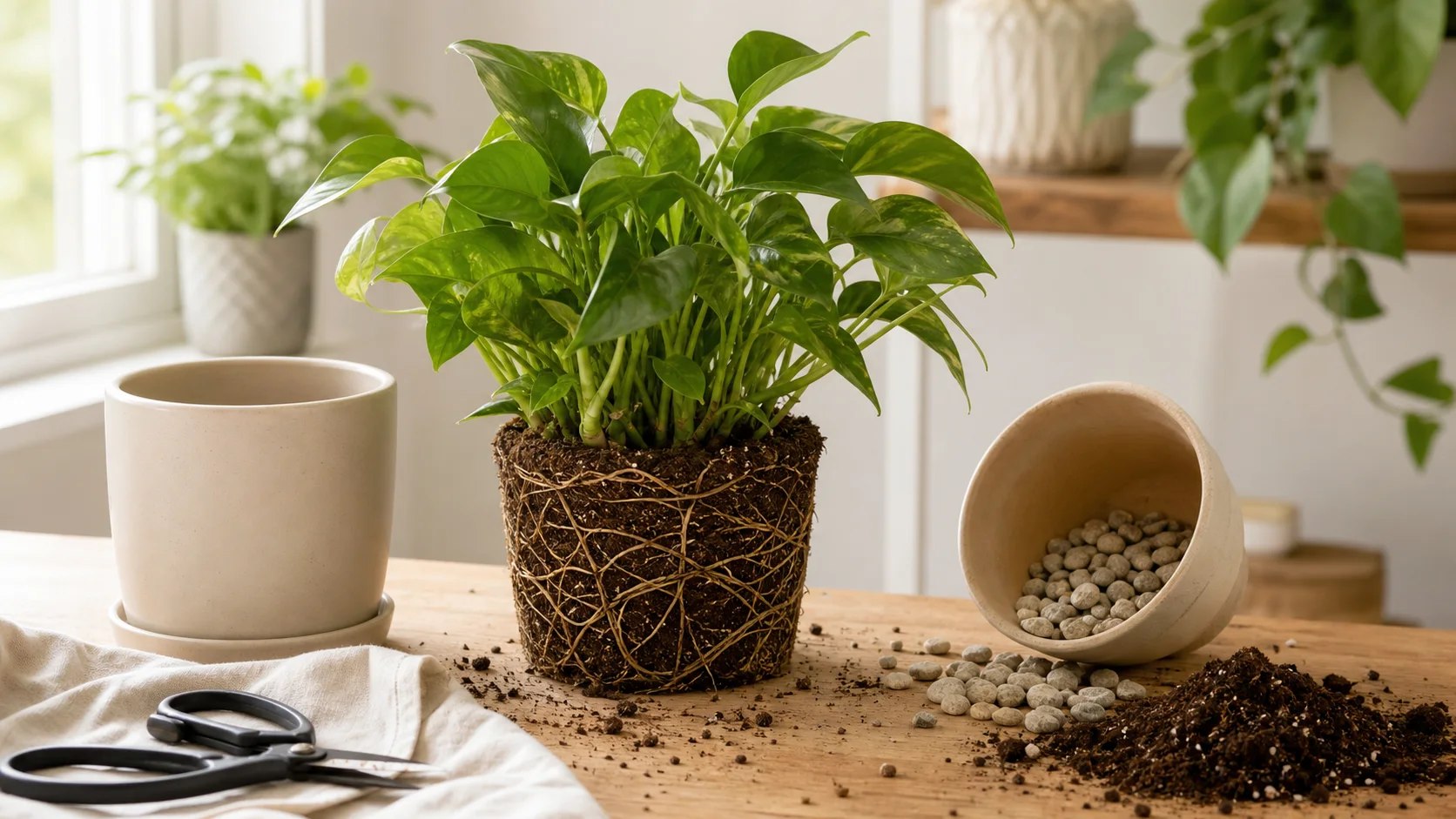
A healthy pothos, clean tools, fresh mix, and a modestly larger pot show why timing and preparation matter before roots are disturbed.
Before you start, check:
- Growth stage: active growth recovers faster than a stressed or dormant plant.
- Root condition: roots should be firm enough to handle disturbance.
- Moisture timing: avoid combining root work with soggy soil or a recent heavy watering.
- Aftercare: stable light, warmth, and a short observation window matter more than extra adjustments.
The safest plant-care steps are boring on purpose: one intervention, clean tools, gentle handling, and time to respond.
Identification Snapshot
If you only need the fast answer, use this quick triage before you unpot anything.
- Repot now: roots are pushing through drainage holes, the root ball is circling tightly, the mix dries out in a day or two, the plant is top-heavy, or you find mushy roots and a stale smell.
- Refresh the same pot: the soil is compacted or exhausted, but the roots are not packed into a hard spiral and the current container size still suits the plant.
- Wait a few weeks: the plant is dormant, heavily flowering, or already stressed from pests, shipping, or a recent move, unless blocked drainage or root rot makes the repot urgent.
- Use topdressing instead of a full repot: the plant is too large to move easily and the main issue is tired topsoil rather than a crowded root ball.
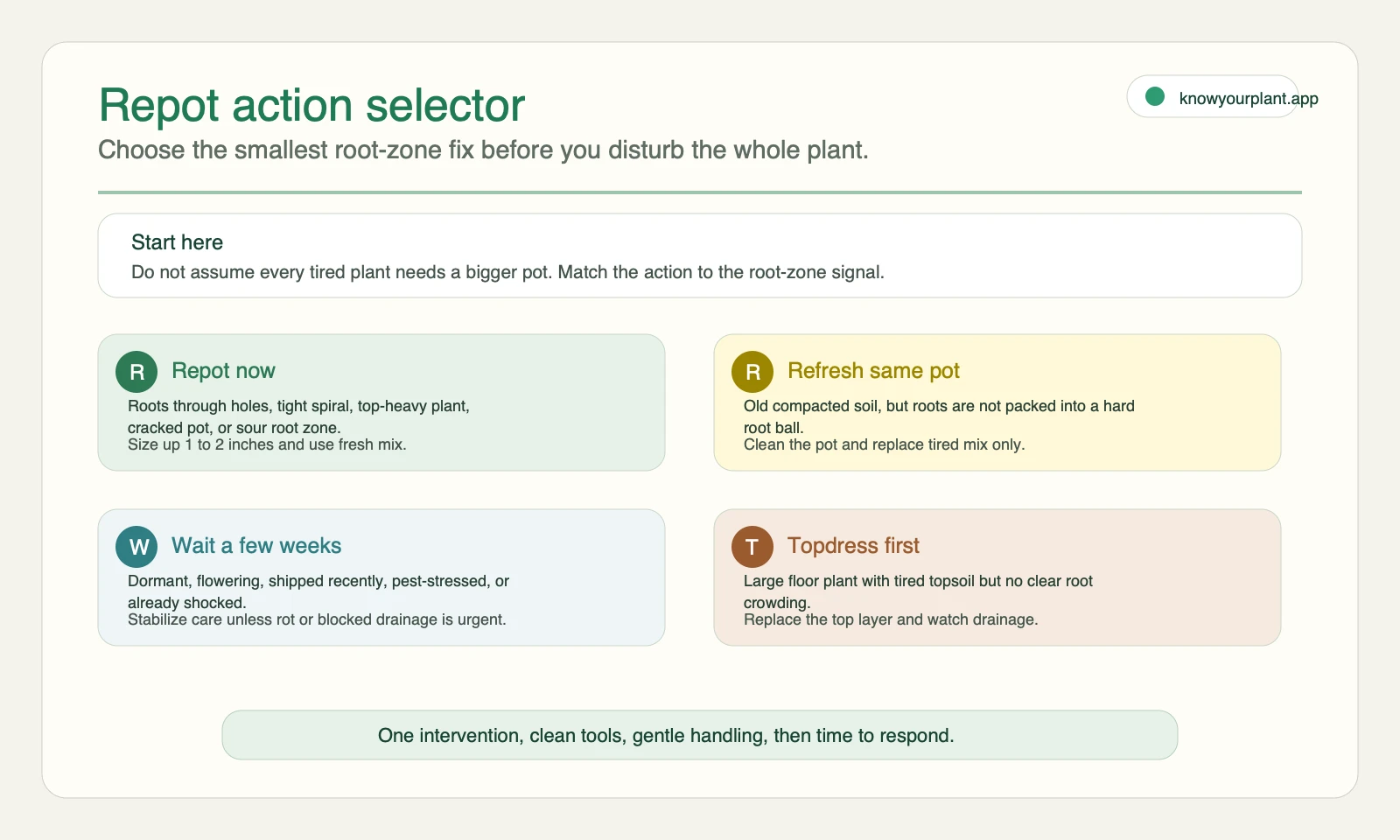
Use the action selector before unpotting anything so you match the fix to the root-zone signal instead of assuming every tired plant needs a bigger pot.
Lookalikes and Confused-With Cases
A lot of repotting mistakes start with solving the wrong problem.
- Root-bound vs thirsty soil: fast runoff or bone-dry mix can come from roots taking up all the space, but it can also come from potting mix that has gone hydrophobic and is letting water race down the pot wall.
- Needs a bigger pot vs needs fresh soil: a slow grower with compacted mix often needs a soil reset, not a dramatic size jump.
- Normal recovery droop vs overwatering: a little droop after repotting is common; heavy, lingering collapse with sour-smelling soil points to a wetter and more urgent problem.
- Seasonal slowdown vs root crowding: if the plant is entering winter rest, stalled growth by itself is a weaker repot signal than roots, drainage, and drying speed.
Expert Note
Penn State Extension treats spring active growth as the safest default window because roots move into fresh mix faster then. Better Homes & Gardens and Good Housekeeping both frame transplant shock as a mix of root disturbance and sudden environment change, not as a reason to avoid repotting forever. Country Living adds the practical beginner rule that matters most in real homes: size up conservatively and do not use a decorative pot without drainage as the actual planting pot.
Care Cards
| Situation | Best move | Pot change | First watering |
|---|---|---|---|
| Roots through drainage holes and a tight, healthy root ball | Repot into fresh mix and loosen the outer roots gently | Go up about 1 to 2 inches wider | Moisten fresh mix evenly, water through once, and empty runoff |
| Soil is old and compacted but roots are healthy and not circling hard | Refresh with new mix in the same pot | No size change | Moisten the mix, water once to settle it, then wait for the normal soil signal |
| Mushy or smelly roots are present | Stop and follow the root-rot process before normal repotting resumes | Only size up if the remaining healthy root mass warrants it | Do not apply a routine soak or fixed waiting period; use the plant and root condition |
| Very large floor plant with tired topsoil | Replace the top layer or do a partial soil refresh first | Usually no immediate size-up | Resume normal watering only after runoff clears |
What Plant Owners Get Stuck On
Across plant community threads, the same anxieties show up again and again: whether you need to untangle every root, whether removing old soil will cause shock, and whether the plant even needs a bigger pot at all. That reader language matters because it points to the two mistakes most often hiding under “repotting problems”: treating a watering or soil-structure issue like a pot-size issue, and over-handling fragile roots that would have recovered better with a gentler move.
Confirm the Scope Before You Set Up
This mechanics guide assumes you have already confirmed one of three jobs: moving a dense root ball up one modest pot size, replacing exhausted mix in the same pot, or correcting a root-health problem with an appropriate fresh mix. If the evidence is still only one drainage-hole root, slow growth, or a plant that looks large above the soil, pause here and use the repot timing decision guide. Keeping that decision separate prevents a vague symptom from turning into an unnecessary transplant.
Do You Need a Bigger Pot, or Just Fresh Soil?
Here’s something most repotting guides skip entirely: not every plant that needs attention needs a larger pot. Sometimes the pot size is still appropriate, but the soil has run its course.
Go up a pot size when:
- Roots are escaping from drainage holes or circling tightly at the top of the soil
- The plant has visibly outgrown its container, is becoming top-heavy, or cracks the pot
- You’re moving out of a plastic nursery grow pot into something with proper drainage
Refresh the soil only, same pot, when:
- The plant isn’t showing root-bound symptoms, but the soil is old, compacted, or drains poorly
- You recently upsized the pot but the soil is now a year or two old
- The plant is a slow grower (snake plant, ZZ plant, cactus) that rarely needs more room but still benefits from a nutrient reset
To do a soil refresh without sizing up: gently remove the plant, shake the old mix from the roots, give the roots a quick look, then repot it back into the same clean container with fresh potting soil. Same process, smaller footprint.
This distinction matters because putting a slow-growing plant into a pot that’s too large is one of the most common causes of root rot. The roots can’t pull moisture fast enough from all that extra soil, and the bottom of the pot stays wet far longer than it should. If you’re tempted to solve inconsistent watering with hardware instead, the self watering pots guide helps you tell when a reservoir planter is actually useful and when it just keeps the mix too wet.
Timing the Work You Already Chose
Routine repotting is easiest during active growth, when roots can move into fresh mix. An urgent drainage blockage, cracked pot, or confirmed root rot may justify acting sooner. The when-to-repot guide owns the full seasonal and urgency decision; once that decision is made, keep the plant’s light and temperature stable while you follow the steps below.
What You Need
You don’t need much. Before you start, gather:
- A new pot that’s 2 to 5 cm (roughly 1 to 2 inches) wider in diameter than the current one. University of Missouri Extension recommends sizing up by no more than 5 cm at a time. A pot too large holds more moisture than the roots can use, and that’s how rot starts. Terracotta dries out faster and suits plants that prefer drier conditions between waterings. Plastic and glazed ceramic retain moisture longer and work well for most tropicals. If you’re deciding between materials, the terracotta pots guide covers the practical differences in drainage and airflow.
- Fresh potting mix suited to your plant. A general indoor potting mix works for most tropicals. Succulents and cacti need a coarser, faster-draining blend, and the succulent care guide explains what that faster-draining setup should look like.
- Something to work on: newspaper, a tray, or an old sheet spread on the floor.
- A trowel or your hands.
- Water.
How to Repot a Plant: Step by Step
Step 1: Check Moisture Before You Start
Check the root ball the day before instead of watering automatically. If it is very dry, water it and let it drain before the move so fragile roots and mix hold together. If it is already evenly moist, do not add another full watering. If it is soggy or smells sour, treat that as a drainage or root-health problem rather than burying the wet core inside more mix.
Illinois Extension recommends pre-soaking fresh potting mix before use. That matters most when the old root ball is wet but the surrounding new mix is dry: pre-moisten the new mix separately instead of trying to correct the contrast by flooding the finished pot.
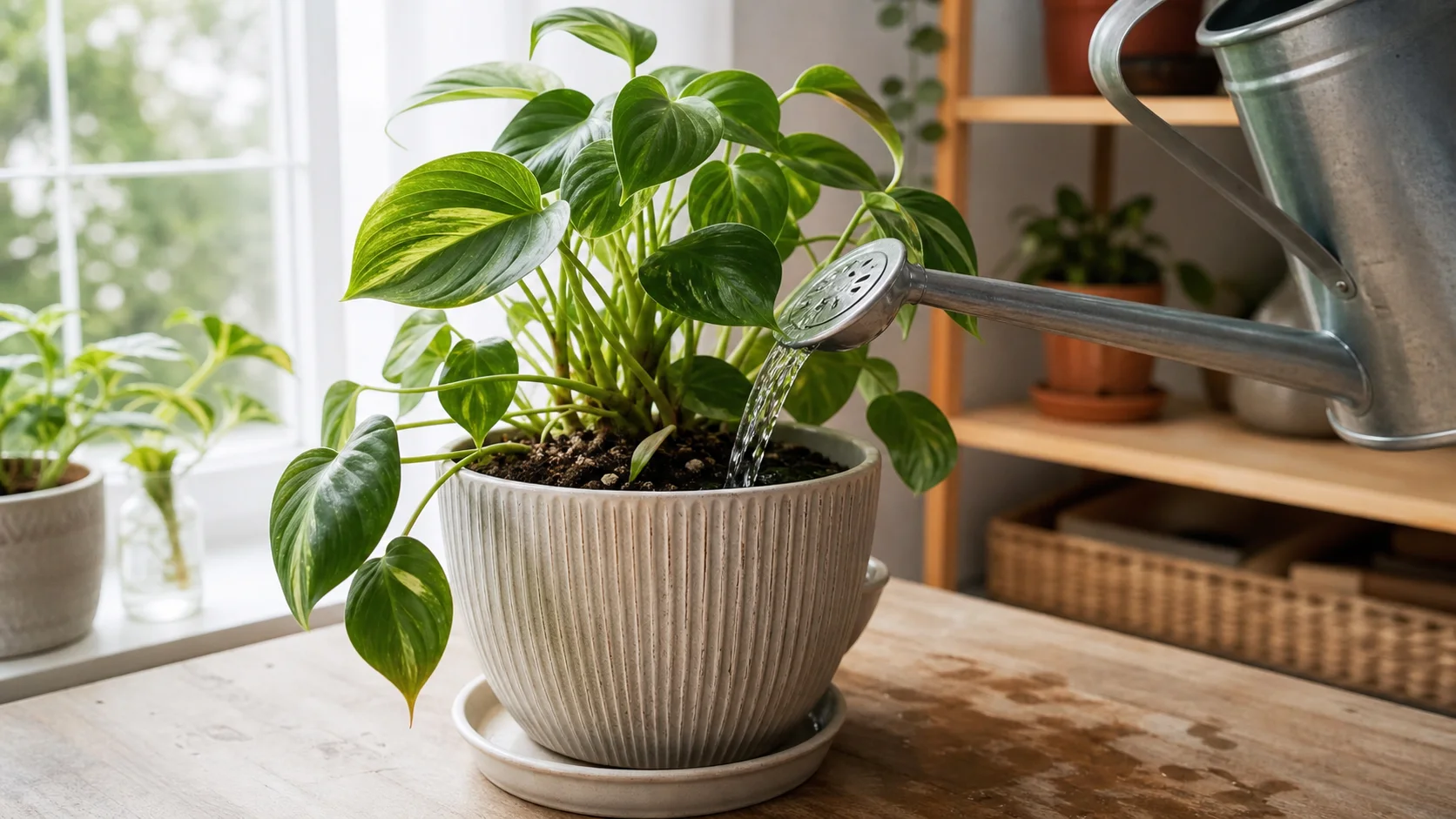
A dry root ball can be watered and drained before the move; an already moist or soggy root ball should not receive an automatic extra soak.
Step 2: Remove the Plant from Its Pot
Turn the pot on its side and gently squeeze if it’s plastic. For ceramic or terracotta, run a knife or trowel around the inside edge to loosen the root ball. Tilt the pot and ease the plant out, holding the base of the stems, not the leaves.
If it doesn’t budge, don’t yank. Tap the bottom of the pot or press on the drainage holes from below to push the root ball up.
Step 3: Read the Roots
This is the step most guides rush past, and it’s where you get the clearest picture of what’s actually been happening underground. Before you do anything else, look at the roots closely.
White or cream, firm to the touch: healthy. These roots are doing their job.
Brown tips on otherwise firm roots: usually just compressed against the pot wall. Fine to repot as-is.
Brown, mushy, or foul-smelling roots: root rot. Cut these off cleanly with scissors or pruners before repotting. Putting a plant with rotting roots into fresh soil doesn’t fix the problem; it just delays the diagnosis. If you find significant rot, also look at your watering habits and drainage setup, then follow the full root rot treatment guide before you water again.
Roots wound tightly into a circle: the plant has been root-bound for a while. Use your fingers to tease apart the outer layer, loosening the roots at the base and sides. This encourages them to grow outward into the new soil rather than continuing to spiral.
What you find in the roots often tells you more about the plant’s situation than anything above the soil. It’s worth taking a full minute here.
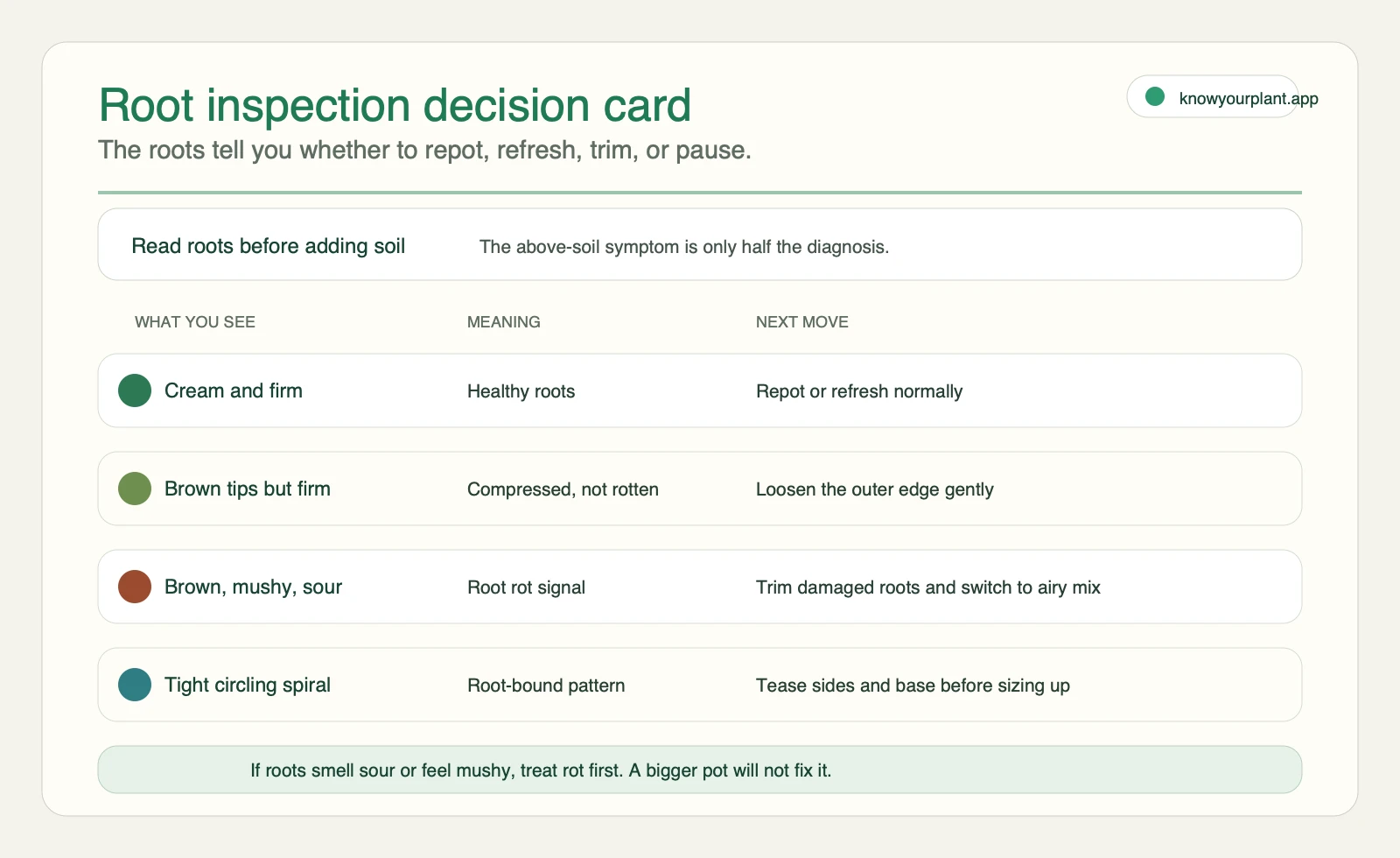
The root inspection card turns the one-minute root check into a clear next move: repot normally, loosen compressed roots, trim rot, or tease a tight spiral before sizing up.
How Much Should You Disturb the Roots?
| Root situation | Remove old soil | Loosen roots | Prune roots | Aftercare |
|---|---|---|---|---|
| Lightly rootbound | Minimal | Tease the sides and bottom only | Usually none | Return to bright indirect light and water normally once the mix starts to dry |
| Severely rootbound spiral | Remove some compacted outer mix if needed | Loosen the outer ring and bottom firmly but not violently | Trim only dead roots or impossible knots | Expect a short growth pause and avoid extra stressors |
| Fragile fine roots | Keep most of the root ball intact | Barely disturb | None unless roots are clearly rotten | Stable warmth, no fertilizer, and gentle watering matter more than perfect soil removal |
| Succulent or drought-adapted roots | Keep the mix airy and avoid wet clumps | Minimal handling | Only dead roots | Water conservatively after the move so cut or bruised roots are not left soggy |
| Rotted roots | Remove sour wet mix | Loosen enough to expose damaged sections | Cut all mushy roots with clean tools | Use a fresh airy mix and restart watering slowly |
Step 4: Prepare the New Pot
Add a layer of fresh potting mix to the bottom of the new pot. How deep depends on the plant’s root ball: you want the top of the root ball to sit about 2 to 3 cm below the rim of the pot once placed inside. That gap is your watering space.
Step 5: Place the Plant and Fill
Set the plant in the center of the new pot. Hold it upright and fill in around the sides with fresh potting mix, working it in gently with your fingers. Don’t pack the soil down hard; just firm it enough to remove large air gaps.
Step 6: Water and Settle
For a routine repot with healthy roots, water slowly until the new mix is evenly moist and excess reaches the drainage holes. Let it drain completely and empty any cachepot or saucer. Iowa State University Extension recommends thoroughly watering after repotting, then checking the mix instead of watering on a fixed schedule; it also advises emptying excess water from the saucer or outer pot.
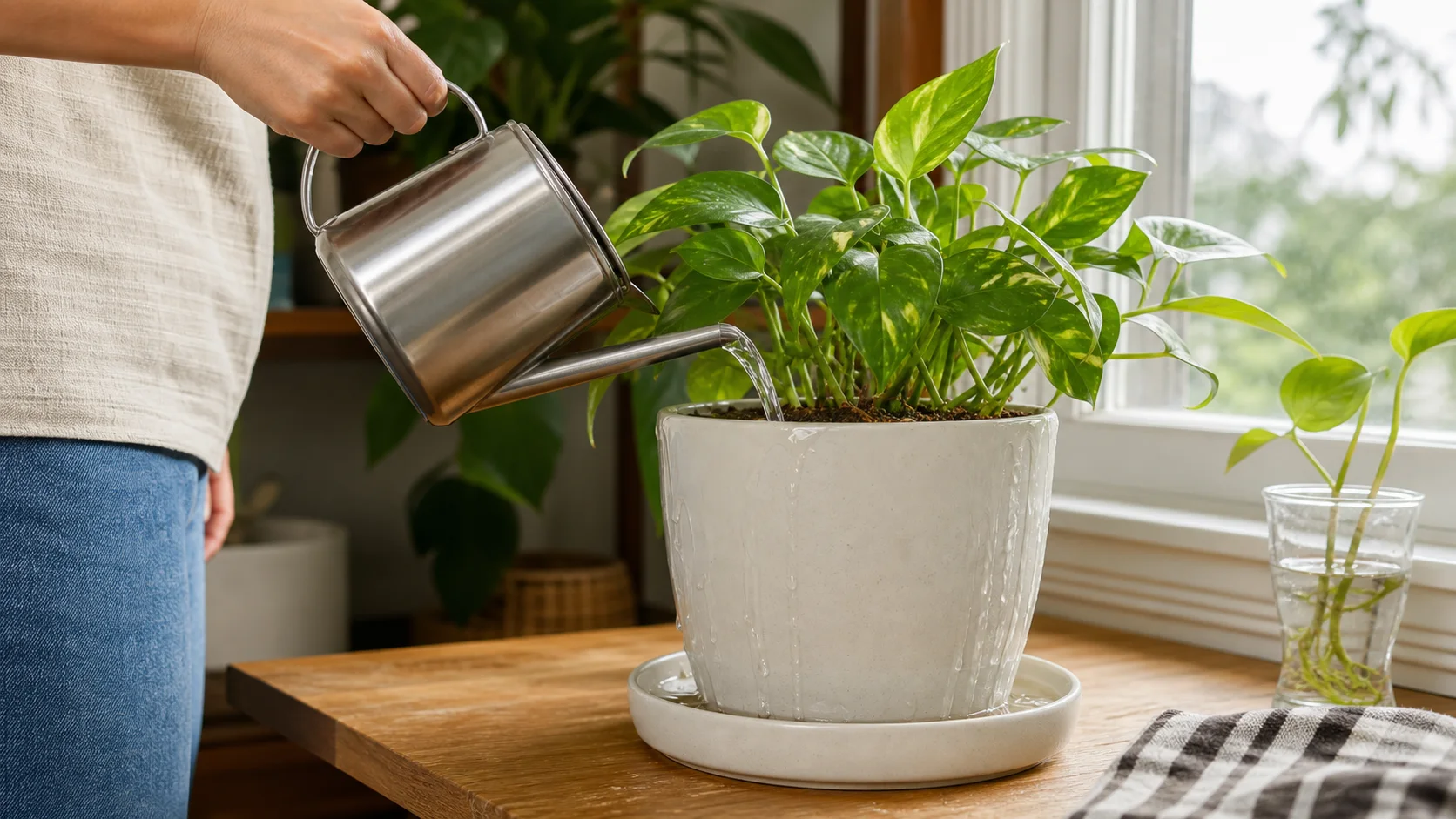
A thorough first watering settles fresh mix around the pothos roots; captured runoff should be emptied once drainage slows.
How to Water After Repotting
The standard healthy-root case gets one settling watering. The details change when the old root ball and new mix begin at very different moisture levels, or when you removed damaged roots.
| What you have after the root check | First watering | What decides the next watering |
|---|---|---|
| Healthy root ball and evenly pre-moistened new mix | Water through once, let excess drain, and empty runoff | Resume the plant’s normal soil-depth or pot-weight check; do not use the repot date alone |
| Dry root ball and dry, water-repellent new mix | Pre-moisten the mix, then water slowly in two passes until the whole pot accepts water and drains | Recheck below the surface because a wet top can hide a dry center |
| Wet root ball surrounded by dry new mix | Moisten the new mix separately before filling; after planting, water slowly only until the surrounding mix is evenly damp and drainage begins | Wait until the root ball and surrounding mix reach the plant’s usual dry-down signal |
| Roots trimmed because they were soft, rotten, or badly damaged | Follow the root rot treatment guide and species-specific guidance rather than a universal soak-or-wait rule | Root condition, mix aeration, and new symptoms decide the next step |
| Succulent or another dry-cycle plant with bruised or cut roots | Keep the mix airy and avoid leaving fresh injuries in persistently wet soil; use the species guide for the first-water timing | Wait for the plant’s normal dry-cycle signal instead of copying tropical-houseplant timing |
Do not “compensate” for repotting droop with repeated watering. A larger pot or fresh mix may dry more slowly than the old setup, so the old calendar is no longer reliable. Check the mix at the depth where the active roots sit and compare the pot’s weight before adding more.
Common Problems After Repotting
| Problem | Most likely cause | What to do now |
|---|---|---|
| Water sits in the saucer after every watering | The pot drained, but the plant was left standing in runoff | Empty the saucer after the pot finishes draining |
| Water rushes down the sides and the root ball still feels dry | Dry mix is shedding water instead of absorbing it evenly | Water slowly in two passes or re-wet the mix more gradually |
| The plant droops for a few days | Mild transplant shock | Keep bright indirect light, skip fertilizer, and give it time |
| The mix stays soggy for a week | The new pot is too large or drainage is poor | Let the mix dry, check the drainage hole, and reassess pot size |
| Growth still stalls after the move | The real problem may be root damage, rot, or poor timing rather than simple crowding | Inspect the roots again before adding more water or fertilizer |
Avoiding Transplant Shock
University of Florida IFAS notes that root-bound plants that are significantly stressed before repotting can take two to four weeks to stabilize after the move. The more stressed the plant going in, the longer the recovery. Starting with a plant in mild distress rather than a severely weakened one makes the whole process smoother.
Darryl Cheng of House Plant Journal puts it plainly: repotting is not about giving your plant more room for its own sake. It’s about restoring the conditions the roots need to keep doing their job. When the soil no longer drains properly or holds the right moisture balance, the plant suffers regardless of pot size.
Some drooping after repotting is normal. To minimize shock:
- Keep it out of direct sun for the first week. Bright indirect light is ideal while it settles. If you’re supplementing with grow lights, back the fixture off a little during recovery, and if you’re choosing where to put the plant while it adjusts, the grow lights for indoor plants guide explains which intensity levels suit different plant types.
- Skip fertilizer for at least four to six weeks. Fresh potting mix already contains nutrients, and adding more right after repotting can burn stressed roots. Once you see new growth pushing, that’s usually the signal the plant is ready to be fed. The plant fertilizer guide explains what to use and how often for different houseplants.
- Do not overwater during recovery. The new pot and mix may dry at a different rate. Use the conditional table above and the plant’s usual root-zone moisture signal instead of repeating the settling watering on a fixed day.
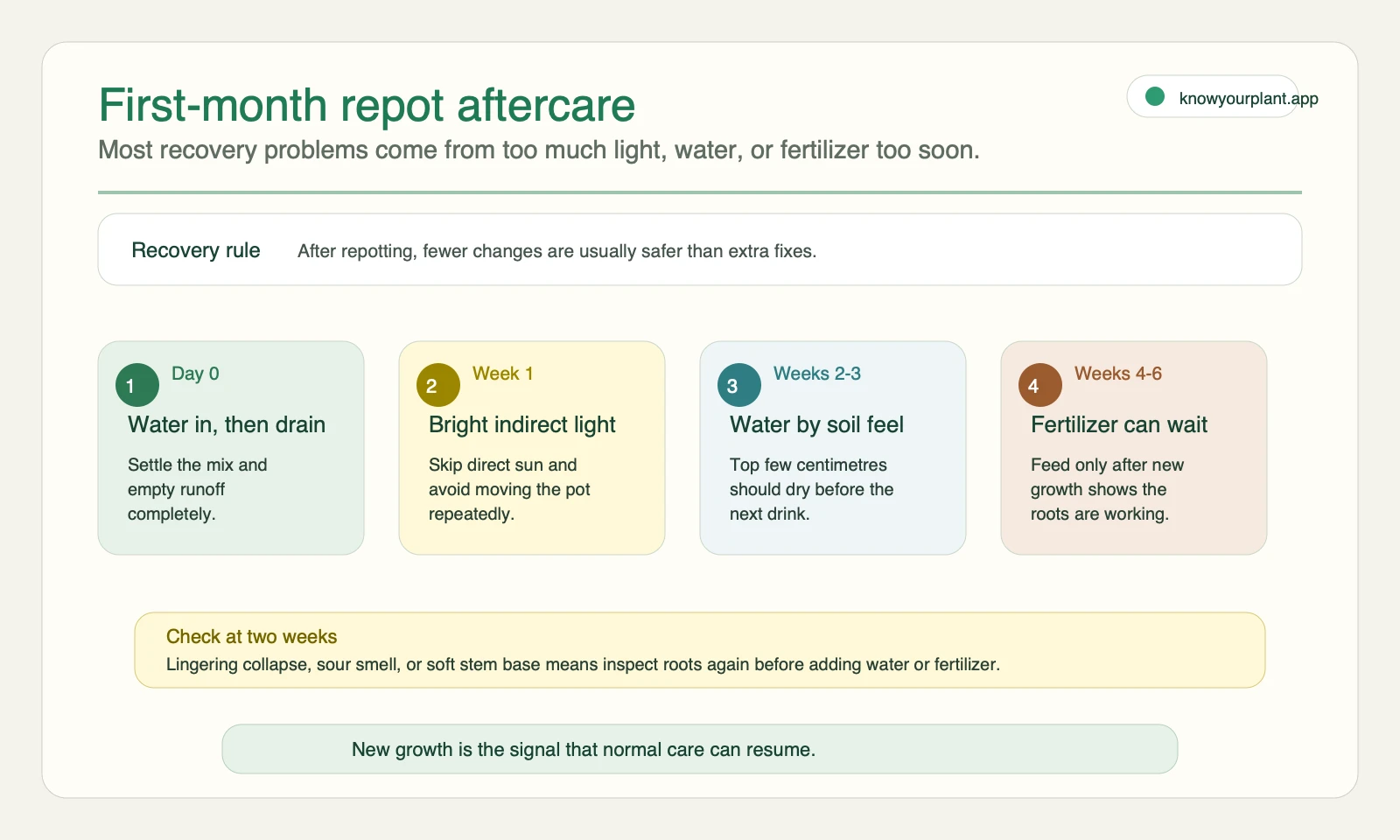
The first-month timeline keeps aftercare simple: water in once, protect the plant from harsh light, water by soil feel, and wait for new growth before feeding.
If leaves droop for more than two weeks, check for root rot, especially if the soil smells off or the base of the stem feels soft.
Pet Safety
This guide covers many kinds of houseplants, so repotting does not automatically make a plant cat-safe or dog-safe. The main pet-safety risk during repotting is the messy window itself: spilled mix, fertilizer granules, bark, and pruned roots should all be cleaned up before pets investigate the floor. If you are unsure whether the plant itself is toxic, confirm that separately before putting it back within reach.
Freshness Note
Last updated from live research on 2026-09-09. Seasonal note: active-growth months are still the easiest window for routine repotting, but blocked drainage, sour collapsing mix, or confirmed root rot are urgent cases that should not wait for the perfect month.
After the Repot
Once the plant settles in, you’ll usually see new growth within a few weeks: a leaf unfurling, a shoot pushing up from the soil, a stem reaching toward the light. That’s the plant doing what it was trying to do all along. It just needed a little more room.
If you’re newer to houseplants and want a broader foundation for keeping them healthy through each season, the indoor plant care guide for beginners covers watering, light, humidity, and soil in one place.
Real User FAQ
These are the practical follow-up questions plant owners keep asking once the pot is already on the floor and the roots are exposed.
How often should I repot my houseplants?
Most houseplants benefit from repotting every one to two years. Fast growers like pothos, philodendrons, and peace lilies may need it annually. Slow growers like snake plants and ZZ plants can often go two to three years between repots. Rather than following a strict schedule, check the signs: roots escaping the drainage holes, soil drying out unusually fast, or growth visibly slowing are the clearest indicators.
How do I know what size pot to choose?
Go up by 2 to 5 cm (1 to 2 inches) in diameter from the current pot. That’s one size up, not two or three. A pot much larger than the root ball holds soil the roots can’t reach yet, and damp soil with no roots pulling moisture from it is where rot problems start.
Can I repot a plant that’s currently flowering?
It’s best to wait. Flowering takes a lot of energy, and repotting adds stress on top of that. Let the plant finish blooming first, then move it once the flowers have dropped. The exception is if the plant is in severe distress, like a cracked pot or completely blocked drainage, in which case act regardless of the bloom.
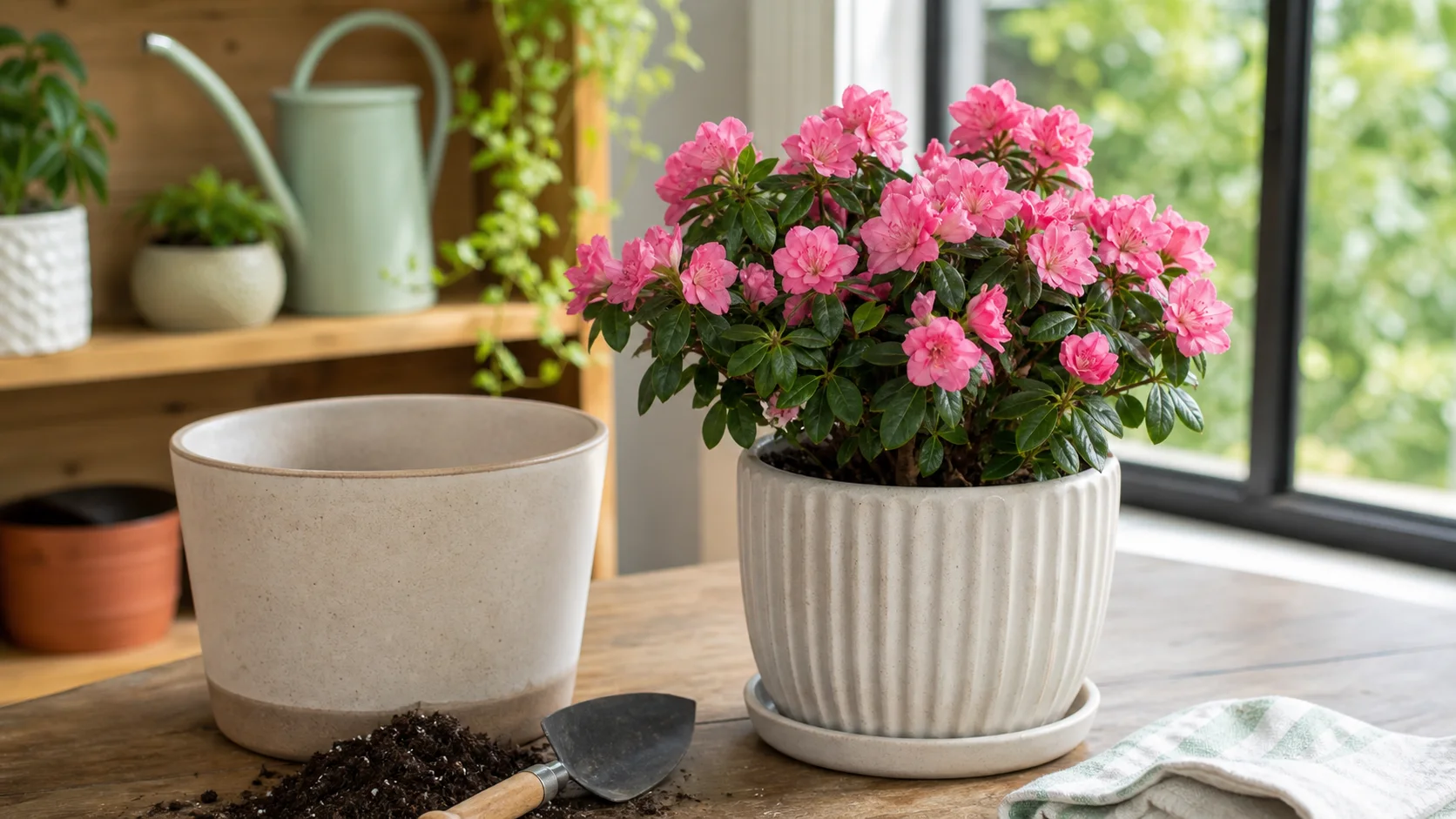
With the azalea still in full bloom, the larger pot and tools can wait until flowering has finished.
Why is my plant drooping after I repotted it?
Some wilting in the first few days is normal. The roots have been disturbed and the plant needs time to re-establish contact with the new soil. Keep it out of direct sun, water lightly if the top few centimetres feel dry, and give it a week. If it’s still drooping at the two-week mark and the soil smells off or the base of the stem feels soft, check for root rot.
Do I need to water right after repotting?
For a routine repot with healthy roots, yes: use evenly moistened mix, water through once, let the pot drain, and do not water again until the plant reaches its normal moisture signal. If the old root ball is already wet, pre-moisten the dry new mix separately and avoid repeatedly soaking the finished pot. If you trimmed rotten or badly damaged roots, follow the root-rot and species guidance instead of a universal calendar. See the post-repot watering table for each case.
Should I fertilize right after repotting?
No. Wait at least four to six weeks. Fresh potting mix already contains nutrients, and fertilizing too soon can burn roots that are still adjusting. Once you see new growth pushing, the plant is telling you it’s ready.
What potting soil should I use when repotting?
Use a mix suited to your specific plant. A peat- or coco coir-based general indoor potting mix works for most tropical houseplants. For succulents and cacti, use a coarser, faster-draining blend, either a dedicated cactus mix or a standard mix cut with perlite or coarse sand. Avoid garden soil from outside: it compacts quickly in containers and can bring in pests.
Can I reuse old potting soil after repotting?
It depends on why you’re repotting. If the plant was healthy and the soil is just depleted or compacted, you can mix some old soil with fresh potting mix. But if you’re repotting because of root rot, pests, or disease, discard the old soil entirely and start fresh. Reusing compromised soil puts the plant back in the same conditions that caused the problem.
Do I need to put gravel or rocks at the bottom of the pot?
No. This is one of the most persistent myths in houseplant care, and it actually works against you. Adding a layer of rocks or gravel to the bottom of a pot does not improve drainage. Because of how water moves through different materials, it still accumulates just above the gravel layer rather than draining away. A pot with a drainage hole is what matters. Skip the rocks entirely and make sure water can exit freely from the bottom.
Leave the loose stones out: potting mix should meet the bottom of a container that has a clear drainage hole.
Methodology note: This article was refreshed on 2026-09-09 using exact-keyword and close-variant review, current Iowa State and Illinois extension guidance, transplant-shock coverage, and plant-owner discussions about root teasing, fragile roots, oversized pots, and aftercare. Timing, drainage, and recovery guidance were verified against higher-trust source material, while community threads were used as qualitative reader-language signals rather than proof on their own.
Download KnowYourPlant to track repotting dates and get reminders when your plants are likely due for a new pot: knowyourplant.app