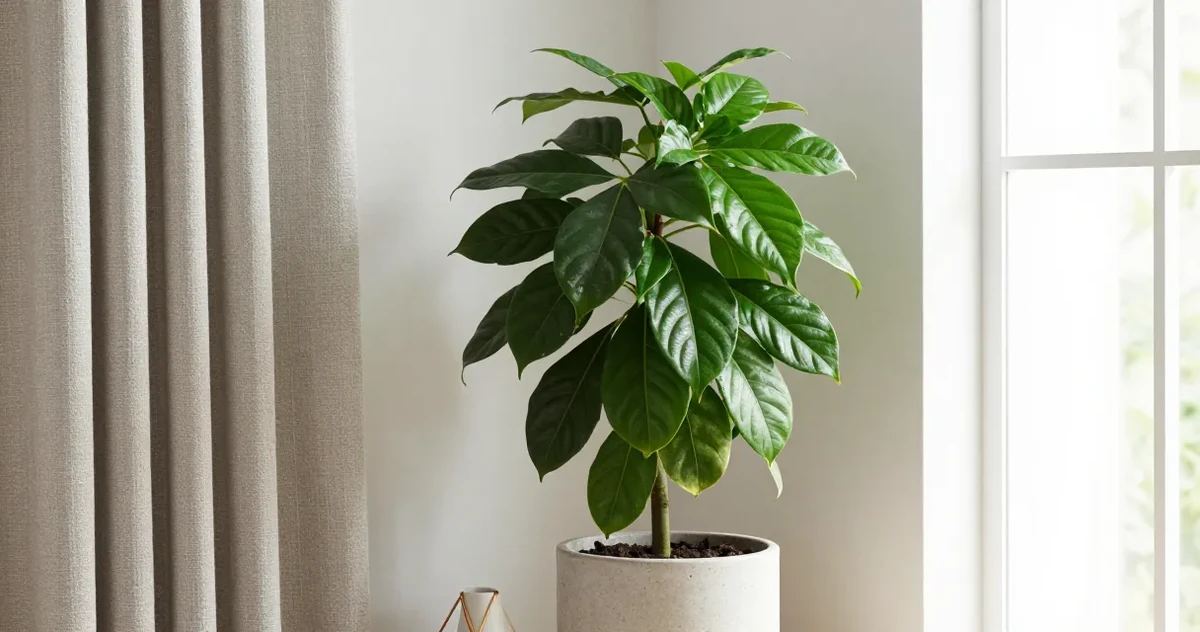
You brought a plant home, found it the perfect spot on the windowsill, and watered it faithfully every few days. And then, slowly, something started going wrong. Maybe the leaves turned yellow. Maybe they drooped. Maybe the plant just quietly stopped looking like itself.
If that sounds familiar, you are not doing it wrong. You are just missing a few pieces of the picture, and that is exactly what indoor plant care tips are for.
Here is the short version: indoor plant care is the practice of recreating, as closely as possible, the conditions a plant would naturally thrive in, adjusted for the reality of your home. That is it. Once you understand what each plant is asking for, the guesswork disappears.
This guide covers everything you need to know to start strong, including a seasonal care calendar that most beginner guides skip entirely. One small maintenance task deserves its own method: use the guide to cleaning plant leaves when dust, mineral spots, or sticky residue starts blocking the leaf surface.
If you want to see what “native conditions” means in measured data, start with the warm-climate houseplant DNA profiles and then compare the seasonal-climate plant DNA profiles. They separate source evidence from indoor-care targets instead of turning regional rainfall into a watering schedule.
Four plants, four native-climate baselines
A general care guide needs examples that resist the idea of a universal schedule. These four accepted species provide contrasting baselines while the actual care decision remains plant- and pot-specific.
The ranges below are the middle 50% (p25–p75), not recommended indoor setpoints.
| Reference taxon | POWO native range | Annual mean temperature | Annual precipitation | Relative humidity | Solar radiation | Evidence |
|---|---|---|---|---|---|---|
| Dracaena trifasciata (snake plant) | southern Nigeria to west-central tropical Africa and Tanzania | 23.3–25.2°C | 1585–1783 mm/yr | 65–69% | 16.1–18.1 MJ/m²/day | 29 climate points; medium confidence |
| Epipremnum aureum (golden pothos) | Mo’orea in the Society Islands | 25.7–25.9°C | 2451–2644 mm/yr | 63–64% | 20.0–20.1 MJ/m²/day | 6 climate points; low confidence |
| Ficus elastica (rubber plant) | Nepal to western Yunnan and western Malesia | 22.5–26.6°C | 1514–2822 mm/yr | 61–66% | 16.7–19.1 MJ/m²/day | 30 climate points / 120 usable records; medium confidence |
| Philodendron hederaceum (heartleaf philodendron) | Mexico to tropical America | 24.0–25.9°C | 1668–2787 mm/yr | 64–68% | 17.0–18.7 MJ/m²/day | 30 climate points / 783 usable records; medium confidence |
What this changes in this guide: Use the differences to ask better questions about light and drying speed, not to convert native rainfall into a weekly watering amount.
Sources and method: Dracaena trifasciata in POWO and GBIF; Epipremnum aureum in POWO and GBIF; Ficus elastica in POWO and GBIF; Philodendron hederaceum in POWO and GBIF; CHELSA V2.1, 1981–2010. GBIF records are limited to POWO-native countries, then filtered for coordinates, establishment signal, licence, precision, and spatial duplication. No community or user-reported care data is used in this module.
What Most Care Guides Miss
Most guides about indoor Plant describe the ideal care routine. Real homes are messier: light changes by season, pots dry at different speeds, and the same symptom can mean different things depending on where it appears.
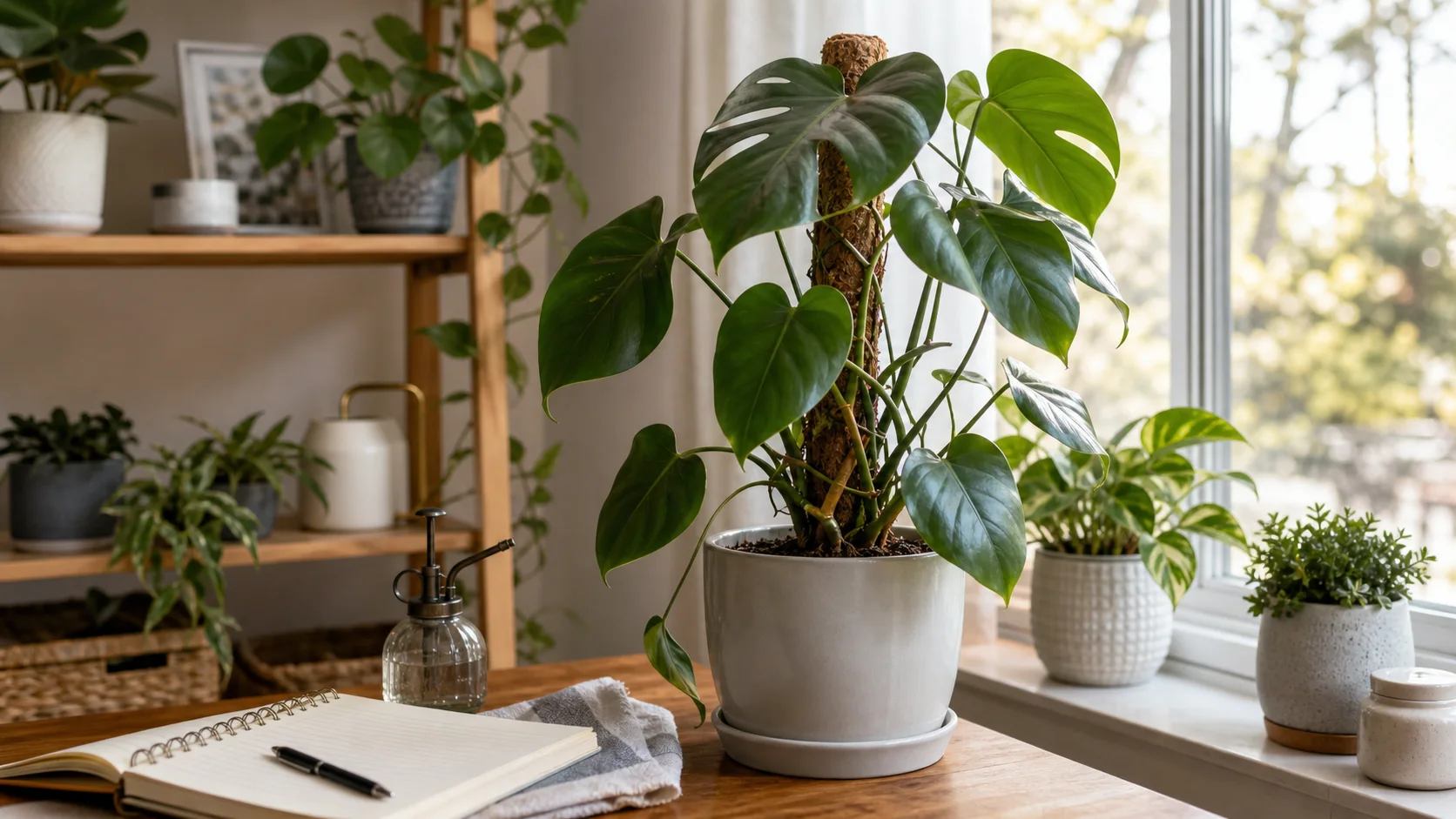
Observe the plant, light, root zone, and recent care changes before adjusting its routine.
Before changing care, check the plant in this order:
- Light: is the plant growing toward the window, fading, or scorching?
- Root zone: is the pot drying predictably, or staying wet in the middle?
- Leaf pattern: did the oldest leaves, newest leaves, tips, or stems change first?
- Recent change: new pot, new location, fertilizer, cold draft, heat vent, or pest exposure.
This keeps you from fixing the wrong problem. One clear adjustment is usually safer than a full care reset.
Plant-Owner Signal
Beginner questions keep clustering around the same three pain points: watering by the calendar, assuming every droop means thirst, and buying an “easy” plant before checking pet safety. Treat that pattern as a warning. The right routine starts with plant type, room light, soil dryness, and who shares the space with the plant, not with a generic once-a-week habit.
Why Most Beginners Struggle (And It Is Not What You Think)
Most new plant parents do not kill their plants from neglect. They kill them from too much love. Too much water, too much fussing, too many moves from spot to spot while hunting for the perfect location.
According to the University of Missouri Extension, overwatering is the most common cause of houseplant failure indoors. Not drought, not poor soil, not low light. Water applied before the plant is ready for it.
Plants are resilient. They adapt. What trips people up is not knowing what normal looks like for a particular plant, so every new leaf or drooping stem triggers a reaction that is not always necessary.
The fix is simple: slow down, observe, and learn to read what your plant is telling you.
Identification Snapshot
| What to identify first | Fast beginner answer |
|---|---|
| Plant type | Separate tropical foliage plants, succulents and cacti, herbs, and flowering houseplants before copying a care routine |
| Light zone | Note whether the plant sits in direct sun, bright indirect light, medium light, or a genuinely dim corner |
| Root zone | Confirm the pot has drainage and whether the soil dries evenly instead of staying soggy in the middle |
| Water cue | Water after the soil reaches the dryness level your plant type prefers, not because a week passed |
| Pet risk | Check toxicity before placing any plant where cats or dogs chew leaves |
Starter Comparison Table
| Beginner plant | Light fit | Water tolerance | Pet safety note | Most common beginner failure |
|---|---|---|---|---|
| Golden pothos | Medium to bright indirect light | Forgiving if allowed to dry a little | Not pet safe | Watering again while the root zone is still damp |
| Snake plant | Bright indirect to medium light | Wants longer dry periods | Mild pet-toxicity risk, so keep out of reach | Treating it like a thirsty tropical plant |
| Heartleaf philodendron | Bright indirect to medium light | Moderate, with light drying between drinks | Not pet safe | Keeping it in a dark corner and compensating with extra water |
| Dracaena | Bright indirect to medium light | Moderate, slower than pothos | Not pet safe | Letting the pot stay wet for too long |
Care Cards
| Care card | Fast answer |
|---|---|
| Light | Match the plant to the brightest suitable spot first; watering gets easier once light is right |
| Water | Check the soil before every watering and adjust by plant type, pot size, and season |
| Drainage | Use a pot with a drainage hole and empty the saucer after watering |
| Season | Expect faster drying in spring and summer and slower drying in autumn and winter |
| Pet safety | Verify the exact species before bringing a plant into a home with curious pets |
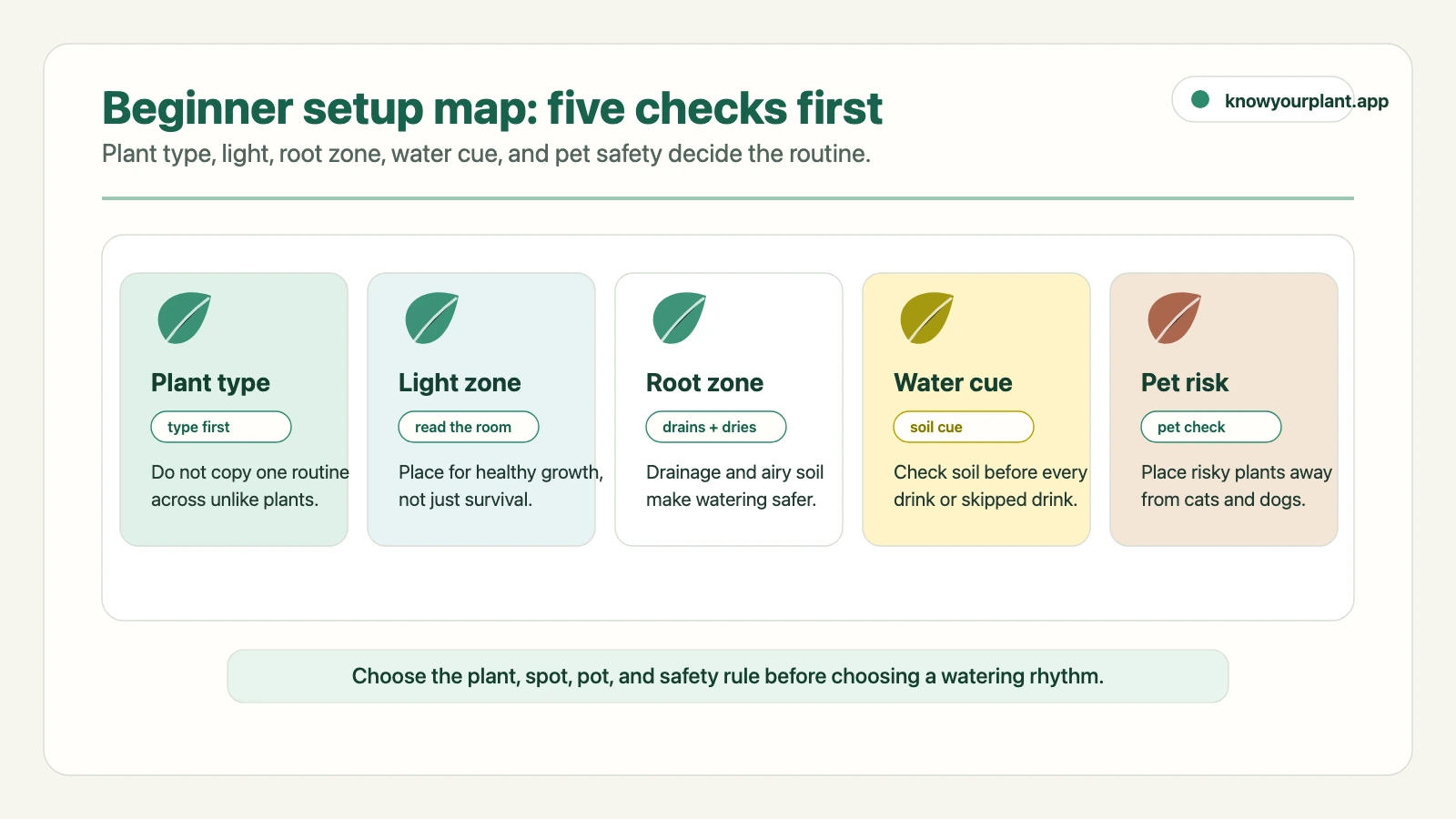
Use this five-check map before copying a care routine from another plant or a fixed watering schedule.
Lookalikes and Common Beginner Confusions
| Confusion | What it looks like | Why it matters |
|---|---|---|
| “Low light” versus “thrives in low light” | A plant stays alive in a dim corner but stops pushing healthy growth | Survival advice is not the same as a good long-term placement |
| Thirst droop versus wet-soil droop | Both can look limp at first glance | The fix flips depending on whether the root zone is dry or soggy |
| Crispy tips versus sun scorch | Both show brown damage | Tip browning usually follows watering or humidity stress, while scorch shows up as bleached or burned patches on the sun-facing side |
Expert Note
University of Maryland Extension recommends checking soil before watering instead of following a fixed calendar. For beginners, that one habit solves more plant losses than any fertilizer, app, or gadget because overwatering and underwatering can look similar until you inspect the root zone.
Light: The Foundation of Everything
Before you think about water or soil, think about light. It is the one thing you genuinely cannot fake, and it shapes every other care decision.
Darryl Cheng, author of The New Plant Parent, puts it directly: “Light is the single most important variable in keeping a houseplant alive. Everything else, watering, feeding, repotting, is secondary to getting the light right.”
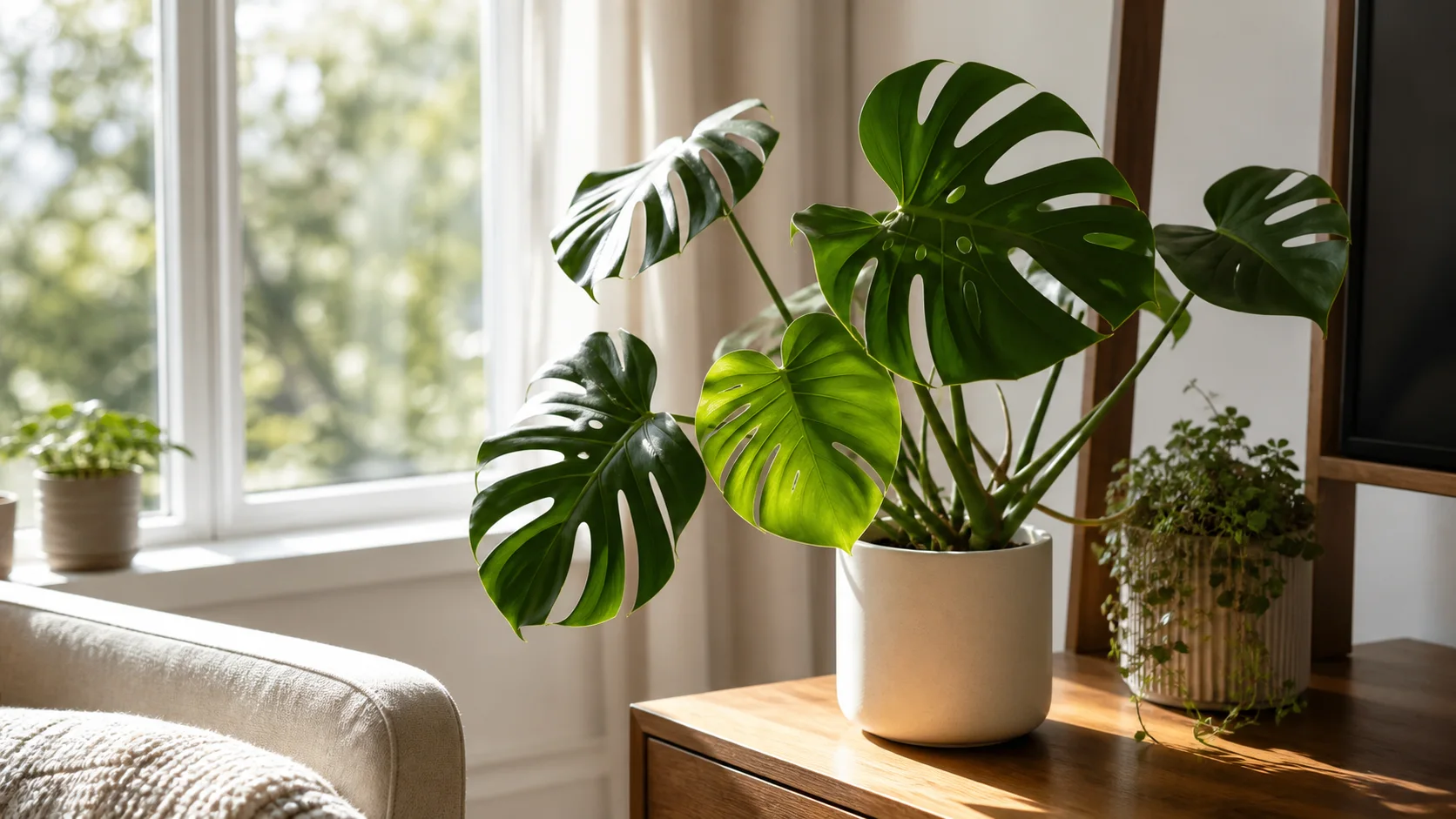
A bright window placement establishes the light conditions that shape every other care choice.
How to Read Light in Your Home
Stand in a room at midday and look at the shadows. Sharp, well-defined shadows mean bright light. Soft, blurry shadows mean medium light. No shadows at all means low light.
Most houseplants sold as “low light” actually mean “tolerates low light.” They will survive, but they will not grow. If you want a plant that actively does well with minimal light, stick to pothos, snake plants, ZZ plants, or heartleaf philodendrons.
Matching Plants to Spots
Direct sun through a south-facing window suits cacti, succulents, and some herbs. Bright indirect light, a few feet back from a sunny window, suits the majority of popular tropical houseplants: monsteras, pothos, peace lilies, dracaenas. North-facing rooms with gentle, consistent light suit low-light tolerant plants well.
If your home is genuinely dark, artificial lighting is a real option. A dedicated grow light can make almost any spot workable for plants that need more brightness.
The goal is to find the spot where the plant looks comfortable, not just alive.
Symptom Diagnosis Card
| Symptom | First thing to check | Most likely meaning | Safer first move |
|---|---|---|---|
| Yellow lower leaves | Is the soil still wet below the surface? | Too much water or not enough light | Wait, improve drainage, and check the light before watering again |
| Limp droop | Is the soil bone dry or soggy? | Either thirst or stressed roots | Match the droop to the soil instead of watering automatically |
| Crispy brown tips | Are tips drying while the rest of the leaf stays firm? | Inconsistent watering, mineral buildup, or dry air | Adjust watering rhythm and flush the soil before adding fertilizer |
| Mushy stems or sour soil | Does the pot smell swampy or stay wet for days? | Root stress or rot risk | Stop watering, empty the saucer, and inspect drainage |
| Stalled growth | Are new leaves smaller and farther apart? | Light is too low, or the plant is sitting cold and wet | Move the plant closer to usable light and recheck the watering pattern |
Beginner Watering Decision Tree
- If the soil is still damp several centimetres down, wait and check again later instead of topping it up.
- If the soil is dry and the plant looks limp, water thoroughly until excess drains out.
- If the plant is limp but the soil is wet, treat it as a drainage or root-zone problem before adding more water.
- If only the tips are browning, review watering consistency, humidity, and tap-water mineral buildup before changing everything else.
- If the same symptom returns after one careful adjustment, change the environment next, usually the light or airflow, not the fertilizer.
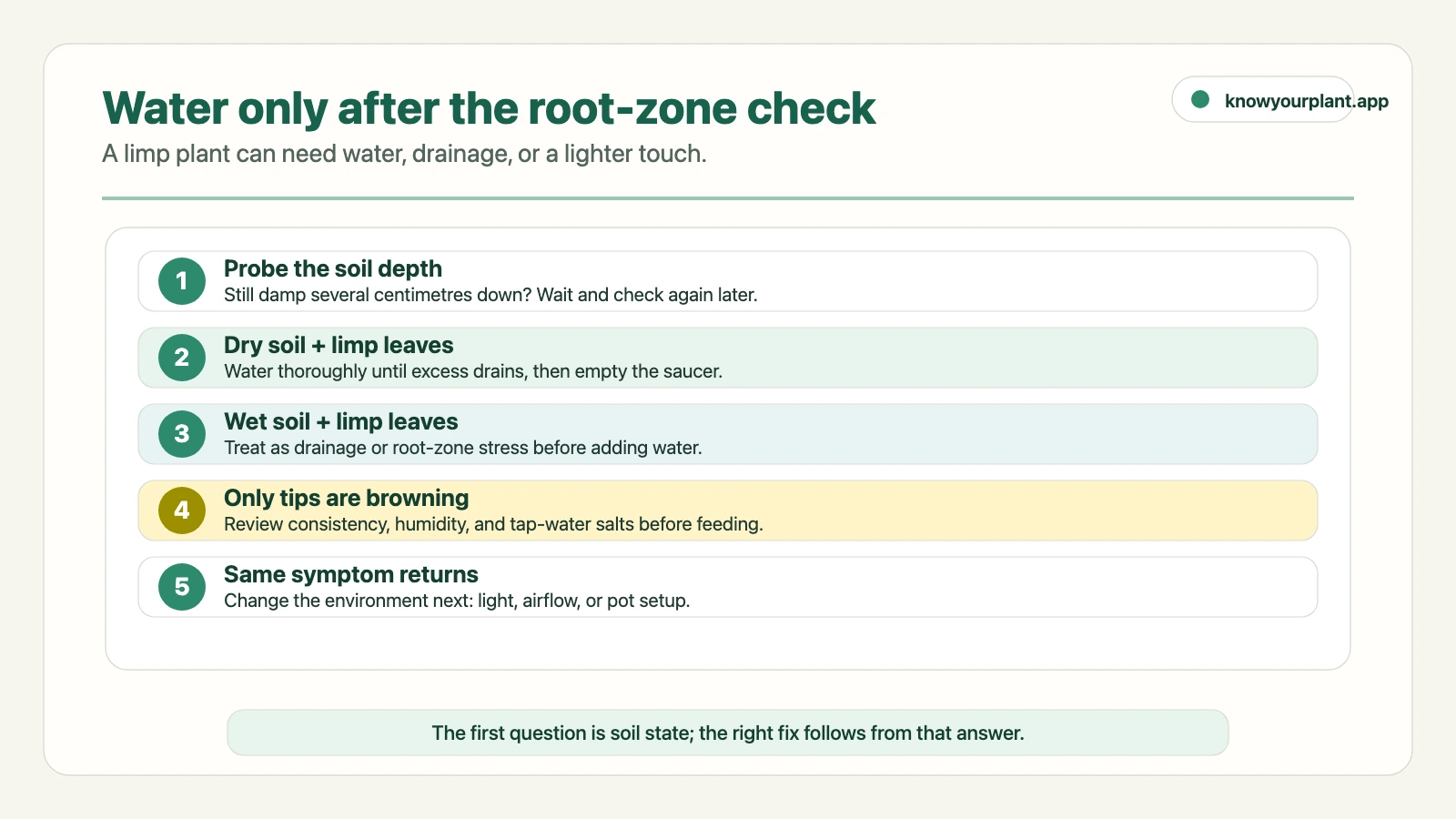
Follow the soil-state path before watering again; limp leaves can mean thirst or root-zone stress.
Watering: Less Is Usually More
Watering is where most beginners go wrong, and almost always in the same direction: too much, too often.
The single most useful habit you can build is this: check the soil before you water, every single time. Push your finger into the soil up to the first knuckle. If it feels damp, wait. If it feels dry, water thoroughly.
How to Water Properly
When you do water, water all the way through. Pour slowly until water drains from the bottom of the pot, then stop. This encourages roots to grow deeper and ensures the whole root zone gets moisture, not just the top inch.
Empty the saucer after about thirty minutes. Sitting in standing water is one of the fastest ways to rot roots.
Overwatering vs. Underwatering
Overwatered plants often show yellowing leaves, mushy stems at the base, and soil that stays wet for more than a week. Underwatered plants show dry, crispy leaf tips, leaves that curl inward, and soil that pulls away from the sides of the pot.
Both problems are fixable. Overwatering takes longer to recover from, but it is not a death sentence if you catch it early.
Soil and Pots: The Invisible Part of the Equation
The soil in a nursery pot is designed for greenhouse conditions, not your living room. It is often dense and water-retentive in ways that do not suit most home environments.
NC State University Extension notes that most standard potting mixes begin to compact and lose their drainage properties within 12 to 18 months of use. That is one of the reasons repotting matters even when a plant has not obviously outgrown its container.
Plant scientist Christopher Satch makes the point clearly: “The biggest mistake I see is treating all houseplants the same. A cactus and a fern have completely different relationships with water. Understanding where your plant comes from is the fastest shortcut to understanding what it needs.”
Choosing the Right Mix
A good general-purpose indoor potting mix should feel light and airy in your hands, not like compacted garden soil. For most tropical houseplants, a standard indoor mix works well. For succulents and cacti, add extra perlite or grit to improve drainage. For aroids like pothos and philodendrons, a chunkier mix with some orchid bark helps roots breathe.

Perlite, airy potting mix, and orchid bark can be combined to match different indoor root systems.
Drainage Is Non-Negotiable
Whatever pot you choose, it needs a drainage hole. Decorative pots without holes can work as outer covers, but always keep your plant in an inner nursery pot with drainage. Water needs somewhere to go.
Humidity and Temperature: What Tropical Plants Miss Most
Most popular houseplants come from tropical or subtropical environments. They are used to warm, humid air. The average centrally heated or air-conditioned home sits at around 30 to 50 percent relative humidity. Most tropical houseplants prefer 60 percent or higher. That gap explains a lot of the crispy leaf tips and slow growth that beginners notice.
You do not need to transform your living room into a greenhouse. A few simple adjustments help a lot.
Raising Humidity Without a Humidifier
Group plants together. They release moisture through their leaves and create a slightly more humid microclimate around each other. A tray of pebbles filled with water, placed under the pot, adds gentle humidity as it evaporates. Both approaches are low effort and genuinely effective.
Keep plants away from heating vents, drafty windows in winter, and air conditioning units in summer. Sudden temperature swings stress plants more than consistently cool or warm conditions.
Fertilizing: Feeding With Purpose
A plant growing in a pot has a limited supply of nutrients. Over time, and especially during active growth in spring and summer, those nutrients get used up.
A balanced liquid fertilizer applied once a month during the growing season is enough for most houseplants. You do not need to fertilize in autumn and winter, when most plants slow down naturally.
The University of Arizona Cooperative Extension points out that excess fertilizer causes more damage to most houseplants than too little: salt buildup restricts water uptake and produces root damage that looks, confusingly, a lot like drought stress. More fertilizer does not mean faster growth. Give during the growing season, rest during the quiet months.
Indoor Plant Care Through the Seasons
This is the piece most beginner guides leave out. Your plants do not need the same care in January that they need in June. Adjusting with the seasons is one of the fastest ways to stop losing plants you thought you were caring for correctly.
Spring: Time to Wake Up
Spring is the most important season for houseplants. As daylight increases, plants that have been sitting quietly all winter start pushing new growth. This is your cue to act.
- Resume fertilizing. Start with a half-strength dose in early spring, then move to full strength once you see active growth.
- Check roots. If you have not repotted in a year or more, tip the plant out and look. Roots circling the bottom or pushing through drainage holes mean it is time for a slightly larger pot.
- Reassess your spots. The sun angle changes with the season. A spot that was bright enough in winter may now be too intense for shade-loving plants, and a formerly dim corner may now get more light.
- Do a pest check. Spider mites and fungus gnats often flare up as the season transitions. Check the undersides of leaves now, before any infestation gets established.
Summer: Stay Consistent, Watch the Heat
Summer brings longer days and faster growth, but also a few new challenges.
Plants near south-facing windows can experience genuine heat stress when afternoon sun is direct and intense. If leaves look washed out or scorched at the tips, move the plant back from the glass.
Soil dries faster in summer, so you will water more frequently. Keep checking with your finger rather than watering on a schedule. Air conditioning changes things too: vents dry out both the air and soil faster than you might expect, so keep plants away from direct AC airflow.
Autumn: Start Slowing Down
As daylight shortens, most houseplants slow their growth naturally. Your care should follow.
- Taper off fertilizing. The last application is usually around September. After that, most plants do not need feeding until spring.
- Water less often. Plants that needed water every five to seven days in summer might need it every ten to fourteen days by November. Let the soil guide you, not the calendar.
- Bring outdoor plants inside before temperatures drop below 10C (50F) at night. Check them carefully for hitchhiking pests before they come in.
- Watch the humidity. As heating turns on, indoor air gets drier fast. A good time to set up pebble trays or group plants closer together.
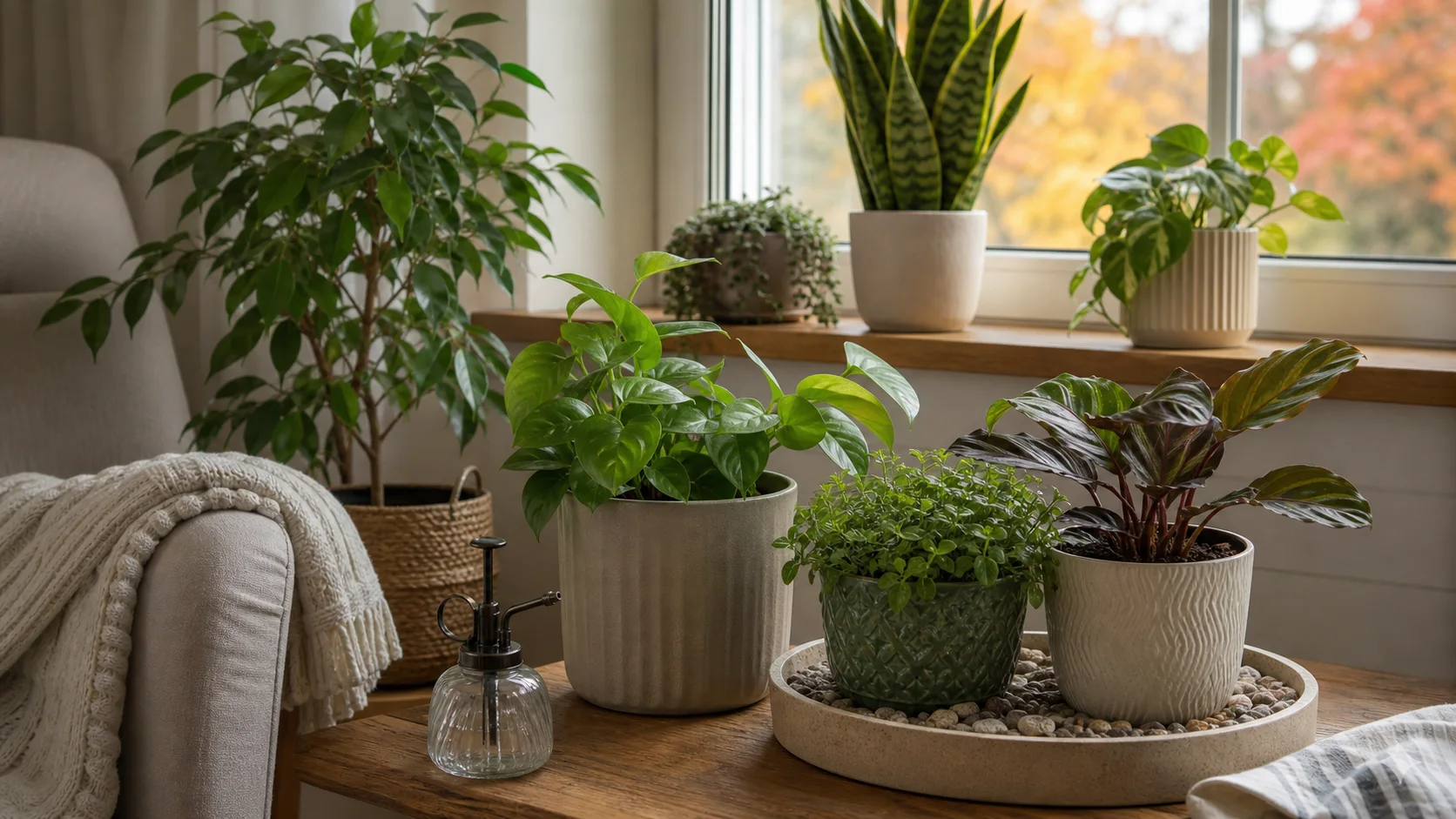
Grouped plants and a pebble tray help offset drier indoor air as autumn care slows down.
Winter: Rest and Minimal Intervention
Winter is when most beginners over-care. The plants have slowed down. They need less, not more.
No fertilizing. Water significantly less than you did in summer. Be mindful of cold drafts from single-pane windows: the air directly against the glass can be much colder than the rest of the room, and most tropical plants do not appreciate it.
If your home gets genuinely dark between November and February, this is when a grow light makes the most difference. Even a few extra hours of artificial light each day keeps light-hungry plants from stretching and losing their shape over the winter months.
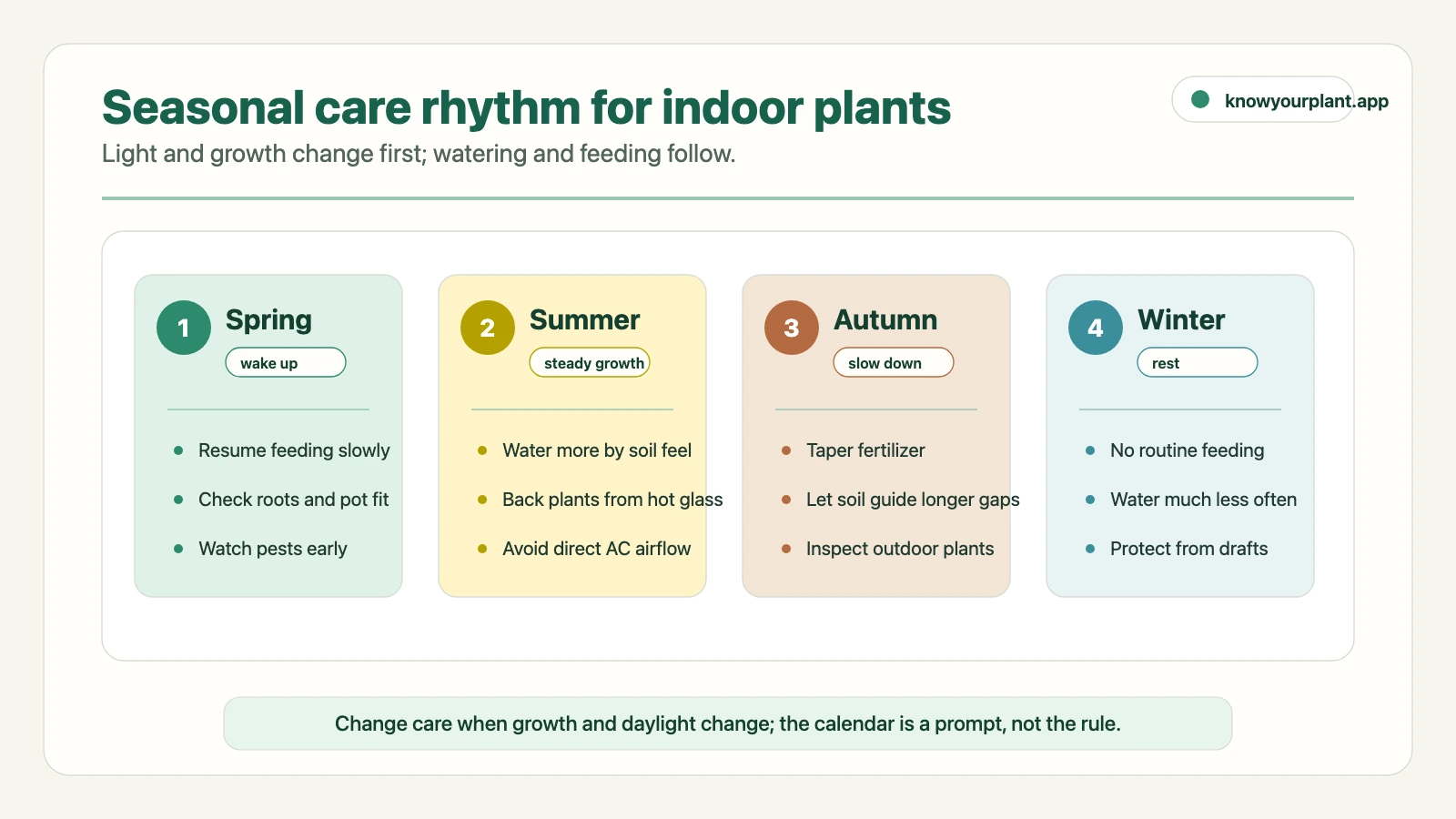
Use the season as a prompt to recheck light and growth first, then adjust watering and feeding.
Common Problems
Yellow Leaves
Yellow leaves usually mean the root zone stayed wet longer than the plant wanted, especially when the oldest leaves go first. Check the soil depth and the light before assuming the plant needs more water.
Limp Droop
Drooping is only a thirst signal when the soil is actually dry. If the pot is still heavy or damp, droop points more toward root stress, poor drainage, or a plant that is sitting in the wrong light.
Brown Tips
Brown tips often come from uneven watering, dry indoor air, or mineral-heavy tap water. Trim the dead tip if you want, but fix the pattern that caused it or the next leaf will do the same thing.
Water quality is plant-specific. Most houseplants can tolerate ordinary tap water, but mineral-sensitive carnivorous plants cannot; the Venus flytrap care guide explains when to use rainwater, distilled water, or reverse-osmosis water instead.
Mushy Stems or Sour-Smelling Soil
This is the point to stop watering, empty the saucer, and inspect how compact the mix has become. Mushy bases and a swampy smell are stronger warnings than a single yellow leaf.
Stalled Growth
If the plant is alive but not changing, suspect light first. Many beginner plants tolerate lower light, but they only keep growing well when the room gives them enough usable brightness.
The Most Common Beginner Mistakes
- Watering on a fixed schedule instead of checking the soil first
- Putting a plant in a dark corner because it looks nice there, not because it belongs there
- Repotting a new plant immediately after bringing it home: let it settle for a few weeks first
- Assuming yellow leaves always mean not enough water: more often, it means too much
- Choosing a plant based on looks before checking what it actually needs to survive
Every one of these is easy to avoid once you know to look for it.
Good Starter Plants for Beginners
If you are just getting started, pick plants that forgive inconsistency. A few that reliably do well:
- Golden pothos: tolerates low light, irregular watering, and almost anything else you throw at it
- Snake plant: prefers to dry out between waterings and handles low light better than most
- Heartleaf philodendron: fast-growing, communicative, and very forgiving of early mistakes
- Dracaena: low maintenance, dramatic looking, and slow enough that there is no urgency to its care
For a broader look at what grows well indoors, the tropical plants guide covers the full range of options.
Real User FAQ
How often should I water my indoor plants?
There is no universal answer, which is the whole point. Different plants, pot sizes, soil types, and seasons all affect how quickly a plant dries out. Check the soil with your finger rather than watering on a schedule. Most tropical houseplants do well when the top two to three centimetres of soil are dry. Succulents and cacti want to dry out completely between waterings.
Why are my plant’s leaves turning yellow?
Yellow leaves usually point to one of three things: overwatering, not enough light, or a nutrient deficiency. Overwatering is by far the most common cause. If the soil has been consistently wet and the yellowing starts at the bottom of the plant and works upward, that is the most likely culprit. Let the soil dry out more between waterings and check that the pot has proper drainage.
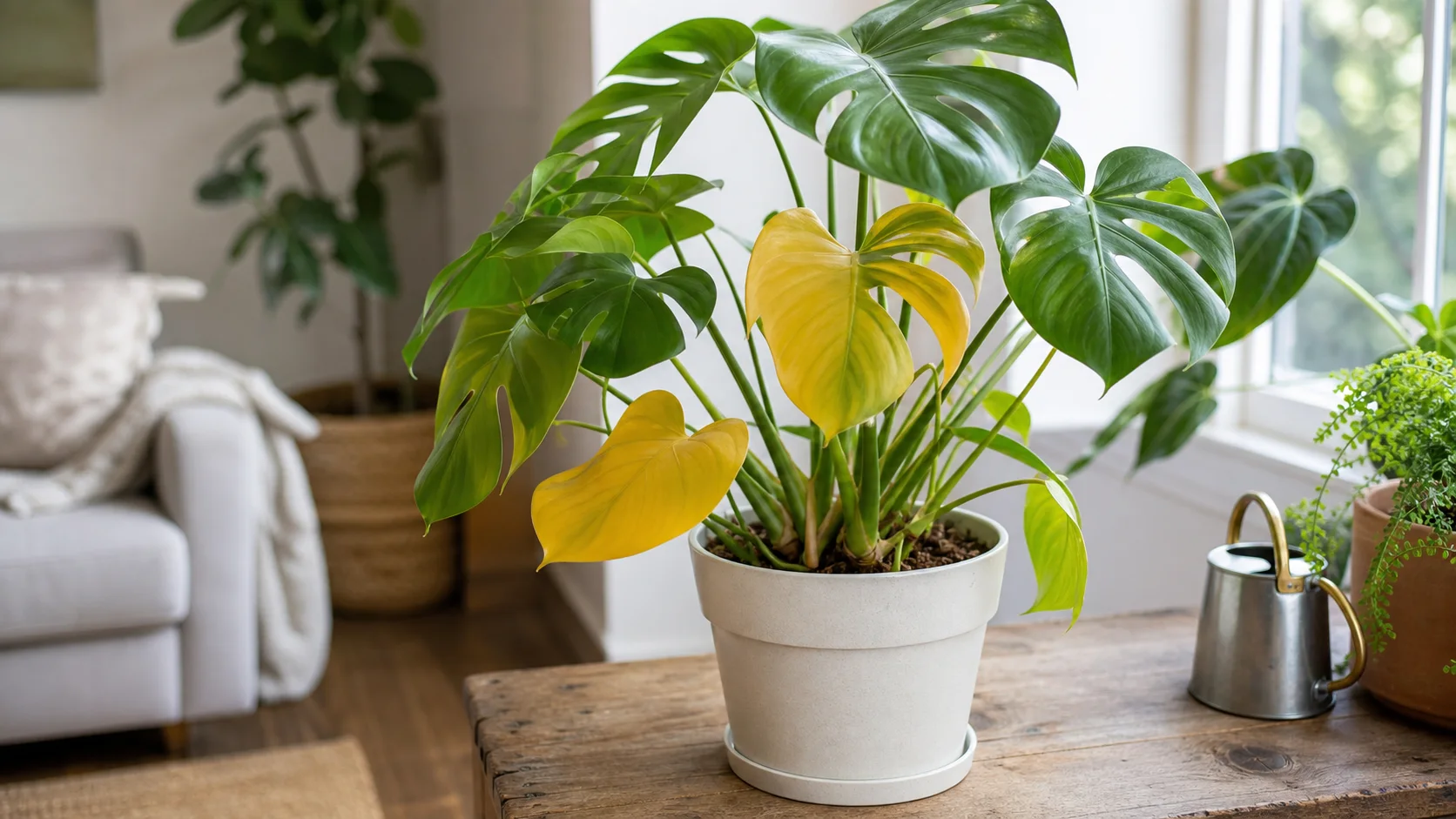
Lower yellow leaves, wet soil, and drainage conditions together point toward an overwatering check.
Do indoor plants need fertilizer?
Yes, but much less than most people assume. During spring and summer, a balanced liquid fertilizer once a month is plenty for most houseplants. In autumn and winter, you can stop entirely. Plants that are not actively growing do not need feeding, and fertilizing them anyway creates more problems than it solves.
What are the easiest indoor plants for beginners?
Pothos, snake plants, heartleaf philodendrons, and ZZ plants are consistently the most forgiving. They handle inconsistent watering, lower light, and the occasional neglect without drama. Start with one of these and build your confidence before moving to something more demanding.
How do I know if my plant is getting enough light?
Watch the growth. A plant getting adequate light produces new leaves regularly, keeps its color, and holds its shape. A plant struggling with low light grows slowly or not at all, produces smaller leaves, and often stretches toward the nearest window. If your plant is leaning noticeably in one direction, it wants more light.
Should I mist my indoor plants?
Misting is a popular tip but not a particularly effective one. The humidity boost from misting lasts only a few minutes. If your plants need more humidity, grouping them together or using a pebble tray with water is more reliable and less effort. Misting is harmless if you enjoy it, but it is not a substitute for genuinely improving the ambient humidity around your plants.
When should I repot my plant?
Repot when you see roots growing out of the drainage holes, when the plant dries out unusually fast after watering, or when growth has slowed despite good care conditions. Spring is the best time, when plants are entering their active growth phase. Choose a pot one size up rather than dramatically larger: too much extra soil holds moisture and increases the risk of root rot.
Are indoor plants safe for pets?
Some are and some are not. Many popular houseplants, including pothos, philodendrons, and dracaenas, are toxic to cats and dogs if ingested. If you have pets, check before you buy. The cat-safe indoor plants guide covers the best non-toxic options in detail.
Pet Safety
Pet safety should be part of the first plant decision, not an afterthought. Many popular beginner plants, including pothos, philodendrons, dracaenas, and peace lilies, are not good choices for pets that chew leaves. Check the exact species in the ASPCA toxic and non-toxic plant database before you buy, and place risky plants well out of reach if they are already in the house.
Freshness Note
This guide was refreshed on June 15, 2026 to keep the watering logic, beginner troubleshooting, and pet-safety language aligned with current extension guidance and the ASPCA plant-toxicity database.
Methodology Note
This guide was updated using University of Maryland Extension watering guidance and ASPCA toxic and non-toxic plant references, then cross-checked against recurring beginner questions surfaced in Reddit search snippets about overwatering, peace lilies, and pet-safe starter plants. Official sources support the care and toxicity claims. Community snippets are used only to mirror beginner confusion, not as measured prevalence.
Reviewed By
Reviewed by the KnowYourPlant editorial team for practical care logic, symptom clarity, and species-appropriate safety notes.
Where to Go From Here
Indoor plant care feels complicated at first because there is a lot to hold in your head at once. But most of it comes down to three things: the right light, the right amount of water, and a little patience.
Start with one or two plants that are known to be forgiving. Spend a few weeks just observing them. Learn what they look like when they are happy, and what they look like when something is off. That habit of observation is the foundation of everything else.
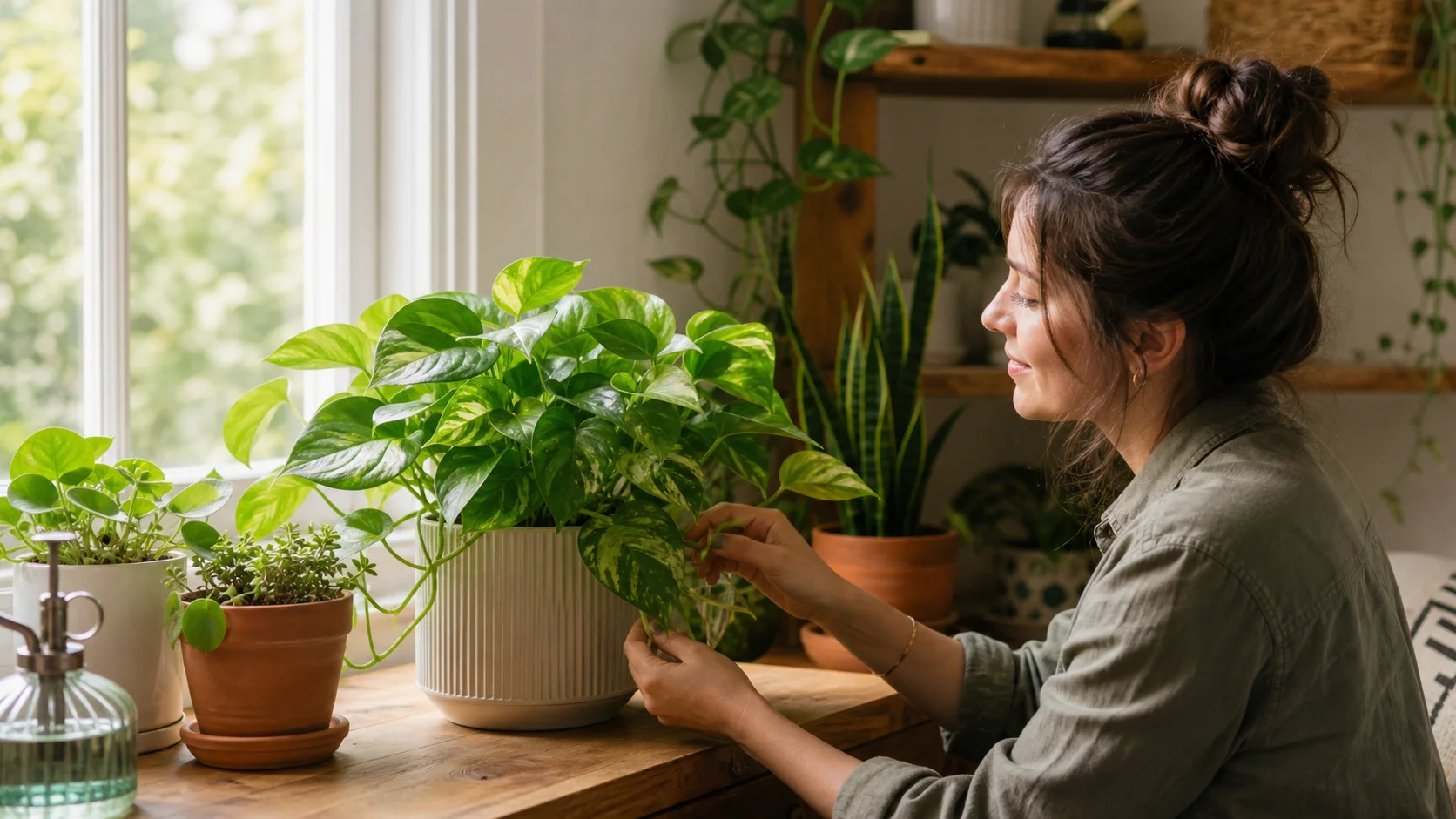
Patiently observing a forgiving pothos builds the practical instincts that make care easier over time.
When you are ready to go deeper, Download KnowYourPlant for personalized plant care reminders based on your actual plants, your home conditions, and the season. Less guessing, more growing.