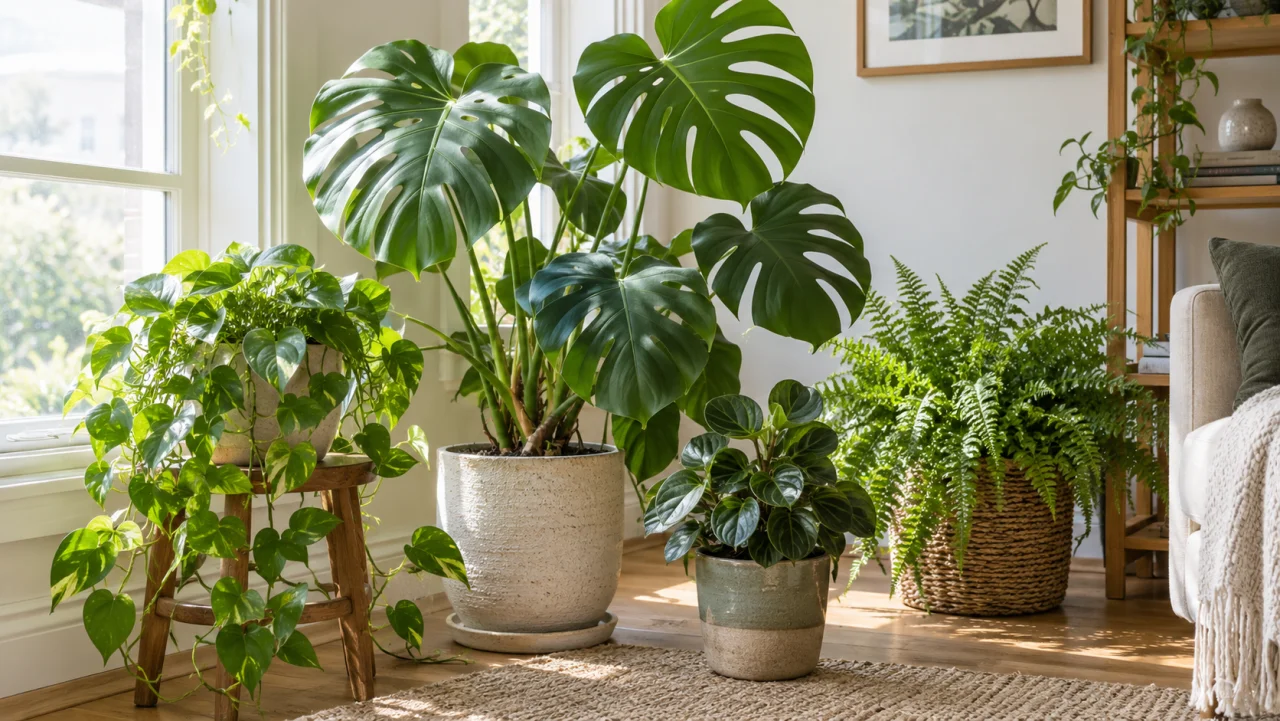
For most homes, the best tropical indoor plants are golden pothos, heartleaf philodendron, snake plant, and ZZ plant because they tolerate average indoor light and forgive an occasional missed watering. Monstera and bird of paradise fit brighter rooms, while calathea and alocasia suit owners who can provide steadier moisture and humidity.
The best tropical houseplant is the one that matches your room and routine before you buy it. Most tropical houseplants want warm rooms, indirect light, and soil that partly dries before the next watering. The plants that struggle indoors are usually matched to the wrong light or watered on a fixed calendar instead of checked first.
If you’re still narrowing down what works in your space, it also helps to compare them with our guides to easy houseplants for beginners, low light indoor plants, and cat-safe indoor plants.
For the measured habitat evidence behind familiar labels such as “tropical,” compare the warm-climate houseplant DNA collection with the seasonal-climate plant DNA collection. Each collection links to ten species profiles with percentile ranges, occurrence coverage, and confidence.
Tropical does not mean one climate
The word tropical hides meaningful differences. Here, an aroid climber, a subtropical bird of paradise, a wet-forest peace lily, and an upright elephant ear are compared from filtered occurrence records.
The ranges below are the middle 50% (p25–p75), not recommended indoor setpoints.
| Reference taxon | POWO native range | Annual mean temperature | Annual precipitation | Relative humidity | Solar radiation | Evidence |
|---|---|---|---|---|---|---|
| Monstera deliciosa (Monstera deliciosa) | southern Mexico to Guatemala | 18.6–22.8°C | 1308–2510 mm/yr | 62–67% | 17.8–19.9 MJ/m²/day | 154 climate points; high confidence |
| Strelitzia reginae (orange bird of paradise) | Cape Provinces to KwaZulu-Natal | 16.9–19.5°C | 643–961 mm/yr | 59–61% | 16.6–18.0 MJ/m²/day | 30 climate points / 79 usable records; medium confidence |
| Spathiphyllum wallisii (peace lily) | Colombia to Venezuela | 18.8–20.7°C | 2102–3281 mm/yr | 67–68% | 16.7–18.3 MJ/m²/day | 10 climate points; low confidence |
| Alocasia odora (upright elephant ear) | eastern India to southern Japan and Borneo | 21.3–23.2°C | 2501–3630 mm/yr | 63–65% | 14.7–16.3 MJ/m²/day | 30 climate points / 440 usable records; medium confidence |
What this changes in this guide: Treat this as evidence against a universal tropical-plant routine: growth form, pot, indoor light, and substrate still determine what the native climate signal means at home.
Sources and method: Monstera deliciosa in POWO and GBIF; Strelitzia reginae in POWO and GBIF; Spathiphyllum wallisii in POWO and GBIF; Alocasia odora in POWO and GBIF; CHELSA V2.1, 1981–2010. GBIF records are limited to POWO-native countries, then filtered for coordinates, establishment signal, licence, precision, and spatial duplication. No community or user-reported care data is used in this module.
What Most Tropical Plant Roundups Miss
Most tropical plant roundups list attractive options. The better question is which choice will still make sense in your actual room three months from now.
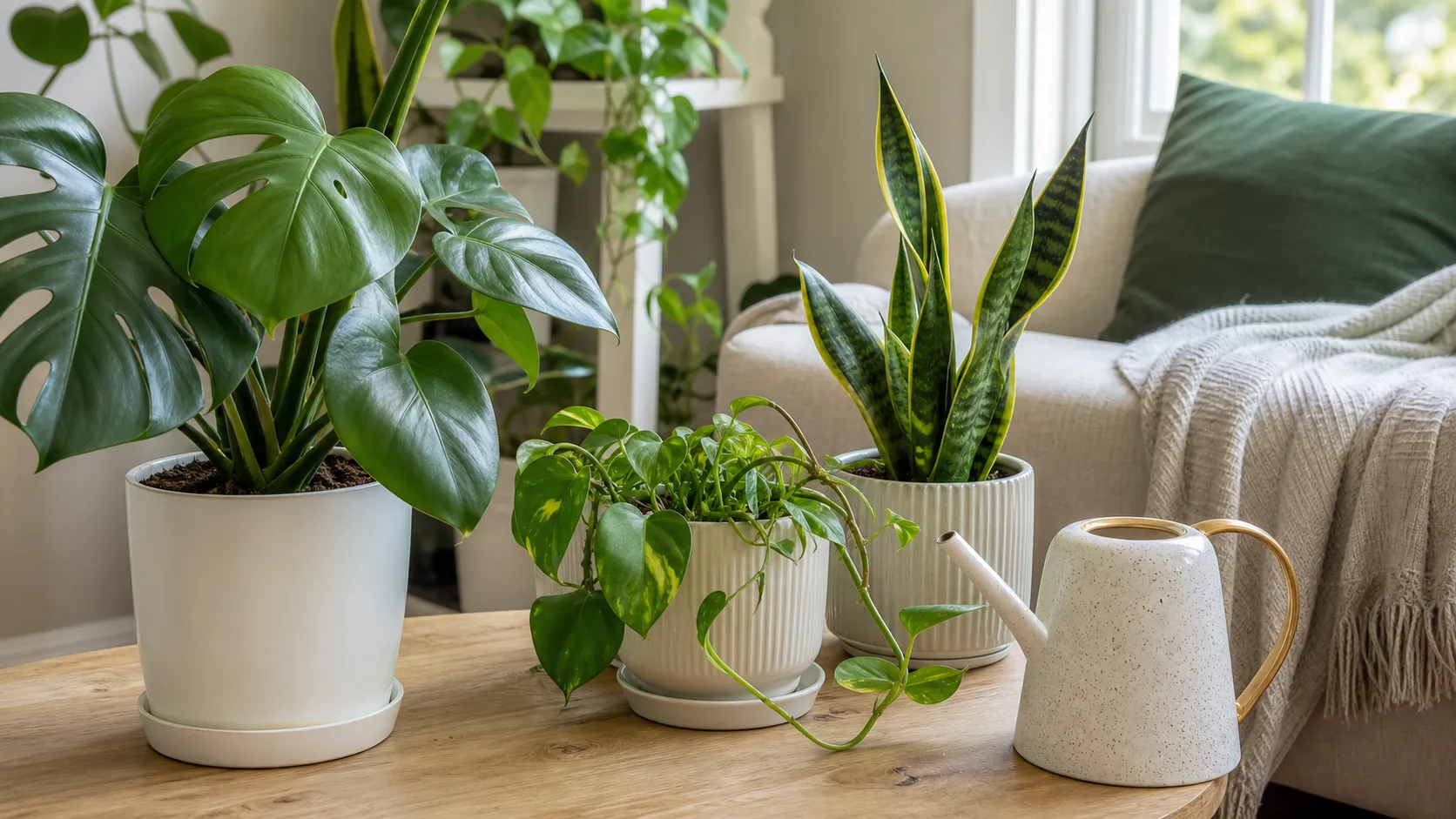
Monstera, golden pothos, and snake plant share a real living room, showing how light, space, and care rhythm shape a practical choice.
Use this filter before choosing:
- Light reality: what the plant receives on a normal cloudy day, not the brightest hour of the week.
- Care rhythm: whether you prefer weekly attention or a plant that can be ignored longer.
- Space: mature height, spread, trailing habit, and whether leaves will touch walls or pets.
- Failure signal: what the plant does first when the match is wrong: yellowing, stretching, crisping, or dropping leaves.
A good recommendation is not just beautiful. It fits the room, the owner, and the first problem you are likely to notice.
Best Tropical Indoor Plants by Light and Care Level
| Your light and routine | Best choices | Be careful with |
|---|---|---|
| Low light and you forget to water | Golden pothos, snake plant, ZZ plant | Calathea, alocasia |
| Bright window and space for a floor plant | Monstera, bird of paradise, bromeliad | Peace lily in harsh direct sun |
| You want pet-safer options | Calathea, bird’s nest fern, bromeliad | Pothos, monstera, peace lily, snake plant |
| You like watering once a week | Peace lily, calathea, bird’s nest fern | Snake plant, ZZ plant |
| You travel or want very low maintenance | Snake plant, ZZ plant, golden pothos | Calathea, anthurium |
If you are new to plants, start with pothos, snake plant, ZZ plant, or heartleaf philodendron. They forgive imperfect light and missed waterings better than the dramatic foliage plants.
Scoring Rubric
To keep this roundup useful instead of purely aesthetic, we scored each plant on the five indoor-buying criteria that matter most in real homes: light flexibility, watering forgiveness, humidity tolerance, pet safety, and beginner-friendliness. Scores run from 1 to 5, where 5 means easier for a typical home and 1 means the plant asks for tighter conditions or more careful monitoring.
| Plant | Light flexibility | Watering forgiveness | Humidity tolerance | Pet safety | Beginner-friendliness | Quick read |
|---|---|---|---|---|---|---|
| Golden pothos | 5 | 5 | 4 | 1 | 5 | Best easy trailing pick for inconsistent routines |
| Snake plant | 5 | 5 | 5 | 1 | 5 | Lowest-maintenance upright option |
| ZZ plant | 5 | 5 | 5 | 1 | 5 | Best for travel or forgetful watering |
| Heartleaf philodendron | 4 | 4 | 4 | 1 | 5 | Friendly starter vine for average homes |
| Monstera deliciosa | 4 | 3 | 3 | 1 | 4 | Best statement plant for bright rooms |
| Peace lily | 4 | 3 | 3 | 1 | 4 | Helpful droop signal, but still dislikes soggy soil |
| Bird’s nest fern | 3 | 3 | 3 | 5 | 3 | Strong pet-safer pick for humid rooms |
| Bromeliad | 3 | 3 | 3 | 5 | 3 | Best color-first plant for bright indirect light |
| Anthurium | 3 | 3 | 2 | 1 | 3 | Good for color, less forgiving on consistency |
| Bird of paradise | 2 | 3 | 3 | 1 | 3 | Best if you have a genuinely bright window |
| Alocasia | 2 | 2 | 2 | 1 | 2 | Dramatic, but quick to punish the wrong setup |
| Calathea | 2 | 2 | 1 | 5 | 2 | Beautiful pet-safer foliage, but fussy indoors |
Evaluation Method
This is an editorial evaluation method, not a lab test. We compared common indoor tropicals against the room-and-routine problems surfaced in the research for this page: dim apartments, overwatering in low light, curling leaves on humidity-sensitive plants, and pet-safety tradeoffs. According to University of Minnesota Extension, plants in lower light grow more slowly and use less water, which is why dim rooms magnify overwatering mistakes. MU Extension and Clemson Home & Garden Information Center both warn that soil kept too wet can lead to yellowing, wilt, and root rot. Pet-safety labels in this guide were checked against ASPCA Poison Control listings for plants such as golden pothos, calathea, and bromeliad.
- University of Minnesota Extension: https://extension.umn.edu/planting-and-growing-guides/lighting-indoor-plants
- MU Extension: https://extension.missouri.edu/publications/g6510
- Clemson Home & Garden Information Center: https://hgic.clemson.edu/factsheet/houseplant-diseases-disorders/
- ASPCA Poison Control: https://www.aspca.org/pet-care/aspca-poison-control
1. Monstera Deliciosa
Monstera is the tropical plant with big split leaves, and it is popular for a practical reason: it grows well in normal homes if it gets enough light. Put it near a bright window, but keep it out of harsh afternoon sun. If you want a full care routine, start with our Monstera deliciosa care guide.
Good fit if: You have a bright room and space for a climbing floor plant.
Water: Water when the top 2 to 3 inches of soil feel dry. Empty any water sitting in the saucer.
Watch for: Yellow leaves plus soggy soil usually mean overwatering. Small leaves with few splits usually mean it needs more light.
Light: Bright indirect | Pet-safe: No
2. Golden Pothos
If you want a plant that will survive almost anything, start here. Pothos trails beautifully from shelves, tolerates low light, and keeps going when you forget about it for a week or two. The golden-yellow variegation on the leaves brightens up darker corners in a way few plants can. Our golden pothos care guide goes deeper on watering, propagation, and troubleshooting.
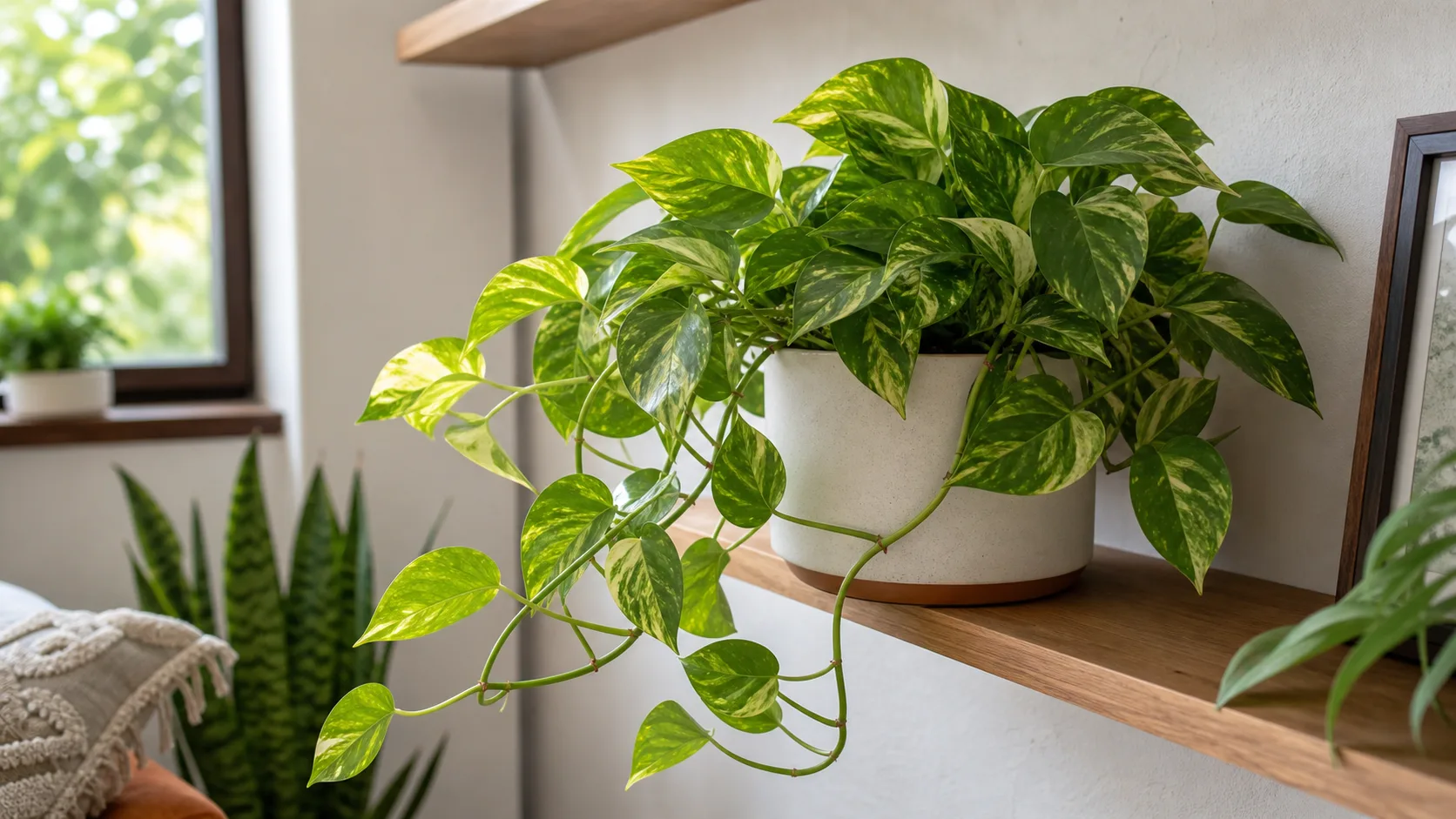
Golden pothos trails from a shelf near filtered daylight, pairing its forgiving habit with a realistic lower-light home placement.
Good fit if: You want a forgiving trailing plant for a shelf, desk, or hanging pot.
Water: Water when the top half of the potting mix feels dry. In many homes, that is roughly every 1 to 2 weeks.
Watch for: Limp vines and dry soil mean it needs water. Yellow leaves with wet soil mean you are watering too often.
Light: Low to bright indirect | Pet-safe: No
3. Peace Lily
Peace lily is one of the rare tropical houseplants that handles low light well, which makes it useful in north-facing rooms or office spaces. It tells you when it needs water by drooping, then usually perks back up after a good drink. The white flowers are a bonus, but the deep green leaves are the main reason to grow it. If low-light plants are your thing, pair this with our roundup of the best low light indoor plants.
Good fit if: You want a clear “water me” signal and do not have a very sunny window.
Water: Water when the top inch of soil feels dry or the leaves just begin to droop. Do not leave it sitting in water.
Watch for: Brown tips often point to dry air, fertilizer buildup, or inconsistent watering. Yellow lower leaves usually mean too much water.
Light: Low to medium indirect | Pet-safe: No
4. Heartleaf Philodendron
Heartleaf philodendron has soft, heart-shaped leaves on long trailing stems, and it grows quickly enough that you will notice changes from week to week. It handles lower light, average humidity, and normal indoor temperatures well. It is a good confidence-building plant before moving on to more demanding species. For the full breakdown, see our heartleaf philodendron care guide.
Good fit if: You want an easy trailing plant that grows faster than a ZZ plant or snake plant.
Water: Water when the top 1 to 2 inches of soil feel dry. It would rather be a little dry than constantly wet.
Watch for: Curling leaves usually mean thirst, cold drafts, or roots sitting too wet for too long.
Light: Low to bright indirect | Pet-safe: No
5. Bird of Paradise
Bird of paradise is a statement plant. Its broad, paddle-shaped leaves and upright form make a room feel bigger and greener, but it is not a low-light plant. It needs a very bright spot, ideally close to a sunny window, and it grows slowly indoors. We cover placement and watering in more detail in our bird of paradise plant care guide.
Good fit if: You have a bright window and want one large plant instead of several small ones.
Water: Water deeply when the top 2 to 3 inches of soil are dry. Use a pot with drainage.
Watch for: Split leaves can be normal. Brown edges often come from dry air, underwatering, or leaf damage from brushing past it.
Light: Bright indirect to some direct | Pet-safe: No
6. Snake Plant
Snake plant might be the most resilient tropical-looking plant you can own. It stores water in thick leaves, tolerates neglect, handles low light, and keeps its upright shape with very little help. If you travel often or forget to water, it is a reliable choice. If you’re deciding between easy-care options, compare this with our snake plant care guide and easy houseplants for beginners.
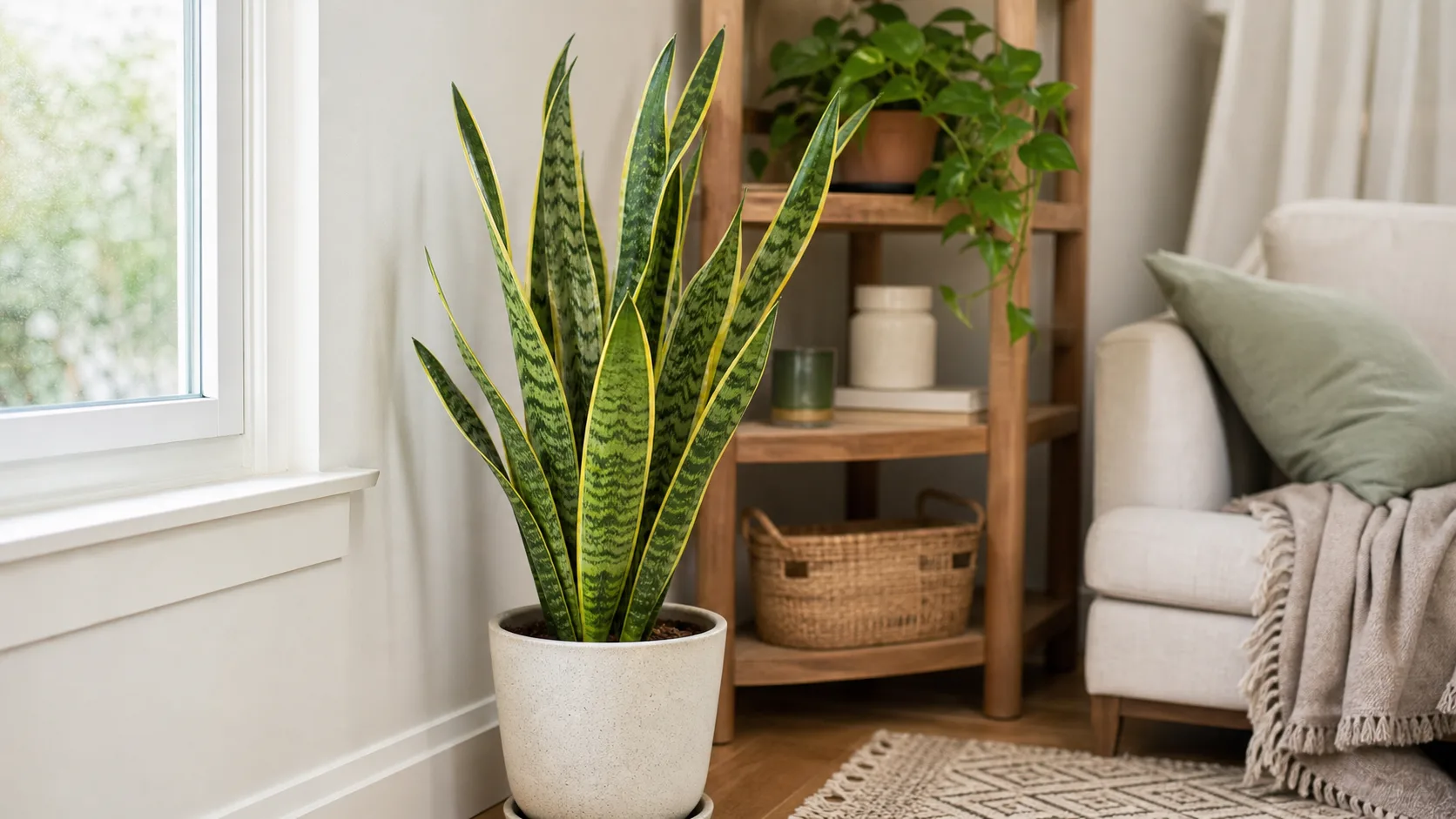
A snake plant stands in filtered side light with dry potting mix and a saucer, matching its wait-until-dry, low-maintenance routine.
Good fit if: You want the lowest-maintenance plant on this list.
Water: Wait until the soil is dry all the way down before watering. In many homes, that may be every 3 to 5 weeks.
Watch for: Mushy leaves or a bad smell from the soil are urgent signs of overwatering.
Light: Low to bright indirect | Pet-safe: No
Midway check before you buy: if your room is dim or your watering routine is inconsistent, choose pothos, snake plant, ZZ plant, or heartleaf philodendron before calathea, alocasia, or anthurium. You can save your shortlist and care notes in KnowYourPlant while you compare what actually fits your home.
7. Anthurium
The glossy red spathes of anthurium look almost artificial, which is part of their charm. It can bloom for months, rest, then bloom again if the light is strong enough. Anthuriums like bright indirect light, warmth, and slightly higher humidity than the average dry room.
Good fit if: You want color and can offer steady warmth and bright indirect light.
Water: Water when the top 1 to 2 inches of soil feel dry. Keep the mix lightly moist, not soggy.
Watch for: Brown leaf tips can come from dry air or fertilizer buildup. Yellow leaves with wet soil mean slow down on watering.
Light: Bright indirect | Pet-safe: No
8. Calathea
Calathea is for people who enjoy paying attention to plants. The patterned leaves fold upward at night and open again in the morning, and the markings can be striking. The tradeoff is that calatheas are less forgiving than pothos or philodendron. They dislike dry air, direct sun, and irregular watering. If you want the care details before buying one, read our calathea care guide.
Good fit if: You can check soil moisture often and keep it away from harsh sun.
Water: Keep the soil lightly and evenly moist. Water when the top inch starts to dry.
Watch for: Curling leaves usually mean it is too dry, too cold, getting direct sun, or sitting in very dry air.
Light: Low to medium indirect | Pet-safe: Yes
9. Bird’s Nest Fern
If you have a bathroom or kitchen with a window that does not get much direct sun, bird’s nest fern is one of the best choices available. The wide, rippled fronds grow outward from a central rosette and give a soft tropical look without needing bright light.
Good fit if: You have moderate light, higher humidity, and do not want a toxic plant.
Water: Keep the soil evenly moist, but avoid pouring water into the center crown.
Watch for: Crispy edges usually mean dry air or underwatering. A mushy center means water is sitting in the crown.
Light: Low to medium indirect | Pet-safe: Yes
10. Alocasia
Alocasia has some of the most dramatic foliage in the houseplant world: arrowhead leaves with raised veining that looks almost sculpted. It likes bright indirect light, good drainage, and warmth. It can also slow down or drop leaves in winter, which can look alarming the first time it happens. If you want the fuller watering and dormancy breakdown, our elephant ear plant care guide is the best next read.
Good fit if: You have bright light and do not mind a plant that changes with the season.
Water: Water when the top 1 to 2 inches of soil feel dry. Keep it drier when growth slows in winter.
Watch for: Yellow leaves can mean overwatering, low light, cold stress, or normal winter slowdown. Check soil first.
Light: Bright indirect | Pet-safe: No
11. ZZ Plant
ZZ plant stores water in thick underground rhizomes, which is why it handles drought and low light so well. Its deep green, waxy leaves stay glossy without special care. It is one of the slowest-growing plants on this list, but also one of the most forgiving. It also belongs on our list of easy houseplants for beginners.
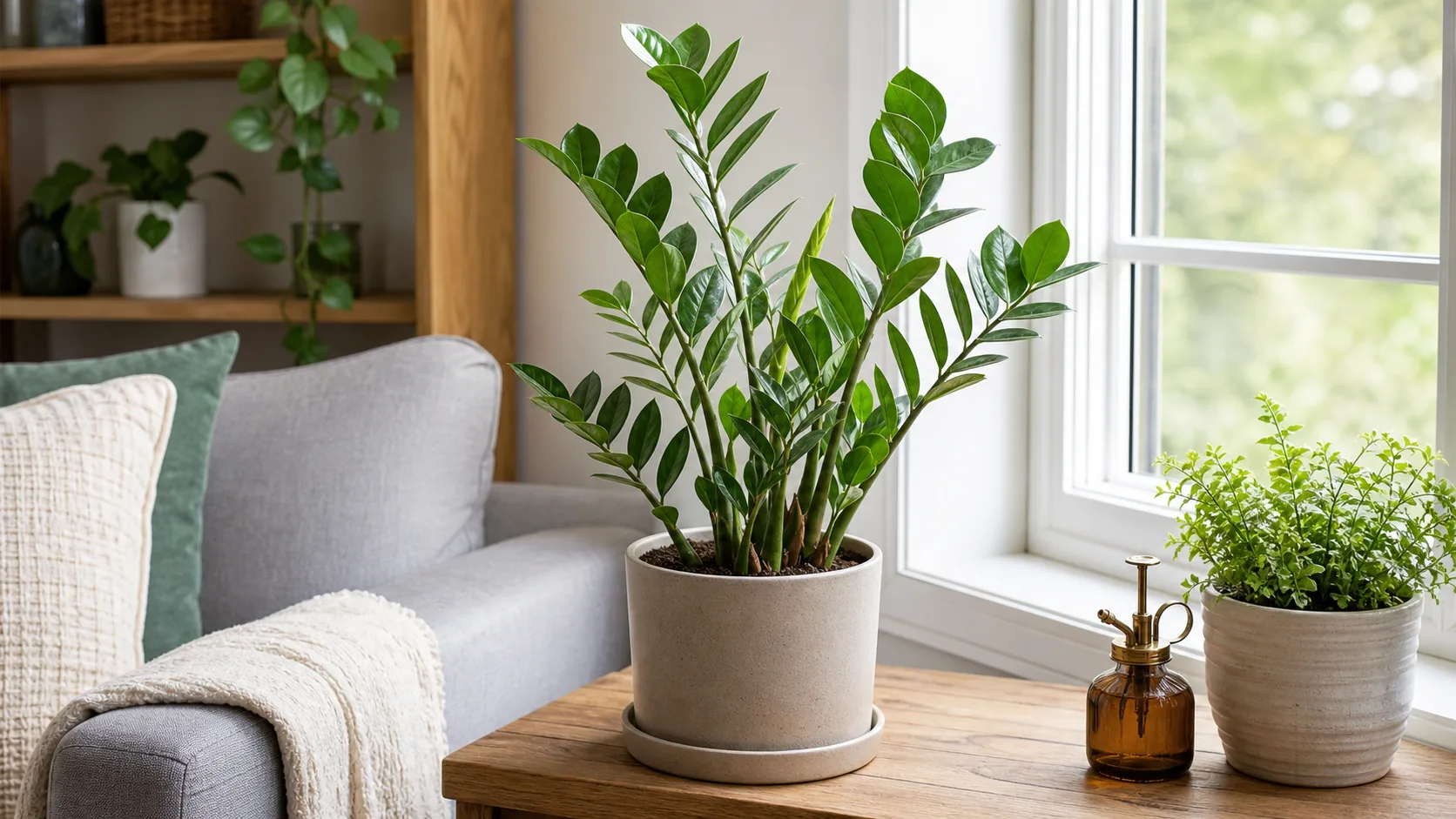
A glossy ZZ plant sits in dry mix and filtered light, with its saucer and restrained care setup reinforcing the wait-before-watering advice.
Good fit if: You want a sturdy plant for a room where watering is easy to forget.
Water: Let the soil dry out completely before watering again. When in doubt, wait a few more days.
Watch for: Yellowing stems and soft bases usually mean too much water. Wrinkled stems can mean it has stayed dry too long.
Light: Low to bright indirect | Pet-safe: No
12. Bromeliad
Bromeliads are a different kind of tropical plant. Many hold water in a central cup formed by their leaves, so they do not need to be watered like a typical pothos or monstera. They bloom once, the flower can last for months, and many produce offsets you can grow after the main plant fades.
Good fit if: You want color, bright indirect light, and a plant that is usually pet-safe.
Water: Keep a little fresh water in the central cup if your type has one, and keep the potting mix only lightly moist. Refresh the cup water often.
Watch for: Brown tips can mean dry air or old cup water. A rotting base means the potting mix is staying too wet.
Light: Bright indirect | Pet-safe: Yes
Best For / Not For
| Plant | Best for | Not for |
|---|---|---|
| Golden pothos | Renters, shelves, lower-light rooms, inconsistent watering | Homes with chewing cats or dogs |
| Snake plant | Travel-heavy routines, dim rooms, people who chronically overwater other plants | Pet households that need truly non-toxic picks |
| ZZ plant | Offices, guest rooms, forgetful owners | Anyone who wants fast visible growth |
| Monstera deliciosa | Bright rooms, people who want a dramatic floor plant | Dark corners or owners with very little floor space |
| Peace lily | Low-light homes that want a visible thirst signal | Pet households or owners who water on autopilot |
| Bird’s nest fern | Pet-safer homes with moderate humidity | People who pour water into the crown or let soil bone-dry |
| Bromeliad | Bright indirect light and color without a huge pot footprint | Anyone expecting repeat blooms from the same main rosette |
| Calathea | Pet-safer foliage lovers who will monitor moisture and humidity | Dry rooms, cold drafts, or people who travel often |
| Alocasia | Bright rooms and plant owners who can notice seasonal slowdown | Beginners who want a set-it-and-forget-it plant |
Pros and Cons by Plant Type
Pros and Cons
| Plant or group | Pros | Cons |
|---|---|---|
| Pothos, ZZ plant, snake plant | Forgiving, easy to place, tolerant of missed watering | Not pet-safe, easy to overestimate growth speed in very dim rooms |
| Monstera, bird of paradise | Big visual impact, strong fit for bright rooms | Need more space and better window placement |
| Peace lily, bird’s nest fern | Clear stress signals and better fit for moderate light | Can decline fast if roots stay wet or humidity drops too far |
| Calathea, alocasia, anthurium | High visual payoff, more distinctive foliage or blooms | Less forgiving, more likely to show curling, crisping, or stalled growth |
| Bromeliad | Pet-safer, colorful, compact | Care style is less intuitive if you are used to standard pot watering |
When Tropical Leaves Start Looking Wrong
Start with the soil before guessing. Push a finger into the potting mix, lift the pot to feel its weight, and check whether the plant recently moved closer to a heater, air conditioner, or sunny window.
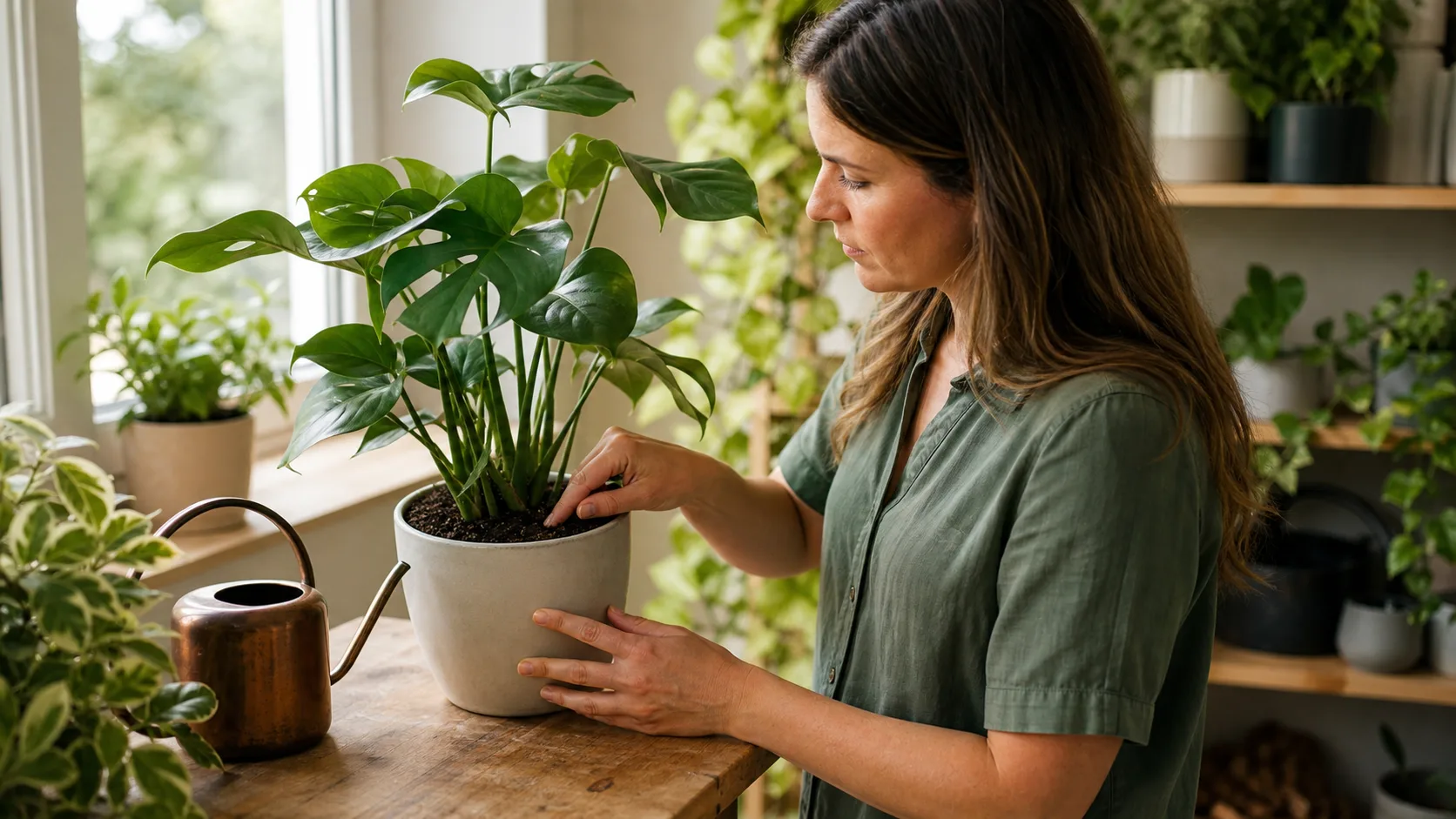
A soil check on a young monstera comes before the watering can, grounding leaf troubleshooting in moisture evidence instead of guesswork.
| Symptom | Most common causes | What to do today |
|---|---|---|
| Leaves curling | Dry soil, dry air, cold draft, direct sun | Check soil moisture. Water if dry, move away from drafts or harsh sun, and trim only fully dead leaves. |
| Yellow leaves | Overwatering, low light, natural old-leaf loss | If the soil is wet, wait longer before watering again. If the room is dim, move the plant closer to a window. |
| Brown tips | Dry air, inconsistent watering, fertilizer buildup, tap-water sensitivity | Trim brown tips if you want, water thoroughly next time, and flush the soil with plain water if you fertilize often. |
| Drooping | Thirst, soggy roots, sudden temperature change | Check the soil first. Dry soil needs water; wet soil needs time, drainage, and better airflow. |
| Sticky leaves or fine webbing | Pests such as scale, aphids, or spider mites | Isolate the plant, rinse leaves, and inspect the undersides before treating. |
A Simple Tropical Plant Care Routine
Today: Choose the right spot. Low-light plants can sit several feet from a window, but monstera, anthurium, bird of paradise, alocasia, and bromeliad need brighter indirect light. Check that every pot has drainage.
This week: Check soil before watering. For most tropical plants, water only when the top 1 to 3 inches are dry. For snake plant and ZZ plant, wait until the soil is dry all the way down. For calathea and bird’s nest fern, keep the soil more evenly moist.
This season: Rotate plants every few weeks, wipe dusty leaves, and feed lightly during active growth. In fall and winter, expect slower growth and water less often because soil stays wet longer.
A Few Things to Keep in Mind
Most tropical houseplants share a few common needs: they do not like cold drafts, they appreciate steadier humidity than a typical dry room provides in winter, and they are generally more likely to be harmed by too much water than too little. If a plant on this list is struggling, the watering routine is usually the first thing worth checking.
Start with one or two plants that match your light conditions and your honest routine. If you also want pet-friendly options, our cat-safe indoor plants guide is a useful next stop.
Source Note and Seasonal Note
According to University of Minnesota Extension, low-light houseplants slow down and use less water, so the same watering routine that works in summer can become risky in a dim winter room. MU Extension and Clemson both treat persistently wet soil as a root-health warning sign, not a sign to add more water. For pet households, double-check toxicity before you buy, because pothos, monstera, peace lily, and snake plant remain common indoor picks but are not pet-safe, while calathea, bird’s nest fern, and bromeliad are easier to place around curious animals.
Editorial update: 2026-09-09. The title, description, and answer-first opening were aligned with current search language. The horticultural source set was last reviewed on 2026-06-13.
Reviewed by KnowYourPlant Editorial Team
Byline: KnowYourPlant Team
Reviewed by: KnowYourPlant editorial team
This roundup is designed to help readers choose among common indoor tropical plants before purchase, then troubleshoot the first failure signals without guessing.
Frequently Asked Questions
What is the easiest tropical plant to grow indoors?
Golden pothos, snake plant, and heartleaf philodendron are usually the easiest tropical plants for beginners because they tolerate missed waterings, average humidity, and imperfect light better than most lush foliage plants.
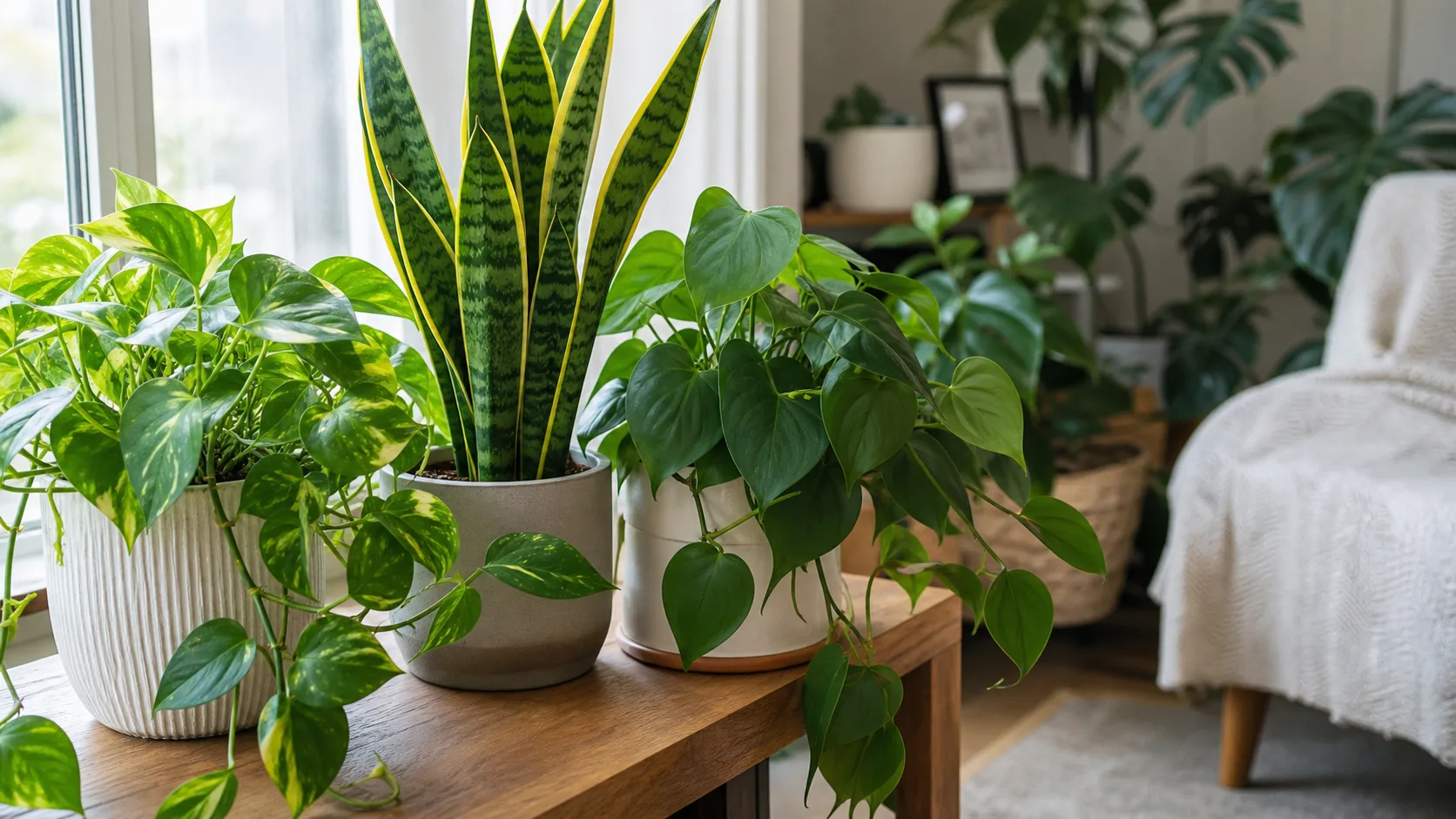
Golden pothos, snake plant, and heartleaf philodendron share filtered window light, illustrating the FAQ’s most forgiving beginner choices.
Do tropical plants need direct sunlight indoors?
Most tropical houseplants prefer bright indirect light, not harsh direct sun. A few, such as bird of paradise, can handle some direct light, while low-light plants like peace lily and ZZ plant manage farther from a window.
How often should you water tropical indoor plants?
Water tropical indoor plants when the soil has dried to the level that plant prefers, not on the same day every week. Calatheas and bird’s nest ferns like more even moisture. Pothos, philodendron, monstera, peace lily, and anthurium usually need the top 1 to 3 inches to dry. Snake plant and ZZ plant should dry much more between waterings.
What are the signs I am overwatering a tropical plant?
The clearest signs are yellowing leaves, soil that stays wet for many days, fungus gnats, soft stems, mushy leaf bases, or a sour smell from the pot. Stop watering, make sure the pot drains, move the plant into brighter indirect light if possible, and let the soil dry before the next drink.
Are tropical plants safe for pets?
Some tropical plants are pet-safe, including many ferns and calatheas, but many popular choices such as pothos, monstera, peace lily, and snake plant are toxic if chewed. Always check the species before placing it near cats or dogs.