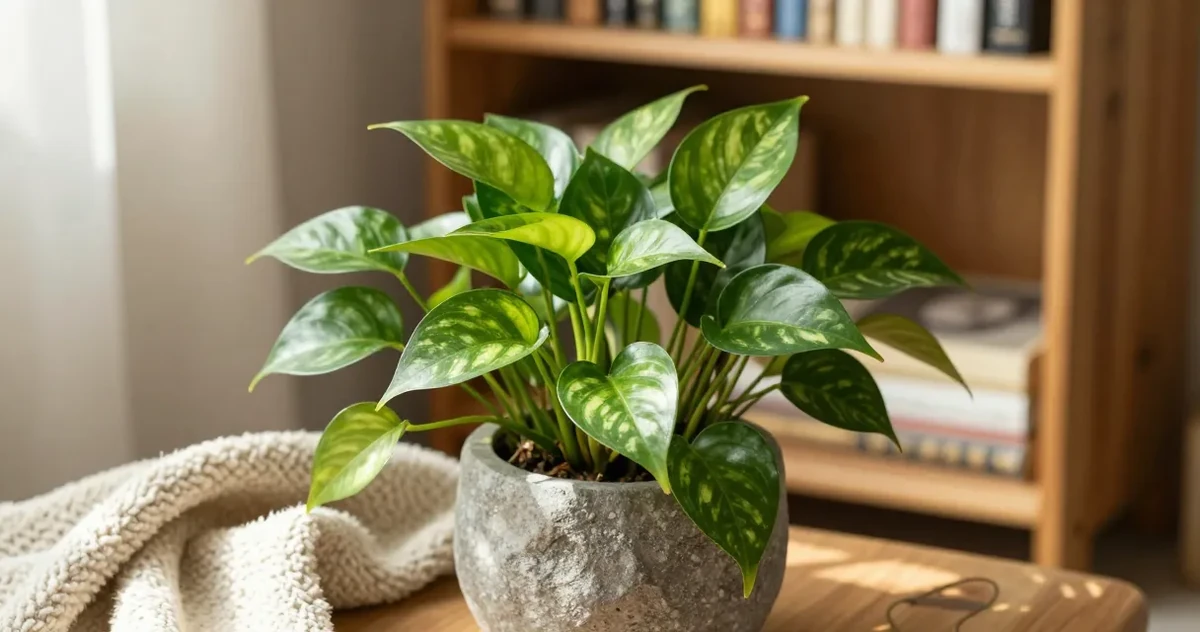
Golden pothos is a good first houseplant if you want clear rules instead of a fussy routine: give it bright indirect light, water only after the top few centimetres of soil dry out, and keep it away from pets that chew leaves. If the leaves start curling, yellowing, or getting brown tips, the fix usually starts with one simple check: is the soil dry, damp, or soggy?
Golden pothos (Epipremnum aureum) is the heart-shaped trailing plant with green leaves splashed in yellow-gold. It is native to the Solomon Islands and grows as a tropical vine. According to the University of Florida IFAS Extension, golden pothos can reach lengths of 40 feet in its native tropical habitat, which explains why indoor plants can eventually trail down shelves, bookcases, and hanging baskets when the routine is right.
If you are new to houseplants, use this guide as a practical checklist: where to put it, how often to water, what the warning signs mean, and what to do today before you change anything else.
Climate DNA for golden pothos
Golden pothos is mapped to the accepted species Epipremnum aureum. POWO limits its native range to Mo’orea, so the usable native-record sample is small and is labelled accordingly.
The ranges below are the middle 50% (p25–p75), not recommended indoor setpoints.
| Reference taxon | POWO native range | Annual mean temperature | Annual precipitation | Relative humidity | Solar radiation | Evidence |
|---|---|---|---|---|---|---|
| Epipremnum aureum (golden pothos) | Mo’orea in the Society Islands | 25.7–25.9°C | 2451–2644 mm/yr | 63–64% | 20.0–20.1 MJ/m²/day | 6 climate points; low confidence |
What this changes in this guide: Read the ranges as a narrow ecological reference, not a precise care target. The small sample is a reason to rely more heavily on direct soil, root, and leaf observations.
Sources and method: Epipremnum aureum in POWO and GBIF; CHELSA V2.1, 1981–2010. GBIF records are limited to POWO-native countries, then filtered for coordinates, establishment signal, licence, precision, and spatial duplication. No community or user-reported care data is used in this module.
What Most Care Guides Miss
Most guides about golden pothos describe the ideal care routine. Real homes are messier: light changes by season, pots dry at different speeds, and the same symptom can mean different things depending on where it appears.
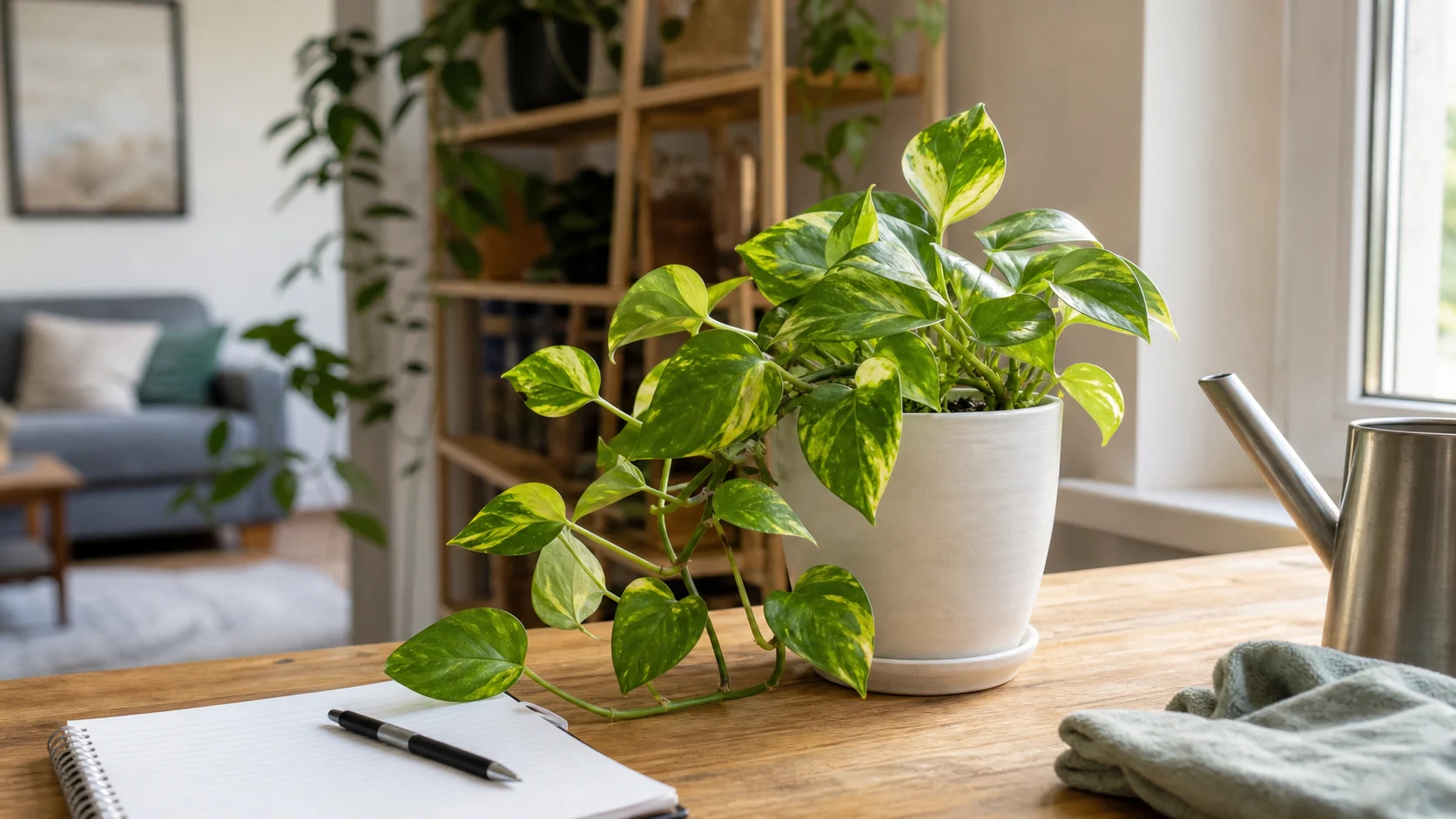
Check the plant’s light, pot, and recent care context before changing its routine.
Before changing care, check the plant in this order:
- Light: is the plant growing toward the window, fading, or scorching?
- Root zone: is the pot drying predictably, or staying wet in the middle?
- Leaf pattern: did the oldest leaves, newest leaves, tips, or stems change first?
- Recent change: new pot, new location, fertilizer, cold draft, heat vent, or pest exposure.
This keeps you from fixing the wrong problem. One clear adjustment is usually safer than a full care reset.
Quick Care Answer
Water: In many homes, golden pothos needs water about every 7 to 10 days in warm, bright conditions and every 10 to 14 days in cooler or darker rooms. Do not water just because a week passed. Water when the top 4 to 5 centimetres of soil feel dry, then soak the soil until water drains from the bottom.
Light: It is a good fit for bright indirect light, medium light, and some low-light rooms. Low light keeps it alive, but growth slows and the gold variegation fades. Harsh afternoon sun can burn the leaves.
Routine fit: Buy golden pothos if you can check the soil once a week and empty the saucer after watering. Skip it, or hang it well out of reach, if your cat or dog chews houseplants.
Warning signs: Yellow lower leaves usually mean too much water. Curled or limp leaves with dry soil usually mean the plant is thirsty. Brown tips often point to inconsistent watering, mineral-heavy tap water, or dry air.
Identification Snapshot
| Detail | What to check |
|---|---|
| Botanical name | Epipremnum aureum, commonly sold as golden pothos or devil’s ivy |
| Leaf cue | Heart-shaped leaves with yellow-gold marbling on trailing vines |
| Best light | Bright indirect light for fuller growth and stronger variegation |
| Water rhythm | Check the root zone and water only after the top few centimetres dry |
| Propagation | Stem cuttings root easily in water or moist mix |
| Pet safety | Toxic to cats and dogs if chewed or swallowed |
Lookalikes and Common Confusions
| Plant | How to tell it apart | Why the mix-up matters |
|---|---|---|
| Golden pothos | Thicker leaves with yellow variegation and grooved stems | This guide fits here |
| Heartleaf philodendron | Thinner plain-green leaves with a softer, more matte look | Similar care, but people often borrow the wrong light or watering expectations |
| Satin pothos | Silver-splashed leaves and a slower, less vine-heavy habit | Despite the nickname, it is not the same plant and symptom cues can feel different |
Care Cards
| Care card | Fast answer |
|---|---|
| Light | Bright indirect light keeps the gold variegation stronger; low light is survivable but slower |
| Water | Check deeper than the dry surface crust before watering; soggy roots cause more trouble than brief dryness |
| Soil | Use an airy, well-draining potting mix and a pot with drainage |
| Season | Expect faster drying in spring and summer and slower drying in winter |
| First symptom check | Match soil moisture, leaf position, and recent changes before making a big care reset |
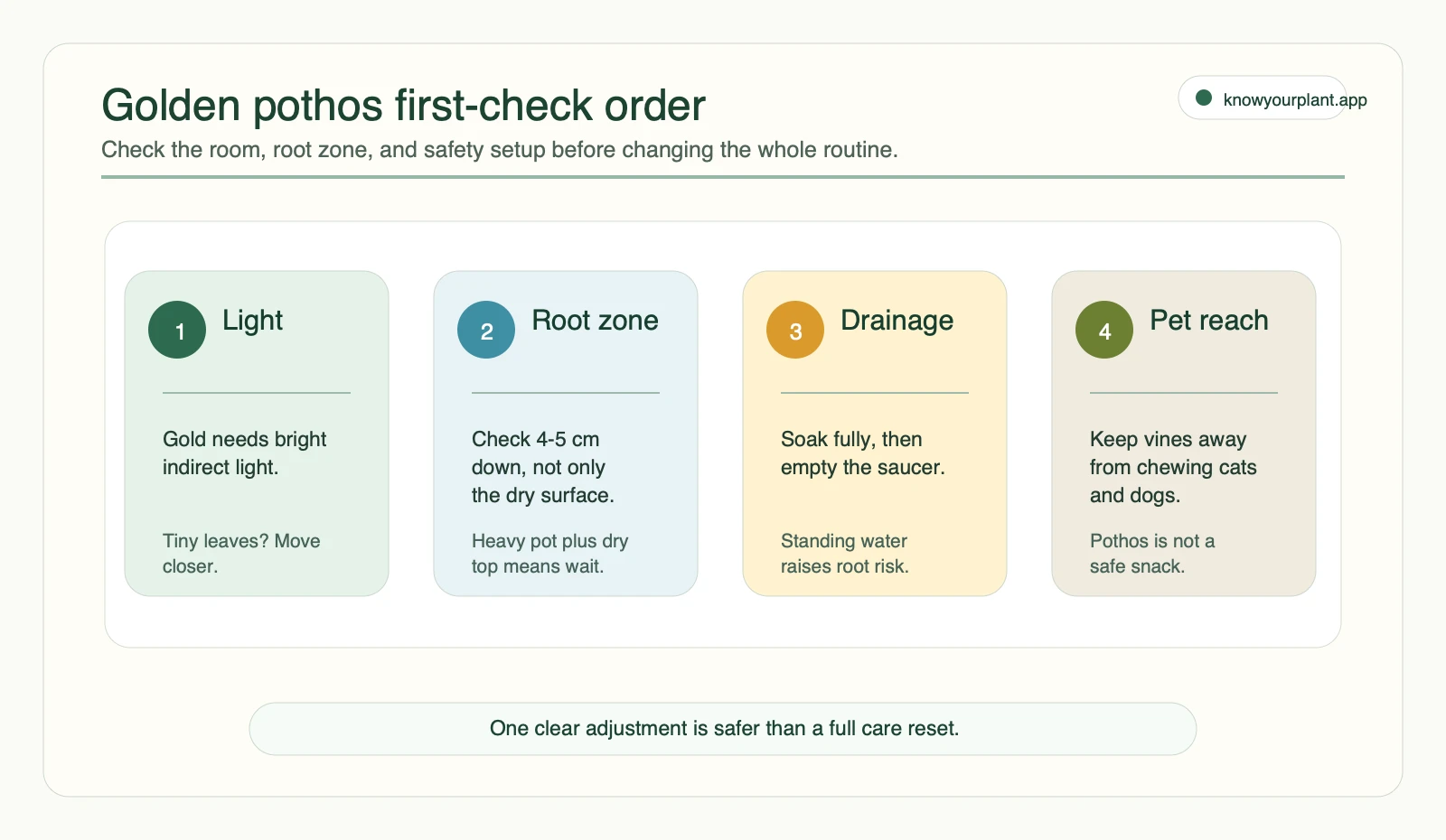
Before changing the whole routine, check light, root-zone moisture, drainage, and pet reach in that order.
Where Golden Pothos Feels at Home
Pothos is adaptable, but the spot you choose changes how full, golden, and fast-growing it looks.
Light
Golden pothos survives in low light better than many houseplants, but surviving and thriving are different things. In a darker corner, the golden variegation fades and the leaves come in noticeably smaller. In brighter indirect light, a few feet back from a window or near a north-facing window, the golden streaks deepen and growth picks up considerably.
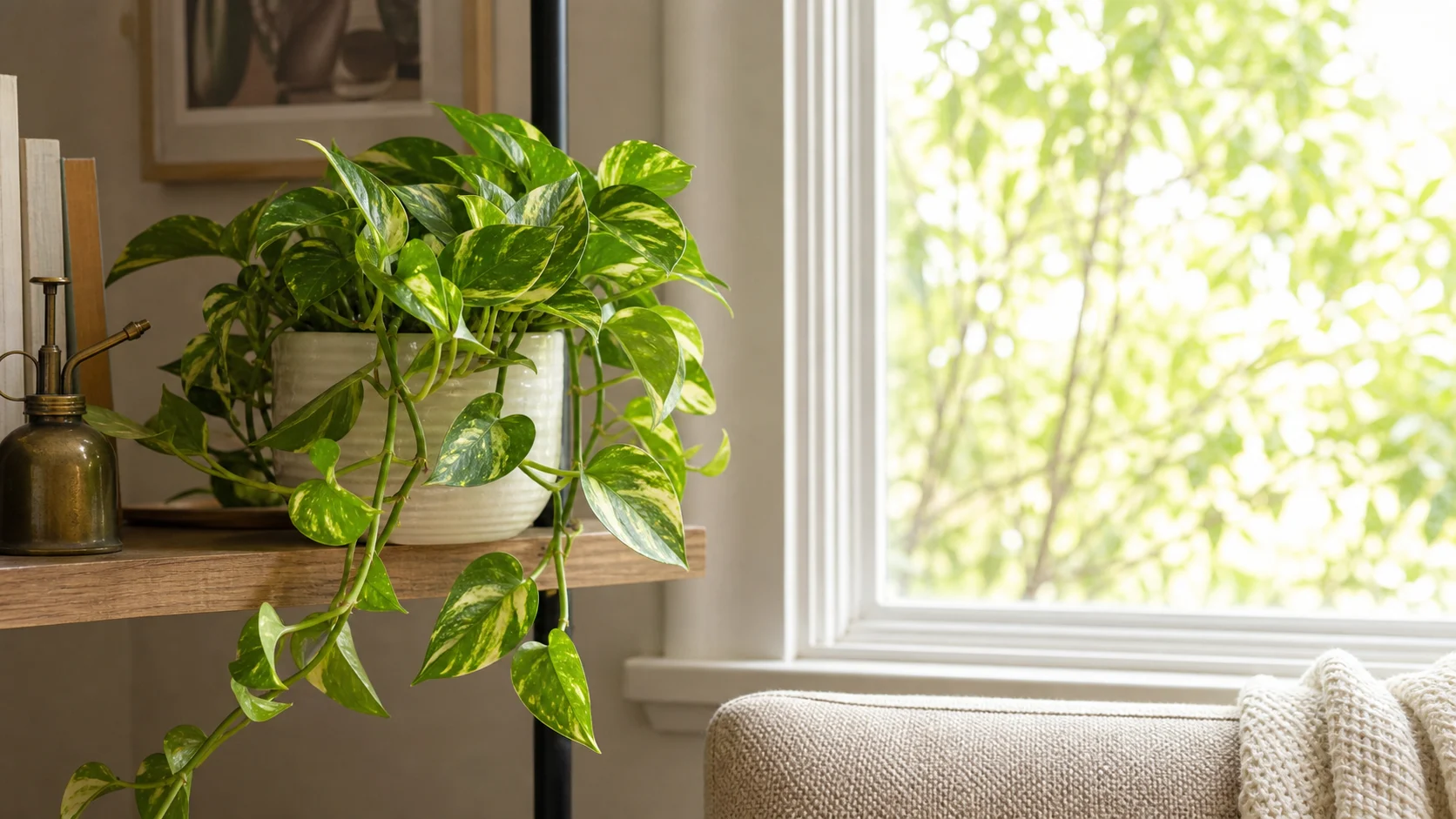
Bright indirect light helps golden pothos produce fuller growth and stronger gold variegation.
Darryl Cheng, plant expert and author of The New Plant Parent, makes the point well: variegation in pothos isn’t a fixed trait. It’s the plant expressing what the available light allows. Give it more light and it will show you more gold. Pull it into a dark corner and it will gradually go green.
Direct sunlight is the one thing to avoid. A couple of hours of gentle morning sun is fine, but harsh afternoon rays can scorch those leaves quickly. If you’re working with a very dark room, a grow light bridges the gap effectively. See our guide to grow lights for indoor plants for what actually works without overcomplicating it.
Temperature
Golden pothos prefers the same temperatures most of us keep our homes: between 18 and 27 degrees Celsius. It dislikes cold drafts and air conditioning blowing directly on the leaves, so keep that in mind when choosing a spot.
Humidity
It is not fussy about humidity. Average indoor air is fine. A little extra moisture helps the leaves look glossier, but you do not need a humidifier to keep golden pothos alive.
Watering Decision Tree
- If the top looks dry but the pot still feels heavy, wait and check deeper. Golden pothos often dries at the surface before the root zone is ready.
- If the soil is dry several centimetres down and the leaves are curling or limp, water thoroughly and let the excess drain.
- If multiple leaves are yellow while the soil is still wet, stop watering, empty the saucer, and let the root zone dry before doing anything else.
- If only one older leaf is yellow and the rest of the vine looks healthy, treat it as normal turnover first, not an emergency.
- If brown tips keep returning, check for erratic watering, low humidity, or mineral-heavy tap water before adding fertilizer.
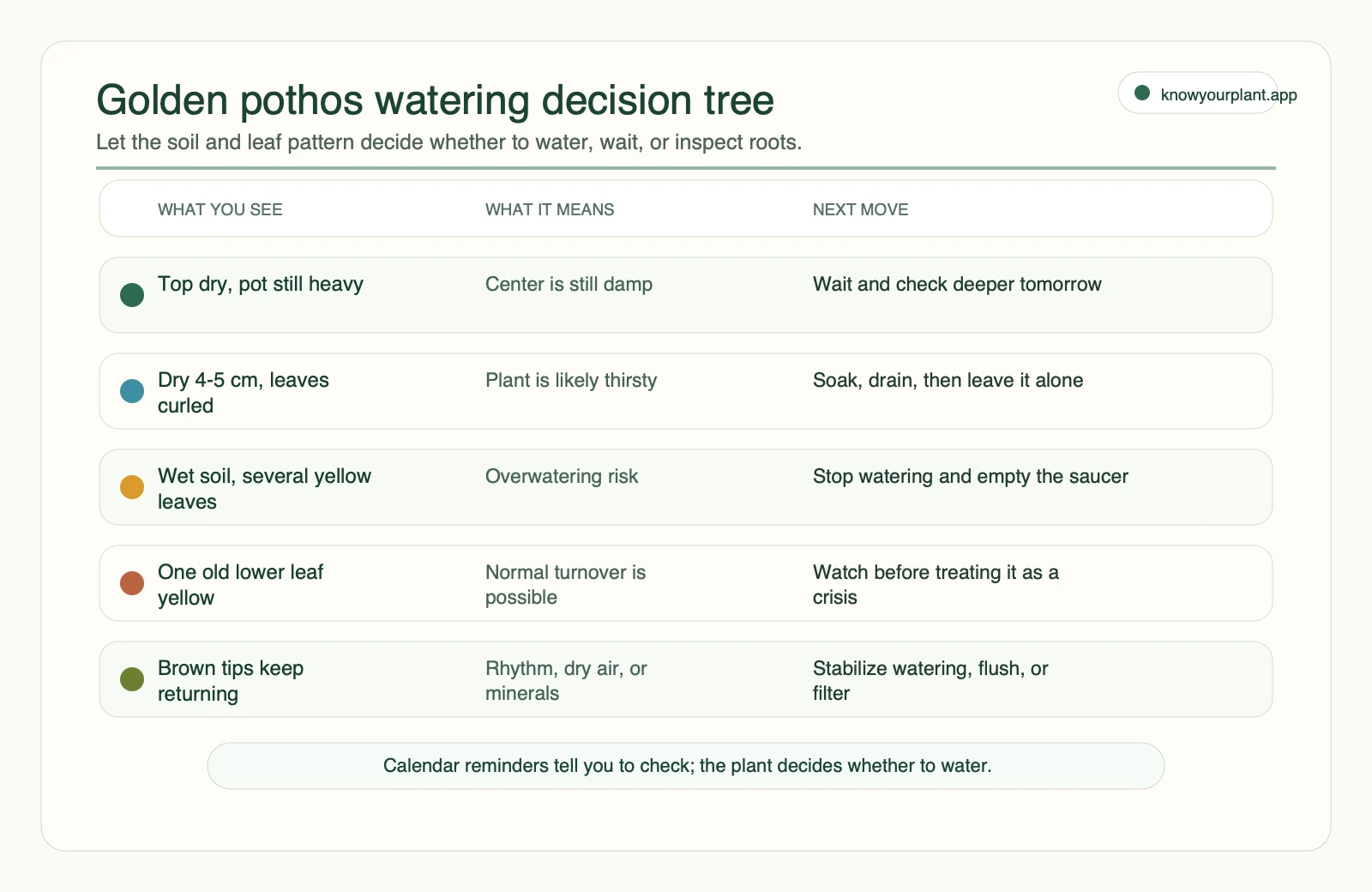
Use the leaf pattern and pot weight together: the same dry surface can mean wait, water, or inspect roots.
Watering Golden Pothos
This is where most people go wrong, and it almost always goes wrong in the same direction: too much.
Pothos likes to dry out a bit between waterings. Press your finger into the soil to the first or second knuckle. If it still feels damp, wait. If it feels dry at that depth, water thoroughly until it drains out the bottom, then leave the plant alone until the soil dries again.
Use the calendar only as a reminder to check, not as an instruction to pour. In a bright, warm room, checking every 7 days is reasonable. In a cooler or darker room, checking every 10 to 14 days may be enough.
Overwatering signs are yellowing lower leaves, soft limp stems while the soil is still wet, a musty smell from the pot, or soil that stays damp for most of the week. Underwatering signs are curled leaves, drooping with dry soil, and crispy edges. Both are easier to reverse when you catch them early.
When those signals overlap, the pothos leaves turning yellow guide gives you a pattern-first decision tree and shows when a root check is warranted.
One thing pothos doesn’t tolerate: sitting in water. If there’s water pooling in the saucer, empty it. Roots that stay wet for too long begin to rot, and root rot is considerably harder to fix than a few yellow leaves.
Soil and Potting
A well-draining general-purpose potting mix works well. Adding a handful of perlite improves drainage if your mix tends to stay wet for a long time. The goal is soil that holds some moisture but doesn’t stay soggy.
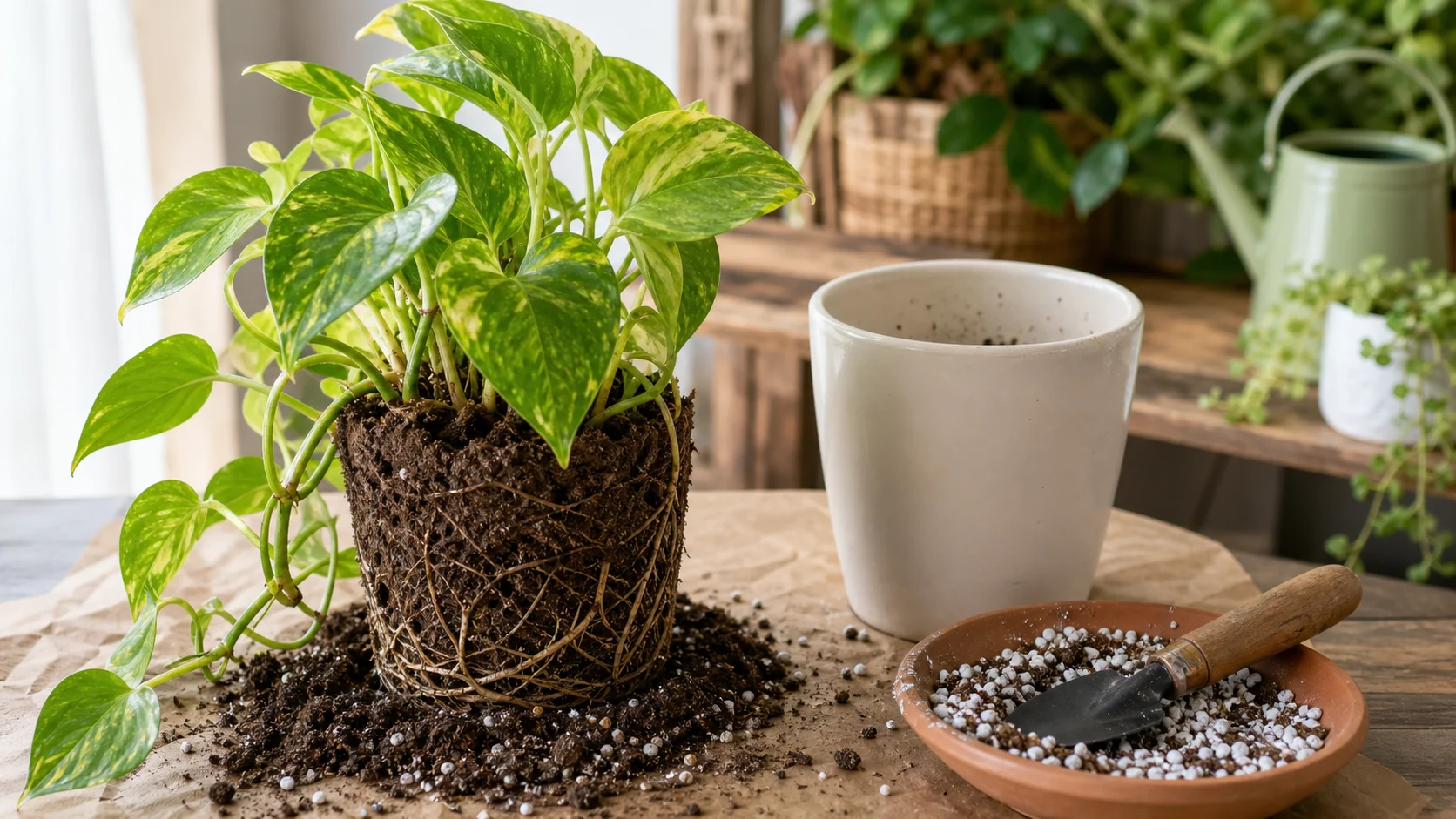
A perlite-amended mix and a modestly larger pot support drainage without leaving roots soggy.
Pothos is a fast grower and will need repotting every year or two. The signs are easy to spot: roots creeping out of the drainage holes, or the pot drying out much faster than usual because the roots have taken over the space. When that happens, move up one pot size at a time.
Feeding Golden Pothos
Golden pothos does not need heavy feeding. During the growing season, spring through summer, a balanced liquid fertilizer once a month is plenty for most indoor plants. If yours is growing quickly in strong indirect light, twice a month is still enough. In autumn and winter, skip it entirely. The plant is resting, and feeding a resting plant doesn’t do anything useful.
For more on how and when to fertilize houseplants, including what the different numbers on fertilizer labels actually mean, see our complete guide to fertilizing indoor plants.
Your Simple Care Plan
Today: Check the soil before watering. Empty any water sitting in the saucer. Move the plant a little closer to a window if the newest leaves are smaller or greener than the older leaves.
This week: Watch the newest leaf and the lowest leaves. New growth tells you whether the light is right. Lower yellow leaves tell you to check for soggy soil before adding more water.
This season: Feed monthly in spring and summer, skip fertilizer in autumn and winter, and repot only when roots are coming out of the drainage holes or the pot dries out much faster than it used to.
Seasonal Care Calendar
Golden pothos doesn’t ask you to dramatically change your routine with the seasons, but a few adjustments make a real difference in how it looks year-round.
Spring This is when growth picks up noticeably. Increase watering frequency as the soil starts drying out faster, and introduce a balanced liquid fertilizer once a month. If the plant has been sitting in the same pot for a year or more and roots are creeping out of the drainage holes, spring is the best time to repot.
Summer Peak growing season. It may need watering more frequently in warm conditions, sometimes every five to seven days. Continue fertilizing once or twice a month. Watch for spider mites in hot, dry weather. If the plant is near a window with strong afternoon sun, consider moving it back slightly to avoid scorched leaves.
Autumn Growth begins to slow as light levels drop and days shorten. Start tapering off fertilizer, with the last feed in early autumn. Reduce watering slightly as the plant’s demand drops. If any pothos have been spending time outdoors, bring them in before temperatures drop below 10 degrees Celsius.
Winter No fertilizing. Water only when the soil is dry well past the first knuckle. Keep it away from cold windowpanes and heating vents, both of which can cause leaf damage. It will look like it is doing less, and it is. That’s fine. Let it rest and growth will pick up again in spring.
Golden Pothos Propagation
This is one of the most satisfying things you can do with pothos, and cuttings make good gifts.
Water Propagation
- Cut a healthy stem just below a node, the small brown bump where a root will emerge. Your cutting needs at least one or two leaves.
- Remove any leaves that would sit below the waterline.
- Place the cutting in a glass of water in a bright spot, out of direct sun.
- Roots typically appear within two to three weeks. Once they’re a few centimetres long, pot the cutting up in soil.
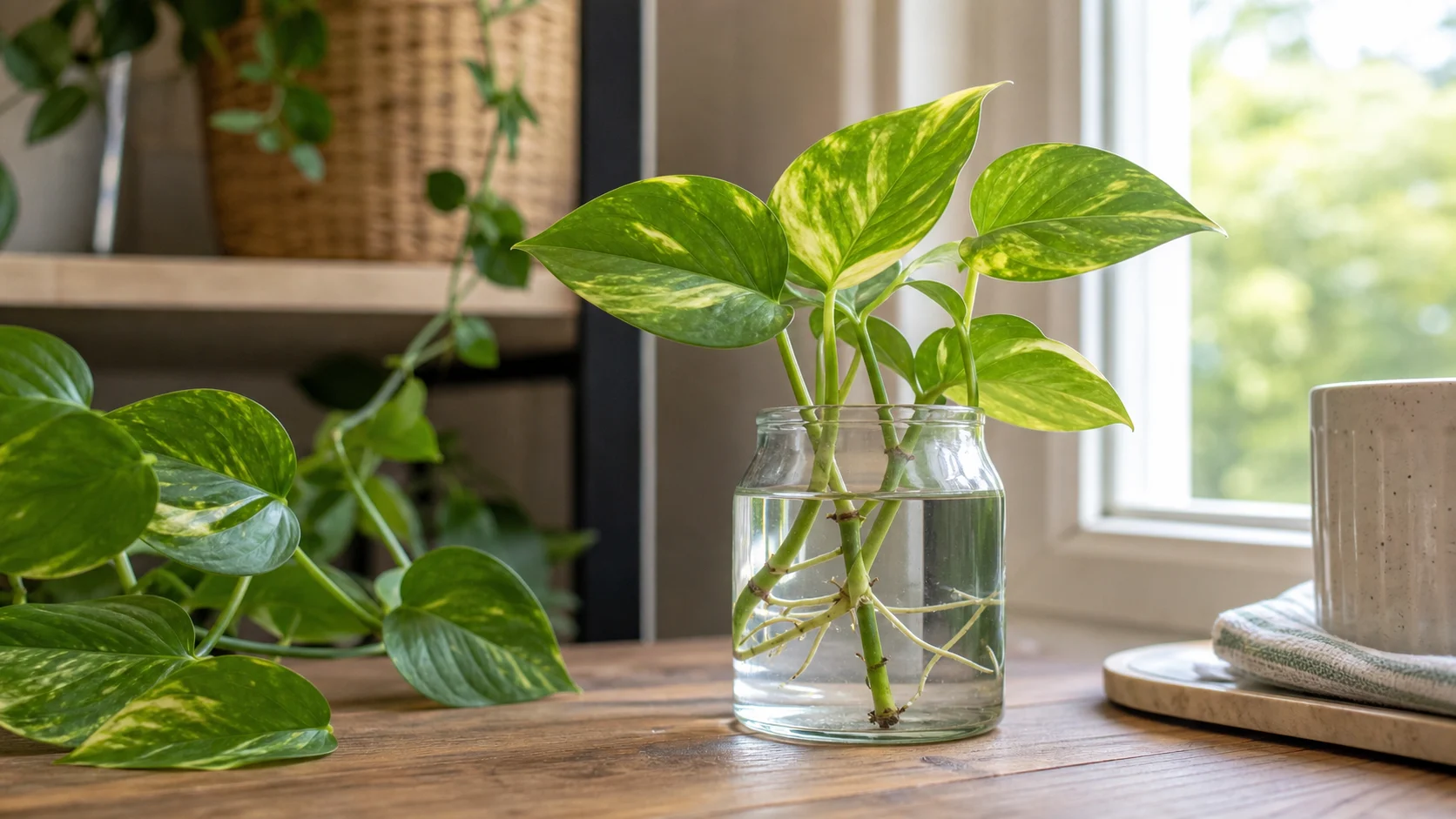
Keep pothos nodes submerged and leaves above the waterline while roots develop in bright indirect light.
Soil Propagation
You can also place cuttings directly into moist potting mix. Keep the soil consistently moist (not wet) for the first few weeks while roots establish, then switch to your normal watering routine. It’s less visually satisfying than watching roots grow in water, but it tends to produce stronger root systems from the start.
Either method works reliably, which is part of what makes pothos such a satisfying plant to share. If you enjoy easy-care trailing plants, heartleaf philodendron propagates the same way and has a similar easygoing personality.
Reading Your Pothos: A Quick Leaf Check
Most pothos problems announce themselves clearly if you know what to look for. Work through these steps before reaching for any product or making a big change.
Step 1: Check the soil. Press a finger in to the first or second knuckle. Soggy or compacted? Overwatering or poor drainage is likely behind whatever you’re seeing.
Step 2: Match the symptom to the soil. Curling plus dry soil means water thoroughly. Yellowing plus wet soil means stop watering and let the pot dry. Brown tips with otherwise firm green leaves usually point to inconsistent watering, dry air, or mineral buildup rather than a dying plant.
Step 3: Check the light. Are new leaves coming in small and noticeably greener than older growth? That’s a light issue. Move the plant closer to a natural light source and watch whether new growth improves over the following few weeks.
Step 4: Check the roots. If the plant is wilting despite consistently moist soil, lift it out and look at the roots. Healthy roots are white or light tan. Brown, mushy roots indicate rot, which requires removing the affected roots and repotting into fresh, dry soil.
Step 5: Check for pests. Run your fingers along the undersides of leaves. Spider mites leave fine webbing. Mealybugs look like small tufts of white cotton near leaf nodes. Both are treatable early, before they spread. Our guide to using neem oil on houseplants covers how to apply it without stressing the plant.
Step 6: Check the water source. If only the tips are browning but the rest of each leaf looks healthy, fluoride or mineral buildup from tap water is often the cause. Switching to filtered or rainwater and flushing the soil occasionally usually clears it up within a few weeks.
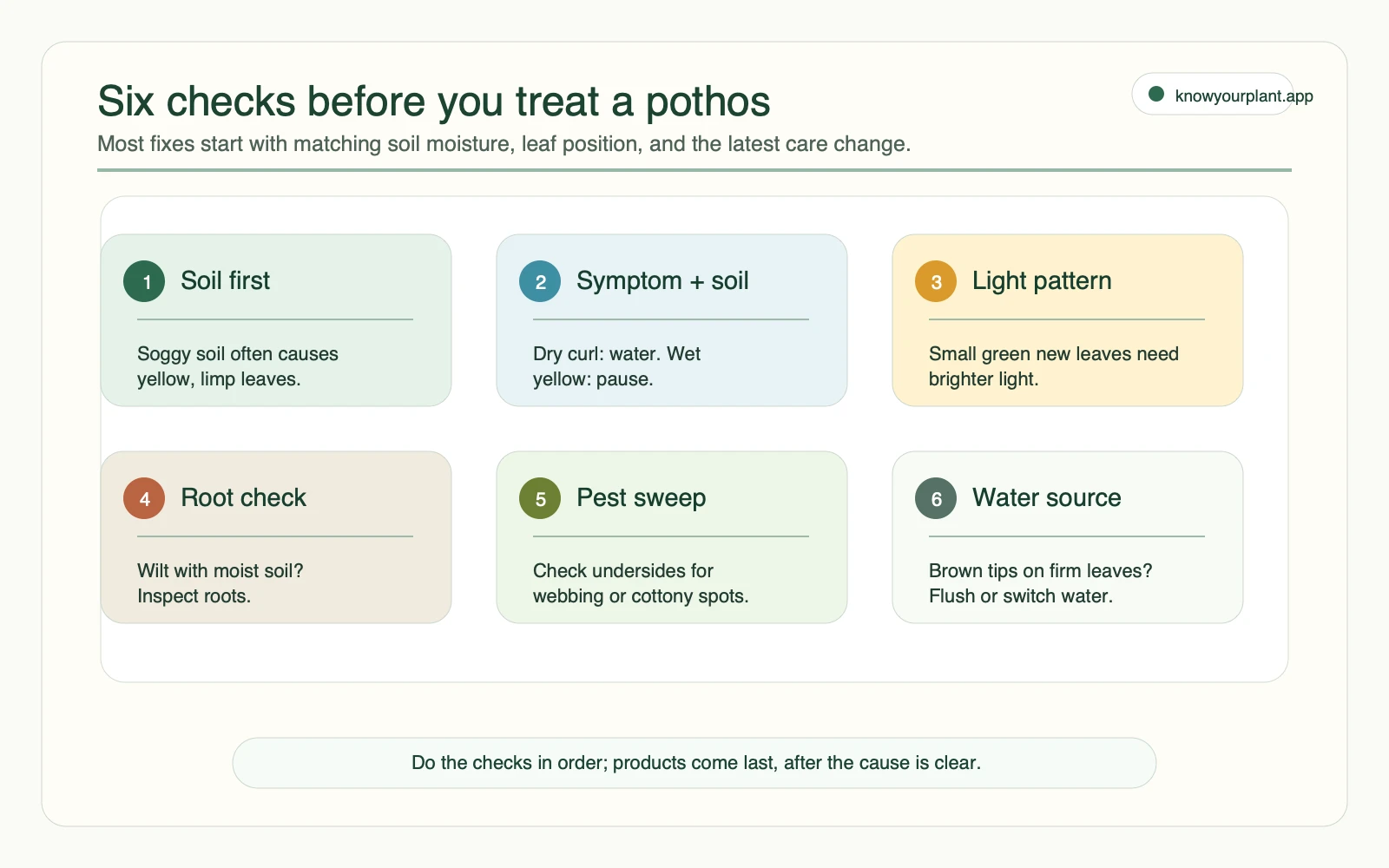
Work through the checks in order before using fertilizer, neem oil, or a full repot as the fix.
Common Problems
Yellow Leaves
Usually overwatering, especially when the yellow leaves are low on the plant and the soil has stayed damp. First, empty the saucer and wait until the top 4 to 5 centimetres of soil are dry before watering again. If the soil is not wet, check whether the plant is in very low light or has gone a long time without feeding during the growing season.
Curling Leaves
Curled leaves are usually a thirst signal when the soil is dry. Give the plant a full soak, let the excess drain, and check it again the next day. If the leaves are curling while the soil is wet, do not add more water. Check the roots for rot and make sure the pot has drainage.
Leggy Growth and Small Leaves
The plant wants more light. Move it closer to a window and watch the difference over the following few weeks. The change is usually noticeable within a month.
Loss of Variegation
When the golden marbling fades and new leaves come in mostly green, that’s a light issue. More bright indirect light will bring the colour back in new growth. Existing leaves won’t revert, but the next ones will look noticeably different.
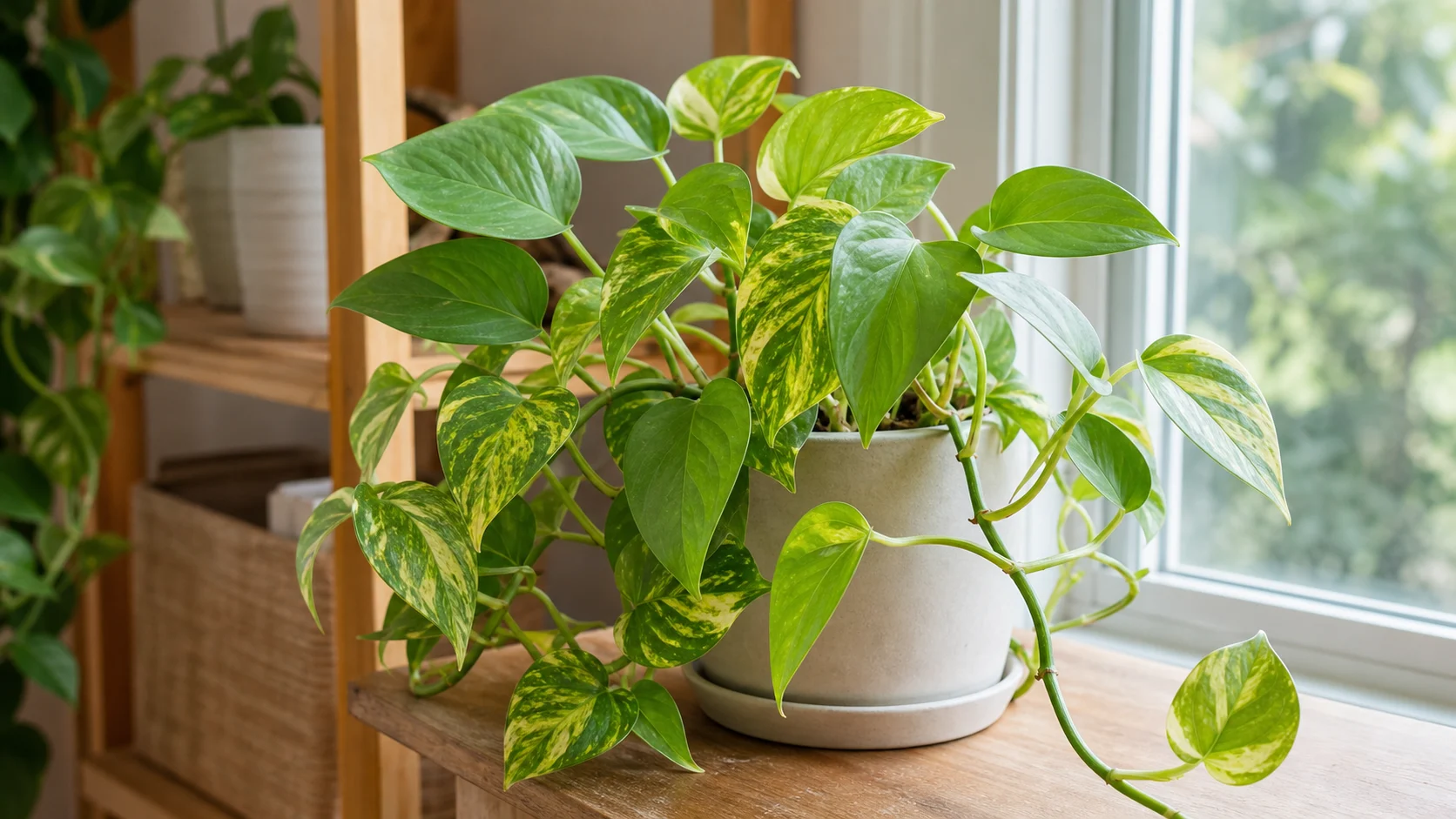
Mostly green leaves and gold-marbled growth on one vine show how available light changes variegation.
Brown Leaf Tips
Often inconsistent watering, dry air, or fluoride and mineral buildup from tap water. Trim only the brown tips if they bother you; the damaged part will not turn green again. Then water more consistently, flush the soil with plain water every month or two, or switch to filtered water if new tips keep browning.
Pests
Golden pothos isn’t particularly pest-prone, but spider mites and mealybugs occasionally appear, especially in dry conditions. Neem oil is an effective and gentle treatment.
Pet Safety
Golden pothos is toxic to cats and dogs. It contains calcium oxalate crystals, which cause oral irritation, drooling, and digestive upset if chewed or ingested. The American Society for the Prevention of Cruelty to Animals (ASPCA) lists Epipremnum aureum as toxic to both cats and dogs.
If you have pets, keep pothos out of reach: high shelves, hanging baskets, or rooms your animals don’t access. If you want trailing plants that are safe around animals, our guide to cat-safe indoor plants has good alternatives worth considering.
Golden Pothos Benefits Worth Knowing
Beyond being easy to care for, golden pothos is useful to live with. NASA’s 1989 Clean Air Study, one of the most-cited pieces of research on indoor air quality, identified Epipremnum aureum as one of the plants that removed indoor air pollutants including formaldehyde, benzene, and xylene in sealed test chambers. A single plant will not transform air quality in a normal room, so treat this as a bonus rather than the main reason to buy one.
It is also a fast grower, which means you’ll always have cuttings to share. Golden pothos tolerates missed waterings better than many tropical plants, and it trails beautifully, making it one of the most flexible plants for shelves, hanging baskets, or climbing a moss pole. If you want a broader comparison of easy trailing cultivars before choosing your next one, our pothos varieties guide lays out the differences clearly. If you want to explore a close low-maintenance alternative, marble queen pothos offers a different look with the same easygoing nature.
Real User FAQ
The top of the soil is dry but the pot still feels heavy. Do I water or wait?
Wait and check deeper. This is one of the most common beginner mistakes with pothos because the surface dries faster than the root zone. Use pot weight, a skewer, or your finger deeper in the mix before watering again.
My pothos has one yellow leaf. Is that overwatering?
Not always. One older yellow leaf on an otherwise healthy vine can be normal aging. Multiple yellow leaves plus damp soil is the stronger overwatering pattern.
My cat bit a pothos leaf. What should I do first?
Remove plant material from the mouth if you can do it safely, rinse the mouth with water, and call your vet or poison line if drooling, pawing at the mouth, vomiting, or trouble swallowing appears. ASPCA guidance is the anchor here, not forum reassurance.
Freshness Note
This guide was checked against Penn State Extension, Clemson Cooperative Extension, SDSU Extension, Wisconsin Horticulture, Missouri Botanical Garden, and ASPCA on 2026-06-08. Watering, yellow-leaf, propagation, and pet-safety guidance were aligned to those sources for this update.
Methodology Note
This article was updated using direct horticulture sources for care and toxicity, then shaped with qualitative owner questions from Greg threads and Reddit search snippets about watering confusion, yellow leaves, brown tips, and pet incidents. Community examples were used to surface the questions readers keep asking. The care advice itself was grounded in extension and botanical sources.
Frequently Asked Questions
How often should I water golden pothos?
There’s no fixed schedule that works for every home. Water when the top 4 to 5 centimetres of soil feel dry to the touch. In warm, bright conditions that might be every 7 days. In a cooler, darker spot, it could be every 10 to 14 days. Let the soil be your guide, not the calendar.
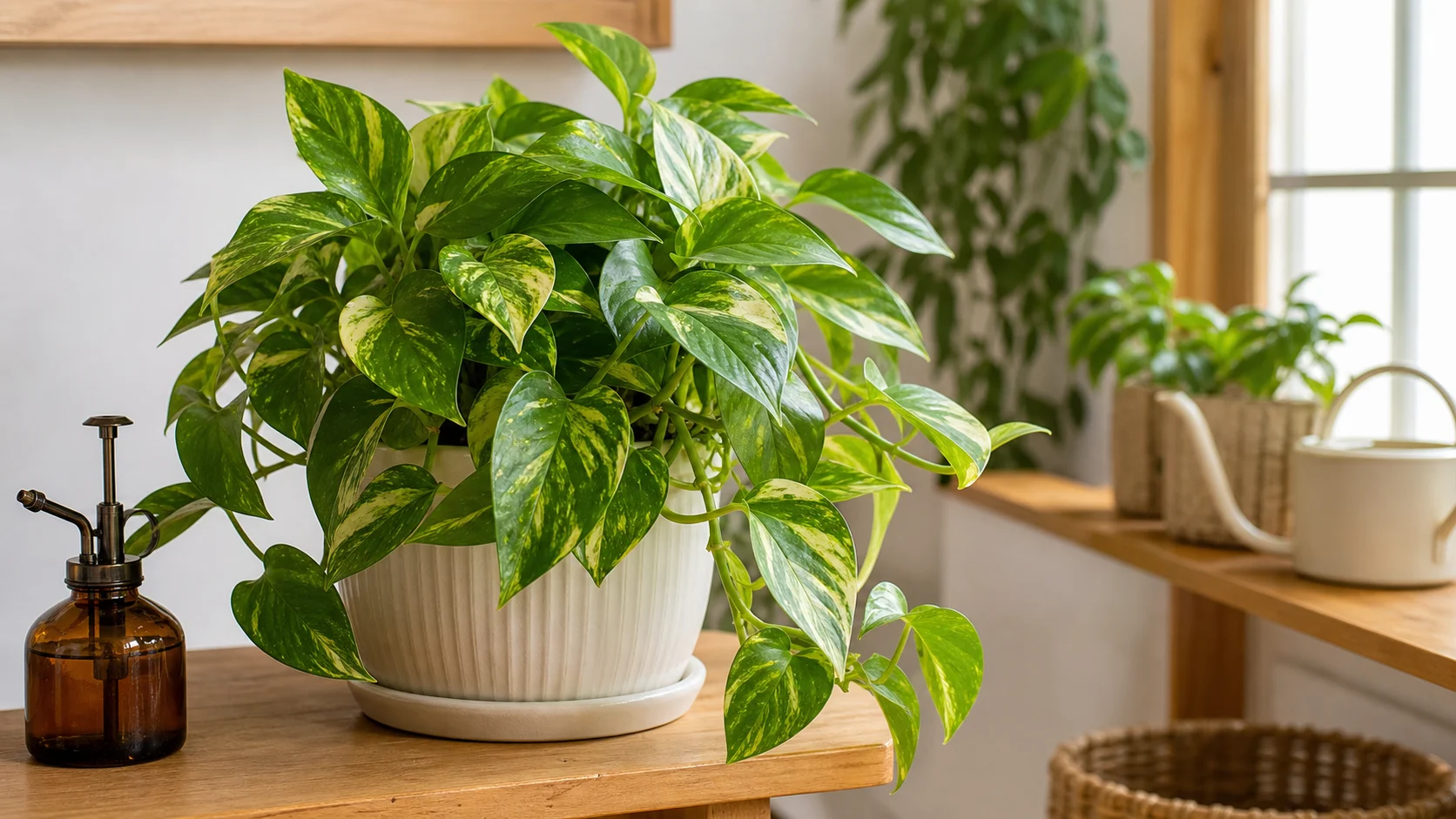
Use the soil and growing conditions—not a fixed calendar—to decide when this pothos needs water.
Why are my golden pothos leaves turning yellow?
The most common cause is overwatering. If the soil has been consistently damp, ease back and let the plant dry out more between waterings. If the moisture has been fine, check the light level and consider whether the plant is due for a feed. A healthy plant in good conditions rarely yellows unexpectedly.
Is golden pothos toxic to cats and dogs?
Yes. Golden pothos contains calcium oxalate crystals and is listed as toxic to both cats and dogs by the ASPCA. Keep it out of reach if you have pets, or choose a safe alternative. Our cat-safe indoor plants guide covers the best trailing options that won’t put animals at risk.
Can pothos live in water permanently?
It can, and many people keep pothos in water indefinitely. The key is changing the water every one to two weeks to prevent bacterial buildup, and adding a small amount of liquid fertilizer occasionally since there are no soil nutrients to draw from. Growth will be slower than in soil, but the plant can stay healthy.
Why is my pothos losing its golden variegation?
Low light is almost always the cause. Golden pothos needs reasonably bright indirect light to express its variegation. In low-light conditions, the plant produces more chlorophyll to compensate, and leaves come in green. Moving it to a brighter spot won’t change existing leaves, but new growth will show noticeably more gold.
How fast does golden pothos grow?
In good conditions during spring and summer, golden pothos can put out a new leaf every one to two weeks and extend its vines considerably. In low light or winter, growth slows. It is one of the faster-growing easy houseplants, which is part of what makes it satisfying to keep.
Can I make my pothos bushier?
Yes, and it’s simple. Regular pruning encourages branching: cut a stem back to just above a leaf node and the plant typically sends out new growth from that point. You can also pot several cuttings together in one container to create a fuller, denser-looking plant right from the start.
Is golden pothos the same as devil’s ivy?
Same plant, different name. Golden pothos (Epipremnum aureum) goes by several common names including devil’s ivy, money plant, and Ceylon creeper. The name devil’s ivy comes from the fact that it stays green even in very low light, making it hard to kill even under neglect.
Golden pothos is one of those plants that rewards attention without demanding it. If you want help tracking when to water, feed, or repot yours, download KnowYourPlant for personalised care reminders based on your specific plant and conditions. Less guessing, more growing.