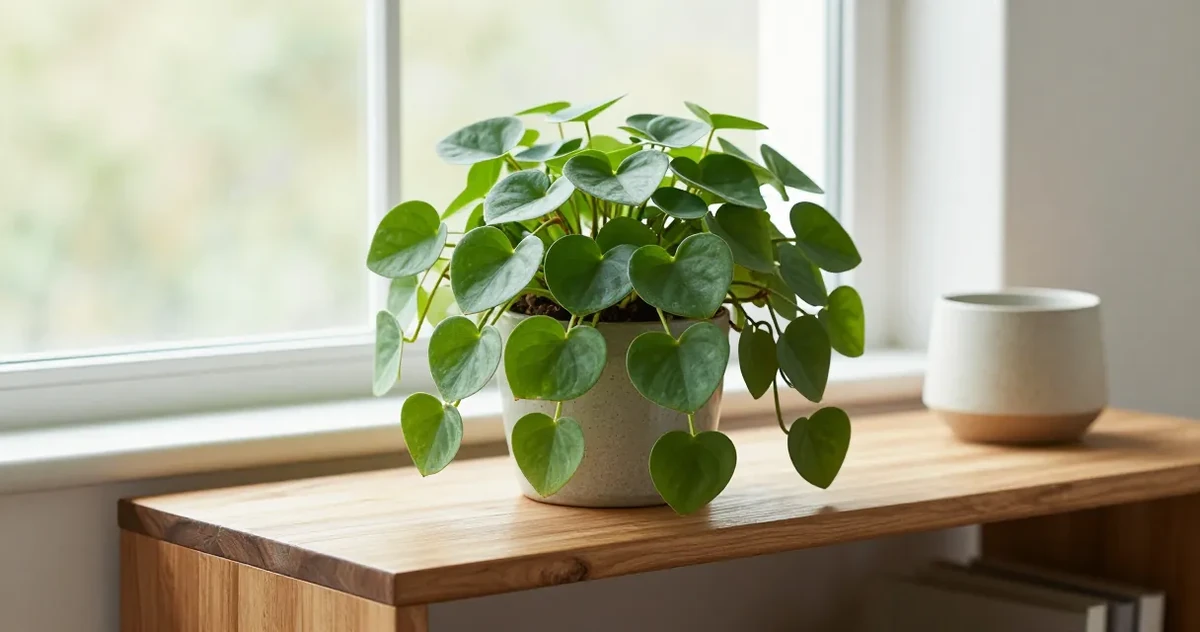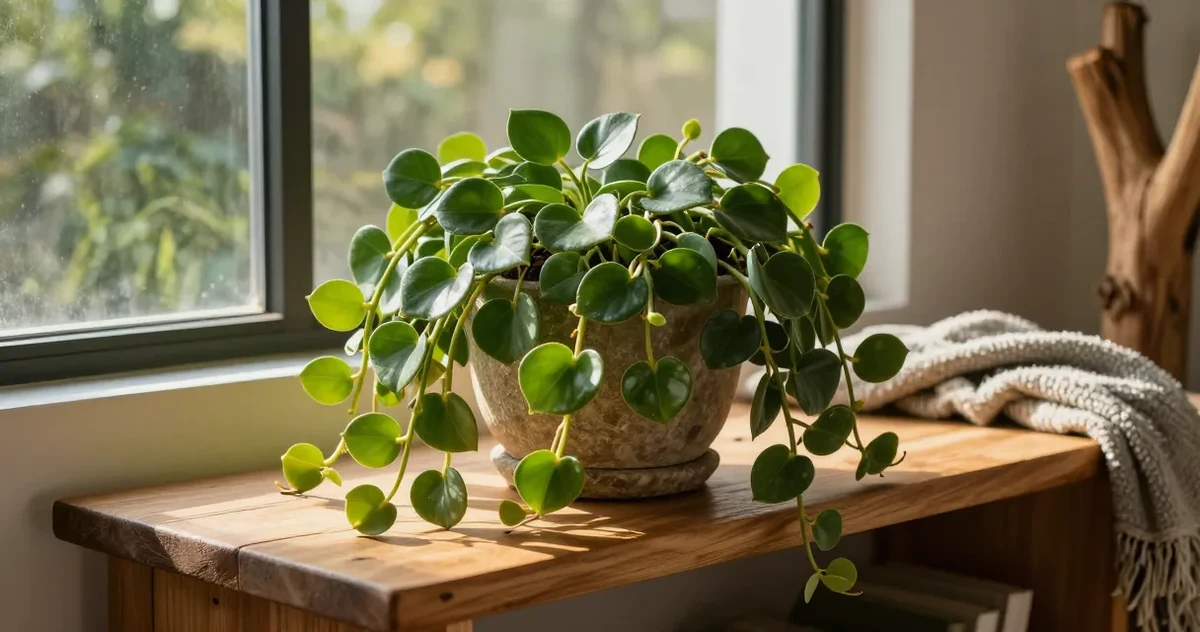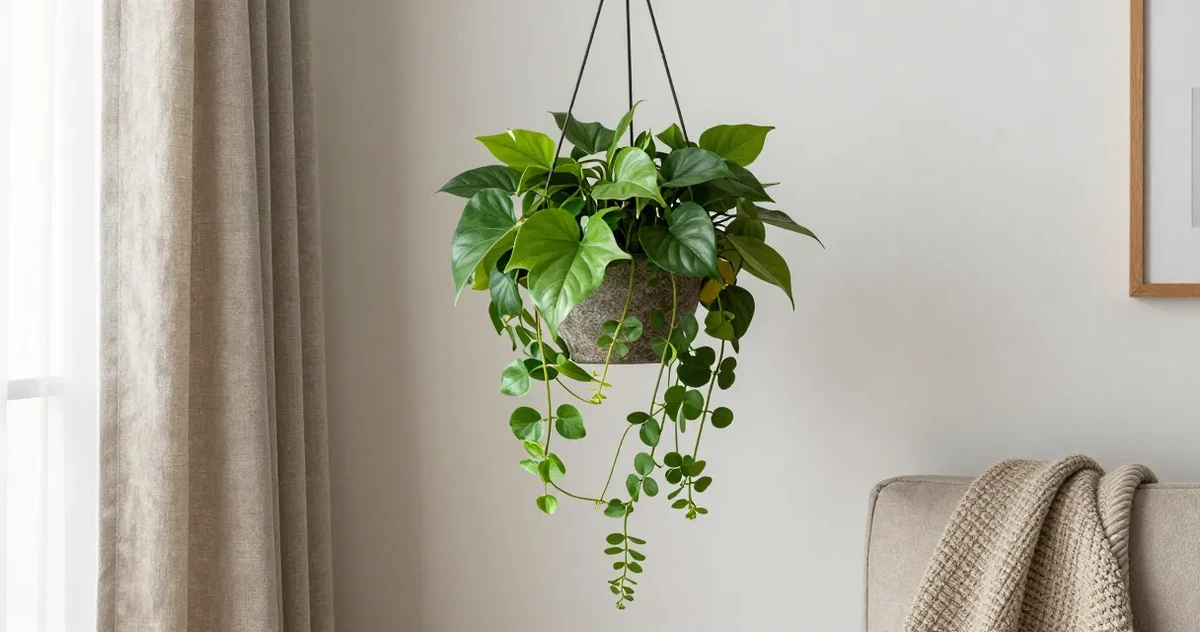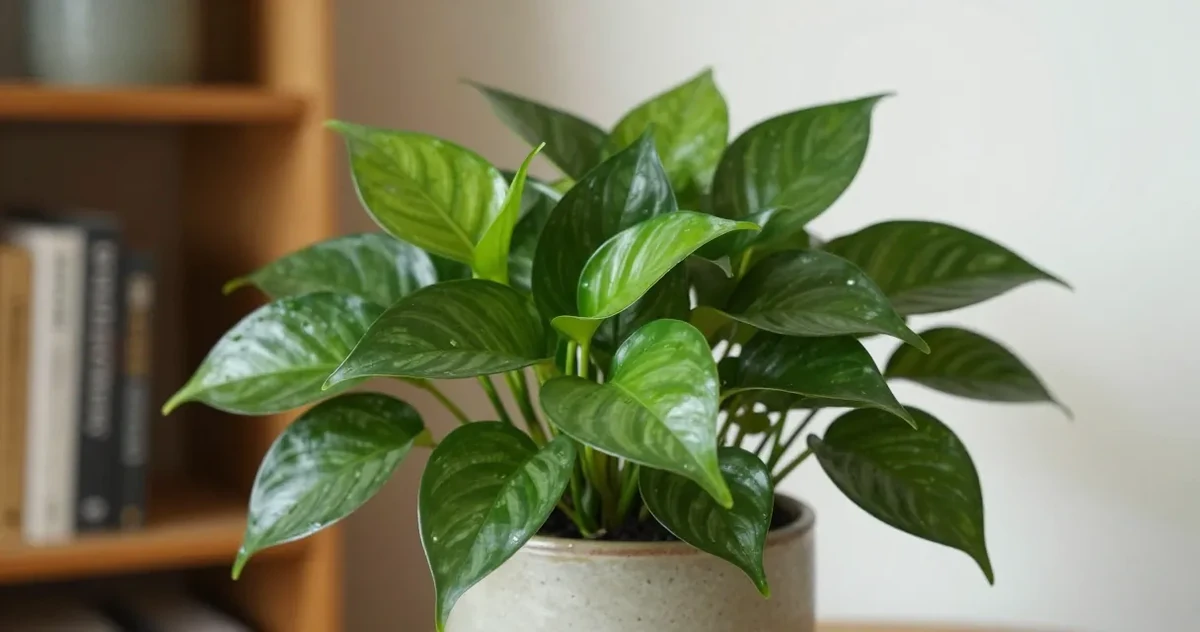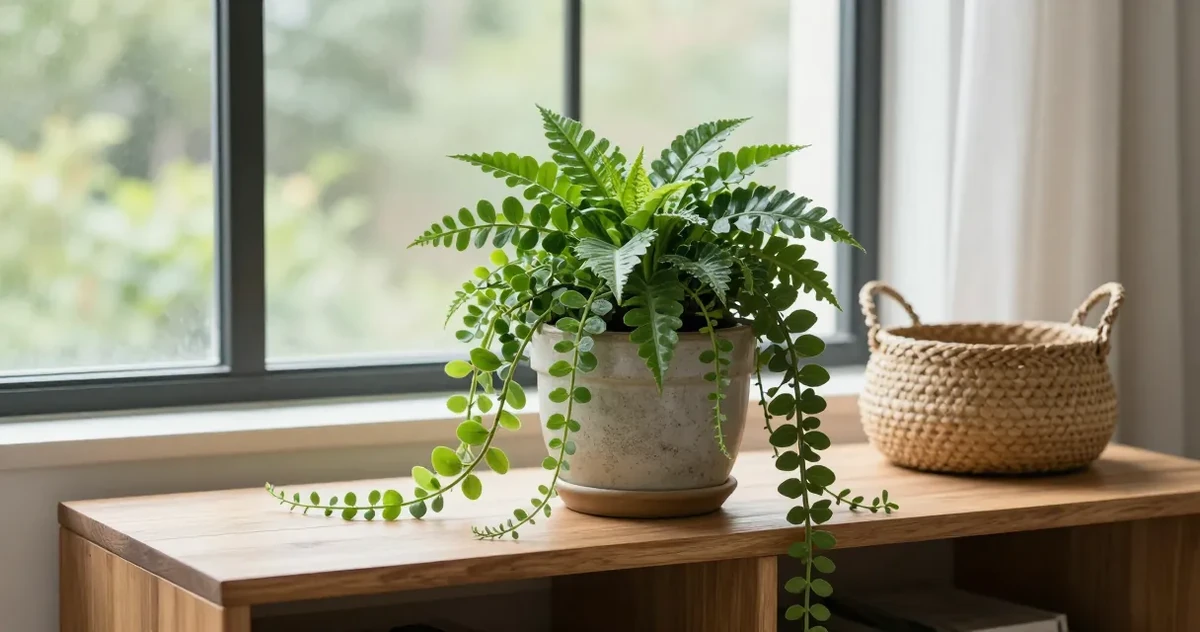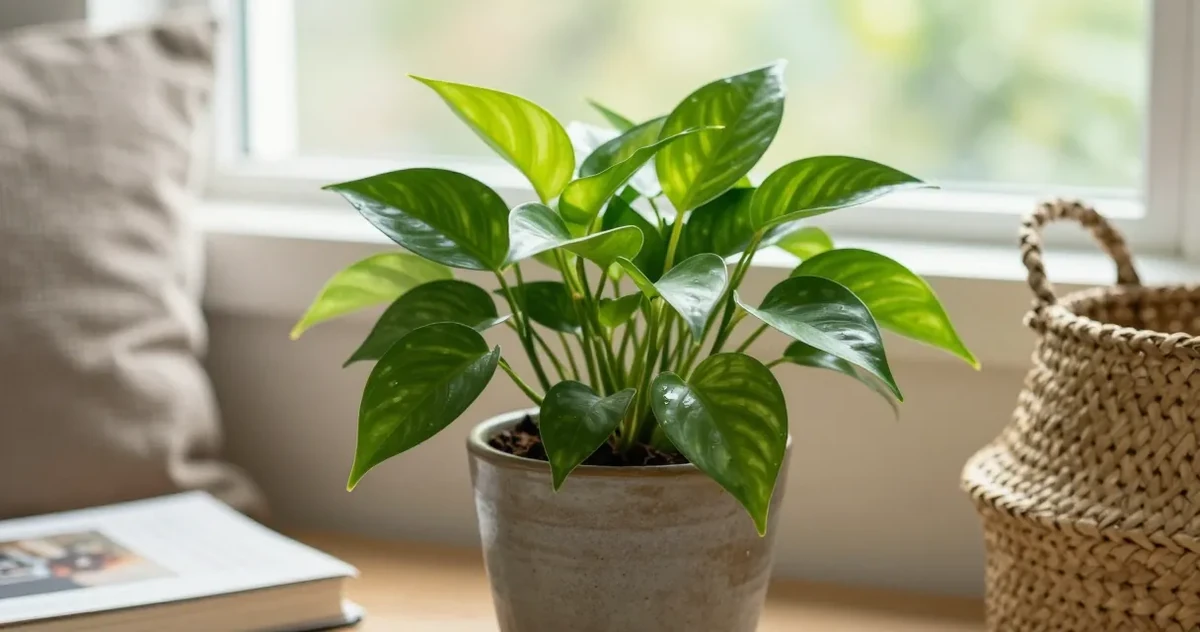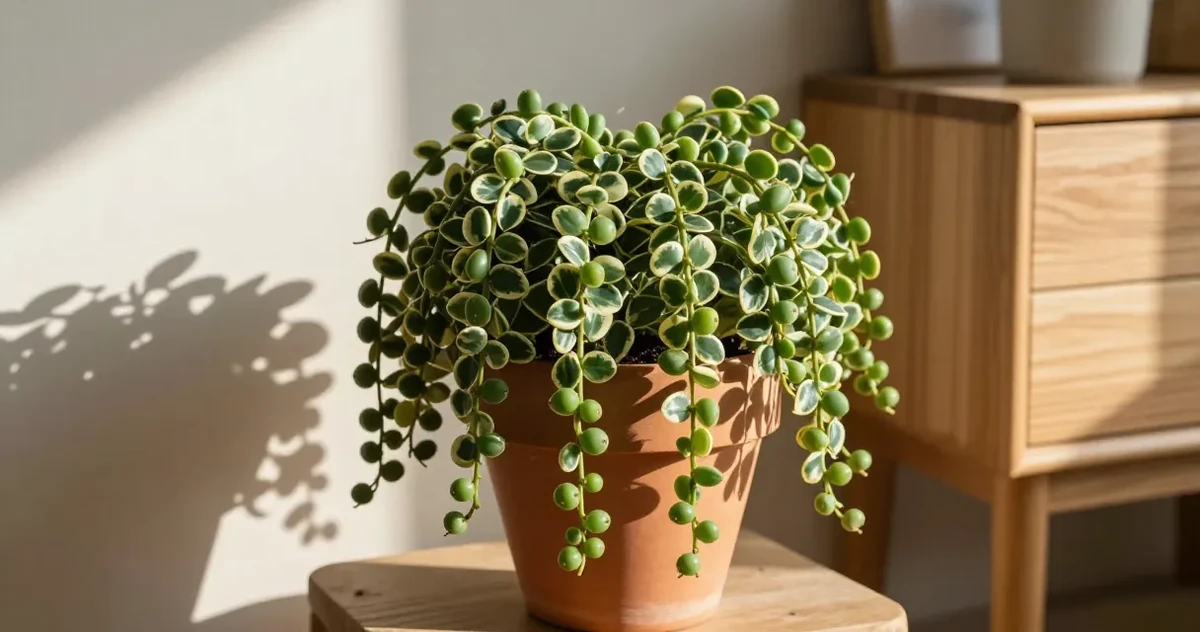
String of Hearts plant with variegated heart-shaped leaves trailing from a hanging pot

String of Hearts Care Guide: Propagation and Keeping Variegation

String of hearts is one of those plants people fall for instantly, then start second-guessing a few months later. The vines look so thin you worry she is weak. The leaves go paler and you wonder if she is dying. You water because she looks delicate, and somehow she looks worse. Here is the shift that makes this plant much easier to understand: string of hearts behaves much more like a succulent than like a thirsty trailing vine. Once you see her that way, most of her drama starts making sense. ...

 · 14 min · 
Assorted indoor hanging plants trailing from shelves and a ceiling hook in a bright room

20 Best Indoor Hanging Plants (Low Light to Bright)

You stand in the plant shop, basket in hand, looking at a shelf of trailing plants. They all look lush. The labels say things like “indirect light” and “water regularly,” which is almost entirely useless. What you actually want to know is: will this thing trail long enough to look dramatic, can it handle the shelf in my east-facing bedroom, and will it forgive me during a week away? The simplest frame to work from: a good hanging plant is one that grows outward or downward by nature, not one you force into a basket and hope survives. Trailing vines, arching fronds, cascading succulents: these are plants doing what they were built to do. ...

 · 15 min · 
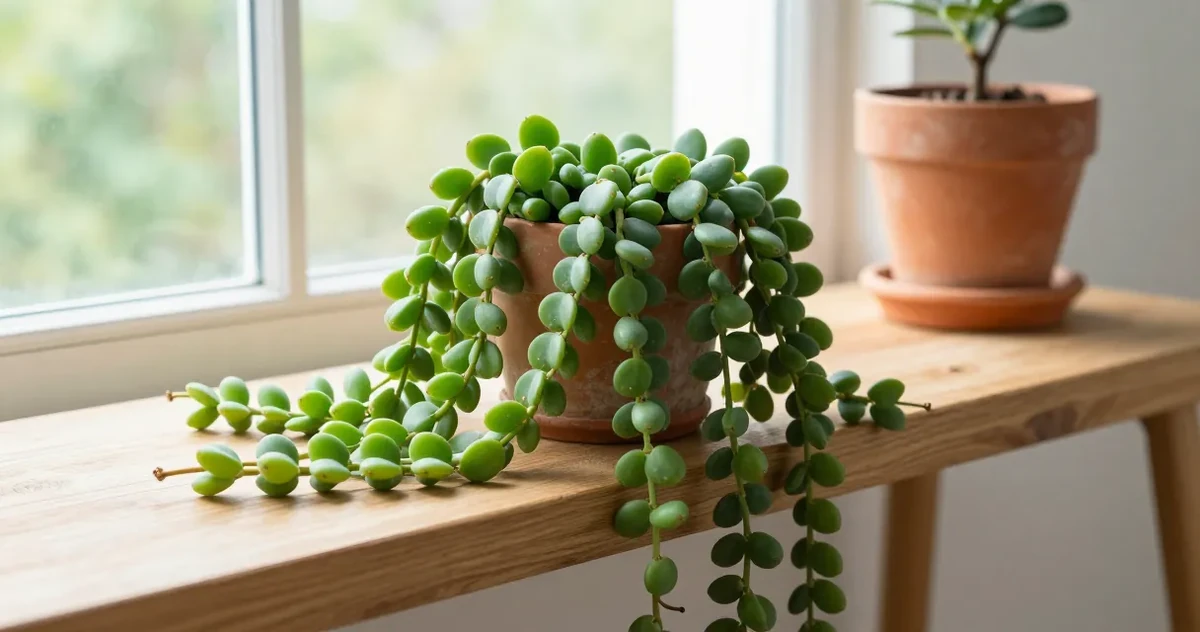
String of pearls plant in a hanging pot with cascading pearl-like leaves

String of Pearls Plant Care: How to Keep It Alive

If your string of pearls is looking wrong right now - pearls going soft, stems darkening near the soil, the whole thing seeming to give up without warning - the most likely cause is the one nobody expects when they buy such a delicate-looking plant: too much water. Not neglect. Water. String of pearls (Curio rowleyanus) is a trailing succulent from the dry hillsides of South Africa, and every round, pea-shaped leaf is a tiny water reservoir built to carry her through weeks without rain. She is not a tropical houseplant that craves moisture. She is a drought machine that happens to trail beautifully from a shelf. Once you understand what she actually is, keeping her alive gets a lot easier. ...

 · 13 min · 
Satin pothos with silver-splashed velvety leaves trailing from a shelf

Satin Pothos (Scindapsus) Care Guide: Silver and Silk Varieties

If you just brought home a satin pothos and want the plain answer: put it in bright indirect light, water only when the top half of the soil has dried, and check the soil before reacting to curling or yellowing leaves. In many homes that means watering about every 10 to 14 days in spring and summer, then closer to every three weeks in autumn and winter. The easiest way to overdo it is to treat satin pothos like a thirsty plant. It is not. Too much water usually shows up as yellow lower leaves, soft stems, or soil that stays damp for more than two weeks. Too little water or too-dry air usually shows up as curling leaves, crispy edges, or brown tips. ...

 · 16 min · 
Best Trailing Indoor Plants to Grow

Best Trailing Indoor Plants to Grow

If you are choosing a trailing indoor plant, the useful question is not just “which vine looks good on a shelf?” It is “will this plant work with my light, my watering habits, and my pets?” This guide is for everyday plant owners who want a clear shortlist before buying, plus quick answers when leaves curl, yellow, or get brown tips. A trailing plant grows by sending stems outward and downward instead of mostly upright. That habit makes trailing plants useful for hanging baskets, high shelves, wardrobes, bookcases, and small rooms where you do not want another pot on the floor. ...

 · 18 min · 
Neon Pothos Care Guide for Bright Leaves

Neon Pothos Care Guide for Bright Leaves

Neon pothos is a good plant for you if you have a bright window and can check the soil once a week. It is not the best choice for a dark corner if you want those glowing yellow-green leaves to stay bright. If yours is fading, curling, yellowing, or getting brown tips, this guide will help you sort the likely cause without turning plant care into homework. The short version: give neon pothos bright indirect light, water when the top couple inches of soil are dry, and never let the pot sit in standing water. New leaves coming in bright chartreuse mean the spot is working. New leaves coming in darker green usually mean it needs more light. Yellow, soft leaves usually point to too much water; curled or crispy leaves usually point to thirst, heat, or dry air. ...

 · 16 min · 
Heartleaf Philodendron Care Indoors

Heartleaf Philodendron Care Indoors

Heartleaf Philodendron Care, Without the Guesswork If you want a trailing houseplant that can handle normal indoor light and a busy routine, heartleaf philodendron is one of the easiest good fits. The main way people get into trouble is simple: watering too often. The quick answer: water when the top 3-4 cm of soil feels dry. In many homes that means every 7-10 days in warm, bright months and every 12-14 days, sometimes longer, in winter. Yellow lower leaves plus wet soil usually mean you are overdoing it. Curling or limp leaves with very dry soil usually mean it is time to water. ...

 · 17 min · 
Philodendron Brasil Care Guide Indoors

Philodendron Brasil Care Guide Indoors

Philodendron Brasil is a good fit if you want a trailing plant that can forgive the occasional late watering, but it is not a great fit for a dark corner. Its yellow-green streaks need brighter indirect light than a plain heartleaf philodendron, and its roots need time to dry between waterings. The short version: put it near a bright window out of harsh direct sun, water when the top few centimetres of soil feel dry, and watch the newest leaves. Curling usually means the plant is too dry, yellowing often means the soil has stayed wet too long, and brown tips usually point to dry air, fertilizer buildup, or inconsistent watering. ...

 · 17 min · 
Marble Queen Pothos Care Guide Indoors

Marble Queen Pothos Care Guide Indoors

Marble Queen Pothos Care: The Quick Answer If you only remember one thing: Marble Queen Pothos needs brighter light than a regular green pothos, and it should dry partway between waterings. Check the soil once a week. Water when the top 3 to 4 cm, about 1 to 1.5 inches, feels dry. If it still feels damp, wait. Here is the beginner version: What you are deciding Practical answer Best spot Bright, indirect light near an east window or a few feet from a south/west window Watering Usually every 7 to 10 days in active growth, less in winter, but always check the soil first Too much water looks like Yellow lower leaves, soft limp stems, soil that stays wet for days, musty potting mix Too little water looks like Curling leaves, drooping vines, very dry soil pulling away from the pot edge Brown tips usually mean Inconsistent watering, dry air near vents, or mineral buildup from hard tap water Good fit for you? Yes if you have a bright room and can check soil weekly; no if the only spot is a dark corner Marble Queen is still a forgiving houseplant. It just gives clearer feedback than people expect: greener new leaves mean it wants more light, yellow leaves often mean the roots are staying too wet, and curling leaves usually mean the plant is thirsty or drying out too fast. ...

 · 15 min · 
Golden Pothos Care Guide for Beginners

Golden Pothos Care Guide for Beginners

Golden pothos is a good first houseplant if you want clear rules instead of a fussy routine: give it bright indirect light, water only after the top few centimetres of soil dry out, and keep it away from pets that chew leaves. If the leaves start curling, yellowing, or getting brown tips, the fix usually starts with one simple check: is the soil dry, damp, or soggy? Golden pothos (Epipremnum aureum) is the heart-shaped trailing plant with green leaves splashed in yellow-gold. It is native to the Solomon Islands and grows as a tropical vine. According to the University of Florida IFAS Extension, golden pothos can reach lengths of 40 feet in its native tropical habitat, which explains why indoor plants can eventually trail down shelves, bookcases, and hanging baskets when the routine is right. ...

 · 15 min ·