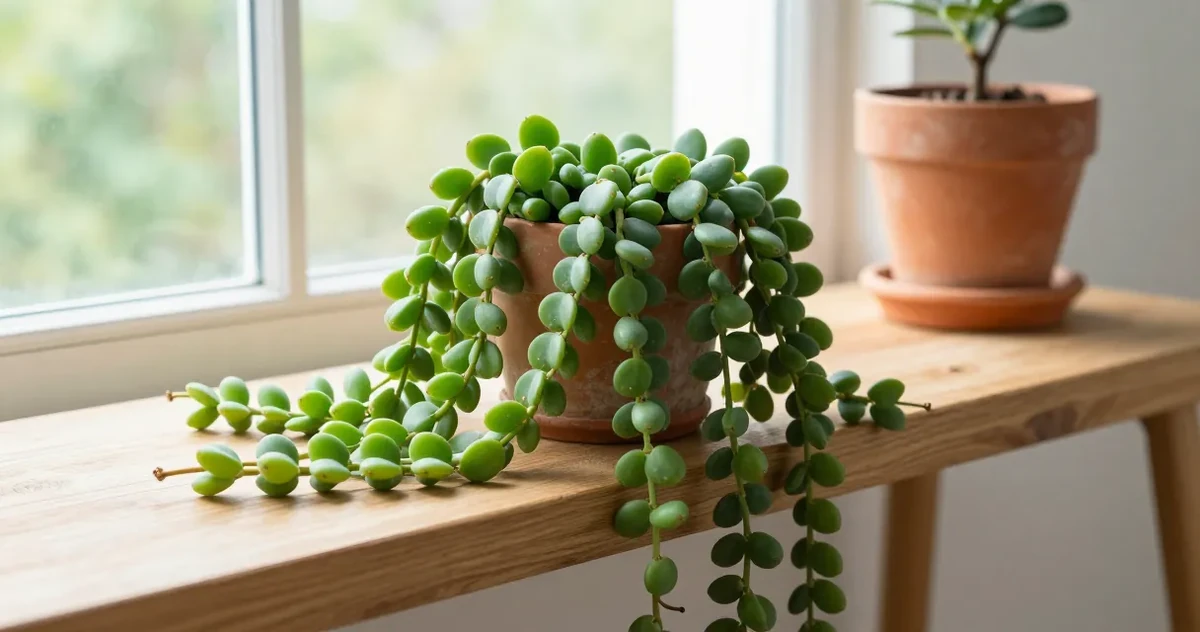
If your string of pearls is looking wrong right now, pearls going soft, stems darkening near the soil, the whole plant seeming to give up without warning, the most likely cause is the one many beginners least expect: too much water.
Not neglect. Water.
String of pearls (Curio rowleyanus) is a trailing succulent from dry regions of southern Africa, and every round leaf is built to store water. That is why this plant can look delicate but still hate being treated like a thirsty tropical. Once you understand that one fact, most care decisions get simpler. If you want the broader watering-and-light logic behind that pattern, our succulent care guide is a useful companion.
This guide focuses on the parts that actually keep the plant alive indoors: how to read the pearls, how to tell thirst from rot, how to set up the pot correctly, and how to recover a new plant before small mistakes turn into a full collapse. If your plant is finally stable and you want more than one strand in the pot, use the dedicated guide to String of Pearls propagation for bead-by-bead rooting, strand cuttings, and the mistakes that rot fresh pieces fast.
What Most Care Guides Miss
Most string of pearls guides describe the ideal routine. Real homes are messier: nursery soil arrives too dense, bright windows get hotter in summer, and the same shriveled pearl can mean thirst in one pot and root trouble in another.
Before changing care, check the plant in this order:
- Light: is the plant stretching, fading, or scorching?
- Root zone: is the pot drying predictably, or staying wet in the middle?
- Leaf pattern: did the oldest pearls, newest pearls, or stems at the crown change first?
- Recent change: new pot, new window, fertilizer, cold draft, or overwatering rescue?
That order keeps you from fixing the wrong problem. One clear correction is usually safer than changing everything at once.
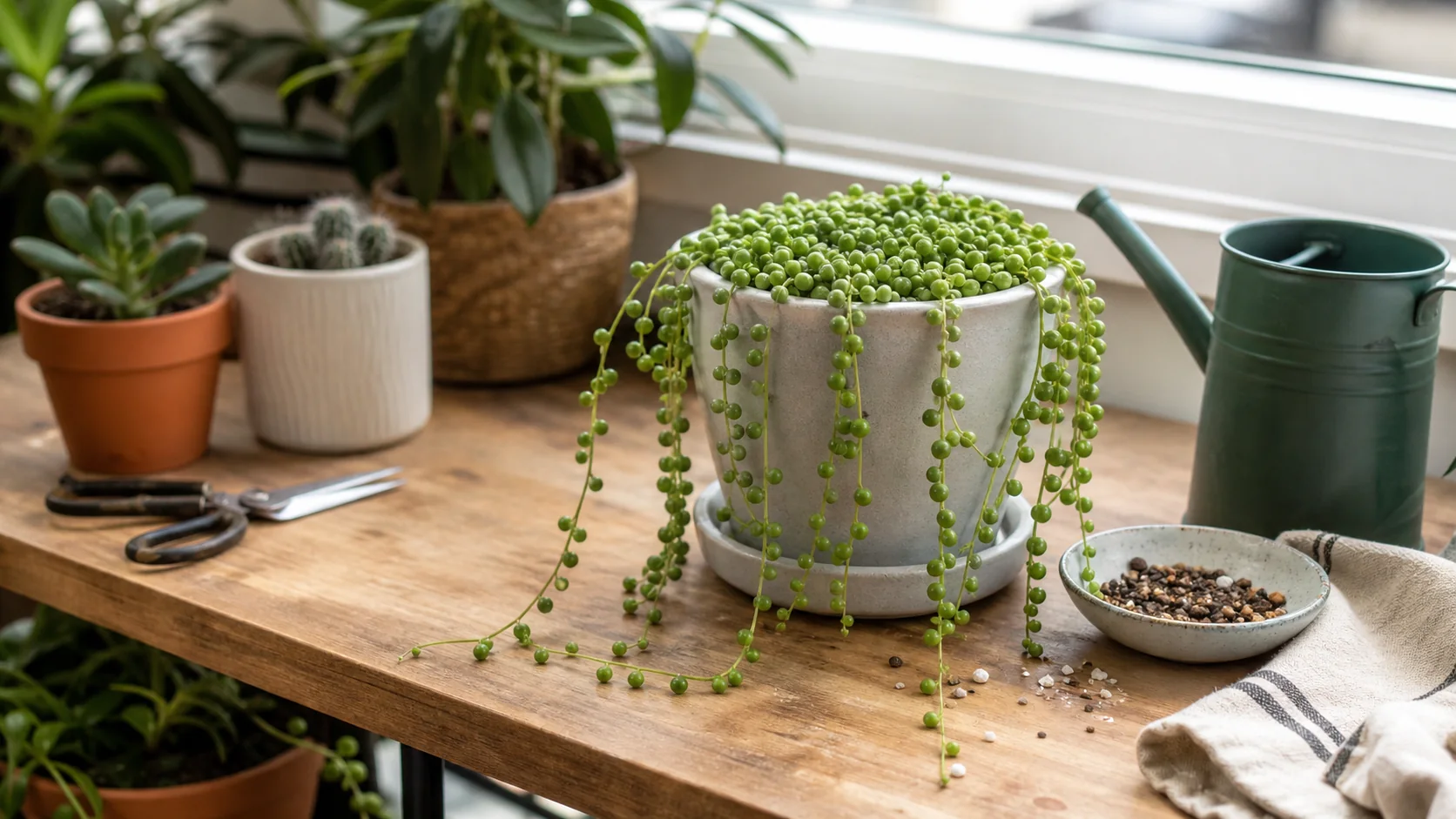
Check the light, pearl condition, and root-zone setup together before changing the care routine.
Identification Snapshot
| Detail | What to look for |
|---|---|
| Botanical name | Curio rowleyanus |
| Growth habit | Thin trailing stems with pea-shaped succulent leaves |
| Fastest visual clue | Round green pearls spaced along hanging strands |
| Best home placement | Bright indirect light or gentle morning sun, plus a pot with fast drainage |
| Pet safety | Toxic to cats and dogs, so keep strands fully out of reach |
Lookalikes and Confused-With
| Plant | How to tell it apart |
|---|---|
| String of tears (Curio herreanus) | Leaves are more teardrop-shaped and often show translucent striping |
| String of bananas (Curio radicans) | Leaves are curved and banana-shaped rather than round |
| Pea plant or other trailing succulents sold unlabeled | True string of pearls has nearly spherical leaves and finer, more delicate trailing stems |
String of Pearls Care Cards
| Care card | Practical target |
|---|---|
| Light | Bright indirect light, plus gradual exposure if you want stronger sun |
| Water | Wait for full dryness, then water deeply and let excess drain away |
| Soil | Gritty succulent mix that does not stay wet around the crown |
| Pot | Small pot with a drainage hole, ideally not oversized |
| Feeding | Light feeding in spring and early summer only |
Social Listening: Why This Plant Feels Harder Than It Looks
Community discussions about string of pearls tend to sound the same: people lose two or three plants before the routine finally clicks, then realize the plant was not asking for more attention, only more restraint. The recurring confusion is overwatering versus underwatering, plus the shock of moving a rescue plant from dim nursery conditions into stronger light too quickly.
That pattern is why the rest of this guide starts with diagnosis and setup, not with a fixed watering calendar.
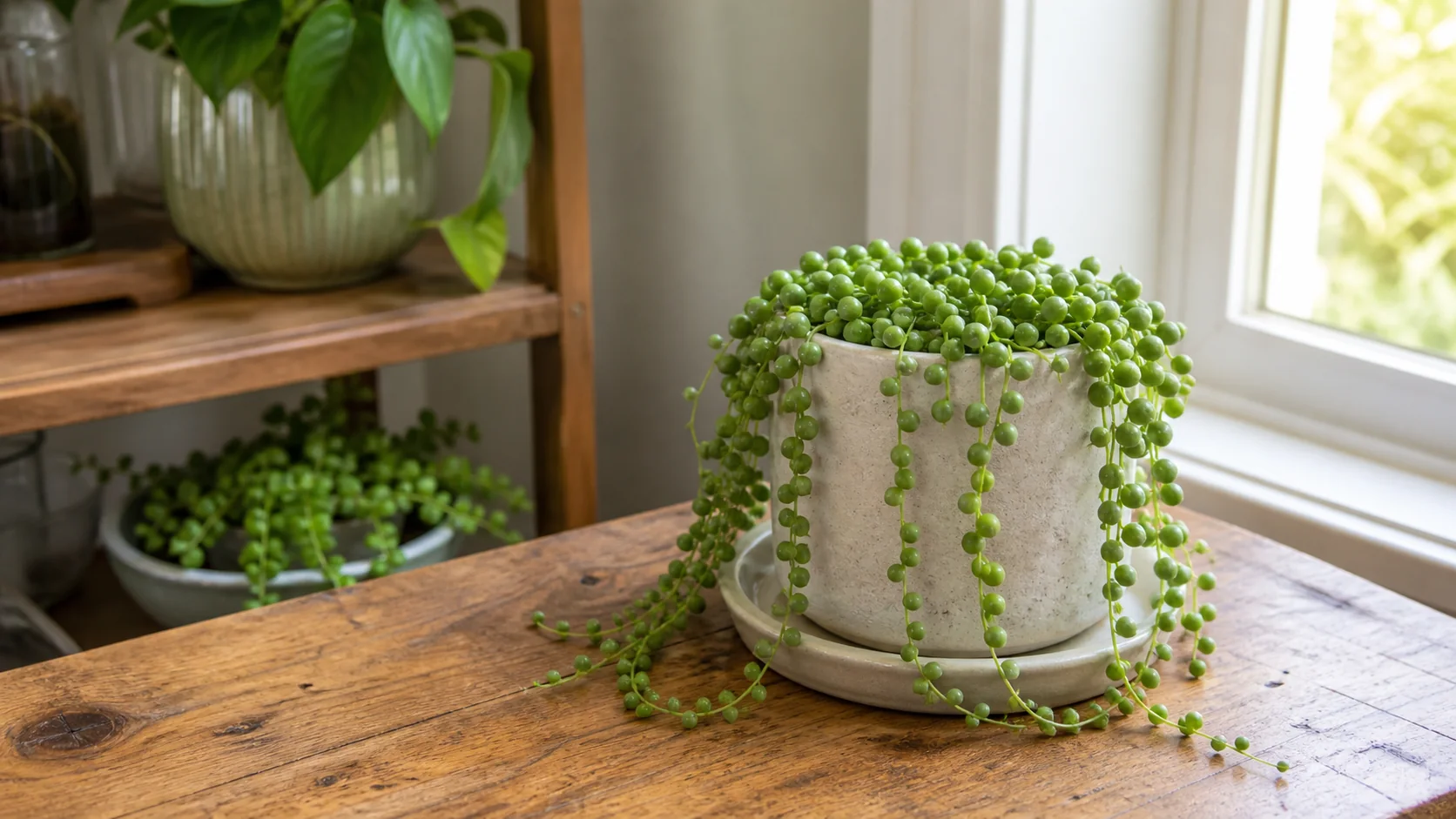
A gradual move from a dim shelf toward a brighter window is safer than correcting light all at once.
Why String of Pearls Goes from Fine to Gone So Fast
Here is what catches people off guard. Each pearl stores water independently, so the plant can look normal while the roots are already struggling below the soil line. By the time pearls turn glassy, soft, or translucent, root damage is often already underway.
That is not the plant being dramatic. It is how a drought-adapted succulent fails indoors. The earlier you catch changes in pearl texture and stem firmness near the crown, the better your odds of saving it.
Expert Note: Shallow Roots Change the Watering Rule
North Carolina Extension and Wisconsin Horticulture are especially useful for this plant because they both reinforce the same idea: string of pearls has shallow roots, wants bright light, and stays vulnerable to root rot when the medium remains wet too long. That is why the correct rule is not “water every two weeks.” The correct rule is “let the root zone dry fully, then water thoroughly.”
The Pearl Squeeze Test
Gently pinch one pearl between your fingers. Firm and round means the plant is comfortable. Slightly soft or less plump than usual means it is getting thirsty. Mushy, translucent, or glassy pearls point toward excess moisture and possible root trouble.
This tiny test tells you more than staring at the soil surface. It is the fastest habit you can build if you want to catch trouble early. If the base already feels soft or smells sour, our root rot treatment guide walks through what to check before you water again.
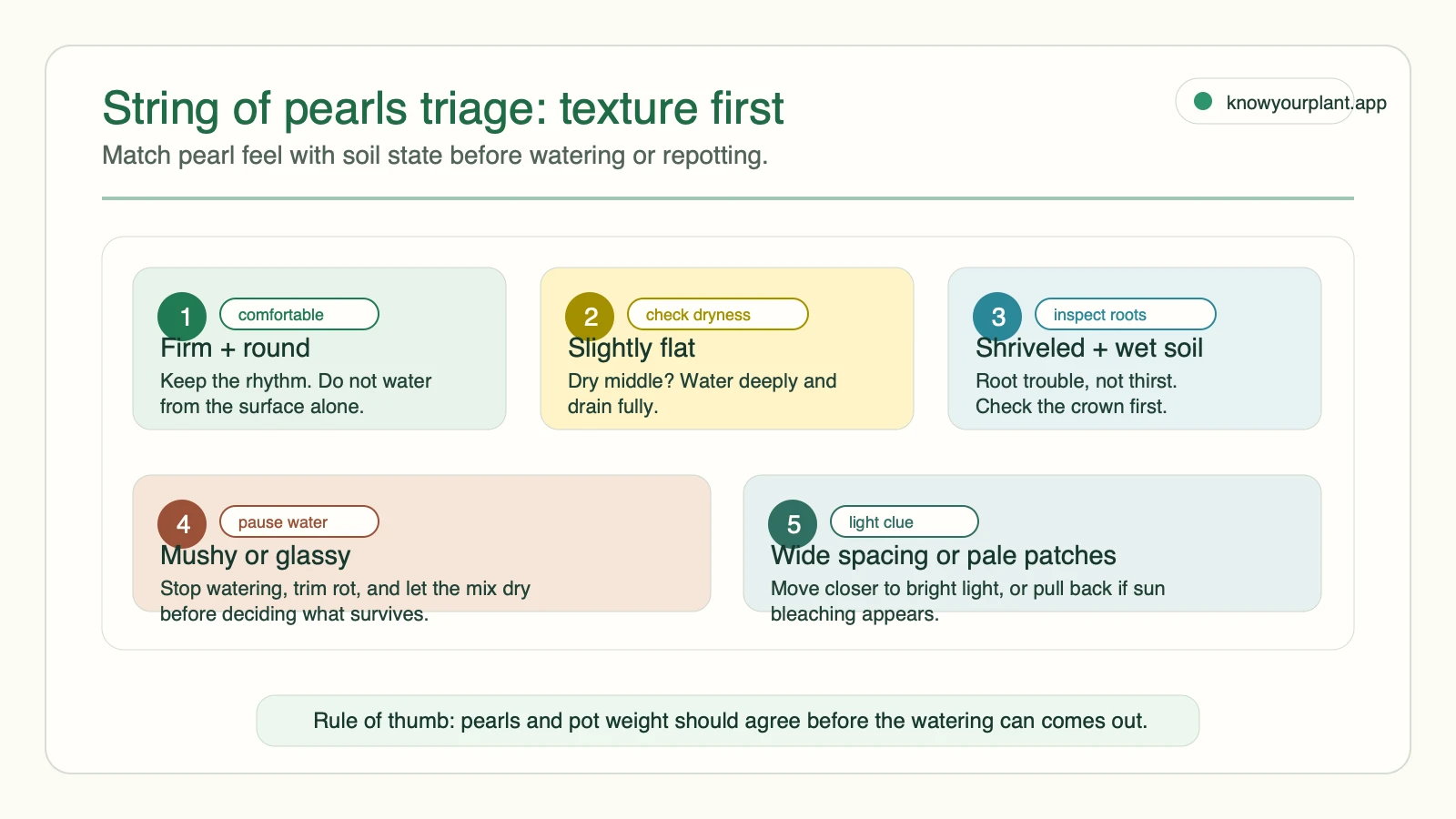
Use the texture map before watering: the pearls and the pot should tell the same story before you change care.
Light: Bright, Then Brighter, but in Stages
String of pearls needs more light than most trailing houseplants. A bright east-facing window, or a south-facing spot with some protection from harsh afternoon sun, is usually ideal. In low light, the pearls spread farther apart, the stems thin out, and the whole basket starts looking sparse.
If natural light is weak, a close grow light works well. The important part is distance: a dim lamp across the room does almost nothing for a succulent like this. Our grow light guide covers simple placement if you are setting one up for the first time.
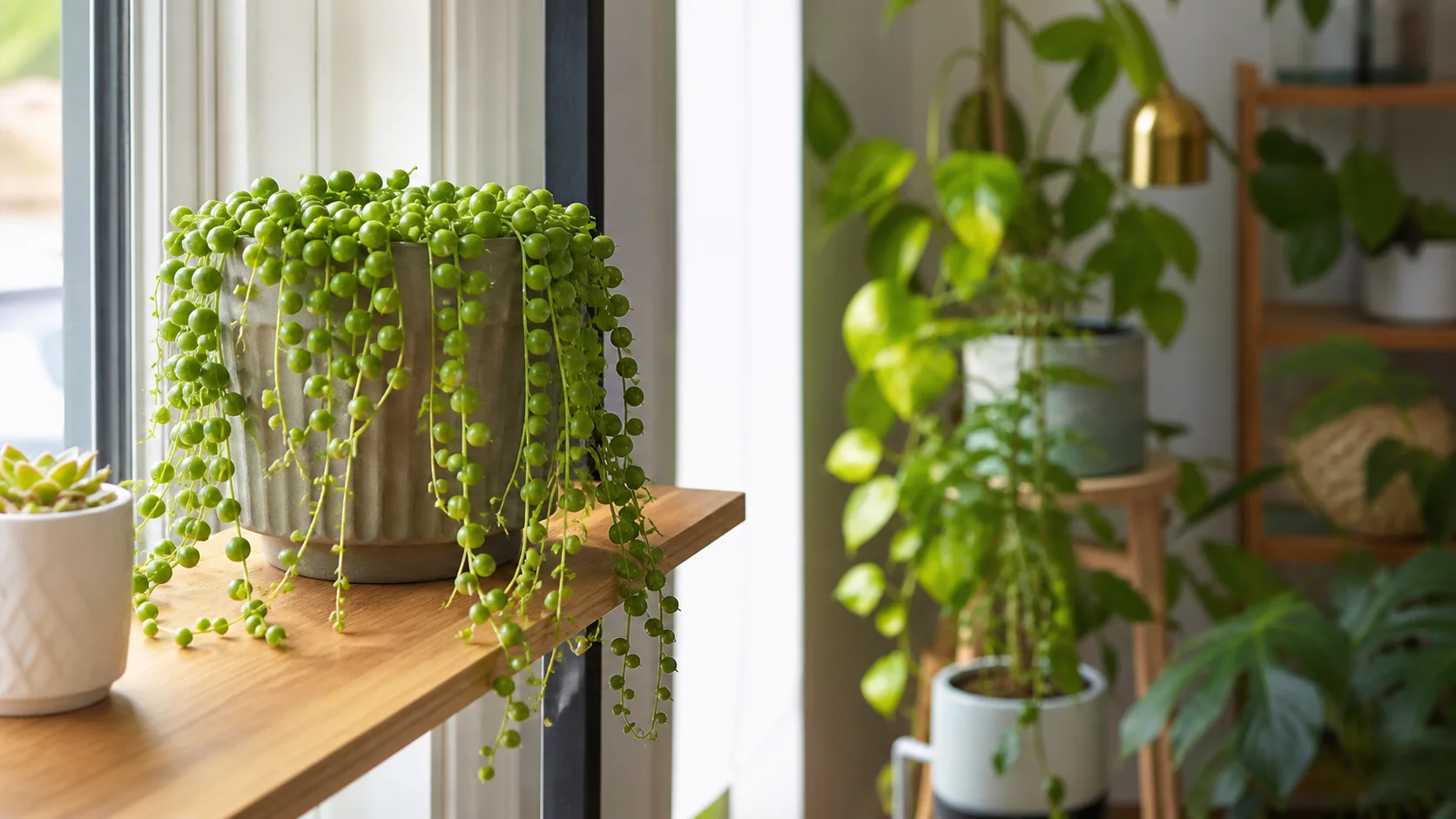
Keep string of pearls close to a bright window, then increase stronger exposure only as the pearls stay firm and green.
Light Acclimation Workflow
Use this sequence when moving a new or rescued plant into brighter light:
- Start in bright indirect light for about a week while the plant stabilizes.
- Add gentle morning sun first, not hot afternoon sun.
- Increase exposure gradually every few days if the pearls stay firm and green.
- Pause immediately if the pearls bleach, wrinkle sharply, or the stems look stressed.
String of pearls can handle stronger sun than many indoor plants, but sudden light jumps are what cause trouble.
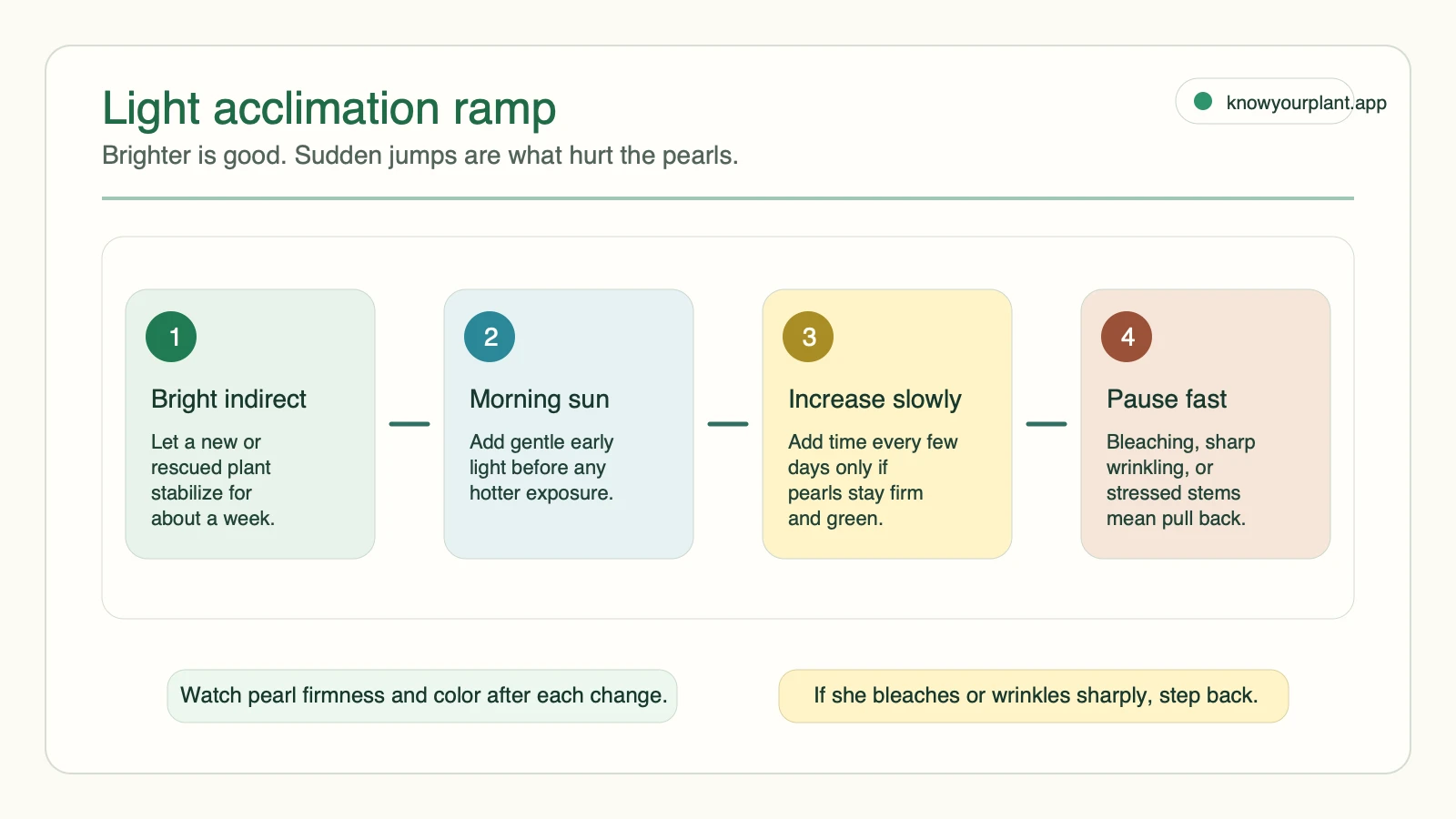
Use the ramp when moving a new or rescued plant: stronger light helps only when the pearls stay firm and green after each change.
Decision Tree: Flat, Mushy, or Stretching?
Use this quick triage before watering or repotting:
| Symptom | Most likely cause | Check next |
|---|---|---|
| Pearls slightly flat but stems firm | Thirst | Confirm the soil is fully dry, then water deeply |
| Pearls shriveling while soil is still wet | Root damage or compacted soil | Inspect the crown and roots before watering again |
| Pearls mushy or translucent | Overwatering or rot | Stop watering, trim rot, and let the mix dry completely |
| Long bare strands with wide spacing | Not enough light | Move closer to bright light or add a grow light |
| Pale or scorched patches | Sudden intense sun | Pull back to bright indirect light and acclimate again |
Watering: Read the Plant, Not the Calendar
Water less than your instincts tell you to. Then check again before you do it.
In spring and summer, many indoor string of pearls plants need water roughly every 10 to 14 days, but the exact rhythm depends on light, pot size, airflow, and soil texture. In autumn and winter, the interval often stretches to three or four weeks.
The better routine is simple:
- Check that the soil is dry through the pot, not just at the top.
- Confirm the pearls feel a little less firm than usual.
- Water thoroughly until excess drains out.
- Empty the saucer or cachepot right away.
Never keep the plant sitting in leftover water. That one mistake causes more losses than underwatering.
Rescue Checklist for a New or Struggling Plant
If you just bought a nursery basket or you suspect overwatering, run this checklist before doing anything dramatic:
- Slide the root ball out and check whether the middle is still dense and soggy.
- Remove black, mushy, or obviously rotted strands at the crown.
- Repot into a gritty succulent mix if the original soil stays wet too long.
- Move the plant into bright indirect light first, then acclimate to stronger sun gradually.
- Propagate a few healthy strands if the basket looks unstable, so you keep a backup even if the mother plant declines.
That sequence is often more effective than simply waiting and hoping the original nursery soil will fix itself.
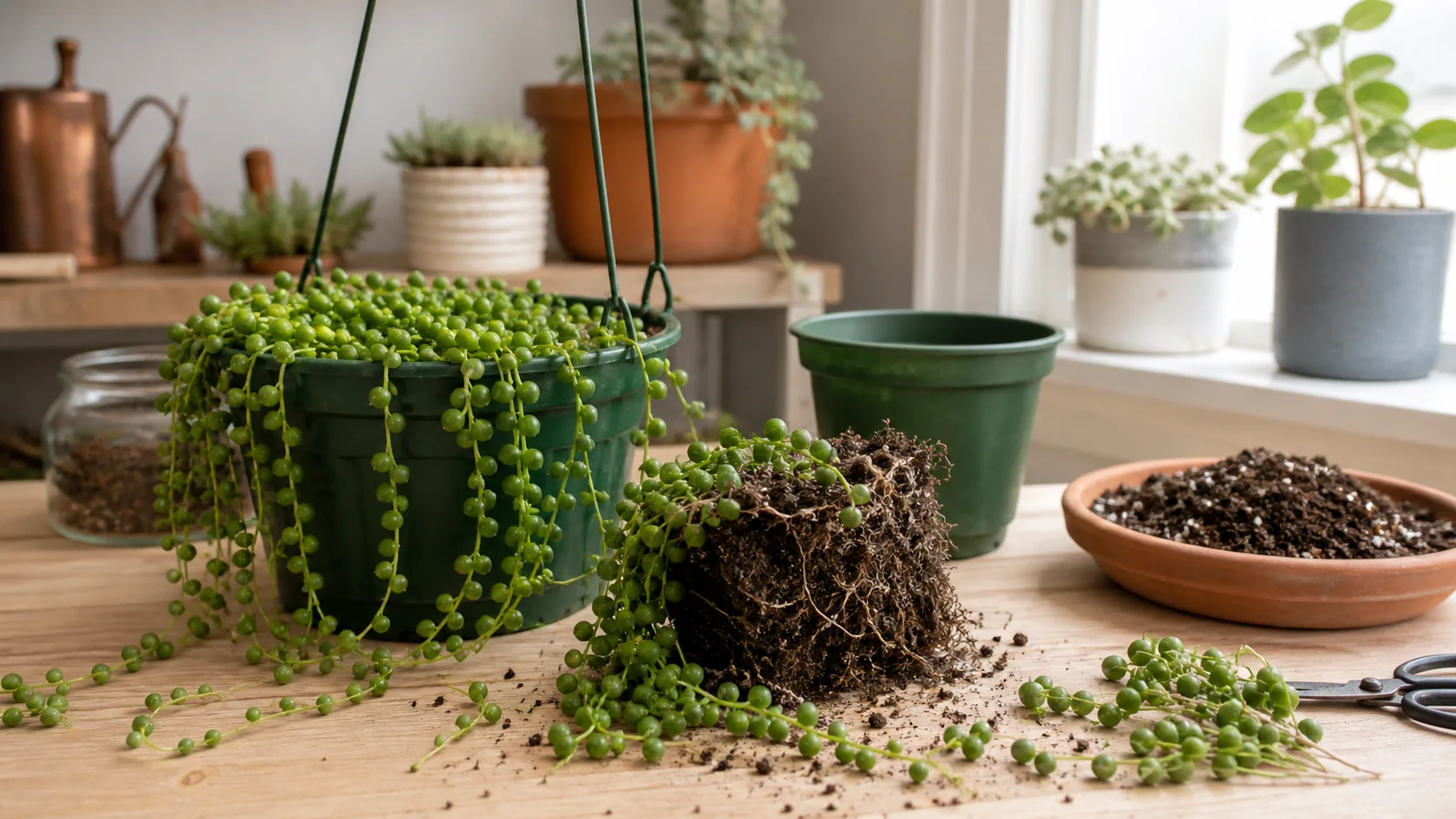
Inspect the shallow root ball, prepare a gritty replacement mix, and save healthy strands before repotting.
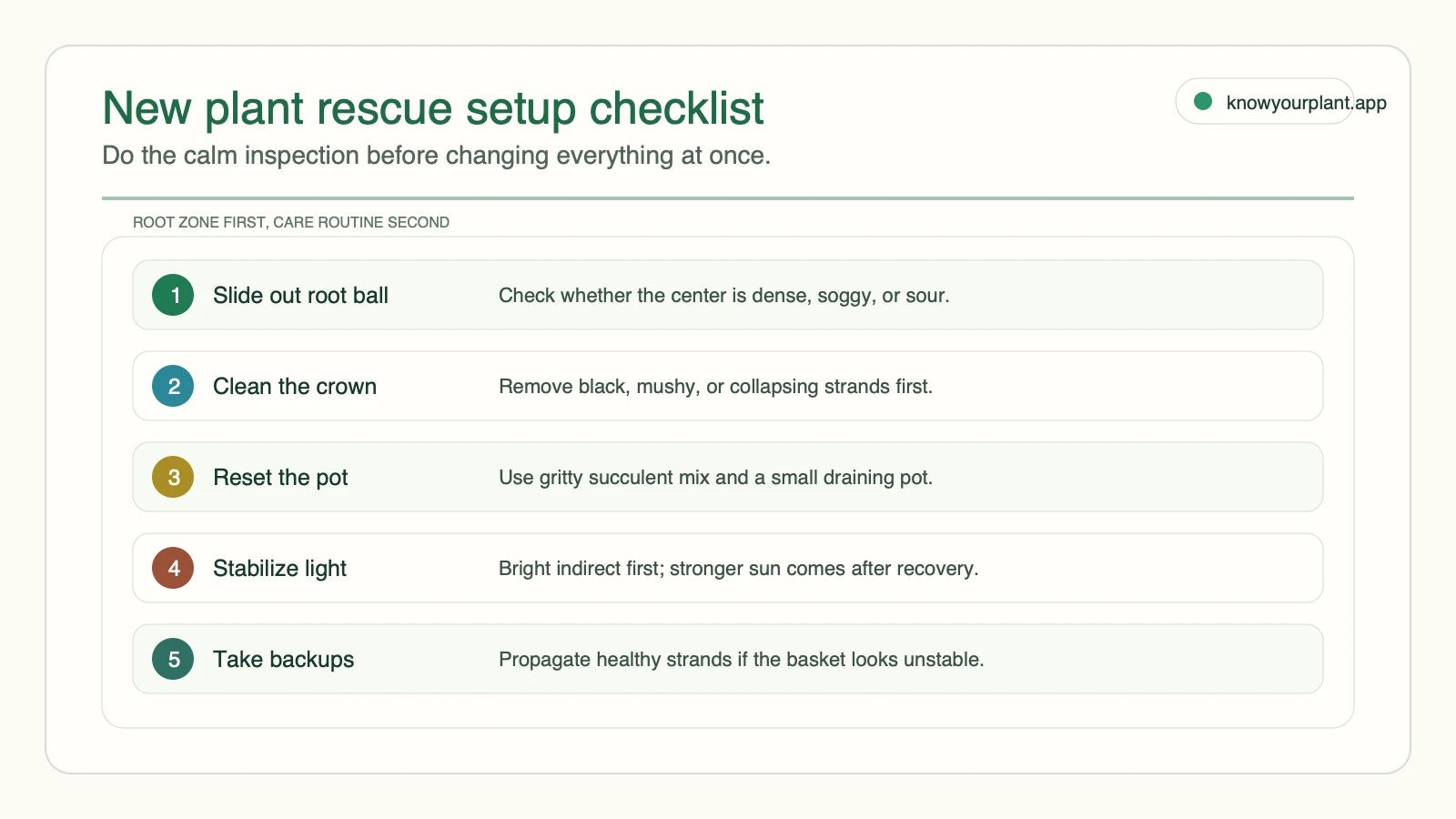
Run the setup checklist before doing anything dramatic; most rescues start with the root zone, not a new watering schedule.
Soil and Pots
The safest setup is a small pot with a drainage hole and a gritty succulent mix. A cactus blend improved with extra perlite or coarse mineral material works well because it lets water move through the shallow root zone quickly.
Pot size matters more than many people think. String of pearls does not need a large volume of damp soil around it. An oversized pot stays wet too long, especially at the center, and that creates the exact conditions that rot starts in.
Terra cotta often helps because it dries faster than glazed ceramic. If you prefer a decorative outer pot, keep the plant in a plain nursery pot inside it and always empty runoff after watering.
Seasonal Care Notes
Spring and summer: this is the active growing period. The plant dries faster, tolerates gentle feeding, and responds best to propagation.
Autumn: growth slows. Stretch the watering interval and back off fertilizer.
Winter: keep the plant bright, dry it more thoroughly between waterings, and protect it from cold drafts. A plant that was fine in October can stay wet far too long in January.
Propagation: The Easy Reward
A healthy string of pearls propagates easily. Take a strand at least 7 to 10 cm long, let the cut end dry briefly, then lay the strand across slightly moist succulent mix so the nodes touch the surface. Roots form from those contact points. If your plant has cream-and-green pearls, the variegated string of pearls care guide explains how cutting selection and brighter light help preserve the pattern. If you are building a shelf or basket around this look, the trailing plants indoor guide compares other trailing plants that pair well visually, even when their watering needs differ.
Do not bury the entire strand. Let it rest on the soil with light contact. Bright indirect light and only mild surface moisture are enough. If you want a broader walkthrough for cuttings and backup methods, our plant propagation guide breaks it down step by step.
Common Mistakes That Keep Repeating
- Watering because the top layer looks dry while the center of the pot is still wet
- Moving the plant straight from dim indoor light into harsh direct sun
- Leaving it in dense nursery soil for months after purchase
- Using a pot without drainage because the basket looks prettier that way
- Treating shriveled pearls in wet soil as thirst instead of root trouble
These are all fixable once you start checking the root zone and the pearls together instead of relying on habit.
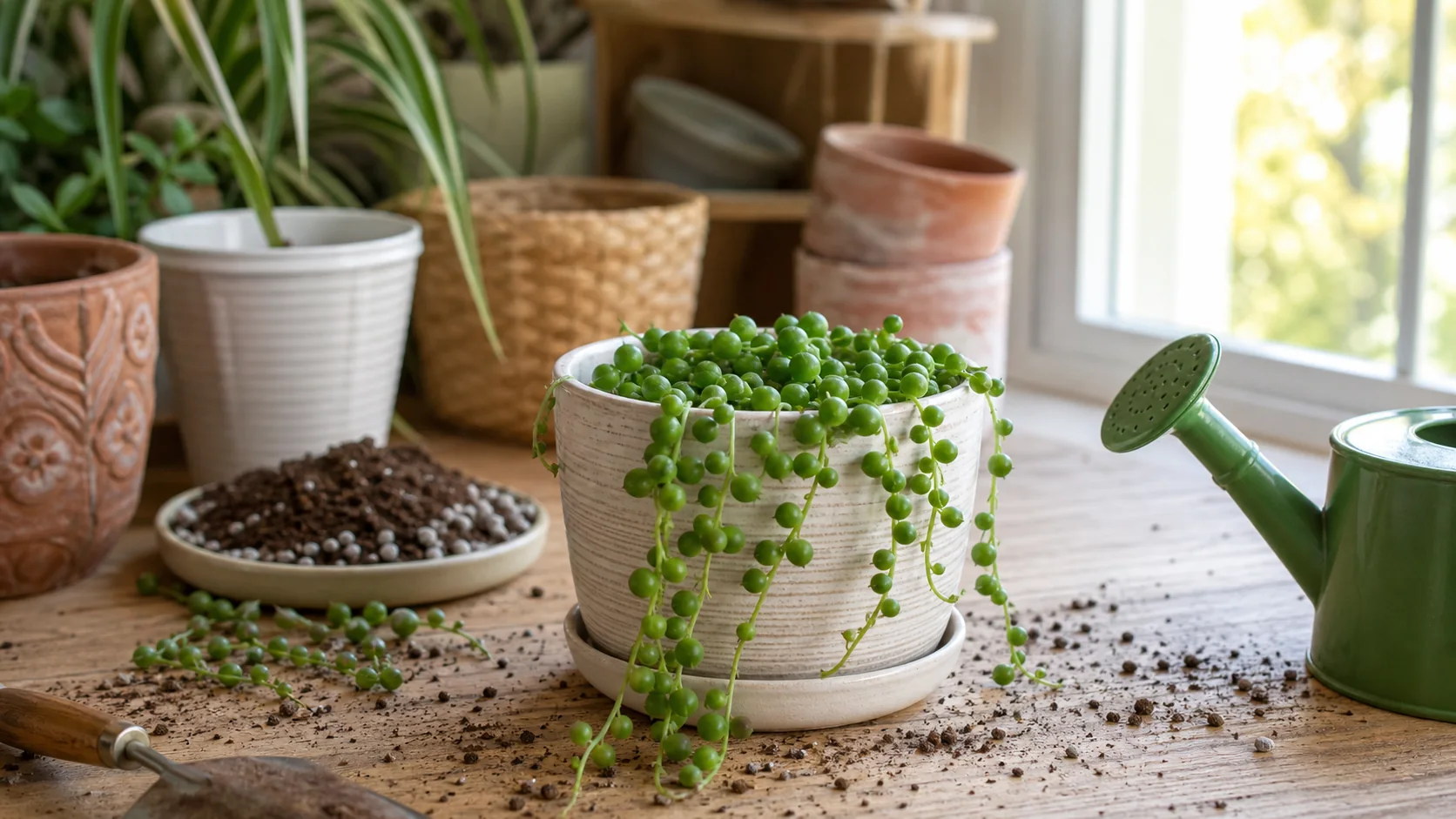
Pair the pearl check with a small draining pot and gritty mix before reaching for the watering can.
Is String of Pearls Safe for Pets?
No. ASPCA guidance treats string of pearls as toxic to cats and dogs. Keep the strands fully out of reach, not just on a low shelf where a curious pet can still grab them.
If you want the trailing look without the toxicity risk, our cat-safe indoor plant guide is a better starting point.
Common Problems at a Glance
Shriveling Pearls
If the soil is bone dry, slight wrinkling usually means thirst. If the soil is still wet, shriveling often means the roots are damaged and can no longer move water upward effectively.
Mushy or Translucent Pearls
This usually means overwatering or rot. Let the plant dry, trim damaged growth, and inspect the base before you water again.
Bare Strands with Few Pearls
This is usually a light problem. Move the basket closer to bright light and give the plant time to rebuild compact growth.
Pale or Yellowing Pearls
Look at sun exposure and drainage together. Hot direct sun can bleach pearls, but chronically wet soil can also push the plant toward yellow decline.
If you are comparing care routines for another houseplant, see Kalanchoe Plant Care: Keep It Healthy and Get It to Rebloom for a focused step-by-step guide.
Real User FAQ
How often should I water string of pearls? Usually every 10 to 14 days in active growth, then much less often in winter, but do not use the calendar as your main guide. Use dryness through the pot plus the pearl squeeze test.
Why are my string of pearls pearls turning mushy? Mushy pearls usually mean excess moisture around the roots. Stop watering, let the mix dry, remove any rotted sections, and inspect whether the soil is holding too much water.
Can string of pearls survive low light? It can survive for a while, but it usually becomes leggy, sparse, and weak. This plant really wants bright light.
How do I propagate string of pearls? Lay a healthy strand on top of slightly moist succulent mix so the nodes touch the soil. Keep it bright and lightly moist until roots form.
Why does my string of pearls keep dying? Usually because the plant is being watered like a tropical, kept in slow-drying soil, or left too far from the window. Light, drainage, and restraint solve most repeat failures.
Should I mist string of pearls? No. It prefers dry air. Misting is usually unnecessary and can keep moisture where this plant does not want it.
Is string of pearls toxic to cats and dogs? Yes. Keep it well out of reach and choose a pet-safe trailing plant if that is not practical in your home.
Methodology Note
This guide was refreshed using live SERP review for string of pearls care, social discovery around repeated owner problems, and fact checks against North Carolina Extension, Wisconsin Horticulture, and ASPCA pet-safety guidance. Extension and ASPCA sources were treated as the source of record for care and toxicity claims. Community discussion was used only as qualitative signal for where owners get confused most often.
Making It Work Long-Term
The people who finally keep string of pearls alive are usually the ones who stop treating it like a fragile hanging tropical. It is a drought-adapted succulent that wants bright light, fast drainage, and long dry stretches between drinks.
Once you start checking pearl firmness instead of watering out of guilt, the whole plant gets easier. If you want help tracking those changes, plus diagnosis support when something looks off, download KnowYourPlant. It is built for exactly this kind of plant: the ones that seem fussy until you understand what they are actually asking for.
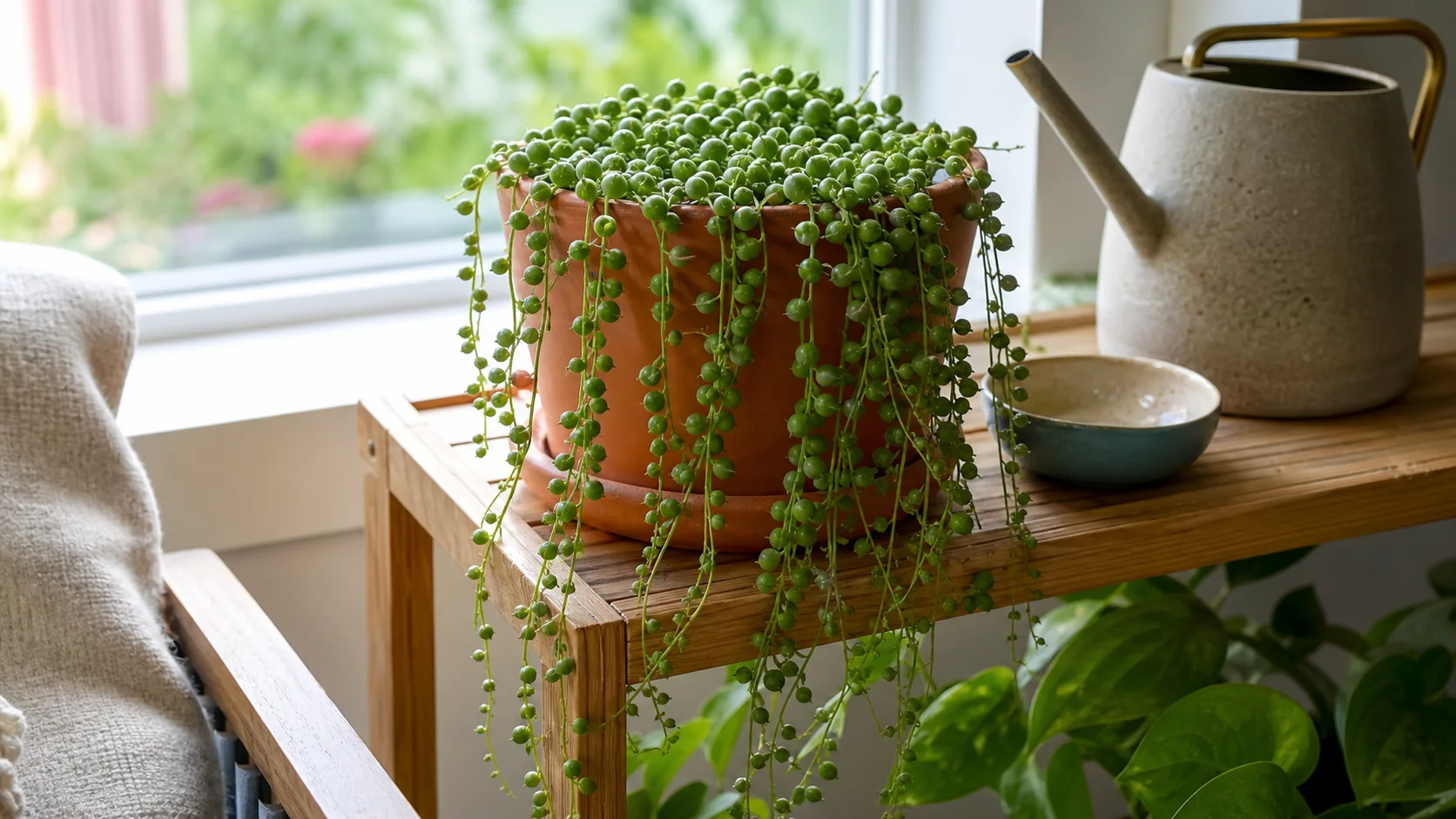
Keep string of pearls near bright light in a fast-drying terracotta pot, then water only after the pearls and mix show they are ready.