You trimmed a pothos vine, noticed a healthy node, and wondered whether that piece could really become a whole new plant. It can, but success depends less on luck than on one simple detail: the condition of the node and the method you choose for that exact cutting.
Most pothos propagation guides give the same basic water steps. The real beginner problems usually show up somewhere else: missing the node, using the wrong method for a leafless cutting, waiting too long to transfer water roots, or potting into a mix that stays wet for too long.
This guide shows how to propagate pothos in water, soil, or moss, when each method fits best, and how to avoid the failures that keep showing up in community threads. If you are starting from a stressed parent plant, the broader pothos care guide helps you stabilize light, soil, and drainage before you start cutting. If you want to keep the rooted vine in water permanently, compare it with the other houseplants that grow in water and their long-term nutrient needs.
Species evidence behind pothos propagation
The propagation steps in this guide concern Epipremnum aureum. Native-climate evidence adds species context but does not measure rooting speed in water, perlite, or potting mix.
The ranges below are the middle 50% (p25–p75), not recommended indoor setpoints.
| Reference taxon | POWO native range | Annual mean temperature | Annual precipitation | Relative humidity | Solar radiation | Evidence |
|---|---|---|---|---|---|---|
| Epipremnum aureum (golden pothos) | Mo’orea in the Society Islands | 25.7–25.9°C | 2451–2644 mm/yr | 63–64% | 20.0–20.1 MJ/m²/day | 6 climate points; low confidence |
What this changes in this guide: Use node condition, temperature, oxygen, and rot checks to manage a cutting. Do not turn outdoor precipitation into a propagation-water rule.
Sources and method: Epipremnum aureum in POWO and GBIF; CHELSA V2.1, 1981–2010. GBIF records are limited to POWO-native countries, then filtered for coordinates, establishment signal, licence, precision, and spatial duplication. No community or user-reported care data is used in this module.
What Most Step-by-Step Guides Miss
The core question is not just “how do I propagate pothos?” It is “what kind of cutting do I have right now, and what method gives that cutting the best chance to root without rotting?”
Before you start, check four things:
- Node count: every cutting needs at least one healthy node. No node means no roots.
- Cutting type: a leafy cutting, a bare node, and a stressed or mushy stem should not all be treated the same way.
- Transfer timing: water roots are useful, but leaving them in water too long makes the move to soil harder.
- Aftercare: warmth, indirect light, and restraint beat constant adjustment.
The safest propagation routine is boring on purpose: clean cut, one method, stable conditions, and patience.
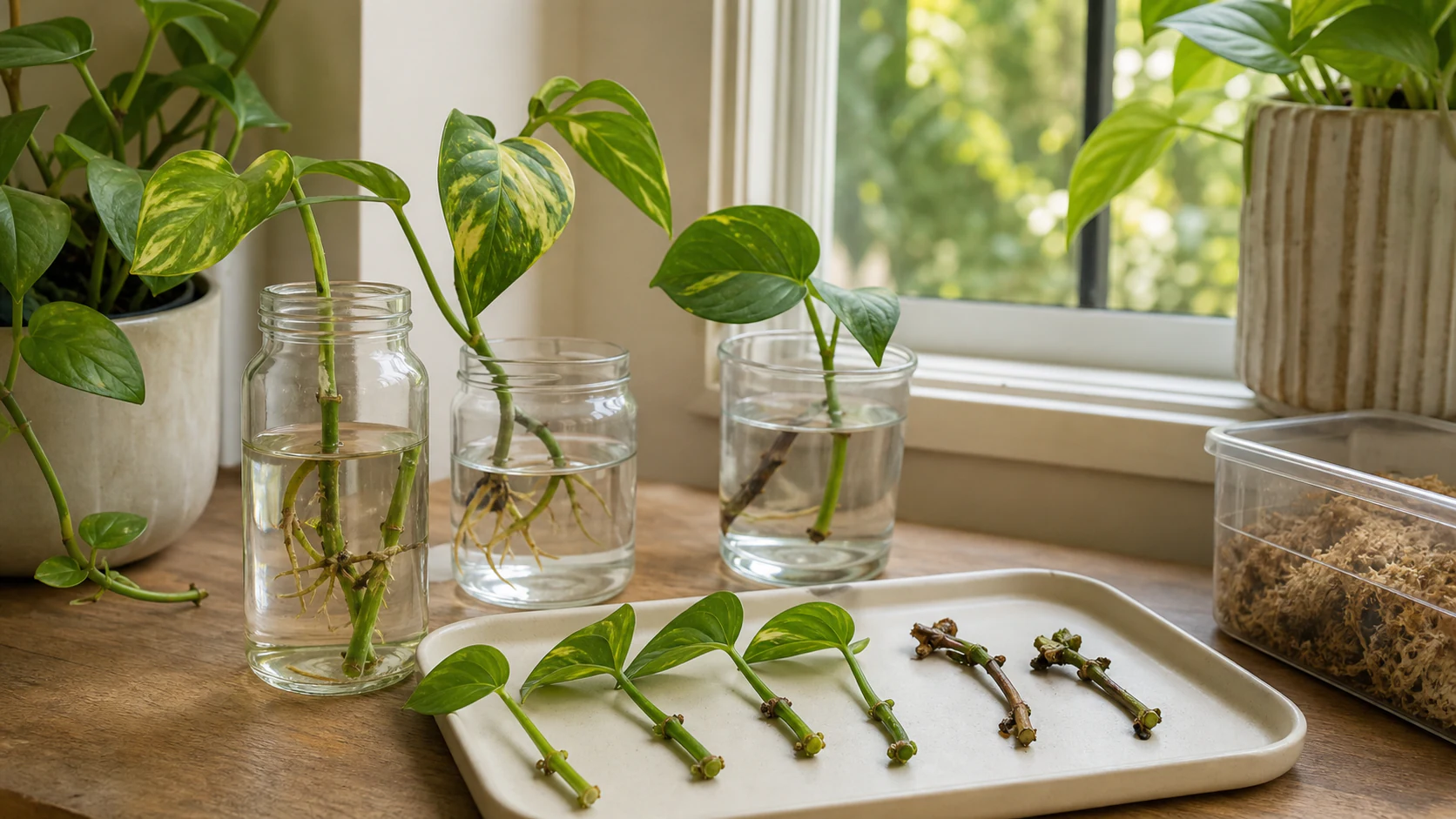
Compare leafy cuttings, bare nodes, water roots, and moss before choosing the propagation method that fits each piece.
Identification Snapshot: What a Good Pothos Cutting Looks Like
| Check | What to look for | Why it matters |
|---|---|---|
| Node | A visible bump or joint where the leaf meets the vine, often with a tiny root nub | Roots grow from the node, not the bare stem |
| Stem texture | Firm, green, or healthy variegated tissue | Soft, dark, or collapsing stems are much more rot-prone |
| Leaf condition | At least one healthy leaf for a standard cutting | A leafy cutting can root in water or soil more easily than a bare node |
| Aerial root nub | Small brown or white nub near the node | This is a good sign, especially for water or moss propagation |
| Overall vine health | Cutting comes from a healthy section above any rot | Propagating from damaged tissue usually spreads the problem |
Lookalikes and “Confused With” Cases
People use “pothos” loosely in plant talk, so it helps to know what you are actually holding.
| Plant or cutting | Why people confuse it with pothos | What matters for propagation |
|---|---|---|
| Golden pothos and variegated pothos | Same species, different leaf pattern | Propagation method is the same; variegated cuttings may root a little more slowly |
| Satin pothos | Common name includes pothos even though it is a different plant | Node-first logic still matters, but growth pace and leaf texture are different |
| Heartleaf philodendron | Similar trailing shape and beginner-friendly reputation | Cuttings root similarly, but do not assume every unlabeled vine is pothos |
If you want to compare leaf pattern and growth habit before cutting from multiple plants, the complete pothos varieties guide helps sort that out.
Care Cards for Fast Decisions
| Topic | Best baseline |
|---|---|
| Best light while rooting | Bright, indirect light |
| Best temperature | Warm indoor conditions, ideally above 18 degrees C / 65 degrees F |
| Safest first cutting | One node plus one healthy leaf |
| Water method check-in | Refresh water about once a week |
| Soil method check-in | Keep mix lightly moist, not soggy |
| Best first pot after rooting | Small pot with drainage, not an oversized one |
| Typical rooting window | Roughly 2 to 6 weeks depending on warmth and cutting health |
Why Pothos Roots So Readily
Pothos is beginner-friendly because the vine is already set up to root at the nodes. NC State’s plant profile for Epipremnum aureum notes that pothos roots easily and also warns that the plant is prone to root problems when kept too wet. That combination explains why propagation is forgiving, but also why beginners run into trouble when they confuse moisture with constant saturation.
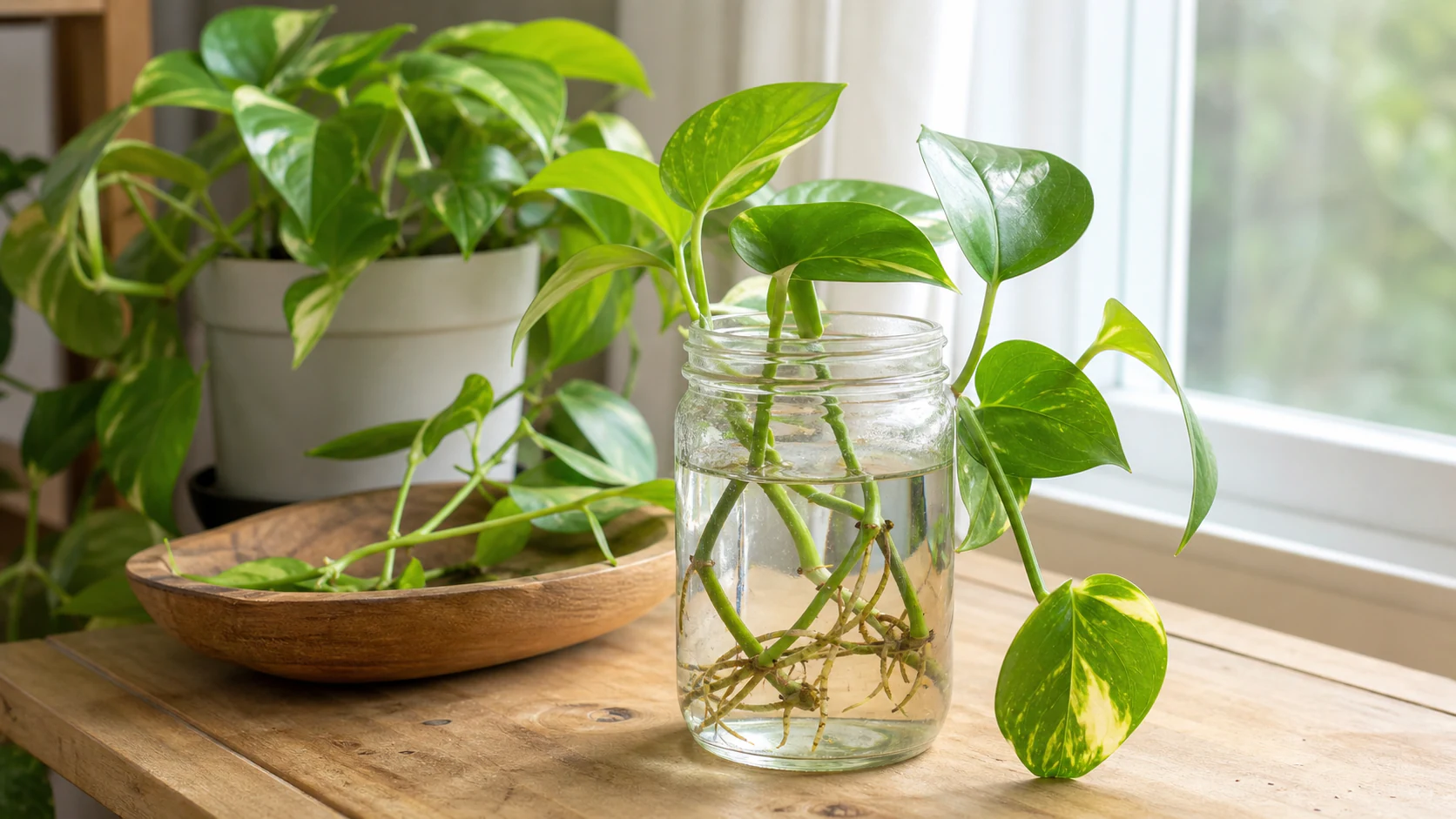
Pothos roots emerge readily from submerged nodes, but healthy leaves still need to stay above the waterline.
Decision Tree: Which Propagation Method Fits Your Cutting?
- You have one or more healthy leaves plus a firm node.
- Start with water if you want the easiest visual feedback.
- Start with soil if you want to skip the transfer step and can keep moisture steady.
- You have a leafless node or a very short wet stick.
- Use moss or a humidity box rather than plain water. Community discussions keep surfacing this as the safer route for bare nodes.
- The stem is soft, blackening, or smells off.
- Do not propagate that section. Cut higher into healthy tissue first.
- You want a fuller plant, not just one spare cutting.
- Take multiple healthy nodes and plan to cluster them together after rooting.
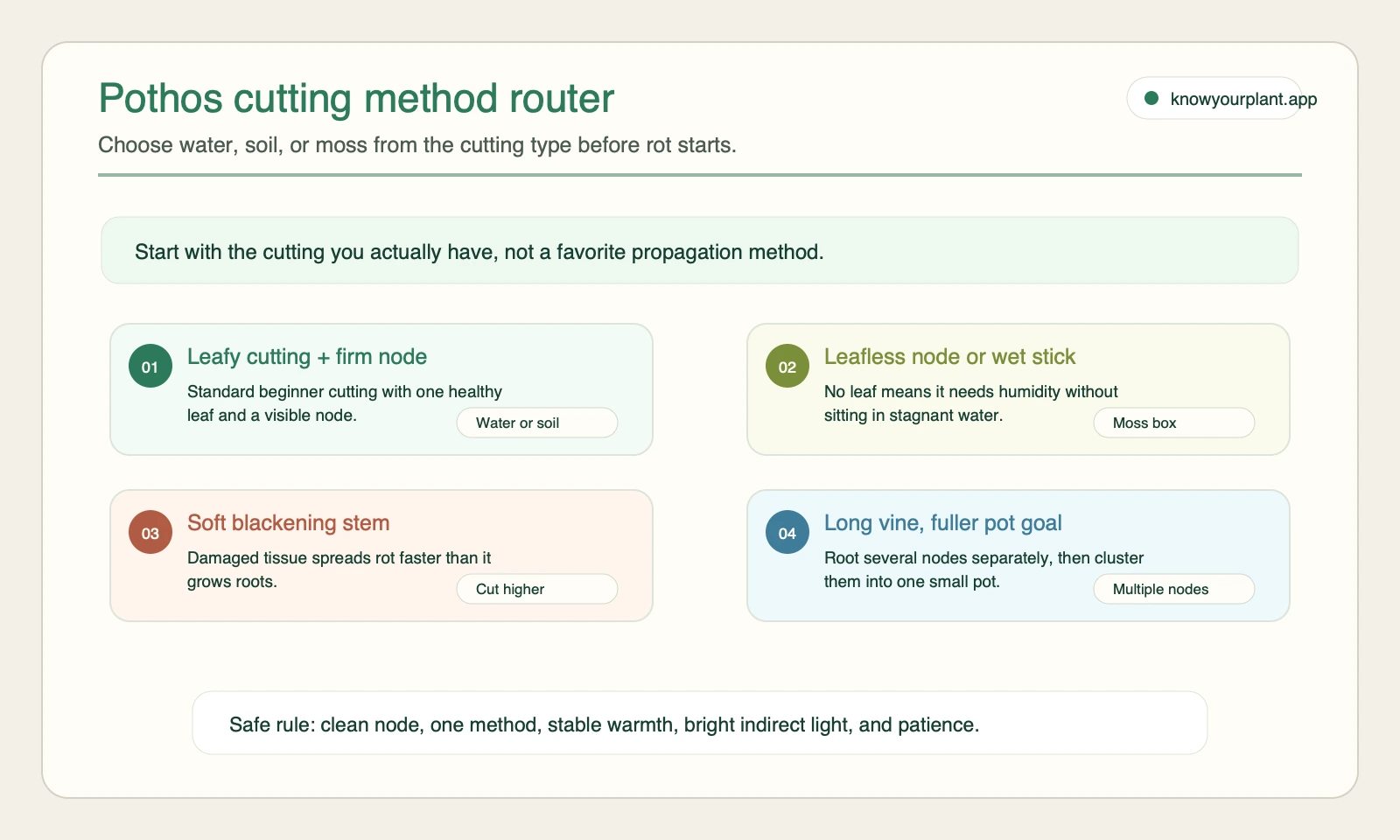
Choose the propagation method from the cutting in front of you: leafy nodes can start in water or soil, bare nodes need moss and humidity, and soft stems should be cut back to healthy tissue first.
That one decision tree solves more failed propagations than most extra products do.
Water vs Soil vs Moss: Which Method Is Better?
| Method | Best for | Main failure mode | Transfer risk | Beginner difficulty |
|---|---|---|---|---|
| Water | Leafy cuttings with a visible node, first-time propagators | Stale water, submerged leaves, waiting too long to transfer | Medium | Easiest to monitor |
| Soil | Healthy cuttings when you want roots adapted to potting mix from the start | Overwatering or disturbing the cutting too early | Low | Medium |
| Moss / propagation box | Leafless nodes, short wet sticks, or cuttings that need extra humidity | Staying too wet or too cold | Low to medium | Medium |
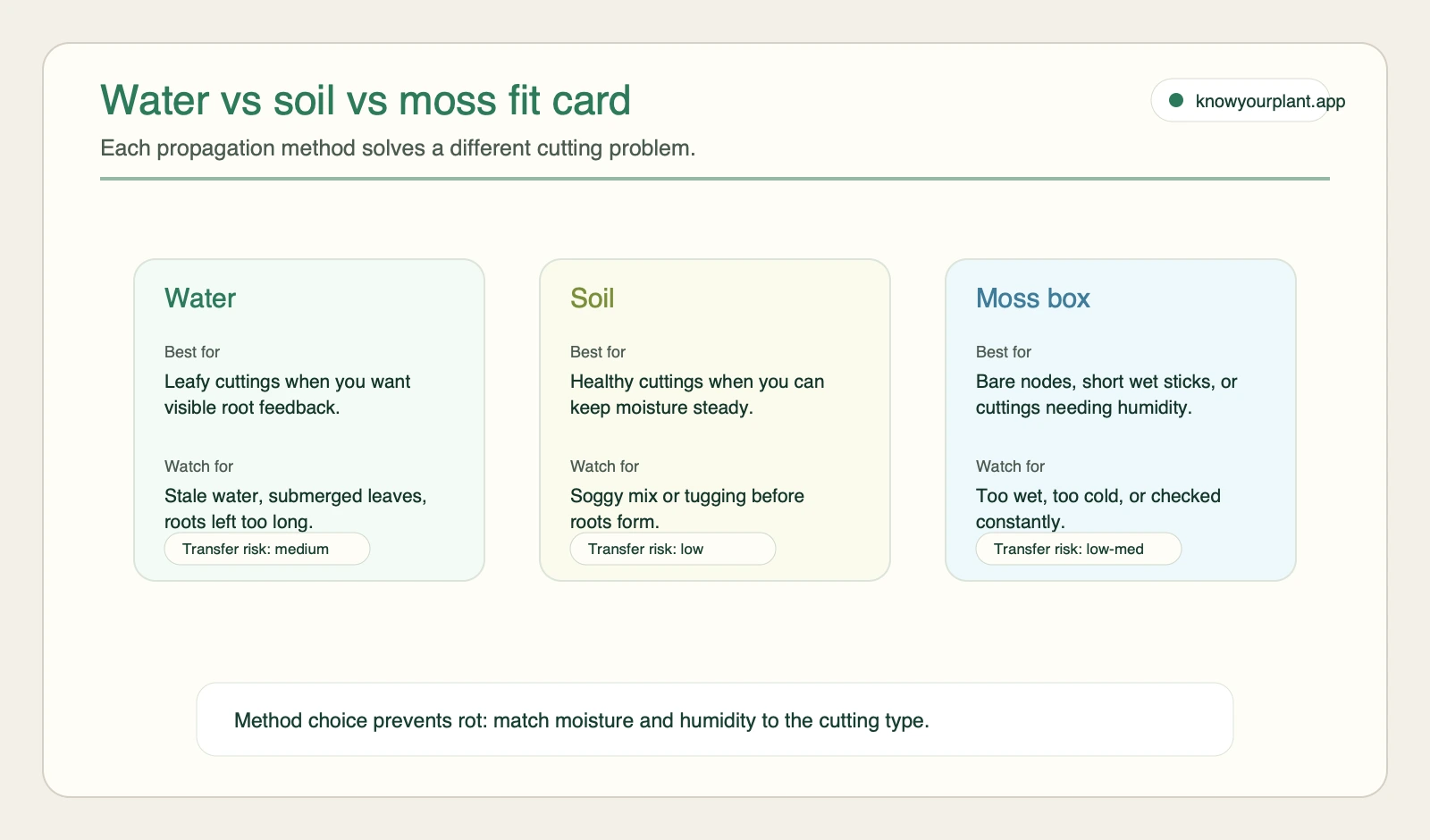
Water is easiest to monitor, soil avoids the transfer step, and moss gives bare nodes humidity without forcing them to sit in stagnant water.
If your cutting already has a leaf, water is usually the simplest place to start. If it is only a node, moss is often the better rescue method because it gives humidity without forcing the node to sit in stagnant water.
What Growers Keep Running Into
Community threads around pothos propagation keep surfacing three frustrations:
- growers trying to root leafless nodes in plain water and wondering why nothing happens,
- growers hoping to turn one long straggly vine into a fuller plant, not just one spare cutting,
- and growers who get roots started in water but lose momentum during the water-to-soil transfer.
Those are useful signals because they tell you where the real failure points are. The step-by-step basics are easy. Matching the method to the cutting and knowing when to transfer is what usually separates success from rot.
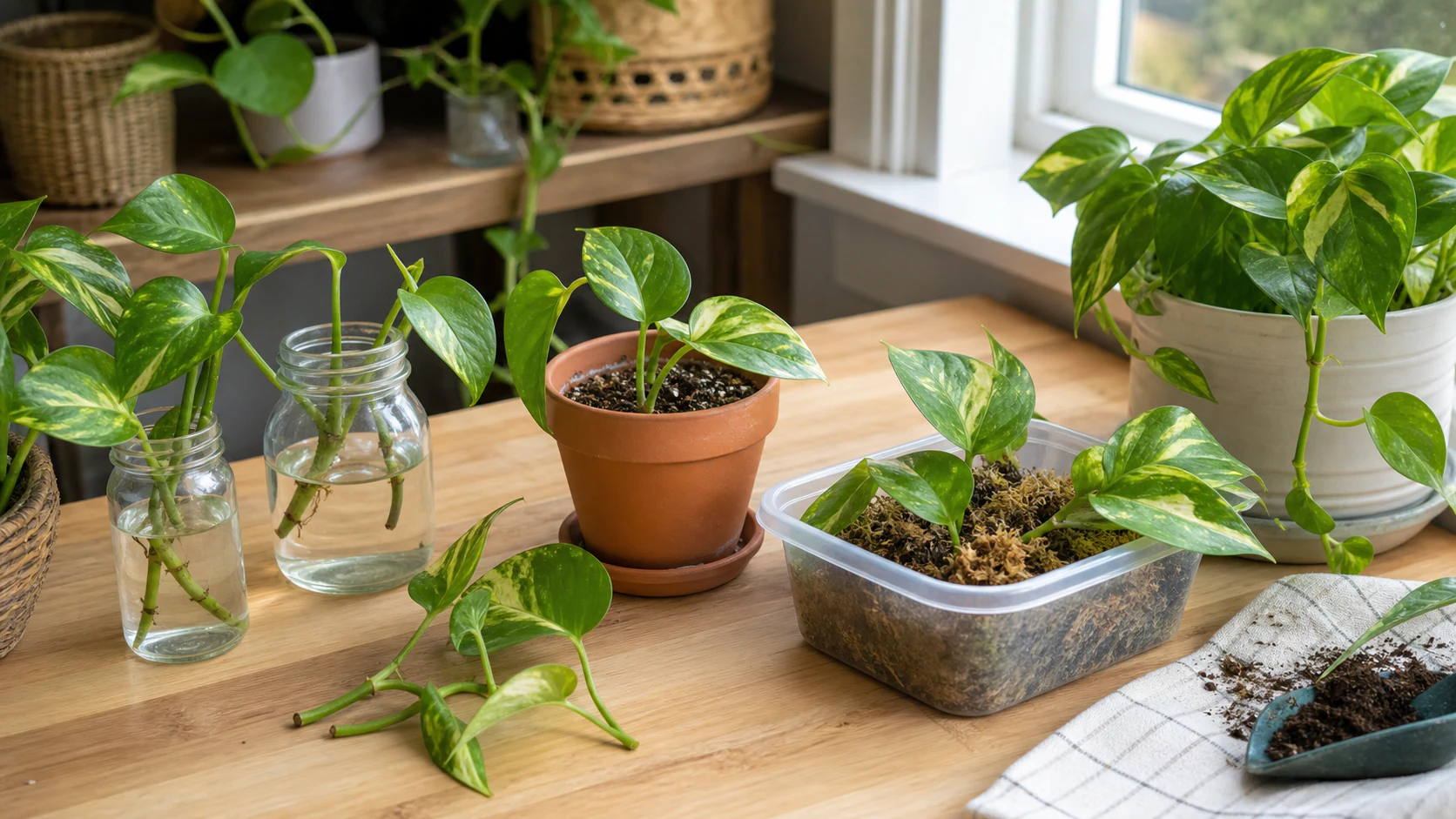
Water, soil, and moss setups solve different pothos propagation problems, while multiple rooted cuttings create a fuller finished pot.
Real Example: Turning One Long Vine Into a Fuller Pot
A long, sparse pothos vine might give you four or five usable nodes. If you root those as separate cuttings and pot them together later, the result looks fuller much faster than growing one cutting alone.
That is why a cluster of rooted cuttings often looks more like a finished plant than a single propagated stem. It also matches what growers keep wanting in forums: not just more plants, but a bushier result from a leggy one.
The One Thing That Matters Most: The Node
A node is the small joint where a leaf connects to the vine. That is where roots form. A cutting without a node will not root, no matter how healthy the leaf looks.
Cut just below the node. If you are using water, remove any leaf that would sit below the waterline. Rot often starts because a submerged leaf decays first and dirties the jar.
Method 1: Rooting in Water
Water propagation is popular for a reason: you can see what is happening.
- Place the node below the waterline and keep the leaf above it.
- Set the jar in bright, indirect light.
- Refresh the water about once a week.
- Pot up once roots are established and no longer just tiny threads.
This method is forgiving, but it still has one common trap: waiting until the roots are very long before potting up. Water-grown roots adapt best when you transfer while they are established but still young.
Method 2: Rooting Directly in Soil
Soil propagation works well when the cutting is healthy and you can keep conditions steady.
- Bury the node lightly in moist, airy potting mix.
- Keep the mix lightly moist, not heavy and wet.
- Avoid tugging on the cutting too soon.
- Watch for new leaf growth as the clearest rooting sign.
This is a good choice if you know you tend to over-manage water cuttings.
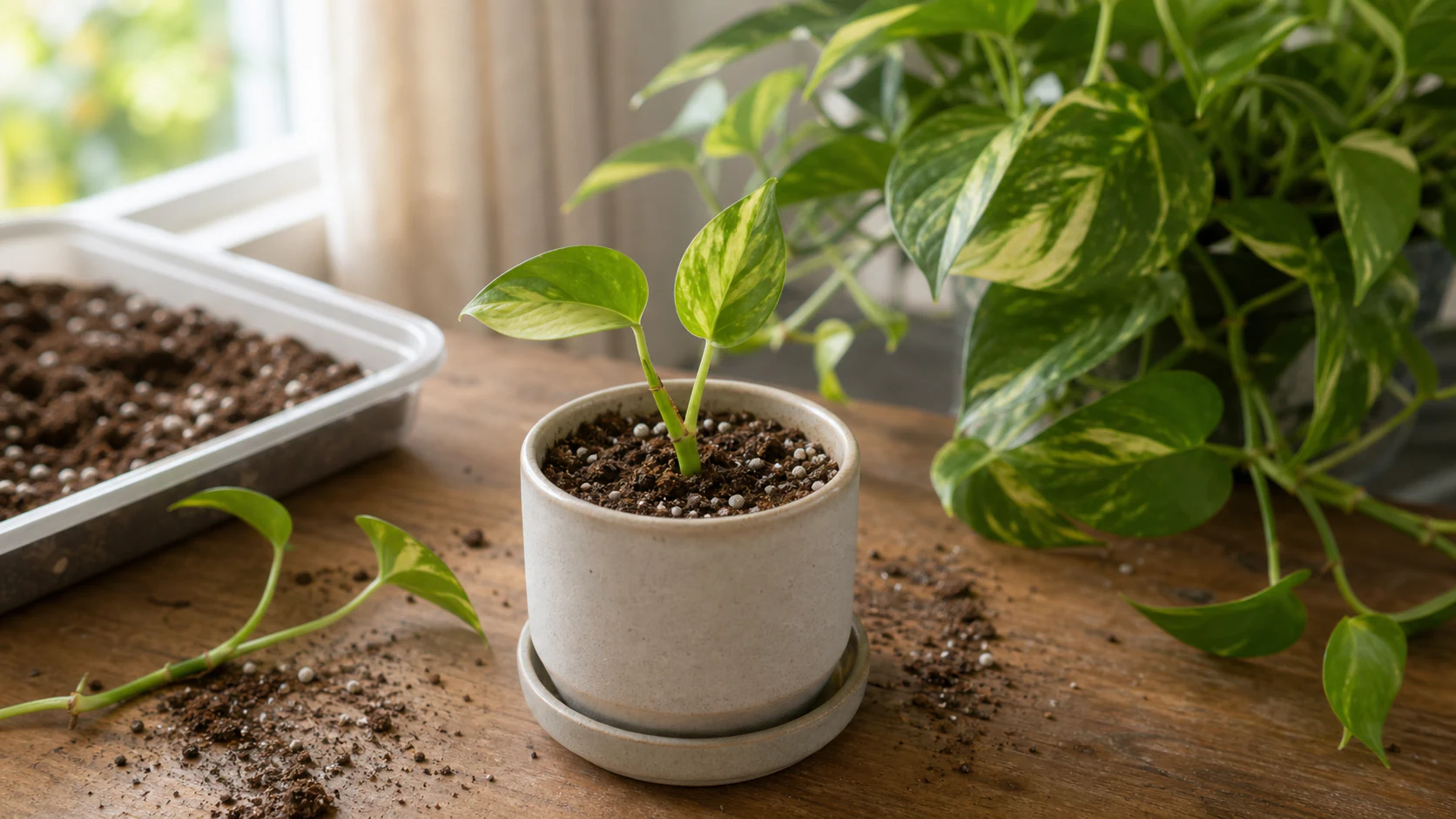
A small draining pot and airy, lightly moist mix give healthy pothos nodes a steady start without waterlogging.
Method 3: Moss or a Propagation Box for Bare Nodes
This is the method most mainstream guides under-explain. If you only have a bare node or a short section with no leaf, moss or a humidity box often gives you a better shot than a glass of water.
The goal is simple: keep the node warm and humid without leaving it waterlogged. Check regularly for rot, but do not keep disturbing it.
Transfer Checklist: When Water Roots Are Ready for Soil
Use this quick checklist before potting up:
- Roots are visible and established, not just tiny nubs.
- The cutting still looks firm and hydrated.
- The new pot is small and has drainage.
- The potting mix is moist before planting, not bone dry.
- You can keep the soil evenly lightly moist for the first week or two.
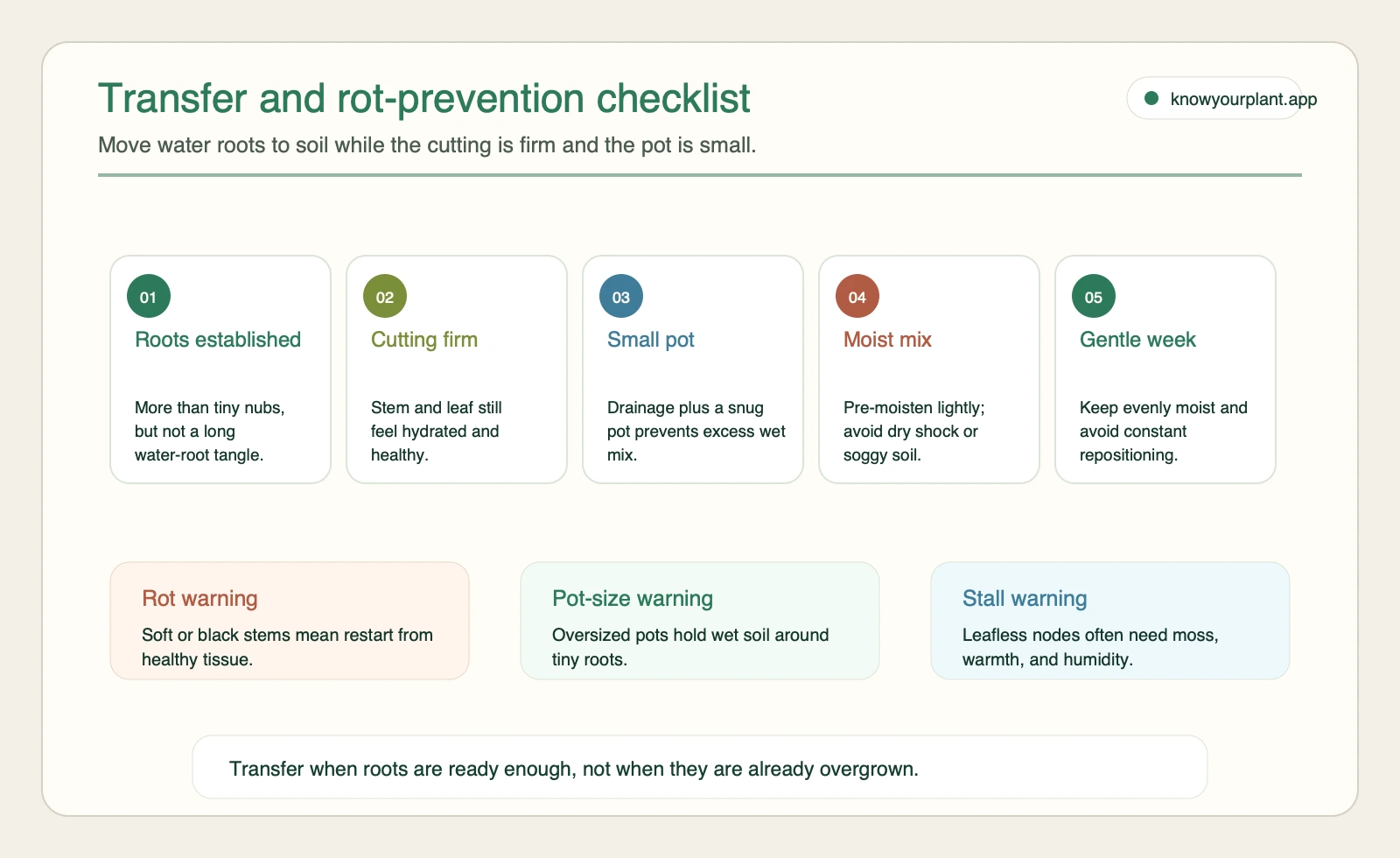
Transfer while roots are established but not overgrown, then protect the cutting with a small draining pot, lightly moist mix, and a quiet first week.
The biggest beginner mistake is using too large a pot. That leaves excess wet soil around a tiny root system and raises the chance of rot. After potting up, use the same dry-down checks from the how often to water pothos guide so the new roots do not sit in soggy mix.
Common Problems and Symptom Diagnosis Card
| Symptom | Most likely issue | What to do next |
|---|---|---|
| No roots after several weeks | Missing node, cold room, weak light, or stale water | Re-check the node, move to a warmer brighter spot, refresh water or switch method |
| Stem turns soft or black | Rot from damaged tissue, stagnant water, or soggy mix | Cut back to healthy tissue and restart with a cleaner method |
| Leaf yellows during rooting | Mild stress can be normal, but multiple yellow leaves suggest trouble | Check water quality, temperature, and whether the node is actually healthy |
| Roots die back after potting | Transfer happened too late or the pot stayed too wet | Downsize the pot, keep moisture even, and avoid heavy watering |
| Leafless node stalls | Wrong method or low warmth/humidity | Try moss or a propagation box instead of plain water |
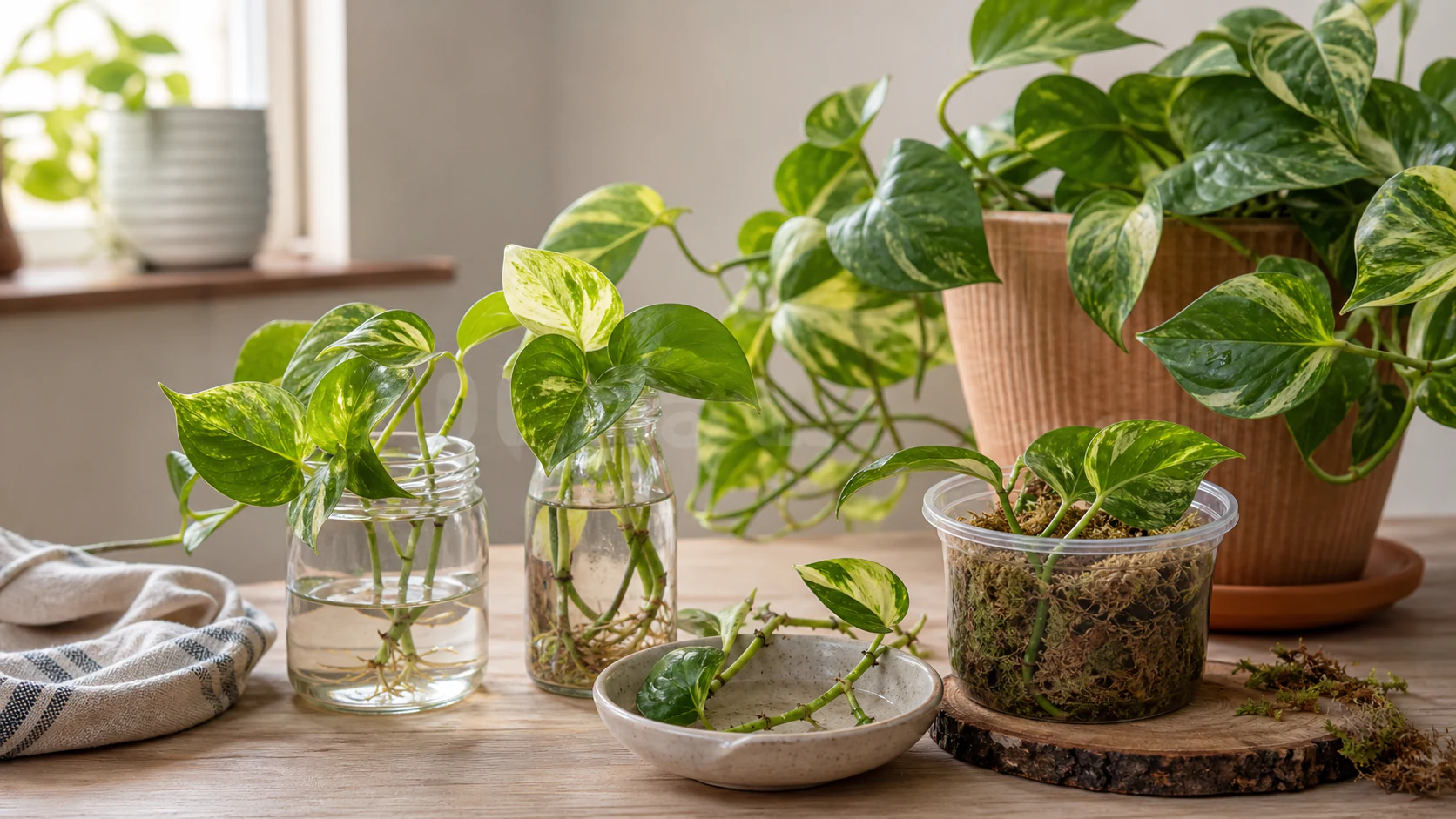
Compare sparse roots, established roots, loose nodes, and moss propagation before deciding whether to refresh, trim, or switch methods.
Common Mistakes That Slow Pothos Propagation
- Taking a cutting with no node.
- Leaving a leaf submerged in the water.
- Using an oversized pot after rooting.
- Keeping soil soggy instead of lightly moist.
- Treating every cutting the same even when one is leafy and another is only a node.
- Moving the cutting around constantly instead of giving it stable light and warmth.
Seasonal Note: Timing Changes the Speed
Pothos can root year-round indoors, but active growing seasons are easier. Spring and early summer usually move fastest. Autumn works, just more slowly. Winter propagation is possible, but it is less forgiving, which is one more reason water or moss is usually safer than heavy soil during cold, dim periods.
Pet Safety Before You Start
ASPCA lists golden pothos as toxic to cats and dogs because of insoluble calcium oxalates. That matters during propagation too. Fresh cuttings, dropped leaves, and jars set at pet height can all create problems. Keep cuttings and trimmings out of reach, and clean up fallen pieces rather than leaving them near the floor.
For another practical pet-safety check, see Are Pothos Toxic to Cats? Symptoms and Safer Next Steps for the risk level and the next steps.
For a related hands-on growing walkthrough, use Pothos Repotting: When to Move It and How to Prevent Shock for the setup and follow-up care.
Real User FAQ
Can I propagate pothos without a node?
No. A healthy-looking leaf alone is not enough. Roots come from the node.
Is water or soil better for pothos propagation?
Both can work. Water is easier to monitor. Soil avoids the transition step. Moss is often the better option for leafless nodes.
How long does pothos take to root?
A healthy cutting in warm, bright indirect light often roots within a few weeks, but cooler rooms and weaker cuttings can take longer.
Why did my cutting root in water but struggle in soil?
The most common reasons are waiting too long to transfer, using too large a pot, or keeping the mix too wet after potting up.
Can I make a leggy pothos look fuller with propagation?
Yes. The easiest way is to root multiple nodes from the same vine and pot them together instead of growing one cutting alone.
Is pothos propagation safe around pets?
The process is still risky for pets because pothos tissue is toxic if chewed. Keep cuttings, propagation jars, and fallen leaves out of reach.
Methodology and Freshness Note
This guide was updated in June 2026 after reviewing current search results for pothos propagation, current community questions around water, moss, and transfer problems, and primary-source plant safety and care references from NC State and ASPCA. The directly verified parts are pothos rooting behavior, overwatering risk, and pet toxicity. Community evidence here is qualitative signal, useful for spotting where beginners actually get stuck.
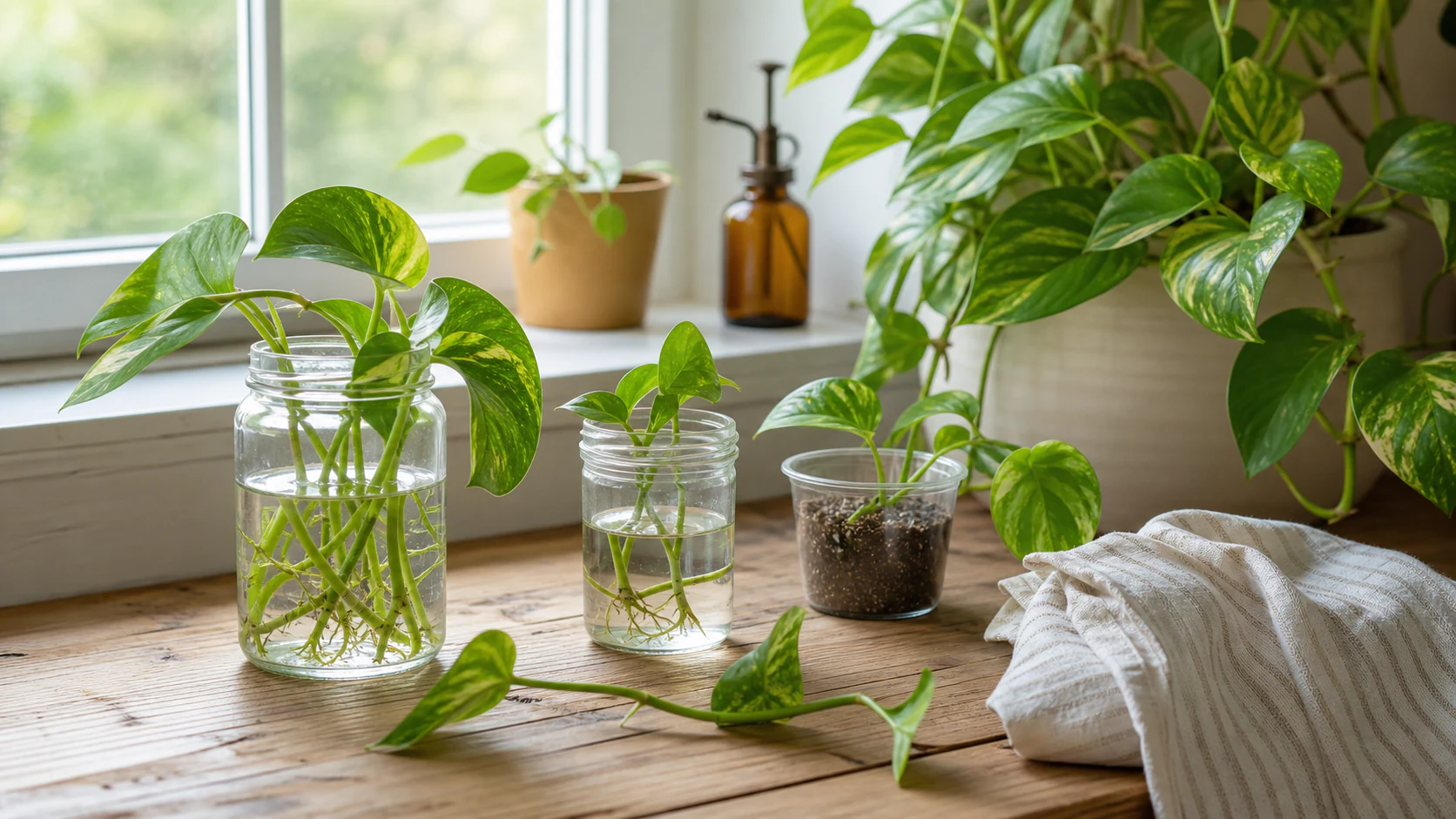
Established roots, younger cuttings, and a newly potted start show the progression that steady light and moisture support.
Once you see that first new leaf or a small cluster of healthy roots, the hard part is over. From there, the next win is not more intervention. It is steady aftercare: small pot, bright indirect light, gentle moisture, and time.
If you want reminders for watering, feeding, and checking new cuttings as they settle in, KnowYourPlant can help you track propagation progress and catch care mistakes early.