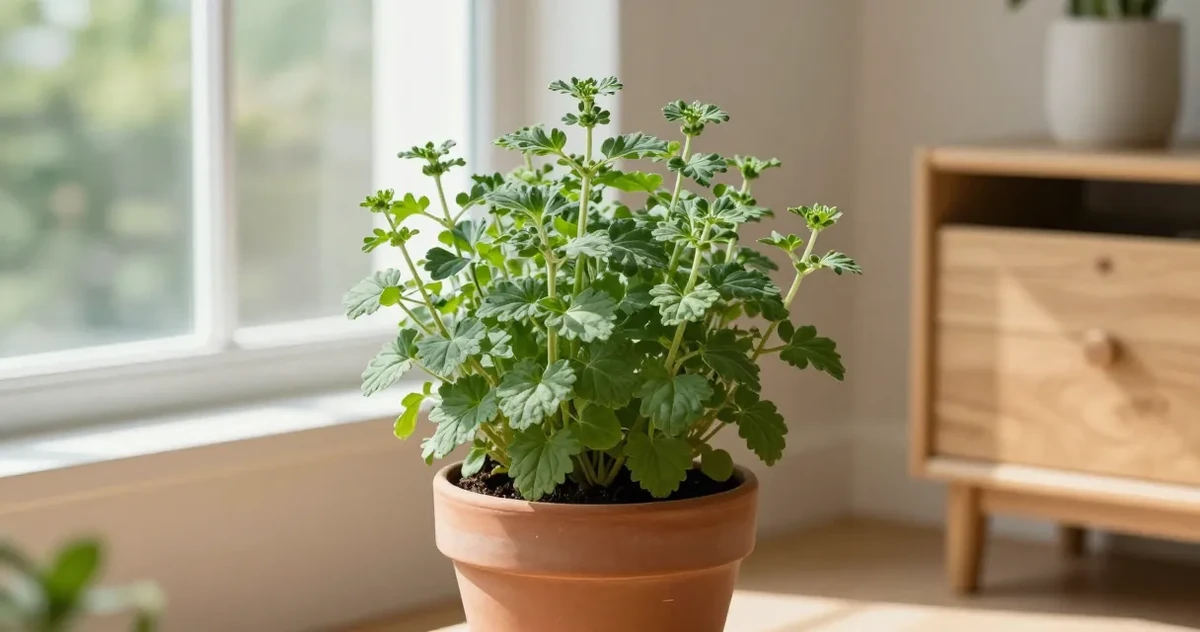
You bought a potted basil from the grocery store, set it on your kitchen windowsill, and two weeks later it had collapsed into a pile of yellowed stems. Sound familiar? Building an indoor herb garden is one of the most useful things you can do with a spare corner of your kitchen, but most people start with herbs that need more light than their space can provide, or in containers that never let the roots dry out properly.
Fix those two things, and growing herbs inside becomes manageable.
If you are completely new to keeping anything green alive, the broader indoor plant care guide for beginners fills in the watering, light, and soil basics that make herb care easier to read.
An indoor herb garden is a collection of culinary plants grown in containers inside your home, kept productive by the right combination of light, well-draining soil, and regular harvesting that signals the plant to keep producing.
That last part is the one most people miss, and it is the insight that separates a thriving herb setup from a slow decline. Herbs are not houseplants you observe from a distance. They evolved to be grazed, nibbled, and cut back. The more you use them, the better they grow. Holding back to protect the plant is actually what weakens it.
If you are deciding what to buy today, start here:
- Low-light kitchen or forgetful routine: choose mint, chives, or parsley first.
- Bright south window or grow light: basil, rosemary, and thyme become realistic.
- First pot: use a 6-inch container with drainage holes and a saucer you can empty.
- Watering rule: check the soil, not the calendar; most herbs want the top 3 to 4 centimetres to dry before watering.
- Weekly habit: harvest growing tips so the plant branches instead of stretching or flowering.
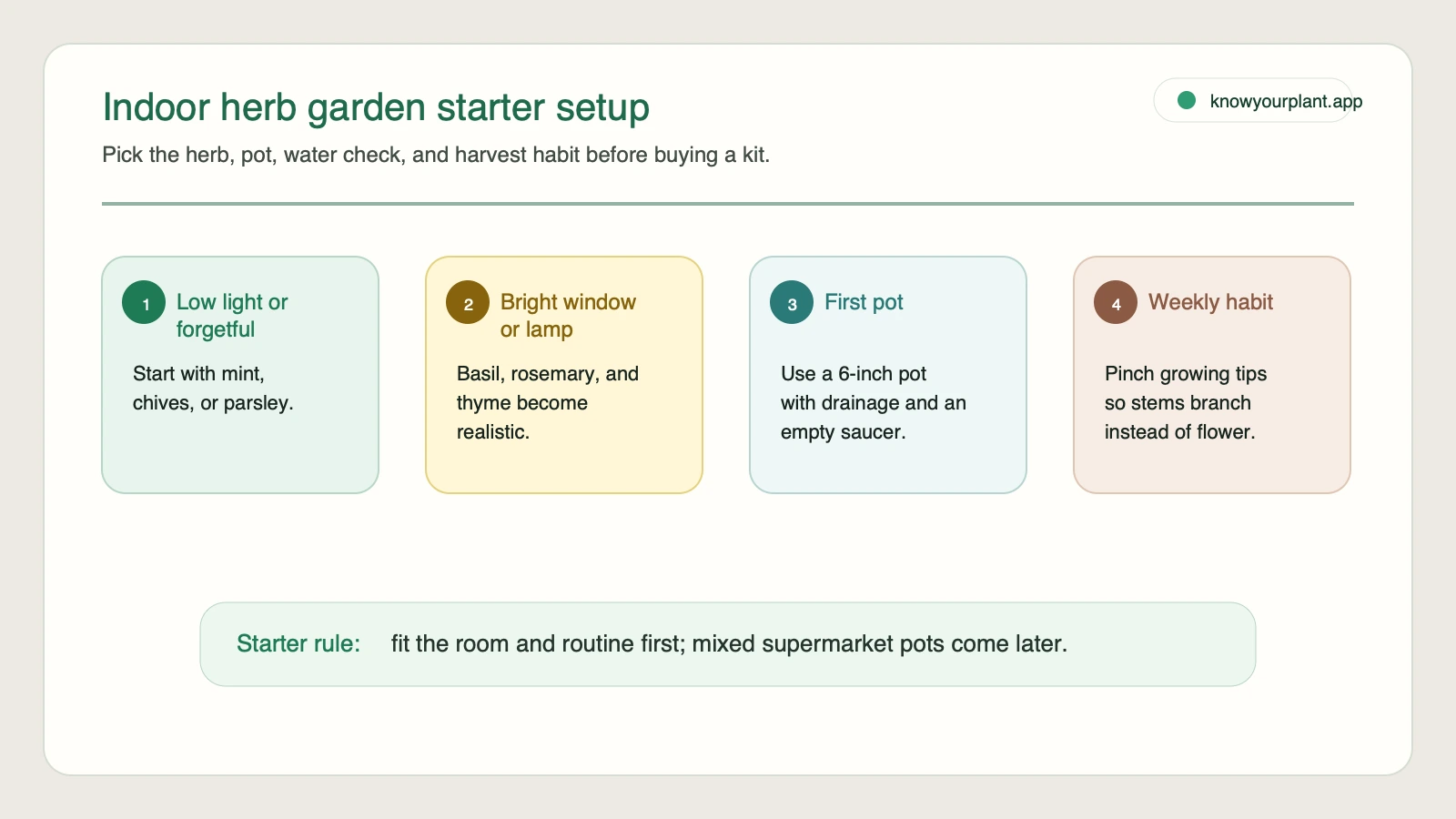
Start with the room and routine before buying herbs: low-light setups need forgiving plants, while basil and woody herbs need real sun or a grow light.
A climate reference for sweet basil
An herb garden contains species with different histories. Sweet basil is used as one explicit, accepted reference because it is a common warm-season herb in this guide.
The ranges below are the middle 50% (p25–p75), not recommended indoor setpoints.
| Reference taxon | POWO native range | Annual mean temperature | Annual precipitation | Relative humidity | Solar radiation | Evidence |
|---|---|---|---|---|---|---|
| Ocimum basilicum (sweet basil) | tropical and subtropical Asia to northern Australia | 23.0–26.8°C | 814–2498 mm/yr | 56–66% | 16.8–19.6 MJ/m²/day | 30 climate points / 220 usable records; medium confidence |
What this changes in this guide: The warm native signal helps explain why basil stalls in cold, dim rooms, but indoor harvest performance still depends on lamp output, pot volume, pruning, and nutrition.
Sources and method: Ocimum basilicum in POWO and GBIF; CHELSA V2.1, 1981–2010. GBIF records are limited to POWO-native countries, then filtered for coordinates, establishment signal, licence, precision, and spatial duplication. No community or user-reported care data is used in this module.
What Most Plant Roundups Miss
Most roundups about indoor Herb Garden list attractive options. The better question is which choice will still make sense in your actual room three months from now.
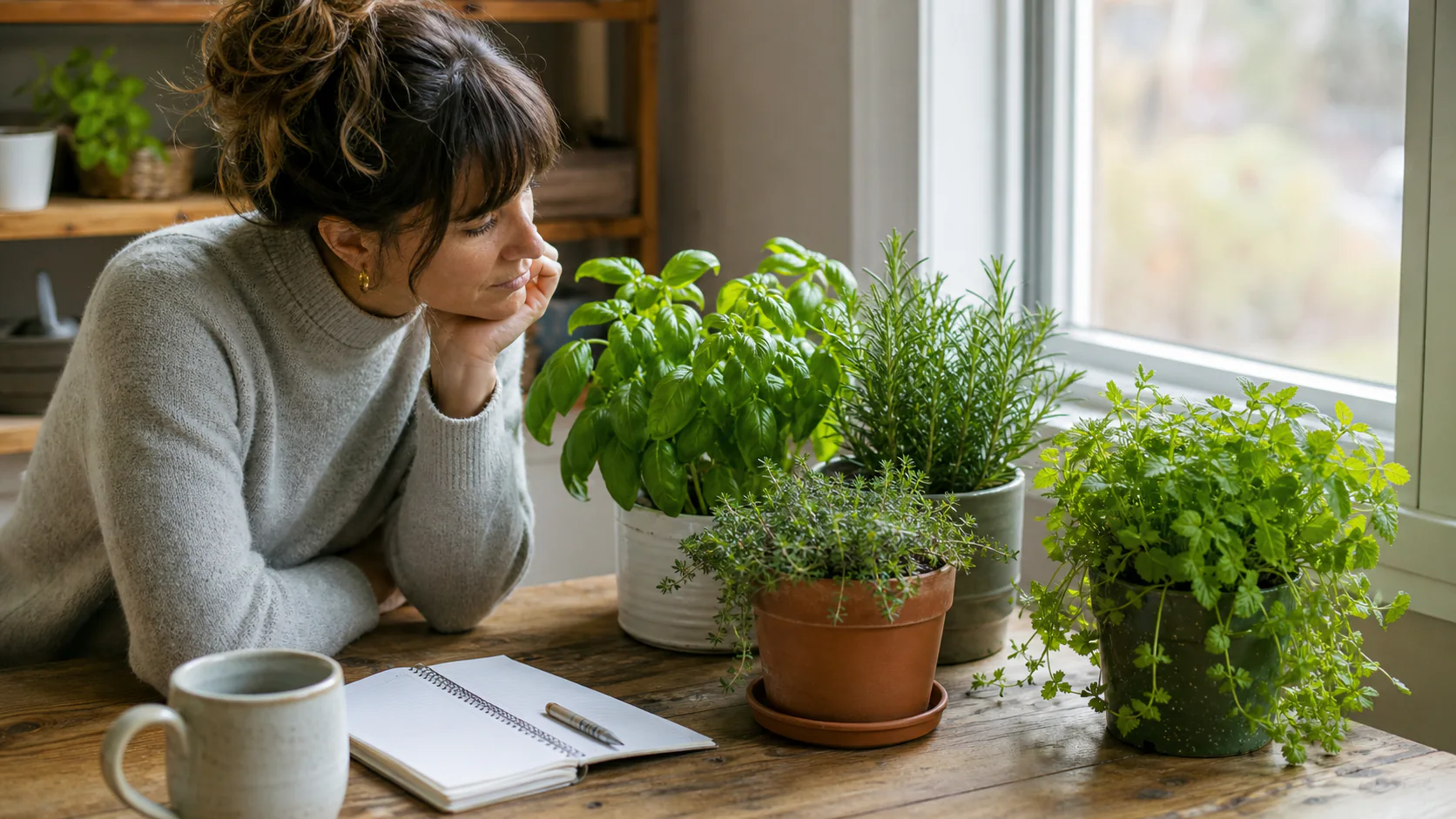
Choose herbs by the window, space, and care rhythm they will actually receive.
Use this filter before choosing:
- Light reality: what the plant receives on a normal cloudy day, not the brightest hour of the week.
- Care rhythm: whether you prefer weekly attention or a plant that can be ignored longer.
- Space: mature height, spread, trailing habit, and whether leaves will touch walls or pets.
- Failure signal: what the plant does first when the match is wrong: yellowing, stretching, crisping, or dropping leaves.
A good recommendation is not just beautiful. It fits the room, the owner, and the first problem you are likely to notice.
Identification Snapshot
A productive indoor herb garden is usually a set of separate culinary herbs with different moisture habits, not one crowded supermarket planter left in decorative wrap. Before you blame yourself, confirm what kind of herb you actually brought home and how it grows.
- Basil: broad glossy leaves, soft stems, fast thirst, and the strongest need for real sun or a grow light.
- Mint: square stems, fast spreading roots, and the easiest recovery after missed care, but too aggressive to share a pot.
- Chives: hollow grassy leaves that regrow from the base after cutting.
- Parsley: flat or curled leaflets on longer stems, steadier moisture needs, and slower early growth than basil.
- Thyme and oregano: smaller tougher leaves, slower drinking habits, and much less tolerance for soggy soil.
Lookalikes and Confused With
| If you bought | Often confused with | Why it matters indoors |
|---|---|---|
| Flat-leaf parsley | Cilantro | Parsley tolerates indoor life better, while cilantro bolts quickly in warm kitchens. |
| Spearmint or peppermint | Pennyroyal or mixed “mint” labels | Kitchen mint is useful and forgiving; pennyroyal is not a culinary starter herb and is a poor pet-home choice. |
| Oregano | Marjoram | They look similar young, but marjoram stays softer and usually wants slightly gentler drying between waterings. |
| Basil seedlings in one grocery pot | One mature basil plant | Grocery basil often contains many crowded stems that need dividing or repotting before they decline. |
Pet Safety Snapshot
If your herb pots live on a low windowsill, kitchen cart, or counter that pets can reach, treat plant choice as part of the setup, not an afterthought.
- Usually safer kitchen picks: basil, rosemary, thyme, and sage are generally listed as non-toxic for cats and dogs by ASPCA.
- Keep well out of reach: chives and other alliums, including garlic and onion greens, are toxic to both cats and dogs.
- Read mint labels carefully: culinary spearmint and peppermint are common kitchen herbs, but pennyroyal is a poor choice in pet homes and is sometimes confused with other mint labels.
- Best practical rule: keep edible herbs grouped on one shelf and trim any trailing growth before a curious pet starts sampling leaves.
If you share your home with cats, the broader cat-safe indoor plants guide is a good cross-check before you expand beyond basic culinary herbs.
Care Cards
| Herb | Light demand indoors | Moisture style | Drainage sensitivity | Beginner fit |
|---|---|---|---|---|
| Mint | Medium | Likes evenly moist soil | Medium | Very easy |
| Chives | Medium | Moderate moisture | Medium | Easy |
| Parsley | Medium | Steadier moisture than woody herbs | Medium | Easy once established |
| Basil | High | Even moisture, never cold and swampy | High | Moderate |
| Thyme | High | Let the mix dry more between waterings | High | Moderate to tricky |
| Oregano | High | Likes a lighter, drier rhythm | High | Moderate |
Which Herbs Actually Thrive Indoors
Not every herb is cut out for life inside. Mediterranean herbs like rosemary, thyme, and oregano evolved in hot, dry, full-sun climates. They can survive a south-facing window in summer, but they tend to struggle through a dim northern winter. They are not impossible, but they are not where to start.
The herbs that do well indoors share a few traits: they tolerate lower light levels without immediately bolting or dying back, they recover quickly from frequent harvesting, and they are forgiving about the occasional missed watering.
Mint
One of the easiest herbs to keep alive inside. Mint tolerates lower light better than most, grows back fast after cutting, and bounces back from neglect. The catch: it spreads aggressively, so keep it in its own pot rather than mixed with other herbs. A 6-inch pot is plenty to start. If mint is the herb you use most, the dedicated mint plant care guide covers division, harvesting, and variety differences in more detail.
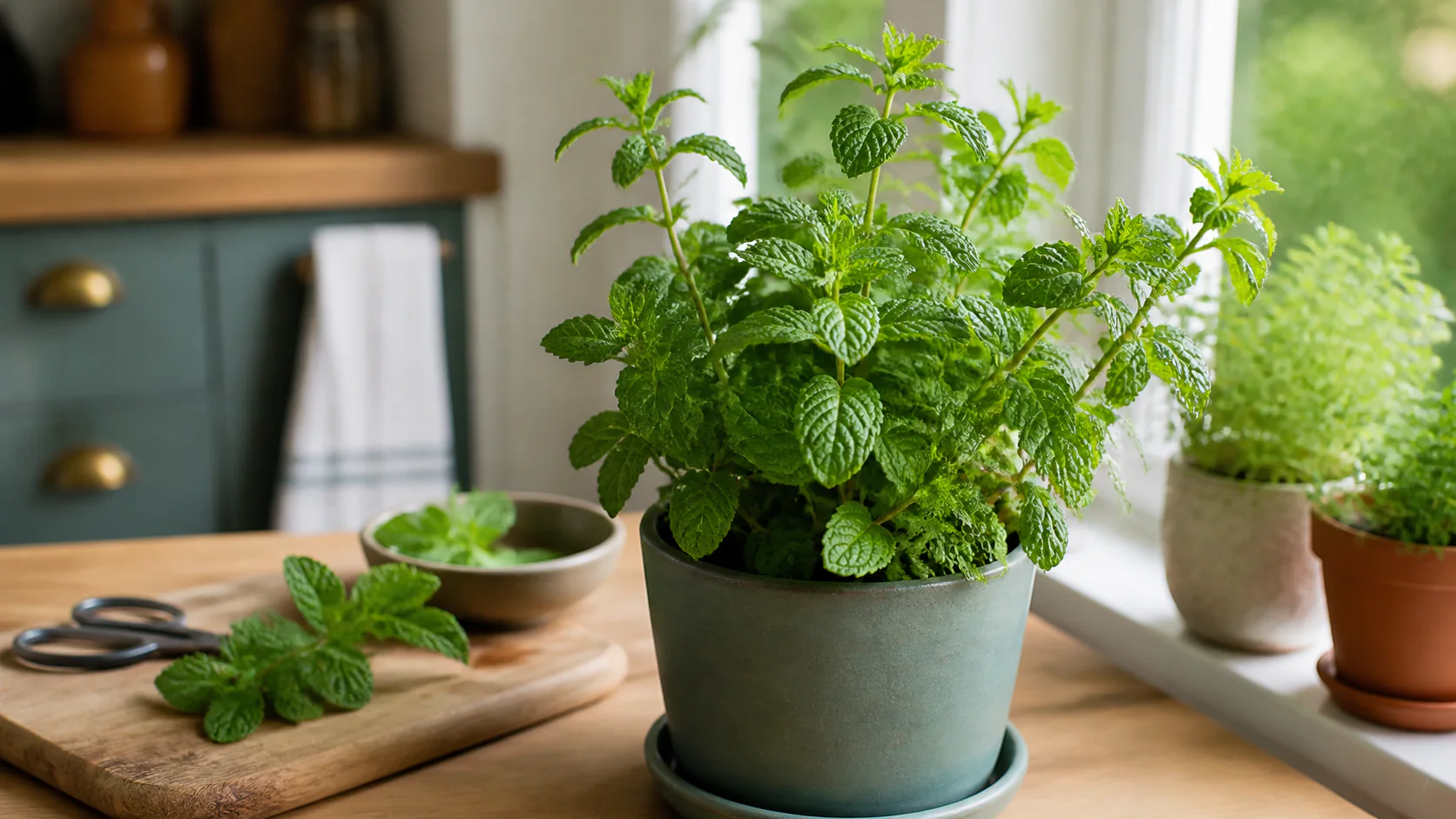
A dedicated pot contains mint’s vigorous spread and keeps harvesting simple.
Chives
Almost as easygoing as mint. Chives regrow quickly after harvesting, tolerate lower light, and do not ask for much fertilizer. A reliable starter herb if you have never grown food indoors before.
Parsley
Slow to get going but reliably productive once established. Parsley prefers moderate light and consistent moisture. Do not let it dry out completely between waterings. Flat-leaf parsley is generally easier to grow indoors than the curly variety.
Basil
The most popular and the most demanding. Basil needs at least 6 hours of direct sun, which usually means a south-facing window or a grow light. According to NC State Extension, basil requires full sun conditions to produce essential oils at cooking quality, and inadequate light is the primary reason basil grown indoors fails to thrive. It hates cold draughts and sitting in cold water, and it will droop dramatically when stressed, then recover just as fast once the problem is addressed.
One important note: the basil pots sold in supermarkets usually contain several plants crammed together in a small pot, root-bound from the start. You will have more success buying a single plant from a garden centre, or starting from seed in your own container. If basil is the herb you struggle with most, the dedicated basil plant care indoors guide goes deeper on repotting supermarket basil, pruning, and keeping it productive for months.
Cilantro
The tricky one in any indoor setup. Cilantro grows fast but bolts quickly, especially in the warmth of a kitchen. University of Minnesota Extension notes that cilantro begins to bolt when temperatures consistently exceed 21°C (70°F), which describes most kitchens for much of the year. The trick is to sow seeds in small batches every few weeks rather than relying on a single plant to last all season. A cooler spot near a window works better than a warm shelf near the stove.
Rosemary and Thyme
Include these if you have a very bright window or a dedicated grow light. Both are worth growing if you cook with them regularly, but they are the least forgiving of low light and should be added once your setup is sorted.
Which Herb Fits Your Window
Before you buy anything, check which direction your best kitchen window faces. This single factor determines which herbs will work for you without supplemental lighting.
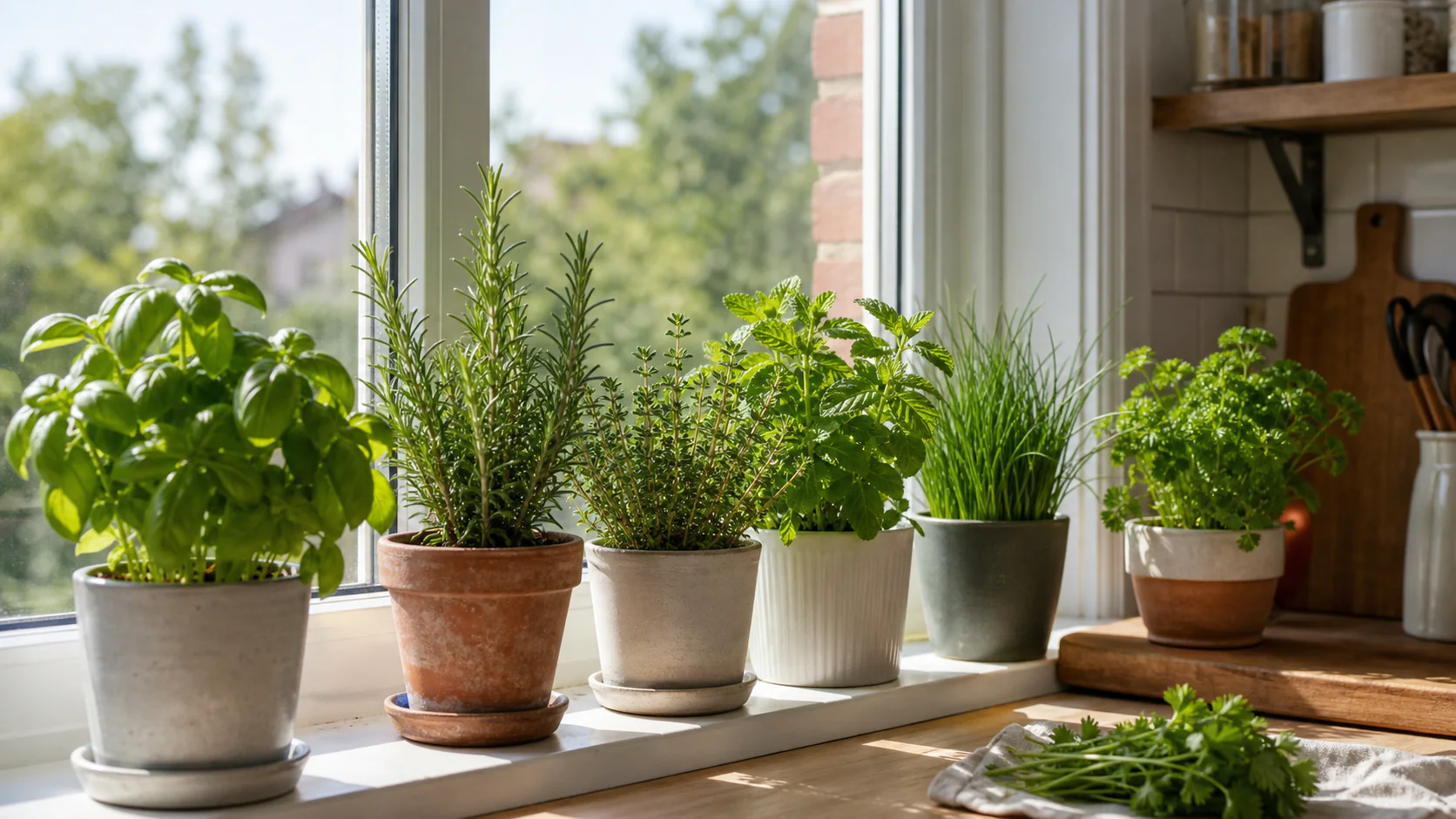
A bright kitchen window can support a wider mix of sun-hungry and tolerant herbs.
South-facing window: Full sun for much of the day in summer, meaningful light in winter. The only window where basil, rosemary, and thyme can perform without a grow light. All six herbs on this list will grow here.
East or west-facing window: Good morning or afternoon light but no direct midday sun. Mint, chives, and parsley will be productive. Basil will grow but slowly, and you may not get the flavour intensity you want. Cilantro can work if the kitchen stays cool.
North-facing window: Diffuse light only. Mint and chives will survive, though growth slows considerably in winter. Parsley will manage on a good north window. Basil will not perform. A grow light turns a north window into a year-round herb setup with no herb excluded.
No usable window: A grow light is the only path. This is not a workaround or a last resort. A simple LED strip light positioned 15 to 30 centimetres above the plants and left on for 12 to 14 hours a day produces better herbs than most windowsills anyway.
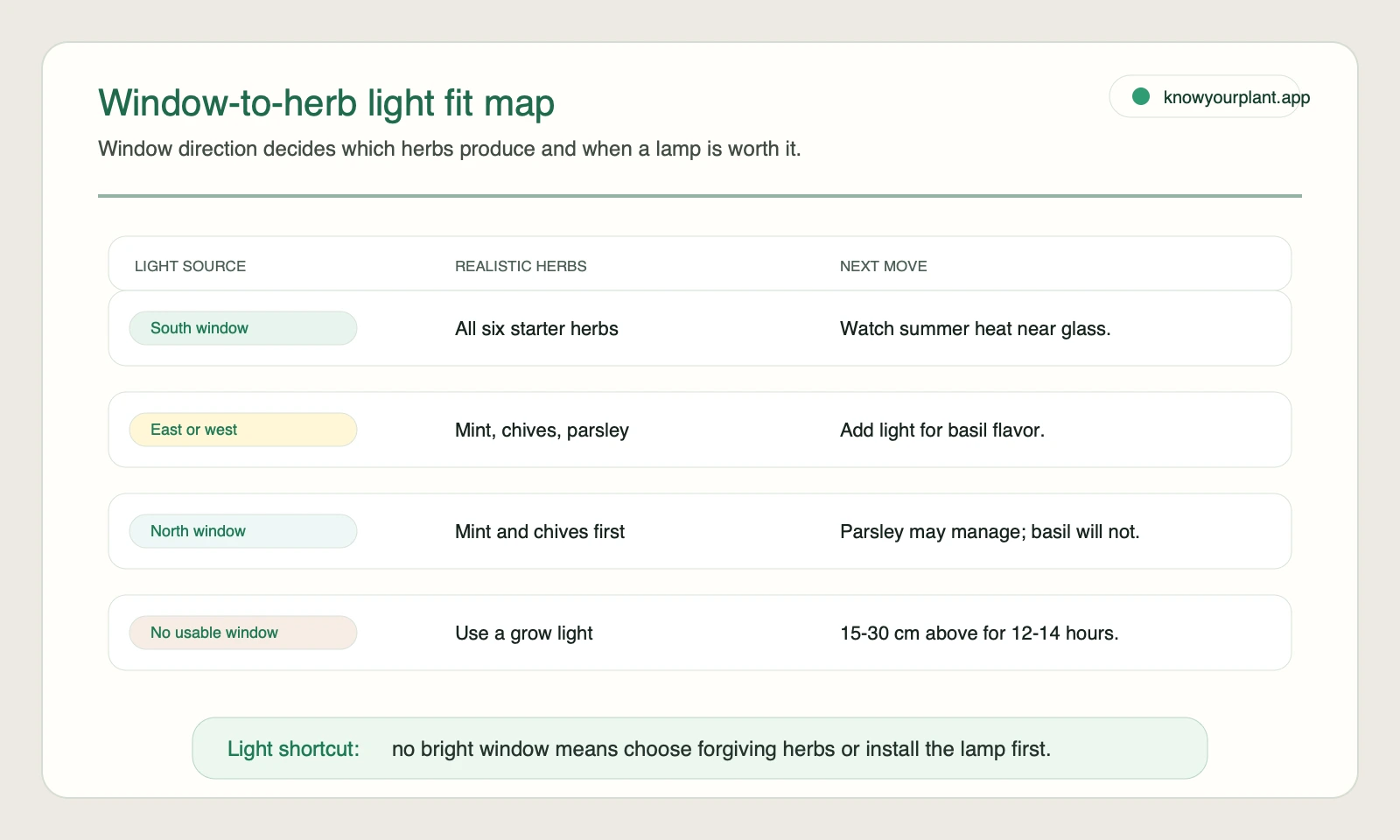
Match the herb to the actual window. A basic grow light is not a luxury for basil, rosemary, or thyme in dim rooms; it is the setup that makes them productive.
Containers and Soil
The single most common mistake with indoor herbs is planting them in containers without drainage holes. Herbs sitting in waterlogged soil rot from the roots up, and by the time you notice something is wrong it is usually too late to save them.
Use pots with drainage holes and a saucer underneath. Terracotta is a particularly good choice for herbs like rosemary and thyme because the porous walls allow moisture to evaporate faster, matching their preference for drier conditions between waterings. NC State Extension horticulturists consistently recommend unglazed terracotta for Mediterranean herbs grown in containers because the material reduces the risk of root rot in home growing conditions. For mint and parsley, plastic or glazed ceramic pots work fine. The guide to terracotta pots covers what to look for and which sizes suit different herbs.
A standard all-purpose potting mix works well for most herbs. Adding a small amount of perlite helps drainage, which almost every herb will appreciate. Avoid any potting mix marketed as moisture-retaining or designed for water conservation.
Keep pot size proportional to the plant. Most herbs are happy in 6-inch pots. Mint and basil can go up to 8 inches. Oversized pots hold too much moisture around the roots and work against you.
First 30 Days Setup Checklist
Use the first month to confirm the setup is working before you start blaming yourself or the plant. Indoor herb gardens usually fail because drainage, spacing, and airflow were wrong from day one.
- Put each herb in its own pot with drainage holes, then remove decorative wrap and empty any standing water from the saucer.
- Leave space between pots so air can move, and clear dead leaves before they stay wet against the soil surface.
- Watch the new growth, not just the older leaves. Healthy herbs should start pushing compact, fresh growth within the first couple of weeks.
- If stems turn pale, stretched, stalled, or pest-prone right away, fix light, airflow, or drainage before changing fertilizer or buying more plants.
Watering and Symptom Decoder
Most beginners want a watering schedule, so use this as a starting point: in a bright south-facing window or under a grow light, check every 2 to 3 days and expect many herbs to need water once or twice a week during active growth. In a dimmer window or winter conditions, check weekly and expect 7 to 12 days between waterings. Mint and parsley can be watered a little sooner; rosemary and thyme should wait until the pot feels noticeably lighter.
When you water, water deeply until it runs through the drainage holes, then empty the saucer after 10 minutes. Small sips keep the top layer damp while the deeper roots stay dry, which is exactly the pattern that encourages fungus gnats and weak roots.
Signs you are overdoing it: yellow lower leaves, limp stems while the soil is wet, black or mushy stem bases, sour-smelling potting mix, and tiny flies around the soil. Signs you waited too long: crispy edges, wilting with dry soil, a pot that feels very light, and leaves that perk up a few hours after a deep watering.
| Symptom | Likely cause | What to do today |
|---|---|---|
| Curling leaves | Dry soil, hot glass, or pest stress | Feel the soil first. If it is dry, water deeply. If it is wet, move the plant back from heat and check leaf undersides. |
| Yellowing leaves | Overwatering, low light, or exhausted potting mix | Let the top 3 to 4 centimetres dry, empty the saucer, and move the pot brighter. Feed only if the plant is actively growing and the soil is not staying wet. |
| Brown tips or crispy edges | Underwatering, hot sun through glass, or fertiliser buildup | Water thoroughly, move the pot a few inches back from hot glass, and flush the pot once if you have been feeding heavily. |
| Long, pale stems | Not enough light or not enough harvesting | Move closer to the brightest window, add a grow light, and cut above leaf pairs to push bushier growth. |
| Drooping basil | Thirst, cold draught, or a crowded supermarket pot | Check moisture, keep it away from cold glass, and repot or divide crowded stems if the pot is packed. |
Start Here: 60-Second Herb Rescue Tree
Use this order before you repot, fertilise, or buy another gadget. Most indoor herb problems become clearer once you check the environment in the right sequence.
- Weak, pale, or stretched growth: check light first. If basil, thyme, oregano, or rosemary are not getting strong direct sun, move them to the brightest window you have or add a grow light before changing anything else.
- Yellow leaves plus wet soil: assume a drainage problem before a nutrient problem. Empty the saucer, remove any decorative sleeve trapping water, and let the top 3 to 4 centimetres dry before watering again.
- Tiny flies or repeated pest flare-ups: treat airflow and sanitation as part of the fix. Separate crowded pots, clear dead leaves, and let the soil surface dry because indoor herb pests usually take off in damp, stale setups.
- Basil collapses fast but the mix is dry: water deeply, then check whether the supermarket pot is actually several crowded plants packed together. Dividing or repotting that clump often fixes the repeated crash cycle.
- Cilantro flowers or mint takes over the whole setup: that is usually a plant-choice issue, not a care failure. Succession-sow cilantro in small batches and always keep mint in its own pot.
Light: The Real Limiter
More indoor herb gardens fail because of inadequate light than for any other reason.
Most kitchen windowsills do not deliver enough direct sun, especially in winter or in homes where windows face north or east. University of Minnesota Extension research found that south-facing windows in northern climates typically provide fewer than 1,000 foot-candles of light intensity during winter months, while productive basil growth requires closer to 2,000 to 3,000 foot-candles. A south-facing window in summer can deliver 6 or more hours of direct light, which is enough for basil and borderline for rosemary. A north-facing window will keep mint and chives alive but will not support basil or parsley at full production.
If you want a reliable, year-round indoor herb garden, a small LED grow light makes a significant difference. You do not need anything elaborate. A simple strip light or clip-on lamp positioned 15 to 30 centimetres above the plants and left on for 12 to 14 hours a day will compensate for a dim window and keep even sun-hungry herbs productive through winter. The best grow lights for indoor plants guide explains the difference between full-spectrum LEDs and basic plant bulbs, and which wattage is appropriate for a small herb setup.
Harvesting: The Habit That Keeps Herbs Productive
Most people treat their indoor herbs like decorative plants, cutting a little when they need some for cooking and otherwise leaving them alone. This is the one habit that kills herb gardens faster than poor light or overwatering.
Herbs are built to be harvested. Frequent cutting triggers the plant to push new growth from lower nodes rather than putting energy into flowering and seed production. A basil plant you pinch from every few days will be fuller and more productive at eight weeks than one you leave untouched for the same period. The plant interprets regular harvesting as a signal that it is in a productive environment and responds by growing more. Leave it alone too long and it reads the signal differently, going to seed and shutting down leaf production.
The technique matters as much as the frequency. Always cut above a pair of leaves, not at the base of a stem. For basil, pinch off any flower buds the moment you see them forming at the top of the stem. For mint, cut stems back by a third rather than picking individual leaves. For chives, cut the whole clump down to about 5 centimetres and let it regrow from the base.
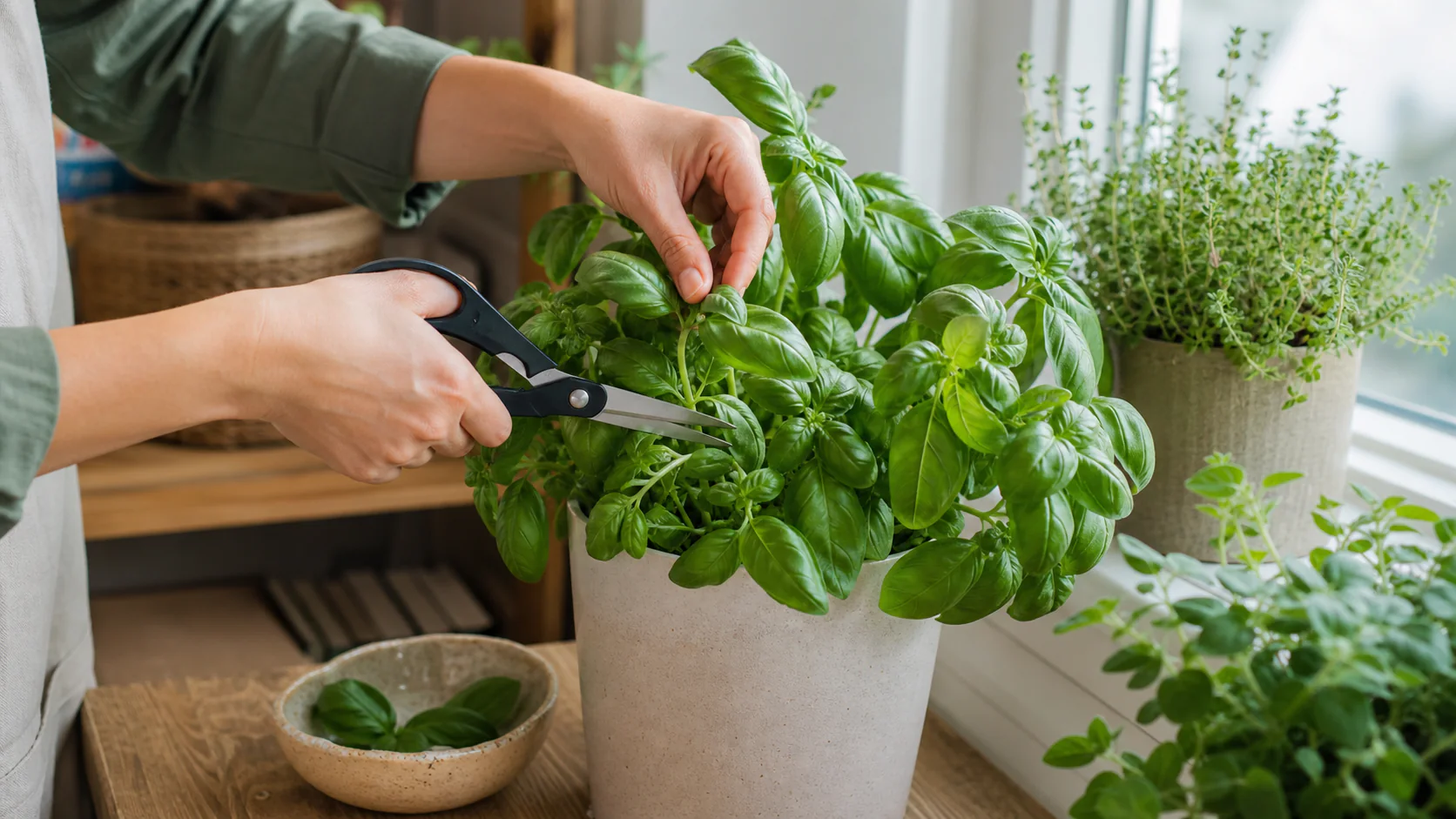
Cutting basil above a leaf pair encourages fresh branching and repeat harvests.
One session every four to seven days is enough to keep most herbs in a productive cycle through spring and summer. In winter, growth slows and you can harvest less frequently without any issue.
Feeding Your Herbs
Most potting mixes contain enough nutrients to sustain herbs for the first 6 to 8 weeks. After that, some light feeding helps, especially for basil, which is a heavy producer and depletes nutrients faster than slower-growing herbs like thyme.
Darryl Cheng of House Plant Journal points out that fertilising should support a plant’s actual growth rate rather than push growth beyond what the light conditions can sustain. For herbs, this means a half-strength liquid fertiliser every two to three weeks during the growing season, and skipping it entirely in winter when growth naturally slows. An organic liquid fertiliser works well here, as herbs are food crops and you will be consuming what they produce.
Avoid over-fertilising. Too much nitrogen produces leafy, rapid growth that tends to have weaker flavour. Herbs grown at a moderate pace in well-lit conditions almost always taste better than those pushed with heavy feeding. For a clear breakdown of what to use and when, the plant fertiliser guide covers both organic and synthetic options in plain terms.
Common Problems
- Weak, slow growth: Usually a light problem first, especially for basil, thyme, oregano, and any herb sitting in a north window.
- Every pot gets pests: Indoor herbs struggle when damp soil, dead leaves, and stale air pile up in a small space. Space the pots apart, clean fallen growth, and add gentle airflow before you blame the plant.
- Yellow leaves in a wet pot: This points to drainage or watering frequency more often than to a fertilizer shortage.
- Leggy, floppy stems: The herb is reaching for light or has not been pinched often enough to branch.
- Cilantro flowers almost immediately: That is heat and day length, not failure. Succession sow small batches instead of trying to make one plant last all season.
Pests: Mostly Fungus Gnats
Herbs grown indoors are generally less prone to pest problems than tropical houseplants, but fungus gnats are the exception. UC IPM (University of California Integrated Pest Management) identifies overwatered potting soil as the primary cause of fungus gnat infestations in container plants: the moist surface layer is where females lay eggs, and letting soil dry out between waterings is the single most effective control measure.
If you see tiny flies hovering around your herb pots, the fix is almost always to water less frequently and to let the top 3 to 4 centimetres of soil dry out completely between waterings. More detail on identifying the problem and dealing with it quickly is in the guide to getting rid of fungus gnats.
Hydroponic vs Soil Kits
Countertop indoor herb garden kits have become popular. Some use soil-based grow pods; others are true hydroponic systems where roots grow directly in water. Both work.
Hydroponic setups handle watering automatically, and the built-in lighting is calibrated for herbs. The downside is cost and inflexibility: a decent countertop kit costs anywhere from 50 to 150 dollars or more, and you are tied to specific pod sizes and replacement pods.
Soil-based growing is cheaper to start, easier to troubleshoot, and more forgiving if you miss a day or two. It is also easier to add or remove herbs as your tastes change.
For most beginners, starting with a few pots on a windowsill and adding a basic grow light if the light falls short will teach you more and cost less than a hydroponic kit. If your main problem is inconsistent watering rather than light, self-watering pots can be a simpler middle ground before you commit to a full hydroponic system. Hydroponic setups make sense once you know which herbs you actually cook with regularly and want a low-maintenance, always-on solution for those specific plants.
Seasonal Herb Care Calendar
Herbs are not the same year-round, even indoors. Light levels shift, growth rates change, and what your herbs need in July is different from what they need in January.
Spring (March to May): The best time to start. Buy transplants or sow seeds, repot anything that spent winter in a small container, and resume fertilising once you see new growth. Basil can go outside in a sheltered spot once nighttime temperatures stay above 15°C (59°F), which gives it light levels an indoor window cannot match. Cilantro is easiest to start now before summer heat arrives.
Summer (June to August): Peak growing season. Harvest frequently and do not let any herb flower if you want leaf production to continue. Watch basil near a hot south-facing window in direct summer sun as the soil can dry out very fast. Cilantro will bolt regardless of what you do; succession sow every two to three weeks and accept that a single plant will last two to four weeks at most.
Autumn (September to November): Scale back fertilising from October onward. Basil is the first to show stress as light drops, and it is worth taking cuttings to propagate fresh plants rather than trying to carry an aging summer plant through winter. Rosemary and thyme become more low-maintenance as temperatures cool. Mint can handle a light frost outdoors before you bring it back in.
Winter (December to February): Reduce watering across the board. Growth slows, pots dry out more slowly, and overwatering is the most common winter mistake. Skip fertilising until you see active new growth return in late February. If your herbs are surviving but not growing, add a grow light rather than feeding them. Mint and chives are the most reliable performers through a low-light winter.
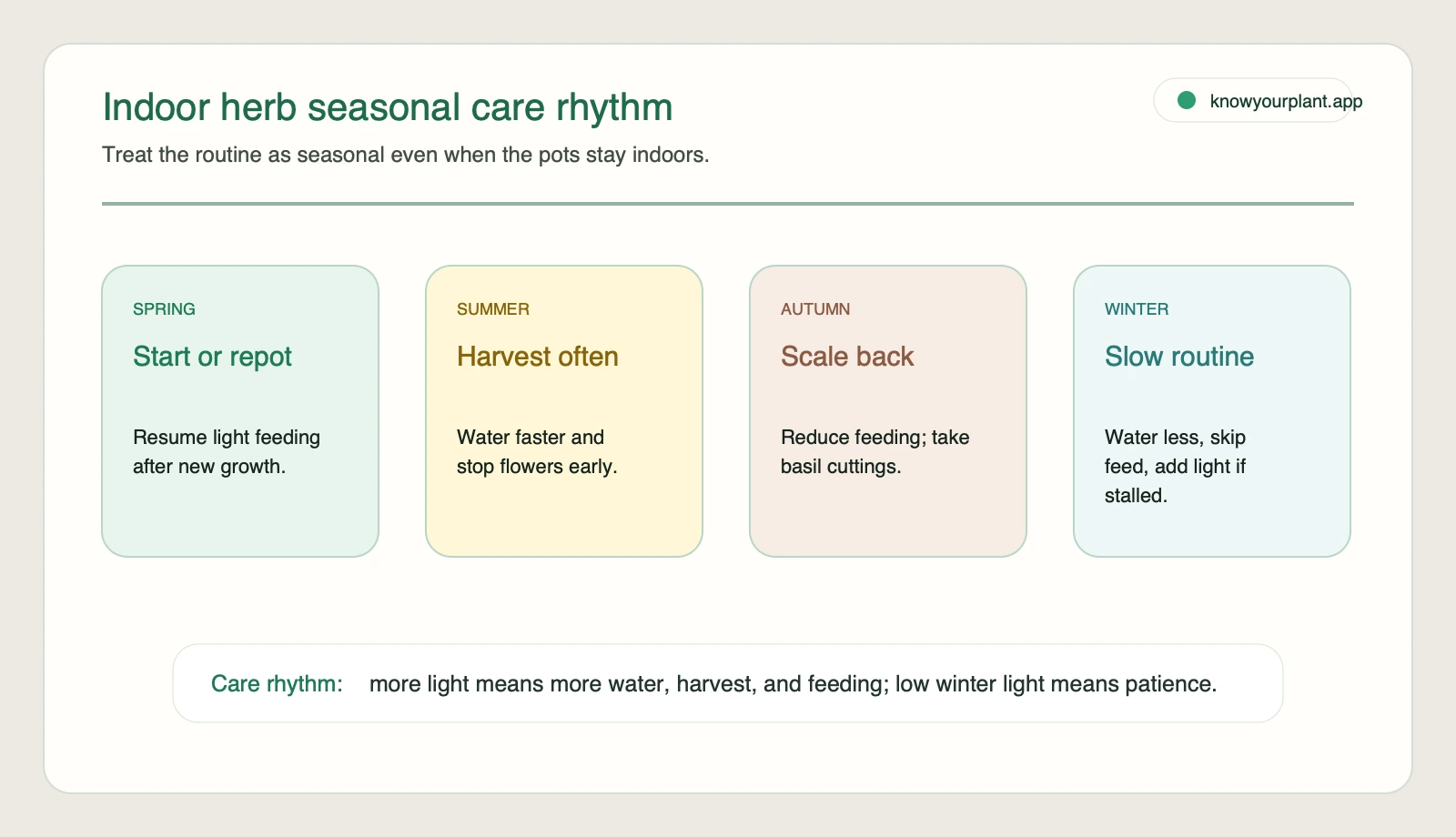
Herbs change pace indoors as light shifts. Keep the routine seasonal: start and feed in spring, harvest hard in summer, scale back in autumn, and reduce water in winter.
Real User FAQ
Why do indoor herb gardens seem fine for a week and then suddenly become a mess? Because most failures start below the leaves: dim light, crowded roots, wet soil, and stale air stack up quietly before the plant shows stress.
Why does every herb I bring indoors end up with fungus gnats or aphids? Indoor herbs get pest pressure fastest when several pots stay damp in one tight corner. Dry the top layer between waterings, remove dead growth, and give the plants some airflow instead of treating pests as a purely chemical problem.
Can I grow all my herbs in one pretty container? It is better to separate them. Mint drinks differently from thyme, basil grows faster than parsley, and one shared pot makes overwatering and crowding much more likely.
When is a grow light worth it? The moment you want productive basil, thyme, or oregano without a true south-facing window. For many apartments, the grow light is the difference between herbs surviving and herbs actually feeding you.
Methodology Note
This guide was refreshed on 2026-06-12 using University of Minnesota Extension for light, drainage, and herb-growing basics, plus ASPCA for pet-safety checks. Reader pain points around pests, airflow, and slow growth were taken from public Reddit discussions discovered through local search and used as qualitative signal, not as controlled trials.
Frequently Asked Questions
How often should I water indoor herbs?
As a starting point, check bright-window or grow-light herbs every 2 to 3 days and dim-window or winter herbs about once a week. Water only when the top 3 to 4 centimetres of soil feel dry. Mint prefers slightly more consistent moisture, while rosemary and thyme want to dry out quite thoroughly between waterings. Terracotta pots dry out faster than plastic or ceramic, so you will need to water more often with those.
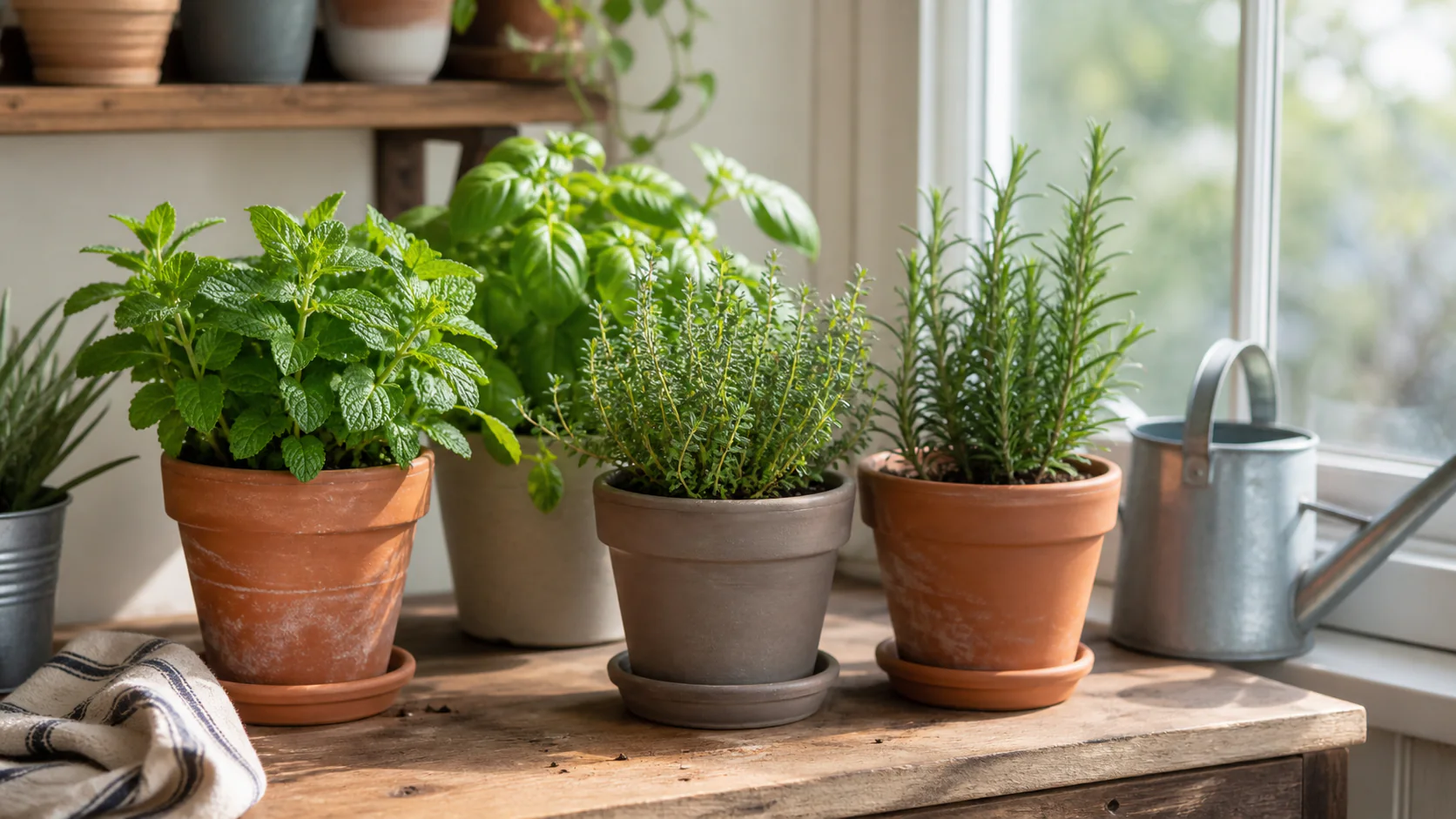
Pot material and herb type change how quickly the soil dries between waterings.
Why does my basil keep dying on the windowsill?
Usually one of three things: not enough light, cold air from a draughty window, or the supermarket pot issue. Supermarket basil contains multiple plants squeezed into a small pot, root-bound and already stressed. Repot into a larger container with fresh potting mix, position it in the brightest spot you have, and keep it away from cold draughts. If the window does not get at least 6 hours of direct sun, add a small grow light.
Can I grow herbs indoors without a south-facing window?
Yes, but your herb selection matters. Mint and chives will manage in east or west-facing windows. Parsley can get by with moderate light. Basil and rosemary will not perform without supplemental lighting. A basic LED grow light positioned close to the plants is the most practical solution if your windows face north or east, or if you want to keep herbs productive through winter.
Do indoor herbs need fertilizer?
After the first 6 to 8 weeks, yes. Most potting mixes provide some initial nutrition, but frequent harvesting depletes nutrients over time. A half-strength liquid fertiliser every two to three weeks during spring and summer is enough for most herbs. Skip feeding entirely in winter when growth is slow. Avoid high-nitrogen fertilisers used for leafy houseplants, as these can produce fast but bland-tasting growth.
Why is my cilantro flowering so quickly?
Cilantro bolts in response to heat and long days. Most kitchens are warm enough to trigger bolting within a few weeks, especially in spring and summer. There is no way to prevent it entirely, but you can slow it down by keeping cilantro in the coolest spot available, choosing a dwarf or slow-bolt variety, and succession-sowing small batches every two to three weeks rather than relying on a single plant. Once it flowers, harvest the seeds (coriander) and start a fresh batch.
What pot size is best for herbs?
Most herbs are fine in 6-inch pots. Basil and mint can use an 8-inch pot once established. Avoid going too large: a pot much bigger than the root system holds excess moisture that the plant cannot use, which encourages root rot. When in doubt, start smaller and repot once the roots fill the container.
Are kitchen herbs safe around cats and dogs?
Some herbs are safe for pets and some are not. Basil, thyme, sage, and rosemary are generally considered non-toxic to cats and dogs. Mint, particularly pennyroyal mint, can cause digestive upset in cats if consumed in large amounts. Chives and all alliums (including garlic and onions) are toxic to both cats and dogs and should be kept well out of reach. The guide to cat-safe indoor plants has a full list of what to avoid if you share your home with cats. Always check before growing any edible plant in a home with pets.
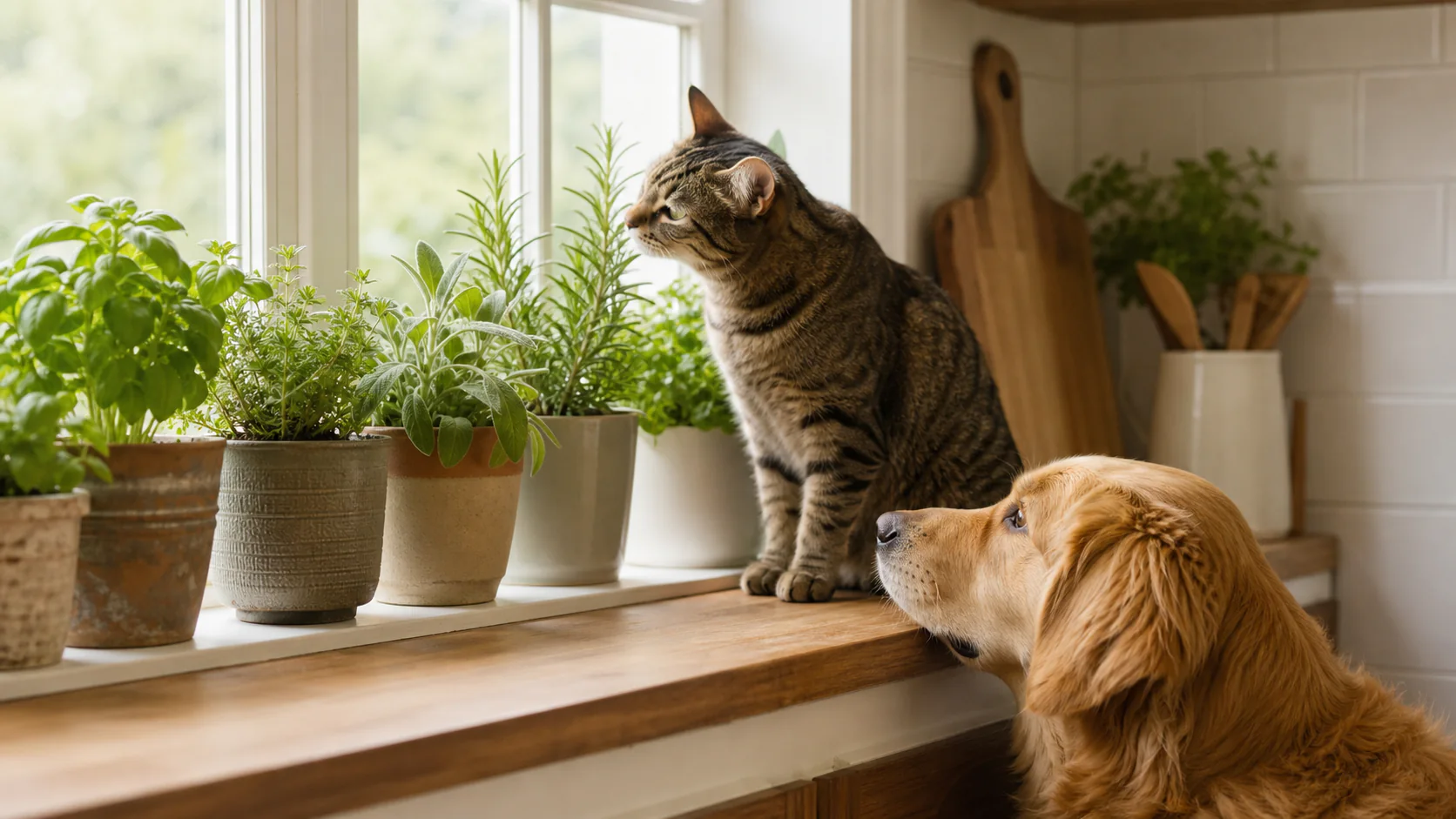
Check every herb’s pet safety before placing an indoor garden within reach.
Want the routine in one place? Save your herbs, watering notes, and symptom history in KnowYourPlant so the next yellow leaf has context.