By KnowYourPlant Editorial Team, updated September 9, 2026. This version keeps the guide aligned with extension and IPM guidance and adds a source-based fungus-gnat, fruit-fly, and drain-fly comparison.
Start Here if You Need the Gnats Down Fast
If you are standing over the pot right now and just want the first three moves, do these before you try anything fancy:
- Put a yellow sticky trap in every suspect pot so you can see which container is actually feeding the outbreak.
- Let the top 1 to 2 inches of mix dry as much as the plant safely allows, then empty every saucer, cachepot, or reservoir holding leftover water.
- If adults return after the next watering, add a labeled larval treatment such as BTI or beneficial nematodes and focus on the wettest source pots first.
If the plant is a seedling, fresh cutting, or already recovering from root stress, keep the dry-down gentler and lean harder on monitoring plus larval control.
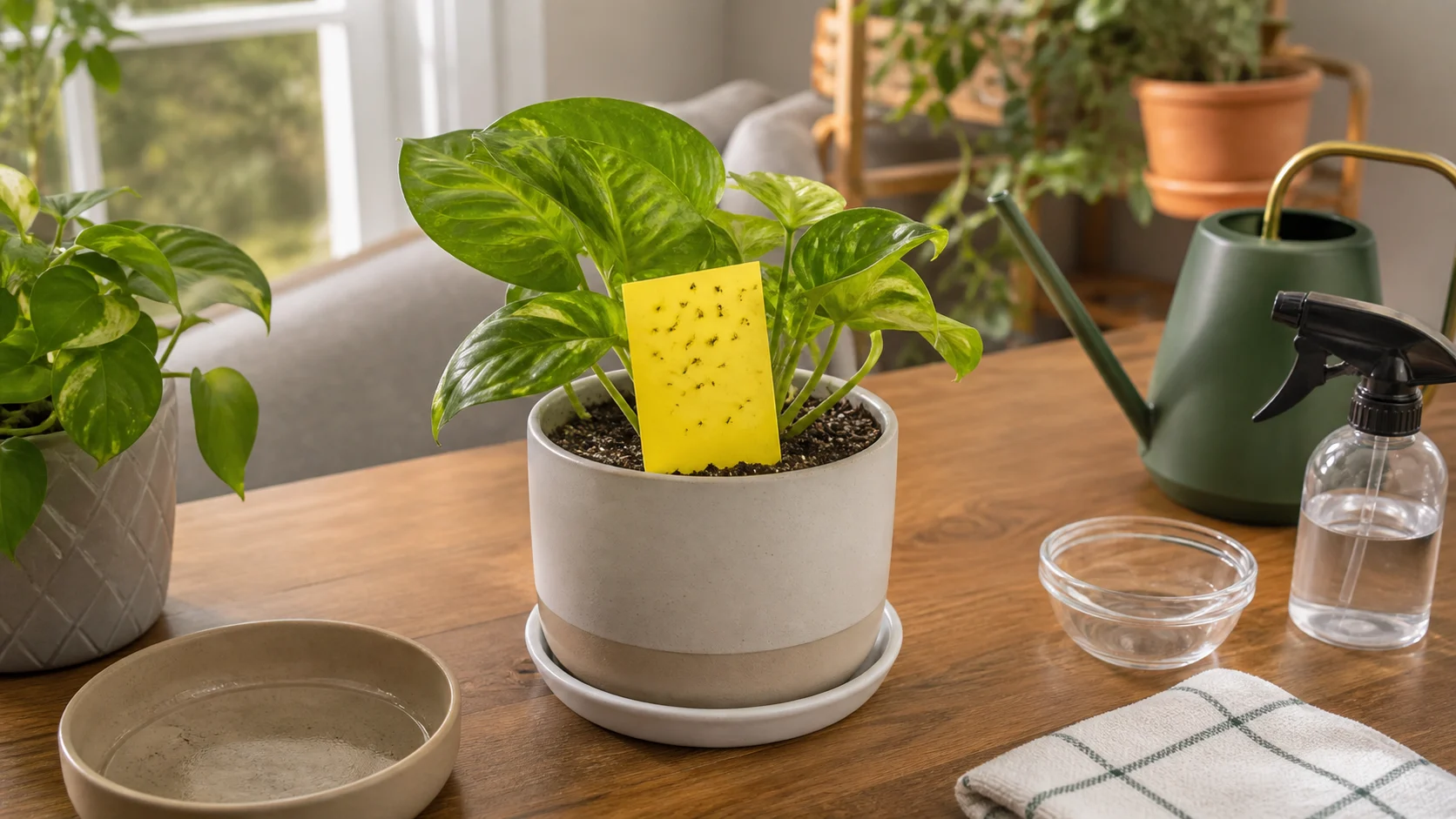
Start with a yellow trap, a drier soil surface, and no standing water around the pot.
Symptom Diagnosis Card
Treat the pot like a small system, not just a swarm of flies. Adult fungus gnats tell you something is breeding in the mix, but the fastest fix depends on whether the problem is one wet pot, a room-wide watering pattern, or tender plants that cannot tolerate a hard dry-down.
| What you see | Check first | Next move |
|---|---|---|
| Tiny dark flies lift off when you water or bump the pot | Adult fungus gnats at the soil line | Put a yellow sticky trap near the soil so you can track adult pressure |
| Mix stays wet for 4 or more days, peat-heavy soil, or water sitting in a cachepot | Larval breeding zone | Let the top layer dry as much as the plant safely allows and empty trapped water |
| Seedlings, cuttings, or weak roots declining while gnats are present | Higher-risk root damage | Use gentle moisture correction plus larval control, not an aggressive drought |
| One pot keeps loading traps faster than the others | Source pot | Inspect roots and media, then repot only that chronic source pot if it smells sour or stays swampy, using the root rot treatment guide if the root ball is already failing |
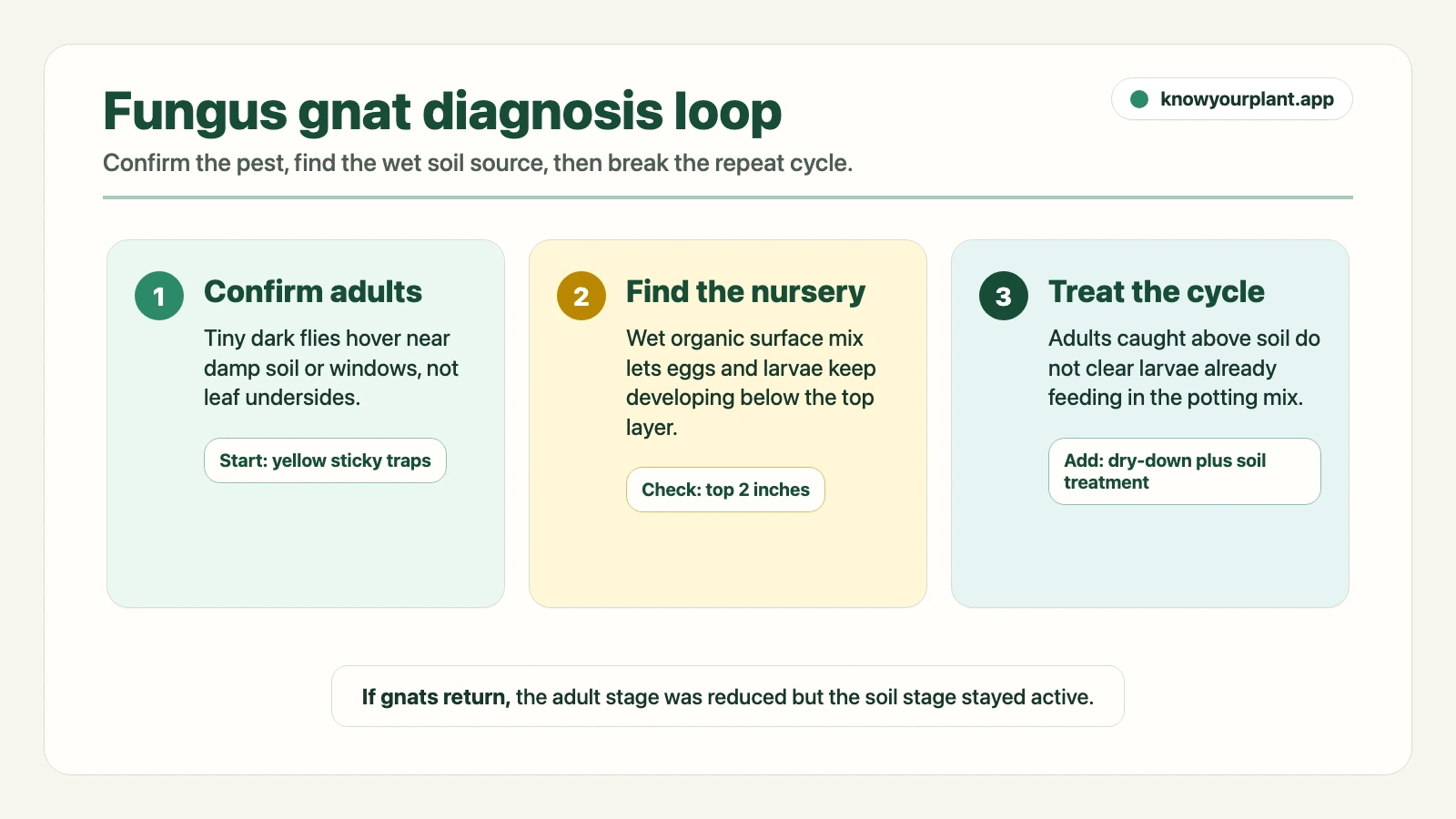
Use the visible adults as the alert, then confirm whether damp soil and hidden larvae are keeping the cycle alive.
Decision Tree
- Confirm the insects are lifting from the soil, not clustering on leaves or hovering around fruit.
- Put a sticky trap in every suspect pot and note which pot loads up fastest.
- Let the top 1 to 2 inches of mix dry as much as the plant safely allows, then empty saucers and cachepots.
- If adults keep reappearing after each watering, add a labeled larval treatment such as BTI or beneficial nematodes.
- Repot only the chronic source pots with sour, compacted, or constantly wet media.
Common Mistakes
- Catching adults on traps but never treating the larvae in the mix.
- Watering on schedule while the top layer is still damp.
- Drying seedlings, cuttings, or delicate roots too aggressively.
- Ignoring standing water in cachepots, saucers, or self-watering reservoirs.
- Repotting every plant in the room instead of finding the real source pots.
- Trying kitchen-sink remedies before checking whether the plant can tolerate them.
Seasonal Note
Fungus gnats usually get easier to trigger in winter, when light drops and soil stays wet longer, and again in spring, when fresh potting mix and repotting put more moist organic media indoors. If your normal routine suddenly stops working, check the season before you blame the plant.
Horticulturist Note
The control plan here is anchored to current extension and IPM guidance, not just forum folklore. Colorado State explains that fungus gnats develop in moist growing media and that larvae can bother roots when populations climb. Wisconsin Horticulture, UC IPM, NC State, Ask Extension, and Oklahoma State all reinforce the same practical split: sticky traps help you monitor and reduce adults, while dry-down, drainage correction, and repeated larval control deal with the source in the pot.
Methodology Note
This guide was refreshed on June 18, 2026 after reviewing current extension and IPM material on fungus gnats in indoor plants, then cross-checking it against recurring owner questions about whole-room infestations, sticky traps, hydrogen peroxide, BTI-style routines, and when repotting is actually necessary. Reader discussion is used as qualitative signal about confusion, not as proof.
What Most Fungus Gnat Guides Miss
Most quick-fix guides focus on the thing you can see, which is the adult fly. That is only half the job.
A durable fix always runs on two tracks at once:
- Adult reduction: sticky traps show where the pressure is coming from and cut down new egg-laying.
- Larval and source control: drier topsoil, better drainage, and repeated soil treatment stop the next wave from hatching.
Hydrogen peroxide can be a short, visible reset for some growers, but it is not a substitute for fixing moisture, drainage, and the pots that stay wet the longest.
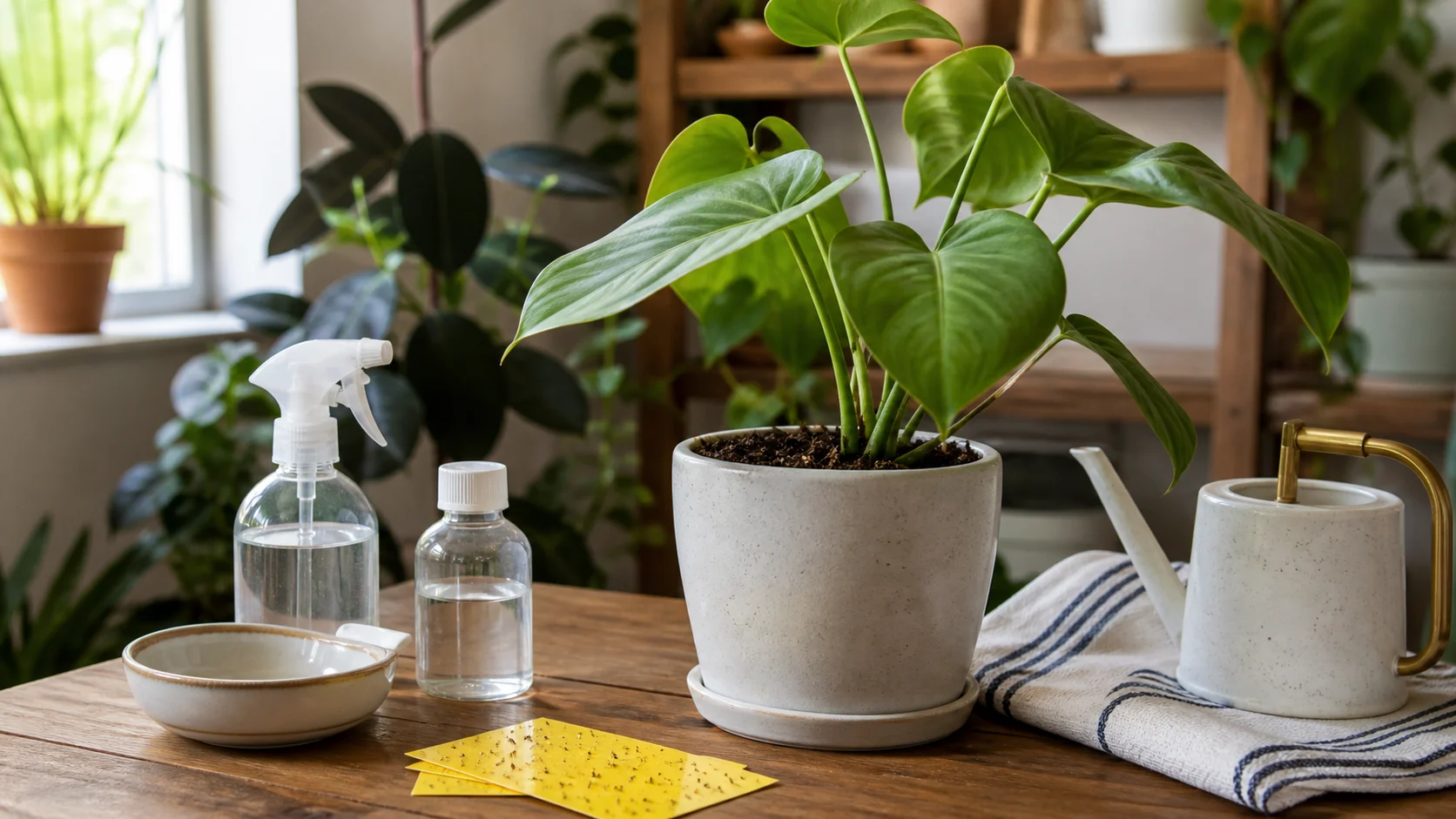
Pair adult traps with drier soil and repeated source control inside the pot.
Social Listening: What Plant Owners Keep Asking
Plant-owner threads keep circling the same stress points: should you treat every pot, is hydrogen peroxide enough on its own, and do you need to throw out all the soil to get ahead of the problem. The calmer answer is usually more effective than the dramatic one.
When gnats spread through a room, the practical whole-room plan is to:
- monitor every nearby pot, not just the noisiest one,
- treat the wettest pots first,
- use traps for adults and a soil plan for larvae,
- repot only the pots that stay swampy or smell sour after correction.
Those owner questions are useful because they expose the real failure mode. People often stop once the adults thin out, while larvae are still developing out of sight.
Severity-Based Action Plan
| Situation | What to do first | What usually comes next |
|---|---|---|
| One or two adults after watering | Add sticky traps and pause watering until the top layer dries | Check nearby pots so one source pot does not restart the room |
| Adults show up every few days in the same pot | Use traps, dry-down, and a drainage check | Add labeled larval control if each watering brings a new wave |
| Multiple pots are affected | Monitor all pots and treat the wettest containers first | Check cachepots, self-watering setups, and low-light watering habits |
| Seedlings or fresh cuttings are affected | Use gentle airflow and careful monitoring | Choose a softer larval-control plan instead of a harsh dry spell |
| The infestation keeps returning after 2 to 3 weeks | Inspect roots and replace sour or compacted mix in the real source pots | Reset watering cadence and reduce decaying debris on the soil surface |
Sticky Trap Interpretation Guide
- Adults drop fast, then bounce back: larvae are still emerging from the mix.
- One trap fills much faster than the others: that pot is probably the real source.
- Counts fall steadily over two weeks: source control is probably working.
- Adults are gone but the plant still declines: inspect roots and moisture, because gnats may not be the only problem.
Freshness Note
This article was refreshed on June 18, 2026 against current extension and IPM guidance. If you are treating seedlings, fresh cuttings, or a plant that already has weak roots, use the gentlest moisture correction the plant can tolerate and rely more on monitoring than on a hard dry-down.
Quick Fungus Gnat Check
Before you treat every plant in the room, confirm the problem and pick the least stressful fix for the plant in front of you.
- What you see: Fungus gnats are tiny dark flies that hover around damp soil, not the leaves. If the bugs are crawling on leaves or leaving webbing, this is probably a different pest.
- What the soil says: Wet potting mix several days after watering, a no-drainage pot, or a sour smell means the fix starts with drying and drainage, not more sprays.
- What to do first: Today, add yellow sticky traps and stop watering until the top 2 inches are dry. This week, use the hydrogen peroxide drench if gnats keep appearing. Going forward, water only when the plant and soil actually need it.
If the plant is a seedling, fresh cutting, or already wilting badly, do not force a long dry spell. Use traps, improve airflow, and dry the surface gradually while you check the roots and watering routine.
You Have Tiny Black Bugs Flying Around Your Plants
You spot them when you water. Little black flies, barely the size of a sesame seed, hovering just above the soil. You wave them away and they come back. You ignore them for a week and suddenly there are twice as many.
If this sounds familiar, you’re dealing with fungus gnats, and you’re not alone. They’re one of the most common pest complaints from houseplant owners, and the good news is: you can sort this out at home, without anything fancy, in about two to three weeks.
Fungus gnats are small soil-dwelling flies whose larvae feed on organic matter and plant roots in moist potting mix. The adults are mostly just annoying. The larvae are the real problem.
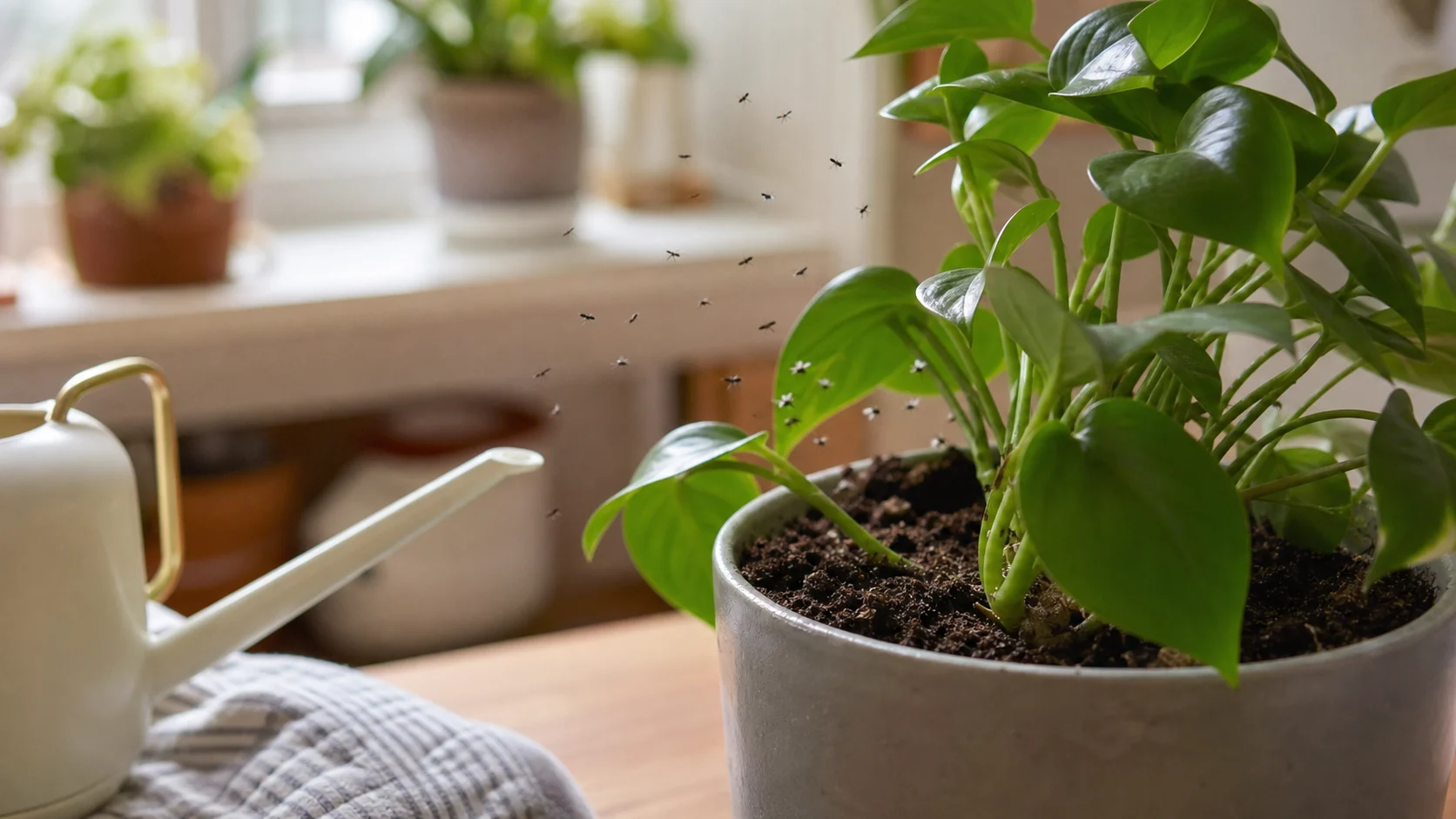
Tiny dark adults hovering above damp potting mix are the visible sign of a soil-based lifecycle.
Why Fungus Gnats Show Up
Fungus gnats don’t show up because you’ve done something wrong. They show up because the conditions were right, and those conditions are almost always the same thing: consistently wet soil.
The adults lay eggs in the top layer of damp potting mix. The eggs hatch into tiny white larvae that live just below the surface, feeding on decaying organic matter and tender young roots. A few weeks later, those larvae become adults and the cycle starts over.
According to Penn State Extension, the complete fungus gnat lifecycle from egg to adult takes approximately 3 to 4 weeks at room temperature, with larvae spending roughly two weeks feeding in the soil before pupating. That’s why a small problem can escalate quickly: by the time you notice the adults, the next generation is already developing underground.
Making it worse: a single female fungus gnat can lay up to 200 eggs during her short lifespan, according to the University of California Agriculture and Natural Resources IPM program. One overlooked pot can seed an entire room.
The reason fungus gnats are so common in house settings is simple: most of us water a little too often. Moist soil is their ideal nursery. If the top inch or two of your potting mix stays wet for days at a time, you’ve created exactly what they need.
Peat-heavy potting mixes hold moisture longer, making them particularly hospitable for gnats. Seedlings and freshly repotted plants in new, organic-rich soil are especially vulnerable, since fresh mix retains moisture more readily and provides plenty of organic matter for larvae to feed on.
When are fungus gnats worst? Two times of year stand out. In winter, light levels drop and plants need less water, but watering habits often don’t adjust. Soil stays wet longer, windows stay closed, airflow drops, and gnats thrive. In spring, repotting season brings fresh potting mix into the house: rich, moisture-retentive, and exactly what gnats are looking for. If you’re going to get hit with a gnat problem, it usually happens in one of those two windows.
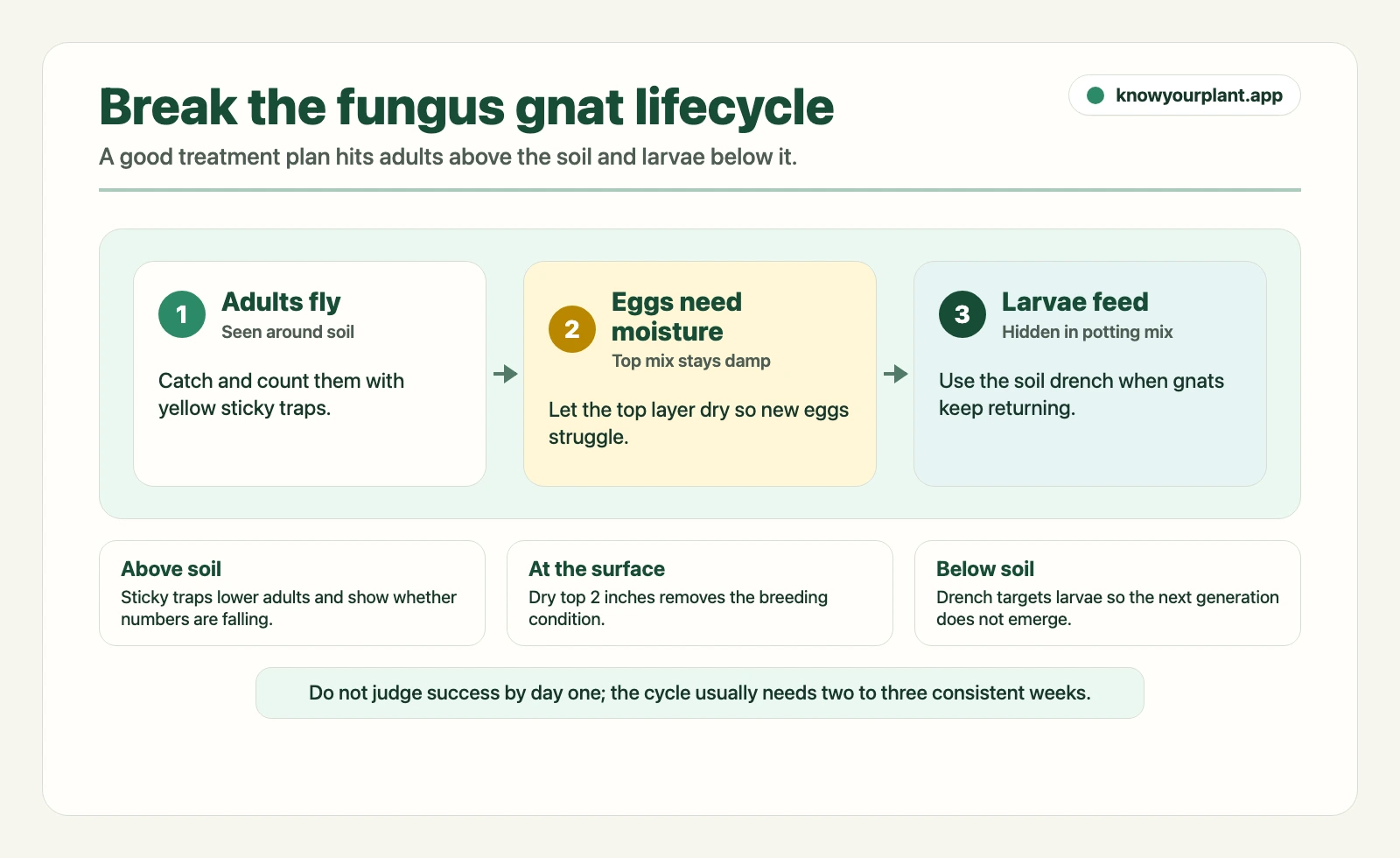
Break the cycle from both ends: reduce adults above the soil while drying and treating the larval zone below it.
How to Get Rid of Fungus Gnats: Four Methods That Work
You don’t need to pick just one. Combining two or three gives you faster results and targets the problem at different stages of the lifecycle.
Let the Soil Dry Out
This is the most important step, and it costs nothing.
Fungus gnat larvae can’t survive in dry soil. University of Florida IFAS Extension notes that allowing the growing medium to dry between waterings is the single most effective cultural control for fungus gnats, since larvae require consistent moisture to complete their development. No moisture, no eggs hatching, no new generation.
Let the top 2 inches of soil dry out completely between waterings. Check with your finger before you water: if there’s any moisture left in the top layer, wait another day. It feels counterintuitive to hold back water when you’re already stressed about the plants, but most houseplants handle a few extra dry days better than you’d expect.
For moisture-loving plants like golden pothos or heartleaf philodendron, this might feel risky, but both handle a brief dry period without lasting harm. If you have a snake plant, you’re already ahead: it practically prefers to be left alone between waterings.
Sticky Yellow Traps
Yellow sticky traps catch the adult gnats before they can lay more eggs. They won’t fix the larval problem in the soil, but they reduce the adult population quickly and show you how bad the infestation is.
Push a trap into the soil near the base of the plant, or hang one just above it. Replace it when it’s covered. The first few days can catch more than you bargained for.
Hydrogen Peroxide Soil Drench
This one sounds alarming, but for many common houseplants it can be a practical short-term reset when you need to hit larvae in the soil quickly.
Mix one part 3% hydrogen peroxide with four parts water. Water your plant with this solution the same way you normally would, letting it drain through. The hydrogen peroxide kills larvae on contact as it moves through the soil. You’ll notice it fizzing slightly when it hits the potting mix. If you want the dilution ratios, root-zone cautions, and repeat schedule in one place, see the full hydrogen peroxide for plants guide.
Use this treatment once a week for two to three weeks, and pair it with drier surface soil plus sticky traps so you are not judging success by one quiet day.
Plant care educator Darryl Cheng of Houseplant Journal describes the hydrogen peroxide drench as a reliably useful home option because it targets larvae in the soil rather than just the adults flying above it. The adults you see are the symptom. The larvae you can’t see are the source.
When BTI or Beneficial Nematodes Make More Sense
If the same pots keep flaring up, or if you are working with seedlings, fresh cuttings, or roots that are already stressed, a labeled larval treatment such as BTI or beneficial nematodes can be a steadier fit than repeating peroxide alone. Use that route when you need a gentler multi-week cleanup, while sticky traps handle the adults and better drying habits keep the soil from turning back into a nursery.
Bottom Watering
Bottom watering means setting the pot in a tray of water and letting the soil absorb moisture from below, rather than pouring water onto the surface.
This keeps the top layer of soil dry, which is exactly where fungus gnats lay their eggs. The roots still get the water they need, but you’ve removed the breeding ground.
Many plant owners switch to bottom watering permanently after dealing with a gnat problem. It also encourages deeper root growth and helps prevent overwatering in general: a real improvement, not just a temporary fix. If your plants sit in self-watering pots, check the reservoir carefully because constantly moist mix can keep the lifecycle going.
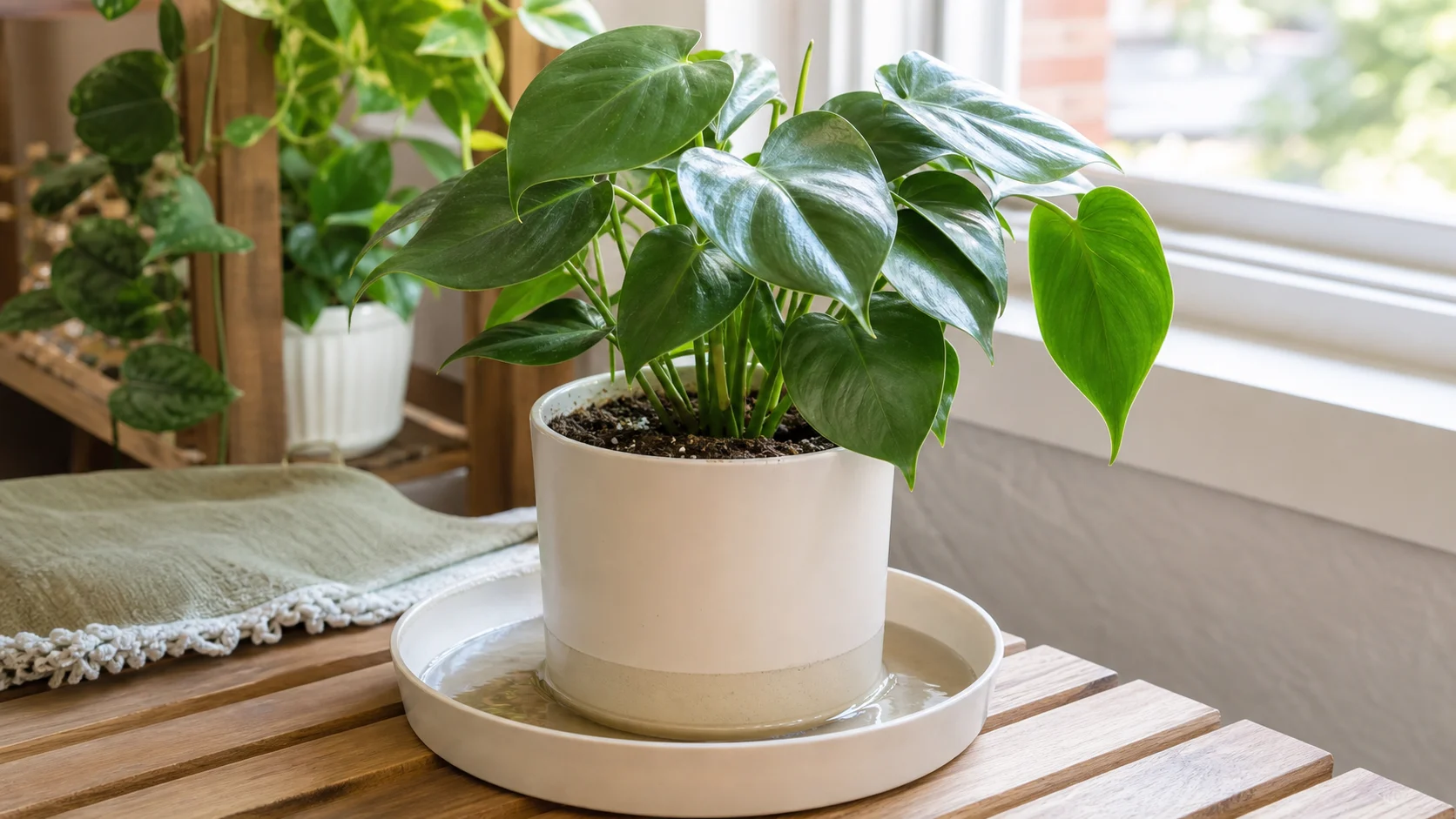
Let the pot absorb water from a shallow tray while the fungus-gnat breeding zone at the surface stays dry.
What to Expect Week by Week
Most guides say “treat for two to three weeks and you’ll be fine.” That’s true, but it doesn’t tell you what you’ll actually see. Here’s what happens when the treatment is working.
Week 1: Start the hydrogen peroxide drench, stick yellow traps in every affected pot, and stop watering from the top if you can. You’ll still see adults flying. You may catch a lot on the traps. This is normal: the adults already present will keep living their 1-2 week lifespan. The goal this week is killing the larvae already in the soil and stopping new eggs from being laid.
Week 2: Second drench. The traps should be catching noticeably fewer adults than they did in week one. The clouds of flies above the soil should be thinner. The larvae from before your first treatment are dead or dying. You’re now outpacing the lifecycle.
Week 3: Third drench. Traps coming up nearly empty. Maybe one or two gnats visible instead of ten. The generation that was developing as eggs when you started has been broken. At this point, the infestation is effectively over, as long as the soil stays dry.
Week 4 and beyond: No adults, clean traps: you’ve cleared it. Drop back to normal watering, keeping the surface dry between sessions. If you still see a few gnats, do one more week of treatment. Consistency is what makes this work: skip a week and surviving larvae will mature and restart the cycle.
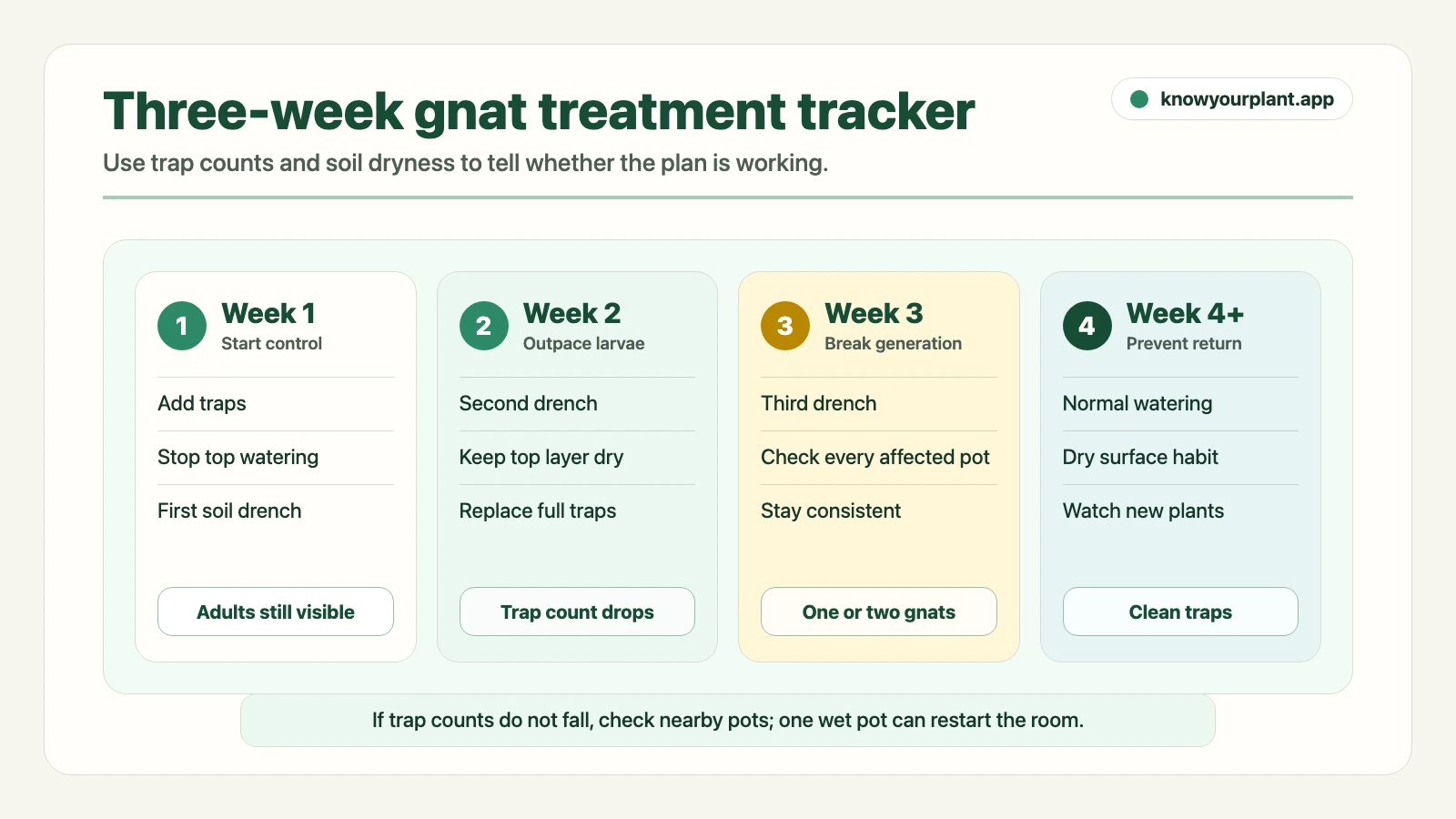
Track progress by week so you do not stop after the adults thin out while larvae are still developing in another pot.
Fungus Gnats vs. Fruit Flies: Check the Breeding Source
Not every tiny kitchen or houseplant fly is a fungus gnat. Where the insects repeatedly return is usually more useful than color alone. Colorado State University Extension separates these common indoor flies by breeding source, while Cornell IPM describes fungus gnats as long-legged, long-antennaed flies associated with damp potting soil.
| Clue | Fungus gnat | Fruit fly (vinegar fly) | Drain fly (moth fly) |
|---|---|---|---|
| Where adults keep returning | Soil surface, pot rim, nearby window, or a glowing screen | Overripe fruit, recycling, trash, compost, wine, beer, or other fermenting residue | Sink, shower, floor drain, or a wall close to plumbing |
| Body and flight | Slender and dark, with long legs and antennae; weak, short, erratic flights | Stockier and usually tan or light brown; common species often have red eyes | Broad, fuzzy, moth-like wings; often rests on walls |
| Immature stage | Translucent larvae with dark head capsules in the top layer of damp mix | Pale larvae in fermenting organic material | Larvae in the wet organic film inside a drain or plumbing source |
| Best first control | Let the top 1 to 2 inches of mix dry as the plant safely allows; empty standing water; monitor adults with yellow cards | Remove or refrigerate produce; wash beverage containers and bins; remove fermenting residue | Mechanically clean the drain or plumbing source that holds organic film; repair leaks if present |
A Fast Source Test
- Put a yellow sticky card just above the potting mix and note whether it catches the most adults over the next day or two.
- Remove overripe produce, empty recycling, and clean food or beverage residue instead of relying on a vinegar trap alone.
- Check drains for small fuzzy flies resting nearby. Penn State Extension notes that drain flies breed in moist, decomposing organic material and have a distinctly hairy, moth-like appearance.
- Treat the source that keeps producing flies. A vinegar trap may attract fruit flies, but it does not diagnose or control larvae in a plant pot or drain.
If the insects crawl rather than fly, compare tiny bugs in houseplant soil and soil mites before treating. Tiny white or tan soil mites are different from all three flies and are often harmless decomposers.
How to Stop Them Coming Back
Getting rid of the current infestation is one thing. Keeping them away is another.
The most reliable prevention is changing how you water. Let the top of the soil dry out between waterings, and consider bottom watering as your default for moisture-loving plants. This single habit change removes the conditions gnats need to breed.
You can also top-dress your pots with a layer of coarse sand or fine gravel, about half an inch deep. This creates a dry, inhospitable surface layer that makes it much harder for adults to lay eggs. It looks tidy, too.
If you’re repotting, avoid mixes with a lot of peat or coir that hold moisture for extended periods. A chunkier mix with added perlite dries out faster, drains better, and is generally healthier for roots. Less attractive to gnats is a side benefit.
And keep the seasonal windows in mind. In winter, check whether you’re still watering on a warm-weather schedule when the plants have slowed down. In spring, when you’re repotting and bringing home new plants, keep newcomers quarantined for a week or two and watch the soil. That’s when most infestations start.
Frequently Asked Questions
How long does it take to get rid of fungus gnats?
Most infestations clear up within two to three weeks when you combine methods: letting the soil dry, hydrogen peroxide drenches once a week, and yellow traps for the adults. Consistency matters more than intensity. If you treat once and then skip a week, surviving larvae will mature and restart the cycle.
Can fungus gnats kill my plant?
In small numbers, probably not. In larger numbers, the larvae can cause real damage: chewing through fine root hairs, stunting growth, and making the plant more vulnerable to root rot. Young seedlings and recently propagated cuttings are most at risk. If you notice wilting or slowed growth alongside the gnats, check the roots.
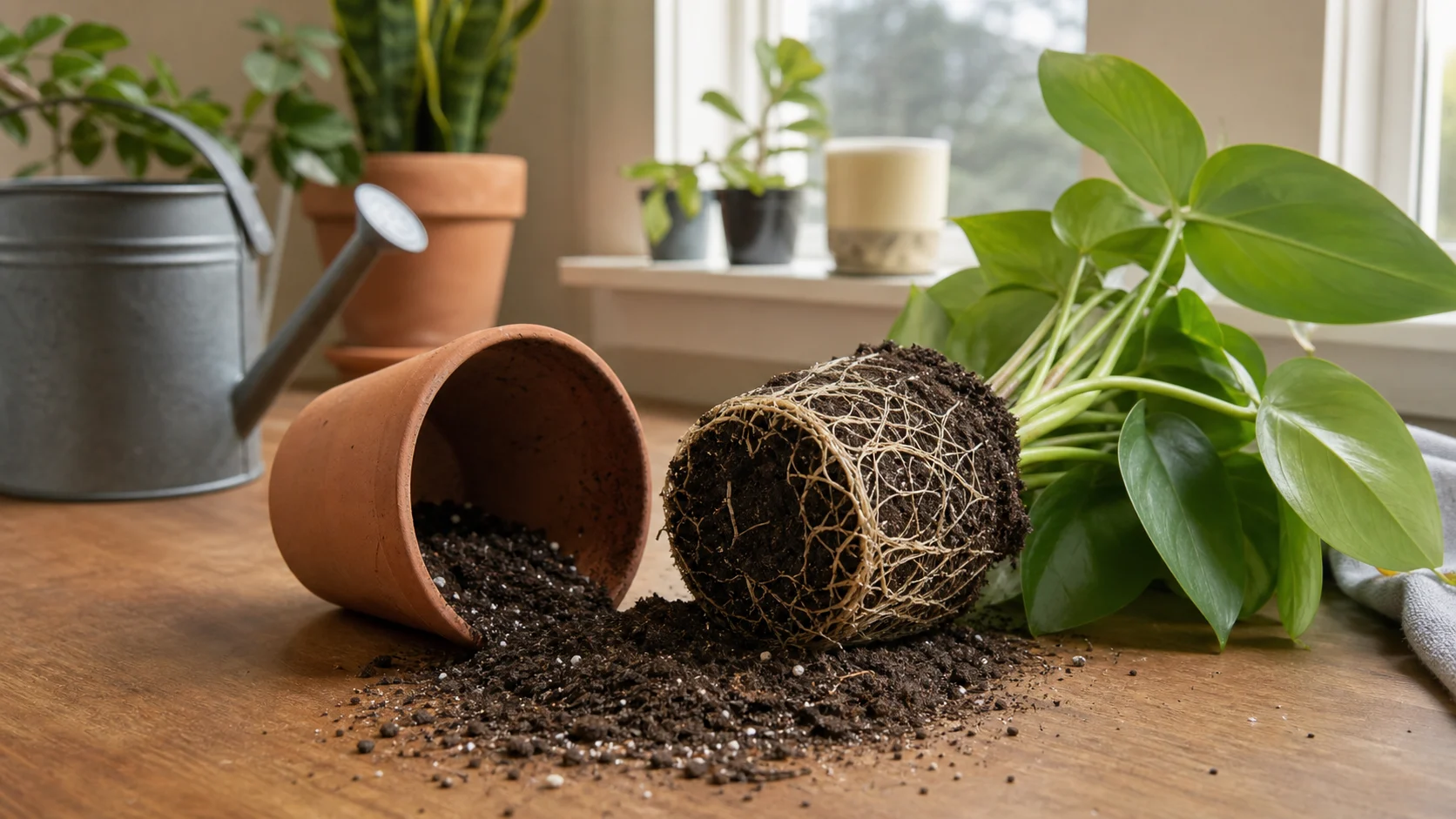
If growth slows or foliage wilts, inspect the fine roots before deciding how aggressively to treat the pot.
Does cinnamon actually help with fungus gnats?
Cinnamon has mild antifungal properties, and since fungus gnat larvae feed partly on fungal matter in the soil, some growers sprinkle it on the surface as a deterrent. It’s not a reliable standalone treatment, but it won’t hurt anything and may help alongside the methods above.
Why do I keep getting fungus gnats even after treating?
The most common reason is that larvae survived through inconsistent treatment, or the watering habits that invited them in haven’t fully changed. Stick with hydrogen peroxide drenches for three full weeks and keep the soil surface dry between sessions. Also check whether a nearby pot is also affected: gnats will move between plants.
Are fungus gnats harmful to people or pets?
Fungus gnats don’t bite, sting, or carry disease. They’re a nuisance for people and not harmful to pets. The treatments described here, hydrogen peroxide and sticky traps, are also safe around pets once the soil has dried.
Do I need to replace the potting soil entirely?
Usually not. The hydrogen peroxide drench combined with letting the soil dry is effective enough to clear larvae from existing soil. Replacing the soil can actually reintroduce the problem if the new mix is kept too moist. If the soil is very old, compacted, or draining poorly, repotting into a fresh well-draining mix makes sense for the plant’s health regardless, and the root rot treatment guide walks through the rescue steps if the roots smell sour or look mushy.
Can I use neem oil for fungus gnats?
Yes. A neem oil soil drench, diluted per the package instructions, can help control larvae and works more slowly than hydrogen peroxide but has the added benefit of suppressing some of the fungal growth that larvae feed on. Many growers use neem soil drenches as a monthly preventive measure once an infestation has cleared.
Patience, Consistency, Done
Fungus gnats are one of the more manageable pest problems you’ll run into with houseplants. Annoying, yes, but not catastrophic. The hydrogen peroxide drench combined with yellow traps and drier watering habits clears things up in most cases within two to three weeks.
The main thing is consistency. Treat every week, keep the soil surface dry between sessions, and you’ll see the traps come up emptier, the clouds of flies thinning out, and eventually: nothing.
Your plants will be fine. Probably relieved, actually.
If you want a reminder system to keep up with the treatment schedule, or help tracking which plants need drying out versus which ones need water, Download KnowYourPlant for personalized plant care reminders.
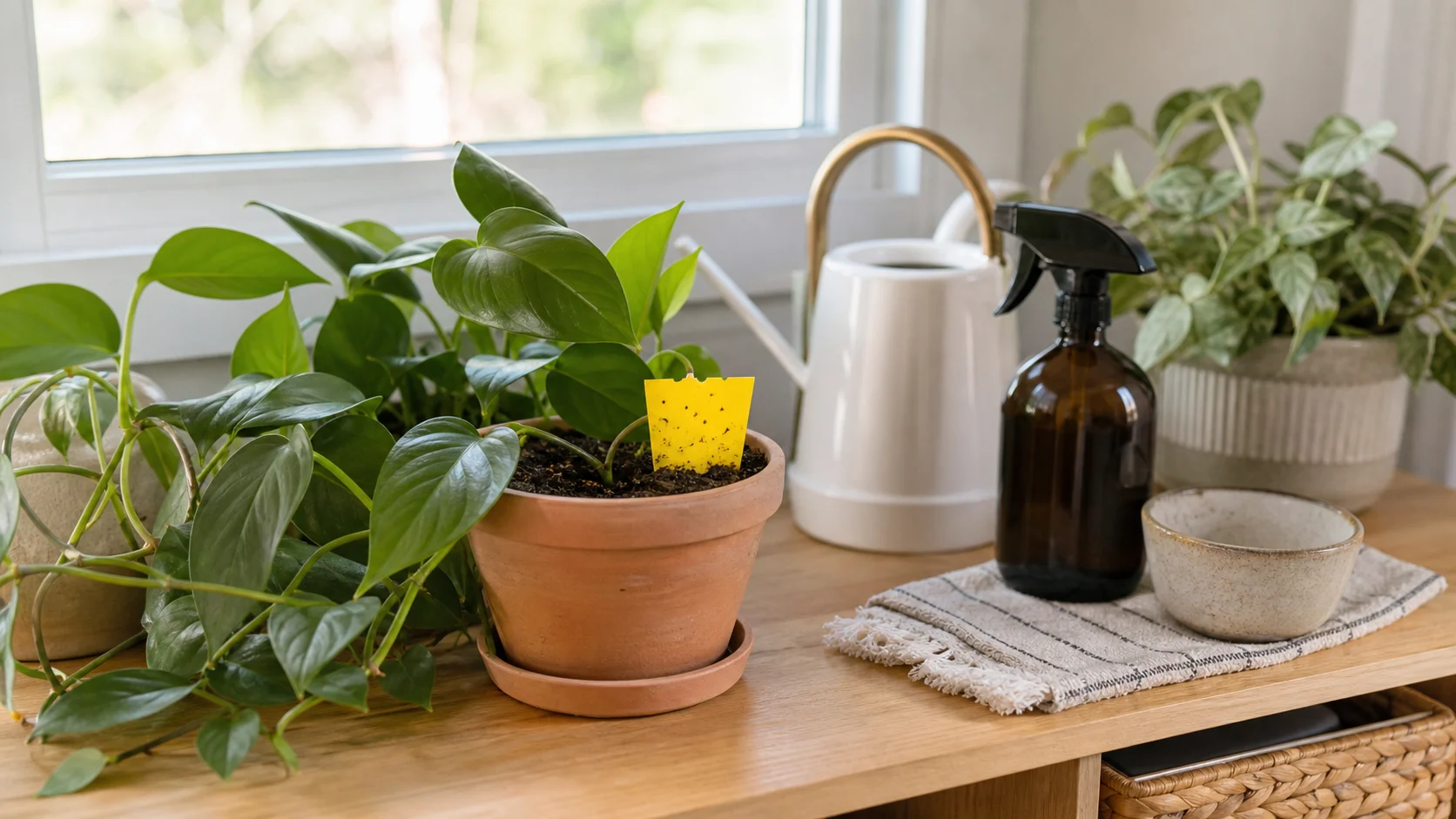
A steadily emptier trap and a consistent watering routine show that the fungus gnat cycle is winding down.