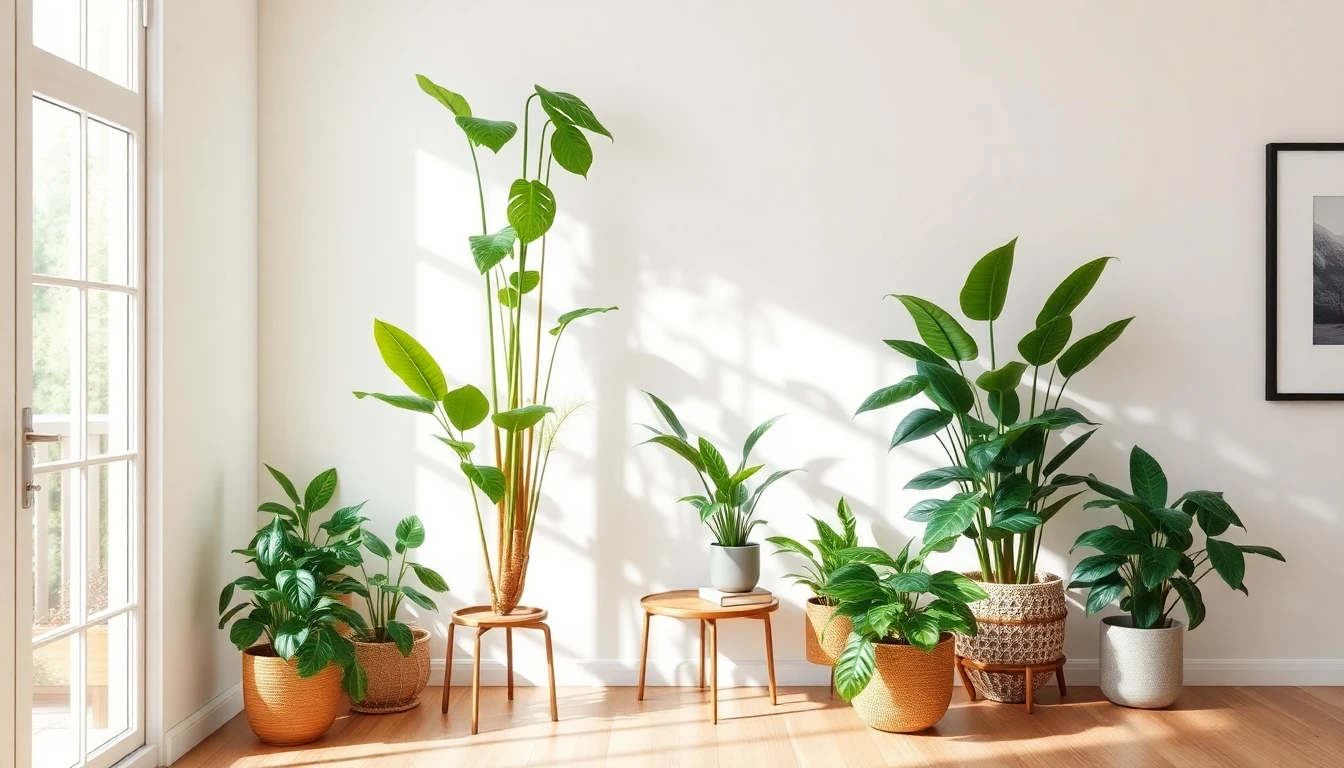
Feng shui plants are healthy, living indoor plants used to bring the wood element, softness, growth, and visual vitality into specific areas of a home. The best ones are not magic objects. They are plants that suit your light, your watering habits, and the room you choose. A plant only supports calm in a bedroom, welcome at the entrance, focus at a desk, or abundance in a wealth corner if it can stay alive there.
That practical part matters. A thriving pothos in a bright-enough corner usually feels better than an expensive “lucky” plant slowly yellowing in a dark hallway. Use feng shui as a placement lens, then use plant care to keep the result alive. If the map says one thing and the plant’s leaves say another, plant health wins.
Britannica describes feng shui as a traditional Chinese practice of arranging buildings and objects in harmony with qi, with strong links to yin-yang balance and the five elements. In plant terms, that usually means using living greenery as the wood element: upward movement, renewal, flexibility, and steady growth. This guide translates that idea into real houseplant choices for modern homes.
What Most Plant Roundups Miss
Most roundups about feng shui plants list attractive options. The better question is which choice will still make sense in your actual room three months from now.
Use this filter before choosing:
- Light reality: what the plant receives on a normal cloudy day, not the brightest hour of the week.
- Care rhythm: whether you prefer weekly attention or a plant that can be ignored longer.
- Space: mature height, spread, trailing habit, and whether leaves will touch walls or pets.
- Failure signal: what the plant does first when the match is wrong: yellowing, stretching, crisping, or dropping leaves.
A good recommendation is not just beautiful. It fits the room, the owner, and the first problem you are likely to notice.
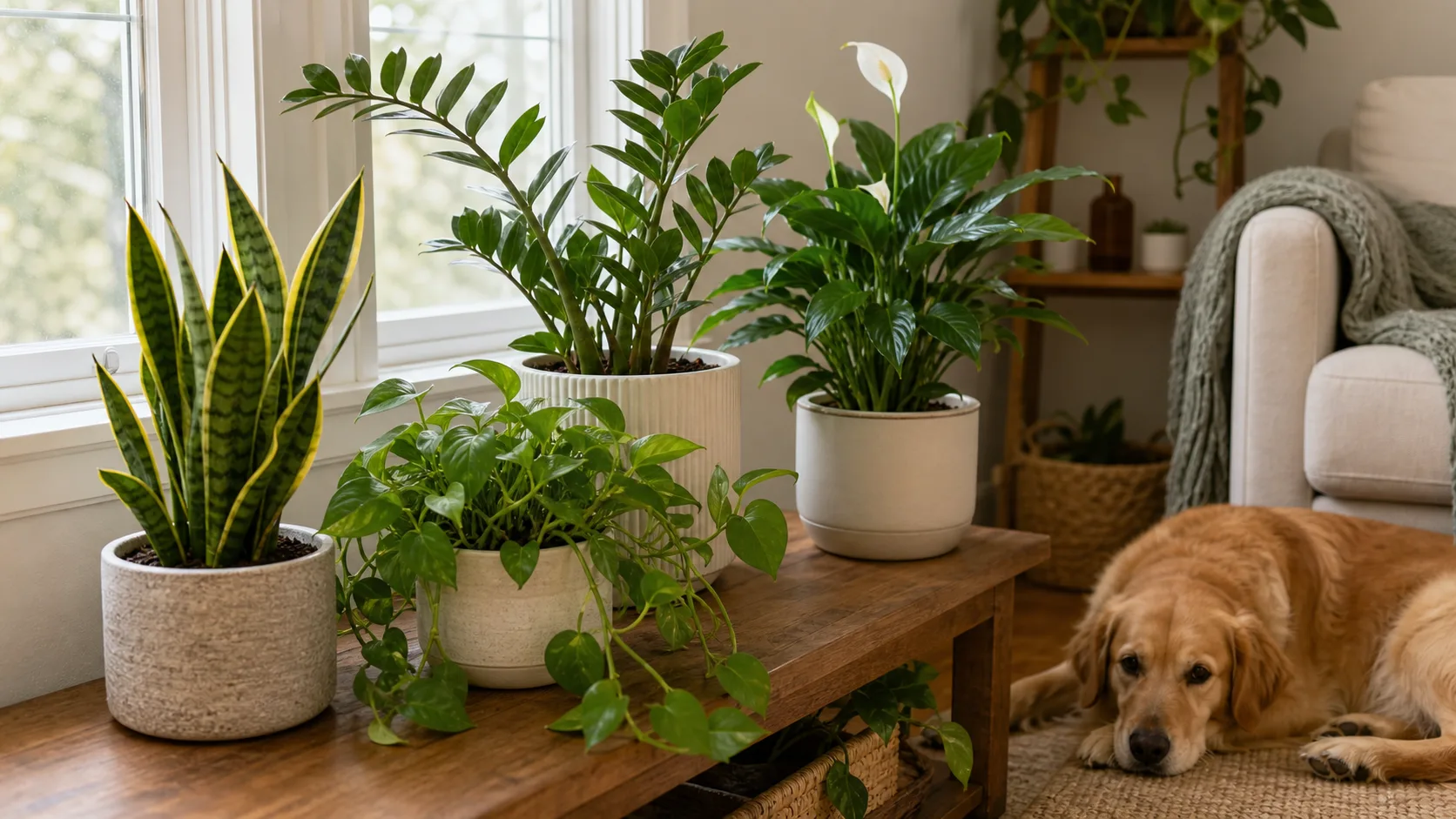
Healthy plants suit the room’s light, space, care rhythm, and pets—not just a roundup label.
For a diagnostic-first companion that starts with light, pets, and failure signals before the bagua map, use the feng shui plant fit matrix.
Quick Fit Check Before You Buy or Move a Plant
Before choosing a “money plant” or bedroom plant, check the room like a plant owner first. This keeps the guide practical instead of turning into another lucky-plant list.
- Light: Can the plant see the sky from its spot? Bright indirect light near a window suits money tree, pilea, rubber plant, orchid, and most herbs. Dimmer rooms are better for ZZ plant, pothos, snake plant, or parlor palm.
- Watering routine: If you forget for weeks, choose ZZ plant, snake plant, jade, or pothos. If you like checking plants often, peace lily, fern, herbs, and pilea are easier to read but less forgiving.
- Drainage: Use a nursery pot with holes inside a decorative cachepot, or choose a pot with drainage and a saucer. A symbolic plant sitting in wet soil will usually yellow before it brings any sense of abundance.
- Pets and kids: Place toxic plants out of reach or skip them. Pothos, jade, peace lily, snake plant, monstera, and many dracaenas are not good choices where pets chew leaves.
- Your real goal: For welcome, choose upright and open. For calm, choose soft and simple. For abundance, choose visible growth. For focus, choose compact plants that do not spill across your desk.
Identification Snapshot
| Detail | What to notice |
|---|---|
| Plant category | This is a placement guide, not one single species guide, so first identify whether your plant is upright, trailing, broad-leafed, or spiky |
| Best beginner feng shui plants | Pothos, parlor palm, ZZ plant, snake plant, Chinese money plant |
| Best money-area shapes | Rounded or coin-like leaves, steady growth, tidy habit |
| Best bedroom shapes | Soft, calm, not too large, easy to maintain |
| Best low-light bets | ZZ plant, pothos, snake plant, parlor palm |
| Biggest risk | Forcing a symbolic plant into a room where the light, humidity, or pet situation does not work |
Care Cards
| Care card | Fast answer |
|---|---|
| Bright indirect light | Chinese money plant, money tree, rubber plant, orchid, herbs |
| Medium to low light | Pothos, ZZ plant, snake plant, parlor palm |
| Higher humidity helps | Peace lily, fern, many bathroom plants |
| Dry-home tolerant | Snake plant, ZZ plant, jade, pothos |
| Pet-safety caution | Jade, pothos, peace lily, snake plant, monstera, many dracaenas |
| Best for beginners | Choose the toughest plant that still matches the room’s symbolism |
Quick Feng Shui Plant Placement Guide
| Area | Best plant style | Good choices | What to avoid |
|---|---|---|---|
| Front entry | Upright, welcoming, healthy | Money tree, rubber plant, parlor palm | Thorny plants, dry leaves, anything blocking the door |
| Wealth corner | Round leaves, steady growth | Chinese money plant, jade, pothos, money tree | Dead cuttings, cluttered pots, plants you cannot keep alive |
| Bedroom | Soft, calm, low-maintenance | Peace lily, snake plant, parlor palm, orchid | Huge vigorous plants, spiky leaves near the bed |
| Living room | Lush, balanced, visible | Rubber plant, monstera, pothos, dracaena | One sad plant in a dark corner |
| Home office | Compact, focused, easy to read visually | ZZ plant, Chinese money plant, jade, pothos | Trailing vines across work surfaces |
| Bathroom | Humidity-tolerant plants | Pothos, peace lily, fern, snake plant | Succulents in dark wet rooms |
| Kitchen | Fresh, edible, bright | Basil, mint, rosemary, citrus | Overcrowded windowsills that block light |
If you want one simple rule: put plants where they can stay healthy and where you will actually notice them. In feng shui language, a neglected plant does not create good energy. In plant-care language, weak light and irregular watering cause stress. The outcome is the same either way.
Placement Decision Tree
Use this when the symbolic room and the plant’s needs do not agree.
If the room has bright indirect light:
- Keep your first-choice symbolic plant if it also fits the pet situation.
- Good candidates: money tree, Chinese money plant, orchid, rubber plant.
If the room is dim or inconsistent:
- Switch to a tougher species instead of forcing a light-hungry plant to stay there.
- Good candidates: pothos, ZZ plant, snake plant, parlor palm.
If the wealth corner is dark:
- Move to the nearest healthy bright spot within or near that zone.
- Use the symbolism there instead of sacrificing the plant.
If pets can chew leaves:
- Skip toxic favorites even if they are common feng shui picks.
- Choose placement and species around real pet behavior, not just aesthetics.
What Makes a Plant Good for Feng Shui?
The best feng shui plants usually share five qualities.
They are alive and visibly healthy. Bright leaves, fresh growth, and a stable shape matter more than the species name. A cheap pothos in the right spot beats a symbolic money tree that is dropping leaves.
They have a shape that matches the room. Rounded leaves feel softer and are often used for money, family, and relationship areas. Upright plants feel structured and are useful near entries or work zones. Trailing plants soften shelves, corners, and high cabinets.
They fit the light. Utah State University Extension notes that light, temperature, humidity, container size, and potting mix all affect how quickly houseplant soil dries. The same is true for placement. A low-light plant can support a dim entry. A sun-loving herb belongs in a bright kitchen window.
They are not fighting the room. A cactus next to your pillow, a giant monstera blocking a hallway, or a thirsty fern in a dry heated corner may look stylish for a week. After that, the plant and the room both feel wrong.
They are safe for the people and pets who live there. The ASPCA plant lists are worth checking before buying. Jade, pothos, snake plant, peace lily, and many other common houseplants can irritate cats and dogs if chewed. If pets sleep in the room, choose safer options from our cat-safe indoor plants guide.
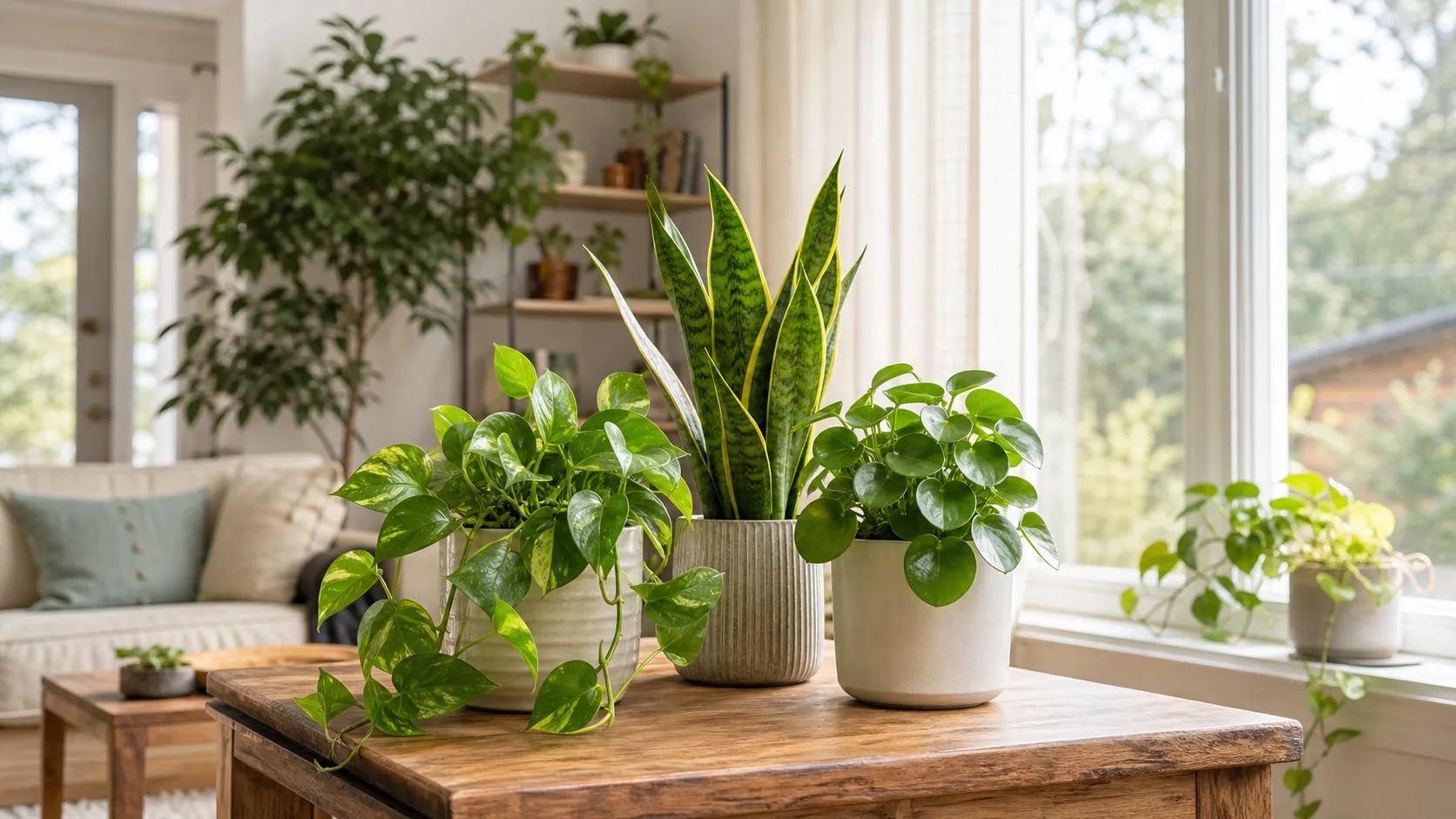
Trailing, upright, and round-leaf plants work best when their shape and light needs fit the room.
Lookalikes and Plants Feng Shui Buyers Get Confused With
- Chinese money plant vs. money tree: Chinese money plant is compact with round coin-like leaves. Money tree is taller, braided, and works more like a floor or table accent.
- Lucky bamboo vs. real low-light houseplants: Lucky bamboo is often sold as a symbolic shortcut, but many people struggle with long-term care when it is kept in poor water or low-quality setups. A pothos or ZZ plant is often easier in ordinary homes.
- Snake plant vs. any “bedroom plant”: Snake plant is popular because it is tough, but its upright pointed leaves feel too sharp for some bedroom layouts. If that matters to you, parlor palm or peace lily usually feels softer.
- Jade vs. other succulent “money plants”: Jade fits abundance symbolism, but it still needs brighter light than many wealth-corner spots actually provide.
Best Feng Shui Plants for Money and Abundance
The “money plant” category is confusing because several unrelated plants are sold under that name. Feng shui use is symbolic, not botanical. You are looking for healthy growth, rounded or coin-like leaves, and a pot that feels intentional rather than temporary.
Chinese Money Plant
Chinese money plant, or Pilea peperomioides, is one of the clearest visual matches for abundance symbolism. The round leaves look like coins, the plant stays compact, and it produces offsets that can be shared with friends. North Carolina Extension describes Chinese money plant as a compact houseplant with distinctive circular leaves, bright indirect light needs, and tolerance for average home humidity.
Place it on a desk, console, plant stand, or bright shelf in the wealth area. In the BTB bagua system, people often map the wealth corner as the far-left area from the main entrance of a room or home. If you use compass feng shui, you may look to the southeast. If you do not follow either school strictly, put the plant where it gets bright indirect light and reinforces your money habits: near a budget notebook, home office shelf, or entry table.
Money Tree
Money tree (Pachira aquatica) is the classic braided-trunk plant sold for prosperity. It works best in a bright living room, entry, or office corner where the canopy has space to widen. In design terms, it gives vertical growth without feeling sharp. In care terms, it wants bright indirect light, a draining pot, and watering only after the top of the mix starts to dry. The money tree care guide covers the braided-trunk and leaf-drop checks in detail.
Do not put a money tree in a dark hallway just because the symbolic area points there. Move the symbolism to the healthiest nearby spot. A money corner can be a shelf, desk, or plant stand within the same zone.
Jade Plant
Jade plant has thick, oval leaves and a miniature-tree shape, so it is often used as a prosperity plant. It belongs in bright light, ideally close to a sunny window. If your wealth corner is dim, choose pothos or ZZ plant instead.
There is one important caveat: ASPCA lists jade plant as toxic to dogs, and its houseplant pet-safety article notes that cats can be especially sensitive. If pets chew plants, do not use jade in reachable areas. A pet-safe pilea is usually the better symbolic money plant.
Golden Pothos
Golden pothos is useful because it grows steadily, trails beautifully, and handles ordinary indoor conditions. It is not a classic “coin leaf” plant, but it works well for abundance areas because its vines create visible growth. It is also forgiving enough that beginners can keep it lush.
Use pothos on a high shelf, bookcase, or cabinet where it can trail without crossing walkways. If your pothos is getting leggy, prune and root the cuttings. Our golden pothos care guide covers the full routine.
Best Feng Shui Plants for the Bedroom
Feng shui plants for bedroom spaces should be calm, low-maintenance, and visually soft. The bedroom is not the best place for a plant collection that needs constant problem-solving. One or two healthy plants are better than ten pots around the bed.
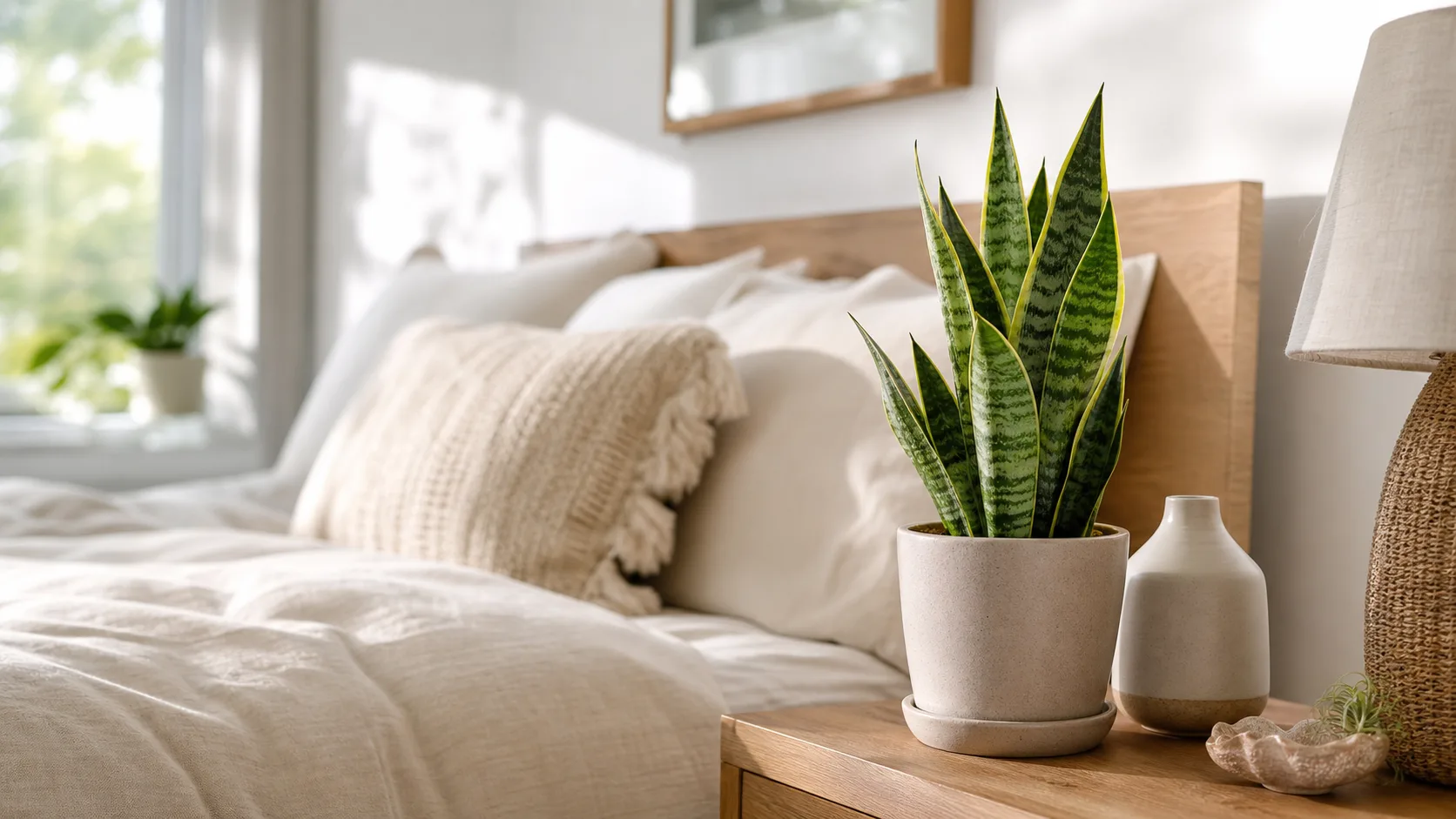
One healthy, low-maintenance plant keeps a bedroom calmer than a crowded collection.
Peace Lily
Peace lily has soft leaves, white spathes, and a quiet shape that suits bedrooms. University of Florida IFAS recommends well-lit areas out of direct sunlight and damp soil without overwatering. That makes it a good choice for a bedroom with medium indirect light.
Place peace lily on a dresser, plant stand, or corner table rather than directly beside your pillow. It is not pet-safe, so skip it if cats or dogs have access. For care details, use our peace lily care guide.
Snake Plant
Snake plant is popular in bedrooms because it is structured, drought-tolerant, and handles lower light better than most plants. In feng shui terms, its upright leaves can feel protective and stable. In design terms, it adds shape without taking much floor space.
The catch is leaf shape. Some feng shui practitioners avoid very sharp plants near the bed because they feel too active or cutting. If that idea resonates with you, place snake plant across the room, near a doorway, or in a corner instead of pointing at the bed. Our snake plant care guide explains watering and light.
Orchid
Orchids are often used for beauty, refinement, and relationship areas. A healthy orchid can be beautiful in a bedroom, but it needs enough light to rebloom. Use an orchid if your bedroom has a bright window and you enjoy its care rhythm. If you want the look without the maintenance, choose a peace lily or parlor palm.
For a full beginner routine, see our orchid care guide.
Parlor Palm
Parlor palm is a gentle bedroom choice because it has soft fronds, tolerates indoor light, and is generally considered pet-friendly. It gives a room movement without the aggressive shape of spiky plants. Put it where the fronds can spread without brushing your face or blocking a walkway.
If your bedroom is very dark, start with our best bedroom plants guide and choose by light level first.
Best Feng Shui Plants for the Entryway
The front entry is where first impressions happen. In feng shui language, it is also where energy enters the home. You want a plant that feels welcoming, upright, and clear.
Good entryway plants:
- Money tree for a bright entry table or floor pot
- Rubber plant for a stable, glossy, upright look
- Parlor palm for softness near a door
- ZZ plant for lower-light apartments
- Pothos on a shelf if floor space is tight
Avoid blocking the door swing, squeezing a plant into the walking path, or letting dropped leaves pile up near the threshold. A plant should make the entry feel open and cared for, not crowded.
If your entry is dim, choose from our low-light indoor plants guide. If the spot gets direct sun through glass, test it carefully. A plant can burn in a sunny entry even if the rest of the home feels shaded.
Best Feng Shui Plants for the Living Room
Living rooms can handle bigger plants because they usually have more visual space. This is where you can use plants to soften corners, balance furniture, and make the room feel inhabited rather than staged.
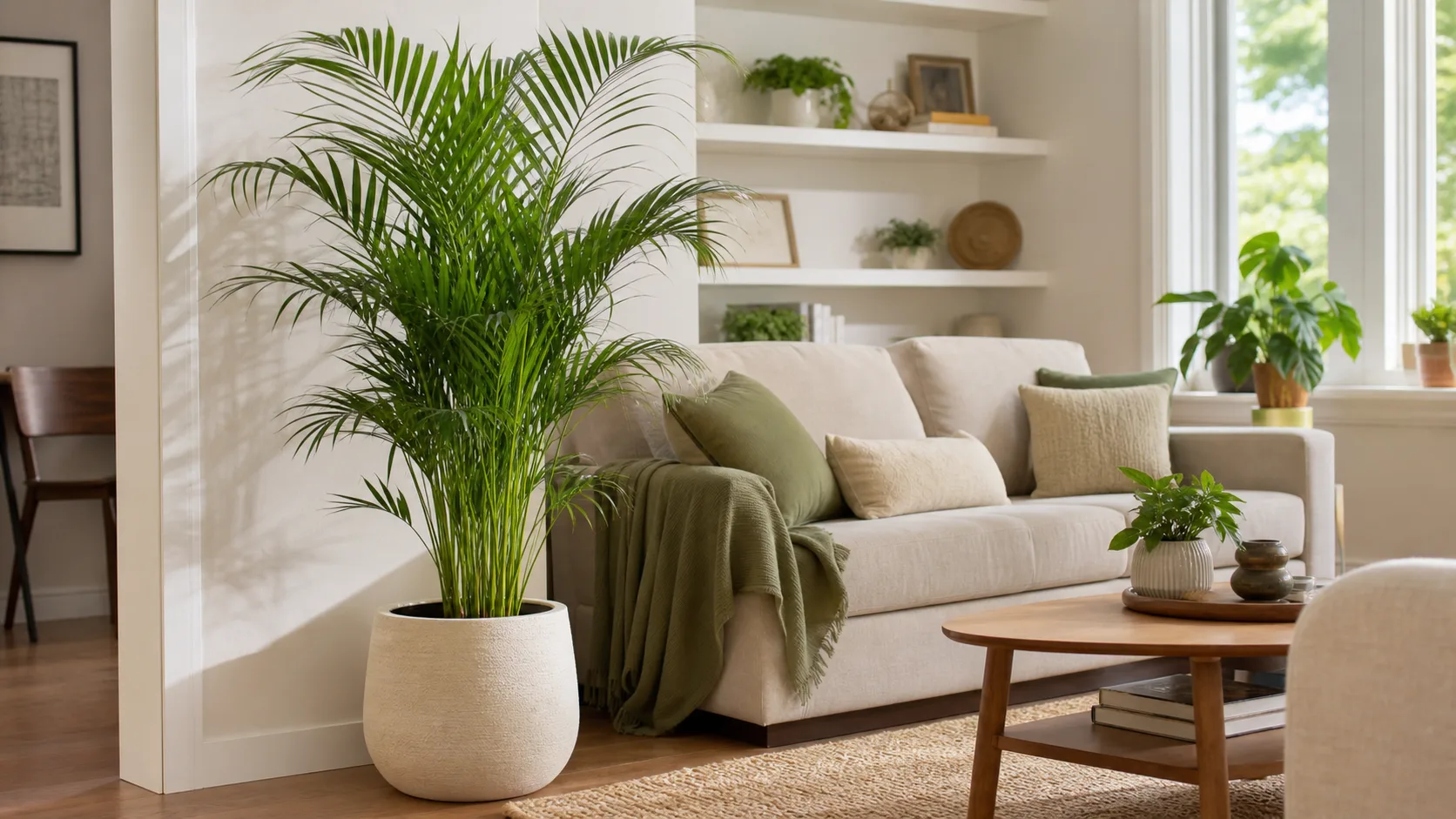
A full parlor palm softens an open corner while balancing the scale of nearby furniture.
Rubber Plant
Rubber plant has large, glossy leaves and a grounded shape. It is a good feng shui plant for corners that need weight and stability. It likes bright indirect light and watering after the top of the soil dries. If your living room has medium light, rubber plant is usually easier than fiddle leaf fig and cleaner-looking than a messy vine.
See the rubber plant care guide before placing it in a low-light corner. It can tolerate less-than-perfect light, but it will grow best with steady brightness.
Monstera
Monstera is not subtle, which is why it works in bigger rooms. The large leaves bring a lush wood-element feeling and can visually soften hard furniture. Put it where it can grow without blocking a walkway or window. Give it support if the stems start spreading sideways.
If you want the big tropical look, start with the monstera deliciosa care guide. If you want a smaller climbing option, Monstera Peru stays more compact.
Dracaena
Dracaena works well in a living room because it adds height without huge leaves. It is a good plant for a corner behind a chair, near a bookcase, or beside a media console. Keep it away from cold drafts and heating vents, both of which can dry leaf tips.
Best Feng Shui Plants for a Home Office
A home office plant should support focus, not compete for attention. Compact plants are usually better than dramatic trailing vines across cables and notebooks.
Good desk and office choices:
- Chinese money plant for a bright desk or shelf
- ZZ plant for low-maintenance structure
- Jade plant for bright offices without plant-chewing pets
- Pothos on a high shelf for steady growth
- Snake plant in a floor pot near the office door
Keep the surface clear. One intentional plant is better than five small pots pushed between monitors. If your work area has weak natural light, use a small full-spectrum lamp or choose a ZZ plant. The grow lights for indoor plants guide covers simple setups that do not look like a greenhouse.
Best Feng Shui Plants for the Bathroom and Kitchen
Bathrooms and kitchens are practical rooms first. Choose plants that can handle the actual humidity, light, and temperature swings.
Bathroom Plants
Bathrooms often have higher humidity but weaker light. Pothos, peace lily, snake plant, and some ferns can work if there is a window or grow light. University of Minnesota Extension notes that winter indoor humidity can be low enough to stress humidity-loving plants, and grouping houseplants can create a small humid microclimate. Bathrooms can help, but only if the plant still has light.
Do not put succulents in a dark bathroom. They may look clean and minimal at first, but most will stretch, rot, or fade.
For more room-specific options, use our best plants for bathroom guide.
Kitchen Plants
Kitchens are good for herbs, small citrus, pothos, and compact upright plants. Basil, mint, rosemary, and thyme bring a living-food quality that feels appropriate in a kitchen. They also need more light than many people expect, so a sunny window or grow light matters.
Avoid overcrowding the windowsill. If plants block daylight or make cooking surfaces feel cluttered, the placement is working against the room.
Pet Safety
Many common feng shui favorites are not pet-safe. Pothos, jade, peace lily, snake plant, monstera, and many dracaenas can all cause problems if chewed. The ASPCA plant lists are the simplest way to check before you buy.
If pets roam freely, the easiest wins are:
- choose generally safer plants such as parlor palm where possible,
- keep toxic plants completely out of reach rather than merely “unlikely to be touched,” and
- skip the symbolic favorite if a safer plant fits the same room and light.
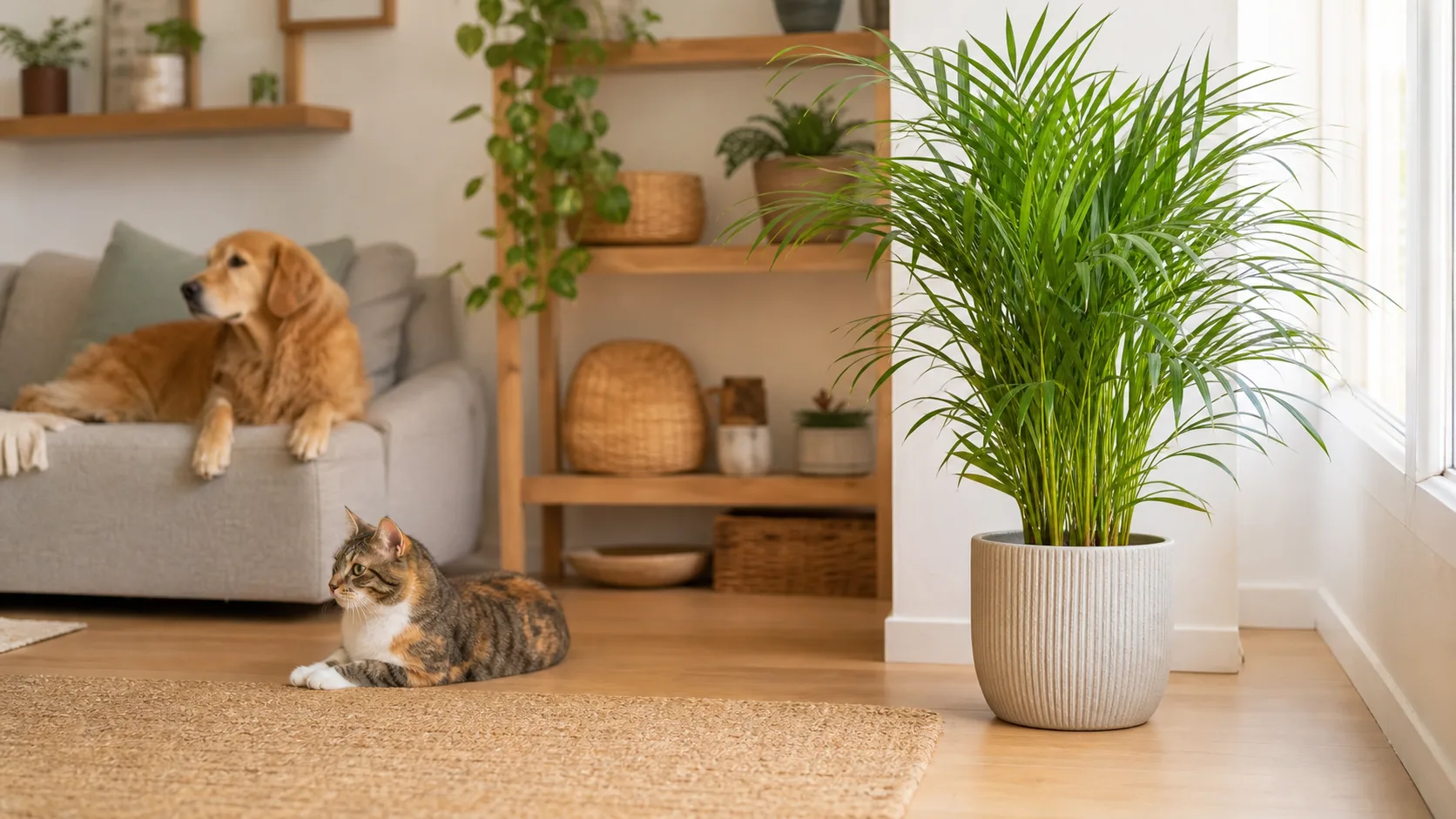
A pet-safe indoor palm lets cats and dogs share the room without a risky plant within reach.
Feng Shui Plants to Avoid
“Avoid” does not mean the plant is bad. It means the plant may be wrong for a specific room, symbol, or household.
Dead, dying, or dusty plants. This is the clearest no. Remove dead leaves, wash dusty foliage, and replace plants that cannot recover. A struggling plant in a wealth corner is not helping the room.
Spiky plants near beds or seating. Cacti, sharp yucca, and very pointed snake plants can feel too harsh up close. They can still work on a sunny windowsill, office shelf, or entry corner if the placement feels intentional.
Plants that are toxic within reach of pets. Pothos, peace lily, jade, snake plant, monstera, and many other popular houseplants can be risky if chewed. Use ASPCA’s toxic and non-toxic plant lists before buying, then choose placement based on your actual pets, not just the label.
Plants that need more light than the room has. A money tree in a dark corner will eventually thin out. A jade plant far from a window will stretch. A fern in dry heat will crisp. Symbolism cannot override biology.
Too many plants in one area. A plant cluster can feel lush. A plant pile can feel cluttered. Leave space around the best specimens so the room can breathe.
Common Problems
If a feng shui plant starts looking stressed, solve the care problem before moving it to a new symbolic corner. Most indoor plant problems start with light, water, drainage, or dry air.
| Symptom | Most likely causes | What to do first |
|---|---|---|
| Yellow lower leaves | Soil staying wet too long, low light, old leaves aging out | Feel the soil. If it is wet several days after watering, wait longer next time and check drainage. Move the plant closer to bright indirect light if the room is dim. |
| Curling leaves | Thirst, heat, cold draft, pests, or sudden light change | Check soil moisture and the undersides of leaves. Water if the mix is dry. Move away from vents, cold glass, or harsh afternoon sun. |
| Brown crispy tips | Dry air, inconsistent watering, fertilizer buildup, tap-water minerals | Trim the dry tips, water thoroughly when the plant is ready, and flush the soil occasionally so salts do not build up. |
| Drooping with wet soil | Overwatering, root stress, pot with no drainage | Stop watering, let the mix dry, and make sure excess water can leave the pot. If the soil smells sour, inspect the roots. |
| Leggy growth or fading color | Not enough light | Move the plant nearer a window or add a small grow light before changing fertilizer. |
Watering depends on plant type and room conditions, but these beginner ranges are useful starting points:
- Pothos, money tree, rubber plant, peace lily, monstera: check weekly. Water when the top 1 to 2 inches of mix feel dry.
- ZZ plant, snake plant, jade: let most or all of the mix dry. Many homes only need watering every 2 to 4 weeks.
- Ferns, herbs, pilea: check every few days in bright rooms. Water before the plant fully wilts, but never leave the pot sitting in water.
The clearest sign you are overdoing it is soil that stays wet for days, especially with yellowing leaves, fungus gnats, mushy stems, or a sour smell. The clearest sign you are underwatering is a very light pot, dry soil pulling from the pot edge, curling leaves, or crispy patches that keep spreading.
How to Set Up a Feng Shui Plant Area
Use this simple process before buying anything.
- Stand in the room during the day and identify the brightest workable spots.
- Choose the feeling you want: welcome, calm, focus, abundance, softness, or height.
- Pick a plant whose care needs match that exact spot.
- Choose a pot with drainage, then use a cachepot or saucer that fits the room.
- Remove dead leaves, wipe dust, and rotate the pot every week or two.
- Reassess after one month. If the plant declines, move it before it becomes a problem.
Use this as your care plan:
- Today: Check the light, confirm the pot drains, remove dead leaves, and water only if the soil is actually ready.
- This week: Watch for yellowing, curling, brown tips, or drooping. Rotate the pot once if growth leans toward the window.
- This season: Move plants away from cold glass, heaters, and AC vents. Water less in darker months and repot only when roots are circling tightly or the soil dries unusually fast.
This is where feng shui becomes practical. You are not just decorating with a symbol. You are building a small care loop into the room. Watering, pruning, and noticing new growth are part of the effect.
If you are new to plants, start with the easy houseplants for beginners guide before buying a symbolic plant that needs advanced care.
Common Feng Shui Plant Mistakes
Buying only by name. A “money plant” label does not mean the plant fits your home. Check light, pet safety, mature size, and watering needs first.
Putting wealth plants where they cannot grow. If the far-left corner is dark, use a small shelf nearby, a grow light, or a more tolerant plant. Do not sacrifice plant health for a map.
Treating fake plants as equal to living plants. Faux plants can soften a dark shelf visually, but they do not bring the same living wood-element quality. If you use one, keep it clean and pair it with at least one real plant elsewhere.
Leaving nursery pots exposed. A healthy plant in a battered plastic sleeve can look temporary. Use a stable cachepot, basket, or ceramic container that suits the room.
Ignoring seasonality. A placement that worked in June may fail in December when light drops. Plants near cold glass, heating vents, or AC units often need seasonal moves.
Real User FAQ
My wealth-corner plant is dying, but that is the “right” feng shui spot. Should I leave it there?
No. This is one of the most common real-home problems. If the plant is declining because the area is too dark or stays too wet, move it to the nearest healthy bright spot and keep the symbolism there instead of forcing the exact corner.
I bought a lucky bamboo or money plant because of the symbolism. Why does it look worse in my kitchen?
Kitchens can be bright, but they can also be hot, dry, or inconsistent. Public forum questions about feng shui kitchens often sound like this: the symbolic plant was chosen first, then the care mismatch showed up later. Check light, drainage, and watering rhythm before assuming the room is wrong in a symbolic sense.
Are bedroom plants bad feng shui?
People disagree. Some readers worry that plants bring too much active energy to a sleeping space, while others are comfortable with one or two calm plants. A practical middle ground is simple: keep the bedroom sparse, choose a soft plant, and avoid turning the room into a maintenance zone.
How do I decide where a specific plant should go if the guide gives several options?
Start with shape and toughness. Upright plants suit entries and offices. Soft, lower-maintenance plants suit bedrooms. Trailing or forgiving plants suit shelves and awkward corners. Once you know the room’s real light, the choice gets much easier.
What if pets chew leaves?
Then pet safety outranks symbolism. Choose safer plants or change the plant entirely. A healthy non-toxic plant in the right room is better than a famous feng shui plant you have to worry about every day.
FAQ: Feng Shui Plants
What is the best plant for feng shui?
The best feng shui plant is a healthy plant that fits the room. If you want one flexible choice, money tree works for bright entries and living rooms, while pothos or ZZ plant works better in lower light.
Which feng shui plants attract money?
Chinese money plant, money tree, jade plant, and golden pothos are common money or abundance plants. Choose based on light and pet safety. Pilea is a strong option when you want round coin-like leaves in a compact plant.
Where should I put feng shui plants for money?
Many people use the far-left corner from the main doorway in the BTB bagua system, while compass-based practice often looks to the southeast. In a real home, place the plant in the healthiest bright spot within or near that area.
Are feng shui plants good for the bedroom?
Yes, but keep the bedroom simple. One or two calm, healthy plants usually work better than a large collection. Peace lily, parlor palm, orchid, and a carefully placed snake plant can work if the room has enough light.
Which plants should not be kept at home according to feng shui?
Dead or unhealthy plants are the main ones to remove. Many practitioners also avoid thorny or very spiky plants near beds, sofas, and dining areas. Toxic plants should also be avoided anywhere pets or children can reach them.
Can I use artificial plants for feng shui?
You can use artificial plants to soften a dark area visually, but they are not the same as living plants. If you use faux greenery, keep it clean and intentional rather than dusty or forgotten.
How many plants are too many in feng shui?
Too many plants is whatever makes the room feel crowded, damp, hard to clean, or difficult to use. A balanced room might have one floor plant, one tabletop plant, and one trailing plant rather than every surface filled.
Do plants really change energy in a home?
They can change how a home feels, even if you do not treat feng shui as science. Healthy plants add color, shape, care routines, and a visible sign of growth. That is enough to shift the mood of many rooms.
Methodology
Last updated: June 14, 2026. This guide was refreshed using the evidence already gathered for the topic, with direct factual plant-care and safety claims checked against Britannica, North Carolina Extension, University of Florida IFAS, Utah State University Extension, University of Minnesota Extension, and ASPCA. Public forum and search-snippet material were used only as qualitative signal for recurring reader confusion, especially around bedroom plants, symbolic money plants declining in the wrong room, and where to place a specific species when the room is a poor fit.
The Bottom Line
Feng shui plants work best when symbolism and care line up. Put round-leaf money plants where you want abundance, soft plants where you want calm, upright plants where you want structure, and trailing plants where a room needs gentle movement. Then keep them healthy.
If a placement makes the plant decline, change the placement. Good energy starts with a plant that is actually alive, suited to the light, and easy enough for you to care for consistently.
If you are choosing between a few options, save the plant and its routine in KnowYourPlant so the placement, watering, and seasonal checks stay tied to the actual plant you own.
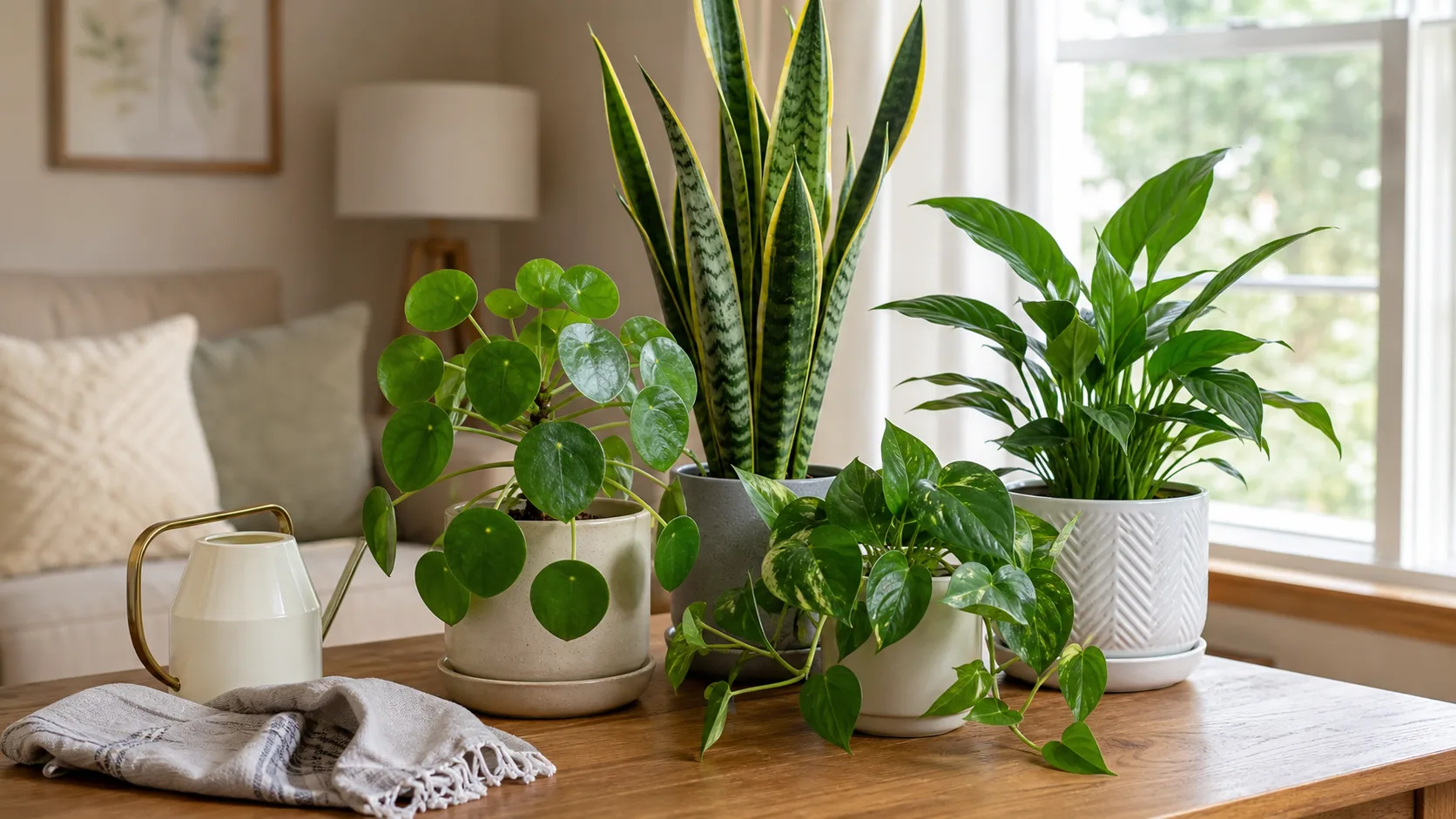
Round, upright, soft, and trailing plants stay meaningful when their placement and care keep them healthy.