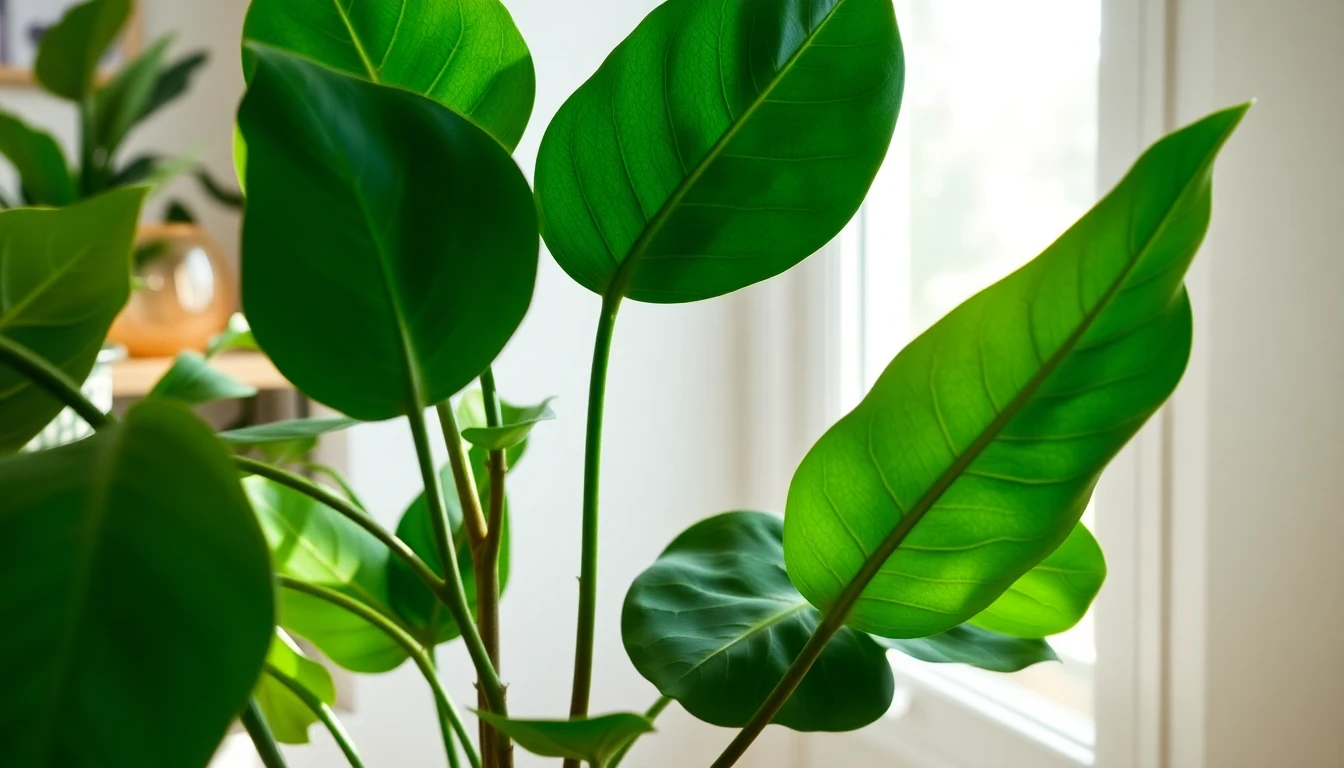
Fiddle leaf fig care has a reputation for being impossible, but most failures come from three ordinary problems: not enough light, watering before the pot has dried enough, and moving the plant every time it looks annoyed. Ficus lyrata is not a beginner-proof plant, but it is not mysterious. Give it bright filtered light, a pot that drains, a consistent watering rhythm, and time to adjust before you change the setup again.
The big leaves make every mistake visible. A pothos can lose a yellow leaf quietly. A fiddle leaf fig drops a dinner-plate-sized leaf onto the floor and makes the room feel like a crime scene. That drama is why the plant feels harder than it is. The care routine is simple; the recovery is slow. If you want a similar indoor tree with a little more forgiveness, the rubber plant care guide is a useful comparison.
Local seasons change that routine even when the plant stays indoors. Use the Fiddle Leaf Fig climate guides by city to compare outdoor match, month-by-month drying pressure, and the safest normal outdoor window across ten U.S. cities and Singapore.
According to North Carolina Extension, fiddle leaf fig prefers bright indirect light or partial shade, moist but well-drained soil, medium humidity, and protection from afternoon sun. Missouri Botanical Garden gives the same basic pattern: bright indirect light, regular watering during active growth, no overwatering, and reduced watering from fall through late winter. This guide turns those basics into a practical indoor routine.
Climate DNA for Ficus lyrata
This profile is computed from accepted Ficus lyrata records inside its POWO native countries after coordinate, establishment, licence, and spatial filters.
The ranges below are the middle 50% (p25–p75), not recommended indoor setpoints.
| Reference taxon | POWO native range | Annual mean temperature | Annual precipitation | Relative humidity | Solar radiation | Evidence |
|---|---|---|---|---|---|---|
| Ficus lyrata (fiddle-leaf fig) | western and west-central tropical Africa | 25.0–26.9°C | 1093–2206 mm/yr | 62–69% | 16.4–18.8 MJ/m²/day | 30 climate points / 50 usable records; medium confidence |
What this changes in this guide: The envelope supplies ecological context for consistency and warmth; it cannot diagnose leaf drop on its own, because indoor light change and root-zone saturation are not represented by macroclimate pixels.
Sources and method: Ficus lyrata in POWO and GBIF; CHELSA V2.1, 1981–2010. GBIF records are limited to POWO-native countries, then filtered for coordinates, establishment signal, licence, precision, and spatial duplication. No community or user-reported care data is used in this module.
Identification Snapshot
| Detail | What to notice |
|---|---|
| Botanical name | Ficus lyrata, usually sold as fiddle leaf fig |
| Growth habit | Upright indoor tree with a single trunk or branched cane and oversized violin-shaped leaves |
| Best room fit | Bright room close to an east window or filtered south or west exposure |
| Watering rhythm | Water only after the top 2-3 inches dry, then let the mix breathe again |
| Fastest warning signs | Lower yellow leaves, brown spots, lean growth, and sudden leaf drop after a move |
| Pet safety | Not pet-safe, and the milky sap can irritate skin in sensitive households |
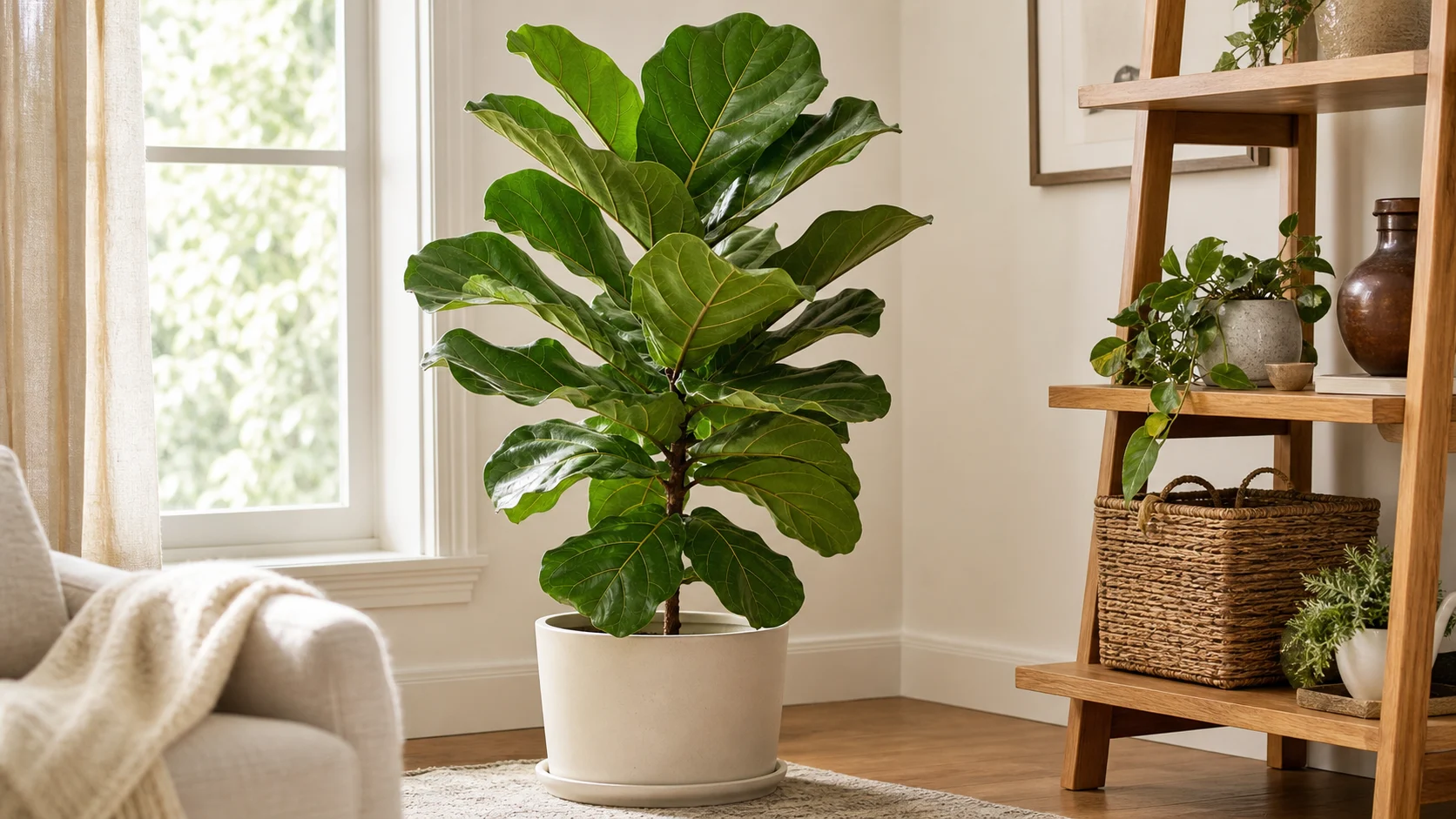
A healthy fiddle leaf fig shows its upright habit and oversized violin-shaped leaves beside a bright filtered window.
What Most Care Guides Miss
Most guides about fiddle Leaf Fig describe the ideal care routine. Real homes are messier: light changes by season, pots dry at different speeds, and the same symptom can mean different things depending on where it appears.
Before changing care, check the plant in this order:
- Light: is the plant growing toward the window, fading, or scorching?
- Root zone: is the pot drying predictably, or staying wet in the middle?
- Leaf pattern: did the oldest leaves, newest leaves, tips, or stems change first?
- Recent change: new pot, new location, fertilizer, cold draft, heat vent, or pest exposure.
This keeps you from fixing the wrong problem. One clear adjustment is usually safer than a full care reset.
Care Cards
| Care card | Fast answer |
|---|---|
| Light | Bright indirect light is the default, with gentle morning sun okay and harsh afternoon sun risky |
| Water | Check the top 2-3 inches, then water deeply and empty runoff instead of watering on a fixed day |
| Soil | Use a fast-draining mix that does not stay wet in the middle of the pot |
| Pot | Drainage holes are mandatory and only size up one pot at a time |
| Structure | Rotate every week or two so the crown does not lean hard toward one window |
| Seasonal shift | Expect slower drying and less feeding in autumn and winter |
Common Care Mistakes That Create Symptoms Later
- Watering on the same day every week instead of checking whether the top 2-3 inches are actually dry.
- Calling a room bright when the plant is still too far from the window to see strong sky exposure.
- Repotting into a much larger pot after one rough week, which leaves extra wet soil around the roots.
- Moving or rotating the plant too often, which makes it harder to tell whether the last change helped.
- Pruning or wiping up sap without gloves in sensitive households, even though Ficus lyrata can irritate skin.
Quick Fiddle Leaf Fig Care
| Care factor | Best target | What goes wrong |
|---|---|---|
| Light | Bright indirect light, close to a window | Low light causes slow growth and leaf drop; harsh afternoon sun scorches leaves |
| Water | Water deeply when the top 2-3 inches are dry | Wet soil causes yellow leaves and root rot; bone-dry soil causes crispy edges |
| Soil | Airy, well-draining indoor potting mix | Dense soil stays wet too long around the roots |
| Pot | Drainage holes, one size up when repotting | Oversized pots hold extra wet soil |
| Humidity | Average to medium humidity; steadier is better | Dry winter air can brown edges |
| Temperature | Warm rooms, above 55 F | Cold drafts and heat vents can trigger leaf drop |
| Feeding | Monthly in spring and summer at half strength | Fertilizer in weak light can burn roots |
| Pet safety | Keep away from pets and children who chew plants | Sap and plant parts can irritate mouths and skin |
If you want one rule before everything else: stabilize the environment before you troubleshoot. Fiddle leaf figs often react to change a week or two after the event, so the leaf dropping today may be about last week’s cold draft, move, missed watering, or overcorrection.
Is a Fiddle Leaf Fig Right for Your Home?
Buy a fiddle leaf fig if you can give it a bright window, a pot with drainage, and a routine where you check soil before watering. It is a good fit for someone who can leave the plant in one stable spot and spend a few minutes each week checking leaves, soil, and light.
Skip it or choose an easier indoor tree if your only spot is a dim corner, you travel often without plant help, or you know you tend to water whenever you feel worried. Fiddle leaf figs are not hard because they need rare expert care. They are hard because they punish inconsistent basics.
Use this quick fit check before buying:
| Your setup | Fiddle leaf fig fit |
|---|---|
| Bright east window or filtered south/west window | Good fit |
| Large window but winter gets dim | Good fit with a grow light |
| North window or room where lights stay off most days | Poor fit |
| You can check soil weekly and empty the saucer | Good fit |
| You want a plant you can water on the same day every week | Risky fit |
| Pets or children chew plants | Poor fit unless kept out of reach |
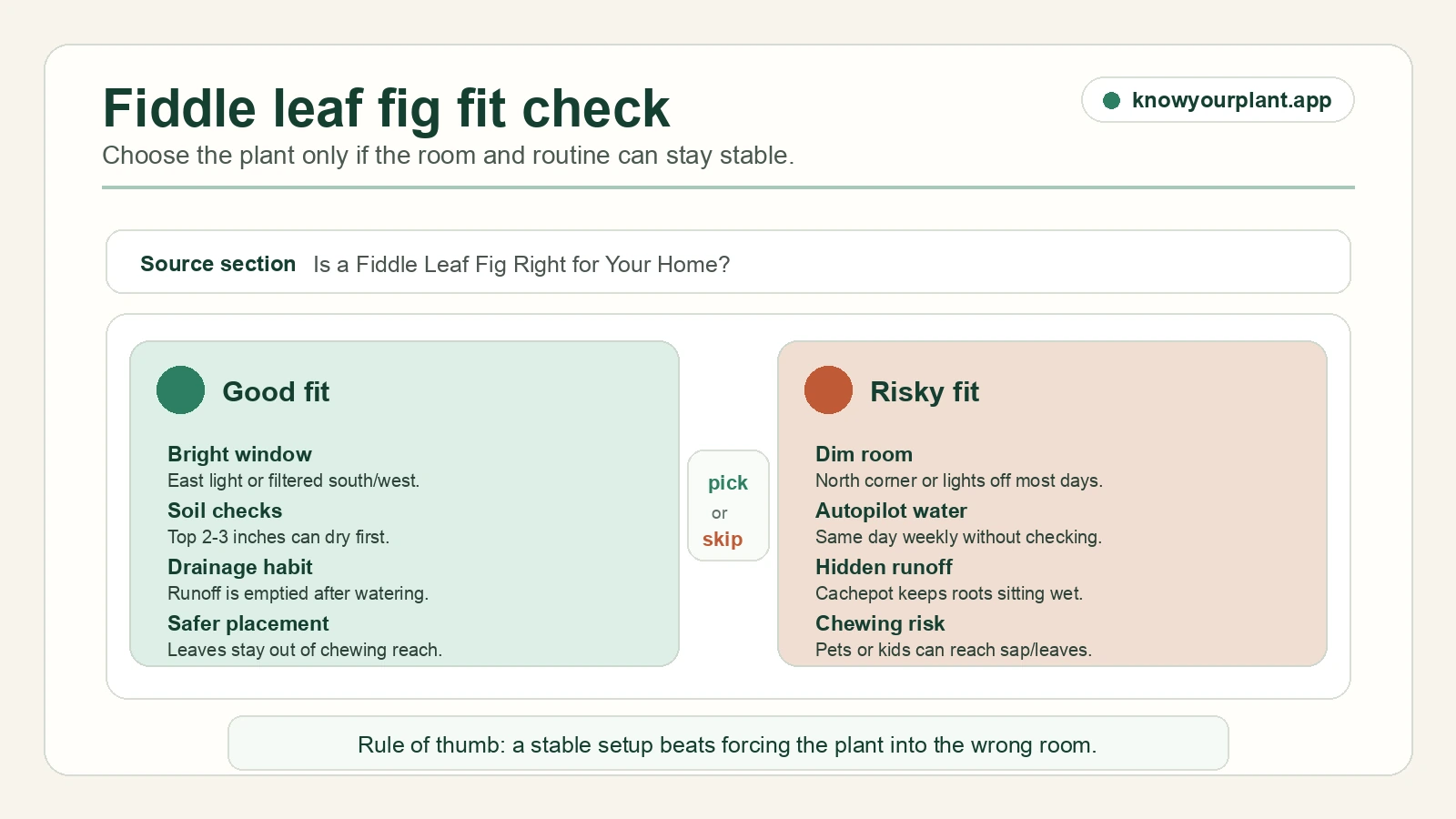
Use the fit check before you buy or move the plant; a stable room and routine matter more than fixing symptoms later.
Lookalikes and Plants This Gets Confused With
- Ficus Audrey: softer matte leaves and a paler trunk, with a less rigid leaf shape than fiddle leaf fig.
- Rubber plant: thick glossy oval leaves instead of violin-shaped ones, and usually a more forgiving response to lower light.
- Young banyan ficus forms: sometimes sold as decorative indoor trees, but they branch and leaf out differently as they mature.
If the label is missing, the fastest tell is the leaf blade. A true fiddle leaf fig has broad leaves with a narrow waist, strong veins, and a more upright tree habit than these common lookalikes.
Light: The Care Step Most People Undervalue
Fiddle leaf figs need much brighter light than most people mean when they say “bright room.” A good indoor spot is close to an east-facing window, a few feet back from a south or west window, or near a large bright window softened by a sheer curtain. The plant should see the sky from where it sits.
Low light is one of the main reasons fiddle leaf figs slowly decline indoors. They may hold their leaves for a while, but new growth gets smaller, the trunk stays weak, soil dries too slowly, and watering becomes harder to judge. A plant that is using very little water because the room is dim is easy to overwater even if you are not watering very often.
Too much direct sun is the opposite problem. Morning sun is usually fine if the plant was introduced gradually. Hot afternoon sun through glass can bleach or scorch leaves, especially if the plant came from a greenhouse, nursery, or darker shop. A scorched leaf will not turn green again, so treat direct sun as something to build up slowly.
Best Window Positions
- East window: usually the easiest spot, with gentle morning sun.
- South window: excellent if the plant is set back or filtered.
- West window: workable with a sheer curtain or some distance from the glass.
- North window: often too dim unless the window is large and unobstructed.
Rotate the pot a quarter turn every week or two so the crown does not lean hard toward the light. Do not rotate every day or move it around the room chasing the sun. Steady bright light beats constant adjustment.
If your room cannot support that level of light, use a full-spectrum grow light. The grow lights for indoor plants guide explains distance and timing, but for fiddle leaf fig the goal is simple: supplement the brightest natural spot you have rather than trying to make a dark corner work from scratch.
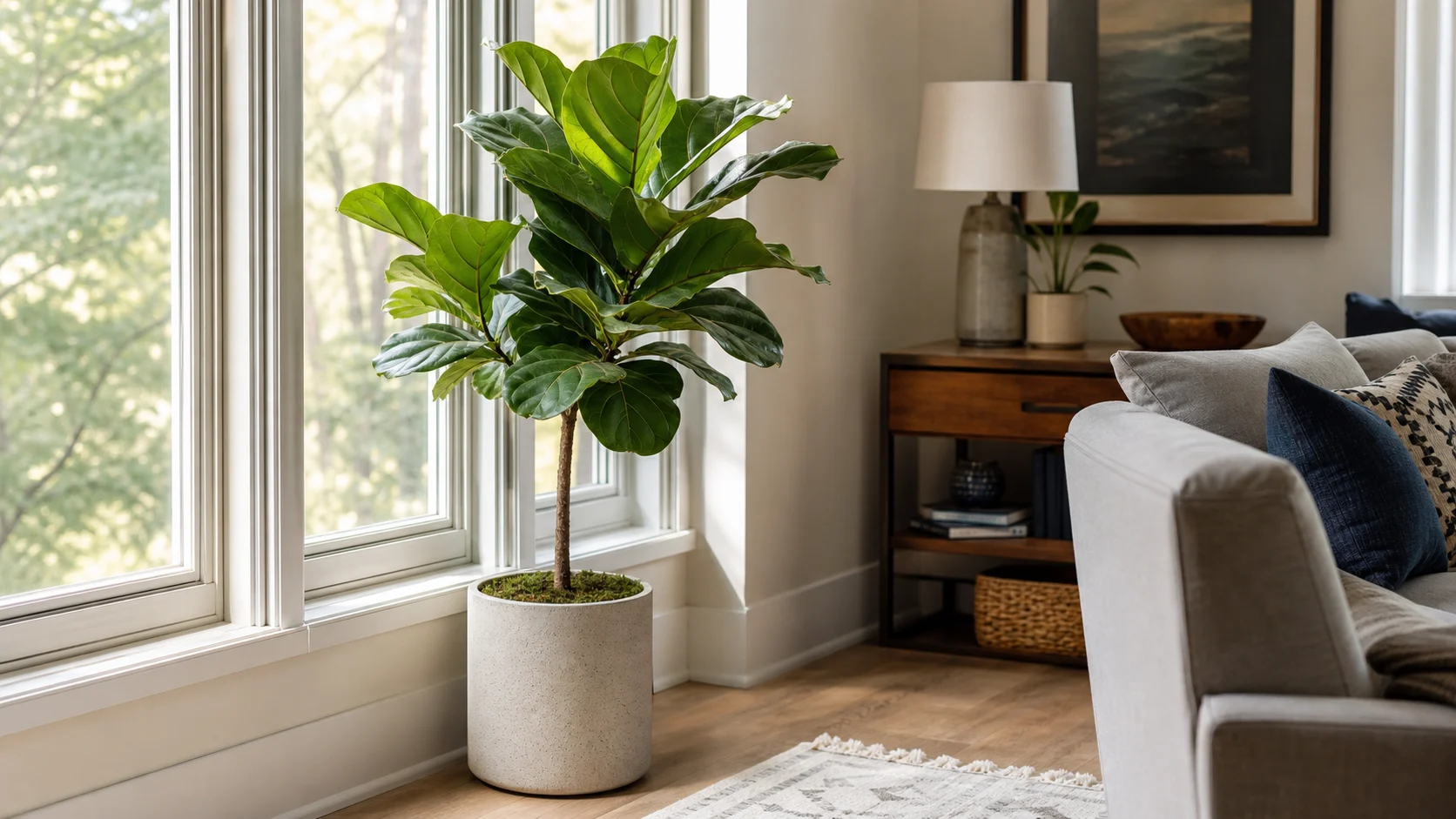
A stable spot beside a large bright window gives a fiddle leaf fig the consistent light it needs without daily moves.
Fiddle Leaf Fig Watering
Fiddle leaf fig watering should be based on soil dryness, not a calendar. Water deeply when the top 2-3 inches of potting mix are dry and the pot feels lighter than it did after the last watering. Then water until liquid drains from the bottom, empty the saucer or cachepot, and let the soil dry down again.
Illinois Extension notes that watering frequency changes with plant type, temperature, humidity, light, pot size, plant size, potting mix, and drainage. That is why checking the soil and pot weight matters more than following a fixed weekly schedule, especially with large decorative pots that can hide what is happening below the surface.
In a bright warm room, many fiddle leaf figs need water every 7-10 days during active growth. In winter, a cooler room, or a dimmer spot, the same plant may go 14-21 days. Those ranges are only starting points. Pot size, soil mix, light, humidity, and root health all change the timing.
How to Water Well
- Check the top 2-3 inches of soil.
- Lift the pot if possible and compare the weight.
- Water slowly across the soil surface until water drains.
- Wait 10-20 minutes.
- Empty any water sitting in the saucer or outer pot.
- Do not water again until the soil has dried down.
Do not give tiny sips every few days. That keeps the top layer damp while deeper roots may stay either dry or poorly oxygenated. A full soak followed by a real drying period is easier for the plant and easier for you to read.
Overwatered Fiddle Leaf Fig Signs
- Yellow lower leaves
- Brown spots that start soft or dark
- Soil that stays wet for more than a week
- A sour smell from the pot
- Fungus gnats around the soil
- Drooping that does not improve after the soil dries slightly
If fungus gnats show up, the watering rhythm is usually part of the problem. Use the fungus gnat guide after you correct the wet soil.
Underwatered Fiddle Leaf Fig Signs
- Limp leaves with dry soil
- Crispy brown edges
- Soil pulling away from the pot
- Older lower leaves dropping after repeated dry spells
- A pot that feels extremely light
The confusing part is that both overwatering and underwatering can cause drooping and leaf drop. Check the soil before deciding. Wet soil plus droop points toward root stress. Dry soil plus droop points toward thirst.
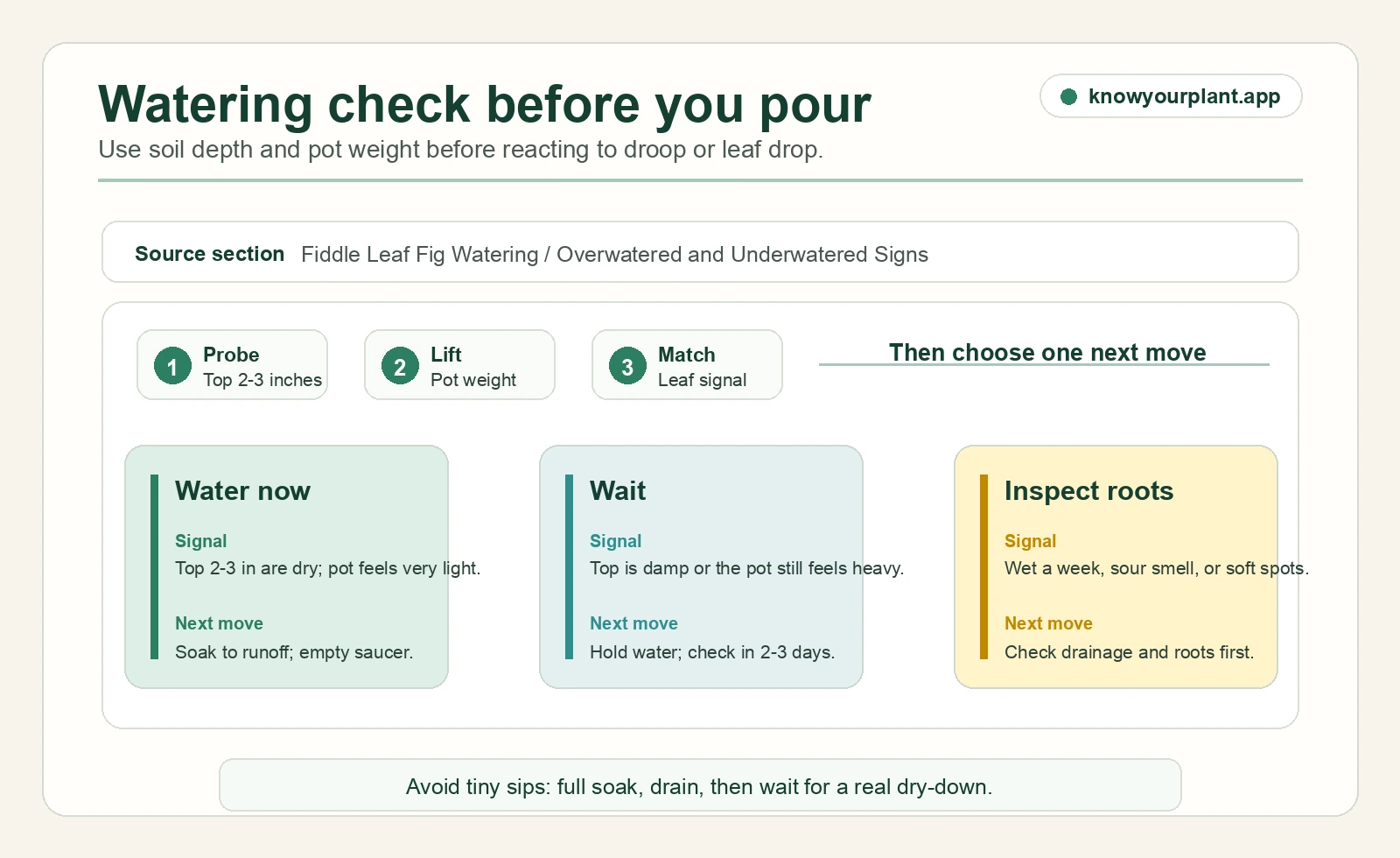
Run the probe-and-pot-weight check before pouring; the right move depends on whether the root zone is dry, damp, or staying wet too long.
Common Problems: Curling, Yellow Leaves, and Brown Tips
If you are staring at one bad leaf and trying to decide what to do today, start with the symptom and the soil. Do not fertilize, repot, prune, and move the plant all in the same afternoon.
| Symptom | Most likely cause | What to do today |
|---|---|---|
| Leaves curling inward with dry soil | Thirst, heat, or very dry air | Water deeply, empty runoff, and move away from heat vents |
| Leaves curling with wet soil | Root stress from staying too wet | Pause watering, increase light, and check drainage holes |
| One lower yellow leaf | Normal aging or a past stress | Remove it only when it comes away easily |
| Several yellow leaves with wet soil | Overwatering, poor drainage, or low light | Let soil dry, stop feeding, and inspect roots if the pot smells sour |
| Brown crispy tips | Repeated dry spells, dry air, fertilizer salts, or inconsistent watering | Reset watering checks and flush the pot if fertilizer crust is visible |
| Brown soft spots with yellow halos | Root stress or rot | Check drainage and consider repotting into fresh airy mix if roots are mushy |
The plant may keep showing old damage for a while after you fix the cause. Judge progress by whether new leaves look cleaner and whether fresh spots stop appearing.
Why Fiddle Leaf Fig Leaves Are Dropping
Fiddle leaf fig dropping leaves is not one diagnosis. It is the plant’s most common stress response. The key is to match the leaf drop pattern with what changed recently. If leaf loss is the main symptom you are chasing, the fiddle leaf fig dropping leaves guide gives you a fuller symptom-first diagnostic path.
| Leaf drop pattern | Likely cause | What to do |
|---|---|---|
| Lower yellow leaves, wet soil | Overwatering or poor drainage | Let soil dry, improve light, check drainage |
| Crispy lower leaves, dry soil | Underwatering or hydrophobic mix | Soak thoroughly, then reset watering rhythm |
| Several leaves after a move | Shock from changed light or temperature | Stop moving it and give it stable care |
| Leaves near a vent or window | Draft, heat blast, or cold glass | Move away from airflow and temperature swings |
| Dropping plus sticky residue | Scale or other pests | Inspect stems and leaf undersides |
| Brown patches on sun-facing leaves | Sun scorch | Filter afternoon sun |
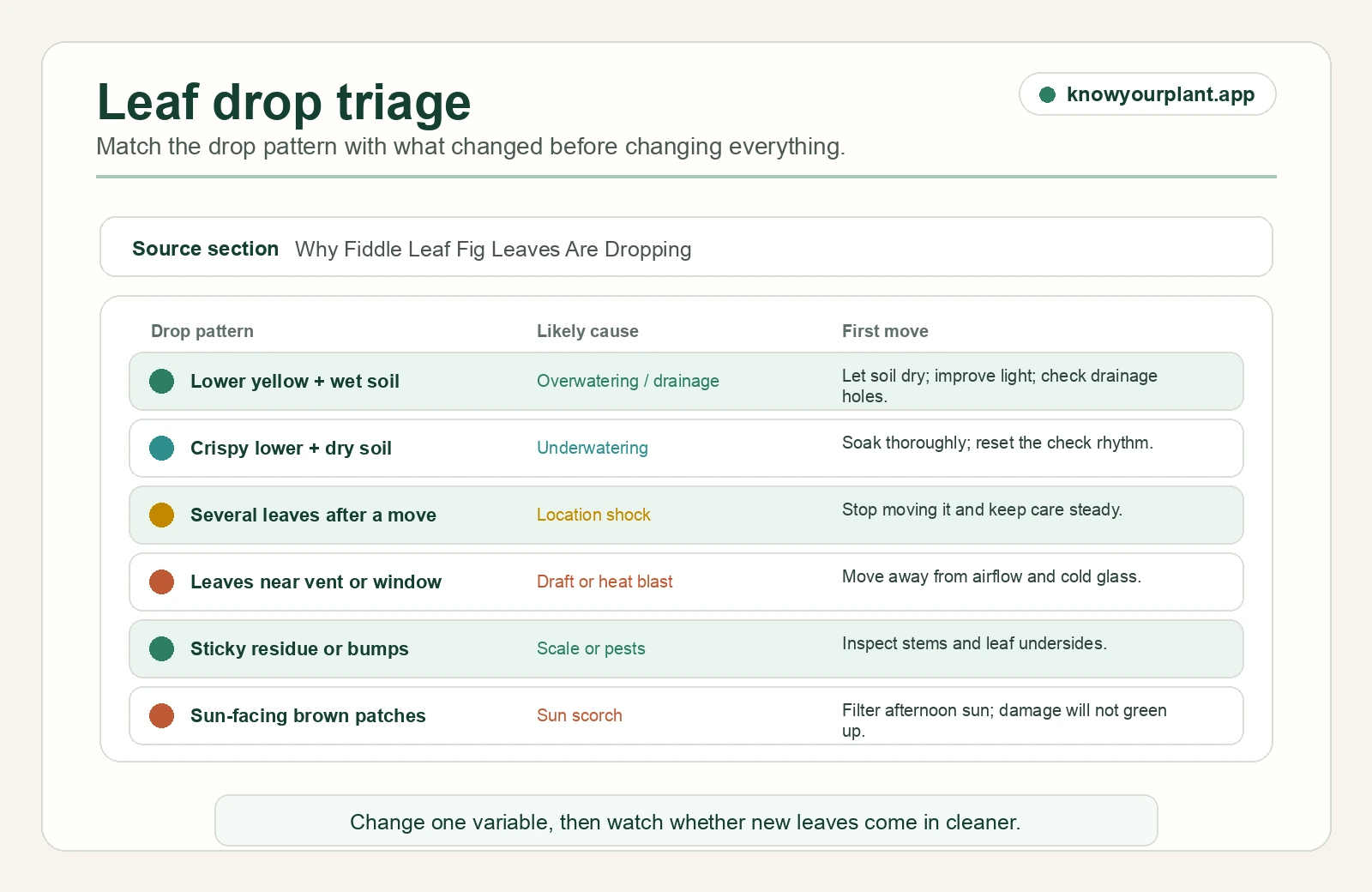
Match the leaf-drop pattern to the first move, then change one condition at a time so you can tell what helped.
North Carolina Extension notes that leaf drop can happen from too much or too little water, and that brown spots may follow temperature fluctuations from heating or cooling vents. That is why a good diagnosis starts with environment, not fertilizer.
Do not respond to every dropped leaf by changing everything. If the soil is wet, wait. If the plant was moved, let it settle. If the light is clearly poor, move it once to a brighter stable spot, then stop adjusting. Fiddle leaf figs often need weeks to show whether the new setup is working.
Brown Spots on Fiddle Leaf Fig Leaves
Brown spots are frustrating because they do not heal. Your job is to stop new spots from forming. If you want a symptom-first walkthrough for spotting patterns before you change care, the fiddle leaf fig brown spots guide goes deeper.
Dark soft spots with yellowing usually point toward overwatering, root stress, or a dense mix. Check whether the pot drains freely and whether the lower soil is staying wet. If roots smell sour or look black and mushy, repot into fresh airy mix and remove dead roots. For a full rescue sequence, use the root rot treatment guide.
Dry tan patches on the sun-facing side usually mean sun scorch. Move the plant out of harsh afternoon sun or add a sheer curtain. The damaged tissue will stay brown, but new leaves should come in clean.
Crispy edges often mean inconsistent watering, very dry air, or repeated underwatering. One dry week will not destroy a healthy plant, but repeated cycles of bone-dry soil followed by heavy watering can cause edge damage.
Small speckles, sticky residue, or bumps can mean pests. Scale insects are common on ficus plants and can hide along stems and leaf veins. Wipe leaves, inspect undersides, and isolate the plant if pests are active.
Remove a badly damaged leaf only if it is mostly brown, diseased, or distracting enough that you cannot stop staring at it. A partly marked leaf still photosynthesizes and helps the plant recover.
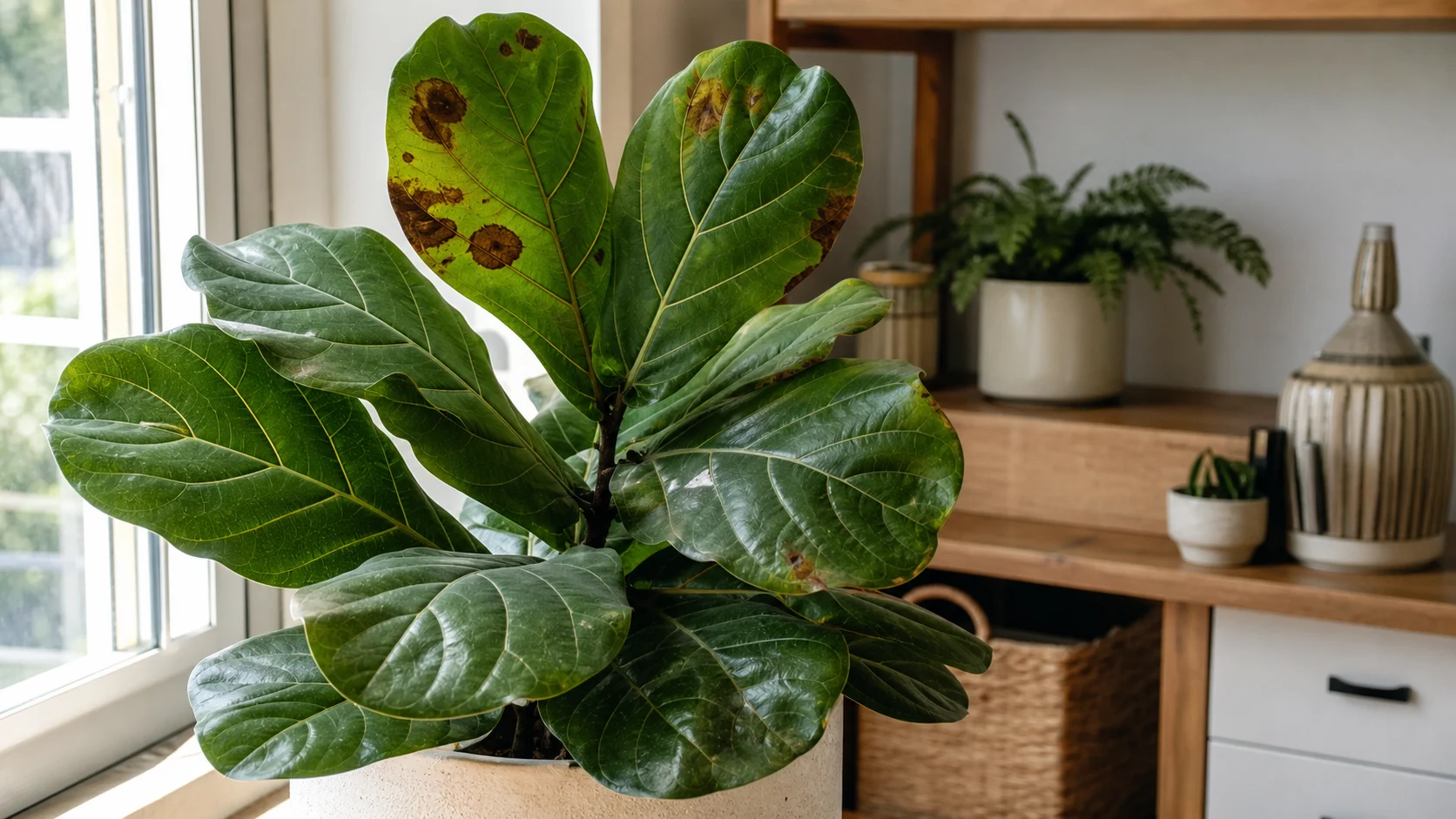
Localized brown patches matter most as a pattern to monitor while the rest of the fiddle leaf fig remains productive and green.
Soil and Pot Choice
Fiddle leaf figs need a mix that holds some moisture but does not stay soggy. A standard indoor potting mix can work if the pot is not oversized and the room is bright. If your plant has struggled with wet soil, amend the mix for more air.
A reliable mix:
- 50% quality indoor potting mix
- 25% perlite or pumice
- 15% orchid bark or pine bark fines
- 10% compost, coco chips, or worm castings
The exact recipe matters less than the structure. When you water, the mix should accept water evenly and drain freely. It should not turn into a heavy wet brick.
Choose a pot with drainage holes. A decorative outer pot is fine, but treat it as furniture, not drainage. After watering, lift the nursery pot out or tilt the outer pot and remove standing water. Fiddle leaf figs hate sitting in a hidden puddle.
When repotting, go up one pot size, not three. A small root ball in a huge pot is surrounded by wet unused soil, and that is how many expensive fiddle leaf figs decline after repotting. Repot when roots circle heavily, push through drainage holes, or when the pot dries so fast that you cannot keep up. If you need the exact sequence, use the step-by-step repotting guide before you disturb the root ball.
If you are choosing between pot materials, the terracotta pots guide explains the tradeoff. Terracotta dries faster and can help chronic overwaterers, but large fiddle leaf figs in terracotta can get very heavy.
Humidity and Temperature
Fiddle leaf figs prefer medium humidity, but they can live in average homes if water and light are steady. The problem is not a single dry afternoon. The problem is a winter room with hot forced air, low light, and irregular watering all at once.
Useful humidity fixes:
- Group plants together.
- Use a small humidifier near the plant in winter.
- Keep the plant away from radiators and heat vents.
- Wipe leaves so dust does not block light.
- Avoid misting as your main humidity plan.
Misting briefly wets the leaf surface, then disappears. It can clean dust if you wipe afterward, but it does not change room humidity in a meaningful long-term way.
Keep the plant above 55 F and away from cold drafts. A fiddle leaf fig near a winter window can be warm during the day and chilled at night. That temperature swing is enough to cause stress even if the room thermometer looks fine.
Fertilizing Ficus Lyrata
Feed only when the plant is actively growing and receiving enough light. A balanced liquid houseplant fertilizer at half strength once a month from spring through early autumn is plenty for most homes. If your plant is not making new leaves, fertilizer is not the missing ingredient.
Stop feeding in late autumn and winter. Lower light slows growth, and unused fertilizer salts can build up in the potting mix. If you see white crust on the soil, brown leaf tips, or a plant that has been fertilized heavily, flush the pot with plain water and let it drain well.
The plant fertilizer guide covers the reset process in more detail. For fiddle leaf figs, conservative feeding is better than trying to force growth.
Pruning and Shaping
Prune fiddle leaf fig in spring or early summer when growth is active. Use clean, sharp pruners and wear gloves because the milky sap can irritate skin. North Carolina Extension notes that the stems contain milky sap and recommends care when handling the plant.
Pruning can:
- Control height
- Encourage branching
- Remove weak or damaged growth
- Create a fuller tree shape
- Rescue a leggy plant
To encourage branching, cut the main stem above a node at the height where you want new growth. The plant may push one or more buds below the cut. Bright light after pruning matters; a plant in low light may not branch strongly. If you want the full decision tree for topping, notching, air layering, and realistic timelines, use the fiddle leaf fig pruning guide.
Do not remove too much foliage from a weak plant. If it has only a few healthy leaves left, improve care first and prune later. Leaves are the plant’s energy system, not just decoration.
Cleaning the Leaves
Fiddle leaf fig leaves collect dust quickly. Dusty leaves look dull and reduce the light reaching the leaf surface. Wipe both sides of each leaf every few weeks with a soft damp cloth, supporting the leaf with your other hand so you do not tear it at the stem.
Skip leaf shine sprays. They can leave residue and make pest detection harder. Clean water and a cloth are enough.
While cleaning, inspect for pests:
- Scale: small brown or tan bumps on stems and veins
- Spider mites: fine webbing and pale stippling
- Mealybugs: white cottony clusters
- Thrips: silvery streaking or tiny dark specks
If you catch pests early, wiping and targeted treatment are much easier than rescuing a stressed nine-foot tree later.
Simple Fiddle Leaf Fig Action Plan
Today
Put the plant in the brightest stable spot you have, away from vents and cold glass. Check the top 2-3 inches of soil with your finger or a wooden chopstick. If it is dry, water deeply and empty the saucer. If it is wet, do not water.
This Week
Watch for one pattern instead of reacting to every leaf. Note whether the soil is drying in about one to two weeks, whether new yellowing appears, and whether the plant is leaning toward the window. Wipe dusty leaves and inspect the undersides while you are there.

A weekly leaf wipe doubles as a calm inspection for dust, new discoloration, and pests hiding underneath.
This Season
In spring or summer, repot only if roots are crowded or the mix is staying wet too long. Feed lightly only while the plant is growing. In autumn and winter, reduce watering checks to match slower drying soil and move the plant away from cold drafts before damage shows up.
Seasonal Care Calendar
Spring
Move the plant gradually closer to stronger light if winter was dim. Resume feeding when you see new growth. Spring is the best time to repot, prune, or take cuttings because the plant can recover while light is increasing.
Summer
Water checks become more frequent because growth, warmth, and light are all higher. Keep the plant out of harsh afternoon sun unless it has been acclimated. Watch for spider mites and scale, especially in dry rooms.
Autumn
Stop fertilizing as growth slows. Let the time between waterings stretch naturally. Avoid major moves unless the plant is about to sit near a cold window or heat vent.
Winter
Give the brightest available light and water less often. Keep leaves away from cold glass. Do not repot unless root rot forces the issue. Some older leaf drop can happen after the heat turns on, but new widespread drop means you should check light, drafts, and soil moisture.
Fiddle Leaf Fig Troubleshooting
My fiddle leaf fig is drooping.
Check soil first. If it is dry, water deeply. If it is wet, wait and improve airflow and light. If the plant was moved recently, drooping may be adjustment shock.
The new leaves are small.
Small new leaves usually mean low light, weak feeding during active growth, or a root system that is not keeping up. Move the plant brighter first. Fertilizer only helps after light is adequate.
The trunk is leaning.
Rotate the pot gradually and make sure the plant is close enough to the window that it does not stretch. Stake only if the trunk cannot support itself; do not use staking as a substitute for enough light.
The soil stays wet too long.
The pot may be too large, the mix may be too dense, or the room may be too dim. Increase light, check drainage, and consider repotting into a chunkier mix if roots are healthy enough.
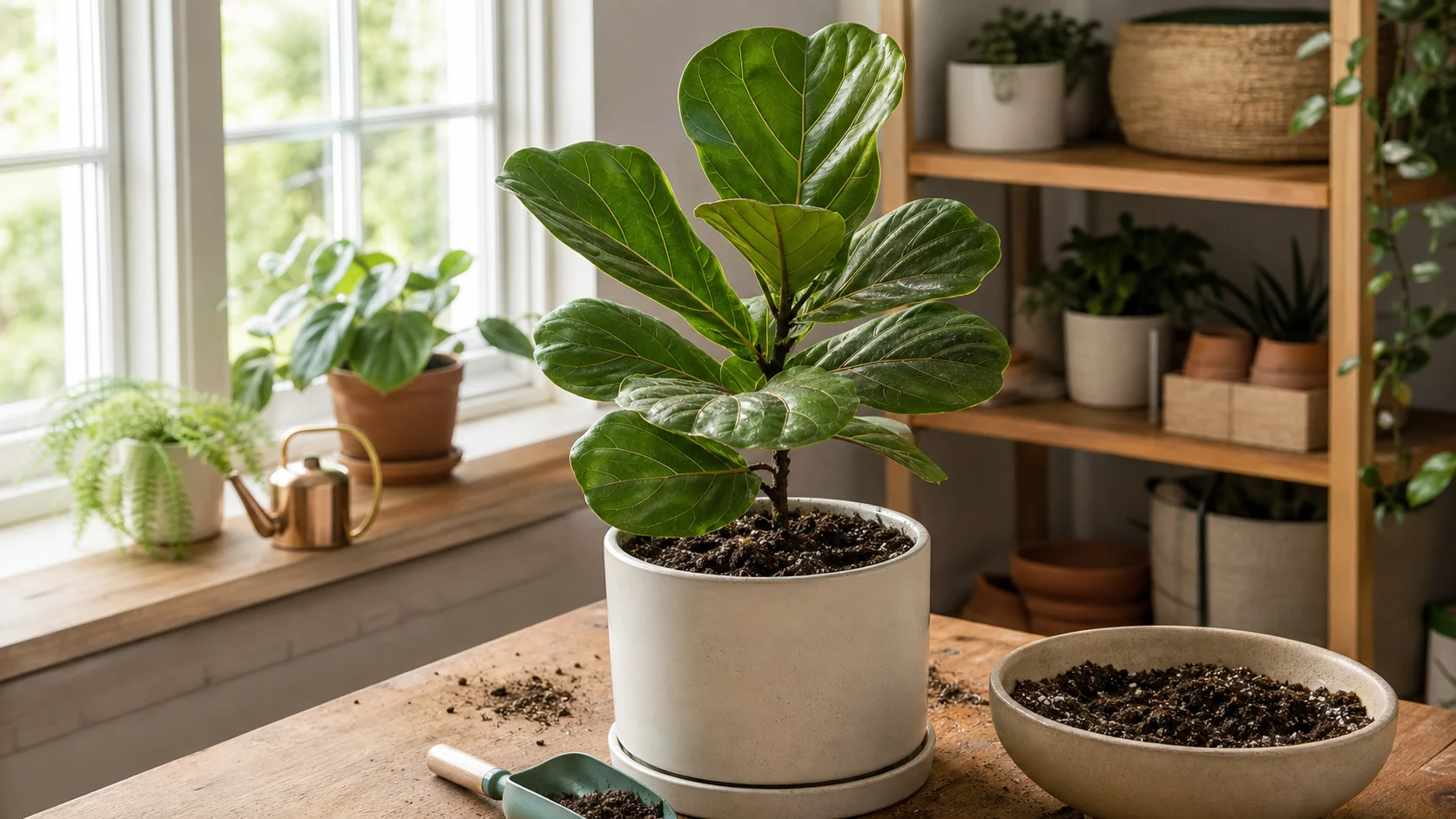
A brighter work area, visible drainage saucer, and bark-rich mix show the practical reset for soil that refuses to dry.
The leaves are dusty and dull.
Wipe them with a damp cloth. A clean fiddle leaf fig often looks healthier immediately, and the cleaning session gives you a chance to catch pests early.
Is Fiddle Leaf Fig Toxic?
Yes, treat fiddle leaf fig as not pet-safe. North Carolina Extension lists Ficus lyrata as toxic to humans, cats, and dogs if ingested, with possible mouth irritation, drooling, vomiting, and skin irritation from sap. Keep it away from pets and children who chew plants, and wear gloves when pruning or propagating.
If you need safer options, use the cat-safe indoor plants guide before buying another large houseplant.
Fiddle Leaf Fig Care FAQ
How often should I water a fiddle leaf fig?
Water when the top 2-3 inches of soil are dry and the pot feels lighter. In bright warm rooms that may be about every 7-10 days during active growth. In winter it may be every 14-21 days. Soil condition matters more than the calendar.
Does fiddle leaf fig need direct sunlight?
It needs bright light, but not harsh direct afternoon sun. Morning sun or filtered direct light can work well. Sudden hot sun through glass can scorch leaves.
Why is my fiddle leaf fig dropping leaves?
The most common causes are watering problems, low light, recent moves, drafts, temperature swings, and pests. Check what changed in the last two weeks before changing the care routine again.
Should I cut brown leaves off my fiddle leaf fig?
Remove leaves that are mostly brown, diseased, or clearly failing. Keep partly damaged green leaves if the plant is weak, because they still help photosynthesis.
Can a fiddle leaf fig live in low light?
It may survive for a while, but it will not thrive. Low light slows growth, weakens the trunk, and makes overwatering more likely. Move it closer to a window or add a grow light.
How do I make a fiddle leaf fig branch?
Prune the main stem above a node in spring or early summer, then give the plant bright light and steady care. Branching is much less reliable in low light.
Why are my fiddle leaf fig leaves turning yellow?
Yellow leaves often mean overwatering, poor drainage, or low light. A single older yellow leaf can be normal. Several yellow leaves with wet soil means you should pause watering and check the roots.
If you want to keep the watering check, light notes, and symptom history in one place, save this care routine in KnowYourPlant before you start making changes.
Methodology Note
This guide was refreshed against current SERP patterns for fiddle leaf fig care and watering, recurring owner questions from Gardening Stack Exchange, and extension-backed care guidance from NC State, Penn State, Missouri Botanical Garden, and UF IFAS. Community questions are used here as real owner language, not as statistical proof.
Real User FAQ
Why does my fiddle leaf fig look worse after I move it to a “better” spot?
Because the plant reacts slowly. A brighter or safer window can still trigger short-term stress if the temperature, sun exposure, and watering rhythm all changed at once. Make one move, then give it a couple of weeks before you judge the result.
Should I repot as soon as I see one root at the drainage hole?
Usually no. Repot when roots are circling heavily, the pot dries far too fast, or the mix is staying soggy and broken down. One visible root by itself is not an emergency.
Is leaning always a sign that the plant is unhealthy?
Not always. Leaning often means the light is coming from one side for too long. Rotate the pot gradually and check whether the trunk can support itself before you assume there is a root problem.
The Bottom Line
Fiddle leaf fig care is mostly about restraint. Put the plant in bright indirect light, water deeply only after the soil dries down, protect it from drafts and harsh sun, and stop moving it every time one leaf looks bad. Ficus lyrata can be dramatic, but it responds well to boring consistency.
Once the plant is stable, the payoff is obvious: huge sculptural leaves, steady upright growth, and an indoor tree that makes the whole room feel more intentional.
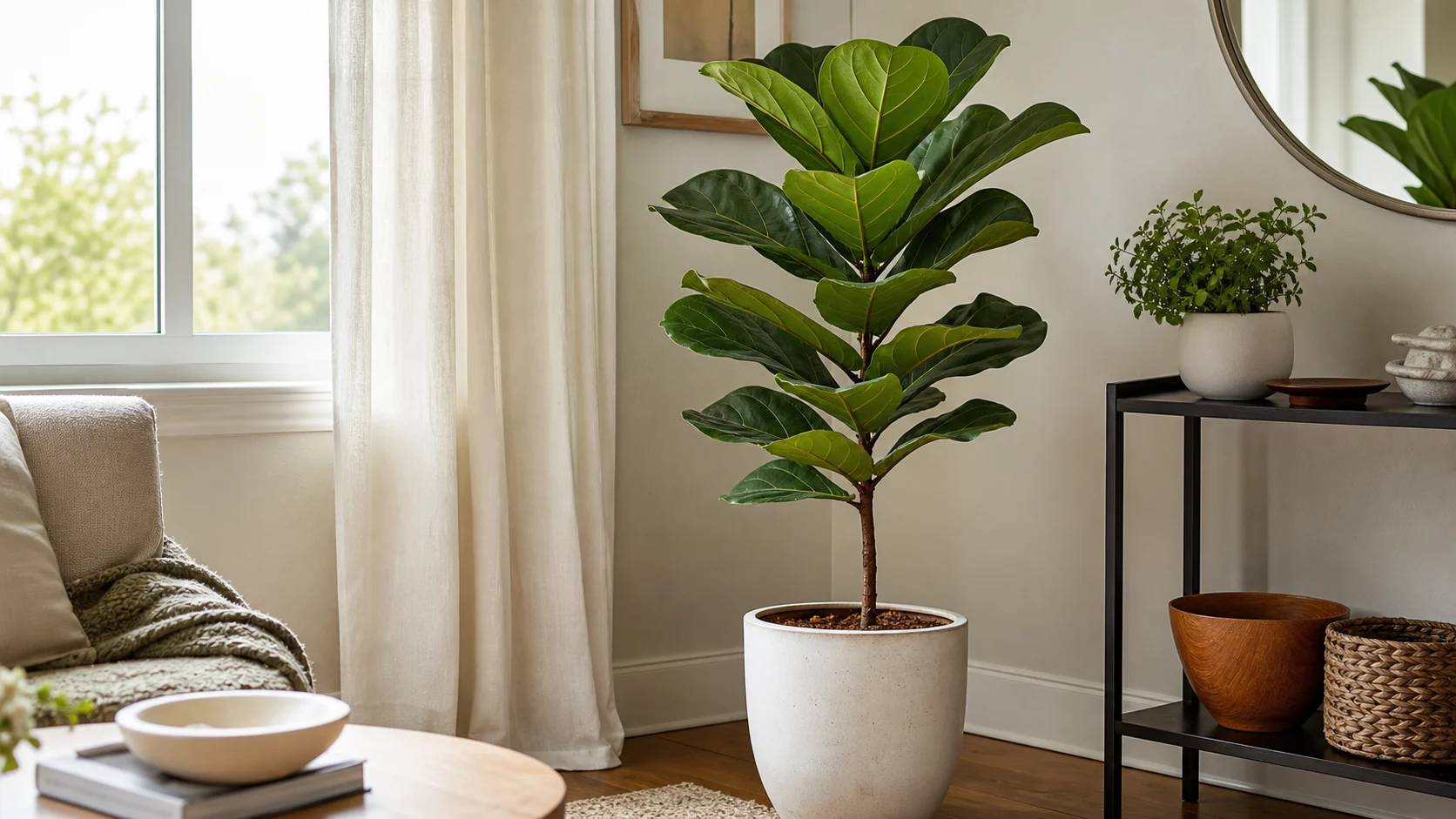
Consistent filtered light and an unchanged home base let a fiddle leaf fig mature into the sculptural indoor tree people want.