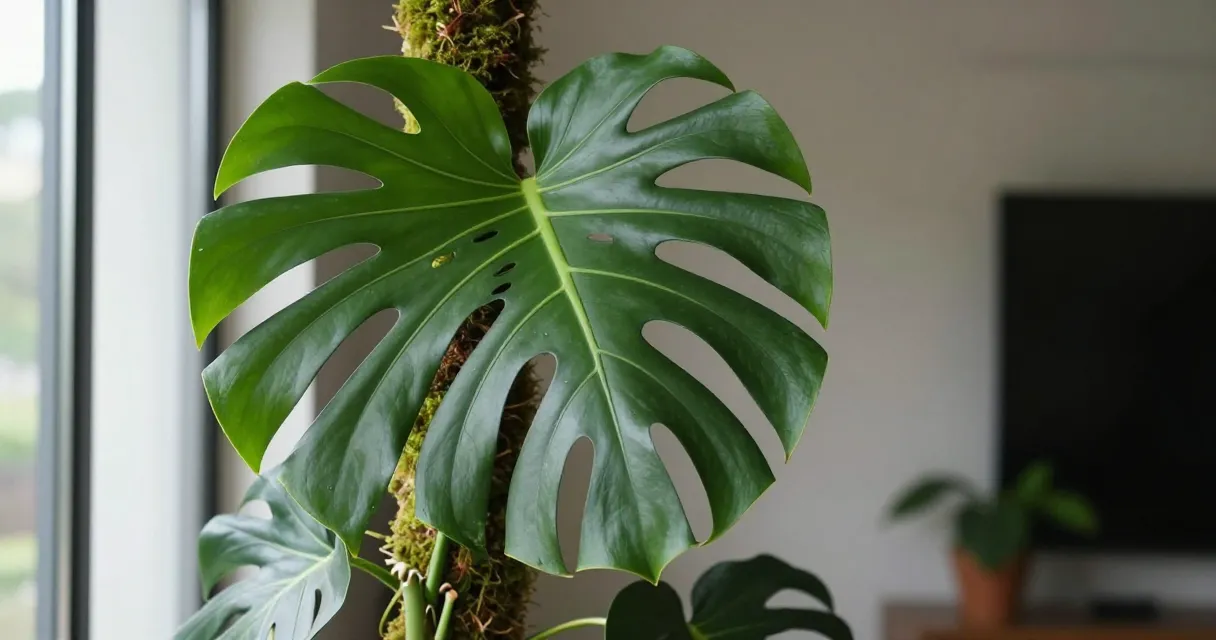
If you are looking at a Monstera Peru and mostly want to know whether it fits your home, the answer is yes if you have bright indirect light and can check the soil about once a week. Water when the top 2 inches are dry, use a chunky mix, and give the vine something to climb. Yellow leaves usually mean the pot is staying wet too long; curling leaves usually mean thirst, heat, or root trouble; brown tips usually point to uneven watering, dry air, sun, or fertilizer salts.
Monstera Peru is the textured, fast-climbing houseplant people buy when they want monstera energy without a giant split-leaf plant taking over the room. Its thick, puckered leaves stay smaller than monstera deliciosa, but the care logic is familiar: bright indirect light, careful watering, and support for the vine. If you are building out a shelf of similar plants, our best tropical plants for indoors guide is a handy companion list.
The naming is messy. Many shops sell it as Monstera Peru, Monstera sp. Peru, or Monstera karstenianum. World Flora Online currently treats Monstera karstenianum as a synonym of Philodendron opacum, which helps explain why retailers, databases, and hobbyists still use different labels for the same textured climber. For practical care, stick to the plant in front of you: thick quilted leaves, compact climbing growth, and support needs that differ from larger split-leaf monsteras.
Expert note: World Flora Online’s naming treatment does not change the day-to-day care much, but it is a useful caution against copying advice from every plant sold with a loose “monstera” label.
Identification Snapshot
| Field | What to look for |
|---|---|
| Growth habit | Compact climbing aroid with thick stems that want a pole, plank, or trellis more than a giant floor-plant footprint. |
| Leaf texture | Small to medium glossy leaves with a puckered, quilted, or bullate texture rather than flat leaves. |
| Fenestration | Usually no dramatic holes or splits, even when mature, which helps separate it from monstera deliciosa. |
| Best home fit | Bright room, drainage pot, chunky mix, and an owner willing to check soil instead of watering on a fixed day. |
| Naming clue | Often sold as Monstera Peru or Monstera karstenianum, so compare the leaf surface and compact climbing shape before copying care advice from other monsteras. |
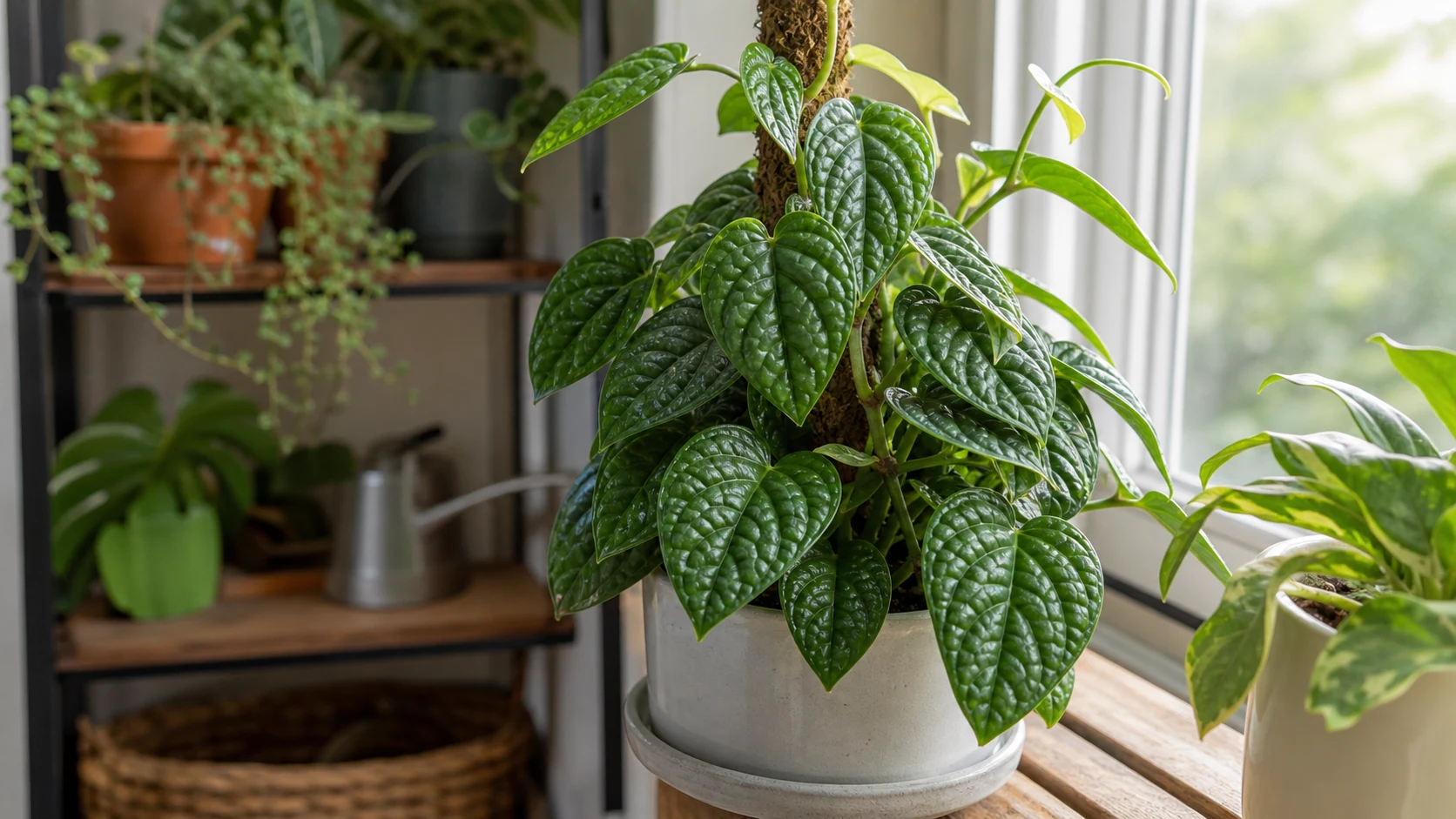
A compact Monstera Peru shows its thick, quilted leaves while climbing a moss pole beside a bright window.
Lookalikes and Confused-With Plants
| Plant | Why it gets confused with Monstera Peru | What to check first |
|---|---|---|
| Monstera adansonii | Same family and similar vining habit. | Adansonii leaves are thinner and usually develop obvious holes. Monstera Peru stays thicker and more textured. |
| Monstera deliciosa | Garden centers use “monstera” loosely. | Deliciosa grows much larger and eventually develops dramatic splits and holes. |
| Trailing philodendrons | Small vining aroids are often lumped together. | Philodendron leaves are usually smoother and the plant often trails more readily than Monstera Peru wants to climb. |
What Most Care Guides Miss
Most guides about Monstera Peru describe the ideal care routine. Real homes are messier: light changes by season, pots dry at different speeds, and the same symptom can mean different things depending on where it appears.
Before changing care, check the plant in this order:
- Light: is the plant growing toward the window, fading, or scorching?
- Root zone: is the pot drying predictably, or staying wet in the middle?
- Leaf pattern: did the oldest leaves, newest leaves, tips, or stems change first?
- Recent change: new pot, new location, fertilizer, cold draft, heat vent, or pest exposure.
This keeps you from fixing the wrong problem. One clear adjustment is usually safer than a full care reset.
What Owners Keep Running Into
Plant-owner threads keep surfacing the same friction points around Monstera Peru:
- Yellow leaves right after shipping or a room change: many cases start with acclimation stress, but the real check is whether the pot is also staying wet too long.
- Naming confusion: owners bounce between Monstera Peru, Monstera karstenianum, and Philodendron opacum, so care advice gets mixed together unless you focus on the textured leaves and compact climbing habit.
- Pothos-style watering habits: people often assume this plant wants the same schedule as an easy trailing pothos, then keep the root zone too wet in lower light.
- Slow propagation: cuttings can sit still for weeks if they are cool, dim, missing humidity support, or left in stale water.
Use those reports as reader-language signal, not proof that every plant fails for the same reason.
Care Cards
| Care card | What Monstera Peru usually wants | What owners get wrong most often |
|---|---|---|
| Light | Bright indirect light near an east window or a few feet back from a brighter south or west window. | Treating a dim shelf as “good enough” and then chasing slow growth with extra water. |
| Water | Thorough watering only after the top 2 inches dry. | Watering on schedule even when the middle of the pot still feels damp. |
| Soil | Chunky mix with bark and drainage so the roots get air. | Using dense potting soil that stays wet too long. |
| Support | Pole, plank, trellis, or stake once the vine starts reaching. | Letting the plant sprawl, then mistaking stretched growth for a health problem. |
| Pet risk | Keep away from cats and dogs because this is not a pet-safe aroid. | Assuming a compact plant is automatically safer around chewers. |
Quick Monstera Peru Care
| Care factor | Best range | What to watch |
|---|---|---|
| Light | Bright indirect light | Pale patches mean too much direct sun; tiny new leaves mean too little light |
| Water | When the top 2 inches are dry | Yellow lower leaves plus wet soil usually means overwatering |
| Soil | Chunky houseplant mix | Potting soil alone can stay wet too long |
| Humidity | Average home humidity is workable; 50%+ is better | Crispy edges often mean dry air or inconsistent watering |
| Temperature | 65-85 F | Avoid cold glass, AC vents, and winter drafts |
| Support | Moss pole, plank, trellis, or stake | Climbing growth is fuller and easier to manage |
| Pet safety | Not pet safe | Keep it away from cats and dogs that chew leaves |
If you already grow monstera adansonii or monstera deliciosa, Monstera Peru will feel familiar. The main difference is leaf behavior: Monstera Peru is valued for texture, not holes.
Monstera Peru vs Other Easy Climbers
| Plant | Why people compare it | What actually changes for care |
|---|---|---|
| Monstera Peru | Compact climbing aroid with thick textured leaves | Wants bright filtered light, a chunky mix, and enough drying time between waterings |
| Golden pothos | Easy vining houseplant with similar shelf appeal | Usually tolerates lower light and more casual support, so pothos habits can leave Monstera Peru too wet |
| Monstera adansonii | Same family and similar vine structure | Thinner leaves, faster fenestration, and quicker stress signals when humidity or watering slips |
| Monstera deliciosa | The plant most people picture when they hear “monstera” | Becomes much larger, wants more space, and is not the best care template for a compact textured climber |
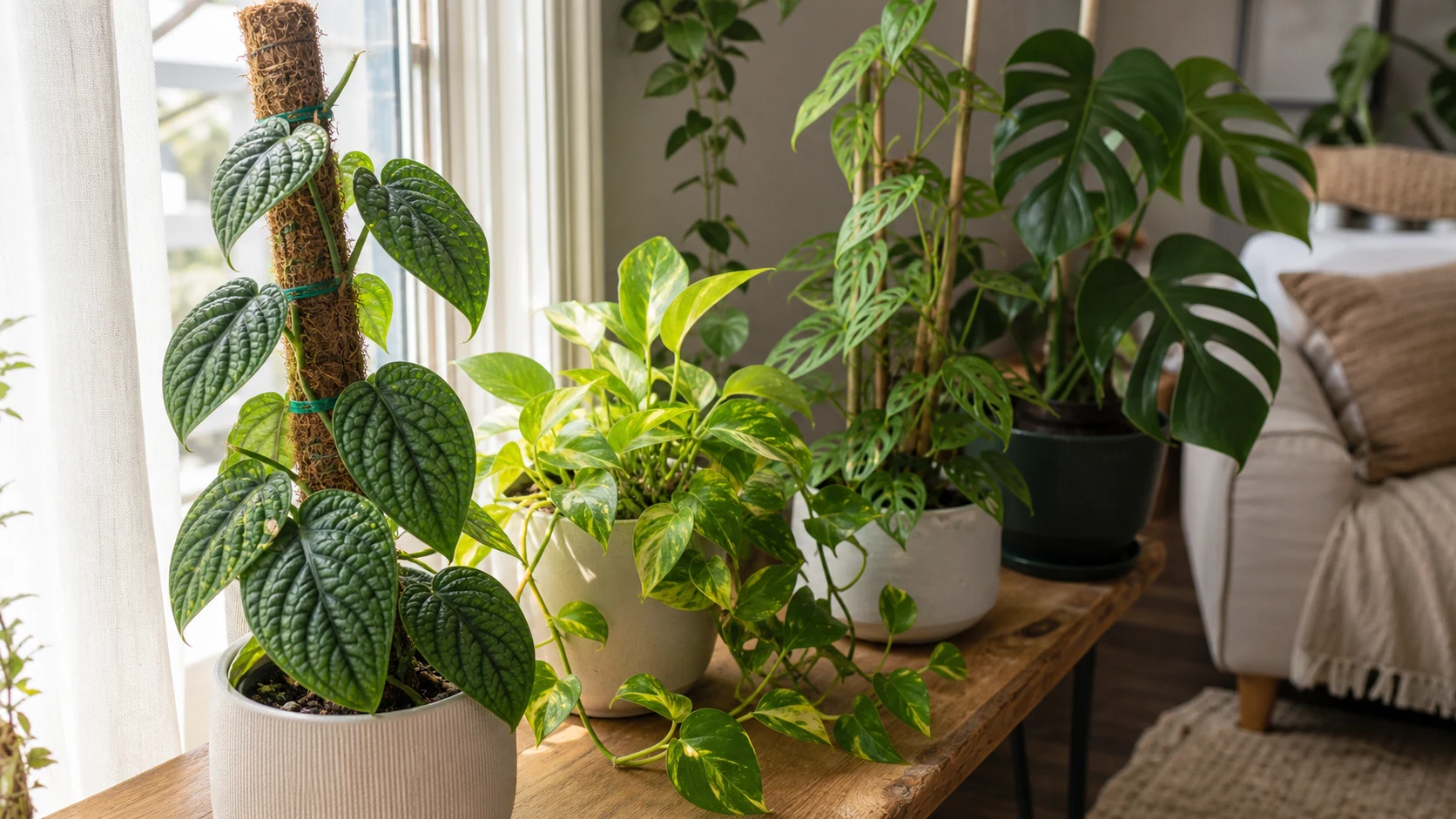
Monstera Peru’s quilted leaves and compact support contrast with pothos, adansonii, and the larger deliciosa.
Before You Buy: Is Monstera Peru a Good Fit?
Choose Monstera Peru if:
- Your room is bright enough to read in during the day without a lamp
- You can check the soil before watering instead of watering on a fixed day
- You have space for a small pole, plank, trellis, or trailing shelf spot
- Pets and young kids cannot easily chew the leaves
Pause before buying if the only spot is dim, you travel for long stretches without plant help, or you want dramatic split leaves. This plant is forgiving for a climbing monstera relative, but it still sulks when it sits wet in low light.
If you are comparing plants at a nursery or plant shop, save the plant in KnowYourPlant and check whether its light, watering, and pet-safety notes match your room before you bring it home.
Light: Bright, Filtered, and Steady
Monstera Peru grows best in bright indirect light. Think east window, a few feet back from a south or west window, or a bright room where direct sun is softened by a sheer curtain. North Carolina Extension’s indoor Monstera guidance points in the same broad direction: bright but not direct light, steady warmth, and enough support for climbing growth.
Indoors, the easiest test is practical. If the room is bright enough to read in during the day without turning on a lamp, it is probably workable. If the plant is across the room from a small north-facing window, it will survive for a while, but it will not grow with the compact, glossy look people expect.
Too much light: leaves fade, develop dry tan patches, or feel papery on the sun-facing side.
Too little light: long spaces between leaves, smaller new growth, slower rooting after propagation, and a vine that looks stretched instead of full.
If your only available spot is dim, use a small full-spectrum grow light. The grow lights for indoor plants guide covers placement and timing, but for Monstera Peru a simple timer running 8-10 hours near the plant is usually enough to correct a dark corner.
Watering Monstera Peru
Monstera Peru care gets much easier when you stop watering by the calendar. Water when the top 2 inches of the mix are dry, then soak the pot until water drains from the bottom. Empty the saucer afterward.
Watering needs change with light, humidity, temperature, container size, and potting mix. That is the central rule for Monstera Peru. The leaves are thick, but the roots still need air pockets between waterings.
In a bright, warm room during spring and summer, watering may land around every 7-10 days. In winter or in a cooler room, it may stretch to every 14-21 days. Pot size, soil mix, light, and humidity change the timing, so the soil check matters more than the number.
Today’s Watering Decision
- Push a finger or wooden chopstick 2 inches into the mix.
- If it comes out mostly dry, water thoroughly until the pot drains.
- If it comes out damp, wait 2-3 days and check again.
- If it comes out wet and leaves are yellowing, do not add more water. Check the drainage holes, empty the saucer, and inspect the roots if the stem feels soft.
Signs It Needs Water
- The top 2 inches of soil are dry
- The pot feels noticeably lighter than usual
- Leaves soften slightly without turning yellow
- The vine looks a little slack but recovers after watering
Signs You Are Watering Too Often
- Yellow lower leaves while the soil is still damp
- Soft stem sections near the soil line
- A sour or musty smell from the pot
- Fungus gnats hovering near the surface
- Soil that stays wet for more than a week in normal indoor conditions
If fungus gnats are already part of the problem, fix the watering rhythm first, then use the steps in the fungus gnat guide.
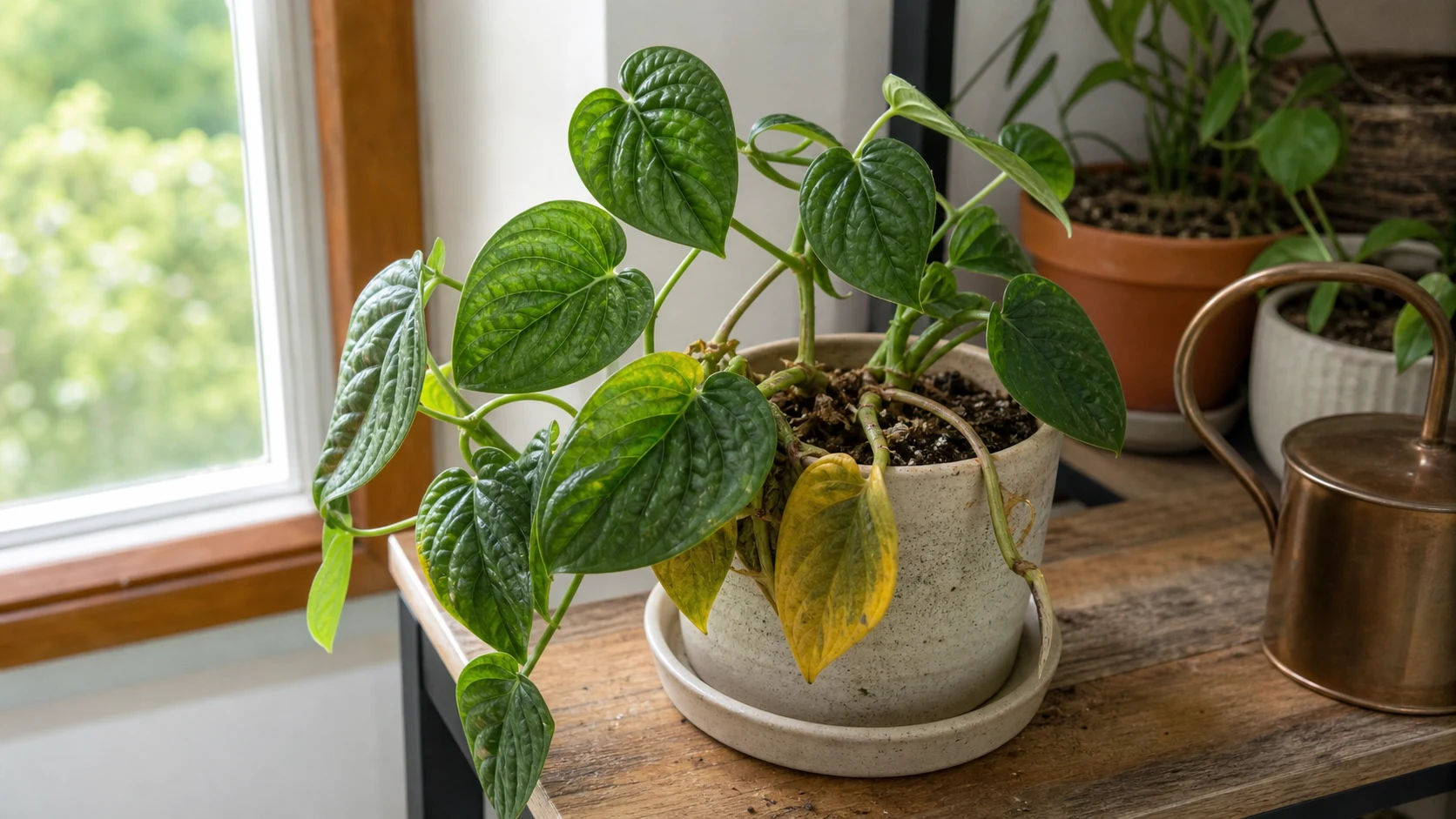
Yellow lower leaves and persistently damp mix are practical signals to pause watering and check drainage.
Soil Mix and Pot Choice
Use a chunky, airy mix. Standard potting soil by itself can hold too much water around the roots, especially in a decorative cachepot with weak airflow.
A reliable Monstera Peru mix:
- 40% indoor potting mix
- 25% orchid bark
- 25% perlite or pumice
- 10% coco chips, charcoal, or worm castings
That mix holds enough moisture for a tropical plant but drains fast enough that the root zone does not stay saturated. If you buy a premixed chunky plant blend, look for visible bark or pumice pieces, not a fine peat-heavy mix that looks like regular potting soil.
Choose a pot with drainage holes and go up only one size when repotting. A tiny plant in a huge pot sits in a mass of unused wet soil, which makes root rot more likely. Repot when roots circle the pot, push through drainage holes, or when the mix has compacted so much that water runs down the side instead of soaking evenly.
Humidity and Temperature
Monstera Peru appreciates humidity, but it is usually less dramatic about it than calathea or many ferns. Average indoor humidity can work if watering and light are steady. Growth looks better when humidity sits around 50% or higher.
Use the same realistic methods that actually move the needle:
- Group it with other tropical plants
- Place it near a humidifier in winter
- Set the pot above, not in, a pebble tray with water
- Keep it away from heating vents and cold drafts
Misting is optional and short-lived. It can rinse dust, but it does not create lasting humidity. If the leaves have crispy edges, first check watering consistency and airflow before assuming misting will fix it.
Keep temperatures between 65 and 85 F. Do not let the plant press against cold winter glass, and avoid sudden moves from a warm room to a chilly porch or entryway.
Feeding
Feed Monstera Peru only while it is actively growing. A balanced liquid houseplant fertilizer at half strength once a month from spring through early autumn is enough for most homes.
If no new leaves are forming, fertilizer has little useful work to do and can leave salts behind in the potting mix. If you see pale new leaves, weak growth, or small leaves despite good light, feeding may help. If you see brown tips and a white crust on the soil, stop feeding and flush the pot with plain water. The plant fertilizer guide explains how to reset a pot without burning the roots.
Climbing, Trailing, and Mature Growth
Monstera Peru is a climber. You can let it trail from a shelf, but it usually looks better and grows more evenly when it has support. A moss pole, coco pole, cedar plank, or simple trellis gives aerial roots something to grip and keeps the stems from turning into a tangled shelf plant.
A mature Monstera Peru does not behave like monstera deliciosa. Do not wait for giant split leaves. The mature look is thicker vines, larger textured leaves, stronger spacing, and a more upright habit when supported. That is the appeal: the plant stays architectural without becoming huge. If you prefer to let yours spill from a shelf instead, the best trailing indoor plants roundup can help you compare it with pothos, philodendron, and other hanging options.
To train it:
- Add the support close to the main stem.
- Tie stems loosely with soft plant tape or twine.
- Point aerial roots toward the pole or plank.
- Rotate the pot every week or two so one side does not stretch toward the window.
If the plant is leggy, prune the longest vine above a node and root that cutting. Replanting rooted cuttings back into the same pot is the fastest way to make a fuller plant.
Symptom Decision Tree
| If you notice | Check first | Most useful next step |
|---|---|---|
| Yellowing started right after delivery, repotting, or moving rooms | Whether the soil is only lightly moist or fully wet, plus how much light changed | Hold conditions steady for a week, skip fertilizer, and avoid extra watering unless the top layer has dried |
| The pot stays wet for more than a week and lower leaves turn yellow | Pot weight, drainage holes, and whether the middle of the pot still feels cool and soggy | Improve airflow, let the mix dry longer, and inspect roots before watering again |
| Stems feel soft or the pot smells sour | Root firmness and any black, mushy sections near the base | Unpot the plant, trim rot, and repot into a chunkier mix before changing anything else |
| Yellow or tan patches show up on the window-facing side | Direct sun exposure during the hottest part of the day | Pull the plant back or filter the light instead of increasing water |
| Leaves yellow while you also see webbing, sticky residue, or speckling | Undersides of leaves, petioles, and nodes for mites or mealybugs | Isolate the plant and treat the pest issue before assuming it is only a watering problem |
| One oldest leaf is yellow but the rest of the plant is pushing healthy growth | Whether the rest of the vine looks firm, green, and active | Let the old leaf finish, then remove it once it is spent instead of resetting the whole care routine |
| The moss pole stays soaked and the potting mix never really dries | Whether pole moisture is wicking straight back into the root zone | Moisten the pole more lightly and make sure the pot can dry between deep waterings |
Propagation
Propagate Monstera Peru from stem cuttings with at least one node. A leaf without a node will not grow into a new plant.
Propagation Readiness Checklist
Use this quick check before you start:
- The cutting includes at least one healthy node
- The cut is clean, not crushed
- No leaf is buried below the waterline or potting medium
- The cutting will sit in warm bright indirect light
- The water or propagation medium will stay fresh and airy
- Humidity support is available if the room is dry
- You can inspect the cutting weekly for rot or stalled growth
Slow rooting is normal with Monstera Peru. If the node stays firm and the leaf still looks hydrated, give the cutting more time before calling it a failure.
Water Propagation
Cut just below a node, remove any lower leaf that would sit underwater, and place the cutting in a clean jar. Keep it in bright indirect light and change the water every few days. Roots often appear within 2-4 weeks in warm conditions, but community troubleshooting threads show that slower starts are common too. Pot the cutting once roots are 2-3 inches long.
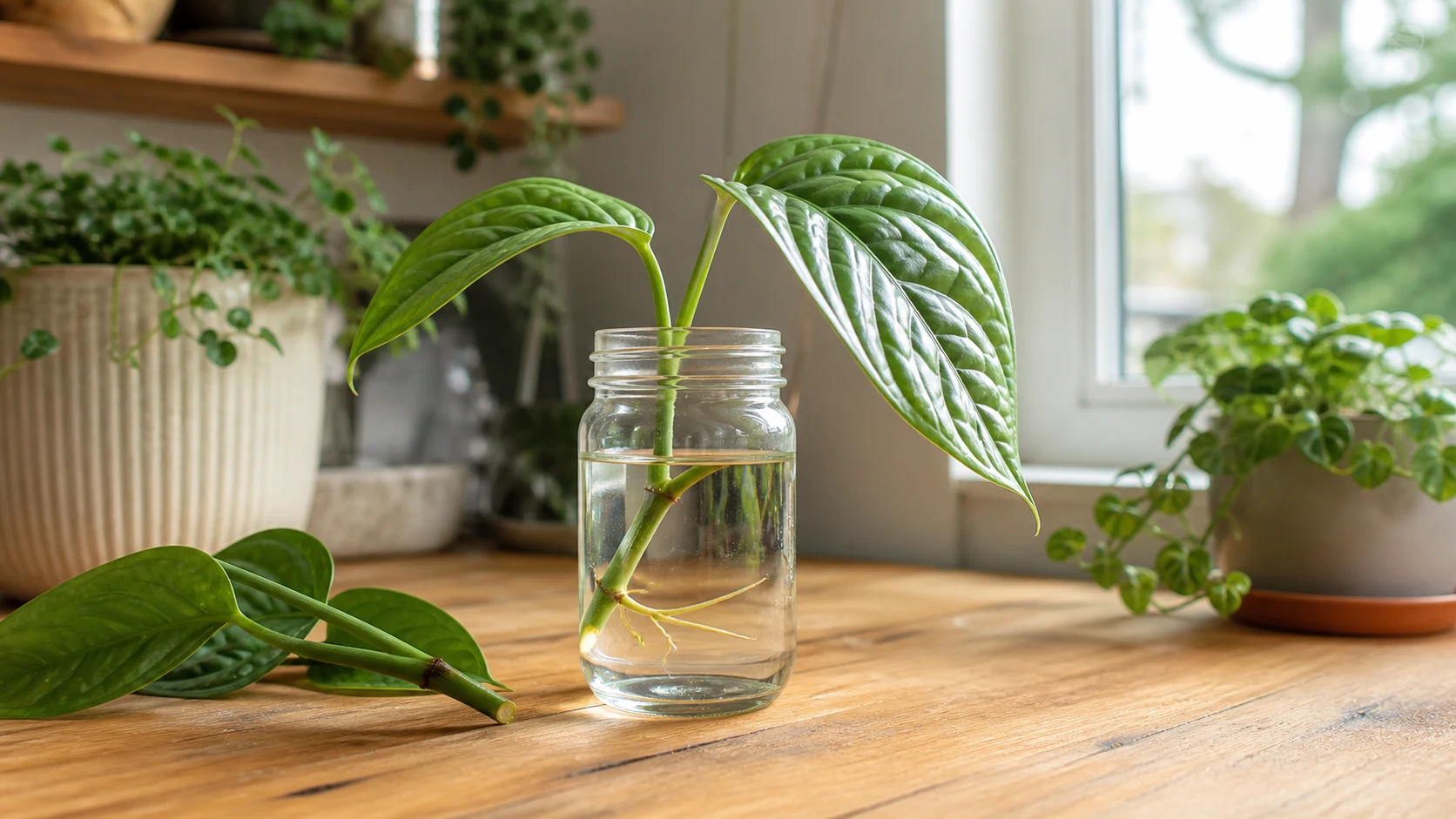
A submerged Monstera Peru node grows pale roots while its textured leaves remain above clean water.
Soil or Perlite Propagation
Place the node in moist perlite, sphagnum, or a very light chunky mix. Keep it warm, bright, and slightly humid. This method avoids some transplant shock because roots form in a substrate closer to potting mix.
Whichever method you use, do not bury the whole stem deeply. The node needs contact with moisture, but the stem still needs airflow.
Variegated Monstera Peru
Monstera Peru variegated forms are much rarer and more expensive than the standard green plant. They also grow more slowly because pale tissue has less chlorophyll. Give variegated plants brighter indirect light than the all-green form, but avoid direct sun on the pale sections because they burn faster.
When pruning or propagating a variegated Monstera Peru, choose a cutting with both green and variegated tissue. A cutting with too much white may struggle to feed itself. A cutting from an all-green section is likely to keep producing green growth.
Do not push heavy fertilizer to “speed up” a variegated plant. More nutrients will not compensate for inadequate light, and overfeeding can damage the roots.
Common Problems
Start with the symptom you actually see, then change one thing at a time. A Monstera Peru with yellow leaves, wet soil, and fungus gnats needs a drying and drainage fix before fertilizer or humidity. A plant with dry brown tips and bone-dry soil needs steadier watering before pest treatment.
Yellow Leaves
Usually overwatering, especially if lower leaves yellow first and the soil feels damp. Let the pot dry down, check drainage, and inspect roots if the stem feels soft. If the roots are brown, mushy, or hollow, use the monstera root rot guide for the full rescue process, then repot into fresh chunky mix.
Brown Crispy Edges
Most often inconsistent watering, dry air, direct sun, or salt buildup from fertilizer. Check the pattern. Crispy edges on the window side suggest sun. Crispy tips across the whole plant suggest dryness or salts.
Small New Leaves
Small leaves usually mean low light, no support, or a nutrient gap during active growth. Move the plant closer to a bright window, add a pole, and feed lightly if it is spring or summer.
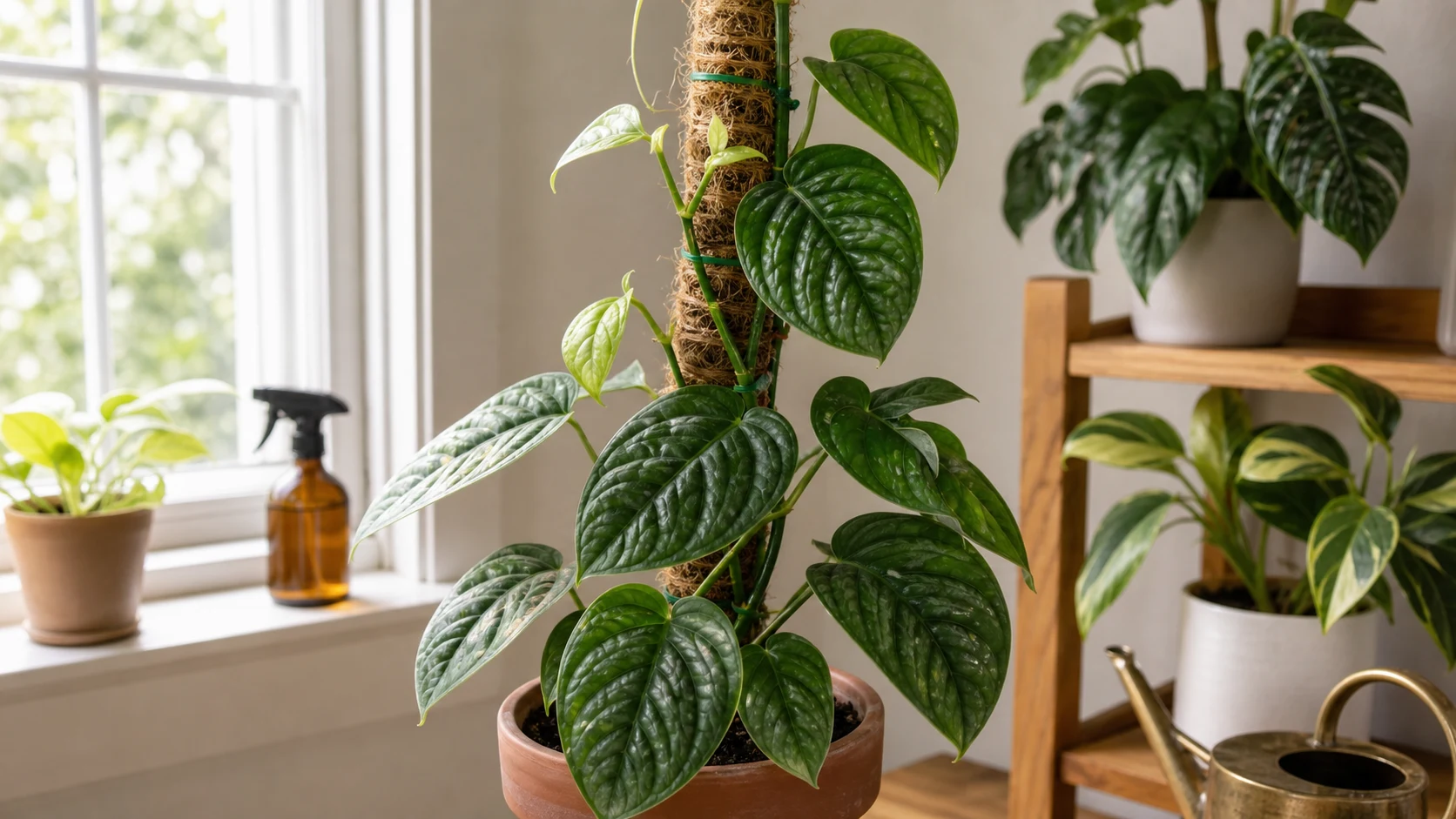
Small pale new leaves stand out against mature growth after the vine is supported near brighter indirect light.
Curling Leaves
Curling often points to thirst, heat stress, or roots that are not taking up water properly. If soil is dry, water thoroughly. If soil is wet, inspect for root problems instead of adding more water.
Spider Mites and Mealybugs
Dry indoor air makes pest problems more likely. Check the undersides of leaves and the nodes where stems meet. Isolate affected plants, wipe leaves clean, and treat with insecticidal soap or horticultural oil according to the product label. For a full mite cleanup plan, use the spider mite guide.
Common Mistakes
- Watering because the calendar says so, not because the pot has dried enough
- Leaving the plant in a dense mix that never really airs out
- Expecting giant split leaves instead of the textured compact growth this plant is actually known for
- Letting a climbing plant trail too long, then reading stretched growth as a mystery health issue
Pet Safety
Treat Monstera Peru as not safe for cats and dogs. The ASPCA lists Swiss cheese plant, Monstera deliciosa, as toxic to pets due to insoluble calcium oxalates, which makes a visible caution sensible for Monstera-type aroids rather than assuming this plant is pet-safe.
If you have pets that chew leaves, place Monstera Peru in a room they cannot access or choose safer plants from the cat-safe indoor plants guide. If a pet eats the plant and shows symptoms, call your veterinarian or ASPCA Animal Poison Control.
Seasonal Care Calendar
| Season | What to do |
|---|---|
| Spring | Increase watering as growth resumes, start half-strength feeding, repot if roots are crowded |
| Summer | Keep in bright filtered light, water after the top 2 inches dry, train vines onto support |
| Autumn | Taper fertilizer, rotate the pot for even growth, check for pests before windows stay closed |
| Winter | Water less often, stop feeding, protect from cold drafts, use a humidifier if edges crisp |
Real User FAQ: Monstera Peru
These are the questions people keep asking in plant forums, Reddit threads, and care groups when Monstera Peru starts acting weird.
Is Monstera Peru a real monstera? It is sold as Monstera Peru, Monstera sp. Peru, or Monstera karstenianum, but naming stays messy across retailers and plant databases. For care purposes, compare the textured leaves and climbing habit before copying advice from a larger monstera.
How often should I water Monstera Peru? Water when the top 2 inches of soil are dry. In a bright warm room, that may be every 7-10 days. In winter, it may be closer to every 14-21 days. Always check the soil before watering.
Does Monstera Peru need a moss pole? It does not need one to survive, but it usually looks better with support. A pole, plank, or trellis keeps vines upright and encourages larger, tidier leaves.
Will Monstera Peru leaves split when mature? Usually no. Monstera Peru is grown for textured, puckered leaves rather than the large split leaves you see on monstera deliciosa. Mature growth is larger and stronger, not dramatically holey.
Why are my Monstera Peru leaves turning yellow? The most common cause is overwatering. Check whether the soil is still damp and whether the pot drains freely. Yellowing can also come from low light, cold stress, or natural aging of older lower leaves.
Why is my Monstera Peru propagation taking so long? Slow rooting is common, especially if the cutting is cool, dim, or missing a strong node. Keep it bright, warm, and patient before assuming the cutting failed.
Can Monstera Peru grow in low light? It can survive in lower light, but it will grow slowly and stretch. Bright indirect light gives better leaf size, tighter spacing, and stronger rooting after propagation.
Is Monstera Peru toxic to cats and dogs? Yes, treat it as toxic to pets. Keep it away from cats and dogs, especially chewers, and call a veterinarian if a pet eats part of the plant and shows symptoms.
Methodology Note
This guide was refreshed on 2026-06-21 after reviewing current search results for Monstera Peru care questions, checking recurring owner confusion patterns in surfaced Reddit and forum snippets, and verifying the factual layer against World Flora Online for naming context, Penn State Extension for indoor watering logic, North Carolina Extension for broad monstera care, and ASPCA for pet-safety guidance. Community discussion was used as reader-language signal, not as statistical proof.
Last Updated Note
Last updated on 2026-06-21 to add a clearer naming caution, owner-driven yellow-leaf triage, a care comparison table, and a more realistic propagation checklist.
Monstera Peru is not difficult once you stop treating it like a mystery rare plant. Give it bright filtered light, water only after the mix has dried down, use a chunky potting mix, and let it climb. The reward is steady, textured growth in a size that fits normal homes.
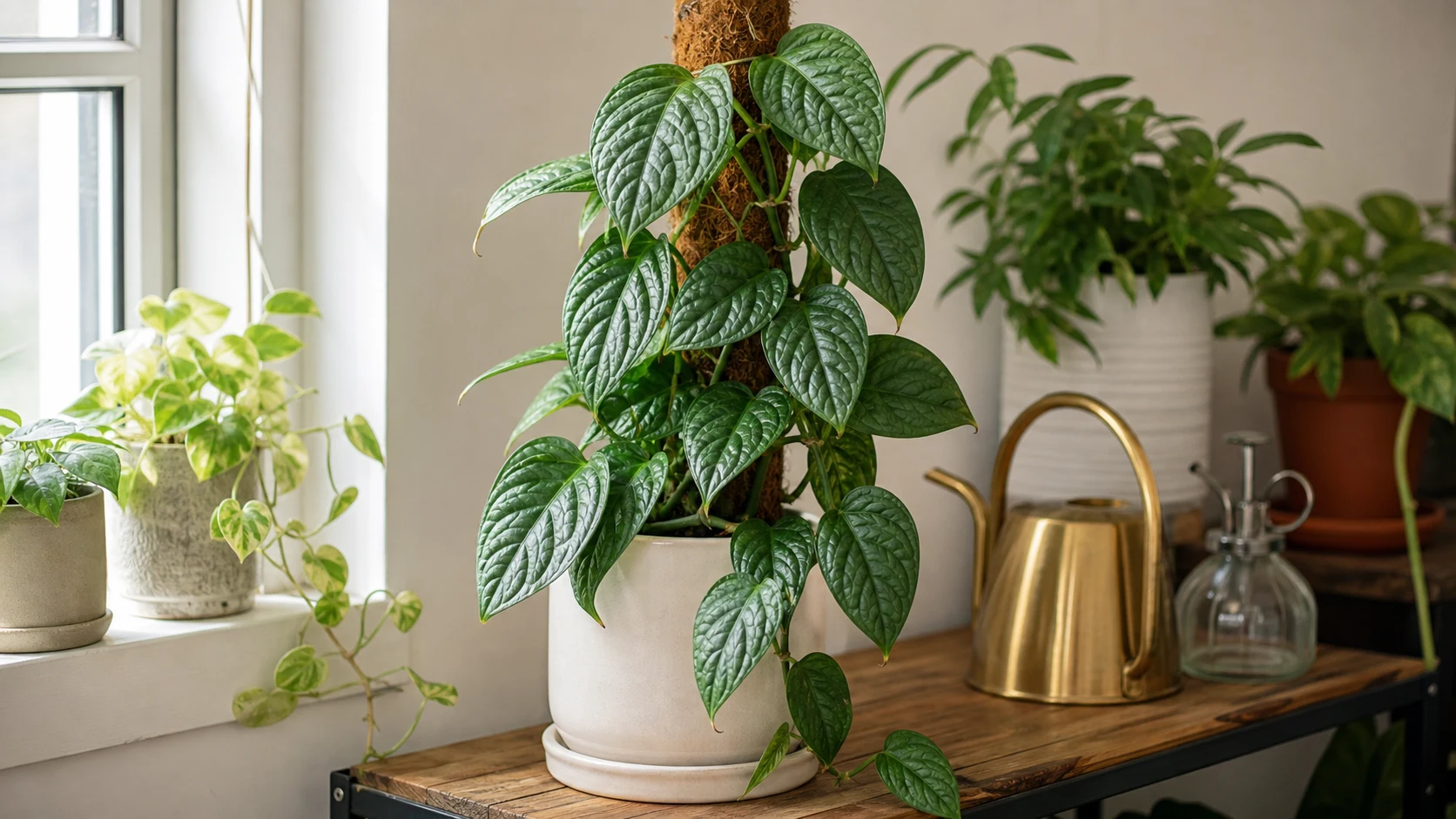
Filtered light, climbing support, drainage, and measured watering keep Monstera Peru thriving at a manageable indoor size.