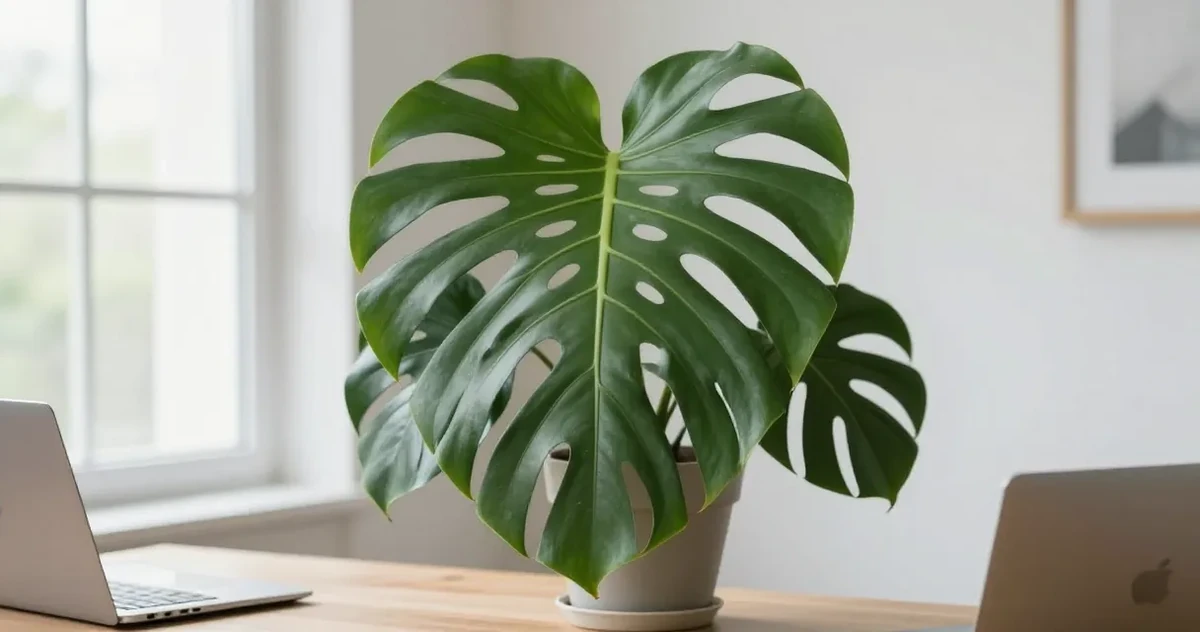
If you are trying to keep a monstera adansonii alive indoors, the main question is simple: can you give it bright indirect light and resist watering before the soil starts to dry? If yes, this is usually a manageable plant for a normal home routine.
Monstera adansonii, also called Swiss cheese vine, is a fast-growing trailing or climbing houseplant with naturally holey leaves. It is smaller and lighter than the monstera thai constellation and the larger monstera deliciosa, so it fits shelves, hanging baskets, and moss poles more easily. The care challenge is not complicated botany. It is reading the plant’s signals before small issues turn into yellow leaves, curled leaves, brown tips, or root rot.
Climate DNA for Monstera adansonii
This profile uses the accepted species Monstera adansonii across its broad tropical-American native range, then reduces occurrence hotspots before climate sampling.
The ranges below are the middle 50% (p25–p75), not recommended indoor setpoints.
| Reference taxon | POWO native range | Annual mean temperature | Annual precipitation | Relative humidity | Solar radiation | Evidence |
|---|---|---|---|---|---|---|
| Monstera adansonii (Monstera adansonii) | tropical America | 21.8–25.5°C | 1613–3025 mm/yr | 64–69% | 16.8–18.6 MJ/m²/day | 30 climate points / 1,332 usable records; medium confidence |
What this changes in this guide: A broad native envelope supports using ranges rather than one magic humidity number. Indoors, the pot, climbing support, airflow, and available light still control the care response.
Sources and method: Monstera adansonii in POWO and GBIF; CHELSA V2.1, 1981–2010. GBIF records are limited to POWO-native countries, then filtered for coordinates, establishment signal, licence, precision, and spatial duplication. No community or user-reported care data is used in this module.
What Most Care Guides Miss
Most guides about Monstera adansonii describe the ideal care routine. Real homes are messier: light changes by season, pots dry at different speeds, and the same symptom can mean different things depending on where it appears.
Before changing care, check the plant in this order:
- Light: is the plant growing toward the window, fading, or scorching?
- Root zone: is the pot drying predictably, or staying wet in the middle?
- Leaf pattern: did the oldest leaves, newest leaves, tips, or stems change first?
- Recent change: new pot, new location, fertilizer, cold draft, heat vent, or pest exposure.
This keeps you from fixing the wrong problem. One clear adjustment is usually safer than a full care reset.
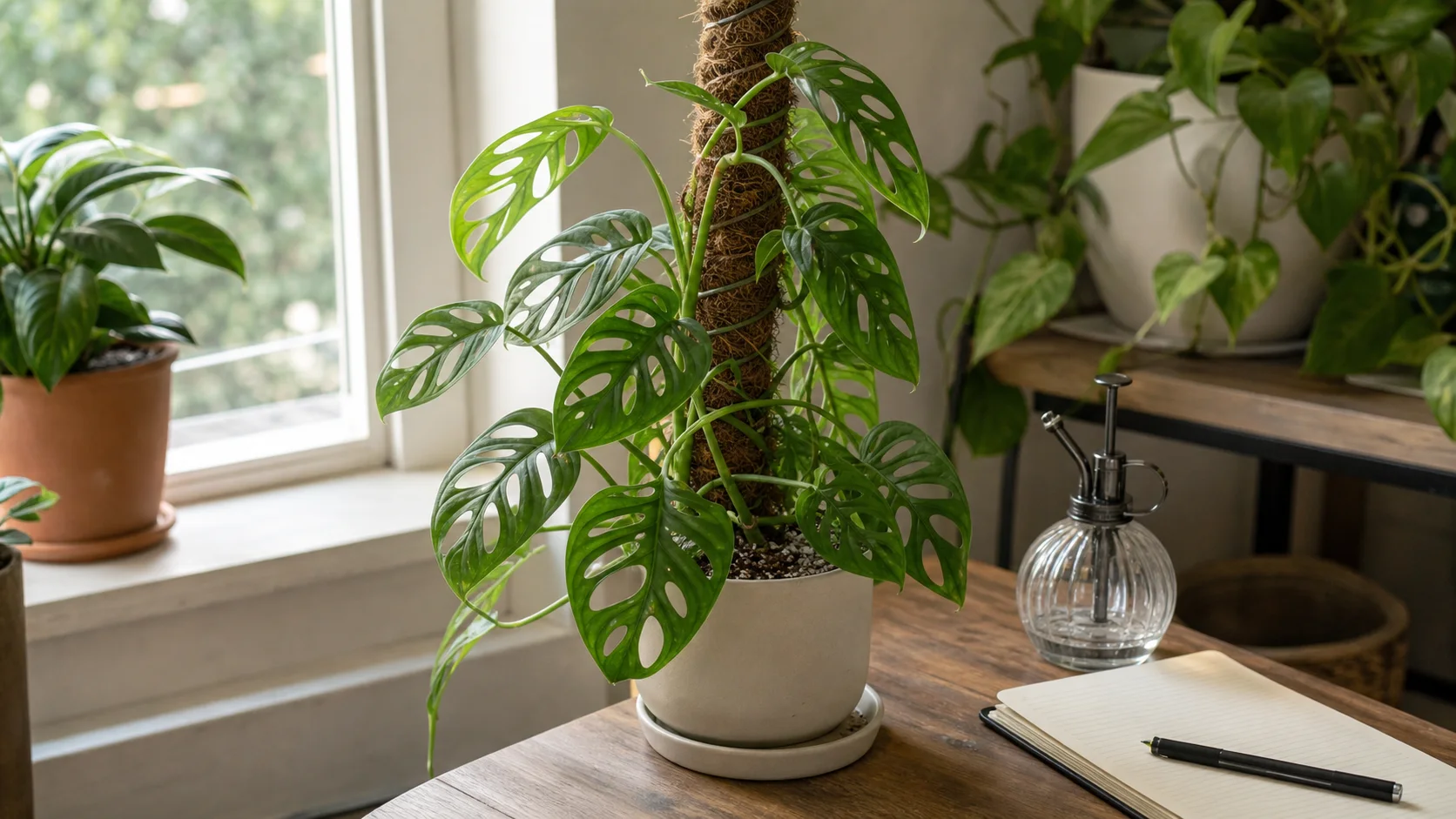
What Most Care Guides Miss.
Identification Snapshot
- Botanical name: Monstera adansonii
- Common name: Swiss cheese vine
- Growth habit: tropical climbing or trailing vine
- What to expect indoors: smaller leaves than Monstera deliciosa, faster legginess in dim rooms, and much better foliage when given support to climb
- Pet safety: not pet-safe; like other aroids, it can irritate cats and dogs if chewed
If you bought a “Swiss cheese plant” with small holey leaves and a thin vining habit, this is usually the plant people mean. If the leaves are much larger, thicker, and headed toward big splits rather than smaller oval holes, you may be looking at a different Monstera.
Lookalikes and Confused With
The biggest mix-up is between Monstera adansonii and Monstera deliciosa. Both get sold under “Swiss cheese plant,” but they do not behave the same indoors.
| Plant | What it looks like | Why people confuse it |
|---|---|---|
| Monstera adansonii | Smaller, thinner leaves with oval holes even on relatively young growth | Often sold under the same Swiss cheese nickname |
| Monstera deliciosa | Larger, heavier leaves that mature toward deep splits and a much bigger footprint | Young plants can be labeled loosely in garden centers |
| Monstera Peru | Thick, glossy, deeply textured leaves without the adansonii-style holes | Similar climbing habit and loose nursery use of Monstera names |
| Mixed ‘Swiss cheese plant’ labels | Generic nursery labeling without species detail | Shoppers get care advice for the wrong plant and then over- or under-size the setup |
The practical difference is care expectations. Monstera adansonii usually needs a lighter pot, faster-draining mix, and closer attention to humidity and support than people expect if they were picturing a bigger, sturdier deliciosa.
Care Cards
| Care area | What to do | What usually goes wrong |
|---|---|---|
| Light | Keep it in bright indirect light, with soft morning sun if available | Harsh afternoon sun scorches leaves, while dim rooms cause small leaves and fewer holes |
| Water | Water only after the top inch starts to dry and the pot feels lighter | Fixed weekly watering keeps the root zone wet too long |
| Soil | Use a chunky, well-draining mix in a pot with drainage | Dense mix stays soggy and raises root-rot risk |
| Humidity | Aim for average to moderately high humidity, especially in winter | Dry indoor air leads to crispy tips and slower growth |
| Support | Give climbing vines a moss pole, trellis, or other support if you want bigger leaves | Letting it trail is fine, but growth is usually leggier and less dramatic |
| Temperature | Keep it warm and protect it from temperatures below 50°F | Cold windows, drafts, and vents stress the plant fast |
Quick Answer: Is Monstera Adansonii a Good Fit?
Monstera adansonii is a good fit if you can check the soil once a week, keep it near a bright window without harsh direct sun, and give the vines room to trail or climb. It is not the best first choice for a very dark room, a cold drafty window, or someone who likes to water plants on a fixed schedule no matter how the soil feels.
Start with this simple routine:
- Water: usually every 7 to 10 days in spring and summer, and closer to every 10 to 14 days in winter, but only when the top inch of soil feels dry.
- Light: bright indirect light. A few hours of soft morning sun is fine; strong afternoon sun can scorch the leaves.
- Soil: use a pot with drainage and a chunky indoor mix that does not stay soggy.
- Main warning signs: curling leaves usually mean thirst, heat, pests, or root stress; yellow leaves often point to overwatering or low light; brown tips usually mean dry air, inconsistent watering, or mineral-heavy water.
If you only do one thing today, check the soil before watering. Most struggling monstera adansonii plants are either sitting wet for too long or being kept too far from light.
Light: Where It Feels at Home
Monstera adansonii likes the kind of light you’d choose for yourself on a bright afternoon: plenty of natural brightness, but no direct sun burning through the glass. A spot a meter or two back from a south- or east-facing window tends to work well.
Direct sun will scorch those thin leaves quickly, and the holes make the damage look worse than it would on a thicker-leaved plant. Too little light creates a different problem: new leaves come out smaller, with fewer fenestrations. If the newest leaves look like plain green ovals with no holes at all, the plant needs more brightness.
North-facing rooms are usually too dim without supplemental help. A few hours of gentle morning sun from an east-facing window is close to ideal. If your space doesn’t offer that, a grow light positioned above the plant a few hours a day will bridge the gap reliably.
According to the University of Florida IFAS Extension, most Monstera species thrive at light intensities of 1,000 to 2,000 foot-candles, which corresponds to bright indirect light near a window rather than a shaded corner of the room.
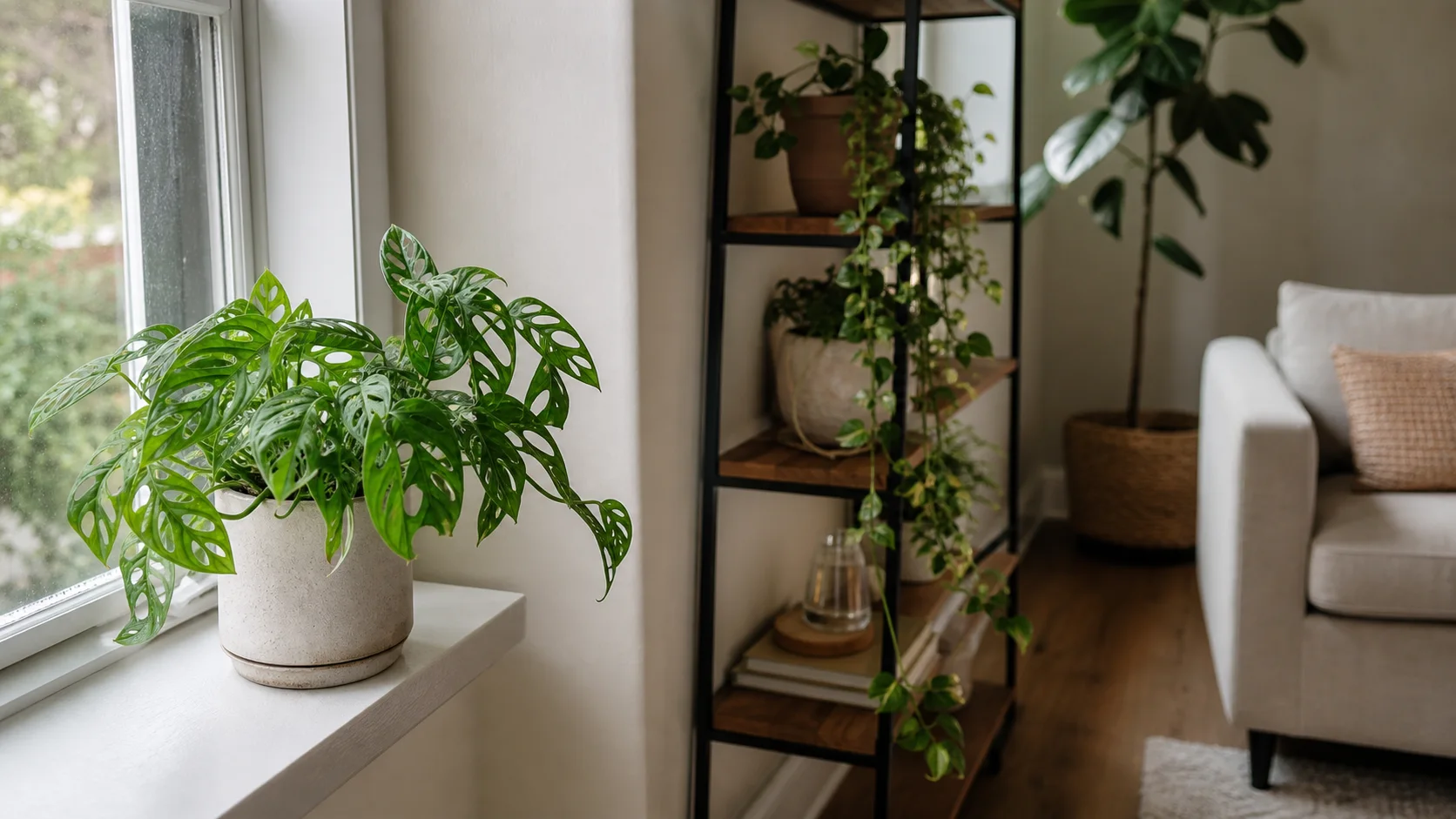
Light: Where It Feels at Home.
Monstera Adansonii Watering
This is where most people run into trouble, and it’s almost always the same direction: too much water, too often.
Monstera adansonii watering should follow the plant’s lead rather than the calendar. Before you water, push your finger into the soil up to the first knuckle. Still damp? Come back in a day or two. Dry? Now’s the time.
In most homes during spring and summer, that works out to watering every seven to ten days. In winter, when growth slows and the air is drier, it might stretch to every two weeks. The pot, the soil, the humidity in your home, and how much light it gets all affect how quickly the mix dries out. No fixed schedule covers all of that, but your finger always will.
When you do water, water thoroughly until it drains from the bottom, then let the soil dry down again before the next drink. Sitting in a consistently wet pot is the fastest way to rot the roots, and root rot in monstera adansonii can be sneaky: the damage happens underground while the leaves above still look fine.
Signs It Needs Water
Yellow leaves that start at the bottom of the plant, a wilting or drooping stem, and soil that has pulled away from the edges of the pot are all signals the plant has been waiting too long.
Signs It Has Had Too Much
Yellow leaves combined with soft, mushy stems near the base, a faint sour smell from the soil, or leaves that yellow across the whole plant rather than just the older ones at the bottom.
Humidity and Temperature
Monstera adansonii care gets easier once you treat it like a rainforest plant adapting to indoor air. It comes from environments where humidity is often much higher than a typical living room.
Average household humidity in the 40-50% range is acceptable, but growth is usually better closer to 60%. Brown, crispy tips on otherwise healthy leaves are often the first sign the air is too dry. Tropical foliage plants also tend to slow down in very dry indoor air, especially during winter heating season.
A few practical ways to help:
- Place the pot on a tray filled with pebbles and water, making sure the bottom of the pot sits above the waterline
- Group it with other humidity-loving plants like heartleaf philodendron or philodendron brasil
- Move it to a bathroom or kitchen where ambient humidity tends to be higher
- Use a humidifier nearby during winter when indoor heating dries the air significantly
Temperature should stay between 18 and 29°C (65 to 85°F). Avoid cold drafts, air conditioning vents blowing directly on the leaves, and cold windowpanes in winter. If the plant sits near glass overnight, pull it back a few inches when temperatures drop.
Soil and Potting
Monstera adansonii needs soil that holds some moisture but drains well and does not compact around the roots. A standard indoor potting mix works as a base, but it benefits from a generous handful of perlite mixed in to improve drainage and aeration. Orchid bark is a good addition too, keeping the mix chunky and loose so the roots have room to breathe.
Repot when you see roots circling the bottom of the pot or pushing out of the drainage holes. That usually happens every one to two years. Go up one pot size at a time rather than dramatically larger: too much extra soil stays wet for too long between waterings and creates the conditions for root rot even when you’re watering carefully.
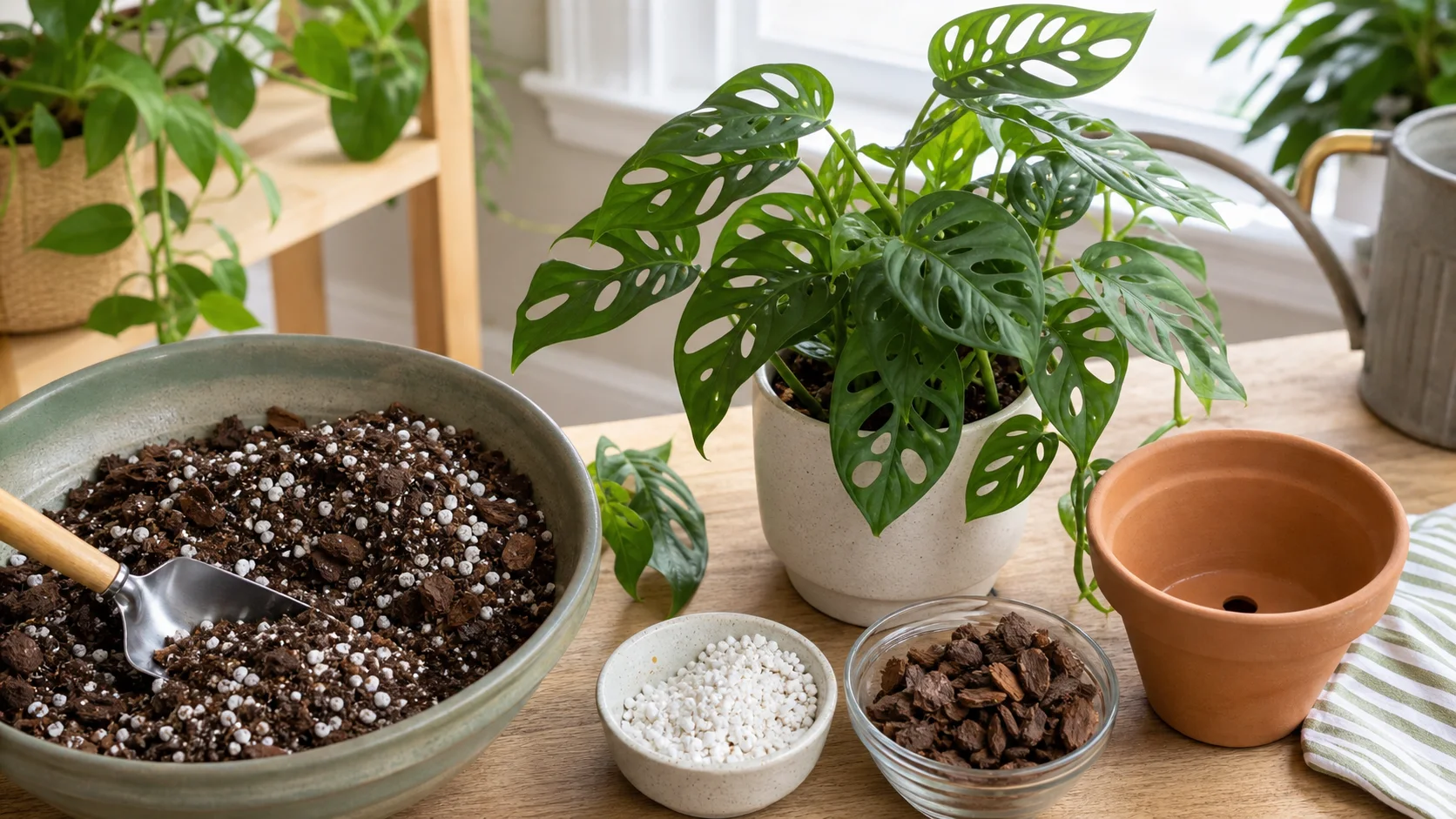
Soil and Potting.
Fertilizing
During the growing season, spring through summer, a balanced liquid fertilizer once a month gives the plant the nutrients it needs to keep pushing out new growth. Dilute it to half the recommended strength, especially if the soil is dry when you apply it, to avoid burning the roots.
It does not need feeding in autumn or winter when growth naturally slows. The Missouri Botanical Garden advises against fertilizing tropical houseplants during their rest period, noting that unused salts accumulate in the soil and can cause root damage over time.
Seasonal Care Calendar
Monstera adansonii doesn’t grow at the same pace all year, and adjusting your care as the seasons shift makes a real difference.
Spring (March to May)
This is when the plant wakes up. After a quieter winter, new growth comes quickly once temperatures rise and daylight increases. Resume monthly fertilizing as soon as you see new leaves unfurling. Water a little more often than you did in winter, but still wait for the top inch of soil to dry before each drink. If it has been in the same pot for a year or two, spring is the right time to repot. It is also the best window for taking propagation cuttings, since roots develop fastest when the plant is in active growth.
Summer (June to August)
Peak growing season. The plant is moving fast, producing new leaves regularly and pushing aerial roots outward. Water more frequently, roughly every seven to ten days, but always check the soil first. Keep an eye out for spider mites, which tend to show up during hot, dry stretches. High humidity helps deter them. Continue fertilizing once a month and make sure it has something to climb if you are going that route.
Autumn (September to November)
Growth begins to slow as light levels and temperatures drop. Start tapering off fertilizer by October and stop entirely by November. Water a little less often. If the pot sits near a window, check that cold glass is not chilling the roots when overnight temperatures start to fall. This is also a good time to wipe the leaves down gently with a damp cloth, which helps with light absorption as natural daylight becomes more limited.
Winter (December to February)
Rest period. The plant is not dormant, but it is not in a rush either. Water sparingly, only when the top two inches of soil feel dry, and hold off on any fertilizer. Indoor heating tends to drop humidity significantly in winter, so this is the season to pay the most attention to leaf tips. A humidifier running nearby will help. Avoid repotting or propagating during this period, and do not fertilize to force growth.
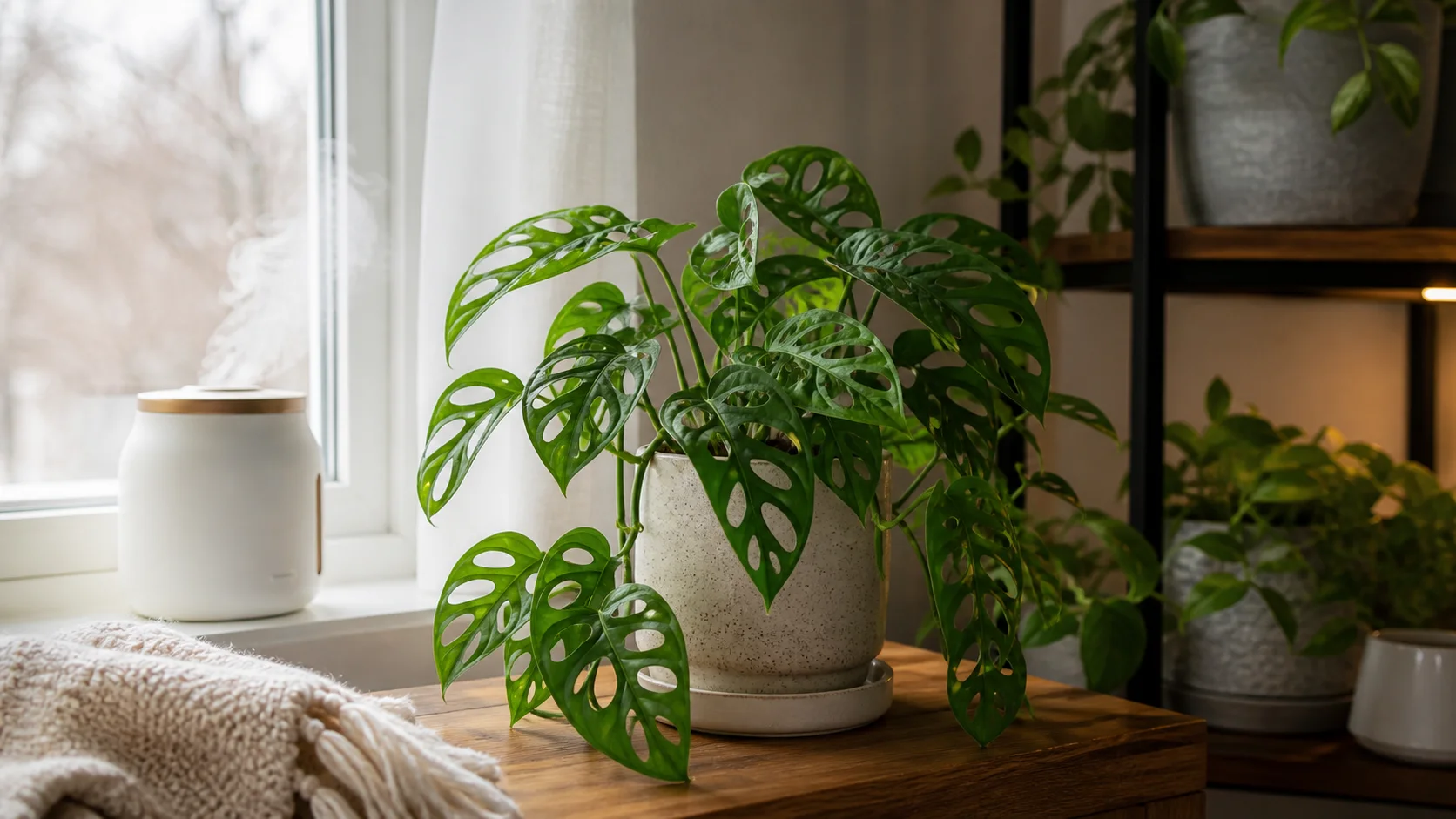
Winter (December to February).
Monstera Adansonii Propagation
This is one of the more rewarding parts of growing monstera adansonii. Propagation is straightforward, and it is a practical way to create a fuller-looking pot or share cuttings with someone who has been admiring yours. If you want a broader walkthrough of water, soil, division, and air-layering methods, the full guide on how to propagate plants covers when each method makes the most sense.
Take a stem cutting just below a node, the small bump on the stem where a leaf attaches. Each cutting should have at least one node and ideally one or two leaves.
Place the cutting in a glass of water in a bright spot, changing the water every few days. Roots typically appear within two to four weeks. Once roots are an inch or two long, pot the cutting into soil and treat it like a mature plant.
You can also propagate directly into a moist mix of perlite and coco coir, which sometimes produces stronger roots that transition to soil more easily. Either method works; water propagation just lets you watch the process, which is satisfying in its own right.
Giving It Something to Climb
In the wild, monstera adansonii climbs trees, and it will do the same indoors given the chance. A moss pole or coco coir pole gives aerial roots something to grip, and climbing plants tend to produce larger leaves with more pronounced fenestrations than those left to trail. It is not essential, but it is worth considering if you want larger leaves and a tidier shape.
A hanging basket is the other popular option, letting the vines spill downward in long, leafy cascades. Both work beautifully. It comes down to the look you’re going for and the space you have.
Common Problems: What the Leaves Are Telling You
When something looks wrong, check in this order: soil moisture, light, airflow, then pests. That keeps you from guessing and changing five things at once.
Leaves Curling
Curling leaves usually mean the plant is trying to reduce moisture loss or the roots are stressed.
- Soil is dry and the pot feels light: water thoroughly until water drains from the bottom, then let the pot drain fully.
- Soil is wet or smells sour: stop watering, check that the pot has drainage, and consider slipping the plant out of the pot to inspect for soft brown roots.
- Plant is near hot sun, a heater, or an air conditioner: move it to steadier bright indirect light.
- Tiny specks or fine webbing are present: inspect for spider mites, especially on the underside of leaves and where leaves meet the stem.
Yellowing Leaves
One older yellow leaf near the base is not an emergency. Several yellow leaves at once are a pattern worth fixing.
- Wet soil plus yellow leaves: overwatering is likely. Let the top inch or two dry before watering again, and make sure the pot drains freely.
- Dry soil plus limp yellow leaves: the plant may be underwatered. Give it a full soak, then recheck the soil in a few days.
- New growth is pale or small: move the plant closer to bright indirect light.
- Yellowing continues after watering improves: check the roots for rot and look for pests.
Brown Tips or Crispy Edges
Brown tips are usually about dry air, inconsistent watering, or water quality. Trim only the fully dry edges if they bother you; the brown tissue will not turn green again. Then fix the cause: raise humidity with a humidifier or plant grouping, keep watering more consistent, and flush the soil occasionally by watering until it drains well from the bottom.
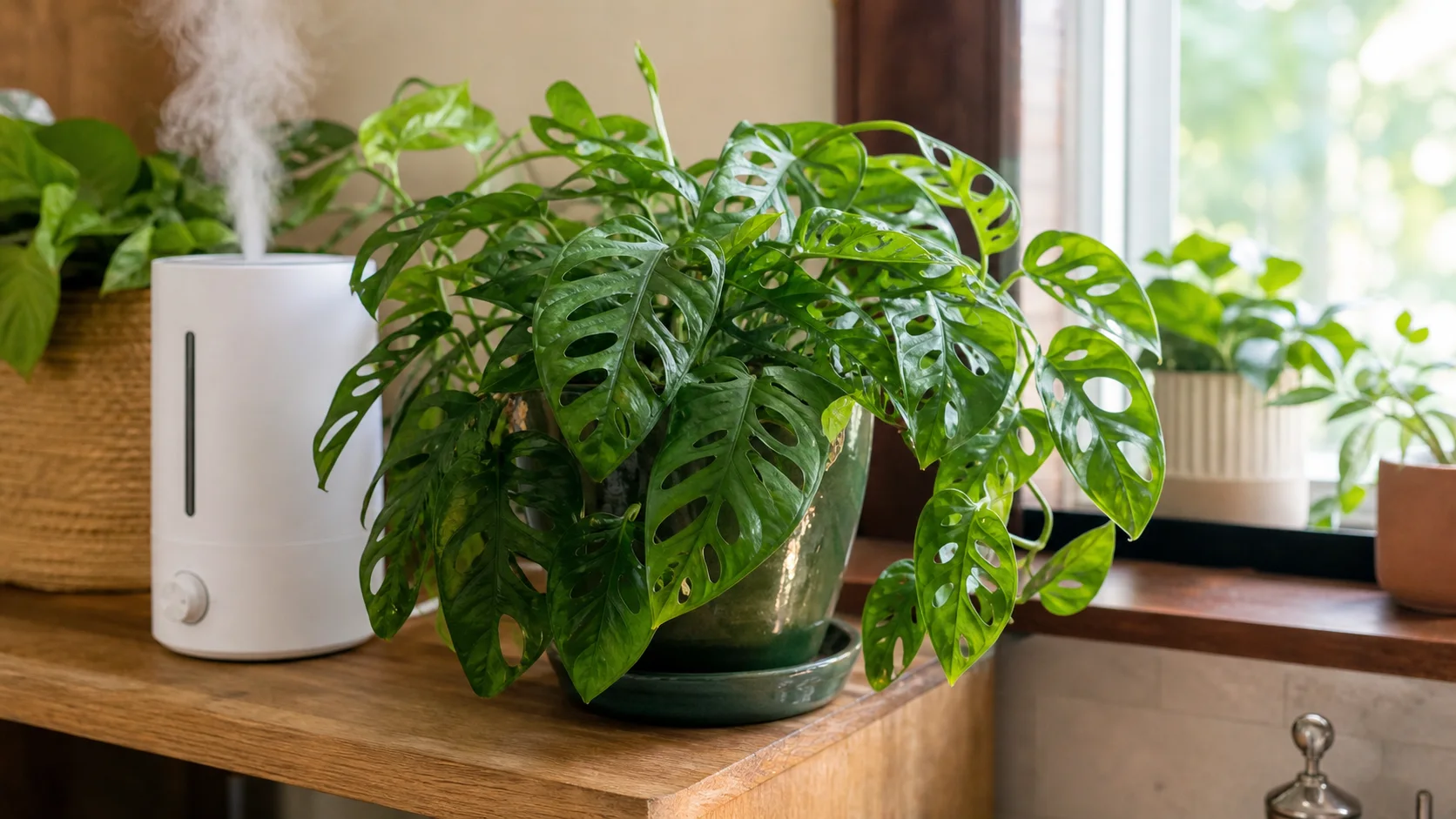
Brown Tips or Crispy Edges.
Leggy Growth with Small Leaves
This means the plant is reaching for more light. Move it closer to a window, or consider a dedicated grow light if your space does not have strong natural light year-round. Newer leaves should gradually come in larger once the light improves.
Pests
Monstera adansonii can attract spider mites in dry conditions, and occasionally fungus gnats if the soil stays too wet. Spider mites show up as fine webbing between leaves and tiny specks on the leaf surface. Wipe leaves down with a damp cloth and treat with neem oil or insecticidal soap if the problem persists. Fungus gnats are usually solved by letting the top layer of soil dry out more thoroughly between waterings. For a persistent gnat problem, the guide on how to get rid of fungus gnats covers the full step-by-step approach.
Simple Care Plan
Today
Check the soil with your finger before watering. If the top inch is dry, water until it drains; if it is still damp, wait. Move the plant to bright indirect light, inspect the undersides of the leaves for pests, and remove any fully yellow leaves so you can spot new problems more easily.
This Week
Pick one weekly check-in day instead of watering automatically. On that day, test the soil, rotate the pot, wipe dusty leaves with a damp cloth, and check whether the vines need a clip, trellis, or moss pole. If brown tips keep appearing, add a humidity tray, group it with other plants, or run a small humidifier nearby.
This Season
In spring and summer, feed monthly at half strength and expect faster drying between waterings. In autumn and winter, stop fertilizing and water less often. Repot in spring only when roots are circling the pot or coming through the drainage holes.
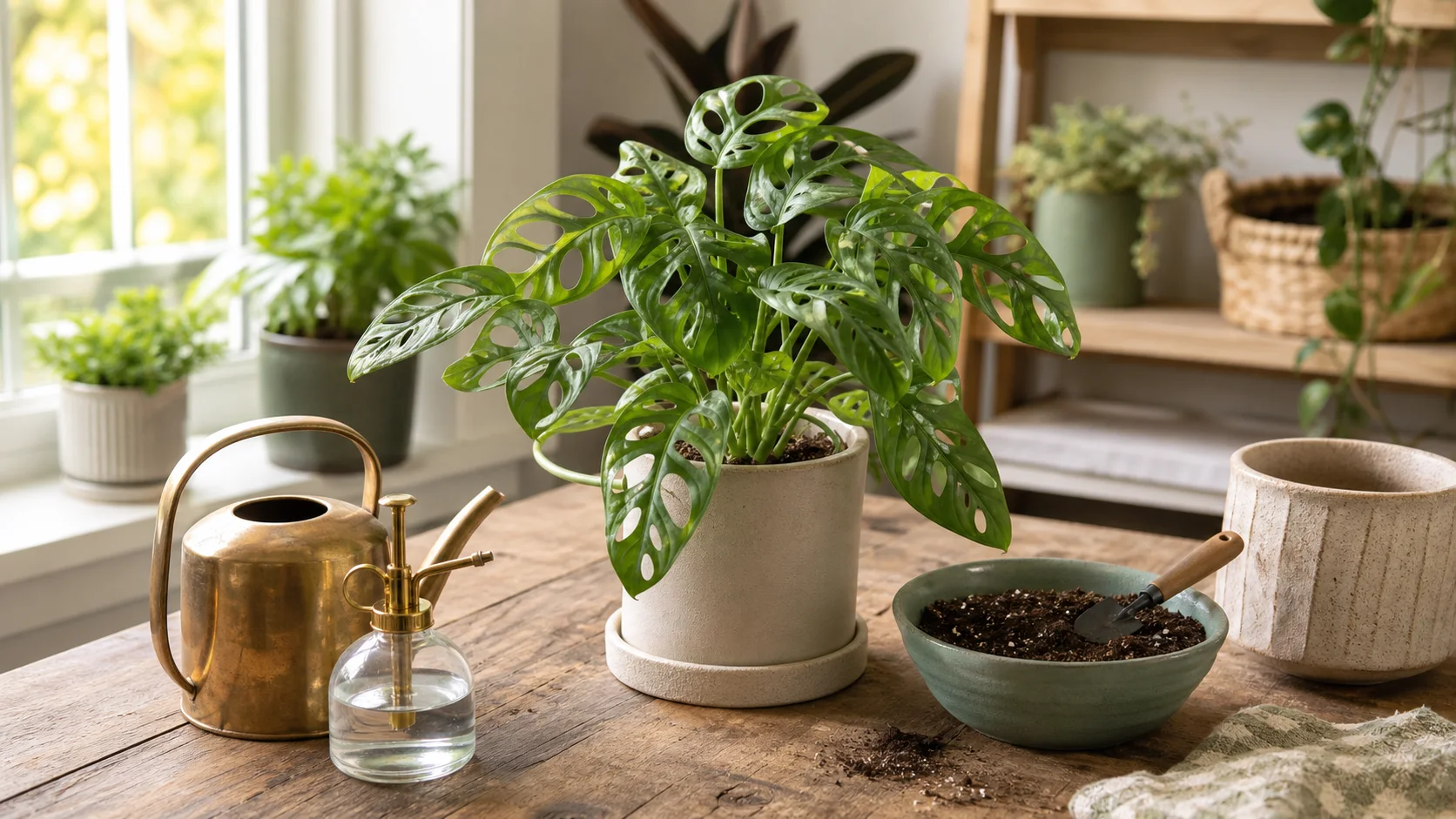
This Season.
Real User FAQ: Monstera Adansonii
How often should I water monstera adansonii? Every seven to ten days during spring and summer is a reasonable starting point, but the real answer depends on your home. Check the soil before you water: push your finger an inch into the top layer. If it is still damp, wait. If it is dry, water thoroughly until it drains from the bottom. Adjust based on the season, your pot size, and how much light the plant is getting.
Why does my monstera adansonii have no holes in its leaves? New leaves come out without fenestrations when the plant is not getting enough light. The holes develop as the plant matures and as light levels increase. If the newest leaves are plain and oval-shaped, move the plant closer to a window or add a grow light. Very young cuttings also produce unfenestrated leaves at first regardless of light, which is normal.
Can monstera adansonii grow in low light? It can survive in lower light, but it will not thrive. Growth slows significantly, new leaves come out smaller and without fenestrations, and the overall plant looks sparse. If your space is genuinely dim, a grow light for a few hours a day makes a real difference.
Why are the tips of my monstera adansonii leaves turning brown? Brown, crispy leaf tips usually point to low humidity, inconsistent watering, or dry indoor air during winter heating season. A pebble tray with water beneath the pot, grouping the plant with other plants, or a small humidifier nearby will help. Less commonly, brown tips can result from tap water with high fluoride or chloride content; if that is a concern, letting tap water sit overnight or switching to filtered water sometimes helps.
Is monstera adansonii toxic to cats and dogs? Yes. Like most aroids, monstera adansonii contains calcium oxalate crystals that are toxic to cats and dogs if ingested, causing mouth irritation, drooling, vomiting, and difficulty swallowing. Keep it out of reach of pets, or choose a different trailing plant if you have curious animals at home. The guide on cat-safe indoor plants has alternatives worth considering.
How do I make my monstera adansonii grow faster? The biggest levers are light, humidity, and consistent watering. More bright indirect light, humidity close to 60%, and a balanced fertilizer during the growing season will push faster growth than almost anything else. A moss pole to climb also encourages larger leaves and more vigorous growth. Don’t be tempted to overfertilize; that tends to cause more problems than it solves.
Can I propagate monstera adansonii in water? Yes, and it’s one of the easiest houseplants to propagate this way. Take a stem cutting with at least one node, place it in a glass of water in a bright spot, and change the water every few days. Roots usually appear within two to four weeks. Once they’re an inch or two long, pot the cutting into a well-draining soil mix and care for it like the parent plant.
Should I mist my monstera adansonii? Misting is popular but not particularly effective at raising humidity, since the moisture evaporates within minutes. It also risks leaving water spots on the leaves and can encourage fungal issues if the leaves stay damp for long periods. A pebble tray, grouping plants together, or a humidifier are all more reliable ways to create the consistent humidity this plant prefers.
Methodology Note
This guide was refreshed on 2026-06-11 after reviewing current search results for the main keyword and close variants, then checking plant-owner pain patterns around watering, yellow leaves, direct sun, and buyer expectations against accessible Reddit snippet language. Factual care claims were anchored to NC State Extension, ASPCA, and species-background references. Social evidence is qualitative signal about the questions owners keep asking, not a measurement of prevalence.
Monstera adansonii rewards a simple routine: check the soil before watering, keep it in bright indirect light, and respond early when leaves curl, yellow, or get crispy tips. If you want help tracking the watering schedule and getting reminders tuned to the plant’s actual pace of growth, download KnowYourPlant for personalized plant care reminders.