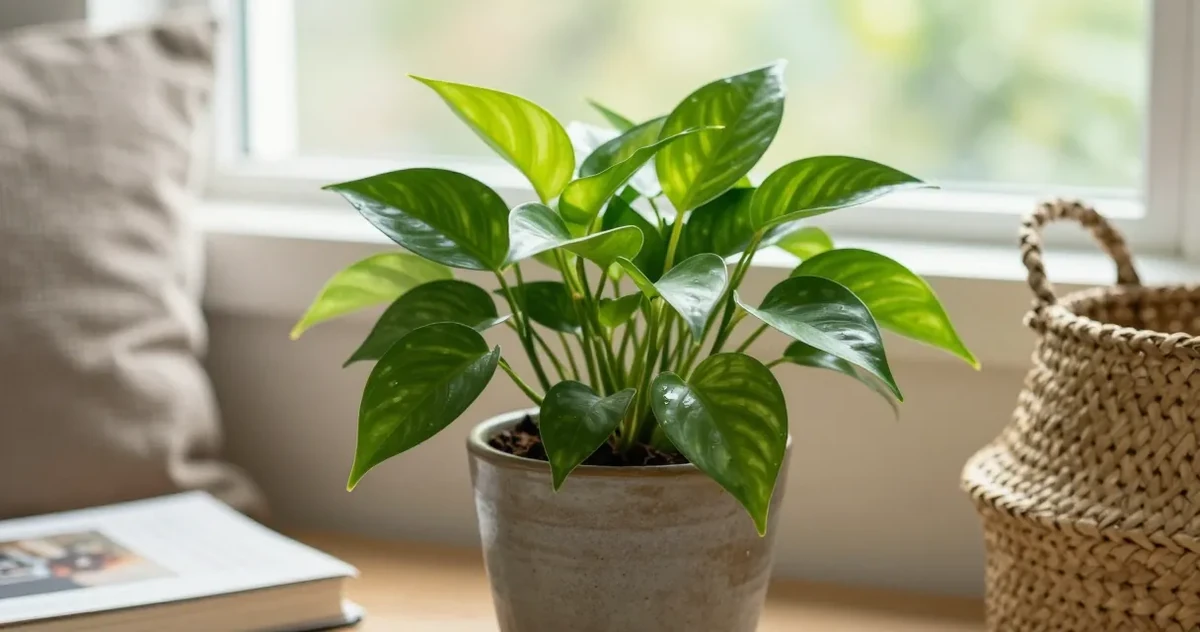
Neon pothos is a good plant for you if you have a bright window and can check the soil once a week. It is not the best choice for a dark corner if you want those glowing yellow-green leaves to stay bright. If yours is fading, curling, yellowing, or getting brown tips, this guide will help you sort the likely cause without turning plant care into homework.
The short version: give neon pothos bright indirect light, water when the top couple inches of soil are dry, and never let the pot sit in standing water. New leaves coming in bright chartreuse mean the spot is working. New leaves coming in darker green usually mean it needs more light. Yellow, soft leaves usually point to too much water; curled or crispy leaves usually point to thirst, heat, or dry air.
Species-level evidence behind Neon pothos
Neon pothos maps to Epipremnum aureum. The climate evidence therefore describes the accepted species, while neon leaf colour remains a cultivar trait outside these datasets.
The ranges below are the middle 50% (p25–p75), not recommended indoor setpoints.
| Reference taxon | POWO native range | Annual mean temperature | Annual precipitation | Relative humidity | Solar radiation | Evidence |
|---|---|---|---|---|---|---|
| Epipremnum aureum (golden pothos) | Mo’orea in the Society Islands | 25.7–25.9°C | 2451–2644 mm/yr | 63–64% | 20.0–20.1 MJ/m²/day | 6 climate points; low confidence |
What this changes in this guide: Because the native sample is small, use this as bounded background only. Track new colour, spacing, and soil drying in the actual room before changing care.
Sources and method: Epipremnum aureum in POWO and GBIF; CHELSA V2.1, 1981–2010. GBIF records are limited to POWO-native countries, then filtered for coordinates, establishment signal, licence, precision, and spatial duplication. No community or user-reported care data is used in this module.
What Most Care Guides Miss
Most guides about neon pothos describe the ideal care routine. Real homes are messier: light changes by season, pots dry at different speeds, and the same symptom can mean different things depending on where it appears.
Before changing care, check the plant in this order:
- Light: is the plant growing toward the window, fading, or scorching?
- Root zone: is the pot drying predictably, or staying wet in the middle?
- Leaf pattern: did the oldest leaves, newest leaves, tips, or stems change first?
- Recent change: new pot, new location, fertilizer, cold draft, heat vent, or pest exposure.
This keeps you from fixing the wrong problem. One clear adjustment is usually safer than a full care reset.
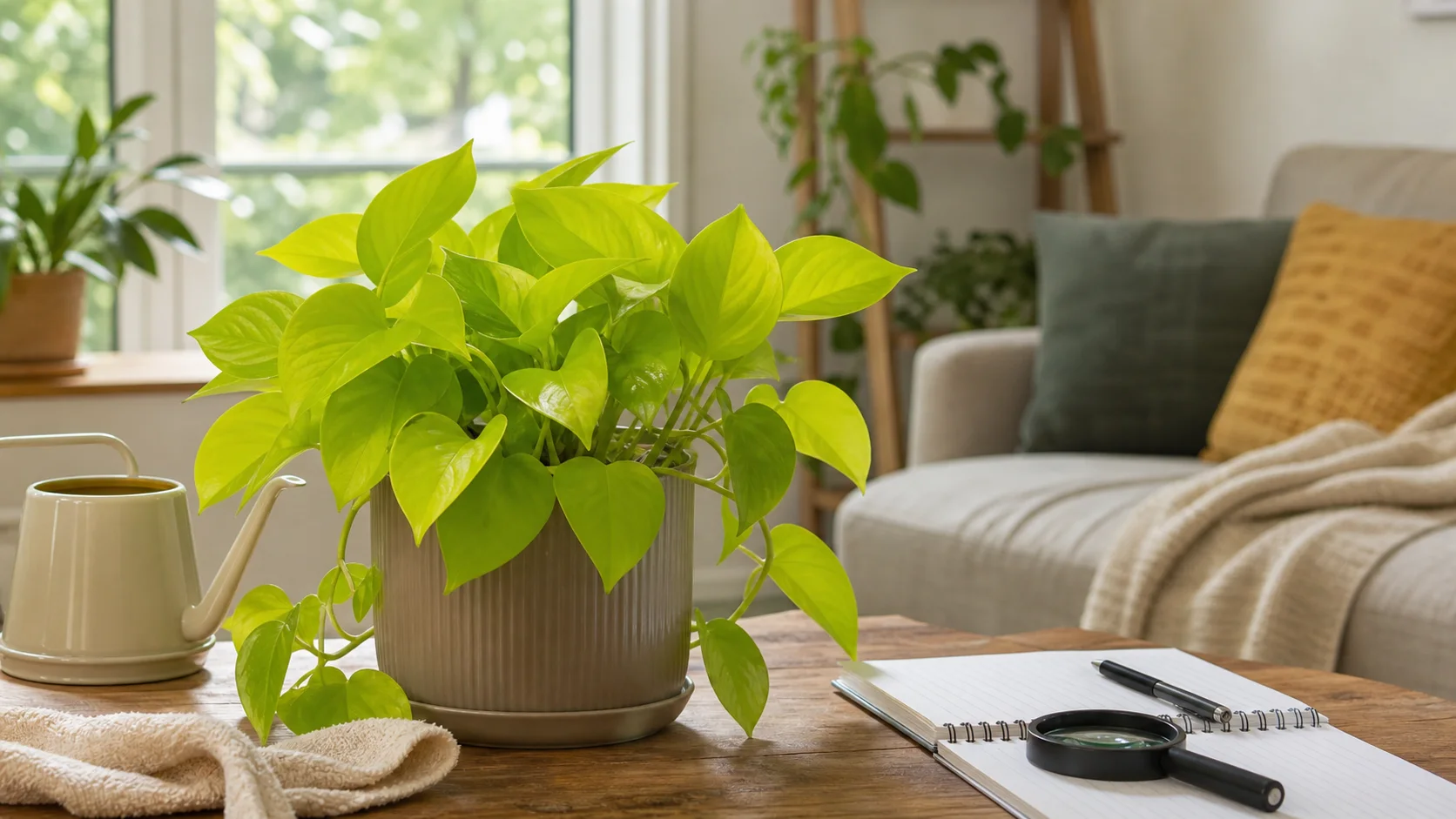
Check light, root-zone moisture, leaf patterns, and recent changes before resetting a neon pothos care routine.
Is Neon Pothos a Good Fit for Your Home?
Choose neon pothos if you have an east or west window, a bright room near a south window, or a grow light you are willing to use in winter. It fits a normal home routine: check the soil weekly, water only when it is partly dry, trim long vines when they get messy, and feed lightly in spring and summer.
Skip it, or choose golden pothos instead, if your only plant spot is several feet from a small north-facing window. Neon pothos can survive there, but the color that makes it special will fade toward regular green. Also skip it if cats or dogs chew your plants, because pothos is not pet-safe.
Identification Snapshot
- Botanical name: Epipremnum aureum ‘Neon’
- Easy ID cue: solid chartreuse leaves rather than mixed yellow-and-green variegation
- Growth habit: trailing or climbing vine with heart-shaped leaves
- Best light for color: bright indirect light close to a bright window
- Pet safety: toxic to cats and dogs if chewed
Social Listening Snapshot
Public pothos questions keep circling the same two problems: owners mistake soggy-soil stress for ordinary thirst tolerance, and they sometimes troubleshoot the wrong plant because neon pothos gets confused with lemon-lime or heartleaf philodendron. That community pattern is useful as a signal for where readers get tripped up, even though the threads themselves are qualitative rather than scientific proof.
What Makes Neon Pothos Different
Most pothos varieties, including golden, marble queen, and n’joy, have variegation: their leaves are two or more colors. Neon pothos is different. Its leaves are one solid color, but that color is the whole point. If you want the side-by-side differences, the pothos varieties guide breaks down how neon compares with other common forms. Light directly affects how bright each new leaf looks, so the plant gives you unusually clear feedback.
You might also see it sold as “neon queen pothos” or find it alongside “variegated neon pothos,” which is a slightly different form with occasional cream or pale yellow streaks. The care is nearly identical, but the variegated version needs a bit more light to hold onto both colors. Think of it as even more light-sensitive than the standard form.
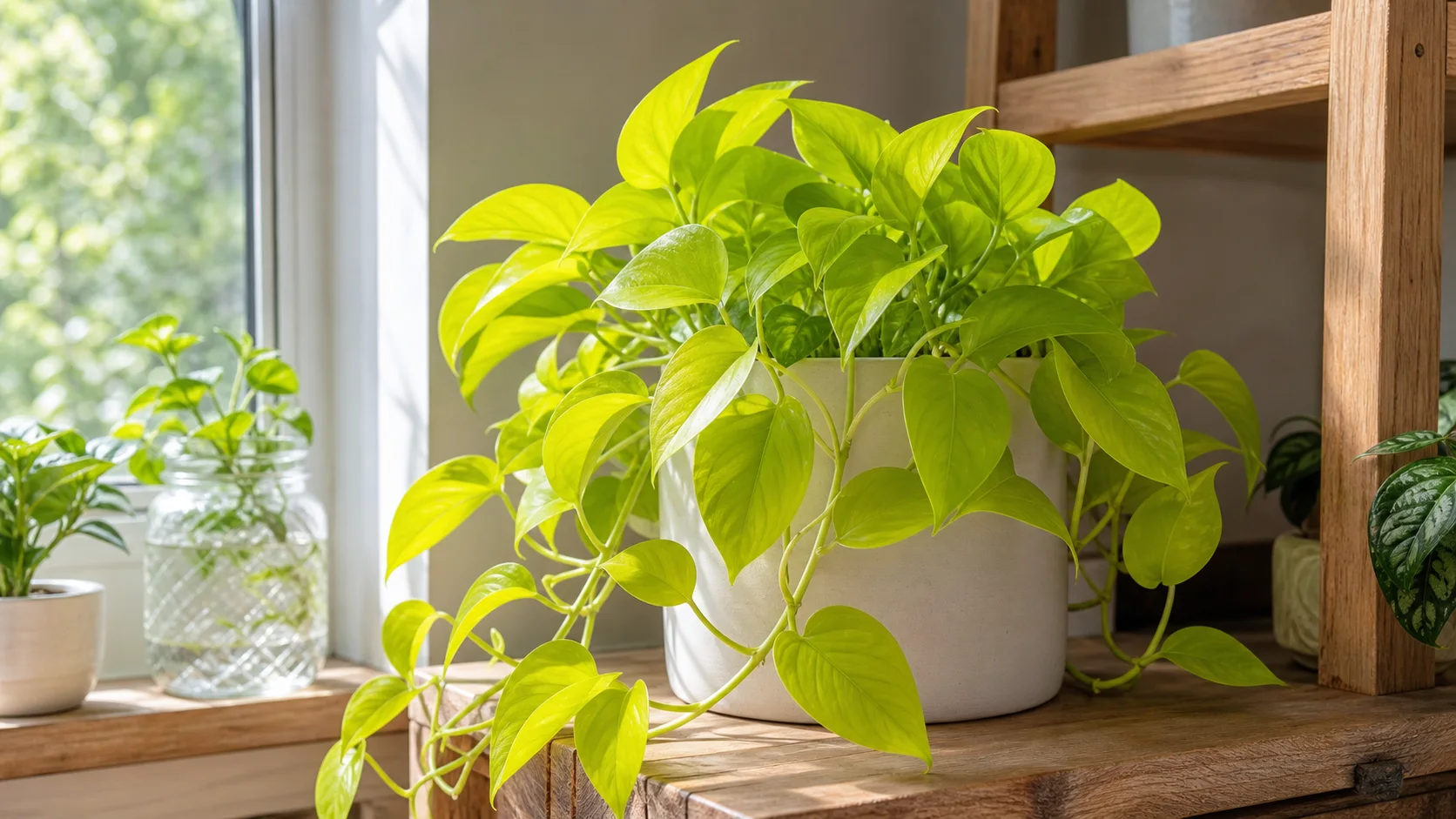
Solid chartreuse leaves make neon pothos stand out from the patterned foliage of variegated pothos forms.
Lookalikes and Confused-With Plants
| Plant | Fast ID cue | Why the confusion matters |
|---|---|---|
| Neon pothos | Solid chartreuse leaves, slightly thicker foliage, classic pothos vine | This is the plant covered in this guide. |
| Heartleaf philodendron | Darker green, thinner leaves, more delicate trailing habit | It often wants a slightly different watering rhythm, so misidentification can make overwatering more likely. |
| Lemon-lime philodendron | Bright yellow-green leaves too, but typically thinner and more pointed | Owners sometimes follow philodendron advice and miss the pothos-specific root-rot warning signs. |
Quick Care Cards
| Need | What neon pothos usually wants | Watch for |
|---|---|---|
| Light | Bright indirect light | New leaves turning greener usually means the spot is too dim. |
| Water | Let the mix dry partway, then water deeply | Soil staying wet for days points to drainage or overwatering trouble. |
| Soil | Loose, well-draining potting mix | Dense mix keeps the root zone wet too long. |
| Humidity | Normal indoor humidity is usually fine | Brown tips can show up in very dry rooms or with heat-vent exposure. |
| Feeding | Light monthly feeding in spring and summer | Too much fertilizer can crisp tips and stress roots. |
Source Note
Clemson Cooperative Extension and Missouri Botanical Garden support the core care pattern here: bright indirect light, a well-draining mix, and letting the root zone dry partway before watering again. ASPCA is the factual anchor for the pet-safety guidance later in the article.
Light: The One Thing That Changes Everything
This is the section that matters most for neon pothos. Everything else in this guide is secondary.
Neon pothos wants bright indirect light. Not direct sun, which scorches the leaves and bleaches the color toward pale and papery. And not low light, which causes the leaves to deepen toward plain green as the plant produces more chlorophyll to compensate for the dimmer conditions.
Clemson Cooperative Extension and Missouri Botanical Garden both support the same practical setup: bright indirect light, tolerance for lower light, and better color when the plant sits close to a bright window rather than across the room.
For neon pothos, the color cue matters. If new leaves are arriving bright chartreuse, the light is probably strong enough. If new leaves keep coming in darker green, the plant is compensating for lower light and you should move it closer to the window or add a grow light in winter.
A practical home test works well: if the spot is bright enough to read comfortably during the day without turning on a lamp, it is usually a reasonable starting point. If you want to maintain strong color through darker months, the guide to grow lights for indoor plants covers the simplest fix.
If you notice the leaves gradually losing brightness over several months, moving the plant closer to the light is the first fix to try. New growth after the move will come in brighter. Older green leaves will not revert, but they are replaced naturally over time.
Original Data: Symptom Diagnosis Card
| What you notice | Most likely read | Check before you react | Best next move |
|---|---|---|---|
| New leaves look darker green than older ones | Light is too low for strong neon color | Distance from the window and recent seasonal light drop | Move the plant closer to bright indirect light or add a grow light. |
| Leaves curl and the pot feels very light | Thirst or dry root ball | Soil dryness a couple inches down, not just on the surface | Water thoroughly, then let excess drain away. |
| Leaves yellow while soil stays wet | Chronic overwatering or root stress | Pot weight, drainage holes, mushy stem base, sour smell | Pause watering, improve drainage, and inspect roots if the mix stays soggy. |
| Leaves look washed out or papery on the sun side | Too much direct sun | Whether the brightest leaves face hot afternoon light | Pull the plant back from the glass or filter the sun. |
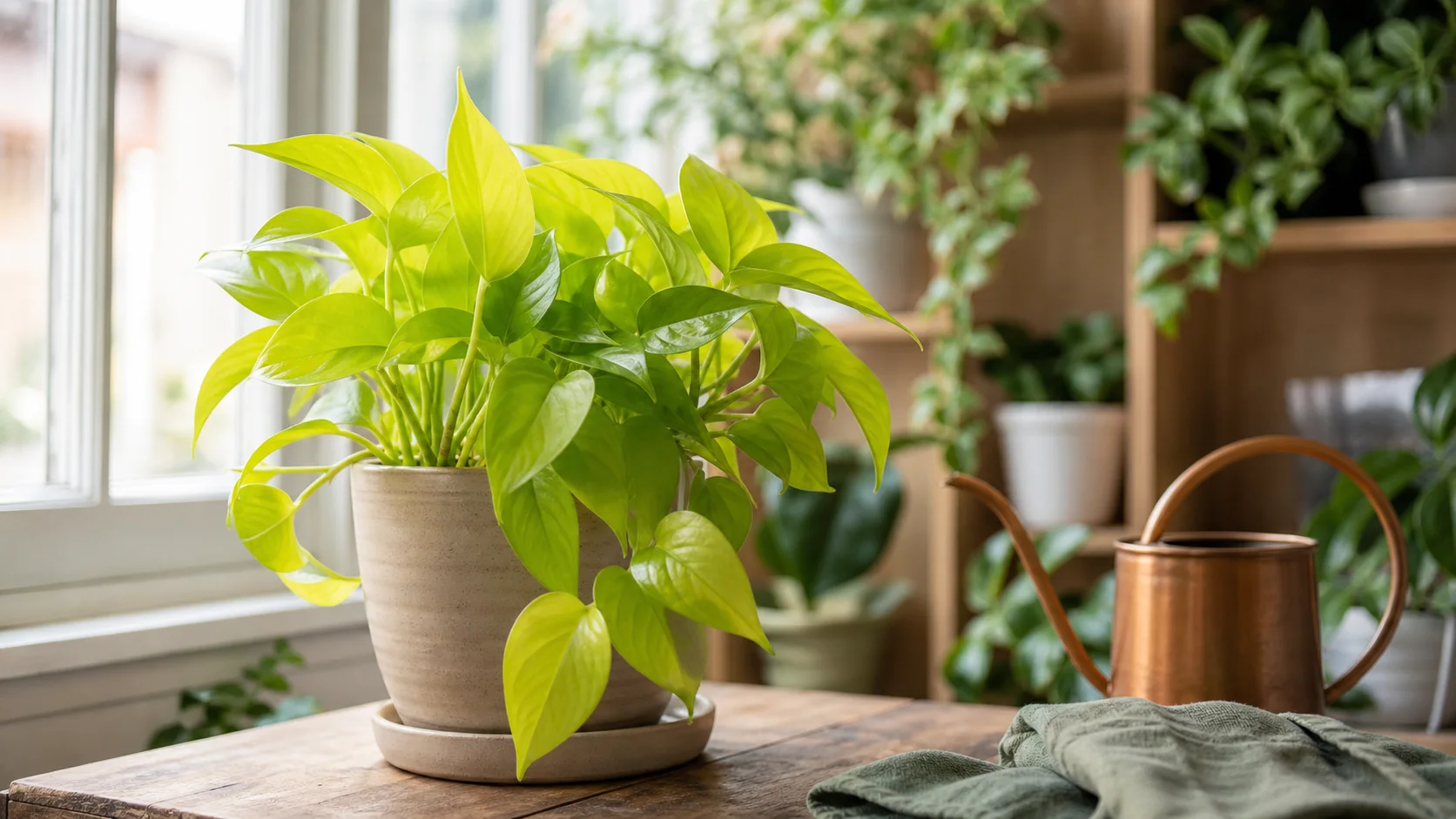
Compare new-leaf color with window exposure and root-zone moisture before choosing the next care step.
Why Is My Neon Pothos Losing Its Color?
Color fading is the most common concern with this plant, and it is almost always solvable once you know what to look for. Work through these five checks before changing anything else.
1. How far is it from the window? Light drops sharply with distance. A spot three feet from a window can receive less than half the light of a spot twelve inches away. If your plant is on a table across the room from the nearest window, that is almost certainly the issue. Move it closer.
2. What direction does the window face? North-facing windows rarely provide enough light for neon pothos to hold its color, even if the room seems bright. South-facing windows offer the most light but can be too intense for direct placement; set the plant a few feet back or filter it with a sheer curtain. East and west are usually ideal.
3. Is anything blocking the light? Trees outside, a building overhang, or even a large piece of furniture between the plant and the window can cut the light significantly. The amount of sky the plant can “see” from its position matters more than how bright the room looks to you.
4. What does the newest leaf look like? New leaves are the most reliable indicator of current conditions. If recent growth is coming in bright chartreuse, the plant is getting enough light. If new leaves are arriving already green, the issue is ongoing and the plant needs a better spot now.
5. What time of year is it? In winter, even a spot that works well in summer may fall short. The sun sits lower in the sky, days are shorter, and light through windows is less intense. If your plant was fine in summer and started fading in November or December, that is likely the cause. A grow light in winter is a straightforward fix.
If you have worked through all five and the plant is still fading despite good light, check the roots. A rootbound plant or one with damaged roots can struggle to support healthy new growth, and repotting sometimes resets things.
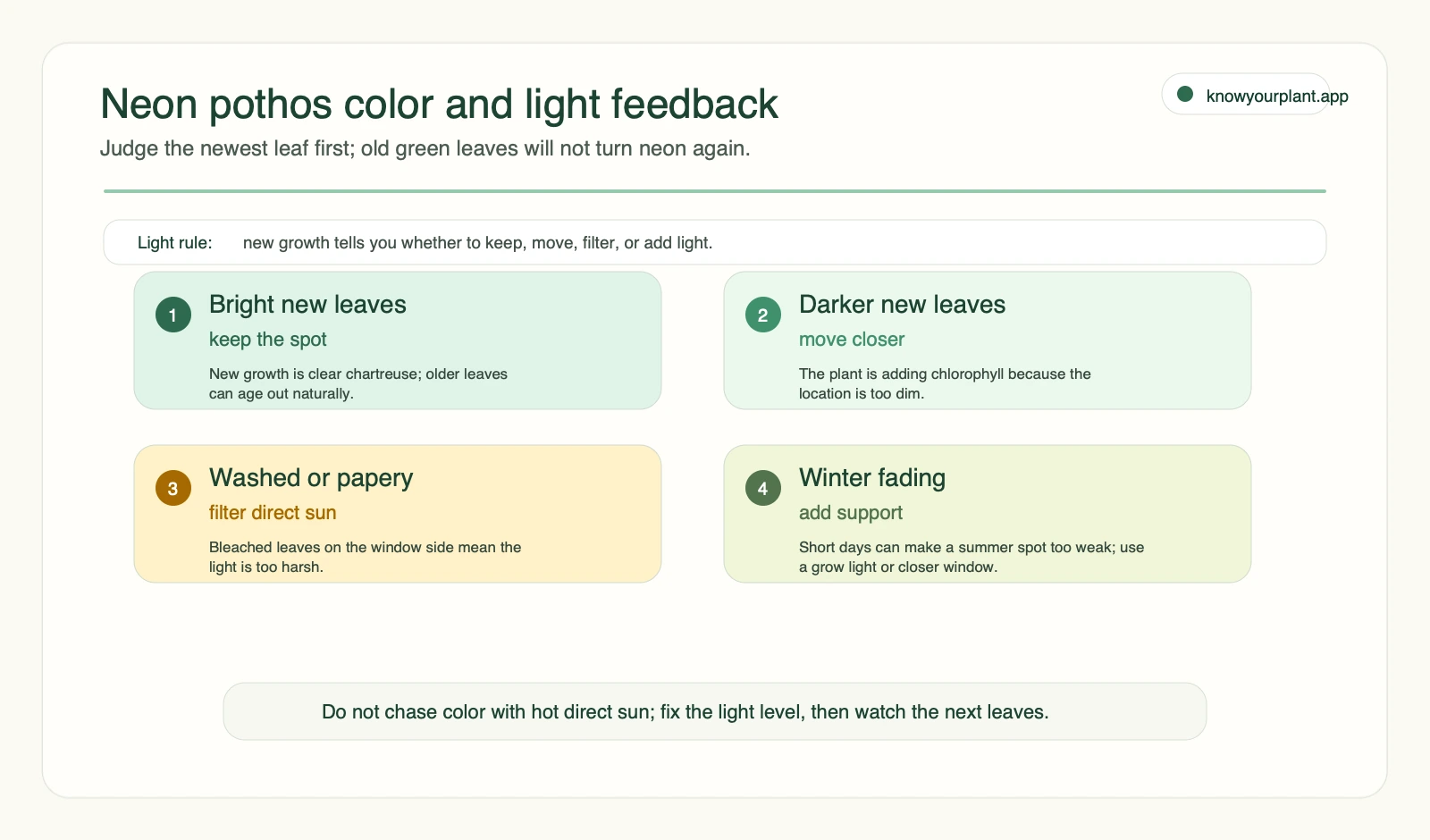
Use new growth as the light meter: bright chartreuse means the spot is working, dark green means the plant needs more light, and pale papery leaves mean the sun is too direct.
Watering Decision Tree
- Check the root zone, not just the top crust. If the mix is still damp a couple inches down, wait.
- If the root zone is dry, lift the pot. A very light pot plus mild droop usually means it is time to water deeply.
- If the plant looks stressed but the mix is still wet, do not add more water. First check drainage, pot size, and whether the roots may be staying soggy.
- If the answer keeps changing with the season, follow the plant instead of a schedule. Neon pothos often needs more water in active bright months and much less in darker months.
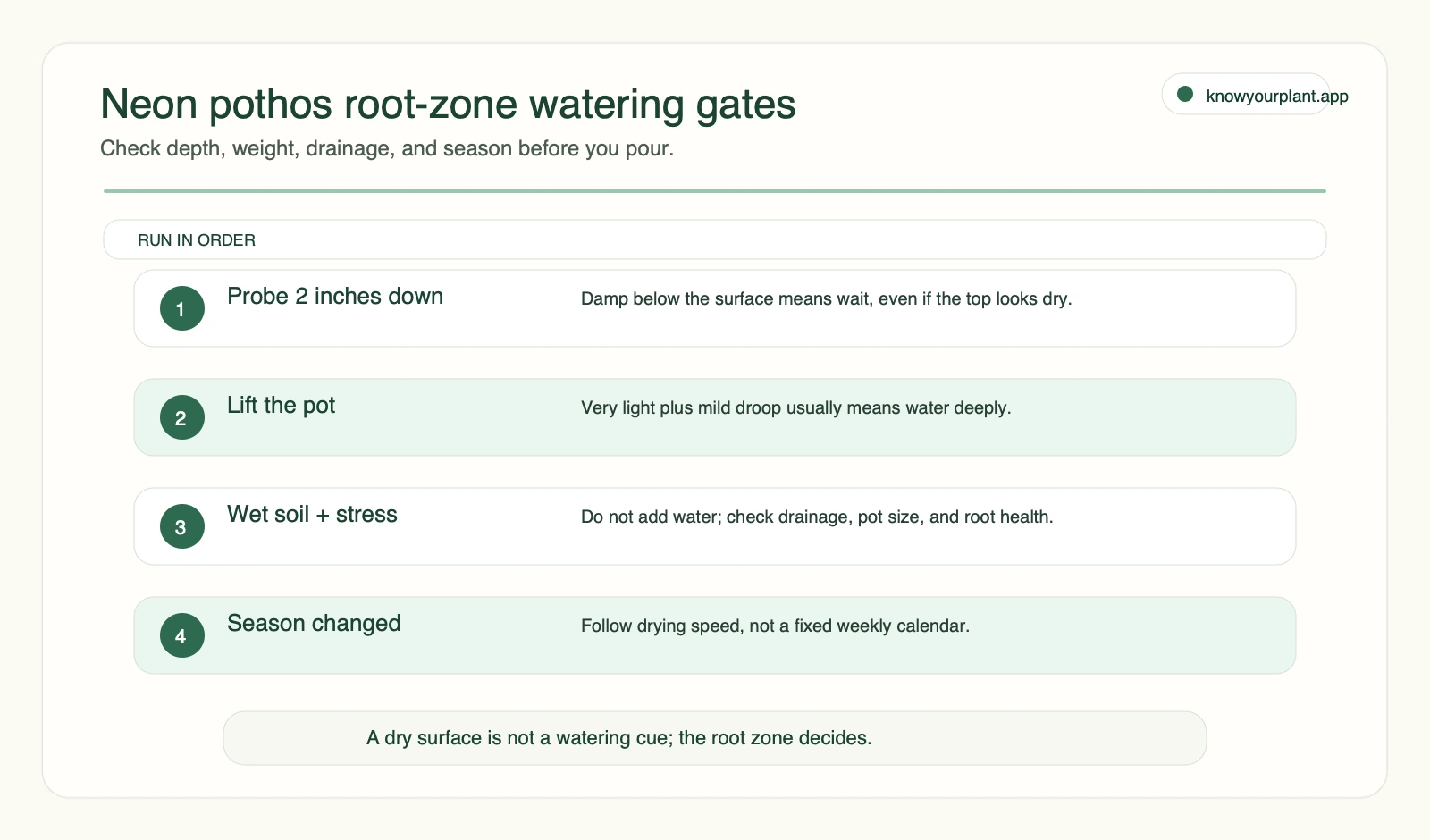
Water only after the root zone agrees. A dry surface is not enough; depth, pot weight, drainage, and season decide the next move.
Watering Without Overthinking It
Pothos handles underwatering better than overwatering. Neon pothos is no different.
The pothos watering guide explains the full method, but the short version is simple: push your finger into the soil to about the second knuckle. Dry at that depth? Water thoroughly until it runs out the bottom, then empty the saucer. Still slightly damp? Check again in a day or two.
In practice, this usually lands on watering every one to two weeks in spring and summer, and every two to three weeks in autumn and winter when the plant is growing more slowly. The actual interval depends on pot size, soil mix, and how warm and bright your home is, so use the finger test rather than the calendar.
Signs you are overdoing it: the soil stays wet for more than a few days, the pot feels heavy all week, lower leaves turn yellow and soft, stems feel mushy near the soil, or fungus gnats start hanging around. If that happens, pause watering until the soil partly dries, make sure the pot has drainage holes, and move the plant into brighter indirect light so it can use water faster.
Signs you waited too long: leaves curl inward, vines droop, the pot feels very light, or the soil pulls away from the edge of the pot. Water deeply once, let the pot drain, and check again in a few days. Do not give small daily splashes; that keeps the top wet while the roots stay unevenly watered.
If Leaves Curl, Yellow, or Get Brown Tips
Use the newest symptom to decide what to do first.
Curling leaves: Check the soil. If it is dry, water thoroughly and expect the plant to perk up within a day or two. If the soil is wet and leaves are still curling, look for cold drafts, heat from a vent, or roots that are staying too soggy.
Yellow leaves: One or two old yellow leaves at the base can be normal. Several yellow leaves at once usually means overwatering, poor drainage, or a pot that is too large. Let the soil dry more between waterings, empty the saucer, and check that the roots are firm rather than brown and mushy. If the pot stays wet and decline keeps spreading, use the root rot treatment guide before you water again.
Brown tips: Start with humidity and watering consistency. Dry winter air, missed waterings, and fertilizer buildup can all crisp the tips. Trim the brown edges if they bother you, but fix the routine: water deeply when dry, avoid extra fertilizer, and add humidity if your home is very dry.
Leaves turning greener: Move the plant closer to bright indirect light. This will not recolor older leaves, but the next leaves should come in brighter if the new spot is better.
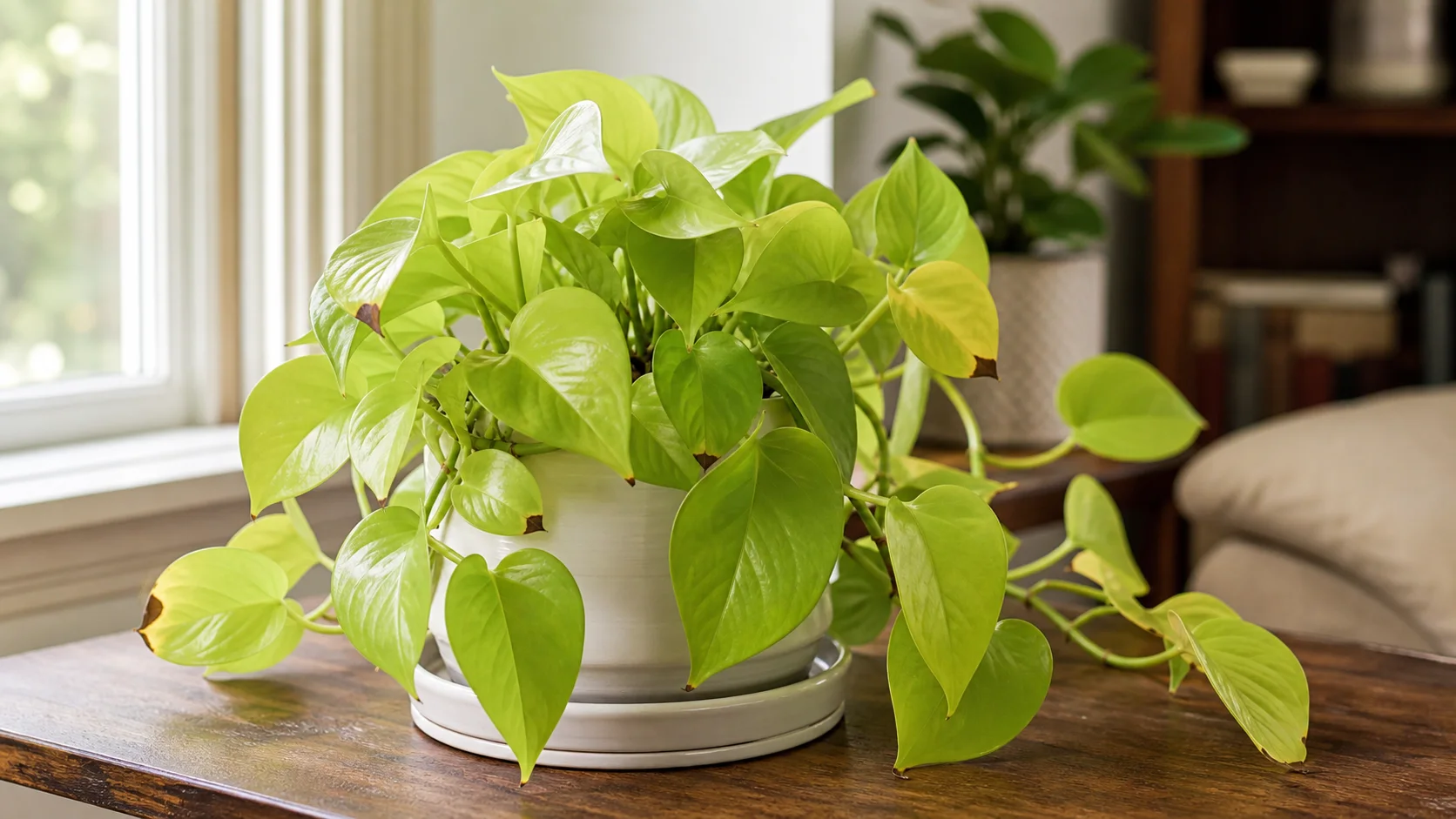
Brown tips and yellowing leaves call for a root-zone, drainage, humidity, and watering check before adding more water.
Common Problems at a Glance
| Problem | What it usually means | First move |
|---|---|---|
| Color fading toward green | Not enough light | Move the plant closer to a bright window and judge the next leaves, not the old ones. |
| Yellow, soft lower leaves | Overwatering or a slow-drying mix | Let the mix dry more fully and check that the pot drains fast. |
| Brown tips | Dry air, missed watering, or fertilizer buildup | Reset the watering rhythm and reduce extra fertilizer before changing everything else. |
| Droop with wet soil | Root stress, not thirst | Stop watering and inspect the root zone before the problem spreads. |
| Sudden decline after a move | Environmental shock from light or temperature change | Stabilize the location for a week or two before making more changes. |
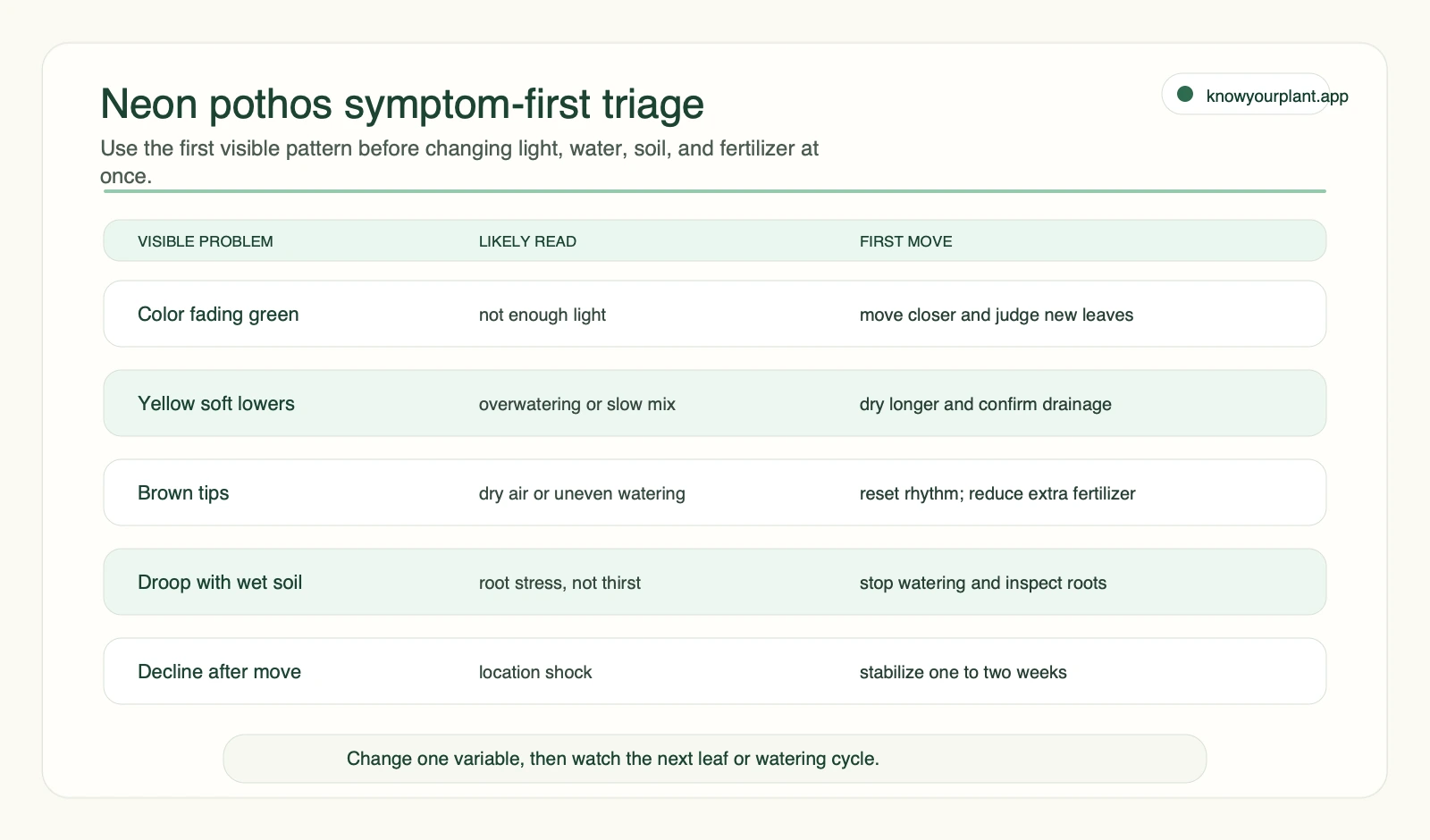
Match the first visible symptom to one calm action before changing the whole routine. Most neon pothos problems start with light, root-zone moisture, or a recent move.
Soil and Pot Setup
Neon pothos is not particular about soil. A standard well-draining potting mix works well. If your mix stays wet for several days after watering, adding a handful of perlite helps it drain faster and breathe better around the roots.
Drainage holes are not optional. Sitting in standing water is one of the few things that will genuinely stress this plant over time, eventually leading to root rot.
Repot when you see roots circling the bottom of the pot or emerging from the drainage holes, typically every one to two years. Go up one pot size at a time. A pot that is too large holds more moisture than the roots can absorb, which recreates the same problem as overwatering even when you are being careful.
Temperature and Humidity
Neon pothos is comfortable in the same temperature range most people keep their homes: roughly 60 to 85 degrees Fahrenheit. It dislikes cold drafts, so keep it away from air conditioning vents in summer and drafty windows in winter.
Humidity is not a strict requirement, but the plant usually looks better when the air is not extremely dry. If tips keep browning despite sensible watering, look at dry air, heat vents, or fertilizer buildup before assuming the plant needs more water. A small humidifier nearby or moving the plant to a brighter bathroom or kitchen often helps.
Fertilizing
During the growing season, roughly spring through summer, feeding once a month with a balanced liquid fertilizer is enough. Dilute it to half the recommended strength. Neon pothos does not need heavy feeding, and too much fertilizer causes salt buildup in the soil, which stresses the roots and can contribute to those brown tips.
Skip fertilizing in autumn and winter. The plant is not actively growing much during that time, and unused fertilizer just accumulates. For more detail on timing and what signs to watch for, the fertilizer guide for indoor plants covers the full seasonal approach.
Propagation
Neon pothos is one of the easiest plants to propagate. Take a cutting just below a node (the small brown bump on the stem where a leaf attaches), remove the bottom leaf or two to expose the node, and place it in water. If you want the full step-by-step method, our guide on how to propagate pothos covers both water and soil rooting. Roots usually appear within two to four weeks.
Once the roots are an inch or two long, pot the cutting into soil. Keep the soil consistently moist for the first week or two while it adjusts to growing in a solid medium rather than water.
One thing to keep in mind: if you are propagating a variegated neon pothos and want to preserve the streaks, choose cuttings from stems that already show the cream or pale markings. Cuttings from fully green sections will produce green plants.
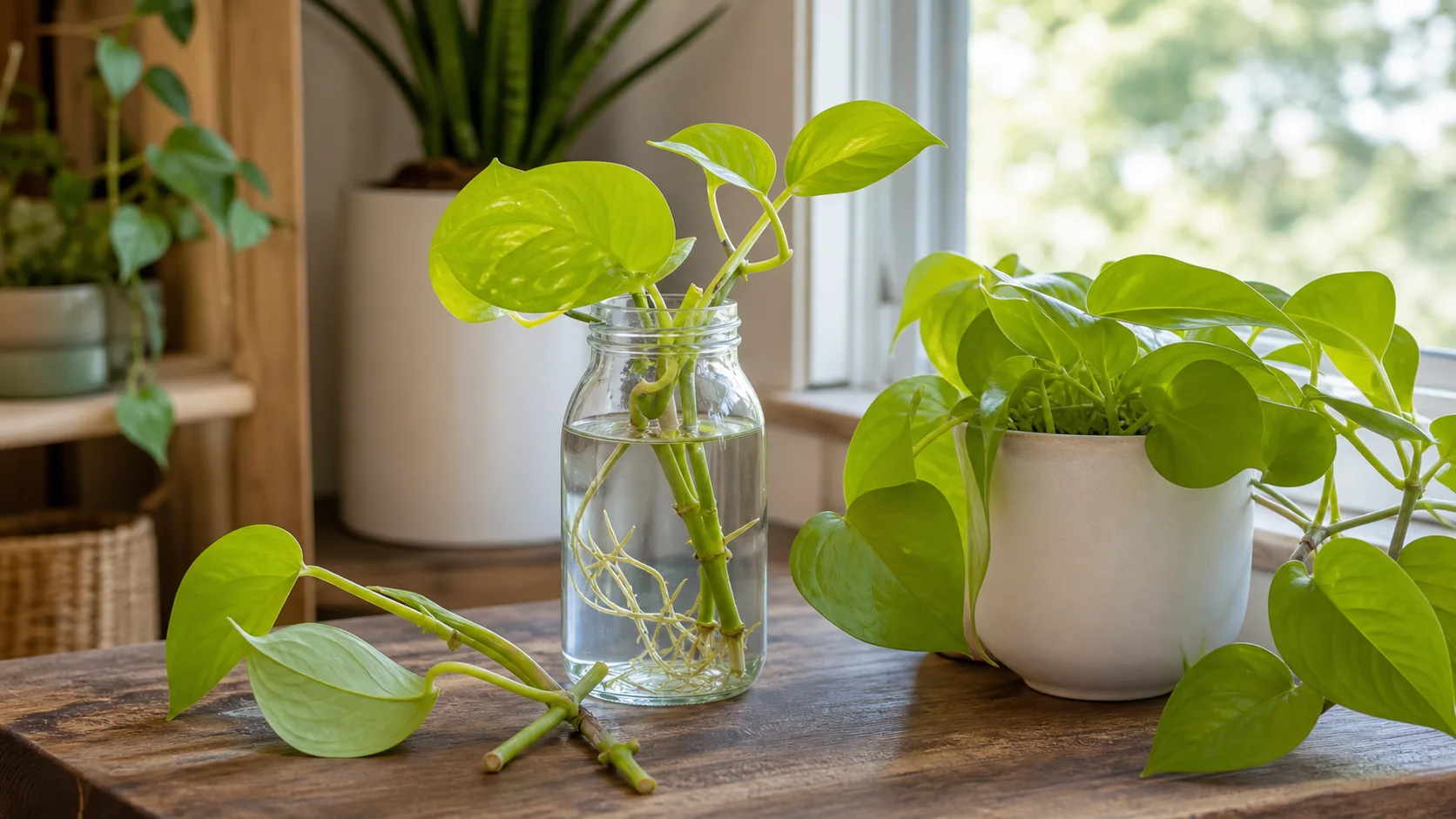
Place exposed neon pothos nodes in clean water and pot them after the new roots reach an inch or two.
Simple Care Plan
Today: Put the plant in bright indirect light, check whether the top couple inches of soil are dry, water only if they are, and empty any water sitting in the saucer.
This week: Look at the newest leaf, not the oldest one. Bright new growth means the location is working. Darker new growth means move the plant closer to light. Check for curling, yellowing, brown tips, and gnats before you water again.
This season: In spring and summer, feed monthly at half strength and expect faster drying soil. In autumn and winter, stop fertilizing, water less often, and consider a grow light if the color starts fading.
Common Mistakes
- Watering on a fixed weekly schedule. Neon pothos usually does better when you follow the drying pattern of the pot instead.
- Checking only the top layer of soil. The surface can look dry while the middle of the pot stays soggy.
- Using direct sun to chase brighter color. Strong direct light can bleach or scorch the leaves instead of improving them.
- Jumping to a much larger pot. Extra soil holds extra moisture, which makes root trouble more likely.
- Ignoring pet risk because pothos is common. Common houseplants can still cause real irritation if chewed.
Seasonal Care Calendar
Spring: The plant comes out of its slower winter period. This is the best time to repot if needed, start monthly fertilizing again, and take propagation cuttings. New growth will be the brightest of the year as light intensity increases.
Summer: Peak growth. Water more frequently as the soil dries out faster, continue monthly feeding, and move the plant back from south-facing windows if you notice any bleaching or washing out of the color.
Autumn: Taper off fertilizing by October. Reduce watering frequency as growth slows. If you are in a climate with noticeably shorter days, consider moving the plant closer to the brightest window or adding a grow light to maintain color through the season.
Winter: Minimal fertilizing, less frequent watering. Watch for color fade as natural light drops. Cold drafts from windows can cause leaves to drop suddenly; a few inches of distance from cold glass makes a difference.
A Note on Pet Safety
Pothos is toxic to cats and dogs. All Epipremnum aureum varieties, including neon pothos, contain insoluble calcium oxalate crystals that cause irritation to the mouth, excessive drooling, and vomiting if ingested. It is not typically fatal, but it can cause real discomfort.
If you have cats or dogs who interact with your plants, keep neon pothos in a hanging basket out of reach, or choose a different plant. The guide to cat-safe indoor plants has a solid list of alternatives with similar trailing growth habits.
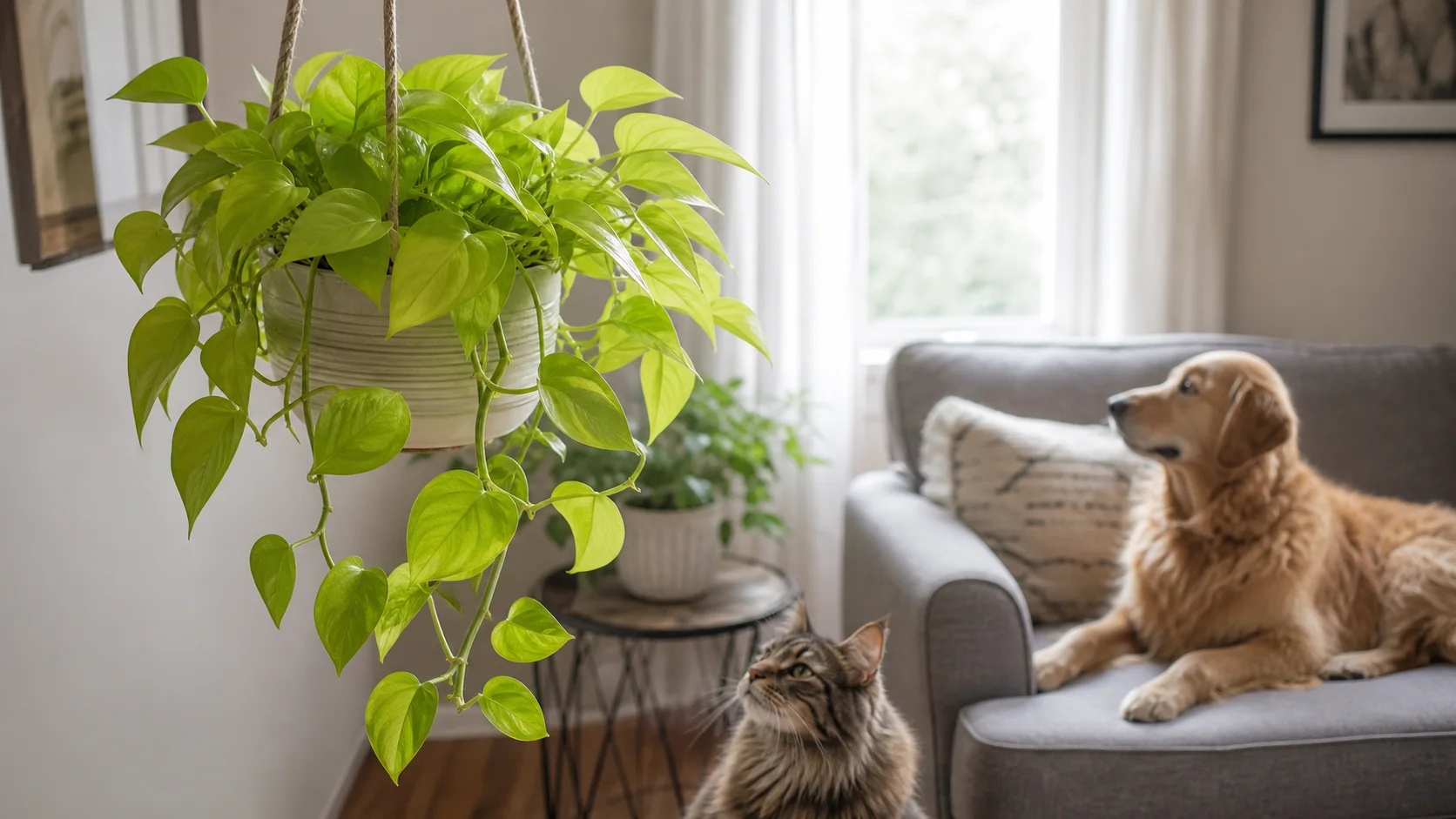
Keep neon pothos in a secure hanging basket beyond the reach of curious cats and dogs.
If you are troubleshooting another common plant symptom, see Philodendron Yellow Leaves: Old Leaf, Wet Roots, or Light Stress? for a focused diagnosis and recovery plan.
If you are troubleshooting another common plant symptom, see Pothos Leaves Curling: Dry Soil, Heat, or Root Stress? for a focused diagnosis and recovery plan.
Freshness Note
This guide was refreshed in June 2026 after reviewing current care-page gaps and recurring owner confusion around color fade, overwatering, and lookalike misidentification. Use the newest leaves and the root-zone moisture as your main signals if online advice starts to conflict.
Methodology Note
Factual care and safety claims here are anchored to Clemson Cooperative Extension, Missouri Botanical Garden, and ASPCA. Community pothos threads were used only as qualitative signal for where owners get confused, especially around root rot, watering timing, and neon pothos versus philodendron misidentification.
Real User FAQ
Why are my neon pothos leaves turning green?
Almost always a light issue. The chartreuse color requires bright indirect light to stay vivid. In lower light, the plant produces more chlorophyll to compensate, and the leaves shift toward plain green. Move the plant closer to a window. New growth will come in brighter; existing green leaves will not revert, but they will be replaced over time.
How often should I water neon pothos?
Use the finger test rather than a fixed schedule. Push your finger into the soil to the second knuckle. Water when it is dry at that depth, which usually lands on every one to two weeks in spring and summer, and every two to three weeks in autumn and winter. Adjust based on your pot size, soil, and environment.
Can neon pothos live in low light?
It will survive, but the color will fade significantly over months. Neon pothos is one of the varieties where low light has the most visible impact, because the whole point is the color. If your space only has low light, golden pothos is a better fit: it tolerates lower light with less dramatic color loss.
What is the difference between neon pothos and neon queen pothos?
The names are often used interchangeably. Both refer to Epipremnum aureum in its chartreuse form. Some sellers use “neon queen” to suggest a particularly vivid or large-leafed specimen, but there is no botanical distinction. “Variegated neon pothos” is slightly different: it has cream or pale yellow streaks alongside the chartreuse base, and needs a bit more light to hold both colors.
Why does my neon pothos have brown leaf tips?
Brown tips usually come from low humidity or inconsistent watering. Pothos in dry indoor air, particularly in winter with central heating running, will tip brown even when watered correctly. A humidifier nearby, a pebble tray with water under the pot, or simply moving the plant to a kitchen or bathroom usually helps. If the tips are browning alongside yellowing leaves, check for overwatering and drainage first.
Is neon pothos a fast grower?
In good conditions, yes. Near a bright window in spring and summer, it can put out a new leaf every one to two weeks. Growth slows in autumn and nearly stops in winter if light is low. If your plant has not produced new leaves in several months and it is not winter, check the light first, then the roots.
Can I keep neon pothos in a vase of water permanently?
Yes, with some adjustments. Pothos grows reasonably well in water long-term, but it benefits from occasional liquid fertilizer at very low concentrations, roughly one-quarter the standard dose, since it cannot access nutrients from soil. Change the water every one to two weeks to prevent bacterial buildup. The plant will not grow as vigorously in water as in soil, but it stays healthy and looks good in a clear vase.
Neon pothos rewards the basics done well: a bright spot, water when the soil is ready, and occasional feeding during the growing season. The color does the rest. Once you find the right window for it, it becomes one of the most satisfying plants in the room.
Download KnowYourPlant for personalized plant care reminders: https://knowyourplant.app