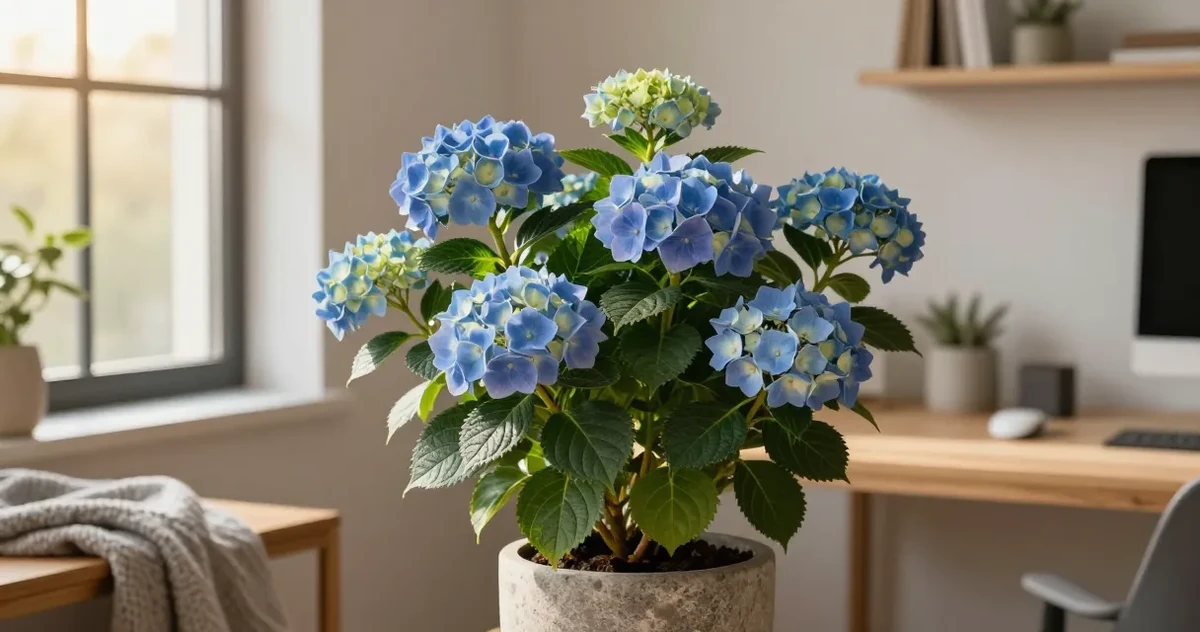
Climate DNA for bigleaf hydrangea
Hydrangea care varies by species. This evidence module is specifically for Hydrangea macrophylla, the bigleaf hydrangea behind many blue and pink mophead forms.
The ranges below are the middle 50% (p25–p75), not recommended indoor setpoints.
| Reference taxon | POWO native range | Annual mean temperature | Annual precipitation | Relative humidity | Solar radiation | Evidence |
|---|---|---|---|---|---|---|
| Hydrangea macrophylla (bigleaf hydrangea) | south-central Japan to Izu Oshima and the Kazan Islands | 15.1–16.7°C | 1445–1935 mm/yr | 60–61% | 13.7–14.6 MJ/m²/day | 30 climate points / 255 usable records; medium confidence |
What this changes in this guide: Unlike the tropical houseplant profiles elsewhere on the site, this temperate native envelope gives seasonal outdoor context; pot moisture, cultivar, pruning group, and local frost exposure still remain separate decisions.
Sources and method: Hydrangea macrophylla in POWO and GBIF; CHELSA V2.1, 1981–2010. GBIF records are limited to POWO-native countries, then filtered for coordinates, establishment signal, licence, precision, and spatial duplication. No community or user-reported care data is used in this module.
Hydrangea Care: Quick Answer First
If you are trying to keep a hydrangea alive, start here: it wants bright morning light, evenly moist soil, and a pot or garden bed that drains fast enough that the roots never sit in water. Most hydrangea problems come from one of three things: too much afternoon sun, soil that swings from bone-dry to soaked, or pruning at the wrong time.
For a beginner, the daily decision is simple: check the soil before you water. If the top 2 inches feel dry, water deeply. If they still feel damp, wait. Drooping in hot afternoon sun can be normal; drooping in the morning with dry soil means water now.
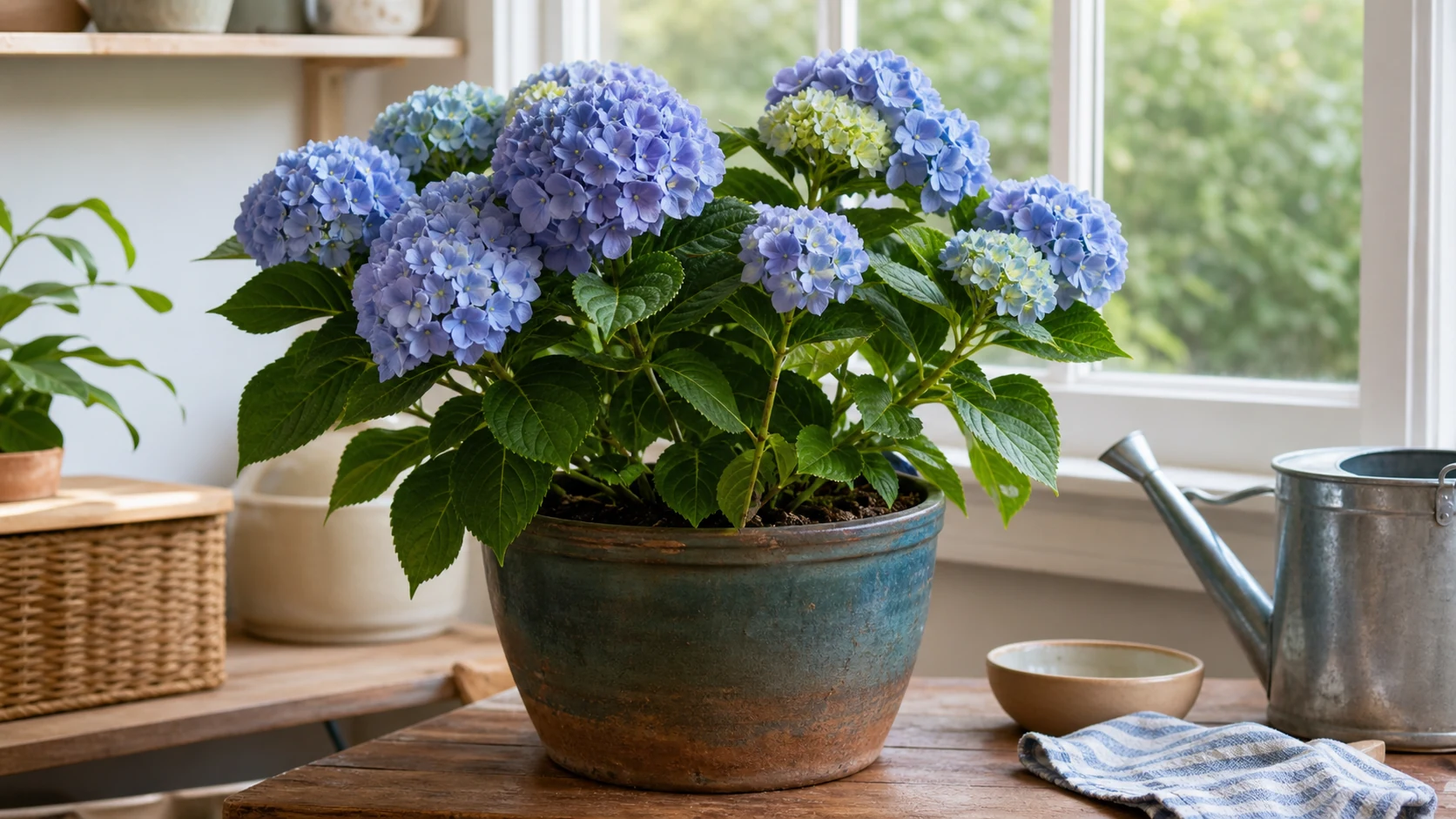
Bright morning light and a steady moisture-checking routine give potted hydrangeas a strong start.
Is a Hydrangea a Good Fit for You?
A hydrangea is a good fit if you can give it:
- Outdoor light: four to six hours of morning sun plus afternoon shade
- Indoor light, temporarily: the brightest indirect light you have, with a plan to move it outside or into a cool winter rest area later
- Routine: soil checks every day or two in warm weather, especially for pots
- Space: steady moisture and airflow, not a dark corner or a saucer of standing water
Choose something easier if you want a low-light, once-a-month plant. Hydrangeas are not hard, but they do ask you to pay attention during heat, bloom season, and winter prep.
What Kind of Hydrangea Do You Have?
A hydrangea is a flowering shrub grown for big, showy blooms. The exact type matters because watering is similar across hydrangeas, but pruning timing and cold tolerance can change.
There are several varieties you might encounter: bigleaf hydrangeas (the classic blue and pink ones), panicle hydrangeas (cone-shaped flowers, very cold-hardy), smooth hydrangeas like ‘Annabelle’ (those enormous white pom-poms), and oakleaf hydrangeas (beautiful fall color as a bonus). If you do not know which one you have, keep pruning light until you can identify it.
Identification Snapshot
- Fastest tell: mophead or lacecap flowers usually point to bigleaf hydrangea, while cone-shaped blooms usually mean panicle hydrangea.
- Light clue: leaf scorch on a bigleaf hydrangea often means too much afternoon sun, while panicle types usually handle more sun once established.
- Pruning clue: if you are not sure whether it blooms on old wood or new wood, do not hard-prune until you know the type.
- Container clue: florist gift hydrangeas dry faster and stress faster than shrubs planted in the ground.
Lookalikes and Confused-With Cases
| Plant or situation | What people assume | What actually matters |
|---|---|---|
| Bigleaf hydrangea in a hot yard | “Hydrangeas love full sun” | Many bigleaf types want morning light and protection from harsh afternoon heat |
| Panicle hydrangea | Same pruning rule as blue mopheads | Panicle types bloom on new wood, so late-winter pruning is usually safe |
| Florist hydrangea in a gift pot | A permanent low-light houseplant | It is usually a temporary indoor bloomer that does better outdoors or in a cool winter rest |
| Oakleaf hydrangea | Another pink-or-blue hydrangea | Oakleaf types are grown more for structure, texture, and fall color, and pruning timing still matters |
What Most Care Guides Miss
Most guides about hydrangea describe the ideal care routine. Real homes are messier: light changes by season, pots dry at different speeds, and the same symptom can mean different things depending on where it appears.
Before changing care, check the plant in this order:
- Light: is the plant growing toward the window, fading, or scorching?
- Root zone: is the pot drying predictably, or staying wet in the middle?
- Leaf pattern: did the oldest leaves, newest leaves, tips, or stems change first?
- Recent change: new pot, new location, fertilizer, cold draft, heat vent, or pest exposure.
This keeps you from fixing the wrong problem. One clear adjustment is usually safer than a full care reset.
What Plant Owners Get Stuck On
Recent plant-community questions tend to cluster around the same three pain points:
- A new or newly planted hydrangea wilts fast: owners often cannot tell whether they are looking at afternoon heat stress, transplant shock, or genuinely dry soil.
- A gift hydrangea starts collapsing indoors: the plant may need a cooler, brighter setup and steadier moisture, not a giant repot or constant watering.
- The shrub grows leaves but will not bloom: the usual culprits are spring pruning on an old-wood type or a late frost that damaged formed buds.
That is why this guide starts with type, soil, and timing instead of jumping straight to fertilizer or color changes.
Care Cards
| Care area | What to do | Early warning sign |
|---|---|---|
| Light | Aim for morning sun and afternoon shade for bigleaf types | Leaves scorch, curl, or wilt fast in late-day heat |
| Water | Keep soil evenly moist, not swampy, and check the top 2 inches first | Dry soil with morning wilt means underwatering; yellow lower leaves in wet soil means back off |
| Pruning | Prune only once you know whether the plant blooms on old wood or new wood | Healthy shrub, no flowers after a hard cut |
| Soil | Use rich, well-draining soil with compost or a quality moisture-retentive potting mix | Pot stays soggy for days or roots sit in standing water |
| Containers | Watch potted and newly planted hydrangeas more closely during heat | Drooping by midday, then struggling again the next morning |
Watering Hydrangeas: The Most Important Skill
Hydrangeas are thirsty plants, but thirsty does not mean waterlogged. The aim is soil that stays lightly moist, not soggy.
The most common mistake is inconsistent watering. A hydrangea that dries out completely between drinks may collapse, leaves and all. Then you overwater to compensate, and the roots start to suffer. The goal is steady moisture.
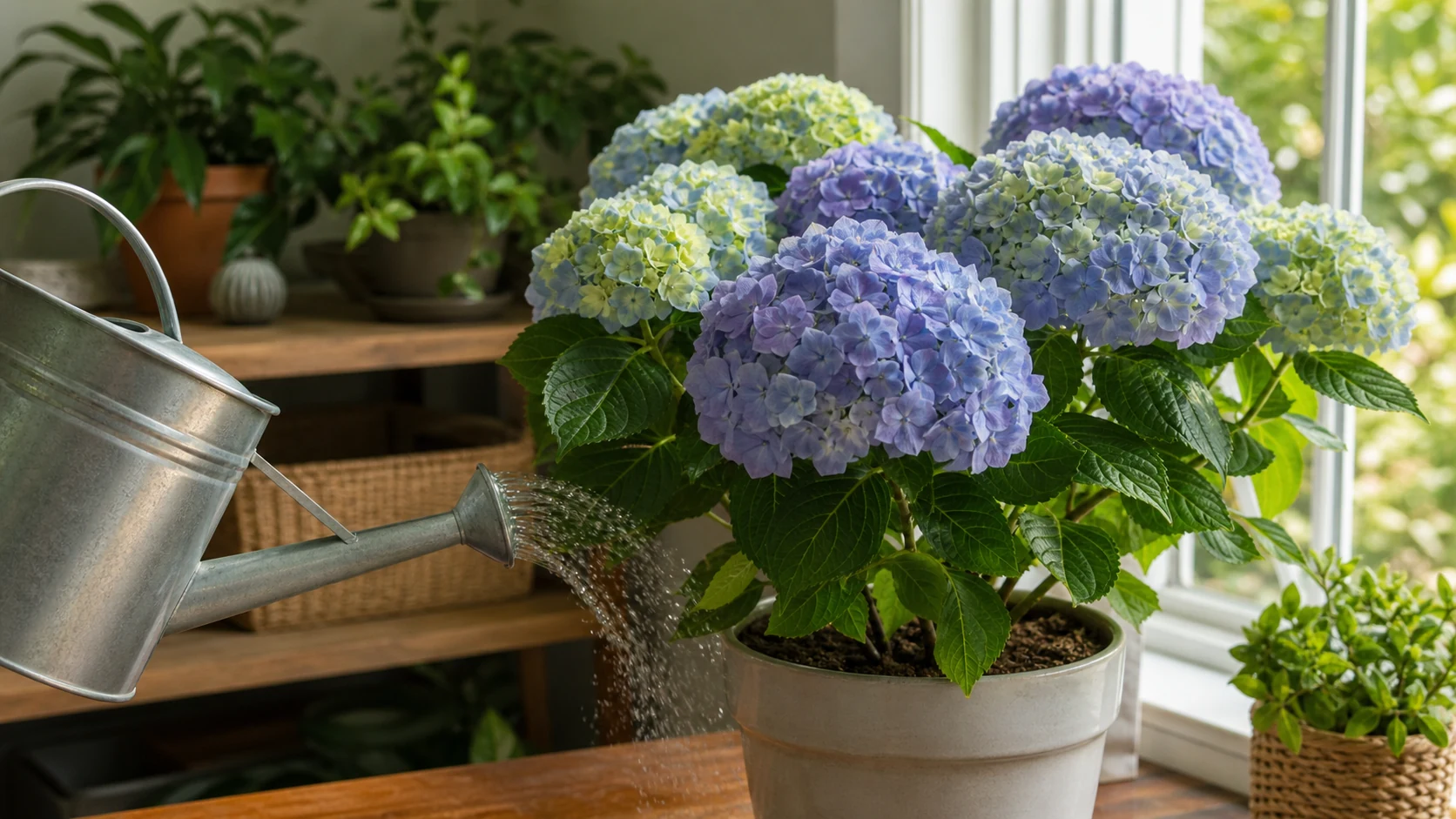
Water at the soil level to keep a hydrangea evenly moist without leaving its roots waterlogged.
How Often to Water
- Outdoor hydrangeas in garden beds: water deeply one to three times per week during warm months, depending on heat and rain. Penn State Extension recommends at least 1 inch of water per week for hydrangeas, and during heat waves above 90°F, that need increases significantly.
- Potted hydrangeas outdoors: check daily during hot weather. Pots dry faster than garden beds, especially in sun and wind.
- Potted hydrangeas indoors: check every one to two days while the plant is in active bloom. In a bright warm room, that may mean watering every two to four days; in a cooler room, less often.
Use the soil test instead of watering by the calendar. Stick your finger into the soil up to the second knuckle. If it feels dry at that depth, water until moisture reaches the root zone and excess water drains out. If it still feels damp, wait another day.
Signs You Are Overwatering
You are probably overdoing it if the soil stays wet for several days, lower leaves turn yellow, stems feel soft near the base, the pot smells sour, or the plant wilts even though the soil is damp. Empty the saucer, pause watering, make sure the pot has drainage holes, and let the top 2 inches dry before watering again.
Signs You Are Underwatering
You are probably waiting too long if the leaves curl inward, edges turn dry and crispy, the soil pulls away from the sides of the pot, or morning wilting does not recover after a cool night. Water deeply, then check again the next day instead of giving repeated tiny splashes.
Wilting Does Not Always Mean Thirst
Worth knowing: hydrangeas sometimes wilt in the afternoon heat even when the soil is moist. The plant is simply losing water faster than the roots can absorb it. If you see wilting in the late afternoon, check the soil before reaching for the hose. If the soil is still damp, leave it alone and check again in the morning. It will likely have perked back up overnight.
If the wilting persists into the morning and the soil is dry, then yes: water it deeply and thoroughly.
Soil and pH: The Secret Behind Blue and Pink Flowers
This is where hydrangea care gets genuinely interesting. For bigleaf hydrangeas, the color of the flowers is not fixed. It changes based on the pH of the soil and how much aluminum the plant can absorb.
NC State Extension explains the mechanism well: in acidic soil below pH 5.5, aluminum becomes available to the roots, which drives blue pigment production. In alkaline soil above pH 6.5, aluminum is locked out, and the flowers push toward pink and red. Neutral soil lands somewhere in the middle, often producing purple tones or a mix of both.
To shift flowers toward blue, lower soil pH by adding sulfur or using an acidifying fertilizer (the kind marketed for blueberries works well). To encourage pink, add garden lime to raise the pH. Expect to wait a full growing season before seeing visible results. These changes are gradual, and they are easier to control in containers than in the ground.
White varieties like ‘Annabelle’ do not contain the pigments that respond to pH, so no matter what you do to the soil, those flowers will stay white.
Whatever color you are going for, all hydrangeas prefer rich, well-draining soil with plenty of organic matter. A mix of garden soil and compost works well for in-ground planting. For containers, use a quality potting mix that holds moisture without becoming waterlogged, and choose a setup that matches how fast your space dries out. If you are deciding between breathable clay and more moisture-retentive options, our guides to terracotta pots and self-watering pots can help.
Light: Where Hydrangeas Do Best
Most hydrangeas prefer morning sun and afternoon shade. Direct afternoon sun in summer can scorch the leaves and stress the plant into wilting faster than you can keep up with watering.
A spot that gets four to six hours of morning light is usually ideal. Dappled light under tall trees can also work well, especially in warmer climates.
Indoors, hydrangeas need as much bright indirect light as you can give them. A south or east-facing window is a good starting point. If natural light is limited, a grow light can help bridge the gap: our guide to grow lights for indoor plants covers what to look for. That said, hydrangeas are not naturally indoor plants, so most potted hydrangeas sold in stores are temporary bloomers that do better moved outside once the weather allows.
Pruning: Timing Is Everything
Pruning a hydrangea at the wrong time of year is one of the quickest ways to accidentally remove all the following season’s blooms. Different varieties bloom on different wood, and that is the key.
Bigleaf and oakleaf hydrangeas bloom on old wood: growth that formed the previous year. According to the University of Georgia Extension, these varieties set their flower buds in late summer and autumn on the previous season’s stems. Pruning in fall or early spring cuts off buds that were already forming. Prune these right after they finish blooming in summer, no later.
Panicle and smooth hydrangeas bloom on new wood: the growth they put out in the current season. These can be pruned in late winter or early spring without any worry. In fact, cutting them back hard in early spring often encourages bigger blooms.
If you are not sure which variety you have, the safest approach is to deadhead spent flowers and do minimal shaping right after blooming. You can always learn more over time.
Pruning Safety Table by Type
| Hydrangea type | Blooms on | Safe pruning window | What not to cut | Biggest no-bloom risk |
|---|---|---|---|---|
| Bigleaf | Old wood | Right after summer bloom | Healthy stems with formed buds heading into fall | Cutting in fall, winter, or spring |
| Mountain | Old wood | Right after bloom | Budded stems that overwinter | Treating it like a panicle hydrangea |
| Oakleaf | Old wood | Right after bloom, lightly | Older stems carrying next season’s buds | Hard pruning before spring growth |
| Panicle | New wood | Late winter to early spring | Do not strip it down in active summer growth | Waiting until buds are already pushing hard |
| Smooth | New wood | Late winter to early spring | Weak new shoots after growth starts | Skipping structure cuts, then overcorrecting late |
| Climbing | Mostly old wood | Right after flowering, only as needed | Main framework stems | Heavy cleanup cuts before it flowers |
If you do not know the type yet, treat the plant like an old-wood bloomer until proven otherwise. That cautious rule protects the highest number of flower buds.
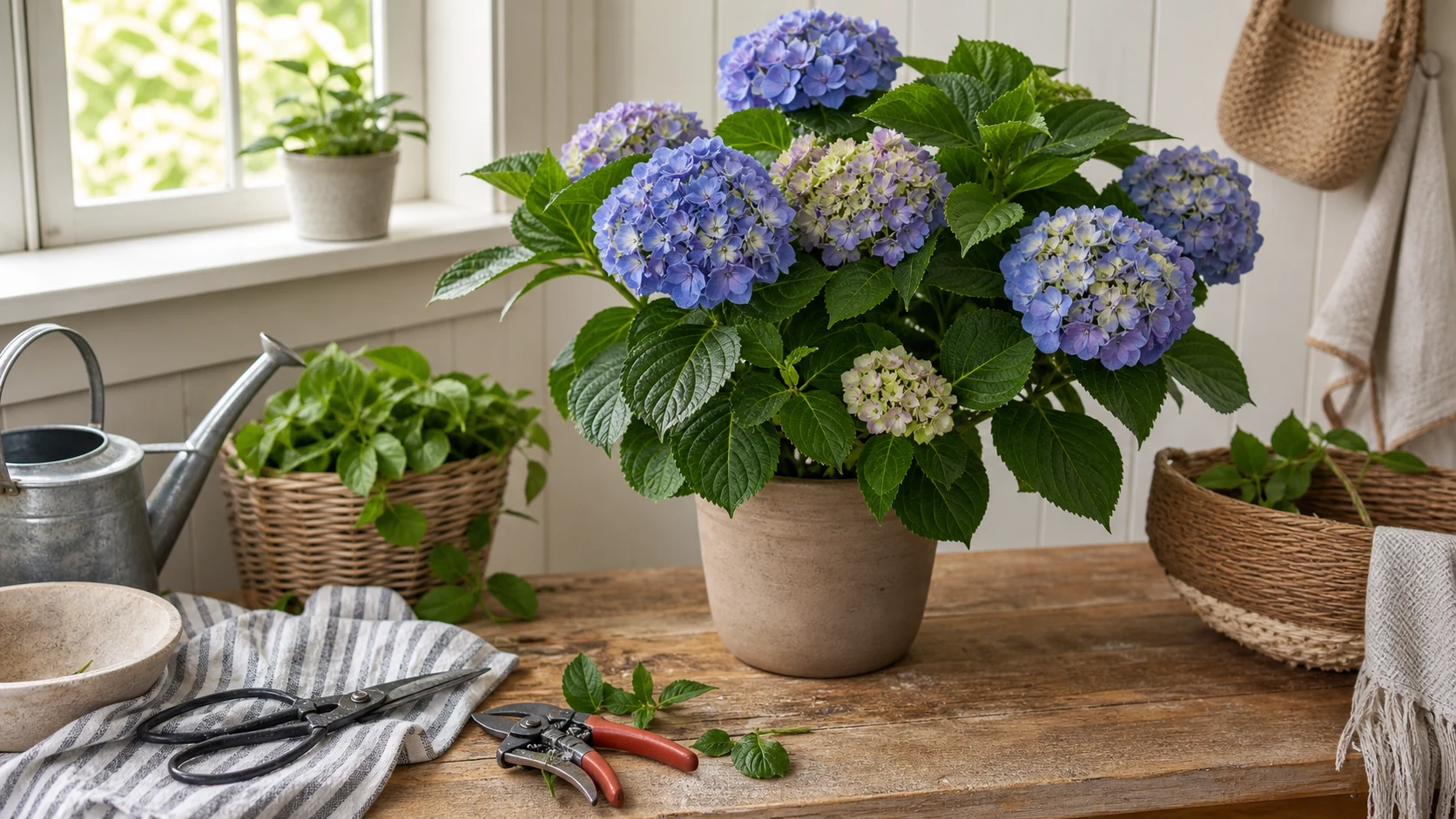
Identify the hydrangea type before choosing a pruning tool or removing healthy stems.
Common Problems
When hydrangea leaves change fast, use the soil and light as your first clues. Most leaf problems are not mysterious; they usually point to water stress, harsh sun, poor drainage, or a pest issue.
Curling Leaves
Leaves that curl inward usually mean the plant is losing water faster than it can replace it. Check the soil first. If it is dry 2 inches down, water deeply and move potted plants out of afternoon sun. If the soil is damp and leaves still curl, look for heat stress, low humidity indoors, or pests hiding on the undersides of leaves.
Yellow Leaves
Yellow lower leaves often mean too much water or poor drainage. Let the top layer dry, check that the pot drains freely, and avoid letting the plant sit in a saucer of water. If you want the broader symptom checklist, our guide to why plant leaves turn yellow walks through the most common causes. Yellow leaves with green veins can point to alkaline soil or nutrient lockout, especially outdoors; a simple soil pH test is the next step before adding amendments.
Brown Tips or Crispy Edges
Brown tips usually come from dry soil, hot afternoon sun, or salt buildup from heavy fertilizing. Flush potted soil with plain water, stop fertilizing until the plant looks steady again, and shift the plant to morning sun with afternoon shade.
Brown Spots
Round brown or black spots can come from fungal leaf spot, especially when leaves stay wet overnight. Water the soil instead of the leaves, increase airflow, remove badly spotted leaves, and avoid crowding the plant against a wall or other pots.
If you are unsure, take one practical step today: check soil moisture, check drainage, and inspect the undersides of leaves before changing fertilizer or pruning.
Hydrangea Trouble Decision Tree
- Drooping in late afternoon, soil still damp: likely heat stress, not thirst. Check again the next morning before watering.
- Drooping in the morning, soil dry 2 inches down: water deeply now and review how fast the pot or bed is drying.
- Yellow lower leaves, heavy wet soil: reduce watering and check drainage before adding fertilizer.
- Pale new leaves with greener veins: test soil pH first, especially on bigleaf hydrangeas in alkaline conditions.
- No blooms after pruning: pause and identify whether you cut an old-wood bloomer at the wrong time.
Common Mistakes to Avoid
- Pruning an unidentified hydrangea in spring just because it looks leggy.
- Chasing blue or pink blooms before you fix drainage, light, and steady watering.
- Watering again during afternoon wilt without checking whether the root zone is already moist.
- Moving a florist hydrangea from store conditions straight into harsh sun or a much larger pot on day one.
Expert Note
Extension guidance lines up on the same practical point: identify the hydrangea type before you prune or try to solve bloom issues. University of Maryland guidance separates old-wood and new-wood pruning windows, while Virginia Tech and Clemson both note that flower color shifts depend on soil pH and aluminum availability, not just a generic “blue hydrangea fertilizer.”
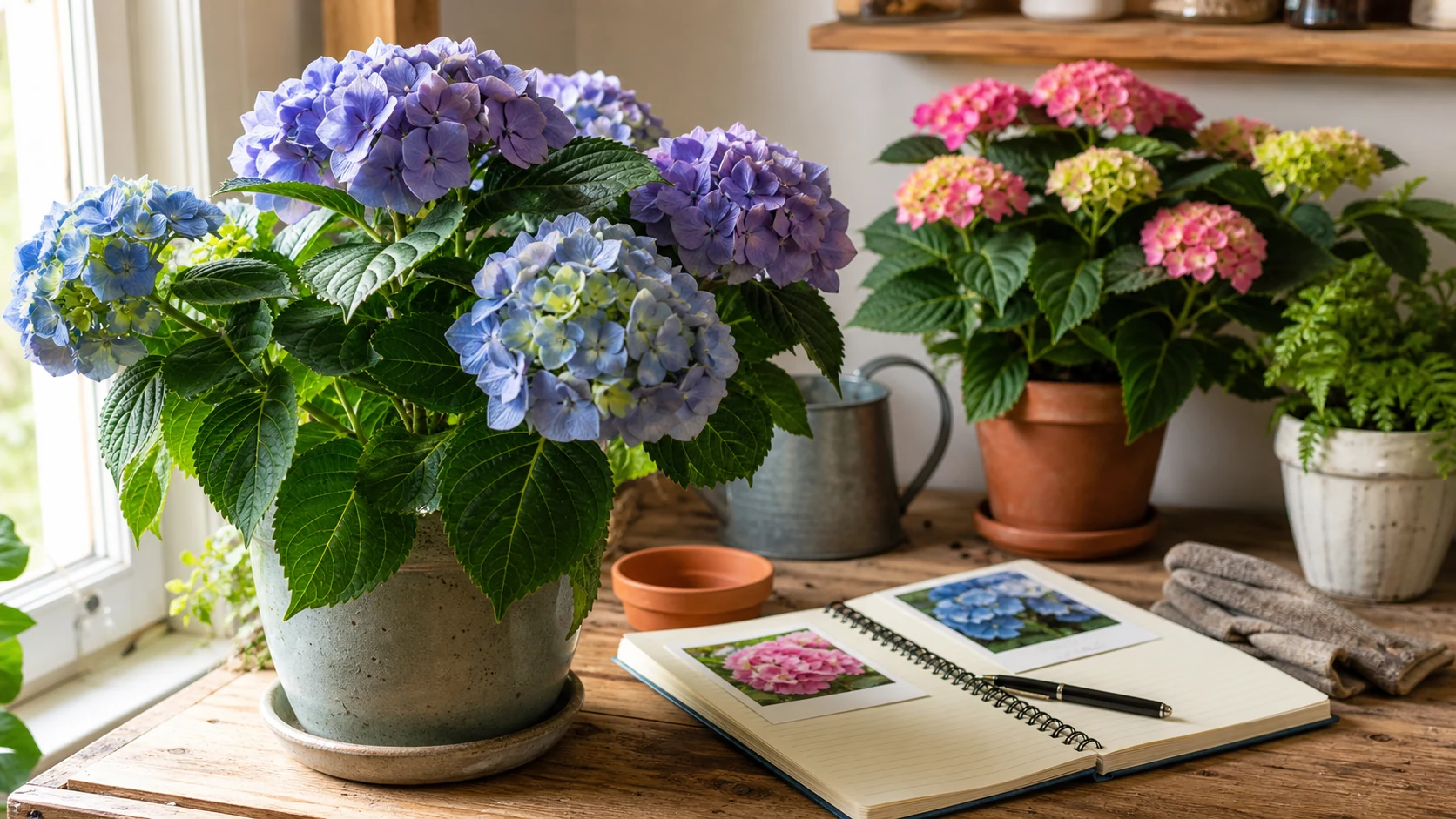
Compare hydrangea type and growing conditions before changing pruning or flower-color care.
Freshness Note
Reader pain patterns and source checks were refreshed on 2026-06-20. Plant-community threads were used only to surface repeated confusion around wilting after purchase, no-bloom pruning mistakes, and gift hydrangea rescue. Care claims were anchored to Oregon State, University of Maryland, Virginia Tech, and Clemson extension guidance.
Methodology Note
This guide combines plant-owner questions with directly checked horticulture sources. Community threads were treated as qualitative signal about where people get stuck. Pruning windows, bloom-wood guidance, and pH-related color claims were checked against university extension sources before being used here.
Fertilizing Hydrangeas
Feed hydrangeas in spring when new growth begins, and again in early summer. A balanced slow-release fertilizer works well for most varieties. If you are actively trying to shift flower color, choose a fertilizer matched to your goal: high-potassium acidifying formulas for blue, balanced or slightly alkaline for pink.
Avoid heavy feeding in late summer or autumn. Late fertilizing can push tender new growth that gets damaged by frost.
Seasonal Care Calendar
The biggest mistakes with hydrangeas usually happen when timing is off: pruning at the wrong moment, fertilizing too late, forgetting to mulch before the first frost. Here is what the plant actually needs, season by season.
If you only have a minute, use this as your action plan: today, check soil moisture and drainage; this week, confirm the plant gets morning light instead of hot afternoon sun; this season, prune only at the right time for your hydrangea type.
Spring (March to May)
This is when hydrangeas wake up. You will see new growth pushing from the base and along the stems, a satisfying moment after a bare winter.
- Resume regular watering as temperatures climb
- Apply a balanced slow-release fertilizer when you see the first real leaf growth
- Prune panicle and smooth hydrangeas now, before new growth gets too far along
- Hold off pruning bigleaf and oakleaf types: those flower buds are already there, just waiting
- Watch for late frosts. If a cold night is forecast after growth has started, cover bigleaf hydrangeas with a light cloth overnight
Summer (June to August)
Peak growing season. The plant is working hard and needs consistent water to keep up with it.
- Water deeply two to three times per week, more during heat waves
- Lay 2 to 3 inches of mulch around the base to hold moisture and keep roots cool
- Expect afternoon wilt on hot days even with adequate water. This is normal, not a crisis
- Bigleaf and oakleaf hydrangeas will bloom now: deadhead spent flowers as they fade
- Prune bigleaf and oakleaf varieties right after blooming, no later than mid-August
- A second round of fertilizer in early summer can help if growth looks sluggish
Autumn (September to November)
The plant is winding down and preparing for dormancy. Your job is mostly to stay out of the way.
- Stop fertilizing entirely by September. You do not want to push new growth before frost
- Reduce watering gradually as temperatures cool
- Do not prune bigleaf or oakleaf hydrangeas now: their buds for next year’s blooms are forming
- Add a fresh layer of mulch before the first hard frost to protect the roots
- For potted hydrangeas, decide now where they will overwinter
Winter (December to February)
Most hydrangeas rest. Give them the chance.
- Outdoor hydrangeas in the ground need very little from you
- In harsh climates, loosely wrap bigleaf hydrangeas with burlap to protect stems and buds from freeze damage
- Potted hydrangeas should overwinter somewhere cool but frost-free: a garage or unheated porch where temperatures stay between 35 and 45°F works well
- The plant will look bare and dormant during this time, and that is exactly right
- Mark panicle and smooth hydrangeas for a hard prune in late February, just before they start growing again
Growing Hydrangeas Indoors
Hydrangeas can be kept indoors temporarily, especially the compact potted varieties sold at garden centers in spring. To keep one alive and healthy inside, it needs bright indirect light, consistent moisture, and good air circulation.
Indoor hydrangeas tend to struggle in the long run because they naturally want a period of winter cold to rest and reset before blooming again. If you want to keep a potted hydrangea year to year, let it spend the winter in a cool but frost-free spot. A garage or unheated porch where temperatures stay between 35 and 45°F works well. It will look bare and a little rough during this time, and that is exactly right. In spring, bring it back into warmth and light and it should reward you with another round of blooms.
If you are building out a proper indoor plant space, our guide to grow lights for indoor plants is worth a read. Supplemental light makes a real difference for hydrangeas near dimmer windows during shorter winter days.
How to Revive a Wilting Hydrangea
If you come home to a dramatically collapsed hydrangea, do not panic.
First, check the soil. Dry and pulling away from the pot edges? Water deeply, set the pot in a shallow tray of water for twenty minutes, and move it somewhere out of direct sun. Most hydrangeas bounce back within a few hours. If you are feeding a stressed plant, keep it gentle and use the timing from our plant fertilizer guide rather than throwing extra fertilizer at the problem.
If the soil is already wet and the plant is still wilting, the problem is different. Soggy soil can cause root rot, which prevents the roots from absorbing water even when it is present. In this case, ease up on watering, check that drainage is working properly, and let the soil dry out before watering again.
For outdoor plants hit by unexpected heat, deep watering in the early morning and some temporary afternoon shade can make a significant difference.
Hydrangeas are dramatic, but they are also resilient. Give the plant what it needs and it can come back.
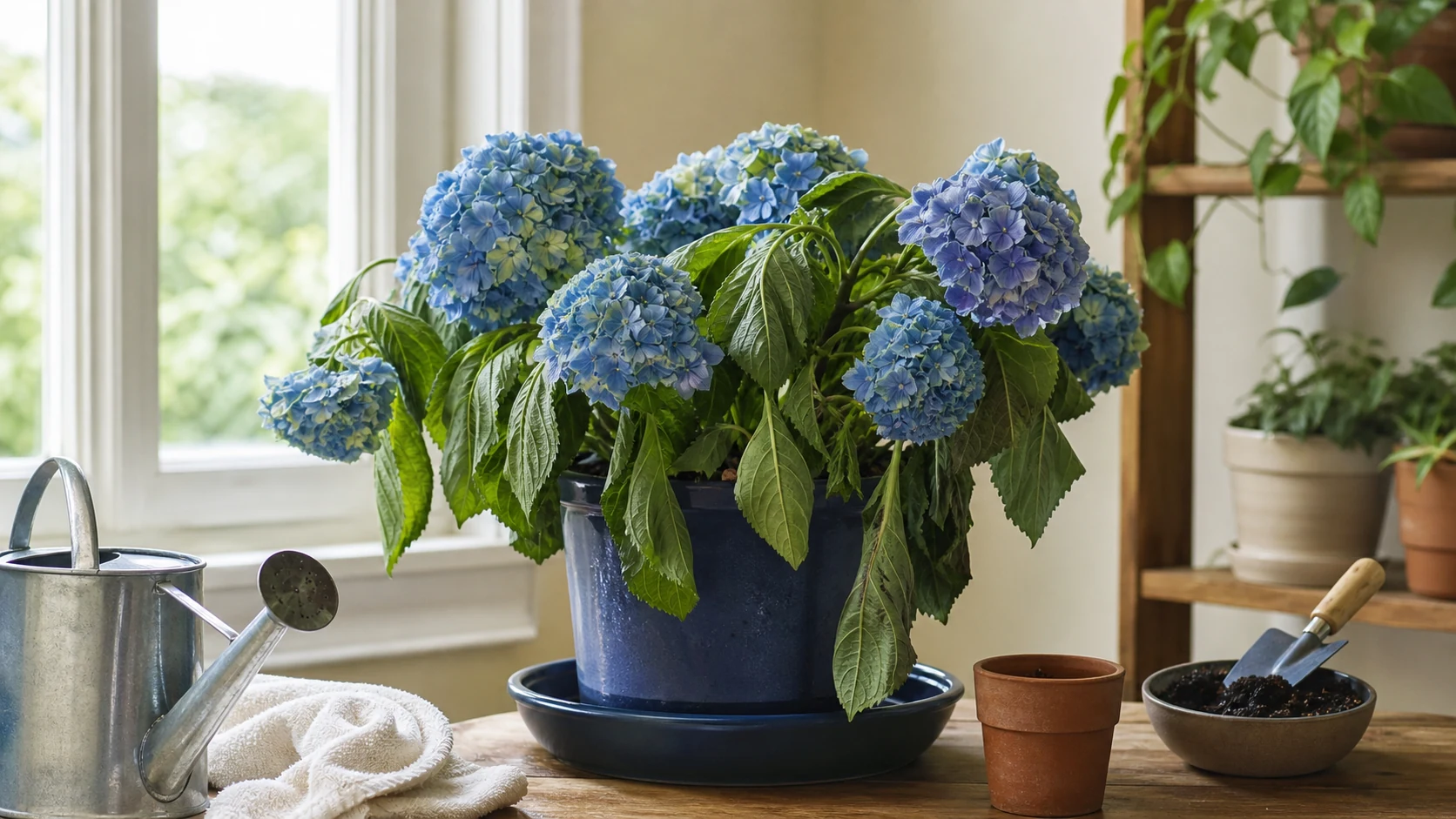
A shallow soak and bright indirect light can help a dry, wilted hydrangea recover.
Gift or Store Hydrangea Rescue Plan
If a recently bought hydrangea starts collapsing indoors, slow down before you repot it or feed it.
- Move it into the brightest indirect light you have, away from hot afternoon sun.
- Check whether the root ball is actually dry before watering again.
- Remove any decorative foil or cachepot that traps drainage water.
- Deadhead the worst spent blooms first, then wait a few days before making bigger changes.
- Only loosen roots or repot if the plant is badly rootbound or the nursery mix is staying soggy for too long.
That approach solves the most common gift-plant failures without piling transplant shock on top of water stress.
Real User FAQ
Why won’t my hydrangea bloom?
The most common reason is accidental pruning at the wrong time. If you have a bigleaf or oakleaf hydrangea and pruned it in autumn or spring, you likely removed the buds before they had a chance to open. Other culprits: too much shade (less than four hours of light), excessive nitrogen fertilizer pushing leafy growth at the expense of flowers, or a late frost killing off the buds in spring. Identify your variety first. It will point you toward the answer almost immediately.
How do I change my hydrangea color from pink to blue?
You need to lower the soil pH below 5.5 to make aluminum available to the roots. Add garden sulfur or use an acidifying fertilizer designed for acid-loving plants. The change is gradual: expect to wait a full growing season before seeing the full effect. Containers are easier to shift than in-ground plants, since you have more direct control over soil chemistry. If you are working with in-ground plants, test your soil pH first so you know how much adjustment is needed.
Are hydrangeas toxic to cats and dogs?
Yes. Hydrangeas contain cyanogenic glycosides, which can cause vomiting, diarrhea, and lethargy in cats and dogs. The ASPCA lists hydrangeas as toxic to cats, dogs, and horses. If you have pets that tend to chew on plants, keep hydrangeas out of reach indoors, or consider a different plant for shared spaces. Our guide to cat-safe indoor plants has plenty of pet-friendly alternatives if you need them, and if you want something beginner-friendly indoors, start with easy houseplants for beginners.
When is the best time to prune hydrangeas?
It depends on the variety. Bigleaf and oakleaf hydrangeas: prune right after they finish blooming in summer, never in autumn or spring. Panicle and smooth hydrangeas: cut back hard in late winter or early spring for the best blooms. If you are not sure which type you have, do light shaping immediately after flowering and leave it there. You will not lose any blooms that way, and you will have a full season to figure out what you are working with.
Why are my hydrangea flowers turning green?
Usually nothing to worry about. Many bigleaf hydrangeas naturally fade to a soft green as the blooms age. It is part of the flower’s lifecycle, and some gardeners love the antique look. If flowers are turning green before they fully open, it may be a sign of low light or unusually cool temperatures slowing the coloring process. Move the plant somewhere with better morning light and see if the next flush looks different.
Why are my hydrangea leaves turning yellow?
Overwatering and poor drainage are the most common causes. If lower leaves are yellowing and the soil stays consistently damp, ease up on watering and make sure the pot or bed drains freely. Iron chlorosis, where leaf tissue yellows while the veins stay green, can also appear in alkaline soil that locks out iron. A basic soil test will point you in the right direction.
Can hydrangeas survive in full shade?
They can tolerate shade better than many flowering shrubs, but full shade usually means noticeably fewer blooms. Oakleaf hydrangeas are the most shade-tolerant of the common varieties and can perform well with as little as three hours of indirect light. Bigleaf and panicle hydrangeas really do need at least a few hours of morning sun to flower well. If your outdoor space is heavily shaded, oakleaf is the one to reach for.
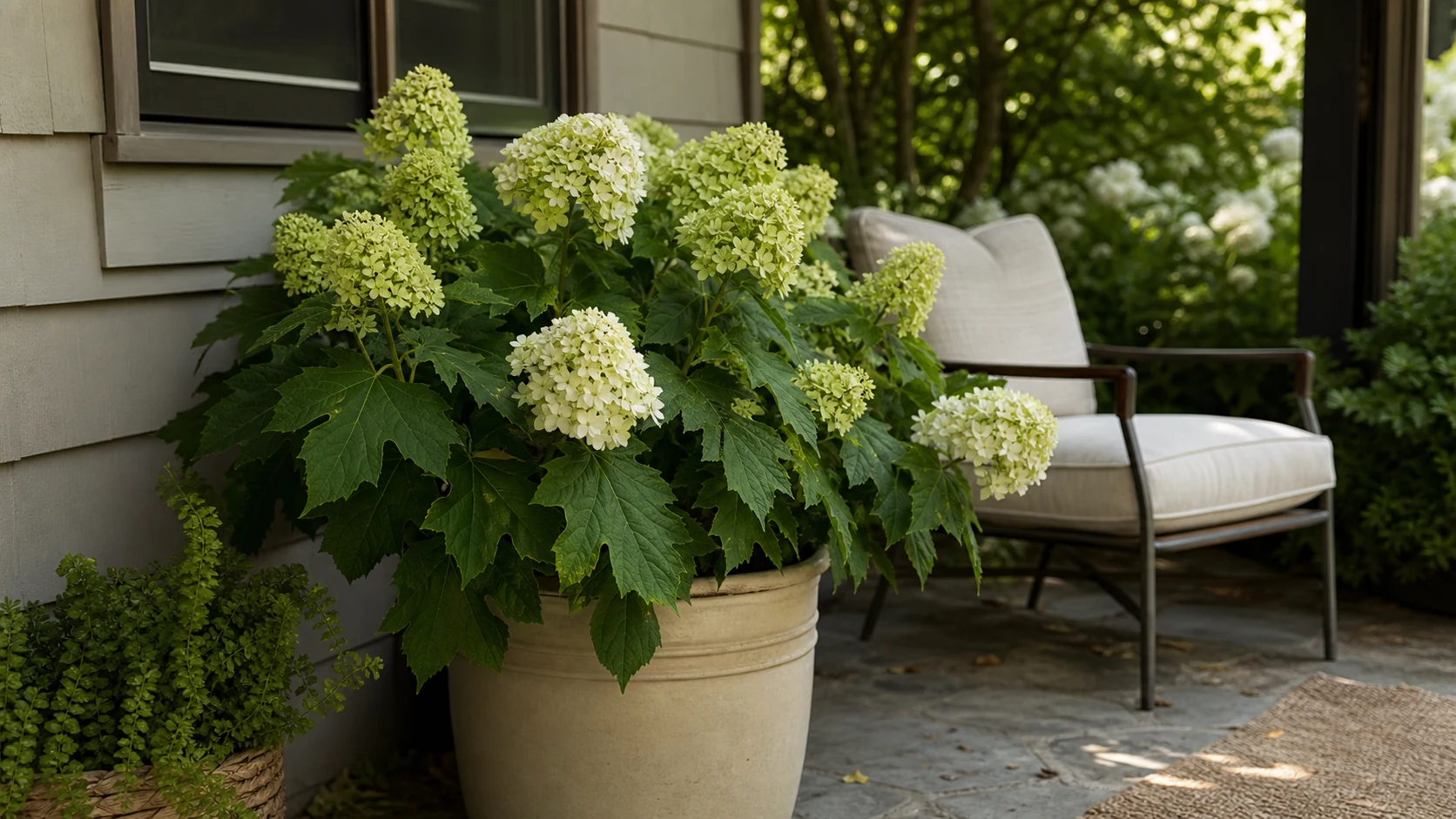
Oakleaf hydrangeas can flower in a shaded outdoor space with a few hours of indirect light.
Download KnowYourPlant for personalized plant care reminders and keep your hydrangea on track through every season.