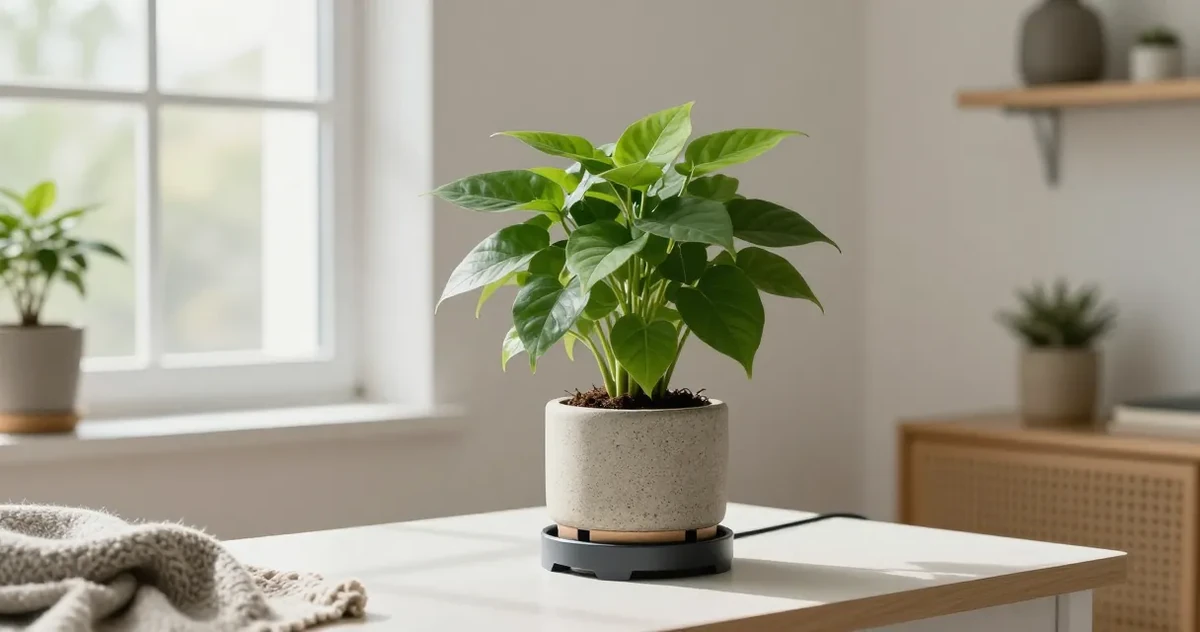
A self-watering pot, wick system setup, and drip stakes arranged next to common indoor houseplants

Plant Watering Systems: What Works for Indoor Plants?

Here’s a scenario that comes up more than you’d think: someone buys a self-watering pot before a trip, comes home to a thriving pothos, and thinks they’ve figured it out. Then they try the same setup with their snake plant, and a month later the base has gone soft and the lower leaves are yellowing. Same system. Completely different result. That’s the real problem with most watering system advice. It focuses on the gadget when the actual decision is about the plant. A self-watering pot that keeps soil consistently moist is perfect for a pothos and genuinely harmful for a snake plant. A wick that works great for a small peace lily might flood a larger pot of the same plant if you switch containers before a trip. ...

 · 20 min · 
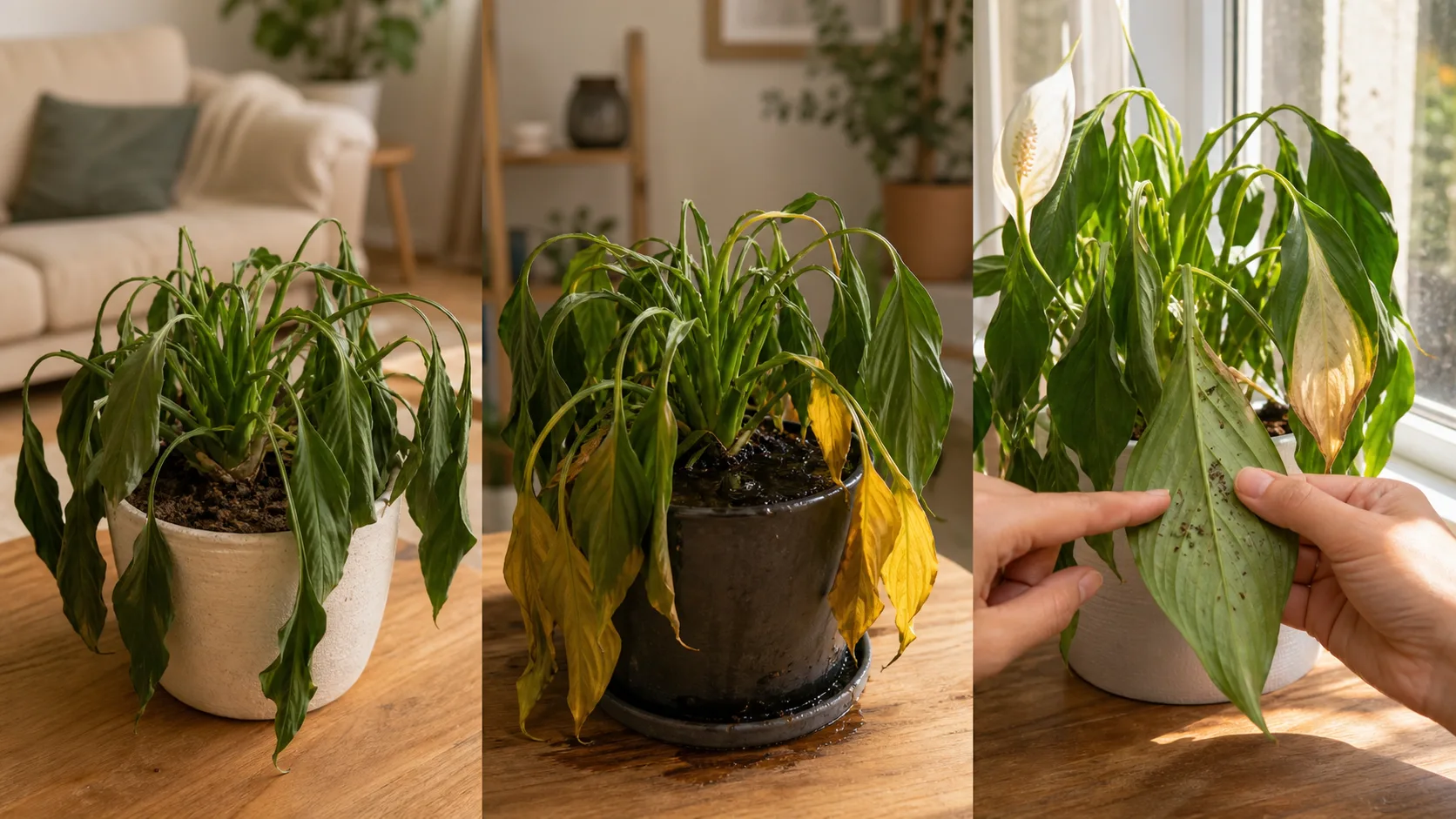
Drooping peace lily leaves being checked at the soil and base

Peace Lily Drooping: Thirst, Root Stress, or Shock?

Peace Lily Drooping: Thirst, Root Stress, or Shock? Do not water yet. In under ten minutes, you can separate dry-soil thirst from wet-root stress and choose one safe next step without guessing. Use the Four-S Check: Soil, Setup, Shift, Signs. Soil decides water or wait. Setup finds trapped water. Shift connects the droop to a recent change. Signs tell you when simple monitoring is no longer enough. What the check finds Safe action Stop waiting when Skewer reaches the middle of the pot and comes out dry; pot feels light Water: soak evenly, drain, and empty runoff No lift begins within several hours; reassess by the next day Skewer comes out damp or muddy; pot feels heavy Wait and drain: do not water; recheck in 48 hours Yellowing spreads, soil smells sour, the base softens, or decline speeds up Droop follows a move, repot, strong sun, cold window, or vent Stabilize: keep one suitable location while you monitor Damage spreads beyond the leaves exposed to the change Webbing, sticky residue, insects, or a soft base Act: isolate a pest case or inspect roots Wet soil and rapid decline occur together; inspect the same day If you inherited the plant or are unsure it is a peace lily, identify it first. A correct identity gives you a baseline for light, moisture, and expected leaf form before you diagnose the droop. ...
 · 13 min · 
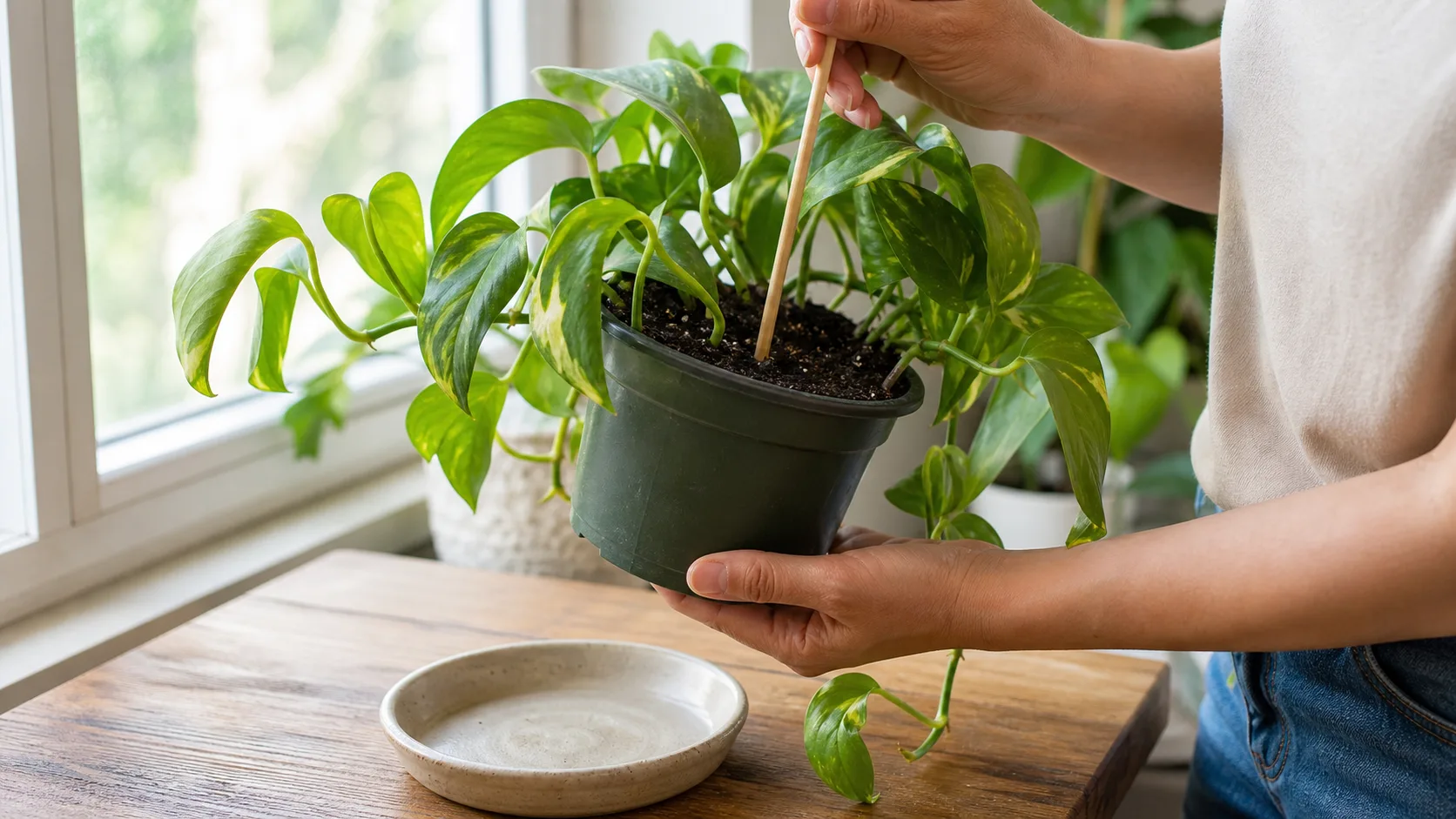
Curled pothos leaves being checked beside the soil, window, and drainage saucer

Pothos Leaves Curling: Dry Soil, Heat, or Root Stress?

Seeing pothos leaves curling can trigger an anxious reach for the watering can. Pause for ten minutes first. The fastest answer usually falls into one of three paths: The root ball is dry and the pot feels unusually light. The pot is damp and heavy, but stressed roots cannot use that moisture properly. Only window-facing leaves or tender new growth are curling after local heat or stronger light. The confusing part is that dry roots and wet, unhealthy roots can both produce leaves that look thirsty. Leaf curl alone cannot tell you whether to water. Soil moisture at depth, pot weight, the location of the damage, and recent changes give you much better information. ...

 · 17 min · 
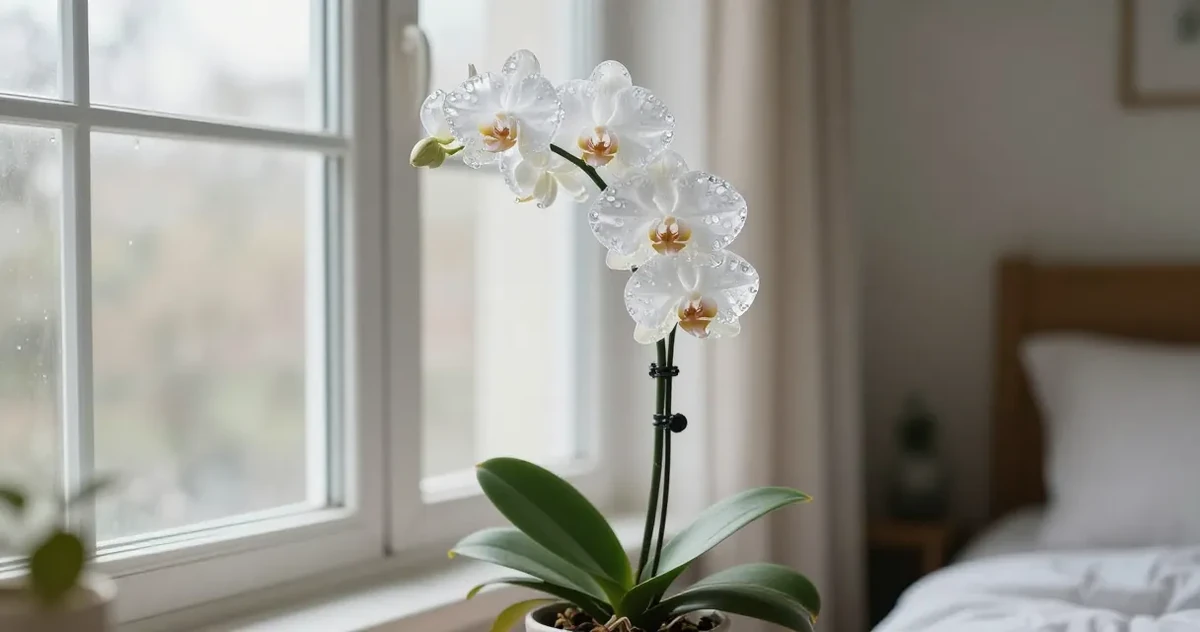
Orchid in a clear pot showing roots next to ice cubes

Orchid Ice Cube Watering: Helpful Shortcut or Bad Idea?

You probably saw it on the care tag that came with your orchid: three ice cubes, once a week. It sounds almost too tidy. And if you have spent any time in orchid forums since then, you have discovered it is also controversial enough to start arguments. “Ice cubes are safe.” “Ice cubes damage roots.” Both camps sound certain. Both are talking past each other. The reason for that divide is not that one group is right and the other is wrong. It is that the ice cube method has a specific scope, and that scope almost never gets explained clearly. Whether it helps or harms depends less on water temperature than on the orchid genus, the potting medium, the condition of the roots, and whether water is actually reaching the right places. ...

 · 19 min · 
Healthy succulents in terracotta pots on a bright windowsill

How to Care for Succulents Indoors: The No-Kill Guide

The most common indoor succulent story is painfully predictable: you put it near a window, watered it the same way you water everything else, and watched it slowly go soft and die anyway. If that has happened to you, the problem was probably not neglect. It was generic advice applied to conditions that do not behave like a desert. This guide is built for the apartment version of succulent care, where light is weaker, nursery soil stays wet too long, and decorative pots quietly trap moisture. The goal is simple: help you tell the difference between a thirsty plant, a rotting plant, a light-starved plant, and a plant that just needs you to stop fussing with it. ...

 · 15 min · 
Hand checking soil moisture of an indoor plant in a terracotta pot

How Often to Water Indoor Plants: The Complete Guide

Figuring out how often to water indoor plants is the question that trips up almost every plant owner at some point. The honest answer: there is no single schedule that works. Not once a week. Not twice a week. Not the tag that came with the pot. Watering frequency depends on your plant, your pot, your room, and your season. What this guide gives you instead is a way to read all of those signals together so you stop guessing and start trusting your own judgment. ...

 · 16 min · 
Overwatered houseplant with yellow drooping leaves next to a pot with soggy soil

Overwatered Plant: Signs, Symptoms and How to Save It

Your plant is drooping. The leaves are turning yellow. You water it, nothing improves, so you water it again. It gets worse. This is how overwatering works. Not in a single dramatic event, but in a slow loop where the visible symptoms make you feel like the plant needs more water, even when the real problem is that it has had too much. Overwatered plant symptoms are some of the most misread signals in houseplant care, partly because they overlap with underwatering, and partly because the damage happens underground – where you can’t see it until it’s already well underway. ...

 · 19 min · 
Pothos plant in a terracotta pot being checked for soil moisture with a finger

How Often to Water Pothos: The Complete Watering Guide

If you searched “how often to water pothos” hoping for a number, here it is: it depends on your pot, your soil, and your season more than it depends on the plant. A pothos in a well-draining terracotta pot under bright indirect light may need water every five days in summer. The same variety in dense nursery peat inside a glazed cachepot in a dim corner might go three weeks. Same plant, completely different schedules. ...

 · 17 min · 
Self-Watering Pots Guide for Plants

Self-Watering Pots Guide for Plants

If you’ve ever come home to a wilted plant after a few days away, you’ve probably wondered whether self watering pots are actually worth it. The short answer is yes, but with some caveats worth knowing before you buy. A self watering pot is a planter with a built-in water reservoir at the bottom, separated from the soil by a barrier. The plant draws moisture upward through a wick or soil column only when it needs it. Water on demand, from below, without you hovering with a watering can every two days. ...

 · 21 min · 
Indoor Plant Care Guide for Beginners

Indoor Plant Care Guide for Beginners

You brought a plant home, found it the perfect spot on the windowsill, and watered it faithfully every few days. And then, slowly, something started going wrong. Maybe the leaves turned yellow. Maybe they drooped. Maybe the plant just quietly stopped looking like itself. If that sounds familiar, you are not doing it wrong. You are just missing a few pieces of the picture, and that is exactly what indoor plant care tips are for. ...

 · 21 min ·