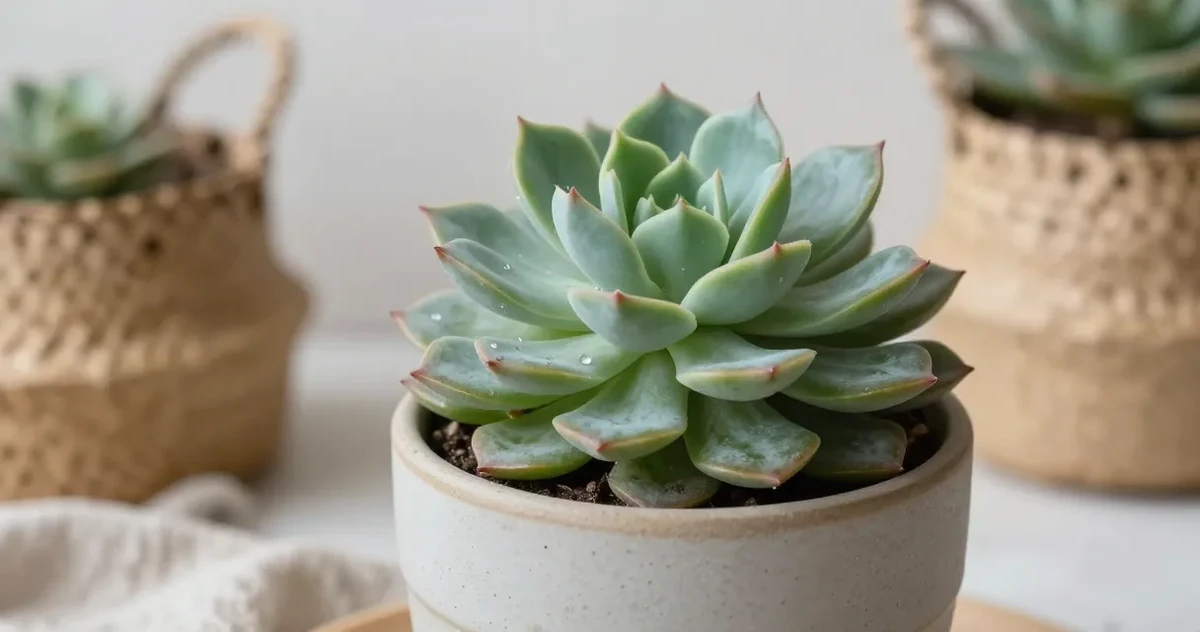
The most common indoor succulent story is painfully predictable: you put it near a window, watered it the same way you water everything else, and watched it slowly go soft and die anyway. If that has happened to you, the problem was probably not neglect. It was generic advice applied to conditions that do not behave like a desert.
This guide is built for the apartment version of succulent care, where light is weaker, nursery soil stays wet too long, and decorative pots quietly trap moisture. The goal is simple: help you tell the difference between a thirsty plant, a rotting plant, a light-starved plant, and a plant that just needs you to stop fussing with it.
By KnowYourPlant editorial team. Updated June 18, 2026 using source checks against Iowa State University Extension, South Dakota State University Extension, West Virginia University Extension, and University of Minnesota Extension, plus public plant-owner troubleshooting threads used only as qualitative signal.
Freshness note: The care guidance below was checked against university extension sources reviewed on 2026-05-18. The recurring owner-confusion patterns come from public Gardening Stack Exchange threads and are included as qualitative signal, not prevalence data.
Identification Snapshot
Even though “succulent” is a huge category, most indoor care decisions get easier when you sort your plant into a few practical buckets first.
| Quick check | What it usually means for care |
|---|---|
| Compact rosette with thick leaves, like many Echeveria | Usually needs the strongest window or a grow light indoors |
| Strappy or stacked leaves with obvious water storage | Often forgiving on watering, but still needs sharp drainage |
| Haworthia or Gasteria type with chunkier leaves and lower, denser shape | Better fit for average indoor light than many sun-hungry rosettes |
| Mixed gift planter with several succulent types in one pot | Higher risk setup because drying speed and water needs rarely match |
| Plant sold in peat-heavy nursery soil or a pot without drainage | Rescue setup, not a stable long-term setup |
The practical takeaway is that indoor succulent care starts with species fit plus setup fit, not just a watering reminder.
If your plant has thick oval leaves and a woody trunk, use the dedicated jade plant care guide rather than applying the same schedule used for small rosette succulents.
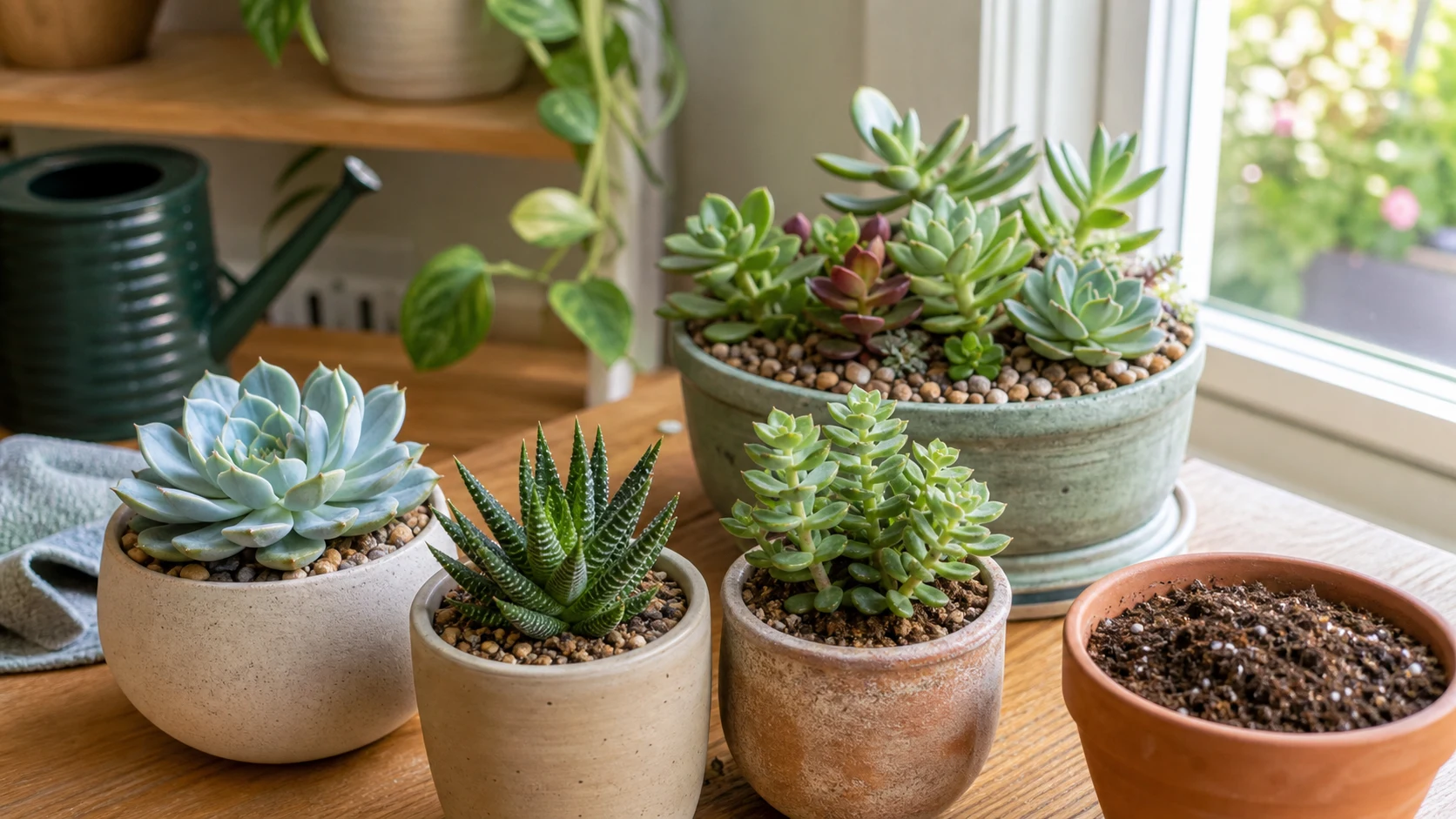
Rosette, stacked, and shade-tolerant succulents need different indoor light and drying strategies.
What Most Care Guides Miss
Most succulent guides repeat the same two-line summary: bright light, let it dry out between waterings. That is technically correct, but it leaves out the part that trips nearly everyone up indoors.
The common misdiagnosis is this: when a succulent starts to wrinkle, shrivel, or look sad, most owners assume it is thirsty and water it. Sometimes that is right. But in a low-light room, in nursery soil that holds moisture for days longer than it should, or in a decorative pot without a drainage hole, that extra water goes straight to the roots and sits there. What looked like thirst was actually the beginning of rot, and watering made it worse.
West Virginia University Extension puts it plainly: succulents are most commonly killed by overwatering, not underwatering. The fix is not a smarter watering schedule. It is learning to read your specific conditions before you act.
The practical first check before you do anything: pick up the pot. If it still feels heavy, the soil is holding moisture and your plant does not need water yet, no matter what the leaves look like. A dry pot feels noticeably lighter. That one test is more reliable than any weekly calendar, and it is the thing most care guides skip entirely.
What Real Indoor Succulent Owners Keep Getting Wrong
Public rescue threads keep circling around the same indoor mistakes:
- Wrinkling gets treated like thirst by default, even when the potting mix is still wet and the roots are already stressed.
- Office or low-light rooms get treated as fine for any succulent, even though many rosette types slowly stretch and decline there.
- Plants get moved into stronger sun too fast, then the scorch gets misread as a watering problem.
- Mixed planters and self-watering containers hide incompatible moisture needs, so one plant’s “just right” is another plant’s slow rot.
That is why the rest of this guide is organized around diagnosis and decision rules, not a generic weekly schedule.
Light: The Part That Changes Everything Indoors
Succulents are sun-hungry by nature. South Dakota State University Extension notes that most succulents need at least six to eight hours of light daily. Outdoors, many species get exactly that. Indoors, it is almost impossible to replicate. Even a south-facing window in full summer delivers less light than a shaded patio.
This matters because light controls drying speed. A succulent in a bright sunny window may dry out in one to two weeks and stay healthy. The same plant in a dim corner may take a month to dry out, which means any water you add sits in the root zone far longer than the plant can handle.
Decision rule: if your succulent is more than a few feet from a window, or your window faces north or east with no direct sun, treat drying time as slow. Water less often than instinct tells you, and always confirm with pot weight before adding more water.
Expert note: The higher-trust sources are unusually consistent here. Iowa State, South Dakota State, West Virginia University, and University of Minnesota all converge on the same baseline: strong light, fast drainage, a thorough soak, and complete dry-down before the next watering. Where indoor growers go wrong is not knowing the rule. It is assuming their room behaves brighter and drier than it really does.
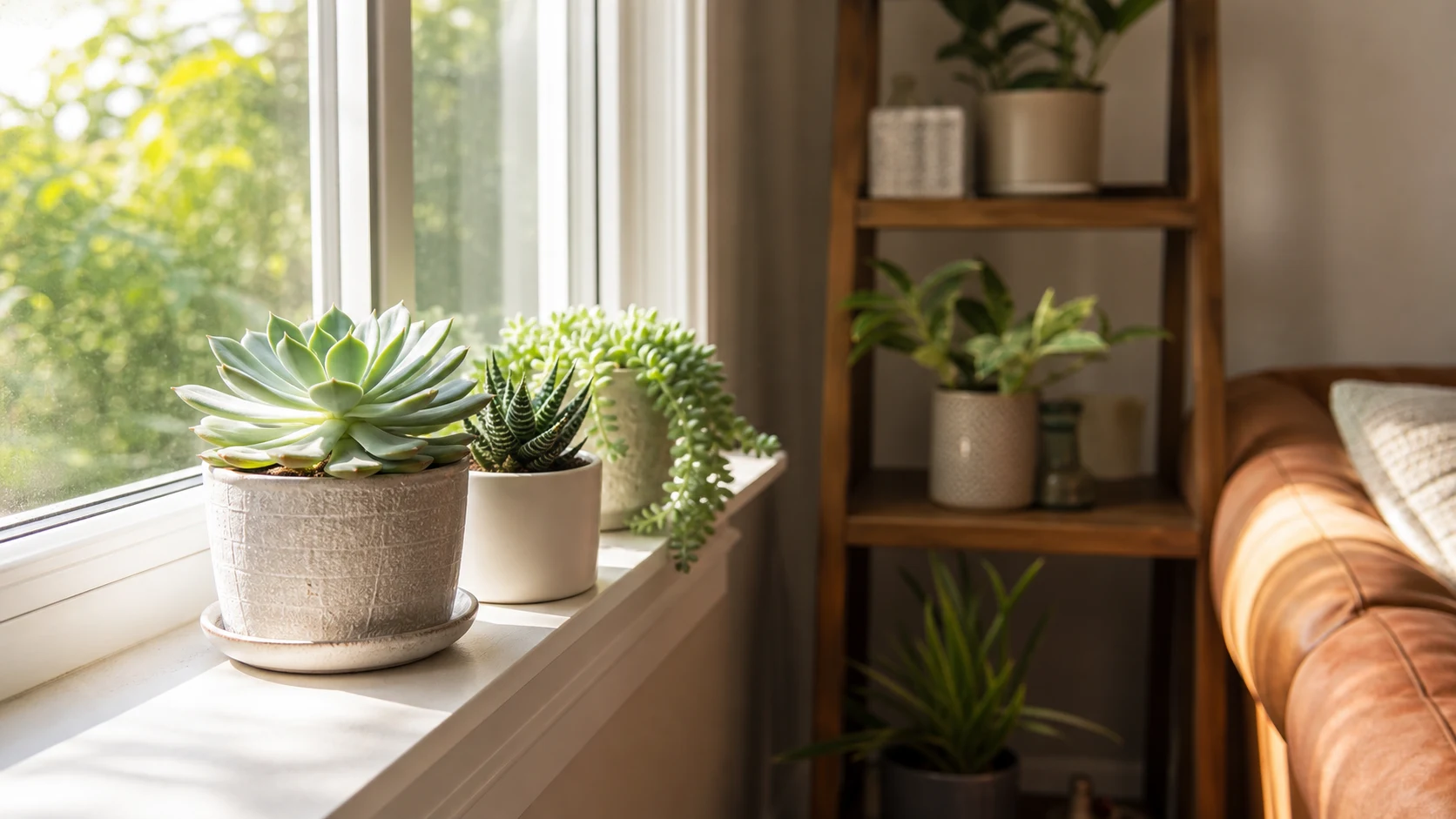
Succulents closest to a bright window dry faster than plants kept deeper inside the room.
Lookalikes and Commonly Confused Succulent Types
Not all succulents are equally suited to indoor life, and this is where many people accidentally buy the wrong plant for the space they have.
| If your plant looks like this | Common confusion | Better interpretation |
|---|---|---|
| Tight rosette, often sold in mixed gift planters | “All succulents handle indoor shelves the same” | Many rosette types, including Echeveria, usually need the brightest window or a grow light |
| Chunky spotted or striped leaves in a lower rosette | “This is just another succulent” | Haworthia and Gasteria usually tolerate average indoor light better than sun-hungry rosettes |
| Aloe or Euphorbia sold beside pet-safe houseplants | “All succulents are harmless” | Some commonly sold succulents are irritating or toxic to pets, so species-level ID matters |
| Several succulent varieties sharing one shallow bowl | “They can all share one care routine” | Mixed planters often fail because drying speed and light tolerance do not actually match |
If your light situation is limited but you love succulents, a simple grow light for indoor plants can be the difference between a plant that is slowly declining and one that is actively growing.
Care Cards: The Non-Negotiables
Light card
Keep succulents in the brightest spot you have. Rosette types usually need a south or west window, while Haworthia and Gasteria are more forgiving in average bright rooms.
Water card
Water deeply, then stop. Do not water again until the soil is fully dry and the pot feels noticeably lighter.
Soil and pot card
Use a fast-draining cactus or succulent mix and a pot with a drainage hole. Terracotta helps the root zone dry faster than non-porous containers.
Seasonal card
Watering slows dramatically in winter and in low-light rooms. The darker the setup, the more dangerous a fixed weekly schedule becomes.
Watering: The Soak-and-Dry Method, Done Right
The standard advice is soak thoroughly, then let the soil dry completely before watering again. That part is correct. The problem is that most indoor growers do not wait long enough.
Iowa State University Extension is clear on this: watering frequency should depend on soil type, light level, humidity, and container type, not a fixed calendar. A week-based schedule makes sense on a bright south-facing ledge in summer, but the same schedule in a dim room in winter will keep the root zone consistently wet and slowly rot the plant.
University of Minnesota Extension adds a useful caution on technique: repeated shallow sprinklings can distort root growth and leave the lower root zone wet for too long. The right method is a genuine soak, water until it flows freely from the drainage hole, and then nothing until the soil has fully dried.
Seasonal watering starting points
These are rough anchors, not rules. Always let pot weight and soil dryness be your guide.
| Season / Condition | Rough starting frequency |
|---|---|
| Bright south window, summer | Every 10 to 14 days |
| Average bright room, spring or autumn | Every 14 to 21 days |
| Low-light setup, winter | Once a month or less |
| Newly repotted, roots unsettled | Wait about 1 week before first water |
In winter, growth slows significantly, the plant uses less water, and the soil can stay wet for weeks in lower light. When in doubt, wait a few more days.
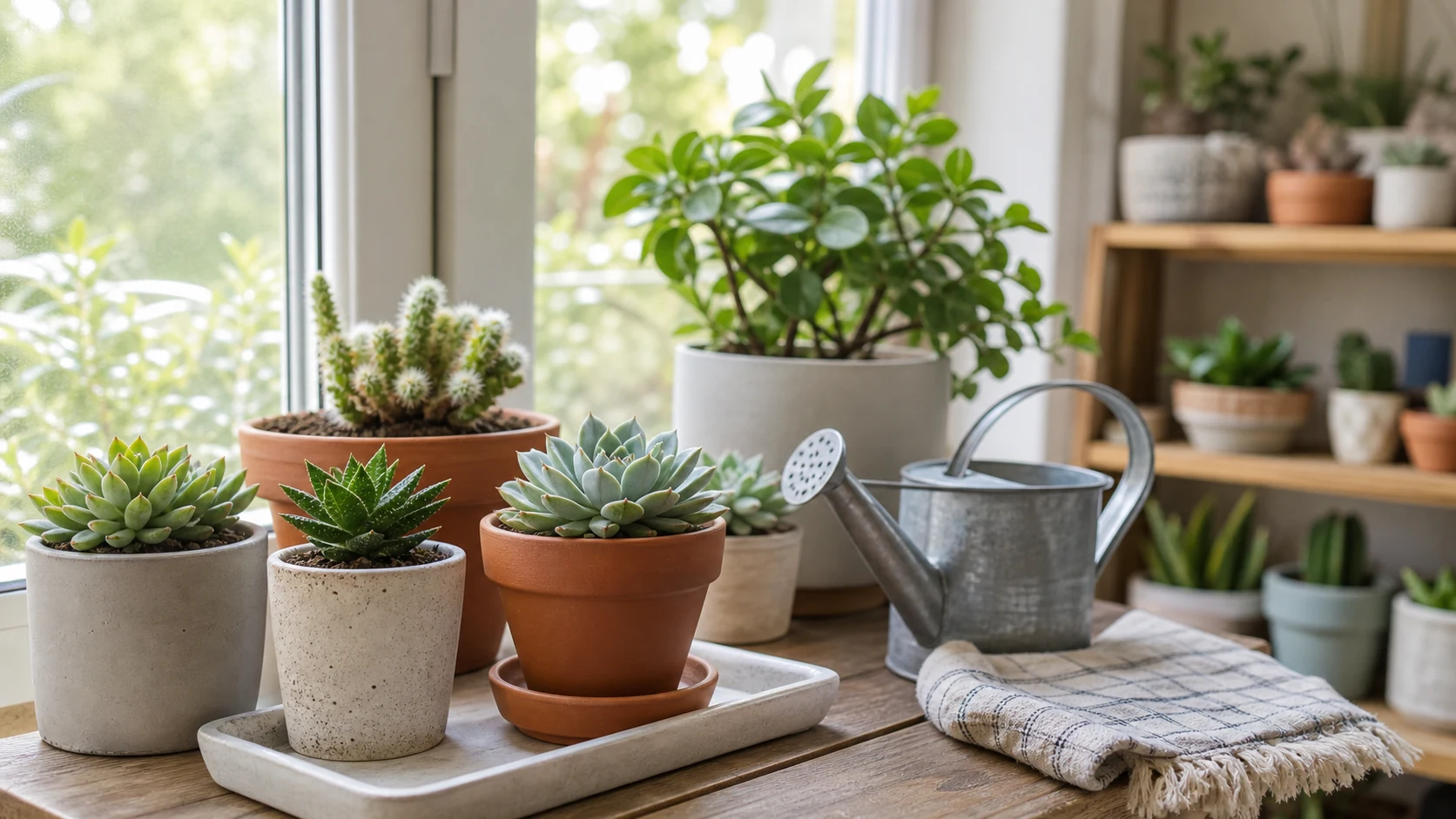
Dry soil, pot weight, and available light are better watering signals than a fixed calendar.
Soil and Pots: Where Store-Bought Succulents Go Wrong
Many succulents sold at big-box stores come in dense, peat-heavy potting mix designed to hold moisture, the opposite of what a succulent needs. That soil may stay wet for weeks in a typical indoor environment, keeping roots in conditions that lead to rot even when you think you are watering correctly.
Repotting into a fast-draining cactus or succulent mix, or a regular potting mix cut with coarse perlite or grit at roughly half and half, makes a real difference. It is one of the most effective things you can do for a struggling store-bought plant. If you are not sure how to repot plants without damaging roots, it is a simpler process than it looks.
The pot matters just as much as the soil. Drainage holes are non-negotiable. Decorative pots without them create a wet reservoir at the bottom that you cannot see or manage. Terracotta pots are particularly good for succulents because they are porous and help soil dry faster than glazed ceramic or plastic.
Avoid self-watering containers for succulents. They maintain constant moisture in the lower root zone, which is the opposite of the dry-out cycle succulents need.
Common Problems: Read Your Succulent Fast
Use the symptom pattern before you change anything.
| Symptom | Most likely cause | First check |
|---|---|---|
| Wrinkled, slightly soft lower leaves | Possibly thirst | Lift the pot. If heavy, wait. If light and soil is bone-dry, water. |
| Mushy, translucent, or discolored leaves at the base | Overwatering or root rot | Unpot and check roots. Dark or soft roots need trimming before repotting in dry soil. |
| Leggy, stretched growth leaning toward light | Insufficient light | Move closer to a window or add a grow light. New growth should be more compact. |
| Brown, papery patches after a move | Sunburn or acclimation stress | Increase light gradually over two to three weeks. |
| White fuzz, sticky residue, or sudden collapse in a mixed planter | Pests or moisture mismatch | Inspect stems and roots before watering again. |
Decision Tree: Wait, Water, Repot, or Increase Light
- If the pot still feels heavy, wait. Watering is not the next move.
- If the pot is light and the soil is bone-dry, water deeply. Then let it dry fully again.
- If the soil stays wet for too long, repot. Dense nursery mix and pots without drainage are setup problems, not discipline problems.
- If growth is stretching or paling, increase light before changing anything else. Low light is a slow-motion failure mode for indoor succulents.
- If damage appeared right after a move to brighter conditions, slow down the light transition. This is usually acclimation stress, not thirst.
- If several succulent types share one pot and one is declining first, separate the planter. Mixed bowls often hide incompatible needs.
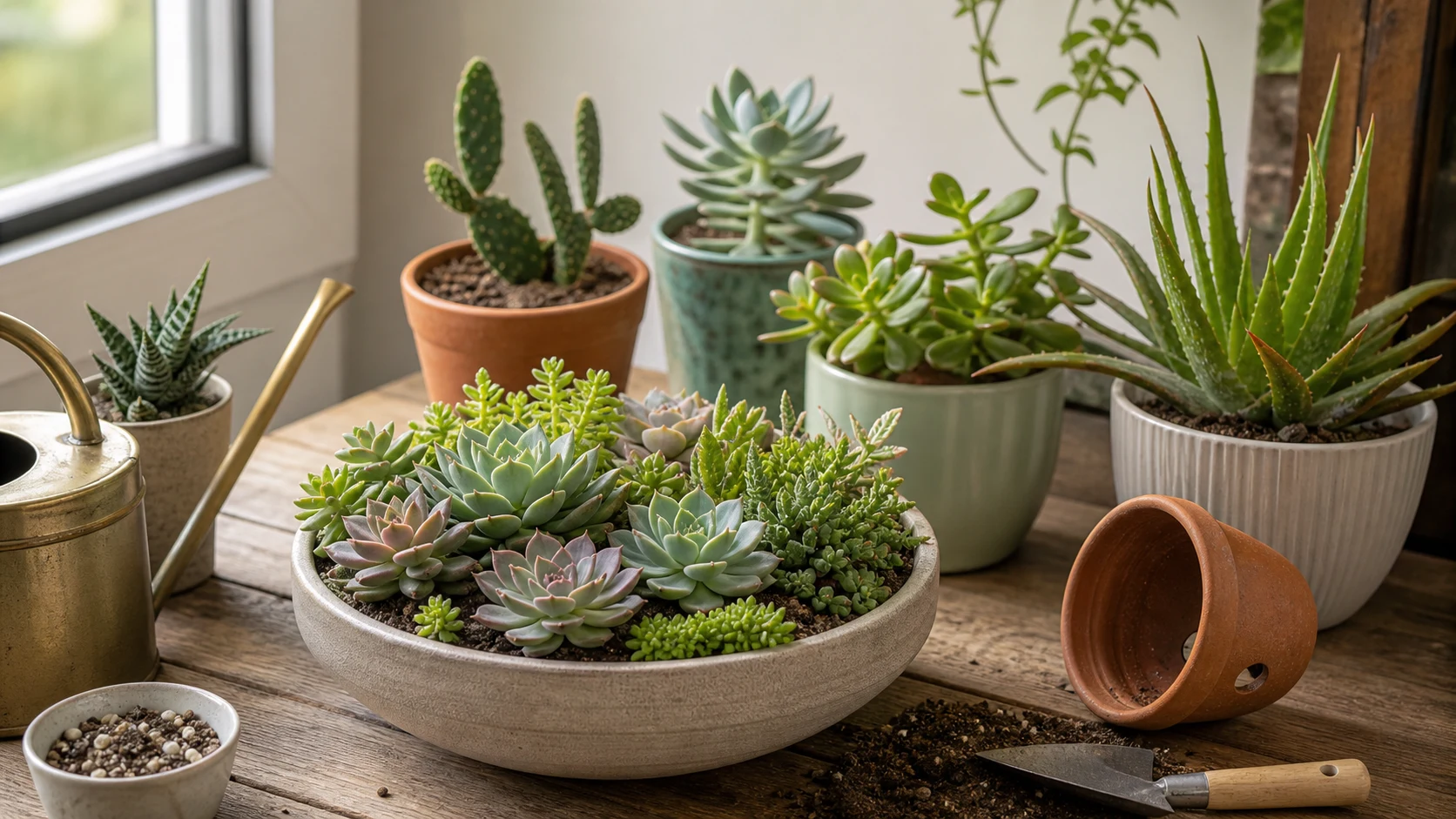
Drainage, dry mix, light, and plant compatibility determine whether to wait, water, or repot.
When You Move a Succulent to Brighter Light
Whether you are moving a plant closer to a window, setting it outside for the summer, or switching it from a dim shelf to a grow light, sudden increases in light intensity stress succulents in a way that looks a lot like disease.
If a lamp is your main light source, the succulent grow-light setup guide shows how to map the center and edges of a shelf, set a timer, and adjust one variable without copying a universal LED height.
West Virginia University Extension specifically notes that succulents moved outdoors need to transition gradually, starting in shade before moving to sunnier spots. The same principle applies any time you move a succulent from lower light to higher light indoors.
What happens when you skip the transition is simple: the leaves develop papery brown or white patches. Owners often interpret this as a watering problem and start adjusting water. It usually is not. It is sunburn from too much light too fast.
Decision rule: any time you move a succulent to significantly brighter light, do it in stages over two to three weeks. Start with bright indirect light or one to two hours of direct sun, then gradually increase exposure.
The Mixed Planter Problem
Those little dish gardens and mixed succulent arrangements you see everywhere are often a care trap. They combine several species with different water needs in a single shallow container that may or may not have drainage. They are designed to look good in the store, not to thrive long-term.
If you have one of these, separate the plants once you can identify them, or at minimum make sure the arrangement has drainage and is managed with the driest plant’s watering schedule. The one species that needs the least water sets the schedule for the whole pot.
The Big-Box Succulent Rescue Checklist
If you brought home a succulent from a grocery store or garden center and it is already struggling, work through this before you do anything else.
- Check for drainage. If there is no hole in the bottom of the pot, repot before anything else.
- Assess the soil. Dense nursery mix should be replaced.
- Remove moss or decorative top-dressing. These hold extra moisture over the soil surface and slow evaporation.
- Separate mixed planters. One-size-fits-all watering is often the hidden problem.
- Check the light, not just the location. Being near a window does not automatically mean enough light.
- Wait before watering. Most store-bought succulents were already watered too often in transit or on the shelf.
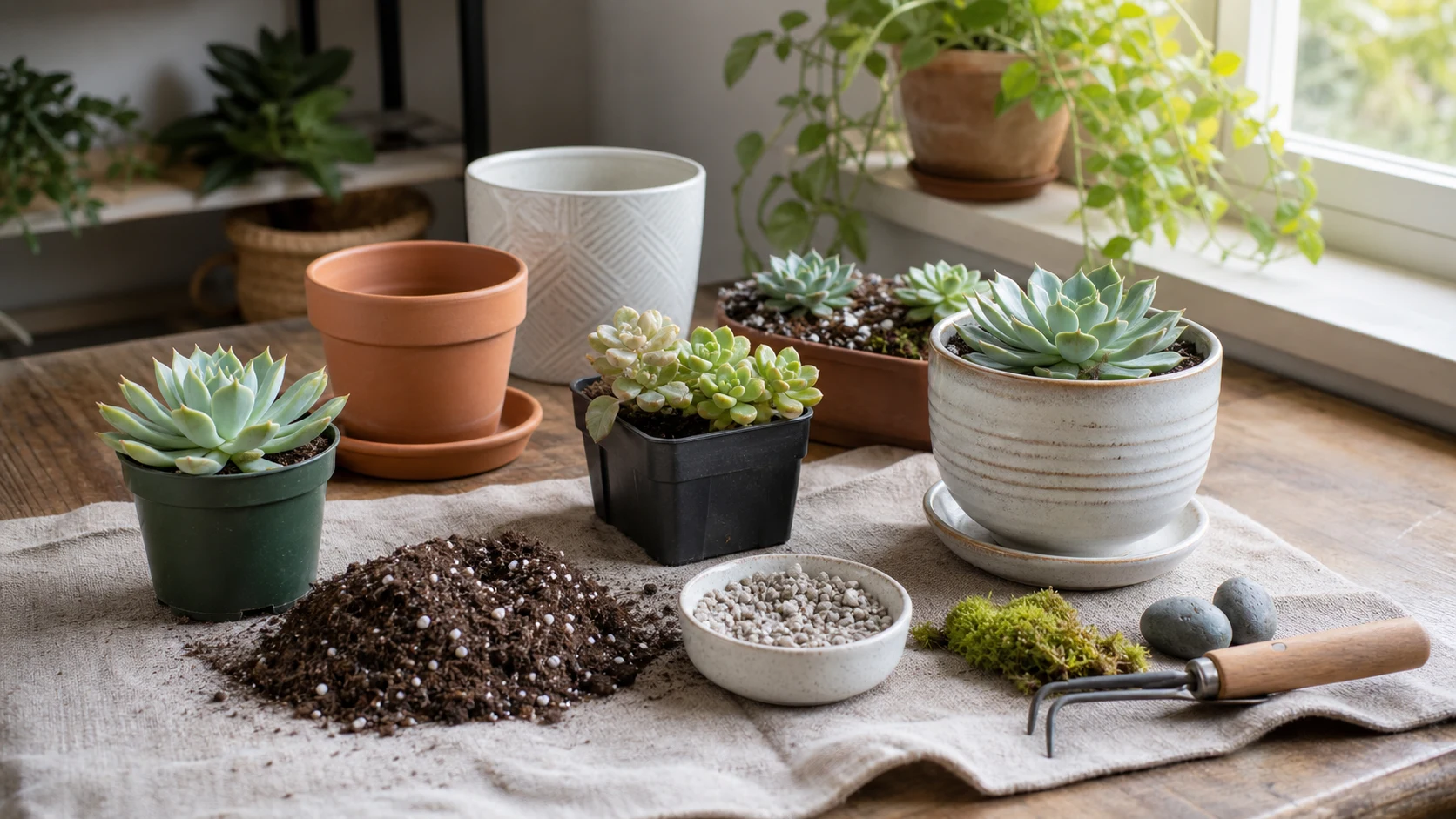
Rescuing a store-bought succulent starts with drainage, lighter soil, and removing moisture-trapping top dressing.
Common Mistakes That Kill Indoor Succulents
- Watering because leaves look sad without checking pot weight first
- Treating all succulents as if they tolerate the same light
- Keeping them in decorative pots without drainage
- Using self-watering planters that hold constant moisture
- Moving them into harsh sun too quickly
- Trying to fix everything at once instead of changing one variable and watching the response
Pet Safety
Many succulents are harmless, but not all are. Aloe vera is toxic to cats and dogs, and some Euphorbia varieties have irritating sap. If you keep aloe specifically, the aloe vera care guide covers the brighter-light, dry-soil routine that keeps it useful and stable indoors. If pets are part of the household, species-level identification matters before you decide where the plant should live. When in doubt, check the exact plant against a trusted pet-safety source or use the cat-safe plants guide for safer alternatives.
For a flowering succulent that needs the same dry-down discipline plus a short-day rebloom cycle, see Kalanchoe Plant Care: Keep It Healthy and Get It to Rebloom.
Real User FAQ
How often should I water succulents indoors?
There is no single correct frequency. In a bright room in summer, every ten to fourteen days is a reasonable starting point. In a low-light room in winter, once a month or less is common. The right trigger is always the same: water when the pot feels light and the soil is completely dry, not on a fixed calendar.
Why is my succulent turning mushy?
Mushy leaves or a soft stem at the base usually mean overwatering or root rot. Stop watering, unpot the plant, and check whether the roots are dark or soft. Repot into fresh dry succulent mix and wait about a week before watering again.
Should I mist my succulent?
No. Misting wets the surface without giving the roots the full soak-and-dry cycle they need. A deep watering followed by a complete dry-down is the correct pattern.
Can succulents survive in low light?
Some indoor-friendly types, especially Haworthia and Gasteria, tolerate average indoor light better than many rosette succulents. Most succulents do not thrive in true low light and will eventually stretch, pale out, or weaken.
Do succulents need special soil?
Yes. Standard potting mix holds too much moisture. Use a cactus or succulent mix, or cut regular potting mix with coarse perlite or grit at about a 50/50 ratio.
My succulent is stretching toward the window. What do I do?
That is etiolation, a sign of inadequate light. Move the plant to a brighter spot or add a grow light. Existing stretched growth will not shrink back, but new growth should come in tighter.
Are succulents safe for cats and dogs?
Some are, some are not. Aloe vera and some Euphorbia varieties are not pet-safe. If pets are around, identify the exact plant before assuming it is harmless.
Can I use a decorative pot without drainage for a succulent?
Not safely for long-term care. Use a cachepot if you want the look, but keep the plant itself in a container with drainage and empty any standing water after watering.
How This Guide Was Built
This article was reviewed against Iowa State University Extension, South Dakota State University Extension, West Virginia University Extension, and University of Minnesota Extension guidance for indoor succulent light, watering, soil, and acclimation. Public Gardening Stack Exchange threads were used only to understand where indoor growers get confused first, especially around thirst versus rot, low-light species mismatch, sun shock after moving plants, and mixed-planter failures. The decision tree, species-fit framing, seasonal watering anchors, and rescue checklist are editorial tools built from that source mix to make the advice easier to use in a real home setup.
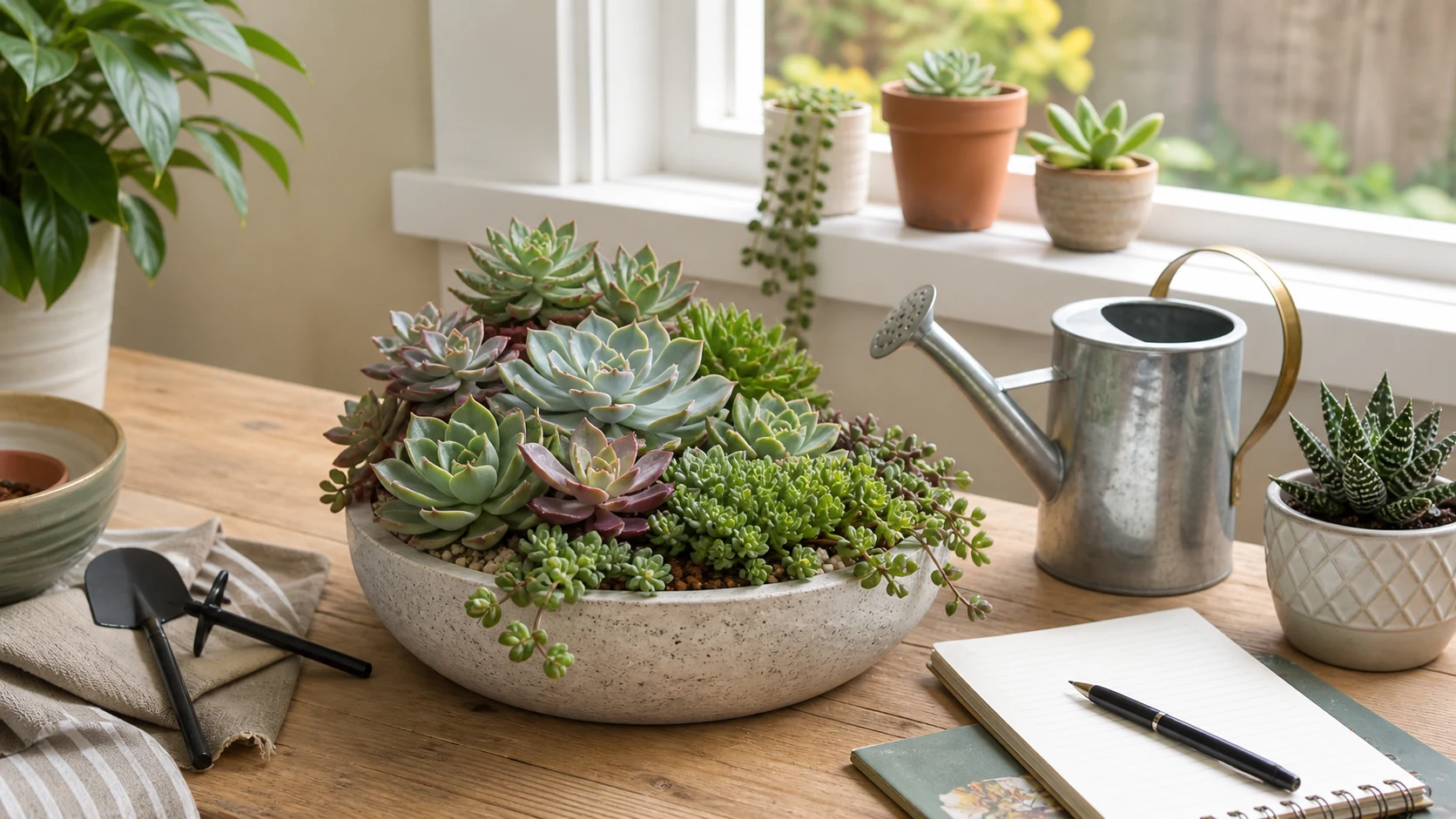
The guide combines source checking with practical observation of light, soil, drainage, and plant type.
For more on diagnosing common leaf problems across houseplants, why plant leaves turn yellow covers the most frequent culprits, including the overwatering patterns that affect succulents especially hard. And if you want care reminders timed to your actual conditions rather than a generic schedule, KnowYourPlant lets you set them by plant so you are checking in at the right moment, not the average one.