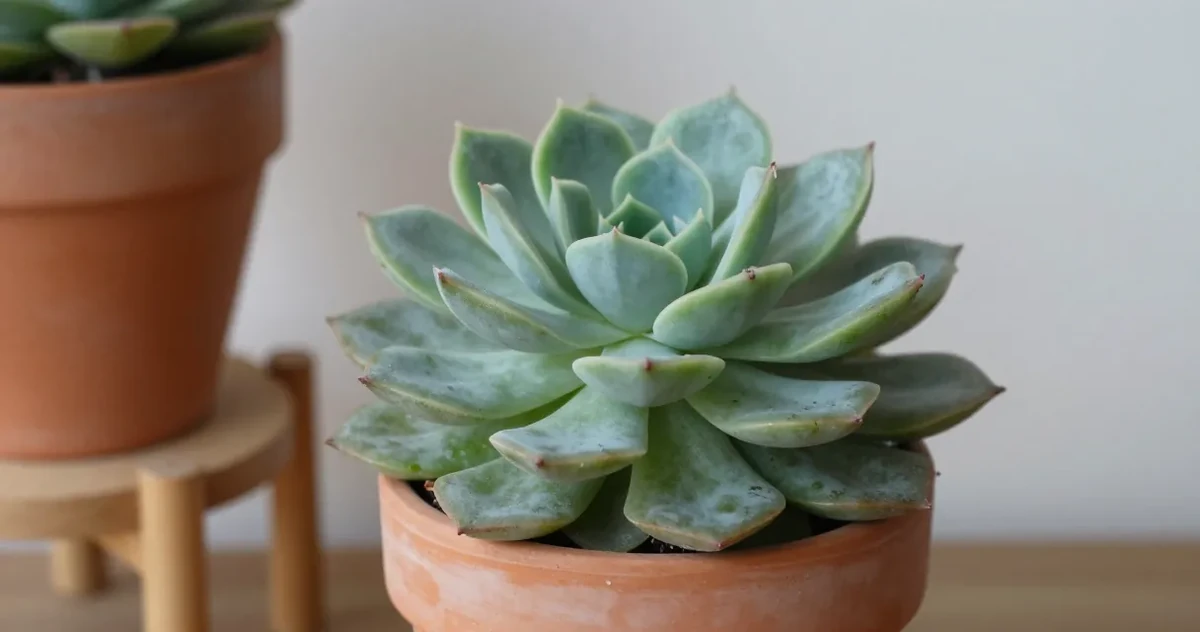
You brought home a succulent because every article said it was the easiest houseplant you could own. Three months later the stem is soft, or the leaves have gone pale and stretched themselves toward the window in a hopeful, spindly lean. You’ve been careful. You haven’t overwatered. And yet.
The issue is almost never your watering. It’s that most succulent care guides skip over the single decision that determines whether an indoor succulent stays healthy or slowly declines: whether you chose the right species for the light you actually have.
This guide covers which succulents genuinely hold up in ordinary indoor rooms, what those rooms need to offer them, and how to build the simple care rhythm that makes keeping indoor succulents as easy as people claim. Once you already own the plant, the apartment-focused guide to caring for succulents indoors helps diagnose thirst, rot, and weak-light stretch.
Identification Snapshot
| Field | What to check before you buy or repot |
|---|---|
| Best fit for this guide | Indoor succulent owners choosing plants for windowsills, shelves, desks, or mixed gift planters. |
| Lowest-risk beginner picks | Zebra haworthia and gasteria, because they tolerate weaker indoor light better than most succulents. |
| High-risk beginner picks | Echeveria and many sedums in dim rooms, because they stretch quickly when the light is weak. |
| Fastest failure signal | Mushy stems in wet soil, or pale stretched growth leaning hard toward the window. |
| First setup check | Drainage hole, gritty mix, and realistic light. If one of those is missing, fix it before changing your watering. |
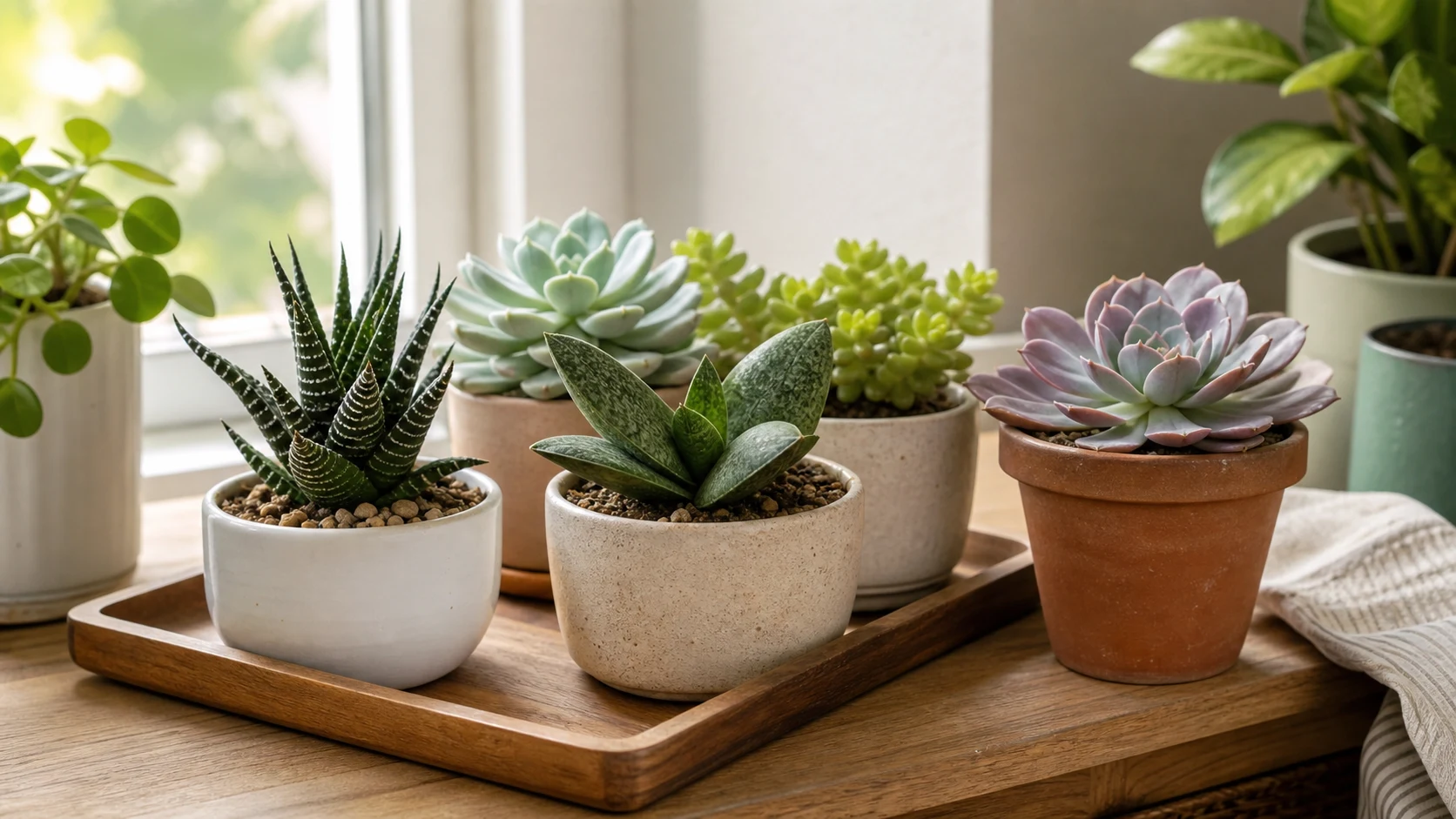
A windowsill comparison makes the light tolerance and growth habits of common indoor succulents easier to judge.
Lookalikes and Confused-With Plants
Many “indoor succulent” lists flatten very different plants into one category. That is how people end up putting a sun-hungry rosette on an office desk and wondering why it declines.
| Plant or group | Why people lump it into the same advice bucket | What matters indoors |
|---|---|---|
| Zebra haworthia | Sold beside brighter-light succulents, so buyers assume the care is identical. | Better choice for bright shelves and offset-from-window spots. |
| Gasteria | Often treated like a minor variation of aloe. | More forgiving indoors than aloe when the light is only moderate. |
| Aloe vera | Recommended as “easy” without enough warning about light and pet safety. | Needs brighter light than haworthia, and ASPCA lists it as toxic to dogs and cats. |
| Echeveria and many sedums | Nursery plants look perfect under greenhouse light, so buyers expect that compact shape to hold indoors. | Usually need the strongest window in the house or a real grow light to stay attractive. |
| Mixed gift planters | Decorative bowls make unrelated plants look compatible. | Ferns, tropical foliage, and succulents often need opposite watering rhythms, so separate them early. |
Social Listening: The Indoor Succulent Mistakes Owners Repeat
The same indoor succulent problems keep surfacing in owner questions. People buy a succulent for a desk that never gets real sun, assume a self-watering or decorative pot is “safer,” or keep a mixed planter together because it looks fine for the first few weeks. Another repeated pattern is moving a plant from indoor light straight into outdoor sun, then reading the resulting scorch as a watering problem.
That pattern matters because it points to the most useful indoor rule: choose for the room first, then build care around that choice. Most indoor succulent failures start at species selection or pot setup, not at the watering can.
What “Succulent” Means for Indoor Care
A succulent is any plant that stores water in its leaves, stems, or roots to survive dry periods. That definition covers hundreds of species with very different personalities. The shared traits: a preference for lean soil, excellent drainage, and dry gaps between waterings.
What they don’t share is a tolerance for dim indoor light. That’s the part most care guides don’t address clearly enough, and it’s where most indoor succulent trouble starts.
What Most Care Guides Miss
Almost every beginner roundup groups succulents under “bright indirect light” and moves on. The problem is that bright indirect light at a south-facing window and the ambient glow six feet from a north-facing office window are not the same thing, not even close.
Sun-hungry succulents like Echeveria and Sedum need several hours of direct or near-direct light to stay compact and colorful. Place them in a dim indoor room and they’ll stretch toward whatever light they can find. This is called etiolation, and no adjustment to your watering will reverse it. The plant is telling you it needs more light, not less water.
The practical first check before buying any succulent: count the hours of direct sun your windowsill actually gets on a regular day. According to South Dakota State University Extension, most succulents need six to eight hours of light per day. If your window gives you fewer than three or four genuine hours, stick with shade-tolerant species like zebra haworthia or gasteria. If you have a strong south- or west-facing window, most succulents will do well.
Start with your light reality. Choose the plant second.
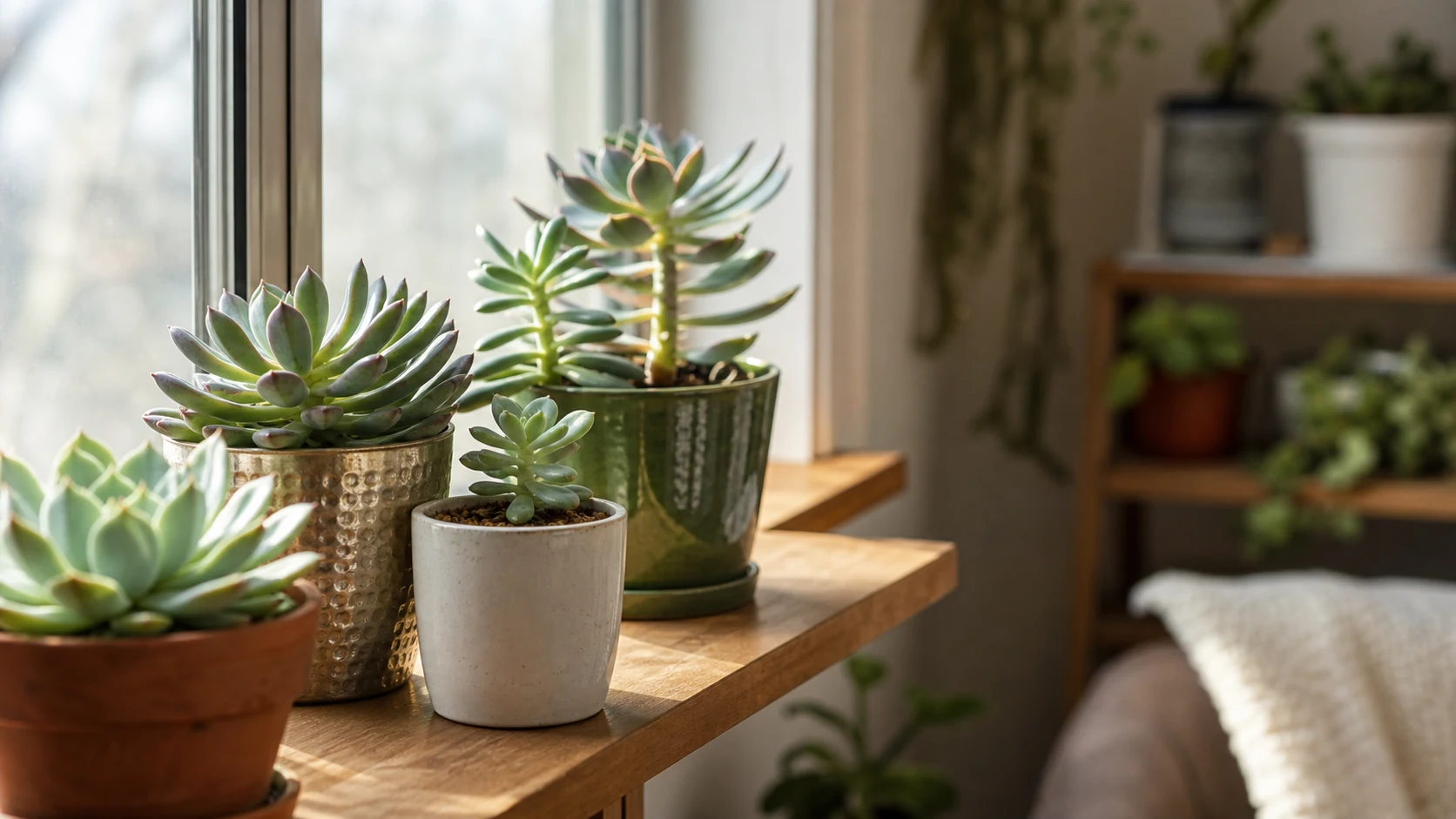
A compact rosette near strong window light contrasts with the stretched growth that develops when sun-hungry succulents are kept too dim.
Indoor Succulent Fit at a Glance
Before going deeper into care, here’s a quick way to match species to what you have at home:
| Species | Light tolerance | Size | Pet safety | Best indoor situation |
|---|---|---|---|---|
| Zebra haworthia | Low to medium | Small, compact | Non-toxic (ASPCA) | Bright shelf, offset from window |
| Gasteria | Low to medium | Small | Generally non-toxic | Low-light desk or shelf |
| Aloe vera | Medium to bright | Medium to large | Toxic to dogs and cats | South or west-facing windowsill |
| Jade plant | Medium to bright | Medium, tree-like | Mildly toxic to pets | Bright windowsill, long-term keeper |
| Echeveria | Bright to full sun | Small rosette | Generally non-toxic | South-facing window only |
| Sedum | Bright to full sun | Varied | Generally non-toxic | South-facing window or grow light |
The main takeaway: shade-tolerant species are a safer choice for most indoor rooms. Sun-hungry rosette types like Echeveria and Sedum belong right at a strong window or under a grow light for indoor plants placed close enough to make a real difference.
Choose by Your Situation First
If you have a strong south- or west-facing window, most succulents on this list will do well. The colorful rosette types will stay compact and keep their shape.
If your window faces north or east, or your light situation is uncertain, zebra haworthia or gasteria are the honest picks. They won’t be as dramatic as a big Echeveria, but they’ll stay alive and actually look healthy rather than slowly stretching themselves sideways.
If pets share your home, zebra haworthia is the clearest first choice. The ASPCA lists it as non-toxic to dogs, cats, and horses, which matters when a curious cat decides a shelf is a good vantage point.
Choose-This-If Decision Tree
Use the room and the setup to narrow the list quickly.
- Choose zebra haworthia or gasteria if your plant will live on a shelf, desk, or east-facing window where the light is decent but not strong for half the day.
- Choose aloe or jade if you have a bright south- or west-facing windowsill and you want a plant with more size or presence. Keep aloe out of reach if pets chew plants.
- Choose Echeveria or sedum only if you can give them the brightest window in the room or a close grow light. They are beautiful, but they are not the forgiving indoor default people think they are.
- Do not keep the original mixed planter setup if the succulent shares soil with a fern, fittonia, or another moisture-loving plant. Separate it before you troubleshoot anything else.
- Treat decorative pots without drainage as display covers, not real homes. Keep the succulent in a draining nursery pot inside them or repot properly.
Care Cards
| Care card | What works indoors | What owners get wrong most often |
|---|---|---|
| Light reality | Match the species to the actual window, not the label that called it easy. | Buying a rosette succulent for a low-light room because “succulents are low maintenance.” |
| Watering rhythm | Water deeply, then wait for a full dry-down and a light pot before watering again. | Using a weekly schedule even when the mix is still damp. |
| Pot setup | Use a gritty succulent mix and a container with drainage holes. | Leaving the plant in a decorative pot or peat-heavy nursery mix too long. |
| Pet safety | Put aloe and jade out of reach, and use haworthia when you need the lowest-drama option. | Assuming every common succulent is pet-safe because it is sold as a houseplant. |
| Seasonal moves | Harden indoor plants off gradually before stronger outdoor sun. | Moving a shelf plant straight to a bright patio and blaming the damage on thirst. |
Expert Note
The extension sources behind this guide line up on the same operating rules: indoor succulents need more light than most rooms naturally offer, much faster drainage than standard potting soil provides, and a dry-down period that is longer than many beginners expect. The practical disagreement is not between the expert sources. It is between those sources and the way succulents are commonly marketed as effortless desk plants.
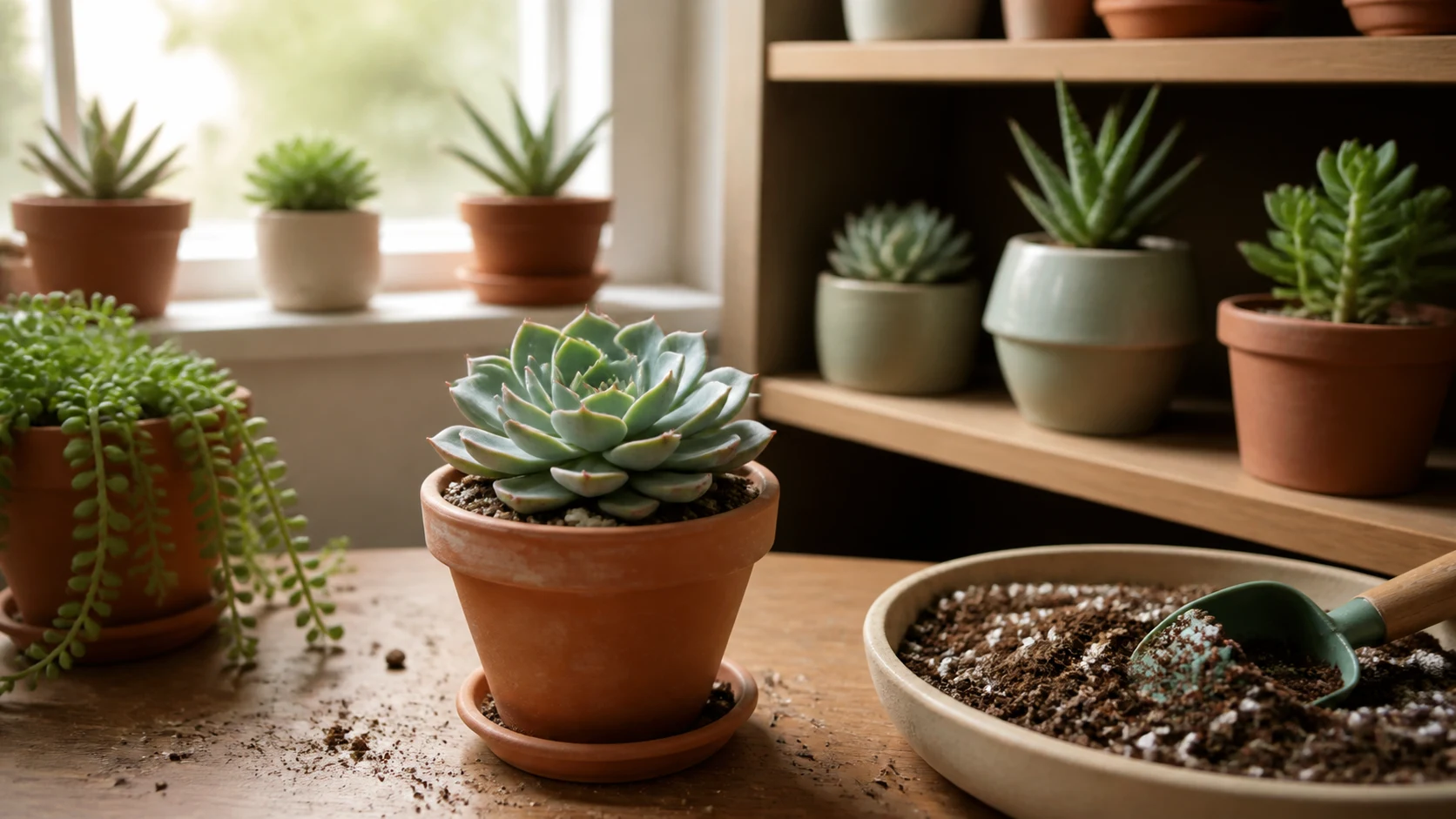
Strong window light, a draining terracotta pot, and a gritty mix reflect the three expert rules indoor succulents need most.
The Species That Actually Thrive Indoors
Zebra Haworthia
Zebra haworthia (Haworthiopsis attenuata) is the one succulent worth recommending without knowing anything else about someone’s home. According to North Carolina State Extension, it tolerates lower-light conditions better than most succulents, though it still prefers bright indirect light. It grows slowly, stays compact, and doesn’t complain unless you drown it consistently over weeks.
It’s also the ASPCA’s listed non-toxic option for households with dogs, cats, and horses, which makes it the default recommendation for anyone building a plant shelf in a pet-friendly home.
Gasteria
Gasteria is haworthia’s equally shade-tolerant cousin, with thicker tongue-shaped leaves and a very genuine ability to handle light levels that would turn other succulents pale. It’s less common at big box stores but worth seeking out if your light is genuinely limited. Slow growth, low drama, quiet survivor.
Aloe Vera
Aloe is one of the most recognizable indoor succulents and handles neglect reasonably well once established in a bright spot. It grows large enough to feel like a real plant, not a desk decoration. One caveat that surprises many people: the ASPCA lists aloe vera as toxic to dogs, cats, and horses, so placement matters if you share your home with animals.
North Carolina State Extension recommends growing aloe in very well-drained succulent soil, allowing the soil to dry completely between waterings, and preferring clay pots with several drainage holes. Clay pulls moisture away from the roots between waterings, which is exactly what aloe needs. The aloe vera care guide covers its light, watering, and container needs in more detail.
Jade Plant
Jade plants (Crassula ovata) adapt to indoor conditions better than many succulents because they tolerate a wider light range and are forgiving of imperfect watering. Over several years, a jade on a bright windowsill develops a satisfying woody trunk and tree-like structure. If you want a succulent that rewards long-term keeping, jade is the one to choose; the jade plant care guide covers its watering, pruning, and propagation routine.
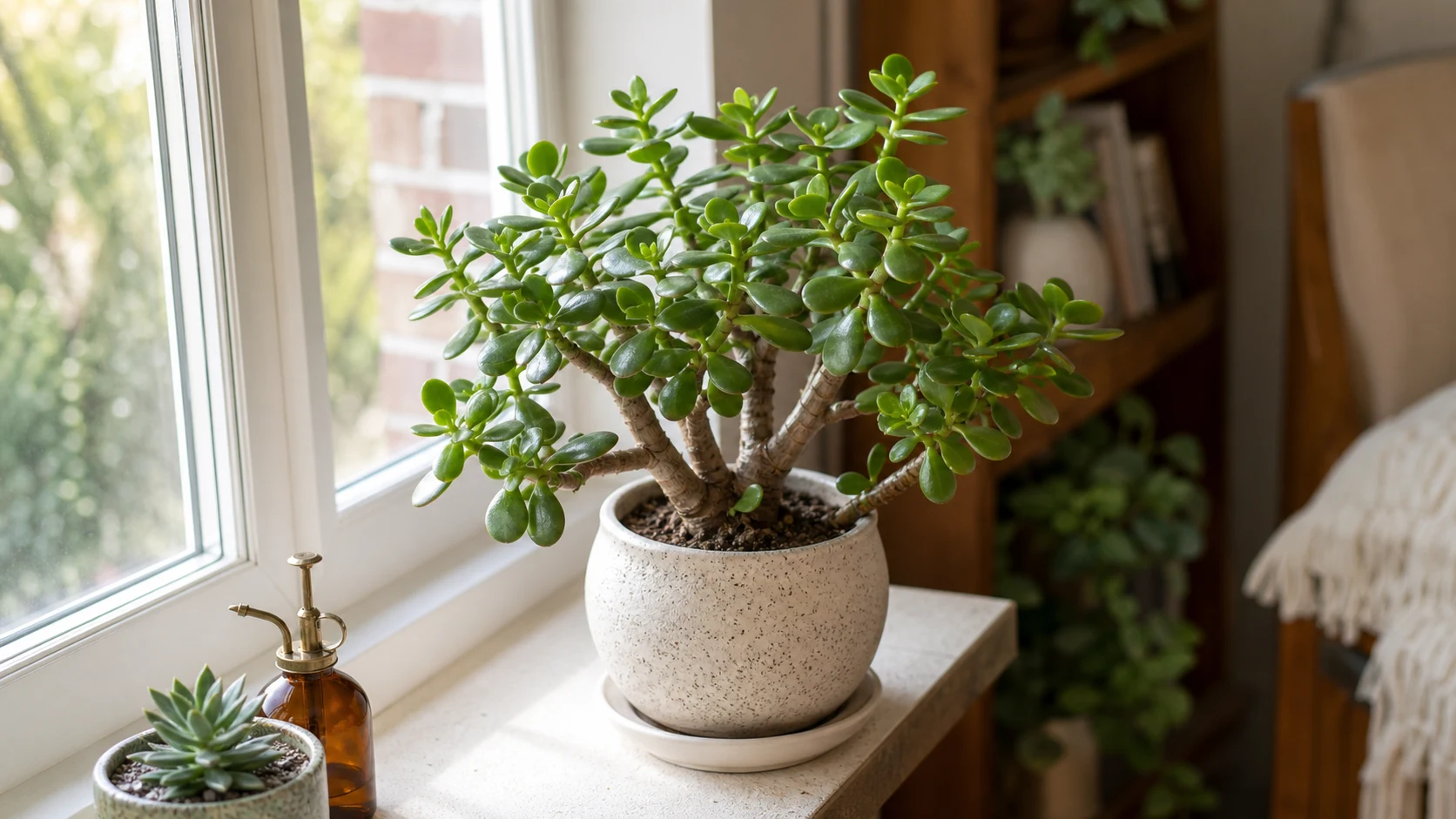
Years of bright windowsill growth give a mature jade its sturdy woody trunk and tree-like form.
Echeveria and Sedum
Both are beautiful and genuinely popular, but both need real light to stay the way they look at the nursery. In a dim indoor room, they’ll stretch and fade over a few months. Near a strong south-facing window or under a proper grow light, they thrive. Be honest about your light before choosing these.
What Indoor Succulents Need
Light: More Than Most Rooms Actually Offer
Most succulents want at least four to six hours of bright light daily. The University of Minnesota Extension puts it plainly: succulents need abundant light, well-drained sandy soil, and only modest water. A south- or west-facing window is the sweet spot. A north or east window with a few hours of gentle morning light is tolerable only for the shade-tolerant species.
Don’t rely on “it seems bright in here.” If you can comfortably read without switching on a lamp, that’s adequate light for haworthia and gasteria. If you need artificial light to be comfortable, your Echeveria will stretch without a supplemental grow light.
Watering: Wait for the Dry-Down
The most common indoor succulent error is watering on a schedule instead of responding to the plant. Indoors, succulents dry out much more slowly than outdoors, especially in winter, in humid apartments, or in pots that are slightly too large for the root ball.
Iowa State University Extension recommends watering thoroughly until water drains from the bottom, then waiting until the root ball is completely dry before watering again. Indoors, that often means every two to three weeks in summer and once a month or less in winter.
The most useful habit to build: lift the pot before and after watering a few times and notice the weight difference. A completely dry pot is noticeably lighter. If it still feels heavy, wait another few days. The pot weight tells you more than the calendar or the surface of the soil.
Soil and Drainage: Non-Negotiable
Succulents rot in regular potting soil. It holds too much moisture for too long. You need a fast-draining mix, either a commercial cactus and succulent blend or regular potting soil amended with perlite or coarse sand at roughly a 50/50 ratio. The succulent soil guide explains what a gritty mix should actually do, and the best potting soil guide covers how to read labels and what to look for in a draining amendment.
The container is equally important. A pot without drainage holes will hold water at the roots no matter how carefully you water, and root rot follows. If a succulent arrived in a decorative pot without drainage, either drill a hole or use the decorative pot as a cachepot with a plain nursery pot inside.
Mixed gift planters, where a succulent shares peat-heavy soil with a fern or trailing plant, are a setup for failure. The plants have incompatible moisture needs, and the soil mix is usually wrong for the succulent from day one. If you want to keep the succulent from a gift arrangement, repot it into its own container with proper mix as soon as you can. The repotting guide covers this without making it more involved than it needs to be.
Mixed Planter Rescue Checklist
If an indoor succulent came home in a decorative bowl with other plants, run this reset before you blame yourself for the decline:
- Check for a drainage hole first. If water cannot leave the pot, the succulent is already working against the setup.
- Separate unlike plants early. Ferns, fittonia, and pothos usually want more moisture than succulents can tolerate.
- Remove peat-heavy nursery media from the root zone. Indoor succulent roots recover faster in a gritty mix that dries on time.
- Downsize oversized pots if needed. Too much wet soil around a small root ball keeps the plant damp for too long.
- Reset the watering rhythm after repotting. Water once to settle the mix, then wait for a full dry-down and a light pot before watering again.
That checklist solves a common indoor failure pattern from owner forums: the plant was not impossible, the setup was mismatched from day one.
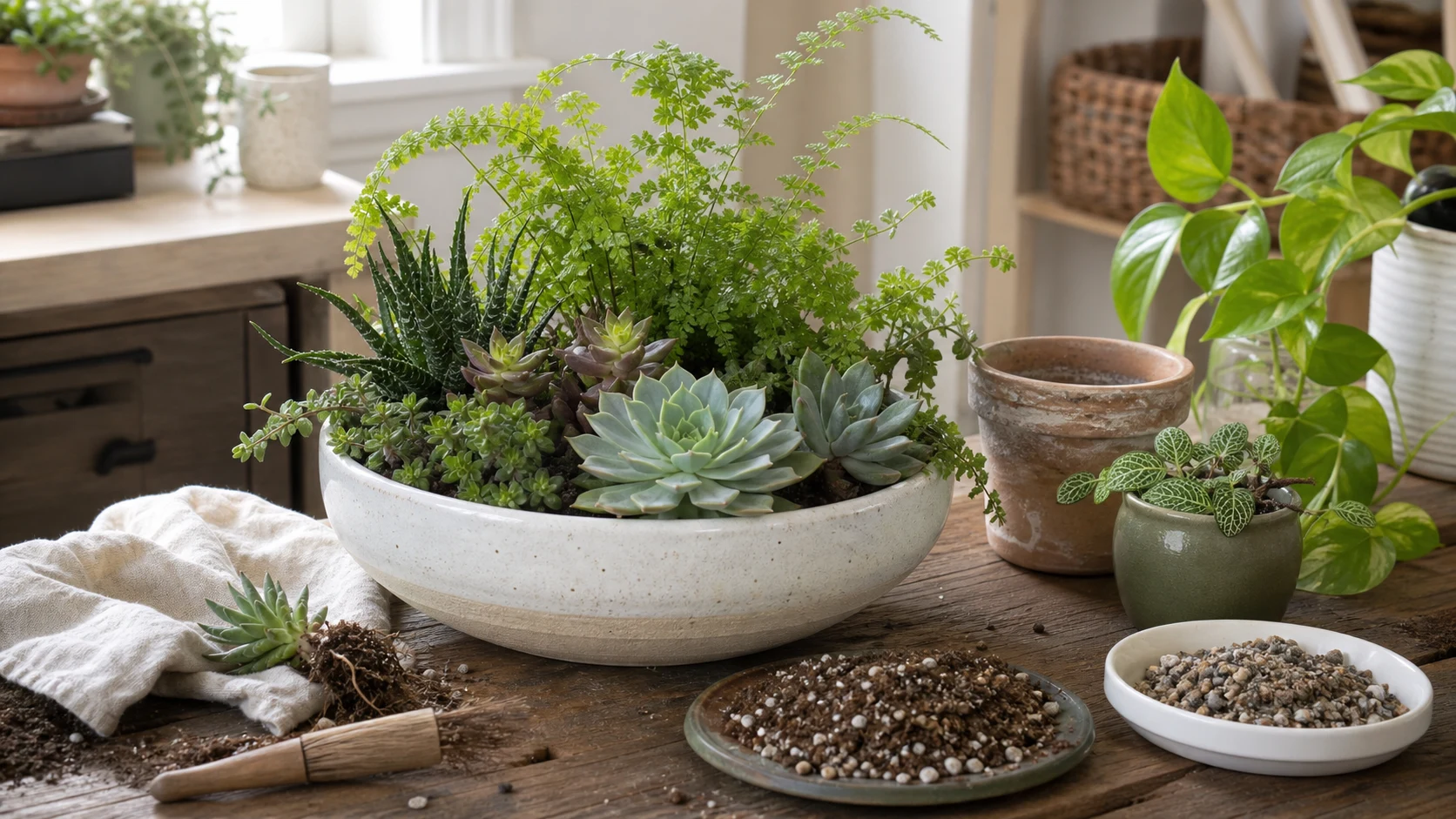
Separating succulents from moisture-loving companions and repotting them into gritty mix corrects a mismatched gift planter.
Where to Put Your Succulent
The best spot is the brightest windowsill you have, away from cold drafts in winter and away from heating vents that blast dry air directly at the leaves.
If you’re placing a succulent on a shelf or desk for aesthetic reasons, be honest with yourself about the light. A succulent with fewer than two to three hours of bright light will survive for a while, but it’ll slowly stretch and pale. Haworthia is the one to try in that situation. It won’t love it, but it’ll tolerate it better than almost anything else.
One situation that catches people off guard: moving an indoor succulent outside once the weather warms up. A plant that has lived at indoor light levels for months needs time to adjust to much stronger outdoor conditions. Move it into morning sun only for the first one to two weeks, then gradually increase exposure. Moving directly from a dim shelf to an afternoon balcony usually causes browning or leaf drop, which looks like a watering problem but is actually acclimation stress. Give it two weeks and the new growth will come in fine.
Common Problems: What the Plant Is Telling You
| What you’re seeing | Likely cause | First check |
|---|---|---|
| Stretching, pale stems reaching toward light | Not enough light (etiolation) | Count hours of direct sun; consider a grow light |
| Mushy stems, soft leaves, wet soil | Overwatering or poor drainage | Check for drainage holes; let soil dry fully before next water |
| Shriveled, wrinkled leaves with dry soil | Actually thirsty | Water thoroughly; check pot weight before and after |
| Brown patches after moving outside | Sun or cold acclimation shock | Harden off gradually; rule out watering before changing anything else |
| Leaves dropping with wet-ish soil | Root rot from prolonged dampness | Inspect roots; repot into dry, fast-draining mix if needed |
If you’re seeing leaves drop with no obvious pattern, the succulent leaves falling off guide walks through the most common causes and how to tell them apart.
Common Beginner Mistakes
Choosing a sun-hungry species for a low-light spot. Echeveria, Sedum, and colorful rosette succulents need real, direct-ish light. They stretch and lose color in a dim room, and there’s no care adjustment that fixes a light problem.
Watering on a calendar. “Once a week” is almost always too frequent for indoor succulents. Let the pot weight and soil dry-down guide you, not the date.
Pots without drainage. Even with careful watering, no drainage eventually means root rot. Get this right before worrying about anything else.
Staying in nursery mix. Most succulents arrive in peat-heavy soil designed for shipping and shelf life, not long-term growing. Repotting into a well-draining mix within the first growing season gives them a much better foundation.
Keeping the gift planter together. If your succulent arrived sharing soil with a fern, pothos, or trailing plant, separating them is the kindest thing you can do. The watering schedules are incompatible and the soil is almost certainly wrong for the succulent.
A Note on Pet Safety
Not all commonly recommended succulents are safe around pets. Aloe vera is listed by the ASPCA as toxic to dogs, cats, and horses, which surprises many people given how widely it’s recommended as an easy beginner plant. Zebra haworthia is listed as non-toxic by the ASPCA, making it the clearest first choice for pet-owning households.
Before placing any new plant somewhere accessible to animals, the ASPCA Poison Control database is the most reliable reference. If you’re building out a pet-safe plant collection, the cat safe plants guide and dog friendly houseplants guide cover which common indoor plants are lower-risk and which need more careful placement.
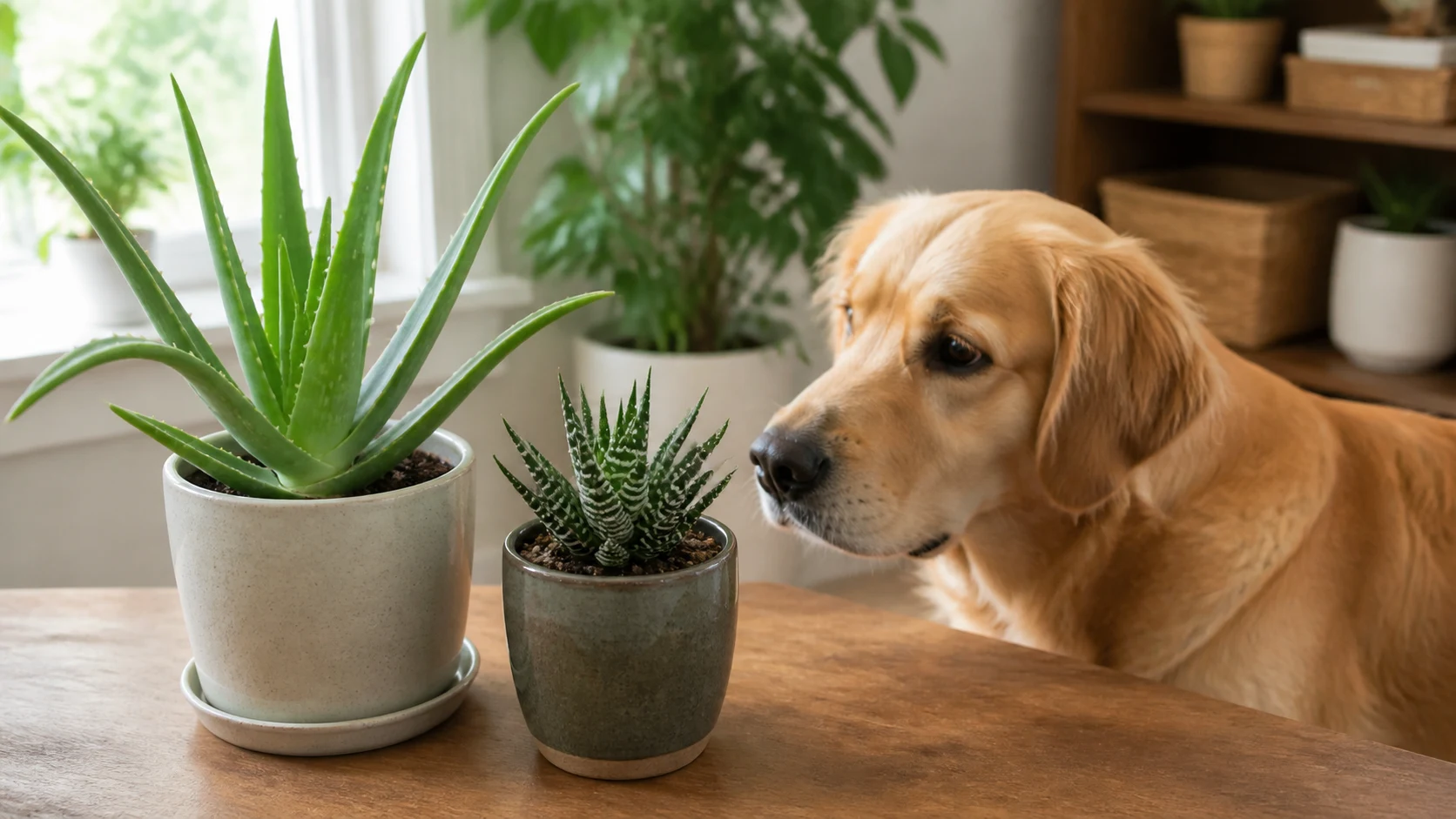
Aloe vera and zebra haworthia need different placement decisions in a home shared with curious pets.
Real User FAQ
How often should I water a succulent indoors? There is no single schedule that works for everyone, and that’s the point. Water thoroughly when the soil is completely dry and the pot feels noticeably lighter, then wait for that same dry-down before watering again. In summer that’s often every two to three weeks. In winter, once a month or less is common, especially in cooler or less sunny rooms. Pot weight is your most reliable guide.
Can succulents survive in a low-light room? Some can. Zebra haworthia and gasteria are the two species most tolerant of lower indoor light. Most popular succulents, including Echeveria, Sedum, and colorful rosette types, need several hours of direct or near-direct light to stay compact. In a genuinely dim room, they’ll stretch, fade, and decline over months.
Why is my succulent stretching and getting leggy? This is etiolation: the plant reaching toward more light than it’s getting. It’s not a watering problem. The fix is more light, either moving to a brighter windowsill or adding a grow light. You can’t reverse the stretch on existing growth, but new growth will be more compact once the light improves.
Do I need special soil for indoor succulents? Yes. Regular potting soil holds too much moisture and leads to root rot over time. Use a cactus and succulent blend, or amend regular potting soil with perlite or coarse sand at roughly equal parts. The mix should feel gritty and drain almost immediately when you water.
Is aloe vera safe for pets? No. The ASPCA lists aloe vera as toxic to dogs, cats, and horses. This surprises many people because aloe is so commonly recommended as a low-maintenance indoor plant. If you have pets, place aloe somewhere genuinely inaccessible or choose zebra haworthia instead, which the ASPCA lists as non-toxic.
My succulent came in a planter with other plants. Is that okay? Usually not for the long term. Mixed planters typically combine succulents with plants that need much more frequent watering, in peat-heavy soil that stays too wet for a succulent. Separating the succulent into its own container with proper mix as soon as possible gives it a much better foundation.
Freshness Note
Last updated: 2026-06-19. The species recommendations, indoor-light framing, and pet-safety notes in this guide were re-checked against the cited extension and ASPCA sources so the advice still reflects current public guidance rather than old succulent listicles.
Methodology Note
This article combines keyword review of current indoor-succulent search results with real owner confusion pulled from public succulent troubleshooting threads, then checks the practical care rules against Iowa State, South Dakota State, University of Minnesota, North Carolina Extension, and ASPCA references. The owner examples are qualitative signal, not statistical proof, but they are useful for showing where indoor growers most often misread light, drainage, and watering problems.
Sources: Iowa State University Extension and Outreach (Growing Succulents Indoors), South Dakota State University Extension (How to Care for Succulents Indoors), University of Minnesota Extension (Cacti and Succulents), North Carolina State Extension Plant Toolbox (Haworthiopsis attenuata, Aloe vera), ASPCA Poison Control (Aloe, Zebra Haworthia). Research reviewed May-June 2026.
Get the right species in the right light with the right drainage, and a haworthia or jade plant becomes genuinely easy to care for over years. Most of the failures happen before the plant comes home, at the species-selection stage. For a full look at succulent care across different conditions and as light shifts through the seasons, that guide covers what changes and what stays the same. And if you’d like watering reminders tailored to your specific plant and home setup, KnowYourPlant can track your collection and remind you when it’s time to check, before you forget and the soil goes too wet or too dry.