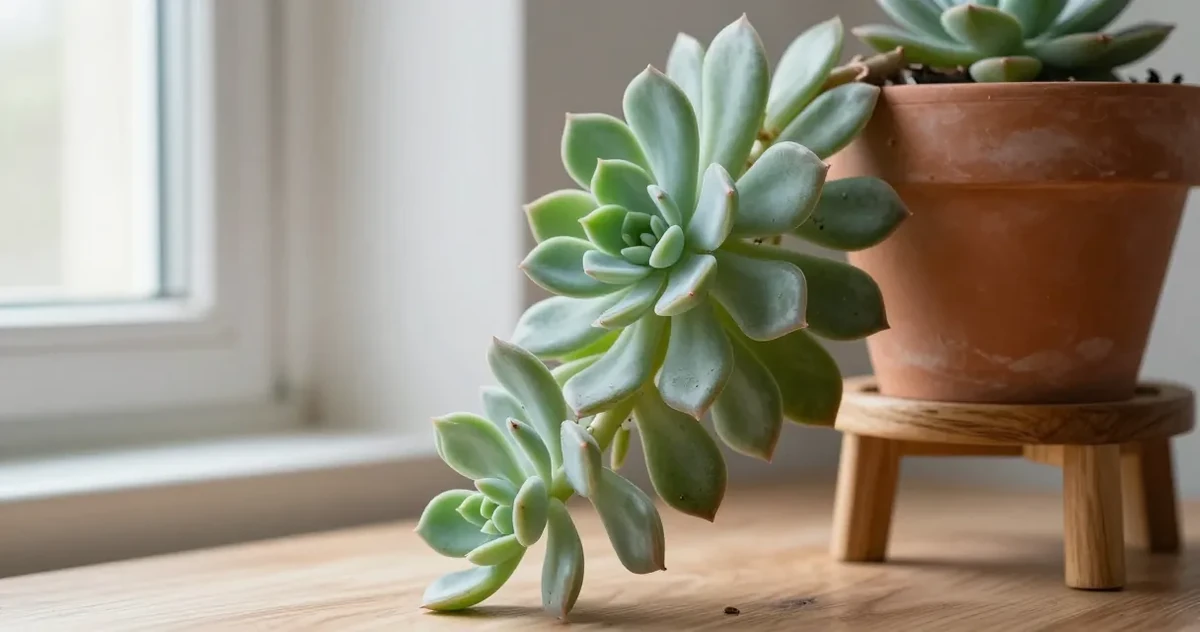
Succulent leaves falling off is one of those plant problems that looks dramatic before you know what you are actually seeing. A handful of leaves on the soil, a slightly bare stem, or leaves that come free when you brush the plant can feel like the whole thing is collapsing.
Sometimes it is a real problem. Sometimes it is just the plant cycling out old lower leaves. The fastest way to tell the difference is not your watering calendar. It is where the leaves are falling from, what they feel like in your hand, and whether the center of the plant still looks firm and healthy.
For a broader look at what succulents need day to day, see our complete succulent care guide.
What Most Care Guides Miss
Most pages about succulent leaves falling off give you a long cause list, then tell you to “adjust your care routine.” That is not very helpful when you are standing in front of a plant right now and need to decide whether to water, wait, unpot it, or leave it alone.
The most common misread is simple: owners see lower leaves drying up and dropping, assume it must be overwatering, and make the plant even drier. In real life, lower-leaf drop can mean four very different things: normal aging, underwatering, recent stress, or genuine rot. The leaf texture and the drop pattern tell you which one is more likely.
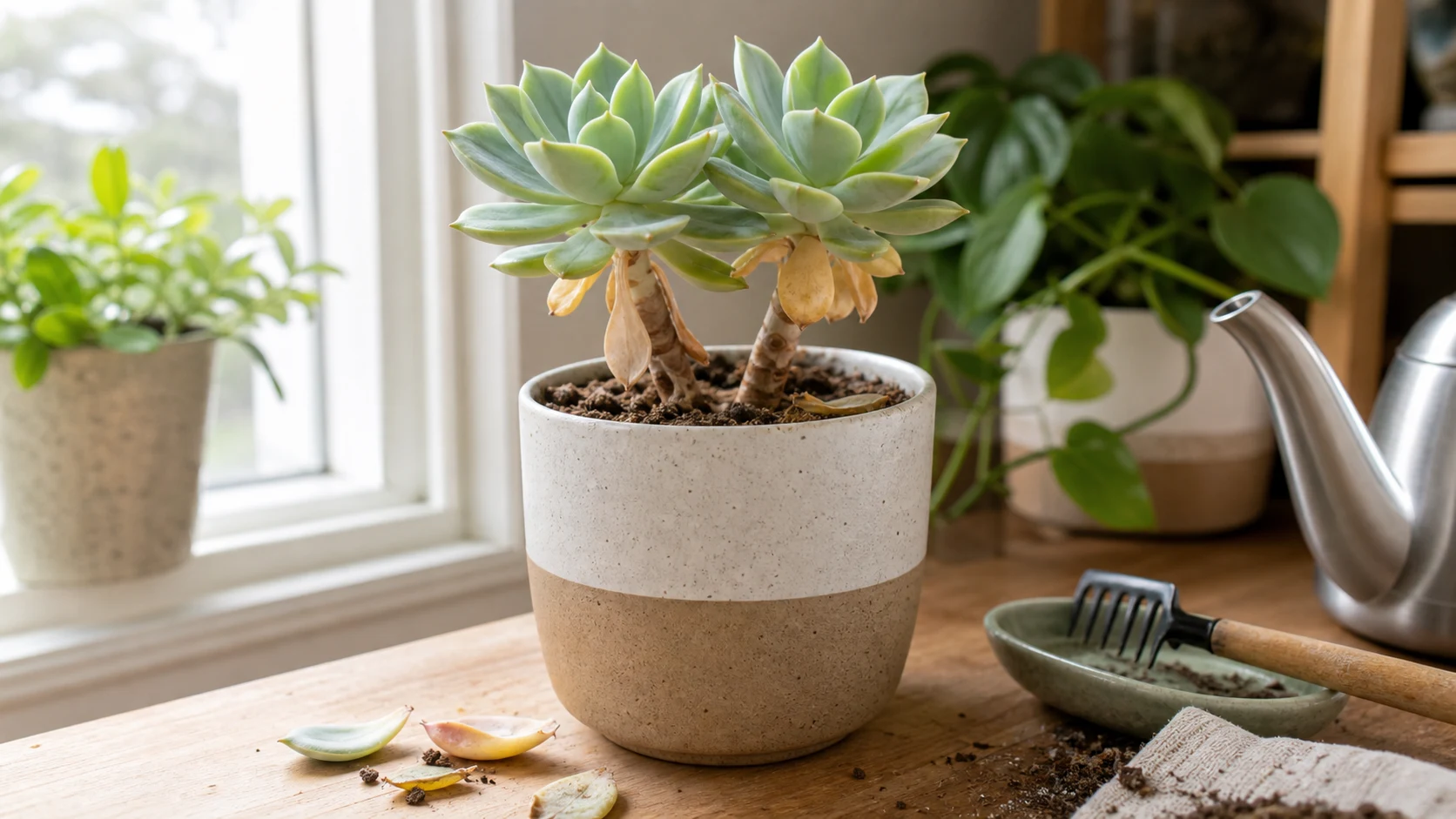
Dry lower leaves beside a firm succulent crown call for texture and drop-pattern checks before changing care.
Symptom Diagnosis Card: Start Here First
If you only have one minute, use this table before you change water, light, or soil.
| What you see | What the fallen leaf feels like | Most likely meaning | First move |
|---|---|---|---|
| Only the lowest leaves are dropping | Dry, papery, light | Normal aging | Do nothing except remove fully dry leaves if you want a cleaner base |
| Leaves are dropping from several levels | Soft, translucent, or squishy | Overwatering or early rot | Stop watering and inspect soil, drainage, and stem base |
| Leaves look thin or wrinkled before they fall | Dry, leathery, slightly collapsed | Underwatering or heat stress | Water deeply, then let the mix dry again before the next watering |
| Leaves still look plump but release easily after a move or repot | Firm, mostly healthy-looking | Stress or environmental change | Keep conditions stable for two to three weeks |
| The center is losing leaves too | Soft or unstable near the crown | Rot or severe stress | Check crown firmness and the stem base immediately |
That fast triage solves most of the panic. The big red flag is not the number of leaves on the soil. It is soft texture, center loss, or a dark mushy stem.
Why This Symptom Causes So Much Panic
Owners describing this problem in plant communities often say the same thing in different words: the leaves fell suddenly, they still looked healthy, and the watering routine seemed reasonable. That tells you two things.
First, sudden leaf drop can happen before the underlying cause feels obvious. Second, people often confuse normal lower-leaf loss with emergency decline, especially when the plant was recently moved, repotted, or watered a little differently than usual.
The qualitative owner signals behind this article point to four repeating confusion points:
- lower leaves shriveling and dropping get mistaken for overwatering when they may be normal aging or underwatering
- soft overwatered leaves keep dropping for a while even after watering stops
- sudden leaf drop after a move can be shock even when the crown is still healthy
- owners struggle most when the leaves look plump but come off too easily
Those are community patterns, not scientific prevalence data. They are useful because they mirror the exact decision readers are trying to make at home.
Is It Normal or a Problem?
Normal: Bottom Leaves Drying and Falling
The oldest leaves on a succulent are always the lowest ones, closest to the soil. As the plant pushes new growth from the center, those old leaves gradually shrink, dry out, and release. The plant is reclaiming stored resources before it lets them go.
You are probably looking at normal leaf cycling when:
- the fallen leaves are dry and papery, not soft or wet
- the drop is limited to the bottom row or two
- the center rosette still looks firm and healthy
- the plant is still producing new growth
A small pile of crispy leaves around the base of an otherwise healthy succulent is not a care emergency.
Not Normal: Rapid Drop, Soft Leaves, or Center Loss
Leaf drop becomes a troubleshooting problem when it spreads beyond the oldest leaves, when the fallen leaves feel waterlogged rather than dry, or when the center starts loosening too. Those signs point away from normal aging and toward a water, root, light, or stress issue.
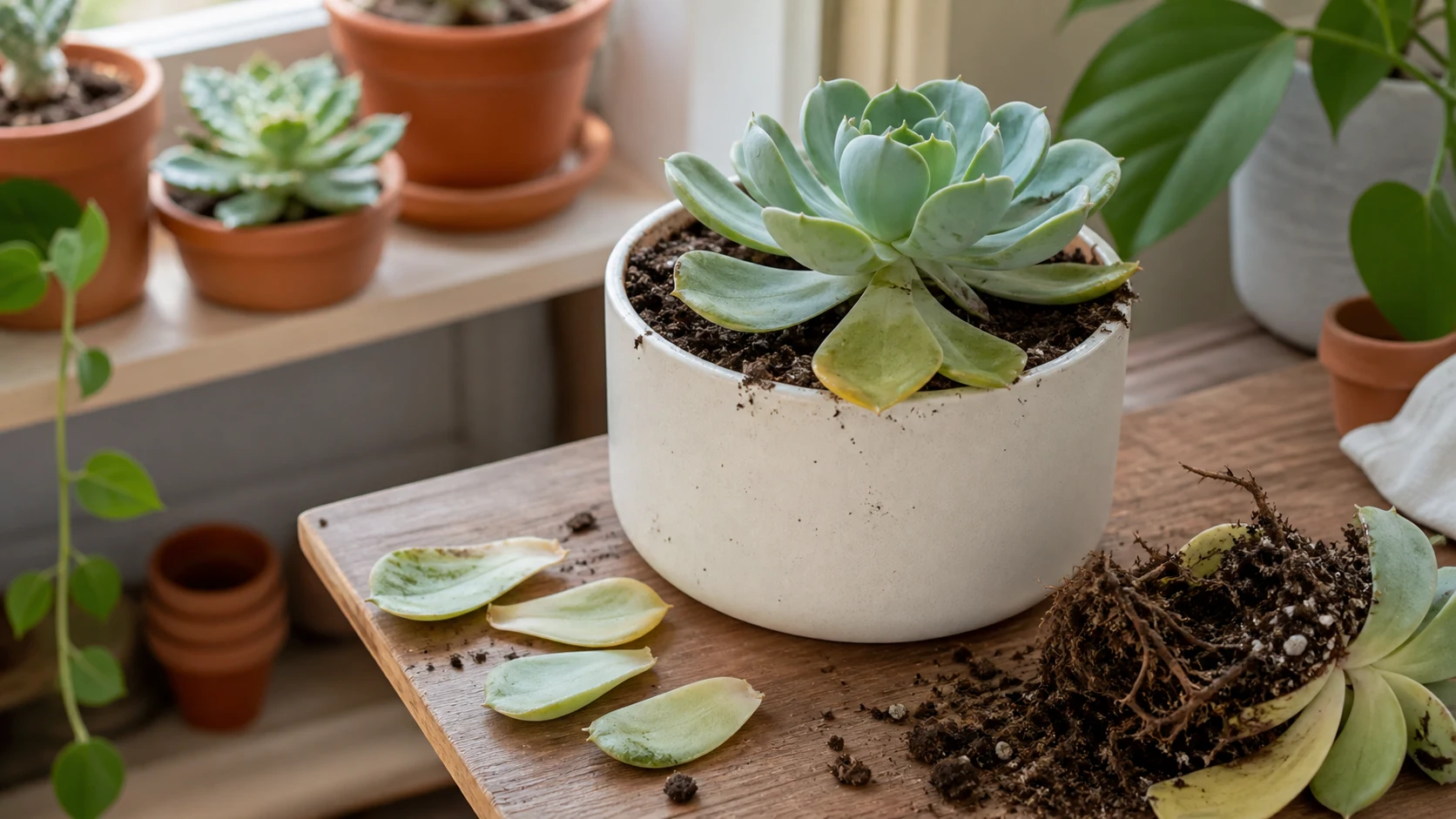
Soft leaves falling beyond the oldest row warrant a prompt soil, root, and crown inspection.
Read What the Leaf Is Telling You
Before diagnosing the cause, pick up one of the fallen leaves and examine it. Leaf texture is faster than relying on memory.
| Leaf texture | What it usually means | First check |
|---|---|---|
| Dry, papery, light | Natural aging at the base | Is the center still healthy and growing? |
| Soft, squishy, translucent | Overwatering or early rot | Has the soil stayed wet for several days? |
| Thin, wrinkled, leathery | Underwatering or heat stress | When did you last water thoroughly? |
| Plump but detached easily | Repotting stress or weak light | Did anything change recently? |
| Mushy or dark near attachment point | Rot spreading upward | Check stem base and roots soon |
University of Minnesota Extension notes that excess water trapped in the soil causes rot and decay quickly in succulents. That is why soft, translucent leaf drop deserves faster action than dry lower-leaf drop.
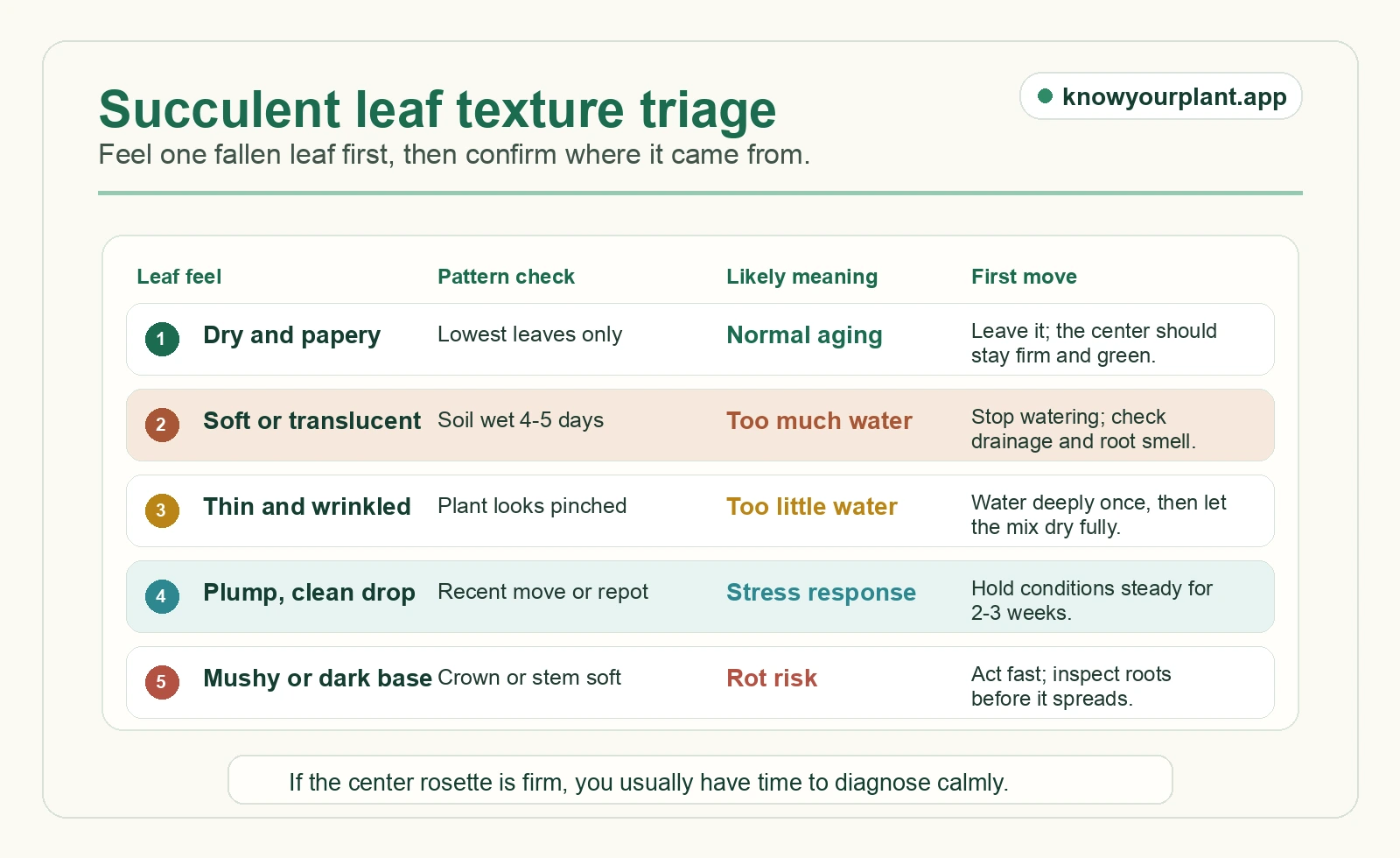
Use the leaf’s feel and where it came from before changing water, light, or repotting plans.
Decision Tree: What to Check in the Next Five Minutes
Use this order when the cause is not obvious.
- Check the center first. If the crown feels soft or loose, move straight to rot checks.
- Look at where the drop is happening. Bottom-only loss often means normal aging or thirst. Whole-plant loss is more serious.
- Feel one fallen leaf. Soft points toward too much water. Thin and wrinkled points toward too little.
- Check the soil and drainage. If the mix is still wet days after watering or the pot lacks drainage, overwatering moves to the top of the list.
- Review the last two to four weeks. A recent move, repot, big light change, or temperature swing can explain sudden drop even when the roots are still viable.
If the crown is firm, the stem is healthy, and the issue clearly started after a recent change, stable care is usually better than dramatic intervention.
Why Succulent Leaves Fall Off: The Main Causes
Overwatering
This is the most common cause of abnormal leaf drop. Too much water makes leaf cells swell and break down. The leaves turn soft, pale, yellowed, or translucent and detach easily.
University of Minnesota Extension stresses two basics that matter here: succulents need well-drained sandy soil, and they need pots with drainage holes. When excess water sits around the roots, rot can move faster than many owners expect.
Check the soil a few centimeters down. If it has stayed wet for several days, overwatering is the likely cause. Also check the pot itself. A pot without drainage can stay wet at the bottom even when the surface feels dry.
If the stem base has softened or darkened, root rot may already be underway. See our guide on root rot treatment for the next steps.
Underwatering
Underwatering causes a different kind of leaf loss. The plant starts drawing moisture from older leaves first, so they become thin, wrinkled, and leathery before dropping.
The confusion is that lower-leaf thirst can look similar to normal aging. The clue is the rest of the plant. If multiple leaves across the plant look pinched or dehydrated, not just the oldest row, the plant probably needs a full watering rather than more waiting.
Water deeply until moisture runs out the drainage hole, then let the mix dry completely before the next watering.
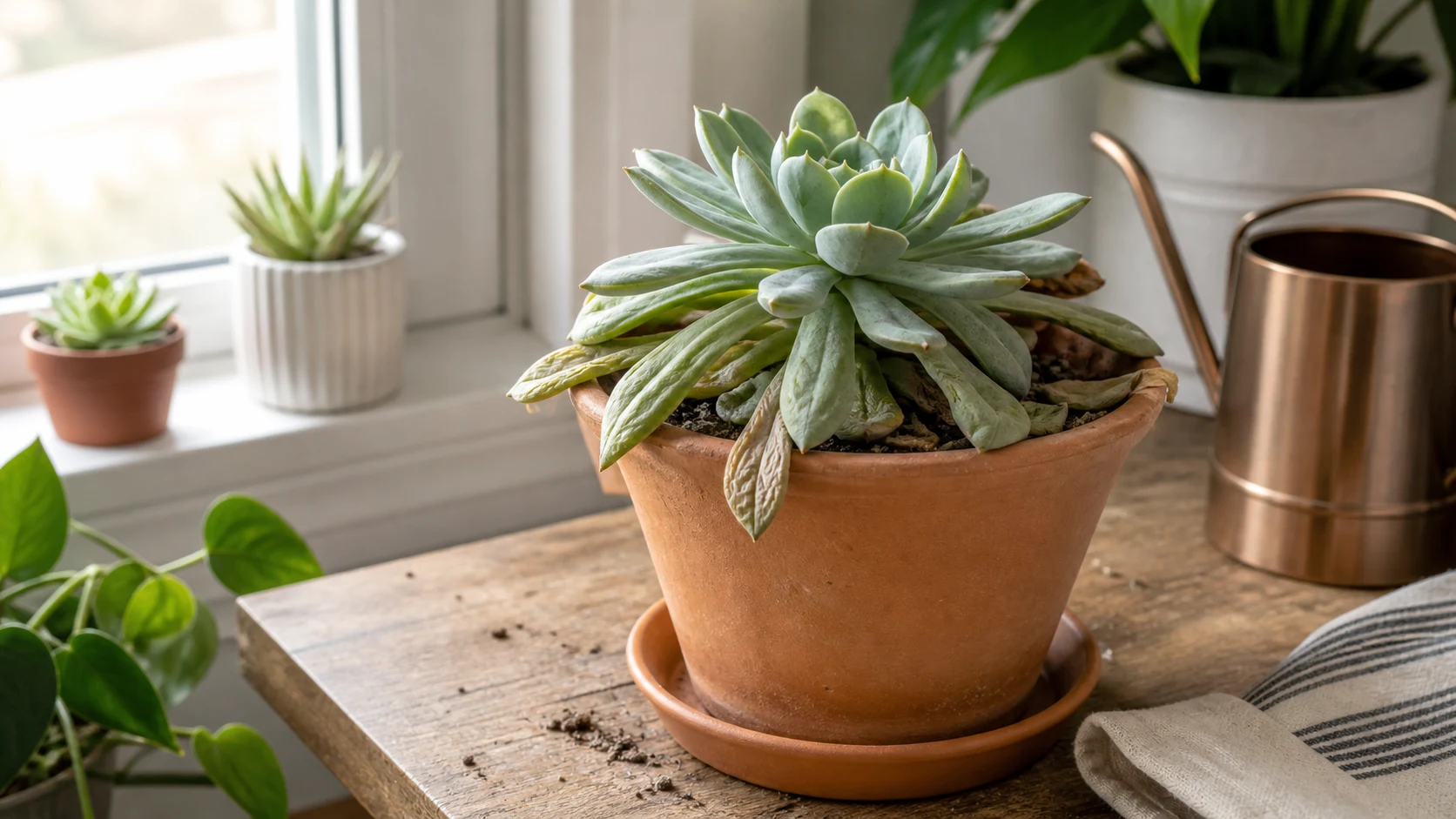
Wrinkled leaves across the rosette point to dehydration and a thorough soak after confirming dry soil.
Weak Light or Etiolation
Succulents need abundant light to stay compact. In weak indoor light they stretch, the spaces between leaves widen, and the plant becomes more fragile. That stretched growth is more likely to shed leaves from minor contact or general instability.
If your plant is leaning hard toward a window, fading in color, or growing taller and looser than before, light is probably part of the problem. For more help indoors, see our guide on grow lights for indoor plants. If you are not sure whether you picked the right species for your room in the first place, our indoor succulent plants guide explains which types actually hold up better indoors.
Repotting or Moving Shock
Leaf drop after a repot, a move to a new window, or a recent purchase is often stress rather than a permanent decline. The soil drains differently, the light angle changes, and the root system may need time to settle.
Penn State related extension guidance emphasizes porous mix and proper drainage for indoor succulent containers. In early recovery, medium and pot choice matter more than trying to fine-tune watering frequency every few days.
When stress is the cause, the crown usually still looks healthy, and the fallen leaves do not look rotten.
For more detail on repotting correctly, see our guide on how to repot plants.
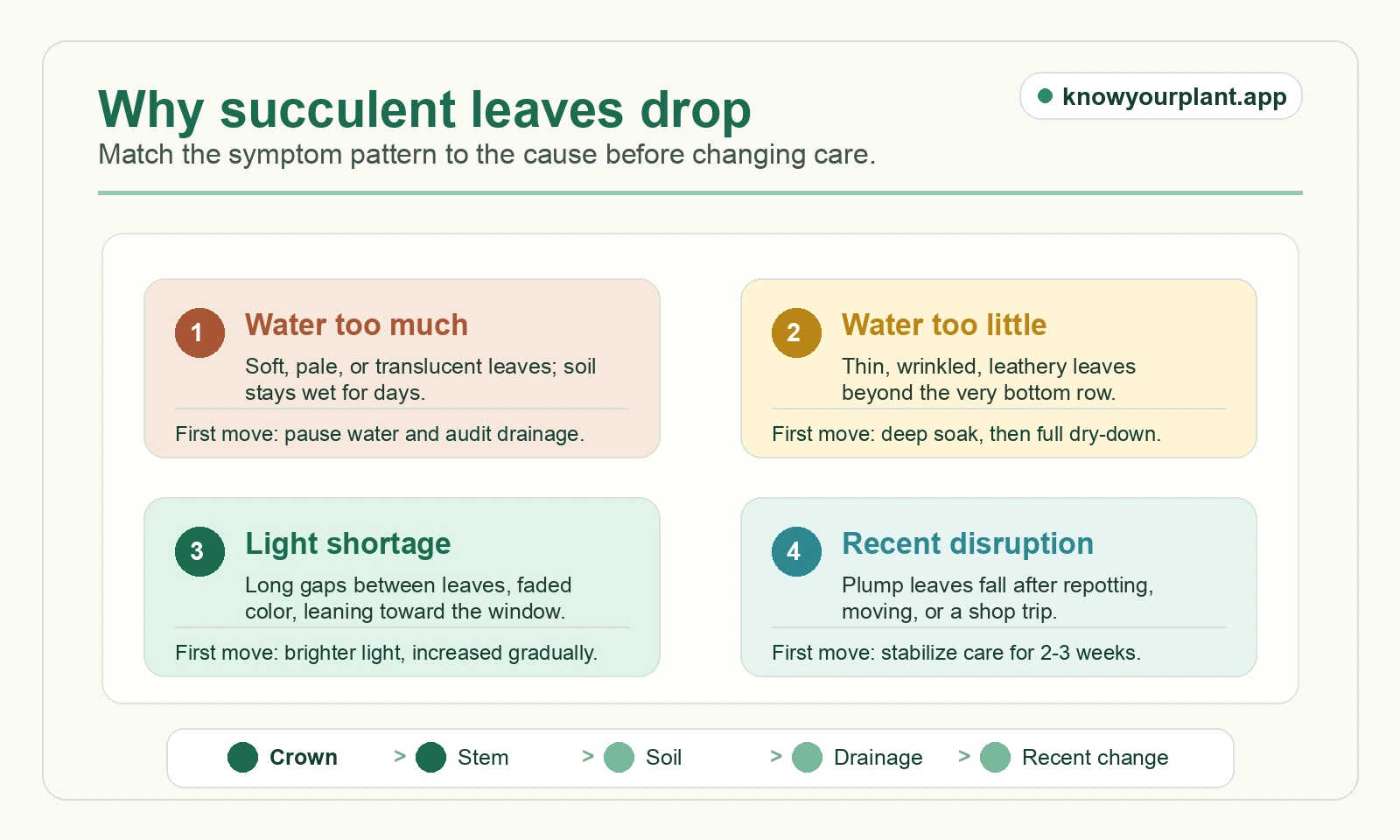
The fastest route is symptom pattern first, then one careful first move instead of several care changes at once.
Seasonal Note: Why Timing Changes the Pattern
Spring and summer: Active growth means more visible lower-leaf cycling. This is when harmless bottom-leaf shedding often looks most dramatic.
Autumn: Water use slows before many owners adjust their routine. Soft lower leaves that start dropping in autumn are often the first sign that the summer watering rhythm is now too frequent.
Winter: Low light plus wet soil is the classic problem combination. Succulents usually need much less water in winter than tropical houseplants, and short days make overwatering more dangerous.
If the problem started after a seasonal shift and nothing else changed, adjust the watering interval before making three other changes at once.
Recovery Checklist: What to Inspect in Order
- Crown firmness. Press gently on the center. Firm means the growing point is still healthy. Mushy means trouble.
- Stem base. Dark patches or a soft base suggest rot working upward.
- Soil dryness. Wet soil days after watering points toward too much moisture.
- Drainage. Make sure the pot drains and the hole is not blocked.
- Recent changes. New window, new soil, new pot, or a recent move can explain sudden stress.
That sequence helps you avoid changing the wrong thing first.
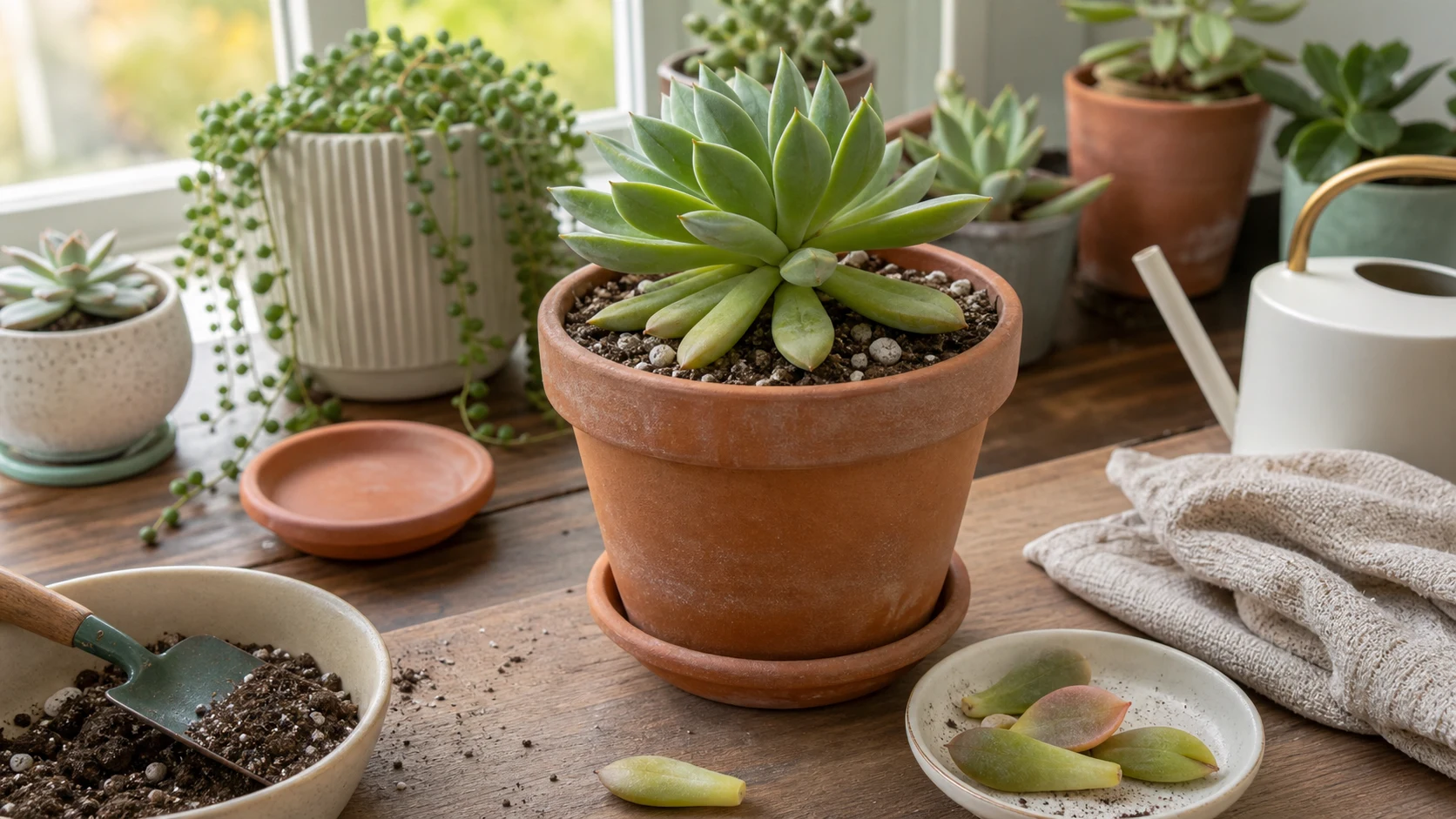
Check crown, stem, soil, drainage, then recent changes before choosing a recovery step.
What to Do Depending on What You Found
Overwatering: Stop watering. Let the soil dry fully. If the pot has no drainage or the stem base is soft, inspect roots and consider repotting into a faster-draining setup. If the leaves are also going pale before they drop, compare the pattern with our guide to why plant leaves turn yellow.
Underwatering: Water deeply, then let the soil dry again before the next watering. Small sips do not fix a dehydrated succulent well.
Light problem: Move the plant somewhere brighter, but not from deep shade straight into harsh sun in one step.
Repot or move stress: Keep the environment stable and resist the urge to over-correct with extra watering.
Common Mistakes That Make Leaf Drop Worse
Watering by habit instead of soil state. Succulents do not want a calendar as much as they want a dry-down cycle.
Assuming every dropped lower leaf means overwatering. Dry bottom leaves are often normal or a thirst signal, not proof of rot.
Changing too many variables at once. If you move the plant, repot it, and change the watering schedule in the same week, you will not know what helped or hurt.
Leaving the plant in weak light after cutting back water. A succulent in dim conditions uses water slowly and also struggles to recover.
Panic-propagating before you check the crown. Fallen leaves can sometimes propagate, but the first priority is deciding whether the parent plant is still structurally healthy.
When to Act Fast vs. When to Wait
Act fast if:
- the crown feels soft or mushy
- the stem near the soil line is dark, wet-looking, or collapsing
- the soil smells rotten
- leaves are dropping from all over the plant and the whole succulent is shrinking fast
Wait and observe if:
- only the lowest leaves are dropping and they are dry, not mushy
- the center still looks firm and normal
- the plant was recently moved or repotted and otherwise looks structurally sound
- you already corrected an obvious seasonal watering mismatch
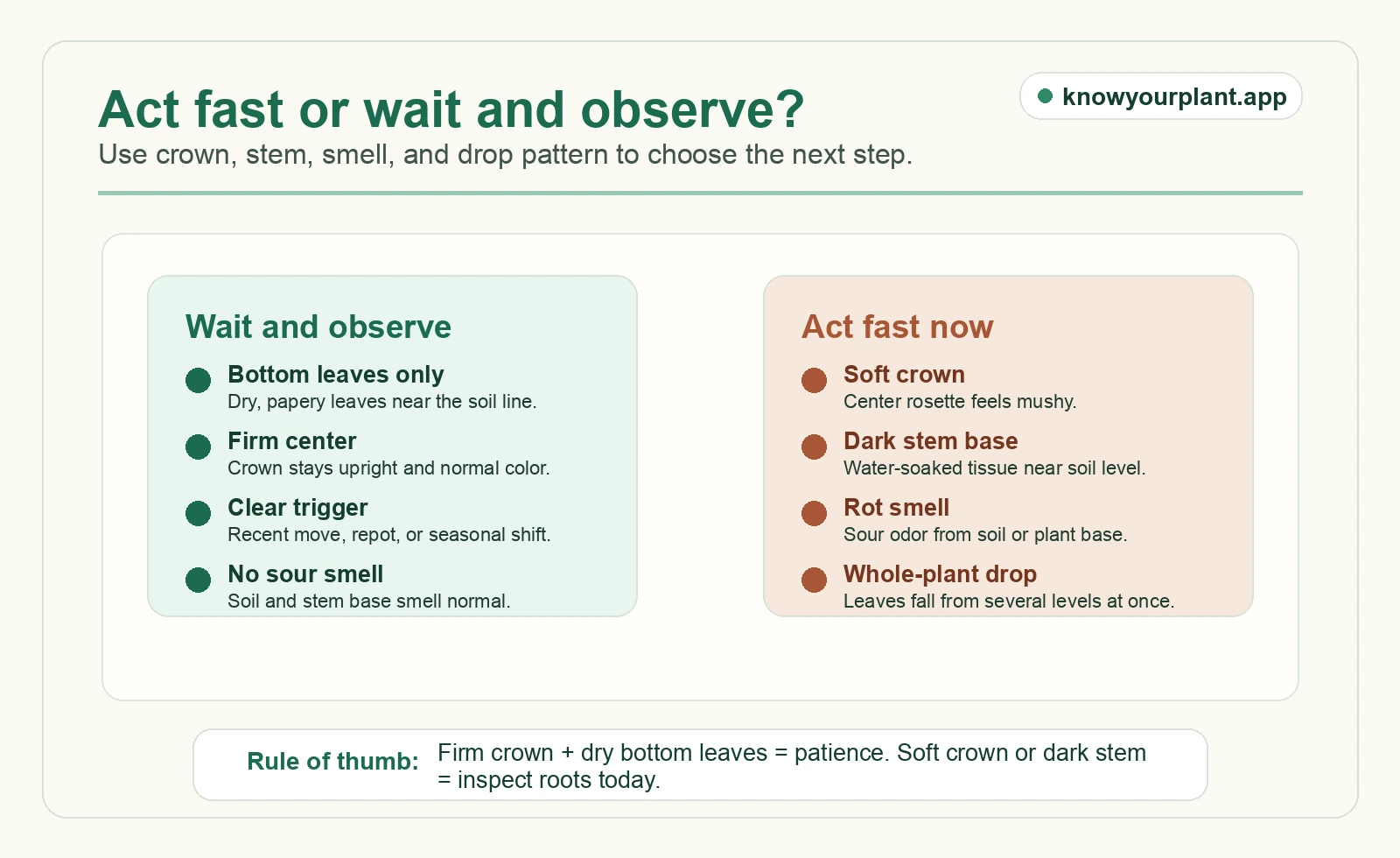
Use the crown and stem gates to decide whether this is a watch-and-wait case or a root inspection today.
Expert Note: What the Higher-Trust Sources Agree On
The strongest source overlap is refreshingly practical. University of Minnesota Extension emphasizes abundant light, fast drainage, and how quickly excess water can turn into rot. Illinois Extension guidance surfaced through search reinforces low water-holding soil and the idea that succulents do best when the mix dries properly instead of staying evenly moist. Penn State related extension guidance points the same way, stressing porous media and drainage for indoor succulent containers.
That agreement matters because it keeps the first-response plan simple. Check drainage and soil wetness first, then light, then recent stress. Community examples are helpful for owner language and expectation-setting, but the core care logic stays the same.
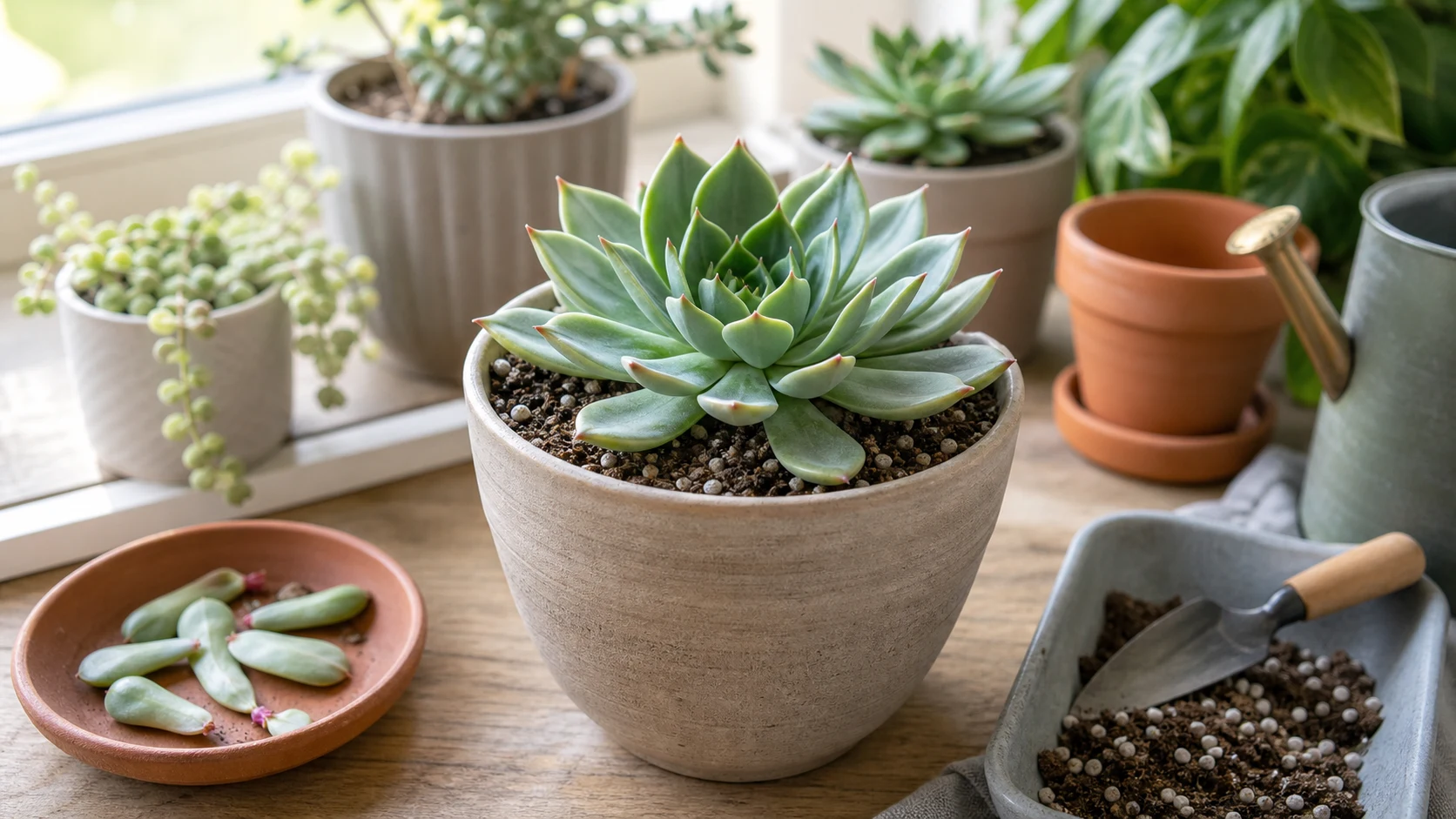
Bright light, porous media, and a draining container are the shared foundations of reliable succulent care.
Frequently Asked Questions
Why are my succulent’s bottom leaves falling off?
Usually because they are old. Succulents recycle resources from their oldest lower leaves before dropping them. If those leaves are dry and papery and the center is still healthy, the plant is probably behaving normally.
Is it normal for succulent leaves to fall off when you touch them?
Old dry leaves near the base often detach easily, which is fine. Leaves all over the plant that fall off from light contact, especially if they are soft or translucent, point toward stress instead.
How do I know if my succulent is overwatered or underwatered?
Feel a fallen leaf. Soft and translucent points toward overwatering. Thin and wrinkled points toward underwatering. Then confirm with the soil and drainage setup.
Can I save a succulent that has lost most of its leaves?
Yes, if the crown and upper stem are still firm. If the center is mushy or the stem base is collapsing, the odds are much worse.
Should I remove dead leaves from my succulent?
Yes, once they are fully dry and release cleanly. Do not force off leaves that are still attached and fleshy.
Why is my succulent dropping leaves after repotting?
Repotting changes root conditions, drainage, and often light. Some temporary leaf drop can be a stress response as long as the center still looks healthy.
Do succulent leaves grow back after falling off?
No, the bare section on the stem stays bare. The plant keeps making new leaves from the center if the growing point stays healthy.
Can I use fallen succulent leaves for propagation?
Yes, if the leaf is intact, healthy, and not mushy from rot. Leaves damaged by overwatering usually do not propagate well.
Download KnowYourPlant for personalized plant care reminders, watering schedules adjusted to your plant and home conditions, and built-in diagnosis support when leaves start behaving oddly.
Methodology
This guide was refreshed on June 17, 2026 using live research collected on June 2, 2026. It combines search review for the main query and close variants, recurring owner confusion surfaced through Reddit snippets in search results, and care guidance checked against University of Minnesota Extension plus extension guidance surfaced for Illinois and Penn State. Community examples are used as qualitative signal, not statistical proof.
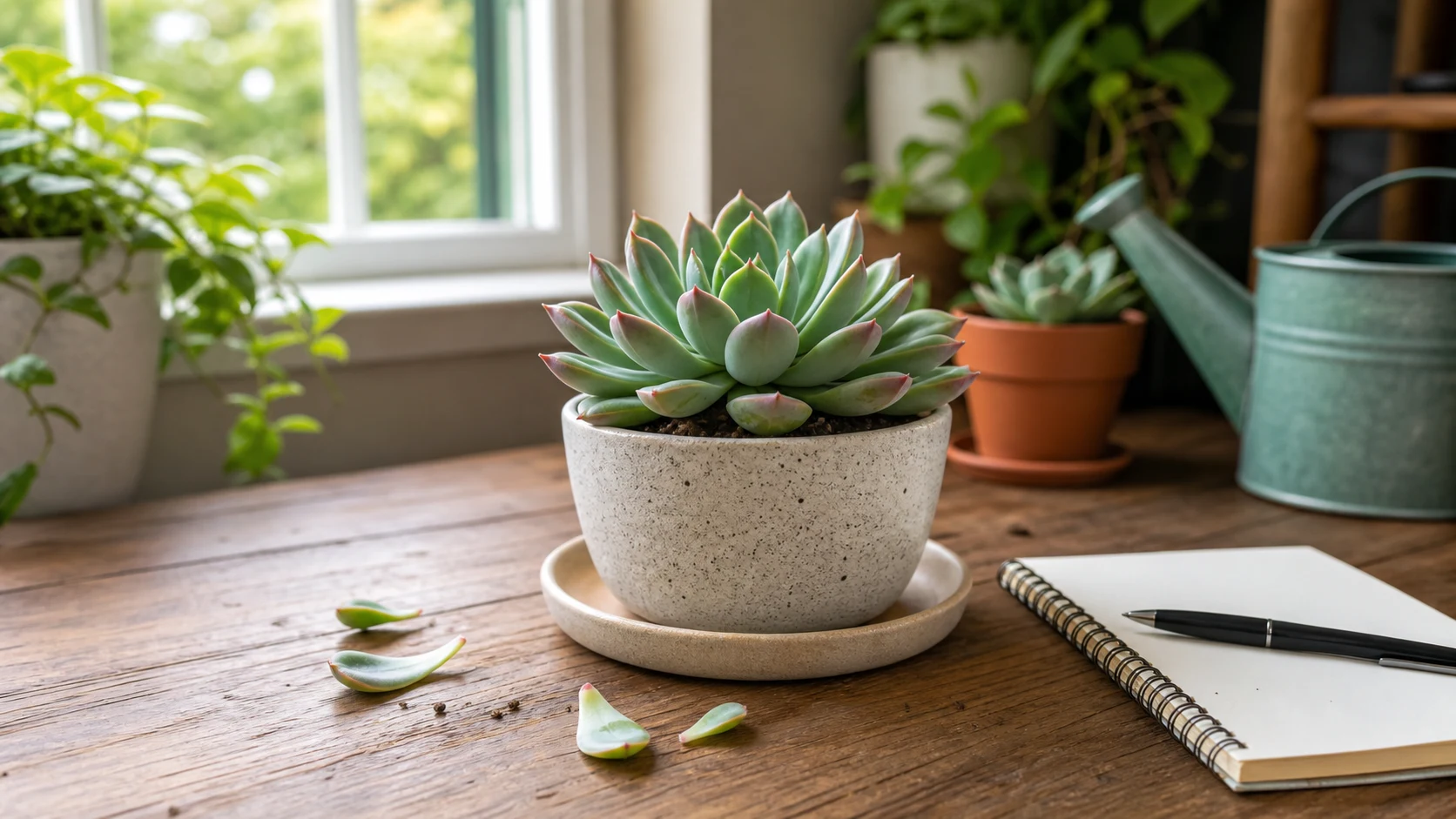
Pair observed leaf evidence with documented source review before turning owner reports into care guidance.
Last updated: June 17, 2026.