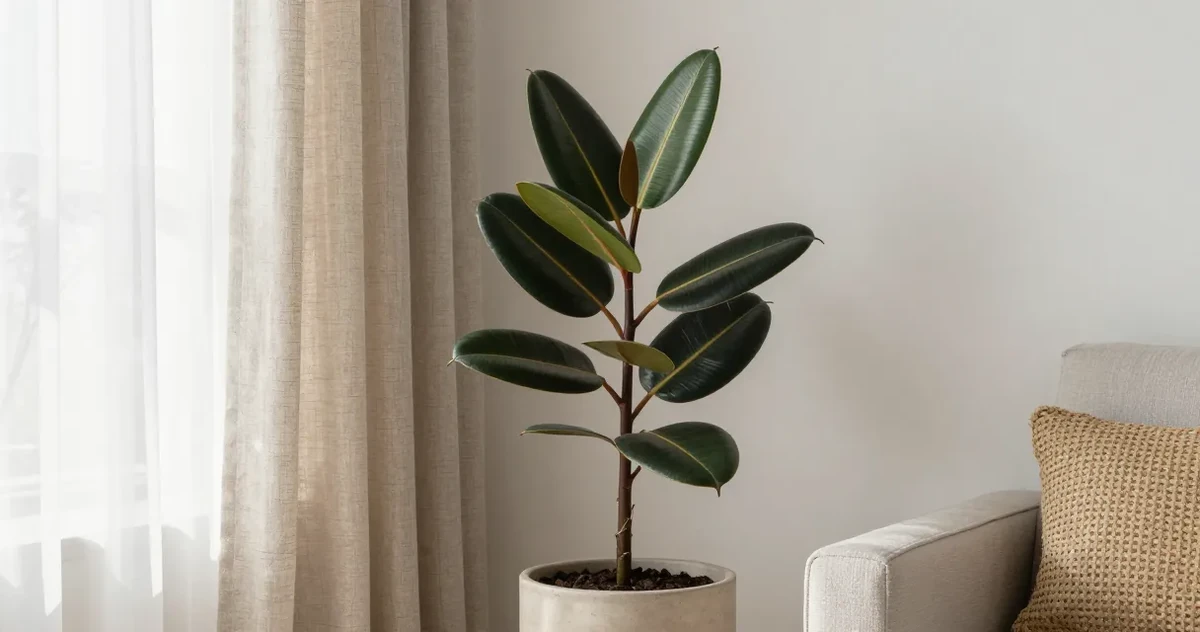
If you’ve ever walked past a tall, glossy-leafed plant in a coffee shop or a friend’s living room and thought “I want one of those,” you were probably looking at a rubber tree. Rubber tree plant care gets a reputation for being tricky, but most of the drama comes from one or two misunderstood habits. Once you know them, this plant is one of the more rewarding things you can grow indoors. If you want the shorter baseline routine first, start with the rubber plant care guide.
Ficus elastica is the botanical name. The “rubber” in the name comes from the milky latex sap inside the stems and leaves, which was historically used to make rubber before Hevea brasiliensis took over commercially. Indoors, that sap is mostly a reminder to wash your hands after pruning and to keep the plant away from curious pets.
What Most Care Guides Miss
Most rubber tree care guides tell you to “check your watering” when leaves start falling. That’s not wrong, but it’s incomplete in a way that sends a lot of owners in the wrong direction.
The real problem is that rubber trees drop leaves in response to any significant stress, and several very different stresses produce the exact same symptom. Overwatering looks like leaf drop. Underwatering looks like leaf drop. A cold draft looks like leaf drop. Moving the plant to a new room looks like leaf drop.
When an owner adjusts their watering schedule in response to what is actually a location-change problem, they often make things worse – or they overcorrect in a way that creates a second problem on top of the first.
The practical first check: Before changing anything, ask one question: what changed in the last two to four weeks? A new spot, a new season, a heater or AC unit turning on nearby, a different window, a recent repot? That change is almost certainly your answer. Stabilize conditions first, then give the plant three to four weeks before drawing conclusions.
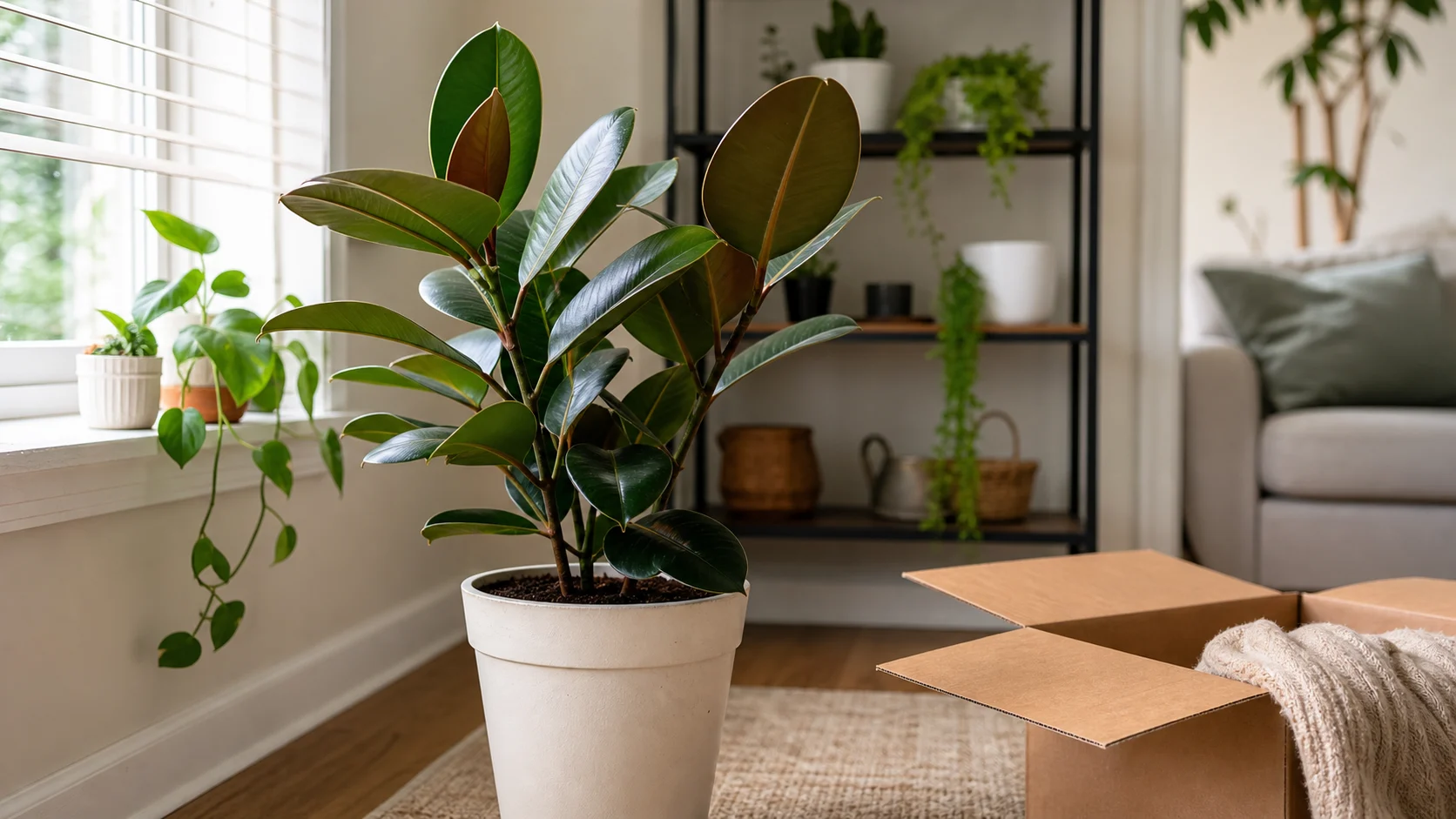
An open moving box makes the recent change visible: stabilize a rubber tree’s new location before adjusting its care routine.
Generic care advice rarely foregrounds this because it organizes information by care category (water, light, soil) rather than by the diagnostic pattern most owners actually face.
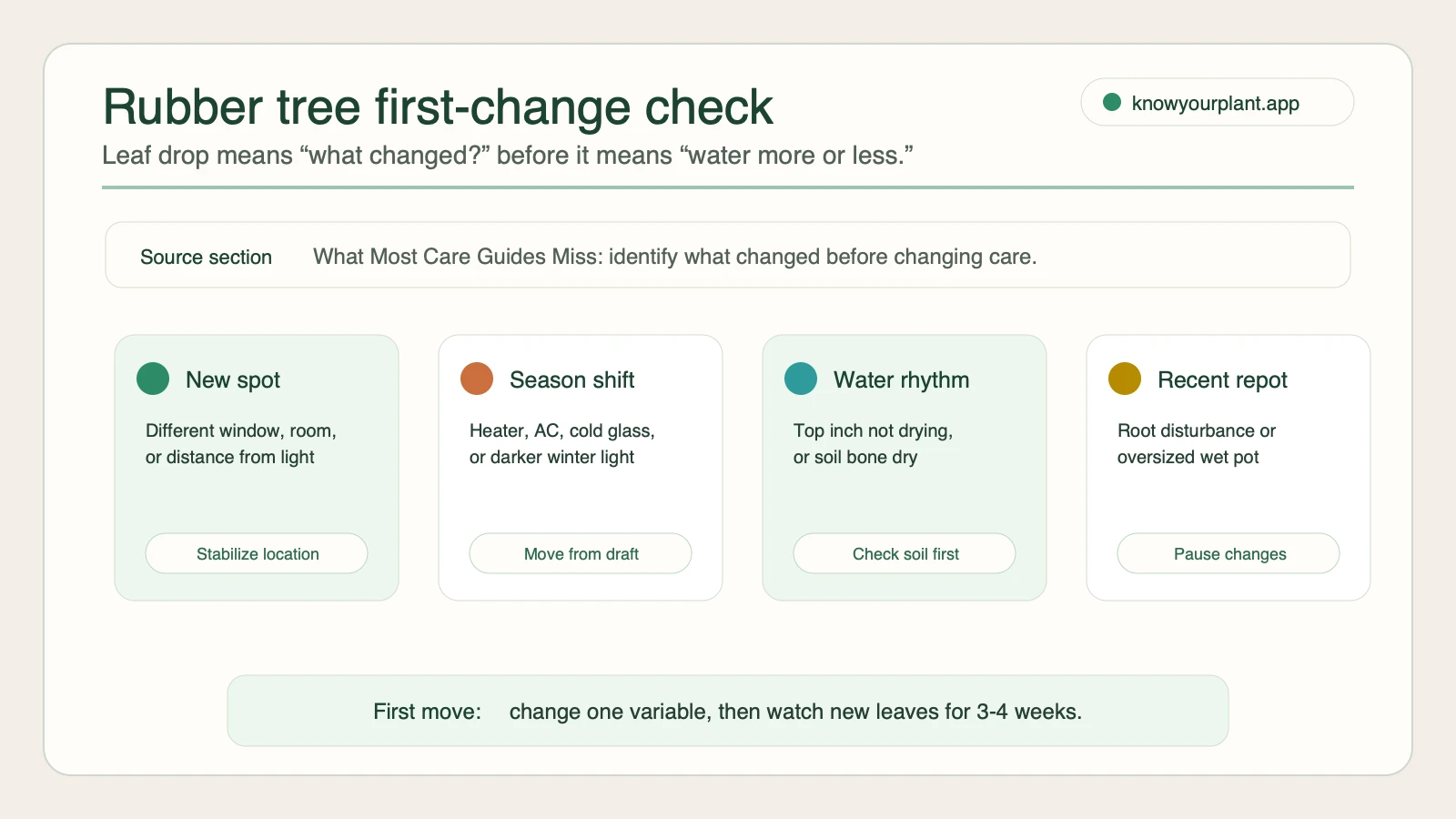
Before changing the routine, identify what changed around the plant. Rubber tree leaf drop is often a location, season, or recent-repot signal before it is a watering problem.
Is This the Right Rubber Plant?
“Rubber plant” is one of those names that gets used loosely enough to cause real confusion, and if you landed here troubleshooting a plant that is not behaving the way this guide describes, it is worth a quick check.
Ficus elastica is what most people mean: a tall, upright plant with large, thick, glossy leaves, often dark green but also available in burgundy and variegated forms. It is the plant this guide covers.
Peperomia obtusifolia, sometimes called “baby rubber plant,” is a completely different plant. It is much smaller, lower-growing, and easier to keep in most home conditions. If your plant is compact with oval leaves and no visible sap when you snap a stem, you have a Peperomia, not a Ficus.
Hevea brasiliensis is the commercial rubber tree, a large outdoor tree from South America. You will not see it sold as a houseplant.
This distinction matters for two reasons. First, care advice differs significantly between these species. Second, pet toxicity varies: Ficus elastica is toxic to cats and dogs, while Peperomia obtusifolia is generally considered non-toxic. If you are searching because of a pet concern, confirm which plant you actually have before acting on this guide.
Identification Snapshot
| Checkpoint | What to look for in Ficus elastica | Why it matters |
|---|---|---|
| Leaf texture | Thick, leathery, glossy leaves with a prominent midrib | Confirms you are dealing with a large-leaf ficus, not a softer peperomia |
| Growth habit | Upright central stem that wants to become a small indoor tree | Explains why pruning changes the shape so much |
| Sap | White milky latex sap appears when a leaf or stem is cut | Useful for plant ID and a reminder to wear gloves if your skin is sensitive |
| Common lookalike | Baby rubber plant stays compact, has smaller leaves, and does not behave like a ficus tree | Prevents owners from applying the wrong watering and pruning advice |
| Pet risk | Ficus elastica can irritate pets if chewed or swallowed | Important if the search started because of a cat or dog incident |
Lookalikes and Confused-With Plants
| Plant | How people mix it up with a rubber tree | Why the distinction matters |
|---|---|---|
| Baby rubber plant (Peperomia obtusifolia) | Similar common name and glossy leaves | It stays smaller, prefers a different watering rhythm, and is generally considered pet-safe |
| Burgundy rubber plant (Ficus elastica cultivar) | Darker leaf color makes owners think it needs different care | It is still a rubber tree and follows the same core light and watering logic |
| Commercial rubber tree (Hevea brasiliensis) | Shared “rubber tree” name | It is not the normal indoor houseplant this guide is about |
What Rubber Trees Actually Need
The rubber tree is a tropical plant from Southeast Asia. In the wild it grows into a large canopy tree, which tells you something useful: it is built for warmth, filtered light, and soil that drains between rains. It is not built for cold drafts, sitting in wet soil, or being moved around constantly.
Light: Bright, But Not Punishing
Rubber trees do best in bright indirect light. Colorado State University Extension notes that direct, unfiltered sun can damage rubber tree leaves, so a sheer curtain between the plant and a harsh south or west-facing window in summer is genuinely useful.
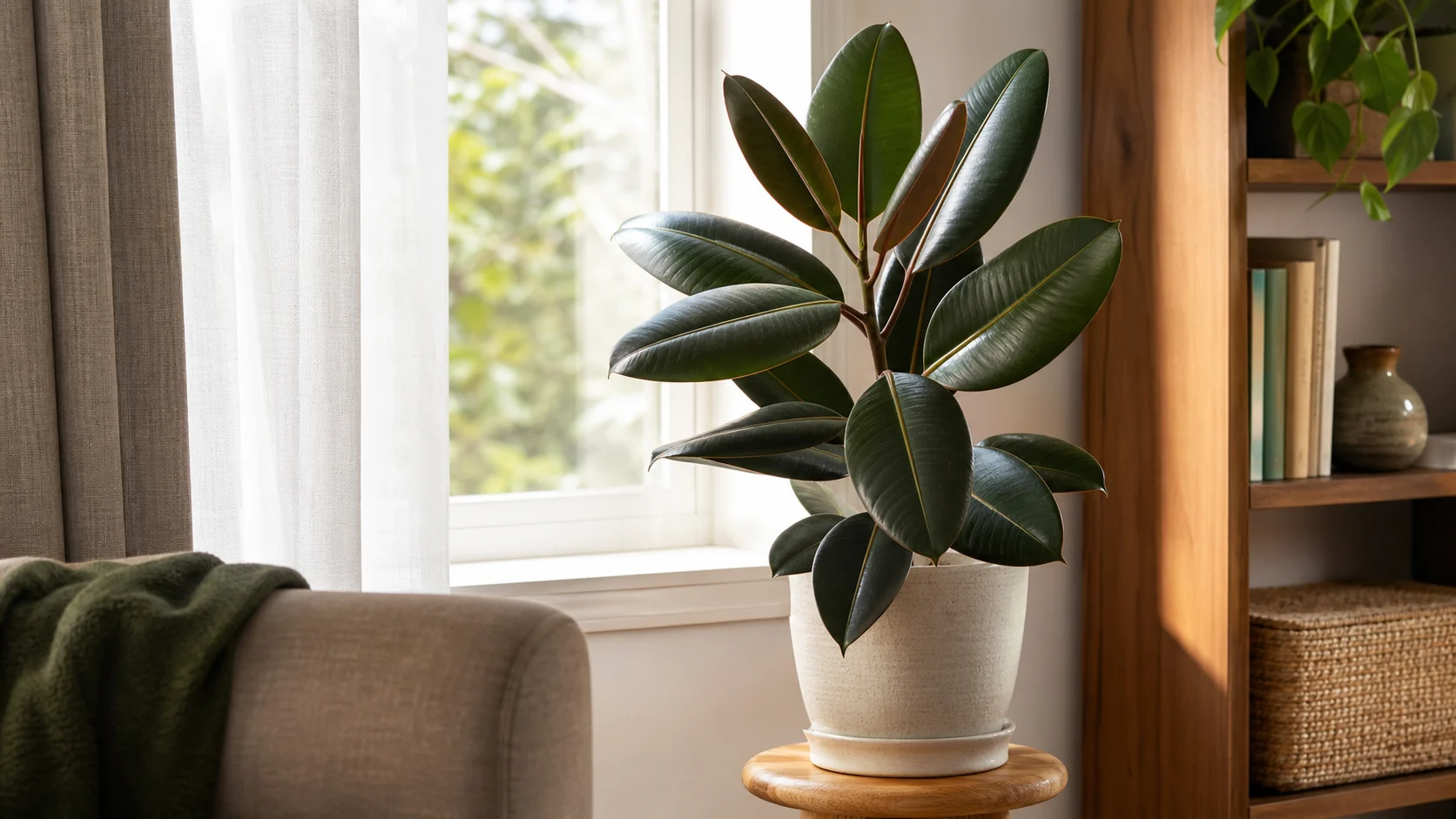
A sheer curtain softens strong window light while keeping a rubber tree in the bright conditions it needs.
A few hours of gentle morning sun from an east-facing window tends to suit them well. A north-facing window that barely brightens at midday is usually not enough for long-term health: the lower leaves will thin out and eventually drop. If your space is genuinely dim, a grow light for indoor plants can bridge the gap, especially through winter when natural light drops significantly.
Rubber plants can adapt to lower light conditions over time, as Clemson Cooperative Extension notes, but “adapting” means slower growth and some leaf shedding during the transition, not thriving. Start bright and reduce light gradually if your space requires it.
Watering: Less Often Than You Think
The most common mistake with rubber trees is watering too frequently. These plants store water in their thick, waxy leaves, and their roots dislike sitting in persistently wet soil.
Clemson Cooperative Extension’s guidance is worth internalizing: water thoroughly, then allow the soil to dry slightly between waterings. Both halves matter equally. “Thoroughly” means watering until it runs out the drainage hole, not a small splash at the surface. “Dry slightly” means the top inch of soil should feel dry to the touch before you water again.
A simple check: push your finger about an inch into the soil. Damp? Wait. Dry at that depth? Give it a full drink. In summer, that might be every seven to ten days. In winter, stretch it to two weeks or longer: the plant slows down significantly and the soil takes longer to dry.
Colorado State University Extension highlights something worth noting: both too much and too little water can cause leaf drop. That means the same symptom points in two opposite directions, which is exactly why “just water it less” is often the wrong first move without checking which direction you’re actually off in.
Always use a pot with drainage holes. Without them, even a careful watering schedule will eventually cause root problems. If you’re already dealing with standing water in the root zone, the root rot treatment guide walks through what to look for and how to respond.
Soil and Repotting
A well-draining potting mix is what you want. Standard indoor potting soil works, though adding a handful of perlite helps if your mix tends to stay wet. Rubber trees prefer to be slightly snug in their pots rather than in a container that is too large: an oversized pot holds extra moisture the roots cannot use, which raises the risk of root problems.
When the roots start circling the bottom of the pot or growing out of the drainage holes, it is time to move up. Knowing when to repot plants matters here: the right timing is spring, when the plant is entering its active growing period. The repotting guide covers the full process if you want to walk through it step by step.
Temperature and Drafts
Rubber trees are sensitive to cold and to sudden temperature changes. NC State Extension Gardener Plant Toolbox specifically identifies cold temperature drops as a distinct cause of leaf loss in Ficus elastica, separate from watering problems – a useful reminder that the same symptom has more than one trigger.
These plants prefer temperatures between 15°C and 30°C (60°F to 85°F) and dislike being near air conditioning vents, cold windows in winter, or doorways where outside air comes in. If the plant was fine for months and then started dropping leaves after a season change, check whether a vent or window that was not near the plant before is now close enough to affect it.
Pruning for a Bushier Shape
Left alone, rubber trees tend to grow tall and leggy: one main stem reaching upward with leaves concentrated near the top. If you want a fuller, more branching plant, pruning is the lever.
Where to cut: just above a leaf node – the point where a leaf meets the stem. Cutting here signals the plant to redirect energy to dormant buds lower on the stem, which push out as new side shoots rather than continuing upward.
When to cut: spring is best. The plant has energy to respond and the full growing season ahead to fill out.
What to expect: after you cut, milky white sap appears at the cut end. Wipe it away with a damp cloth and wear gloves if your skin is sensitive to latex. New side shoots typically appear within a few weeks. Two to three branches usually emerge from a single cut, so one intervention goes a long way.
Deciding how to shape your plant:
| Goal | Approach |
|---|---|
| Taller, tree-like plant | Leave the main stem; only remove crossing or damaged branches |
| Bushier, fuller silhouette | Top the main stem above a node in spring; repeat on side branches once they develop |
| Propagate while pruning | Take the off-cut straight to water or moist soil rather than discarding it |
| Manage height in a small space | Cut back by one-third in spring; the plant responds well to moderate hard pruning |
If you top the plant and want it to branch further, repeat the process on the new side shoots once they have developed three to four leaves of their own.
Care Cards
| Care card | Baseline move | Warning sign if you miss it |
|---|---|---|
| Light | Keep the plant in bright indirect light with only gentle morning sun | Long gaps between leaves, slowed growth, and lower-leaf loss |
| Water | Water deeply, then wait until the top inch dries | Yellowing lower leaves in soggy soil or limp leaves in bone-dry soil |
| Soil and pot | Use a draining mix and a pot with drainage holes | Soil stays heavy for days and roots begin to rot |
| Temperature | Keep it warm and away from sudden drafts | Sudden leaf drop after seasonal changes or vent exposure |
| Pruning | Cut above a node in spring if you want branching | Leggy top growth with no bushier side shoots |
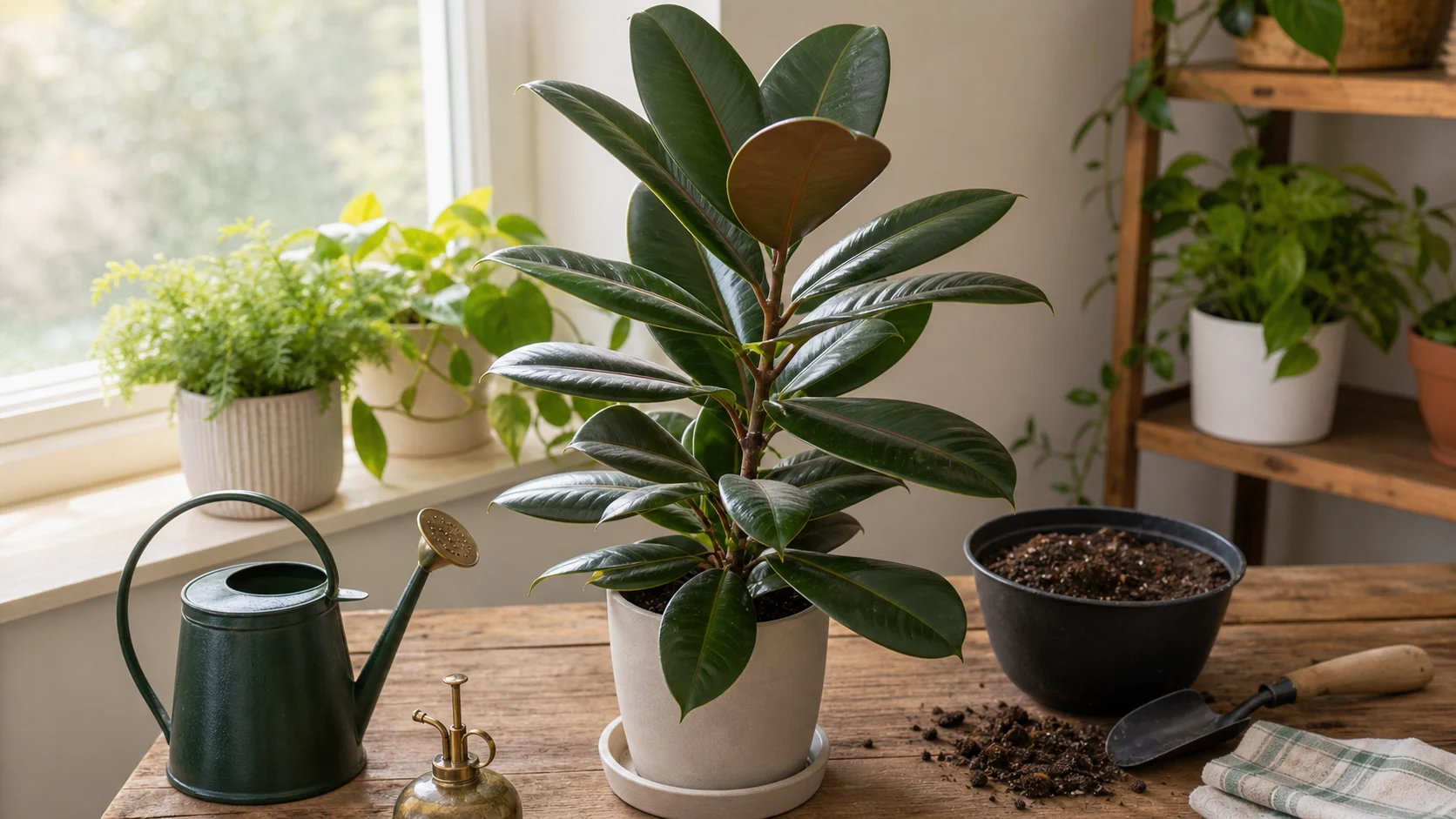
Bright light, a draining pot, measured watering, and simple tools create the practical baseline behind the care cards.
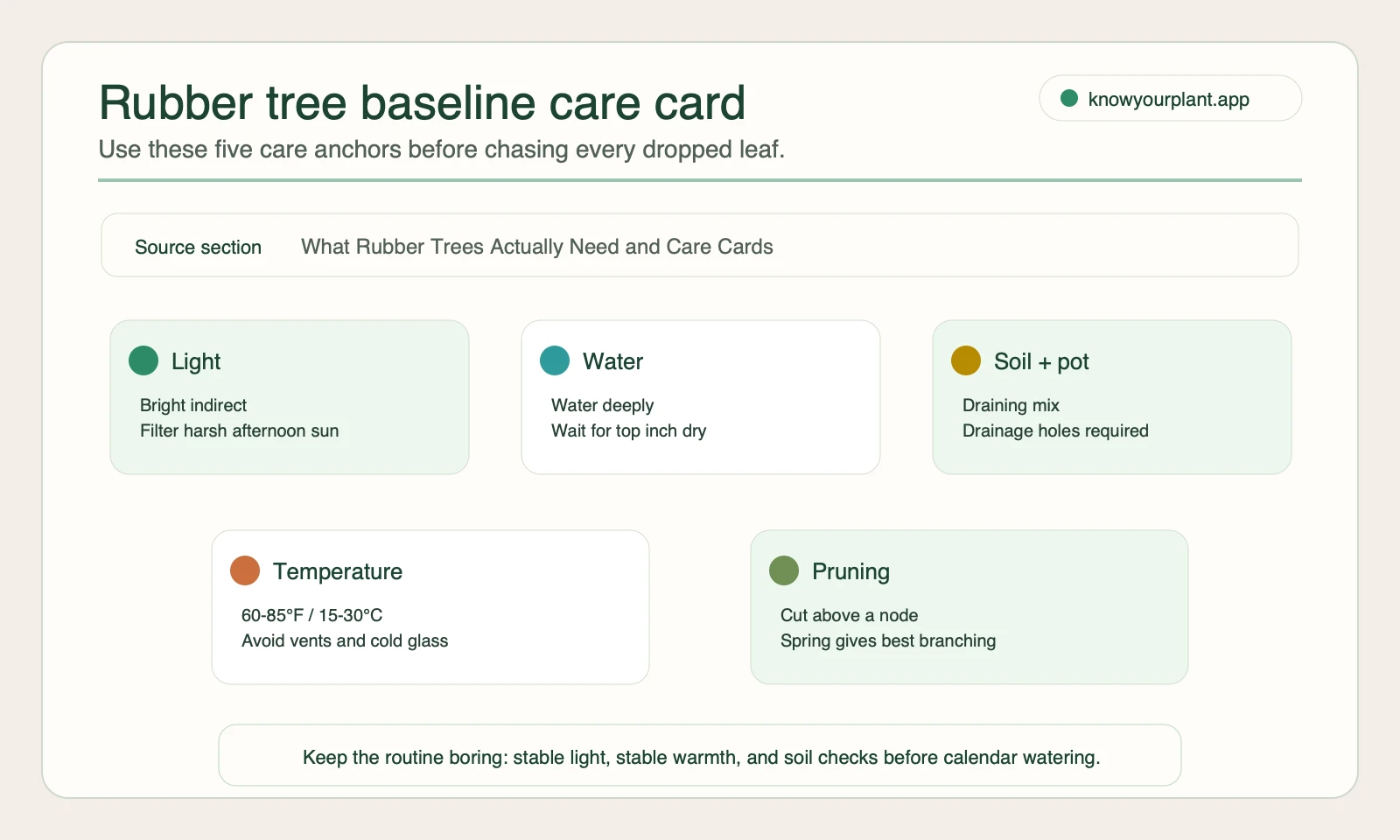
Use the baseline card before troubleshooting every symptom: stable light, steady warmth, drainage, and soil checks solve more rubber tree problems than calendar watering.
Seasonal Care Calendar
Rubber trees are not difficult plants, but their needs do shift with the seasons. The biggest mistakes happen when owners carry summer habits through winter or vice versa.
Spring (March to May)
This is the plant’s most active period and the best window for any intervention: repotting, pruning for shape, or starting a propagation cutting. As natural light increases and temperatures stabilize, the plant responds visibly. Resume a more regular watering check after the extended winter gap. If you have been fertilizing, a dilute balanced fertilizer once a month through the growing season is sufficient.
Summer (June to August)
Growth peaks now. Water needs increase slightly, but the method stays the same: check the top inch of soil before each watering rather than following a fixed schedule. In rooms with intense afternoon sun, a sheer curtain protects the leaves from scorch. Watch for spider mites in hot, dry conditions: they favor the undersides of leaves and leave a faint stippled texture before you notice webbing.
Autumn (September to November)
Growth begins to slow. Taper watering frequency gradually as the soil takes longer to dry. Stop fertilizing by October. As heating systems come on and windows close, draft exposure often shifts: a spot that was fine all summer may suddenly sit in the path of a heating vent or a cold window draft. Check the plant’s surroundings as the season changes, not just its soil.
Winter (December to February)
The plant is essentially resting. Water every two to three weeks at most, always checking the soil first. No fertilizer. Keep the plant away from cold glass panes and heating vents. If the room gets significantly darker and you notice the lower leaves beginning to thin, a grow light on a timer for a few hours each morning helps bridge the light deficit without overcomplicating the routine.
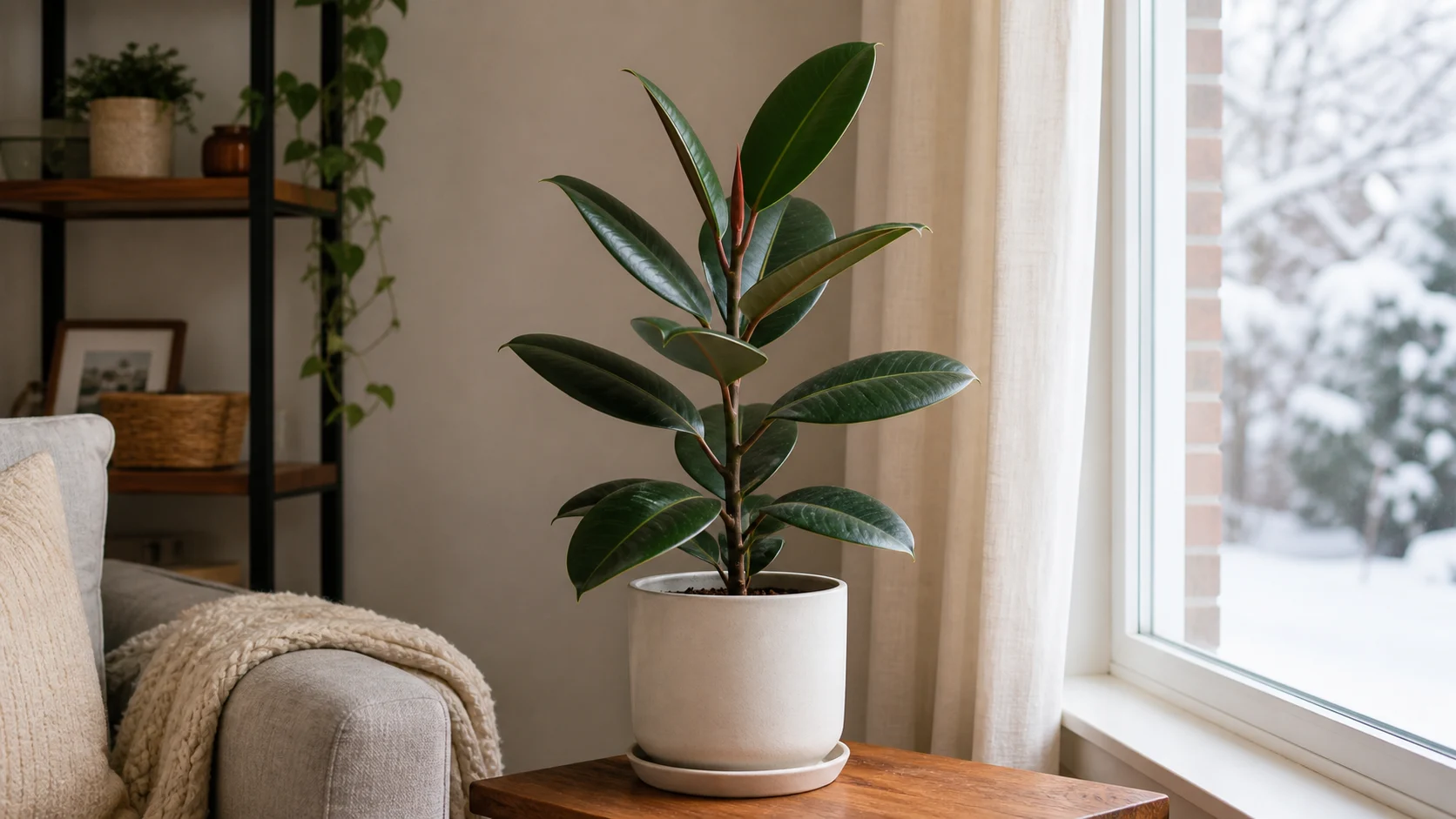
In winter, keep a resting rubber tree in filtered light but set back from cold glass and direct heat.
Common Problems
| Problem owners notice first | Most likely explanation | First response |
|---|---|---|
| Lower leaves yellow and fall | Overwatering or old-leaf turnover | Check the soil before adding more water and look at the pattern, not one leaf alone |
| Leaves drop after a move | Stress from a new light or temperature pattern | Stop moving the plant and give it time to re-stabilize |
| Brown edges or scorched patches | Harsh direct sun or dry heat | Filter the light and check for vent exposure |
| No new leaves for months in growing season | Not enough light or a root-bound plant | Increase light first, then inspect the pot if growth stays stalled |
Why Rubber Tree Leaves Fall Off
Leaf drop is the question most rubber tree owners run into eventually. As the opening section explains, the key move is identifying what changed before you start adjusting care. If the symptom itself is your main concern, the dedicated rubber plant dropping leaves guide walks through the full diagnosis in more detail. Here is a practical diagnosis framework for the most common causes:
Normal older-leaf shedding: A few leaves falling from the base of the plant over time, gradually, is not a sign of decline. As rubber trees grow taller, they naturally shed lower leaves. This is slow and concentrated at the bottom.
Stress from a move or location change: Multiple leaves dropping shortly after the plant was moved or conditions shifted. Stabilize the location and give it three to four weeks without further changes.
Overwatering: Leaves often yellow before they drop, especially lower ones. Soil stays persistently damp. Check drainage, let the soil dry out fully before watering again.
Underwatering: Leaves may droop or feel limp before dropping. Soil is dry all the way through when you check. Water thoroughly and check soil more frequently going forward.
Cold draft or temperature drop: Sudden leaf drop, often concentrated on one side of the plant – the side facing the draft source. Move the plant away from the vent, window, or doorway.
Low light: Gradual thinning across the plant, especially lower and inner leaves, over weeks or months. Increase light before adjusting water or anything else.
Leaf-Drop Decision Tree
| What you see first | Most likely cause | What to do next |
|---|---|---|
| One or two oldest bottom leaves yellow, then fall | Normal age-related shedding | Leave the routine alone and watch for a slow pattern rather than a sudden cascade |
| Several leaves drop within days of moving the plant or repotting | Location-change stress | Put the plant back into stable light and temperature, then pause changes for three to four weeks |
| Yellow leaves plus heavy, wet soil | Overwatering or poor drainage | Empty saucers, extend the watering gap, and check whether the mix is staying soggy below the surface |
| Curled or limp leaves plus bone-dry soil | Underwatering | Rehydrate thoroughly, then return to checking the top inch instead of watering by calendar alone |
| Leaf loss near an AC vent, drafty window, or cold door | Temperature stress | Move the plant away from the draft source and protect it from sudden swings |
| Long gaps between leaves and steady thinning in the interior | Low light | Shift it closer to bright filtered light or supplement with a grow light |
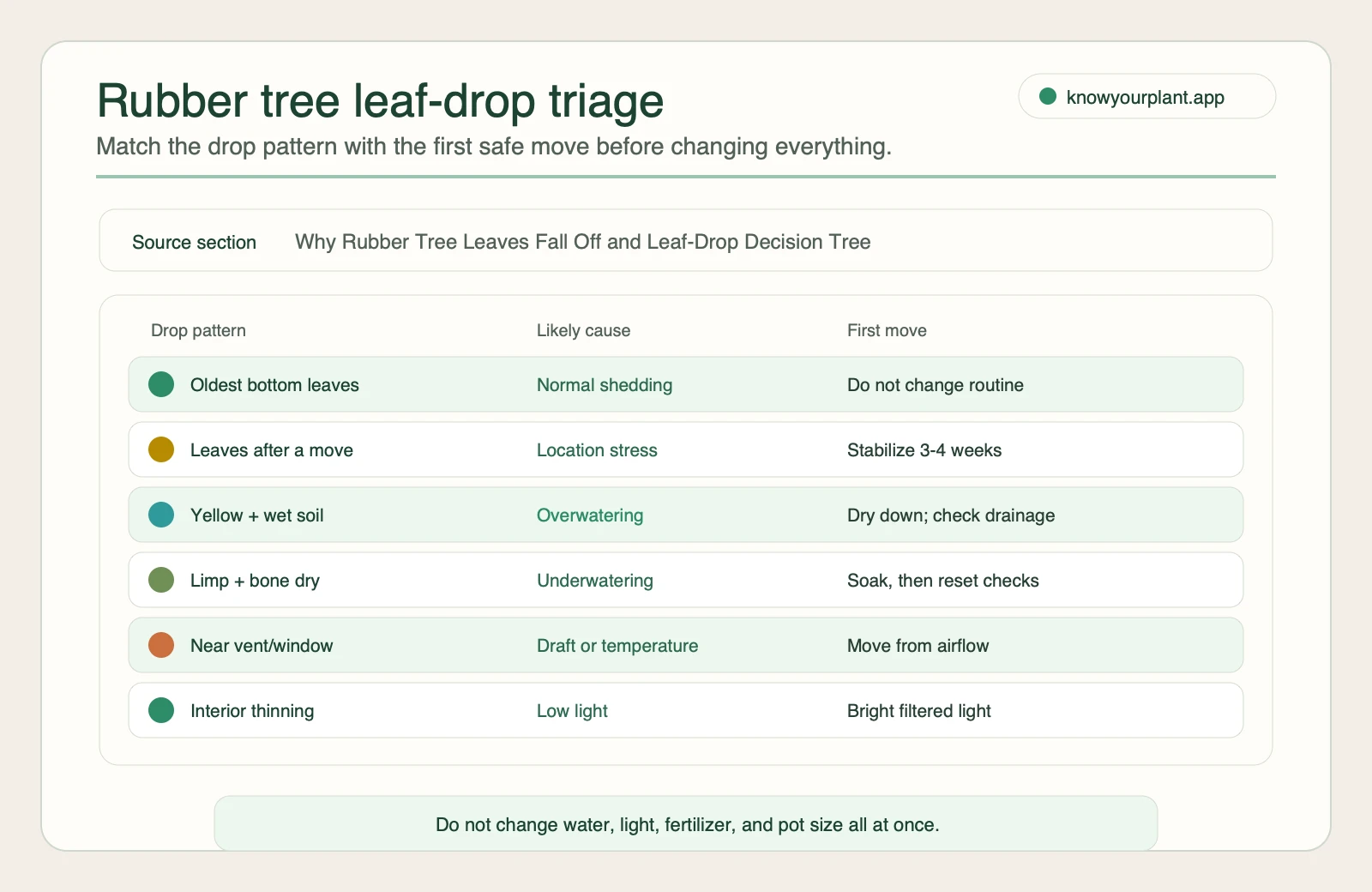
Match the pattern before acting. The safest fix is usually one targeted change, followed by enough time to see whether new leaves come in cleanly.
Expert Note
Clemson, NC State, and Colorado State all point to the same core pattern: rubber trees cope best with bright filtered light, moderate drying between waterings, and stable indoor temperatures. They also agree that leaf drop is not a single diagnosis. Overwatering, underwatering, and cold exposure can all trigger it, which is why changing three variables at once usually makes troubleshooting harder instead of easier.
Propagating Rubber Plant Cuttings
Rubber trees are not the easiest plant to propagate, but it is absolutely doable. The most reliable method is stem cuttings: take a cutting with at least two or three leaves, let the cut end dry for an hour or two to reduce sap flow, then place it in water or moist potting mix and keep it warm with bright indirect light.
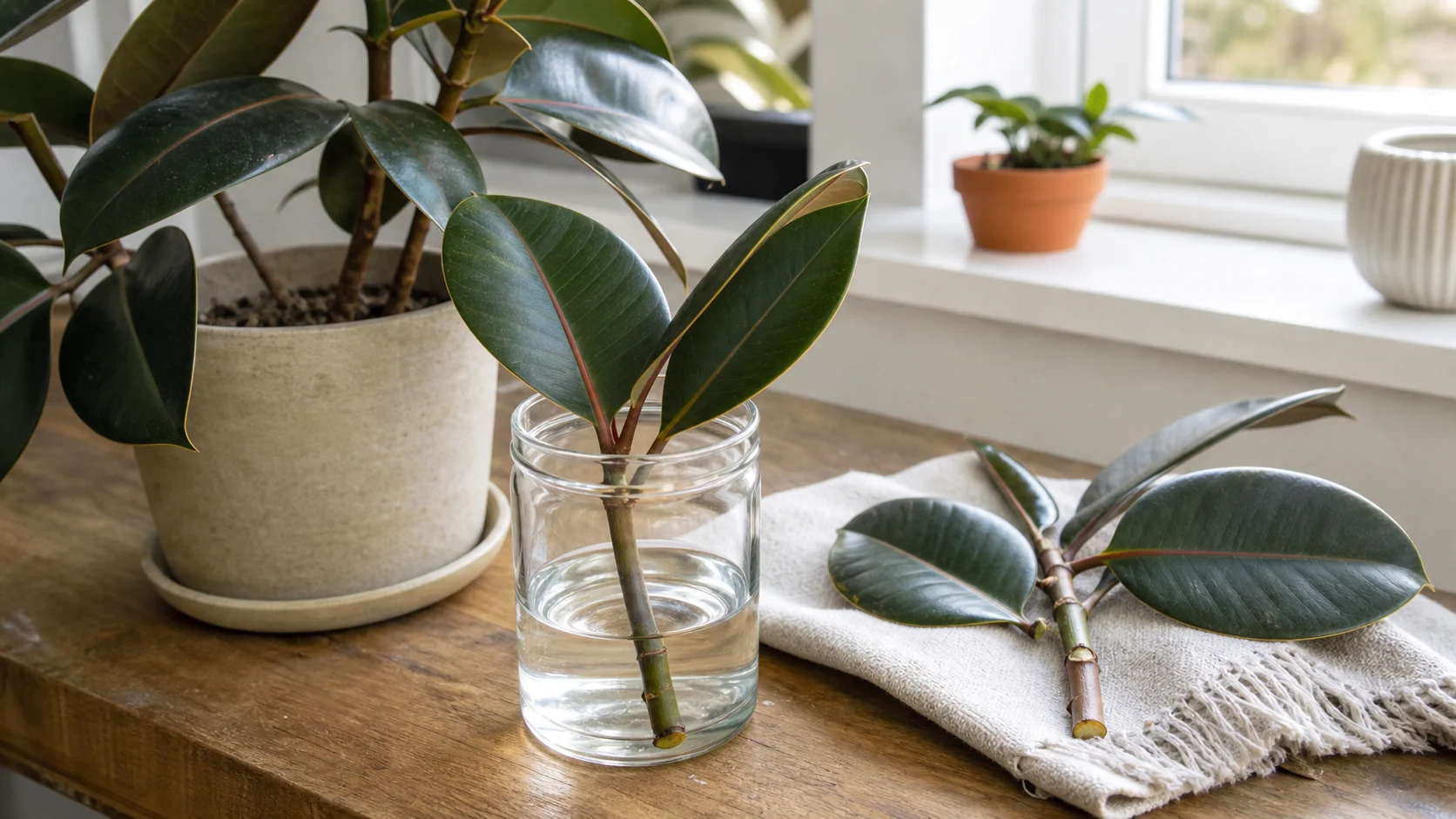
Let a fresh offshoot dry briefly, then place a two- or three-leaf stem in water and wait patiently for roots.
Roots typically take four to eight weeks to develop. Patience is the main requirement. If you are already pruning for shape, propagate the off-cut at the same time: it saves you from making a separate cut later. The plant propagation guide covers the process in more detail if you want to walk through each method step by step.
Common Mistakes
- Changing water, light, and fertilizer all at once: you lose the ability to see what actually solved the problem.
- Repotting into a huge container: extra soil holds extra moisture, which makes root problems more likely.
- Assuming every dropped leaf means disease: recent moves, drafts, and seasonal light changes are more common than infection.
- Pruning without a plan: if you want a bushier plant, cut above a node in spring and decide whether the top cutting is worth propagating.
Pet Safety
Ficus elastica is toxic to cats and dogs. The sap can irritate the mouth and digestive tract if ingested and can also cause skin irritation on contact. If you have pets that investigate or chew on plants, this one needs a spot out of reach. Wear gloves when pruning to protect your own skin as well.
For households with cats, the cat-safe indoor plants guide covers alternatives that do not carry the same risk. For dog owners, the dog-friendly houseplants guide covers the same ground for canines.
Quick Care Summary
- Light: Bright indirect light; limited direct morning sun is fine; avoid unfiltered afternoon sun
- Water: Thoroughly, then wait until the top inch of soil is dry; less frequent in winter
- Soil: Well-draining mix; drainage holes are non-negotiable
- Temperature: 15°C to 30°C (60°F to 85°F); keep away from cold drafts and vents
- Pruning: Cut above a node in spring to encourage branching; new shoots appear within weeks
- Leaf drop: Check what changed recently before adjusting care
- Pet safety: Toxic to cats and dogs; place accordingly
Real User FAQ
These are the questions owners usually ask once the simple care checklist stops being enough.
Frequently Asked Questions
How often should I water a rubber tree?
In summer, most rubber trees need water every seven to ten days. In winter, stretch that to every two weeks or longer: the plant slows down significantly and the soil takes much longer to dry. The schedule matters less than the method. Water thoroughly when the top inch of soil feels dry, then wait. Watering on a fixed calendar without checking the soil first is how most overwatering problems start.
Why is my rubber tree dropping leaves?
The most common cause is a recent environmental change: a move, a new season, a heater or AC turning on nearby, a new window. Before touching the care routine, ask what changed in the last two to four weeks. Overwatering, underwatering, cold drafts, and low light can all produce the same symptom. Stabilize conditions and give the plant three to four weeks before assuming a care adjustment is needed.
How do I make my rubber tree bushy instead of tall?
Cut the main stem just above a leaf node in spring. This redirects the plant’s energy to dormant side buds lower on the stem, which push out as new branches rather than continuing straight up. Two to three new shoots typically appear within a few weeks. Once those grow out, you can repeat the process on them to build even more density.
Can a rubber tree survive in low light?
They can adapt to lower light conditions, but that adaptation comes with trade-offs: slower growth and some leaf shedding during the adjustment period. A north-facing window that barely brightens at midday is usually not enough for long-term health. If your space is genuinely dark, a grow light is a more reliable solution than hoping the plant adjusts.
Is rubber tree plant toxic to cats and dogs?
Yes. Ficus elastica is toxic to both cats and dogs. The sap can irritate the mouth and digestive tract if ingested and may also cause skin irritation on contact. Wear gloves when pruning, wash your hands after handling the plant, and keep it in a location pets cannot reach.
Why are my rubber tree leaves turning yellow?
Yellowing leaves, especially lower ones, often point to overwatering or persistently wet soil. Check whether the pot drains properly and whether you are watering before the top inch of soil has dried out. If the yellowing is spread across the plant rather than concentrated at the base, look at light levels and recent temperature changes as well. The guide to yellow leaves on houseplants covers the full range of causes if you want to work through the diagnosis more carefully.
When should I repot a rubber tree?
Repot when roots are circling the bottom of the pot or growing out of the drainage holes. Those are the clearest signs the plant has run out of room. The best time is spring, when the plant is entering active growth. Move up only one pot size at a time: a container that is too large holds excess moisture and raises the risk of root problems even when your watering routine is good.
How fast does a rubber tree grow indoors?
Under good conditions – bright indirect light, consistent warmth, and proper watering – rubber trees can add one to two feet of height per year indoors. Growth slows significantly in winter and in low-light conditions. If the plant has not produced a new leaf in many months during the growing season, light is usually the first variable worth checking.
If you want seasonal care reminders tailored to your rubber tree and your space, download KnowYourPlant for personalized care schedules and a plant doctor that helps you read symptoms before they become problems.
Methodology and Freshness Note
This guide was refreshed on May 26, 2026 after reviewing current care pages, recurring owner questions, and extension-backed references for Ficus elastica. Practical troubleshooting language was shaped by real owner questions about leaf drop, pruning, light, and pet safety, then checked against Clemson Cooperative Extension, NC State Extension, Colorado State Extension, and Pet Poison Helpline before being folded into the care advice above.
A current care guide starts with extension-backed review and practical owner questions, then keeps the rubber tree at the center of the advice.
Community examples in this article are used as qualitative signals of what owners struggle with most often, not as scientific proof.
Care information in this article draws on guidance from Clemson Cooperative Extension (HGIC), NC State Extension Gardener Plant Toolbox, Colorado State University Extension PlantTalk Colorado, and Pet Poison Helpline. This article was last reviewed June 2026.