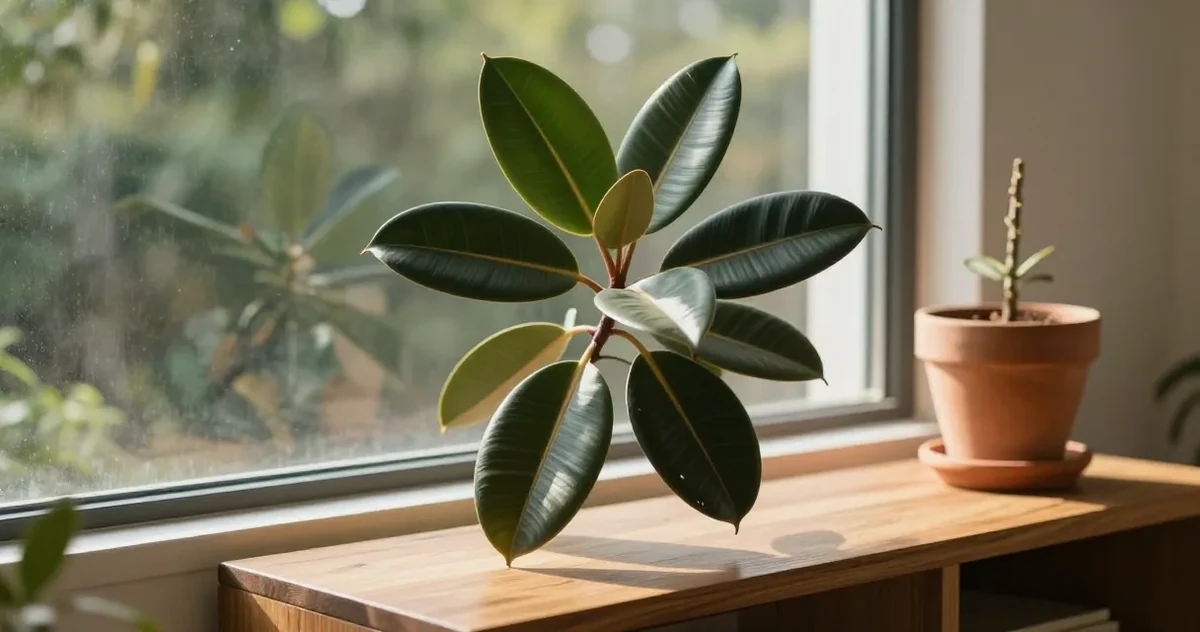
Rubber Plant Dropping Leaves: Causes and Fixes
If your rubber plant is dropping leaves and you can’t work out why, you’re not alone. Ficus elastica leaf drop is one of those problems that looks sudden - the plant seemed fine last week, and now there are leaves on the floor and nothing in the pot looks visibly wrong.
Here is the part most articles skip over: rubber plants don’t drop leaves because of one fixed condition they’ve been living in for months. They drop leaves in response to change. A new location, a seasonal shift, a watering habit that drifted after an overwatering scare - something happened before the first leaf fell. Find the change and you’ve already solved half the problem.
What Most Care Guides Miss
Most articles on rubber plant leaf drop hand you a bullet list of seven possible causes and leave you to guess which one fits your plant. Watering. Light. Temperature. Humidity. Pests. Soil. Repotting. All valid causes, none of them prioritized, none of them connected to how you actually figure out where to start.
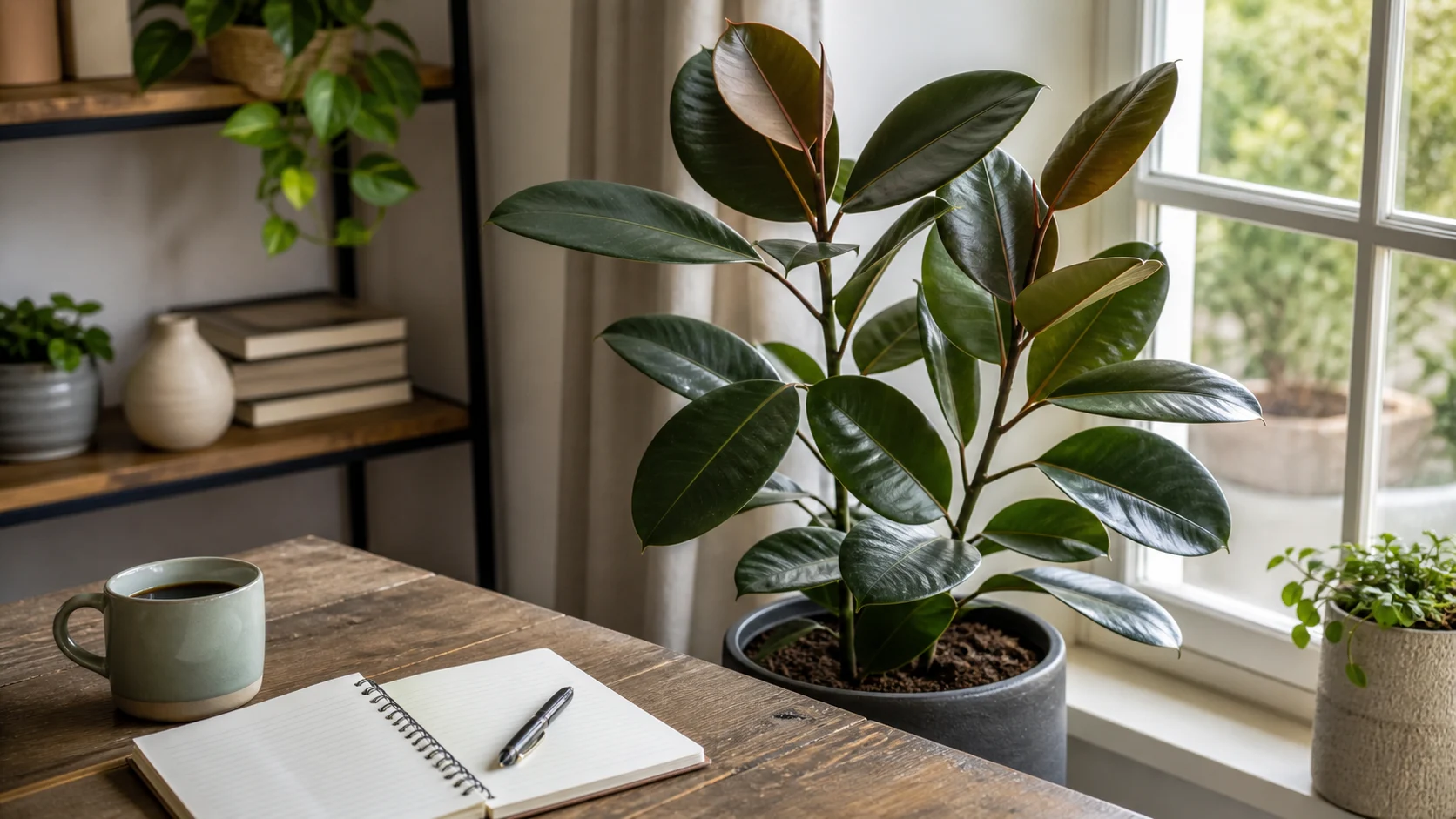
A blank care journal helps isolate the recent change that triggered a rubber plant’s leaf drop.
The real problem is this: leaf drop in ficus elastica almost always has a recent trigger. The common misdiagnosis is treating the symptom as a chronic condition rather than a response to something that shifted. Owners go in circles adjusting water and light simultaneously, never isolating the actual cause, and the plant keeps dropping.
The first check that actually helps: Before you touch the soil, water schedule, or move the pot, reconstruct the two to four weeks before the first leaf fell. Did the plant move rooms, come indoors for winter, or shift to a new spot while you rearranged furniture? Did you start watering less after reading something about overwatering being the top mistake? Did the heating come on, a window start getting opened for fresh air, or the days get noticeably shorter?
If you can name a change, you’ve already narrowed the field by half. If nothing obvious changed, that’s when you work through the full checklist below.
Generic advice fails here because it treats every rubber plant as identical. One that has lived in the same corner for two years and suddenly starts dropping leaves is a completely different situation from one that started dropping leaves two weeks after being moved indoors. The same fix doesn’t apply to both, and guessing between them is how owners spend months not making progress.
Start With What Changed, Not What the Plant Looks Like
The visible symptom - leaves falling - looks identical regardless of the cause. What differs is the recent history. Before changing anything, answer these:
- When exactly did the first leaf fall?
- What happened in the two to four weeks before that?
- Did the plant move locations, even across a room or hallway?
- Did you change how frequently you water, or how much you give at once?
- Did a seasonal shift bring colder air near windows, drier indoor heat from a radiator, or noticeably less daylight through the glass?
Write it down if it helps. One of these will usually point you toward the most likely cause before you’ve done anything else.
The Most Common Causes of Rubber Plant Leaf Drop
1. The Plant Was Relocated
Rubber plants are among the most move-sensitive common houseplants. When you bring one indoors for winter, carry it to a different room while rearranging, or shift it from a bright window to a dimmer corner, the plant registers all of it at once - light levels, air circulation, temperature patterns, even the direction the drafts come from. The plant responds by shedding leaves it can no longer support in the new conditions.
The relocation is almost always the forgotten cause, because the move and the leaf drop are separated by two to three weeks. By the time leaves are on the floor, the connection to a move you made three weeks ago isn’t obvious. If your plant changed locations recently, start there rather than adjusting water.
For more on light placement and how to reduce move-related stress in rubber plants, the rubber plant care guide covers seasonal acclimation and where these plants tend to settle in best. The longer rubber tree plant care guide adds shaping, pruning, and propagation once the leaf drop is stable.
2. Overwatering and Underwatering Both Cause Leaf Drop
This is where most owners get stuck, and for a legitimate reason: both problems produce similar-looking results.
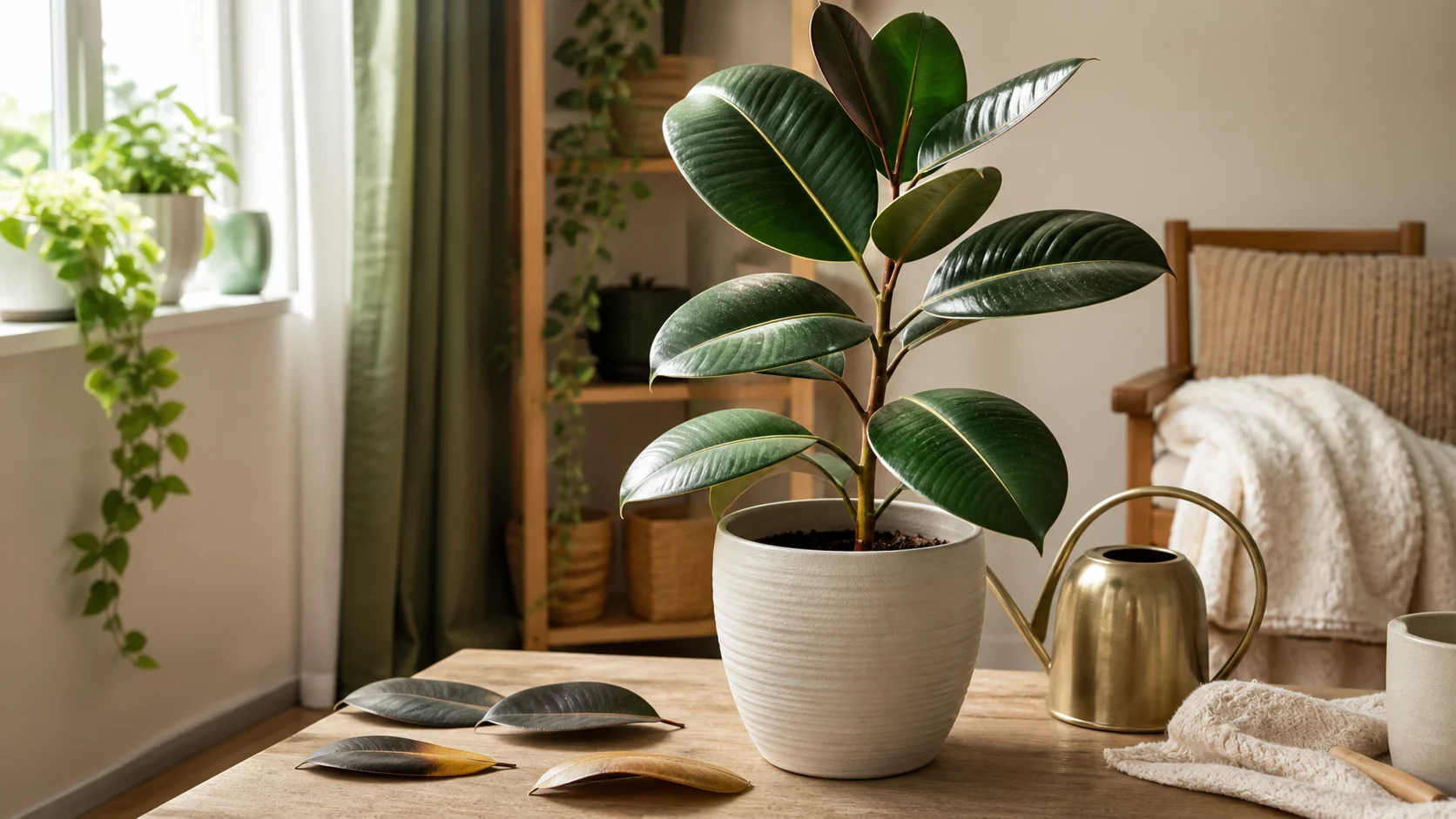
A watering can and fallen lower leaves show why opposite moisture problems can look deceptively similar.
With overwatering, the roots sit in wet soil too long, begin to struggle, and the plant sheds leaves to reduce the demand it can no longer meet from the root level. With underwatering, the plant doesn’t have enough water to maintain all its foliage and drops it from the bottom up.
The trickier pattern is what happens after an overwatering scare. Many owners read that overwatering is the number-one rubber plant killer, then overcorrect - stretching watering gaps to three or four weeks, watching the surface stay dry, and assuming everything is fine while the plant quietly drops leaves from drought stress at the root zone. This exact cycle repeats: a grower becomes cautious about overwatering, extends the interval, comes back after a stretch of time to drooping and yellowing leaves, and genuinely can’t tell whether the deeper root ball went dry or is still holding too much moisture.
Checking only the top inch of soil isn’t enough. The root ball can hold moisture long after the surface feels dry, especially after bottom-watering or when the pot has dense soil. The most reliable diagnostic is a wooden skewer or chopstick pushed three to four inches straight into the root zone. If it comes back with damp, clumping soil on it, the root zone is still wet. If it comes back clean and dry, the plant is ready for water.
As UF/IFAS Extension notes, rubber plant soil should be allowed to become “fairly dry” between waterings in containers - but fairly dry only means something if you’re measuring from the right depth.
For help reading the broader signs of excess moisture in houseplants, overwatered plant signs and fixes covers what the roots and soil will tell you before things go too far.
3. Cold Drafts and Temperature Swings
Rubber plants are tropical in origin and genuinely cold-sensitive. A pot sitting near a window that gets opened during cooler weather, next to an exterior door, or directly under an air conditioning vent experiences repeated cold exposure that is easy to miss day to day. The temperature drop happens each time the air source activates, and the cumulative effect builds before any single event seems significant enough to blame.
NC State Extension lists temperature drops and cold drafts as a documented cause of leaf loss in ficus elastica - separate from overwatering but producing visually similar results. If leaf drop is paired with leaves that look slightly limp or off-color before they fall, cold or dry air is worth ruling out before adjusting the watering schedule.
Heating season brings its own version: radiators and forced-air vents create pockets of very dry, very warm air that stress the plant differently but can still trigger leaf loss, particularly if the pot sits in the direct airflow path.
“Low light, dry air, or cold drafts may cause leaf loss in rubber plants. Soil staying too wet can cause yellowing. The two problems can occur at the same time and need to be addressed separately.”
- Clemson Cooperative Extension, HGIC Rubber Plant
4. Low Light, Especially After Moving Indoors
Rubber plants need medium to bright indirect light to hold their leaves comfortably. When they end up in a dim corner - especially after spending time outdoors or near a large south- or west-facing window - they often drop lower leaves as they adjust to the reduced output. The plant is trimming itself down to what the available light can realistically support.
Losing the oldest, lowest leaves gradually is sometimes just this: slow adaptation to lower light. What isn’t a normal adjustment is leaves dropping from the middle or upper sections of the plant. That signals the light is genuinely insufficient, not just lower than ideal.
“Rubber plants need medium to bright filtered light and should be kept away from drafts. Too much or too little water can each cause leaves to drop.”
- Colorado State PlantTalk, Rubber Plant
5. Repotting Stress
Repotting disrupts the root system and temporarily reduces how efficiently the plant takes up water. Some leaf drop in the weeks following a repot is not unusual, especially if the new pot is significantly larger than the old one. An oversized pot holds more moisture than the roots can use, which can push the plant toward overwatering conditions even if you haven’t changed how much you’re giving it.
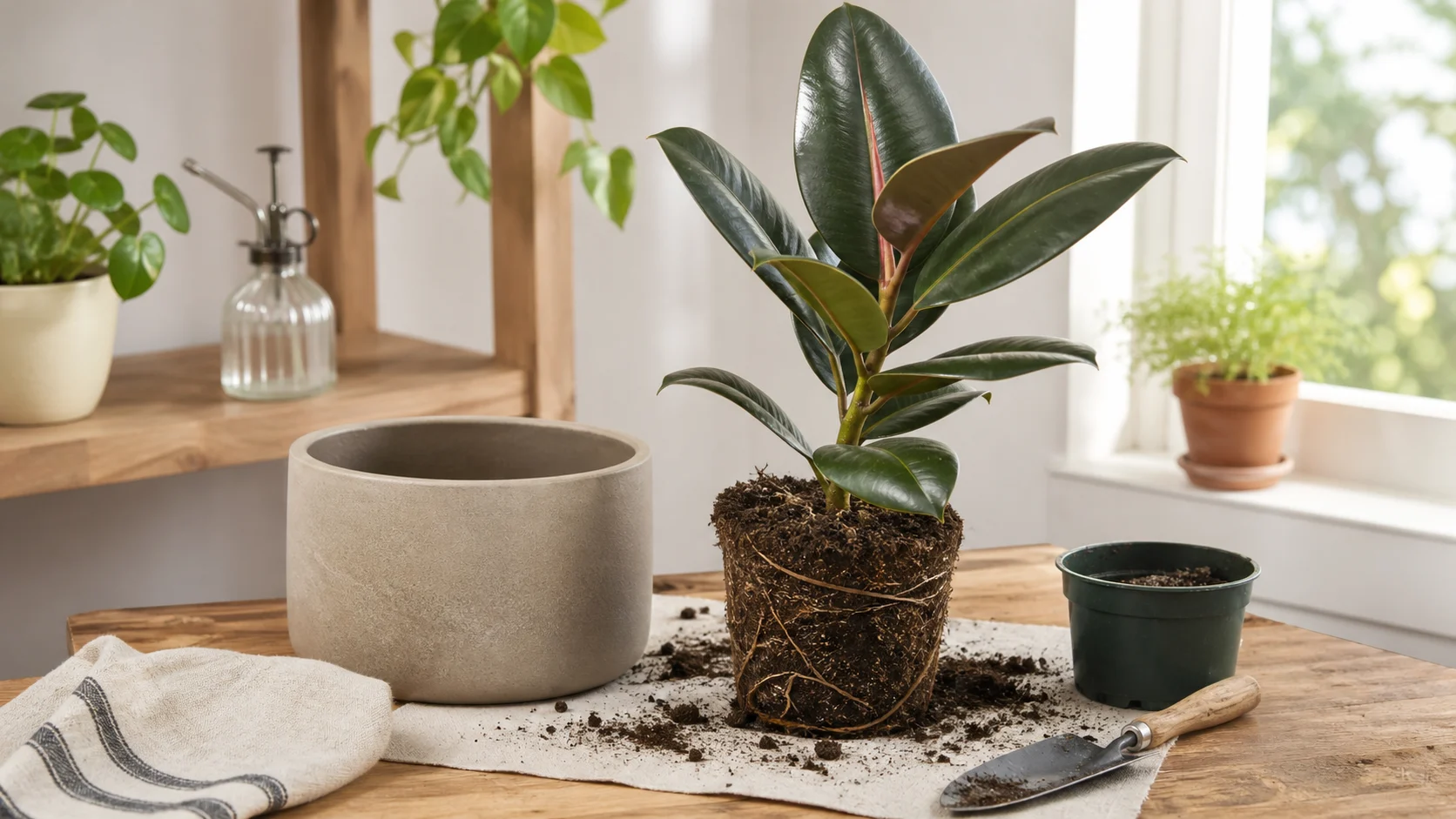
An exposed root ball beside an oversized new pot shows how repotting can disrupt water uptake and retain excess moisture.
If you know the plant was recently repotted, give it four to six weeks of stable conditions before concluding something else is wrong.
The when to repot plants guide covers pot sizing and how to tell when a plant genuinely needs more room versus when it is better left in the same container.
Rubber Plant Leaf Drop: Symptom Diagnosis
Use this to match what you’re seeing to the most likely cause before changing anything.
| What you’re seeing | Most likely cause | First thing to check |
|---|---|---|
| Only lower leaves dropping, gradually | Normal aging or low light | Is the plant getting at least medium indirect light? |
| Leaves drooping, then yellowing, then falling | Underwatering or root stress | Root zone moisture with a skewer, 3-4 inches deep |
| Multiple leaves dropping, soil stays damp | Overwatering | Root zone and drainage; check for root rot |
| Leaf drop near a window after seasons change | Cold draft exposure | Does that window open in cool weather? |
| Leaf drop starting 2-3 weeks after a move | Relocation stress | Stable conditions and adequate light; wait four weeks |
| Leaf drop 2-4 weeks after repotting | Repotting stress | Pot size and drainage; reduce watering slightly |
Rubber Plant Leaf Drop Decision Tree
Use this order so you only change one variable at a time.
- If only the oldest lower leaves are dropping, check whether the plant is still putting out healthy new growth. If yes, start by treating it as normal aging or a mild low-light adjustment instead of a full emergency.
- If leaf drop started within two to four weeks of a move, prioritize relocation stress and light change first. Keep the plant in one bright, stable spot for a month before changing the watering rhythm.
- If leaves droop or yellow before they fall, do a root-zone moisture check three to four inches deep. Damp soil points to overwatering or a pot that is staying wet too long. Dry soil points to drought stress or an overcorrection after an overwatering scare.
- If the timing lines up with colder weather, AC, or a frequently opened window, rule out drafts before anything else. Temperature stress can look like a watering problem from a distance.
- If the plant was recently repotted, inspect pot size and drainage, then hold conditions steady. A too-large pot can keep the mix wet long enough to trigger fresh leaf loss.
- If none of those fit and leaf drop keeps spreading upward, inspect for combined stressors rather than hunting for a single culprit. Low light plus cold air plus erratic watering is a much more common pattern than one isolated failure.
Normal Leaf Drop vs. a Problem Worth Acting On
Not every falling leaf is a crisis. Rubber plants routinely shed their oldest lower leaves as they grow taller - this is normal aging and it tends to happen slowly, one or two leaves over several weeks, while the plant keeps putting out new growth from the top.
What is not normal:
- Multiple leaves dropping at the same time
- Leaves falling from the middle or top of the plant
- Leaves that droop, yellow, or go limp before falling
- Continuous drop over several weeks with no sign of slowing
If you’re seeing that second pattern, the environment is out of balance and it’s worth working through the causes systematically - changing one variable at a time - rather than adjusting everything at once and losing track of what helped.
Common Mistakes That Extend the Problem
Adjusting water before checking for a draft or a move. Water gets blamed first because it’s the most controllable variable, but if the plant is sitting near a cold window or just came in from outside, changing the watering schedule won’t help until the environmental trigger is addressed.
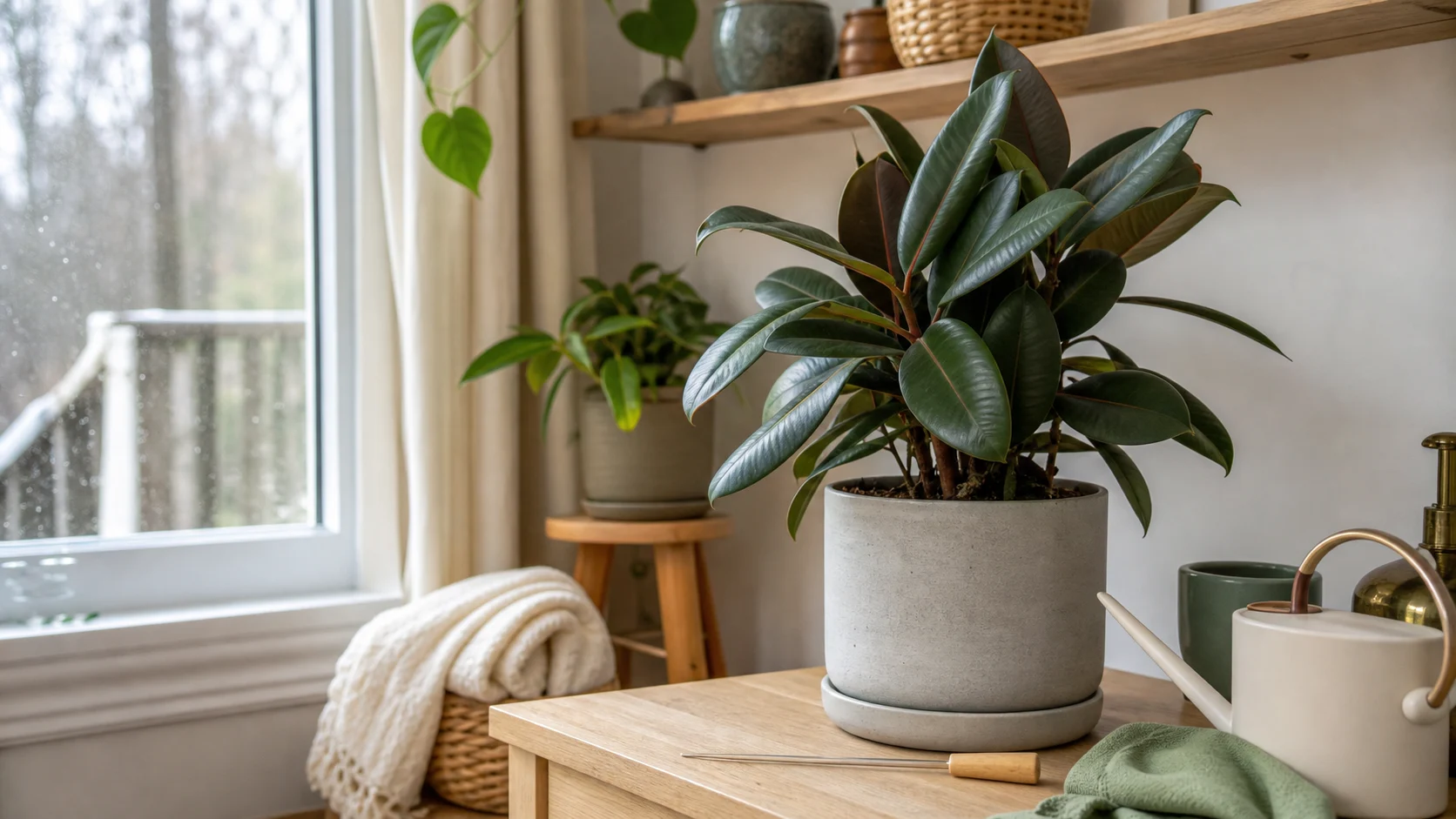
A cold window, watering can, and depth probe show why environmental and moisture checks should be isolated one at a time.
Reading only the surface of the soil. A dry top inch doesn’t mean the root ball is dry. This is especially true after bottom-watering or heavy rainfall before an indoor move. Push a skewer to depth before deciding whether to water.
Changing multiple things at once. Moving the plant, reducing water, and switching to bottom-watering all in the same week makes it impossible to know what worked if the plant stabilizes. Pick one change and give it two weeks.
Fertilizing during active leaf drop. Adding fertilizer when the plant is stressed pushes salts into the soil and adds pressure the roots aren’t ready to handle. Hold off until the plant has stabilized and you see at least one new leaf forming.
Assuming bare stems won’t recover. Some do, some don’t - it depends on light exposure and how woody the stem has become. Don’t write off the plant or start cutting it back aggressively until you’ve addressed the cause and waited six to eight weeks.
The Root-Zone Moisture Check Most Owners Skip
The most useful diagnostic step for a rubber plant dropping leaves - and the one most care guides never mention - is a root-zone moisture check that goes deeper than the surface.
Here is how to do it:
- Get a wooden skewer, a clean chopstick, or a finger.
- Push it straight down into the soil three to four inches - past the top layer and into the active root zone.
- Pull it back out and look at what comes with it.
Damp soil clinging to the skewer: the root ball is still holding moisture. Don’t water yet, even if the surface looks dry.
Clean and dry, nothing clinging: the plant is ready for a thorough drink. Water until it flows from the drainage holes, then let it drain completely before putting it back in its saucer.
One important note for bottom-waterers: when you set the pot in a dish of water, the surface can dry out while the root ball is still fully saturated from below. If you bottom-water, surface dryness alone is not a reliable signal. Use the skewer.
This check matters because the most common pattern behind rubber plant leaf drop is owners oscillating between overwatering and overcorrecting into drought, never finding a stable rhythm because they’re only reading the top inch.
Seasonal Note
Autumn and early winter are the most common window for rubber plant leaf drop, and not by coincidence. This is when plants come in from outside or porches, when indoor heating comes on and dries the air, when daylight through windows drops noticeably, and when temperature swings between day and night become more pronounced near glass.
If your rubber plant is dropping leaves in autumn or winter, check for the combination of lower light, drier air, and nearby cold windows before assuming a watering problem. All three can happen simultaneously, and adjusting water alone won’t stop the drop if the environmental triggers are still active.
The plant is not broken. It’s reacting to a season shift. Stable conditions, adequate indirect light, and a spot away from drafts are what it needs more than anything else until it settles in.
Expert Note
Extension guidance lines up on the same core point: leaf drop in Ficus elastica is usually a stress signal, not a mystery disease. NC State notes that some bottom-leaf drop is normal, but also flags overwatering, temperature drops, and cold drafts as real causes of broader leaf loss. Clemson adds that low light, dry air, and cold drafts can all contribute at the same time. In practice, that means the best diagnosis starts by separating normal lower-leaf turnover from a recent environmental change, then checking root-zone moisture before you change anything else.
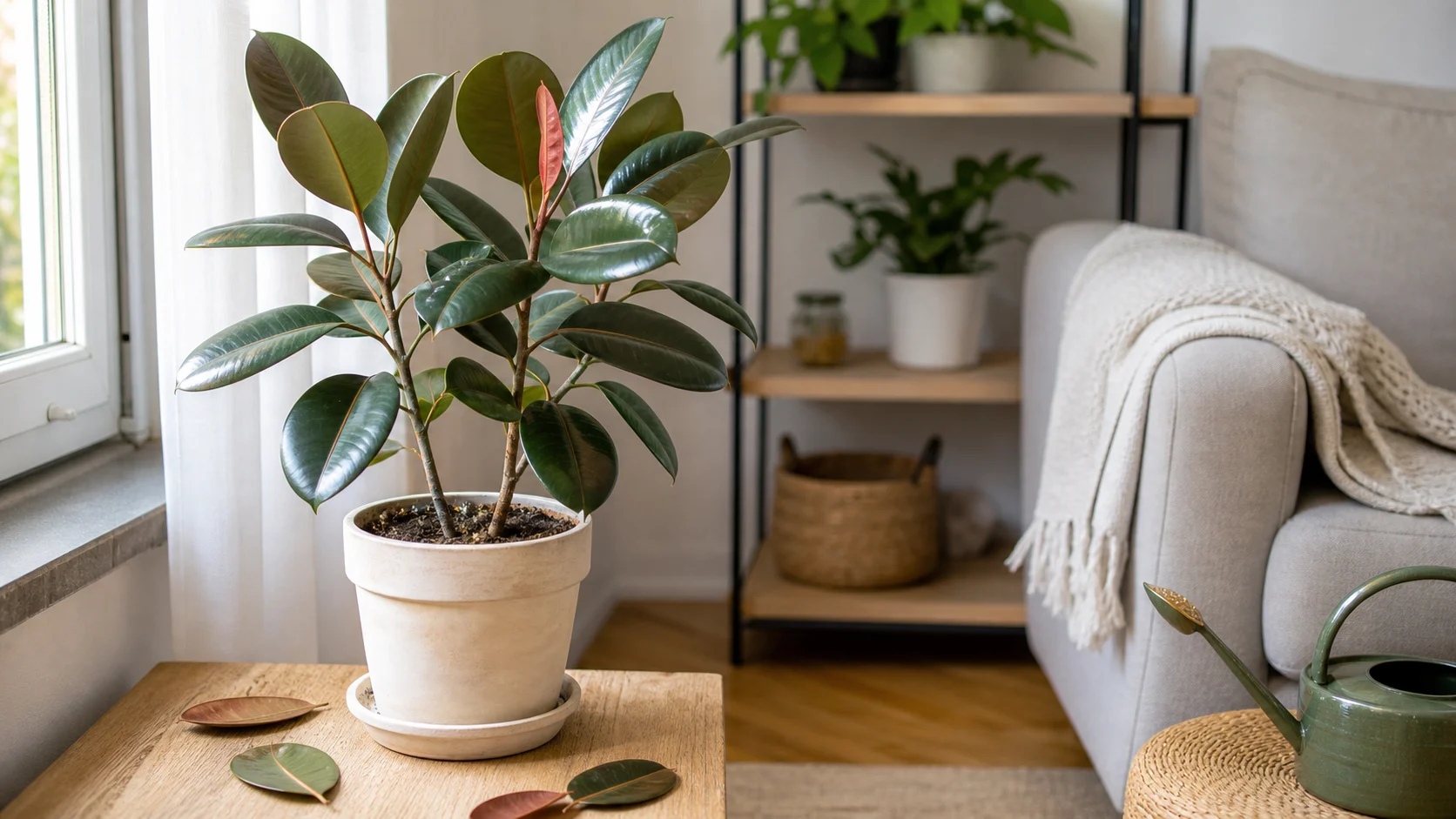
Several fallen leaves, a nearby window, and a watering can point to stress variables beyond normal lower-leaf turnover.
Will Bare Stems Grow New Leaves?
After significant leaf drop, sections of stem that went bare sometimes produce new leaves and sometimes stay bare. It depends on how much light that section receives, how healthy the root system is, and whether the stem is still actively growing or has become woodier.
Younger stems in good indirect light have the best chance of refluffing. Older, woodier sections lower on the plant often don’t regrow leaves even after the plant is fully recovered, because energy goes into upper growth rather than backfilling bare sections.
Signs of genuine recovery to watch for: new leaf buds forming at stem tips, existing leaves holding firm and looking healthy rather than continuing to droop or yellow, and no further drops after you’ve addressed the most likely cause. If leaves are still falling two to three weeks after a change, revisit the diagnosis - more than one factor may be active at the same time.
If you suspect the roots have been affected by prolonged wet soil, the root rot treatment guide covers how to assess the root system and what to do if the damage has progressed.
Frequently Asked Questions
Why is my rubber plant dropping leaves after I brought it inside?
Moving a rubber plant indoors - from outside or from a brighter room - triggers leaf drop because the plant is adapting to significant simultaneous changes in light, temperature, and air circulation. This is very common in autumn and early winter. The drop typically peaks two to three weeks after the move and stabilizes if the plant settles into a spot with adequate indirect light and stable temperatures. Hold off on changing watering or fertilizing until the plant has had at least four weeks to adjust.
How do I know if I’m overwatering or underwatering my rubber plant?
Both cause leaf drop, which is what makes this genuinely hard to call from the outside. The most reliable way to tell them apart is the root-zone moisture check: push a skewer three to four inches into the soil. Damp clumps on the skewer point to overwatering; a clean, dry skewer points to underwatering. You can also look at the leaves before they fall - leaves that droop and yellow before dropping often signal roots struggling with excess moisture. Leaves that dry at the edges before falling point more toward drought. When in doubt, check deeper before you water.
Is it normal for a rubber plant to drop its lower leaves?
Yes, within limits. Rubber plants naturally shed their oldest lower leaves as they grow taller. This happens gradually - one or two leaves over weeks - while the plant keeps producing new growth from the top. What is not normal is losing multiple leaves at once, losing leaves from the middle or upper sections, or seeing drop that continues week after week without slowing. Gradual loss confined to the lowest, oldest leaves is likely just the plant maturing.
Will rubber plant leaves grow back after they fall off?
The individual leaves that fell won’t return - rubber plants don’t regrow from the same stem node. But the plant can produce new leaves from stem tips and nodes once conditions stabilize. Whether a bare section eventually fills back in depends on available light and how old the stem is. Younger stems in a well-lit spot have a reasonable chance of putting out new growth. Older, woodier sections lower on the plant often stay bare even after the plant is fully recovered.
How long does it take a rubber plant to recover after leaf drop?
Recovery timelines vary based on how many leaves were lost and how long the underlying problem persisted. If the cause was relocation or repotting, most plants stabilize within four to six weeks of consistent, unchanged conditions. If the cause was chronic overwatering or prolonged draft exposure, it may take longer. New growth appearing at the stem tips is the clearest sign the plant is stabilizing. If no new growth appears after six to eight weeks and dropping continues, revisit the diagnosis.
Should I fertilize a rubber plant that is dropping leaves?
Not during active leaf drop. Hold off until the plant has clearly stabilized - no further leaf drop and at least one new leaf forming. Once it’s visibly recovering, resume a normal feeding schedule for the growing season. Avoid fertilizing in winter unless the plant is under grow lights and actively putting out new growth.
Can a rubber plant survive significant leaf loss?
Generally yes, as long as the cause is addressed before the roots are seriously compromised. Rubber plants are resilient and can regrow after substantial foliage loss if the stem is firm and healthy. The sign to worry about is if the stem becomes soft, discolored, or develops an off smell at the base - that can indicate root rot that has moved beyond the roots. A plant that is dropping leaves but still has firm stems and some healthy foliage remaining can recover with stable care and patience.
Methodology and Last Updated
Last updated: May 25, 2026.
This guide was checked against plant-care references from NC State Extension, Clemson Cooperative Extension, Colorado State PlantTalk, and UF/IFAS. To make the troubleshooting order more useful for real owners, it also incorporates recurring confusion patterns validated in public Houzz and Stack Exchange threads, such as winter moves, overcorrection after overwatering scares, and uncertainty about whether surface-dry soil means the root ball is actually dry. Those community examples were treated as qualitative signal, while the care guidance itself stayed grounded in extension sources.
A blank research workspace beside a rubber plant reflects the guide’s source review without displaying unverified text.
Sources: NC State Extension Gardener Plant Toolbox, Ficus elastica; Clemson Cooperative Extension HGIC, Rubber Plant; Colorado State PlantTalk, Rubber Plant (1326); UF/IFAS Extension, Ficus elastica: Rubber Tree (ST252). Research conducted May 2026.