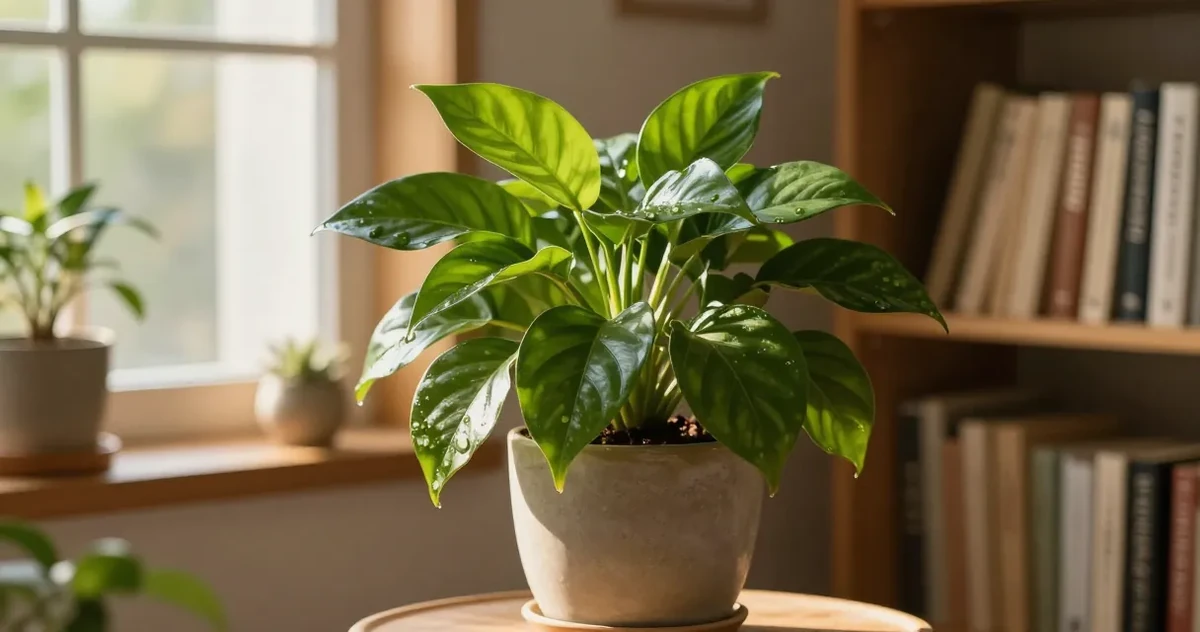
Your plant is drooping. The leaves are turning yellow. You water it, nothing improves, so you water it again. It gets worse.
This is how overwatering works. Not in a single dramatic event, but in a slow loop where the visible symptoms make you feel like the plant needs more water, even when the real problem is that it has had too much.
Overwatered plant symptoms are some of the most misread signals in houseplant care, partly because they overlap with underwatering, and partly because the damage happens underground – where you can’t see it until it’s already well underway.
This guide will help you read what you’re actually looking at, check the right things in the right order, and decide whether to wait or to act before the roots fail completely.
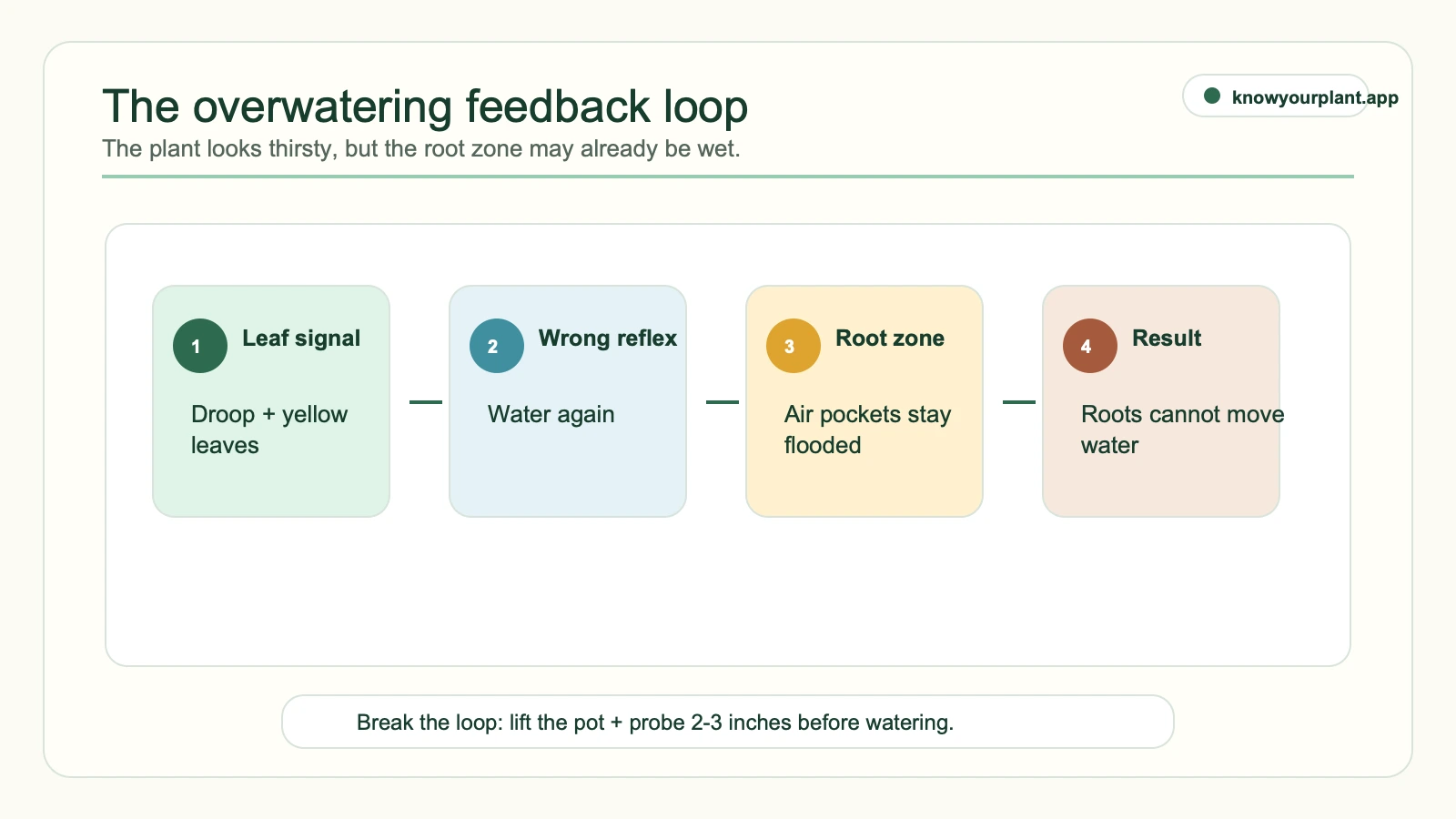
Use this loop as the first pause point: if the plant looks thirsty, check pot weight and deeper soil moisture before adding water.
Quick Diagnosis Card
Use this before you do anything else:
- Wet soil + soft wilt: stop watering, empty any saucer, and check the root zone before making another move.
- Dry soil + crispy wilt: water thoroughly once, then reassess after the plant rebounds.
- Wet soil + sour smell, mushy stem, or brown roots: skip the waiting game and inspect for root rot now.
This simple triage catches the most common mistake in overwatering cases: treating every droop like thirst.
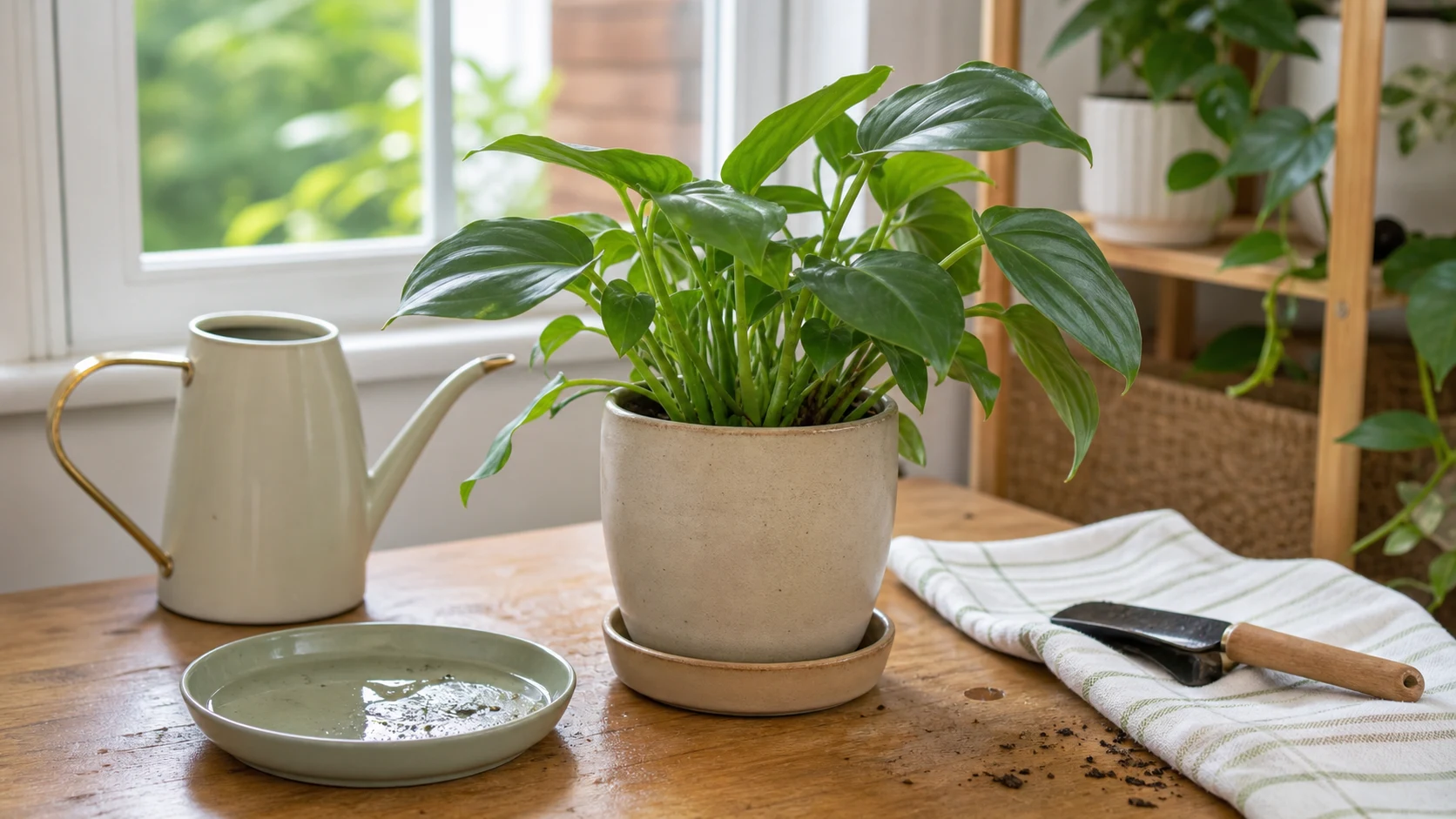
Pooled saucer water and damp soil are cues to pause watering and inspect the root zone before reacting to droop.
Identification Snapshot
| What you notice first | What it usually points to | Best next check |
|---|---|---|
| Soft yellow leaves plus a heavy pot | Excess moisture around the root zone | Check 2–3 inches down and pause watering |
| Wilting even though the mix feels wet | Roots may be stressed or starting to rot | Inspect stem firmness and smell near the soil line |
| Mushy stem base or sour smell | Advanced overwatering or root rot risk | Unpot gently and check root color right away |
| Dry mix and crispy wilt | More likely thirst than overwatering | Water deeply once, then watch the rebound |
This snapshot is meant to slow down the panic response. The right next move depends on what the root zone is doing, not just what the leaves look like.
What Overwatering Actually Does
Overwatering isn’t just about volume. It’s about time.
When the soil stays wet for too long, the air pockets in the mix – the ones roots need to breathe – stay filled with water instead. Roots without oxygen weaken and die. Dead roots can’t absorb water or nutrients, so the plant starts to starve and dehydrate even while sitting in soggy soil.
That’s the cruel irony: an overwatered plant can show symptoms that look exactly like a thirsty plant. Wilting. Drooping. Yellowing leaves. Because the root system has been damaged enough that it can no longer do its job.
According to the University of Maryland Extension, waterlogged soil forces out the air pockets roots need to survive, and the resulting damage produces wilting and yellowing that can look almost identical to drought stress – which is precisely why checking soil moisture at depth matters more than reading the leaves alone.
What Most Care Guides Miss
Almost every article on overwatering gives you the same list: yellow leaves, soggy soil, drooping stems, maybe root rot. Then it tells you to water less.
That list isn’t wrong. But it skips the part that actually trips people up.
The common misdiagnosis: The top of the soil looks and feels dry, so the plant looks thirsty. You water. But the root zone – several inches down around the actual roots – is still wet from the last watering. You’ve just added more water to a zone that never dried out.
This is especially common in larger pots, in dense or compacted soil, and in decorative pots without drainage holes. The surface deceives you.
The practical first check: Before you water anything that’s showing stress, lift the pot. A pot that feels heavy for its size still has water in the mix. A light pot is ready. If you’re not sure, push a finger or a wooden skewer 2–3 inches into the soil. Dry at that depth means go ahead. Still damp? Wait.
If the plant is wilting but the soil at depth is still wet, that’s the signal to stop watering and start investigating the root zone – not to water more.
Iowa State University Extension puts it directly: symptoms of root rot are often confused with drought stress, and the root system and potting mix moisture should always be examined before adding more water. Looking at what’s happening underground tells you more than any leaf symptom alone.
What Real Plant Owners Get Wrong First
Forum threads about overwatered houseplants tend to repeat the same problems:
- Topsoil looks dry, roots stay wet. Owners water again because the surface feels dry, then find damp or soggy mix wrapped around the roots.
- Decorative pots create hidden risk. Hole-free containers, gravel layers, and standing water in cachepots make people think drainage is handled when it is actually trapped.
- Wilting triggers more watering. Once root damage starts, the plant can droop harder after each watering, which keeps the loop going.
Those stories are not statistical proof, but they are a useful warning about how overwatering usually gets misdiagnosed in real homes.
The Symptoms, One by One
Yellow Leaves
Yellow leaves are the most common sign people notice first. With overwatering, they tend to appear on the lower, older leaves first and feel soft rather than crispy. The yellowing is even, not blotchy or spotted.
Compare this to underwatering, where leaves tend to yellow and dry out at the same time, often turning brown and crispy at the edges. Our guide to why plant leaves turn yellow walks through the full range of causes if you want to rule out other factors.
Soft yellow leaves that fall off easily? Overwatering is high on the list.
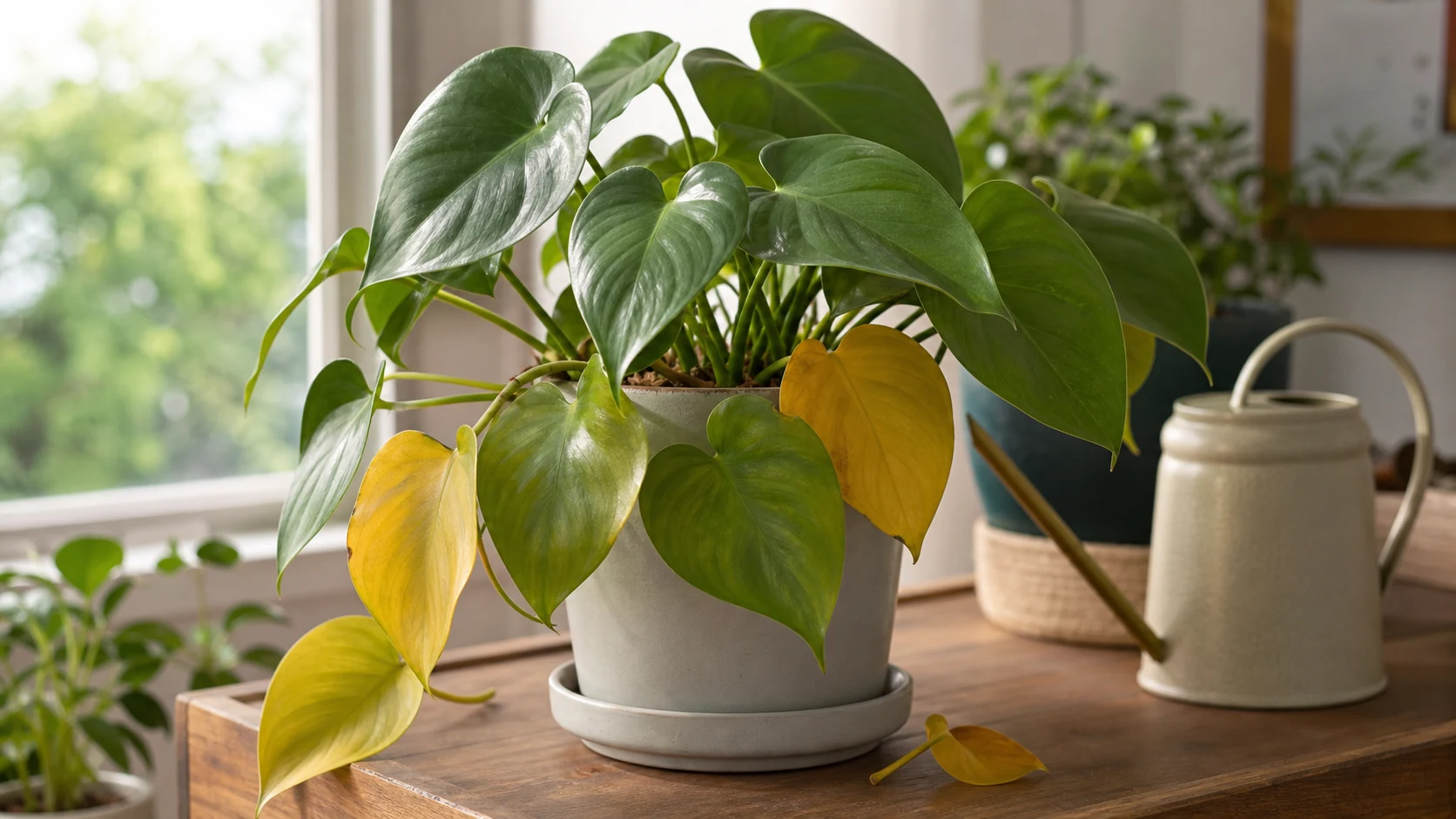
Even yellowing on soft lower leaves, while the upper canopy stays green, is a stronger overwatering clue than leaf color alone.
Wilting and Drooping That Doesn’t Bounce Back
A thirsty plant wilts and usually recovers quickly after watering. An overwatered plant wilts and stays wilted, because the roots can no longer move water up into the stems and leaves regardless of how wet the soil is.
If you’ve watered and the plant is still drooping hours later, check the soil depth before adding more water.
Soft or Mushy Stem at the Base
Run your fingers gently along the stem near the soil line. A healthy stem feels firm. A stem that feels soft, mushy, or slightly hollow at the base is showing early signs of rot – and this is a signal to act rather than wait.
Soggy Soil That Stays Wet for Days
Soil that stays saturated for a week or more – especially in a pot that doesn’t drain or in a mix that has become compacted – is the environment where overwatering damage compounds. Some plants can handle a few days of moist soil. Very few can handle it indefinitely.
Illinois Extension notes that watering frequency isn’t something you can set on a schedule: light levels, temperature, pot size, soil mix, and humidity all change how quickly a container dries. The same plant in the same pot may need water twice as often in summer as in winter. If you need a condition-first reset, our guide on how often to water indoor plants walks through the soil-depth and pot-weight checks that prevent this exact mistake.
Brown Leaf Tips Alongside Other Symptoms
Brown tips alone often point to humidity or mineral issues. But brown tips combined with soft yellowing leaves and wet soil? That’s an overwatering pattern.
Fungus Gnats Appearing Suddenly
Fungus gnats – the tiny flies hovering around the soil surface – thrive in persistently wet soil. If you’re suddenly seeing them and the plant is also showing stress, check moisture levels. Their presence is a useful secondary signal. More on identifying and removing them in our guide to getting rid of fungus gnats.
Overwatered or Underwatered: How to Tell
| What you see | Overwatering | Underwatering |
|---|---|---|
| Leaf texture when wilting | Soft, limp | Dry, papery |
| Yellowing pattern | Lower leaves first, even color | Patchy, mixed with browning |
| Soil feel at 2–3 inches | Still damp or wet | Bone dry, pulling from edges |
| Pot weight | Heavy for its size | Noticeably light |
| Stem base | May feel soft | Firm |
| Recovery after watering | Stays wilted | Improves within hours |
| Smell near soil | May be faintly sour | No unusual smell |
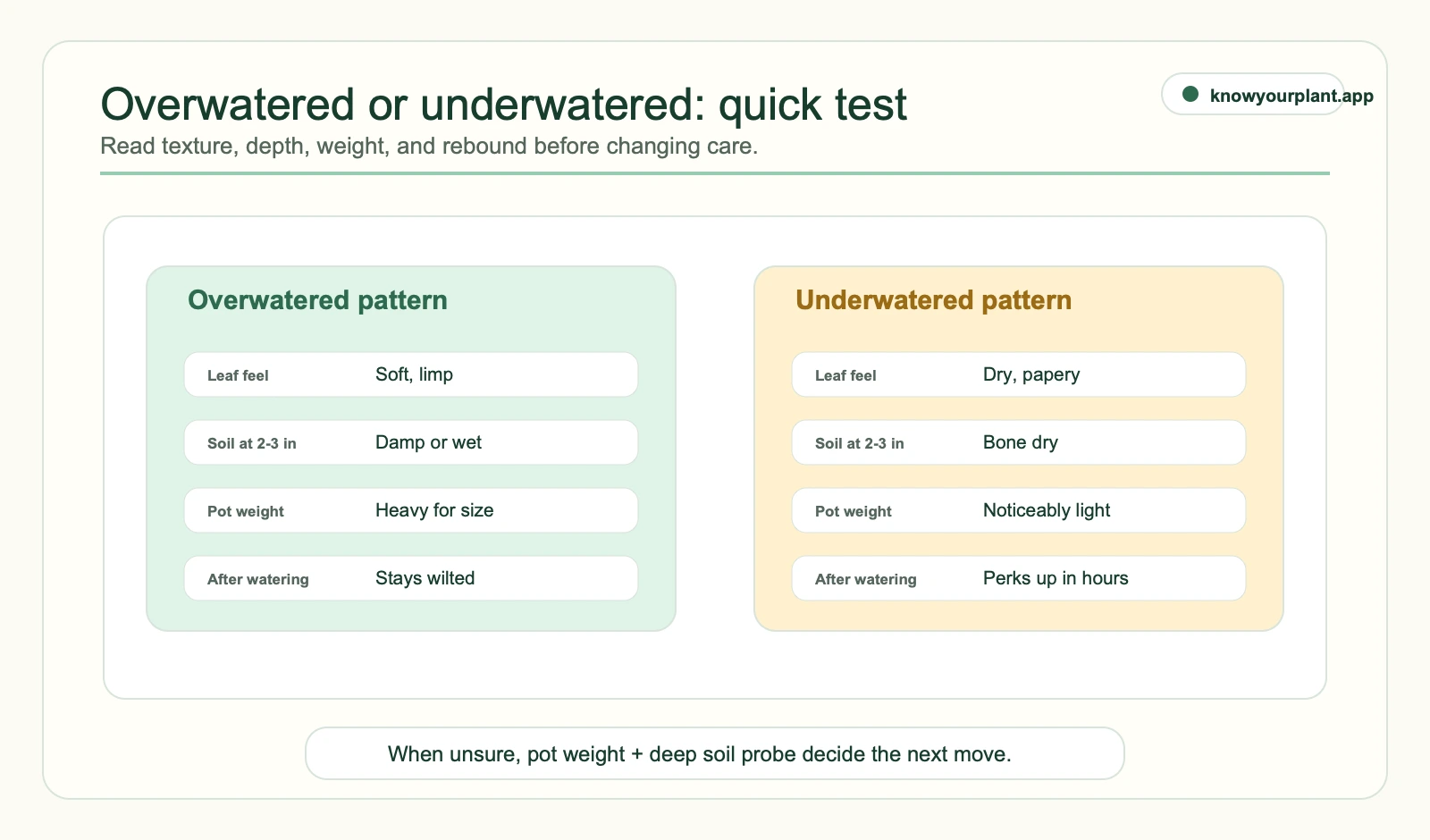
The quick test keeps the diagnosis grounded in texture, root-zone moisture, pot weight, and rebound instead of leaf color alone.
When you can’t tell either way, the pot-weight test and the finger-depth test together give you a reliable answer in under a minute.
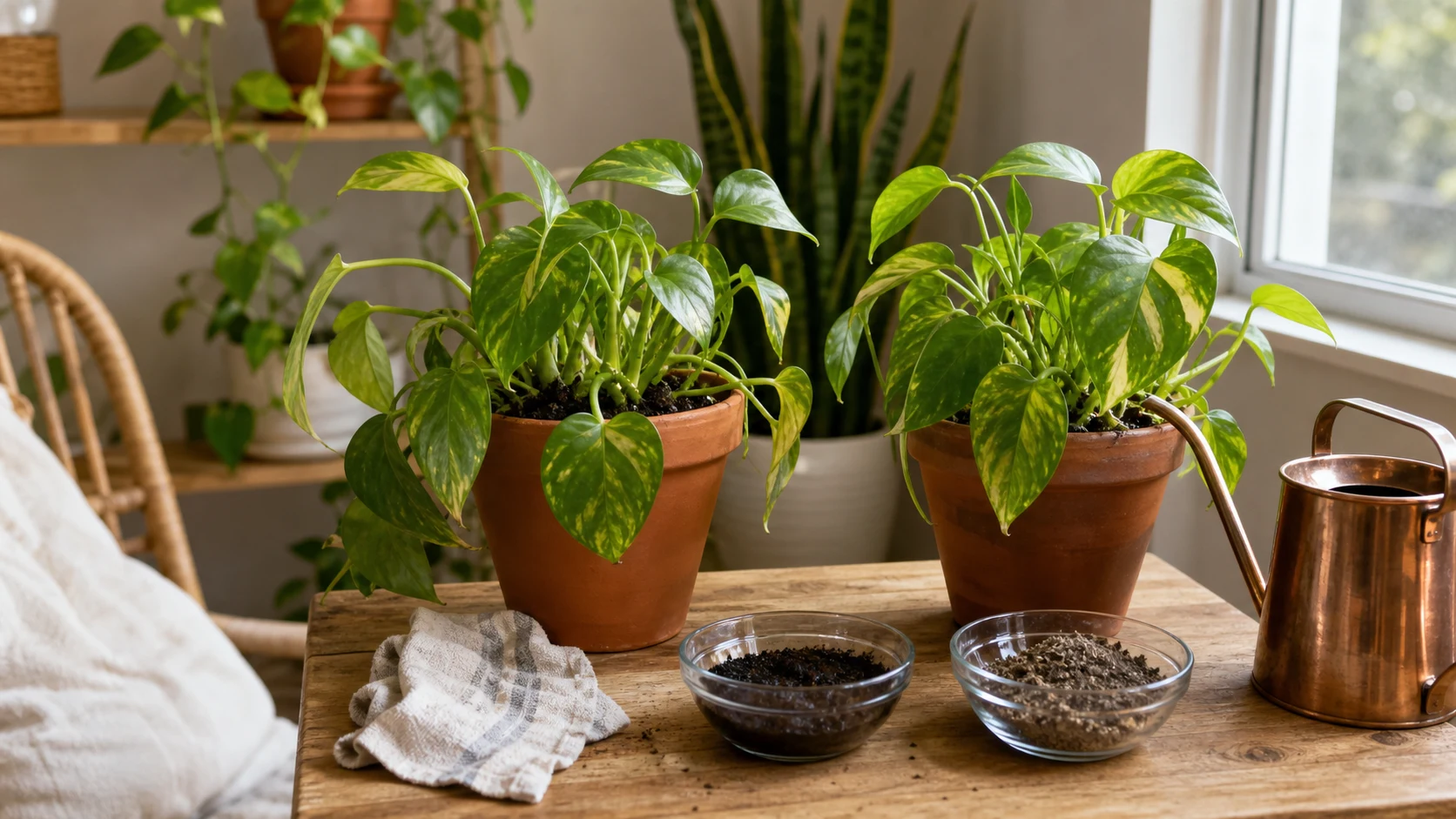
Comparing saturated and dry potting mix alongside plant posture helps separate excess moisture from genuine thirst.
Hidden-Risk Mistake Audit
Give yourself one point for each risk factor below:
- The pot has no drainage hole
- There is gravel or rock at the bottom of the container
- Water often sits in the cachepot or saucer
- The pot is much larger than the root ball
- You usually water on a calendar schedule instead of checking depth and pot weight
0–1 points: low hidden-risk setup, so your problem may be one heavy watering rather than a chronic system issue.
2–3 points: moderate risk, and the setup itself is probably keeping the root zone wet too long.
4–5 points: high risk, and the container setup likely needs to change even if the plant survives this round.
How to Fix an Overwatered Plant
Step 1: Stop Watering and Move It to Brighter Light
Give the soil a chance to dry out. If the plant is in low light, moving it somewhere brighter – but still away from harsh direct sun – will help the mix dry faster.
Remove any standing water from the saucer immediately. Leaving water under the pot keeps the drainage holes blocked and the root zone wet.
Step 2: Can I Wait, or Do I Need to Repot Now?
Not every overwatered plant needs immediate repotting. Here’s how to decide:
Wait and monitor if:
- The pot has drainage holes and water does move through
- The soil is damp but not waterlogged or smelly
- The stem base feels firm
- The plant started showing symptoms recently, within the last 1–2 weeks
Repot now if:
- The pot has no drainage holes
- You can smell something sour or faintly rotten near the soil
- The stem base feels soft or mushy
- Roots visible through drainage holes are brown, not white
- The soil has been wet for more than 2–3 weeks without drying
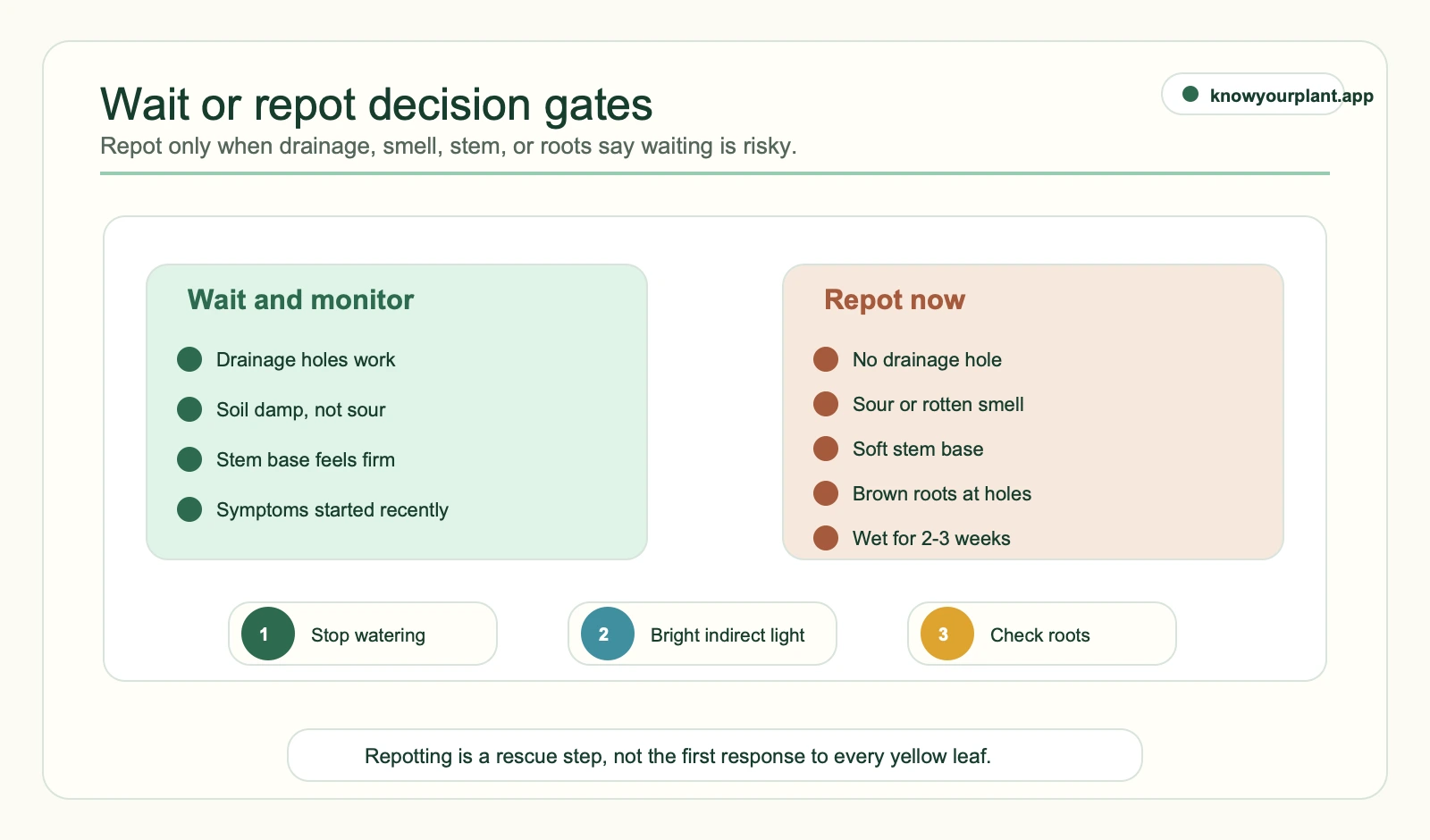
Use the gate map before disturbing the plant: waiting is fine when drainage works and the stem is firm, but smell, soft tissue, brown roots, or weeks of wet soil mean it is time to inspect and repot.
Step 3: Check for Root Rot
If the plant isn’t recovering after a few days of dry conditions, or if the stem feels soft, it’s time to unpot gently and look at the roots.
Healthy roots are firm and white or pale tan, with visible fine feeder roots. According to Wisconsin Horticulture, roots affected by rot are soft, brown, and may smell sour or like mild decay – and that smell is one of the clearest early signals the problem has moved beyond surface-level waterlogging.
Trim off everything that’s rotted with clean scissors, back to healthy tissue. Let the roots air out for an hour before repotting. Our guide to treating root rot covers the trimming and repotting steps in detail. If you want the exact dilution for a root rinse or fungus gnat drench during cleanup, the companion guide on hydrogen peroxide for plants breaks down when it helps and when it does not.
Step 4: Repot Into Fresh Mix
If more than a third of the root system has rotted, or if the pot has no drainage holes, repot into clean, well-draining potting mix in a pot with at least one drainage hole. See how to repot plants for container selection and technique.
Don’t go up in pot size when rescuing an overwatered plant. A smaller, appropriately sized pot dries out faster and gives the recovering roots a better chance.
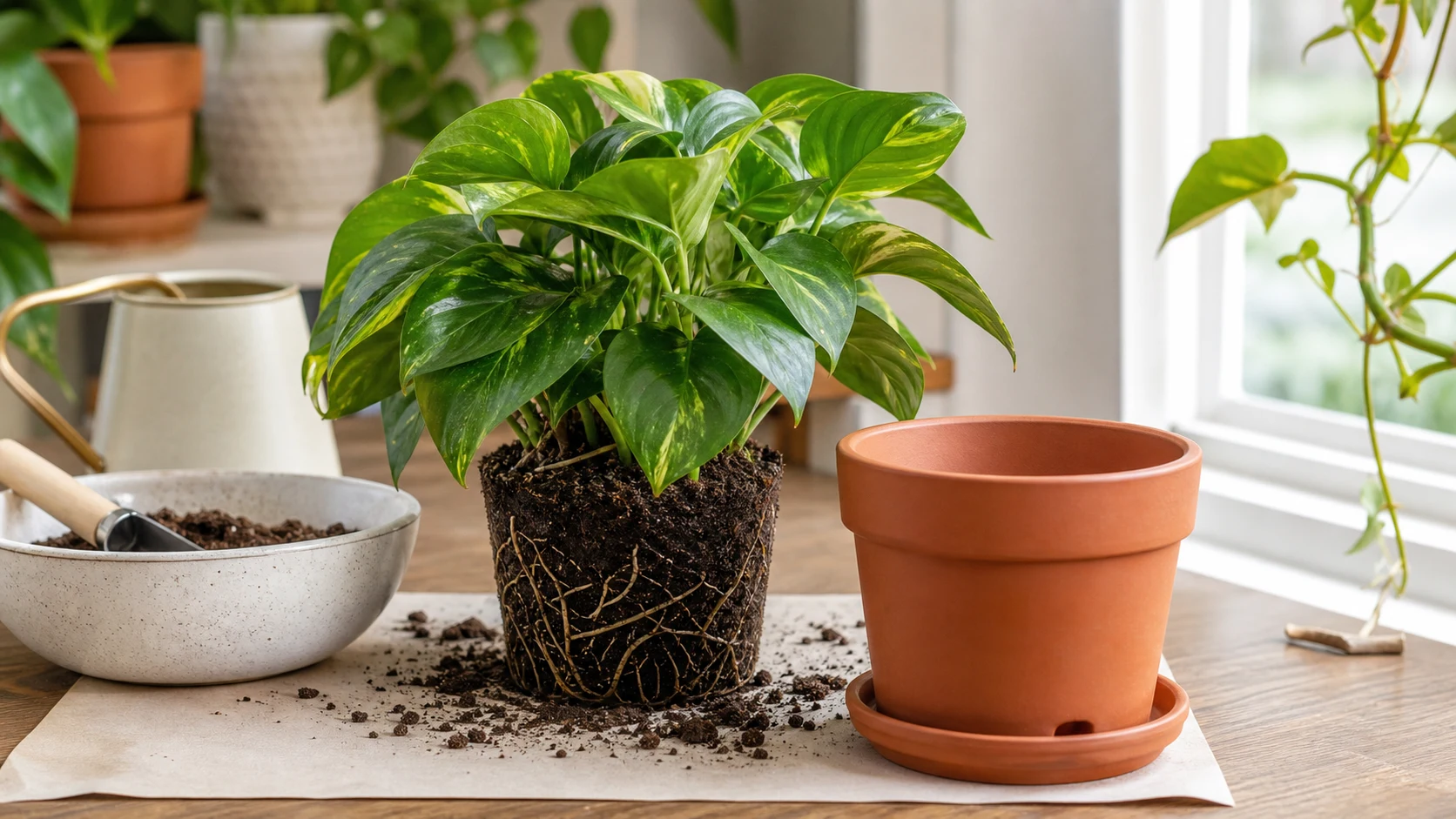
Fresh draining mix and a closely sized pot give a recovering root system less wet soil to manage.
Step 5: What Recovery Actually Looks Like
Most plant owners get stuck here because the improvement timeline isn’t what they expect.
In the first one to two weeks after you stop overwatering, the leaves that are already yellow will keep yellowing and drop. That’s normal. The plant is shedding damaged tissue, not getting worse. The signal to watch is whether new leaves are limp and soft, or whether existing healthy leaves are holding firm.
In weeks two to four, if the root zone is drying properly and roots were largely intact, you may see the plant start to hold itself upright again. Don’t expect new leaf growth yet.
In weeks four to eight, especially after root rot treatment and repotting, a new leaf pushing is the clearest sign the root system has recovered enough to support growth. Until that point, hold off on fertilising: a root system still rebuilding itself can’t use the nutrients, and fertiliser salts just add stress.
If the plant is still collapsing or new leaves are immediately limp after eight weeks of correct care, the root damage was likely too extensive. At that point, taking healthy cuttings for propagation is worth trying before giving up entirely.
Step 6: Adjust Your Watering Approach
Going forward, water by checking soil moisture rather than by schedule. Always check 2–3 inches deep before watering. Lift the pot: heavy means wait, light means ready. Let the plant and pot dictate the rhythm, not the calendar.
Care Cards
| Situation | What to do now | What to avoid |
|---|---|---|
| Wet soil, firm roots, no smell | Increase light, improve airflow, empty the saucer, and wait for the root zone to dry | Repotting immediately just because the leaves look dramatic |
| Wet soil, some brown roots, mild sour smell | Trim damaged roots, repot into fresh draining mix, and reduce stress while the plant recovers | Fertilising or returning to the old wet mix |
| Severe root loss or collapsing stem base | Save any healthy tissue you can, repot only if viable roots remain, and consider propagation as the backup plan | Watering again to “perk it up” |
Seasonal Overwatering Risk
One thing most overwatering guides skip entirely: your risk changes with the time of year, often significantly.
Spring is when the temptation to water more is highest. The days are getting longer, the plant looks like it’s waking up, and it feels like the right moment to kick things up. But until temperatures have genuinely warmed and the plant is pushing active new growth, the roots are still running slow. The same watering frequency that worked at peak summer can keep the root zone wet for too long in early spring.
Summer is usually the safest time for watering because heat and light dry the soil faster and plants are actively growing and drinking. The main summer trap is non-draining decorative pots left in full sun, where the interior stays swampy even as the surface bakes dry.
Autumn is the highest-risk transition. Days get shorter quickly, light drops, growth slows – but most plant owners keep watering at their summer frequency out of habit. This is when overwatering problems tend to build slowly through October and November, and only become visible as dramatic yellowing in December.
Winter is peak overwatering season for most tropical houseplants. Slower growth, weaker light, cooler temperatures, and reduced evaporation all mean the soil holds moisture far longer than in summer. A plant that needs water every seven days in July may only need it every 14–21 days in January. Check by feel every time, not by the date.
Common Problems
- Leaves keep yellowing after you stopped watering. Older damaged leaves may still drop for a while, so watch new growth and stem firmness instead of expecting instant visual recovery.
- The surface looks dry but the pot still feels heavy. The root ball is probably still wet deeper down, which means watering again will extend the problem.
- The plant perks up in the morning and collapses later. That often means the roots are too damaged to keep up once the day warms, not that the plant needs another drink.
- Recovery stalls after repotting. Mild transplant shock is normal, but sour smell, spreading mushy tissue, or nonstop wilt means the root zone is still failing.
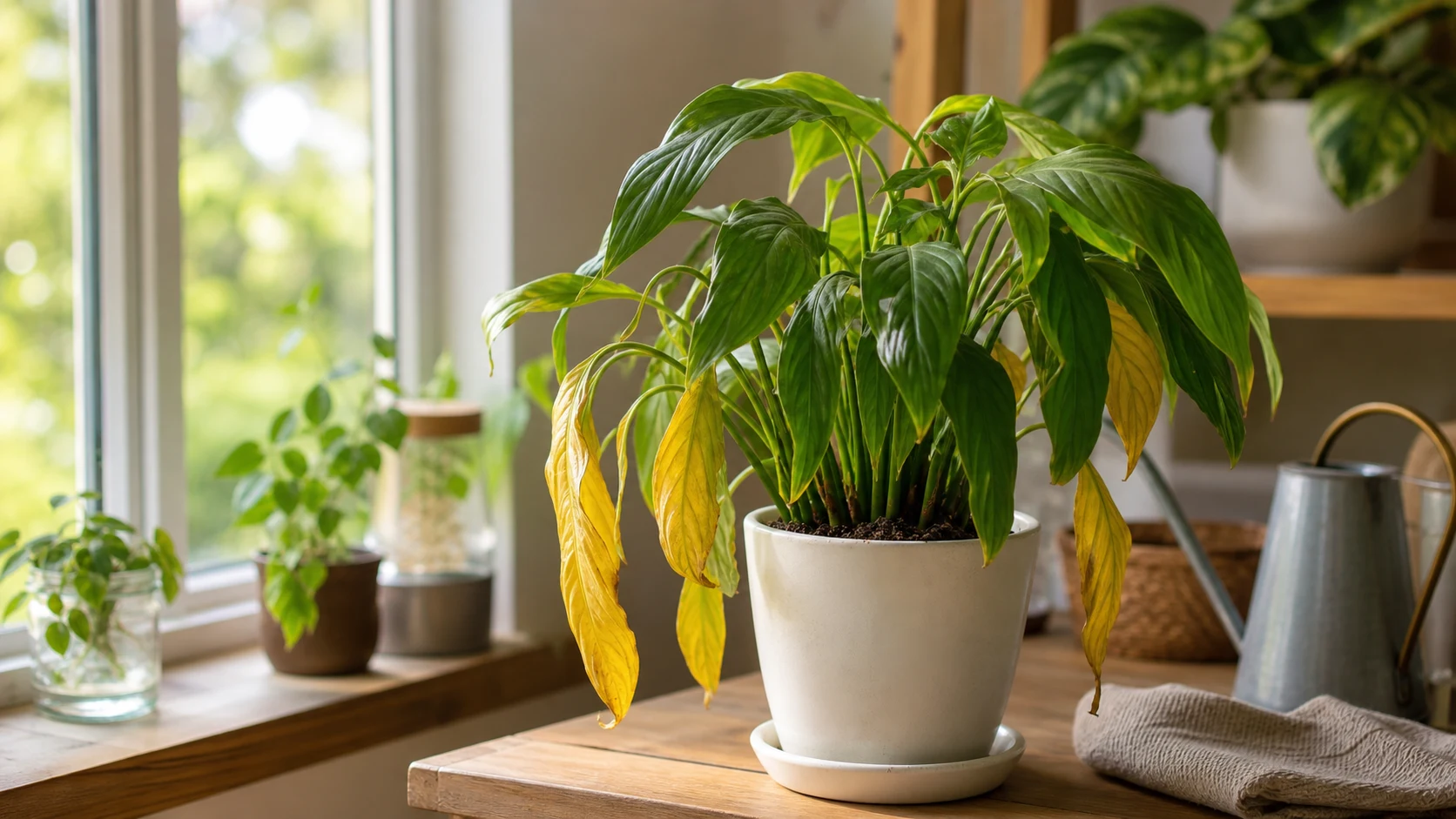
Persistent limp growth and continuing lower-leaf yellowing can signal that the wet root zone is still failing, even after watering stops.
Common Overwatering Mistakes
- Decorative pots without drainage holes. Water has nowhere to go and builds up around the roots. Use a cachepot setup: place the nursery pot inside the decorative one and lift it out to drain after watering.
- Gravel or stones at the bottom of the pot. This doesn’t improve drainage. It raises the water table inside the pot and keeps roots wetter for longer. Terracotta pots are a better structural fix; read more in our terracotta pots guide.
- Watering on a fixed schedule. A plant on a windowsill in winter doesn’t need water as often as the same plant in a south-facing window in July.
- Treating wilting as thirst. Always check soil depth before watering a drooping plant. Wilting is not always a water request.
- Leaving water standing in the saucer. Even pots with drainage holes stay too wet when sitting in pooled water. Empty the saucer within 30 minutes of watering.
- Choosing a pot that’s too large. A container much bigger than the root ball holds excess soil the roots can’t reach. That soil stays wet long after the top looks dry, quietly keeping the root zone waterlogged between waterings.
When to Be Concerned
Stop monitoring and take action if:
- The stem is soft or collapsing near the base
- You can smell something sour near the soil
- Roots visible through the drainage hole are brown and mushy
- The plant is still wilting after five or more days without watering
These are root rot signals. The faster you act, the better the odds of saving the plant. Yellow leaves that have already dropped won’t come back, but healthy roots that remain can push new growth once conditions improve.
Pet Safety
Dropped yellow leaves, trimmed rotted roots, and any treatment products should be kept away from pets and children during cleanup. If you use scissors, fungicide products, or diluted peroxide while treating root rot, do the work out of reach and discard waste promptly. The plant problem itself is not usually the pet risk. The cleanup materials and decaying plant tissue are.
Expert and Source Layer
The most consistent expert guidance across University of Maryland Extension, Illinois Extension, Wisconsin Horticulture, and Iowa State University is simple: do not diagnose overwatering from leaf color alone. Check moisture deeper in the pot, pay attention to pot weight, and inspect the roots when wet soil and ongoing wilt show up together. Healthy roots stay firm and pale. Rotted roots turn soft, dark, and sometimes sour-smelling.
That matters because the rescue step changes depending on what you find. Wet soil with intact roots usually needs patience and better drying conditions. Wet soil with collapsing tissue or rotted roots needs intervention.
Methodology and Freshness Note
This guide was reviewed on 2026-05-19 against current search results for overwatered plant symptoms, qualitative owner discussions in UBC Botanical Garden forum threads, and extension guidance from Maryland, Illinois, Wisconsin, and Iowa State. Owner stories were used as practical confusion signals, not as proof on their own. Re-check current care guidance if you are dealing with a species that has unusual watering needs.
Fresh care guidance should be checked against current evidence and species-specific needs, not copied from a fixed watering rule.
Real User FAQ
How long does it take an overwatered plant to recover?
It depends on how much root damage occurred. A plant caught early – with damp soil but roots still firm and white – can bounce back in 1–3 weeks once the soil dries out and normal watering resumes. If root rot has already set in and you’ve trimmed and repotted, expect a slower recovery of 4–8 weeks before you see new growth, and some plants take longer. Focus on root health, not leaf count: new leaves are the sign recovery is underway.
Should I repot my plant immediately if I think it’s overwatered?
Not necessarily. If the pot has drainage holes, the soil is damp but not waterlogged, and there’s no smell or stem softness, giving the soil time to dry out is often enough. Repotting adds stress to an already struggling plant. Save it for cases where drainage is absent, the soil won’t dry, or you’ve found rotted roots when you checked.
Can I save a plant with root rot?
Often yes, if you catch it before most of the root system is gone. Unpot the plant, trim all mushy brown roots back to healthy tissue, let the roots air-dry for an hour, and repot into fresh well-draining mix. Remove damaged leaves to reduce the demand on the weakened root system. Keep the plant in bright indirect light and hold off on fertilising until new growth appears.
Why is my plant still drooping after I stopped watering?
Persistent drooping after you’ve stopped watering usually means root damage is already present. The roots can’t move water into the stems even though the plant is alive. Unpot the plant and check the root condition. If roots are soft and brown, you’re dealing with rot rather than simple overwatering – and trimming and repotting is the next step.
Does using a bigger pot make overwatering worse?
Yes, significantly. A pot much larger than the root ball holds excess soil that the plant’s roots can’t draw from. That excess soil stays wet long after the top looks dry, keeping the root zone waterlogged between waterings. When repotting, choose a container only 1–2 inches wider than the current root ball.
Is it better to underwater or overwater a plant?
For most houseplants, underwatering is more forgiving than overwatering. A slightly dry plant usually recovers within hours of a thorough drink. Root rot from sustained overwatering can take weeks to reverse, and in severe cases can’t be reversed at all. When in doubt, wait another day.
How do I know when it’s safe to water again after overwatering?
Check moisture at 2–3 inches deep. For most tropical houseplants, that zone should feel dry before you water again. Lift the pot: it should feel noticeably lighter than right after watering. If either test says there’s still moisture, wait. Don’t set a fixed number of days – let the actual soil condition decide.
Overwatering is the most common reason houseplants decline, but it’s also one of the most fixable when you catch it early. The key is learning to read the signals that matter – root zone moisture, stem firmness, pot weight – rather than reacting to what you see on the surface. Check below the soil line first, then decide.
Download KnowYourPlant for personalized plant care reminders and watering nudges that adjust to your plant’s actual needs, not a generic schedule. Get the app