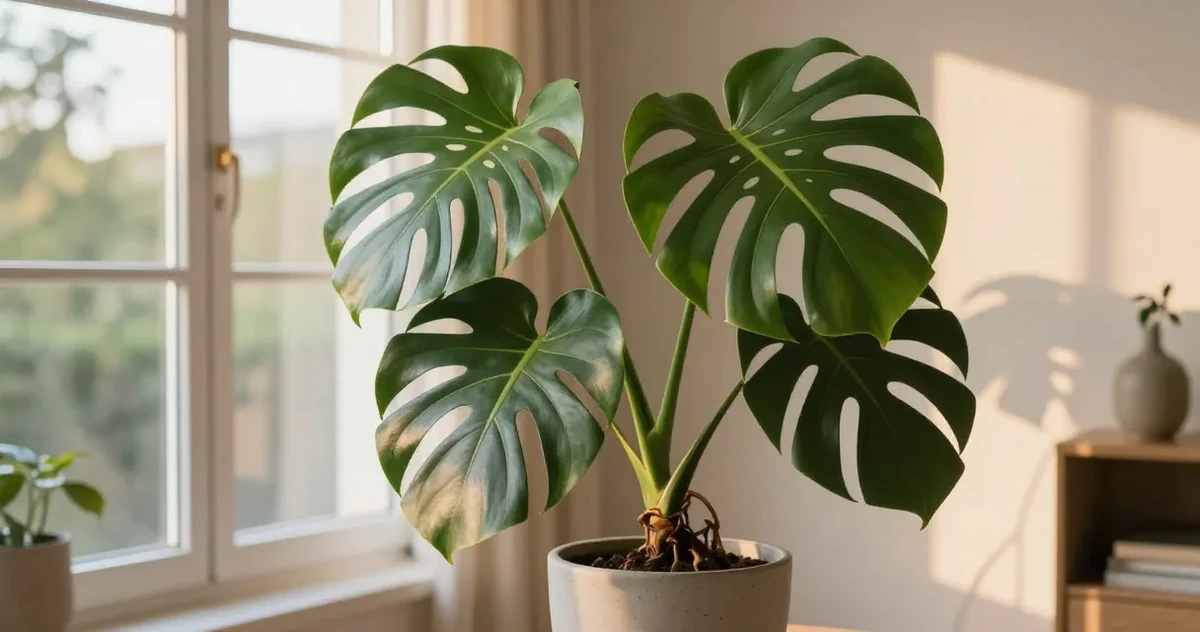
Monstera drooping is one of those things that stops you cold. A plant that looked fine yesterday now hangs heavy – leaves limp, stems losing their upright posture, the whole thing looking defeated. It’s unsettling. And the frustrating part is that very different problems can cause the exact same look.
A drooping monstera is sending a signal. The cause could be thirst, too much water, transplant stress, a cold draft, or the early stages of root rot. Each one needs a different response. The mistake most people make is reaching for the watering can before they know which problem they’re dealing with – and if the soil is already wet, that makes things worse.
This guide is about reading the signal before you react.
What Most Care Guides Miss
Most articles about monstera drooping list the usual suspects – underwatering, overwatering, low humidity – and tell you to fix whichever one sounds most familiar. What they skip is the part that actually matters: what does the rest of the plant tell you right now?
Drooping alone is not a diagnosis. Drooping with bone-dry soil is a completely different situation than drooping with wet soil and a faint musty smell from the pot. Drooping the day after repotting is different from drooping that appeared gradually over a week. And drooping while the plant is still pushing out a new leaf is different from drooping alongside yellowing, softening older leaves.
The common misdiagnosis is assuming a drooping monstera is always thirsty. Watering a plant that is already sitting in soggy soil – or one that just went through transplant shock – makes things significantly worse. The practical first check is not the watering schedule. It’s the soil and the recent history.
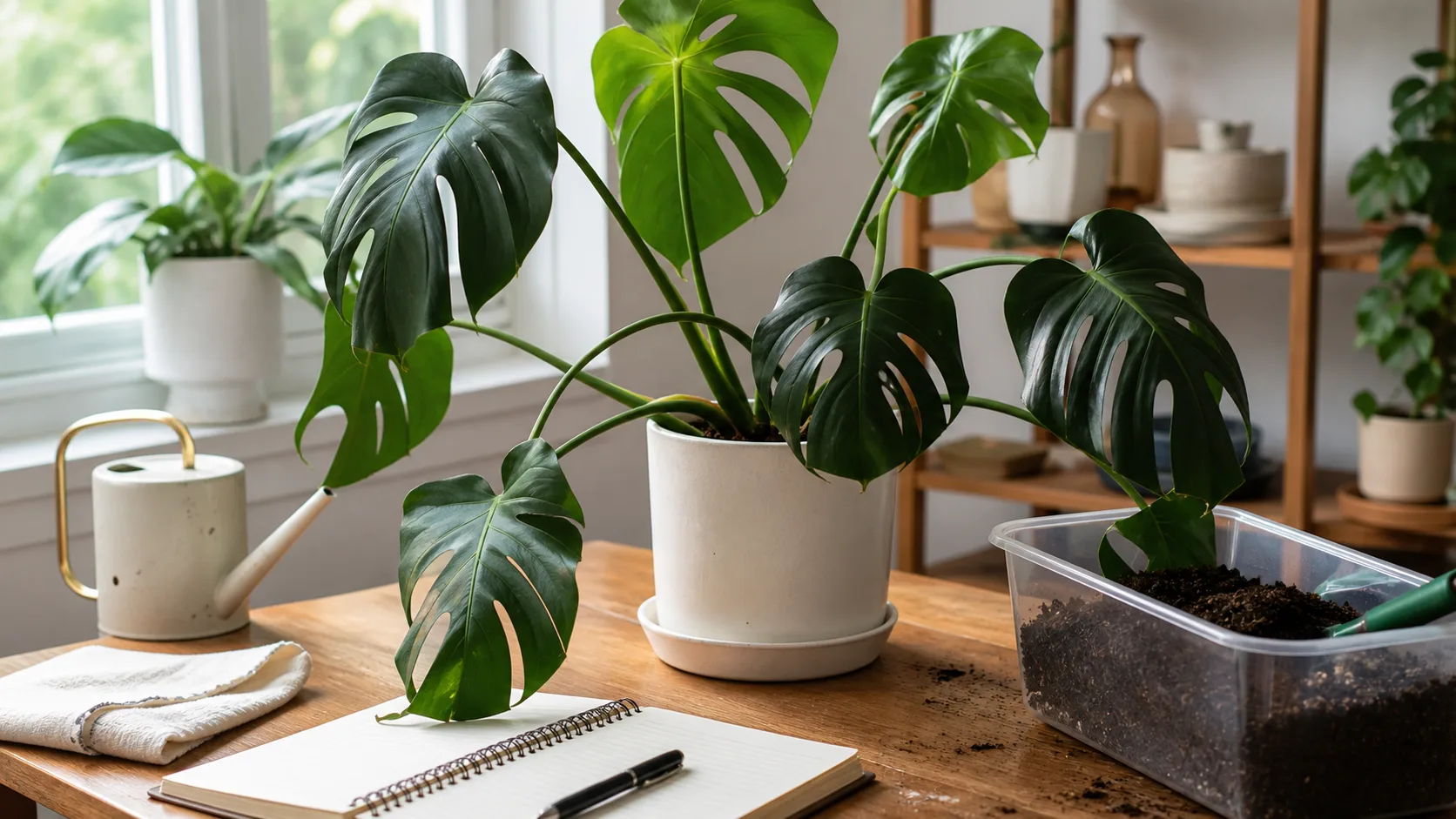
Read the plant, potting mix, and recent care together before treating a droop as thirst.
Identification Snapshot
- Plant this guide fits best: Monstera deliciosa, the common indoor monstera most people mean when they say “Swiss cheese plant.”
- Growth habit: a large tropical aroid with thick petioles, heavy leaves, and a climbing habit once it matures.
- What stress looks like first: leaves hang lower, petioles lose firmness, and the whole plant can look limp long before the roots or stems are checked.
- When this article is the right match: sudden drooping after watering swings, repotting, a room change, a cold draft, or a stretch of wet soil.
Lookalikes and Confused-With Cases
| Plant | Why people mix it up with monstera | Why the drooping pattern can mislead you |
|---|---|---|
| Monstera deliciosa | Large heart-shaped leaves that mature into splits and holes | Heavy leaves naturally arch, so true limp drooping is easier to miss until the whole plant softens |
| Monstera adansonii | Also sold as a Swiss cheese plant | Thinner vines and lighter leaves dry faster, so thirst can show up sooner than it does on a larger deliciosa |
| Rhaphidophora tetrasperma | Often sold as a mini monstera even though it is not one | It reacts faster to dry soil and heat, so a fix that works for it can be too aggressive for a true monstera |
Care Cards: Safest First Moves
| Situation | Safest first move | What not to do yet |
|---|---|---|
| Soil is dry and the pot feels light | Water thoroughly and let the excess drain | Do not fertilize at the same time |
| Soil is wet and the pot still feels heavy | Pause watering and check drainage, smell, and lower-leaf color | Do not add more water just because the leaves look limp |
| Drooping started right after repotting | Keep conditions steady and wait for transplant stress to settle | Do not repot again or feed immediately |
| Drooping appeared after a move, open window, or AC blast | Return the plant to stable warmth and bright indirect light | Do not assume every droop is a watering issue |
| Drooping shows up while a new leaf is still unfurling | Check moisture, then monitor for a few days before changing multiple variables | Do not panic-water if the root zone is already in range |
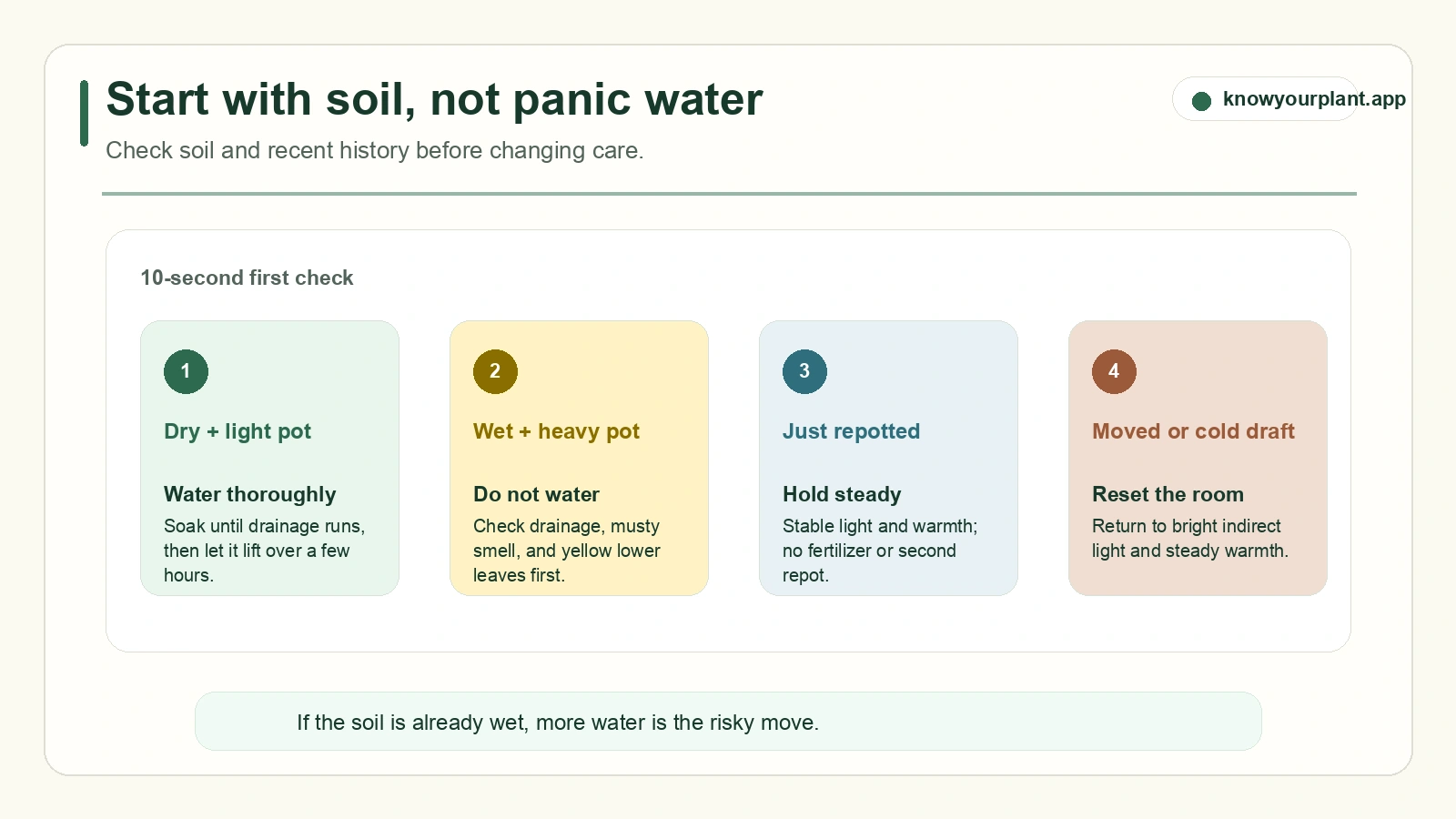
Start with soil and recent history before reacting. A wet, heavy pot needs the opposite response from a dry, light one.
Start Here: Check the Soil Before You Do Anything Else
Before you water, move, or fertilize anything, push your finger into the soil near the edge of the pot, down to about the second knuckle. This one check changes your entire next step.
- Dry and pulling away from the pot sides? Underwatering is the likely cause.
- Damp or wet, especially deeper down? Hold off on watering. Something else is going on.
- Soggy, and the pot feels heavy even days after your last water? Drainage may be the problem, and root rot is a real possibility.
If you can’t read the soil by touch, try the lift test: pick up the pot right after watering, feel the weight, then check it a few days later. An overwatered pot stays heavy. One that’s ready for water feels noticeably lighter.
According to NC State Extension’s Plant Toolbox, monstera should be watered thoroughly and then allowed to dry until the top quarter to one-third of the growing medium has dried out before watering again. That window is more generous than most people assume – and most drooping from “mystery causes” turns out to be one of the two extremes of that range.
This single check takes ten seconds and rules out the most common mistake.
The Most Common Reasons a Monstera Droops
Underwatering
When a monstera doesn’t get enough water, the cells in its leaves and stems lose turgor pressure. The plant goes limp – sometimes quite suddenly if it got very dry. The leaves may feel thinner or slightly papery along the edges, and the soil will feel powdery or be pulling away from the inner pot wall.
The fix is thorough watering – not a splash but a proper soak until water runs freely from the drainage holes. Give it a few hours and you’ll usually see the plant start to lift again. If the soil has become hydrophobic and water runs straight through without soaking in, set the pot in a bowl of water for 20 to 30 minutes so the root zone can rehydrate slowly from below.
Going forward, check the soil rather than watering on a schedule. When the top quarter to a third is dry, it’s time to water.
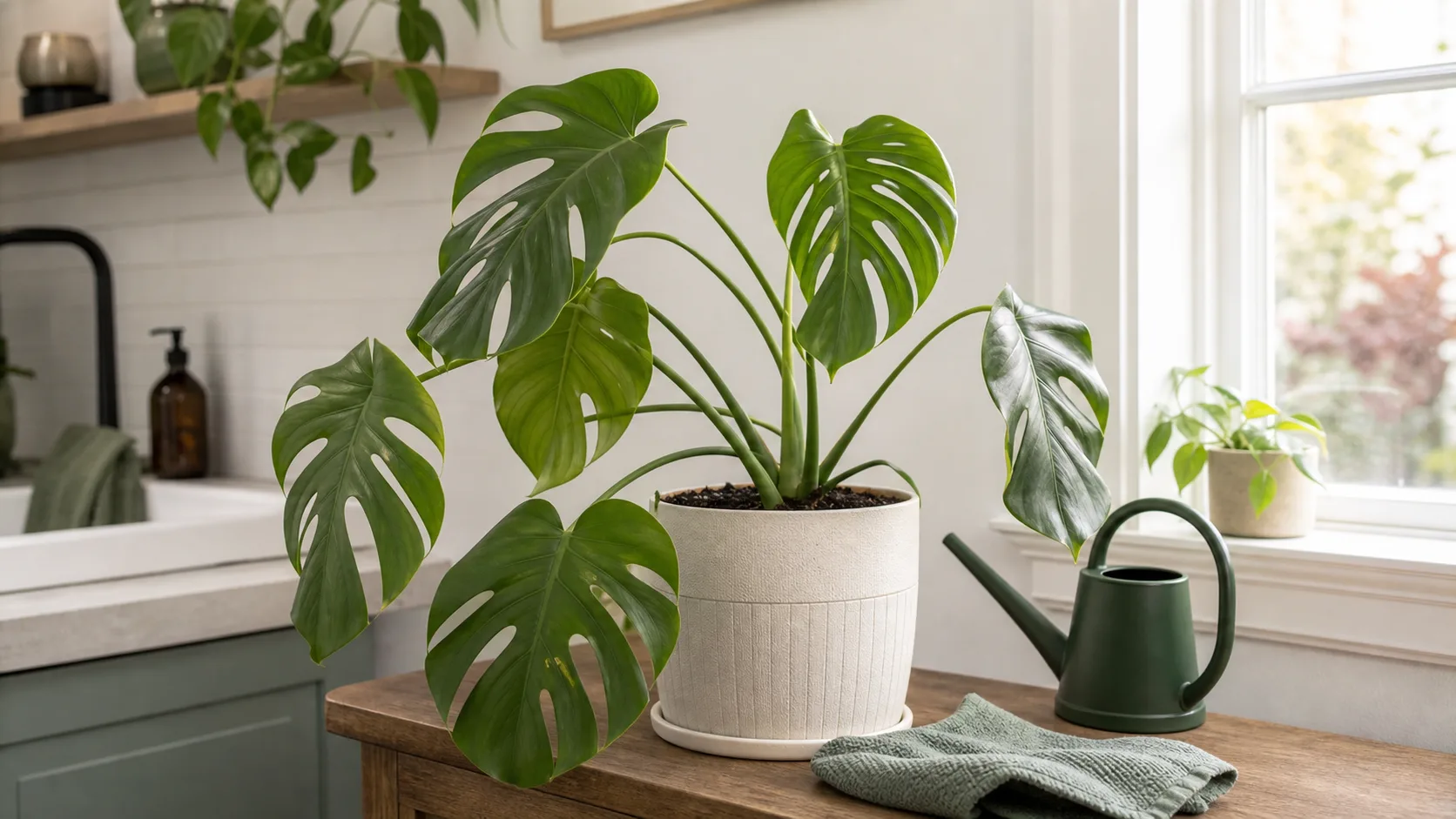
Limp leaves, dry mix, and a light pot point toward a thorough watering rather than a quick splash.
Overwatering and Root Rot
A monstera sitting in consistently wet soil can’t breathe. The roots break down, and without healthy roots, the plant can’t draw up the water and nutrients it needs – even though there’s technically plenty of moisture in the pot. The result is drooping that looks confusingly like drought stress.
The University of Maryland Extension identifies wilting, yellowing foliage, and mushy brown-to-black roots as the primary root rot indicators in indoor plants. In a monstera, you’ll typically see older lower leaves yellowing first, the soil staying wet for longer than expected, and sometimes a faint sour or musty smell from the pot.
If you catch it early, improving drainage and letting the soil dry out more between waterings can turn things around. If roots are already mushy and dark, you’re looking at active root rot – which means unpotting, trimming the damaged roots back to healthy tissue, and repotting into fresh, fast-draining mix. If that is what you find, the full monstera root rot rescue guide walks through the inspection, trimming, and aftercare steps in detail.
Transplant Shock After Repotting
A monstera that droops in the days right after repotting is almost always experiencing transplant stress. Moving disturbs the roots and breaks the established relationship between root tips and soil structure. The plant may droop even if you watered correctly and the new pot has good drainage.
The instinct here is to do more – add fertilizer, water again, move it to a brighter spot. This almost always makes things worse. The best thing you can do is leave it alone: keep it in stable conditions, out of direct sun, and let the root system settle. Most plants recover within one to two weeks.
If you’re preparing to repot a monstera, the guide to repotting houseplants covers timing, pot size, and soil mix in detail – including how to minimize root disturbance and reduce the odds of drooping afterward.
Temperature Drop or Cold Draft
A cold draft, a sudden move to a much darker or brighter spot, or a few hours near an air conditioning vent can cause drooping that has nothing to do with water. NC State Extension notes that monstera deliciosa prefers warm conditions and will experience stress when temperatures drop below around 55F (13C).
If the drooping appeared after a move, a weather change, or opening a window near the plant, check the environment before checking the soil. The fix is simple: relocate the plant away from the draft or cold source and give it a few days in stable warmth.
This is especially relevant in winter and early spring, when windows stay closed for heat but cold air still seeps through frames, and when heating vents push dry, warm air that can stress the leaves in a different direction. If your monstera droops during a cold snap and the soil is fine, the environment is the first suspect.
Drooping While Still Growing New Leaves
This one confuses a lot of plant owners: the monstera is clearly doing something right – there’s a new leaf unfurling – but the older leaves are hanging down and you’re not sure whether to act.
Drooping while actively growing is usually mild stress, not a crisis. Pushing out a new leaf takes a lot of energy, and the plant may divert resources away from holding older leaves fully upright. It can also reflect slightly underwatered conditions as the plant prioritizes new growth. Check the soil moisture. If it’s in a reasonable range, give it a few more days before changing anything. The drooping will often self-correct once the new leaf finishes.
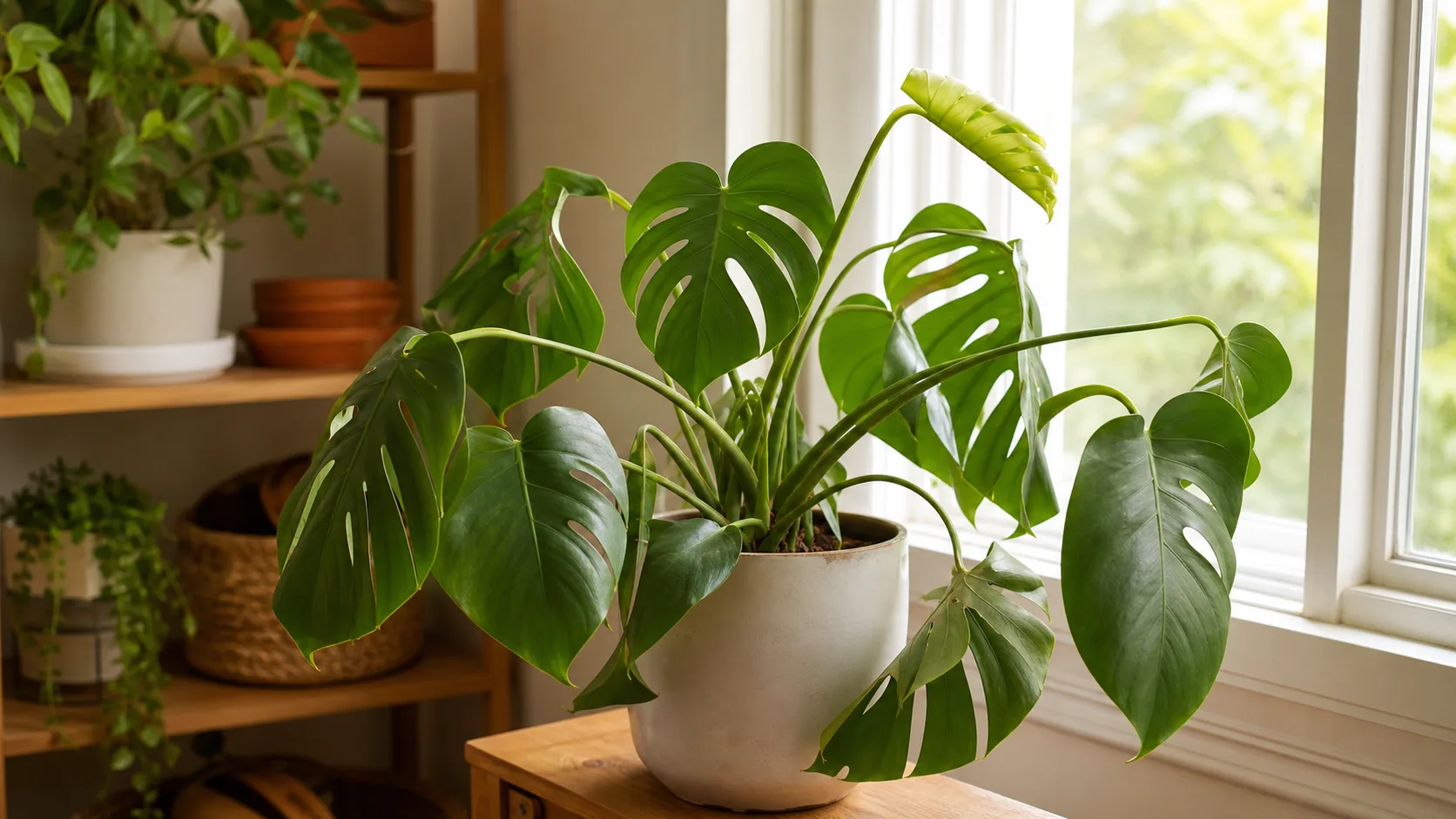
A new leaf can keep unfurling while older leaves hang low during short-term stress.
How to Tell the Causes Apart at a Glance
| What you see | Pot weight | Most likely cause |
|---|---|---|
| Dry soil, papery leaf edges | Light | Underwatering |
| Wet soil, yellowing older leaves, musty smell | Heavy, stays heavy | Overwatering or root rot |
| Drooping 1-2 days after repotting, soil damp | Normal | Transplant shock |
| Sudden drooping after moving the plant | Fine | Temperature or light change |
| Drooping but new leaf is unfurling | Normal | Mild stress, monitor first |
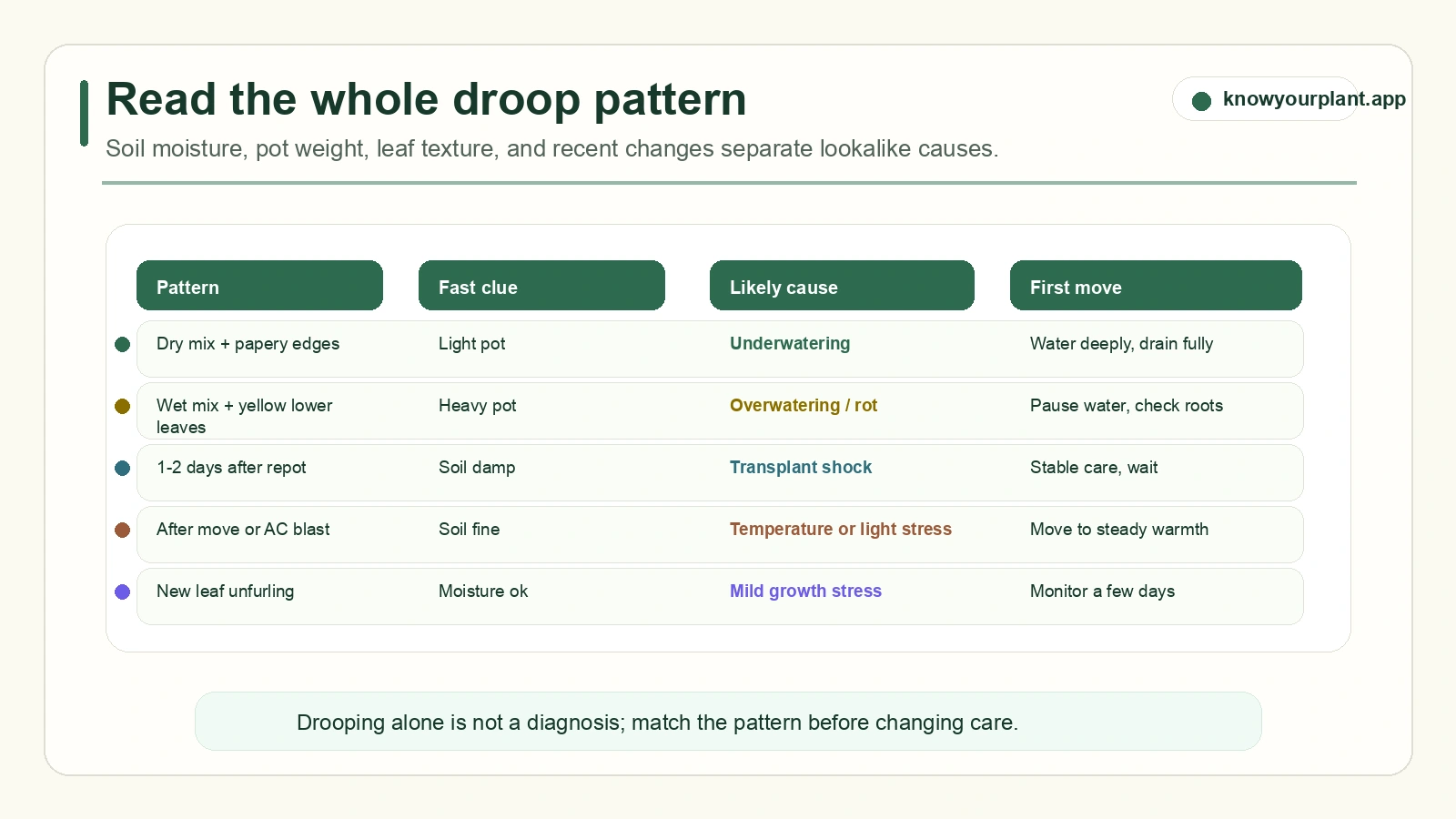
Match the whole pattern before changing care. Drooping alone cannot tell you whether to water, wait, move the plant, or inspect roots.
Adding pot weight to the comparison is something most care guides skip. It’s a fast, no-tool way to confirm whether drainage is actually working or whether the root zone is still saturated days after your last water.
Common Problems: Drooping Patterns That Need Different Fixes
- Wet soil plus yellowing lower leaves usually points to overwatering or root stress, not thirst.
- Dry mix plus thin, papery leaf edges usually points to underwatering or a hot, fast-drying spot.
- Drooping right after repotting is most often transplant shock, especially if the plant was otherwise healthy before the move.
- Drooping with brown spots after a room change is a clue to look at drafts, cold exposure, light shock, and pests together instead of guessing from one symptom.
- Sudden drooping during a heat spike can happen even when your watering rhythm stayed the same, because the room changed faster than the schedule did.
The practical rule is to read the whole pattern before you intervene. Soil moisture, pot weight, recent changes, and leaf pattern together tell you more than drooping alone ever will.
What Not to Do First
When you see drooping, it’s tempting to fix it immediately. A few things to avoid until you know the cause:
- Don’t water again right away without checking the soil moisture. If it’s already wet, more water makes things worse.
- Don’t fertilize a stressed plant. Fertilizer can’t help a plant that’s struggling to move water through damaged or disturbed roots.
- Don’t move it repeatedly. Every location change adds stress on top of existing stress.
- Don’t repot again if you just repotted. Give it time – the roots need to re-establish, not be disturbed again.
The best default while you’re still diagnosing: stable conditions, no interventions except what the soil check clearly calls for.
When to Actually Check the Roots
Most drooping doesn’t need a root inspection. But if any of the following are true, it’s worth unpotting and looking:
- The soil has been staying wet for more than a week after watering
- You can smell something sour or musty from the pot or the drainage hole
- Older leaves are yellowing progressively from the base upward
- The plant has been drooping for more than two weeks with no improvement despite correct watering
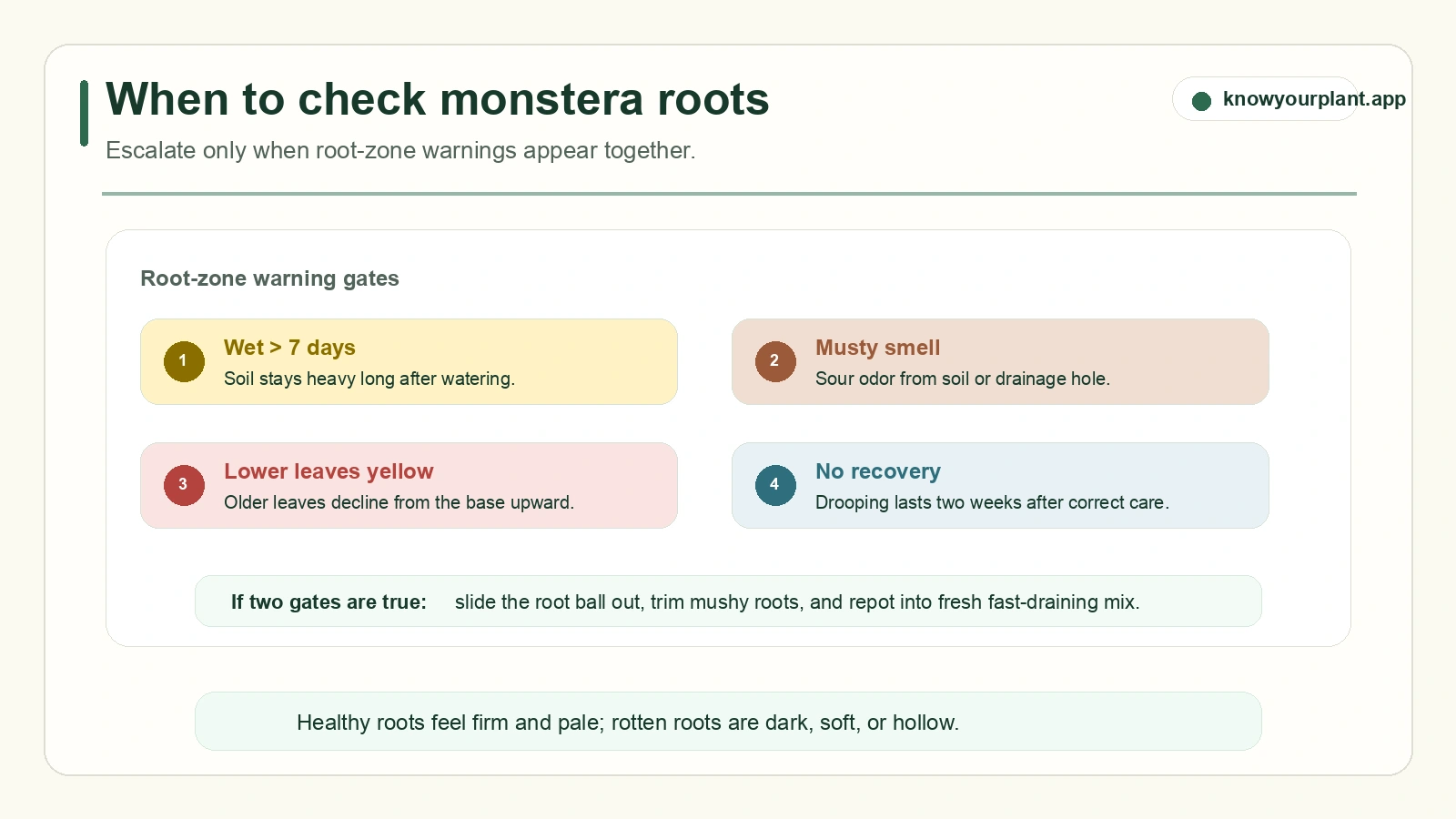
Escalate to a root inspection when multiple warning gates are true, not just because one leaf droops.
The smell test through the drainage hole is a useful early signal. If you detect anything sour before you commit to unpotting, that’s enough to start taking overwatering seriously.
To check roots properly: gently slide the root ball out of the pot. Healthy monstera roots are firm, pale tan or white. Roots affected by rot are dark brown or black, feel soft or slimy, and may fall apart when touched. Trim any damaged roots back to healthy tissue with clean scissors, let the cut ends dry for 30 minutes, and repot into fresh, well-draining mix with drainage holes.
The University of Maryland Extension recommends discarding plants with severe, widespread root rot rather than attempting recovery. For a monstera with localized damage caught early, prompt trimming and a fresh pot often turns things around. The root rot treatment guide walks through what to trim, what to keep, and how to repot into healthy soil without making the situation worse.
A Seasonal Note on Winter Drooping
Monstera is more likely to droop in winter, and not always for the reason you’d expect. Lower light in the colder months slows the plant’s metabolism, which means it takes up water more slowly. Soil that would dry out in 7 to 10 days in summer may still feel wet after two weeks. That slower drying cycle makes it easy to overwater by accident just by keeping your usual schedule.
At the same time, heating systems push dry, warm air through rooms and can stress leaves that are already dealing with reduced light. If your monstera droops in December or January and the soil is fine, check whether a heat vent is blowing nearby.
When light drops and temperature swings increase, the most reliable approach is to reduce watering frequency slightly and watch the soil rather than the calendar.
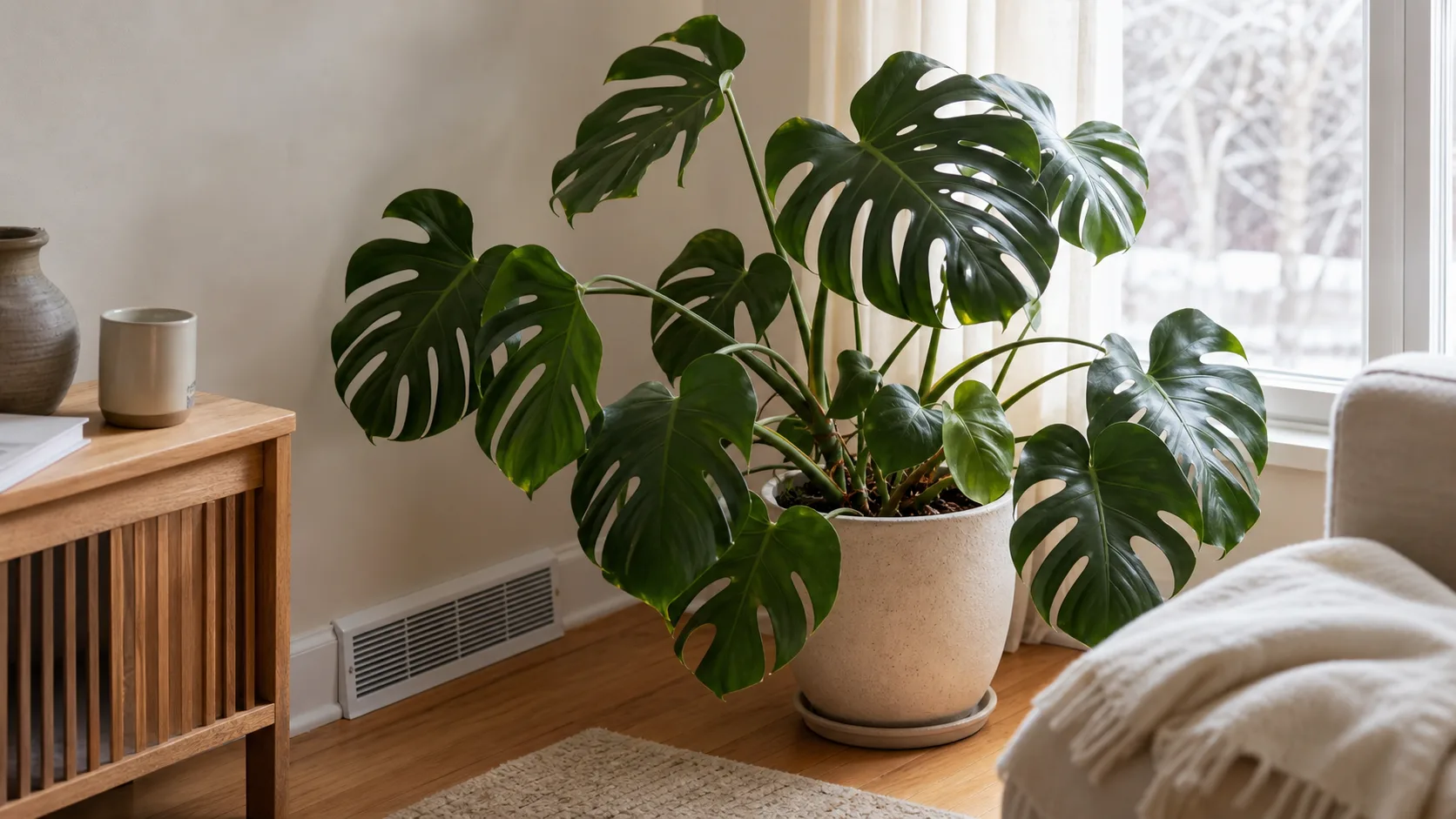
In winter, watch both the slower-drying pot and warm air moving from nearby heat vents.
What Comes Next
Once you know the cause, the fix is usually straightforward. The monstera is a forgiving plant as long as you catch things reasonably early and resist the urge to intervene before you’ve diagnosed.
For a broader look at caring for your monstera through all seasons, the monstera deliciosa care guide covers light, watering, and humidity in one place. And if you’ve found mushy dark roots when you unpotted, the root rot treatment guide walks through what to trim and how to repot into healthy soil.
For a related hands-on growing walkthrough, use Moss Pole for Monstera: Choose, Install, and Train It Correctly for the setup and follow-up care.
Freshness Note
Last updated: 2026-06-15. Monstera drooping is easiest to misread when the season changes, the plant gets repotted, or a room suddenly gets hotter, colder, brighter, or drier. Re-check the recent history before you change the care routine.
Pet Safety
Monstera is not pet-safe. Like other aroids, it contains insoluble calcium oxalate crystals that can irritate a cat or dog’s mouth, cause drooling or vomiting, and make chewing the plant a bad experience very quickly. If a pet bites the leaves, remove plant material from the mouth, offer water, and call your veterinarian or poison line if symptoms escalate.
Methodology Note
This guide was refreshed after reviewing live search results for the exact keyword and close variants, plant-owner pain patterns on Bird/X and Gardening Stack Exchange, and expert-source guidance from NC State Extension, University of Maryland Extension, and Ask Extension. Community posts were used to understand recurring owner confusion, not to measure prevalence. Extension sources anchored the factual care and root-rot guidance.
Real User FAQ: Monstera Drooping
How do I tell if my monstera is drooping from underwatering or overwatering?
The soil and the pot weight together give you the fastest read. Push your finger in near the edge of the pot: dry and pulling away from the sides points to underwatering, while soggy or still-wet soil after several days points to overwatering. Lift the pot – an overwatered pot feels noticeably heavier than expected. Underwatered plants tend to droop with thin, papery-edged leaves. Overwatered plants often droop alongside yellowing lower leaves and, eventually, a musty smell from the pot.
My monstera started drooping right after repotting. Should I water it more?
Not automatically. Drooping after repotting is almost always transplant shock, and adding more water when the soil is already moist can push things toward root rot. Check the soil first. If it’s damp, hold off and give the plant one to two weeks of stable conditions – no fertilizer, no extra moves, no more water until the top quarter of the soil has dried. Most monsteras recover on their own once the roots settle.
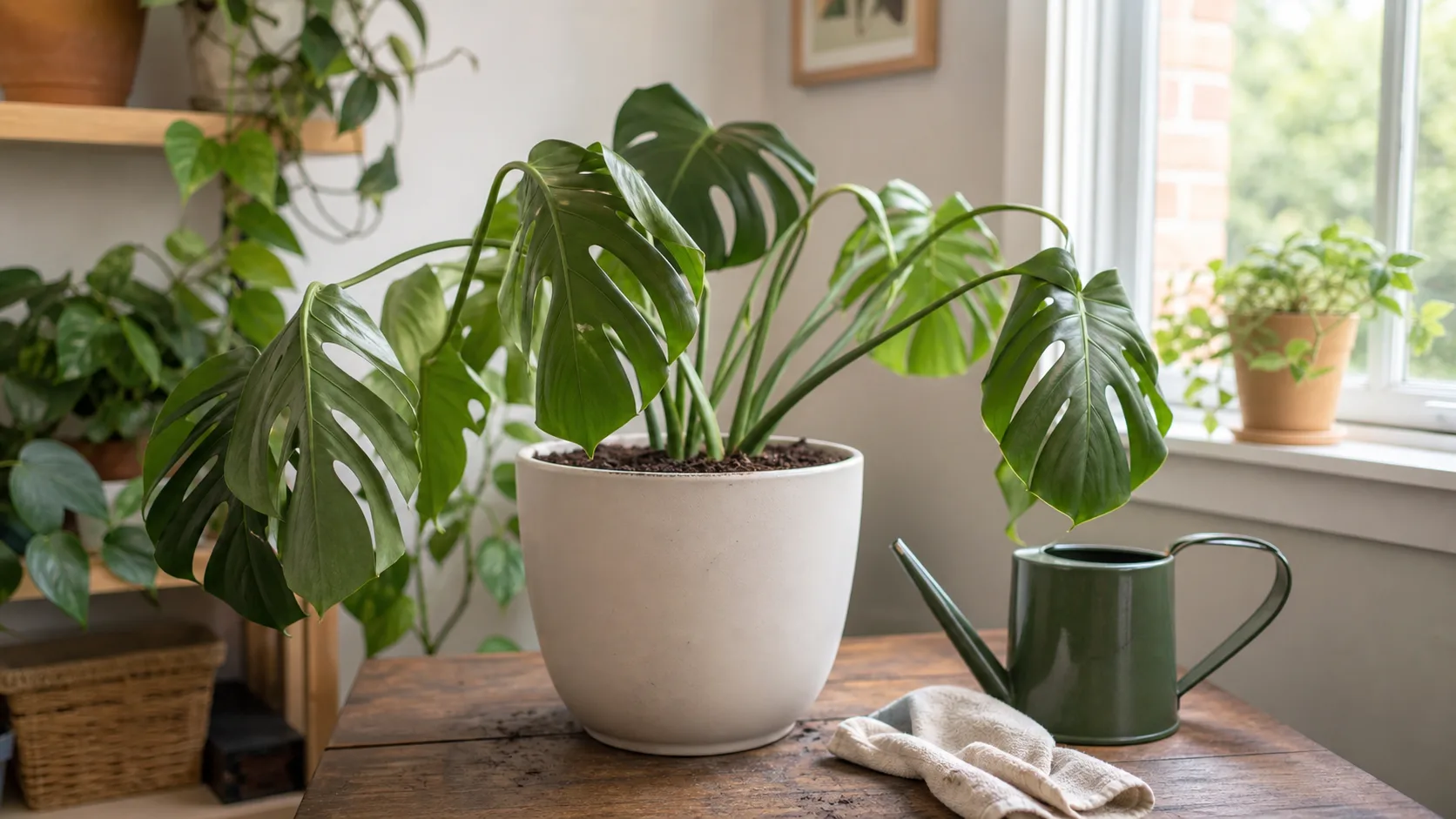
Fresh potting mix and a post-repot droop call for a soil check and stable conditions, not automatic watering.
Why is my monstera drooping but still growing new leaves?
New growth and drooping can coexist, and it’s less alarming than it looks. Pushing out a new leaf is energy-intensive, and the plant may divert resources away from holding older leaves upright. It can also signal mild underwatering that the plant is managing through. If the drooping is minor, the soil is in a healthy moisture range, and the new leaf is unfolding normally, observe for another few days before changing anything.
Can a cold draft really cause a monstera to droop?
Yes. Monstera is a tropical plant that doesn’t handle temperature swings well, particularly cold air from open windows, vents, or air conditioning in summer. A brief chill can cause visible drooping within 24 hours. If the drooping appeared suddenly after you opened a window, adjusted the thermostat, or moved the plant closer to an exterior wall in winter, temperature stress is a strong possibility. Move it somewhere warmer and draft-free and give it a few days.
How do I check for root rot without fully unpotting the plant?
Lift the pot and smell the drainage hole – a sour or musty odor is a reliable early indicator. If the pot feels unusually heavy and the soil hasn’t dried out after a week, that’s another warning sign. A full root inspection requires unpotting, but you can usually wait until you have at least two signals together: heavy pot, persistent wet soil, musty smell, and yellowing lower leaves.
How long does it take for a drooping monstera to recover?
It depends on the cause. Underwatering recovers fast – often within a few hours of a thorough watering, sometimes overnight. Transplant shock typically resolves in one to two weeks with no intervention. Temperature stress clears up in a few days once the plant is warm again. Overwatering or root rot takes longer: if you catch it early and improve drainage, you may see improvement within a week or two, but severe root rot requires repotting and the plant may take a month or more to look fully healthy again.
Is a drooping monstera always a serious problem?
No. A mild droop – especially in a plant that just got moved, just went through a watering cycle, or is actively pushing a new leaf – is normal short-term stress. The plant tells you what it needs: dry soil and a limp droop means water. Wet soil and a limp droop means wait. The cases worth taking seriously are when drooping comes alongside yellowing, a musty smell, or soft stems at the base. Those need a closer look.
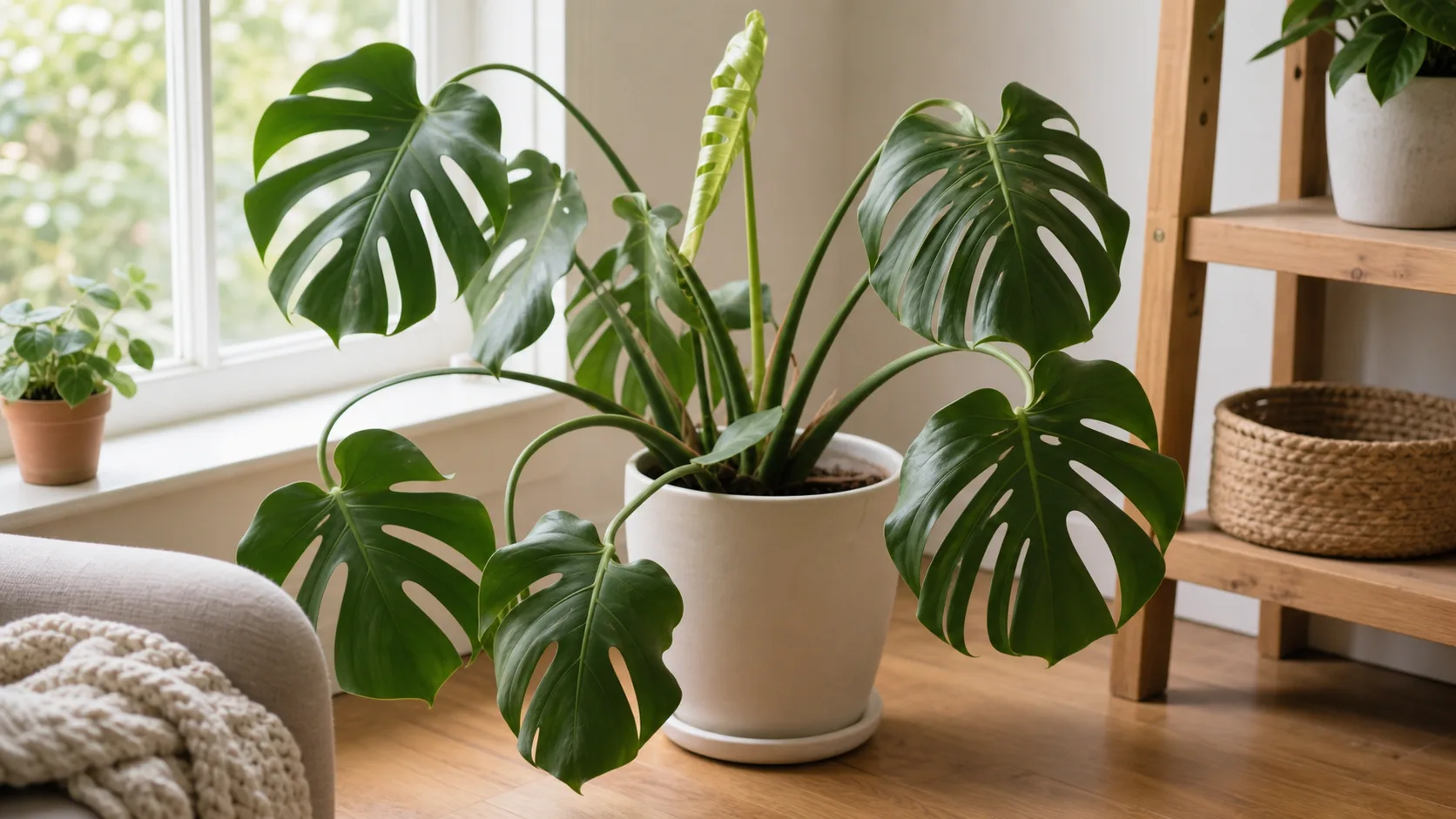
A mild droop beside vigorous new growth can be temporary stress rather than a serious decline.
Sources: NC State Extension Gardener Plant Toolbox, Monstera deliciosa; University of Maryland Extension, Root Rots of Indoor Plants.