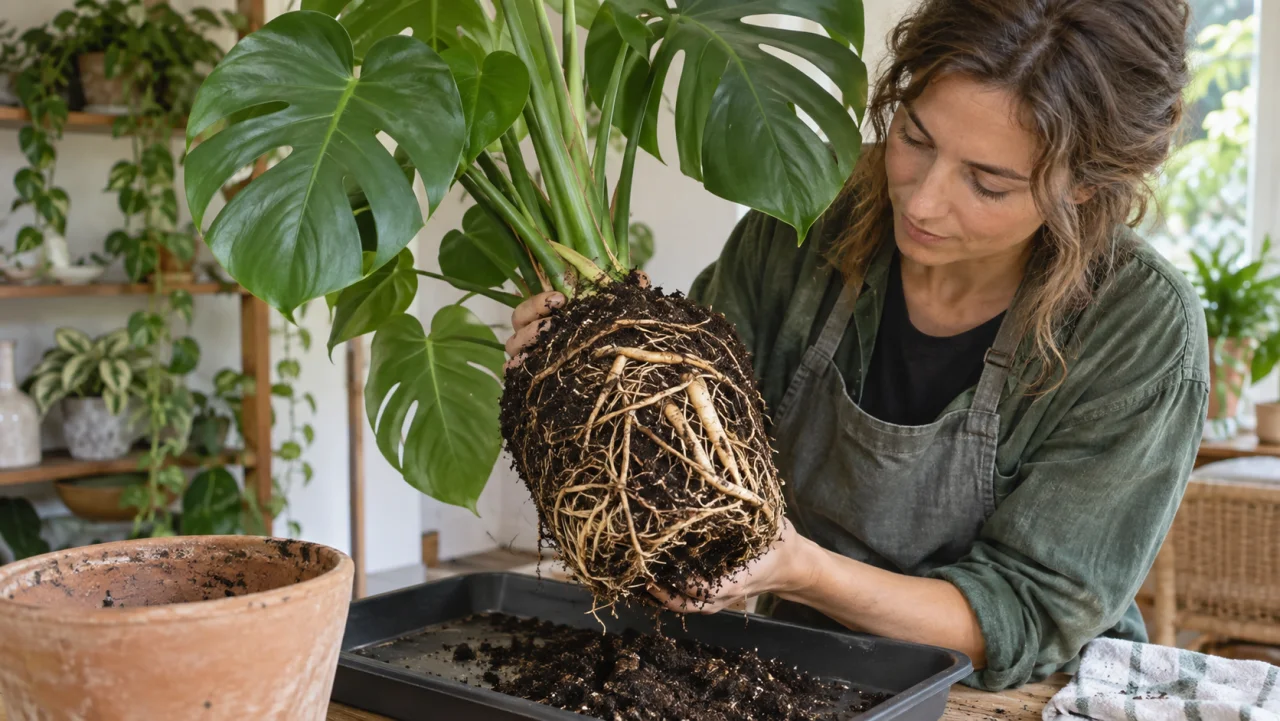
Your monstera looked fine last week. Now the leaves are yellowing, the soil feels permanently damp, and you have that sinking feeling something has gone wrong underground. If that sounds familiar, you might be dealing with monstera root rot - and catching it now, even before you are certain, gives you a real chance to save her.
Monstera root rot is what happens when roots sit in waterlogged soil long enough that they can no longer take in oxygen. Without oxygen, roots stop functioning and begin to decay. The plant above the soil can look fine at first, then drop fast - which is exactly why so many owners get caught off guard.
This guide walks you through how to confirm you are actually dealing with root rot (not just a watering slump), how to inspect and treat the roots, and what to do after repotting so the rescue actually holds.
Not sure whether to wait or act right now?
- Pot feels normal, no unusual smell, one yellow leaf → Let the soil dry completely; recheck in three days
- Sour or rotten smell from the drainage holes, or soil still heavy days after watering → Unpot and inspect now
- Smell + soft lower stem + several yellowing leaves → Unpot immediately and take a backup cutting before you start treating
That three-path check takes under a minute and tells you whether this is a wait-and-watch situation or an act-now one. The detailed diagnosis steps below will confirm which path applies.
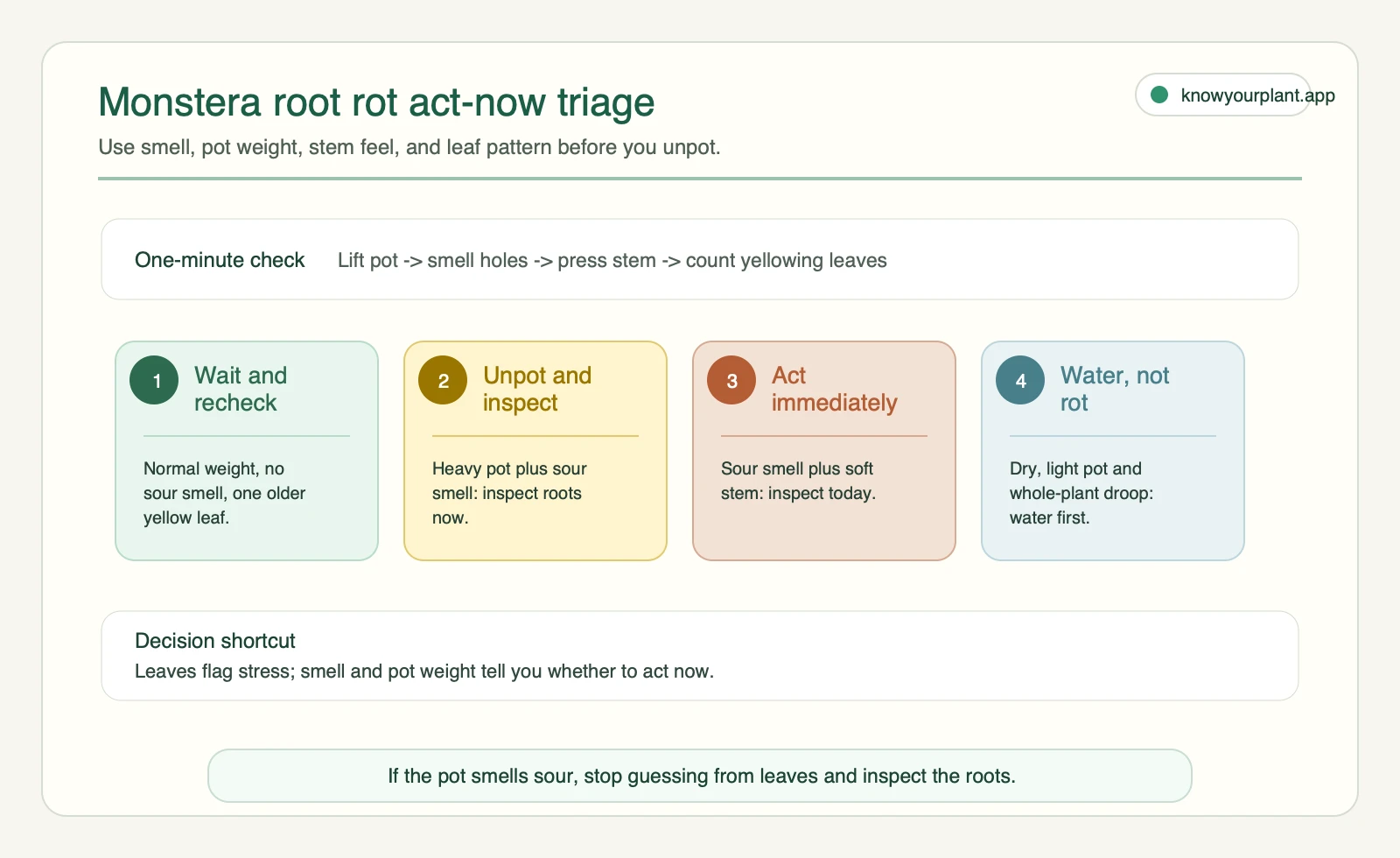
Use the triage card before you unpot. Smell and pot weight tell you whether this is a wait-and-recheck case or a root inspection today.
What Most Care Guides Miss About Root Rot
Here is the problem with most root rot advice: it starts at the treatment step and skips the diagnosis entirely.
You will read “remove rotten roots, repot in fresh soil” - but if you are not sure whether the roots are actually rotten, or how much damage you are working with, that advice does not help you decide whether to act now, wait a week, or take a backup cutting first.
The common misdiagnosis is this: yellowing monstera leaves get blamed on overwatering, but the real question is whether the roots have crossed from “stressed” into “actively decaying.” Stress from too much water is reversible with better drainage and drying time. Active rot is a different problem - the roots are already gone, and they will not recover simply by watering less.
The practical first check is not the leaves at all. It is the smell of the soil and the weight of the pot. According to the Missouri Botanical Garden, waterlogged soil deprives roots of oxygen, causes them to decay, and typically produces a sour or rotten odour that healthy soil never has. Those two signals together - heavy pot and sour smell - are a stronger early indicator than leaf colour alone.
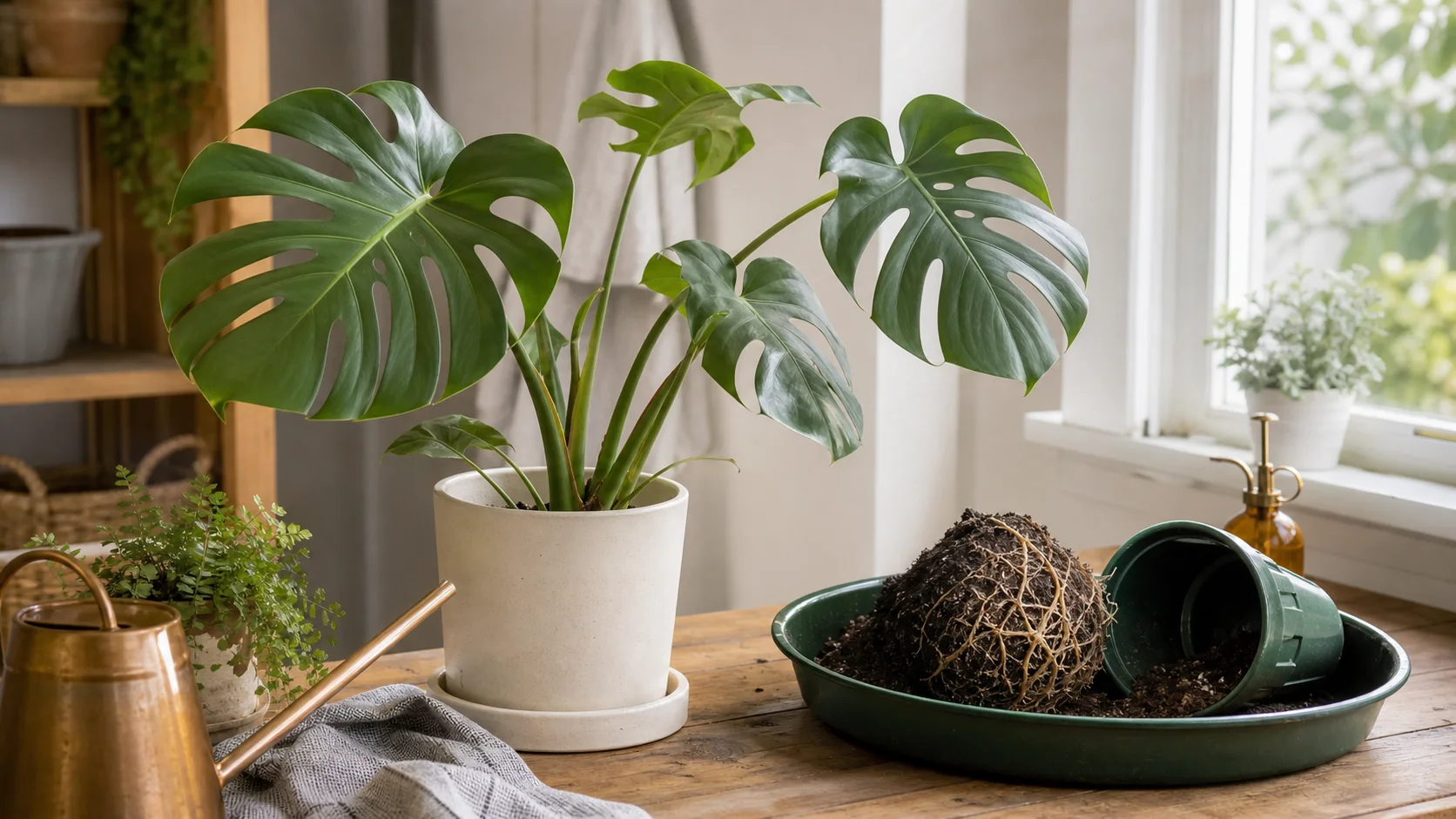
An exposed root ball turns vague leaf symptoms into a practical diagnosis before treatment begins.
Expert Note
NC State Extension and Wisconsin Horticulture both frame healthy monstera watering the same way: water thoroughly, then let part of the growing medium dry before you water again. That matters because true root rot is not just “too much water” in the abstract. It is an oxygen problem inside a pot that stays wet too long. Missouri Botanical Garden’s overwatering guidance is the useful tie-breaker: if the medium smells sour and the roots are declining, the next move is to inspect the root zone, not to keep guessing from leaf colour alone.
Start With the Pattern, Not One Symptom
Leaf symptoms can point you in the right direction, but they cannot confirm root rot on their own. The goal of the first check is to understand the overall pattern before you decide to unpot.
The four-signal triage
Run through these four checks in order. The more you can confirm, the more confident you can be before you decide to act.
1. Pot weight - Lift the pot. If it feels heavier than expected given how long it has been since you watered, the soil is holding water it should have released. An underwatered pot feels light and almost hollow.
2. Soil smell - Lean close to the drainage holes and inhale. Healthy soil smells earthy or neutral. Soil with root rot smells sour, faintly sweet-rotten, or sulphurous. Missouri Botanical Garden identifies this odour as a key early signal that roots are already decaying.
3. Drainage speed - Next time you water, watch how quickly the water drains. In a healthy setup, it should flow freely within seconds. If water pools on top and takes several minutes to move, the mix has compacted or become waterlogged.
4. Leaf pattern - Wisconsin Horticulture notes that monstera leaves may show moisture droplets along the margins when the growing medium is chronically too wet. Beyond that, look for lower leaves yellowing first (not upper ones), leaves that feel limp even though the soil is wet, and a stem that feels slightly soft near the base.
When to wait versus when to unpot immediately
| Signal combination | What it likely means | What to do |
|---|---|---|
| Heavy pot, no bad smell, one yellow leaf | Overwatering stress, roots probably fine | Let soil dry fully before next watering, improve drainage |
| Heavy pot + sour smell | High root rot risk | Unpot and inspect now |
| Sour smell + soft lower stem + multiple yellow leaves | Active rot, likely moderate to severe | Unpot immediately, have fresh mix ready |
| Soil dry, pot light, drooping all over | Underwatering, not rot | Water thoroughly and reassess |
| Soil damp but no smell, limp new growth | Could be transplant shock or early rot | Unpot and check - the cost of looking is low |
If you are not sure whether you are looking at underwatering or overwatering, the guide to yellow plant leaves explains how to separate the two before you start digging.
If drooping is the main symptom and the pot does not smell sour, use the Monstera drooping guide before assuming the roots are rotting.
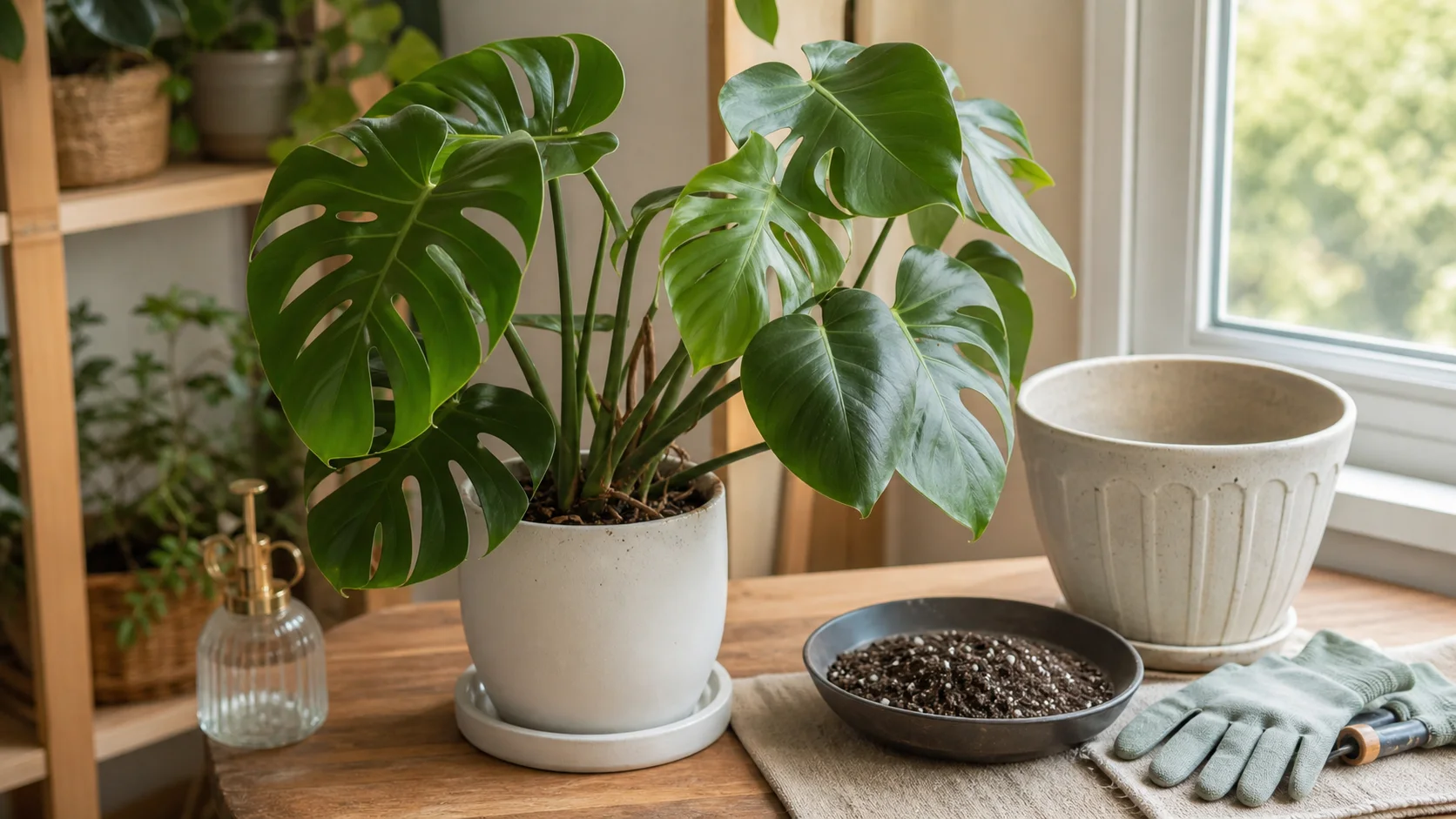
Fresh mix and a snug replacement pot should be ready when the warning signs point to immediate inspection.
Symptom Diagnosis Card
| What you notice | Most likely meaning | Best next step |
|---|---|---|
| One older leaf yellowing, no sour smell, soil drying on schedule | Watering stress more than active rot | Let the mix dry fully and correct the watering rhythm |
| Pot stays heavy for days, drainage is slow, and the soil smells sour | Root zone is staying oxygen-poor | Unpot and inspect the roots now |
| Black mushy roots or outer root skin sliding off in your fingers | Active root rot | Trim the damage, sanitize the healthy roots, and repot into a faster-draining mix |
| Plant droops after repotting, but stems stay firm and there is no sour smell | Transplant sulk is more likely than fresh rot | Hold steady, keep the mix only lightly moist, and reassess over the next 1-2 weeks |
How to Check the Roots
Slide the plant out of its pot gently. If the root ball is stuck, run a blunt knife or chopstick around the inside edge to loosen it without tearing healthy roots.
Lay the root ball on a sheet of newspaper or an old tray. Healthy monstera roots are firm and white to pale tan - they feel like firm cord when you hold them between two fingers. They do not compress, slide, or smell.
Rotten roots look and feel different:
- Brown to black colour, often significantly darker than the surrounding roots
- Mushy texture - they compress or fall apart under gentle pressure
- The outer skin slips off when you run your fingers along the root, leaving a thin white thread behind
- A distinct unpleasant smell up close, even after rinsing
Work through the root ball carefully. You are trying to understand the ratio of healthy to damaged roots - this is the single most important number for deciding whether recovery is likely and how aggressive the treatment needs to be.
Rescue severity scale
| Root condition | What you are working with | Realistic outlook |
|---|---|---|
| Mostly firm and white, a few dark tips | Early or mild rot | Strong recovery likely within 4-6 weeks |
| Half healthy, half mushy | Moderate rot | Good recovery if treated now, may sulk 6-8 weeks |
| Mostly mushy, a few firm strands | Severe rot | Recovery possible but slow, consider propagating a backup cutting |
| Almost all gone, crown still firm | Critical | Propagate a cutting immediately; attempt rescue in parallel |
| Crown soft and mushy | Terminal | Salvage any firm stem sections for propagation |
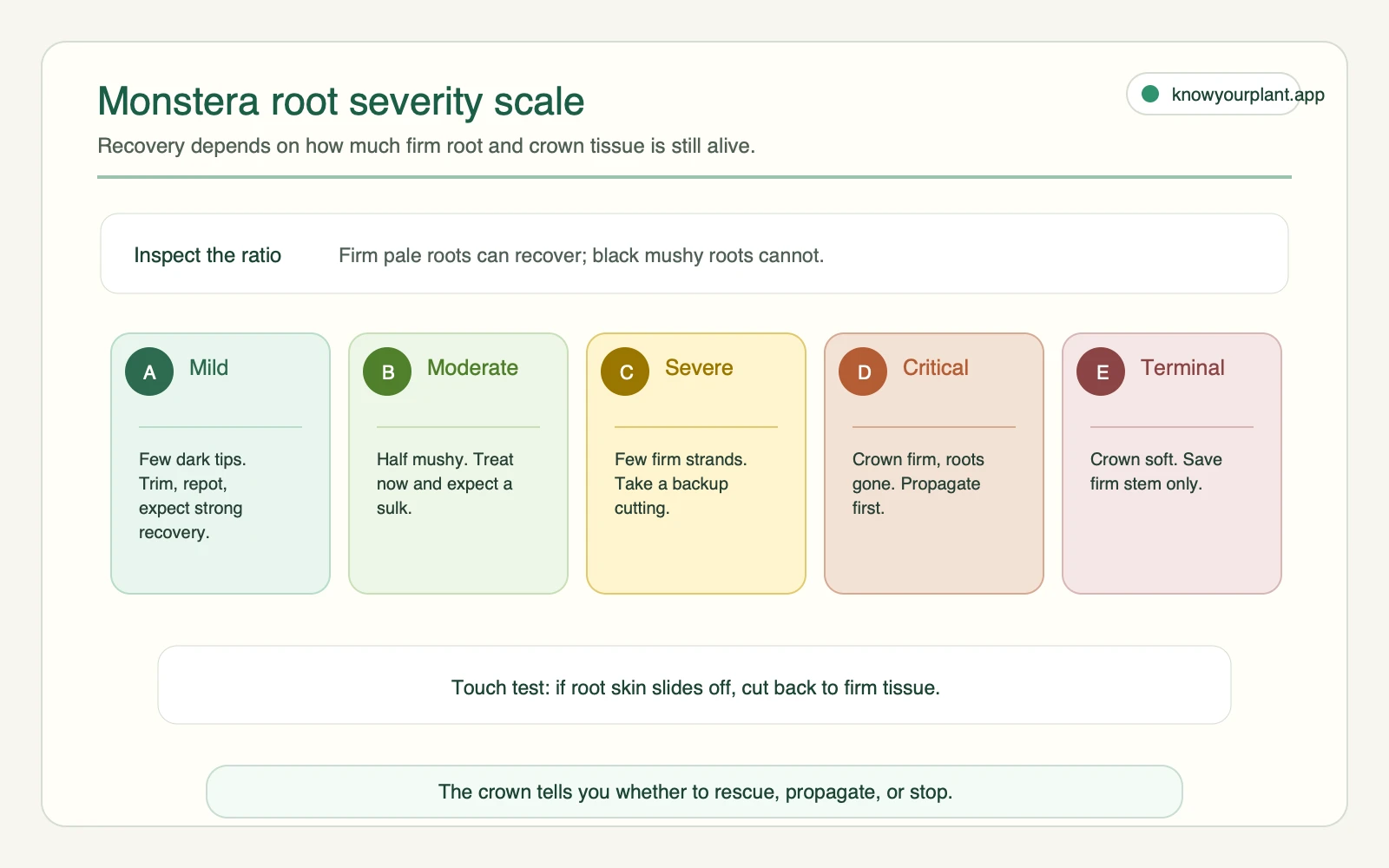
The severity scale keeps the rescue decision grounded in root condition, not panic. Firm roots and a firm crown are the signals that recovery is still realistic.
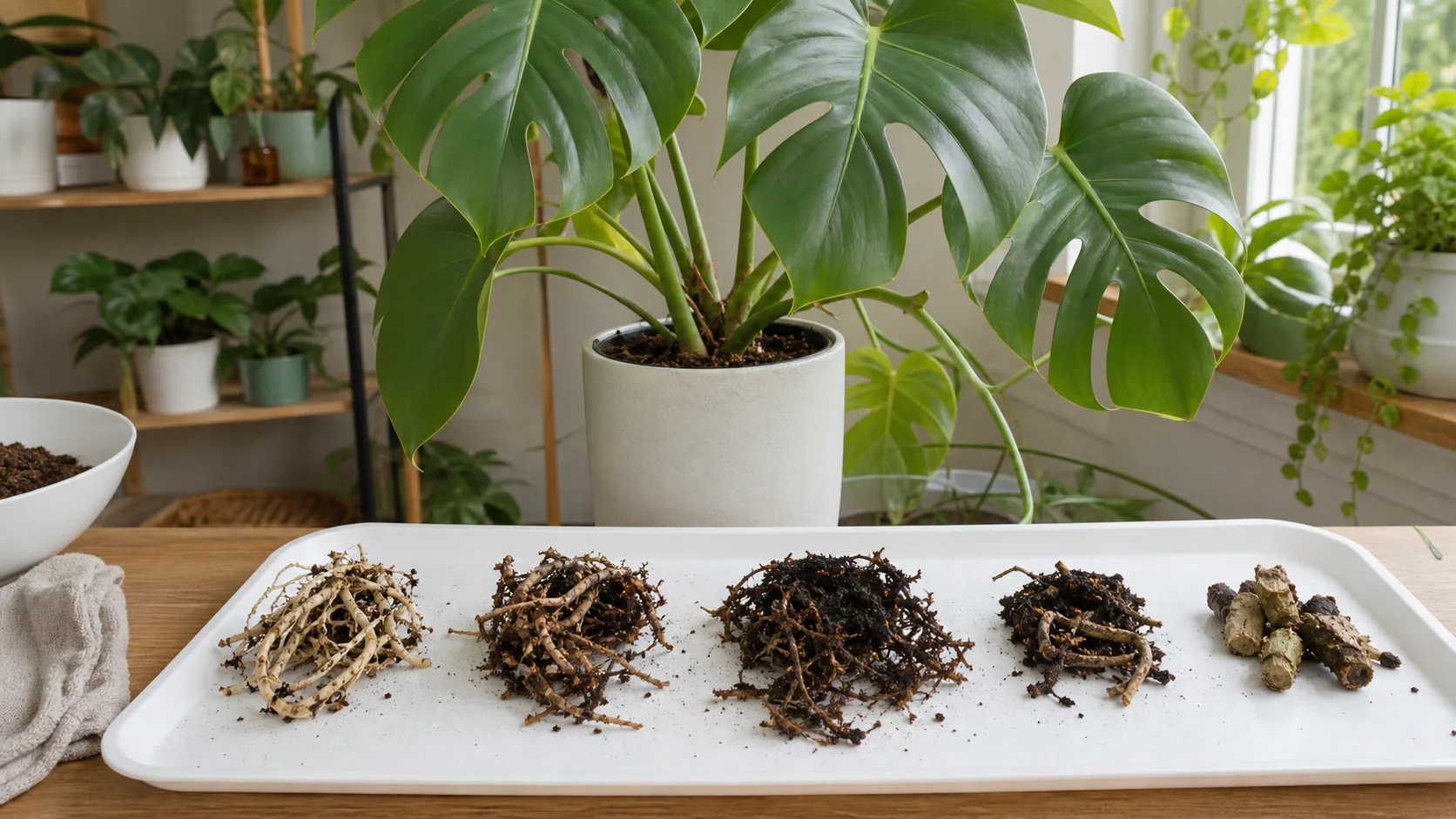
Comparing cleaned root samples makes the shift from mild damage to a propagation-first rescue easier to judge.
Root Rot Decision Tree
Symptoms appear
    ↓
Run 4-signal triage (weight → smell → drainage → leaf pattern)
    │
    ├── No smell, normal pot weight ─────────────→  Wait: let soil dry, recheck in 3 days
    │
    ├── Sour smell or persistently heavy pot ────→  Unpot and inspect roots
    │       │
    │       ├── Mostly firm, few dark tips ───────→  MILD: prune, treat, repot
    │       ├── Half healthy, half mushy ─────────→  MODERATE: prune, treat, repot
    │       ├── Mostly mushy, few firm strands ───→  SEVERE: take backup cutting + rescue
    │       └── Nearly all gone or crown soft ────→  CRITICAL: propagate first
    │
    └── Dry soil, light pot, drooping all over ──→  Underwatering: water and reassess
Treating Monstera Root Rot Step by Step
Step 1: Remove the damaged roots
Using clean, sharp scissors or pruning shears, cut away any root that is black, mushy, or hollow. Cut back to where the tissue feels firm. If a root is slightly discoloured but still has some firmness to it, leave it - it may still contribute.
Wipe your scissors with isopropyl alcohol between cuts when working through a heavily infected root ball. This stops fungal matter from spreading from rotten roots to the clean ones you are leaving behind.
Step 2: Rinse the root ball
Gently rinse the remaining roots under lukewarm water to remove old potting mix and make the root condition easier to see. This also washes away any residual fungal matter clinging to the root surface.
Step 3: Treat the cut ends
Let the cleaned root ball air dry for fifteen to twenty minutes. You have two treatment options at this point:
- Cinnamon - dust the cut ends lightly with powdered cinnamon. It has mild antifungal properties and is gentle on recovering root tissue.
- Hydrogen peroxide soak - mix one part 3% hydrogen peroxide with three parts water and let the roots soak for five to ten minutes, then rinse thoroughly. This is a sanitation step: it reduces the fungal load on cut surfaces and can support recovery in mild to moderate cases where healthy roots remain. It cannot revive roots that are already gone - if most of the root system is mushy and has been removed, hydrogen peroxide will not change the outcome. For severe cases, a dedicated antifungal drench is the more appropriate next step. The hydrogen peroxide for plants guide covers the correct dilution and when this step helps versus when it adds unnecessary stress.
For more severe cases where you have removed more than half the root system, the root rot treatment guide compares treatment options and when each one fits the severity level you are working with.
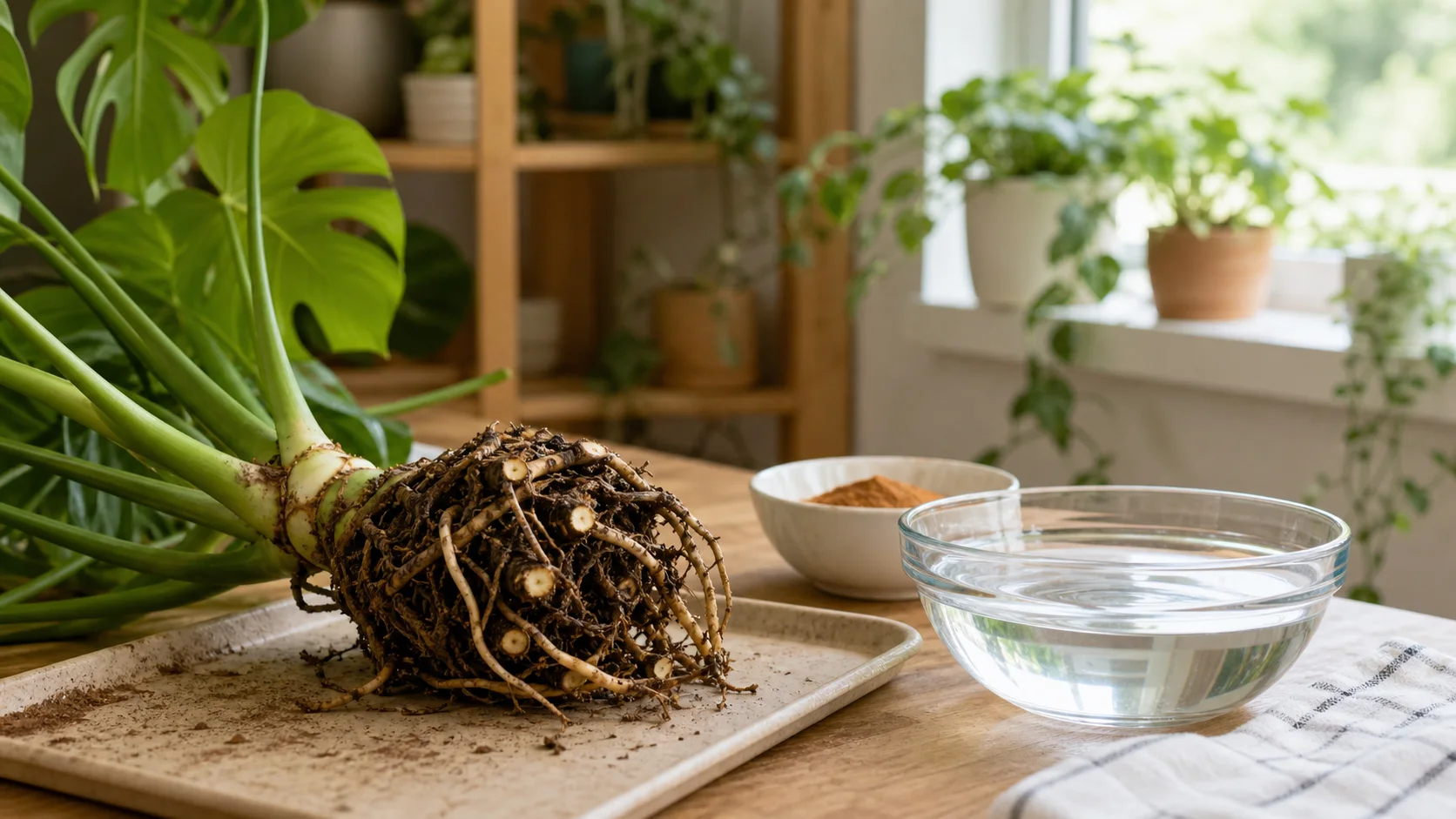
After trimming, let the cleaned roots dry briefly before using cinnamon or a diluted peroxide soak.
Step 4: Choose the right potting mix
Do not reuse the old potting mix. Fungal pathogens responsible for root rot - primarily Phytophthora and Pythium species - can persist in contaminated soil and reinfect recovering roots.
Use a fresh aroid-style mix that drains fast and holds some air around the roots. A good starting point:
- 40% regular indoor potting soil
- 30% perlite
- 20% orchid bark (medium grade)
- 10% coarse pumice or horticultural charcoal
A chunkier mix like this drains within seconds of watering and allows oxygen to reach the root zone. Wisconsin Horticulture recommends growing monstera in a rich mix with ample root room, but for a rescue situation, drainage matters more than richness. A dense peat-heavy mix retains moisture around a root system that needs air to rebuild - avoid it for at least the first repot after a rescue.
Step 5: Repot into the right pot
Choose a pot only slightly larger than the cleaned root ball, with at least one large drainage hole. A pot that is too large holds more wet soil than the remaining roots can absorb, which recreates the same waterlogged conditions that caused the problem.
Terracotta pots help - they are porous and allow moisture to evaporate through the walls, which means the root zone dries faster than it would in plastic or glazed ceramic. For a full walkthrough on pot selection and post-repot care, the repotting guide explains what to look for in both pot material and drainage setup.
Place a layer of fresh mix at the bottom, position the root ball, and fill around the sides without packing the mix down tightly. Water thoroughly once at repotting to settle the mix, then hold off until you can feel the top quarter of the soil beginning to dry.
Common Mistakes During the Rescue
Cutting too conservatively - Leaving rotten roots behind because you are not sure how bad they are allows the decay to continue into the healthy tissue. If a root compresses or slides under light pressure, cut it.
Reusing old soil - The pathogens that caused the rot live in the mix. Fresh soil is not optional.
Choosing a pot that is too large - More soil means more moisture the weakened roots cannot absorb. A snug pot in a fast-draining mix is far more forgiving than a spacious pot in a dense one.
Fertilising too soon - After a root rot rescue, the root system is rebuilding. Fertiliser pushes the plant to grow leaves and stems it does not yet have the root capacity to support. Wait at least four to six weeks before adding any feed.
Watering on a schedule - Going back to a fixed watering interval is the fastest route back to the same problem. Check the soil every time. NC State Extension recommends allowing the top quarter to one-third of the growing medium to dry between waterings - the exact interval depends on the season, pot size, and room conditions.
Skipping the smell test during aftercare - For the first month after repotting, smell the drainage holes every week or two. If that sour smell returns, you still have active rot somewhere in the root system and need to unpot and check again.
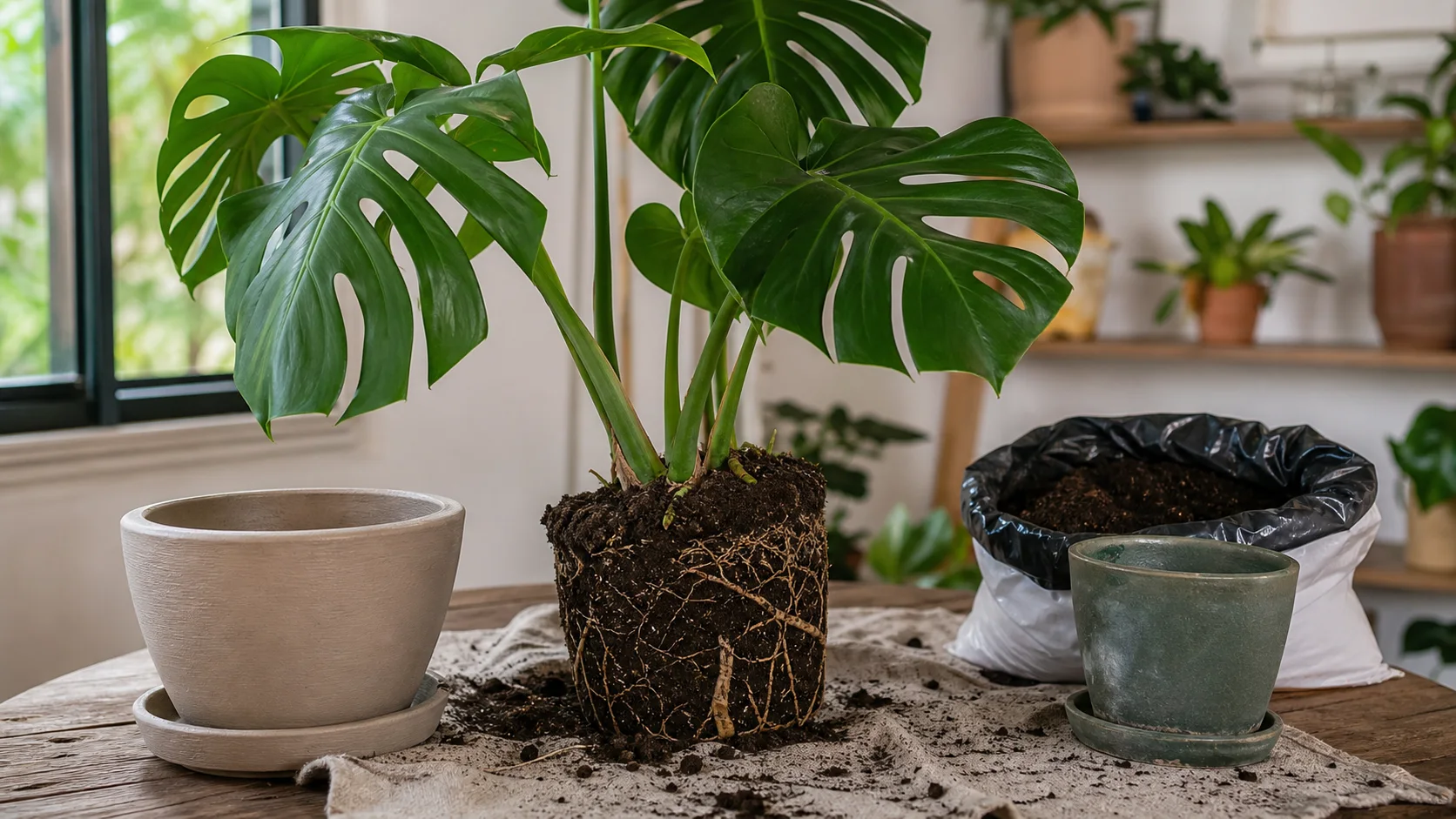
Match the new pot to the reduced root ball and keep contaminated old mix separate from the rescue setup.
What Recovery Looks Like Week by Week
After repotting, your monstera will likely sulk for one to two weeks. That is normal. She has been through something stressful and is now adjusting to new soil while rebuilding her root system from reduced capacity.
Week 1-2 after repotting - Existing yellowed leaves may not recover. That is expected. What to watch for: the yellowing does not spread to leaves that looked healthy when you repotted, and the stems hold their shape instead of drooping further. Some owners notice the plant looks slightly worse before it stabilises - this is often transplant adjustment, not a sign the rescue failed.
Week 2-4 - If she is stabilising, the plant will stop actively declining. Stems feel firmer. No new yellowing appears. You may start to see a new leaf beginning to form at the growing point. Fine white root tips emerging from the drainage holes are the clearest signal that root rebuilding is underway.
Week 4-8 - A new leaf unfurling is the strongest sign she has stabilised enough to put energy back into growth. This is also when you can begin gentle fertilising - a half-strength balanced liquid feed once a month is plenty for the first few weeks back.
If things are not improving by week 3 - If yellowing keeps spreading, the stem near the base softens further, or that sour soil smell returns, unpot and check again. Ongoing rot needs ongoing removal, and sometimes one round of treatment is not enough for a heavily infected root system.
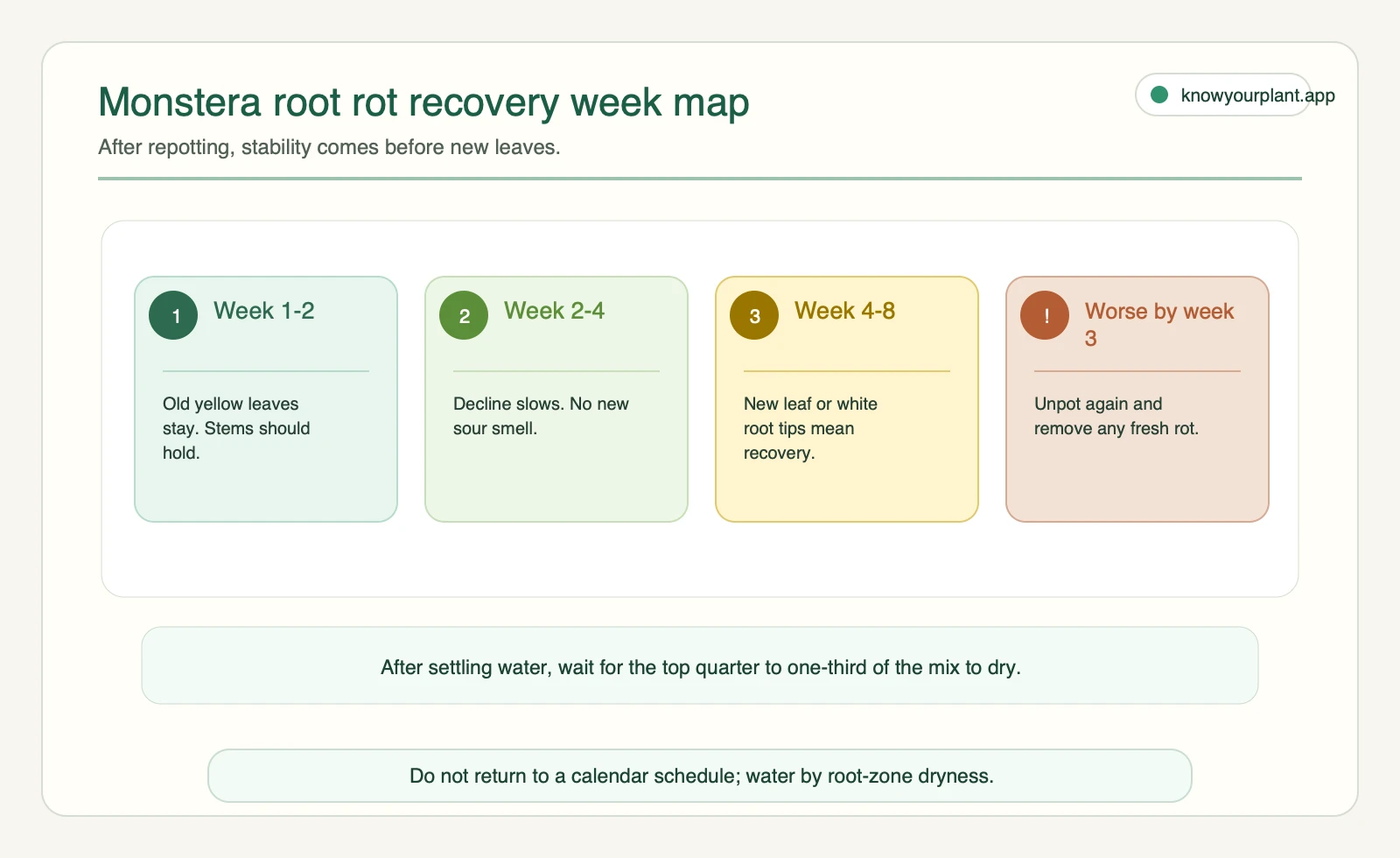
The recovery map sets expectations after repotting: stabilisation comes before new leaves, and a sour smell returning by week 3 means you need to check the root zone again.
Seasonal Note
Root rot risk follows the seasons. In autumn and winter, monstera growth slows significantly and water use drops. Soil that drains quickly in June can stay wet for two to three weeks in December at the same watering volume. This mismatch between watering habit and seasonal need is one of the most common routes into root rot, especially for plants that were fine all summer.
After a rescue, shift to checking the soil twice a week in autumn and winter rather than relying on an interval you developed during the growing season.
A Note on Pets
ASPCA lists Monstera deliciosa as toxic to dogs and cats because of insoluble calcium oxalates. Keep plant trimmings away from pets while you work and dispose of them promptly rather than leaving them on the floor. For a full list of houseplants that are safe or unsafe around cats, the cat-safe plants guide is a useful reference to keep nearby.
If you are troubleshooting another common plant symptom, see Monstera Leaves Curling: Read the Clues First for a focused diagnosis and recovery plan.
Frequently Asked Questions
Can monstera root rot fix itself without treatment?
No. Once roots are actively decaying, they do not recover on their own. You can slow the spread by reducing watering and improving airflow, but that only buys time - it does not reverse the damage. If you have confirmed rot by smell and symptom, unpotting and removing the damage is the only way to stop it spreading to the remaining healthy roots.
How do I know if my monstera is overwatered or underwatered?
Lift the pot. An underwatered monstera has light, dry soil and leaves that feel slightly papery at the edges. An overwatered monstera has heavy soil that may smell faintly sour, and leaves that feel limp even though the growing medium is wet. Underwatered drooping tends to affect the whole plant uniformly, while root rot often causes lower leaves to yellow and collapse while upper growth holds for a while longer.
How long does it take for a monstera to recover from root rot?
Most monsteras with moderate root rot - where at least half the root system is still healthy - show stabilisation within two to four weeks and new growth within six to eight weeks. Severe cases where very few healthy roots remain can take two to three months before visible new growth returns. The sulking period immediately after repotting is normal and not a sign the rescue failed.
Should I use hydrogen peroxide to treat monstera root rot?
A diluted hydrogen peroxide solution (one part 3% to three parts water) can help clean the root zone and reduce fungal load on cut root ends. It is a useful sanitation step for mild to moderate cases where healthy roots remain. For severe rot, a dedicated antifungal drench is more effective. What hydrogen peroxide cannot do is revive roots that are already gone - it sanitises surviving tissue, it does not regenerate dead roots. The hydrogen peroxide for plants guide explains the correct concentration and when the step is appropriate.
What soil mix should I use after a root rot rescue?
Go for a chunkier, faster-draining mix rather than a standard dense potting compost. A good aroid mix combines potting soil with perlite, orchid bark, and optionally a small amount of coarse pumice or horticultural charcoal. The goal is a mix that drains within seconds of watering and does not compact tightly around the roots. Avoid dense, peat-heavy mixes for at least the first repot after a rescue.
Can I save a monstera that has almost no healthy roots left?
It is possible, but difficult. If the crown - the central growing point - is still firm and one or two firm root strands remain, some monsteras do recover when placed in a very fast-draining mix, kept in bright indirect light, and watered very sparingly. A safer parallel step is to take a healthy stem cutting and propagate it before the root system fails entirely, giving you a backup plant regardless of how the rescue goes. The propagating plants guide covers stem cutting basics if you want to take that step alongside the rescue.
How often should I water my monstera after repotting from root rot?
Do not water on a schedule - water by feel. After the initial watering at repotting, wait until the top quarter to third of the new mix feels dry before watering again. In a well-draining aroid mix, this might be every seven to ten days in spring and summer, or every two to three weeks in autumn and winter. The exact interval matters less than the habit of checking the soil before every watering rather than going by calendar.
Is monstera root rot contagious to other plants?
The fungal pathogens most commonly responsible - primarily Phytophthora and Pythium species - can spread through shared tools, contaminated water, and soil contact between pots. Disinfect your scissors between plants, do not reuse old potting mix, and do not pour leftover water from a root-rot-affected plant into a neighbouring pot’s saucer. Keeping plants at reasonable spacing so soil dries between waterings also reduces the chance of spread.
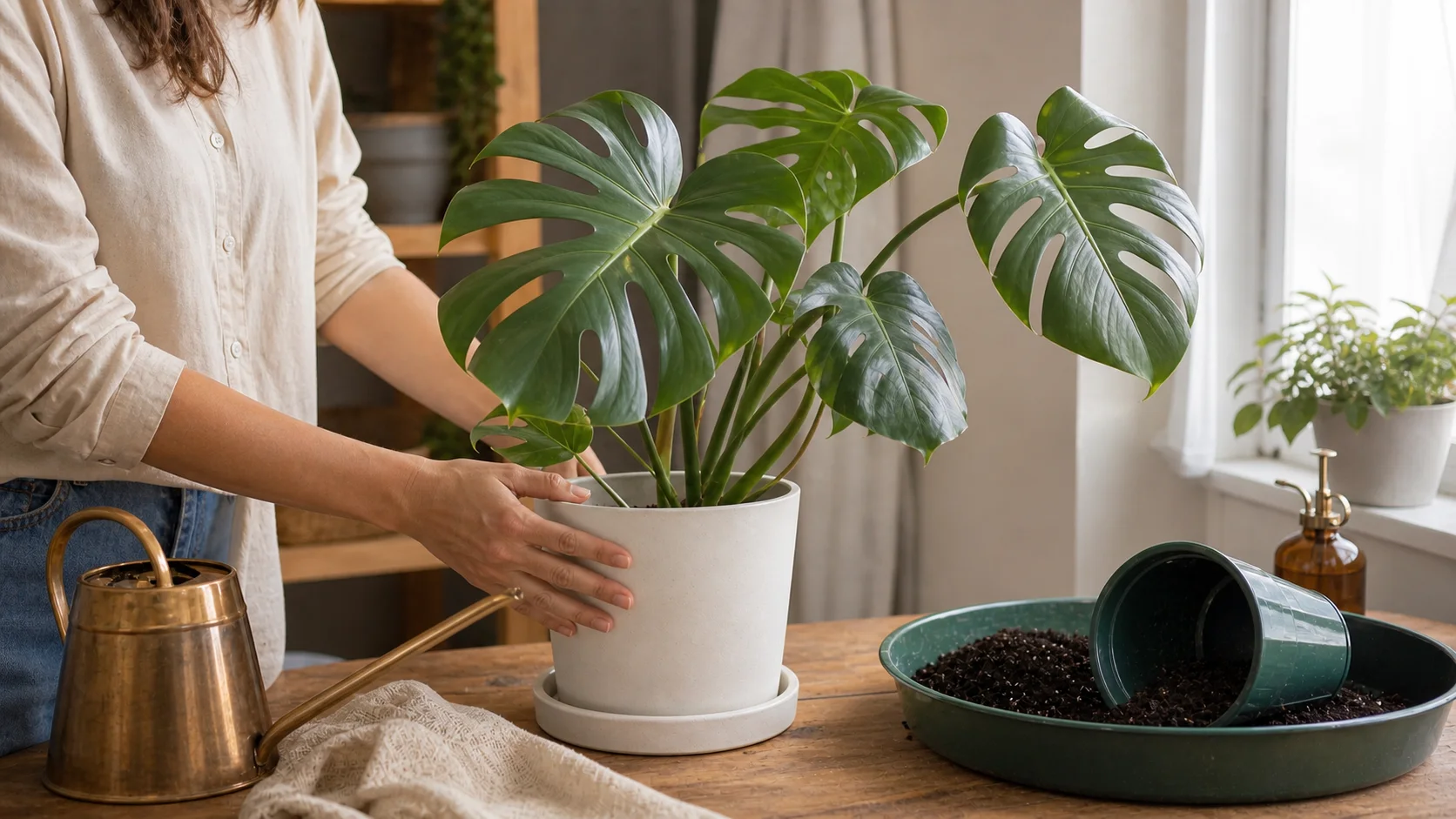
Lifting the pot before watering helps distinguish a light, dry root zone from heavy, wet mix that needs closer inspection.
Sources
- North Carolina Extension Gardener Plant Toolbox, Monstera deliciosa - watering guidance for the top quarter to one-third rule, accessed 2026-05-18
- Wisconsin Horticulture, Swiss-Cheese Plant, Monstera deliciosa - potting mix and moisture-sweating leaf detail, accessed 2026-05-18
- Missouri Botanical Garden, Overwatering - oxygen deprivation, root decay, and sour soil odour, accessed 2026-05-18
- ASPCA, Toxic and Non-toxic Plants: Swiss Cheese Plant - calcium oxalate toxicity to pets, accessed 2026-05-18
Methodology Note
This guide was refreshed after reviewing the live search results for “monstera root rot” and close rescue-intent variants on 2026-05-18, plus qualitative plant-owner confusion patterns from X and Gardening Stack Exchange. Factual care and safety guidance was checked against NC State Extension, Wisconsin Horticulture, Missouri Botanical Garden, and ASPCA. Social posts were used as directional signal about common rescue mistakes and recovery anxiety, not as proof of outcomes.
For more on keeping your monstera healthy long-term, the monstera care guide covers watering rhythms, soil setup, and light placement in full.