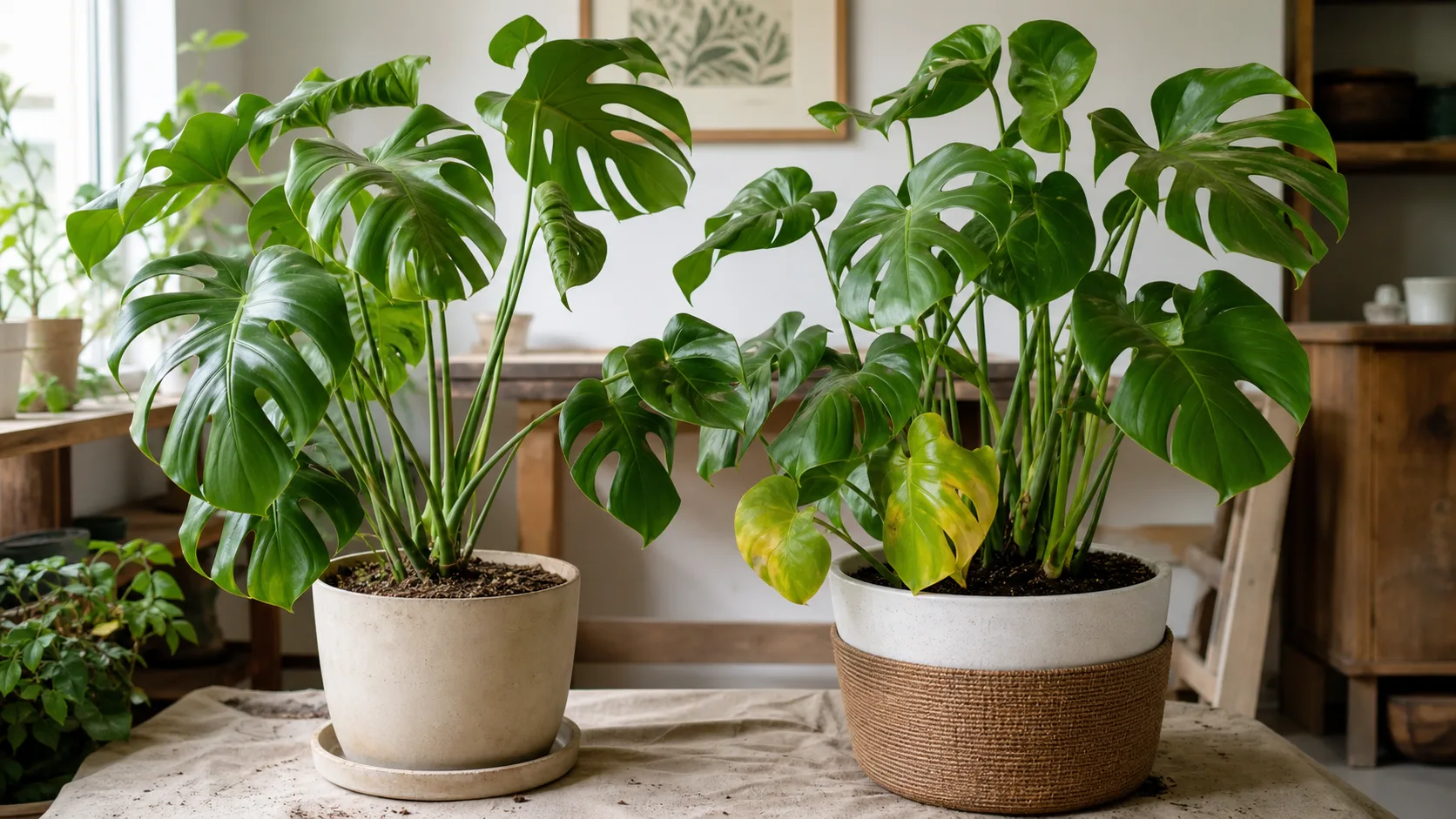
Monstera Leaves Curling: Read the Clues First
If your Monstera leaves are curling, resist the urge to water, mist, fertilize, and repot all at once. Curl is a stress signal, but it is not a diagnosis. Dry roots can make leaves curl, and so can roots that have stayed wet for too long. Strong sun, hot glass, drafts, pests, and recent root disturbance can produce similar-looking reactions.
The useful clues are in the pattern around the curl: whether one leaf or the whole plant is affected, whether the root zone is dry or wet, whether damage faces the window, what changed during the last 7 to 14 days, and whether there is credible pest evidence.
Start there. You will make a safer decision and avoid turning one manageable problem into several.
If the curling is only one part of a broader care problem, compare the plant’s full routine with the Monstera deliciosa care guide.
What most Monstera curl guides miss
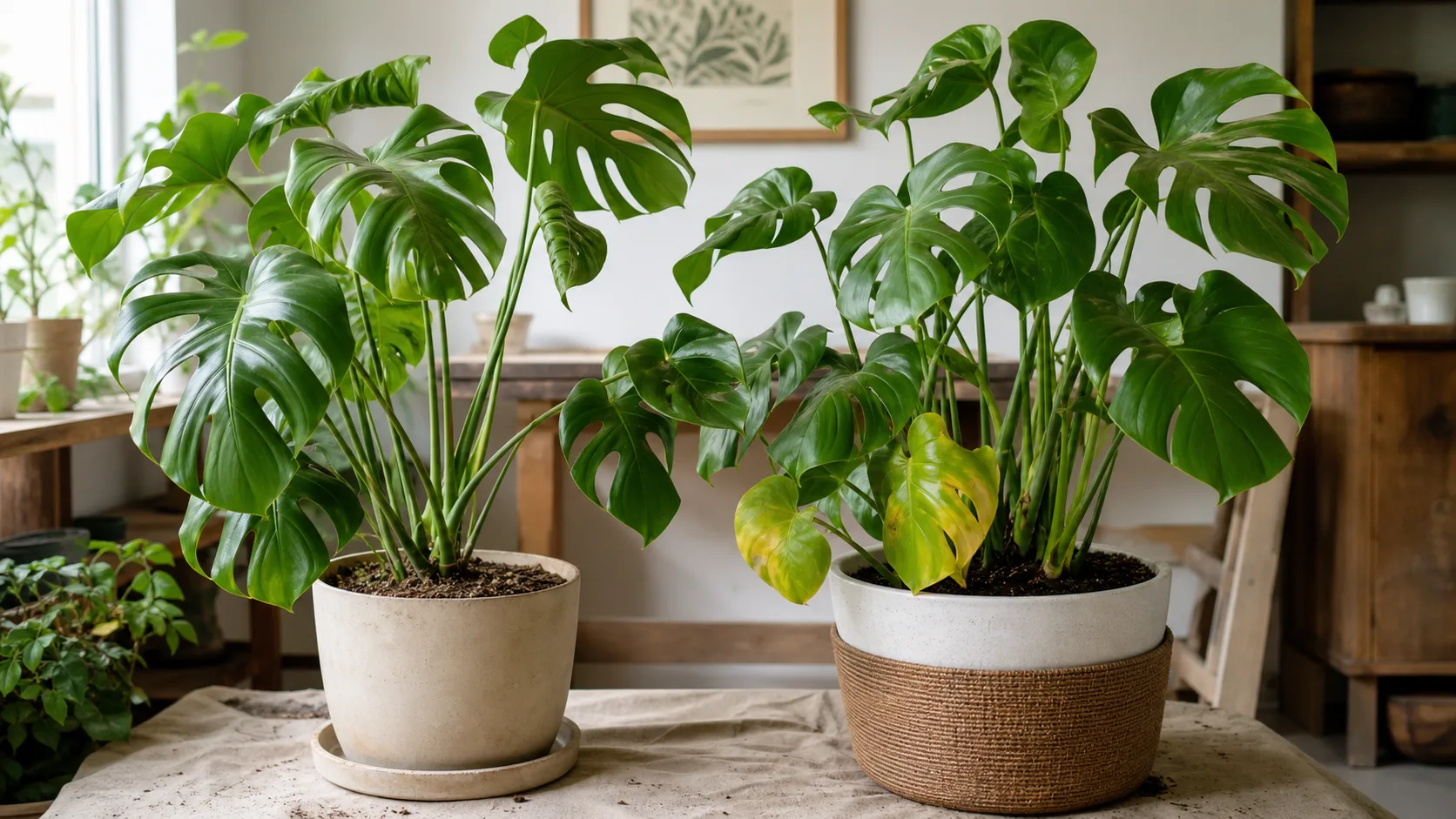
The common misdiagnosis is simple: curled leaves must mean thirst or low humidity.
Sometimes they do. But a Monstera with wet, oxygen-poor roots can also curl or droop because damaged roots are not supplying the leaves properly. Adding more water based on the leaf alone may make that problem worse. Likewise, raising humidity will not correct a saturated root ball, a hot window, or spider mites.
Generic cause lists fail because several stresses share the same visible symptom. A list tells you what is possible, but not which possibility fits your plant.
The first decision rule is:
Do not water because a leaf curled. Check moisture below the surface and compare the affected leaves with the rest of the plant first.
North Carolina State Extension recommends watering Monstera thoroughly, then allowing roughly the top quarter to one-third of the growing medium to dry before watering again. University of Minnesota Extension offers a simpler starting point for many houseplants: check whether the top inch is dry, water thoroughly when needed, and empty water from the saucer.
Those are guides, not a fixed calendar. Pot size, soil structure, root density, temperature, and light all affect how quickly the deeper root zone dries.
Your 10-minute Monstera curl check
Do these checks before changing the plant’s routine.
-
Map the affected leaves. Is it one new leaf, one older leaf, several leaves, or most of the plant? Note whether they are all on the same side.
-
Check below the surface. Push a wooden skewer or clean finger several inches into the mix where possible. The top may be dry while the center remains damp.
-
Lift the pot. Compare its weight with how it feels after watering. An unusually light pot supports a dry-root explanation. A heavy pot several days after watering suggests that moisture is lingering.
-
Check drainage. Look for blocked drainage holes, water in the saucer, or a decorative outer pot holding runoff. The inner pot should not sit in water.
-
Inspect the window-facing side. Curling, fading, or brown patches concentrated there raise suspicion of direct sun, hot glass, or a strong temperature difference.
-
Review the last 7 to 14 days. Include repotting, a larger pot, a fall, root-ball disturbance, staking, fertilizer, stronger seasonal sun, an air-conditioner, heating, or a major change in watering.
-
Look for pest evidence. Use bright light to inspect both sides of every affected leaf, the petioles, leaf joints, stems, pot rim, and nearby plants. Look for fine webbing, pale stippling, sticky residue, cottony material, bumps, eggs, or moving insects.
-
Take a baseline note. Record which leaves are affected and how damp the mix feels. This gives you something concrete to compare over the next week.
A moisture meter can add another data point, but do not let one reading override the pot’s weight, drainage, and what you find deeper in the mix.
Monstera curling diagnosis card
| Pattern you find | Direction to investigate | Safest next check |
|---|---|---|
| Leaves curl inward, pot is light, deeper mix is dry, edges may be crisp | Underwatering or uneven wetting | Check whether water penetrates the root ball or escapes down gaps at the pot edge |
| Leaves curl while deeper mix remains wet for days | Root-zone stress or poor drainage | Check saucer water, drainage holes, pot size, light level, and signs of root decline |
| Curling or browning is worse on the window-facing side | Direct sun or heat stress | Check exposure during the brightest and hottest part of the day |
| Curl began after repotting, staking, or a fall | Root disturbance or changed drying time | Compare the new pot with the root ball and avoid another immediate repot unless decline is severe |
| Curl appears with stippling, webbing, sticky residue, or visible insects | Pest damage | Inspect the entire plant and nearby plants before choosing a treatment |
| Only one leaf is curled and the rest of the plant is stable | Local injury, awkward unfurling, or isolated stress | Check that leaf carefully, then monitor the next leaf before overhauling care |
| Most leaves curl at once | Root, watering, or room-level environmental stress | Check moisture at depth, recent changes, temperature, and airflow |
Treat each row as a direction, not a verdict. Crispy edges can support a dryness diagnosis, for example, but they do not prove it without the root-zone clues.
A pattern-first decision tree
1. Is it one leaf or much of the plant?
If only one leaf is affected, identify its age and location.
A new leaf may remain rolled or slightly uneven as it unfurls. Dry air, minor physical damage, or disturbance while the leaf was developing can affect that single leaf without signaling whole-plant decline. Do not force a stuck leaf open, since tender tissue tears easily.
An older leaf that suddenly curls deserves closer inspection for local injury and pests. Still, one curled leaf with stable growth elsewhere is not a strong reason to repot or change the entire watering routine.
If several leaves are curling, especially across different parts of the plant, move to the root-zone check.
2. Is the deeper root zone dry or wet?
This is the most important fork.
If it is dry: consider missed watering, incomplete watering, a compacted or water-repellent root ball, increased summer light, or a root-bound plant using water quickly.
Water slowly and thoroughly until excess drains. If water rushes straight down the pot’s sides, apply it in several slow passes so the center of the root ball has time to absorb moisture. Empty the saucer afterward.
If it is wet: do not add water just because the leaves look thirsty. Check whether the plant is sitting in runoff, the mix has collapsed, the drainage holes are blocked, or the pot is much larger than the roots.
Penn State Extension’s diagnostic guidance connects wilted or distorted foliage with several possible problems, including underwatering, overwatering, root rot, low humidity, cold damage, and pot-bound roots. That overlap is why the moisture check must come before the fix.
For more detailed root warning signs, see the Monstera root rot guide and root rot treatment guide.
3. Is the damage concentrated toward a window or heat source?
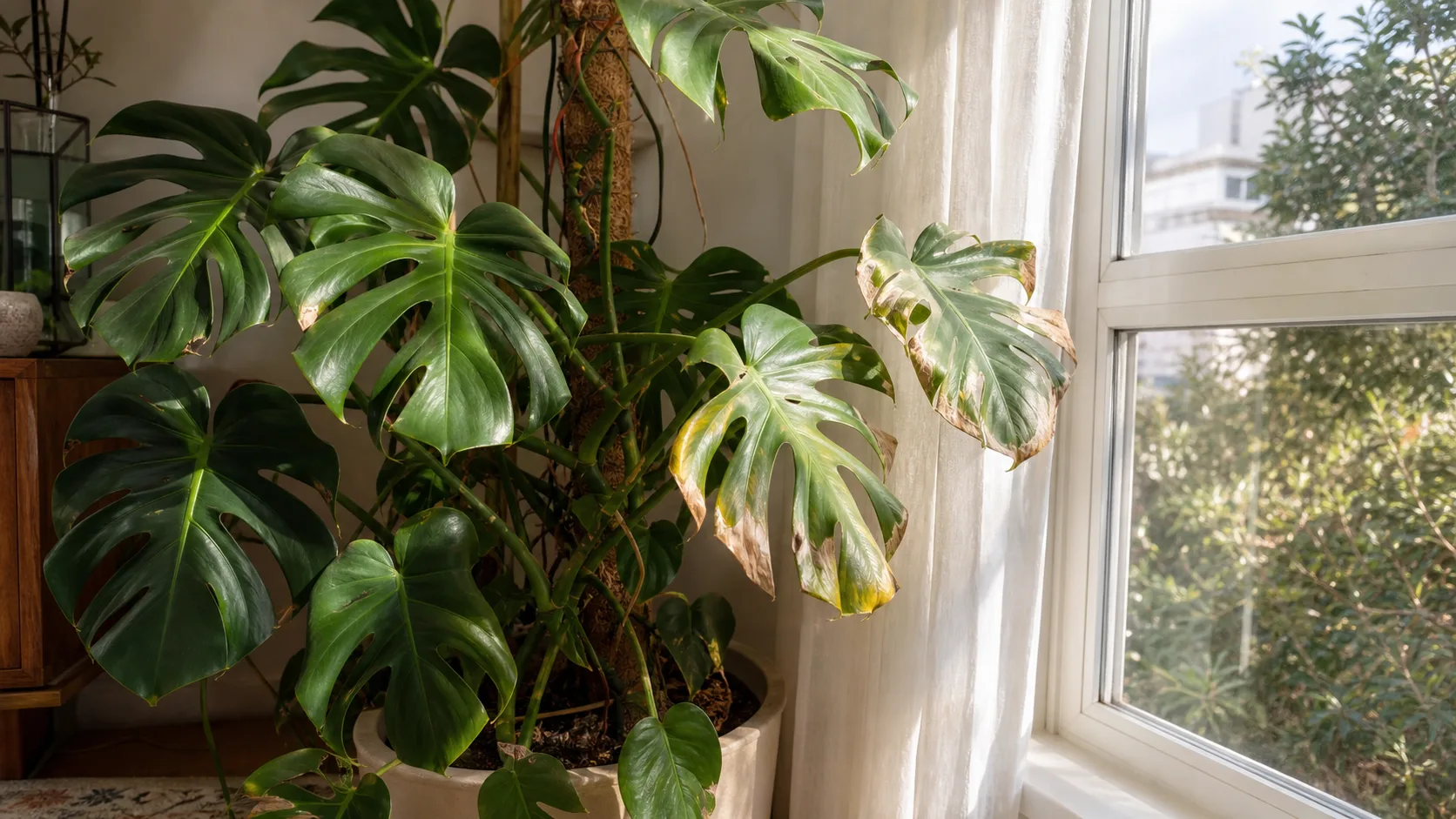
Curling on the brightest side is a location clue.
Monsteras generally prefer bright, indirect light. A plant accustomed to gentler light can react when moved close to hot glass or exposed to stronger seasonal sun. Look for faded areas, tan or brown patches, crisp tissue, or leaves angled away from the window.
Check the spot when the light is strongest, not only in the morning. A window that seems mild at breakfast can become hot in the afternoon.
If exposure recently increased, pull the plant back or soften direct light with a sheer curtain. Change the exposure gradually rather than moving a stressed plant from deep shade to another extreme.
Also check for concentrated heating and cooling. Hot radiators, cold drafts, and direct air-conditioner airflow can dry or chill one part of the plant faster than the rest.
4. What changed during the last 7 to 14 days?
Symptoms may appear after the event that caused them. Review recent changes even if your usual care seems correct.
Ask whether you:
- Repotted into a larger container
- Changed the soil mix
- Disturbed the root ball while adding a pole or stake
- Let the pot fall or tip over
- Watered much more heavily than usual
- Added fertilizer
- Moved the plant closer to a window
- Started using heating or air conditioning
- Brought home another plant that could carry pests
University of Minnesota Extension recommends moving only one pot size larger when repotting is needed. Too much fresh mix around a small root ball can retain water that the roots cannot use quickly. The surface may look dry while the center stays wet.
If the container or soil needs correcting, use the houseplant repotting guide to choose a pot size and move the root ball with less disturbance.
Curling after a repot does not automatically mean the plant needs another repot. If drainage works, the mix is beginning to dry normally, and decline is not spreading, repeated disturbance may do more harm than a short period of stability.
5. Is there credible pest evidence?
Do not diagnose spider mites from curl alone. Look for evidence.
Spider mites may leave fine webbing and pale, closely spaced speckles. Mealybugs often appear as white, cottony clusters. Scale can resemble fixed brown or tan bumps. Aphids and whiteflies are usually easier to confirm because you can see the insects, cast skins, or sticky honeydew.
North Carolina State lists spider mites, mealybugs, aphids, whiteflies, and scale among pests to monitor on Monstera. University of Minnesota recommends examining leaf tops and undersides, webbing, sticky residue, pots, and saucers.
If you confirm pests, isolate the plant from nearby houseplants and identify the pest before treating. The houseplant pests guide can help narrow it down. If you find fine webbing or characteristic stippling, follow the spider mite guide.
What to do today
If the root ball is truly dry
Water slowly until the whole root ball is evenly moistened and excess drains. Empty the saucer or outer pot. Do not follow with fertilizer.
If the mix has pulled away from the pot walls, water in several passes. A single fast pour may run around the dry center without reaching many roots.
Then wait for the root zone to approach its normal drying point before watering again. Avoid switching to frequent small sips, which can leave some roots dry while keeping other areas continuously damp.
If the root ball is still wet
Pause watering. Empty standing runoff and make sure the drainage holes are open. Keep the plant in bright, indirect light with gentle airflow around the pot.
Do not put it in harsh sun to force the soil dry. That adds leaf stress while the roots are already struggling.
If the plant is in a recently upsized pot, drying may take longer than it did before. Watch for escalation signs such as a sour smell, soft dark roots, a soft stem base, rapid yellowing, or collapse despite wet soil. Those symptoms justify inspecting the roots and responding promptly.
If sun or heat is the leading clue
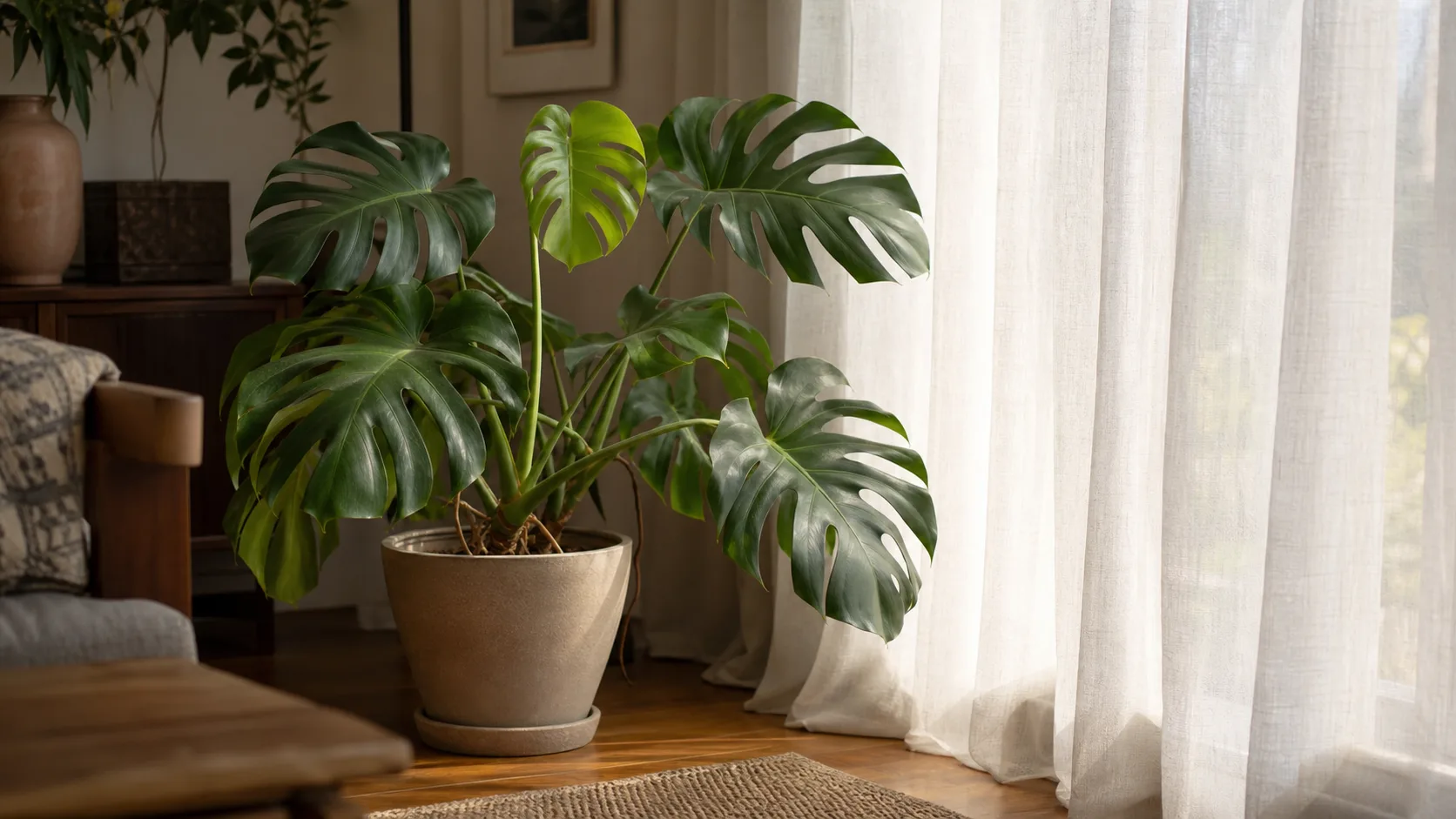
Move the plant far enough from direct exposure that the leaves and pot do not become hot. A sheer curtain can soften the light without putting the plant in a dark corner.
Keep the rest of the routine stable while you observe. Moving the plant and changing watering, humidity, fertilizer, and soil together will hide which factor mattered.
If dry air is contributing
Low humidity can worsen crispy margins or make tender new leaves harder to unfurl, particularly beside heating or air conditioning. It is less convincing as the only explanation when mature leaves are curling while the root zone remains wet.
Move the plant away from direct vents. If your home is consistently dry, use a room humidifier with appropriate cleaning rather than relying on occasional misting. The indoor plant humidity guide explains practical ways to improve the room without keeping foliage constantly wet.
If pests are confirmed
Separate the plant, inspect its neighbors, and choose a treatment appropriate for the pest. Follow the product label, including repeat-treatment timing and safety directions.
A single rinse may reduce pests, but it may not remove eggs or insects hidden in leaf joints. Continue inspecting new growth and leaf undersides instead of assuming one treatment finished the job.
Use a one-change observation window
Once urgent risks are handled, make one main correction and observe before adding another.
Urgent, low-risk actions include:
- Watering a genuinely dry root ball
- Emptying standing saucer water
- Moving a plant away from scorching glass
- Isolating a plant with credible pest evidence
After that, give the plant about 3 to 7 days of stable conditions before judging minor changes. A recently repotted plant may need 7 to 14 days to show whether the situation is stabilizing. Continue checking moisture during this period, but do not water on a preset schedule.
Write down:
- Whether any additional leaves begin curling
- Whether existing curl is stable, worse, or slightly relaxed
- How long the root zone takes to dry
- Whether yellowing, soft tissue, spots, or pest evidence appears
- What the next developing leaf looks like
Do not wait out rapid decline. Inspect the roots sooner if wet soil is paired with a foul smell, soft black or brown roots, widespread yellowing, stem softness, or repeated leaf collapse. Escalate pest treatment if insects continue spreading despite correctly applied treatment.
What recovery actually looks like
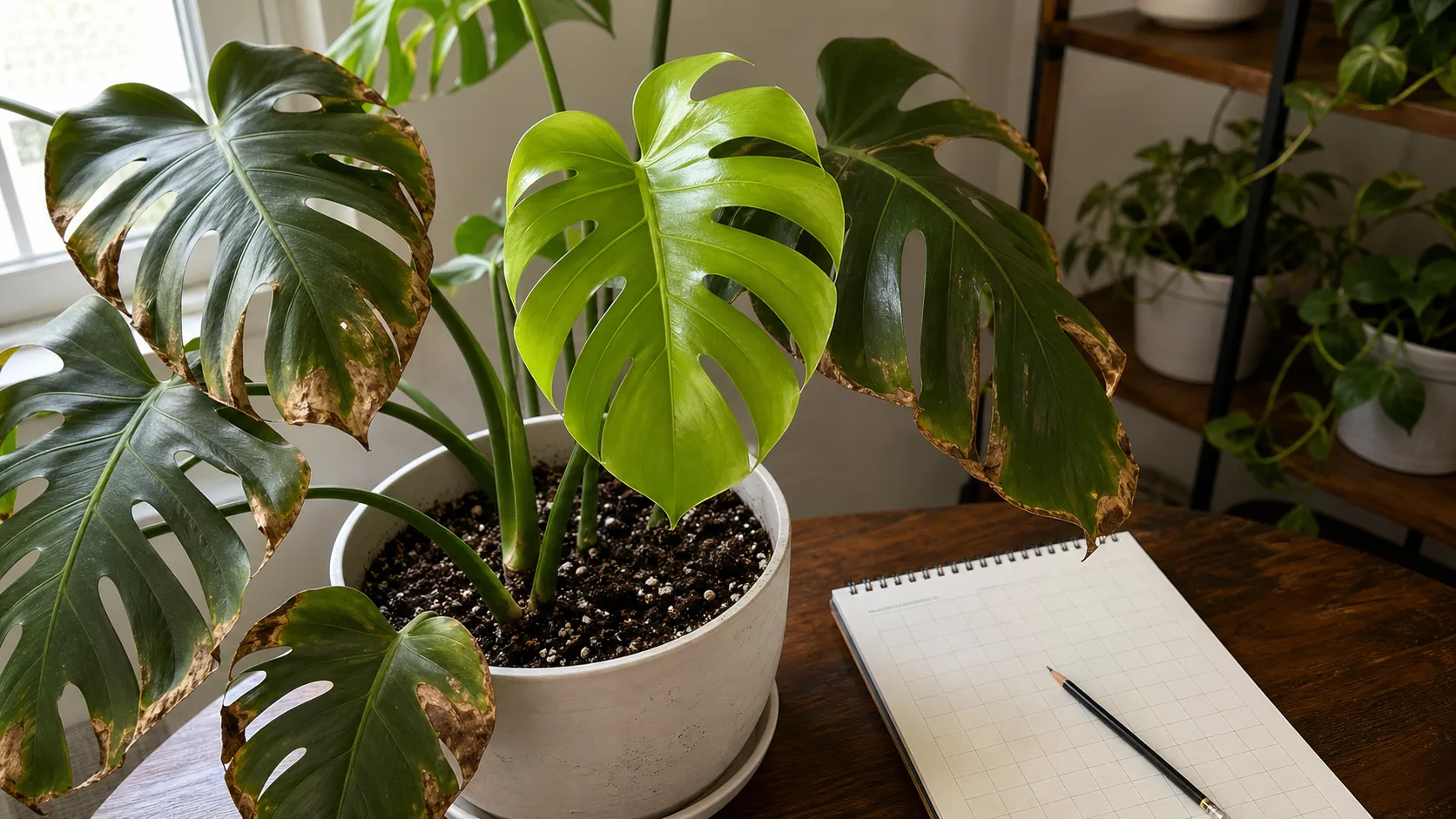
An old curled leaf may not become perfectly flat again. Damaged or hardened tissue cannot always reverse its shape, even after the cause is corrected.
Look for forward progress instead:
- No new leaves begin curling
- Existing leaves stop worsening
- A thirsty plant regains some firmness after a thorough drink
- The pot returns to a predictable wet-to-dry rhythm
- New growth opens with a healthier shape
- Yellowing, browning, or pest damage stops spreading
Judge the correction by the plant’s next growth and the absence of new damage, not by demanding that every old leaf look untouched.
Common mistakes that blur the clues
Watering from the symptom alone
Curling can accompany both dry and wet roots. Check the deeper mix before reaching for the watering can.
Trusting only the dry surface
Fresh potting mix and large containers can remain wet around the roots after the top layer dries. Use depth, pot weight, and drainage together.
Repotting a second time immediately
A recent repot already changed the root environment. Repot again only when there is a clear reason, such as failing drainage, badly unsuitable mix, or confirmed rotting roots.
Fertilizing a stressed plant
Fertilizer does not repair damaged roots, scorch, or pest feeding. Wait until the plant is stable and actively growing.
Treating humidity as the universal answer
Humidity may contribute, especially to crisp margins and difficult unfurling, but it cannot explain standing water, a sour root zone, window-facing scorch, or visible pests.
Moving the plant into intense sun to dry the pot
Strong sun may damage leaves before it meaningfully fixes the wet root zone. Improve drainage, remove standing water, and provide bright indirect light instead.
Changing four things in one weekend
Watering, repotting, feeding, spraying, and relocating at once creates more stress and makes the original cause nearly impossible to track.
A quick seasonal reality check
A routine can stop fitting even when you have not intentionally changed it. Summer sun may reach farther through a window and increase water use. Winter heating may dry leaves while the cooler root zone dries slowly. New spring growth may use water faster than older foliage did.
Adjust based on what the pot and plant are doing now. Keep the method consistent, but let the interval change with the season.
FAQ
Why are my Monstera leaves curling inward?
Inward curl often indicates water stress, but it does not reveal whether the roots are too dry or staying too wet. Check moisture several inches down, compare the pot’s weight, and inspect drainage before watering. Crisp edges and a light, dry pot support dehydration. Persistent curl with damp mix points toward root-zone stress.
Should I water as soon as my Monstera leaves curl?
No. Water only after confirming that the root zone is sufficiently dry. If the pot is still wet, extra water can reduce oxygen around the roots and increase the risk of root decline.
Can low humidity cause Monstera leaves to curl?
It can contribute, particularly when leaf edges are crisp or a tender new leaf is struggling to unfurl. Low humidity is less likely to be the full explanation when several mature leaves curl alongside wet soil, visible pests, or window-facing damage.
Why are my Monstera leaves curling after repotting?
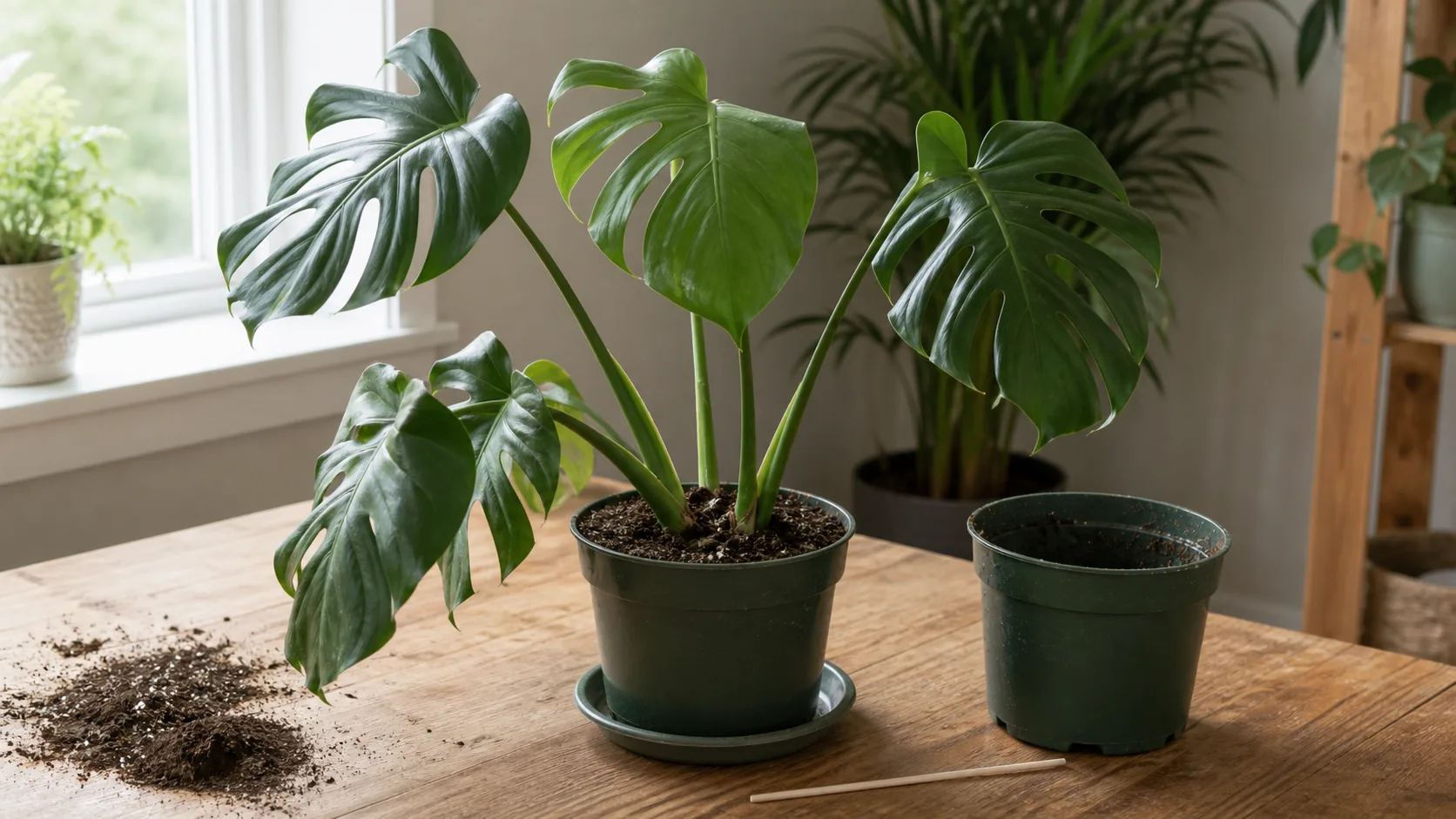
Repotting disturbs roots and changes how quickly the pot dries. A much larger container also surrounds the roots with more moisture-retaining mix. Check the root zone rather than assuming the plant needs water. If drainage is working and decline is not spreading, stable care is often safer than immediately repotting again.
Can direct sunlight make Monstera leaves curl?
Yes. Direct sun and heat can increase moisture loss and damage tissue, especially when a plant is moved abruptly from lower light. Curling, faded patches, or browning concentrated on the window-facing side make this explanation more credible.
Is a single curled Monstera leaf an emergency?
Usually not. Check whether it is a new leaf that is still unfurling, an older leaf with local damage, or a leaf carrying pest evidence. If the rest of the plant is stable, monitor the next leaf before making major care changes.
Do spider mites cause curled Monstera leaves?
Spider mites can contribute to curling and distorted growth, but curl alone is not enough to identify them. Look for fine webbing, pale stippling, eggs, or moving mites on leaf undersides. Isolate the plant if you find credible evidence.
Will curled Monstera leaves flatten again?
Some may relax after the underlying stress is corrected, particularly after mild dehydration. Older or damaged tissue may remain curled. Improvement is better measured by stable existing leaves, no spread of damage, and healthier new growth.
Methodology and sources
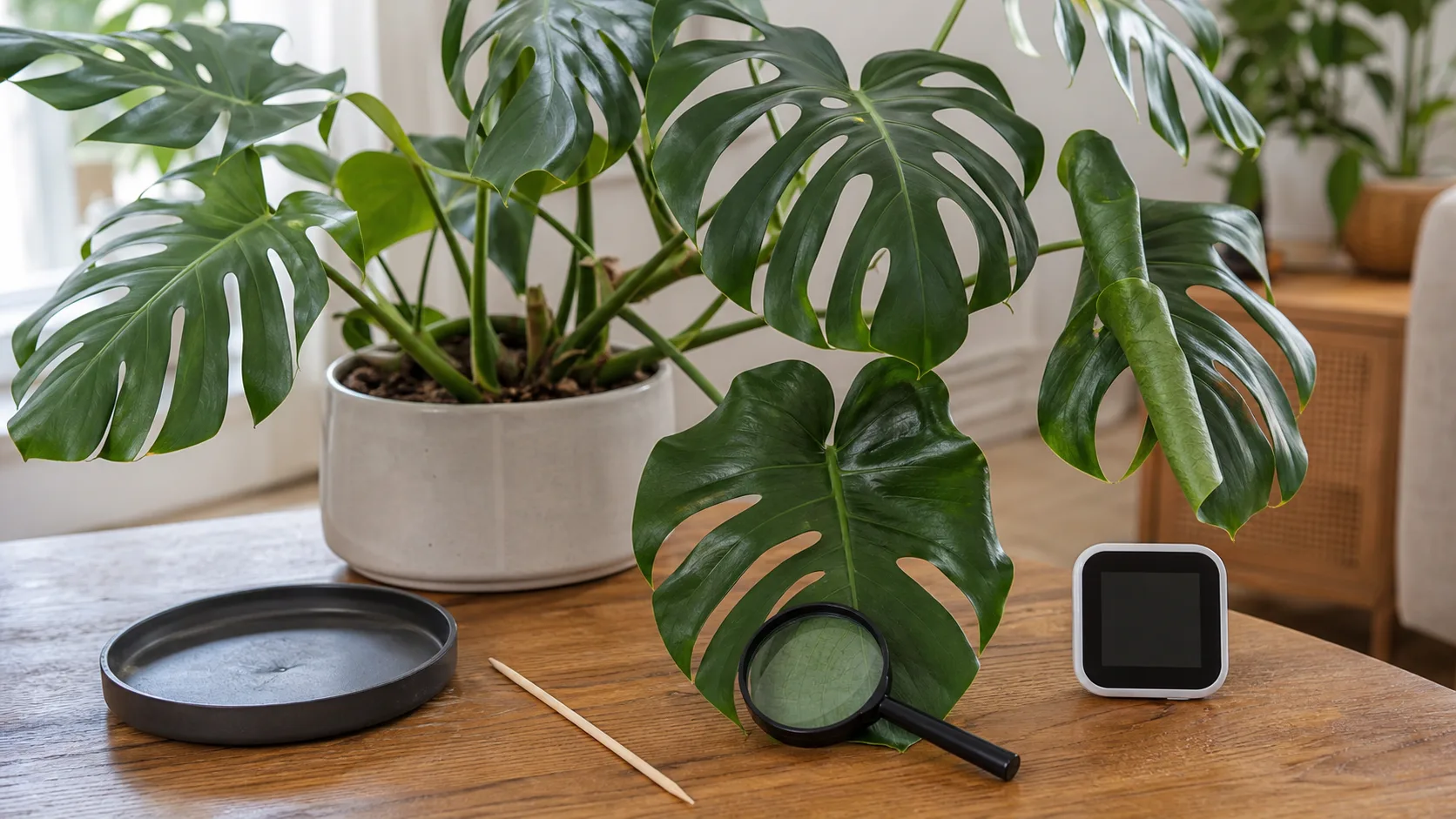
This guide uses a symptom-first workflow because curled foliage has several overlapping causes. Care thresholds and diagnostic principles were checked against extension guidance, including:
- North Carolina State Extension, Monstera deliciosa, for light, humidity, and watering guidance
- North Carolina State Extension, Monstera adansonii, for light, drafts, overwatering, and pests to monitor
- Penn State Extension, Diagnosing Poor Plant Health, for the multiple possible causes behind wilted or distorted foliage
- University of Minnesota Extension, Spring Houseplant Care, for gradual light changes, repotting one size larger, watering checks, and emptying saucers
- University of Minnesota Extension, Managing Insects on Indoor Plants, for pest inspection and plant-stress guidance
Current search results and community discussions were reviewed to understand recurring owner confusion around repotting, falls, wet root zones, bright windows, and single curled leaves. That community evidence is qualitative only. It does not establish prevalence, prove a diagnosis, or replace inspection of the individual plant.
Freshness note
Care and diagnostic sources were reviewed in July 2026. Seasonal conditions, potting products, and pesticide labels can change, so use current product directions and reassess the actual root zone whenever your Monstera’s environment changes.