Most home orchid owners do not need a complicated propagation guide. They need one low-risk decision: safe to cut, wait, or recover first.
If the plant has limp or fast-yellowing leaves, mushy roots, sour media, or a tiny baby with one short root, do not cut today. If the plant is healthy but too small, wait. If the plant shape matches the method and it clears the size threshold, you can propagate carefully.
KnowYourPlant readiness traffic light
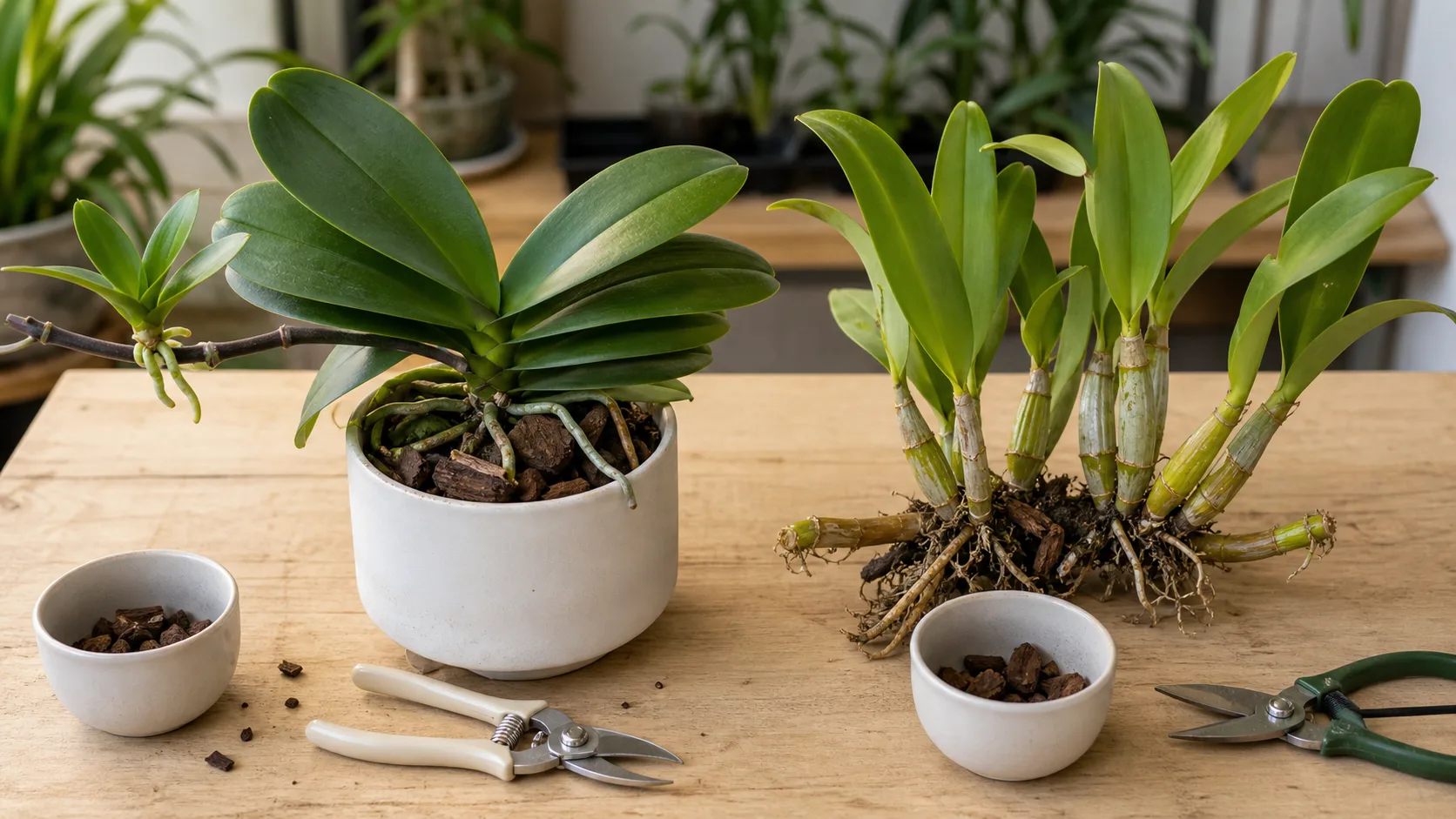
One crown suggests keiki care; connected bulbs may allow division.
| Situation | Safe call | Why |
|---|---|---|
| One central crown, baby still tiny, or connected-bulb clump below size threshold | Wait | The plant is not ready yet |
| Healthy roots, steady leaves, active new growth, and correct structure above threshold | Cut | The plant can likely handle propagation |
| Limp leaves, black or mushy roots, stale wet media, or stalled growth | Recover first | Cutting now usually multiplies the problem |
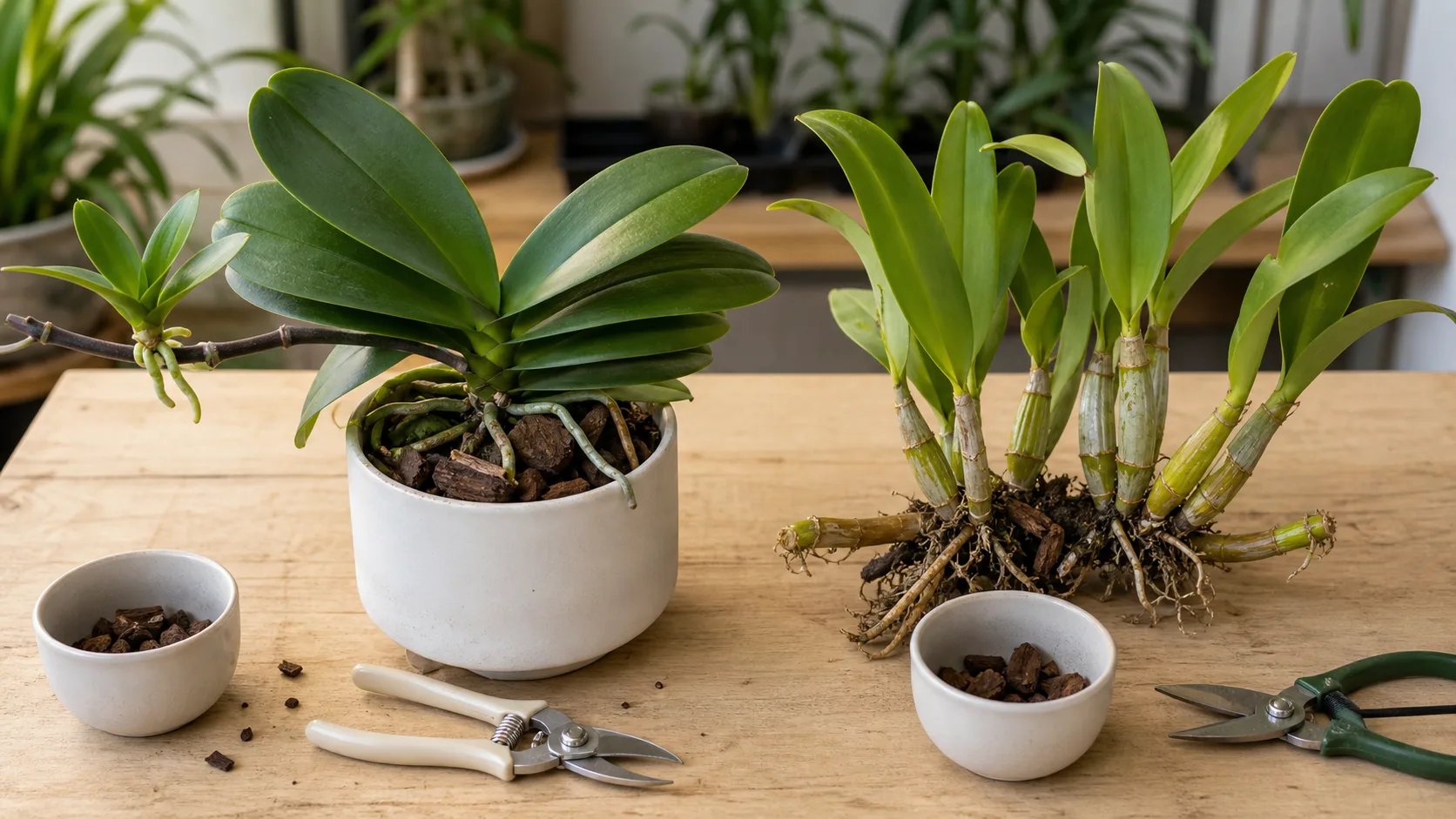
Start with plant shape, not scissors. A one-crown orchid usually waits for a baby plant. A row of connected bulbs may be divided if the whole clump is strong enough.
What most guides miss: growth habit comes before technique
Monopodial orchids
A one central crown orchid grows upward from one main point. Many Phalaenopsis fit here. In plain English: if it looks like one plant with one center, do not split it into halves. Your realistic home method is waiting for a keiki, an attached baby plant.
Sympodial orchids
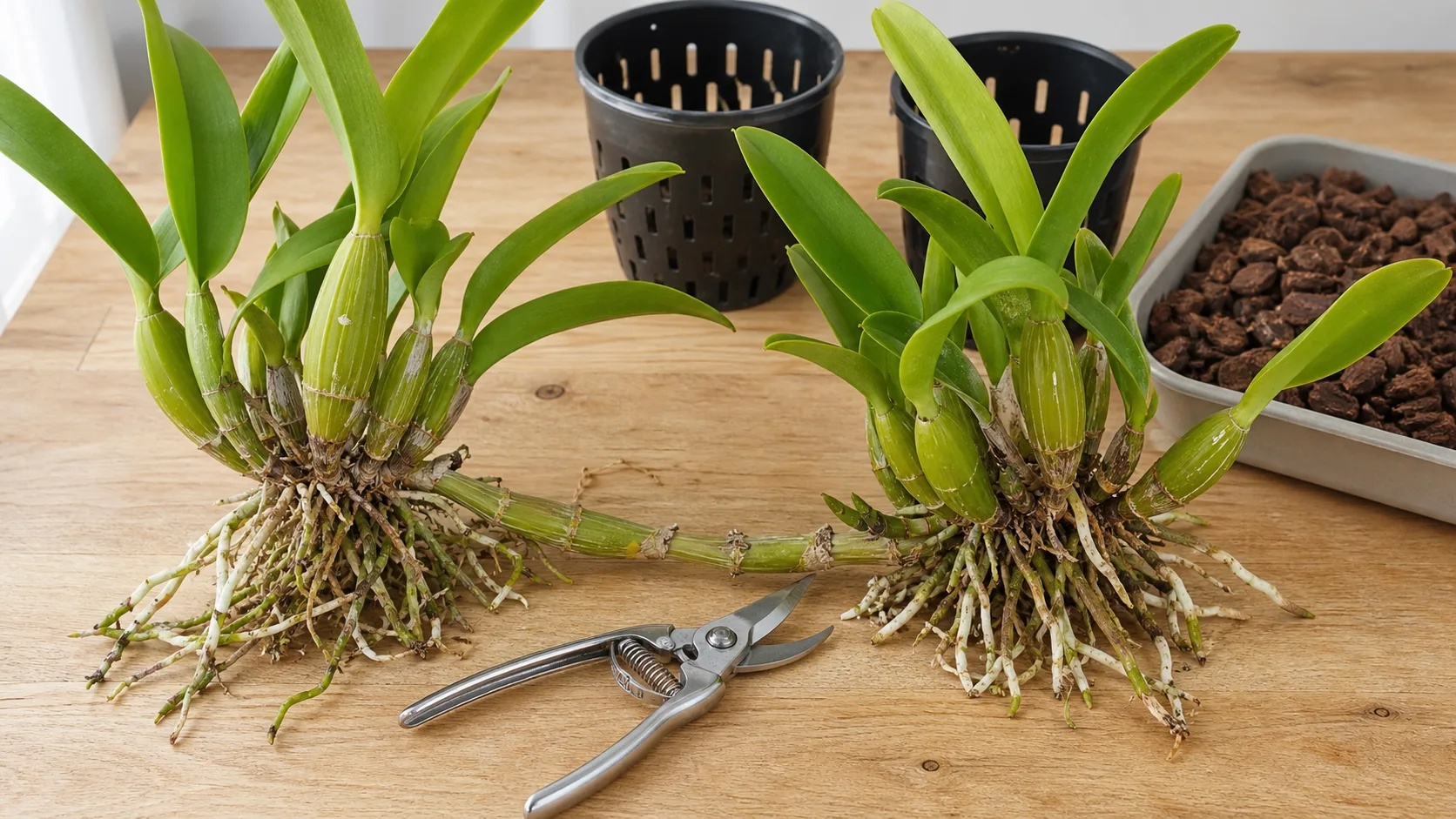
Count mature bulbs on both sides before cutting the connecting stem.
A row of connected bulbs or canes grows sideways over time. Many Cattleyas, Oncidiums, Cymbidiums, and some Dendrobiums fit here. In plain English: if you see linked growths in a chain, division may be possible, but only when each new piece stays big enough to live.
If the shape is still unclear, use KnowYourPlant identification before choosing keiki care or division.
One-screen threshold cheat sheet
Use these expert thresholds before you touch a blade.
| Plant or situation | Threshold | Decision |
|---|---|---|
| Phalaenopsis keiki | Wait for 2 to 3 developed roots, per the University of Washington Miller Library | Fewer roots: wait |
| General connected-bulb division | Keep 3 or 4 mature bulbs per piece, per the American Orchid Society | Smaller pieces: wait |
| Cattleya | Parent should have at least 6 mature bulbs; keep 3 to 5 per division, per the AOS Cattleya sheet | Below that: wait |
| Any stressed orchid | Firm roots, stable leaves, active growth first | Recover first |
Routine-fit rule: if you cannot check roots weekly, give bright filtered light, and follow through for a full season, waiting is safer than propagating.
Symptom blockers: fix these before cutting
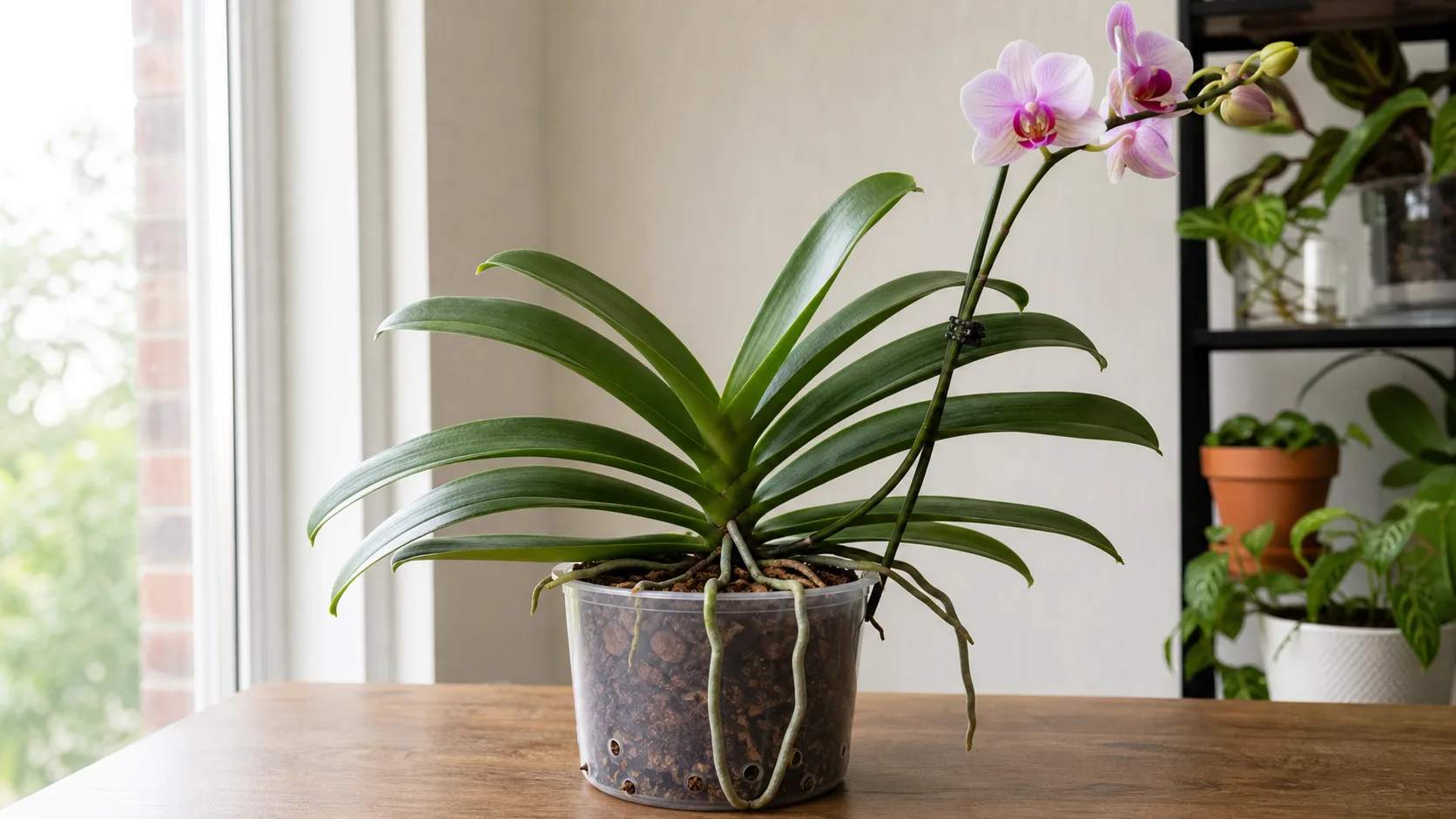
Firm roots and airy media are readiness cues; mushy roots are not.
| Symptom | What to do |
|---|---|
| One old bottom leaf yellowing slowly | Usually monitor, not panic-water |
| Several limp or yellowing leaves | Check roots and media before any cut |
| Black, mushy, hollow, or sour-smelling roots | Recover first; trim only clearly dead roots and replace broken-down media |
| Wrinkled bulbs or floppy leaves while media is wet | Stop adding water; roots may be failing |
| Very dark leaves with no growth | Increase light gradually and wait |
| Plant wobbling after repotting | Stabilize it and delay propagation |
A fast beginner example: grocery-store Phalaenopsis, one tiny keiki root, leaves going limp. That is recover first, not “propagate before it gets worse.” The plant needs working roots more than it needs separation.
Seven-day recovery reset: today, inspect roots and replace sour or collapsed media; remove only dead tissue. At the next watering, wait until roots and media approach dry and the pot feels lighter, then water thoroughly and drain. Keep bright filtered light, skip fertilizer and cutting, and hold the plant stable. Recheck after 7 to 14 days. Recovery is visible when leaves stop worsening, the base stays firm, sour smell is gone, and a fresh root tip, leaf, or shoot begins.
If rot, dehydration, and normal leaf aging still look alike, use KnowYourPlant diagnosis before cutting.
Before the cut
Set out the correct pot, airy media, a clean label, and a sterilized blade before removing anything. If you cannot identify where the baby ends or where the connected stem can be divided while keeping both sides strong, stop and wait rather than improvising a cut.
Keiki separation
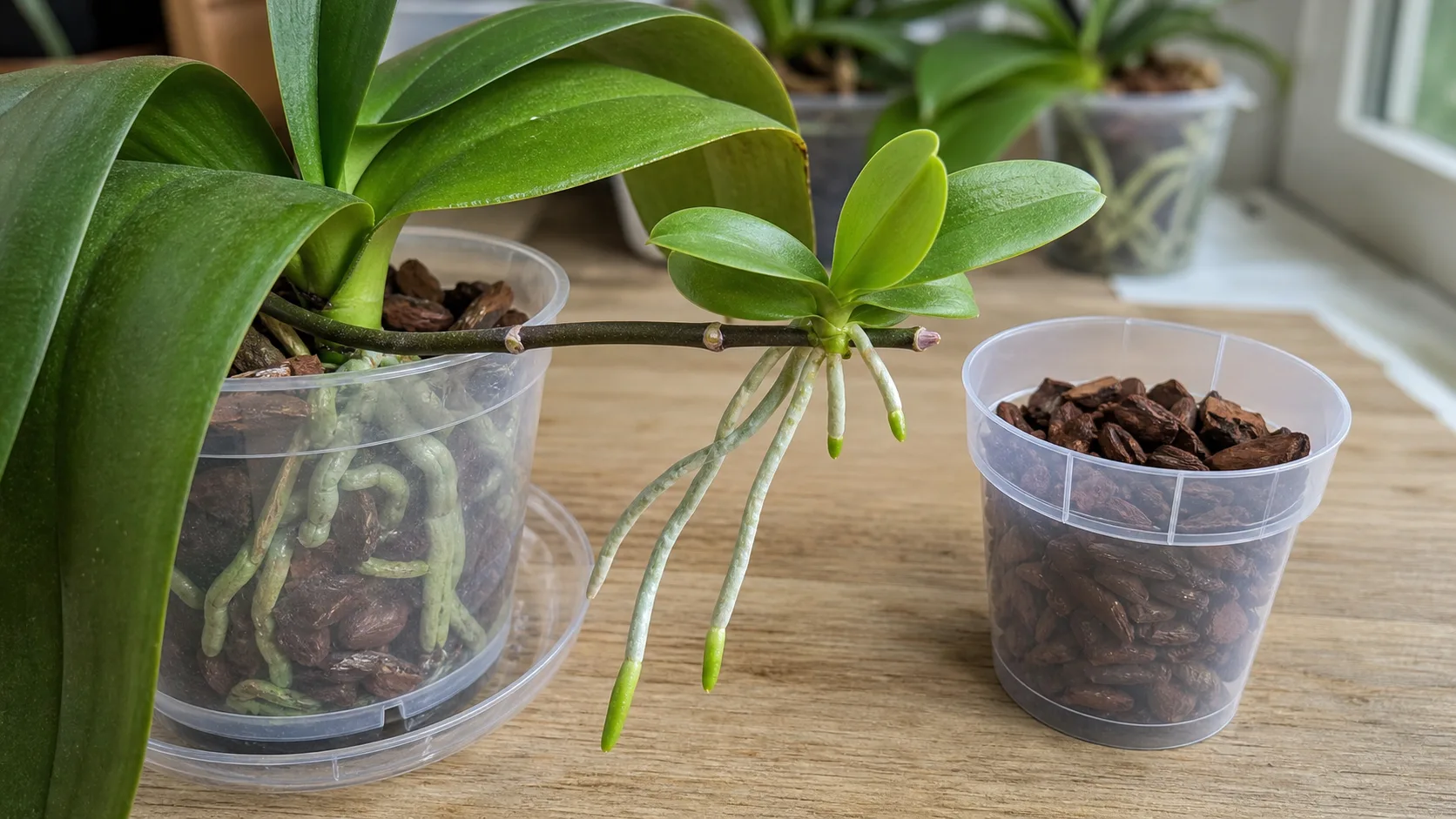
Wait for multiple roots before separating the baby from its parent.
Use this on one-crown orchids that naturally made a baby. Wait for the baby to have 2 to 3 developed roots. Sterilize the tool, cut cleanly, keep the roots intact, and pot it into a small container with airy orchid mix. If bark, moss, and blended media are hard to compare, use the orchid soil guide to match the mix to your watering habits. Biggest mistake: separating a cute baby that is still too dependent on the parent.
First success sign: the baby stays firm and starts anchoring. First danger sign: it shrivels, leans, or loses firmness within days.
Division
For connected-bulb orchids, keep each piece above the threshold, cut once with a sterile tool, and pot firmly. New roots mean progress; black cuts mean danger.
Today, this week, this season
Today
Identify the shape: one central crown or a row of connected bulbs. Inspect roots, not just leaves. If the plant is stressed, choose recovery first.
This week
Correct obvious problems: stale wet media, weak light, or watering that stays too frequent for the potting mix. If you are waiting, watch for stronger roots or new growth rather than forcing action.
This season
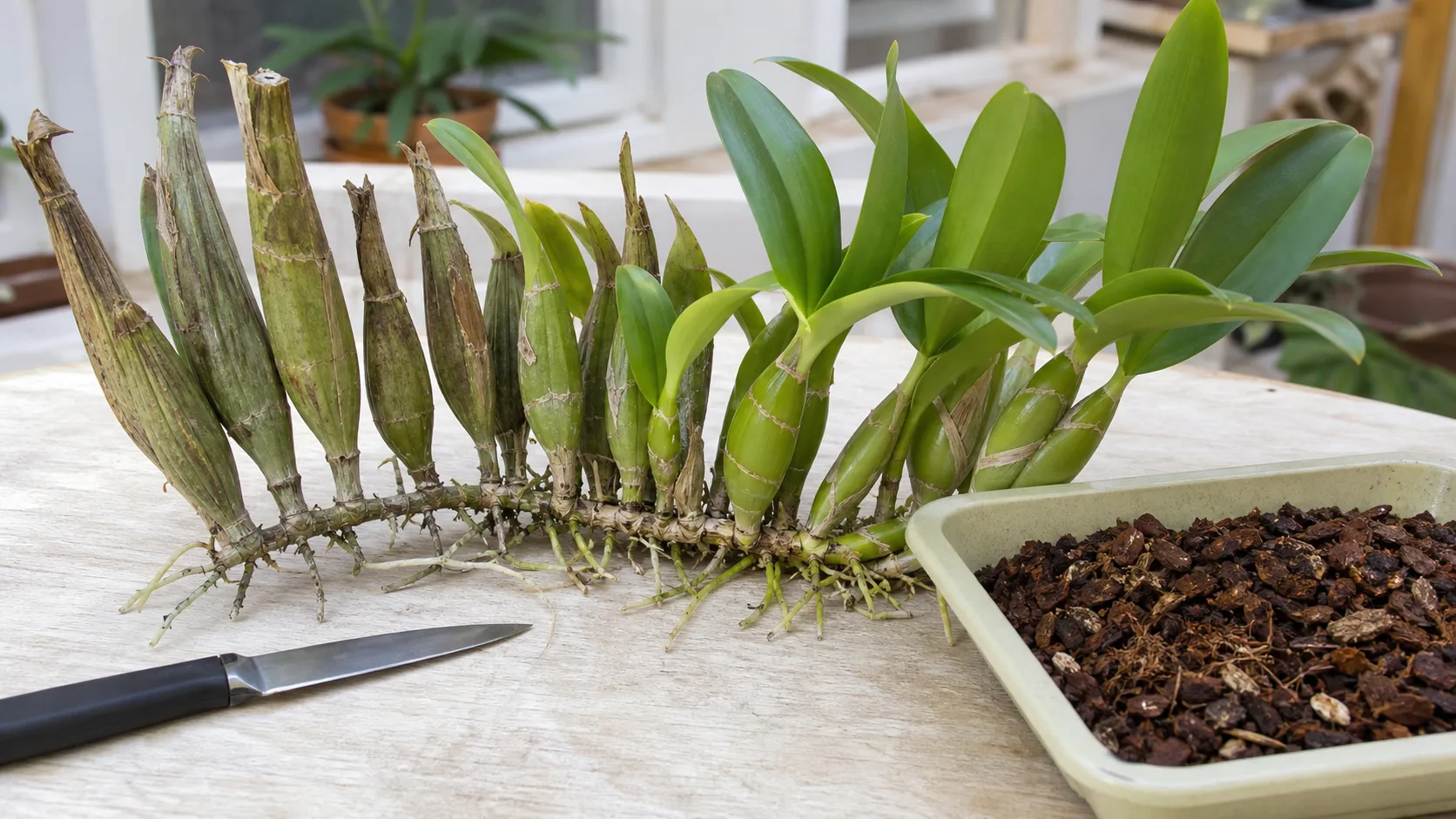
Fresh roots or shoots show a safer recovery window for division.
Propagate only in a season when the plant is actively growing and you can follow through. Keikis should gain roots; division candidates should show new roots or shoots; weak plants should spend the season rebuilding, not being split. For the light, watering, and humidity routine after separation, follow the beginner orchid care guide.
After choosing wait or cut, record the date and set a KnowYourPlant recovery and watering reminder.
If you are troubleshooting another common plant symptom, see Orchid Wrinkled Leaves: Check the Roots Before Adding Water for a focused diagnosis and recovery plan.
For a related hands-on growing walkthrough, use Orchid Root Rot: Identify, Trim, Repot, and Recover for the setup and follow-up care.
What owners keep asking: myth vs method
Social evidence is useful here because the same bad shortcuts appear repeatedly. Threads on Reddit about leaf propagation, Reddit on whether any orchid can be propagated casually, Reddit keiki excitement before readiness, and Houzz spike-cutting questions show the same pattern: people want orchids to work like pothos cuttings, but common home orchids usually do not.
Myth: one leaf, any flower spike, or crowding means “go ahead.” Method: match the plant shape first, then require healthy roots, then require the size threshold. If any one of those fails, wait or recover first.
Evidence and freshness
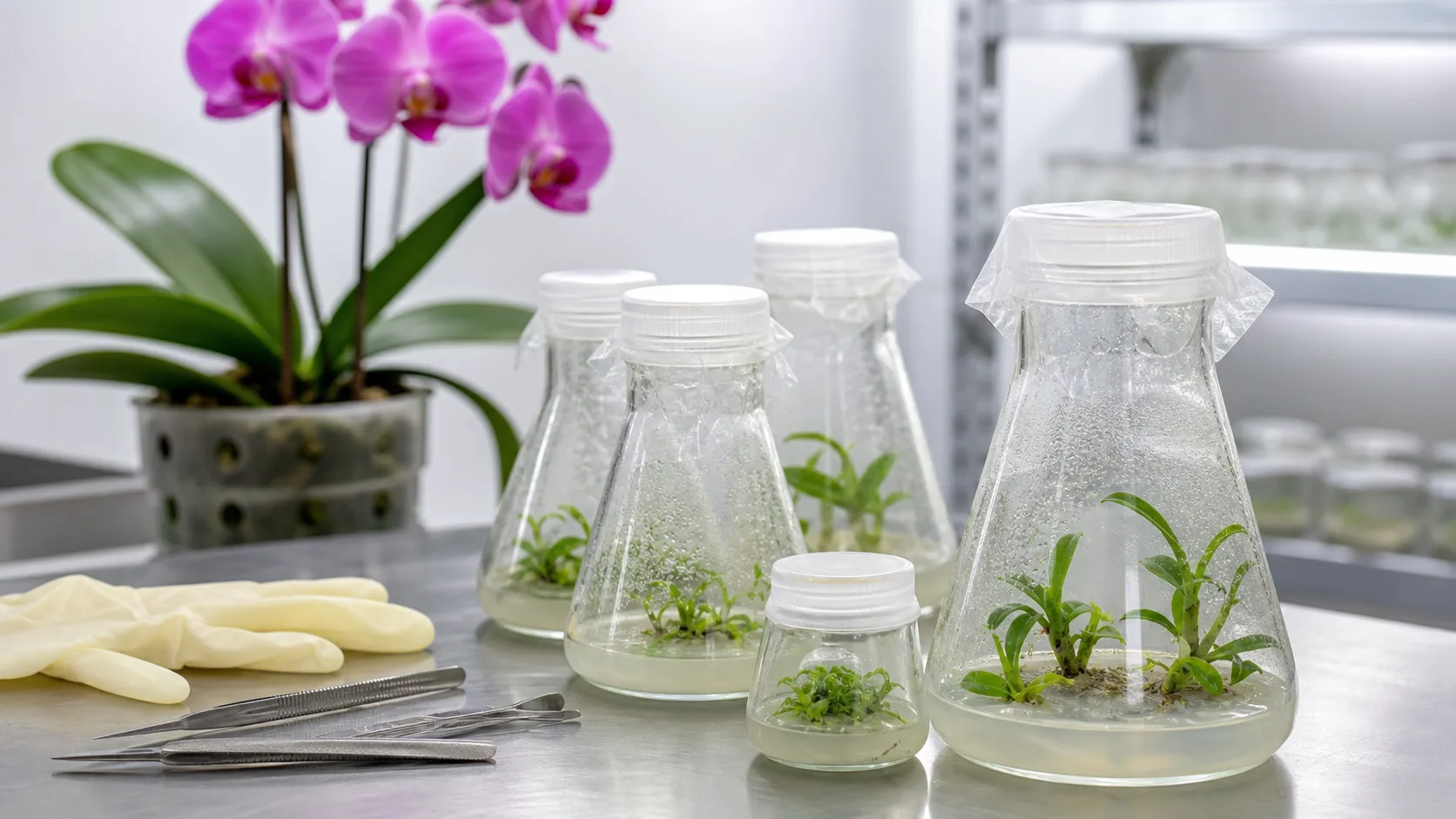
Laboratory propagation is real, but it is not a casual home shortcut.
Methodology: this guide gives priority to the American Orchid Society, the AOS orchid parts explainer, the AOS Cattleya culture sheet, the AOS Phalaenopsis culture sheet, the University of Washington keiki guide, and AOS back-cutting guidance for thresholds and care logic. Forum links are included only as honest qualitative evidence of what owners misunderstand most often, not as authority.
Reviewed July 19, 2026. If you remember one rule, make it this: stressed plant, recover first; healthy but undersized plant, wait; healthy plant above threshold, cut carefully.
For a related care deep dive, see the low-light indoor plants guide, the cat-safe indoor plants guide, the grow lights guide for indoor plants.