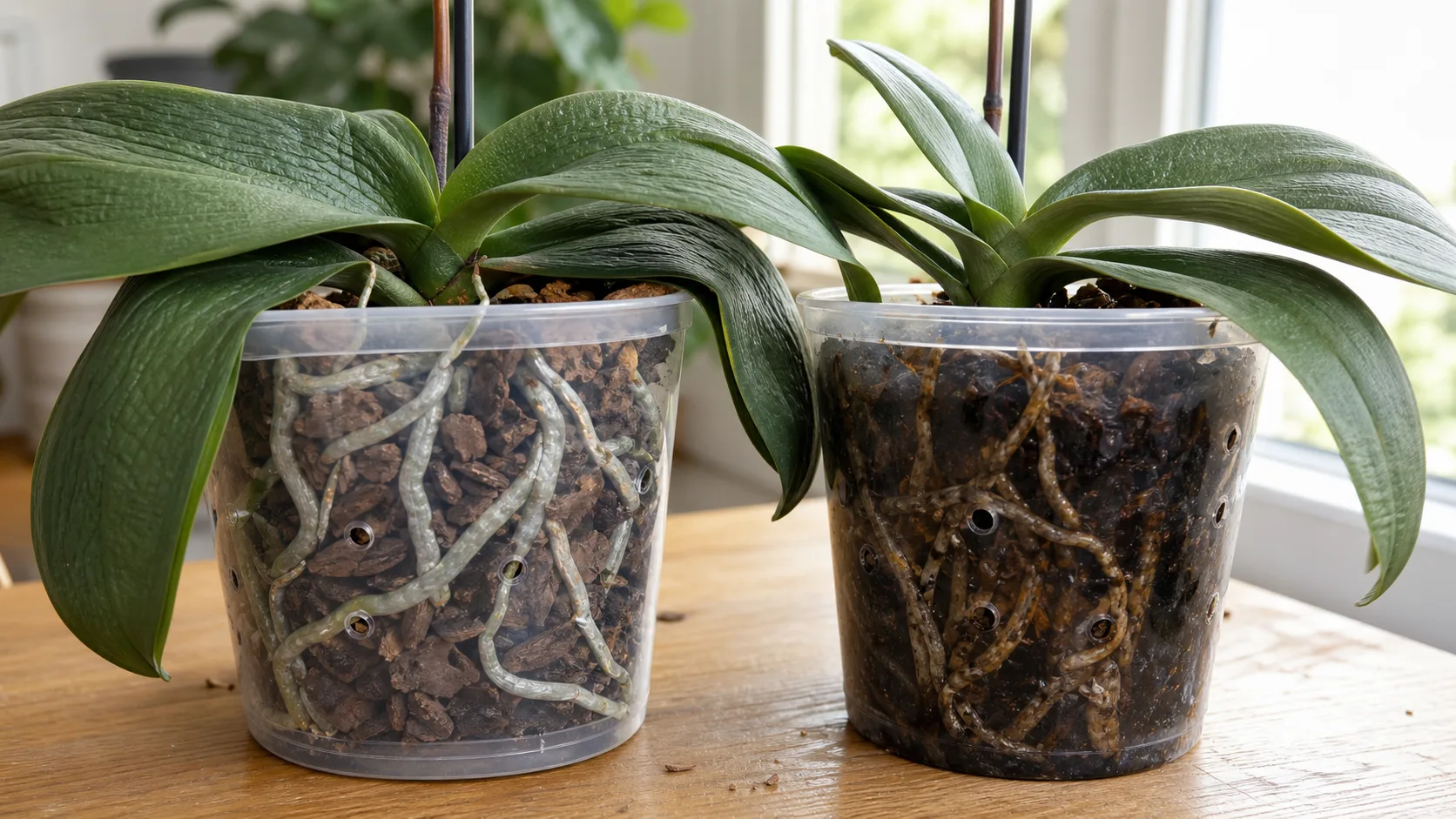
You notice a crease in one orchid leaf. A few days later, another feels soft and leathery. She looks thirsty, so reaching for the watering can feels like the kindest response.
Pause for one minute first. Wrinkled orchid leaves mean water is not reaching the leaf tissue, but they do not tell you why. The roots may be dry and ready to drink. They may also be wet, damaged, and unable to absorb water.
That difference decides whether the next watering helps her or makes the problem worse. Before changing your routine, check the roots, pot weight, and bark. You can usually choose the right next step without guessing.
What Most Care Guides Miss
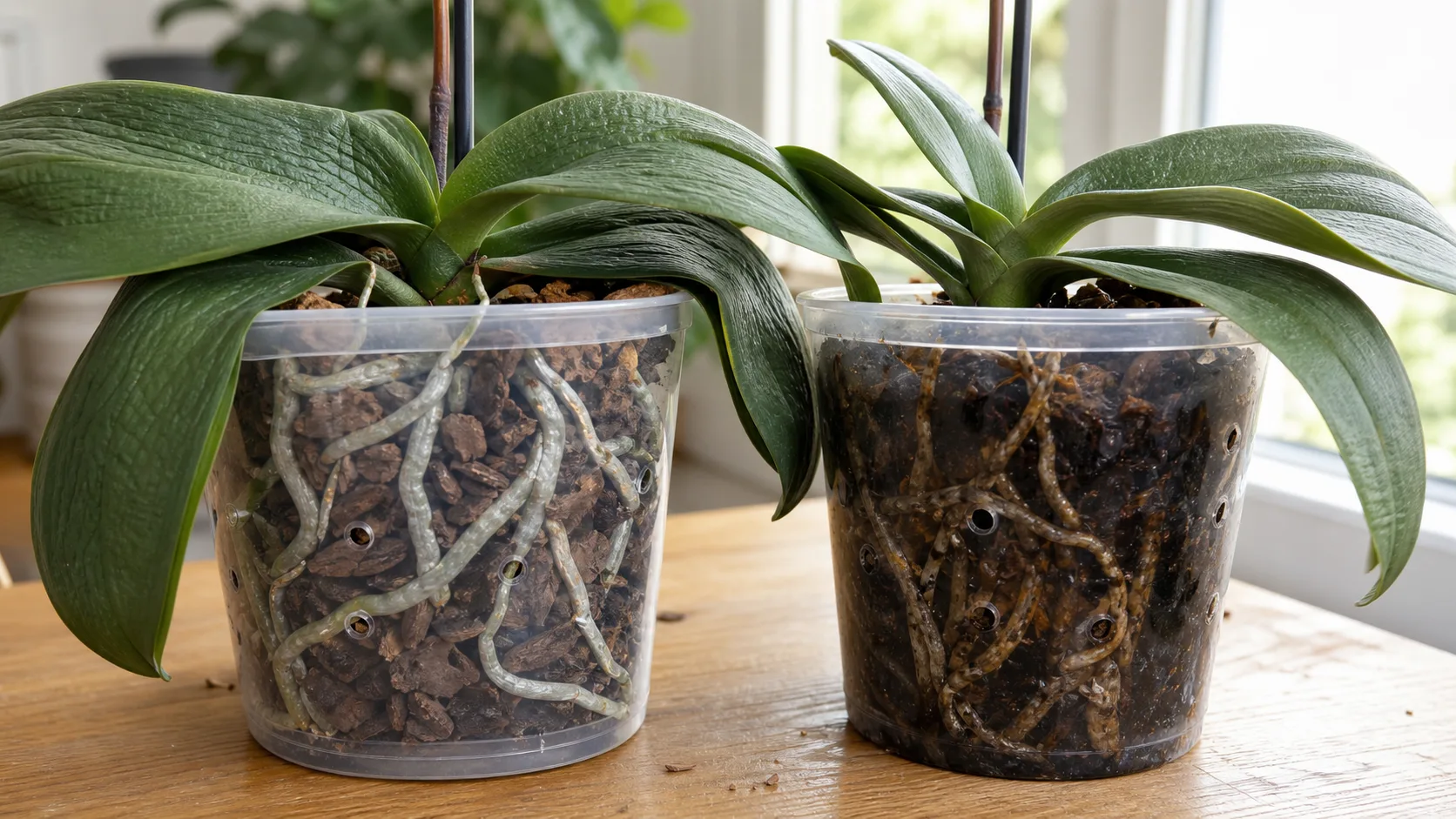
The common misdiagnosis is simple: wrinkled leaves equal underwatering. That advice is incomplete because an orchid with rotten roots also becomes dehydrated. There may be plenty of moisture in the pot, but no healthy root system to move it into the leaves.
The American Orchid Society describes shriveled leaves as a sign that water is not reaching the plant tissue. Your first question should therefore be:
Are the roots dry but functional, or wet and failing?
Use this decision rule before you change anything:
- Firm roots, a light pot, and nearly dry bark: water thoroughly.
- Mushy or hollow roots in damp bark: inspect and repot instead of watering again.
- Firm roots after sudden heat exposure: reduce the heat, then water only if the bark is nearly dry.
- Dead root tips and mineral crust: flush the pot and pause fertilizer.
This root-first check prevents two painful overcorrections: repeatedly watering rotten roots, or withholding water for weeks because you are afraid of repeating one earlier mistake.
Symptom Diagnosis Card
| What you find | Most likely explanation | Best first move |
|---|---|---|
| Firm silver roots, dry bark, light pot | Dry but functional roots | Water thoroughly and drain |
| Plump green roots, damp bark | Roots already have moisture | Wait and check again later |
| Brown or black roots that feel mushy | Root rot or severe root damage | Unpot and remove clearly dead tissue |
| Papery, hollow roots whose outer layer slips off | Old root loss | Trim dead roots and protect those still firm |
| Mostly firm roots after hot sun or a heat wave | Water loss is outrunning uptake | Reduce heat and reassess pot moisture |
| White crust, brown root tips, recent heavy feeding | Salt or fertilizer damage | Flush with plain water and pause feeding |
Root color is useful, but firmness matters more. A healthy root hidden from light may be cream or pale yellow rather than green. Do not cut a root just because it looks pale. Keep it if it feels firm.
If the wrinkles appear with yellow leaves, compare the pattern with our guide to orchid leaves turning yellow.
The 60-Second Root-First Check
You can learn a surprising amount before taking the orchid out of her pot.
- Check the crown. The center where the leaves meet should feel firm. Standing water, black tissue, or a foul smell needs attention before anything else.
- Look at the exposed roots. Healthy Phalaenopsis roots are generally plump and firm. They often appear silver when dry and greener after watering.
- Look through the pot. Clear plastic is helpful here. Check the roots near the center and bottom, not only the healthy aerial roots above the bark.
- Lift the pot. A very light pot supports the dry-root diagnosis. A pot that still feels heavy several days after watering suggests retained moisture.
- Touch the bark. Fresh, drying bark feels coarse and airy. Old bark becomes dark, fine, and almost soil-like.
- Smell near the drainage holes. A sour or swampy smell points toward stale, airless conditions around the roots.
- Review the last week. Note a heat wave, hot window, recent repotting, heavy fertilizer, or several small waterings.
Aerial roots are clues, not a full report. An orchid can have two healthy-looking roots in the air while most of the roots inside decomposed bark are failing.
If the pot is opaque and you cannot see inside, use pot weight, the condition of the bark, and a wooden skewer inserted near the center. A skewer that comes out cool and damp means there is still moisture below the surface.
Four Numbers That Help Without Becoming a Schedule
Most people with dehydrated orchid leaves want to know exactly how often to water. The honest answer is that the pot and room set the schedule, not the calendar. These numbers give you useful boundaries:
- The American Orchid Society gives a 50 to 80 percent humidity range for Phalaenopsis, along with moving air. Humidity can slow water loss, but it cannot replace dead roots. (Phalaenopsis Culture Sheet)
- Watering can range from every other day in hot, dry summer conditions to every 10 days in a cool winter greenhouse. That wide range is why “water every Sunday” is unreliable. (Phalaenopsis Culture Sheet)
- Phalaenopsis generally prefer nights above 60°F or 16°C and days around 75 to 85°F or 24 to 29°C. Higher temperatures increase water loss and make humidity and airflow more important. (Phalaenopsis Culture Sheet)
- Repotting is commonly needed every one to three years, while mature bark may begin breaking down after about two years. Inspect sooner if the bark stays wet, smells sour, or has become fine and dense. (Phalaenopsis Culture Sheet)
Treat these as reference points, not watering instructions. Check root texture, pot weight, and bark moisture each time.
Decision Tree: What Should You Do Next?
If the roots are firm and the bark is nearly dry
Your orchid is probably thirsty and still able to use water.
Water thoroughly in the morning with room-temperature water. Wet all the bark rather than giving her a small sip near one edge. Let the excess run through the drainage holes, then empty the saucer or decorative outer pot.
Keep water out of the crown and leaf joints. If water splashes there, blot it with a corner of tissue. Return the orchid to her usual spot after the pot has drained.
For the next watering, wait until the bark approaches dryness, the pot feels light, and visible roots become silvery. Phalaenopsis orchids should not remain bone dry for a long stretch, but their roots also need air between waterings.
Our beginner orchid care guide explains how light, temperature, pot size, and airflow change the drying rhythm.
If the roots are mushy, hollow, or sitting in stale bark
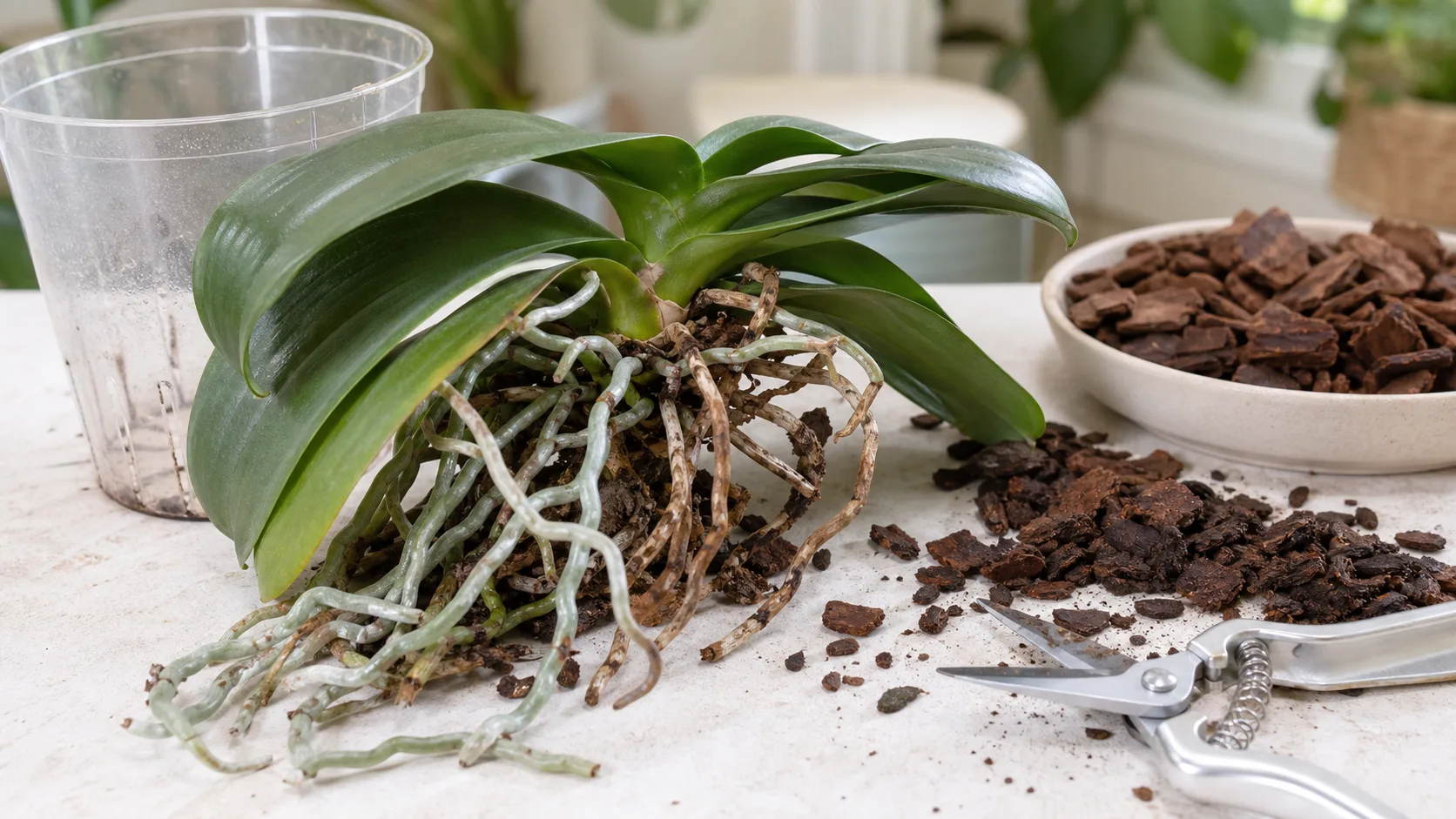
Do not add more water just because the leaves look thirsty. The leaves are dehydrated, but another soak cannot repair roots that have already collapsed.
Slide the orchid gently from her pot and loosen the old bark. Work slowly around any firm roots, especially fresh green tips.
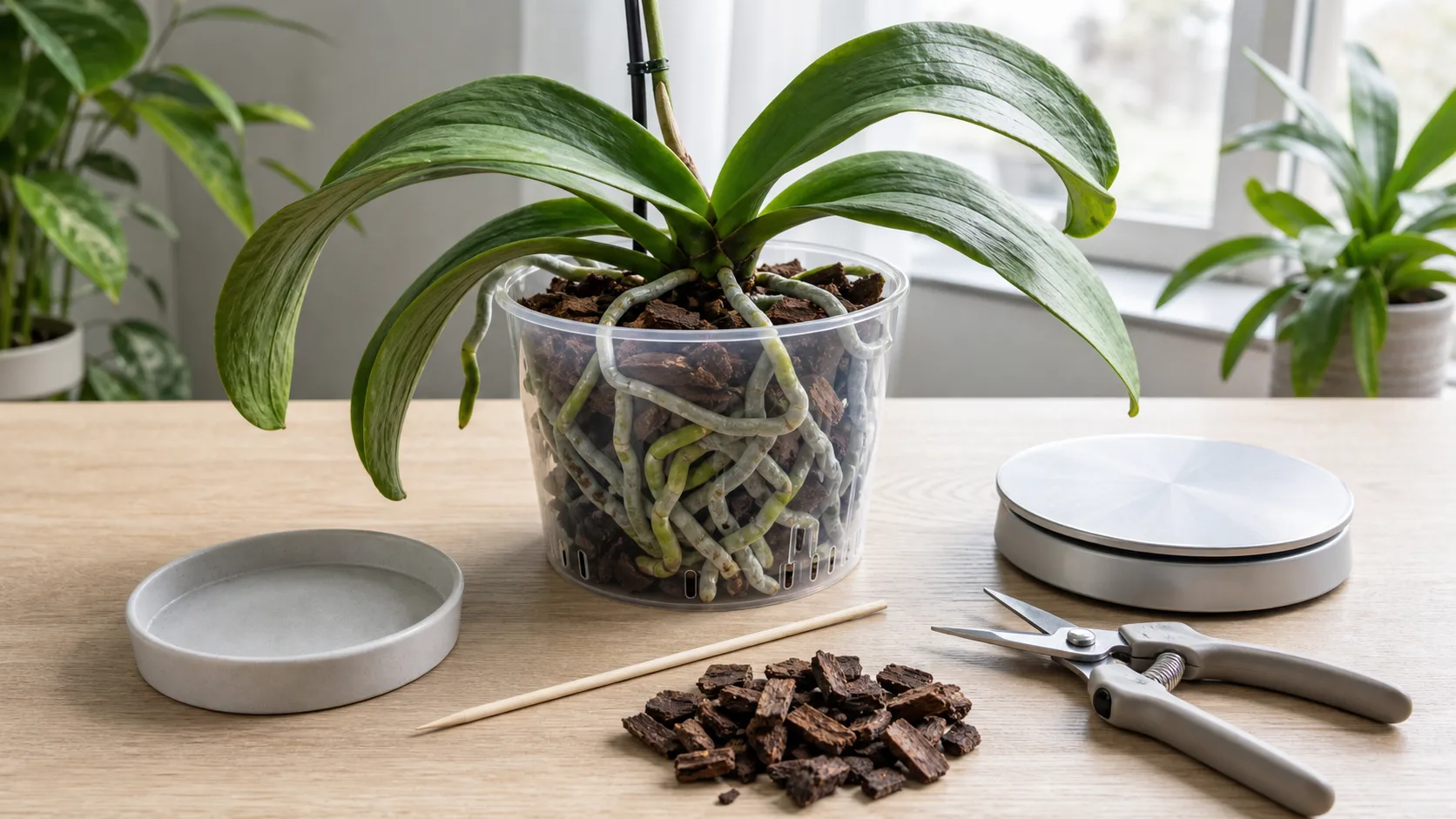
With clean, sterilized snips:
- Keep firm green, silver, cream, or pale-yellow roots.
- Remove roots that are unmistakably mushy, hollow, or collapsing.
- Choose a ventilated pot only large enough to hold the surviving roots.
- Repot in fresh, airy orchid medium without burying the crown.
- Pause fertilizer while the roots settle and new growth begins.
The American Orchid Society notes that root rot develops when orchids remain in soggy medium. Decomposed bark makes the problem worse because the small particles hold water while reducing air around the roots. (Bulb, Stem and Root Rots)
If your bark has become fine and soil-like, our orchid potting mix guide can help you choose a better balance of moisture and airflow. For the container change itself, follow how to repot a plant safely.
An orchid with major root loss may not have enough capacity to plump her old leaves again. Recovery can still be going well if the crown stays firm and you see a new root tip or a strong new leaf.
If the roots are healthy but the room has been hot
Heat can make an orchid lose water faster than healthy roots can replace it. Leaves may soften after sitting against hot glass, above a heater, or in strong midday sun.
Move her into bright, indirect light away from the heat source. Keep gentle air movement around her, but avoid placing her directly in the path of a drying vent.
Then check the pot:
- If the bark is nearly dry and the pot feels light, water once and drain well.
- If the bark is still moist, wait. Repeated soaking is not a safe shortcut for heat stress.
The American Orchid Society describes soft or leathery leaves as a sign of heat-related drying and warns that severe heat can damage leaf tissue. Reducing the heat load comes before changing the watering schedule. (Heat Stress)
If you see mineral crust or burned root tips
White deposits on the pot or bark, brown root tips, and recent heavy feeding point toward salt buildup. Hard water and concentrated fertilizer can both injure the tender tissue that absorbs water.
Flush the pot generously with plain, low-mineral water and let it drain completely. If crust remains, flush again at a later normal watering. Pause fertilizer until the roots are stable.
The American Orchid Society recommends flushing the root zone with fresh water at least monthly to limit mineral accumulation. For a recovering orchid, it suggests restarting fertilizer at about one-quarter strength. (Fertilizer Burn)
Do not fertilize a severely dehydrated orchid as a rescue treatment. Damaged roots need cleaner conditions and time, not a stronger meal.
Expert Note: Watch the New Growth
Old wrinkles are a record of what happened. They are not always a live measurement of current moisture.
A mildly dehydrated leaf may regain some firmness once healthy roots receive consistent water. A deeply creased leaf can remain marked for the rest of its life, even after the orchid recovers.
Use these signs to judge progress instead:
- Firm green or reddish root tips
- A new leaf that holds its shape
- No further leaf collapse
- Bark drying at a steady, predictable pace
- A crown that remains firm and clean
If the oldest leaf slowly yellows while new roots and leaves remain healthy, the orchid may simply be letting that leaf go. Sudden softening across several leaves is more concerning.
Common Mistakes That Keep Orchid Leaves Wrinkled
Watering again without checking the bark
Soft leaves can trigger panic watering while the center of the pot is still wet. If roots are suffocating, another soak extends the problem. Check below the surface first.
Withholding water for weeks after one mistake
The opposite swing hurts too. Some owners suspect overwatering, become afraid to water at all, and accidentally create real dehydration. Reassess what the roots and bark need today instead of reacting to an old watering.
Giving small sips
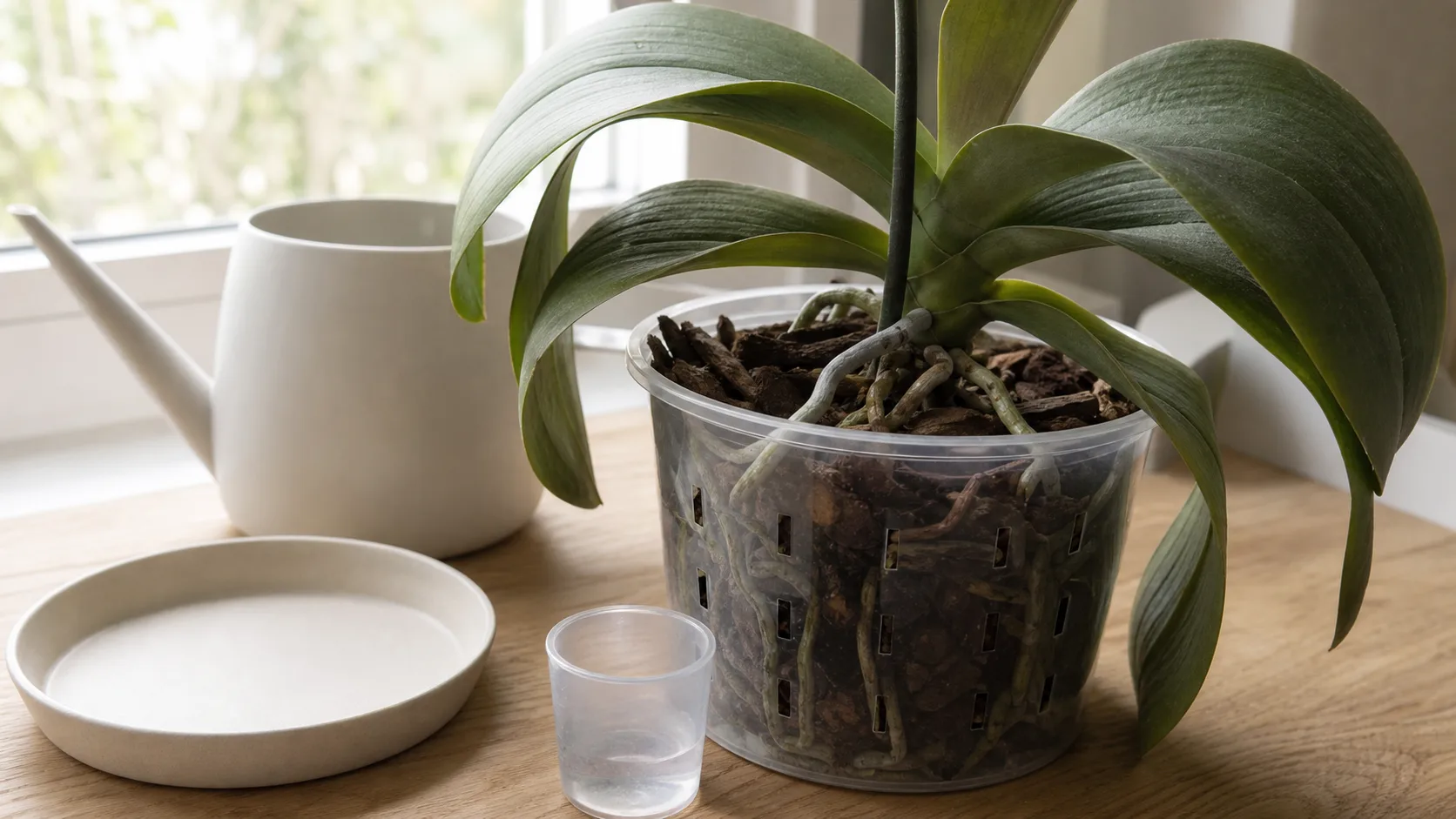
A little water near the rim can leave parts of the root system dry while keeping other areas damp. When healthy roots are ready, wet the bark thoroughly and let the whole pot drain.
If you are comparing measured watering shortcuts with a full soak, our orchid ice cube watering guide explains when the method fits and when it leaves the root zone unevenly wet.
Cutting every pale root
Roots inside an opaque pot may be yellow because light never reached them. Test the texture. A firm pale root stays. A mushy or hollow root goes.
Trusting aerial roots alone
Aerial roots may dry faster than those inside the pot. Their appearance does not prove the buried roots need water, and a few healthy aerial roots do not rule out damaged roots below.
Misting the leaves instead of fixing the cause
Misting does not deliver enough water to replace root uptake. It can also leave moisture in the crown. Raise room humidity safely if the air is very dry, but keep your attention on the root system.
Expecting a quick cosmetic recovery
Repeatedly changing light, water, fertilizer, and potting mix because an old leaf remains creased can stress the orchid again. Give the chosen fix time and watch for healthy new tissue.
A Recovery Plan You Can Follow
Today
Inspect the crown, visible roots, pot weight, and bark. Choose one path: water, wait, repot, reduce heat, or flush salts.
Do not make all five changes at once. When several conditions change together, it becomes difficult to tell what helped and easier to overcorrect.
If the crown is black or soft, the pot smells rotten, or nearly every root has collapsed, treat the situation as urgent root or crown damage rather than ordinary thirst.
Over the next seven days
Keep the orchid in bright, indirect light with gentle airflow. Watch for spreading yellowing, a soft crown, worsening odor, or continuing root collapse.
Do not fertilize a stressed or newly repotted orchid. Do not water a freshly repotted orchid on autopilot. Check how quickly the new bark is drying because fresh bark may behave differently from the old mix.
Over the next few weeks
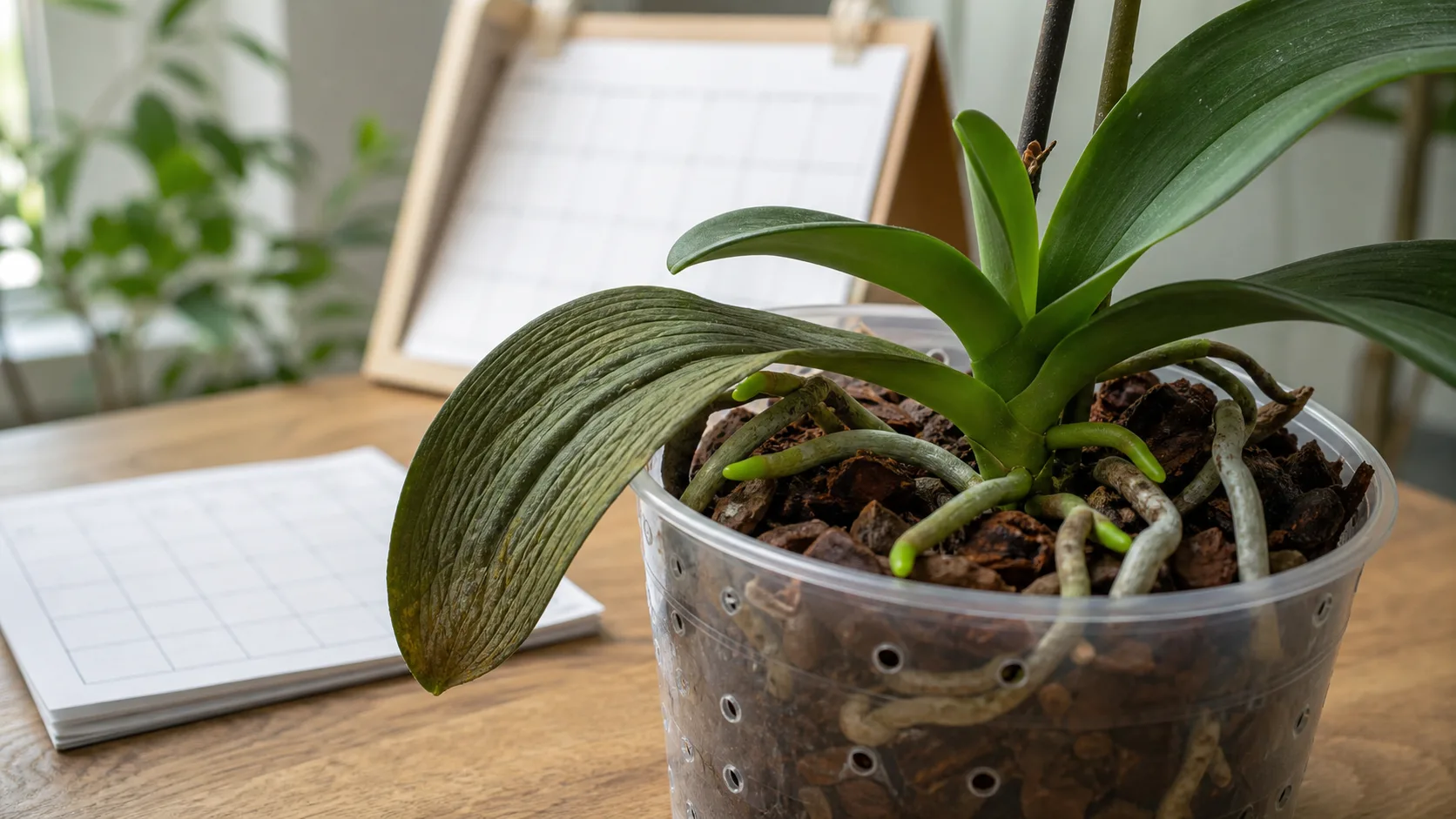
Look for an active root tip or a new leaf that stays firm. Water according to the changing pot weight and root condition, not according to whether an old crease has disappeared.
Recovery is usually quiet. A small green root tip is more meaningful than a wrinkled leaf becoming slightly smoother overnight.
Seasonal Note
In warm weather, brighter light and moving air can dry bark quickly. A healthy orchid may need more frequent checks, especially near a warm window.
In winter, cooler rooms and weaker light slow drying. The same pot may remain damp for several extra days, even if your home feels dry. A summer watering routine can therefore cause winter root loss.
Lift the pot and look at the roots before each watering. That ten-second habit is safer than carrying one interval through every season.
For help keeping those checks consistent, download KnowYourPlant for personalized plant care reminders based on your plant and routine.
For a related hands-on growing walkthrough, use Orchid Root Rot: Identify, Trim, Repot, and Recover for the setup and follow-up care.
Frequently Asked Questions
Can wrinkled orchid leaves become smooth again?
Slightly wrinkled leaves may regain some firmness after functional roots receive consistent water. Deep creases often remain after prolonged dehydration or major root loss. Judge recovery by active root tips, stable leaves, and healthy new growth rather than waiting for an old leaf to look untouched.
Should I cut off wrinkled orchid leaves?
Usually, no. A green leaf that remains attached can still support the orchid. Remove it only if it becomes fully yellow and releases easily, or if the tissue is black, wet, or clearly diseased. Never pull firmly against the crown.
How often should I water an orchid with wrinkled leaves?
Water when the roots are functional and the bark is approaching dryness, not whenever the leaves feel soft. In some homes that may be around a week, but heat, season, pot size, bark condition, and airflow can make the interval much shorter or longer.
How can I tell underwatering from overwatering?
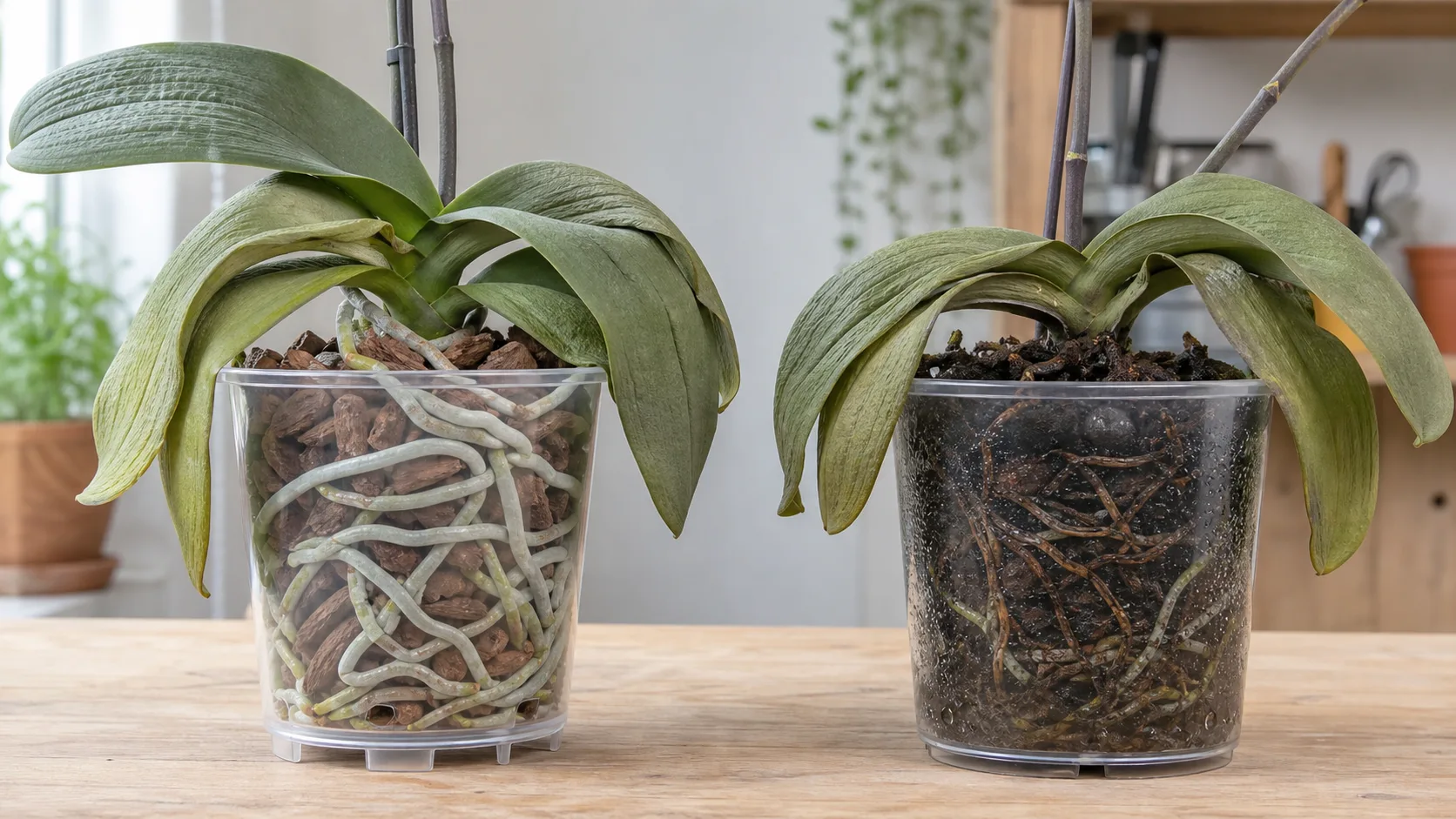
An underwatered orchid usually has firm, silvery roots, dry bark, and a light pot. An orchid with damage from staying wet often has damp, decomposed bark and roots that are brown, mushy, hollow, or collapsing.
Both can have wrinkled leaves. The difference is whether the roots can still absorb water.
Do orchid wrinkled leaves always mean root rot?
No. Dry but healthy roots, heat stress, salt damage, recent repotting, and severe root loss can all interrupt water delivery. Root rot becomes more likely when the bark remains wet, smells sour, or contains soft, collapsing roots.
Should I mist dehydrated orchid leaves?
Misting is not a substitute for functional roots and thorough watering. It will not correct a dry root ball or restore rotten roots. Avoid leaving water in the crown, especially when the room is cool.
Why are the bottom leaves wrinkled but the top leaf looks healthy?
Older lower leaves often show stress first. If the roots are healthy and the newest leaf is firm, the orchid may be recovering or gradually retiring an old leaf. Check for active roots and make sure the lower leaf is not turning black or wet.
Can an orchid survive after losing most of its roots?
Sometimes. The outlook depends on whether the crown remains healthy and whether any living roots or new root tips remain. Repot gently into an airy setup, reduce heat and water loss, and avoid repeated rescue treatments. Recovery may take months.
How This Guide Was Researched
This guide was updated on July 20, 2026. Current search results for orchid wrinkled leaves and close variants were reviewed to identify recurring diagnosis gaps. Care, temperature, repotting, root-rot, heat-stress, and fertilizer guidance was checked against American Orchid Society resources. Community questions informed the plain-language confusion addressed here, but were treated only as individual experiences, not proof of how common each cause is.