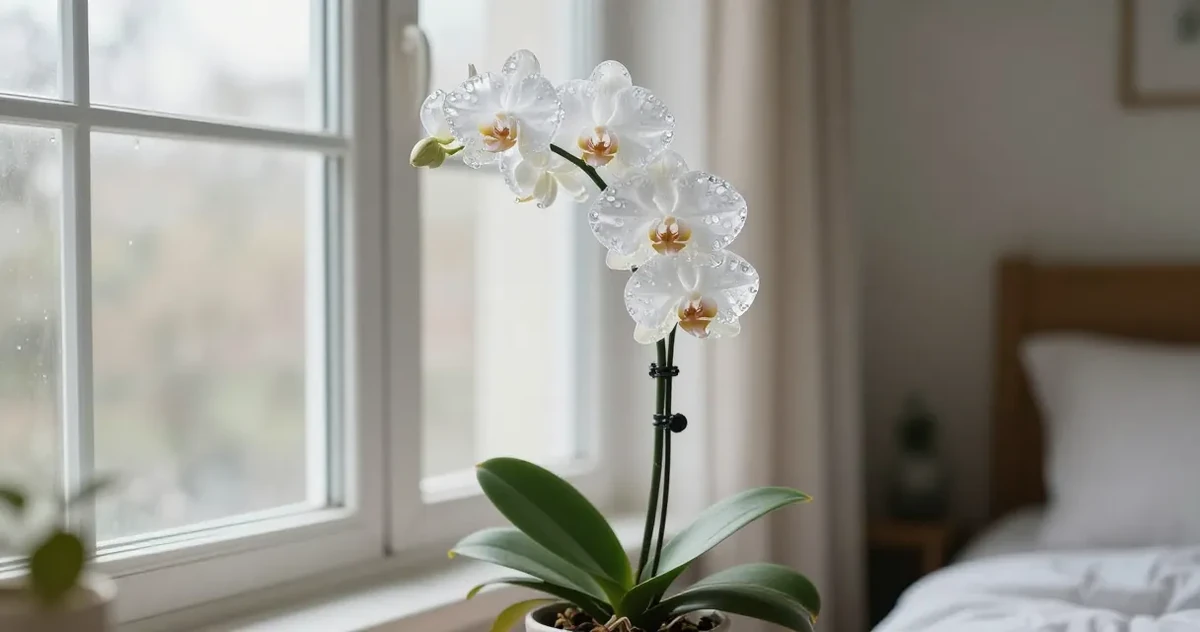
You probably saw it on the care tag that came with your orchid: three ice cubes, once a week. It sounds almost too tidy. And if you have spent any time in orchid forums since then, you have discovered it is also controversial enough to start arguments. “Ice cubes are safe.” “Ice cubes damage roots.” Both camps sound certain. Both are talking past each other.
The reason for that divide is not that one group is right and the other is wrong. It is that the ice cube method has a specific scope, and that scope almost never gets explained clearly. Whether it helps or harms depends less on water temperature than on the orchid genus, the potting medium, the condition of the roots, and whether water is actually reaching the right places.
Identification Snapshot: Is This the Orchid and Setup This Guide Covers?
Use this guide if most of these clues match what is in front of you:
- Most likely orchid: a grocery-store Phalaenopsis, also called a moth orchid
- Root clue: thick silver-green roots that turn greener after watering
- Potting clue: chunky bark in a clear nursery pot, often slipped inside a decorative cachepot
- Watering clue: the bark usually dries within about a week, rather than staying damp for many days
- Less likely match: sphagnum-heavy media, no-drainage novelty pots, or orchids with canes or pseudobulbs instead of broad leaves
If that does not sound like your plant, treat the ice cube method as a maybe at best, not a default.
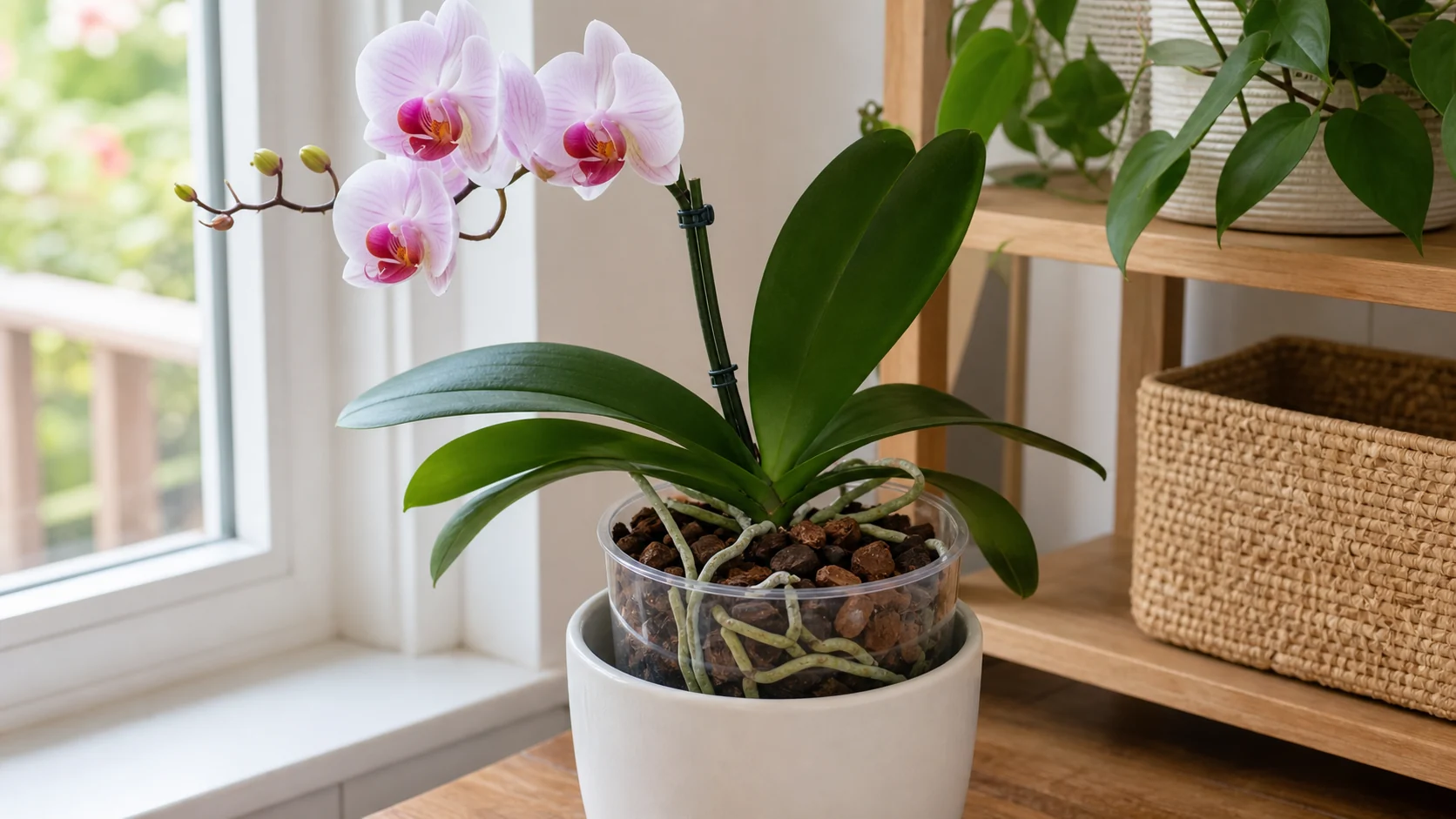
A clear inner pot, chunky bark, broad leaves, and thick silver-green roots identify the Phalaenopsis setup this guide covers.
Lookalikes and Confused-With Cases
| Setup or orchid type | Why people confuse it with the standard ice-cube advice | What changes in practice |
|---|---|---|
| Phalaenopsis in fresh bark | This is the classic grocery-store setup the study actually covered | Ice cubes can work if roots are healthy and runoff never sits in the pot |
| Phalaenopsis in sphagnum moss or old bark | It still looks like the same orchid, so owners assume the same weekly routine applies | Moisture hangs around longer and the inner root ball may stay too wet or stay strangely under-watered |
| Dendrobium, Cattleya, or Oncidium | They get sold beside Phalaenopsis and often inherit the same care-tag advice | Different roots, rest periods, and drying cycles make a one-size-fits-all cube routine riskier |
| Decorative pot with poor drainage | Slow melting feels safer than pouring water through fast | Any water left trapped at the bottom still creates rot pressure, no matter how slowly it arrived |
What Most Orchid Watering Guides Miss
Here is what keeps tripping people up: the ice cube debate gets framed as a universal question, when the best-known research behind it was actually quite narrow.
A 2017 study published in HortScience by researchers at Ohio State University and the University of Georgia tested Phalaenopsis orchids potted in chunky bark media, watered with three ice cubes per week. The finding: no meaningful difference in root health, leaf health, or flower longevity compared to plants given the equivalent volume of room-temperature water. That is a real result. But it is a result about one orchid genus, one potting medium, and one controlled watering dose under greenhouse conditions – not a blanket approval for all orchids everywhere.
Most guides either use that study to say ice cubes are safe for any orchid, or they ignore it and say ice cubes always damage roots. Neither reading is accurate. The common misdiagnosis is treating this as a method-versus-method question when it is actually a setup question.
The practical first check: before deciding whether ice cubes are right for your orchid, look at three things. What genus is it? (Phalaenopsis handles this best.) What is it potted in? (Chunky bark drains fast; sphagnum moss and decomposed older bark do not.) What do the roots look like right now? (Firm, healthy roots respond differently than roots that are dense, matted, or sitting in media that has broken down over two or three years.)
Answer those three questions and the watering method decision mostly makes itself.
Why This Topic Confuses So Many Orchid Owners
Public orchid discussions tend to fall into two loud camps. One group treats ice cubes as obviously harmful. Another treats the anti-ice warning as hobbyist dogma that scares beginners away from a routine that can work for a basic grocery-store Phalaenopsis. The result is a lot of heat and not much filtering.
The more useful pattern from grower threads is narrower. People keep circling the same real-world friction points: roots packed too tightly for meltwater to soak the center evenly, older bark that stays wet at the surface while the middle dries unpredictably, and decorative pots that hide trapped runoff. In other words, the argument is usually not about cold water alone. It is about whether a very tidy routine is masking a messy setup.
That is why this guide keeps returning to root condition, media age, and drainage. Those are the details that decide whether the convenience shortcut is harmless, helpful, or quietly causing problems.
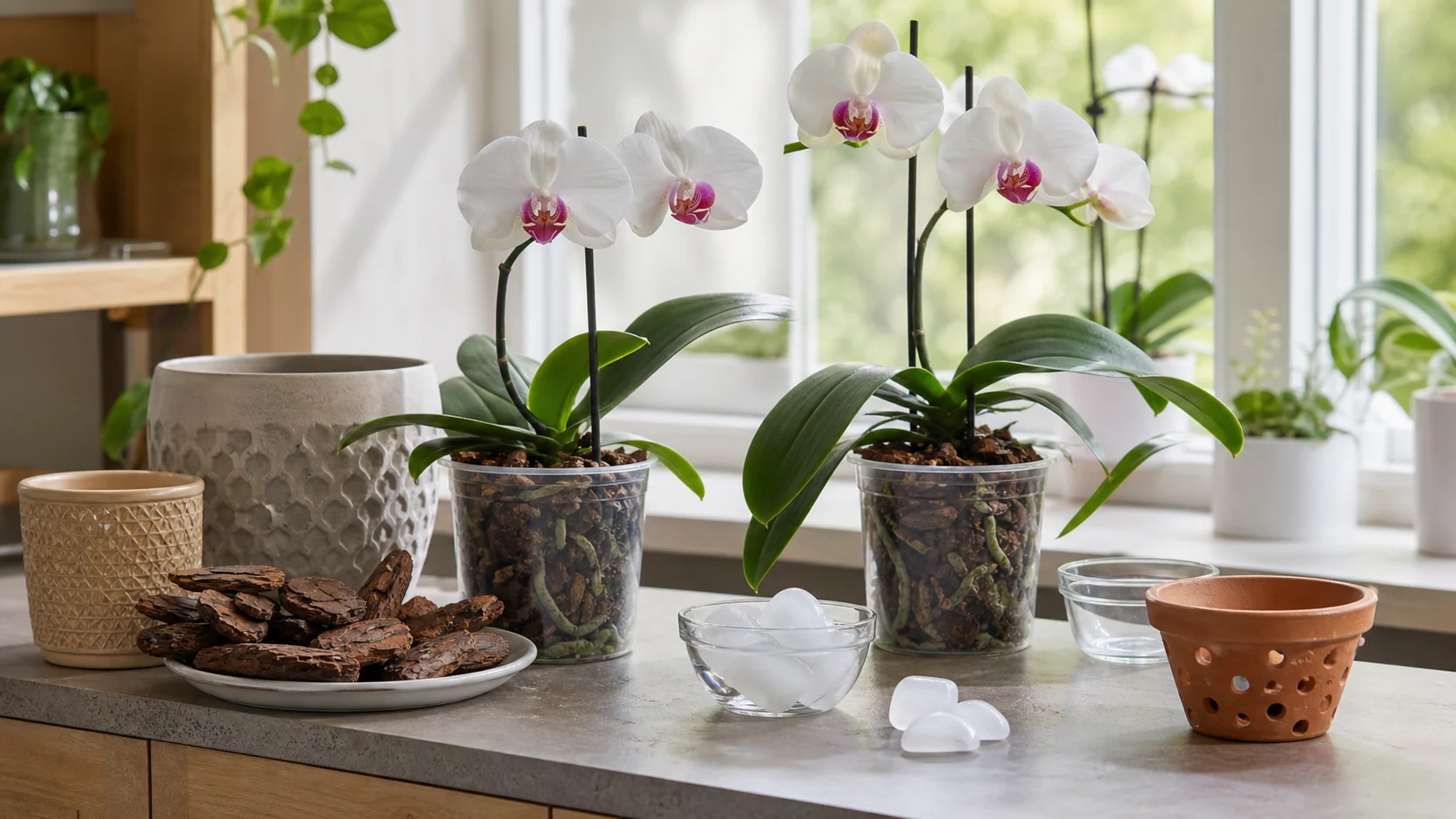
Ice, bark, clear nursery pots, and different outer containers show why the orchid’s setup matters more than a simple pro-or-anti-ice rule.
Why the Ice Cube Method Became a Thing
The appeal is real. Orchids are genuinely tricky to water. Overwatering is the most common way people lose them, and the ice cube method addresses that risk by controlling delivery. A slow melt over bark prevents flooding and gives the medium time to absorb moisture before any excess can pool at the bottom.
Three cubes every Sunday is also easier to remember than “check whether the bark is dry two inches down and water accordingly.” Habit cues matter, especially for newer plant owners juggling multiple pots.
The 2017 HortScience paper gave the method credibility beyond the grocery-store instruction tag. But the follow-on interpretation – that ice cubes work for all orchids, in any mix, at any stage of root development – is where the gap between the study and real-world advice opened up.
The Study: What It Actually Found
Ohio State University’s greenhouse and nursery blog summarizes the HortScience research clearly:
“Results from experiments conducted at Ohio State and the University of Georgia showed that Phalaenopsis orchids grown in bark media watered with ice cubes had similar flower longevity, display life, and root and leaf health compared to plants given an equivalent volume of room-temperature water.”
The paper’s full title is instructive on its own: Ice Cube Irrigation of Potted Orchids in Bark Media (Phalaenopsis) Does Not Adversely Affect Performance. The genus and medium are named in the title because they define what the finding applies to.
What the study did not examine: other orchid genera with different root structures and seasonal water needs; sphagnum moss and fine or decomposed bark that retains moisture much longer; plants in homes with variable humidity, airflow, and temperature; decorative pots without drainage holes; and roots that are dense, aged, or already compromised.
That is not a weakness of the study. Those are simply the limits of what was tested. The problem is when those limits get stripped out in the re-telling.
Expert note: The Ohio State and University of Georgia result is useful because it gives beginners a narrower answer than the internet usually does: a Phalaenopsis in bark can tolerate this shortcut. The American Orchid Society and Missouri Botanical Garden guidance still matters just as much, because root inspection, drainage, and media condition are what decide whether that shortcut remains safe in an ordinary home.
When Ice Cubes Can Work
For the right setup, ice cube watering is a low-risk, consistent habit. The conditions that make it viable:
- The orchid is a Phalaenopsis – the moth orchid sold in most grocery stores and garden centers, and the only genus specifically studied
- The medium is chunky, fresh bark – free-draining and drying fully within seven to ten days between waterings
- The pot setup allows drainage – or you consistently empty any water that collects in the outer decorative container after the ice melts
- The roots are visible, firm, and healthy – appearing silver-gray when dry and shifting to green after watering, with no brown or mushy sections
When all four of those conditions are true, three ice cubes once a week is a workable routine. Not the most precise watering method available, but not a harmful one either.
Care Cards: Check These Before Repeating the Routine
| Care card | What a good fit looks like | When to switch methods |
|---|---|---|
| Orchid type | Grocery-store Phalaenopsis with broad leaves and thick exposed roots | Any other orchid type unless you know its watering rhythm well |
| Potting mix | Fresh, chunky bark with visible airflow between pieces | Sphagnum-heavy mix, compacted bark, or brown fines washing out of the pot |
| Drainage | Clear inner pot drains fully and any cachepot gets emptied | Water pools at the bottom or the outer pot hides runoff |
| Root check | Roots are firm, silver when dry, and green after watering | Roots are mushy, dark, hollow, or tightly packed into an old root ball |
| Season shift | You are willing to shorten or stretch the interval with the weather | You want the exact same weekly cube count all year regardless of drying speed |
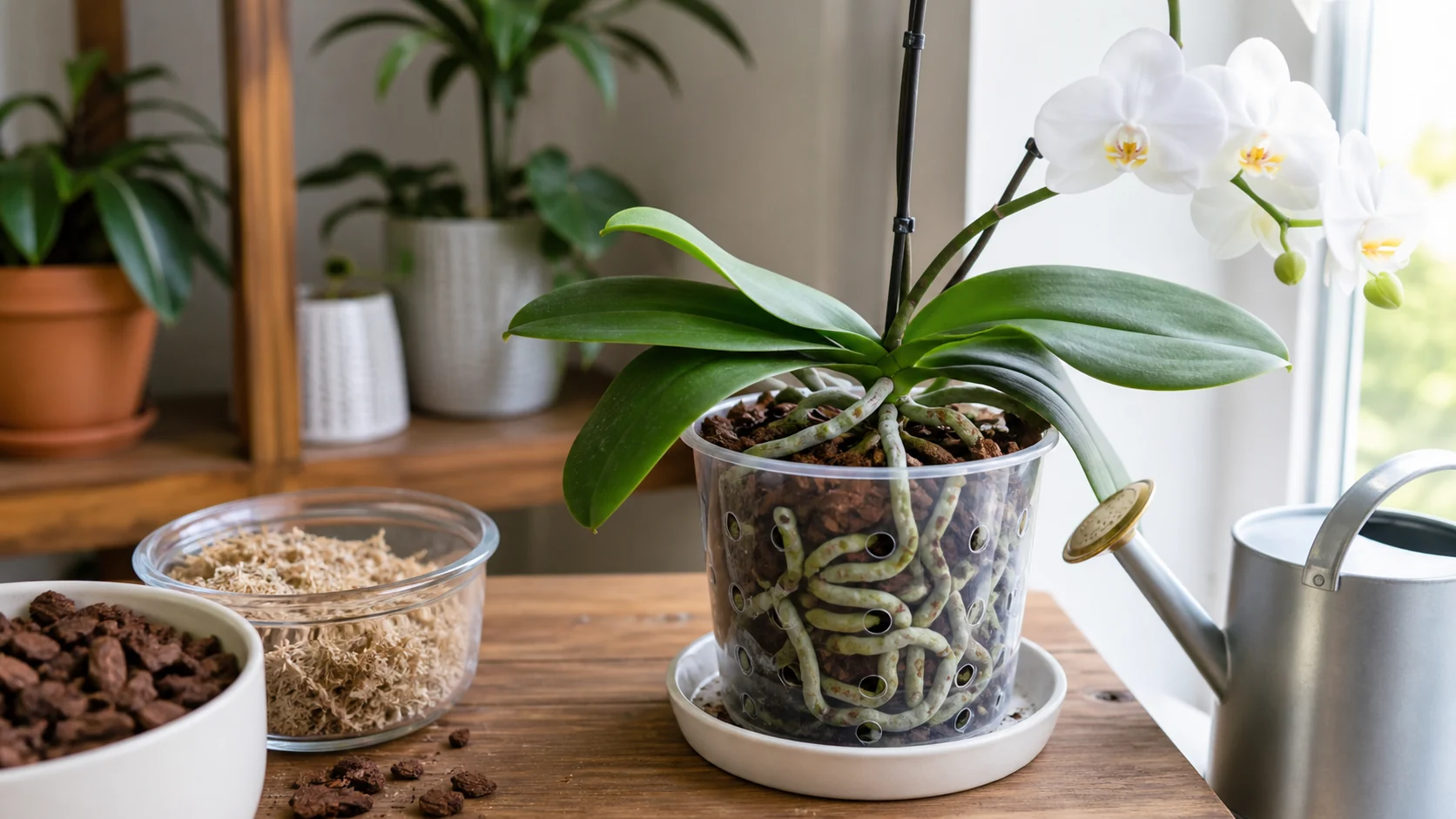
Visible roots, airy bark, drainage holes, and the choice between bark and sphagnum are the practical checks to make before repeating a fixed routine.
Where It Gets Complicated
Problems start when one of those conditions does not hold, and the advice recommending ice cubes rarely flags these limits.
Sphagnum moss or decomposed bark. Older potting mixes retain moisture far longer than fresh chunky bark. A few melting ice cubes may not deliver enough water to wet the full root zone, but the medium stays damp near the surface. The plant can be quietly underwatered while looking consistently moist from the top.
The Missouri Botanical Garden advises repotting Phalaenopsis when bark begins breaking down into fine particles and brown sediment drains with watering. In older media like that, any watering method behaves differently than it would in fresh bark. If your orchid has been in the same pot for two or more years, the real question may be whether it is time to repot before adjusting anything else. The orchid soil guide compares bark, sphagnum, and blended media, while the guide to when to repot plants covers the signs that the medium, not the watering method, is the underlying problem.
Orchid genera other than Phalaenopsis. Cattleyas, Dendrobiums, Oncidiums, and others have different root structures, different drying cycles, and different seasonal water needs. Some Dendrobiums actively benefit from a dry rest period. The ice cube recommendation was developed for Phalaenopsis specifically; applying it to other genera skips differences that matter for root health.
Dense or matted roots. When a Phalaenopsis has been in the same bark for two or three years, the roots grow tightly together as the medium breaks down. Meltwater from ice cubes may run down the edge of the pot without penetrating the inner root mass. The surface looks watered. The core may not be.
Pots without drainage holes. Ice cubes are sometimes recommended as a fix for no-drainage decorative pots because slow delivery reduces overflow risk. But if water collects at the bottom regardless of how slowly it arrived, it still sits against roots and creates rot conditions. Slow delivery does not solve standing water.
The American Orchid Society puts the stakes plainly:
“More orchids are killed by incorrect watering than by any other cause.”
That holds whether the water arrived via ice cube, careful pour, or any other method. The concern is not technique; it is whether the plant’s roots are getting the right balance of moisture and air, and whether water is leaving before it does damage.
Ice Cubes vs. Other Watering Methods
| Method | Convenience | Root-zone coverage | Risk when media is aged or dense | Best suited for |
|---|---|---|---|---|
| Ice cubes (3/week) | High | Uneven in dense or old media | Higher | Store-bought Phalaenopsis in fresh bark; building a consistent routine |
| Measured room-temp pour (slow) | Medium | Even if poured centrally and slowly | Low to medium | Most Phalaenopsis; growers who check roots regularly |
| Soak and drain (10–15 min immersion) | Lower | Excellent, including tight root zones | Low | Experienced growers; plants in aged or compacted media |
No method is universally best. The method you actually do consistently – and that matches your plant’s actual setup – outperforms the theoretically superior method you skip or forget.
Seasonal Watering Adjustments
One thing most ice cube guides never mention: orchid roots dry out at very different rates depending on the season. A fixed three-cubes-every-Sunday habit that works well in August may leave your Phalaenopsis sitting in wet bark through December.
Spring. Warming temperatures and longer days mean the bark dries faster. Start checking root color every five to six days rather than waiting a full week. Roots that were taking ten days to dry in February may dry in six by May.
Summer. The fastest drying period of the year. Air conditioning can create unexpectedly dry indoor conditions, and some Phalaenopsis may need checking every five days. Watch for silver-gray roots appearing sooner than usual as a signal to water sooner than your usual interval.
Autumn. Drying slows as temperatures drop. Checking every seven to ten days is more appropriate than a strict weekly schedule. This is also a natural point to reduce or stop fertilizer as growth slows.
Winter. The slowest drying cycle. Every ten to fourteen days is common for Phalaenopsis in bark, though the actual timing depends heavily on your home’s humidity, heat source, and airflow. A few degrees cooler at night near a window can also help prompt a new bloom spike once the plant has rested.
The ice cube method, like any fixed schedule, does not account for these seasonal shifts. Root color is the one signal that adjusts automatically regardless of what month it is.
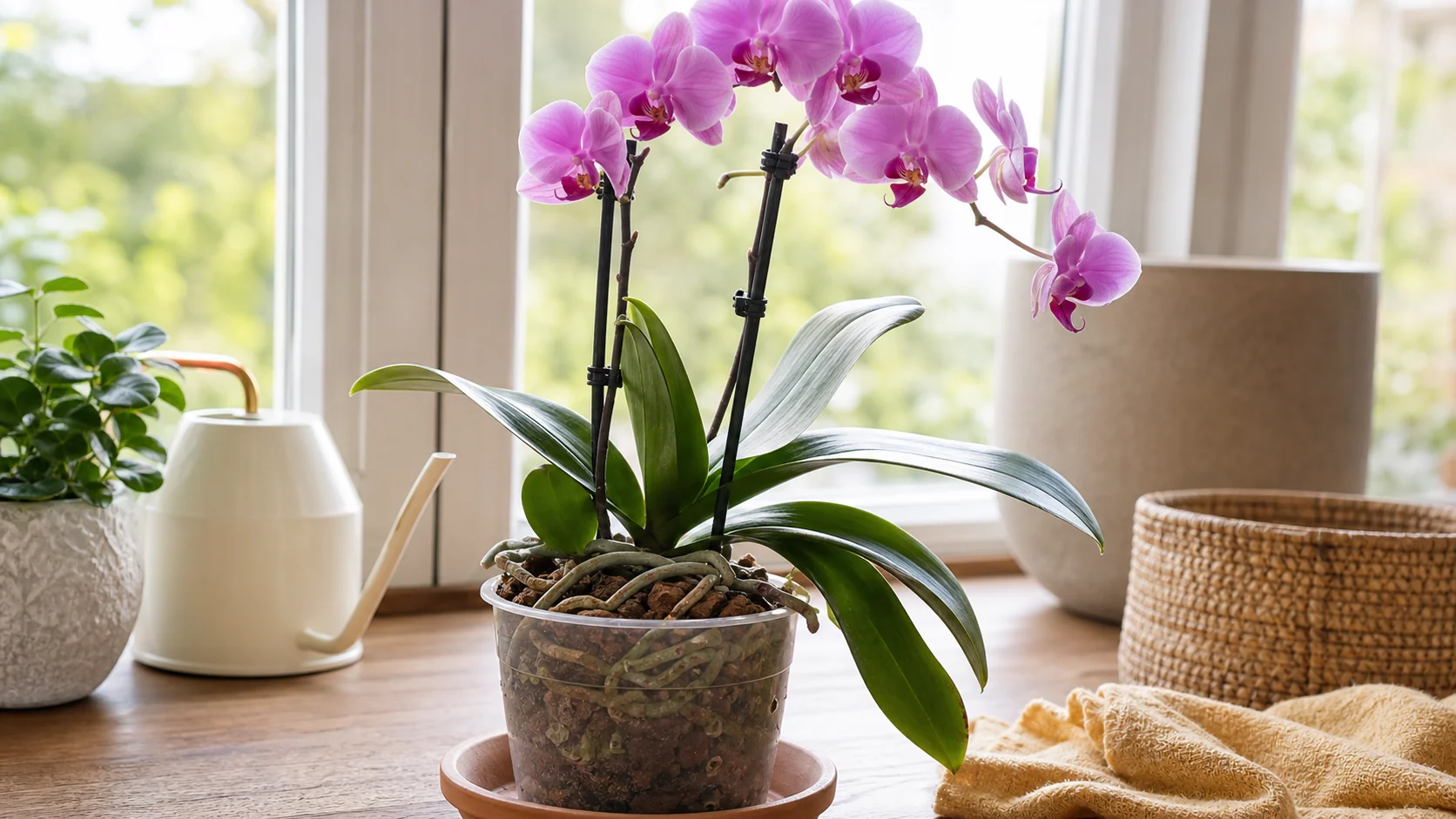
Bright summer conditions can dry bark sooner, so check the silver-gray roots in the clear pot before relying on last season’s interval.
How to Read Your Orchid’s Hydration Signs
The ice cube debate draws attention away from what is actually more useful: learning to read the plant.
Root color. In a clear plastic pot, orchid roots shift from silvery-gray to green when they absorb water. When they return to silver-gray all the way through, she is ready to water again. This is a more reliable timing signal than any fixed schedule, across every season.
Leaf texture. Healthy Phalaenopsis leaves are firm and slightly glossy. Leaves that look mildly wrinkled or feel less turgid than usual are often early signs of underwatering, not overwatering. If this happens when the medium always feels slightly damp at the surface, it is a sign the roots are not getting wet all the way through.
Root condition. Firm, green or silver roots attached to the medium are healthy. Brown, mushy roots that pull away easily have been sitting in moisture too long, regardless of whether that moisture arrived cold or warm, slowly or quickly. If that matches what you see, use the orchid root rot guide to inspect and trim failed roots without removing firm tissue. Root condition is the clearest indicator of whether your current watering routine is working.
The bottom of the pot. If you tip a no-drainage container and water comes out, it has been sitting there. Empty it every time, after every watering.
If leaves are yellowing and you are not sure whether watering is the cause, the guide to orchid leaves turning yellow helps separate watering stress from other issues. And if you find soft or dark roots while inspecting, the root rot treatment guide walks through what to do next before it spreads.
A Scope-Check Before You Pick a Method
Before committing to any watering routine, run through these four questions:
- Is this a Phalaenopsis orchid – the flat-faced moth orchid commonly sold in grocery stores and garden centers?
- Is it currently potted in chunky, well-draining bark, not sphagnum moss or bark that has broken down to fine particles and sediment?
- Are the roots visible, firm, and free of brown or mushy sections?
- If you are using a no-drainage decorative container, do you consistently empty standing water after each watering?
Yes to all four: ice cube watering is a workable routine for this plant right now. Adjust the frequency with the seasons using root color as your guide.
No to any one of them: a slow measured pour or soak-and-drain gives you more control. If the medium is aged or compacted, consider whether repotting into fresh bark comes before any watering method adjustment.
Common Problems: What the Setup Is Telling You
| What you notice | Most likely explanation | Better next move |
|---|---|---|
| Roots in the center stay silvery while the outside bark feels damp | Meltwater is not reaching the inner root zone evenly | Switch to a slow measured pour or soak-and-drain, then reassess the root ball |
| Leaves wrinkle slightly even though the pot never seems fully dry | The mix may be too old, compacted, or only wet near the surface | Inspect the medium and consider repotting into fresh bark before adding more water |
| Roots look brown and mushy near the base | Water is lingering too long or runoff is trapped | Trim obviously dead roots during repotting and stop letting water stand in the outer pot |
| Bark stays wet for more than 10 to 14 days in winter | The interval is too frequent for current conditions | Stretch the schedule and rely on root color instead of the calendar |
| Ice cubes slide against leaves or crown tissue | Placement is creating a cold, wet contact point instead of a slow bark soak | Put water on the medium only, away from foliage and the crown |
Common Mistakes With Ice Cube Watering
- Treating every orchid from a store shelf as though it were the same Phalaenopsis-in-bark setup.
- Judging moisture from the top layer only, instead of checking the inner roots and the bottom of the pot.
- Leaving runoff inside a decorative outer pot because the watering method felt controlled.
- Keeping the same cube count through winter and summer even when the bark dries at completely different speeds.
- Debating whether ice is allowed before asking the more important question: is this plant in the kind of mix and condition the study actually covered?
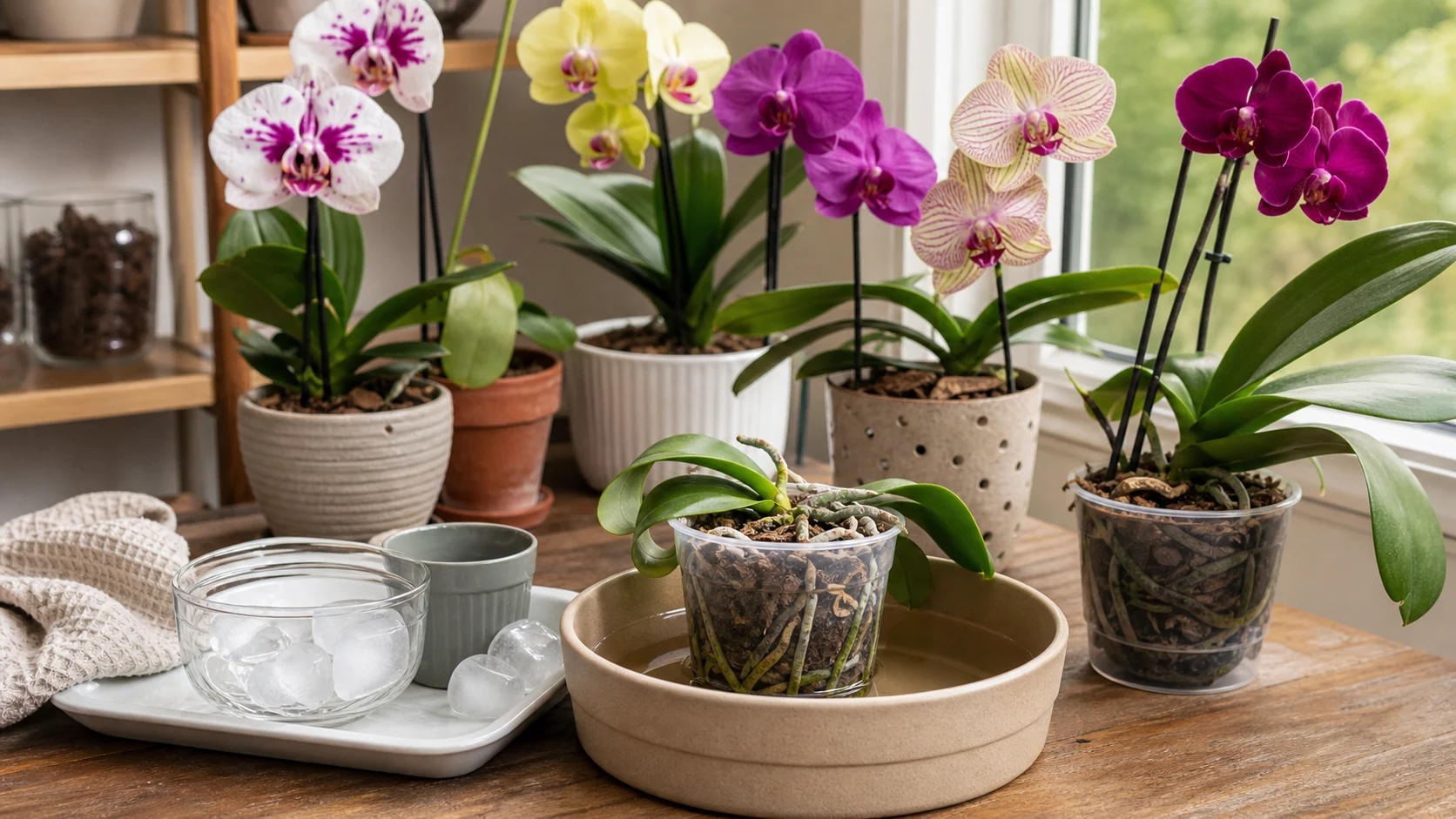
Different orchid pots and root zones call for different checks; a measured soak-and-drain setup should not be confused with the same ice routine for every plant.
Pet Safety and Household Notes
The ice itself is not the household risk here. The bigger issues are wet bark spilled on the floor, decorative moss or fertilizer residue that pets may mouth, and pots that tip easily when curious cats or dogs investigate. If your orchid lives in a pet-heavy room, keep the plant stable, empty leftover water promptly, and do not leave fertilizer solution where an animal can reach it.
For another practical pet-safety check, see Are Orchids Toxic to Cats? What to Check After a Bite for the risk level and the next steps.
Real User FAQ
Can ice cubes kill orchids?
Ice cubes are unlikely to kill a healthy Phalaenopsis in good condition. The concern is less about water temperature and more about whether the meltwater reaches the roots evenly and whether any pooled water is being emptied from the pot. A Phalaenopsis left sitting in cold standing water for days is at risk, but that is a drainage problem, not an ice problem.
How many ice cubes should I use for an orchid?
The Ohio State and University of Georgia study used three standard ice cubes per week for Phalaenopsis in a typical four-to-six inch bark pot. If your orchid is in a larger pot, or in a warmer, drier environment during summer, three cubes may not be enough to wet the full root zone. Use root color – silver-gray means dry and ready – as your actual timing guide rather than a fixed cube count.
What did the ice cube study actually prove?
The 2017 HortScience study showed that Phalaenopsis orchids in chunky bark media, watered with three ice cubes per week, had comparable flower longevity, root health, and leaf health to plants given the equivalent volume of room-temperature water. It did not assess other orchid genera, sphagnum moss, decomposed bark, home growing environments, or plants with compromised roots.
Is there a better way to water orchids than ice cubes?
For most situations, a slow measured pour of room-temperature water – or a ten-to-fifteen minute immersion soak followed by full draining – gives more reliable root-zone coverage than ice cubes. The American Orchid Society recommends watering methods that wet the full root zone without leaving standing moisture. That said, the best method is the one you will do consistently and that matches your plant’s actual setup.
What does it mean when orchid roots turn silver or white?
Silver or white roots mean the root is dry and ready for water. After watering, healthy roots shift to bright green as they absorb moisture. This color shift is one of the most reliable hydration signals for Phalaenopsis. Roots that stay green for more than a week suggest the medium is retaining moisture – a cue to water less frequently or to check that the pot is draining fully.
Can I use ice cubes for Dendrobium, Cattleya, or other orchid types?
The research supporting ice cube watering was specific to Phalaenopsis. Dendrobiums, Cattleyas, and Oncidiums have different root structures, different preferences for drying between waterings, and different seasonal needs. Some Dendrobiums actively need a dry rest period. Applying the ice cube routine to these genera without understanding their watering cycles carries more risk than it does with Phalaenopsis.
What if my orchid is in sphagnum moss?
Sphagnum moss retains moisture significantly longer than bark. Three melting ice cubes may not deliver enough water to reach the inner root zone, while the surface stays damp enough that the plant appears adequately watered. If your orchid is in sphagnum and the leaves are starting to feel less firm than usual, check moisture in the center of the root ball – not just the surface – before deciding whether to water again.
Keeping It Simple
The ice cube method is not the problem. Applying any method without checking whether your setup fits is where trouble usually starts.
For a grocery-store Phalaenopsis in fresh chunky bark, ice cubes can be a consistent and low-risk routine. For anything outside that – older bark, other genera, sphagnum, compromised roots – the better investment is a few minutes learning to read root color and leaf firmness. Those skills work regardless of how you deliver the water, and they hold up through every season.
If you are just getting started with orchids and want a broader picture of what Phalaenopsis needs through its first year indoors, the beginner orchid care guide covers light, feeding, and what to expect after the flowers drop.
Methodology
This guide was refreshed after reviewing the Ohio State and University of Georgia Phalaenopsis ice-cube study summary, American Orchid Society watering guidance, Missouri Botanical Garden potting-medium guidance, and recurring grower confusion patterns surfaced in public orchid discussions. The research-backed part is narrow on purpose: Phalaenopsis in bark can handle the shortcut, but root condition, drainage, and media age still decide whether it is smart in your home.
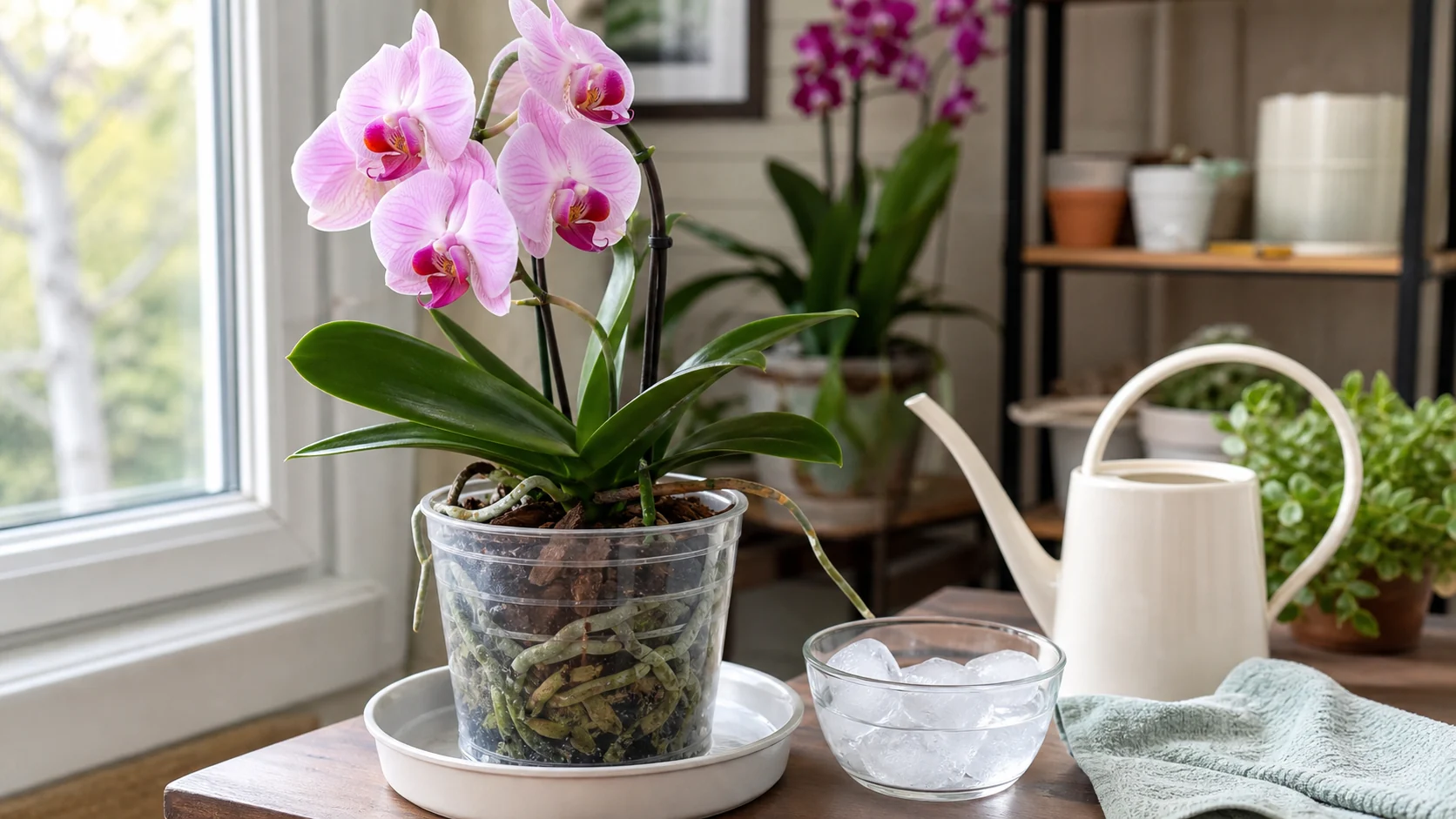
The evidence applies narrowly to Phalaenopsis in bark, while visible roots, drainage, and media condition still determine whether ice or a measured pour fits the home setup.
Freshness Note
Last updated June 19, 2026 to make the study limits, real-world setup differences, and troubleshooting signals easier to compare at a glance.
Download KnowYourPlant for personalized plant care reminders, including watering prompts timed to your orchid’s actual environment rather than a generic weekly schedule.