By KnowYourPlant editorial team. Last updated: September 9, 2026.
Knowing when to repot is one of those things that sounds obvious until you’re actually standing over a plant, trying to decide if it’s genuinely cramped or just looking a little dramatic. Most people repot too early, too often, or for the wrong reasons. A fair number also wait too long, then wonder why their plant stopped growing.
The real problem is that the usual signs you’ll read about – roots at the drainage hole, slow growth, soil drying out fast – are real but incomplete. They show up in guides without context, and that missing context is what sends a healthy plant into unnecessary repot stress, or leaves a struggling one stuck in a pot it’s outgrown.
This guide covers the 7 actual signals worth acting on, how to read them correctly, a decision tool for figuring out your specific situation, and a few common mistakes the standard advice doesn’t warn you about.
Use this page to answer whether and when to repot. If you have already confirmed that the plant needs the move, switch to the step-by-step repotting guide for pot preparation, root handling, and the first watering after repotting.
Freshness Note
Last updated September 9, 2026. This decision guide is written for indoor houseplants grown in containers, where root density, drying behavior, and plant condition matter more than an outdoor garden calendar.
Social Listening: What Plant Owners Keep Getting Stuck On
Public plant-owner questions keep circling the same decision traps:
- A newly purchased plant looks cramped, so the owner assumes it must be repotted immediately.
- One root reaches the drainage hole, so the owner treats that single clue as proof the whole pot is packed.
- A stressed plant in winter looks overdue, but the owner is afraid that waiting for spring will make things worse.
- Bigger sounds safer, so the owner jumps several pot sizes up and accidentally leaves a small root ball sitting in wet mix.
Those community patterns are qualitative signal, not universal law. They are still useful because they show where readers misread normal nursery conditions or overreact to one visible clue.
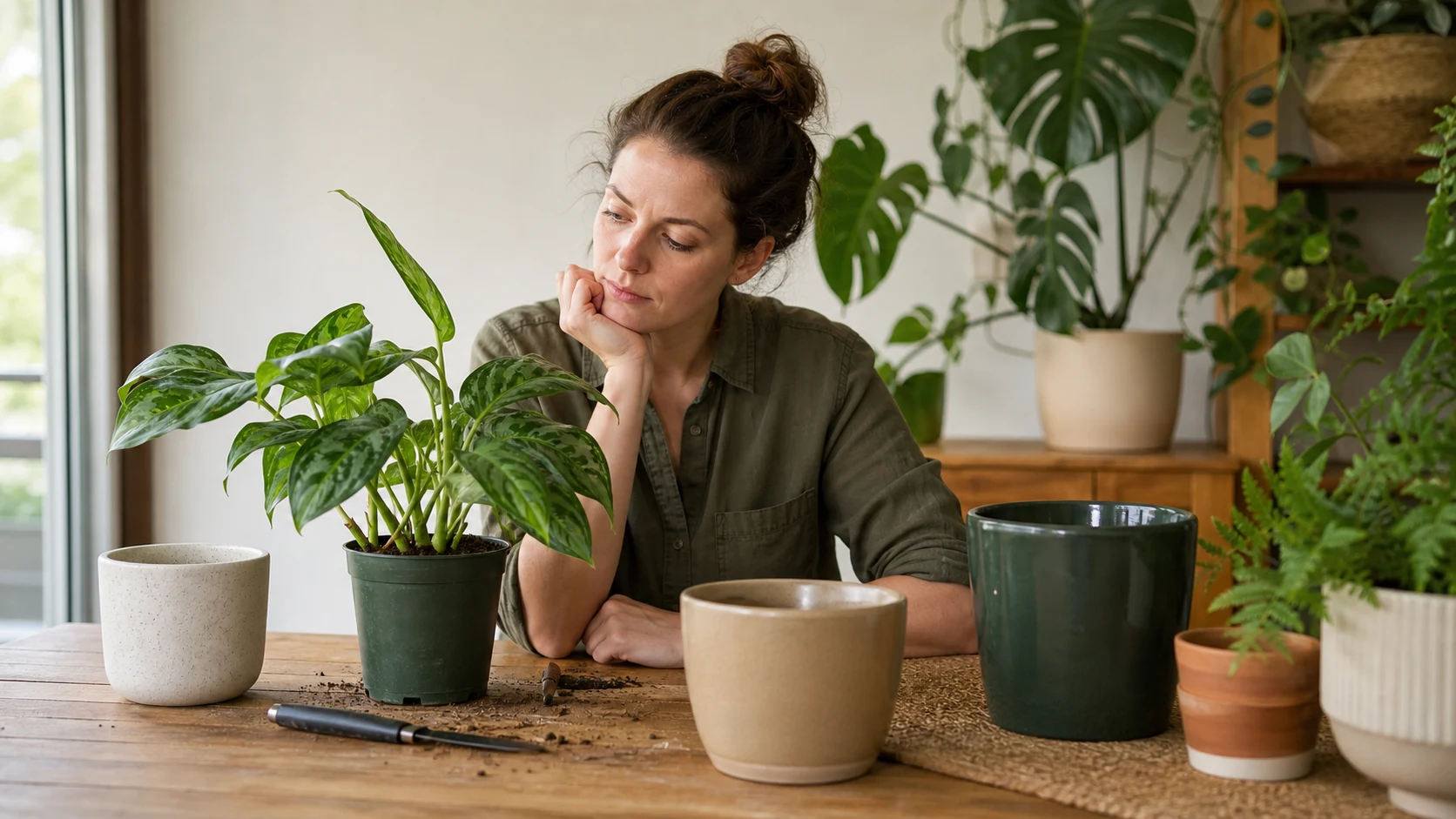
Compare the whole root ball before choosing a modestly larger pot; a cramped-looking nursery pot alone is not enough.
Identification Snapshot
| Detail | What to look for |
|---|---|
| True repot-now signal | Dense white roots circling the root ball or a pot that is almost solid roots with very little soil left |
| Soft signal that needs confirmation | One root at the drainage hole, a plant that looks large for its pot, or slower growth on its own |
| Best first move | Slide the plant out and inspect the root ball before choosing a bigger pot |
| Preferred season | Spring, when active growth is starting, though a clearly struggling root-bound plant may need action sooner |
| Pet safety reminder | Keep pets away from loose potting mix, fertilizers, and trimmed roots during repotting, even if the plant itself is pet-safe |
Lookalikes and Confused-With
| Situation | Why people confuse it with a repotting emergency | What separates it from a true repot-now case |
|---|---|---|
| Post-move leaf drop | The plant declines right after coming home, so the pot gets blamed | New-environment stress can cause leaf drop even when the root ball still has room |
| One root at the drainage hole | It looks dramatic from the outside | One visible root can be exploratory or aerial, especially on monstera, so inspect the full root ball |
| Faster drying during hotter weather | The plant suddenly needs water more often | Seasonal heat and brighter light can speed drying even if the pot is not root-bound |
| Slow growth in low light | The plant stops pushing leaves | Low light can stall growth without the roots being crowded |
Repotting Care Cards
| Care card | Practical target |
|---|---|
| Root check | Slide the plant out gently and look for circling roots before making any pot decision |
| Pot size | Move up only one to two inches in diameter |
| Timing | Spring is easiest on the plant, but overdue root-bound plants can still be triaged outside spring |
| Soil | Use fresh indoor potting mix with drainage, not dense garden soil |
| Aftercare | Use the conditional post-repot watering guide, keep light stable, and wait for recovery before feeding |
Expert Note
Colorado State University Extension’s PlantTalk is the cleanest source of record here: the strongest repot signal is a white mass of roots circling the root ball, spring is usually the easiest repotting window, and the next container should usually be only one to two inches wider. That extension framing matters because it helps separate true root-bound evidence from the weaker signals that get overused online.
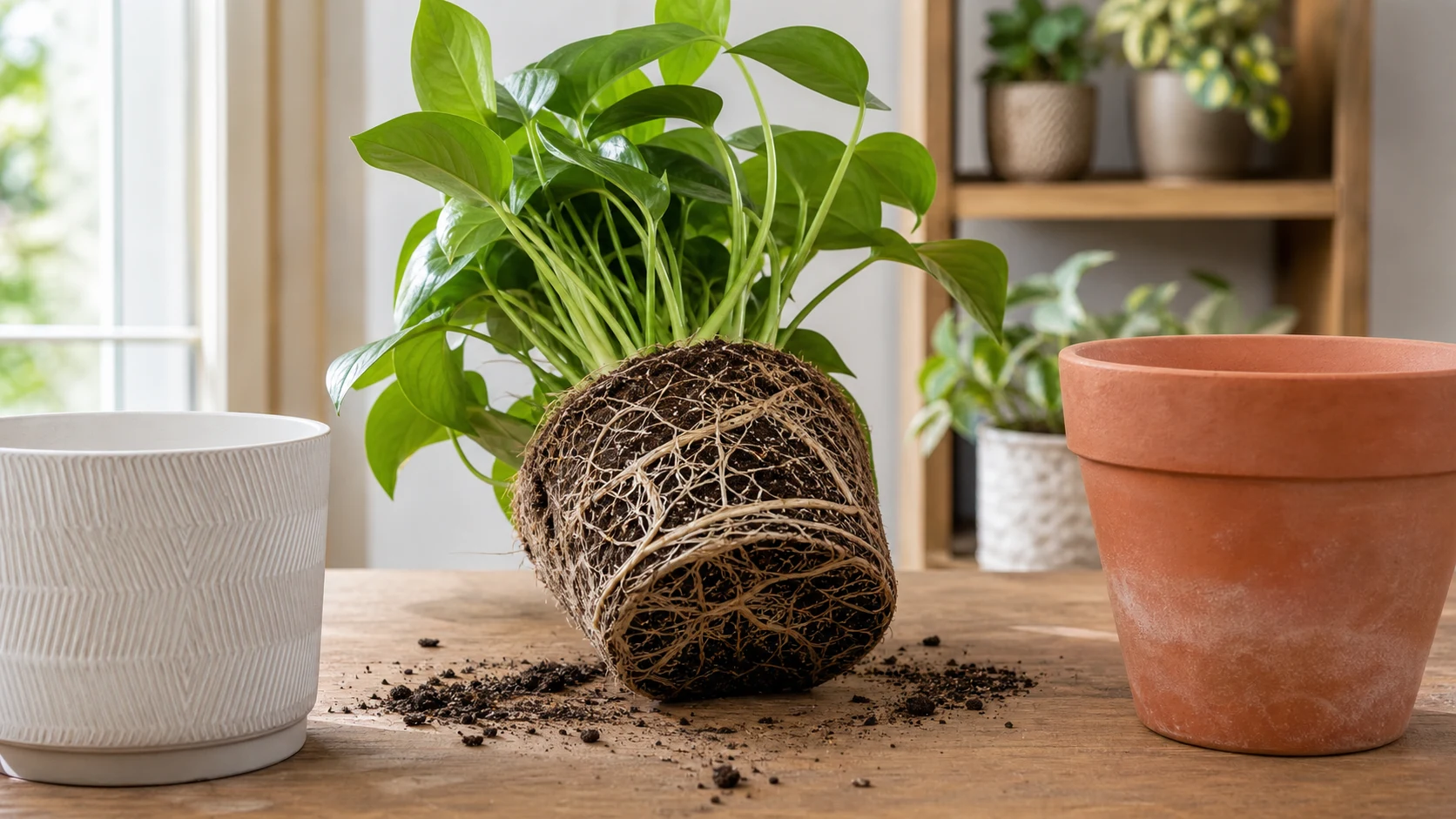
Dense pale roots circling the outside of the root ball provide stronger repot evidence than one isolated root at a drainage hole.
What Most Care Guides Miss
Every repotting guide lists the same three signs: roots coming out the drainage hole, slow growth, water running through fast. Those signs are real. But they’re usually presented without a key step, and that missing step is why people make the wrong call.
The most common misdiagnosis: one root visible at the drainage hole means the plant needs a bigger pot right now.
It doesn’t. A single root at the bottom, especially on a monstera, is often an aerial root traveling downward. It tells you almost nothing about whether the root ball inside the pot is cramped. The inside of the pot is where the answer actually lives.
According to Colorado State University Extension’s PlantTalk, the defining sign of a root-bound plant is a dense, white mass of roots circling the outside of the root ball, which you only see after you remove the plant from its container. One root at the drainage hole is not that. A solid ring of compressed roots with almost no soil visible is.
The practical first check: tip the plant gently out of its pot, or run a butter knife around the inside edge if it’s stuck. Look at the root ball. If you see mostly soil with roots threading through it, the plant has room. If the roots are circling the outside in a tight ring, or the entire ball has become a dense mass with almost no soil visible, that’s a root-bound plant.
That one step takes about 30 seconds and saves a lot of unnecessary disturbance.
Your Repot-Now Decision Tool
Different situations call for different responses. Here’s a quick starting point based on what you’re actually looking at.
Situation 1: Roots are circling the outside of the root ball when you slide the plant out Repot now. This is the clearest sign. Go up one to two inches in pot diameter, trim any black or mushy roots, and move into fresh mix.
Situation 2: One root is visible at the drainage hole, nothing else seems off Slide the plant out and check the root ball first. One root alone is not enough. If the interior looks mostly soil, you have time. If the roots have filled the pot with almost no soil left, repot.
Situation 3: Growth has stalled during spring or summer Rule out light and water first. A plant in too-low light or on an irregular watering schedule will also stall. If you are not sure whether the plant is actually thirsty or showing wet-root stress, compare the pattern with our overwatered plant signs guide. If light and water are fine and the roots are packed when you check, repot. If the root ball still has soil visible, the growing conditions may be the real issue.
Situation 4: Plant was just purchased and looks root-bound Wait four to six weeks before repotting. Newly purchased plants are already adapting to a new environment. Adding root disturbance on top of that stress can knock them back harder than staying in a snug pot for a few more weeks. After they’ve settled, inspect the root ball and repot if warranted.
Situation 5: Genuinely root-bound and struggling, but it’s winter Repot now rather than waiting for spring. Spring is the ideal window, but a plant that’s root-bound and struggling doesn’t benefit from several more months in a cramped pot. Keep it warm after repotting and hold off on fertilizer until you see new growth.
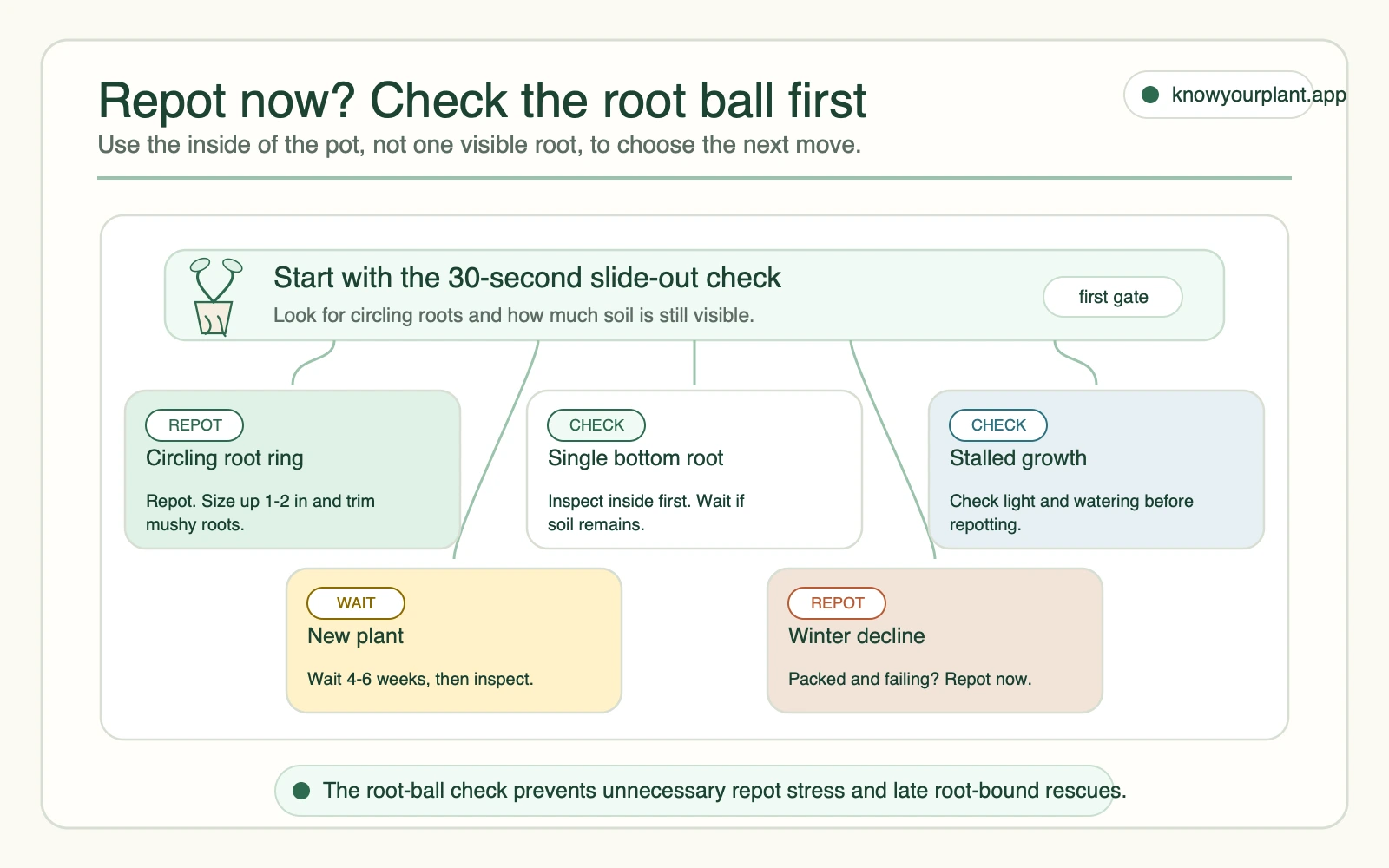
Use the slide-out check first: a packed root ball changes the answer, but a single bottom root, stalled growth, or a newly purchased plant usually needs more context before repotting.
True Repotting Signals vs. False Alarms
A lot of repotting anxiety comes from misreading normal plant behavior as distress. This table separates the signals worth acting on from the ones worth pausing on.
| What You’re Seeing | What It Usually Means | What to Do |
|---|---|---|
| Dense white roots circling outside of root ball | Root-bound: repot | Repot, size up 1-2 inches |
| Pot is solid root mass, almost no soil visible | Root-bound: repot | Repot, trim any mushy roots first |
| Water runs straight through in under 2 seconds | Likely root-bound | Confirm with root ball check, then repot |
| Plant drying out much faster than usual | Often root-bound | Check root ball, repot if confirmed |
| One root at the drainage hole | May be aerial root, not root-bound | Slide plant out and inspect before acting |
| Growth stalled in spring or summer | Could be root-bound, or light/water | Rule out care issues first |
| Plant looks large for its pot | Soft visual signal | Inspect root ball to confirm |
| Leaf drop after a location change | Normal stress from the move | Wait 4-6 weeks before assuming root cause |
| Purchased plant with roots at drainage hole | Common in nursery stock, not always urgent | Let it settle, then inspect root ball |
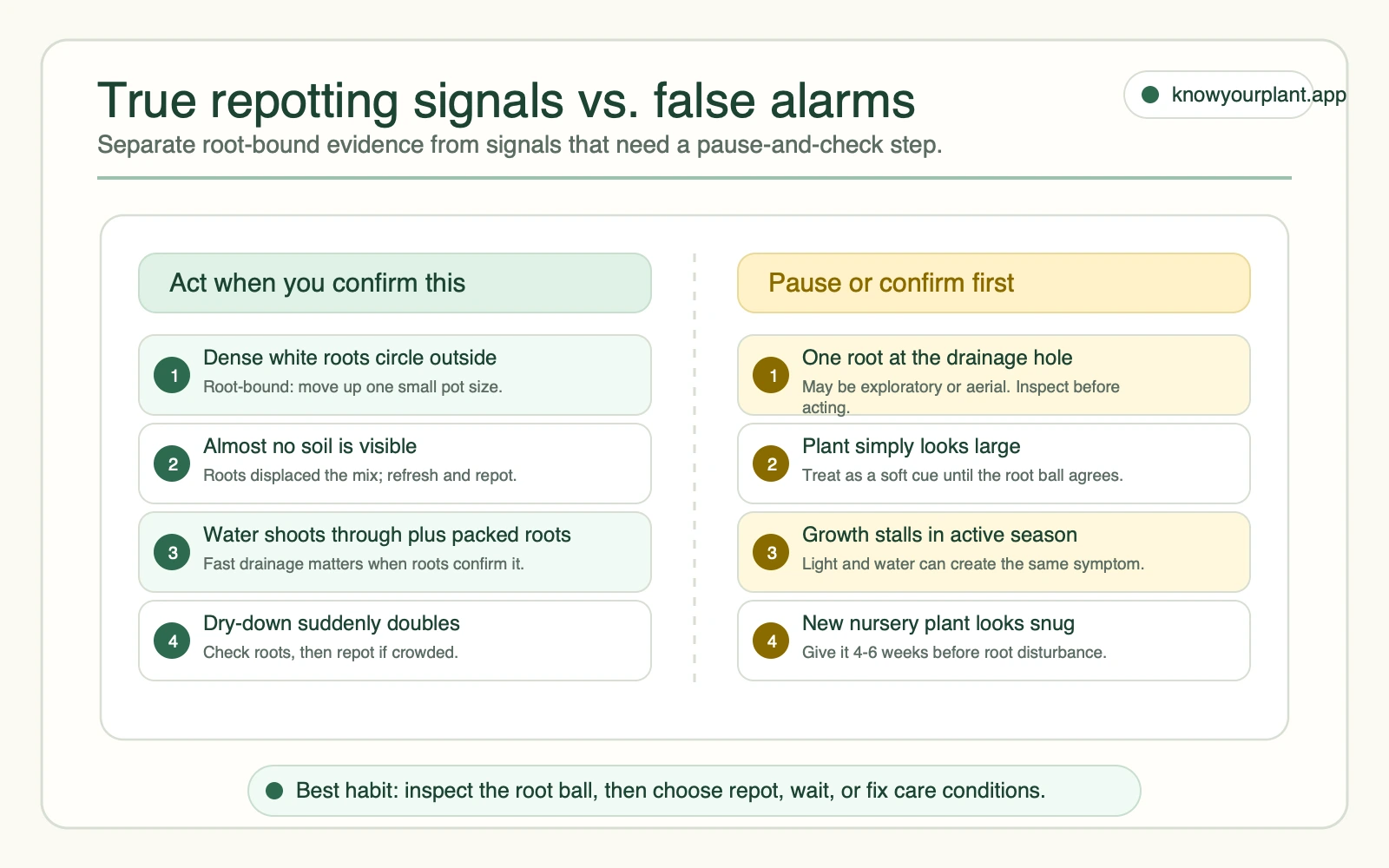
Use the signal board to separate root-bound evidence from softer cues so you do not repot just because a plant looks big or one root reached the drainage hole.
7 Signs Your Plant Actually Needs a Bigger Pot
1. Roots Are Circling the Root Ball
This is the one sign you can trust without much debate. When you slide the plant out and find roots forming a tight ring around the outside of the soil, or the whole ball has compressed into a dense mass, the plant has run out of room. Colorado State University Extension identifies this circling pattern as the defining characteristic of a root-bound plant. It’s the clearest reason to repot.
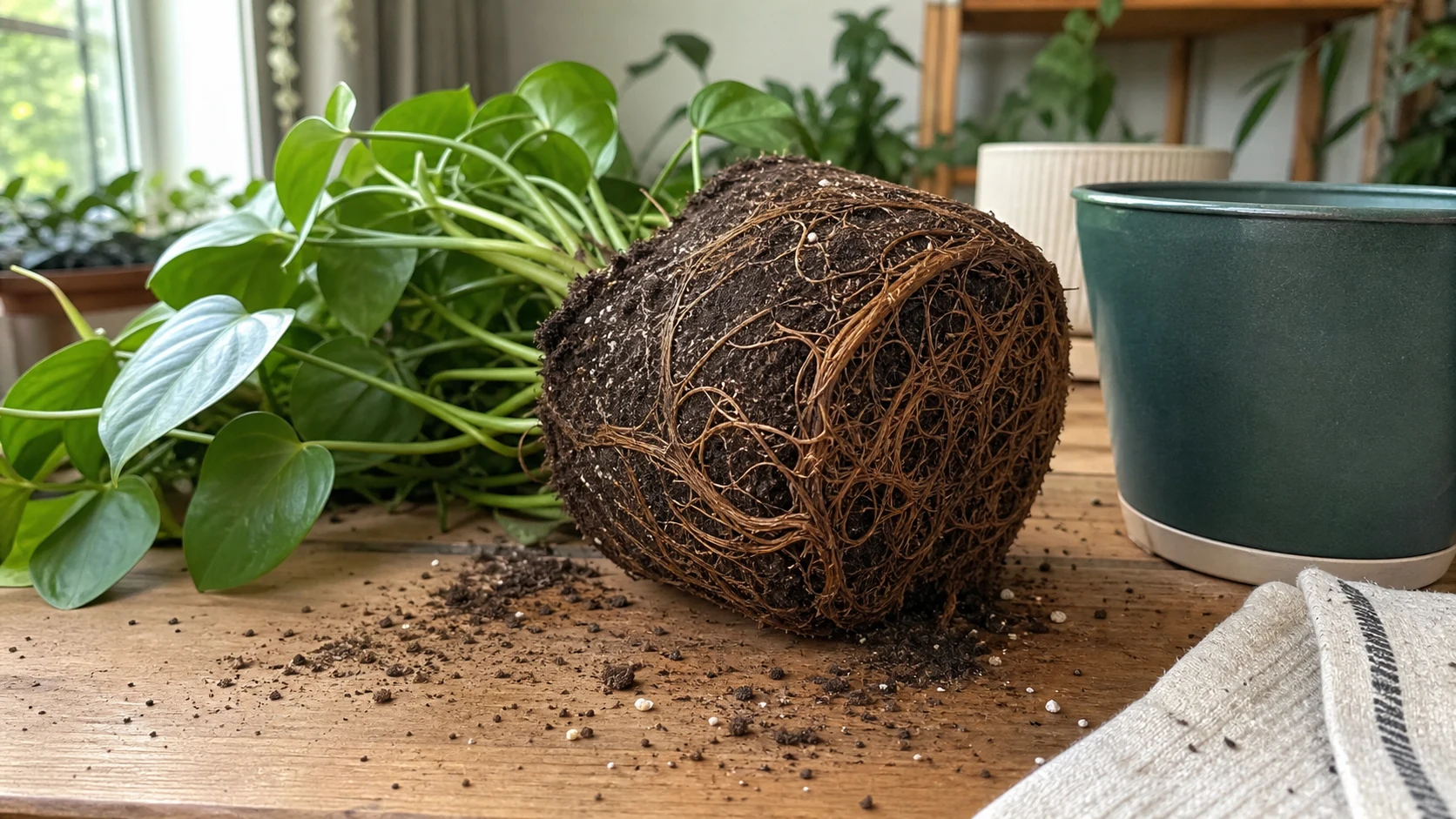
A compressed root ball wrapped in circling roots is the clearest sign that the plant has run out of room.
2. Water Runs Straight Through Without Being Absorbed
If you water and it flows directly out the drainage hole in a second or two, the roots have likely displaced so much soil that there’s barely any medium left to hold moisture. The plant is essentially drinking from an empty cup. Confirm by checking the root ball, but fast drainage plus a packed root mass is a reliable signal to act.
3. The Plant Dries Out Much Faster Than It Used To
A plant that used to last a week between waterings and now needs attention every two or three days is showing you something. If the season, light, and pot position haven’t changed, a dense root ball is often the reason. More roots, less water-holding capacity, more frequent thirst.
4. Growth Has Stalled During Active Season
A healthy plant in spring and early summer should push something new: a leaf, a stem, a new trail. If yours has been completely static for two or three months during its natural growth window and light and water seem fine, a cramped root system may be the constraint. Rule out care issues first, then check the root ball.
5. The Pot Feels Rock-Hard or the Plant Keeps Tipping Over
A root-bound plant can become so dense that squeezing the pot feels like squeezing a rubber ball with no give. The center of gravity also shifts upward as the plant grows, which can make it tip repeatedly. Either of these physical signals is worth investigating with a root ball check.
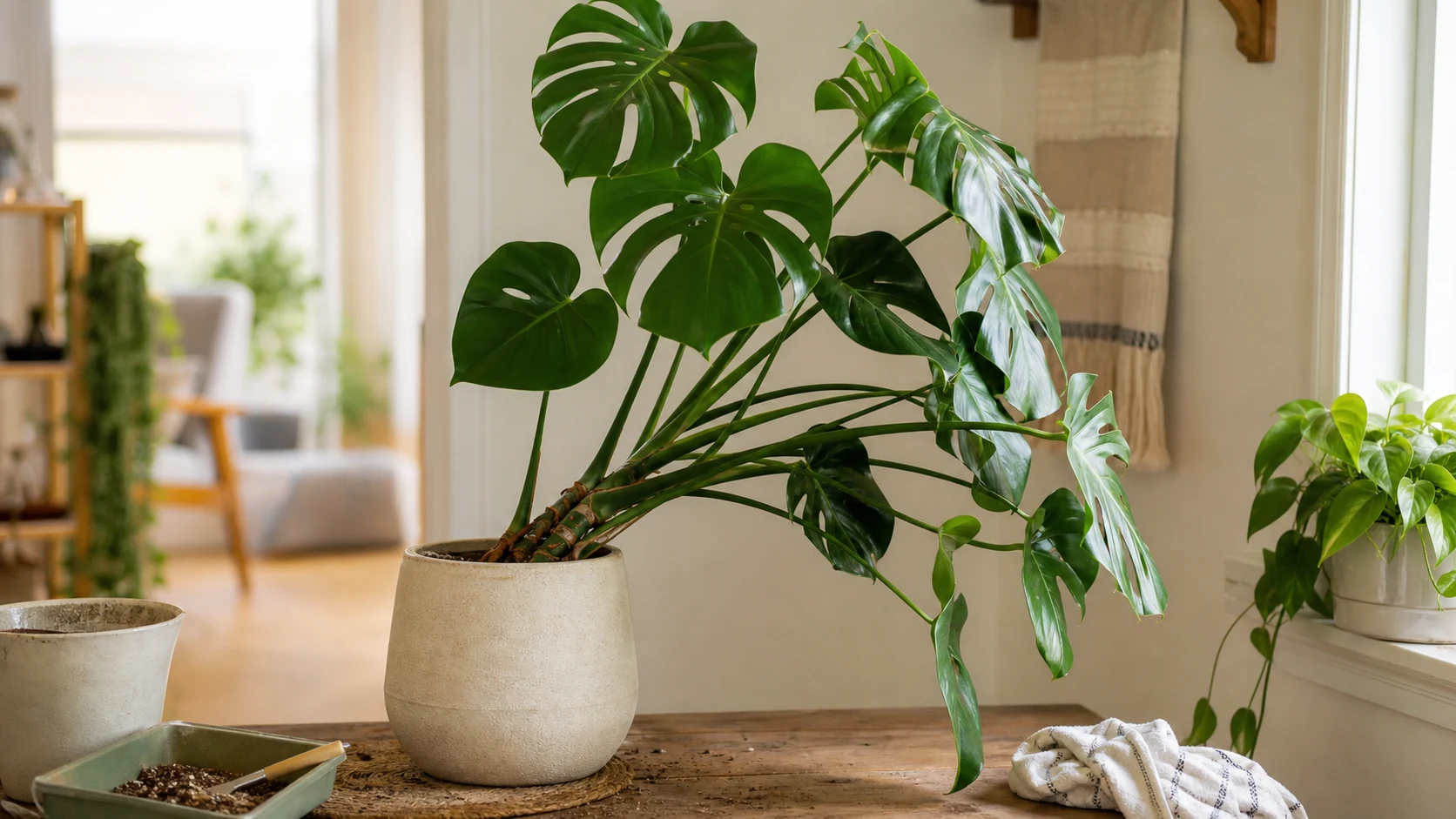
A top-heavy plant leaning beyond its pot’s center of gravity is a physical cue to inspect the root ball.
6. The Plant Has Grown Significantly While the Pot Stayed the Same
This is a softer signal, but it matters. If the plant has doubled in size since you got it and the pot hasn’t changed, the root system may be catching up to what the plant needs even if drainage and growth haven’t flagged it yet. Slide it out and see what’s happening below the soil line.
7. You Haven’t Repotted in Two or More Years
Old potting mix breaks down over time. It loses structure, compacts, and drains less effectively. Even if your plant isn’t visibly root-bound, refreshing the soil every one to two years keeps the growing environment working properly. This is especially relevant for plants you bought and never repotted, since nursery stock often sits in bare-bones fast-draining mixes that aren’t meant to last.
When to Repot: Timing Matters, But Not Absolutely
Spring is the best window for repotting most houseplants. Colorado State University Extension’s PlantTalk notes that houseplants respond best to transplanting in spring, when active growth is resuming and roots can establish quickly before the main growing surge. The plant can put new energy into expanding into fresh soil almost immediately.
That said, spring is ideal, not a hard rule. A plant that’s genuinely struggling, with roots packed solid and watering nearly impossible, doesn’t benefit from waiting four months for the calendar to say April. The stress of staying overcrowded can outweigh the mild stress of a winter repot.
A practical way to think about it: if the plant is healthy and root-bound, wait for spring. If it’s struggling and root-bound, repot now, keep it warm, and skip fertilizer until you see new growth.
The newly purchased plant situation deserves its own note. Nursery plants are often sold in pots at or near capacity, and roots visible at the drainage hole are common. That looks urgent, but repotting the same week you bring a plant home adds root disturbance on top of the stress of adapting to a new environment. The safer move is to let the plant settle for four to six weeks, then check the root ball and repot if the roots are truly packed. A healthy plant that’s just snug will generally wait.
The Pot Size Rule That Prevents Root Rot
When you do repot, go up one to two inches in diameter. Not four inches. Not the biggest pot you have on hand.
Colorado State University Extension is specific: the new container should be only one to two inches larger in diameter, and any black or mushy roots you find during the process should be trimmed before you pot the plant into fresh mix.
The reason matters enough to understand. A small root ball inside a large pot means the extra potting mix around it stays wet between waterings, because the roots aren’t drawing moisture out of it. Constantly wet soil with few roots to drink from it is one of the more reliable paths to root rot. The Old Farmer’s Almanac specifically flags consistently waterlogged soil as a key root rot risk for houseplants.
A modest size increase, fresh well-draining mix, and a little patience is almost always safer than a dramatic jump to a much bigger container.
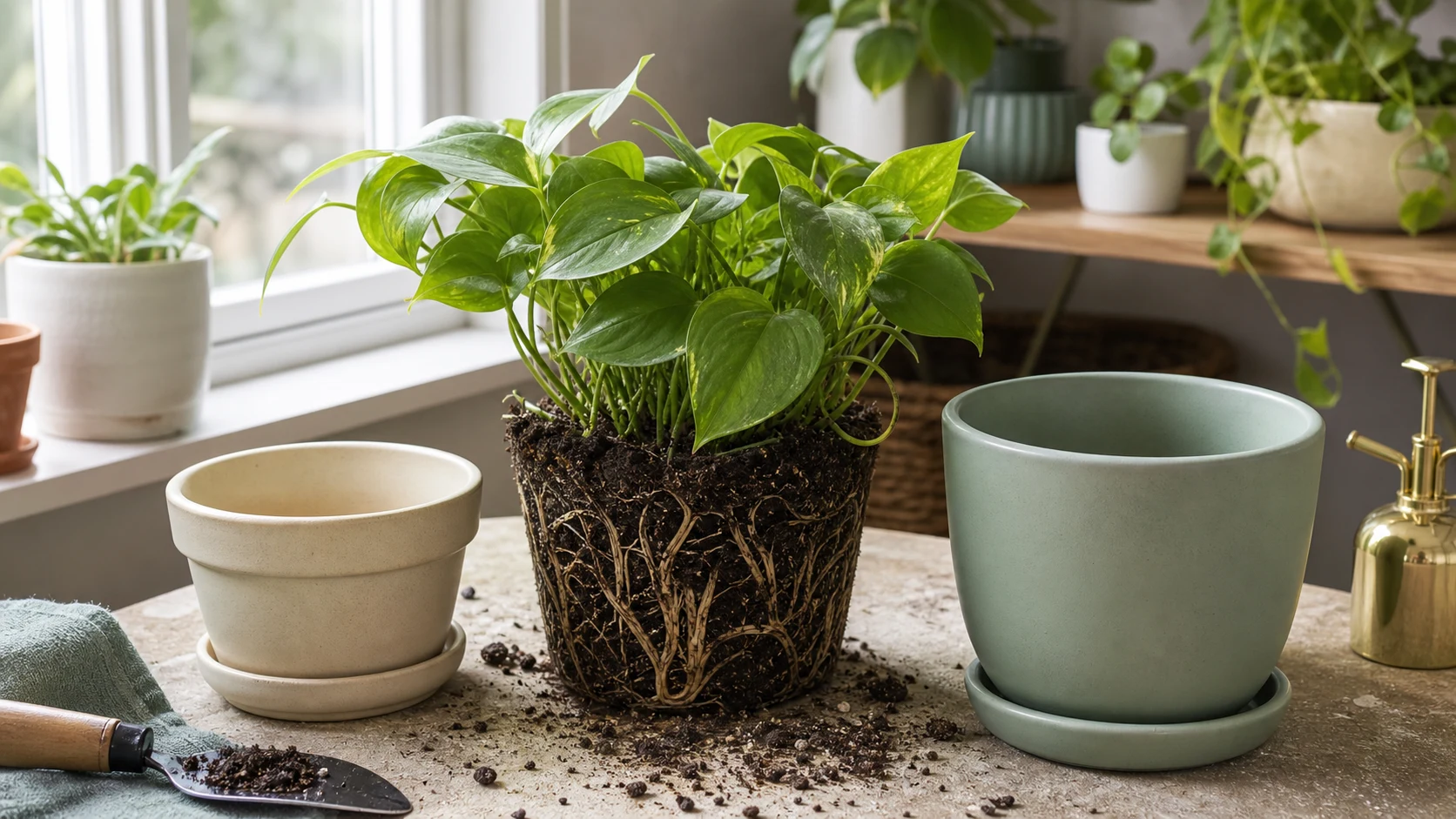
Choose a next pot only one modest size wider than the root ball so excess mix does not stay wet for too long.
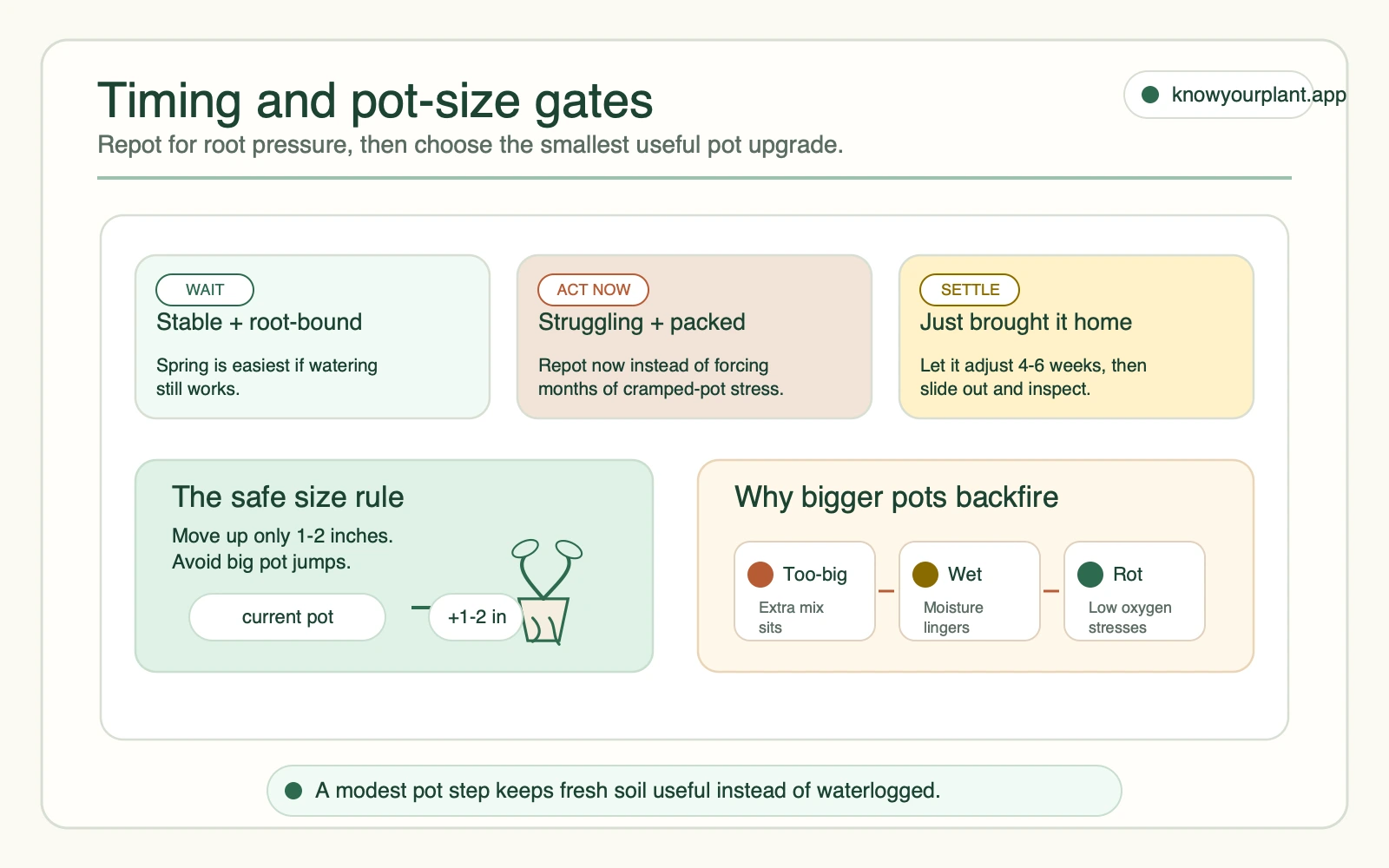
Use the pot-size gate before choosing a container: the safest repot is timed to the plant’s condition and only moves up one small size.
For the actual mechanics of repotting, including soil mix choices, whether you need a drainage layer, and how to handle a root ball that’s stuck solid in its pot, the step-by-step repotting guide covers all of it.
Common Repotting Mistakes
Going too big on the pot. The single most common error. A pot that’s two or three sizes larger than the root ball keeps the surrounding soil wet far longer than the roots can drink, which raises root rot risk. One to two inches larger is the right move.
Repotting right after bringing a plant home. A new location is already a stressor. Adding root disturbance in the same week can cause significant wilting and leaf drop that’s hard to distinguish from a more serious problem. Wait until the plant is settled.
Ignoring root quality when repotting. If you find black, mushy roots during the process, don’t just bury them in the new pot. Trim them with clean shears before repotting. Those roots won’t recover, and leaving them in contact with healthy roots can spread the problem. If the mushy roots are extensive, read through the root rot treatment guide before proceeding.
Using garden soil instead of potting mix. Garden soil compacts in containers and doesn’t drain properly. Standard indoor potting mix, or a mix of potting soil and perlite for better drainage, is what most houseplants need.
Repotting during flowering. Repotting diverts the plant’s energy from bloom production to root recovery, and flowers often drop early. If the plant can wait, let it finish flowering first.
Common Problems After Repotting
| Problem | Most likely cause | What to change first |
|---|---|---|
| Plant wilts for a week or two | Normal transplant stress | Keep conditions stable and do not chase the wilt with constant watering |
| Soil stays soggy for too long | Pot is too large or mix is too dense | Move down a size if necessary and use a lighter indoor mix, then reset your watering rhythm using the how often to water indoor plants guide |
| Lower leaves yellow after repotting | Roots were damaged or soil stayed wet | Let the top layer dry, inspect drainage, and avoid fertilizer |
| Plant still dries out daily | Root ball was more crowded than expected or the repot was too small | Recheck root density and container fit once the plant settles |
A Quick Note on Monstera and Pothos
Both plants get misread regularly.
Monstera produces aerial roots: long brownish structures that emerge from the stem and naturally trail downward. One of these appearing at the drainage hole doesn’t mean the plant is root-bound. It means the plant grew an aerial root that found the hole. Slide the plant out and look at the actual root ball before acting. A monstera with one visible root at the bottom may have plenty of growing room inside the pot.
Pothos handles slightly snug conditions well and often grows happily without frequent repotting. If yours is trailing well and drinking at a normal pace, there’s no rush. The clearest signals for pothos are the same as any plant: dramatically faster drying, water running straight through, or a root ball that’s turned into a dense solid mass when you check. If it’s not showing those signs, leave it alone.
Pet Safety
Repotting day is messier than normal care, which matters if you have pets. Curious cats and dogs may chew loose roots, potting mix, fertilizer granules, or damp soil from the floor. Even when the plant itself is not listed as poisonous, keep pets out of the work area until spilled mix is cleaned up and any fertilizer or pruning debris is gone.
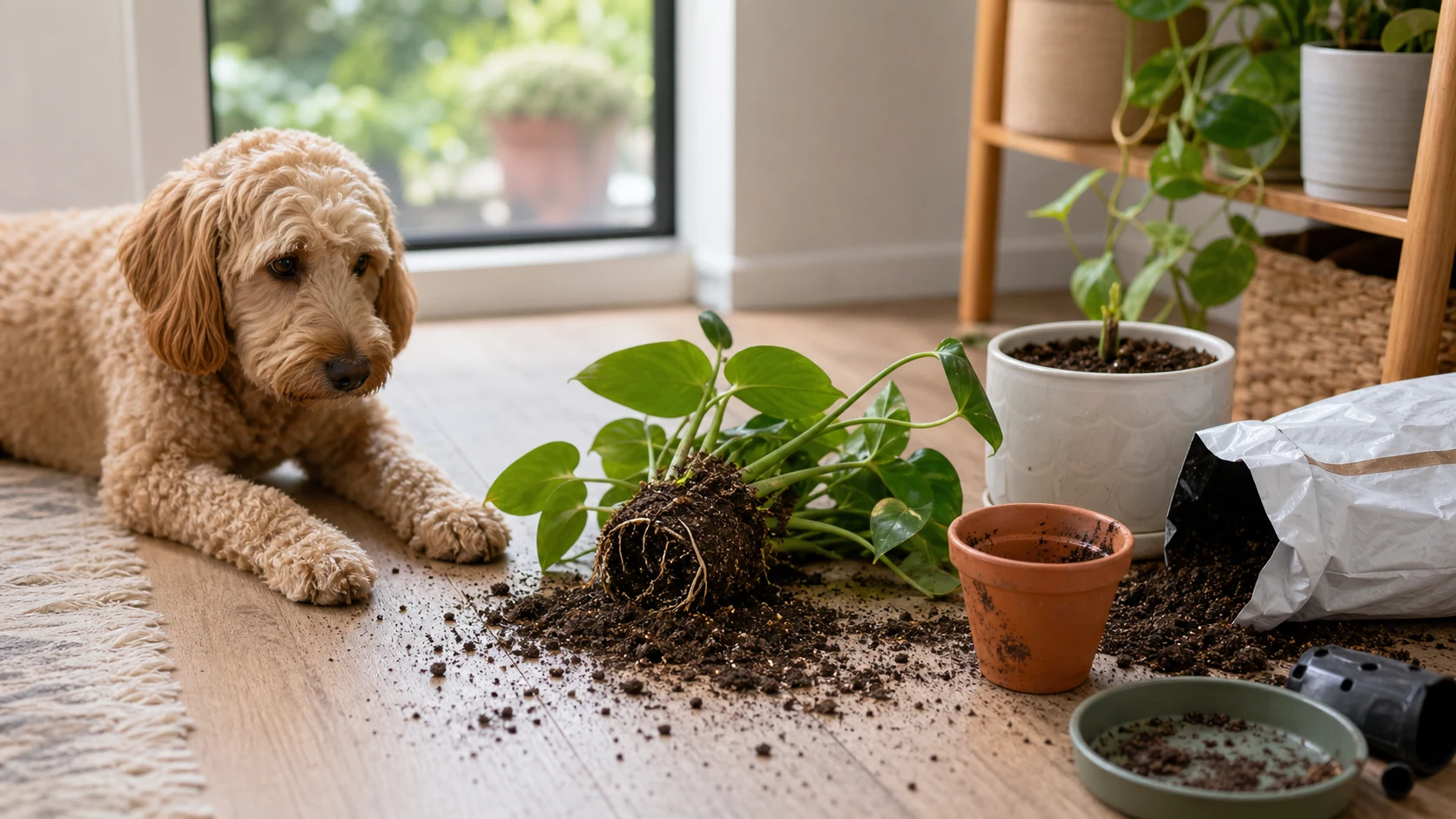
Loose roots and spilled potting mix can attract curious pets, so clear the work area before letting them back in.
Real User FAQ
How often should I repot my houseplants?
Most actively growing houseplants do well with a repot every one to two years, even if they’re not visibly root-bound. The soil matters as much as the space: old potting mix compacts over time, loses drainage capacity, and holds fewer nutrients. If you’re unsure, check the root ball. Mostly soil with roots threading through it means you have time. A tight, circling mass of roots means it’s due.
Can I repot in winter?
Yes, if the plant needs it. Spring is preferred because the plant is heading into active growth and recovers faster, but a genuinely root-bound plant in January doesn’t benefit from four more months of stress. Repot, keep it warm, avoid fertilizing until you see new growth, and it will generally manage fine.
Do I need to repot a plant I just bought?
Usually not right away. Wait four to six weeks for the plant to settle into its new environment, then check the root ball. If roots are circling tightly or the pot is packed with almost no soil left, repot then. If the plant is drinking normally and looking healthy, there’s no urgency.
What size pot should I move up to?
One to two inches larger in diameter than the current pot. The reasoning from Colorado State University Extension is straightforward: too much extra soil around a small root ball stays wet longer than the roots can drink from it, which raises root rot risk. A small step up is almost always safer than a big jump.
What should I do if I find black, mushy roots during repotting?
Trim them off with clean scissors or pruning shears before settling the plant into its new pot. Black or mushy roots won’t recover and shouldn’t be buried in fresh mix alongside healthy roots. If the damage is extensive, the root rot treatment guide covers what to do before and after repotting.
Why is my plant still struggling after I repotted it?
Wilting and leaf drop in the first week or two is normal: repotting is a stress event. Give it a warm spot, consistent watering (not excessive), and skip fertilizer for the first month. If it’s still declining after three to four weeks, check that the new pot has drainage holes and that it went into a proper potting mix rather than garden soil or a mix that holds water too long.
My plant has a root coming out the drainage hole. Does it need repotting?
Not necessarily, especially for monstera. One visible root at the drainage hole is often an aerial root or an exploratory root, not evidence that the inside of the pot is packed. Slide the plant out and look at the root ball. Dense circling roots or a solid mass with almost no soil means repot. Plenty of soil still visible means you have time.
Is it okay to repot when the plant is flowering?
Better to wait if you can. Repotting during flowering shifts the plant’s energy toward root recovery, and blooms often drop early. If the plant is severely root-bound, repot and accept that this season’s flowers may suffer. Otherwise, wait until after flowering finishes.
Methodology Note
This guide was refreshed on 2026-09-09 using live review of the main keyword and close variants, public Gardening Stack Exchange threads for owner-language pain points about oversizing, winter timing, and post-purchase repotting, plus fact checks against Colorado State University Extension PlantTalk and The Old Farmer’s Almanac. Community threads were used as qualitative signal for common confusion, while timing, root-bound, and oversizing claims were anchored to horticulture sources.
Sources: Colorado State University Extension PlantTalk, “Houseplants: Repotting” (planttalk.colostate.edu); The Old Farmer’s Almanac, “Houseplant Care Guide” (almanac.com).