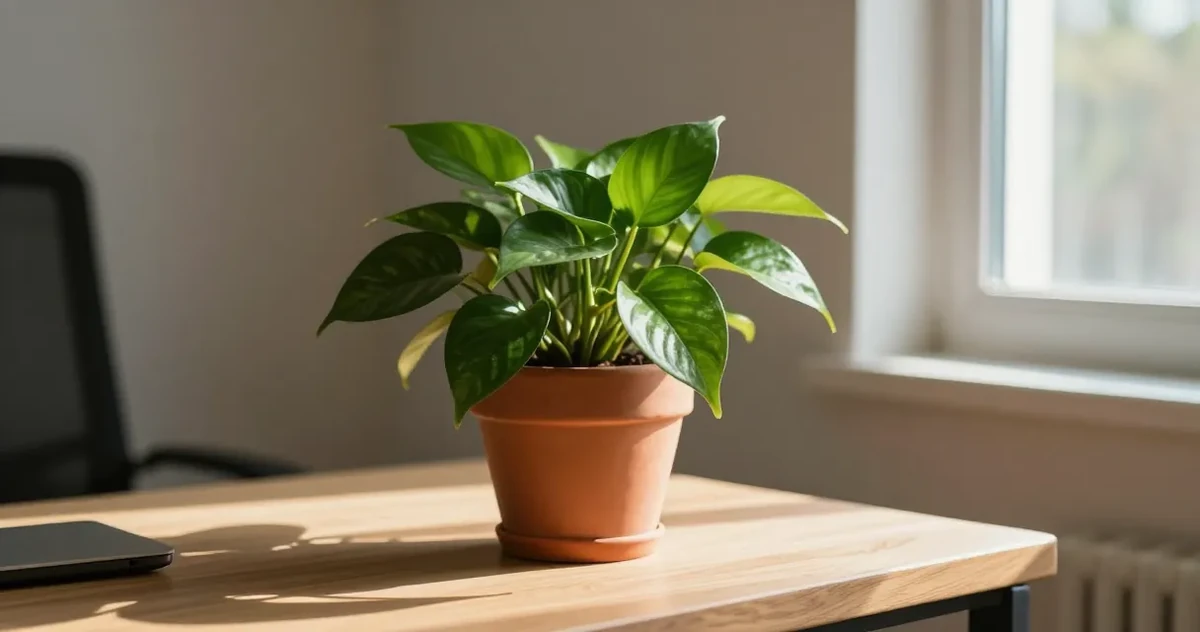
If you’ve ever looked at a pothos with one yellow leaf, one limp vine, and one pot that still feels damp, you already know why simple care schedules are not enough. Pothos is easy in the sense that she forgives a lot. She is not easy in the sense that every problem has the same cause.
The most useful way to care for pothos is to read soil moisture + leaf position + light distance + vine shape together. That is what this guide does. It gives you the quick identification snapshot, the care cards, the rescue logic for yellowing or leggy vines, and the real-world confusion points that show up in owner threads.
What Most Pothos Guides Miss
The common trap is treating every yellow leaf as a watering issue and every limp vine as thirst. Current search results and owner troubleshooting snippets show the same pattern: guides often separate watering, yellow leaves, propagation, and low light into different pages, while owners experience all of those signals at the same time.
Before you change three things at once, check these in order:
- Soil moisture to the first knuckle, not the calendar.
- Which leaves changed first, older lower leaves or newer growth.
- How far the plant really is from bright indirect light.
- Whether the vine is sparse because of weak light or because the roots are stressed.
That quick signal stack solves more pothos problems than a fixed weekly routine ever will.
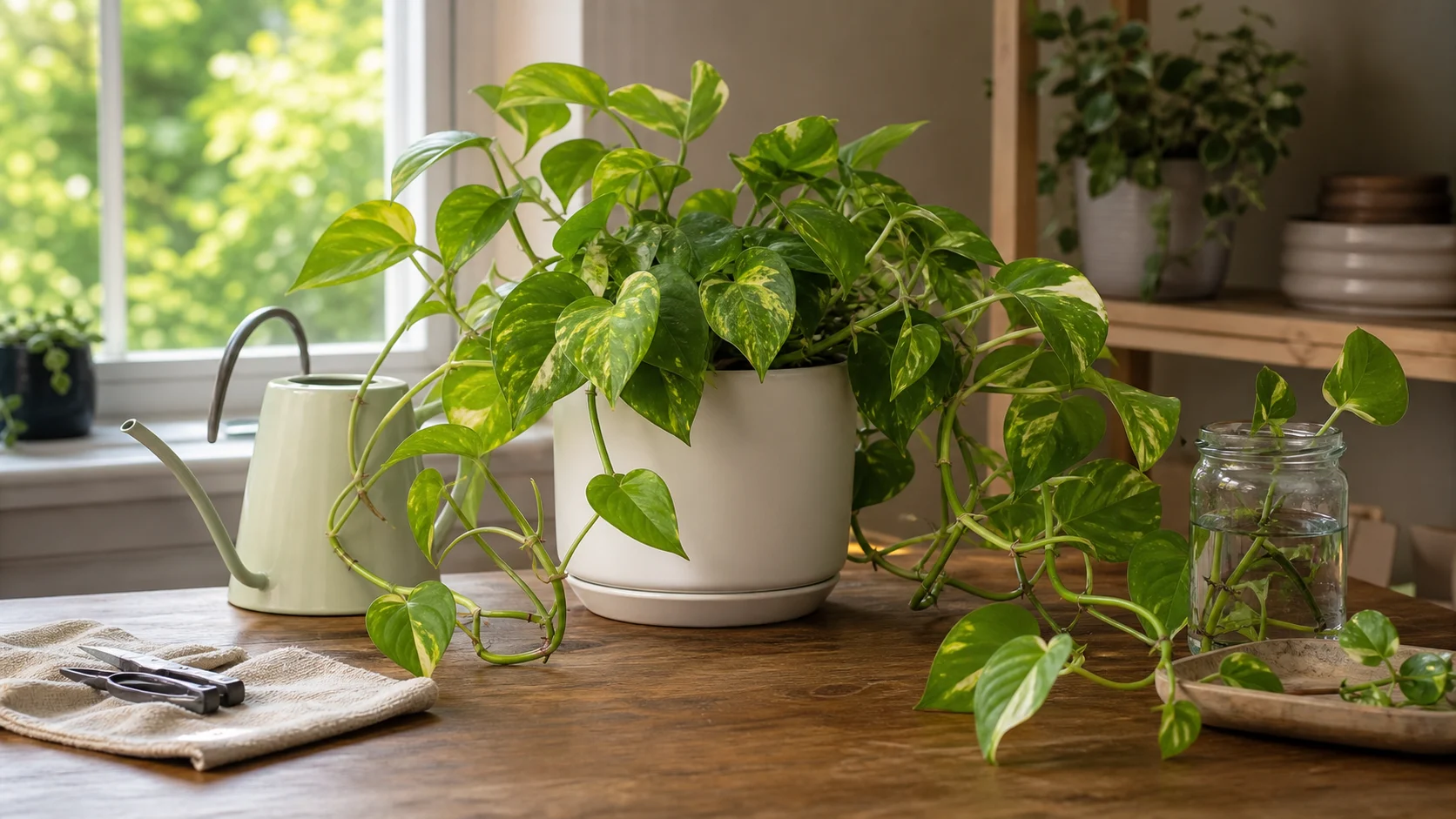
Read pothos soil, leaf position, light distance, and vine shape together before changing its care.
Identification Snapshot
| Snapshot | What to look for |
|---|---|
| Common name | Pothos, devil’s ivy |
| Typical botanical label in trade | Epipremnum aureum |
| Growth habit | Trailing or climbing vine with nodes along the stem |
| Leaf feel | Slightly waxy, fairly thick leaves |
| Best light | Bright indirect light, though it tolerates lower light |
| Water clue | Let the top layer dry, then water thoroughly |
| Early stress clues | Yellow lower leaves, limp leaves, fading variegation, long bare gaps |
| Pet safety | Not pet-safe if chewed |
Symptom Diagnosis Card
| What you see | Check first | Most likely direction |
|---|---|---|
| Yellow lower leaves and damp soil | Pot weight, drainage, stem base | Overwatering or root stress |
| Limp or curling leaves and dry soil | How far dryness reaches into the pot | Underwatering |
| Yellowing that worsens right after watering | Drainage, root smell, compacted mix | Wet-soil stress, not thirst |
| Long bare vines with tiny leaves | Distance from window, recent pruning | Low light and growth stretch |
| Pale crispy patches | Direct sun exposure | Sun scorch |
| Fading variegation | Brightness of new growth area | Light is too dim |
Decision Tree
- Check whether the soil is wet, evenly moist, or truly dry below the surface.
- If the soil is wet and yellowing is spreading, stop watering and inspect drainage before doing anything else.
- If the soil is dry and the leaves are limp, water thoroughly and reassess the next day.
- If yellowing keeps getting worse after watering, inspect roots, stem bases, and pot size instead of watering again.
- If the vines are long and bare but the roots are fine, increase brightness and prune healthy nodes for propagation.
- If symptoms do not fit one lane cleanly, make one change and watch the newest growth for 7 to 14 days.
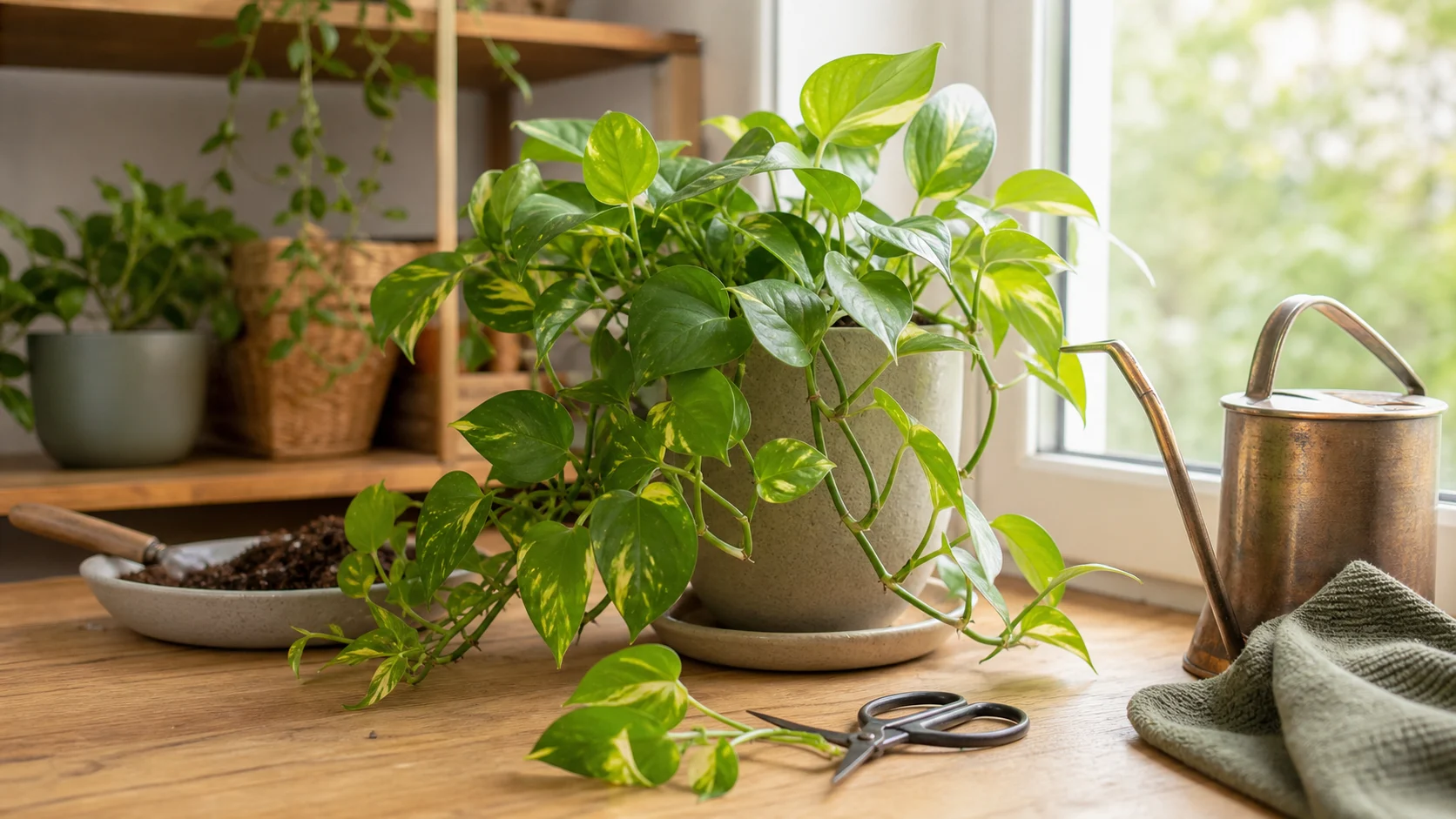
Inspect the soil and drainage first, then choose watering, root care, or pruning as the single next step.
Pothos Watering Risk Scorecard
Use this before you water. Start at 0 and add the points that match your plant today.
| Signal | 0 points | 1 point | 2 points |
|---|---|---|---|
| Pot weight | Pot feels light all the way through | Top feels lighter but the lower half still feels heavy | Pot still feels heavy and cool |
| Topsoil dryness | Dry deeper than the first knuckle | Dry only at the surface | Still damp below the surface |
| Drainage | Water runs through and the saucer empties fast | Drainage is slow or runoff often sits for a while | No drainage hole or water stays trapped in a cachepot |
| Pot size | Root ball fits the pot closely | You moved up a pot size recently | Pot is much larger than the root ball |
| Season and light | Bright season or strong indirect light | Light or temperature changed recently | Winter or very low light with slow drying |
How to use the score:
- 0 to 2 points: watering is probably reasonable if the leaves also look thirsty.
- 3 to 5 points: wait, recheck tomorrow, and avoid fixing the problem with more water.
- 6 points or more: inspect drainage, roots, or pot size before you water again.
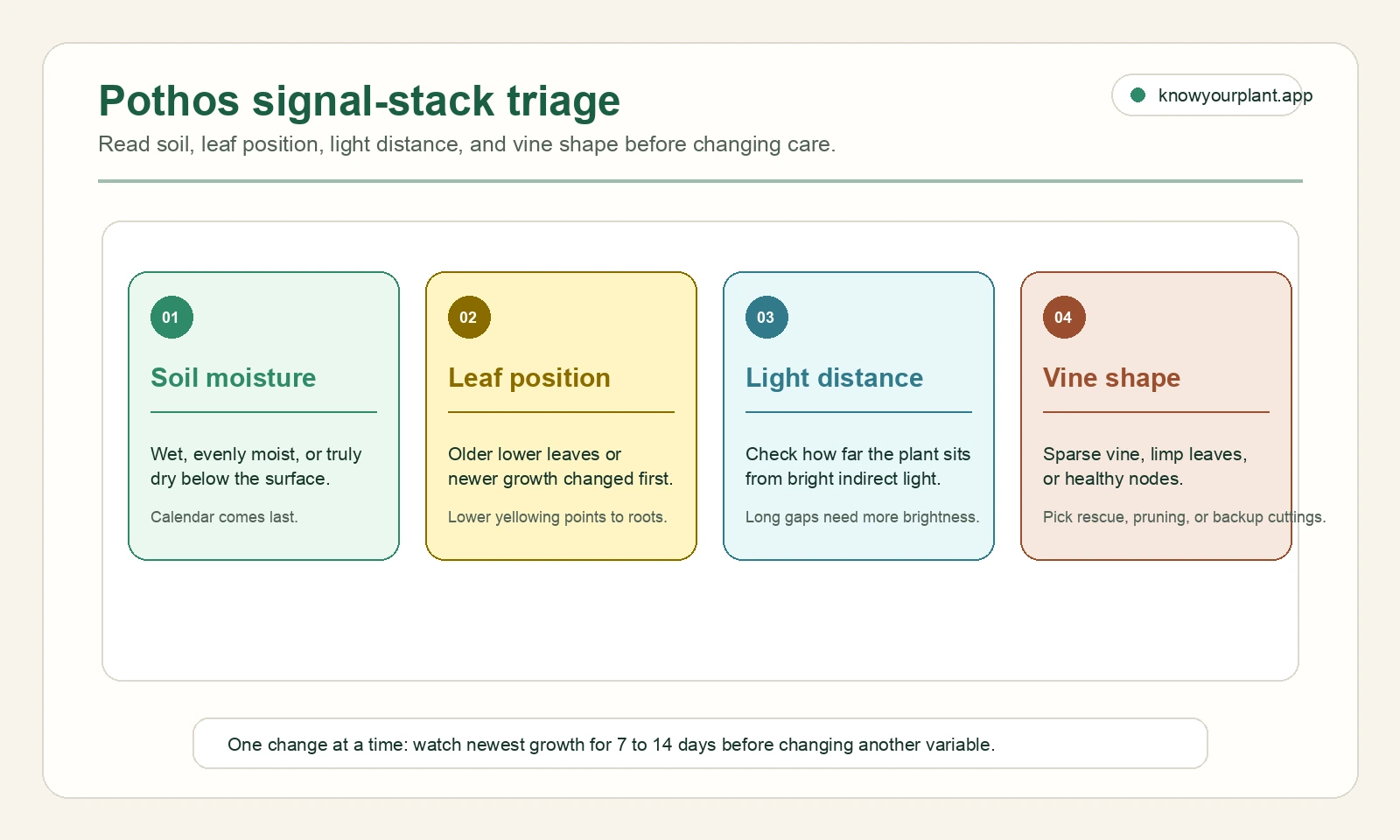
Use the signal stack before changing care: soil, leaf position, light distance, and vine shape together tell you which fix is safest.
Care Cards
Light card
| Goal | What works best | Warning sign |
|---|---|---|
| Healthy growth | Bright indirect light near a window | Long gaps between leaves and slower growth |
| Lower-light tolerance | Can survive in dimmer rooms | Variegation fades and growth stalls |
| Sun protection | Avoid harsh direct afternoon sun | Crispy pale patches on the leaf surface |
Watering card
| Check | Good sign | Risk sign |
|---|---|---|
| Topsoil feel | Drying out before you water again | Still damp for days and days |
| Pot weight | Pot feels noticeably lighter before watering | Pot stays heavy and cold |
| Leaf posture | Leaves stay firm after watering | Yellow leaves keep appearing after a wet period |
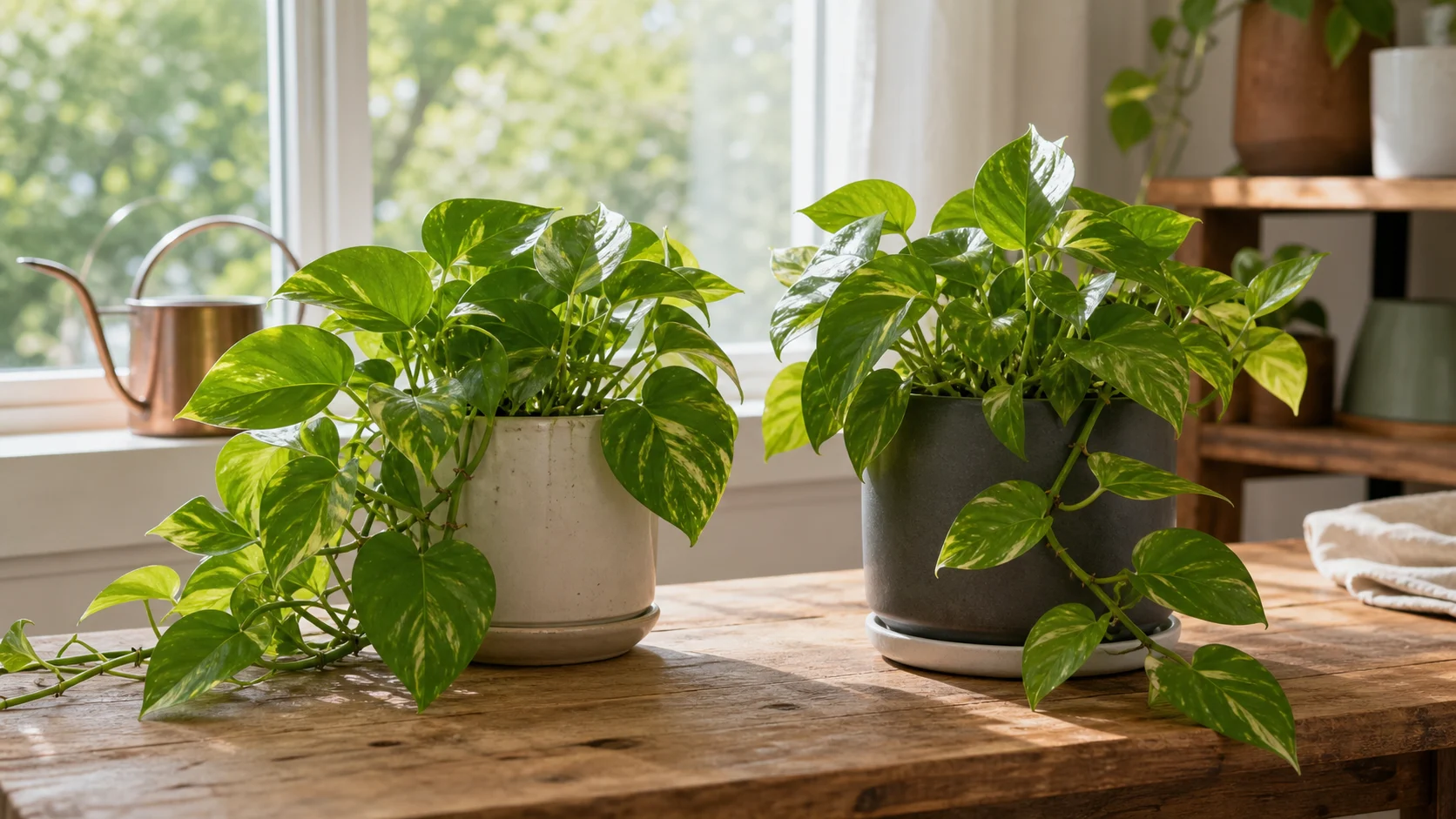
Compare soil, pot weight, drainage runoff, and leaf posture before deciding whether a pothos needs water.
Soil and pot card
| Setup | Best practice | Why it matters |
|---|---|---|
| Mix | Standard potting mix with extra perlite if needed | More air around roots, easier moisture balance |
| Pot | Drainage holes always | Prevents stagnant wet soil |
| Repotting | Move up only one pot size | Oversized pots stay wet too long |
Rescue and propagation card
| Situation | Next move |
|---|---|
| Healthy long vines | Prune and propagate to make the pot fuller |
| Bare leggy vines | Cut back to healthy nodes and restart growth |
| Root stress or persistent yellowing | Take healthy cuttings as backup before the decline spreads |
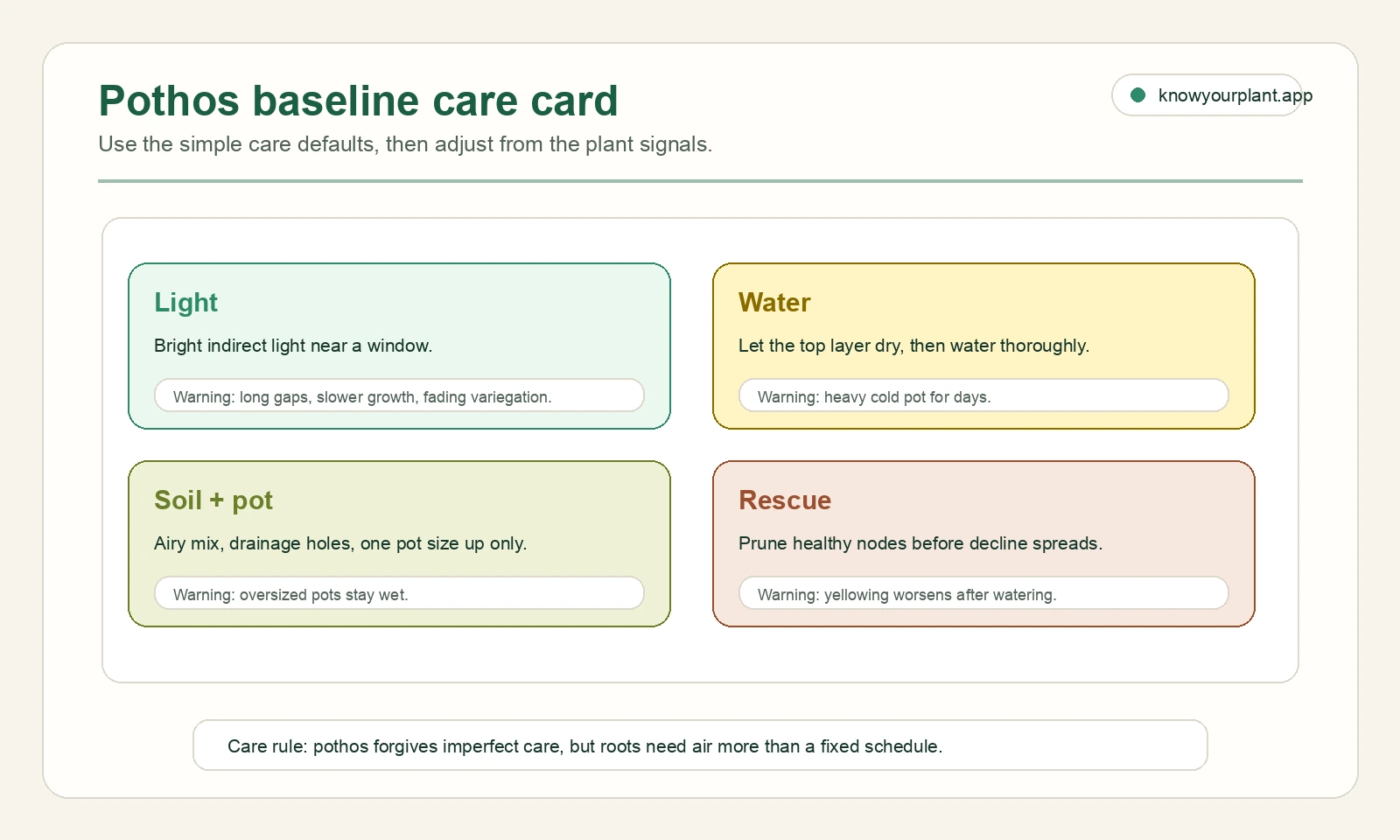
Keep these defaults steady, then adjust only when the plant shows a clear warning sign.
Lookalikes and Confused-With Plants
| Plant | What people confuse | Fast difference |
|---|---|---|
| Pothos vs heartleaf philodendron | Similar trailing beginner vines | Pothos leaves are usually thicker and waxier; philodendron leaves look thinner and more heart-shaped |
| Pothos vs satin pothos | Similar common name in stores | Satin pothos has matte leaves with silvery patterning and is not a true pothos |
| Thirst wilt vs wet-soil stress | Both can look droopy | Dry soil and recovery after watering point to thirst; wet heavy soil and ongoing yellowing point to root stress |
If you’re narrowing down a cultivar, the pothos varieties guide and neon pothos care guide help with the visual differences. If the bigger question is whether you even have a pothos or a philodendron, the pothos vs philodendron guide breaks down the fastest visual tells.
Social Listening: Where Owners Actually Get Stuck
A few repeat confusion patterns showed up across plant-owner snippets and troubleshooting threads:
- a Reddit plant clinic snippet showed weekly watering plus indirect light still ending in yellow leaves, with the owner unsure whether the plant was dry or overwatered
- another owner snippet described yellowing that got worse after watering, which is a classic wet-soil-misread problem
- an update thread reinforced that yellowing does not stop the second overwatering stops because damaged roots and stems can keep declining for a while
- a “sad pothos” snippet connected long bare vines, yellowing, and confusion over whether the real fix was watering, root cleanup, or pruning and propagation
These are qualitative owner signals, not controlled trials. They are useful because they reveal the exact decision points where generic care schedules stop helping.
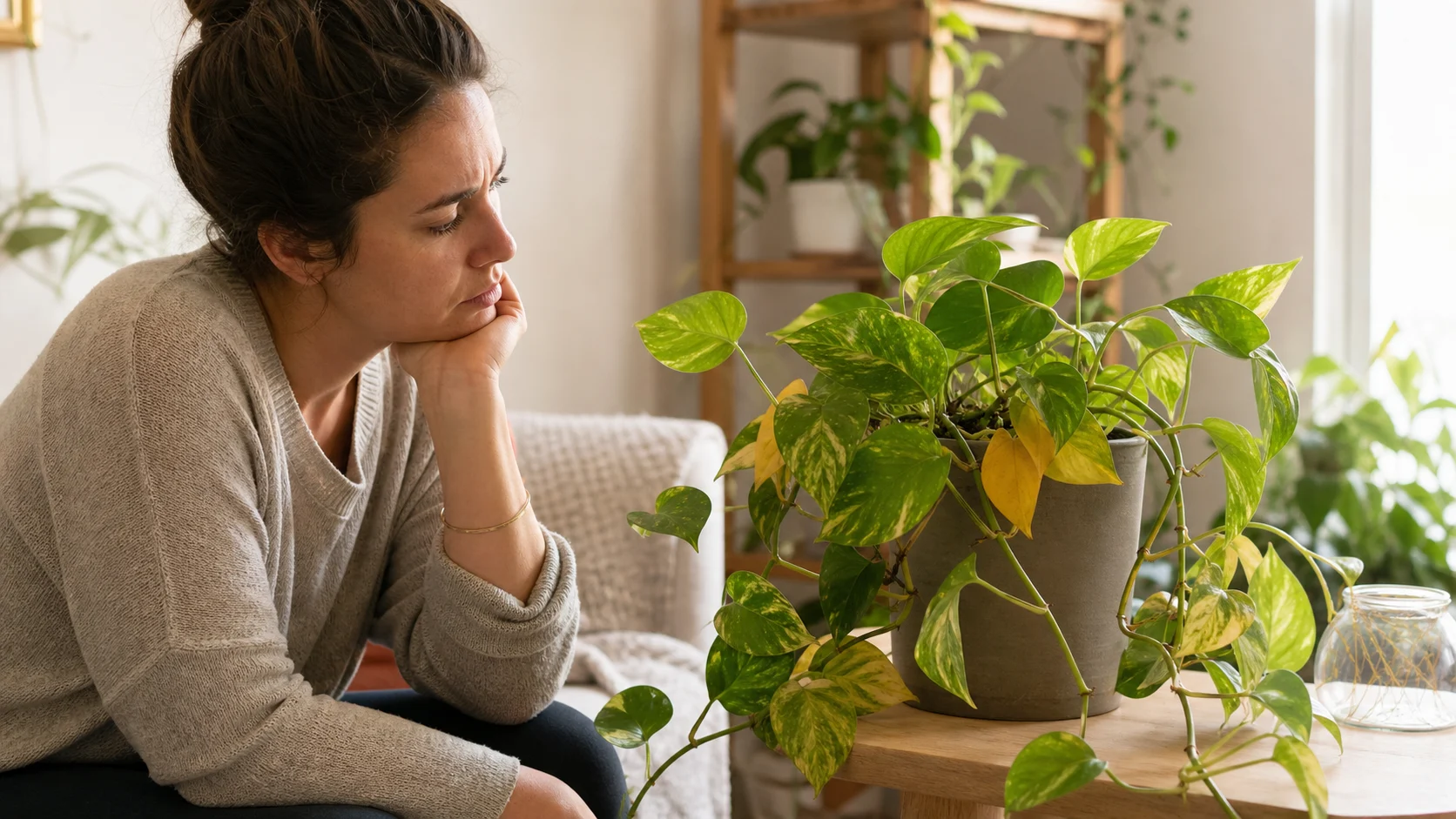
Yellow leaves and long vines often leave owners choosing between waiting, checking roots, or propagating healthy growth.
Expert Note: Source Layer
The practical care advice in this guide is grounded in extension and safety sources, then cross-checked against the owner-confusion patterns above:
- Penn State Extension on pothos as a houseplant
- Clemson Cooperative Extension on growing pothos indoors
- University of Missouri Extension on caring for houseplants
- ASPCA on devil’s ivy toxicity
Common Problems and What They Usually Mean
| What you see | Most likely cause | First check | Next move |
|---|---|---|---|
| Lower leaves turning yellow | Overwatering | Feel the soil and lift the pot | Let it dry longer, then inspect roots if yellowing continues |
| Limp or curling leaves | Underwatering | Check deeper than the dry top layer | Water thoroughly and reassess the next day |
| Wilting in wet soil | Root stress or rot | Smell the soil and inspect roots | Unpot, trim damaged roots, repot into airy mix |
| Long bare vines | Low light or overdue pruning | Distance from the window | Move brighter and prune healthy nodes |
| Fading variegation | Too little light | Look at the newest leaves | Increase brightness gradually |
| Brown tips | Uneven moisture, salts, or dry air | Soil crust and watering rhythm | Water more evenly and flush the mix if needed |
If yellowing is the main symptom, use the pothos yellow-leaf diagnosis guide to separate normal leaf turnover from watering, light, root, and disease problems before changing care.
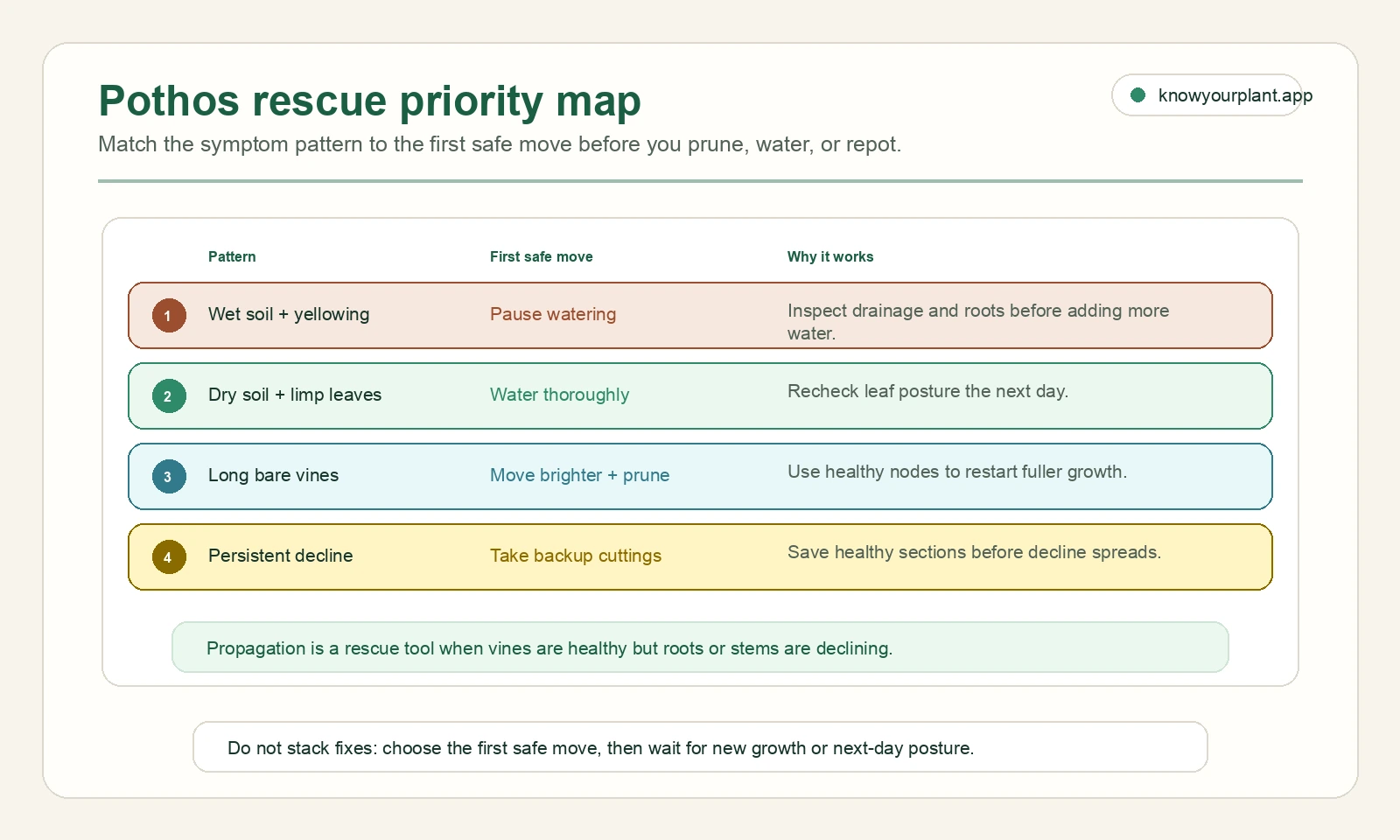
Use the priority map when symptoms overlap so you do not stack watering, pruning, repotting, and propagation on the same day.
If you suspect root rot, the hydrogen peroxide for plants guide explains where a rinse can help and where it does not replace repotting.
Seasonal Care Notes
Spring
- Expect faster growth as light improves.
- Resume light feeding and check whether the plant needs a one-size-up repot.
Summer
- Bright spots dry faster, so check moisture more often.
- This is the easiest season for pruning and propagation.
Autumn
- Growth slows and watering usually stretches out.
- Dust the leaves and reassess the plant’s light distance as the sun angle changes.
Winter
- This is the easiest season to overwater.
- Move the plant a little closer to a bright window if growth stalls, and always let the soil drive the schedule.
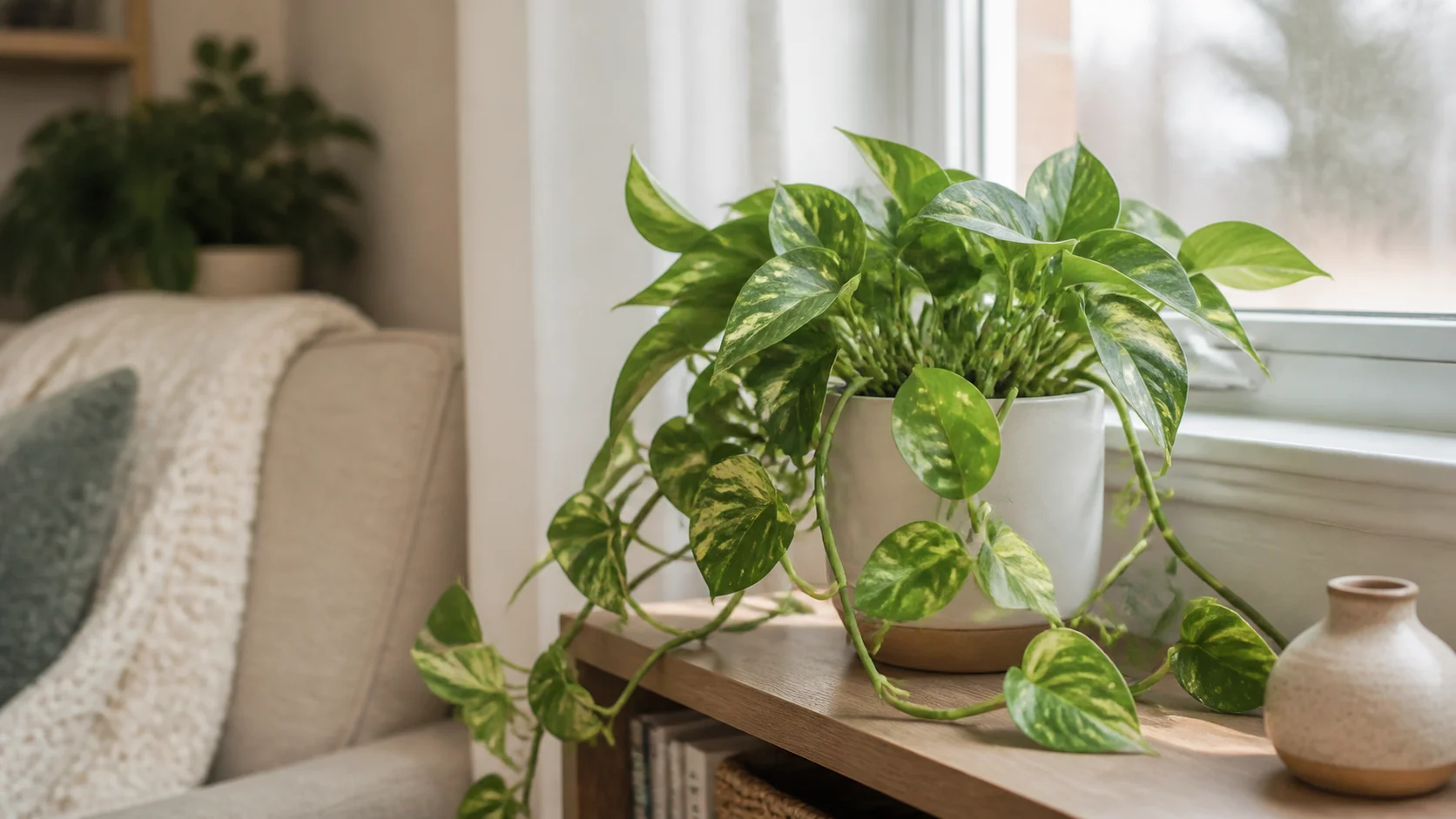
In winter, keep pothos near bright indirect light and wait for the soil—not the calendar—to call for water.
If you need a broader houseplant rhythm refresher, the indoor plant care guide for beginners and grow lights for indoor plants guide are the easiest next reads.
Propagation as Rescue, Not Just a Hobby Step
Pothos is famous for easy propagation, but the more useful framing is this: propagation is also your backup plan when the mother plant is leggy, root-stressed, or declining after an overwatering episode.
Cut just below a healthy node, keep the node in water or a light propagation mix, and pot up only once roots are established. If the long vines still have healthy sections, you can prune and restart the pot instead of trying to nurse every tired stem forever. The propagate pothos guide walks through the full method.
Pet Safety
Pothos is not pet-safe. ASPCA lists devil’s ivy as toxic to dogs and cats because chewing it can cause mouth irritation, drooling, vomiting, and trouble swallowing. If a pet is likely to chew leaves, keep pothos completely out of reach or switch to something from the cat-safe indoor plants guide.
Real User FAQ
Why are my pothos leaves turning yellow even though I only water once a week?
Because the calendar is not the real issue. If the pot stays wet for too long, a weekly routine can still be too often. Check pot weight, drainage, and whether the yellowing starts on older lower leaves.
Why did the yellowing get worse after I watered?
That often points to wet-soil stress, compacted mix, or damaged roots. If the soil already held too much water, another watering can make the decline more obvious rather than fix it.
Can I save a pothos with long bare vines?
Usually yes. Check the roots first, then move the plant to brighter indirect light, prune healthy nodes, and propagate the strong sections so the pot can grow back fuller.
How often should I really water pothos?
As often as the potting mix and your room conditions require. In a bright active season it may be close to weekly. In winter or lower light it can stretch much longer. The soil should decide, not the reminder. If you want the full depth-and-pot-weight method, read the how often to water pothos guide.
How do I know whether it is pothos or heartleaf philodendron?
Pothos leaves tend to be thicker, waxier, and often variegated. Heartleaf philodendron leaves look thinner, softer, and more heart-shaped.
Is pothos a good first plant?
Yes, because it gives readable signals early and usually forgives the first round of mistakes, especially if you avoid keeping the roots constantly wet.
Methodology and Trust Layer
Author: KnowYourPlant editorial team
Reviewer: Editorial review pending final publish check
Last updated: 2026-07-11
Methodology note: This article was reviewed using current search results, Reddit troubleshooting snippets as qualitative owner-language evidence, and claim checks against Penn State Extension, Clemson Cooperative Extension, University of Missouri Extension, and ASPCA.
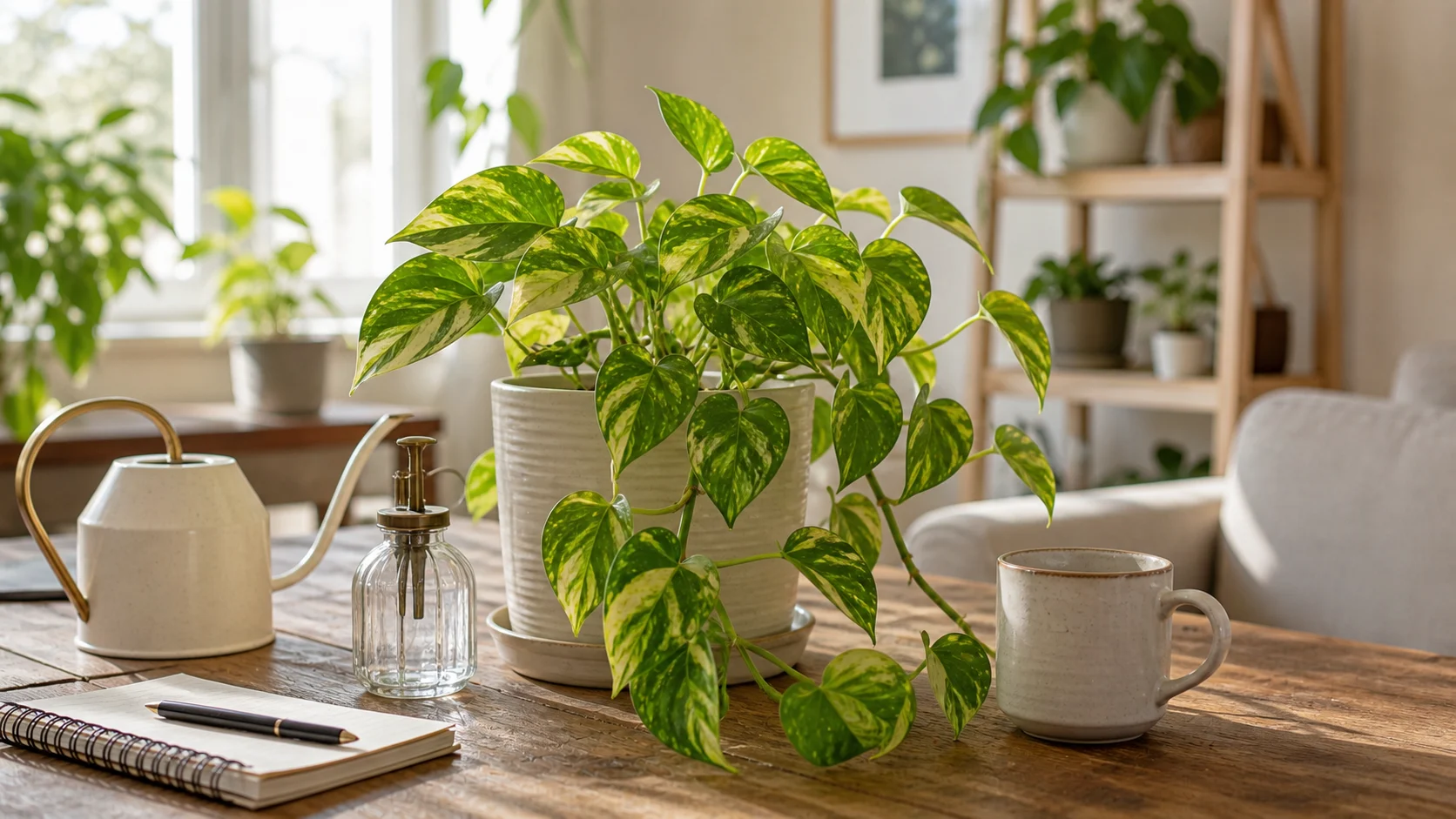
Plant observations and owner reports become guidance only after they are checked against current extension and safety sources.
Freshness Note
This article was reviewed against the current source set on 2026-07-11. If your pothos still declines after you correct watering and light, inspect the roots and stem bases rather than repeating the same care step harder.
Pothos gets her “easy plant” reputation honestly, but the real reason she is beginner-friendly is that she tells you what changed if you slow down enough to read the signs. Keep the light decent, let the mix breathe, and let the plant’s signals make the decision before the calendar does.