Hydrogen Peroxide for Plants: How to Use It Safely
You have tiny flies circling your favourite plant, or you just noticed the roots looked off during a repot. Before you buy anything special, check your medicine cabinet. There is a good chance the answer is already there.
Hydrogen peroxide is one of those quietly useful tools that experienced growers reach for early, not as a magic fix, but as a simple, low-cost way to deal with fungus gnats, root rot, and contaminated soil before things spiral further. It is cheap, widely available, leaves no chemical residue, and works fast.
The short version: hydrogen peroxide is water with an extra oxygen molecule attached. When it contacts soil, it breaks down into water and oxygen, aerating the root zone, killing anaerobic bacteria, and disrupting the larvae of pests like fungus gnats, without leaving any residue behind. Used correctly, it is gentle enough for most common houseplants. Used carelessly, it can damage roots and set a struggling plant back further still.
This guide covers when it actually helps, how to dilute it properly, and the mistakes that turn a helpful treatment into a setback.
Freshness Note
This page was refreshed on June 15, 2026 against university extension, IPM, and greenhouse sanitation sources. The ratios below assume ordinary 3% household hydrogen peroxide. If your bottle is stronger, dilute further or stop and confirm the label before you use it.
Start With the Pattern, Not One Cause
Most articles about hydrogen peroxide for plants list possible causes. That is helpful, but it can also make you change watering, light, fertilizer, and soil all at once, which makes the plant harder to read.
Compare old leaves, new growth, edges, and the root zone before changing several parts of the care routine at once.
Start with the pattern instead:
- Oldest leaves first: often points to watering rhythm, root stress, or normal aging.
- Newest growth first: look harder at light, nutrients, pests, or temperature stress.
- Tips and edges first: check drying, salts, heat, or inconsistent moisture.
- Stems, crown, or soil smell: treat it as a root-zone warning before adding more water.
Make one change, then watch new growth. The goal is not to guess every cause; it is to choose the first safe check.
Identification Snapshot
Use hydrogen peroxide for plants only when the job is clear.
| If you see | Peroxide can help? | Better first step if this is missing |
|---|---|---|
| Tiny dark flies rise from the pot when you water, and the top of the mix stays damp | Yes, as a fungus gnat larva drench | If the insects are around sinks, fruit, or drains instead of the pot, solve that source first |
| The plant wilts even though the soil is wet, and roots look brown, soft, or smell sour | Yes, as part of a root-rinse plus repot | If the roots are firm and the mix is dry, water first instead of treating |
| The pot is empty or the old mix is being discarded after a pest or rot problem | Yes, as a sanitation step before reuse | If the plant is still potted and only looks weak, diagnose the cause before adding peroxide |
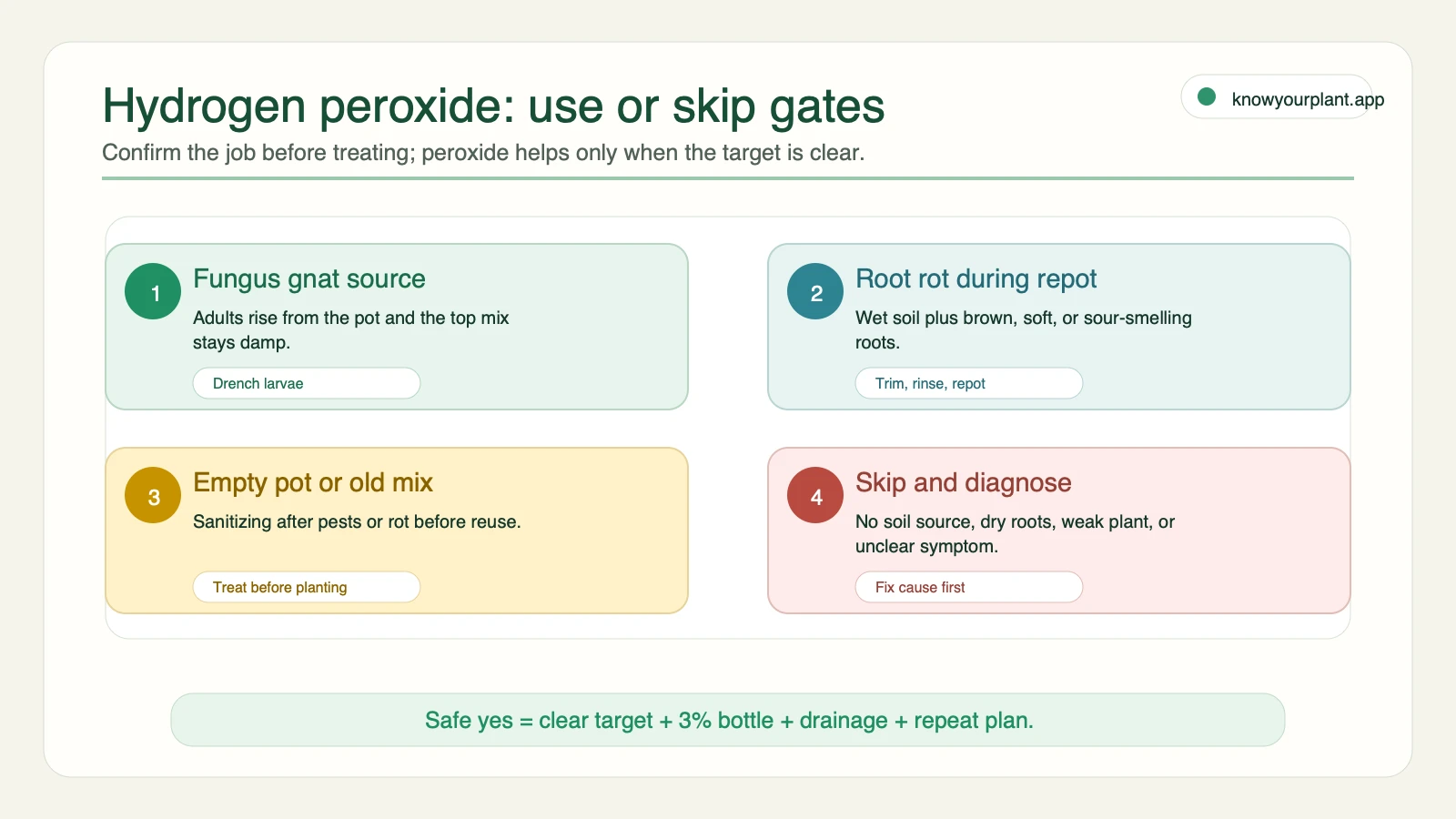
Use the gates before mixing anything: peroxide belongs on confirmed soil larvae, root-rot rinses, or empty-pot sanitation, not every vague plant decline.
Lookalikes / Confused With
| Looks like a peroxide problem | Often confused with | What to check before treating |
|---|---|---|
| Fungus gnats | Fruit flies, drain flies, or random indoor gnats | Disturb the pot or water it. If adults rise from the soil, the pot is the source |
| Root rot | Underwatering, heat wilt, or transplant shock | Check moisture and root texture, not leaf droop alone |
| “Dirty” old soil | General decline from low light, poor nutrition, or inconsistent watering | Peroxide can sanitize an empty pot or discarded mix, but it does not fix routine care problems |
When Hydrogen Peroxide Actually Makes Sense
Not every plant issue calls for hydrogen peroxide. It works best in three specific situations.
Fungus Gnat Larvae in the Soil
If you see tiny flies hovering around your plants and rising from the soil when you water, you are dealing with fungus gnats. The adult flies are annoying but mostly harmless. The larvae living in the top few centimetres of moist soil are the real issue. They feed on organic matter and fine root hairs, and in larger numbers they can cause visible wilting and stunted growth, particularly in younger plants.
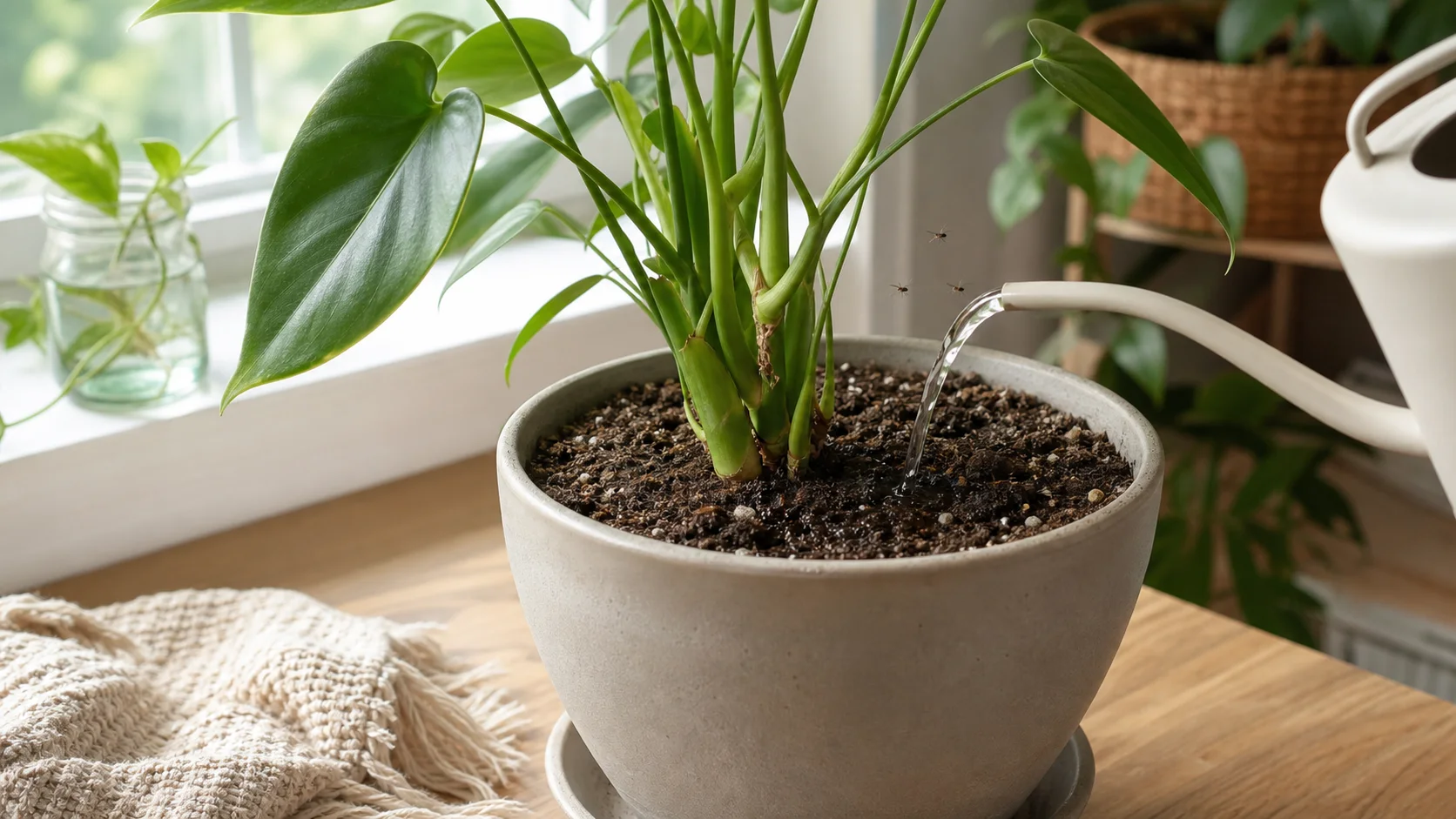
Adult gnats rising during a soil drench are a visible clue that larvae are occupying the moist upper layer of the potting mix.
According to UC IPM (University of California Integrated Pest Management), fungus gnat larvae of the Bradysia species primarily inhabit the top 5 to 8 cm of soil and are most damaging to plants with fine, delicate root systems, exactly the kind of damage that is easy to misread as a watering problem.
A diluted hydrogen peroxide drench kills the larvae on contact. You water the soil with the solution the same way you would normally water, and the oxidising action disrupts the larvae without affecting your plant if the concentration is right. For a fuller picture of controlling these pests through the larval and adult stages, the guide on how to get rid of fungus gnats covers the full cycle.
Root Rot Treatment
Root rot is caused by overwatering combined with poor drainage, creating conditions that let anaerobic bacteria and moulds take hold in waterlogged soil. By the time you notice symptoms above ground (yellowing leaves, sudden limpness, mushy stem base), the roots are already in trouble.
North Carolina State University Extension identifies overwatering and inadequate drainage as the leading causes of houseplant failure, creating the oxygen-depleted conditions that allow pathogens like Pythium to proliferate rapidly. What looks like a fertiliser problem or a light problem is often root rot that has been quietly developing for weeks.
Hydrogen peroxide helps here in two ways. First, it kills the bacteria and fungal growth actively destroying root tissue. Second, the oxygen it releases discourages the anaerobic conditions that allowed the rot to start. It is not a substitute for repotting into fresh, well-draining soil; that step is still necessary. But it can be part of an effective recovery when combined with proper repotting technique. If you want the full rescue sequence from diagnosis through trimming and aftercare, use the complete root rot treatment guide. If you are still trying to figure out whether you are looking at rot or just a plant that has been kept too wet, compare the early warning signs in this guide to the broader overwatered plant symptoms checklist.
Sterilising Soil Before Repotting
If you are reusing old potting mix, or you have had persistent pest or disease problems in a particular pot, a hydrogen peroxide drench can neutralise lingering pathogens before you replant. This is a precautionary step, not an emergency one, but it takes about two minutes and costs almost nothing.
The Dilution That Matters Most
The hydrogen peroxide you buy at a pharmacy is almost always 3%. That is the right starting concentration. You do not apply it at full strength on plants.
University of Florida IFAS research notes that hydrogen peroxide degrades rapidly in soil, typically within one to two hours, breaking down completely into water and oxygen with no lasting residue. This is part of what makes it useful: it does its job and disappears, unlike synthetic pesticides that can accumulate in the growing medium.
For most applications, dilute it further:
- Fungus gnat drench: Mix 1 part 3% hydrogen peroxide with 4 parts water. That gives you roughly a 0.6% solution.
- Root rot treatment: Same ratio: 1 part 3% to 4 parts water. After trimming away dead roots, rinse the remaining healthy roots with this solution before repotting.
- Soil sterilisation: A slightly stronger mix works here: 1 part 3% to 3 parts water. But only for empty pots or soil you are preparing before planting, not for soil actively holding plant roots.
If you are working with 6% or 12% hydrogen peroxide (sometimes sold for hair or industrial use), halve those ratios again. Higher concentrations can bleach leaves and burn root tissue even at what feels like a gentle application.
Care Cards
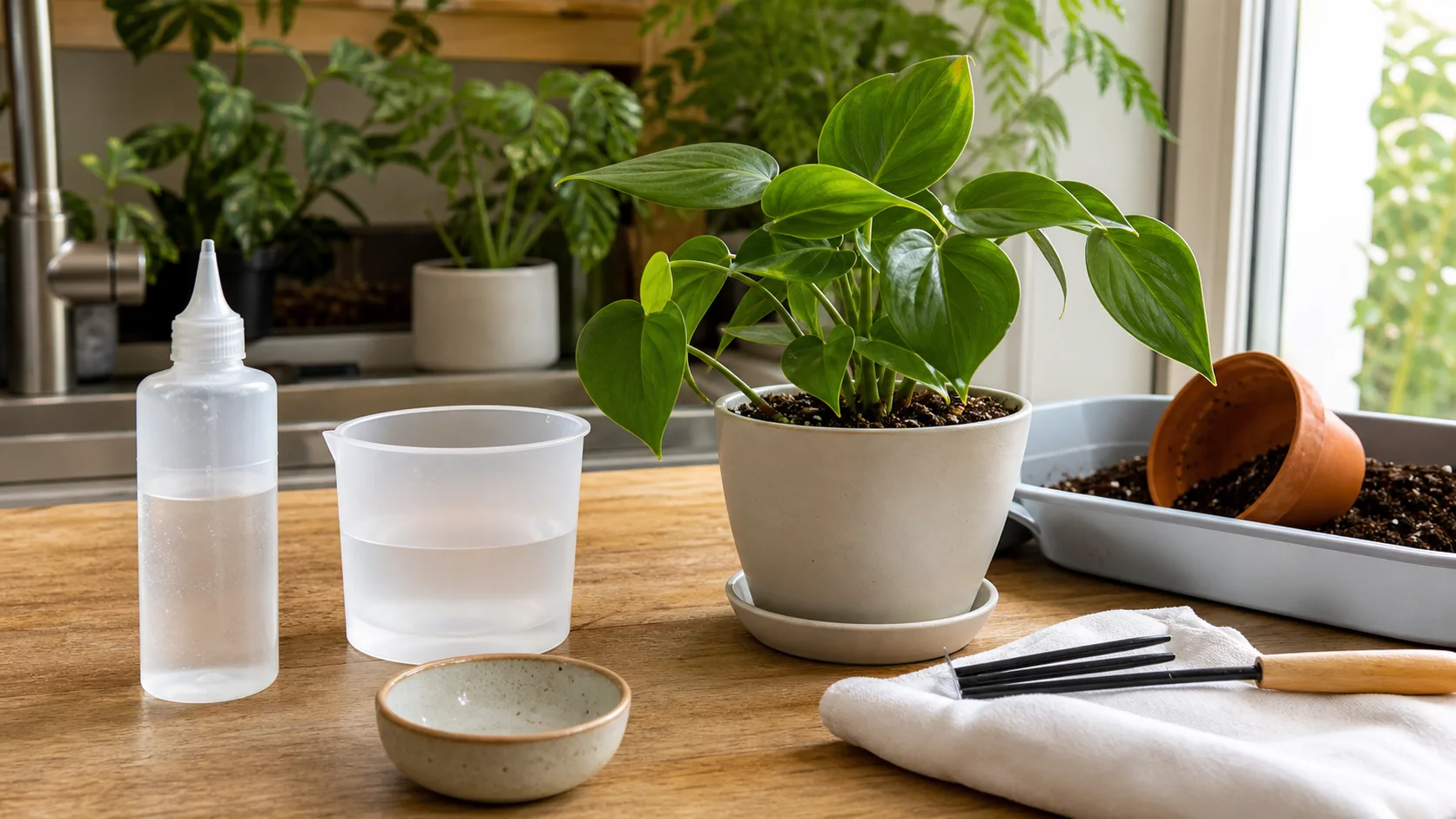
Keep the measured drench, root-rinse setup, and empty-pot sanitation job distinct so each treatment matches the plant-care problem.
| Job | Mix with standard 3% hydrogen peroxide | How to use it | Stop and reassess when |
|---|---|---|---|
| Fungus gnat larvae | 1 part peroxide to 4 parts water | Drench slightly dry soil, let it drain, and pair it with drier watering habits and sticky traps | Adults keep returning from nearby pots or the mix never dries |
| Root rinse during repotting | 1 part peroxide to 4 parts water | Trim mushy roots, rinse the remaining roots briefly, then repot into fresh airy mix | Most roots are already mushy or the plant keeps sitting in wet soil |
| Empty-pot or old-mix sanitation | 1 part peroxide to 3 parts water | Treat the empty pot or discarded mix before reusing containers | You are trying to rescue an actively declining plant without checking the roots |
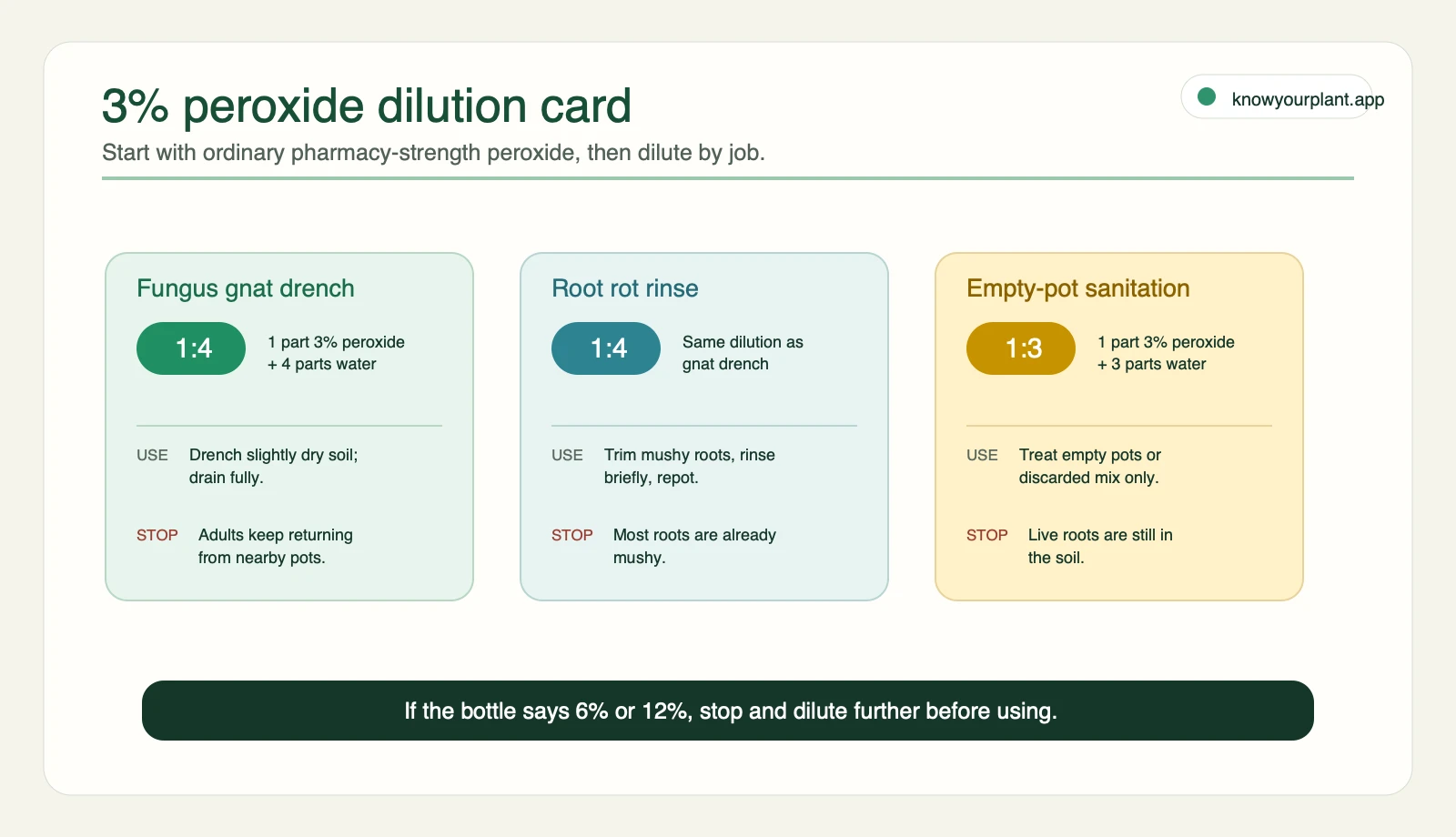
The dilution card keeps the ratios separate: live roots usually get the gentler 1:4 mix, while stronger sanitation belongs only to empty pots or discarded mix.
How to Apply It
For a fungus gnat drench, wait until the top layer of soil is slightly dry before applying. Wet soil dilutes the solution further and reduces effectiveness. Water the plant slowly with your diluted mix, the same way you would with regular water. Let it drain completely; pooling at the bottom means the treatment stays at root level longer than intended. You will likely need to repeat this once a week for two to three weeks to break the full larval cycle.
Darryl Cheng of House Plant Journal consistently emphasises that treating without confirming the problem is one of the most common ways people set plants back further. Before you drench, check: are the flies actually coming from the soil, or from drains, compost bins, or other nearby sources? A simple test is to push a piece of raw potato into the top 3 cm of soil and check it after 48 hours. Larvae will cluster on the underside if they are present.
For root rot, take the plant out first. Remove as much of the old, soggy soil as you can. Trim away any roots that are brown, mushy, or smell off. Healthy roots are firm and white or light tan. Rinse the remaining roots with your diluted solution, let them air for a few minutes, then repot into fresh, dry mix with good drainage. Water sparingly for the first week while the plant stabilises. If you are unsure what healthy roots should feel like or how to handle the repotting itself, the guide on repotting houseplants walks through that in detail.
Decision Tree
- Do adults rise from the pot when you water? Start with a fungus gnat drench, then let the top layer dry more between waterings.
- Is the soil already wet and the roots smell sour or feel mushy? Unpot, trim, rinse, and repot. Do not keep pouring more solution into a rotting root ball.
- Are you cleaning an empty pot or old mix after a problem? Use peroxide as sanitation, then replant in fresh medium.
- None of those are true? Skip peroxide for now and fix watering, drainage, light, or diagnosis first.
Where Hydrogen Peroxide Helps, and Where It Does Not
Most peroxide guides blur together fungus gnats, root rot, seed soaks, algae cleanup, and vague “oxygen boost” claims. Those are not equally supported, and treating them like one bucket is how people end up drenching a stressed plant that actually needed different care.
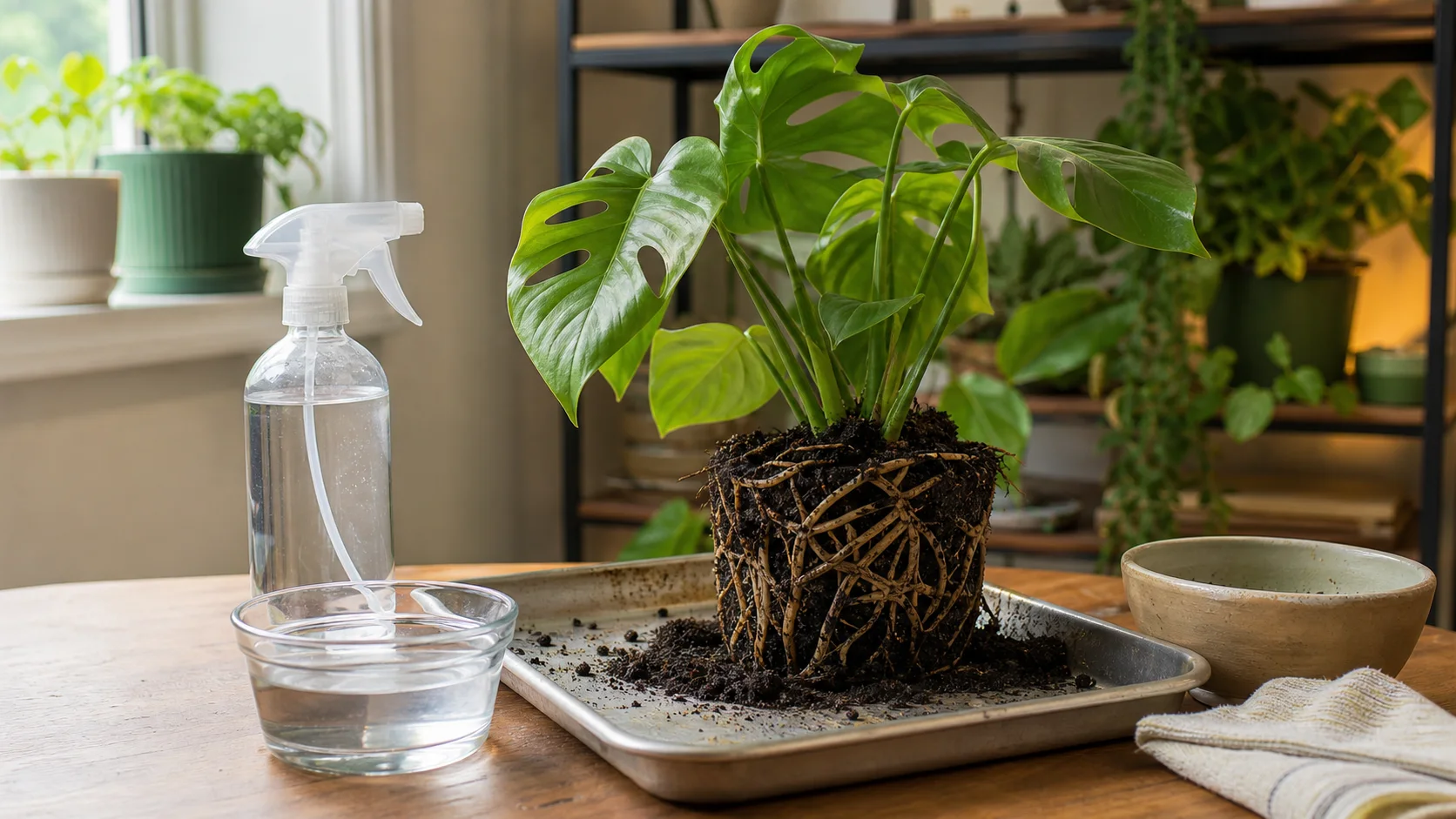
Unpotting and checking the roots separates a targeted rinse during rot cleanup from unnecessary peroxide use on an unexplained decline.
| Use case | Evidence confidence | Possible benefit | Main risk | Better first step or companion move |
|---|---|---|---|---|
| Fungus gnat larvae in damp soil | Strongest support for routine houseplant use | Knocks back larvae in the top layer of mix | Repeated drenches without drying the mix just delay the real fix | Let the top layer dry more, add sticky traps, and treat nearby pots too |
| Root-rot cleanup during repotting | Moderate, but only as part of triage | Brief rinse can reduce microbial load on compromised roots | Using peroxide instead of removing mushy roots and changing the setup | Unpot the plant, trim rot, improve drainage, and repot into fresh airy mix |
| Empty-pot or old-mix sanitation | Reasonable for containers and discarded media | Helps sanitize before reuse after a pest or rot problem | People treat active decline like a sanitation issue and skip diagnosis | Clean the container, replace exhausted mix when possible, and confirm the plant problem first |
| Seed soaks or germination experiments | Research exists, but it is not routine houseplant care | Controlled seed treatment can be a separate use case | Readers generalize seed research into repeated houseplant drenches | Keep seed experiments separate from everyday watering or rescue work |
| Routine “plant booster” watering | Weak support | No dependable benefit beyond a short-lived fizz | Root stress, disrupted soil biology, and a false sense that the problem is solved | Fix watering habits, light, drainage, and diagnosis first |
When Fungus Gnats Peak Through the Year
One thing most hydrogen peroxide guides skip is the timing. Fungus gnats are not a random event: they follow predictable seasonal patterns, and knowing when they surge helps you act earlier, before the larval population gets out of hand.
Spring: Gnat numbers rise as people start watering more frequently after a drier winter. Soil that was on the dry side for months suddenly stays moist longer as temperatures climb and plants start actively growing. This is a common trigger for infestations that seem to appear from nowhere.
Summer: Gnats stay active but are often less of an issue if you are watering correctly and soil dries between sessions. The main risk here is overwatering during heat waves, when people water more than the plant actually needs.
Autumn: This is peak gnat season for most houseplant owners. As outdoor temperatures drop, people bring potted plants inside from patios and balconies. Those plants often carry fungus gnat eggs and larvae in their soil. Indoor heating then kicks in, ambient humidity drops, and people overcompensate by watering more. All three of those conditions together create the ideal environment for a gnat surge.
Winter: Plant growth slows, watering frequency should drop, and gnat populations usually follow. If you are still seeing persistent gnats in winter, the soil is staying too wet for too long. Check your drainage and let the pot dry out more thoroughly between waterings before reaching for any treatment.
Knowing which season you are in shapes how you respond. An autumn infestation in a newly brought-in plant is a soil contamination problem: treat it and watch for reinfestation. A persistent summer infestation is usually a watering habit problem: the treatment alone will not hold unless you address the moisture levels too.
Common Problems
| Problem after treatment | Most likely cause | What to do next |
|---|---|---|
| Gnats came back within a week | The mix stayed wet, nearby pots were untreated, or you only killed one larval wave | Repeat once weekly only as needed, dry the top layer more, and treat the rest of the plant area |
| The plant still wilts after a root-rot rinse | Too much healthy root was already lost, or the new mix is still staying wet | Recheck drainage, remove more rot if needed, and reduce watering volume |
| Leaf tips burned or foliage spotted after treatment | The mix was too strong or the solution hit leaves | Flush with plain water, stop spraying foliage, and use a weaker dilution next time |
| Nothing changed | The diagnosis was wrong and the issue was light, temperature, salts, or nutrition | Stop treating and work back through the actual symptom pattern |
Common Mistakes
Using it too often. Once a week during a targeted treatment is reasonable. Using it as a regular watering habit disrupts the beneficial microbiome in your soil, the bacteria and fungi that help roots absorb nutrients. Treat the problem, then stop.
Using it on a dry, stressed plant. If your plant is already wilting from underwatering or heat stress, hydrogen peroxide is not the right first move. Stabilise the plant with water and correct conditions before adding any treatment.
Spraying it on leaves. Some sources suggest diluted hydrogen peroxide as a foliar spray for powdery mildew. It can work at very low concentrations, but it is easy to misjudge and cause bleaching or tip burn. For surface pest and mould problems, neem oil tends to be gentler and more predictable. The neem oil for plants guide covers how to use it without stressing the plant.
Ignoring what caused the problem. Hydrogen peroxide treats symptoms, not root causes. If fungus gnats keep coming back after treatment, the underlying issue is almost always soil that stays wet too long, which means watering habits or drainage need adjusting, not just the treatment routine.
Pet Safety
Hydrogen peroxide is a household chemical, not a plant tonic or a pet-safe treat. Keep the bottle capped and labelled, discard runoff from saucers, and do not let cats or dogs drink mixed solution from trays, buckets, or watering cans.
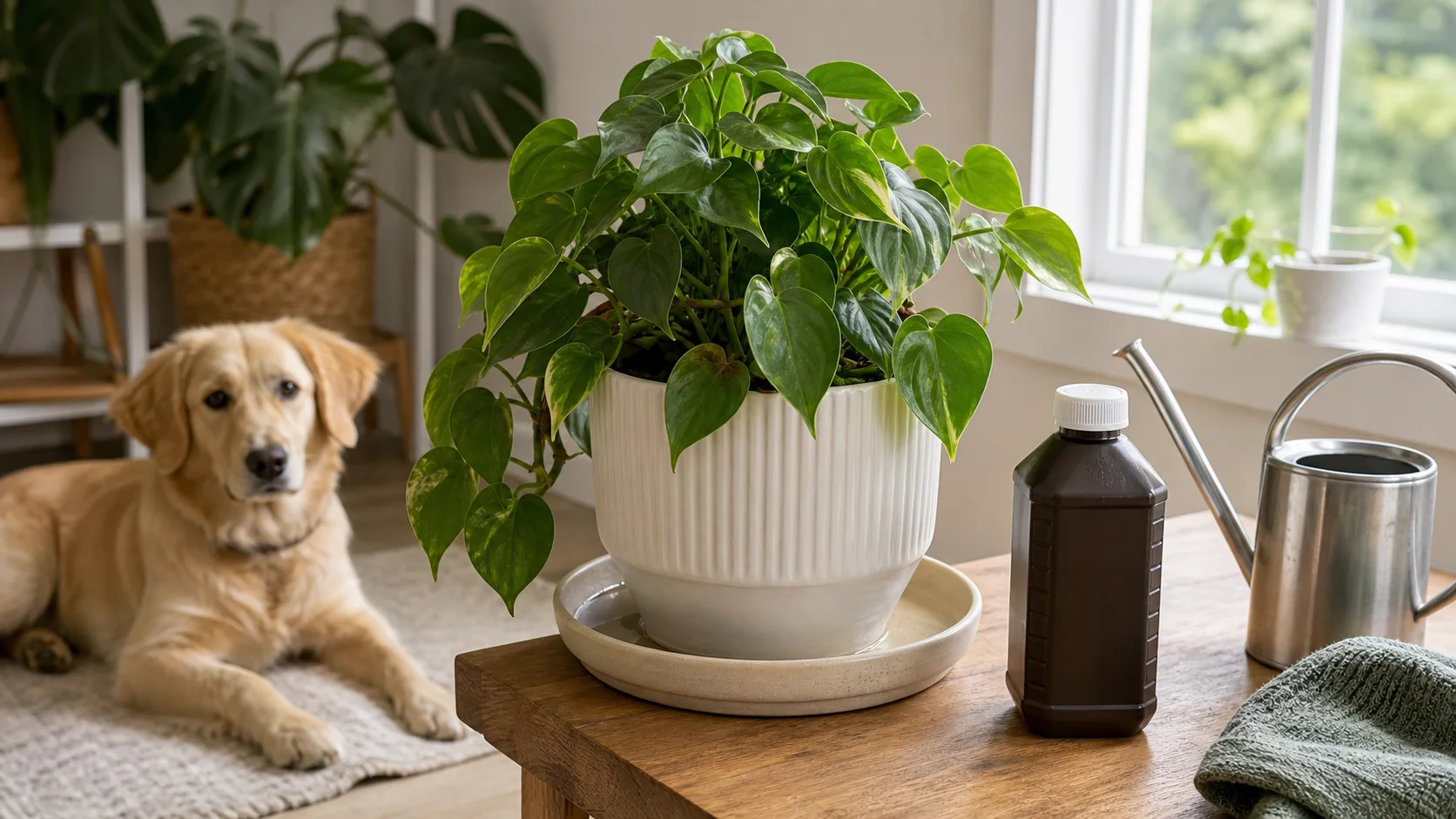
Keep the treatment bottle capped and remove saucer runoff before a dog or cat can reach any mixed solution.
After the Treatment: What to Do Next
This is the part most guides leave out. Once you have treated the problem and the gnats are gone or the root rot is under control, your soil has taken a hit too. The hydrogen peroxide killed the pathogens and larvae, but it also reduced the population of beneficial microbes that live in healthy potting mix.
A few steps help the soil recover:
Go back to your normal watering rhythm. The single biggest thing you can do after treatment is remove the conditions that caused the problem. Letting the soil dry appropriately between waterings gives beneficial bacteria the oxygen-rich environment they thrive in, while cutting off the conditions gnats and root rot need to return.
Wait before fertilising. Hold off on feeding for two to three weeks after treatment. The root system is recovering, and fertiliser applied to stressed roots can accumulate as salt and cause additional damage. Once you see new growth, that is usually a sign the plant has stabilised and is ready for a light feed.
Consider a compost tea drench (optional). Some growers use diluted compost tea or a soil probiotic product after a hydrogen peroxide treatment to reintroduce beneficial microbes more quickly. This is not strictly necessary, but if you are working with a plant that had a severe root rot episode, it can help rebuild microbial life faster. Plain compost dissolved in water at around 1:10 and applied once after treatment is enough.
The goal after treatment is straightforward: return to conditions where a healthy plant does not need intervention. If you are reaching for hydrogen peroxide every few weeks, something about the setup still needs adjusting.
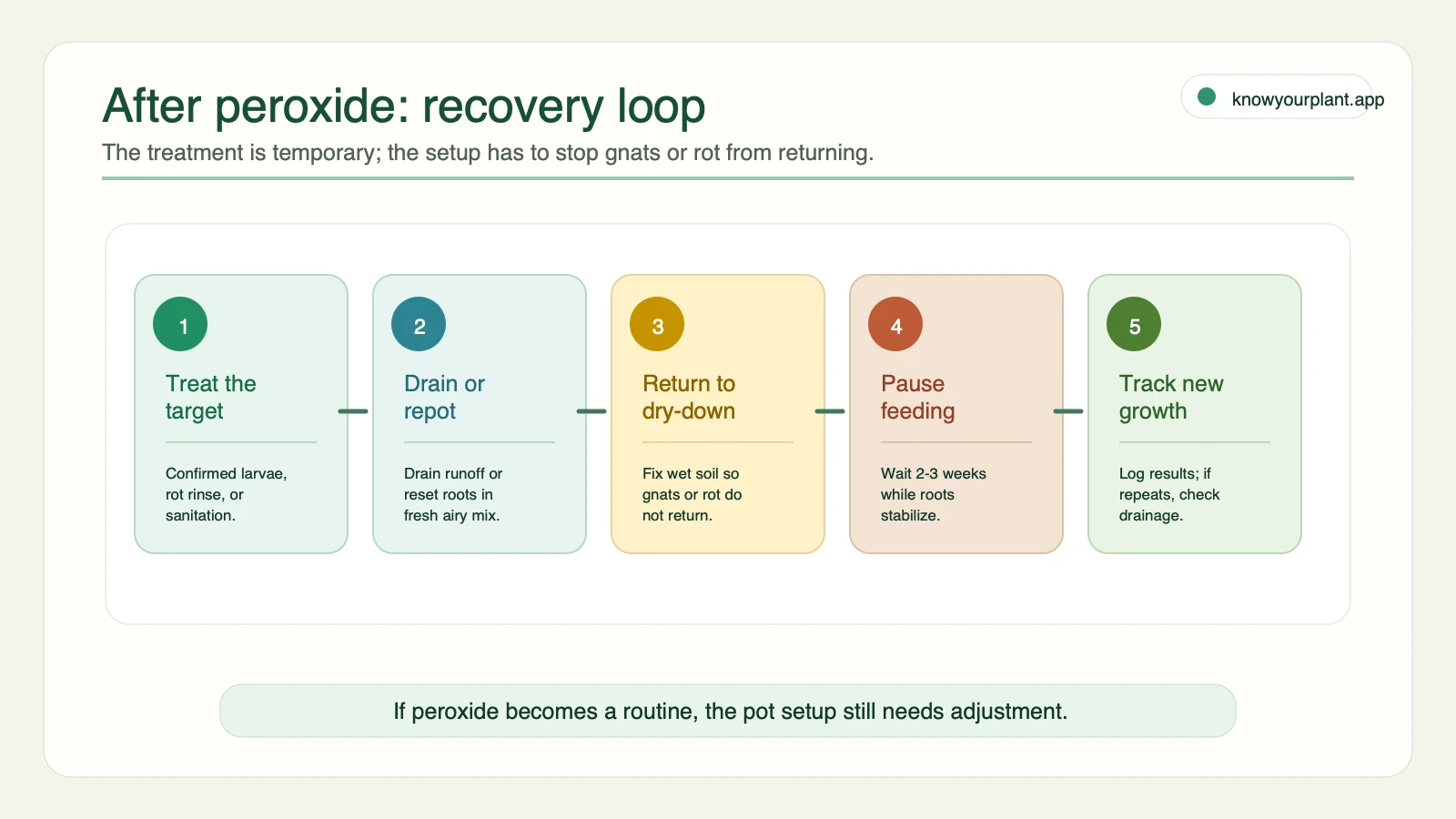
The recovery loop turns the treatment into a reset: remove the wet conditions, pause feeding while roots stabilize, and track whether new growth proves the setup is working.
A Quick Checklist Before You Start
Before mixing anything, run through this:
- Is the problem definitely what you think it is? (Fungus gnats vs. soil mites vs. something else entirely?)
- Is the plant stable enough to handle treatment, or does it need water or light first?
- Do you have 3% hydrogen peroxide, not a stronger concentration?
- Is the pot draining freely, or will the solution pool at the bottom?
If yes to all of those, you are ready to try it.
Methodology
This page was refreshed on June 15, 2026 using university extension, IPM, and greenhouse sanitation guidance for fungus gnats, root rot, sanitation, and oxygen-stress horticulture. Community threads were used only to surface recurring reader confusion, especially around dilution mistakes, miracle-cure claims, and treating the wrong problem.
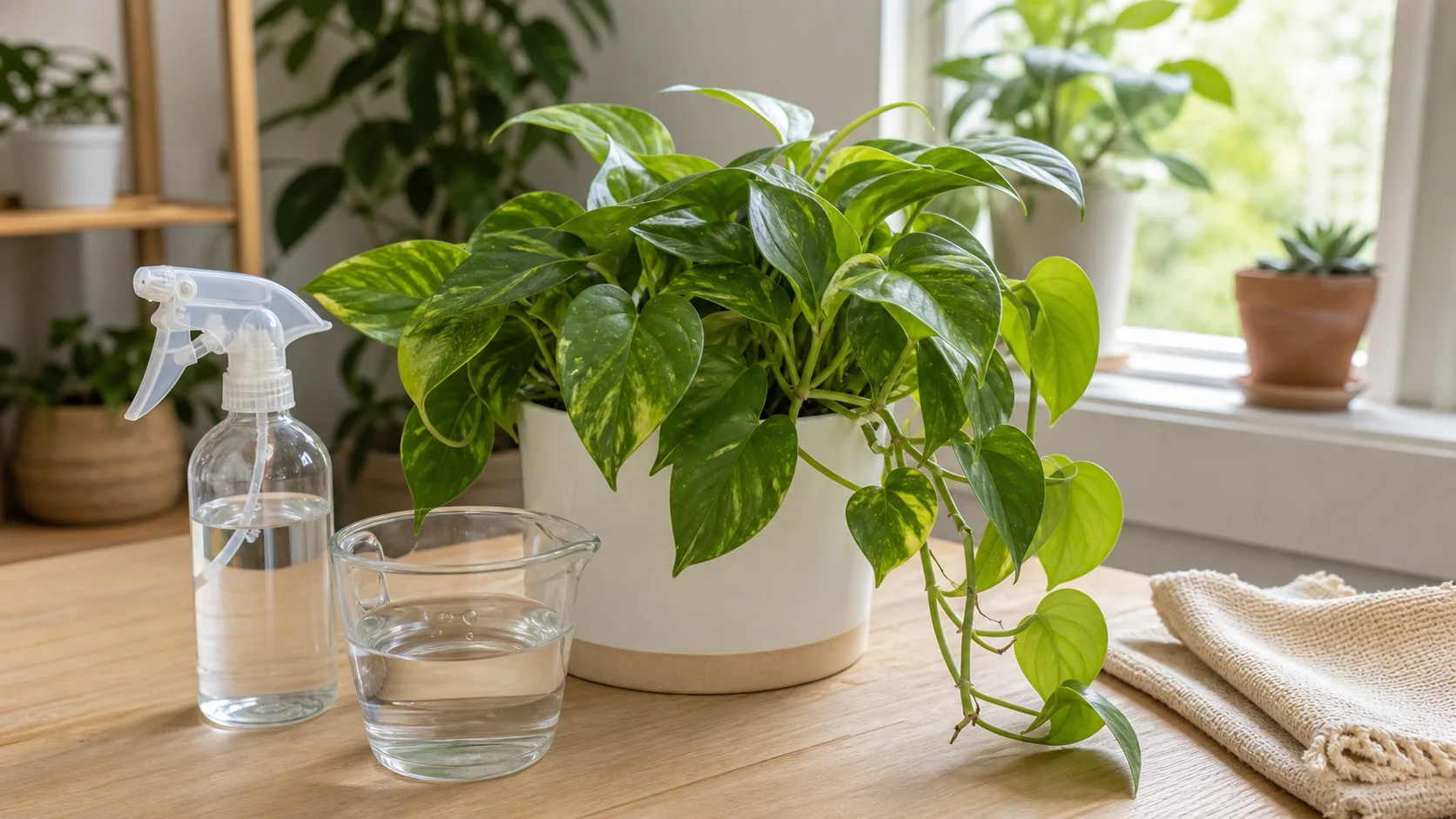
The guidance separates measured, evidence-backed treatment uses from dilution errors and unsupported routine “booster” claims.
Real User FAQ
Can I use hydrogen peroxide on any houseplant?
Yes, at the right dilution (1 part 3% to 4 parts water), hydrogen peroxide is safe for most common houseplants including pothos, snake plants, peace lilies, and monstera. Succulents and cacti are the exception. They are sensitive to excess moisture and chemical treatments in general, so stick to letting the soil dry out fully and adjusting your watering before reaching for any liquid treatment.
How often can I apply hydrogen peroxide to my plants?
Once a week for a maximum of three to four weeks during active treatment. Beyond that, you risk disrupting the soil’s beneficial microbial life, which plants depend on for nutrient uptake. If you have treated for three weeks and the problem is not improving, the issue is likely something the hydrogen peroxide cannot address, usually the source of the pest infestation or the drainage setup.
Will hydrogen peroxide kill the good bacteria in my soil?
It will reduce microbial activity temporarily, which is why it should be used as a targeted treatment rather than a routine. In small amounts applied infrequently, the beneficial microbiome recovers within a few weeks. The key is to use it to deal with a specific problem and then go back to normal watering.
Does hydrogen peroxide actually kill fungus gnat larvae?
Yes. The oxidising action kills larvae on direct contact. The limitation is that a single treatment does not reach all the larvae in the soil, and it does not affect eggs or adult gnats, which is why you need to repeat weekly for at least two to three weeks to catch each new larval wave as it hatches. Letting the soil dry out between waterings in parallel with the treatment makes a significant difference by reducing the conditions larvae need to survive.
Can I use hydrogen peroxide to prevent root rot before it starts?
Not really. Prevention comes down to drainage, pot choice, and watering habits. Hydrogen peroxide is most useful once rot has already set in, as part of a recovery process that includes removing dead roots, rinsing with the solution, and repotting into fresh soil. Applying it to healthy soil as a preventive measure would disrupt beneficial bacteria without any offsetting benefit.
What happens if I use too strong a concentration?
Root burn and bleaching. At full 3% concentration with no dilution, you will likely see leaf tip burn within a day or two, and fine root hairs can be damaged enough to set the plant back significantly. Always dilute to at least a 1:4 ratio with 3% hydrogen peroxide, and double-check the concentration on the bottle before mixing. Some pharmacies sell 6% or even 12%.
Is hydrogen peroxide better than neem oil for fungus gnats?
They work differently. Hydrogen peroxide targets larvae directly in the soil on contact. Neem oil works more slowly as a systemic deterrent and also addresses adult gnats and surface pests. If you have a heavy infestation, using both in alternating weeks can be effective, but start with hydrogen peroxide for the larvae and address the adults separately with yellow sticky traps.
How do I know if the treatment is working?
For fungus gnats: fewer adult flies within a week, and none rising from the soil when you water after two to three weeks of treatment. For root rot: the plant stabilises, stops wilting, and puts out new growth within two to four weeks of repotting. If neither of those things is happening, something else needs to be addressed, either the drainage setup, the watering frequency, or a pest issue that hydrogen peroxide alone cannot resolve.
If you want to track treatments, care history, and watering schedules across all your plants in one place, the KnowYourPlant app lets you set reminders and log what you have already tried. Download it at knowyourplant.app.