If you searched “how often to water pothos” hoping for a number, here it is: it depends on your pot, your soil, and your season more than it depends on the plant. A pothos in a well-draining terracotta pot under bright indirect light may need water every five days in summer. The same variety in dense nursery peat inside a glazed cachepot in a dim corner might go three weeks. Same plant, completely different schedules.
That’s not a cop-out. It’s the actual reason fixed watering schedules quietly kill more pothos than overwatering or underwatering ever does on its own. This guide will help you figure out your specific setup’s rhythm, read what your plant is telling you, and catch problems before they turn into root rot.
Identification Snapshot
| Detail | What to notice |
|---|---|
| Botanical name | Epipremnum aureum, usually sold as pothos or golden pothos |
| Growth habit | Trailing or climbing vine with heart-shaped leaves and visible nodes |
| Most common home setup | Nursery pot dropped into a cachepot, hanging basket, or shelf planter that can stay wetter than expected |
| Best watering cue | Top 2 inches dry plus a pot that feels noticeably lighter |
| Seasonal rhythm | Faster dry-down in warm bright months, slower dry-down in cool dim months |
| Pet safety | Not pet-safe, ASPCA lists golden pothos as toxic to cats and dogs because of insoluble calcium oxalates |
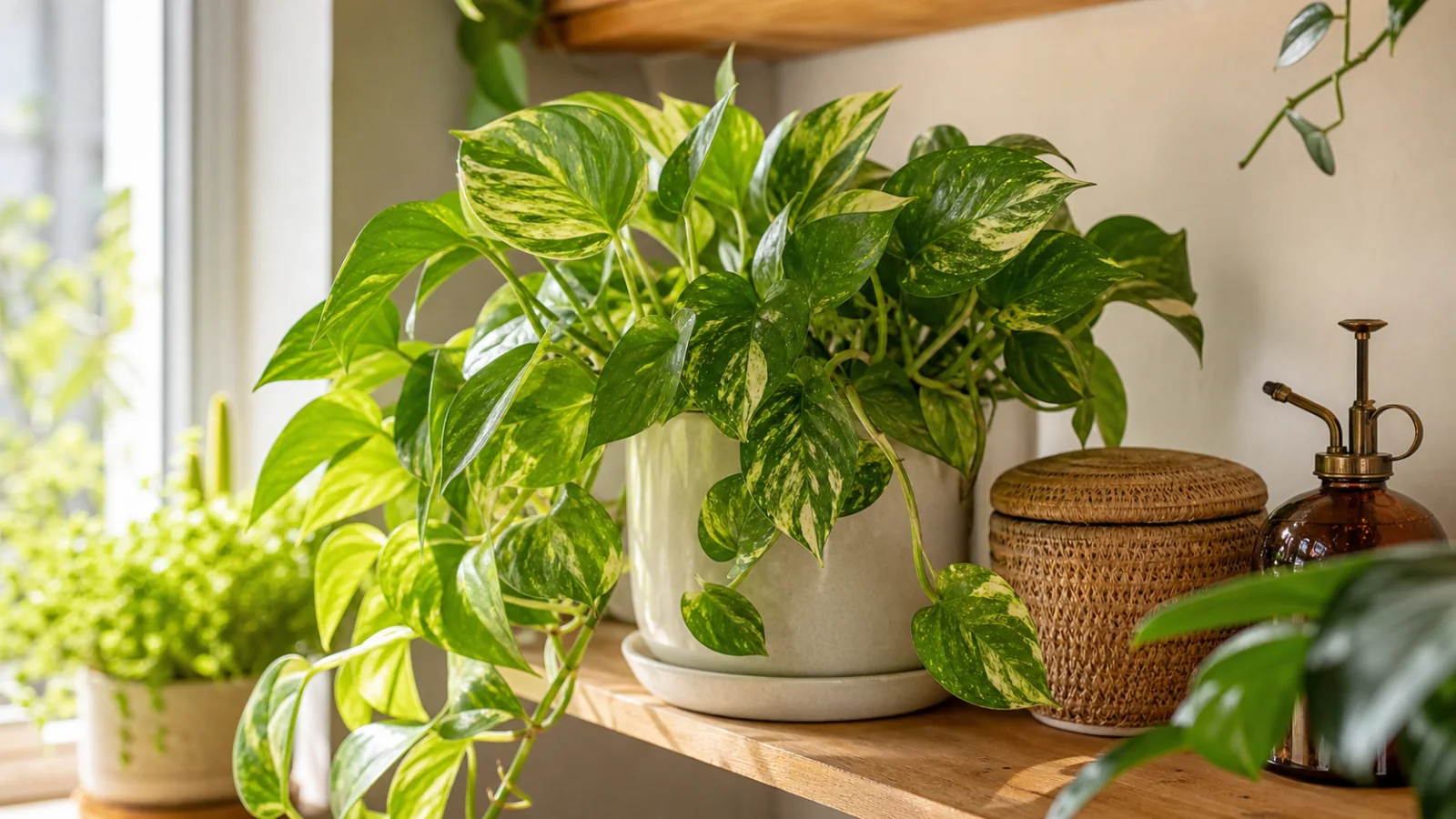
Golden pothos is easiest to recognize by its trailing nodes and heart-shaped green leaves marbled with yellow.
What Most Watering Guides Miss
Almost every pothos care article gives you the same rule: water when the top inch of soil feels dry. It’s not wrong - but it skips the part that causes most of the real trouble.
The surface of the soil can feel dry within a day or two while the root zone, down where the roots actually live, stays saturated for another week or more. It happens with dense nursery peat, with pots much larger than the root ball, with drainage holes that are partially blocked, and especially with pothos sitting inside a decorative cachepot trapping runoff underneath.
Here’s the misdiagnosis this creates: you check the surface, it’s dry, so you water. But the roots are already sitting in moisture from the last watering. After a few weeks of this, the lower leaves start yellowing, the vines go soft, and you assume you’re somehow underwatering a plant you water regularly. The plant looks thirsty - the actual problem is the opposite. If that pattern sounds familiar, the overwatered plant signs guide walks through the broader symptom checklist.
The fix is two checks, not one. Push your finger two inches into the soil, not just one. Then lift the pot. Surface feel alone is unreliable when the mix is dense or there’s a hidden reservoir below. Depth plus weight gives you the actual picture, and together they take about ten seconds.
The Two-Check Method
Check 1 - Finger depth: Push your finger into the soil to the second knuckle, roughly two inches down. If it still feels damp or cool at that depth, put the watering can down. If it feels dry all the way in, the plant is ready.
Check 2 - Pot weight: Pick up the pot right after a thorough watering so you know what fully saturated feels like. Come back in a few days. When the pot feels noticeably lighter, the root zone is drying down and you’re approaching the right window. A pot that stays heavy for over a week is telling you the soil or drainage setup is the issue - not your schedule.
These two checks replace any calendar you might be tempted to follow. After a few weeks you won’t need to think about it - you’ll just know when she’s ready.
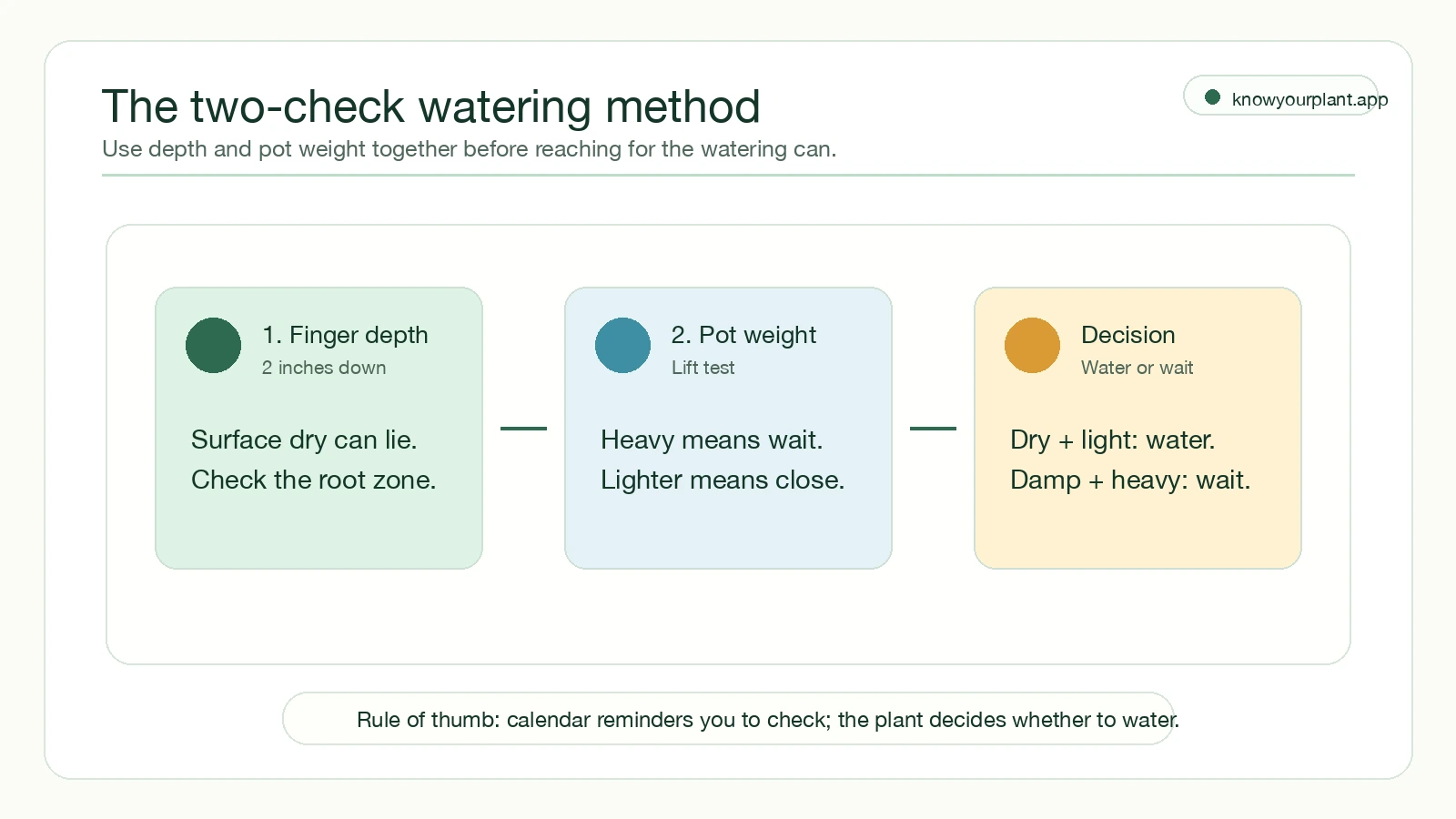
Use the two-check method before every watering: the calendar can remind you to inspect, but soil depth and pot weight decide whether the plant is ready.
Quick Decision Tree: Water, Wait, or Repot?
- Top 2 inches dry and pot noticeably lighter: water thoroughly until runoff, then let the pot drain fully.
- Surface looks dry but the pot still feels heavy a week later: wait, then investigate dense nursery peat, an oversized pot, blocked drainage, or water trapped in a cachepot.
- Yellow lower leaves plus soft drooping vines while the soil is still damp: stop watering and inspect the root zone instead of giving another drink.
- Plant wilts, the pot feels very light, and it perks back up within hours after watering: that was dry-down stress, not root rot.
- Soil dries in two or three days every cycle: shorten the check window and assess whether the plant is rootbound or sitting in a very fast-draining mix.
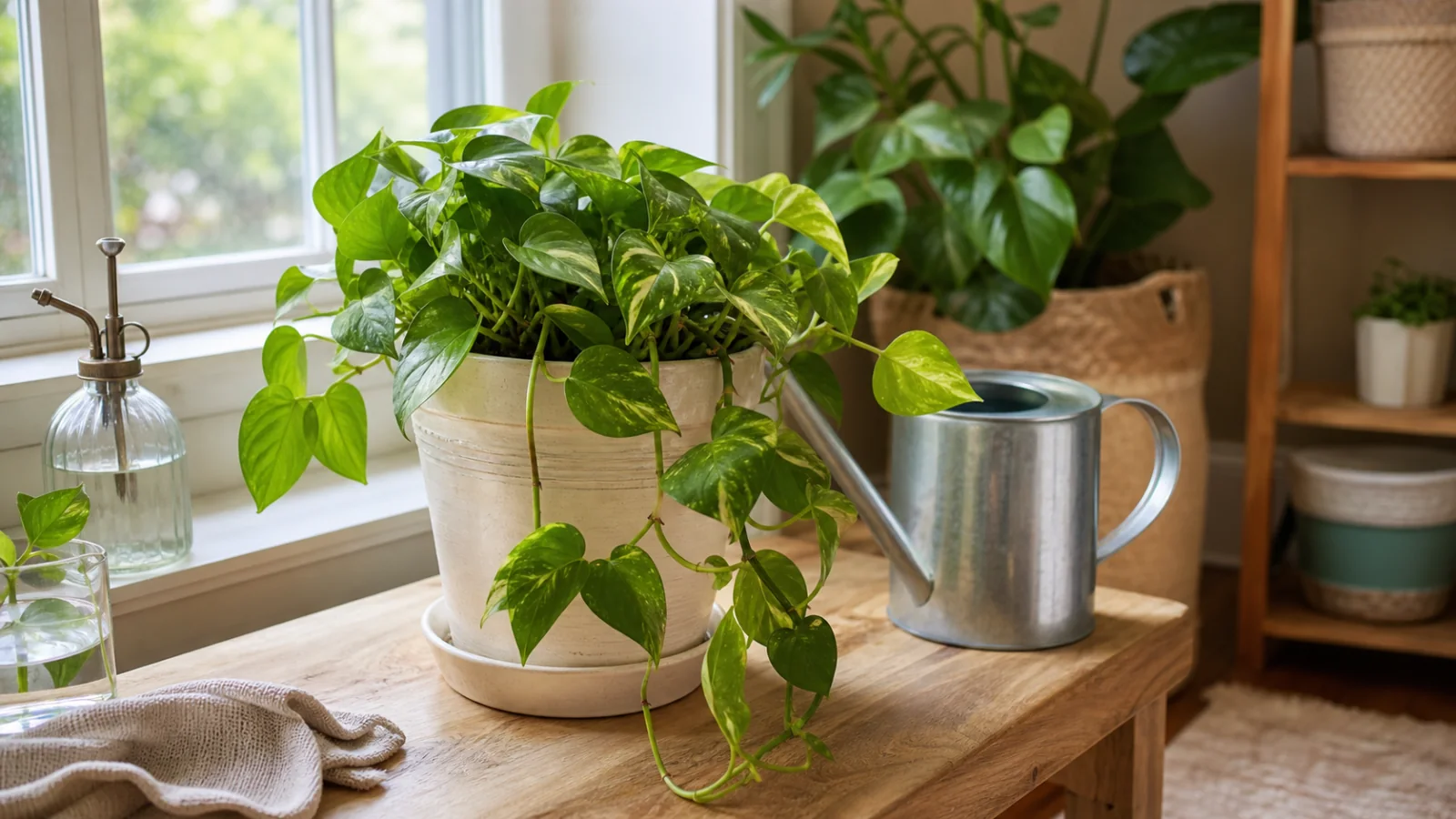
Check soil depth and pot weight before reaching for the watering can or changing the container.
Why Your Setup Changes Everything
A pothos in a well-draining, perlite-amended mix in a six-inch terracotta pot dries out noticeably faster than the same plant in dense nursery substrate inside a plastic or glazed pot. Clemson Cooperative Extension notes that root rot in pothos is commonly caused by overwatering or poorly draining soil, and that the plant should be grown in an airy, well-draining mix. The substrate and container are part of the watering equation, not just the frequency.
What slows drying down:
- A pot significantly larger than the root ball
- Dense, peat-heavy nursery substrate straight from the store
- Plastic or glazed ceramic pots, which don’t breathe through the walls
- A decorative cachepot underneath trapping runoff in a hidden reservoir
What speeds drying:
- Terracotta pots
- Airy mixes with perlite or orchid bark added
- Pots sized close to the root ball
- Bright indirect light and good airflow
If your pothos stays soggy no matter how carefully you space your waterings, the container and soil setup are the most likely cause. A plant in dense nursery peat inside a glazed cachepot can stay wet for two to three weeks regardless of what you do at the surface. That’s not a watering frequency problem - it’s a drainage problem, and watering less won’t fix it.
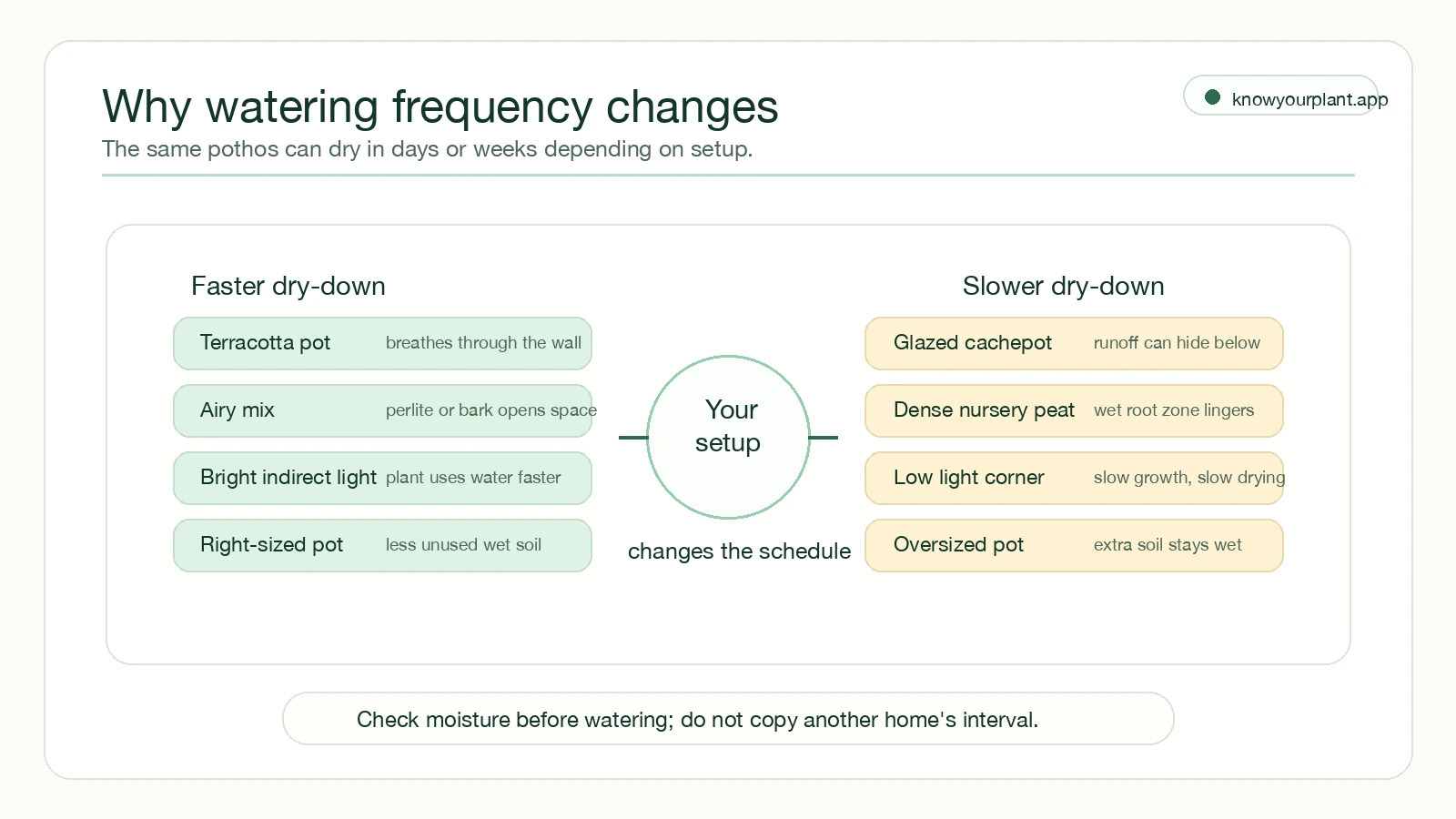
Use the setup map to adjust expectations: the same pothos can need water in days or weeks depending on pot material, soil density, light, and container size.
For a soil mix formula and pot-sizing guidance that supports good drainage, the pothos care guide covers both in detail.
Seasonal Shifts: Summer vs. Winter
Pothos grows actively in spring and summer when light is stronger and temperatures are warmer. In winter, growth slows and the soil turns over much more slowly. Missouri Botanical Garden recommends keeping pothos consistently moist during the growing season and watering somewhat less from fall through late winter, noting that roots can rot in poorly drained soils.
In practice, the same plant that dried down in five to seven days in July may stay moist for ten to fourteen days or longer in January. Your setup hasn’t changed - the conditions have.
Starting ranges by setup (always confirm with the two-check method before watering):
| Setup | Spring-Summer | Fall-Winter |
|---|---|---|
| Bright indirect light, terracotta pot, well-draining mix | Every 5-7 days | Every 10-14 days |
| Medium indirect light, plastic pot, average potting mix | Every 7-10 days | Every 12-16 days |
| Low light, large pot relative to plant | Every 10-14 days | Every 16-21 days |
These are ranges to orient you, not rules to follow blindly. Your home’s humidity, the temperature near the plant, and whether it’s near a heat vent all affect how quickly the soil dries. The table tells you what to expect; the two-check method tells you when to actually water.
Care Cards
| Care card | Fast answer |
|---|---|
| Light | Bright indirect light speeds dry-down, dim corners slow it dramatically |
| Soil | Airy potting mix with perlite or bark is easier to water correctly than dense nursery peat |
| Pot | Drainage holes are non-negotiable, and cachepots need to be emptied after watering |
| Watering cue | Dry at 2 inches plus a lighter pot beats any weekly schedule |
| Winter adjustment | Expect longer gaps and confirm at depth before every drink |
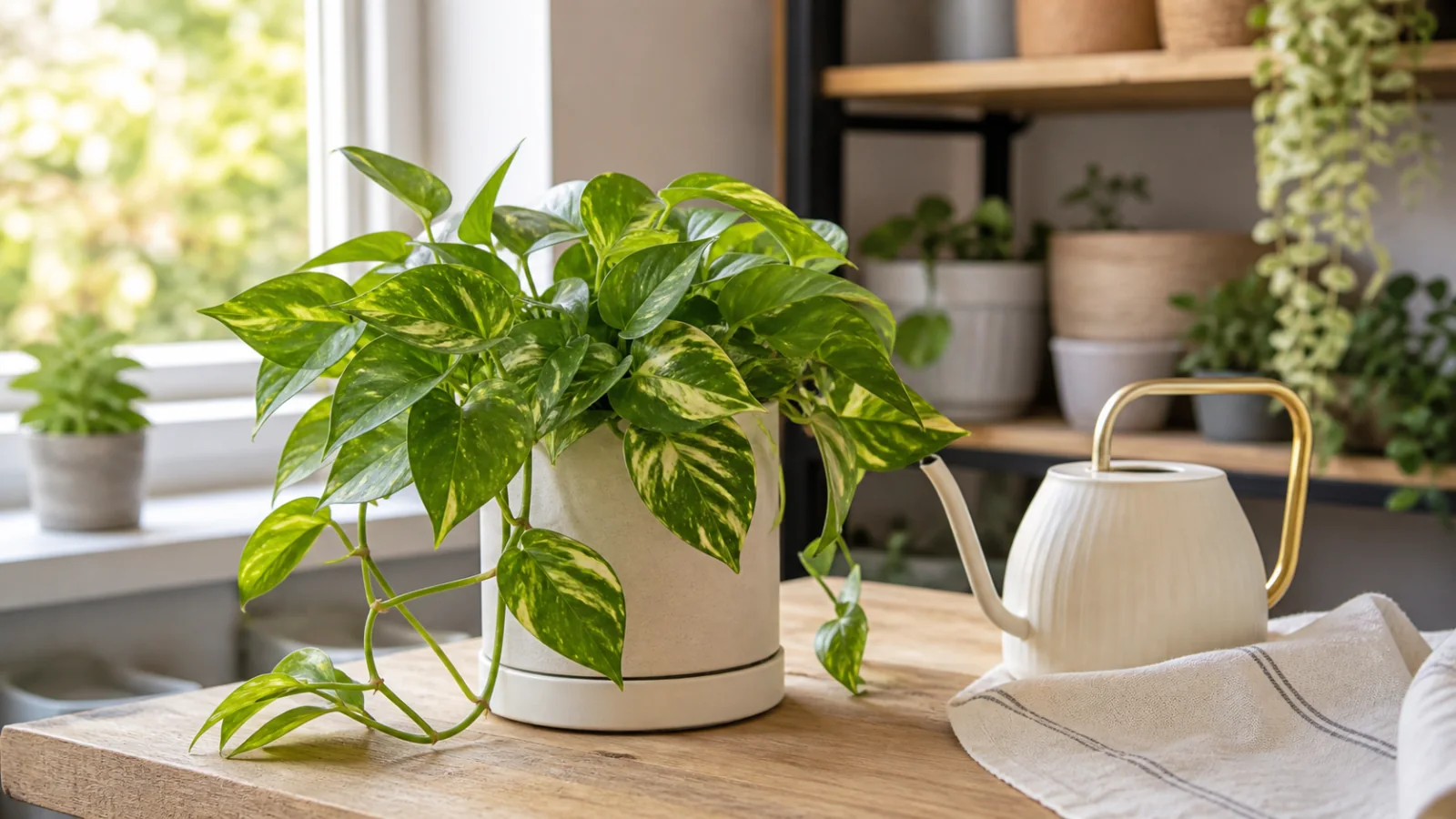
Bright indirect light, a draining pot, and a deliberate watering check form the core pothos care routine.
Reading What Your Plant Is Telling You
Both overwatering and underwatering can make a pothos look distressed, but they present differently and respond to treatment differently. NC State Extension identifies root rot and blackened leaf margins as consequences of overwatering, and these symptoms develop gradually before they become obvious.
Symptom guide:
| Symptom | Likely cause | First check |
|---|---|---|
| Yellow leaves starting from lower vines | Overwatering | Check soil at two-inch depth, lift the pot |
| Soft, drooping vines that don’t recover after watering | Root damage from overwatering | Probe soil, check for mushy stem near soil line |
| Brown, mushy spots at stem base near soil | Root rot in progress | Check drainage, consider unpotting to inspect roots |
| Soil stays wet far longer than expected | Dense mix, oversized pot, hidden reservoir | Check drainage holes and container setup |
| Wilting that bounces back within hours of watering | Underwatering | Confirm with finger test - soil bone dry? |
| Dry, crispy leaf edges or tips | Underwatering or low humidity | Check soil first, then consider humidity levels |
| Pot feels very light, soil pulling away from the edges | Significantly underwatered | Water slowly and thoroughly, let it drain fully |
The most important distinction is how quickly the plant recovers. An underwatered pothos bounces back within a few hours of a good drink. An overwatered pothos often stays droopy even after the soil dries out, because damaged roots take time to heal - and in cases where rot has already progressed, some damage may not fully reverse. If the leaves are folding inward and you want a symptom-specific read before watering again, the pothos leaves curling guide helps separate thirst from root stress or heat.
Penn State Extension puts it plainly: pothos is better kept too dry than too wet. That’s not permission to ignore it, but it’s a useful tiebreaker when you’re not sure whether to water today or wait one more day. Wait.
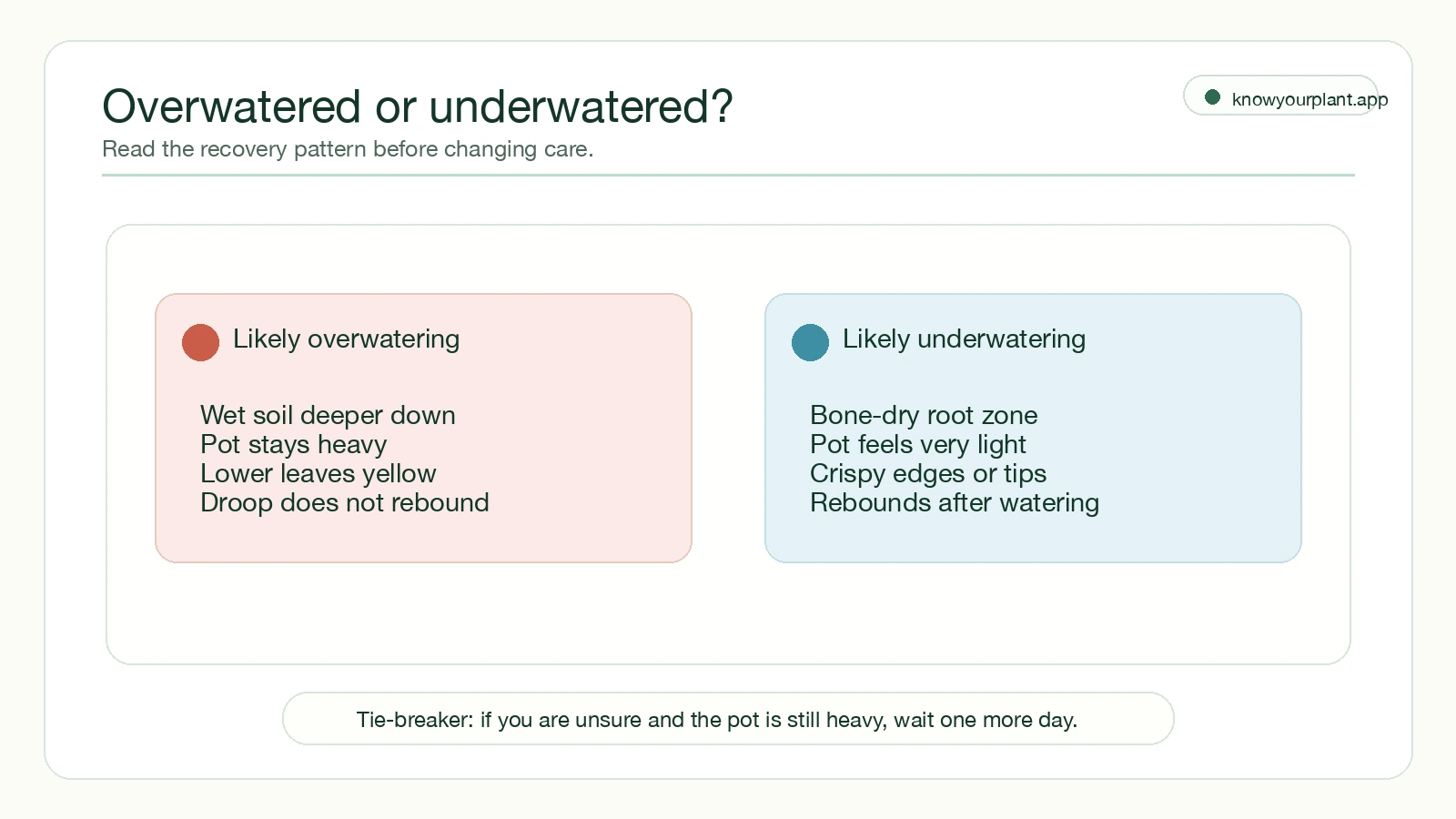
Use the symptom card as a tiebreaker: wet soil plus a heavy pot points to waiting, while a bone-dry root zone and light pot point to watering.
Lookalikes and Confused With
- Heartleaf philodendron: usually has thinner, more matte leaves with a deeper notch at the base. If you copied a pothos schedule onto a philodendron, check the ID first.
- Satin pothos (Scindapsus pictus): often sold as a pothos, but the leaves are thicker, more matte, and patterned with silver splashes.
If the plant in front of you is not a true pothos, the dry-down logic still helps, but pot size, growth speed, and recovery time can differ enough to change the rhythm.
Common Problems That Get Mistaken for Watering
| What you notice | What is usually happening | Safer next step |
|---|---|---|
| Surface dry, pot still heavy | The root zone is still wet | Wait and inspect the pot, mix, and drainage |
| Yellow leaves after switching to bottom watering | The method changed, but the root zone is still staying wet too long | Let the pot drain fully and judge the next cycle by weight and depth |
| Droopy vines after an overwatering event | Root stress is still working through the plant | Use drier cycles and watch new growth instead of watering again |
| Soil pulling from the pot edges and a very light container | The plant dried past the ideal window | Rewet slowly and return to the two-check method |
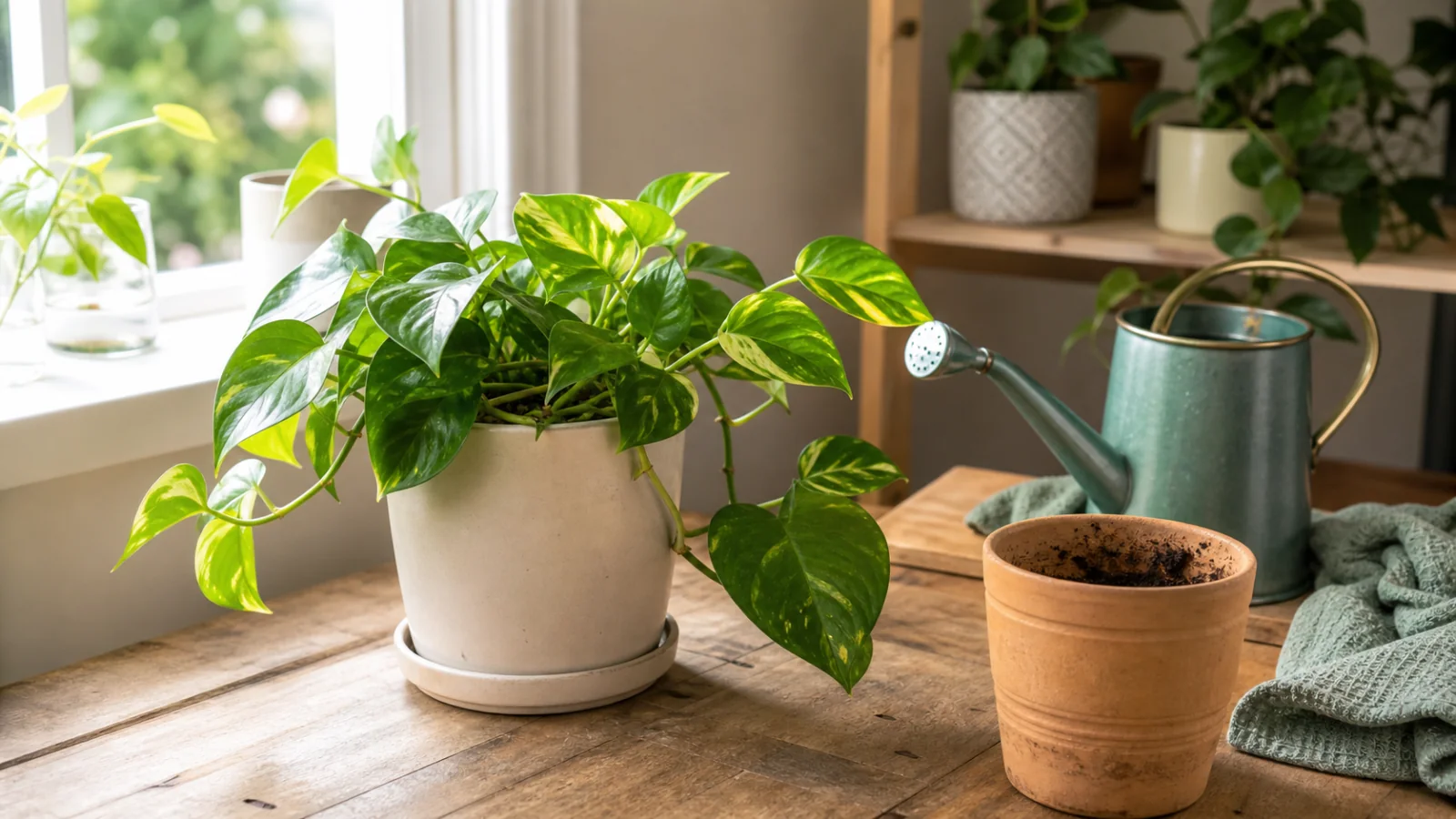
Inspect the pot, soil, and drainage setup before treating every symptom with another drink.
Container and Soil Checklist
Before adjusting how often you water, run through this checklist. Many watering problems trace back to setup, not schedule.
Check your container:
- Does the pot have drainage holes? If not, water is pooling at the bottom invisibly
- Is the pot sitting inside a decorative cachepot? Runoff may be trapped underneath without draining
- Is the pot noticeably larger than the root ball? Excess soil holds moisture the roots can’t reach
Check your soil:
- Is the mix dense and peat-heavy straight from the nursery? Dense mixes dry slowly
- Is there any compaction - water running off the surface instead of soaking in?
- Does the lower third of the soil stay heavy and wet for more than a week after watering?
What to do if you find a problem:
- Cachepot with trapped runoff: empty any standing water within an hour of watering every single time
- Pot too large for the root ball: move to a pot one size smaller, or hold off watering until the plant catches up to the current container
- Dense nursery mix that stays wet too long: consider repotting into a mix with added perlite or bark
For repotting steps and timing guidance, the guide to repotting plants walks through the process.
How to Water When the Time Comes
Water slowly and thoroughly until it flows freely out the drainage holes. This makes sure the whole root zone gets moisture, not just the top layer. Let the pot drain completely before returning it to any saucer or cachepot.
If you use a saucer, pour out collected water within an hour. Standing water in a saucer is one of the most reliable paths to the kind of root damage covered in the root rot treatment guide.
Pet Safety
The ASPCA lists pothos as toxic to dogs and cats because of insoluble calcium oxalates. If you keep saucers or runoff trays near the floor, or leave trimmed leaves and cuttings around after watering, clear them promptly and keep curious pets away from the plant.
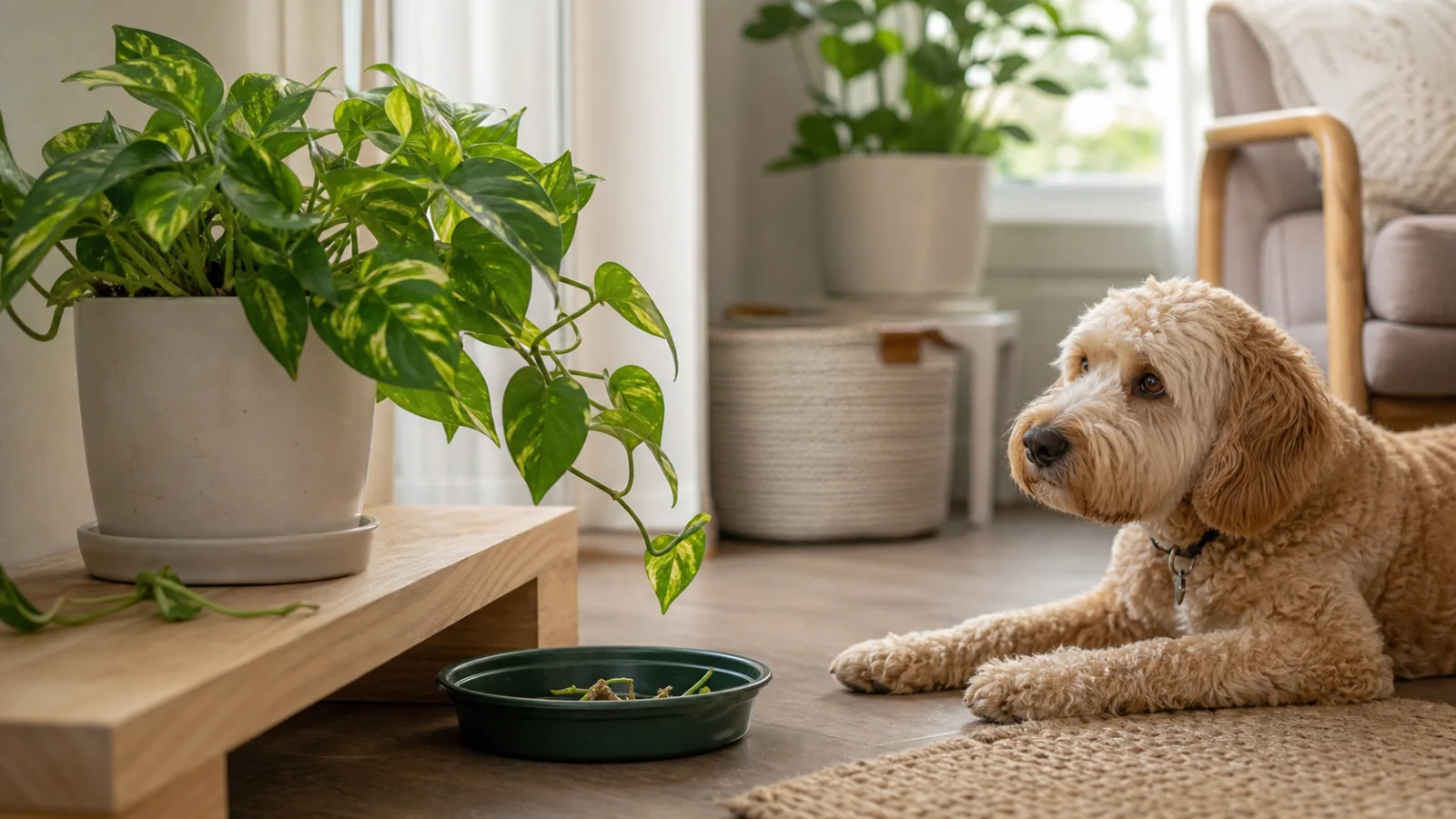
Keep trailing vines, loose cuttings, and runoff trays out of reach of curious dogs and cats.
Recovering After Overwatering
If you’ve caught an overwatering situation, here’s what to watch over the next few watering cycles:
- Let the soil dry more than usual before the next watering. Use the full two-inch finger check, confirm with pot weight, and when in doubt wait one more day.
- Check the stem near the soil line. Firm stem means there’s a good chance of recovery. Soft or mushy with an off smell means the roots need a direct look.
- Watch for new growth, not old leaves. Leaves that were already yellowing won’t green back up - they’re done. New growth or the stabilization of existing leaves is the real recovery signal.
- After two or three drier cycles, reassess. If yellowing continues even with appropriate watering intervals, the root zone may still have damaged sections. At that point, unpotting to inspect the roots directly is worth doing. If you find healthy stems with nodes, taking a cutting to propagate gives you a backup while the main plant recovers. The guide to propagating pothos walks through the steps.
Recovery from overwatering is slower than most people expect. Pothos is resilient, but a stressed root system needs several weeks of consistent, appropriate care before it stabilizes. The urge to keep adjusting is understandable - the right move is usually to settle into a drier rhythm and give it time.
For another practical pet-safety check, see Are Pothos Toxic to Cats? Symptoms and Safer Next Steps for the risk level and the next steps.
Real User FAQ
My pothos soil is still wet after a week or two, but the top feels dry. Should I water anyway?
No. Several owner threads describe this exact trap. If the surface looks dry but the pot still feels heavy, treat it as a setup problem first: dense nursery peat, an oversized pot, blocked drainage, or a cachepot holding runoff.
I switched to bottom watering to deal with fungus gnats, and now my pothos still looks droopy. Did I soak it too long?
Maybe, but the bigger issue is usually uneven or prolonged moisture in the root zone. Bottom watering is not automatically wrong. Set a timer, let the pot drain fully, and judge the next step by soil depth and pot weight, not by the method alone.
I overwatered once and yellow leaves keep appearing. Is the plant still dying?
Old damage can keep showing up for a while even after you improve the routine. Watch for firm stems, a lighter pot between waterings, and healthy new growth. If yellowing keeps spreading after two or three drier cycles, inspect the roots directly.
Frequently Asked Questions
How often should I water pothos in summer?
In summer with strong light and active growth, most pothos in well-draining pots and bright indirect light need water every five to seven days. In a larger pot with denser soil or lower light, that stretches to seven to ten days. Check the soil at two inches deep and lift the pot before each watering.
How often should I water pothos in winter?
In winter, the same plant that needed water every week in summer may go ten to fourteen days or longer between waterings. Missouri Botanical Garden recommends watering pothos somewhat less from fall through late winter. The two-check method still applies - confirm the soil is dry at depth before watering, not just at the surface.
Can I water pothos on a fixed weekly schedule?
Use a weekly check as a prompt to inspect your plant, but watering on a fixed schedule regardless of soil conditions is one of the most common causes of overwatering. The right interval changes with season, light, pot size, and soil mix. Check before you water every time rather than following a calendar.
What does an overwatered pothos look like?
Yellow leaves starting from the lower sections of the plant, soft or droopy vines that don’t recover after the soil dries out, and sometimes a soft stem near the soil line. The soil often stays wet far longer than expected. NC State Extension identifies root rot and blackened leaf margins as consequences of overwatering, and these develop gradually before becoming obvious.
What does an underwatered pothos look like?
An underwatered pothos wilts noticeably but bounces back quickly after a thorough drink. The leaves may develop dry, crispy tips or edges, and the soil will feel bone dry all the way down. The pot will feel very light. The key difference from overwatering: an underwatered plant recovers fast once you water it.
Is it better to underwater or overwater pothos?
Penn State Extension says pothos is better kept too dry than too wet. An underwatered pothos recovers quickly from a single drink. An overwatered pothos can develop root rot that takes weeks to resolve and may not fully recover if damage is extensive. When you’re genuinely unsure, wait one more day.
Why is my pothos soil staying wet for weeks?
The most common causes: an oversized pot relative to the root ball, dense nursery peat that holds moisture deep in the mix, a plastic or glazed ceramic container with low evaporation through the walls, or a decorative cachepot trapping runoff underneath. If the surface feels dry but the pot is still heavy days after watering, one of these is almost certainly the cause - not your watering frequency.
Should I mist my pothos instead of watering?
Misting the leaves doesn’t replace watering and doesn’t hydrate the root zone. The plant takes up water through its roots, not its foliage. Mist if you want to raise humidity around the leaves, but water thoroughly at the soil level when the two-check method says it’s time. The two are separate topics.
Methodology
Last updated: June 2026. This guide was refreshed using live search review for how often to water pothos and close variants, plus direct checks of extension and botanical sources that could be verified directly. Public forum threads about wet soil, bottom watering, self-watering pots, and post-overwatering recovery informed the troubleshooting language, but those owner reports were treated as qualitative signal only. Factual care and toxicity claims were cross-checked against NC State Extension, Penn State Extension, Clemson Cooperative Extension, Wisconsin Horticulture, Missouri Botanical Garden, and ASPCA.
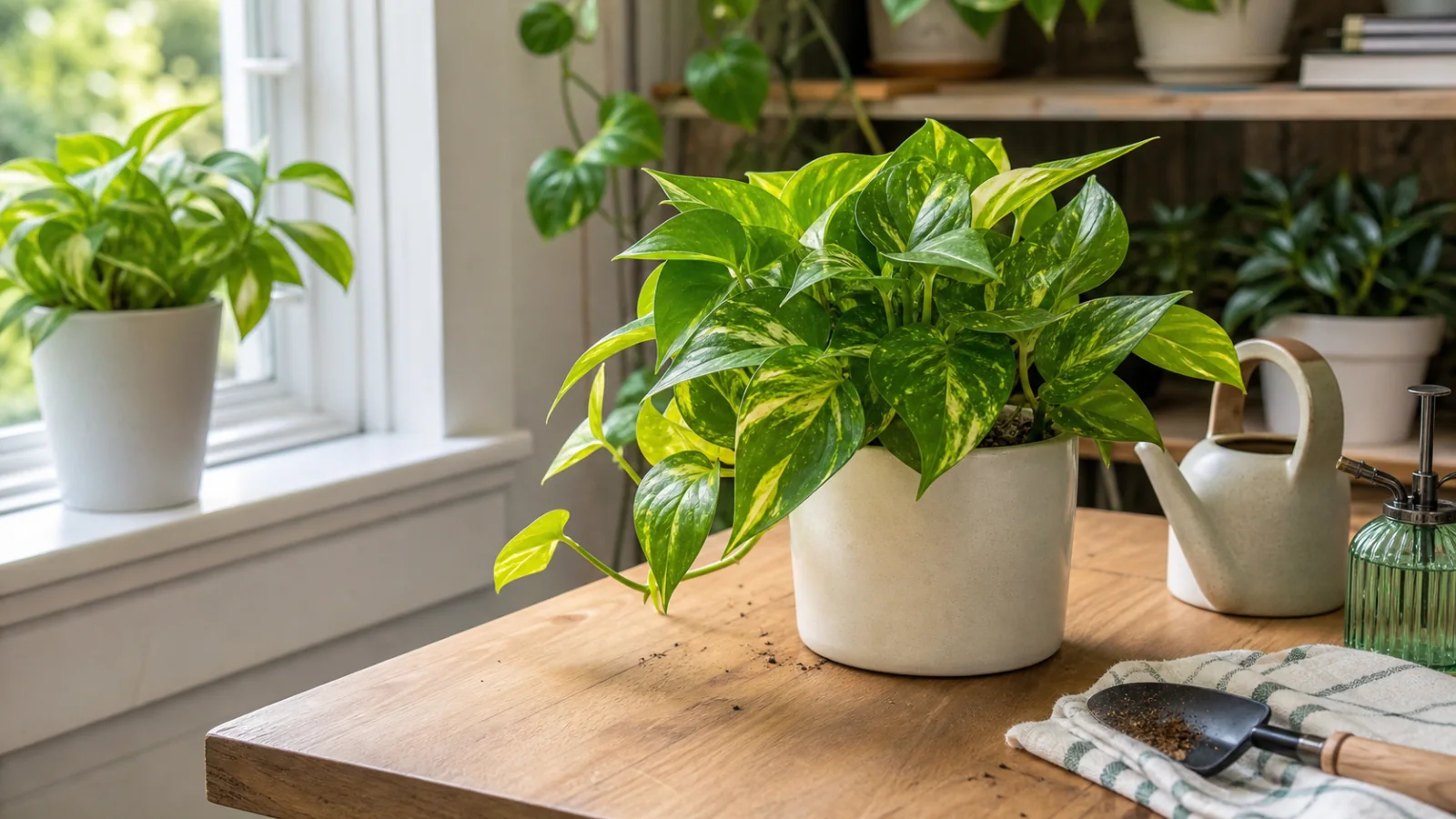
Care guidance was checked across pothos varieties, practical setups, and multiple horticultural sources.
If you want to understand how different pothos varieties fit different light levels and watering setups, the pothos varieties guide covers the most common ones side by side.
Pothos is one of the easier plants to get right once you have a real system. Two checks, ten seconds, every time you think about watering - and after a few cycles you stop guessing. That’s really all she’s asking for.