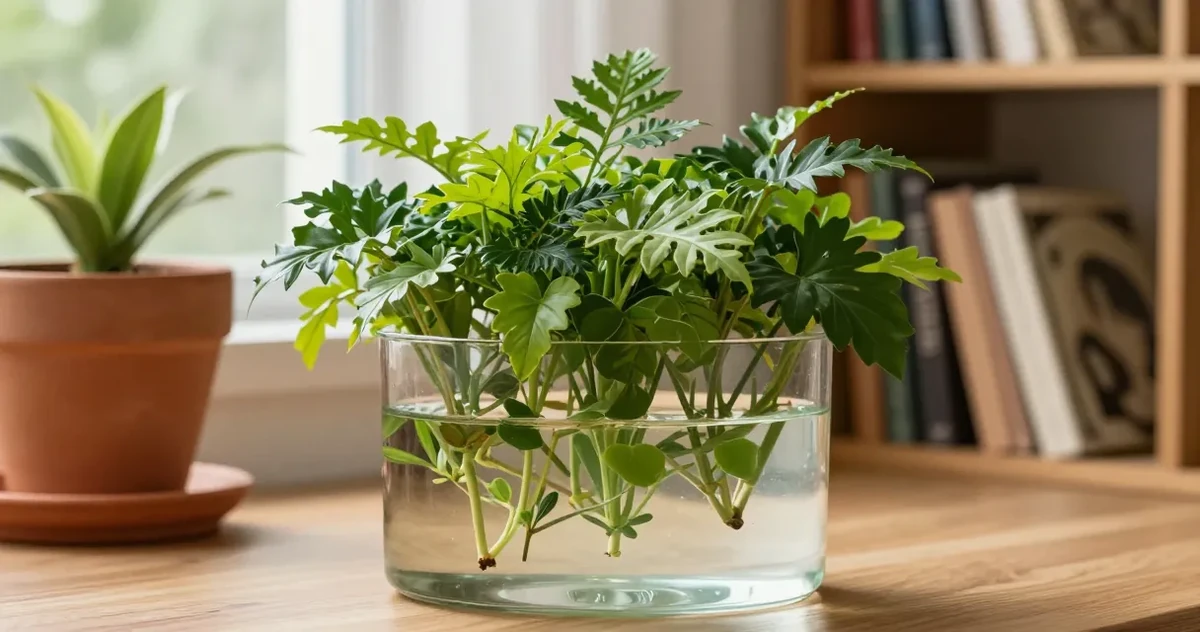
If you have ever dropped a pothos stem into a glass of water and watched roots appear within a week, you already know the appeal. No potting mix. No drainage drama. No soil mess. Just a clean jar, some light, and a cutting that wants to live.
The honest version: water growing is a real and valid way to keep many houseplants alive and display-ready, not just a temporary propagation trick. For the right species, a glass vase can genuinely be a permanent home.
But not every plant on a “grow in water” list behaves the same way. Some can live in a vase for months or years. Others root happily in water and then slowly decline if you never move them to soil. Knowing the difference changes how you plan your setup and saves you from a quiet failure two months in.
This guide separates 15 plants into three honest groups: true long-term water growers, plants that root well in water but eventually want soil, and display-first options. You will know exactly what you are getting with each one before you start.
What Most “Grow in Water” Guides Miss
Most roundup articles treat water growing as one unified idea: drop in a cutting and watch it go. The problem is they are describing two different things at once, and mixing them up leaves you with plants that look fine for a month and then quietly give up.
The thing almost no list mentions: roots grown in plain water are structurally different from roots grown in soil. Illinois Extension’s plant propagation guidance is direct about this: roots formed in water are often weak and do not adapt as easily to potting mix. In practice, a plant that has spent several months in a jar may struggle more than you would expect if you try to move it to soil later.
This has a real practical implication. If your goal is propagation – rooting cuttings to eventually plant in potting mix – water is a useful starting point but not always the right final destination. If your goal is a permanent water display, you need species that genuinely adapt to water culture, and you need to understand that long-term success requires more than a jar of tap water.
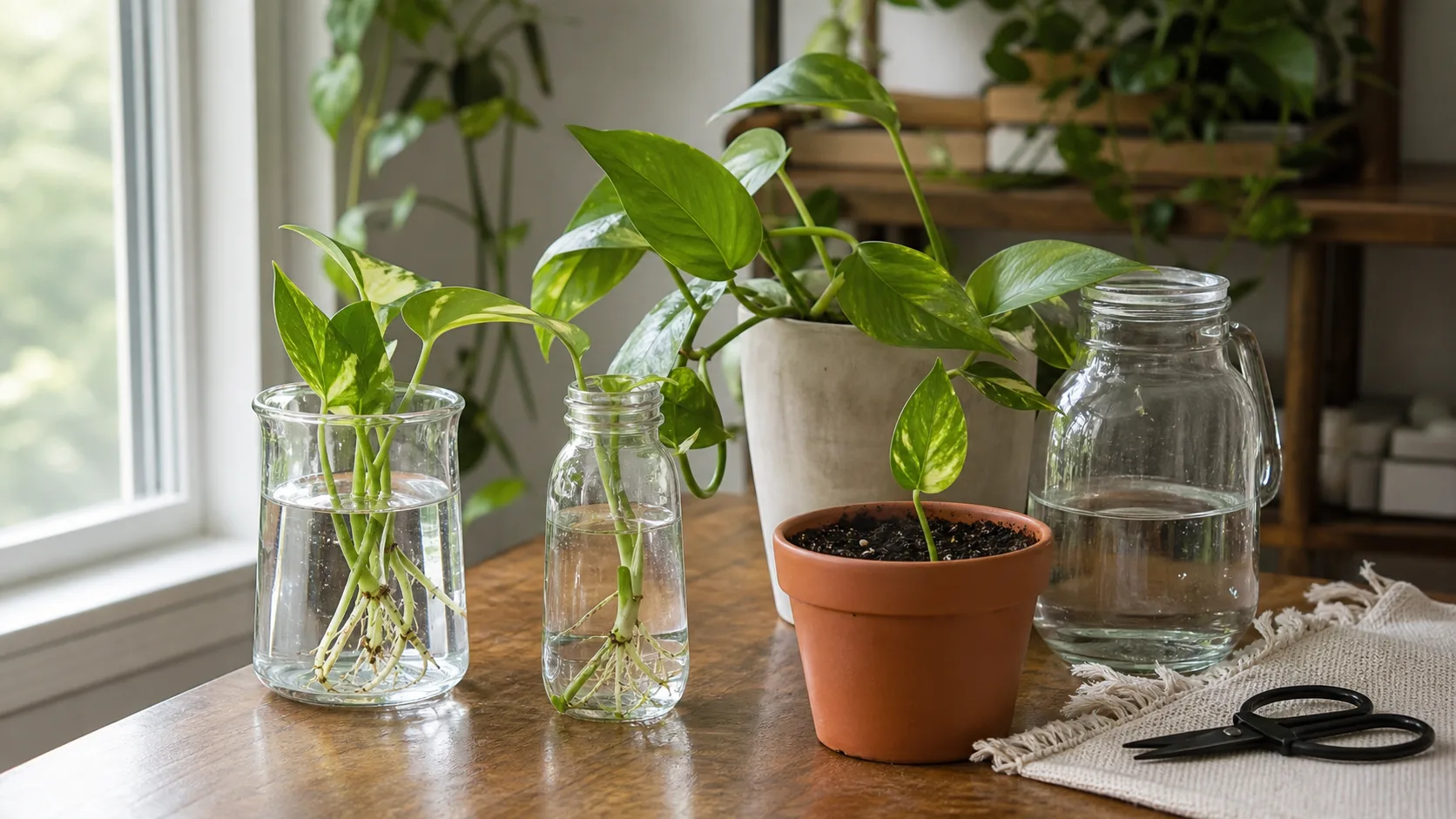
Comparing water-rooted pothos cuttings with a soil-started plant makes the difference between propagation and a permanent water display visible.
University of Minnesota Extension’s guidance on small-scale hydroponics makes this clear: long-term water culture requires nutrients, appropriate light, a way to anchor the plant, and a clean container. Plain tap water sustains a cutting for a few weeks, but mature water-grown plants eventually need diluted liquid fertilizer to keep producing new growth.
The practical first check before you pick a plant: ask yourself one question. Do you want this plant to live in water permanently, or are you rooting a cutting to move to soil? That one question sorts this entire list into two different recommendations.
How to Use This Guide
If you want a permanent water display, start with the first group. These species genuinely adapt to water culture and can stay in a vase for months or years with simple maintenance.
If you want to root cuttings to pot up later, almost everything on this list works. See our full guide to propagating houseplants for the complete process.
If you have cats, dogs, or other pets, read the pet safety table before you decide. Several of the most popular water-growing species are toxic, and this is where most roundup articles fall short.
Identification Snapshot
| Detail | What to look for before you put a plant in water |
|---|---|
| Best permanent candidates | Trailing vines, spider plant babies, and lucky bamboo adapt to repeated water changes better than heavier, soil-dependent root systems |
| Best propagation candidates | Plants that root fast from cuttings, such as monstera, ivy, coleus, and impatiens, even if they eventually want potting mix |
| Best display goal | Clear vases, shelves, kitchen windows, and aquarium-top setups all reward plants with clean stems and leaves that stay above the water line |
| Biggest risk sign | A plant with a crown, thick stem base, or lots of submerged foliage is more likely to rot if the water line sits too high |
| Pet-safety reality | Several easy water growers are toxic, so species ID matters before you treat a cutting as decor |
Lookalikes and Confused-With
| Plant or setup | Common confusion | What actually matters |
|---|---|---|
| Pothos and heartleaf philodendron | Treated as interchangeable water cuttings | Both root easily, but both are still toxic to pets and need the same water-change discipline |
| Lucky bamboo | Mistaken for true bamboo | It is a dracaena sold for water culture, which is why it handles vase life better than a random bamboo-like stem would |
| Spider plant babies | Assumed to need the mother plant to keep growing | The plantlets root well on their own in water and are one of the easiest true starter choices |
| Peace lily in water | Grouped with low-fuss vine cuttings | The roots can stay in water, but the crown has to stay above the water line or rot starts fast |
| Sweet potato vine projects | Treated like a permanent houseplant solution | It is better understood as a display project than as a forever water-grown indoor plant |
Care Cards
Long-term water display card
- Best fits: pothos, heartleaf philodendron, lucky bamboo, tradescantia, spider plant
- Works because: these plants keep producing usable water roots with simple maintenance
- Watch for: nutrient slowdown if you never add diluted fertilizer
Propagation-first card
- Best fits: monstera, english ivy, coleus, impatiens, hoya
- Works because: they root cleanly and give you a strong start before potting up
- Watch for: stalled growth or yellowing if you leave them in plain water too long
Pet-aware card
- Best fits: spider plant, mint, impatiens, hoya
- Works because: they are among the safer options on this list when pets share the room
- Watch for: always verify the exact species, because a safe-looking cutting is not the same thing as a safe plant
Display-project card
- Best fits: mint, sweet potato vine, Chinese evergreen cuttings
- Works because: they look good in glass quickly and suit kitchen or shelf setups
- Watch for: these are usually refresh, rotate, or transition plants rather than permanent hydroponic residents
Social Listening: What Plant Owners Actually Ask About Water Culture
The same reader questions repeat across houseplant and aquarium community threads often enough to shape the whole article:
- Can this plant actually live in water permanently, or am I just rooting it for later?
- Which options stay attractive in a clear vase without becoming a mushy experiment a month later?
- Which plants are safer if cats, dogs, or fish share the same space?
- What does a low-fuss setup really need beyond a jar of tap water?
That is why this guide keeps separating permanent water culture from propagation. Most frustration starts when those two goals get mixed together.
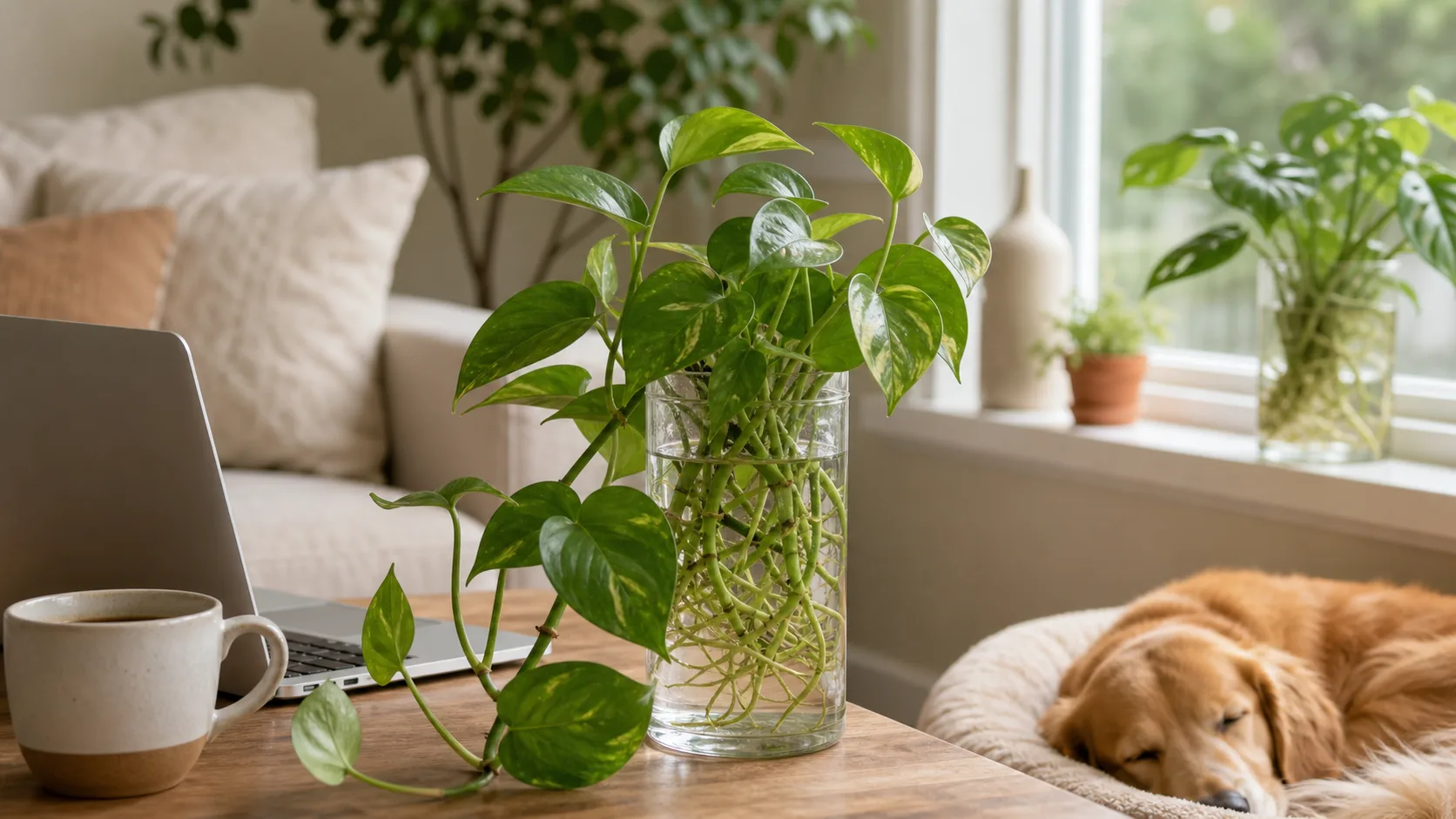
A rooted pothos in a clear vase shows why permanence, appearance, maintenance, and pet safety belong in the same water-culture decision.
Expert Note: Water Roots and Soil Roots Behave Differently
Extension guidance is remarkably consistent here. Penn State and the University of Nevada both treat water as a legitimate propagation medium, but Illinois Extension also warns that water-grown roots are often weaker and adapt less easily to potting mix later. University of Minnesota’s hydroponics guidance adds the missing long-term piece: if you want a plant to stay in water, clean containers, nutrients, light, and stable setup matter just as much as the plant choice.
Original Data: Quick Chooser Matrix
This is the shortest honest way to sort the plants on this list before you buy a vase or cut a stem.
| Group | Best examples from this guide | Best use case | Biggest caution |
|---|---|---|---|
| Easy long-term water growers | Pothos, heartleaf philodendron, lucky bamboo, tradescantia, spider plant | Permanent desk, shelf, or windowsill display | Most are not pet-safe, and even easy growers need diluted nutrients over time |
| Propagation-first plants | Monstera, english ivy, coleus, impatiens, hoya | Rooting a cutting before moving it to soil | They look successful early, then often slow down if plain water becomes the final setup |
| Display-first projects | Mint, sweet potato vine, Chinese evergreen cuttings | Kitchen windows, quick decor, gift jars, aquarium-top style displays | They are better for rotation or refresh cycles than true permanent water culture |
| Extra-caution choices | Peace lily, begonia | Readers willing to watch waterline, crown position, and feeding more closely | Rot or nutrient stress shows up faster when the setup is slightly off |
Decision Tree: Permanent Water Display or Temporary Propagation?
- Want a plant to stay in water for months or years? Start with pothos, heartleaf philodendron, lucky bamboo, tradescantia, or spider plant.
- Want something mainly to root and pot up later? Start with monstera, ivy, coleus, impatiens, or hoya.
- Need the safer side of the list for pets? Narrow toward spider plant, mint, impatiens, or hoya, then verify the exact plant before bringing it home.
- Want a pretty glass display more than a permanent setup? Choose mint, sweet potato vine, or a Chinese evergreen cutting and expect to refresh or transition it later.
- Not sure whether the plant can handle a full water life? Treat it as propagation first. It is easier to move a healthy rooted cutting into soil than to recover a tired plant from a stale jar.
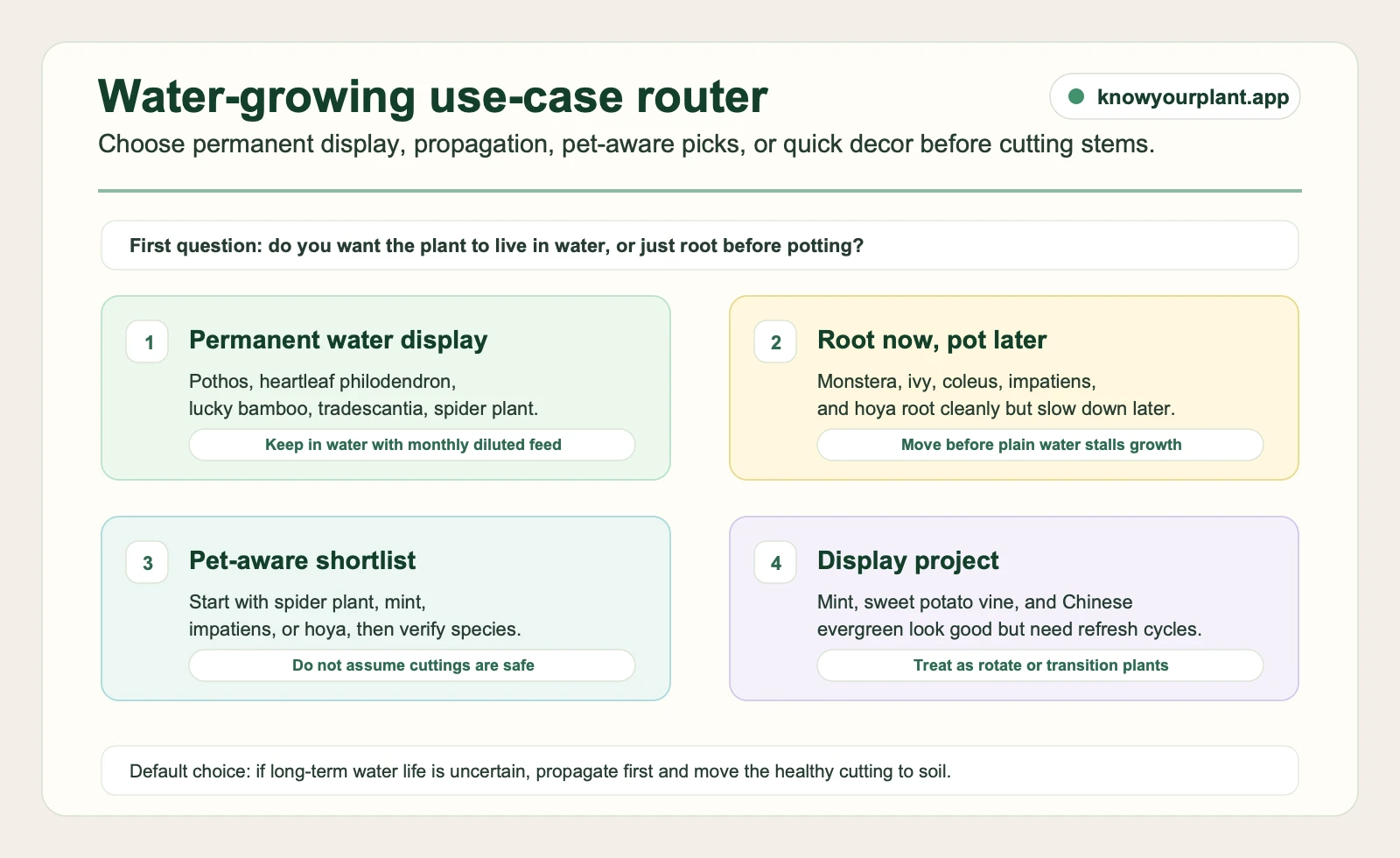
Use the router before choosing a vase or cutting so the plant matches your real goal: permanent display, propagation, pet-aware shortlist, or quick decor project.
Plants That Genuinely Thrive in Water Long-Term
These species can live in water indefinitely with regular maintenance. They adapt to water culture rather than merely tolerating it.
1. Pothos
Pothos is the most reliable water grower you can start with. Drop a stem cutting with one or two nodes into a jar, and roots emerge within 7 to 14 days. More importantly, pothos can stay in water for months or years if you refresh the water every week or two and give it decent indirect light. The trailing vines look beautiful in tall glass vessels on a shelf or hanging from a bookcase. See our golden pothos care guide for light and growth expectations if you plan to keep it long-term.
Pet note: Toxic to cats and dogs.
2. Heartleaf Philodendron
Heartleaf philodendron behaves almost identically to pothos in water. Stem cuttings root quickly, the plant adapts to long-term water culture, and the heart-shaped leaves look clean and sculptural in a clear glass container. One underrated feature: you can watch the root system develop over time, which is half the appeal of a transparent vase.
Pet note: Toxic to cats and dogs.
3. Lucky Bamboo
Lucky bamboo is actually a Dracaena, not bamboo at all, and it has been grown in water for generations. It is sold this way commercially and can live in water for years with almost no fuss. Keep it in indirect light, change the water every two to three weeks, and avoid tap water high in fluoride, which causes brown leaf tips over time. A small amount of liquid fertilizer added monthly keeps it producing new growth.
Pet note: Toxic to cats and dogs.
4. Tradescantia Zebrina
The purple-and-silver trailing plant also called wandering dude roots in water in two or three days, faster than almost anything else on this list. It holds in water beautifully, and the richly colored stems look striking against a clear container. It can stay in water for extended periods, though adding diluted liquid fertilizer every few weeks keeps the color from fading over time.
Pet note: Mildly irritating to cats and dogs.
5. Spider Plant
Spider plant babies – the small plantlets that dangle on runners from a mature plant – root in water easily and can be kept there for a good while. Set a plantlet in a shallow glass and it develops roots in one to two weeks. The arching green-and-white leaves make a clean, cheerful display in a small vase on a kitchen counter or bathroom shelf.
Pet note: Generally considered safe for cats and dogs.
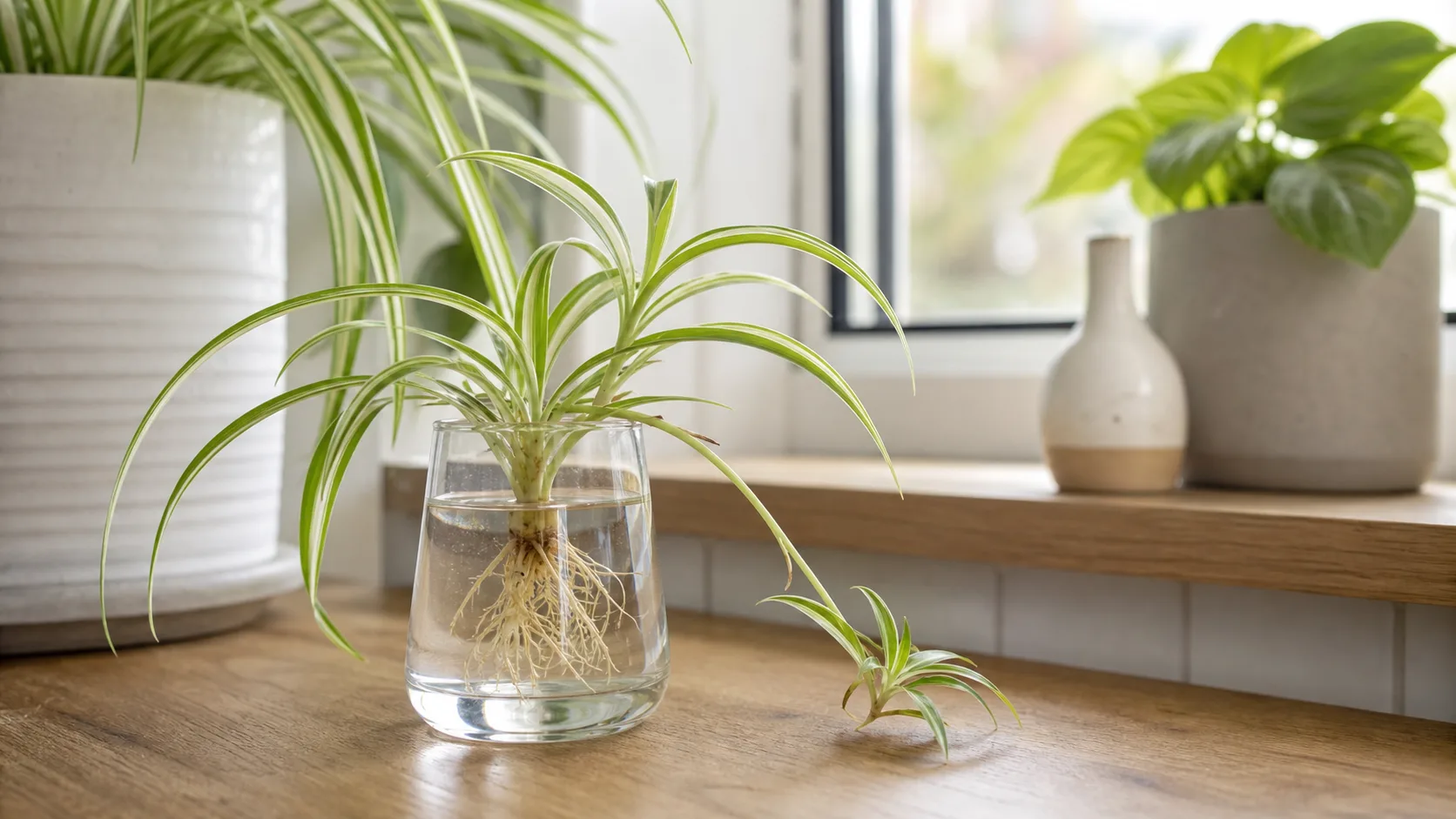
A spider plant baby develops a visible root system in a shallow glass while the mature plant remains nearby.
6. Peace Lily
Peace lily can be transitioned to water growing with some patience. The roots need to stay submerged, but the crown and base of the plant should remain above the waterline to avoid rot. This setup takes more care to get right than pothos or tradescantia, but a water-grown peace lily in a clear container looks genuinely elegant and does well in lower light than most water growers. For a broader picture of what this plant needs, see our peace lily care guide.
Pet note: Toxic to cats and dogs.
Plants That Root in Water but Eventually Want Soil
These plants are excellent for propagation and can hold in water for weeks – sometimes a month or two – but they slow down or decline without moving to soil or adding nutrients over time. Penn State Extension’s propagation guidance notes that water works as a valid medium for stem tips, branch tips, and stem sections when the parent plant is healthy and the container is kept clean, but it is not a substitute for a proper growing medium for plants you want to keep long-term.
7. Monstera Deliciosa
Monstera cuttings root in water and the thick aerial roots develop fast and look impressive. You can display a monstera cutting in a wide-mouth vase for several weeks. Long-term, monstera does better in a proper growing medium. See our monstera deliciosa care guide for soil and potting expectations when you are ready to move it.
Pet note: Toxic to cats and dogs.
8. Begonia
Stem tip cuttings from most begonias root reliably in water and are fine for short to medium-term display. Begonias are heavy feeders and decline without nutrients if left in plain water for too long. They are a good propagation plant, not a long-term water resident.
Pet note: Mild caution. Some begonia species are toxic to pets.
9. English Ivy
Ivy cuttings root readily and cascade beautifully from a clear jar on a high shelf or a hanging vessel. Expect reliable results for propagation and a few weeks of display, then move to potting mix for sustained growth. Ivy in plain water without nutrient support starts to yellow fairly quickly.
Pet note: Toxic to cats and dogs.
10. Coleus
Coleus roots in five to seven days in a sunny window, faster than almost anything else on this list. The colorful foliage makes it a fun short-term display. It fades and declines in plain water over several weeks, so treat it as a propagation or rotation plant rather than a permanent water grower.
Pet note: Mild caution.
11. Impatiens
Impatiens cuttings root in water and can even bloom while sitting in a jar on a bright windowsill. They are a cheerful option for a pop of color in warmer months. Once rooted, move them to soil for longer-term flowering and vigor.
Pet note: Generally considered safe for cats and dogs.
Display-First Options
12. Mint
Fresh mint stems root in water in days and look charming in a kitchen window. Mint holds in water longer than most herbs, and snipping from it regularly actually keeps it fresher in the jar. Treat it as a living herb you refresh every few weeks rather than a permanent plant. For more on keeping mint healthy, see our mint plant care guide.
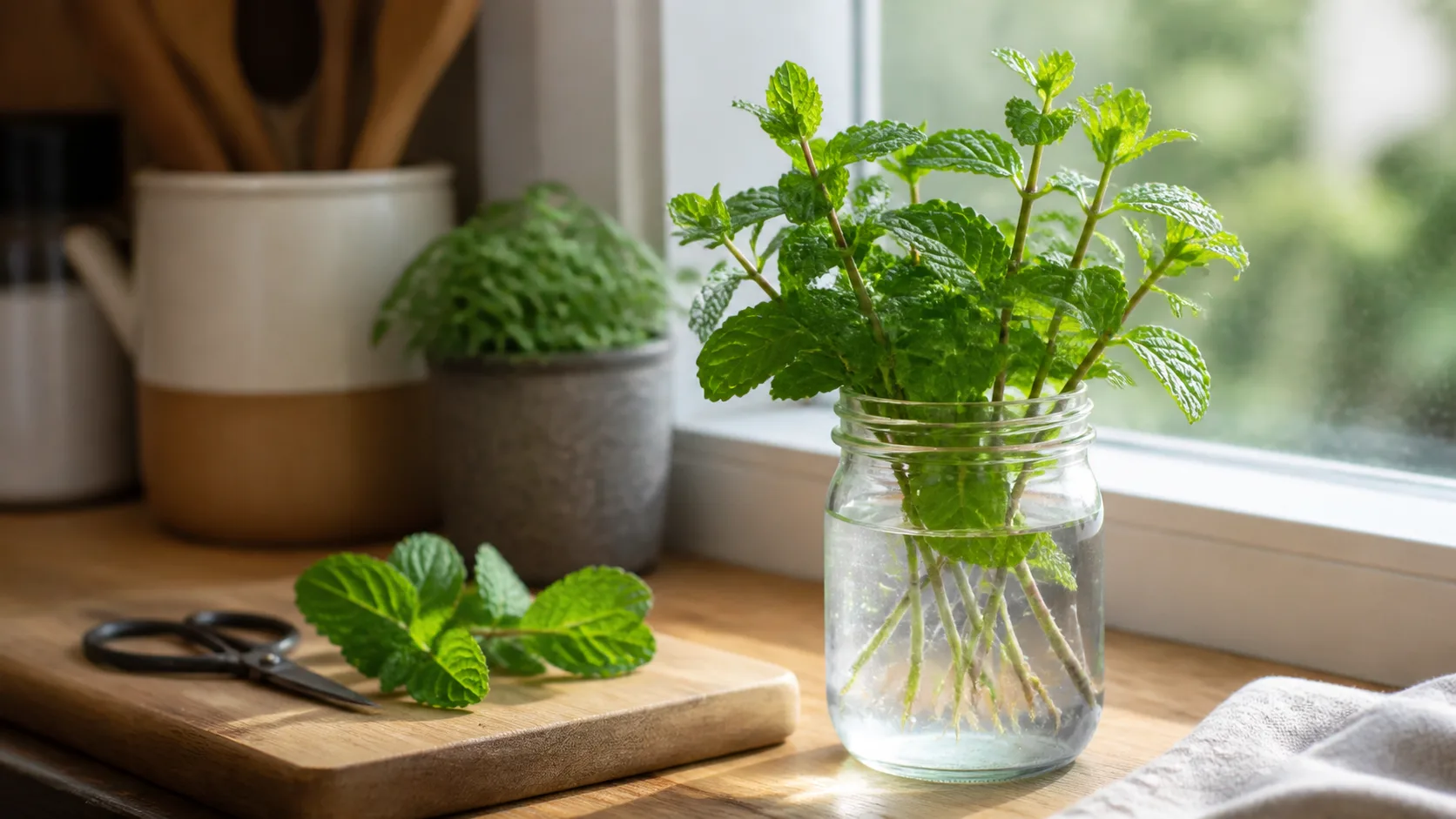
Rooted mint stems stay useful on a kitchen windowsill when they are snipped regularly and refreshed every few weeks.
13. Sweet Potato Vine
Suspend a sweet potato over a glass of water using toothpicks and watch dramatic vines emerge from the top within a few days. It is more of a fun kitchen project than a long-term houseplant, but the trailing growth is genuinely impressive and children love watching it happen.
14. Chinese Evergreen (Aglaonema)
Chinese evergreen cuttings root in water and can hold there for a reasonable stretch of time. It is slower to root than pothos, but the patterned leaves are beautiful in a mid-height vase and the plant handles lower light better than most on this list. Our Chinese evergreen care guide covers what to expect when you eventually move it to soil.
Pet note: Mild caution. Toxic in larger amounts.
15. Hoya
Hoya cuttings root in water, though they take longer than most species – several weeks to a couple of months. The waxy leaves and trailing stems make a lovely display while you wait, and once well-rooted, cuttings move to soil easily. Our hoya plant care guide covers what the plant needs once it is established. Treat hoya as a propagation plant first in this context, not a long-term water resident.
Pet note: Generally considered safe for cats and dogs.
Pet Safety at a Glance
If you have cats or dogs, this matters before you buy. Several of the most popular water-growing species are toxic to pets, and this is exactly where most “grow in water” lists fall short by burying toxicity notes in small print or omitting them entirely.
| Plant | Long-term water? | Pet safe? |
|---|---|---|
| Pothos | Yes | No, toxic |
| Heartleaf Philodendron | Yes | No, toxic |
| Lucky Bamboo | Yes | No, toxic |
| Tradescantia | Yes | Mild caution |
| Spider Plant | Yes | Yes |
| Peace Lily | Yes, with care | No, toxic |
| Monstera | Short-term | No, toxic |
| English Ivy | Short-term | No, toxic |
| Begonia | Short-term | Mild caution |
| Coleus | Short-term | Mild caution |
| Chinese Evergreen | Medium-term | Mild caution |
| Mint | Medium-term | Generally safe |
| Hoya | Propagation | Generally safe |
| Impatiens | Short-term | Generally safe |
| Sweet Potato Vine | Display | Generally safe |
For a broader list of options if you have cats or dogs, see our guide to cat-safe indoor plants.
What Every Water-Grown Plant Actually Needs
The species matters, but so does the setup. A few things that apply to everything on this list:
Clean container. Glass is the best choice because you can see water clarity and root development. Rinse it every time you change the water. As University of Minnesota Extension notes in its hydroponic guidance, any water-holding container works as long as it is clean and made of safe material. Avoid copper, which can leach into water at levels that affect sensitive roots.
Leaves above the waterline. Submerged foliage rots quickly and turns the water foul. Only roots should be in the water.
Regular water changes. Every one to two weeks is a reasonable baseline. Cloudy water or any smell means change it sooner.
Nutrients for long-term growers. Plants in the first group benefit from a few drops of balanced liquid fertilizer diluted to quarter-strength, once a month. Plain tap water sustains a cutting for a few weeks, but it does not replace what soil normally provides for a plant you want to thrive for a year or more.
Light. Water-grown plants need light just as much as soil-grown ones. A bright window without direct afternoon sun is the right default for most species on this list. Low light slows growth and makes water quality worse, because the plant is not actively taking up water.
What yellowing or wilting usually means. If your water-grown plant starts showing these signs, it is almost always one of three things: not enough light, water gone stale, or the plant running out of nutrients. Rule out those three before anything else.
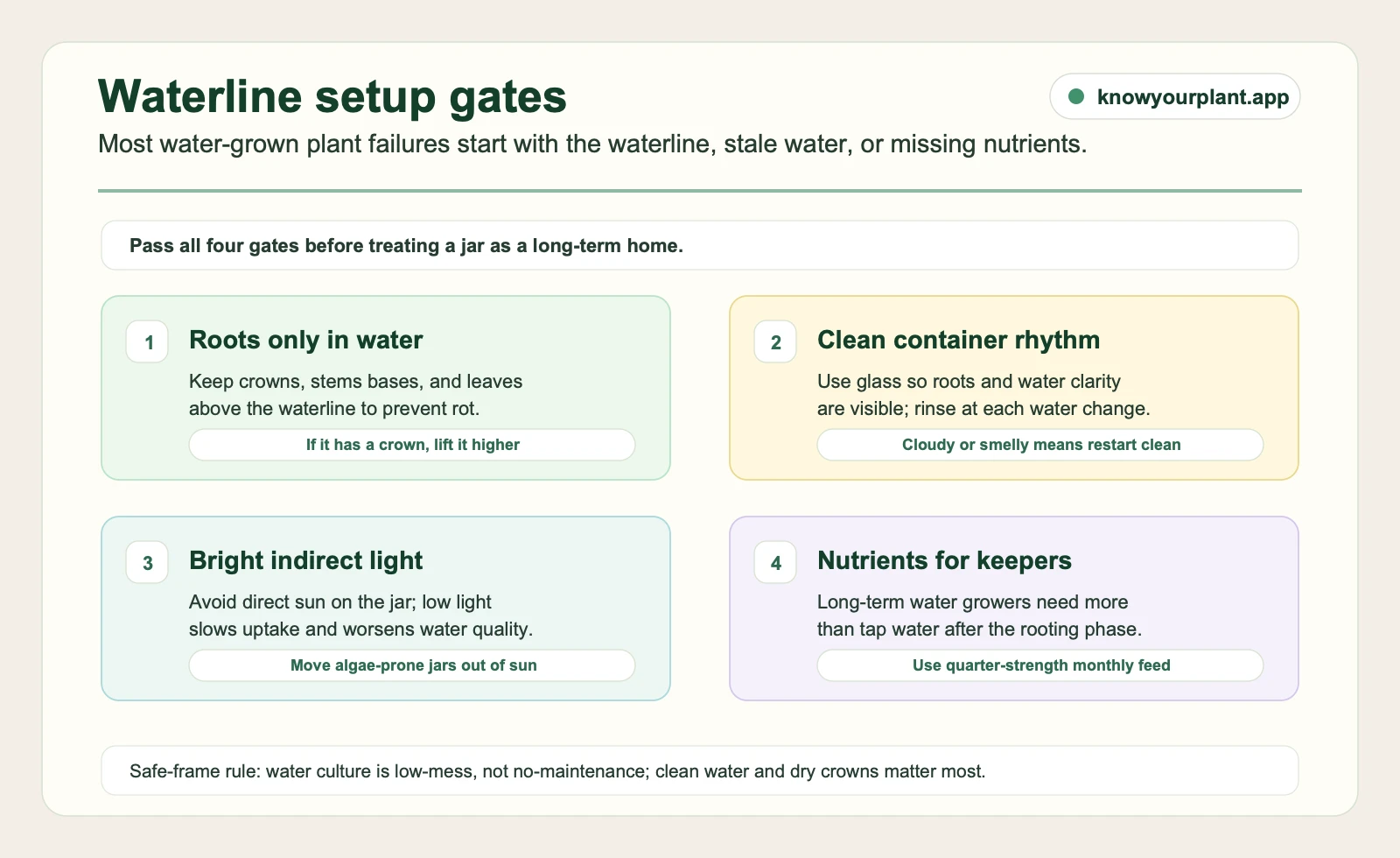
Use these setup gates for any long-term water-grown plant: keep the glass clean, submerge roots only, give bright indirect light, and feed lightly once it is established.
Common Problems With Water-Grown Plants
| Problem | What it usually means | Best next step |
|---|---|---|
| Cloudy or smelly water | Bacteria, decaying plant material, or water left unchanged too long | Empty the container, rinse roots gently, clean the glass, and restart with fresh water |
| Yellowing leaves on an otherwise rooted plant | Low light, stale water, or nutrient depletion | Check light first, then refresh the water and add diluted fertilizer if the plant is a long-term water grower |
| Black or mushy stem base | The crown or leaves are sitting too deep in water | Raise the plant so only roots stay submerged and trim any rotting tissue if needed |
| No new growth after the first flush of roots | The plant rooted successfully but the setup is too weak for long-term growth | Decide whether to add nutrients and keep it in water, or pot it up while the roots are still healthy |
| Plant collapses after moving from water to soil | Water roots were not ready for the transition | Move only well-rooted cuttings, keep the mix lightly moist, and expect a short adjustment period |
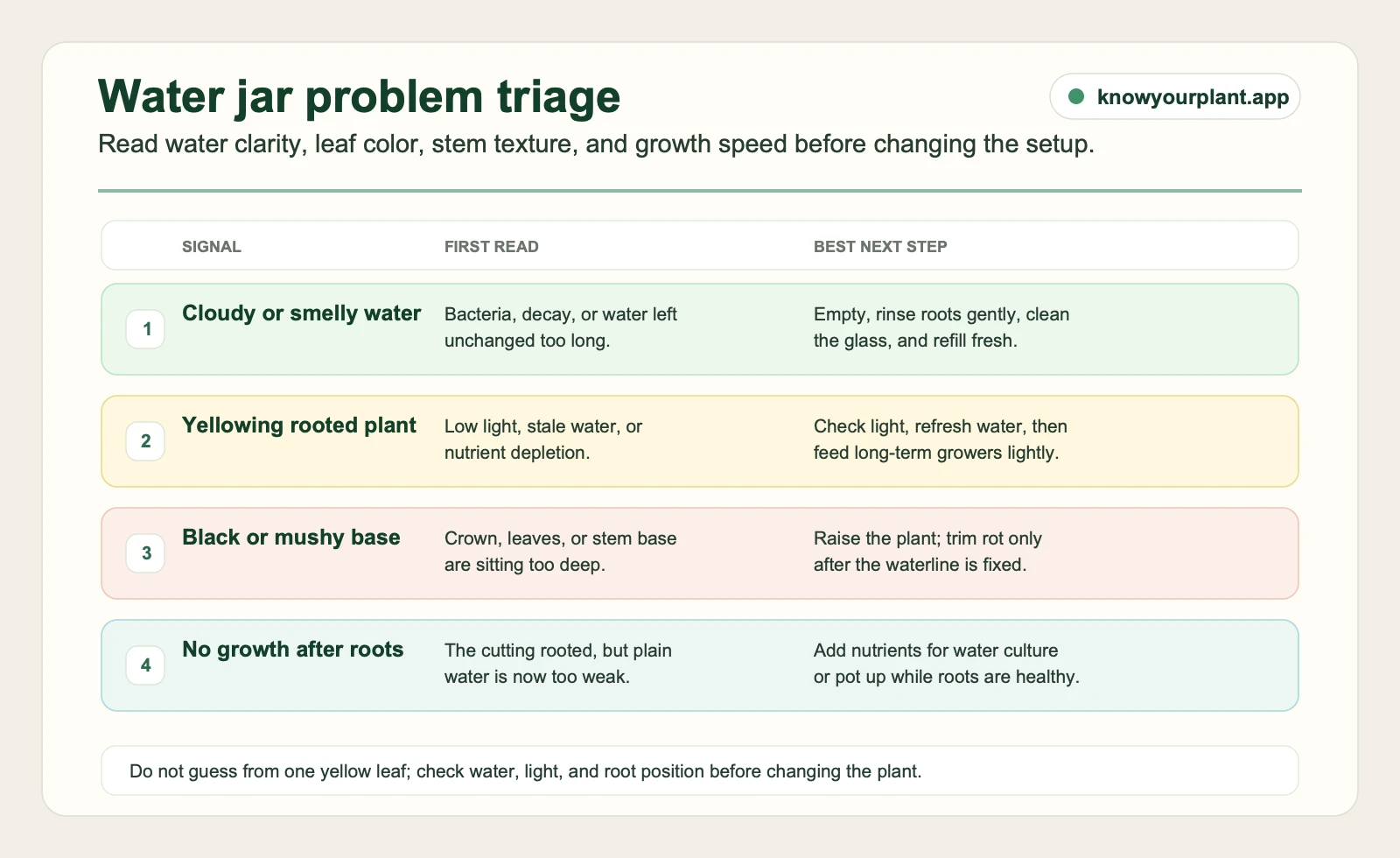
Use the problem triage when a jar starts to decline: water clarity, leaf color, stem firmness, and new growth usually reveal the first fix.
Common Mistakes With Plants Grown in Water
- Using a beautiful vase without thinking about the water line. A plant can look elegant and still be set up to rot if leaves or the crown sit below the surface.
- Treating every cutting like a permanent hydroponic plant. Fast rooting does not automatically mean long-term water tolerance.
- Skipping fertilizer forever on long-term growers. Plain water is enough for rooting, not for months of active growth.
- Ignoring pet safety because the plant is only a cutting. Toxicity does not disappear just because the roots are in a jar.
- Waiting too long to switch a propagation cutting into soil. Once the plant is clearly slowing down in water, delaying the move usually makes the transition harder, not easier.
Seasonal Care for Water-Grown Plants
Water culture is not entirely set-and-forget. The season changes what your plant needs.
Spring and Summer. Active growing season. Water evaporates faster in warm rooms, so check the water level weekly. Add diluted liquid fertilizer once a month for plants in the long-term group. This is the best time to root new cuttings because the plant is actively pushing growth.
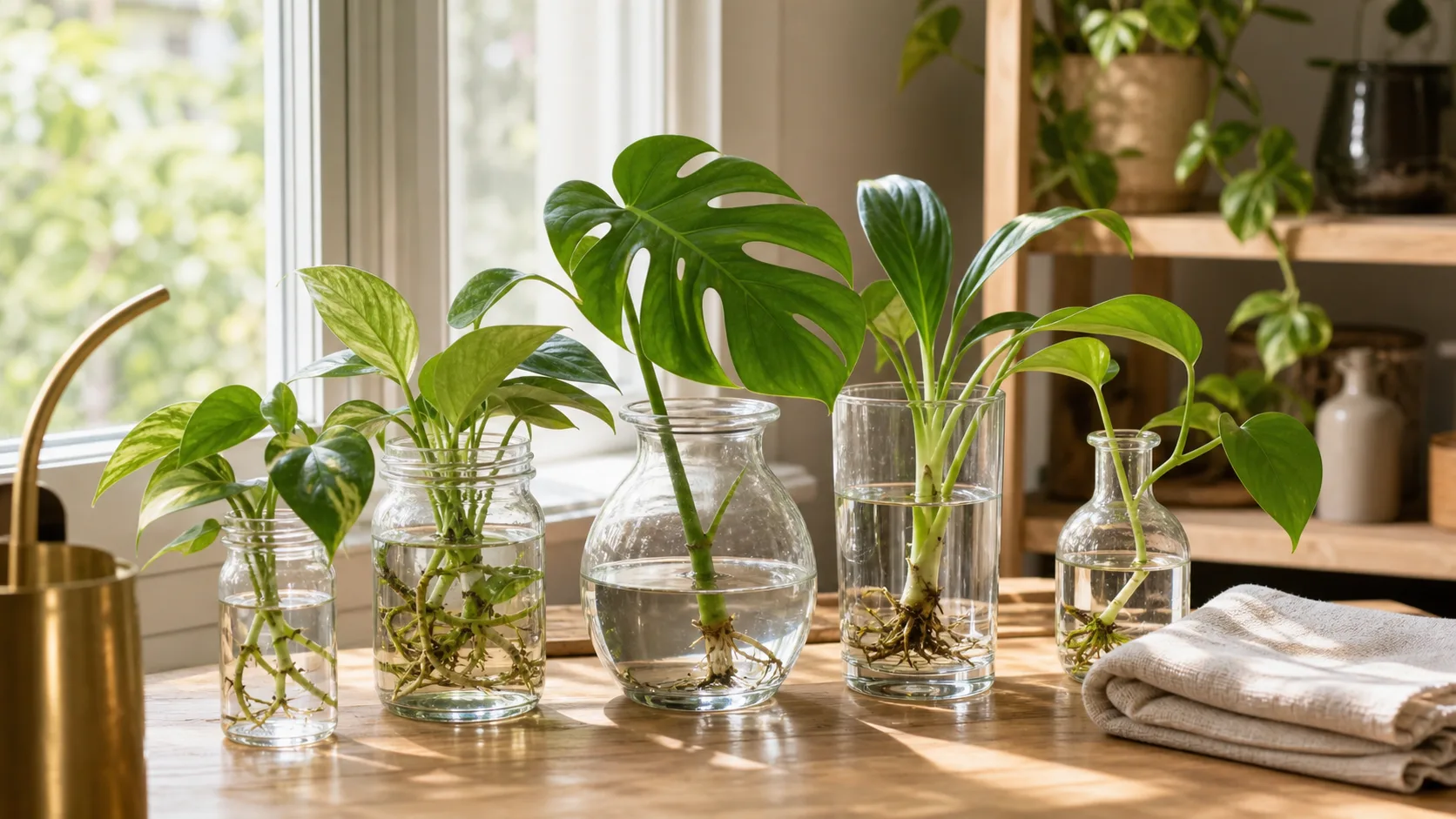
Warm-season water culture needs regular level checks, fresh water, and attention to the changing needs of each rooted cutting.
Autumn. Growth slows as light levels drop. Scale back fertilizer to every six to eight weeks. If your plant is near a window, make sure it is not getting cold drafts from the glass on cold nights.
Winter. Most water-grown houseplants go quiet in winter. Stop fertilizing or reduce to every two months. The water stays cleaner longer because the plant is not drawing it up as quickly, but still change it every two weeks to prevent stagnation. If you are in a low-light home, grow lights become worth considering for the species that genuinely need bright light to stay healthy.
If you are comparing care routines for another houseplant, see Tradescantia Care: Fuller Growth, Better Color, and Easy Cuttings for a focused step-by-step guide.
Real User FAQ
Can pothos really live in water permanently?
Yes, with the right care. Pothos is one of the species that genuinely adapts to water culture rather than just tolerating it temporarily. The key is changing the water every one to two weeks so it does not stagnate, giving it bright indirect light, and adding a small amount of diluted liquid fertilizer monthly. Without nutrients, even pothos will eventually plateau and stop producing new leaves.
Do I need to add fertilizer to water-grown plants?
For short-term propagation, plain water is fine for a few weeks. For plants you plan to keep in water long-term, yes. Plain water lacks the nutrients that soil normally provides. A quarter-strength dose of balanced liquid fertilizer once a month is enough for most species in the first group on this list.
Why is my water turning green or cloudy?
Green water usually means algae, which happens when the container gets direct sunlight. Move it to bright indirect light, clean the container thoroughly, and switch to an opaque vase if you want to prevent recurrence. Cloudy or smelly water without any green tint usually means the water has not been changed often enough, or there is decaying plant material sitting in the container.
Can I move a water-grown plant to soil later?
Yes, but it takes adjustment. Illinois Extension’s propagation guidance notes that roots grown in water are structurally weaker and adapt less easily to potting mix than roots grown in solid medium from the start. The transition works best when you pot into very lightly moistened soil (not wet), keep the plant in a shaded spot for a week or two, and water frequently at first to help the roots adjust.
Are water-grown plants safe for cats and pets?
Not all of them, and this is where popular lists fall short. Pothos, heartleaf philodendron, peace lily, lucky bamboo, monstera, and English ivy are all toxic to cats and dogs. These happen to be among the most recommended water-growing species. Spider plant is one of the safer choices if you have pets. See our full guide to cat-safe indoor plants for a broader list.
How often should I change the water?
Every one to two weeks as a baseline. If you notice cloudiness, a smell, or visible debris, change it immediately regardless of schedule. In warm weather or in sunny spots, water goes stale faster. Lean toward weekly changes in summer. Rinse the container each time, not just the water.
What is the best container for growing plants in water?
Clear glass shows the root development, which is part of the visual appeal. A small narrow-neck bottle works for a single pothos stem. A wide-mouth mason jar suits a spider plant. A tall cylinder suits lucky bamboo. The key requirements are a clean container and a food-safe material. Avoid copper, which can affect sensitive roots.
Do water-grown plants need as much light as soil-grown plants?
Yes. A common mistake is assuming that because the roots are in water, the plant needs less light. The plant photosynthesizes the same way regardless of what the roots are in. Most houseplants on this list prefer bright indirect light, near a window but not in direct afternoon sun. Very low light slows growth and makes water quality worse because the plant is not actively taking up water.
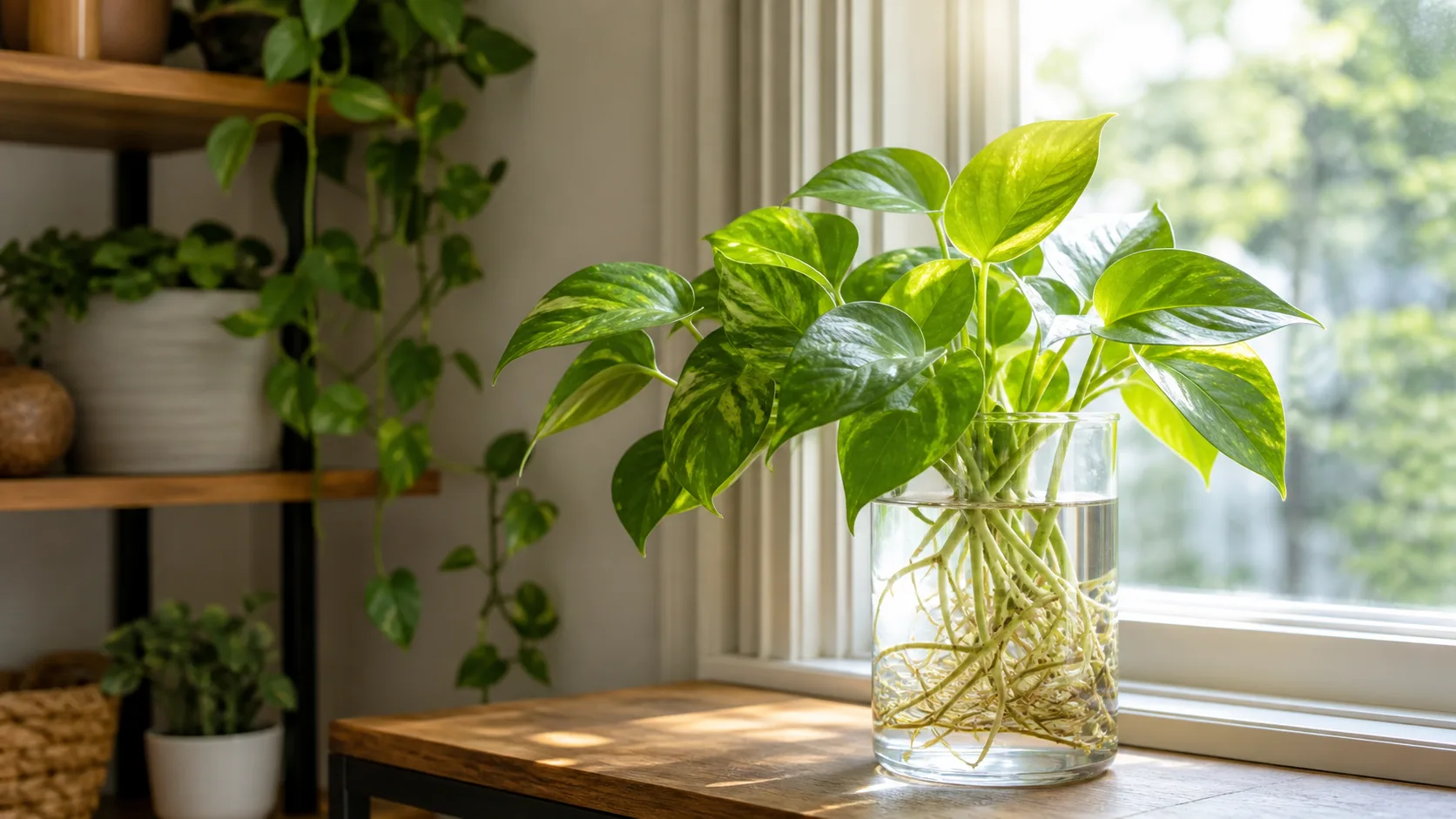
Water-grown pothos still performs best beside a bright window, just like the soil-grown plants sharing the room.
Freshness Note
This guide was reviewed against university extension propagation and hydroponics guidance, plus search-surfaced community questions about permanent water culture, pet safety, and vase-friendly display ideas, on 2026-05-26. If a plant label, toxicity claim, or care promise looks too broad, verify the exact species before treating it as a long-term water grower.
Methodology Note
The advice here prioritizes extension sources for what can be verified directly: which plants root in water, what clean setup conditions matter, and why water-grown roots behave differently from soil-grown ones. Community threads were used only as qualitative signal for the questions readers keep asking, especially around permanent water culture, aquarium-top setups, and pet safety.
Growing plants in water is not a trick or a shortcut. For the right species, it is a real and low-maintenance way to keep a plant alive, watch it grow, and have something genuinely living on a shelf, counter, or windowsill. Choose a species that actually suits water culture, and this guide gives you that answer before you start.
Download KnowYourPlant for personalized plant care reminders and symptom help when something looks off: https://knowyourplant.app