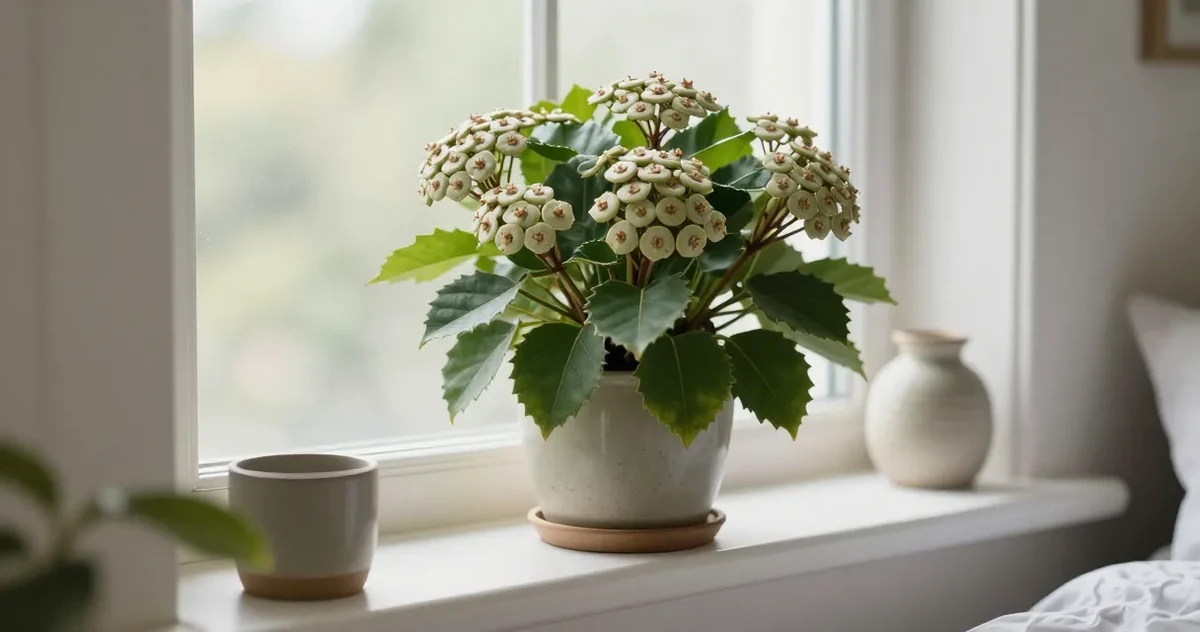
If you’ve ever brought home a hoya and then stared at it wondering why it’s doing absolutely nothing for months, you’re not alone. Hoyas are famously unbothered plants. They sit there, looking great, quietly ignoring you until one day you notice a cluster of tiny waxy flowers that smell faintly of vanilla and honey. That’s the hoya experience: low drama, high reward.
Hoya plant care is forgiving once you understand what these plants actually want. And what they mostly want is to be left alone in bright indirect light with well-draining soil and a solid gap between waterings. This guide covers all the essentials: the main varieties you’re likely to encounter, what conditions help them thrive, how to encourage blooming without frustration, and how to propagate them correctly when you want more.
What Most Plant Roundups Miss
Most roundups about hoya Plant list attractive options. The better question is which choice will still make sense in your actual room three months from now.
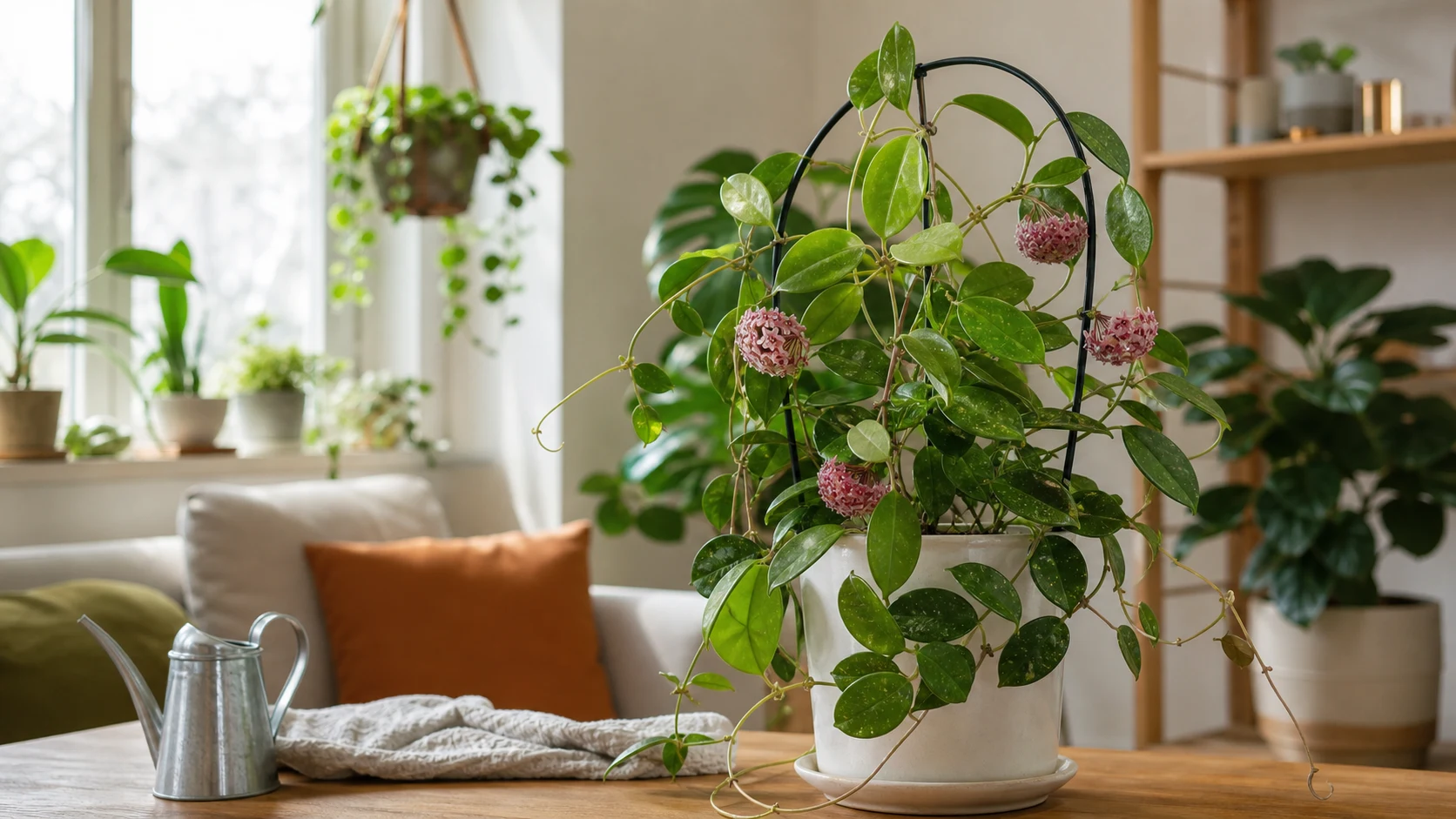
A mature flowering hoya on a compact trellis shows how light, space, and growth habit shape the right plant choice.
Use this filter before choosing:
- Light reality: what the plant receives on a normal cloudy day, not the brightest hour of the week.
- Care rhythm: whether you prefer weekly attention or a plant that can be ignored longer.
- Space: mature height, spread, trailing habit, and whether leaves will touch walls or pets.
- Failure signal: what the plant does first when the match is wrong: yellowing, stretching, crisping, or dropping leaves.
A good recommendation is not just beautiful. It fits the room, the owner, and the first problem you are likely to notice.
Identification Snapshot
- Growth habit: trailing or climbing tropical vine with thick, waxy leaves.
- Root behavior: epiphytic roots prefer air, a loose mix, and time to dry between waterings.
- Flower clue: clusters of star-shaped blooms emerge from persistent peduncles or spurs.
- Fastest tell: a real vining hoya has nodes on a stem. A single heart-shaped Hoya kerrii leaf can stay alive without ever turning into a vine.
What Kind of Plant Is a Hoya, Really?
Hoya is a genus of tropical vines and shrubs native to Asia and Australia, with the Plants of the World Online database (Royal Botanic Gardens Kew) documenting over 500 described species. In the wild, many grow as epiphytes, climbing trees and anchoring to bark rather than rooting in deep soil. That one fact explains almost everything about how to care for them: they like their roots a little crowded, they want fast-draining substrate, and they handle dry spells better than soggy ones.
The waxy, thick leaves on most hoyas are a water-storage adaptation. Think of each leaf as a small reservoir. That’s why hoyas forgive a missed watering or two, and why overwatering is a much bigger risk than underwatering.
Common Hoya Varieties
Hoya carnosa (Classic Wax Plant)
The one most people picture when they hear “hoya.” Thick oval leaves, trailing or climbing vines, and eventually those famous porcelain-like flower clusters called umbels. It’s a good starting point if you’re new to the genus, forgiving and slow to punish mistakes.
Hoya carnosa ‘Compacta’ (Rope Hoya)
The rope hoya has leaves that curl and twist along the vine, giving it a braided, sculptural look. It grows more slowly than standard carnosa and is a little less forgiving about overwatering since water can collect in the curled leaves and cause rot. Same care principles apply, just watch the moisture more carefully.
Hoya kerrii (Sweetheart Hoya)
Sold everywhere around Valentine’s Day as a single heart-shaped leaf in a tiny pot. Here’s the honest truth: if it’s just one leaf with no node attached, it will never grow into a full plant. It’ll sit there looking charming but will never produce vines. A single leaf can stay green and alive for a year or more without ever doing anything more. If you want a hoya kerrii that actually grows, look for a cutting with at least one node, or a plant that already has multiple leaves on a stem.
Hoya pubicalyx
A faster grower than carnosa, with darker, sometimes silver-flecked leaves. It tends to bloom more readily, which makes it satisfying for people who get impatient waiting for flowers. A good pick if you want to see results within the first season.
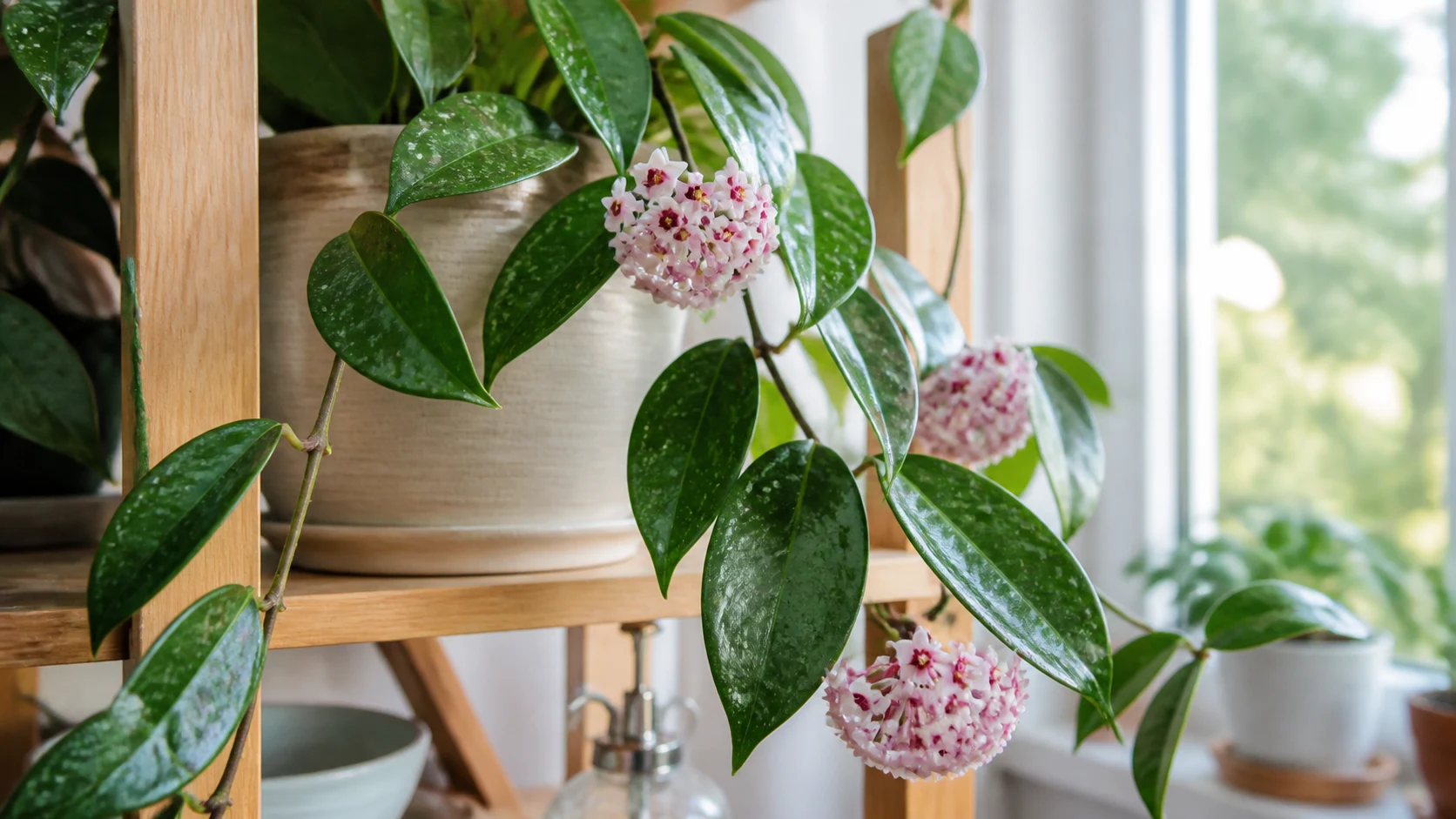
Silver-flecked foliage and several waxy flower umbels show why Hoya pubicalyx feels rewarding in a bright indoor spot.
Hoya australis
One of the larger-leaved varieties, with bright green glossy leaves. Grows vigorously and blooms with fragrant white flowers. A good choice if you want a hoya that feels like it’s actually doing something week to week.
Lookalikes and Confused-With Cases
| Plant or form | What people expect | What actually matters |
|---|---|---|
| Single-leaf Hoya kerrii in a gift pot | A full trailing plant later | Without a node, it can root and stay decorative without ever producing a vine |
| Hoya carnosa ‘Compacta’ | Same tolerance as standard carnosa | Curled leaves trap more moisture, so overwatering shows up faster |
| Hoya pubicalyx | Another slow wax plant | Usually grows faster and often blooms sooner in bright light |
Light: The Single Biggest Factor
Bright indirect light is where hoyas thrive. A spot near an east or west-facing window is close to ideal. South-facing windows work well in winter when the sun is weaker, but in summer you may want to diffuse direct afternoon sun with a sheer curtain.
North Carolina State University Cooperative Extension notes that most flowering tropical houseplants need at least four to six hours of bright indirect light daily to reliably initiate blooming. If your hoya is sitting in a dim corner, it will survive but flowering becomes unlikely.
Low light won’t kill most hoyas, but it will slow growth significantly and make blooming nearly impossible. Direct harsh sun can bleach the leaves, especially on lighter-colored varieties. If you notice the leaves looking washed out or developing dry papery patches, that’s usually too much direct light.
If your home doesn’t get consistent natural light, the grow lights for indoor plants guide explains how to supplement without overcomplicating your setup.
Care Cards
| Care area | What to do | Early warning sign |
|---|---|---|
| Light | Give bright indirect light for most of the day | Long gaps with no growth or no blooms |
| Water | Let the top half of the mix dry before watering again | Yellow leaves in wet soil or wrinkled leaves in bone-dry soil |
| Soil mix | Use a loose, chunky epiphyte-style mix | Wrinkled leaves even though the pot stays wet |
| Pot size | Keep the plant slightly root-bound | Oversized pots stay wet too long and stall blooming |
| Bloom care | Leave peduncles in place and ease off fertilizer in winter | Healthy vines that never set buds |
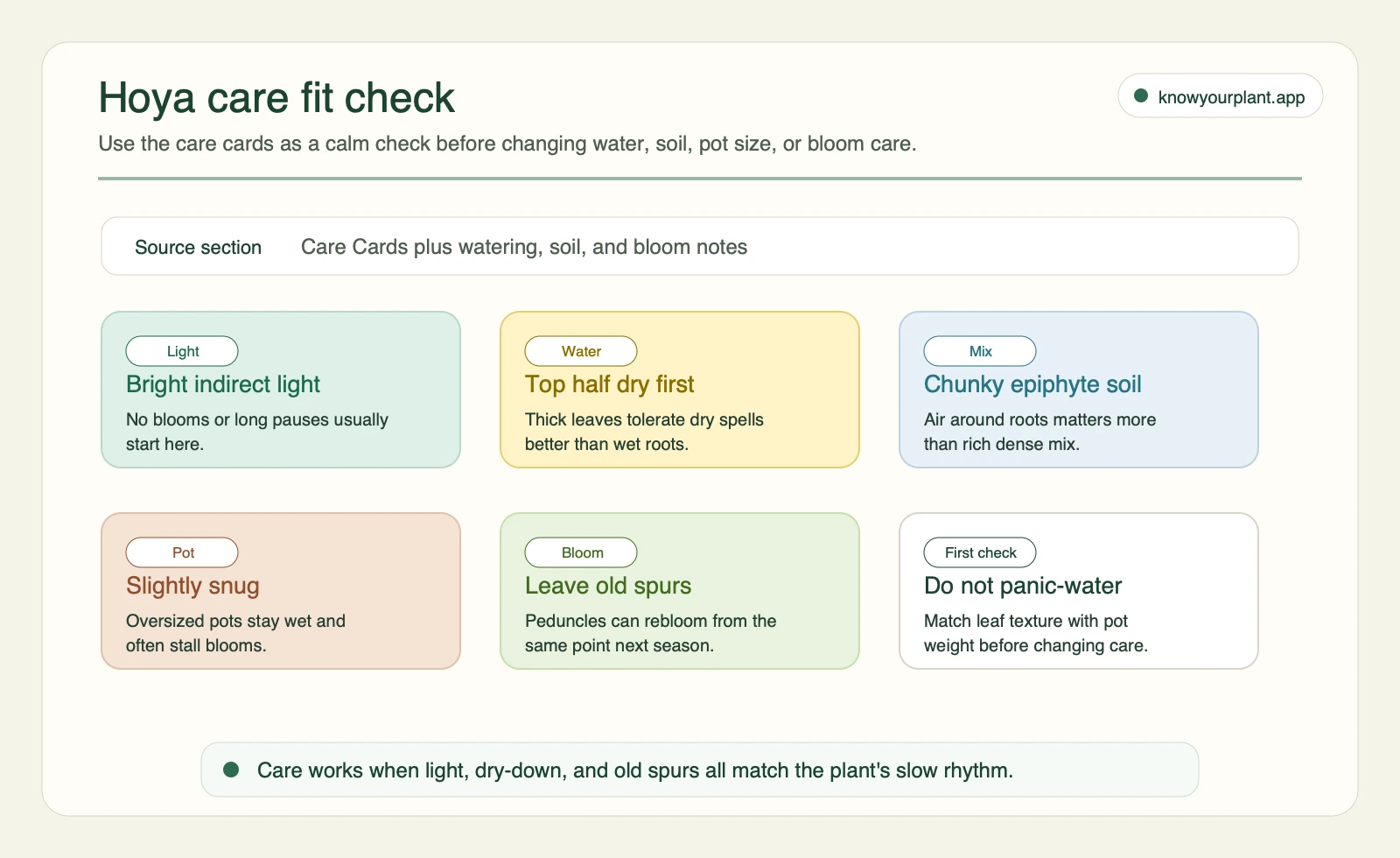
Use this care fit check before changing the routine: hoyas usually need brighter light, a drier root zone, or patience with old spurs before they need more water.
What Hoya Owners Keep Getting Wrong
Owner discussions around hoya care tend to circle the same trap: people treat every limp or wrinkled leaf as a call to add water, even when the real issue is stale mix or weak roots. In Reddit hoya threads, growers repeatedly argue about the so-called taco test, whether bendy leaves always mean thirst, and whether a plant that declined after blooming needs fertilizer or a root check first. That reader language matters because it shows where generic care guides oversimplify.
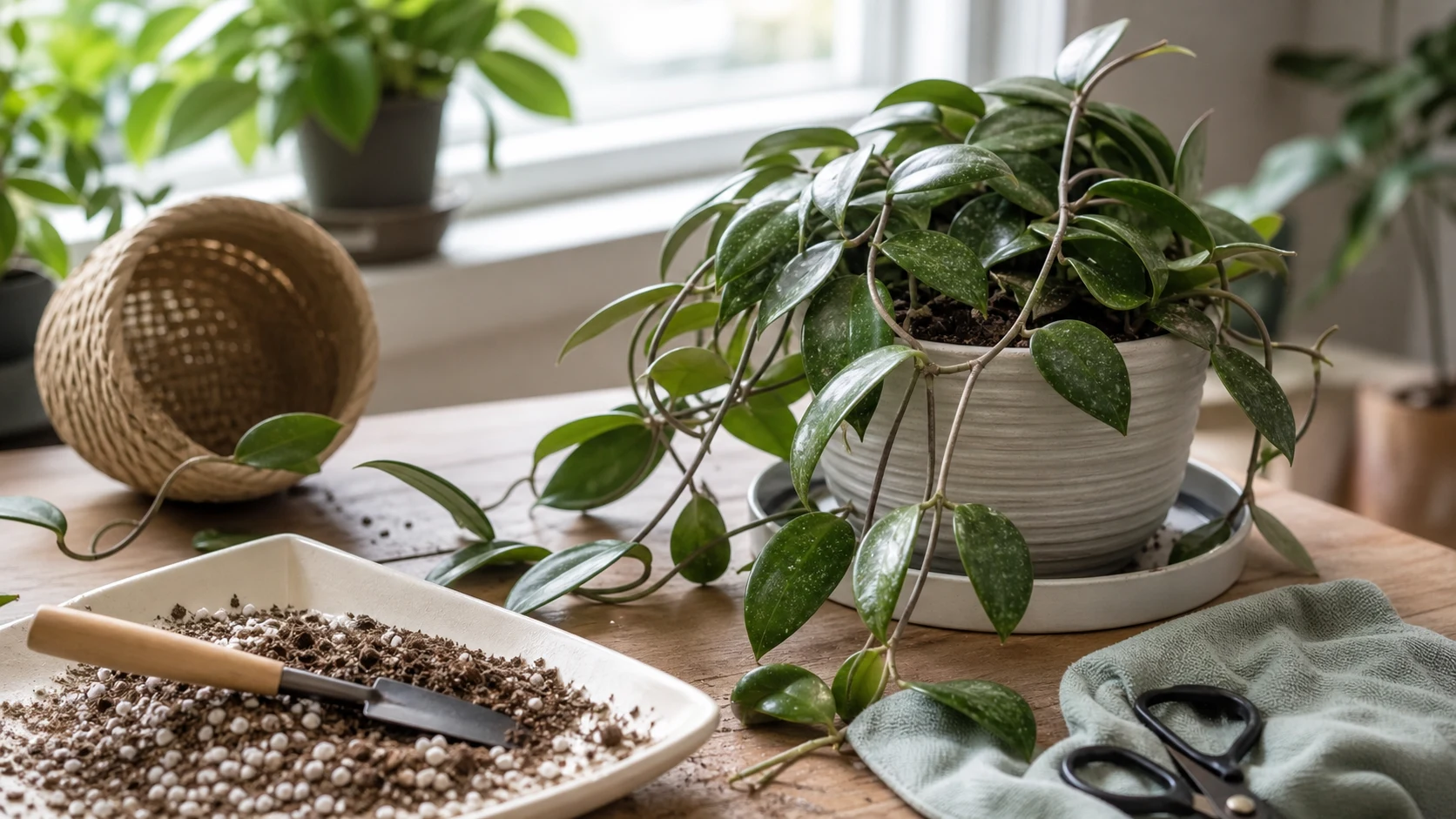
An airy replacement mix and repotting tools frame the root check that should come before giving a wet hoya more water.
The useful takeaway is simple:
- Watering rhythm changes with light, pot size, and how airy the mix is.
- Waiting for severe wrinkles can mean you are diagnosing too late.
- A hoya that looks thirsty in a wet pot often needs root inspection, not more water.
- Bloom frustration is usually about light, maturity, or cut peduncles, not a magic fertilizer trick.
Watering Hoyas Without Overdoing It
The most common hoya mistake is watering too often. Because hoyas store water in their leaves, they handle drought much better than most tropical houseplants. University of Missouri Extension research identifies overwatering as the leading cause of indoor tropical plant death, and hoyas are particularly susceptible because their thick leaves mask early stress signals until root damage is already underway.
Check the soil before you water. Push your finger into the top few centimeters. If it feels damp at all, wait. You want the top half of the soil to be dry before you water again. In summer, that might mean watering every 10 to 14 days. In winter, it might stretch to three or four weeks.
When you do water, water thoroughly until it drains out the bottom of the pot. Then let the pot drain completely and don’t let it sit in standing water.
Darryl Cheng, author of The New Plant Parent and founder of House Plant Journal, puts it plainly: “Water the plant to support the growth it’s doing, not to force growth it isn’t doing.” In practice, that means watering less in winter when your hoya is barely growing, and keeping a closer eye on moisture in spring and summer when active growth picks up.
Similar Symptoms, Different Problems
| What you notice | Usually points to | First thing to check | Safe next move | What not to do |
|---|---|---|---|---|
| Wrinkled leaves and a very light pot | Ordinary underwatering | Mix is dry through at least the top half | Water deeply and let excess drain | Keep giving tiny sips every day |
| Wrinkled leaves but the pot still feels wet | Dry root rot or roots short on oxygen | Root color, smell, and how dense the mix feels | Unpot, inspect roots, and refresh stale mix if needed | Assume wrinkles always mean “add more water” |
| Yellow leaves and a heavy, wet pot | Wet root rot risk | Lower stems plus root firmness | Pause watering and repot only if roots are mushy | Fertilize a stressed plant |
| Healthy leaves but no growth and no buds | Insufficient light more than thirst | Window distance and daily brightness | Move it brighter for a few weeks before changing watering | Chase the issue with extra feed or extra water |
Signs you’re overwatering: mushy or yellowing leaves, stems that look soft or translucent at the base, soil that smells off.
Signs you’ve waited too long: leaves that look slightly wrinkled or deflated. Wrinkled leaves bounce back quickly after a good drink. Rotten roots take much longer to recover, so err on the side of too dry rather than too wet.
Soil and Pots
Hoyas want fast-draining soil. A standard houseplant mix works if you amend it. Mix in perlite, orchid bark, or coarse sand to improve drainage. A ratio of about 60% potting mix to 40% amendments is a reasonable starting point.
North Carolina State University Cooperative Extension advises that containers with adequate drainage holes are non-negotiable for epiphytic plants, since their roots evolved to dry out quickly between rains rather than sitting in consistently moist soil.
Because hoyas like their roots slightly crowded, don’t rush to repot. A hoya sitting in a pot that looks a bit too small is usually fine, and being slightly root-bound actually helps trigger blooming. Repotting into a much larger container often leads to overwatering problems because there’s too much soil holding moisture around the roots. When you do repot, go up just one pot size. If you are still deciding where a hoya fits in your room, the indoor hanging plants guide helps compare it with other trailing or basket-friendly options.
Terracotta pots help regulate moisture and reduce overwatering risk. If you tend to water on a schedule rather than checking the soil, terracotta gives you more margin for error than plastic or glazed ceramic.
How to Get a Hoya to Bloom
This is the question almost everyone with a hoya eventually asks. The short answer: give it bright light, a slight cool period in autumn or winter, and stop fertilizing for a few months. Most hoyas bloom after their first or second full year indoors once these conditions come together.
The concrete checklist:
- Bright indirect light for most of the day. Without this, nothing else matters.
- Let it get slightly root-bound. A crowded pot is a blooming signal.
- Cool temperatures in autumn and winter. A few degrees cooler than summer indoor temps is often enough. You don’t need to move the plant outside.
- Stop fertilizing from late autumn through winter. Lean periods seem to cue flowering.
- Be patient through one full seasonal cycle before concluding something is wrong.
The Spur Rule: Never Remove Old Flower Stems
This is the piece most hoya guides skip, and it’s the one that matters most.
Hoyas bloom on structures called spurs (also called peduncles). Once a spur forms and produces flowers, it will produce more flowers in the same spot again next season. That bare little stem left behind after the flowers drop is not dead material. It’s next season’s bloom point.
If you cut it off, you don’t just lose that spur. You set your plant back by a full blooming cycle. Mark old spurs if you need to, or just leave all the stem structure alone after flowers fade. The plant knows what it’s doing.
Bloom Troubleshooting Matrix
| Issue | Likely cause | What to check | Safe adjustment | What not to do |
|---|---|---|---|---|
| Long vines, no buds | Light is too weak | Hours of bright indirect light and window distance | Move the plant brighter and reassess over a full season | Start force-feeding fertilizer |
| Peduncles formed once, then never again | Old spurs were cut or the plant keeps getting moved | Whether old peduncles are intact and whether the pot gets rotated | Leave spurs alone and keep the plant stable during bud set | Prune every bare spur after flowers fade |
| Buds form, then drop | Stress during bud set | Drafts, sudden moves, or soggy mix | Keep conditions steady and water only when the mix has partly dried | Move the plant from room to room chasing blooms |
| Plenty of light, still no bloom after a year | Plant is not mature yet or the pot is too roomy | Root crowding, age, and seasonal rest | Give it another cycle and avoid upsizing the pot too fast | Assume something is wrong after a few slow months |
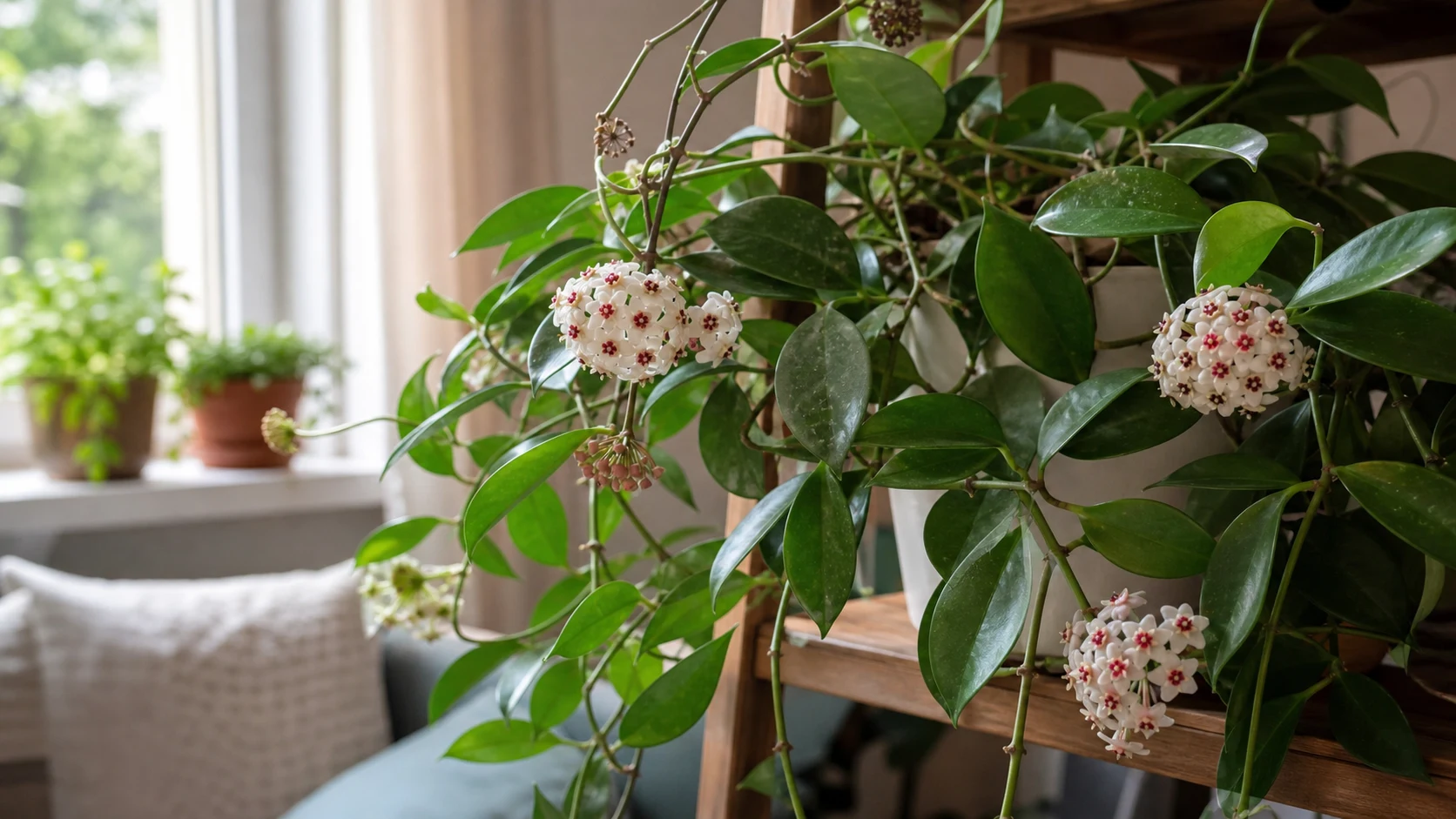
Open blooms, developing buds, and old peduncles show the results of bright light, stable placement, and patient spur care.
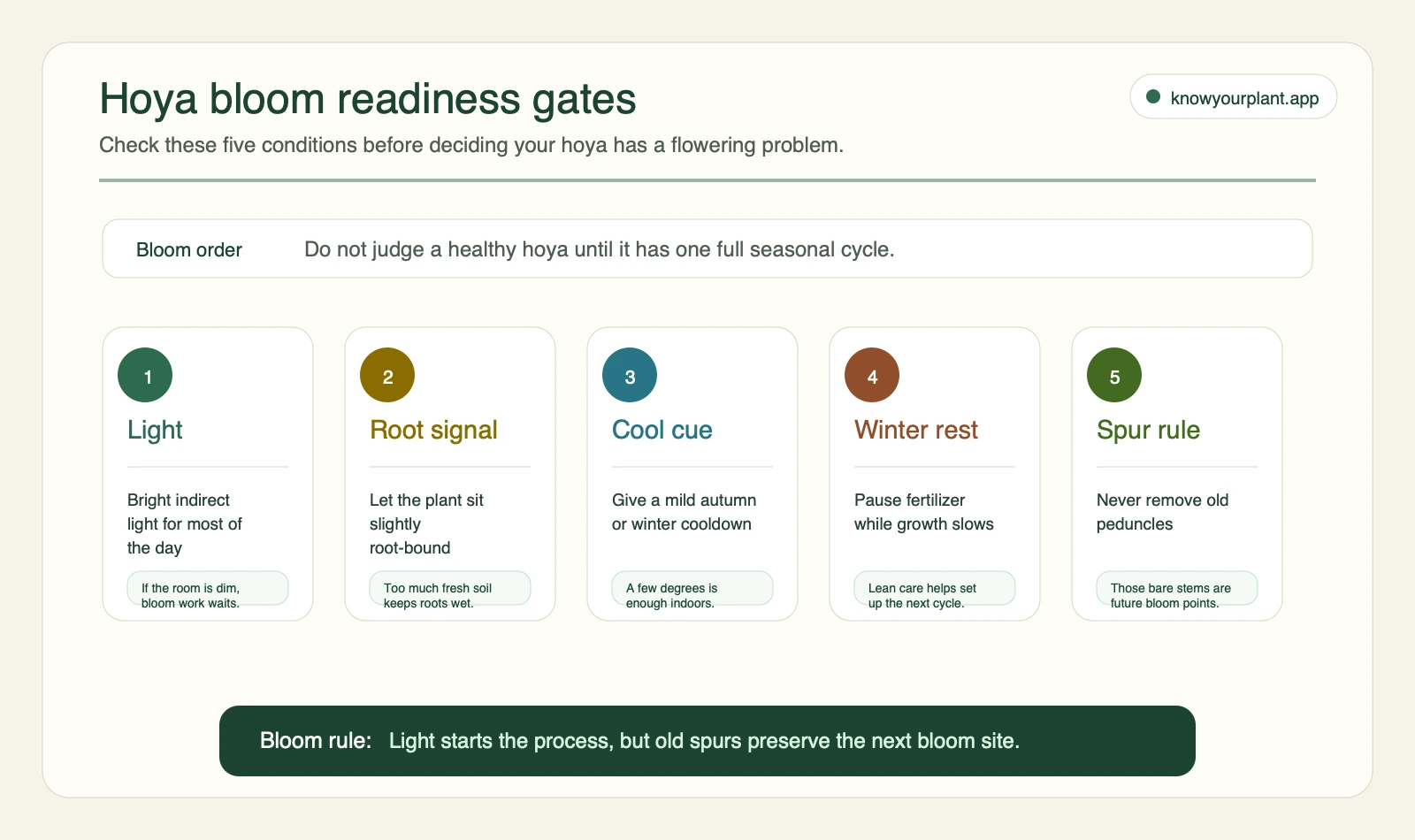
The bloom checklist works best as gates in order: improve light first, then protect the seasonal cues and old peduncles that let the plant rebloom.
Seasonal Care Calendar
Spring
This is when hoyas wake up and you’ll often see the first new growth of the year. Resume or increase watering frequency as the soil starts drying faster. Begin fertilizing once a month with a balanced liquid fertilizer at half strength. If you’re going to repot, spring is the best window. Check for new spurs forming as light levels increase.
Summer
Active growing season. Water more frequently as needed, always checking the soil first rather than sticking to a schedule. Continue fertilizing monthly. Move plants closer to windows if you want to encourage blooming before the season ends. Watch for pests, especially mealybugs and scale, which tend to show up during warm months.
Autumn
Start tapering off fertilizer in early to mid-autumn. Let the plant experience slightly cooler nighttime temperatures if possible, since this temperature shift often triggers bud formation for spring bloomers. Reduce watering frequency as growth slows. Leave all existing spurs and stems intact.
Winter
Minimal intervention. Water infrequently, checking carefully before each session since soil dries much more slowly in low light and cool air. No fertilizer. If you notice buds forming, don’t move the plant. Hoyas drop buds when disturbed during the bud-set phase. Keep them in one place and resist the urge to rotate or reposition.
Propagation
Hoyas are easy to propagate from stem cuttings, but node selection is what makes the difference between a cutting that roots and grows versus one that just sits there.
Take a cutting with at least two or three leaves and one or two nodes (the small bumps where leaves meet the stem). One-node cuttings root reliably but can be slower to produce new growth. Two-node cuttings give you a more established base to work from. Let the cut end dry for an hour or two, then place it in water, moist sphagnum moss, or a well-draining propagation mix.
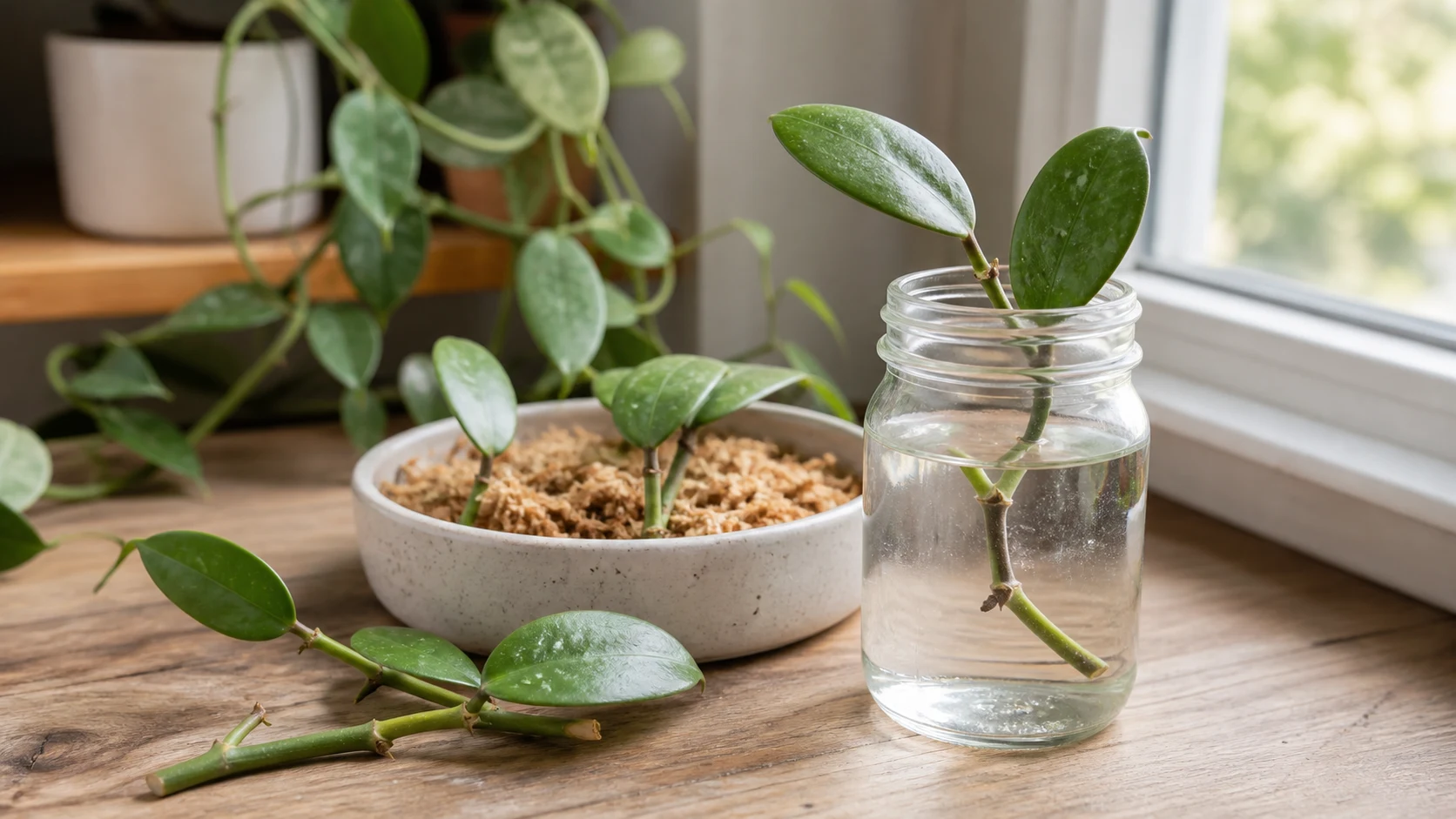
True vegetative nodes sit in water and sphagnum while the waxy leaves stay above the rooting medium.
One thing to know before you cut: never take a cutting that includes a flower spur or peduncle as a node. Peduncles look similar to stem nodes but they only produce flowers, not new vining growth. Cut below the peduncle and make sure your propagation cutting has true vegetative nodes.
Water propagation works reliably for most hoyas. Change the water every few days to keep it fresh. Roots usually appear within two to four weeks. Once roots are a couple of centimeters long, pot the cutting up into a small container with well-draining mix. Don’t wait for roots to get very long before transplanting, since long water roots can struggle to adapt to soil.
Don’t propagate from a single leaf unless it has a node attached. A leaf without a node won’t develop into new growth. This is also the hoya kerrii situation described earlier in the varieties section.
The propagate pothos guide covers node identification and propagation technique in detail, which is useful if this is your first time propagating a vining houseplant.
Common Mistakes
- Waiting for dramatic taco-like leaf curl before watering, which can mean the plant was stressed long before the signal became obvious.
- Using a heavy moisture-retentive mix and then following succulent-style advice to water “just a little.”
- Cutting off old peduncles because they look spent, which removes the next flowering point.
- Treating every hoya species as equally pet-safe instead of checking the exact plant when pets are likely to chew it.
Common Problems
Yellow leaves: Usually overwatering or root rot. Check the soil and roots before assuming anything else. If the soil is wet and roots look brown and mushy rather than firm and white, that’s root rot. Let the soil dry fully and consider repotting into fresh dry mix.
Leaves not growing: Normal during winter. If it’s spring or summer and there’s no movement, check light first. Most hoyas slow down or stop entirely without sufficient brightness.
Wrinkled leaves: Underwatering or very low humidity. Water thoroughly and see if they firm up within a day. If humidity in your home is consistently below 40%, a pebble tray with water near the plant can help.
No flowers after years of waiting: Usually a light problem, or old spurs were removed. Move the plant closer to a bright window, leave all stem structure intact, and wait through one full seasonal cycle before making any other changes.
Sticky residue on leaves or nearby surfaces: This could be honeydew from sap-sucking pests like mealybugs or scale. Check the undersides of leaves and stem joints carefully.
Bud drop: Hoyas drop buds when moved during the bud-set phase, exposed to cold drafts, or overwatered. If buds appear and then fall off before opening, check for drafts and resist moving the plant until after the flowers fully open and fade.
Hoya Trouble Decision Tree
- Wrinkled leaves + dry airy mix + bright light: Water deeply, then go back to checking the pot weight instead of waiting for leaf collapse.
- Wrinkled leaves + wet or dense mix: Inspect roots before watering again. A suffocated root ball can look thirsty from the top.
- Yellow leaves + heavy pot: Pause watering, check for mushy roots, and only repot if the mix smells sour or roots are failing.
- Plant declined right after blooming: Check roots first, then review light and watering rhythm. Post-bloom decline is not automatically a fertilizer problem.
- New cutting looks stalled: Confirm it has true nodes and modest moisture, not a large pot with soggy mix.
- Healthy vine, no flowers: Increase light, keep old peduncles, and judge progress over a full season, not a single week.
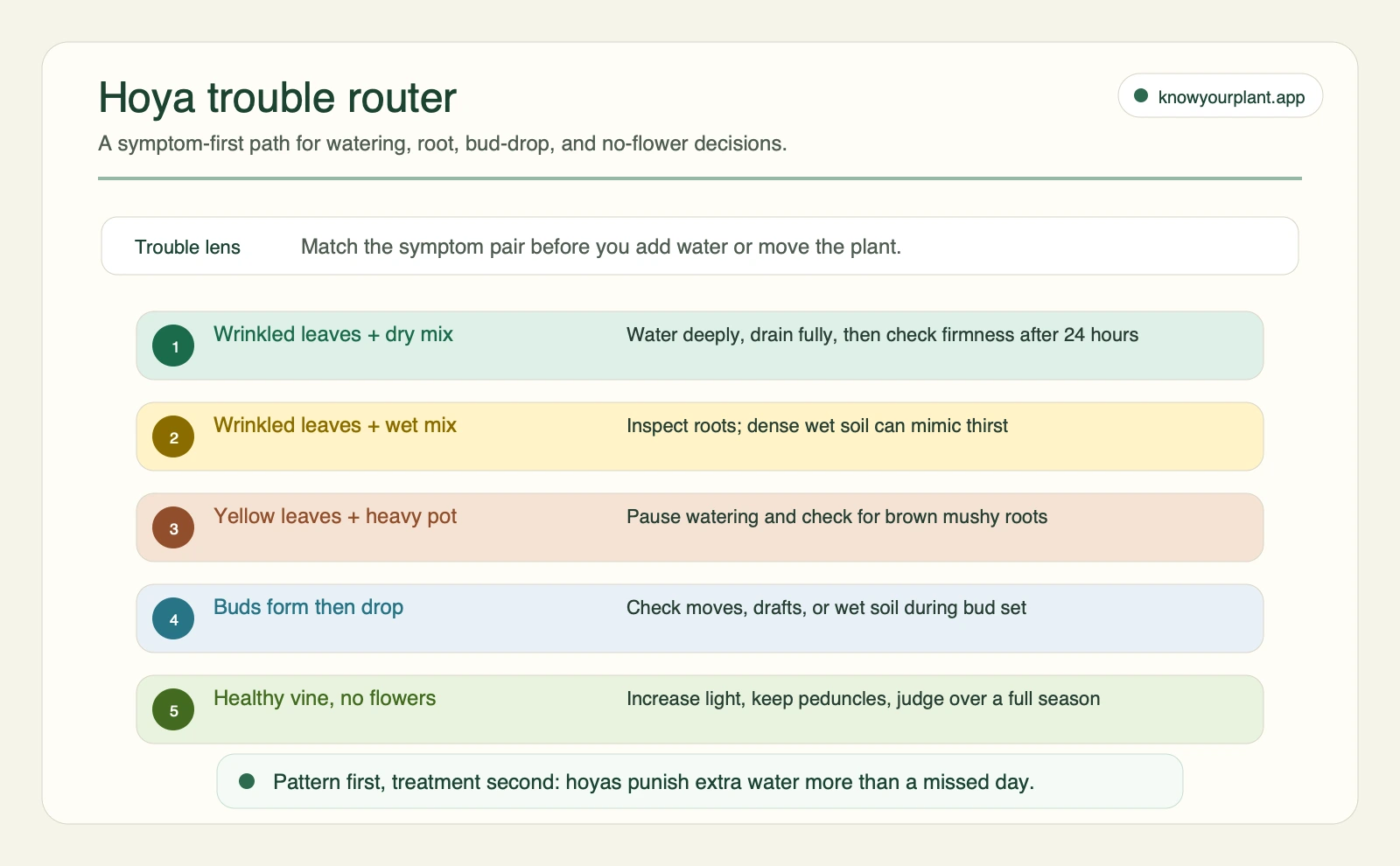
The key is to pair the leaf signal with the pot condition before acting. A wet hoya can look thirsty when the roots are short on air.
Expert Note
UF/IFAS describes hoya as a classic indoor wax plant grown for foliage and fragrant blooms, while Colorado State University PlantTalk supports the household-temperature, moderate-humidity, and pest-watch basics used here. For pet safety, the ASPCA specifically lists wax plant, Hoya carnosa ‘Krinkle Kurl’, as non-toxic to dogs and cats, which is a stronger reference than repeating a blanket claim about every hoya species.
For a related hands-on growing walkthrough, use Humidifier for Plants: When It Helps, Where to Put It, and Risks for the setup and follow-up care.
Freshness Note
Primary source checks and owner-pain review were refreshed on 2026-06-22. Community discussions were used only to surface recurring confusion about wrinkle-based watering, root checks after decline, bloom frustration, and species-level pet-safety assumptions.
Methodology Note
This guide was updated by checking extension-style care guidance, the ASPCA wax plant listing, and visible hoya-owner discussions. Direct care and safety claims were anchored to named sources. Reader discussions were treated as qualitative signals about where generic advice tends to mislead.
Are Hoyas Safe for Pets?
The careful version is better than the viral version here. The ASPCA specifically lists wax plant, Hoya carnosa ‘Krinkle Kurl’, as non-toxic to dogs and cats. That supports cautious pet-safe wording for common wax plant types, but it is still smarter not to turn one listing into a universal claim for every hoya species or cultivar. Even non-toxic plants can still cause stomach upset if a pet chews a lot of foliage, so call your veterinarian or poison-control line if ingestion happens and symptoms show up. If you have cats or dogs that chew on plants, the cat-safe plants for indoors guide covers a broader list of verified non-toxic options.
Real User FAQ
How often should I water a hoya plant? There’s no single right number, because watering interval changes with pot size, soil mix, light level, and season. A good rule: check the top half of the soil before you water. If it’s still damp, wait another few days. In summer, most hoyas in average indoor conditions need water every 10 to 14 days. In winter, that can stretch to three or four weeks.
Why isn’t my hoya growing? Slow growth in winter is completely normal for hoyas. If it’s during the growing season (spring and summer) and there’s no movement at all, light is the most likely issue. Hoyas in low light grow very slowly or stop entirely. Try moving the plant closer to a bright window for four to six weeks and see if that changes anything.
Why won’t my hoya bloom? The most common reasons: insufficient light, no cool period between seasons, being in too large a pot, or old flower spurs were removed. Hoyas generally need to be a little root-bound, get several hours of bright indirect light daily, and experience slightly cooler temperatures in autumn and winter to trigger blooming. Leave all old spur stems in place, since that’s where new flowers develop.
Can I propagate a hoya in water? Yes, water propagation works well for most hoya varieties. Take a stem cutting with at least one true vegetative node (not a flower peduncle), let the cut end dry for an hour, then place it in clean water with the node submerged but the leaves above the waterline. Change the water every few days. Roots usually appear within two to four weeks.
My hoya kerrii leaf has been sitting in the same pot for a year and nothing is happening. Is it dead? Not dead, but if it’s a single leaf without a node, it will never produce new growth. A single leaf without a node has no growing point, so it can stay green and alive for months or even years without ever developing into a plant. To get a hoya kerrii that grows, you need a cutting with at least one node on the stem.
Should I fertilize my hoya? Yes, during the growing season. A balanced liquid fertilizer at half strength once a month from spring through early autumn is enough. Stop fertilizing in late autumn and winter when the plant isn’t actively growing. The plant fertilizer guide covers how to read your plant’s response and adjust timing if needed.
Why are my hoya’s leaves turning yellow? Yellowing is almost always overwatering or root rot. Before changing anything, check the soil and lift the pot. If the soil is consistently wet and the pot feels heavy, let it dry out completely before watering again. If the problem is severe, unpot the plant, inspect the roots, trim any that are brown and mushy, and repot into fresh dry soil.
Do hoyas need high humidity? Most hoyas tolerate typical indoor humidity levels (40 to 60%) without any problems. They’re more adaptable than calatheas or ferns. If your home is very dry in winter (below 30%), leaves may develop dry or crispy edges. A humidity tray or occasional misting helps, but you don’t need a humidifier specifically for hoyas. If you like fine trailing plants with a similar bright-window setup, the string of hearts care guide is a useful compare-and-contrast next read.
A Good Home for a Hoya
If you have a bright spot that gets a few hours of indirect light each day, you have a good home for a hoya. They don’t need high humidity, they tolerate typical indoor temperatures, and they ask very little of you between waterings. What they give back, eventually, are those strange beautiful flower clusters that smell like they belong in a warmer world.
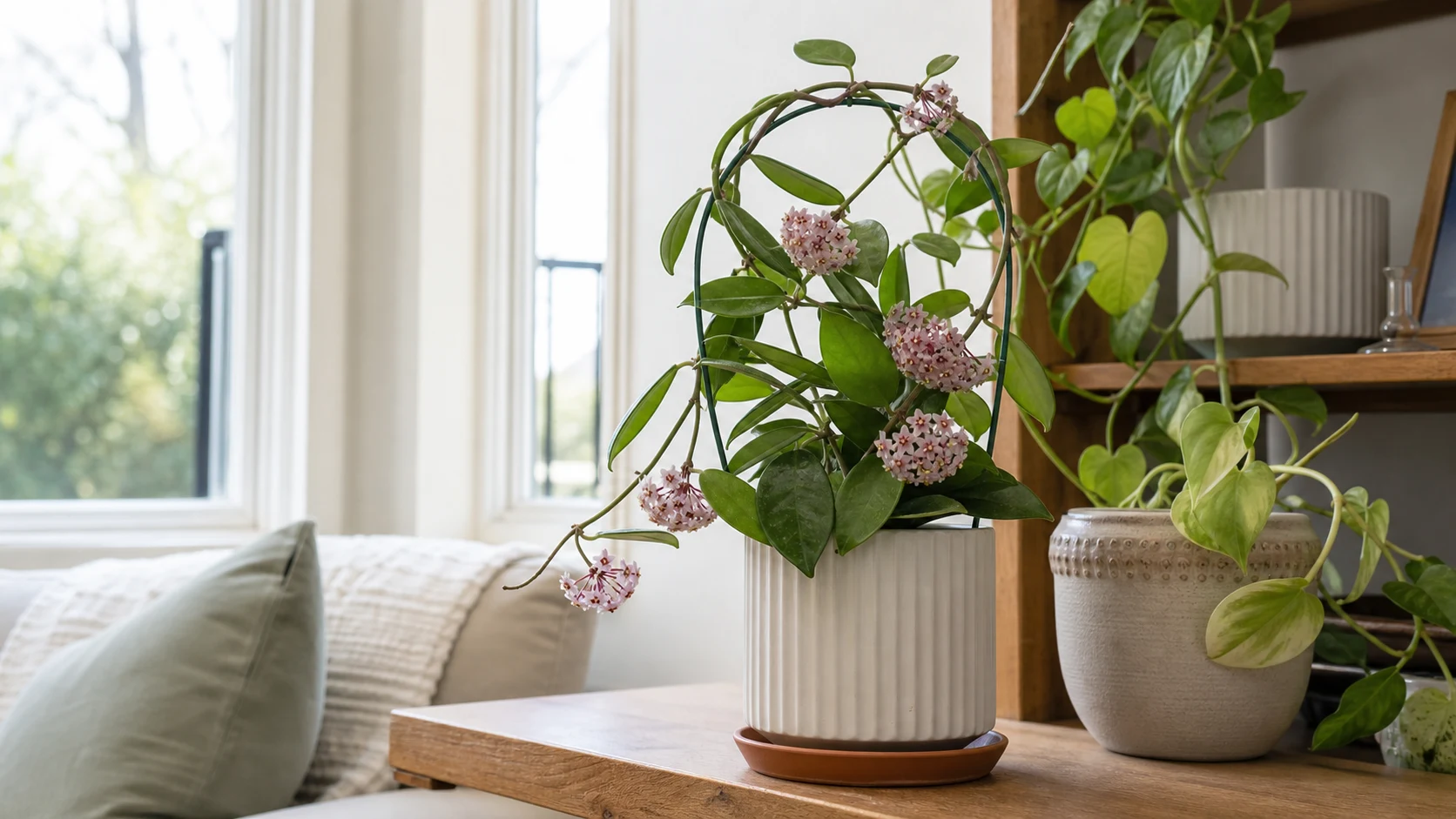
A stable place near a bright window gives a mature hoya the calm conditions it needs to flower indoors.
The main things to hold onto: let the soil dry between waterings, never remove old flower spurs, and give it a slightly cooler autumn. The rest of hoya plant care takes care of itself.
Download KnowYourPlant for personalized plant care reminders and watering schedules tailored to your home at knowyourplant.app.