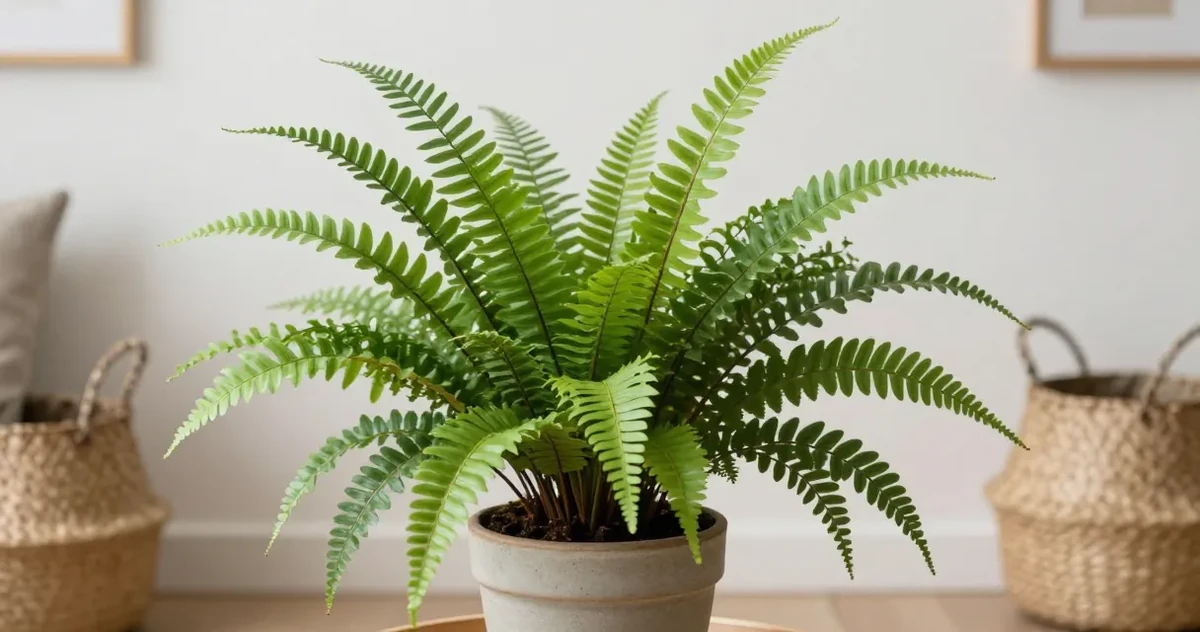
You brought home a Boston fern. It looked incredible at the nursery: full arching fronds, deep green, the kind of plant that makes a room feel like it actually has a personality. Then slowly, or sometimes not so slowly, it started dropping leaves. Little green crumbles on the shelf, on the floor, under the pot. You’re watering it. You’re giving it light. What’s going wrong?
Almost every Boston fern problem traces back to one thing: the air around it, not the water or the light. Once you understand that, the shedding makes sense and the fix becomes obvious.
A Boston fern (Nephrolepis exaltata) evolved on the rainforest floor. Wisconsin Horticulture and North Carolina Extension both describe the same core pattern: bright to medium indirect light, consistently moist soil, and higher humidity than most homes provide. That is why Boston ferns often look easy on a shaded porch and suddenly look brittle indoors.
What Most Care Guides Miss
Most guides about Boston fern describe the ideal care routine. Real homes are messier: light changes by season, pots dry at different speeds, and the same symptom can mean different things depending on where it appears.
Before changing care, check the plant in this order:
- Light: is the plant growing toward the window, fading, or scorching?
- Root zone: is the pot drying predictably, or staying wet in the middle?
- Leaf pattern: did the oldest leaves, newest leaves, tips, or stems change first?
- Recent change: new pot, new location, fertilizer, cold draft, heat vent, or pest exposure.
This keeps you from fixing the wrong problem. One clear adjustment is usually safer than a full care reset.
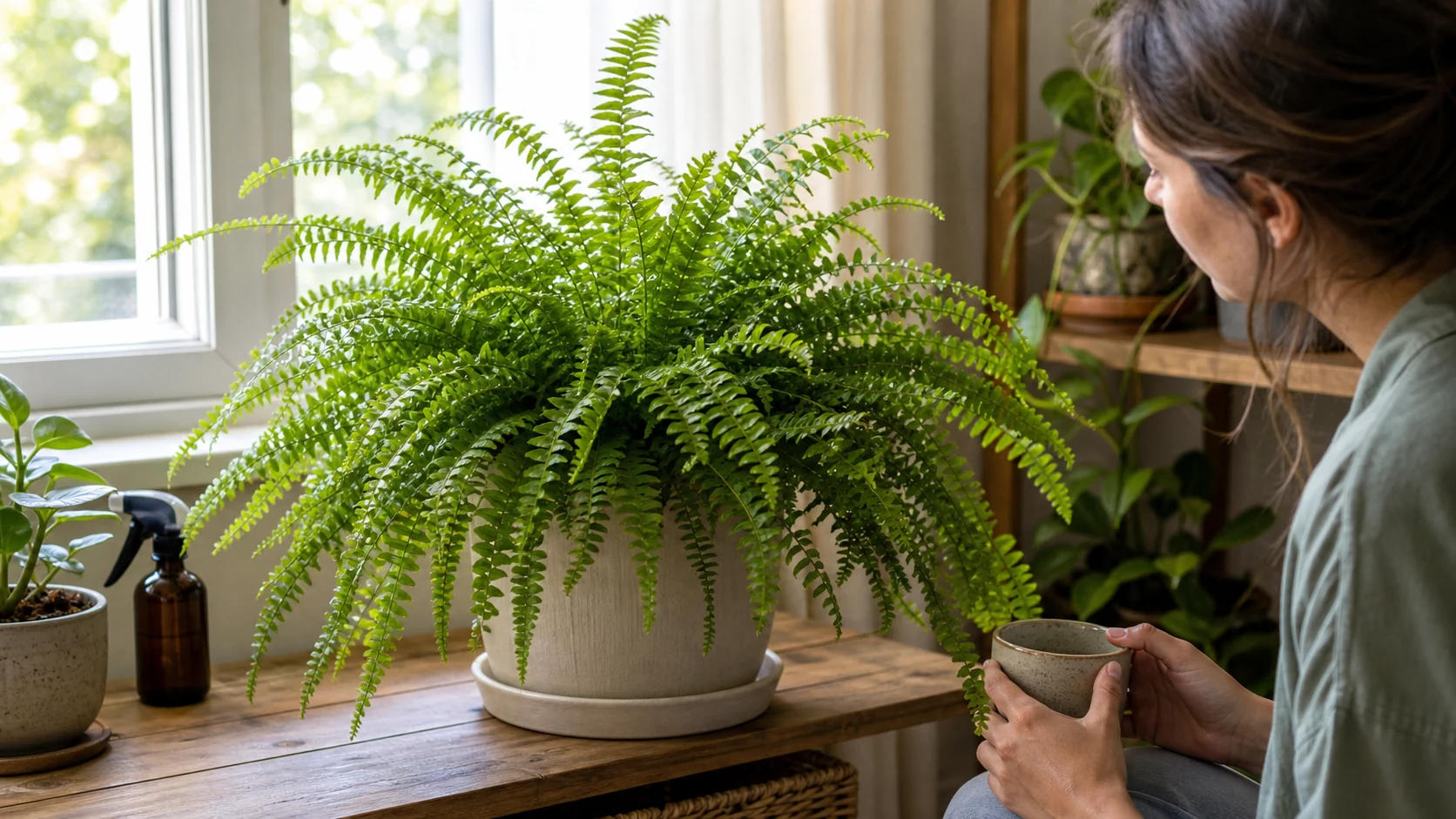
A Boston fern often needs a calm first check of light, root-zone moisture, leaf pattern, and recent room changes before you reset its whole care routine.
Identification Snapshot
| Trait | What to look for |
|---|---|
| Overall shape | A dense fountain of arching fronds that spills outward rather than growing stiffly upright |
| Frond texture | Soft, feathered fronds with many small leaflets arranged along each stem |
| Best clue indoors | New fronds unfurl from the center while older outer fronds shed first when conditions change |
| Fast reality check | If the plant feels brittle, sparse, or sharply upright from day one, double-check the label before following Boston fern care advice |
Care Cards
| Care need | Boston fern target | What goes wrong when you miss it |
|---|---|---|
| Light | Bright to medium indirect light | Deep shade makes fronds pale. Direct sun scorches and dries the plant too fast. |
| Water | Keep soil evenly moist, never bone dry and never swampy | Dry spells cause shedding. Waterlogged pots push the roots into decline. |
| Humidity | 50% or higher, with extra help indoors | Dry air causes brown tips, crisp edges, and constant leaf litter. |
| Temperature | Warm room conditions, away from cold drafts | Chilly windows, AC vents, and winter moves outside can trigger fast browning. |
| Container setup | Drainage hole plus airy potting mix that still holds moisture | Cachepots, compacted soil, and root-bound baskets make diagnosis harder. |
| Seasonal move | Easier outdoors in shaded humidity, harder indoors in winter air | The same healthy porch fern can decline fast after a dry-indoor move. |
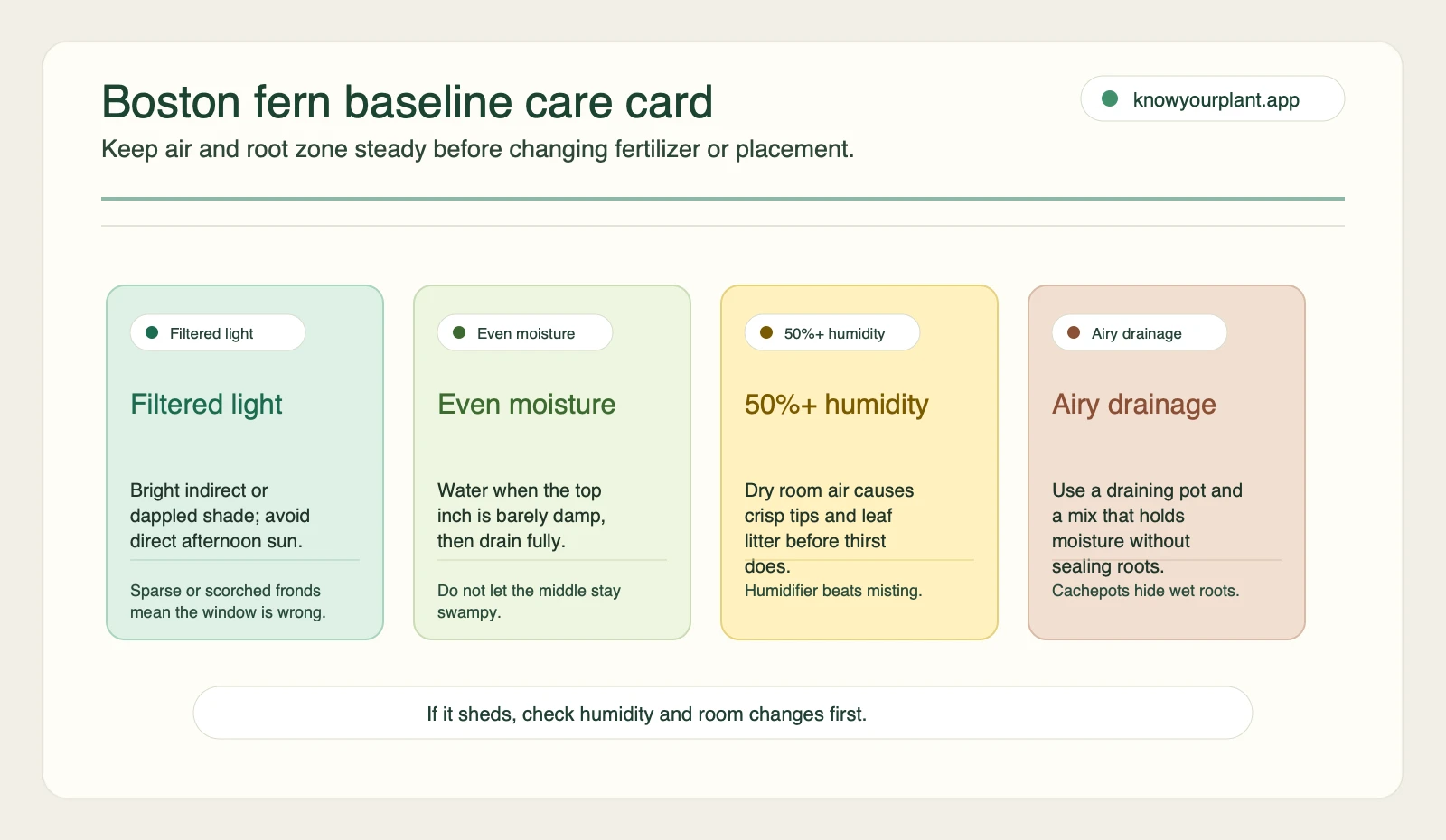
Use this care card before changing everything at once: Boston ferns usually need steadier air, moisture, and drainage before they need fertilizer.
What Boston Ferns Actually Need
Before the specifics, here’s the honest picture: Boston ferns aren’t low-maintenance plants. They’re not difficult exactly, but they notice when conditions change. They shed when stressed, go limp when thirsty, and turn brown when the air is too dry. They communicate constantly. Once you learn to read what they’re saying, you stop chasing the problem and start preventing it.
Quick reference:
- Light: bright indirect
- Water: consistently moist, never soggy
- Humidity: 50% or higher (70% is ideal in summer)
- Temperature: 60-75°F (15-24°C), no cold drafts
- Soil: well-draining with good moisture retention
- Feeding: light, during active growth only (spring through summer)
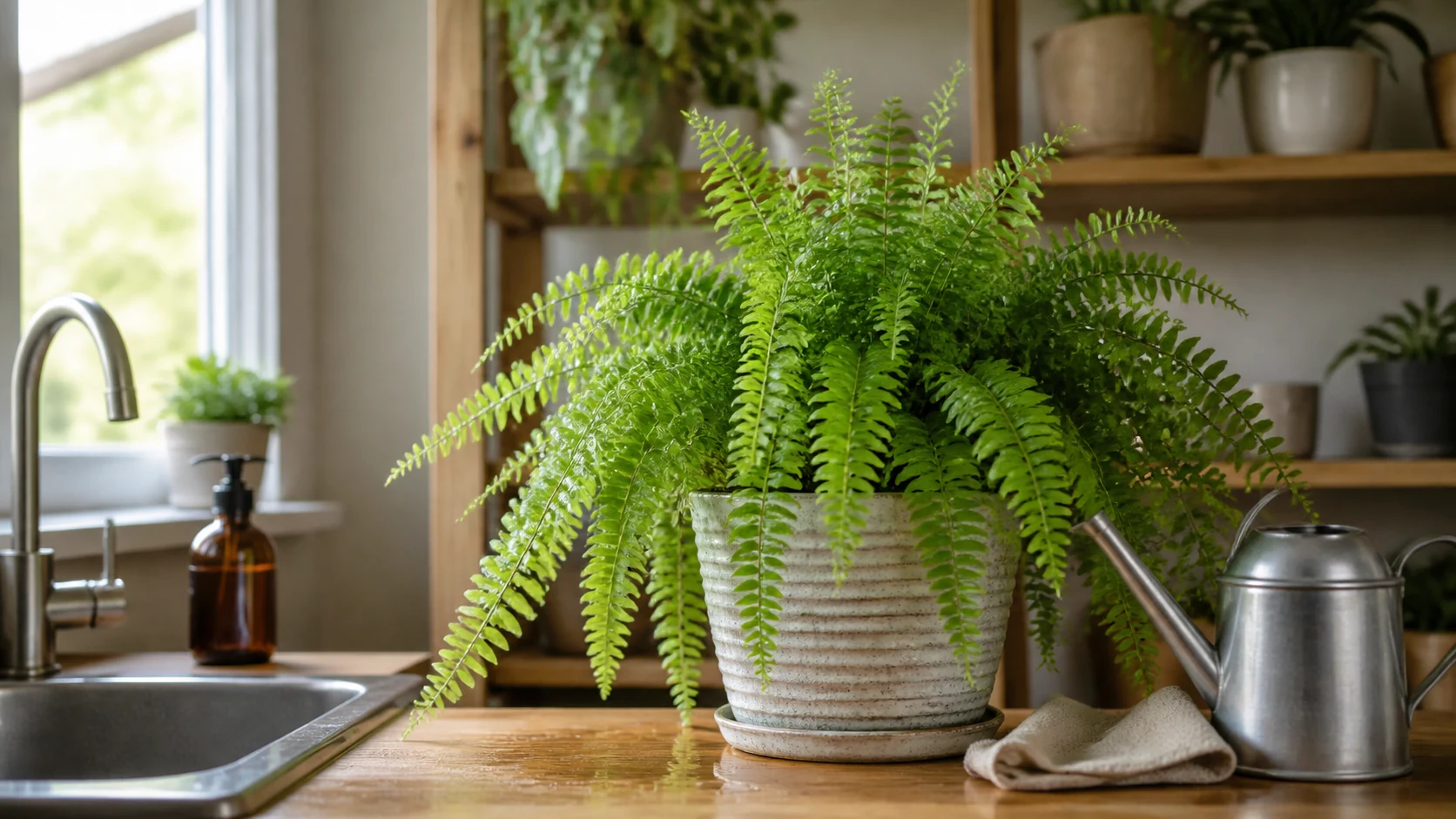
A healthy Boston fern usually does best near bright indirect light, steady moisture, and a care station that makes watering and humidity checks easy.
Light: Bright but Filtered
Boston ferns don’t want direct sun. Full sun bleaches the fronds and dries the soil too fast. But they also don’t thrive in dim corners, where the fronds get sparse and pale and the plant slowly declines.
What they want is the kind of light you’d get near a north or east-facing window, or a few feet back from a south or west-facing one. Bright enough to read comfortably, filtered enough that no direct beam hits the leaves.
If you’re keeping one outdoors for the warmer months, dappled shade works well: under a tree canopy, on a covered porch, along a shaded wall. If you’re working with limited natural light indoors, a grow light can bridge the gap, especially through winter when days shorten significantly.
Watering: Moist, Not Drenched
The goal with Boston ferns is consistently moist soil, never waterlogged. This is different from most houseplant advice, which tells you to let the soil dry out between waterings. With ferns, that dry-out period causes stress.
Check the soil every two to three days. Press your finger about an inch in. If it feels barely damp, water thoroughly until it drains from the bottom. If it still feels moist, wait another day or two.
What you’re avoiding: soggy soil with standing water in the saucer. That’s the fast route to root decline, which looks a lot like drought stress at first: drooping, yellowing, general decline. North Carolina Extension still points growers toward consistently moist soil, but that target only works when the container drains freely and the middle of the pot does not stay swampy.
In summer, ferns can need water every two to three days depending on pot size and heat. In winter, especially indoors, slow down. The plant isn’t growing much and the roots don’t need as much.
Humidity: The Real Make-or-Break
This is where most Boston ferns struggle indoors, and where most shedding starts.
Homes typically run at 30-40% relative humidity. Boston ferns want 50% or higher. The University of Florida IFAS Extension recommends 70% for optimal growth, which is closer to the tropical forest floor conditions the plant evolved in. The gap between what your home offers and what the plant needs shows up as: leaf tips turning brown, fronds going crispy, and constant leaf drop.
A few approaches that actually work:
Pebble tray: Fill a shallow tray with pebbles, add water just below the surface, and set the pot on top. As the water evaporates, it adds humidity right around the plant. It’s not dramatic, but it’s consistent and costs almost nothing.
Group plants together: Plants release moisture through their leaves. A cluster of moisture-loving plants raises the local humidity slightly. Not a cure, but a meaningful supplement. If you’re building out a plant corner, ferns pair well with calatheas and prayer plants, which want exactly the same conditions.
Humidifier: The most reliable fix by a wide margin. A small humidifier nearby, aiming for 50% or higher, makes a noticeable difference within weeks because it changes the room-air pattern instead of briefly wetting the leaves. If you want the wider diagnosis framework for vents, overnight drops, pebble trays, and which plants genuinely need extra moisture, read our guide to humidity for houseplants.
Misting works short-term but evaporates quickly and can promote fungal issues if fronds stay wet. It’s better as a supplement than a strategy.
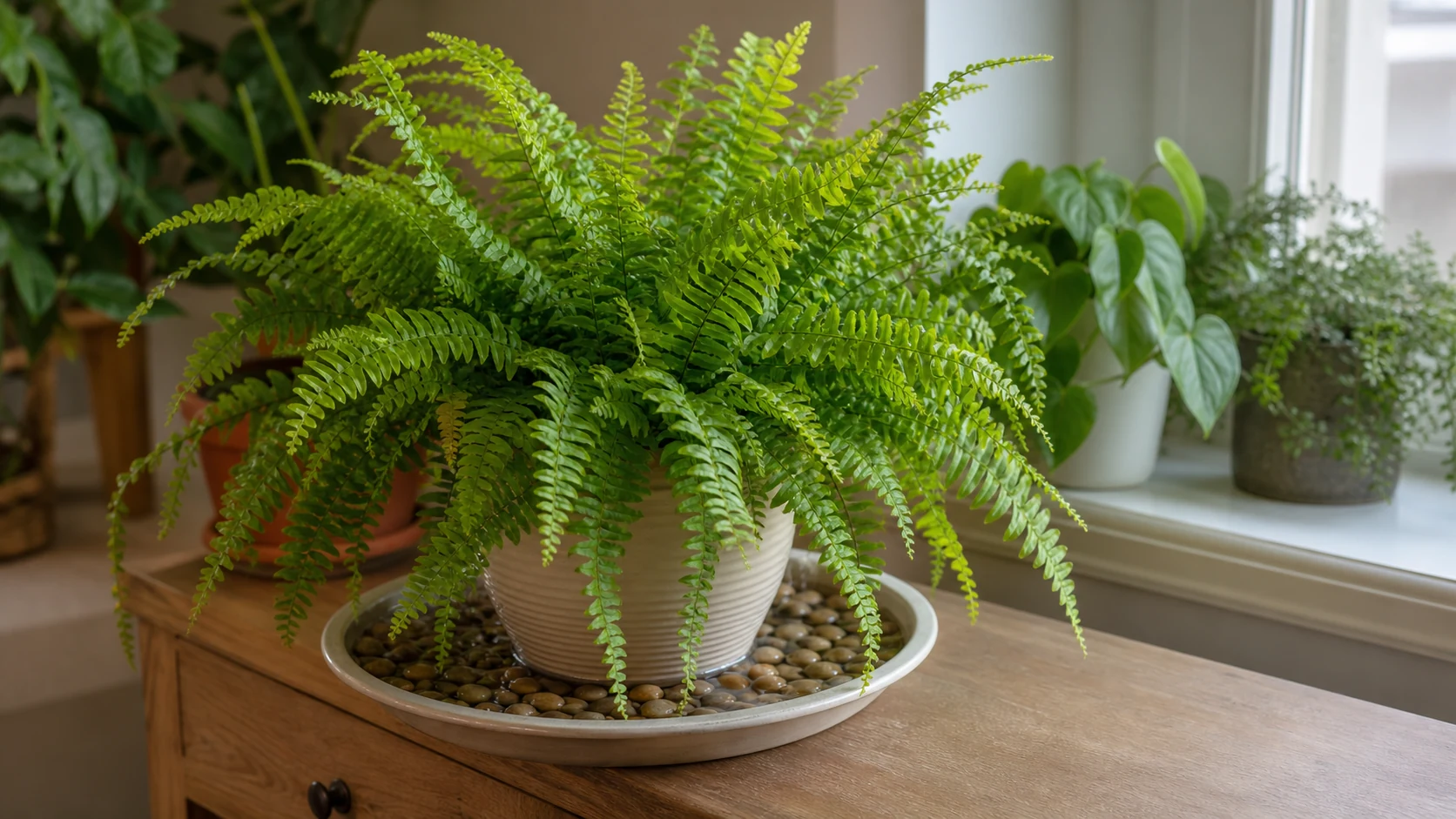
A pebble tray and nearby plant grouping can raise the local humidity around a Boston fern when the rest of the room runs dry.
What Real Growers Keep Misreading
When Boston fern owners compare notes, the same confusing patterns come up again and again.
- Dry fronds plus a heavy pot: this usually means the air is too dry or older damage is catching up, not that the plant needs another full watering.
- Looks better outdoors than indoors: that is common because a shaded porch gives the fern more humidity and gentler airflow than a dry room.
- Browning on older outer fronds only: some cleanup is normal. Panic is more justified when fresh new fronds start browning too.
- Placement keeps getting blamed on “indoor light” alone: with Boston ferns, vents, drafts, and room humidity matter just as much as the window.
If the fronds look crisp but the middle of the pot still feels heavy, pause before watering again. Check airflow, humidity, and drainage first. Adding more water to an already wet root zone is one of the fastest ways to turn cosmetic damage into root stress.
Common Problems
A Boston fern is basically a fast visual report on the room around it. The key is to separate older-frond wear from new-growth stress, then check the environment in the right order instead of changing everything at once.
| Symptom | What to check first | Most likely meaning |
|---|---|---|
| Brown tips on older outer fronds | Humidity and normal frond age | Usually dry air or ordinary aging, not a full-plant crisis |
| Browning on fresh new fronds | Light, watering rhythm, and recent stress | New growth should stay clean. If it does not, the plant is actively stressed. |
| Sudden all-over leaf drop | Recent move, cold exposure, or a sharp humidity change | Boston ferns often react to environmental swings faster than other houseplants. |
| Grey-green or stalled growth | Root crowding, drainage, or weak light | Porch ferns moved indoors often reveal pot or light problems here. |
| Limp fronds with moist soil | Cold draft or stressed roots | Check vents, cold windows, and whether the pot is staying wet in the middle. |
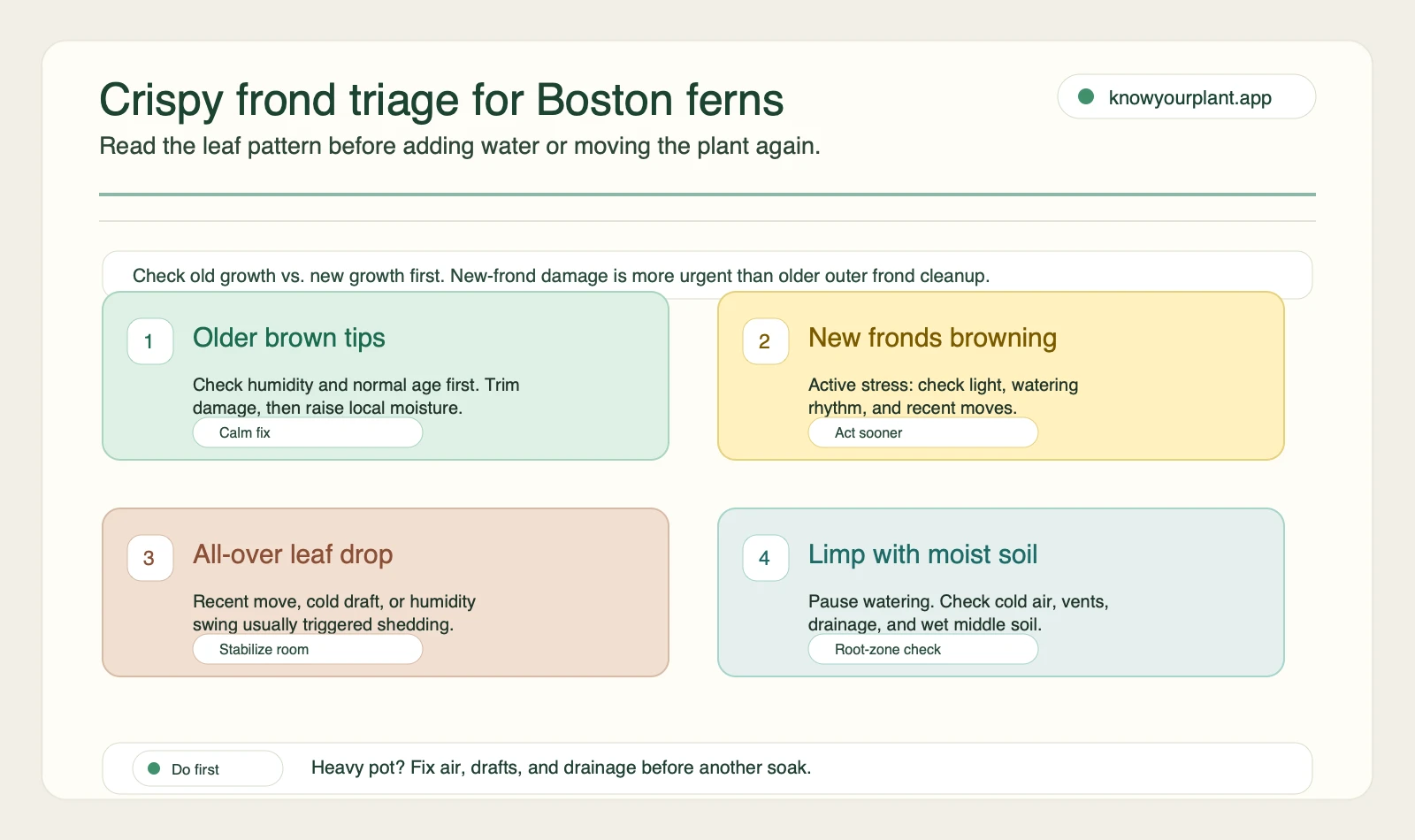
Use the triage order before watering again: older brown tips, new-frond damage, sudden leaf drop, and limp fronds with moist soil point to different first checks.
Brown tips, fronds otherwise green: The air is too dry. This is the number-one signal and it’s almost always humidity, not watering. Add a pebble tray, move a humidifier closer, or group the plant with others.
Tips browning AND soil feels crusty or salt-streaked near the top: Fertilizer salt buildup. Flush the soil thoroughly with water, then hold off on feeding for six to eight weeks before resuming at half-strength.
Entire fronds yellowing, soil feels wet or smells off: Almost certainly overwatering or blocked drainage. Check that the drainage holes aren’t clogged, ease back on watering frequency, and let the soil recover slightly before watering again.
Pale green new growth, older fronds still healthy: Light is the limiting factor, not humidity. Move the plant closer to a bright window or supplement with a grow light.
Sudden all-over shedding, fronds still look green before they fall: The plant was recently moved, repotted, or experienced a temperature change. Give it two to three weeks. Boston ferns shed as a stress response when conditions shift, even when the new conditions are perfectly fine. It’s recalibrating, not dying.
Fronds limp but soil feels moist: Cold stress. Check for a nearby air-conditioning vent, a drafty window, or overnight temperatures below 60°F. Move the plant away from the source and give it warmth.
Once you train yourself to look at the fronds first before adjusting anything, the guesswork drops significantly.
Boston Fern Leaf-Drop Decision Tree
Use this order before you change watering, fertilizer, and placement all at once:
- Recent move or cold exposure? If the plant was moved, repotted, put near a vent, or exposed to cold outdoor air, start there. Boston ferns often shed fast after that kind of shock.
- Humidity low? If the room feels dry and the tips are crisp, add humidity support before increasing water.
- Root zone off? Check whether the center of the pot is drying evenly or staying wet while the surface fools you.
- Older fronds only, or new fronds too? Older-frond wear is less urgent. New-frond damage points to an active care problem.
- Pot setup causing stress? Decorative cachepots, root-bound baskets, and salt buildup can all look like “watering problems” at first.
Why Your Boston Fern Is Dropping Leaves
Leaf drop from Boston ferns is almost never a mystery. It’s almost always one of four things:
Low humidity. The most common cause by far. Fronds dry out from the tips inward, then drop. Brown tips usually come first. If your home runs dry, start here.
Inconsistent watering. If the soil swings between soggy and dry, the plant sheds in protest. Keep the rhythm steady and the shedding usually stops within a few weeks.
Cold air or drafts. A vent blowing cool air, a drafty window in winter, or an air conditioning unit nearby can trigger shedding quickly. Boston ferns don’t like temperatures below 60°F (15°C). NC State Extension specifically flags heating and cooling vents as one of the most common environmental stressors for ferns kept indoors.
Moving the plant. Even moving a fern from one room to another can cause a temporary shedding phase. Give it two to three weeks to adjust before worrying.
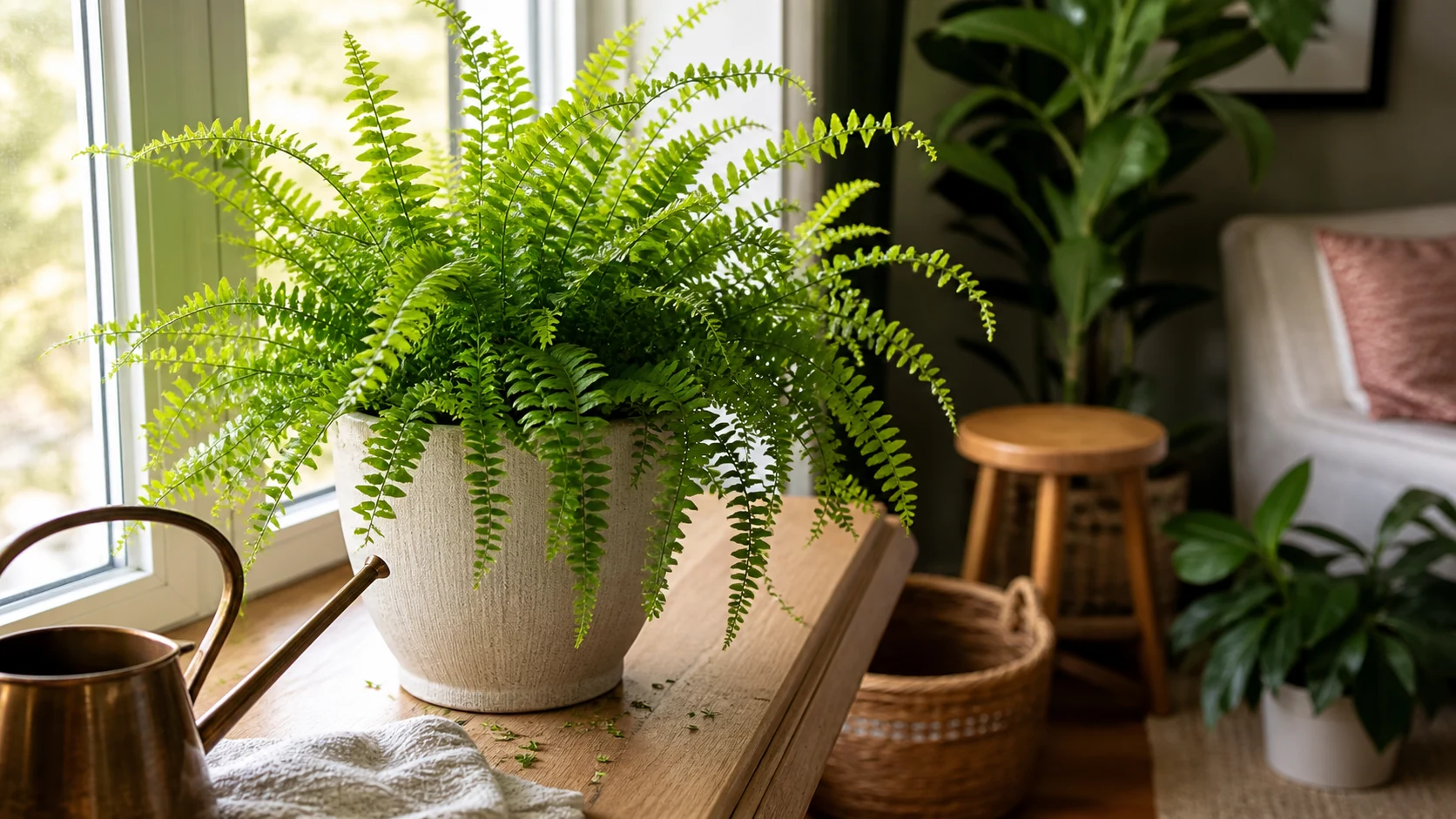
Leaf drop often starts after dry air, uneven watering, cold drafts, or a recent move, so read the room conditions before adding more water.
Feeding: Light and Seasonal
Boston ferns don’t need heavy feeding. A balanced liquid fertilizer at half-strength, applied once a month from spring through early fall, is plenty. Match feeding to active growth. When the plant is pushing new fronds, a little fertilizer helps. When it’s sitting still in winter, hold off completely.
Too much fertilizer causes salt buildup, which shows up as browning tips, the same symptom as low humidity. If you’ve been feeding regularly and still see browning, flush the soil thoroughly with water to reset before troubleshooting further.
Stop feeding in late September or October. Resume in spring when you start seeing new growth again.
Seasonal Care Calendar
Spring (March to May) This is when the fern wakes up. You’ll see new fronds unfurling from the center of the plant. Increase watering frequency as temperatures rise and growth accelerates. Start monthly feeding once you see clear new growth pushing through. If the plant has been in the same pot for two or more years, spring is the right time to repot into a container one size up.
Summer (June to August) Peak growth season. Water every two to three days, or more if the plant is outdoors in heat. Maintain humidity at 60-70% if possible. Keep feeding monthly. Outdoor plants usually take care of themselves with natural rainfall and ambient humidity, but check the soil during dry stretches and water when needed.
Autumn (September to November) Growth slows. Ease back on feeding and start transitioning watering to a slightly longer interval. If the fern is outdoors, bring it in before nighttime temperatures drop below 55°F (13°C). Expect some shedding as the plant adjusts to lower light indoors. That’s normal and will stabilize once the plant settles in.
Winter (December to February) The fern is essentially resting. Water less often, checking every three to four days instead of two to three. Do not feed. Keep it away from heating vents and radiators, which push dry, hot air directly at the fronds. A cool, bright room with a humidifier nearby is the best setup you can offer. Persistent shedding and fading in winter usually come down to humidity first, then light. Some people cut the fern back hard in late fall, water sparingly through winter, and let it re-emerge in spring. It works well if you’re short on a good indoor spot. Boston ferns are resilient enough to handle near-dormancy if they don’t freeze.
Indoors vs. Outdoors
Boston ferns are often grown as outdoor plants in warmer climates. In USDA zones 9-11, they can stay out year-round. In colder regions, they’re popular on shaded porches and patios from late spring through early fall.
Outdoors, they’re considerably easier. Natural humidity is usually higher, temperatures are more stable, and rainfall handles much of the watering. Just protect them from direct afternoon sun and bring them in before temperatures drop below 55°F (13°C).
Indoors, they need more attention, mostly around humidity and consistent moisture. A bathroom with natural light is often the easiest placement in the house: the steam from showers does real work and keeps the air around the fern closer to what it needs. For a full list of plants that suit that same humid, lower-light setup, see best plants for bathroom. For companions elsewhere in the home, snake plants and calatheas thrive under similar indirect-light conditions.
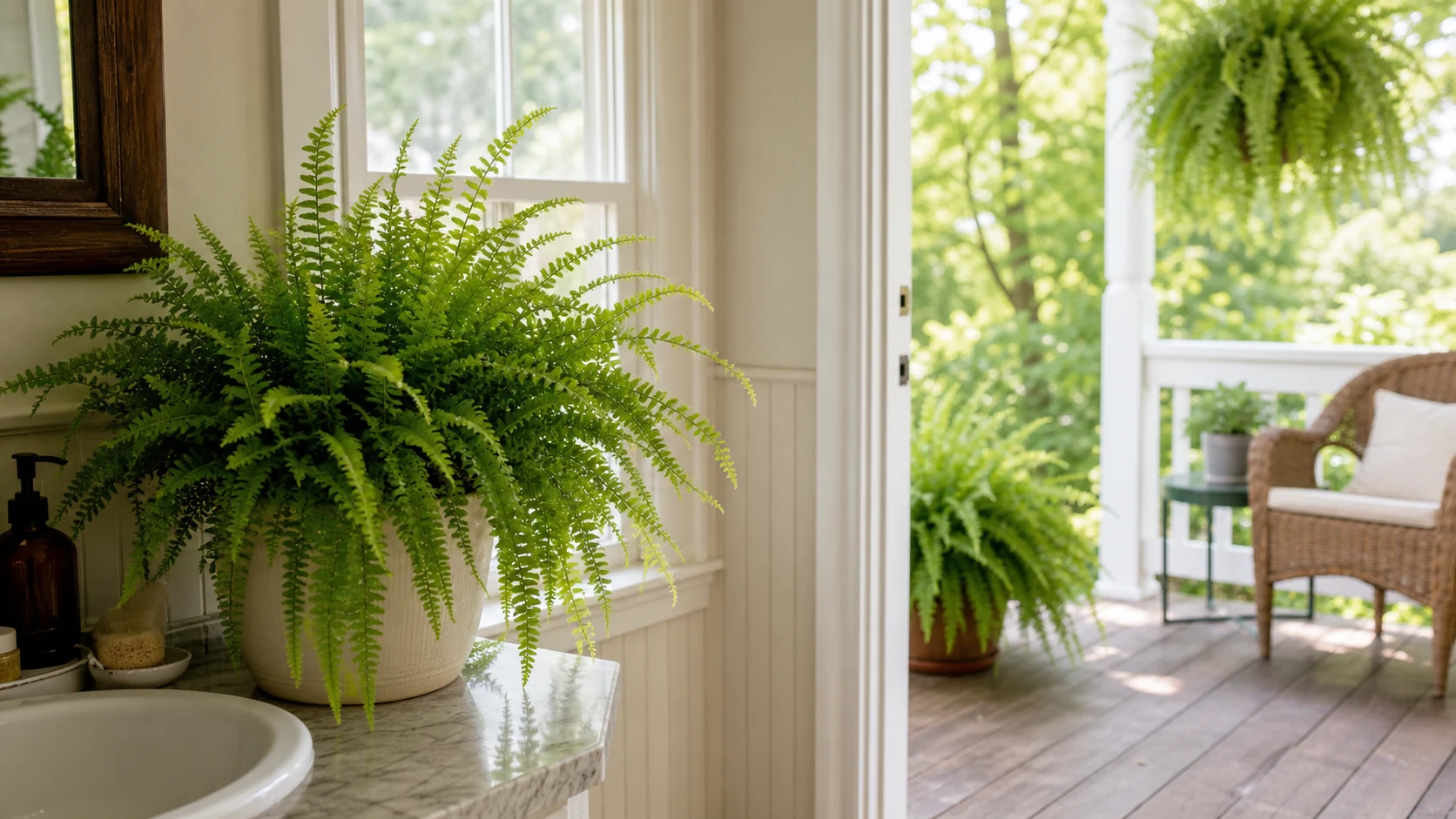
A bright bathroom or shaded porch can give Boston ferns the humidity and filtered light they rarely get in a dry living room.
Boston Fern Placement Scorecard
| Location | Humidity likelihood | Light quality | Draft risk | Watering difficulty | Best use |
|---|---|---|---|---|---|
| Bright bathroom | High | Usually bright indirect | Low | Moderate | Best indoor setup if you have a window |
| Kitchen window | Medium to high | Good if sun is filtered | Medium | Moderate | Strong everyday indoor option |
| Shaded porch | High | Bright, filtered, and forgiving | Low to medium | Easy in warm weather | Often the easiest summer placement |
| Dry office | Low | Varies a lot | Medium to high | Hard | Only works with a humidifier and careful monitoring |
| Near HVAC vent | Low | Sometimes fine | High | Hard | Avoid if possible because airflow dries fronds fast |
| South-facing window with direct sun | Medium | Too harsh unless filtered | Medium | Hard | Use only if the sun is softened by sheer curtains or distance |
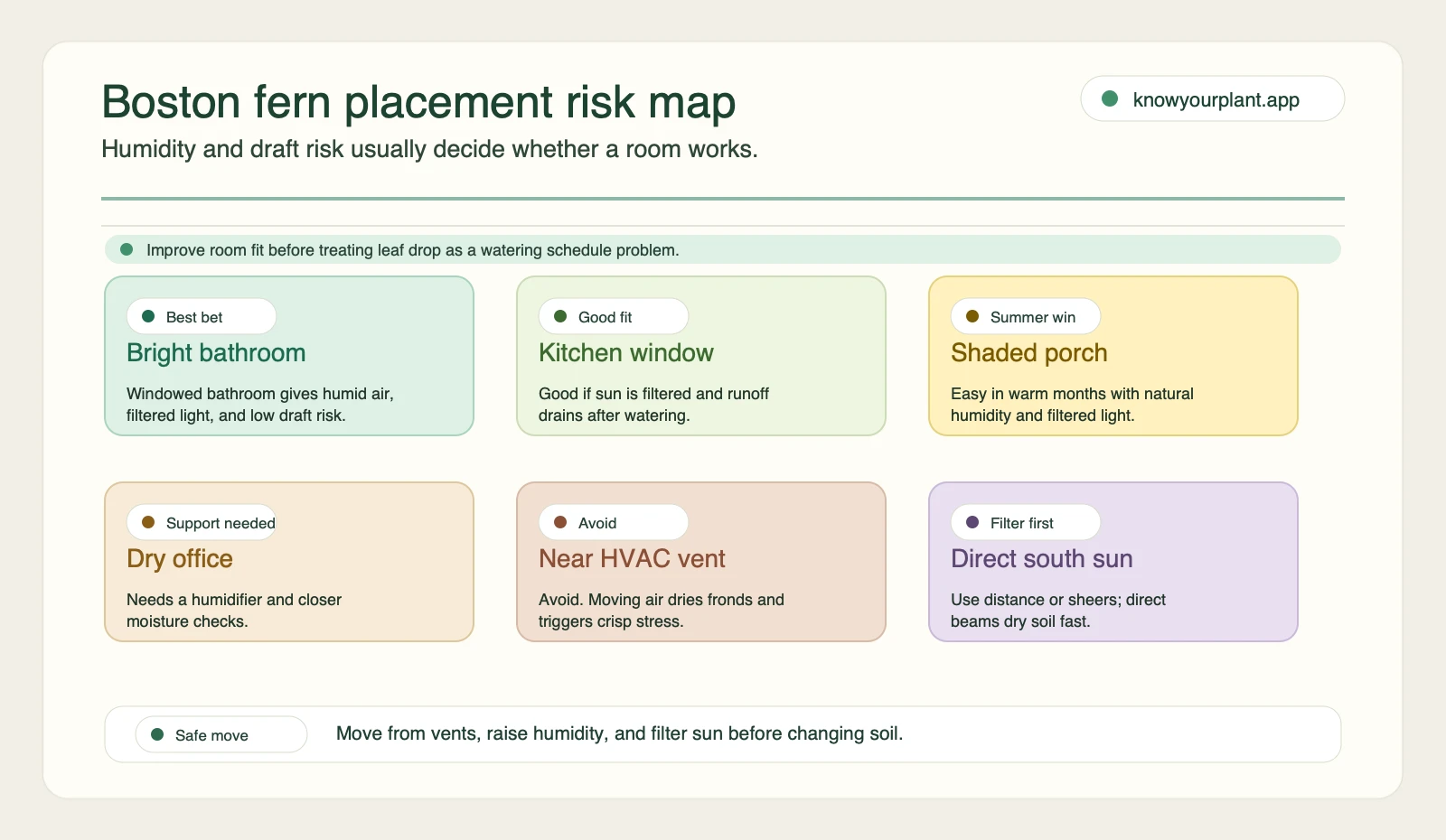
Use the placement map when leaf drop keeps returning: humidity, drafts, and filtered light usually matter before another soil or fertilizer change.
This table matters because Boston fern decline is often a placement problem before it is a watering problem. If you can improve humidity and airflow first, the rest of the care routine usually gets easier.
Is a Boston Fern a Good Fit for Your Home?
Use this quick filter before you buy one or move it into a harder room:
- Best yes: a bright bathroom, kitchen window with filtered light, or shaded porch where the air stays humid.
- Proceed only if you will compensate: a drier office or living room where you can run a humidifier and check the root zone every few days.
- Usually a bad setup: a spot beside an HVAC vent, direct south-facing sun without a sheer barrier, or any room where the pot stays wet for days after watering.
- Green-light signs: you can offer bright indirect light, steady warmth, and a drainage pot that never sits in trapped water.
- Red-flag signs: you want a once-a-week watering plant, the room runs dry all winter, or the only open spot gets blasting afternoon sun.
If two or more red flags describe your setup, Boston fern will probably feel high-maintenance there, even if the plant looks perfect at the store.
Lookalikes and Plants Boston Fern Gets Confused With
Boston fern advice gets applied too broadly to any fluffy hanging-basket fern. If your plant stays rigidly upright instead of arching outward, or if the foliage looks threadlike instead of made from many flat leaflets, double-check the tag before you troubleshoot humidity and watering like a classic Boston fern.
Pet Safety
Boston fern is one of the easier indoor ferns to keep around pets. ASPCA lists Boston fern as non-toxic to cats and dogs, which makes it a strong option for plant owners who want a softer, porch-style plant without adding a pet-safety worry. Still, non-toxic does not mean free-chew enrichment. Repeated nibbling can still upset a pet’s stomach and shred the plant.
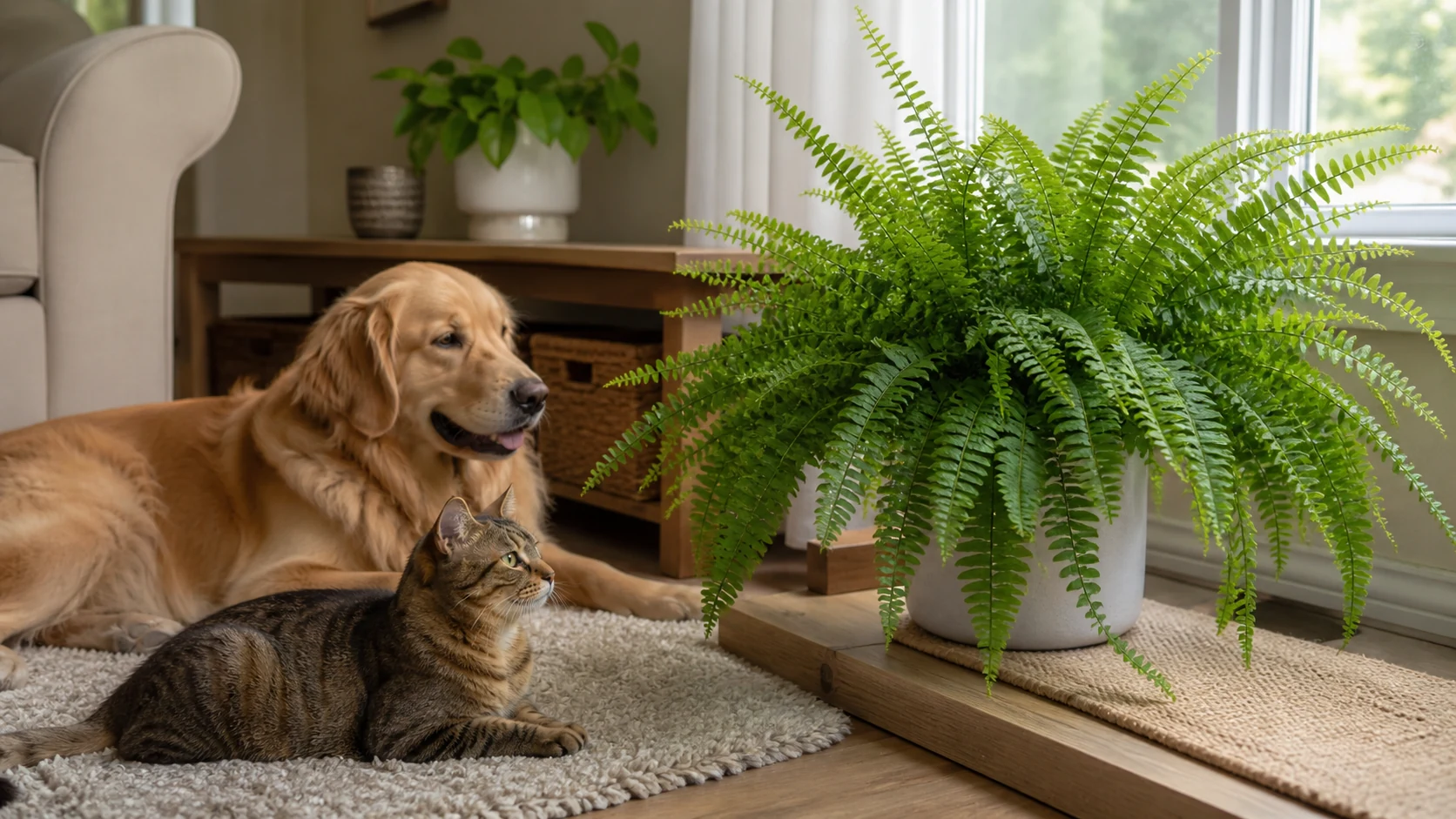
Boston fern is a pet-friendlier foliage choice, but it still belongs where curious cats and dogs are less likely to chew the fronds repeatedly.
Real User FAQ
How often should I water my Boston fern? Every two to three days in summer, less in winter. Don’t follow a rigid schedule. Check the soil by pressing your finger about an inch in. Barely damp means water thoroughly. Still moist means wait. The goal is consistent moisture, not wet soil.
Why are the tips of my Boston fern turning brown? Almost always low humidity or salt buildup from over-fertilizing. Check your home’s humidity first. If it’s below 50%, that’s your answer. A pebble tray or small humidifier near the plant will help. If you’ve been fertilizing regularly, flush the soil with water to clear salt accumulation before doing anything else.
Why is my Boston fern dropping so many leaves? The four most common causes: humidity too low, watering that swings between wet and dry, cold drafts from a vent or window, or stress from being recently moved. Start with humidity and drafts. Those fix the majority of cases.
Can Boston ferns survive indoors long-term? Yes, but they need more attention than most houseplants. The two non-negotiables are humidity above 50% and consistent soil moisture. A bathroom with natural light is one of the easier placements. Elsewhere, a humidifier nearby makes a significant difference.
Is a Boston fern toxic to cats or dogs? No. Boston ferns are non-toxic to cats and dogs according to the ASPCA. If you’re building a pet-safe plant collection, they’re a reliable choice. For more options, see the full list of cat-safe indoor plants.
Can I put my Boston fern outside in summer? Yes, and it often thrives outdoors. Give it a shaded or dappled-light spot: a covered porch, under a tree, along a north-facing wall. Natural humidity and rainfall usually agree with ferns more than indoor conditions do. Bring it in before nighttime temperatures drop below 55°F (13°C).
Why does my Boston fern keep getting pale fronds? Pale fronds usually mean not enough light or the plant needs a light feeding. Move it closer to a bright window with no direct sun, or try a half-strength liquid fertilizer once a month during spring and summer. If new fronds are pale from the start, light is the likely cause.
How big do Boston ferns get indoors? A healthy Boston fern indoors typically grows 2-3 feet wide with arching fronds 2-3 feet long. Growth slows significantly in winter and picks back up in spring. If yours has stopped growing entirely for months during spring or summer, check light levels and humidity before adjusting anything else.
Methodology Note
This guide was refreshed on June 19, 2026 by checking current Boston fern care results, then pressure-testing the advice against NC State Extension, Colorado State, UConn, Minnesota Extension, and ASPCA. Community threads surfaced through local search were used to identify the real-world confusion points people hit first, especially dry fronds with a heavy pot, outdoor recovery, sudden shedding after a move, and placement mistakes. Those community examples are qualitative signal, not statistical proof.
Freshness Note
Boston fern advice changes less than trend-driven houseplant content, but indoor diagnosis still depends on season. If your fern declined right after a winter move, a cold draft, or a shift from porch humidity to heated indoor air, diagnose that change before you assume the plant needs more fertilizer or more water.
Editorial Note
Author: KnowYourPlant editorial team.
Last updated: June 19, 2026. This article is meant to help normal-home growers diagnose the most common Boston fern failures in a realistic order, not chase perfect greenhouse conditions.