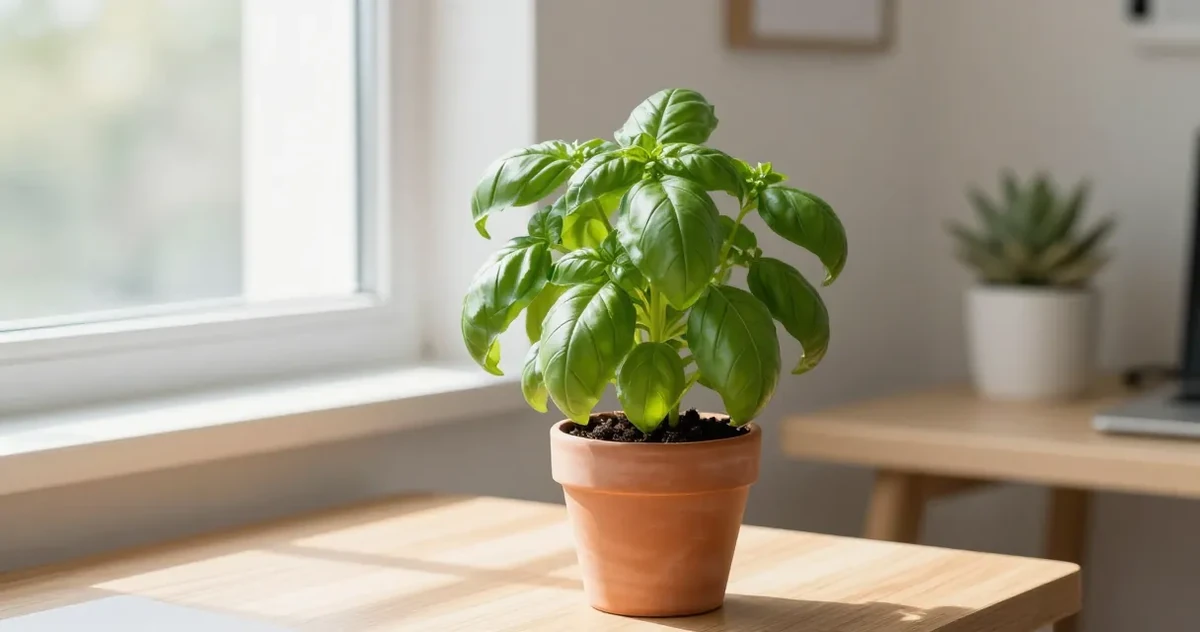
What Most Care Guides Miss
Most guides about basil describe the ideal care routine. Real homes are messier: light changes by season, pots dry at different speeds, and the same symptom can mean different things depending on where it appears.
Before changing care, check the plant in this order:
- Light: is the plant growing toward the window, fading, or scorching?
- Root zone: is the pot drying predictably, or staying wet in the middle?
- Leaf pattern: did the oldest leaves, newest leaves, tips, or stems change first?
- Recent change: new pot, new location, fertilizer, cold draft, heat vent, or pest exposure.
This keeps you from fixing the wrong problem. One clear adjustment is usually safer than a full care reset.
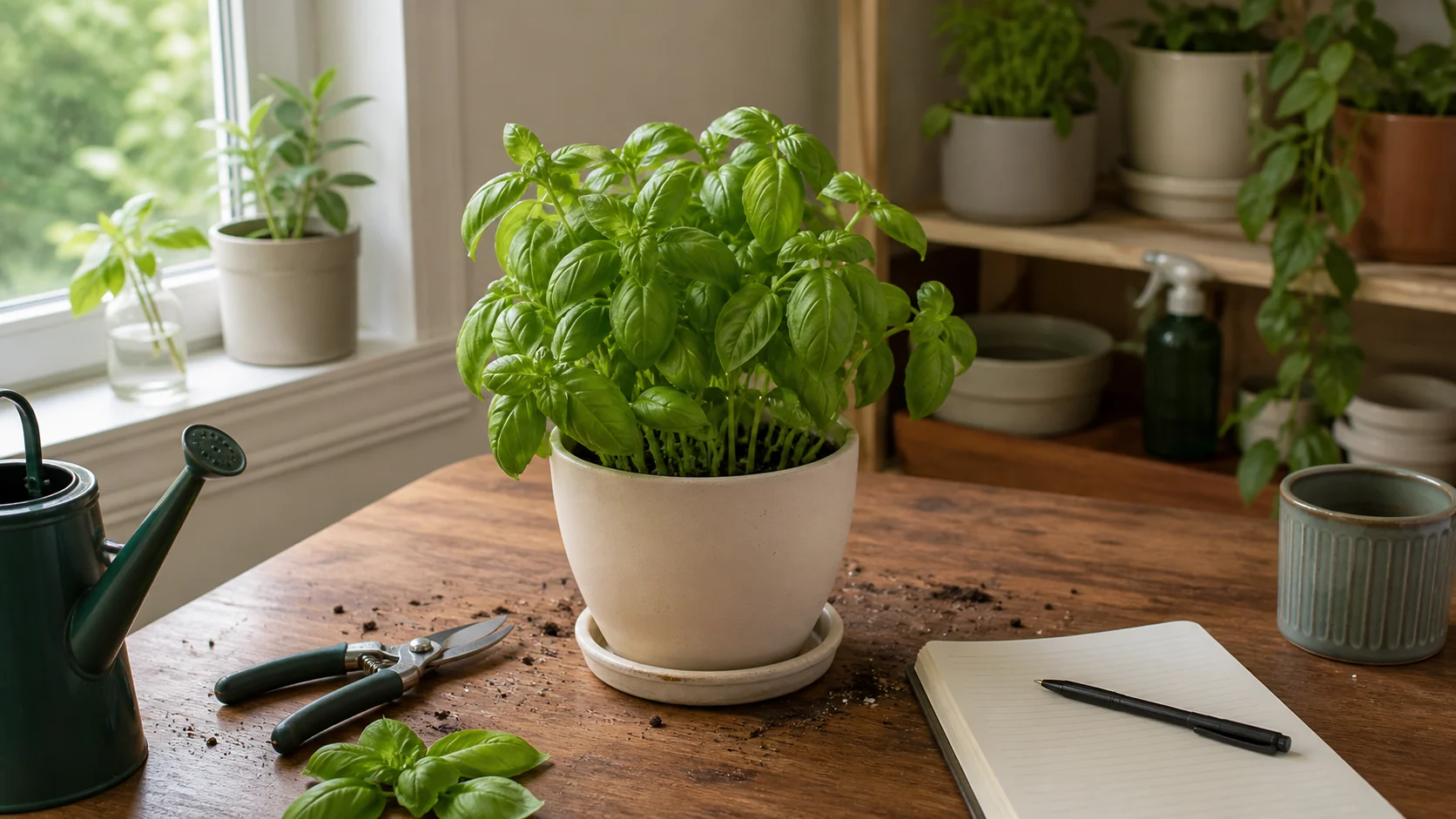
Check light, moisture, leaf patterns, and recent care changes before resetting an indoor basil routine.
Identification Snapshot
- Best fit for this guide: culinary basil grown indoors for cooking, usually as a crowded grocery-store pot or a small nursery herb.
- Healthy indoor habit: soft green tips, fast branching after pinching, and compact growth when the plant gets 6 to 8 hours of bright light.
- Small-space note: University of Florida IFAS notes that miniature basils such as dwarf Greek basil are especially well suited to containers, so a naturally compact plant is not always an unhealthy one.
- Crowding clue: a supermarket basil pot often looks like one plant, but it is usually multiple seedlings sharing one root zone.
Care Cards
| Care card | What to aim for indoors | What to watch for |
|---|---|---|
| Light | 6 to 8 hours of bright light, with a grow light as the practical fix in weak winter rooms | Long gaps between leaves, thin stems, slow regrowth |
| Water | Water when the top 2 centimetres dry, then let the pot drain fully | Constantly wet mix, musty smell, yellowing from the base |
| Pot and roots | Drainage holes and enough room after separating crowded seedlings | Nursery pot stays soggy, roots packed solid |
| Feeding | Half-strength liquid feed every 4 to 6 weeks once the plant is established | Fast weak growth and lower flavor after heavy feeding |
| Temperature | Warm indoor placement above 15.5°C (60°F), away from cold drafts | Blackened leaves after cold glass or night chills |
Lookalikes and Confused With
Indoor growers often confuse three very different situations.
- A compact basil cultivar can stay short on purpose. UF IFAS notes that dwarf basil forms are better suited to containers than larger basil types.
- A light-starved plant can also look small, but the giveaway is stretched stems and wider gaps between leaves, not a tidy mound.
- A crowded grocery-store pot can look like one generous specimen even though it is really several seedlings competing in the same plug.
If the plant is compact and branching well, you may just have a smaller basil type. If it is thin, floppy, or leaning hard toward the glass, treat low light as the first suspect.
Pet Safety
This guide focuses on indoor basil care, not veterinary toxicity classification. If cats or dogs chew herbs, verify the exact basil variety and any fertilizer, soap spray, or aphid treatment product before leaving the pot within reach. The safe default is to keep treated edible herbs out of reach until you have a source-specific answer.
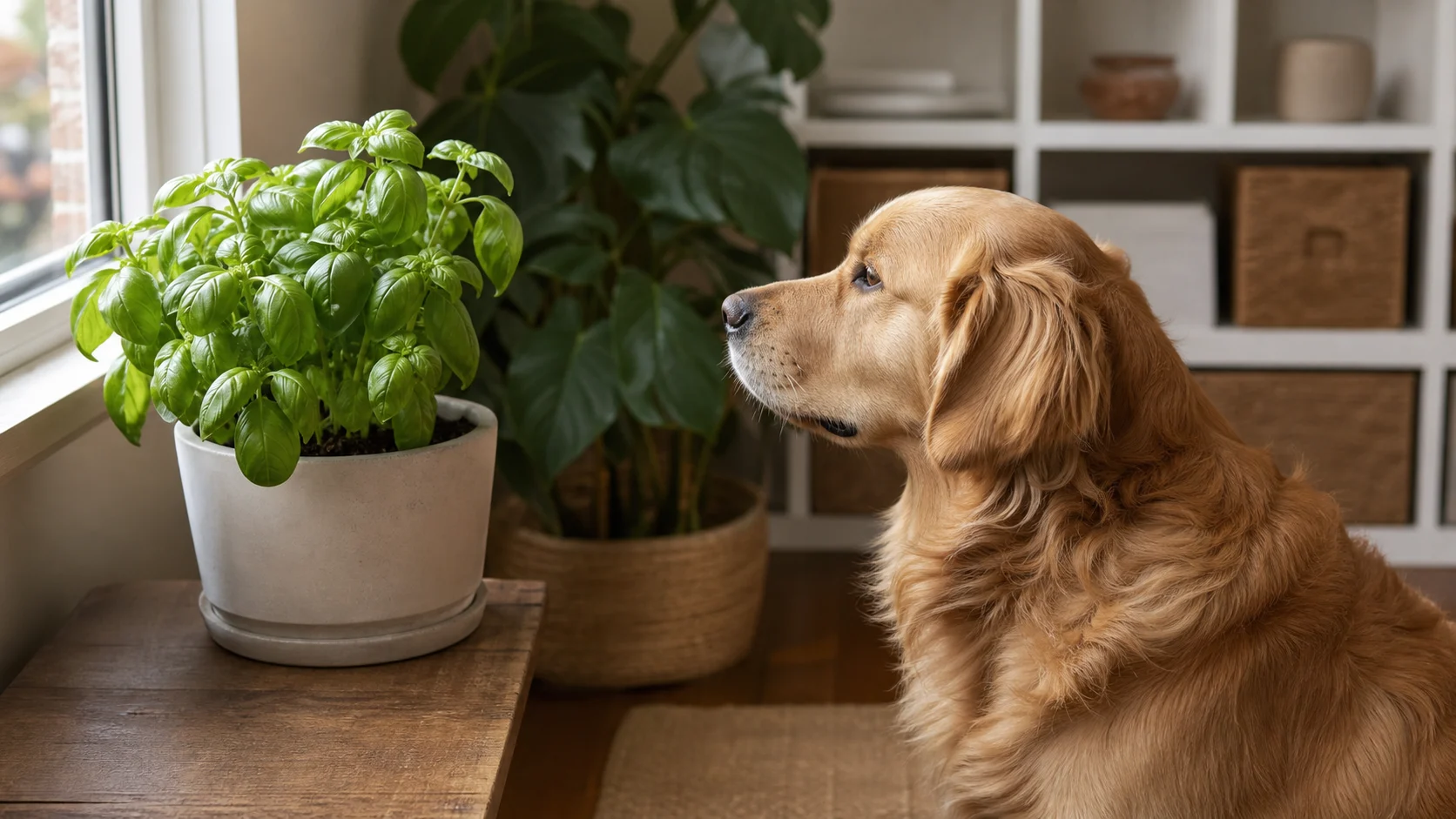
Keep treated basil separated from curious pets until you have verified the exact variety and treatment product.
The Grocery Store Basil Problem
You buy a pot of basil from the supermarket, set it on the counter, and within a week the stems are drooping and the leaves have turned black at the edges. You water it. It gets worse. Two weeks later it is gone.
This happens to almost everyone, and it is not your fault.
Here is the honest truth about basil plant care: grocery store basil is not meant to last. Those dense, lush pots are grown in controlled greenhouse conditions, crammed with multiple seedlings, and sold to look good on a shelf for a few days. NC State Extension notes that commercial basil plugs are often planted at three to five times the density recommended for home growing, meaning what looks like one generous plant is actually six to ten seedlings competing for the same small amount of soil and water. They are not set up for long-term life in your kitchen. Once you understand that, you can stop blaming yourself and start setting basil up properly from the beginning.
Basil kept under the right conditions can thrive for months indoors. If you are growing other culinary herbs alongside it, the indoor herb garden guide is a good companion for setting up a kitchen herb setup that actually works.
Why Grocery Store Basil Dies So Fast
When you bring home that supermarket pot, a few things are working against it immediately.
The pot is too small and too crowded. Most grocery store basil pots contain six to ten seedlings packed together. Their roots compete for the same limited soil and water, and none of them can grow properly.
The roots are also often waterlogged. Supermarket pots rarely have drainage holes, which means water collects at the bottom and the roots sit in it. Basil hates wet feet. It will drop leaves and rot fast in those conditions.
And the light suddenly drops. In the greenhouse, that plant had consistent bright light for twelve or more hours a day. Your kitchen counter, even next to a window, is a dramatic change. According to University of Florida IFAS Extension, basil is one of the most light-demanding culinary herbs, and any drop in light intensity translates almost immediately into slower growth and smaller leaves.
The fix is not to baby the grocery store plant. The fix is to repot it, separate the seedlings, and give it what it actually needs.
Pot and Soil: Start Here
If you are rescuing a grocery store pot, the first thing to do is repot it. Gently pull the whole root ball out and separate the seedlings as carefully as you can. Even if the roots are tangled, try to divide them into groups of two or three. Plant each group in its own pot with drainage holes. For a step-by-step walkthrough of separating roots without damaging them, the how to repot plants guide covers the process in detail.
If you are starting fresh with a seedling or a small plant, choose a pot that is at least 15 centimetres (6 inches) wide. Basil needs room to spread its roots, and a pot that is too small will limit how much foliage it can produce.
Use a well-draining potting mix. Standard indoor potting soil works well. You can mix in a small amount of perlite to help water drain through faster. Basil does not like sitting in soggy soil, so drainage is the priority.
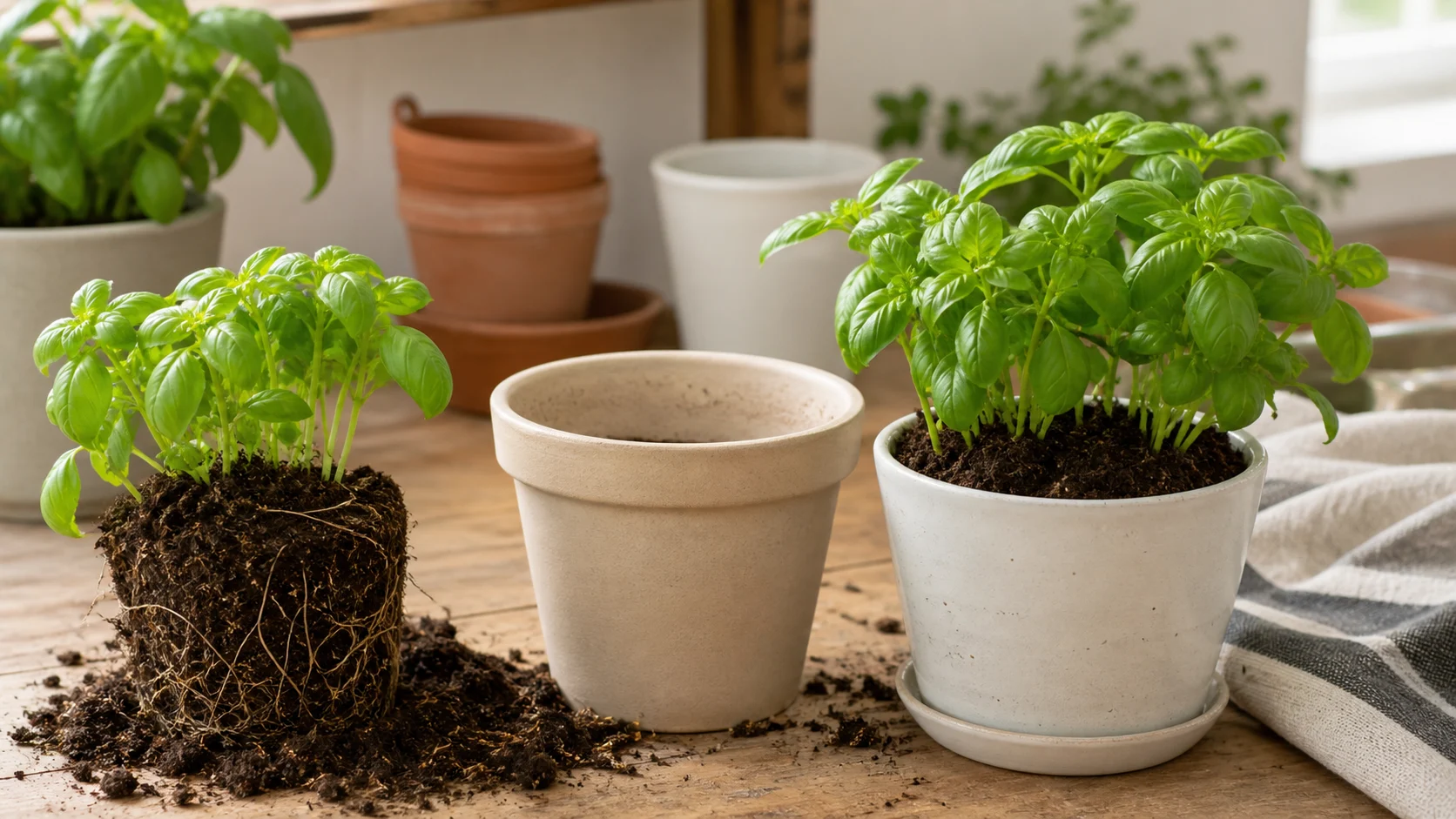
Lift the crowded root ball, divide seedlings gently, and replant small groups in well-draining pots.
Terracotta pots are worth considering here. They breathe through their walls, which means the soil dries more evenly and quickly compared to plastic or glazed ceramic. For basil, where overwatering is the most common cause of failure, that extra airflow through the pot wall makes a real difference. The terracotta pots guide has more on why the material matters for moisture-sensitive plants like basil.
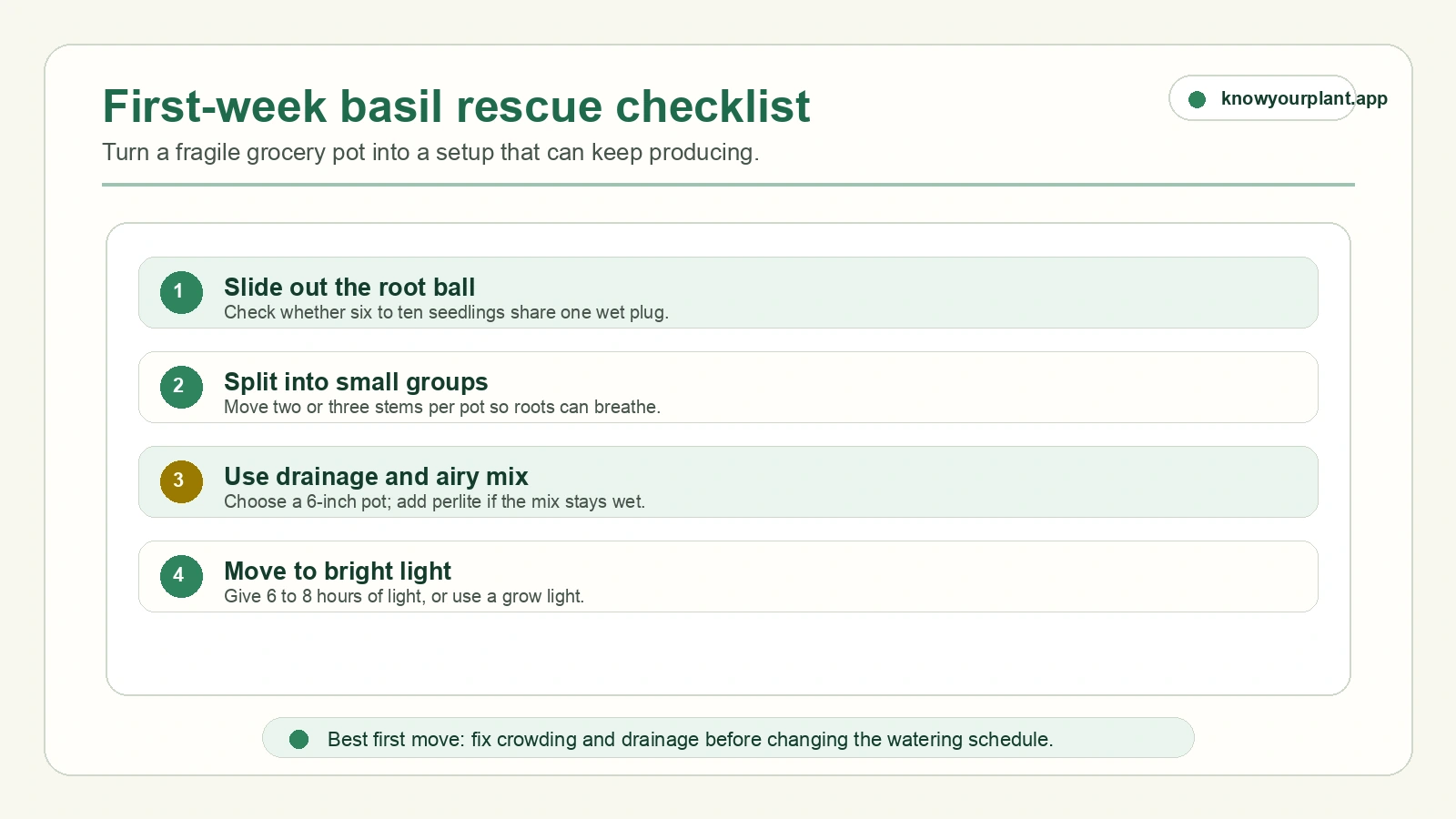
Fix crowding and drainage first. A brighter spot helps, but a wet crowded root zone will keep collapsing even if the leaves get more light.
Light: This Is the Make-or-Break Factor
Basil is a sun-hungry plant. NC State Extension recommends a minimum of six to eight hours of direct or very bright light each day for basil grown indoors. A south-facing windowsill is ideal. East or west-facing windows can work, but you may find the plant grows more slowly and reaches toward the light source.
If your home does not get strong natural light, a simple grow light placed 20 to 30 centimetres above the plant for 10 to 12 hours a day will keep it healthy. The grow lights for indoor plants guide explains which types work best and how to position them without burning tender herb leaves.
Basil under good light stays compact and bushy. Basil in low light becomes leggy, the leaves shrink, and the plant puts its energy into reaching for a light source rather than producing foliage.
A quick check: if the stems are getting long and thin between leaf nodes, the plant is not getting enough light. Move it closer to the window or add supplemental light.
If your basil keeps getting leggy despite your best efforts, the KnowYourPlant app can help you check whether light, temperature, or watering rhythm is the underlying cause.
How to Water Basil Indoors
Basil wants consistent moisture, but it cannot tolerate being waterlogged.
Check the soil every day or two by pressing your finger about 2 centimetres into the surface. If it feels dry at that depth, water thoroughly until it drains from the bottom. Then let the excess drain completely before putting the pot back on its saucer.
Do not let the pot sit in standing water. If water collects in the saucer after watering, empty it within an hour.
In warm, sunny spots your basil may need water every one to two days. In cooler or lower-light conditions, it may stretch to three or four days between waterings. The soil is the guide, not the calendar, and the how often to water indoor plants guide shows how to read finger-test depth, pot weight, and season together.
Signs you are overwatering: leaves turning yellow and dropping, stems going soft near the base, a musty smell from the soil.
Signs you are underwatering: leaves wilting even though the soil surface looks damp (check a few centimetres deeper), leaves curling inward, dry and crispy tips.
If basil leaves are wilting but the soil still feels damp when you press in a few centimetres, the KnowYourPlant app can help you work out whether root rot, heat stress, or a watering pattern issue is the real cause.
Pruning: The Habit That Keeps It Bushy (and Flavorful)
This is the single most important thing most people skip, and it is the reason their basil ends up tall, thin, and nearly leafless after a month.
Basil grows from the top. If you only pick leaves from the bottom, the plant keeps reaching upward and eventually flowers. Once it flowers, it stops putting energy into leaf production and the leaves turn bitter.
Instead, pinch or cut stems just above a pair of leaves. Each time you cut a stem, the plant will send out two new shoots from that point. This is how you turn a single-stemmed plant into a full, bushy one.
Rutgers Cooperative Extension recommends beginning to prune basil as soon as the plant reaches around 15 centimetres (6 inches) tall and has at least three sets of true leaves. Starting early means more branching from the base, which leads to a denser plant overall.
Cut stems down by about a third. Do this regularly, every week or two, and your basil will produce more leaves than you can use.
There is a flavor bonus here too. Basil harvested frequently, just before it wants to flower, has the highest concentration of volatile oils in its leaves. The plant is at its aromatic peak when it is putting energy into growth rather than seed production. Let it run to flower and that intensity drops noticeably. Pruning regularly is not just a shaping technique, it is also how you get the most fragrant, flavorful basil.
If you see flower buds forming at the top, pinch them off immediately. This delays flowering and extends the productive life of the plant by weeks. Darryl Cheng of House Plant Journal notes that the goal is to meet the plant’s actual needs rather than follow a schedule. For basil, that means checking the tips every few days rather than waiting until it has already bolted.
Set up a weekly care reminder in KnowYourPlant so you never forget to check for flower buds before your basil bolts and the flavor drops.
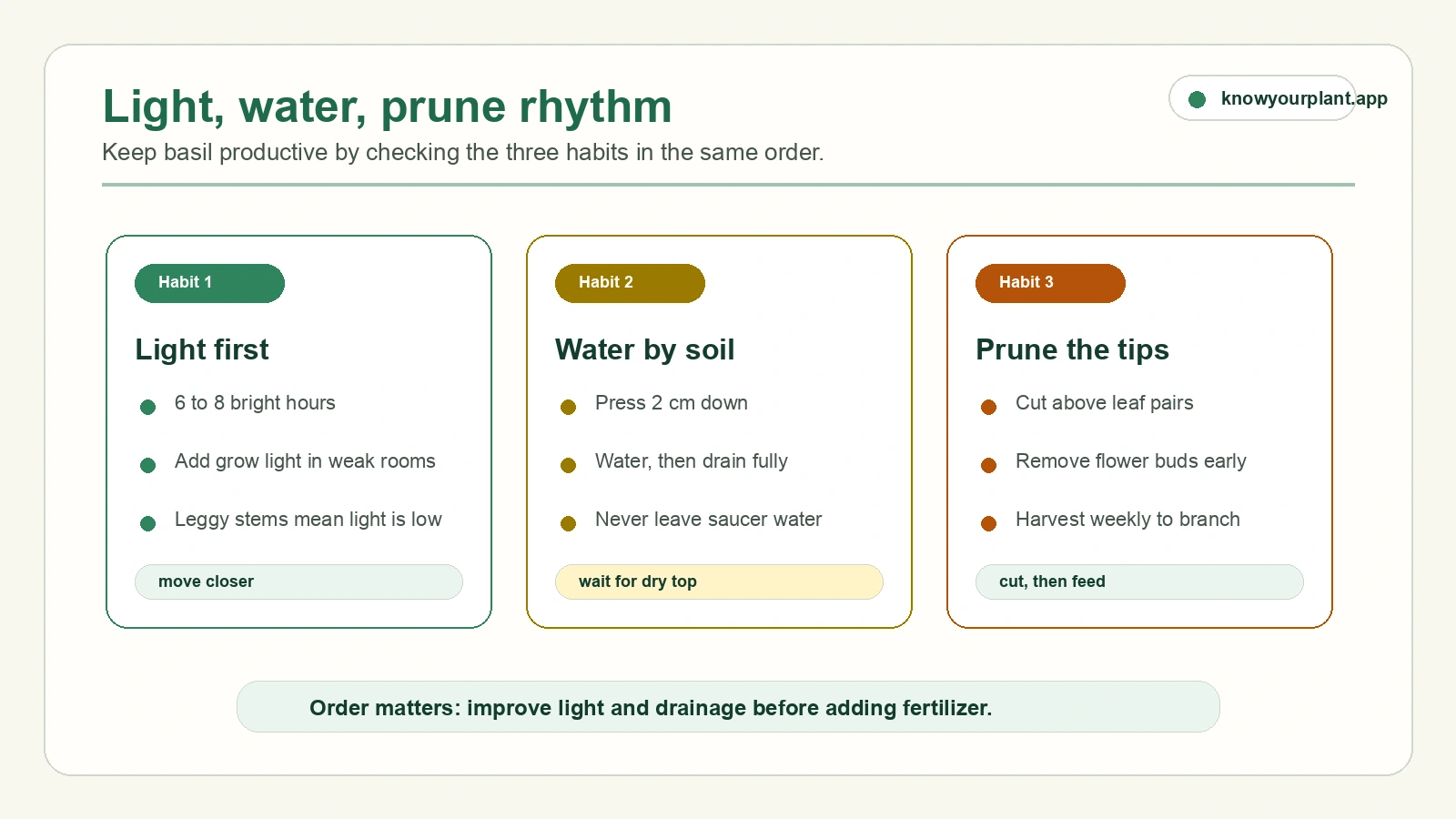
Use the rhythm when basil looks weak: correct light and drainage first, then keep the tips pruned so the plant branches instead of stretching.
Succession Planting: The Approach Most People Miss
Here is what changes how long you have fresh basil available: basil is an annual. It has a natural lifespan. No matter how well you care for it, one plant will eventually slow down, bolt, and decline. Most people experience this as their basil “dying” in September and then start over from scratch.
The alternative is succession planting: start a new plant every four to six weeks. While one plant is in its production peak, another is being established. When the older plant starts to slow in late summer, the newer one is just hitting its stride.
You can start a new plant from seed (basil germinates quickly, often within a week at room temperature), from a cutting placed in water, or from a fresh supermarket pot that you repot and separate. The overhead is low. You just need one extra pot and a bit of soil.
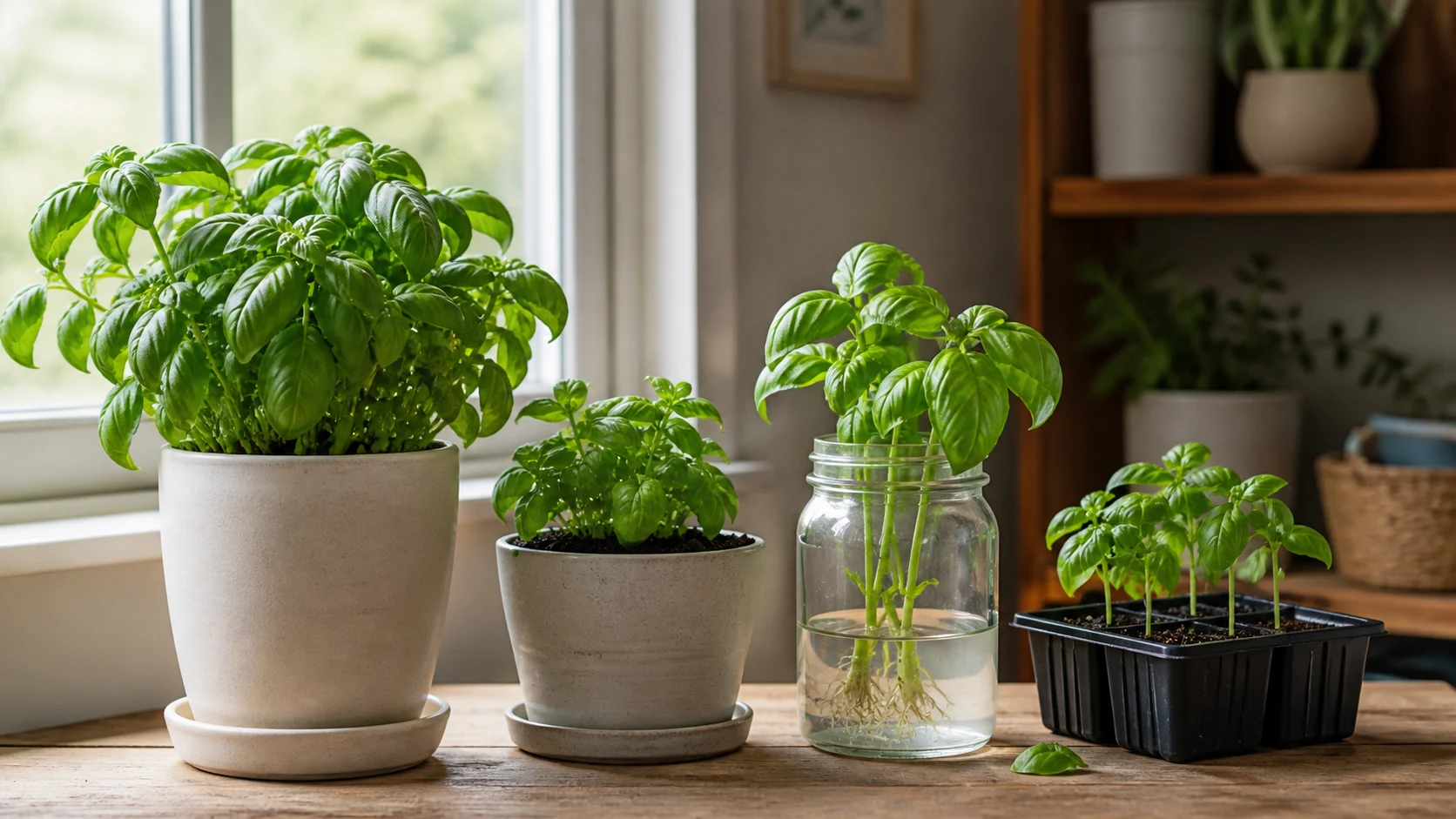
Stagger mature plants, younger pots, water-rooted cuttings, and seedlings to maintain a rolling basil harvest.
The practical result is that instead of “my basil lasts three months and then I have to start over,” you have a rolling supply of fresh basil from spring through late autumn. Once you do this once, going back to the single-pot approach feels like the worse option.
Basil stems root easily in water if you want to try propagation rather than starting from seed. Cut a stem just below a leaf node, strip the lower leaves, and set it in a glass of water on a bright windowsill. Roots usually appear within one to two weeks. If you want the full method for water and soil cuttings, the how to propagate plants guide breaks it down step by step.
Feeding Basil Indoors
Basil is a leafy, fast-growing plant and it benefits from regular, light feeding once it is established.
Start fertilizing about three to four weeks after repotting, once the plant has settled in and is putting out new growth. Use a balanced liquid fertilizer diluted to half the recommended strength, applied every two to three weeks during the growing season.
Avoid heavy feeding. Too much fertilizer pushes rapid, soft growth that produces large but flavorless leaves. Basil grown a little leaner tends to have more concentrated oils and better taste. If the leaves seem to be losing their fragrance, skip a feeding cycle.
Stop fertilizing in autumn and winter if your basil is in a spot with reduced light. Growth will slow naturally and feeding during this period can lead to salt buildup in the soil. The plant fertilizer guide has a clear breakdown of which types suit indoor herbs and how to avoid overfeeding.
KnowYourPlant can track your basil’s feeding schedule and flag when salt buildup or over-fertilizing might be behind pale, flavorless leaves.
Seasonal Care Calendar
Spring (March to May) This is when basil wants to grow. Start new plants now by repotting a supermarket plant or direct-sowing seeds. Move your basil to the brightest windowsill you have. Begin light fertilizing once new growth appears. If you are succession planting, start your second pot four to six weeks after the first.
Summer (June to August) Peak season. Water more frequently as temperatures rise. Check for flower buds every few days and pinch them off as soon as you see them. This is when bolting pressure is highest. Basil on a hot south-facing windowsill may need watering daily. Harvest frequently: the more you cut, the more it produces. Start your next succession pot now if you want basil into October.
Autumn (September to November) Growth slows as day length shortens. Reduce fertilizing and move the pot as close to the window as possible. Your oldest plant will likely decline by late autumn even with good care, which is normal. If you started a succession plant in late summer, it will carry you through October and possibly into November in a warm indoor spot.
Winter (December to February) Basil is difficult indoors without supplemental light in winter. Natural light in most homes drops below what basil needs. A grow light on a 12-hour timer is the most reliable solution. Reduce watering, stop fertilizing entirely, and use winter to plan your spring succession schedule.
Temperature and Where to Put It
Basil is a warm-weather plant. It is happiest between 18 and 27 degrees Celsius. University of Florida IFAS Extension research shows that temperatures below 10 degrees Celsius can cause visible chilling injury within 24 hours, including the blackened, water-soaked patches you may have seen on leaves after a cold night near a window.
Keep it away from air conditioning vents, cold windowsills in winter, and any spot that drops below 15 degrees Celsius at night.
The kitchen windowsill is a popular choice, but check that the window does not let in cold air around the edges. If the leaves closest to the glass start looking damaged in winter, move the pot back a few centimetres from the glass.
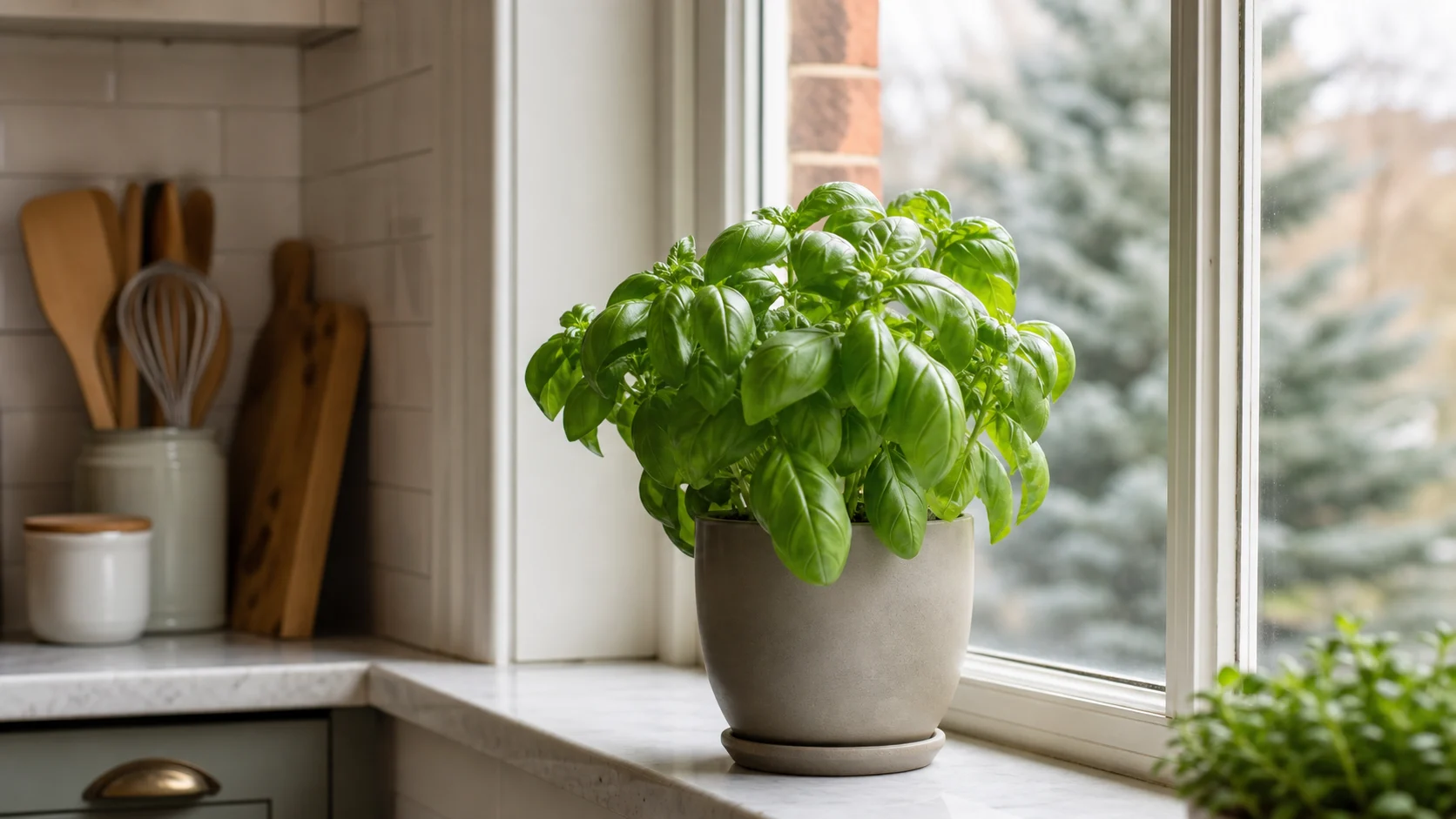
Keep basil in bright kitchen light while setting the pot back from cold winter glass and drafts.
Common Problems
| Symptom | Most likely indoor cause | Check first |
|---|---|---|
| Drooping, dry pot | Underwatering or a root ball that dried past the center | Water thoroughly once and see whether stems recover within a few hours |
| Drooping, wet pot | Crowded roots, poor drainage, or overwatering | Smell the soil, inspect the drainage hole, and check for mushy roots |
| Long, thin stems | Weak light, especially in winter | Move the plant to the brightest window or add a grow light |
| Blackened leaf edges after a cool night | Chilling from cold glass or drafts | Check overnight temperatures and move the pot back from the window |
| Sticky or curled new growth | Aphids or other soft-bodied pests | Inspect stem tips and leaf undersides before changing your watering routine |
University of Minnesota Extension notes that aphids commonly distort new growth, while weak winter light leads to spindly indoor seedlings. That is why symptoms at the tip of the plant usually deserve a pest or light check before you change fertilizer or watering.
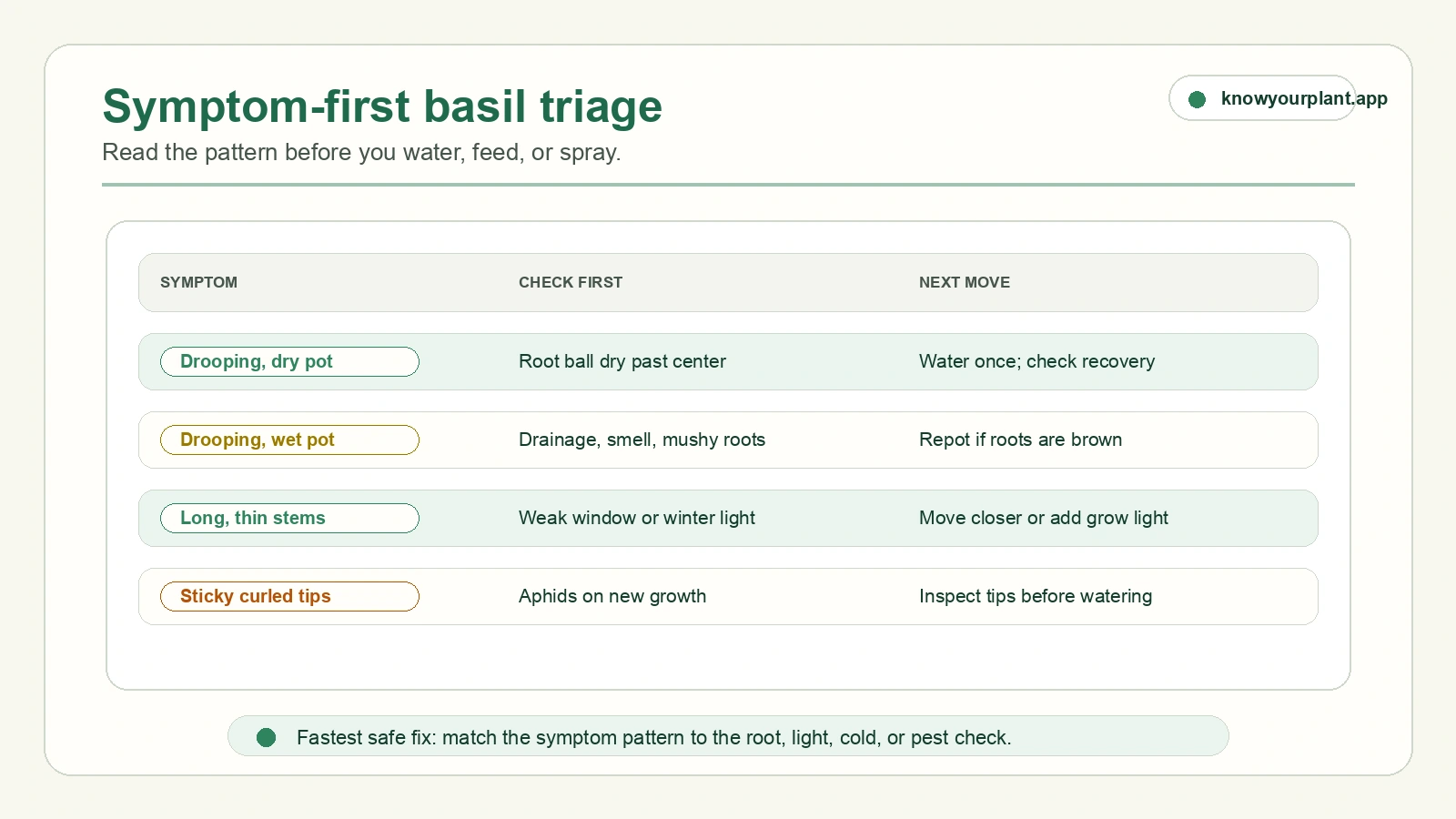
Match the symptom to the first check before changing care. Drooping, leggy growth, cold damage, and sticky tips need different fixes.
What Basil Is Telling You
Basil shows you what it needs if you pay attention.
Yellow leaves at the bottom of the plant almost always point to overwatering or poor drainage. Fix the drainage first before reducing how much you water.
Small, pale leaves usually mean not enough light. Move the pot somewhere brighter before assuming the plant is diseased.
Curled or sticky new growth can point to aphids rather than a watering issue, especially if you notice tiny insects clustered on stem tips. If that shows up, use the aphids treatment guide before the problem spreads to nearby herbs.
Brown tips or edges can signal low humidity, dry air from heating, or inconsistent watering. If the heating is on and the air is very dry, a small tray of water near the pot can help raise the local humidity without risking soggy soil.
Wilting in the morning despite moist soil can be a sign of root rot. If the roots look brown and mushy when you check, follow the root rot treatment guide and repot into fresh soil immediately.
Basil responds quickly to changes you make. Improve the light today and you will notice a difference within a week.
A Simple Weekly Routine
Once a week, take one minute to check your basil:
- Press the soil to check moisture
- Look for flower buds and pinch any you find
- Trim any stems that are getting long
- Check the leaves for yellowing or damage
That is it. Basil does not need a complicated routine. It needs good light, consistent watering without waterlogging, and regular pruning. Get those three things right, add a succession pot every month or two, and you will have fresh basil on the counter for months rather than days.
Real User FAQ
How often should I water basil indoors? Check the soil every one to two days by pressing your finger about 2 centimetres into the surface. Water when it feels dry at that depth. In a warm, sunny spot this may mean watering every day or two. In a cooler or shadier position, every three to four days is more typical. The soil tells you more than any schedule will.
Do I need to repot grocery store basil right away? If you only want a few quick harvests, you can sometimes leave it alone briefly. If you want the plant to last, repotting is the safer move because supermarket basil is usually crowded with multiple seedlings sharing one small, wet-prone root ball. Separate the clump into smaller groups and move them into pots with drainage.
Why does my basil keep dying even when I water it? The most common reason is overwatering combined with a pot that has no drainage hole. Basil cannot sit in wet soil. If the pot does not have drainage holes, repot it immediately into one that does. If the roots already look brown and mushy, trim the damaged roots and repot into fresh, dry soil. The plant can recover if you catch it early.
Why is my basil’s new growth sticky or curled? Sticky or curled tips usually deserve a pest check before anything else. University of Minnesota Extension notes that aphids commonly distort tender new growth, so inspect the newest leaves and stem tips closely before assuming the problem is only watering.
Can basil survive in low light indoors? It will survive in low light for a short time, but it will not thrive. You will see the stems stretch and thin out, the leaves get smaller, and the plant stop putting out new growth. For healthy, productive basil indoors, it needs a minimum of six hours of bright light. If your home does not get that, a grow light is a straightforward fix.
How do I stop my basil from flowering? Pinch off any flower buds the moment you see them forming at the tips of the stems. Do not wait. Once basil flowers, the leaves become smaller and more bitter, and the plant puts all its energy into seed production rather than foliage. Regular pruning from early on is the best prevention, because a well-trimmed basil is less likely to bolt in the first place.
Why do grocery store basil plants die so quickly? They are not designed for home conditions. Supermarket basil is grown at very high density in controlled greenhouses with consistent light and carefully managed watering. Once cut from that environment and crowded into a small pot with no drainage, placed in much lower light, and watered irregularly, they struggle fast. If you want to save a grocery store plant, repot it immediately, separate the seedlings, and move it to a bright window.
How long can basil live indoors? With good care, a single plant can last several months. With succession planting, starting a new pot every four to six weeks, you can have fresh basil continuously from spring through late autumn. Basil is an annual by nature, so planning for succession is a more reliable approach than trying to extend one plant indefinitely.
Can I grow basil without a garden or outdoor space? Yes, completely. A sunny south-facing windowsill or a simple grow light setup is all you need. Basil grows well in pots on countertops, windowsills, and shelves. Many people keep it in the kitchen where it gets used most often, which also makes it easier to check and trim regularly.
Should I fertilize my basil indoors? A light feeding every two to three weeks during the growing season helps, but keep it diluted to half the recommended strength. Too much fertilizer produces fast-growing but flavorless leaves. If your basil is producing large, pale, or tasteless leaves, ease off on the fertilizer. Stop feeding entirely in autumn and winter if the plant is in reduced light.
Methodology Note
This article was refreshed using live research checked on 2026-06-05: exact-keyword SERP review for indoor basil care, practitioner pain patterns from Gardening Stack Exchange threads about winter light, repotting, aphids, and post-purchase drooping, plus primary-source guidance from University of Minnesota Extension and University of Florida IFAS. Community threads are used as qualitative signal, not as proof on their own.
Freshness Note
Last updated: 2026-06-13. Indoor basil advice changes less with trends than with season, so re-check light expectations in winter, crowded-store-pot rescue steps after each new purchase, and aphid symptoms whenever new growth turns sticky or curls.
Keep Your Basil Going Longer
A quick check every few days, pinching off flower buds, trimming the stems, making sure the soil is draining: these small habits are the difference between a plant that lasts a week and one that keeps producing into autumn. Add succession planting and you stop asking “how do I keep this alive” and start asking “when should I start the next pot.”
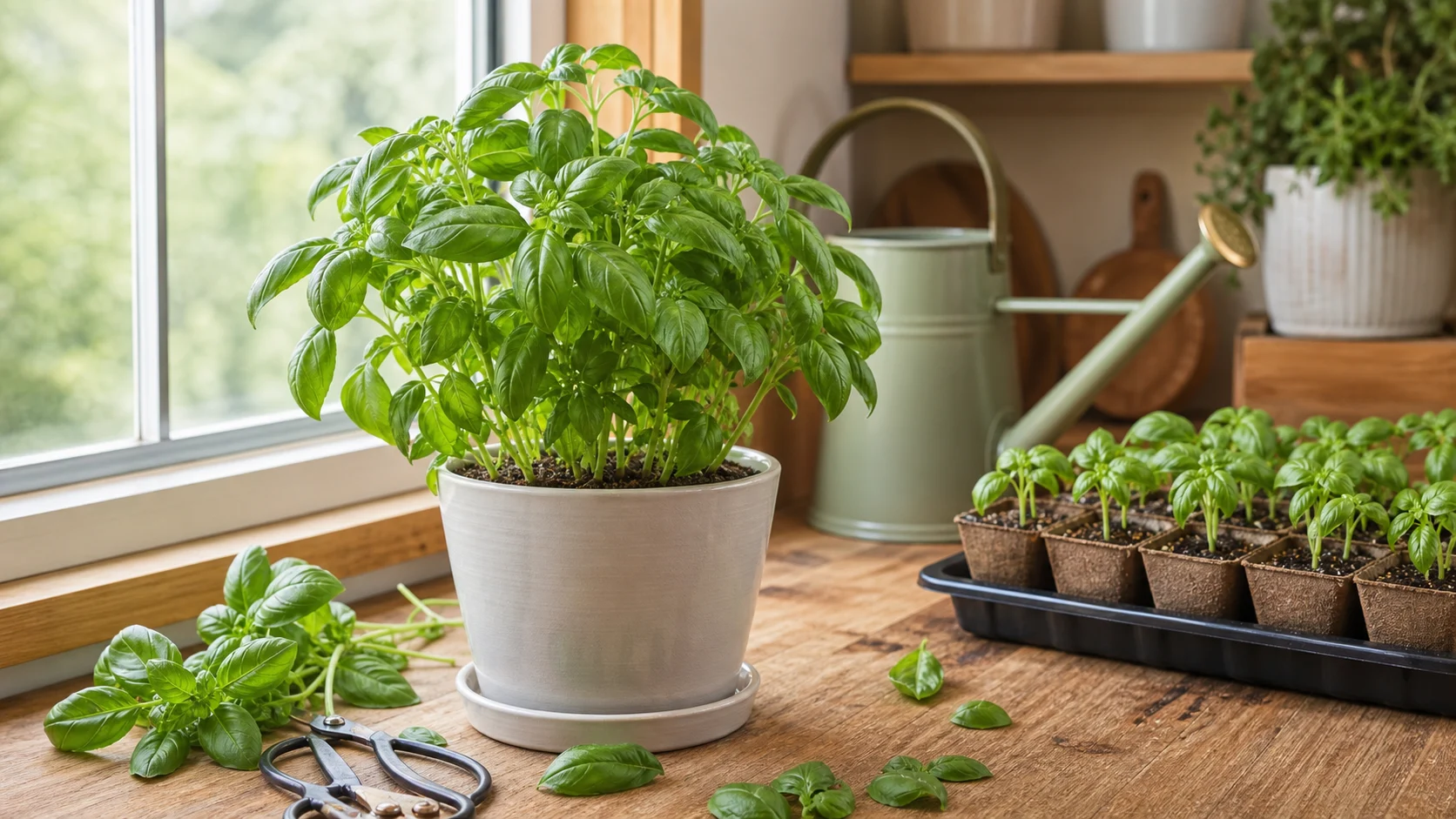
Trim regularly, keep drainage working, and start the next basil pot before the current one slows down.