You go to water your plant and notice something strange on the new leaves. Tiny, soft-bodied specks, pale green or creamy white, clustered so tightly on the stem tips they look almost like part of the plant. Then you see a leaf curling inward at the edges, another going sticky. That is how most of us meet aphids, and if you are here, you already know you need to act.
The good news: aphids are one of the more manageable pests once you catch them early. The harder truth: a handful on Monday can become a colony by the weekend, and they will move to other plants if you wait too long.
What Most Pest Guides Miss
Most guides about aphids focus on the product to spray. The part that actually decides whether treatment works is the source of the problem and the follow-up schedule.
Before treating, separate three things:
- Pest identity: confirm what you are seeing before applying anything.
- Source: check new plants, nearby pots, soil surface, leaf joints, and hidden undersides.
- Repeat cycle: plan follow-up checks so eggs or missed insects do not restart the problem.
- Plant stress: fix weak light, soggy soil, or dusty leaves that made the plant easier to attack.
That sequence prevents the most common mistake: treating the visible bugs once while leaving the conditions that let them return.
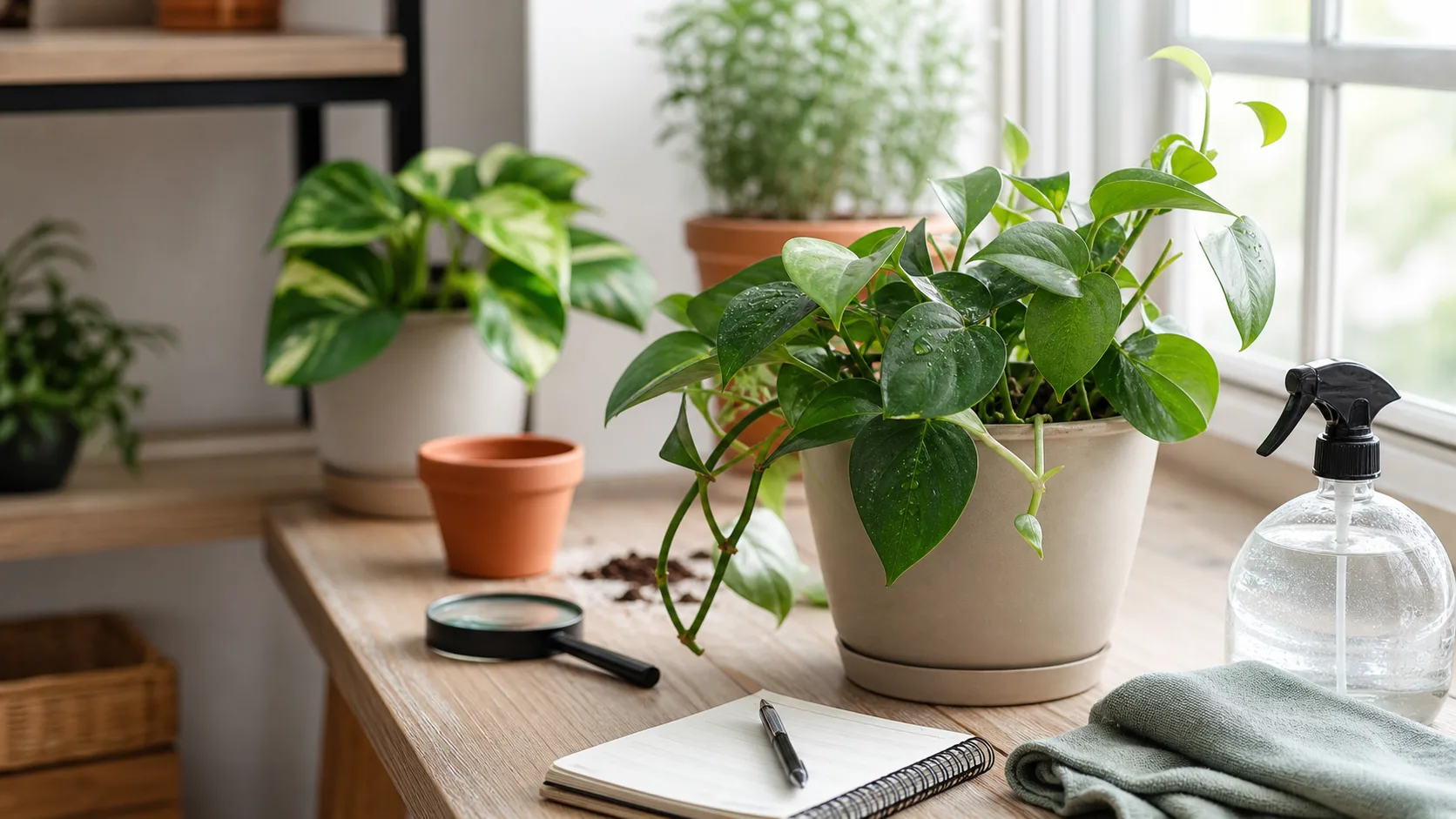
Inspect the plant, nearby pots, and hidden growth before choosing a treatment, then keep a repeat-check routine.
Reviewed June 2026 by the KnowYourPlant editorial team. This guide checks university and IPM extension advice first, then uses gardener Q&A only to surface the failure patterns people hit most often at home.
Symptom Diagnosis Card
| If you see this | Most likely issue | Best next step |
|---|---|---|
| Tiny pear-shaped insects clustered on soft new growth | Aphids | Rinse first, then inspect again in 2 to 3 days |
| Sticky leaves or shiny residue plus ants | Aphids or another honeydew pest | Check undersides, stems, and nearby plants |
| Hard brown bumps that do not move | Scale, not aphids | Do not use the aphid plan until you confirm the pest |
| White cottony clumps in leaf joints | Mealybugs, not aphids | Switch to a mealybug treatment approach |
| Fine webbing and pale stippling | Spider mites, not aphids | Treat for mites instead of sap clusters |
| Curled leaves with hidden insects inside | Advanced aphid colony | Open or prune affected growth so contact sprays can reach the pests |
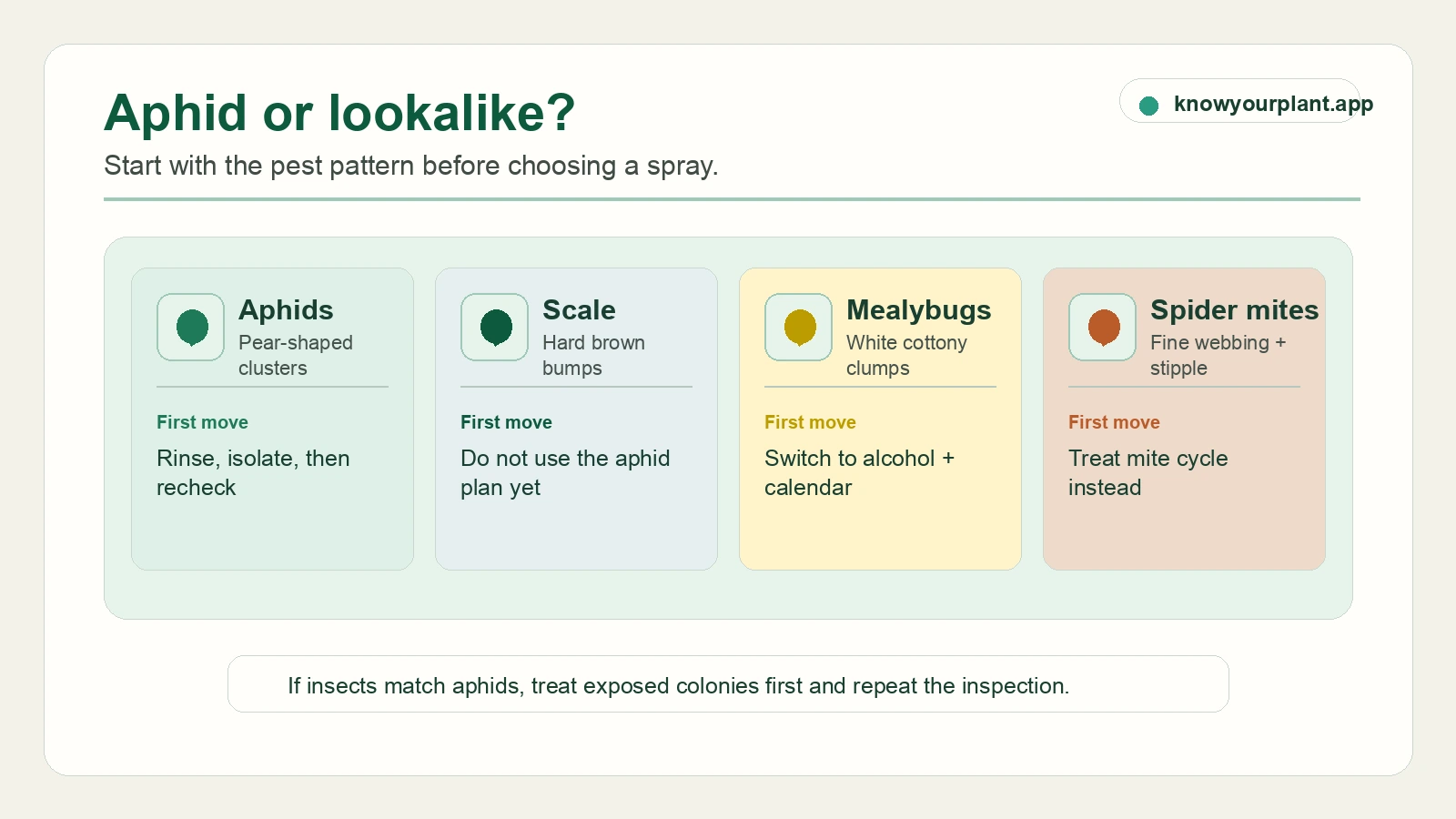
Confirm the pest pattern before treating; aphids, scale, mealybugs, and spider mites need different first moves.
Quick Decision Tree: What to Do First
- Confirm it is really aphids. If the insects do not match the shape, color, and clustering pattern above, stop and re-identify before spraying.
- Is the plant indoors and movable? If yes, isolate it from nearby plants before treatment.
- Are the colonies exposed on sturdy growth? Start with a strong water rinse and repeat every few days.
- Are aphids tucked into curled leaves or dense stem tips? Prune the worst growth or open it up first, then use a labeled insecticidal soap with full underside coverage.
- Are ants, repeat outbreaks, or outdoor plants involved? Treat the aphids, but also deal with the rebound cause, usually ants, missed colonies, or winged adults moving back in.
- Still seeing fresh aphids after 2 to 3 rounds? Move to soap or oil on the label schedule, and inspect nearby plants instead of re-spraying harder with homemade mixes.
Expert note: University of California IPM and the University of Minnesota Extension both treat water spray as the first move for sturdy plants, especially when the infestation is still light. Colorado State Extension adds an important caution: insecticidal soaps only work on contact, need full coverage including hidden sites, and unlabeled household soap mixes are more likely to injure leaves than a labeled product.
Aphid Treatment Scorecard
| Method | Best for | Where it fails | Repeat cadence |
|---|---|---|---|
| Strong water spray | Light infestations on sturdy plants | Hidden colonies inside curled leaves | Every 2 to 3 days for 1 to 2 weeks |
| Pruning badly infested tips | Dense clusters on disposable new growth | Not ideal if the plant is already sparse | Once, then monitor |
| Labeled insecticidal soap | Exposed soft-bodied aphids on indoor or outdoor plants | Misses pests if you spray only from above | Per label, usually every 4 to 7 days |
| Neem or horticultural oil | Follow-up control after the colony is reduced | Can stress plants in heat or direct sun | Per label, usually weekly |
| Beneficial insects outdoors | Repeated outdoor outbreaks | Too slow for urgent indoor cleanup | Give predators 1 to 2 weeks to catch up |
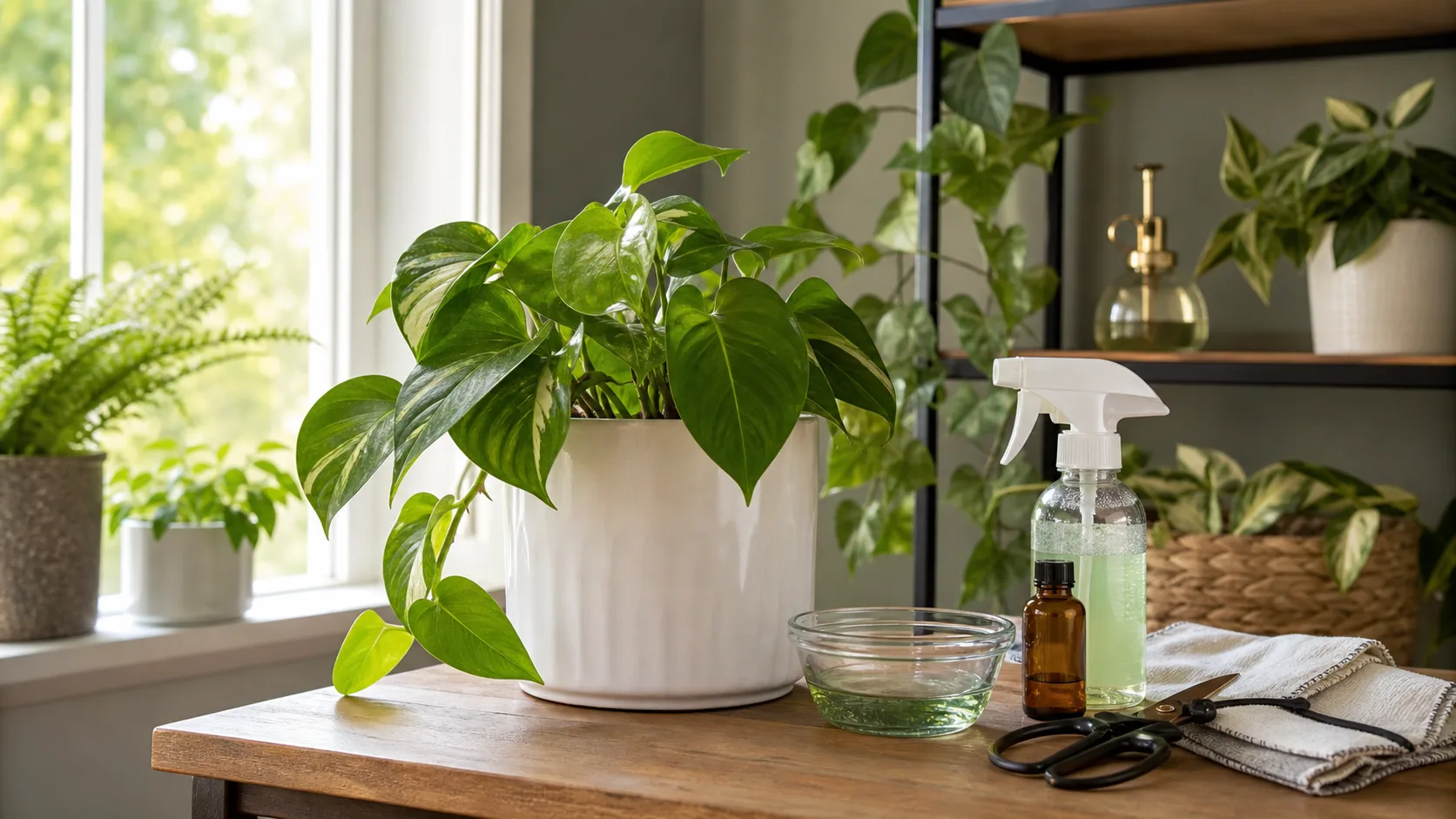
Match the treatment to the infestation: water, pruning, soap, and oil each solve a different part of the problem.
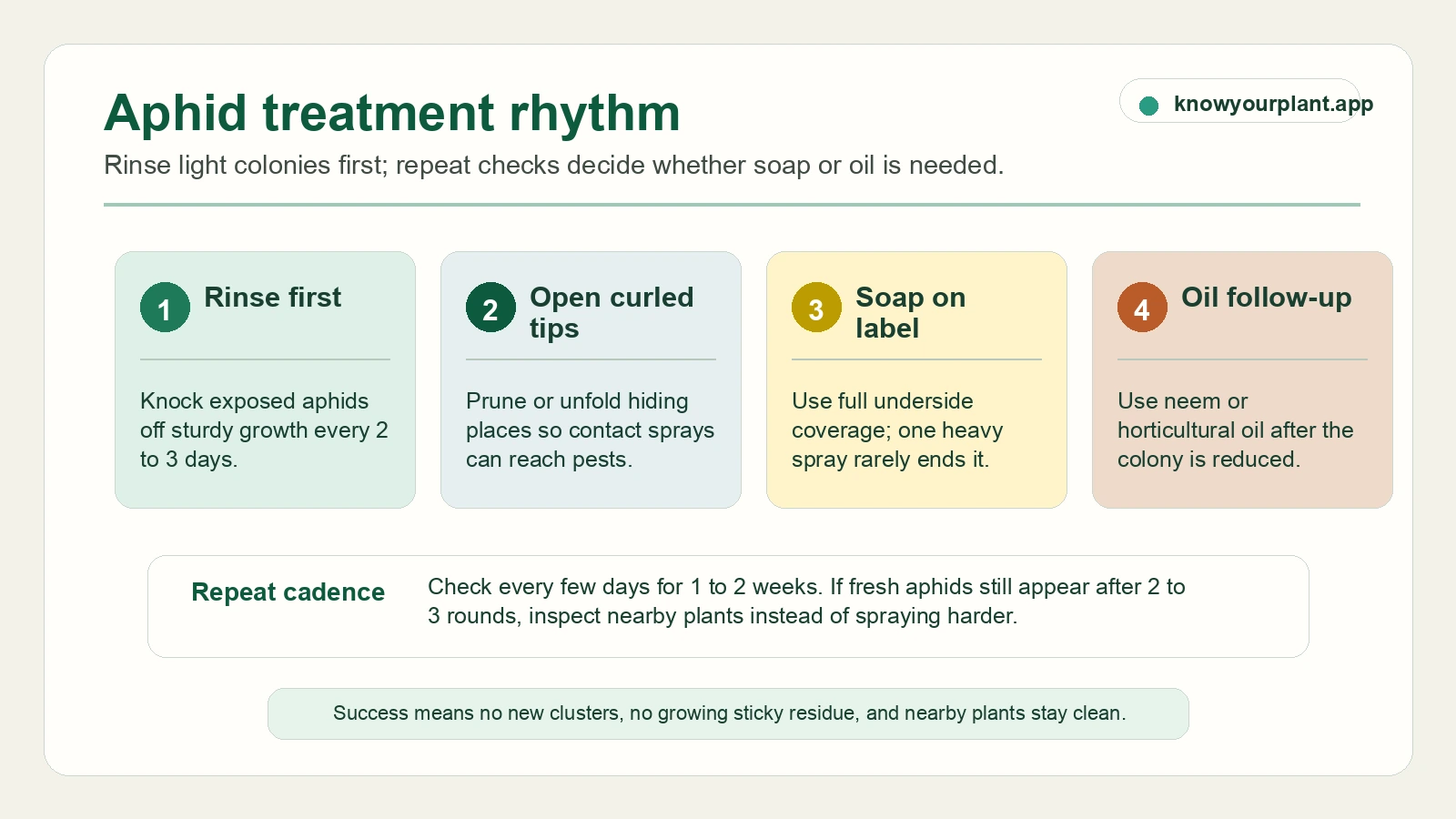
Treat aphids in rounds: start with water on light colonies, expose hidden pests, then repeat labeled contact treatments instead of spraying once and stopping.
What Aphids Actually Are
Aphids are small, soft-bodied insects that feed by piercing plant tissue and drawing out sap. Think of them as tiny straws draining your plant’s energy from the inside. A single aphid does little visible damage. A colony of several hundred, which can build in under two weeks, can stunt new growth, curl leaves, and leave a sticky residue called honeydew that attracts ants and eventually leads to sooty mold.
According to University of California Integrated Pest Management, a single aphid can produce up to 80 offspring in a week under warm conditions, and colonies can reach hundreds within a few weeks without intervention. That speed is why catching them early matters so much.
They come in several colors: green, yellow, black, brown, pink, and even woolly white, though the white fluffy ones are more often mealybugs. Most are wingless, but some develop wings when a colony gets crowded and needs to spread to a new plant. That winged stage is the one you really do not want to reach.
Is It Really Aphids? How to Tell
Before you treat anything, make sure you are actually dealing with aphids and not a lookalike.
Where to look: Check the undersides of leaves and along new stem growth first. Aphids love soft, fresh tissue. They cluster near shoot tips, around flower buds, and on the underside of younger leaves.
What they look like: Pear-shaped, about 1 to 3 mm long, with two small tubes called cornicles at their back end. Those tiny tubes are the clearest identifier. Scale insects and mealybugs do not have them.
Common lookalikes:
- Mealybugs: White and cottony, no visible legs from a distance, congregate in leaf axils. If you need help telling them apart, read the full mealybug guide.
- Scale insects: Hard, flat, shell-like bumps fixed to stems. They do not move.
- Spider mites: Much smaller, leave fine webbing. For comparison, see how to get rid of spider mites.
- Whiteflies: Fly up in a cloud when you disturb the plant. Aphids stay put.
What aphids leave behind: A sticky film on leaves or on the surface below the plant. Ants patrolling the stems are also a clue, since they farm aphids for honeydew. Curled or cupped leaves that do not uncurl after watering can signal a longer-running infestation.
If you are still unsure, run a fingernail along the stem tip. Aphids squish. Scale does not.
How to Get Rid of Aphids
Start with water
For small infestations on sturdy plants, a strong jet of water from a sink sprayer or garden hose knocks aphids off immediately. Most cannot find their way back. Do this in the morning so the plant dries before evening. Repeat every two to three days for a week or two. On flowering shrubs, protect buds and new growth while you rinse; the hydrangea care guide covers the watering, pruning, and placement routine after the infestation is under control.
This works better than most people expect. It is the first thing to try before reaching for any spray, and for a light infestation it is often enough on its own.
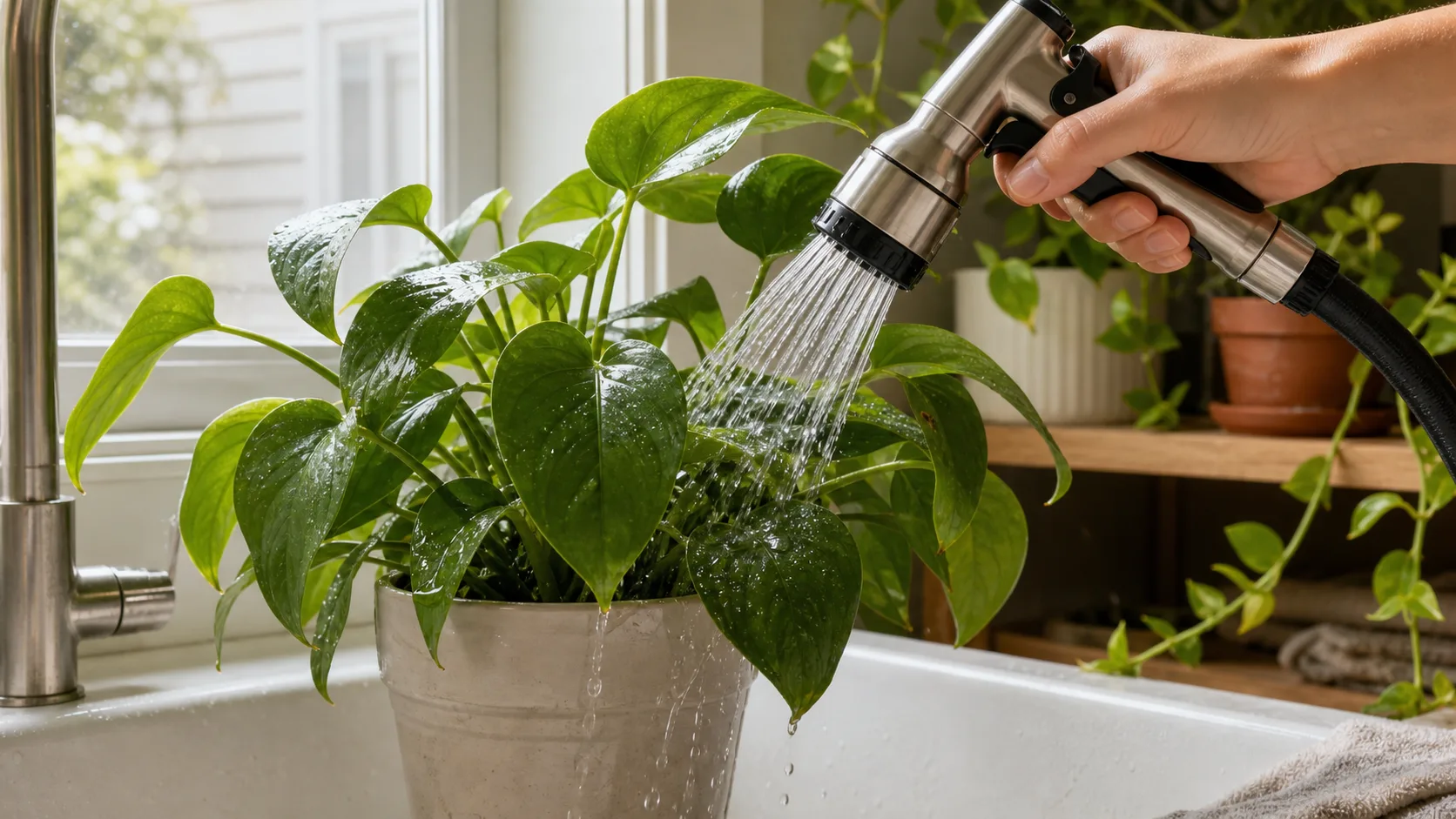
Rinse sturdy foliage thoroughly in the morning, directing water across stems and leaf surfaces where aphids cluster.
Use a labeled insecticidal soap before stronger measures
For a heavier infestation, move from plain water to a labeled insecticidal soap. Colorado State University Extension notes that soaps are contact-only controls for soft-bodied pests like aphids, which means the spray only works where it lands. Wet the colony thoroughly, especially leaf undersides, stem joints, and any curled growth where aphids hide.
Avoid improvising strong dish-soap mixes. Household soaps vary, and extension guidance warns that unlabeled mixes can spot or burn leaves, especially on sensitive houseplants. If you want a soap treatment, choose a product labeled for insecticidal use, test a small section first, and repeat only on the schedule the label allows.
If curled leaves are protecting the colony, prune the worst tips or open the leaves first so the soap can actually reach the insects. Because soap has no residual effect, one heavy spray rarely ends the infestation on its own.
Use neem oil for a longer-lasting treatment
Neem oil disrupts the aphid’s ability to feed and reproduce. It works more slowly than soap spray but lasts longer and also deters re-infestation. For a full breakdown of how to use it and what to mix it with, the neem oil guide covers the ratios and timing in detail.
Mix neem oil concentrate with water and a drop of dish soap as an emulsifier, then apply as a spray in the same way. The smell fades within a day or two. Like soap spray, apply in the evening or on an overcast day and avoid open flowers where you might affect pollinators.
Neem works well as a follow-up treatment once you have knocked the active infestation down with soap or water, or when you want longer residual protection.
Bring in natural predators
Outdoors, natural control takes care of itself if you let it. Ladybirds, lacewings, and parasitic wasps all feed on aphids. University of Florida IFAS Extension notes that a single ladybird larva can consume up to 400 aphids during its development, making habitat-friendly gardening one of the most effective long-term controls available.
Avoiding broad-spectrum insecticides keeps these predators alive and working. For indoor plants or a persistent outdoor problem, you can buy lacewing larvae or ladybird adults from garden suppliers. Release them near affected plants in the evening. They need live prey to stay, so if the infestation is already light, they may simply move on.
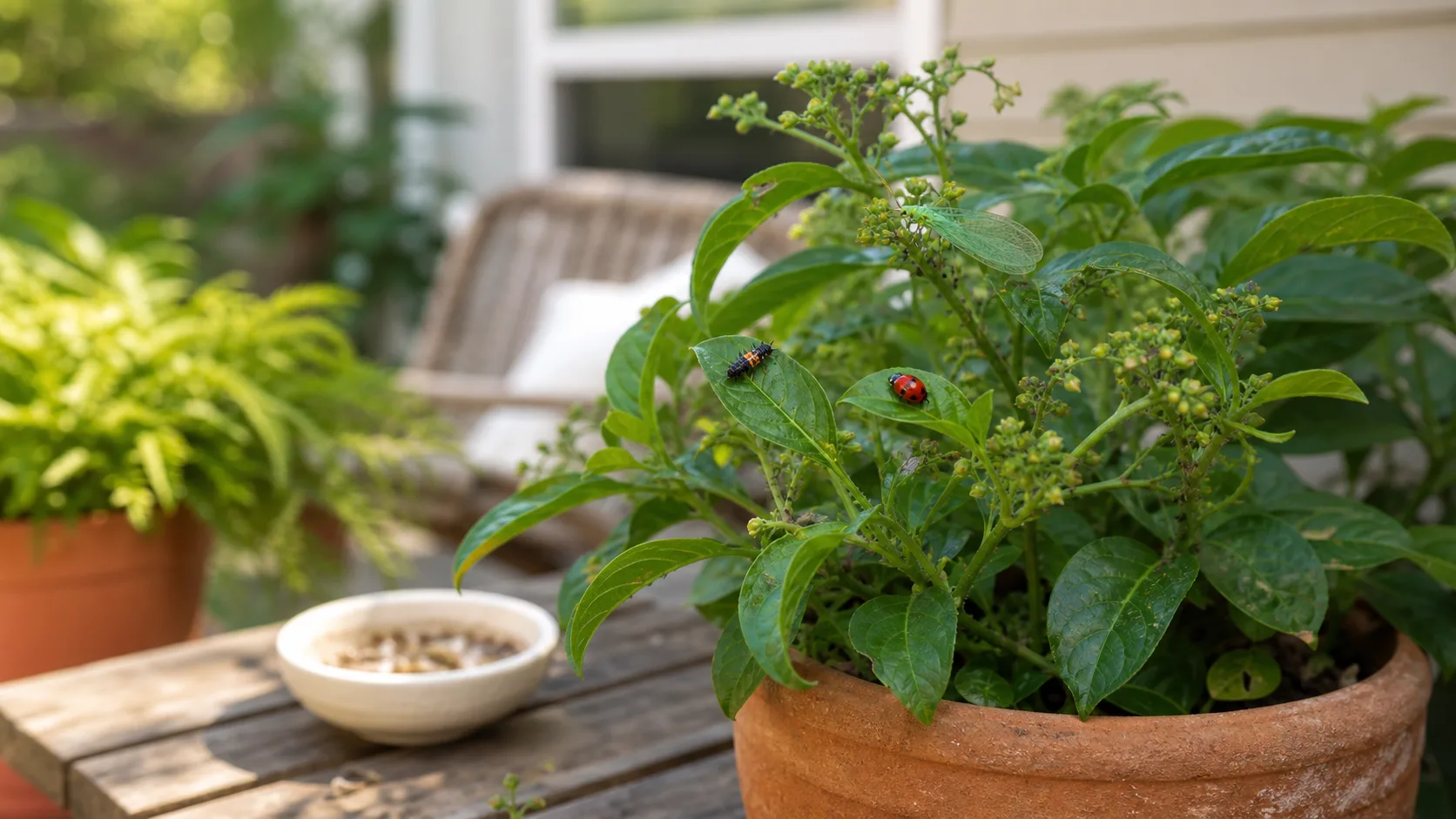
Ladybirds, their larvae, and lacewings can keep outdoor aphid colonies in check when broad-spectrum sprays are avoided.
When to use a systemic insecticide
If soap spray, neem, and water pressure have not resolved the problem after two to three weeks, a systemic insecticide containing imidacloprid is an option. Systemics are absorbed through the roots and make the whole plant toxic to sap-feeding insects. They work where sprays cannot reach and last several weeks.
The important caveat: do not use systemics on plants in flower. They move into pollen and nectar and can harm bees and other pollinators. Use only as a last resort on non-flowering plants.
Common Mistakes That Keep Aphids Coming Back
- Treating once and stopping. Water, soap, and oil usually need repeats because they do not control every hidden insect in one pass.
- Spraying only the top of the leaves. Aphids cluster on undersides, stem joints, and curled growth where contact products miss them.
- Using homemade degreasing or scented soap mixes. Strong household soap formulas can damage leaves before they solve the pest problem.
- Skipping isolation indoors. One untreated nearby plant can restart the infestation.
- Ignoring ants or repeat arrivals outdoors. Ants protect aphid colonies, and winged adults can return after a rinse.
- Treating aphids when the pest is actually scale or mealybugs. Misdiagnosis wastes time and stresses the plant.
Seasonal Aphid Watch Calendar
Most pest guides treat aphids as a single, year-round threat. In practice, the risk shifts with the seasons, and knowing when to look closely is half the battle.
Spring (March to May): Peak aphid season begins. As temperatures rise and new growth pushes out, eggs laid last autumn hatch and populations build fast. A plant that looked fine in February can have a visible colony by late March. Check stem tips and leaf undersides every week during this window, not every few weeks.
Summer (June to August): Populations are at their highest, particularly during warm, dry spells. Ants climbing plant stems are a reliable early warning, since they actively tend aphid colonies for the honeydew. Plants near open windows and doors are at higher risk from winged migrants moving in from outdoors. Any plant recently moved from patio to indoors should be inspected before it goes near other plants.
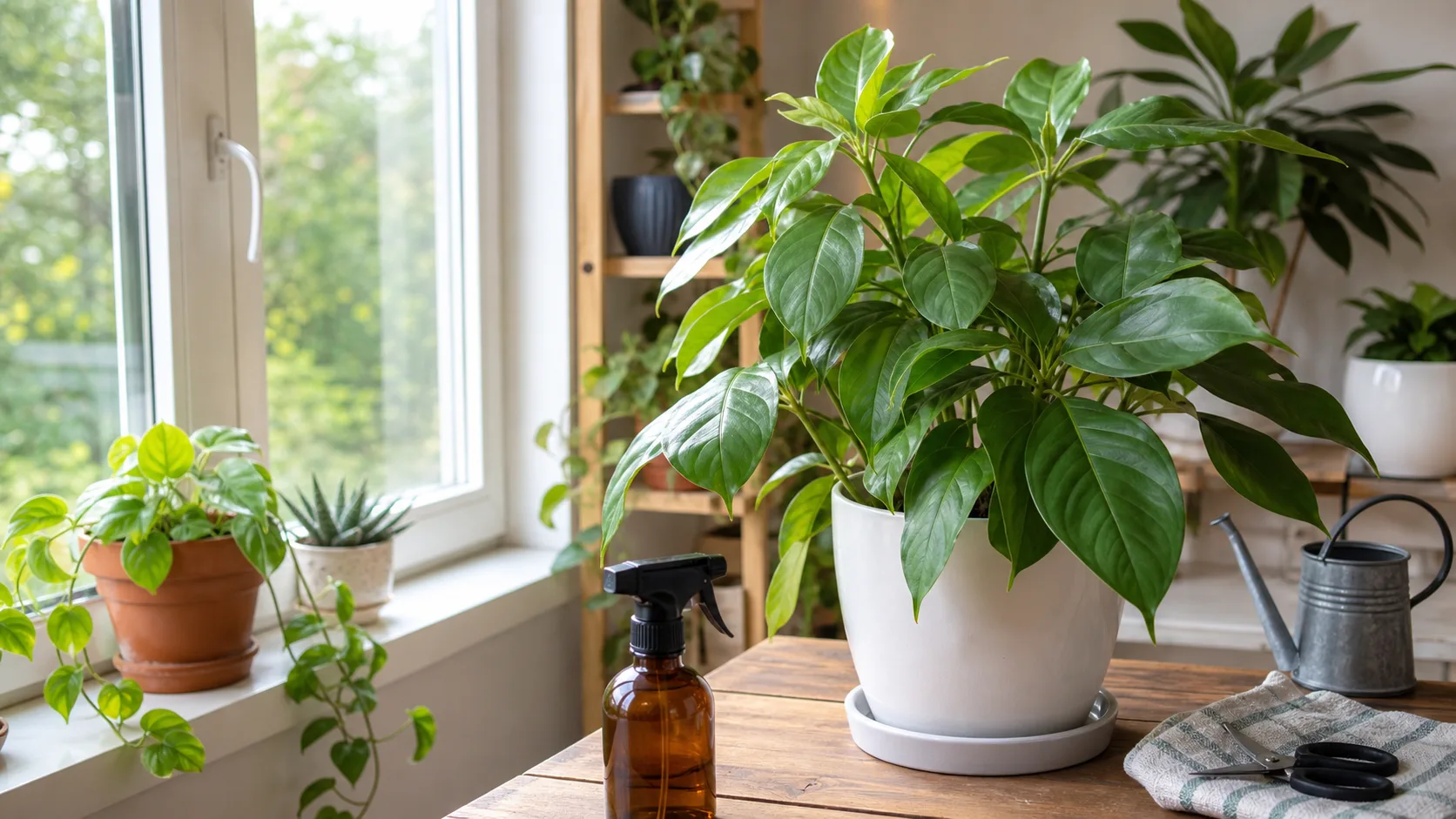
Inspect plants near open doors and windows more often during warm weather, especially before moving patio plants indoors.
Autumn (September to November): Aphid activity slows as temperatures drop, but this is the critical window to check any plant coming back indoors from a summer outside. Winged adults lay overwintering eggs on woody stems that are nearly invisible. A thorough check before a plant crosses the threshold stops next spring’s infestation before it starts.
Winter (December to February): Outdoors, most aphids overwinter as eggs and are not active. Indoors, centrally heated rooms with low humidity can support year-round populations, particularly on citrus, soft herbs, and tropical houseplants. A monthly check is enough during this period, but do not skip it entirely.
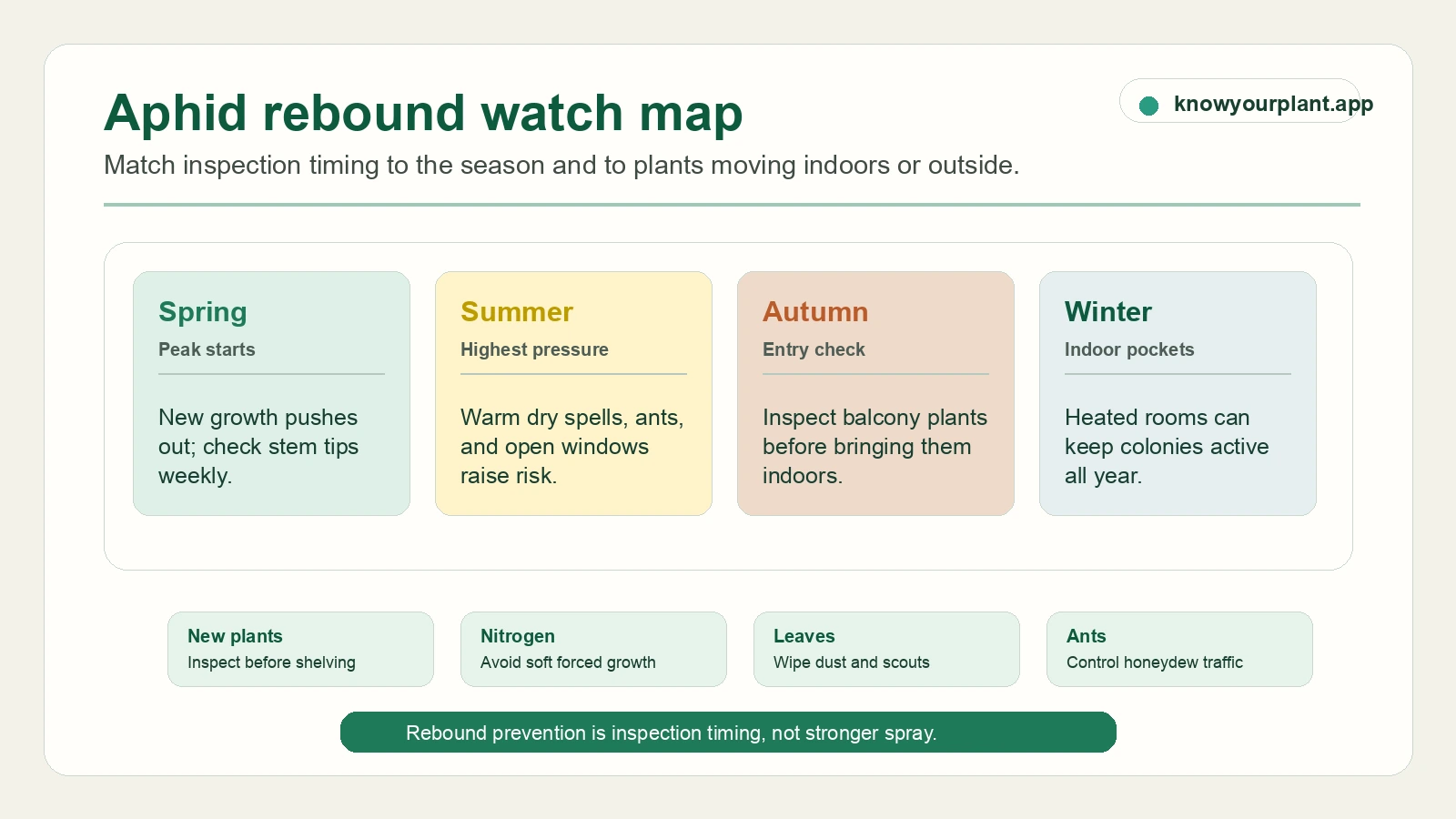
Match aphid checks to the season: new growth, summer pressure, plants moving indoors, and heated winter rooms each change where rebound starts.
How to Prevent Aphids Coming Back
Aphids tend to find already-stressed plants first. A plant in the wrong light, overwatered, or pushed hard with fertilizer is more vulnerable than a healthy one. Keeping your plant’s basics right is the most useful long-term prevention, and the indoor plant care guide for beginners is a solid reset if several issues seem to be stacking up at once.
Darryl Cheng, author of The New Plant Parent, puts it directly: “The healthiest plants are the ones where you’ve matched the care to the plant’s actual pace, not the pace you want for it.” A plant growing steadily in the right conditions is harder to knock back than one being pushed with excess nitrogen or sitting in the wrong light.
Beyond that:
Inspect new plants before bringing them home. Check stem tips and leaf undersides before they go near anything else. One infested plant can spread aphids across an entire shelf within days.
Check regularly during the growing season. Spring and summer are peak aphid time. A quick look every week or two means you catch them at a handful rather than a colony.
Wipe leaves occasionally. A damp cloth on leaves removes early scouts before they settle. It also removes the dust that slows a plant’s transpiration, which is good practice generally. If you need a safe method for different leaf textures, how to clean plant leaves breaks down when to use a damp cloth, shower rinse, or soft brush.
Avoid over-fertilizing with nitrogen. Lots of fast, soft new growth is exactly what aphids are drawn to. Feed steadily rather than in large doses. If you are unsure about fertilizing schedules, the plant fertilizer guide has a seasonal calendar worth bookmarking.
Avoid bringing plants from outdoors inside without checking them first. A plant that has spent the summer on a balcony or patio is a common way aphids enter the home. If the plant is root-bound or the soil has compacted after a season outside, the how to repot plants guide walks through the safest way to refresh it before pest pressure builds again.
Freshness and Method
Freshness note: Reviewed in June 2026 against University of California IPM, University of Minnesota Extension, and Colorado State Extension guidance. Gardener Q&A was used only to surface common rebound patterns, misdiagnosis issues, and over-treatment mistakes. Reviewed by the KnowYourPlant editorial team.
Methodology: This article starts with extension and IPM guidance for the treatment recommendations, then uses real gardener Q&A only to highlight the failure patterns that most often cause rebound infestations at home.
Frequently Asked Questions About Aphids
How do I know if aphids are gone? Check the stem tips and leaf undersides daily for a week after treatment. If you see no new clusters and the sticky residue is not growing, the infestation is resolved. Keep checking for two more weeks, since eggs can hatch and restart the cycle.
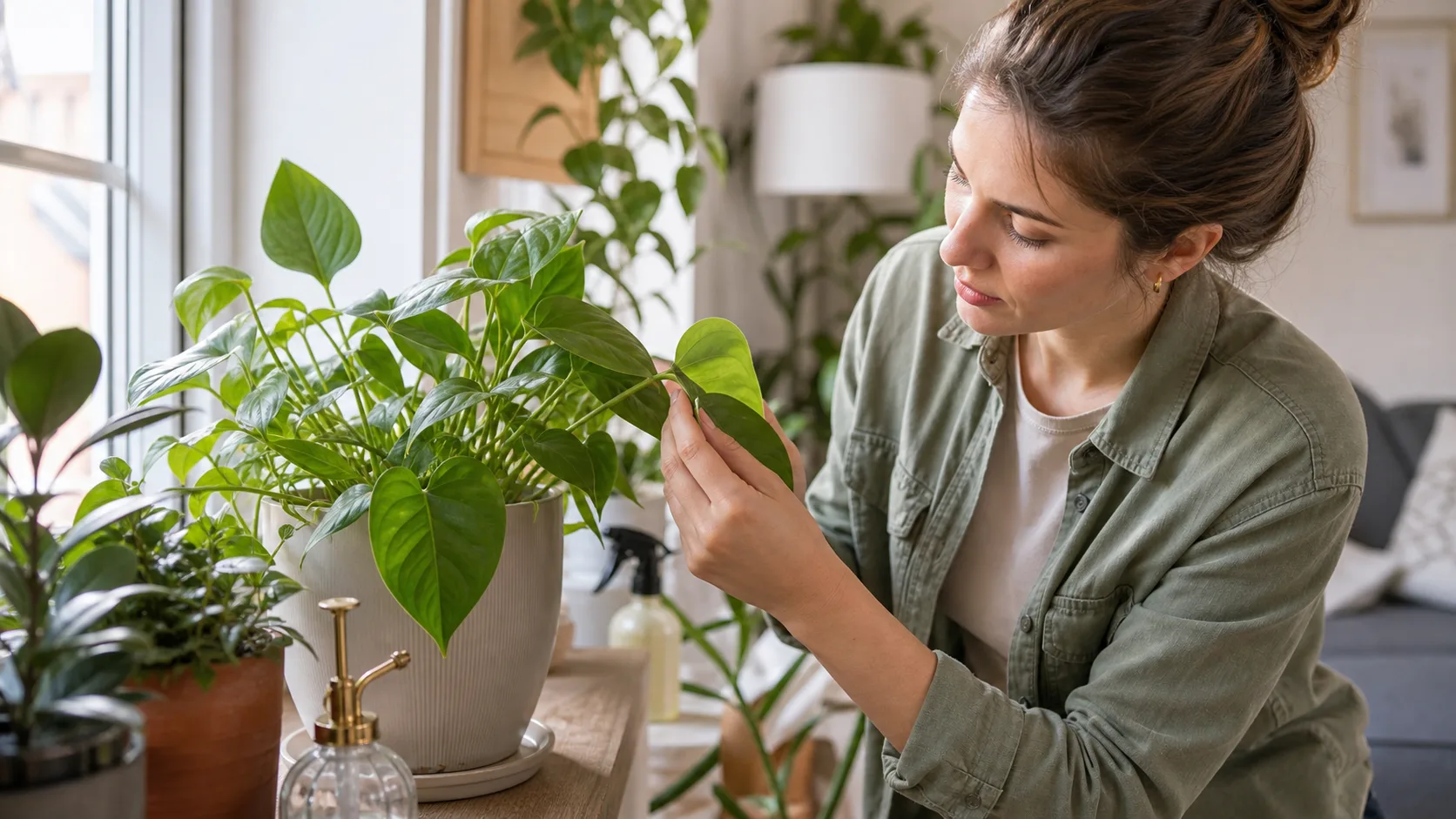
Keep checking stem tips and leaf undersides after treatment; a clear week is encouraging, but follow-up should continue.
Can aphids kill my plant? A severe, untreated infestation can stunt or kill a small or already-stressed plant. For most established houseplants, a colony causes damage but not death if you treat it within a few weeks of noticing it. The bigger risk is the sooty mold that grows on honeydew, which blocks light and weakens the plant over time.
Are aphids harmful to humans or pets? Aphids are not harmful to people or pets. They do not bite and they do not transmit disease to animals. The treatments you use, particularly neem oil, should be kept away from pets while wet, but once dry they are generally safe.
How do aphids spread from plant to plant? Wingless aphids can walk between plants that are touching. Winged aphids develop when a colony gets crowded and fly to new hosts. This is why moving an infested plant away from others immediately is one of the first things to do when you spot them.
Why do ants keep appearing near my plant? Ants farm aphids for the honeydew they excrete. If you have ants on your plant’s stems, look closely for aphids. In outdoor settings, controlling the ants can also help slow aphid spread, since ants actively protect aphid colonies from predators like ladybirds.
How long does it take to get rid of aphids? With consistent treatment, most infestations resolve in two to three weeks. The key word is consistent. A single spray does very little because it does not affect eggs. Treating every three to four days over two to three weeks breaks the cycle.
Can I use rubbing alcohol on aphids? Yes. A 70% isopropyl alcohol solution applied with a cotton swab, or diluted to about 30% in a spray bottle, can kill aphids on contact. It works well for spot treatment on sturdy plants. Test on a small area first since some plants are sensitive to alcohol.
Will aphids come back after I treat them? They can, particularly during spring and summer when outdoor populations are high. The best defence after treating is a healthy plant, regular inspection, and avoiding the conditions that attract them: over-fertilizing with nitrogen, very soft new growth, and warm dry air.
Are there other pests I should watch for at the same time? Aphid season overlaps with peak activity for several other common pests. Fungus gnats become a problem when soil stays too wet in warmer months. Spider mites show up in dry, heated conditions indoors. If you are dealing with one, it is worth checking for the others at the same time.
Download KnowYourPlant for personalized plant care reminders, including seasonal pest watch alerts timed to the plants you are actually growing. It takes the guesswork out of knowing when to look and what to look for. Find it at https://knowyourplant.app.