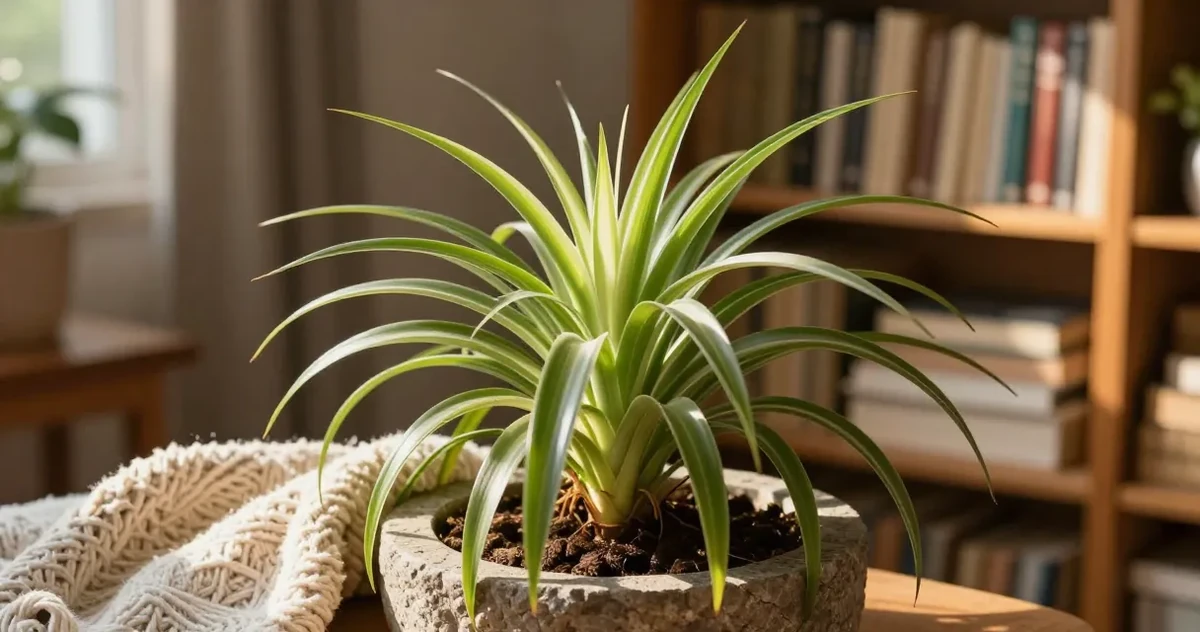
Spider Plant Care Guide: Growing and Propagating Chlorophytum
If the tips of your spider plant keep going brown no matter how carefully you water, there’s a good chance the culprit is your tap water, not your routine. Spider plants are forgiving in most ways, but more sensitive to fluoride than most care guides let on. That one detail resolves a lot of frustration.
The spider plant (Chlorophytum comosum) earns its reputation as a beginner-friendly plant not because it’s boring or unchallenging, but because it communicates clearly. Happy plants produce a cascade of arching runners and spiderettes. Stressed plants hold back. Once you understand what the plant is telling you, the care almost figures itself out.
What Most Care Guides Miss
Most guides about spider Plant describe the ideal care routine. Real homes are messier: light changes by season, pots dry at different speeds, and the same symptom can mean different things depending on where it appears.
Before changing care, check the plant in this order:
- Light: is the plant growing toward the window, fading, or scorching?
- Root zone: is the pot drying predictably, or staying wet in the middle?
- Leaf pattern: did the oldest leaves, newest leaves, tips, or stems change first?
- Recent change: new pot, new location, fertilizer, cold draft, heat vent, or pest exposure.
This keeps you from fixing the wrong problem. One clear adjustment is usually safer than a full care reset.
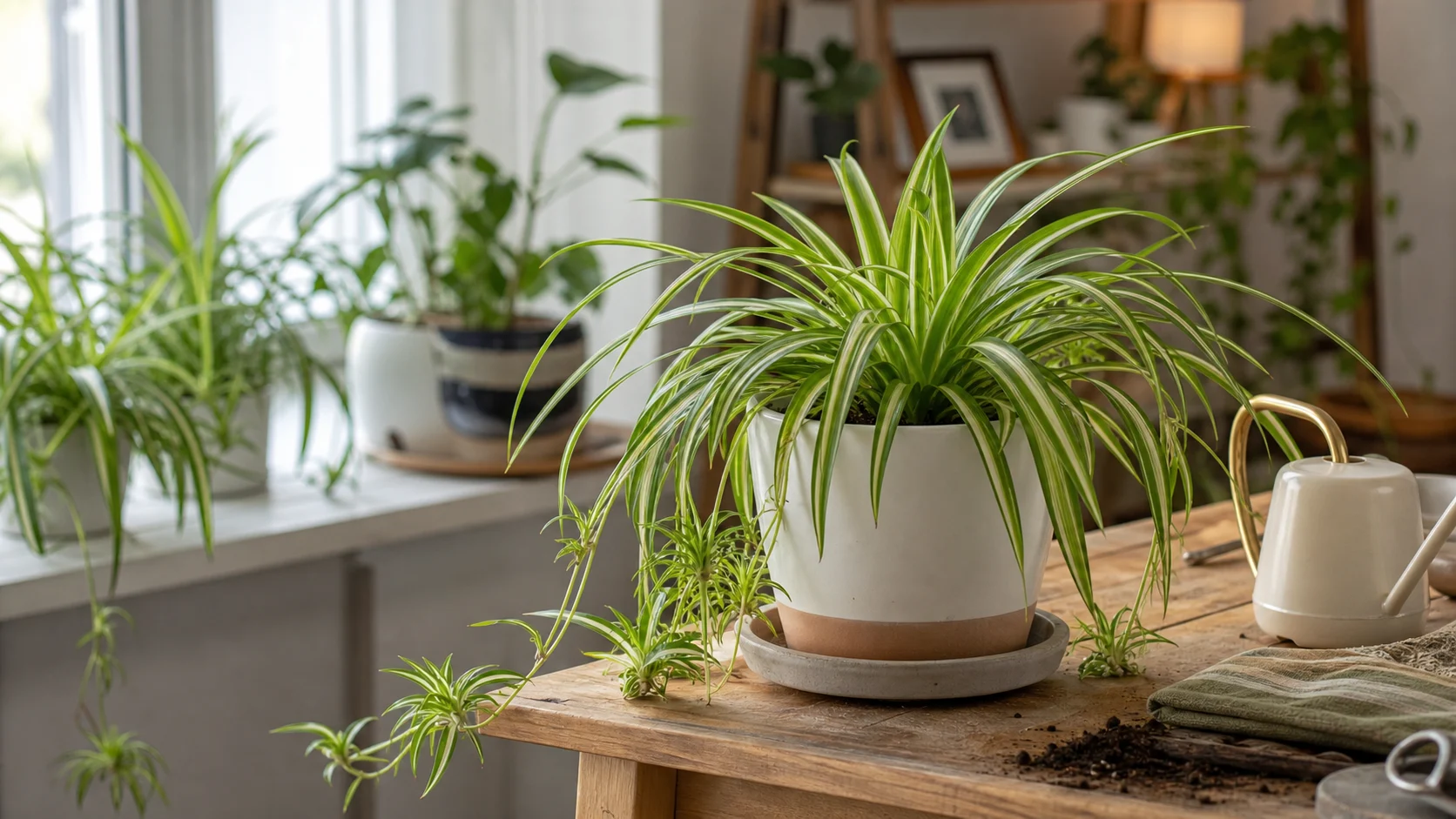
A lived-in care setup makes it easier to check window light, pot drainage, soil condition, and recent changes before adjusting the routine.
Identification Snapshot
| Detail | What to look for |
|---|---|
| Botanical name | Chlorophytum comosum |
| Growth habit | Fountain-shaped rosette with long arching leaves and dangling runners |
| Fastest visual clue | Cream or white center or edge stripes, plus baby plantlets on long stems once mature |
| Best home placement | Bright indirect light, a pot with drainage, and enough room for runners to hang |
| Pet safety | ASPCA lists spider plant as non-toxic to cats and dogs, but chewing can still upset the stomach |
Lookalikes and Confused-With
| Plant | How to tell it apart |
|---|---|
| Curly spider plant (‘Bonnie’) | Same species, but the leaves twist and curl instead of arching straight |
| Solid-green spider plant | Same growth habit, but without the white striping that makes variegated plants easier to spot |
| Grass-like houseplants sold without runners | Young spider plants still form a central rosette early; mature plants eventually send out long flower stalks with baby plantlets |
Spider Plant Care Cards
| Care card | Practical target |
|---|---|
| Light | Bright indirect light, with gentle morning sun fine and hot afternoon sun avoided |
| Water | Let the top inch dry, then water thoroughly until excess drains out |
| Pot | Slightly snug is better than oversized, especially if you want plantlets |
| Soil | Standard indoor mix with enough drainage that the root zone does not stay soggy |
| Feeding | Light feeding during active growth, then stop once growth slows in autumn |
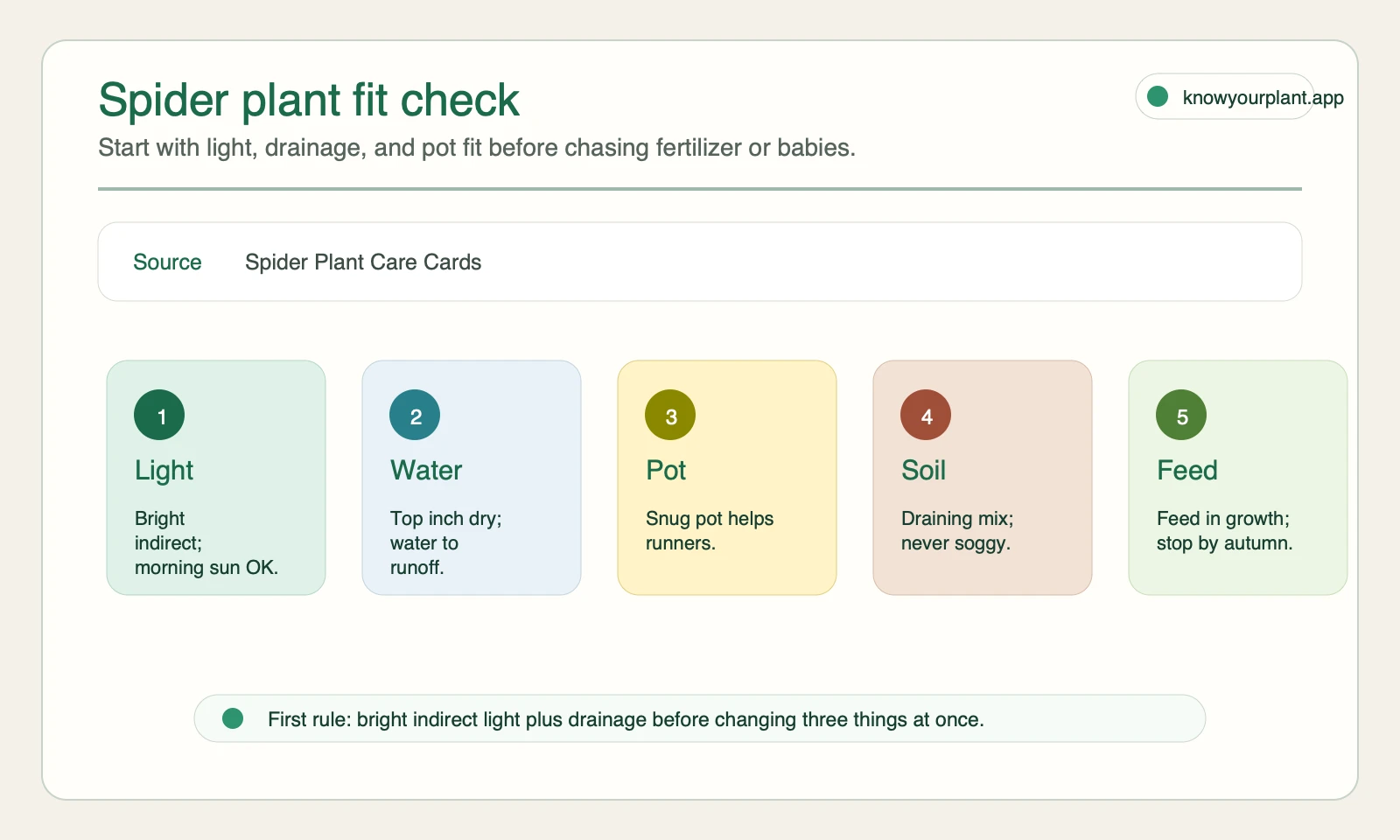
Use the fit check before changing the routine: light, drainage, and pot fit explain most spider plant progress before fertilizer does.
What Spider Plants Actually Need
Spider plants want bright indirect light, water when the top inch of soil dries out, and a pot that fits them snugly. They tolerate a lot of variation, but they do have real preferences. Meet those preferences even halfway and the plant rewards you visibly: new leaves unfurling, runners reaching outward, plantlets developing at the tips.
If you’re building your first plant collection, spider plants pair well with other easygoing tropicals. The beginner indoor plant care guide covers which plants share similar care routines, which makes it easier to manage a small collection without juggling too many different schedules.
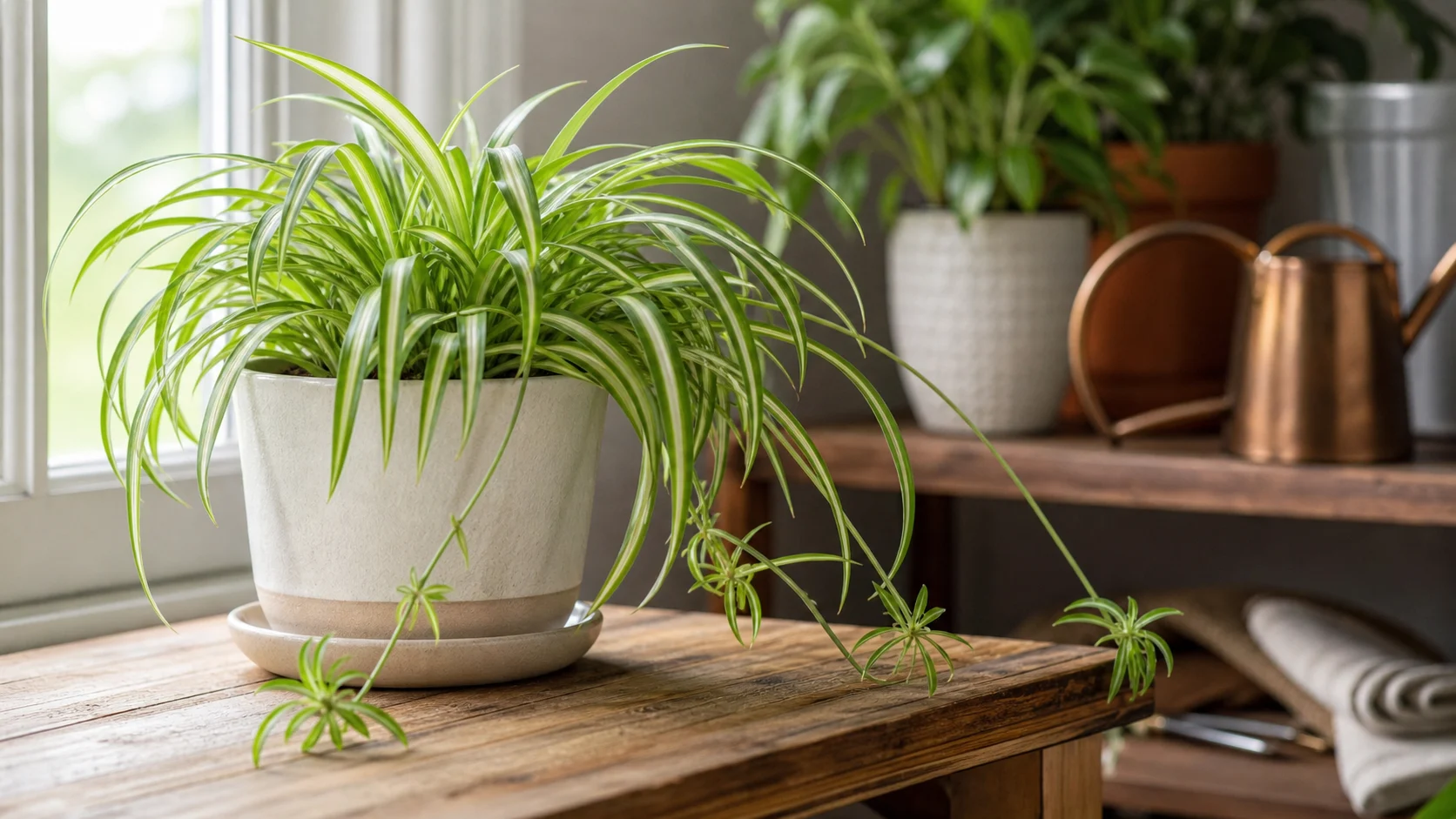
Bright indirect light, a snug draining pot, and steady moisture checks support the runners and developing spiderettes that signal a comfortable plant.
Light: Where to Put It
Spider plants do best in bright indirect light. A spot near a window where the room is well-lit but direct sun doesn’t land on the leaves is ideal. An east-facing windowsill with gentle morning sun works well. Harsh afternoon light bleaches the variegated stripes and scorches the tips.
They’ll manage in lower light, but the trade-offs show up quickly: growth slows, the white stripes fade toward green, and the plant stops producing runners. If your spider plant used to have clean white and green striping but now looks mostly green, it’s asking to move somewhere brighter.
Penn State Extension notes that spider plants are among the most fluoride-sensitive of common houseplants, and plants grown in inadequate light are more prone to showing fluoride toxicity symptoms. Good light isn’t just about growth rate: it’s also about resilience to chemical stress.
If your home is short on natural light, a basic grow light on a timer makes a real difference. The grow lights guide for indoor plants explains what to look for without overcomplicating it.
Watering: Read the Soil, Not the Clock
Watering on a fixed schedule is the most common mistake with spider plants. The plant doesn’t care what day of the week it is. It cares how dry the soil is.
The approach that works: press your finger about an inch into the soil. If it’s dry, water thoroughly until water drains from the bottom. If it’s still damp, check again in a couple of days. That’s the whole system.
Darryl Cheng, author of The New Plant Parent and creator of House Plant Journal, frames it this way: “A plant’s water needs are driven by how much light it gets and how fast it’s growing. Water to match the plant’s pace, not the calendar.” In a bright window during summer, that might mean watering every five to seven days. In a dim corner in January, the same pot might go two weeks between waterings without any issue.
Signs You’re Overwatering
- Leaves feel soft and limp rather than firm and arching
- Soil stays wet for more than a week
- A faint musty smell from the pot
Signs You’re Underwatering
- Leaf tips turn brown and crispy
- Leaves curl slightly inward
- The pot feels very light when you lift it
The Fluoride and Chlorine Problem
Spider plants can develop tip burn in response to water-quality chemicals and accumulated salts even when watering frequency is reasonable. Because treatment differs by utility and leaving water out does not remove fluoride, an overnight container is not a reliable test for every home.
If water quality is the strongest match, trial rainwater or distilled water while leaving the rest of the routine stable. Judge new leaves rather than expecting old brown tissue to recover.
Social Listening: What Spider Plant Owners Keep Running Into
Three recurring frustrations kept showing up in community discovery for this topic: pots that hide water in the bottom even when the surface feels dry, healthy-looking plants that still refuse to make babies, and leaf problems that get blamed on fertilizer before anyone checks light, drainage, or salt buildup. That pattern is why the care routine in this guide starts with the root zone and pot setup instead of a fixed weekly schedule.
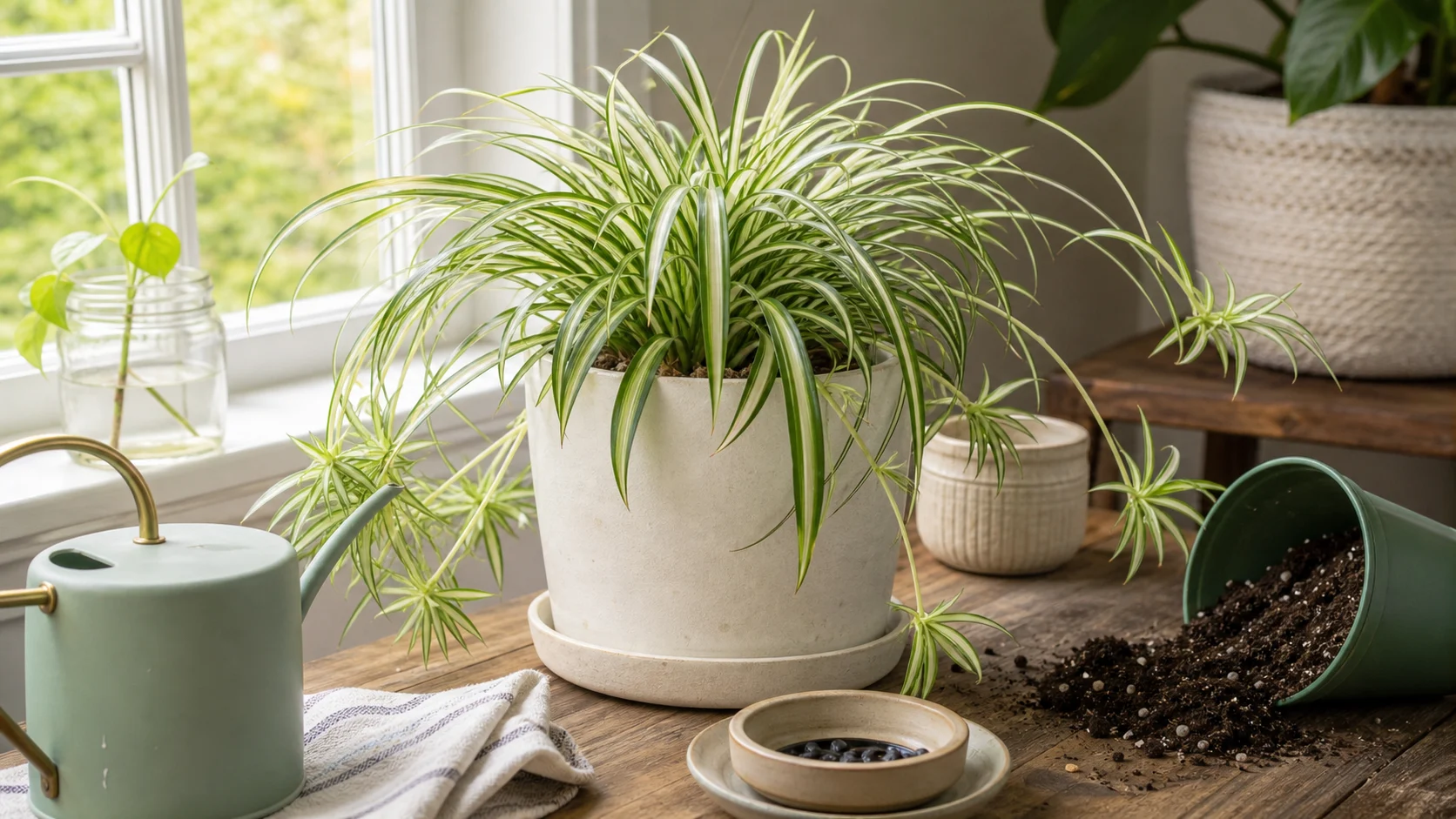
A saucer, loose potting mix, and visible watering setup keep attention on the root zone and drainage before fertilizer or a fixed schedule.
Reusable Artifact: Spider Plant Watering and Drainage Checklist
Run this checklist before watering:
- Confirm the pot has a drainage hole and is not holding runoff in a cachepot or saucer.
- Feel the soil below the surface, not just the dry crust on top.
- Lift the pot and compare the weight to the last time you watered.
- Water thoroughly only after slight drying, then let excess water escape fully.
- If tips are browning but the plant otherwise looks healthy, check water quality and fertilizer salts before watering more often.
Common Problems
| Symptom | Most likely cause | What to change first |
|---|---|---|
| Brown, crispy tips | Fluoride or salt buildup, dry root zone, or hot air | Switch water source, flush salts, and check airflow |
| Yellow leaves from the base | Soil staying wet too long | Improve drainage and inspect roots before watering again |
| Pale, washed-out foliage | Too much direct sun or weak growth from stress | Move to bright indirect light and let the plant recover |
| No babies after a full growing season | Not enough light, too much pot space, or an immature plant | Increase light and wait for a slightly pot-bound phase |
If brown tips are the main symptom, use the focused spider plant brown tips guide to separate water-quality salts, fertilizer buildup, dry conditions, direct sun, and root stress before changing several parts of the care routine.
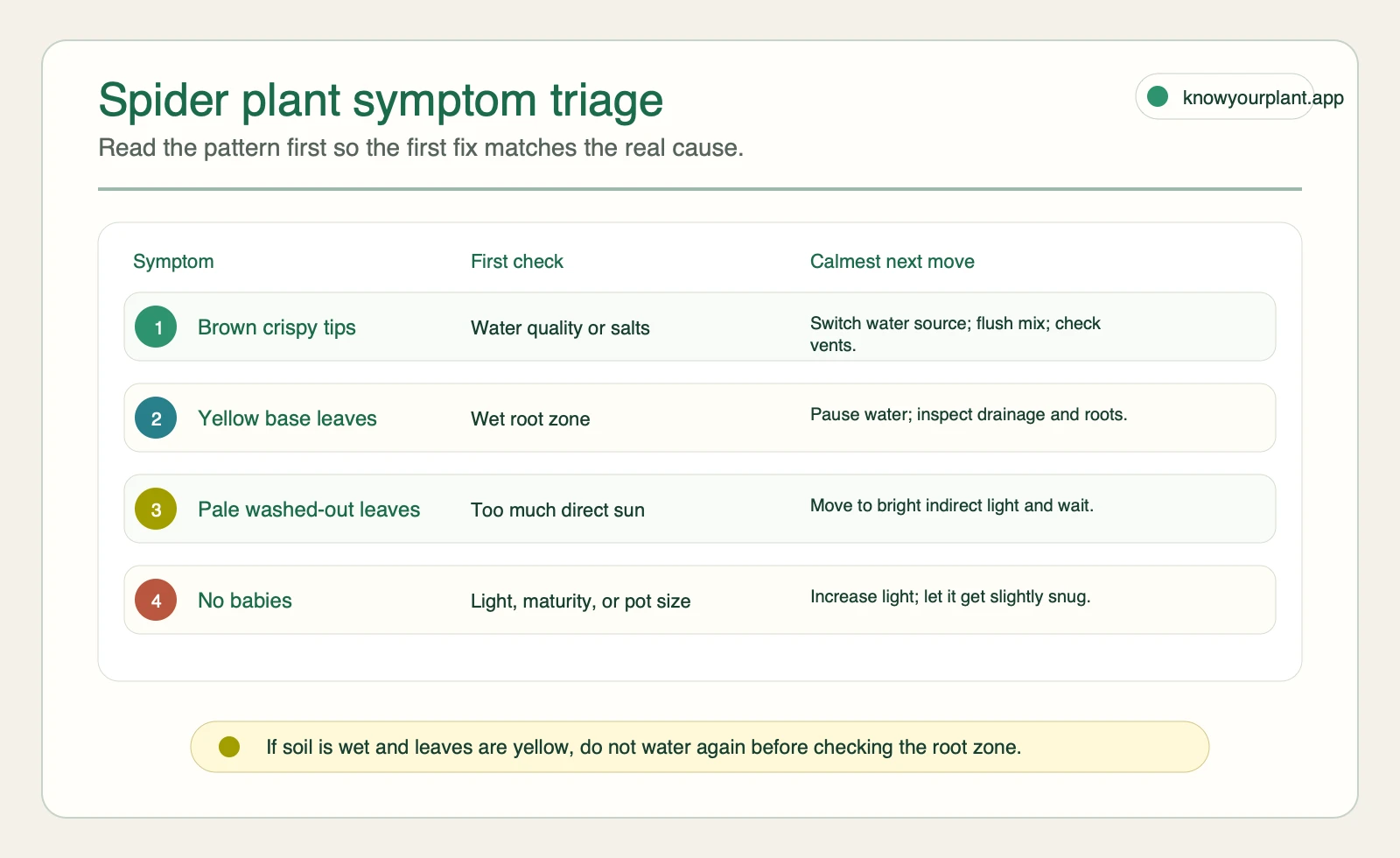
The triage card separates the look-alike problems: brown tips point to water quality or salts, while yellow base leaves require a root-zone check first.
Diagnosing Yellow Leaves, Spots, and Wilting
Brown tips from fluoride are one thing, but spider plants can show a range of other symptoms that each point to a different cause. Yellow leaves progressing from the base usually mean root rot from consistently wet soil. Pale, washed-out coloring across the whole plant points to too much direct sun. Wilting despite moist soil often signals root damage rather than thirst.
If you’re unsure what you’re looking at, a photo can tell you more than a checklist.
Decision Tree: Why No Babies Yet?
Use this quick order of operations before changing everything at once:
- Check maturity first. Young spider plants make leaves before they make runners.
- Check light next. If the variegation is fading or growth is slow, brighter indirect light usually matters more than fertilizer.
- Check pot size. A plant in a much bigger pot often prioritizes roots over plantlets.
- Check recovery status. Plants that were recently moved, repotted, or overwatered often pause runner production until they stabilize.
Wisconsin Horticulture is especially useful here because it notes two things beginners often miss: spider plants like to dry slightly between thorough waterings, and mature plants tend to produce plantlets best when they are a little pot bound.
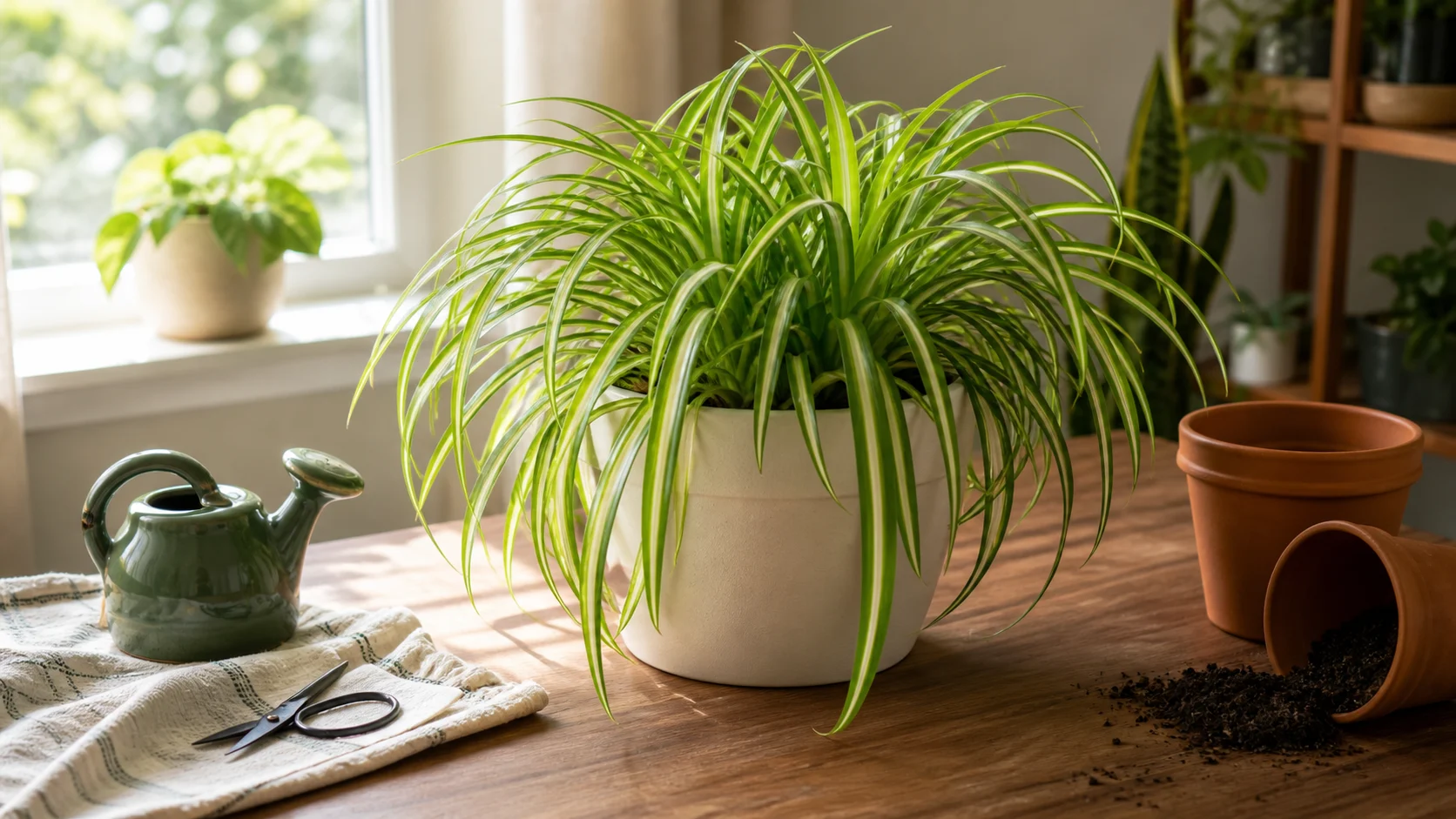
A leafy plant without runners calls for a calm check of maturity, window light, pot fit, and recent repotting before adding fertilizer.
Reading the Runners: What Your Plant Is Actually Telling You
Here’s something most spider plant guides skip: the runners are a diagnostic signal, not just a perk.
A spider plant sends out long arching stolons with small plantlets at the tips when it’s comfortable. Reproduction is something stressed plants don’t prioritize. If your spider plant has been in your home for a full growing season and hasn’t produced a single runner, that’s worth paying attention to.
The most common reasons a mature plant holds back on runners:
- Not enough light (the most common cause)
- Recently repotted into a much larger pot (the plant focuses on root establishment first)
- Consistently overwatered or underwatered
- Still adjusting after a move or environmental change
Spider plants tend to produce more runners when they’re slightly root-bound, which is counterintuitive. A plant that feels snug in its pot redirects energy outward. If you just repotted into a significantly larger container, give it a full season before worrying about spiderettes.
On the other side: a plant suddenly sending out an unusual number of runners in late summer or early autumn is often responding to shortening day length, a natural trigger for propagation. That’s the plant being strategic, not distressed.
Soil and Potting
Standard indoor potting mix works fine. The priority is drainage: roots don’t like sitting in waterlogged soil. If your mix holds moisture for a long time, add some perlite (roughly one part perlite to three parts mix) to help water move through faster.
Spider plants like to be slightly root-bound before repotting. Roots circling the bottom of the pot or pushing through the drainage holes are the signal to size up. When you do repot, go one size larger rather than jumping to a much bigger container. A pot that’s too large holds more wet soil than the roots can draw from quickly, which loops back to the overwatering problem.
Seasonal Care Calendar
Spider plant needs shift across the year in ways that aren’t obvious from a single-point-in-time care guide.
Spring (March-May) Growth picks up noticeably as days lengthen. Increase watering frequency as the soil dries faster. Resume fertilizing with a balanced liquid fertilizer every three to four weeks. Check whether the plant has become root-bound over winter: if so, spring is the best time to repot before the main growing season.
Summer (June-August) Peak growing season. In a bright spot, you may be watering every five to seven days. Runner production typically peaks in summer, so this is the best time to propagate spiderettes. Keep the plant out of direct afternoon sun, which intensifies in summer and can scorch leaves through glass. Fertilize every three to four weeks through August.
Autumn (September-November) Growth slows as days shorten. Reduce watering frequency and let the soil dry more between sessions. Stop fertilizing by October at the latest. North Carolina State Extension notes that fertilizer salts from overfeeding a plant that’s slowing down contribute significantly to tip burn: the plant can’t process what it doesn’t need, and it accumulates in the soil. Watch for a late-season runner push in September as the plant sometimes accelerates propagation in response to shortening days.
Winter (December-February) Minimal water, no fertilizer, protection from cold drafts and heating vents. These two stressors cause the most winter damage. A plant sitting near a baseboard heater will show chronic tip problems no matter how carefully you water. Move it a few feet away from heat sources and keep it away from cold windows where temperatures drop significantly at night. Slow or paused growth is normal and expected.
Temperature and Humidity
Spider plants prefer 60-80°F (15-27°C) and handle average home humidity without complaint. In very dry winter air, placing the pot on a tray with damp pebbles adds a bit of local humidity around the leaves, though it’s not a critical intervention for most homes.
Air movement matters more than humidity. A plant near a frequently opened door in winter, or directly under a ceiling fan in summer, often shows stress at the leaf tips before anywhere else. If you’re seeing tip browning and can’t pin it on water quality, check the air currents in the spot.
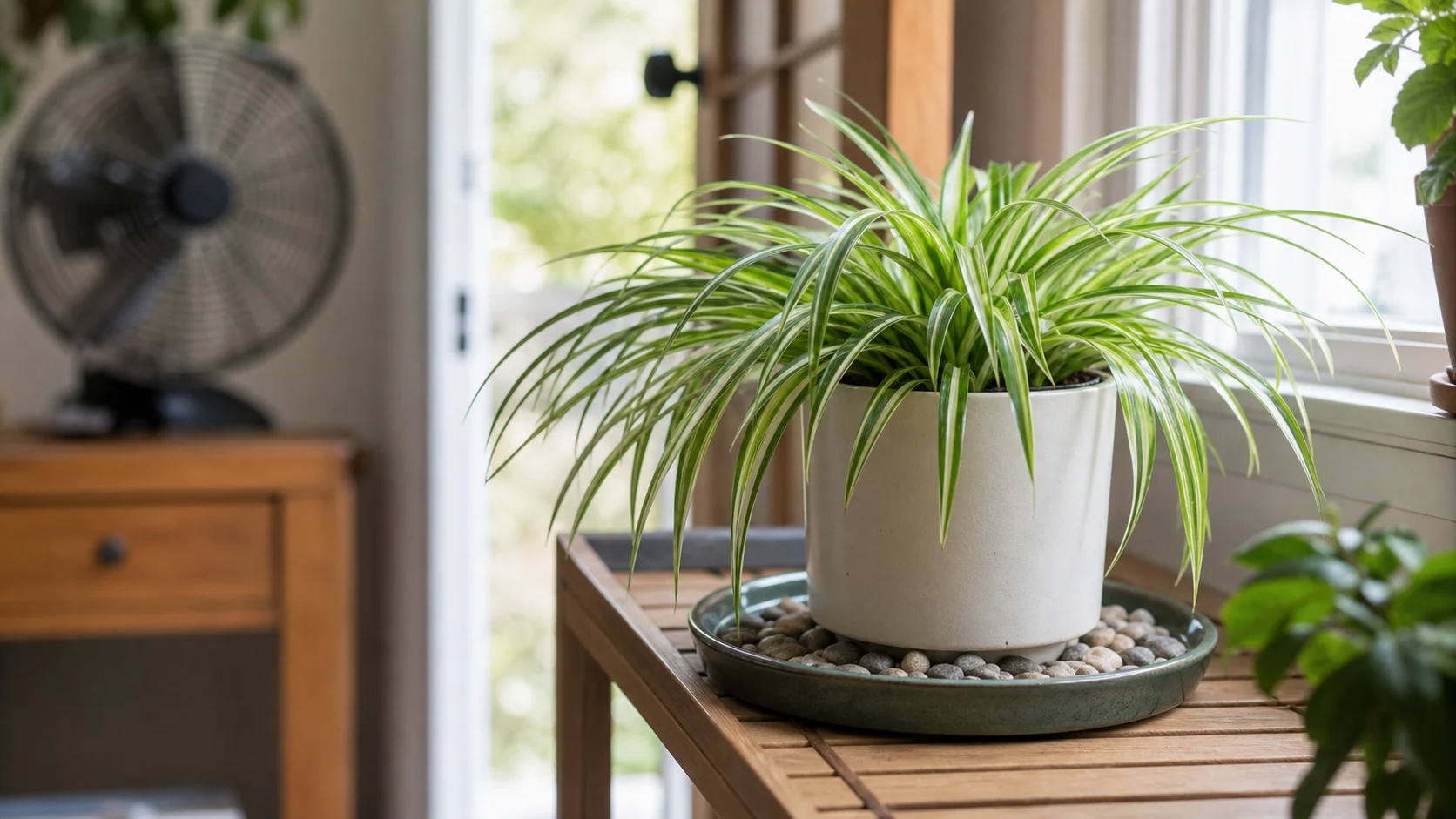
A pebble tray can add modest local humidity, while an open door and nearby fan show why direct air currents deserve the closer check.
Propagating Spiderettes: Two Methods That Work
Once a mature spider plant is healthy, the spiderettes at the end of its runners root easily. Here are the two approaches:
Pin to Soil (Gentler, More Reliable)
Set a small pot of moist soil next to the parent plant. Press the spiderette gently into the soil surface and hold it in place with a bent paperclip or a small pin. Water both pots normally. Within two to three weeks, the spiderette establishes its own roots. Once you see new growth from the center of the plantlet, snip the runner. The new plant is independent.
This method works well because the spiderette keeps drawing resources from the parent while its own roots develop, which reduces transplant stress. If you want the broader decision tree for cuttings, division, and water rooting, the plant propagation guide lays out when each method is the better fit.
Water Rooting (Easier to Set Up)
Cut the spiderette from the runner and place it in a small glass of water, enough to cover the base. Change the water every few days to keep it fresh. Roots typically appear within one to two weeks. Once the roots are an inch or longer, pot it into soil.
Water rooting is useful when you want to start multiple cuttings at once without the logistics of several small pots arranged around the parent plant.
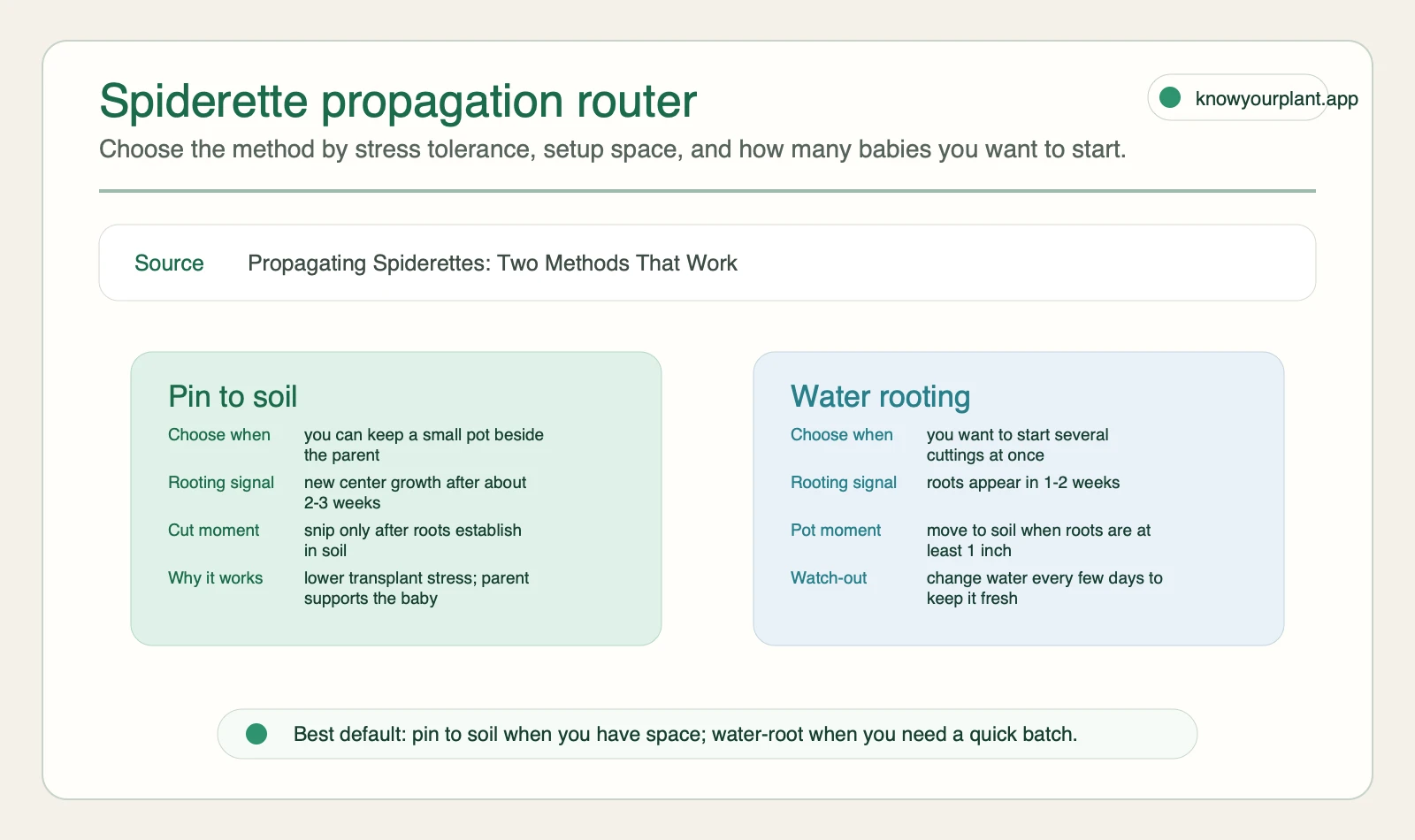
The router shows when to keep the spiderette attached for a gentler start and when water rooting is the simpler batch method.
Pet Safety: Are Spider Plants Safe for Pets?
Yes. The ASPCA lists Chlorophytum comosum as non-toxic to both cats and dogs, which makes it one of the more practical choices for pet households. Cats in particular are sometimes drawn to the dangling runners, so if yours likes to bat at hanging things, a high shelf or a hanging basket keeps the plant accessible from above while protecting it from below.
If you’re building a plant collection that’s safe for animals, the cat-safe indoor plants guide covers a range of options that work in homes with both cats and dogs.
Is a Spider Plant Right for Your Home?
If you have a spot with decent indirect light, a pot with drainage holes, and you can remember to check the soil once a week, a spider plant will thrive with you. It’s also one of the few plants that multiplies on its own without much intervention: spiderettes appear, root easily, and can fill out a space over a single growing season.
If you are weighing easy care, pet safety, propagation, and hanging growth together, the spider plant benefits guide separates the plant’s practical advantages from its overstated air-purifying reputation.
Spider plants work well in living rooms, bedrooms, and kitchens that get reasonable light. They tolerate bathroom humidity fine, but they need adequate light to stay healthy long-term: a windowless bathroom isn’t a good permanent spot.
For anyone building their first plant collection, spider plants are also useful as a teaching tool. The way they communicate health through runner production, leaf color, and tip condition trains the kind of attentiveness that helps with more demanding plants later.
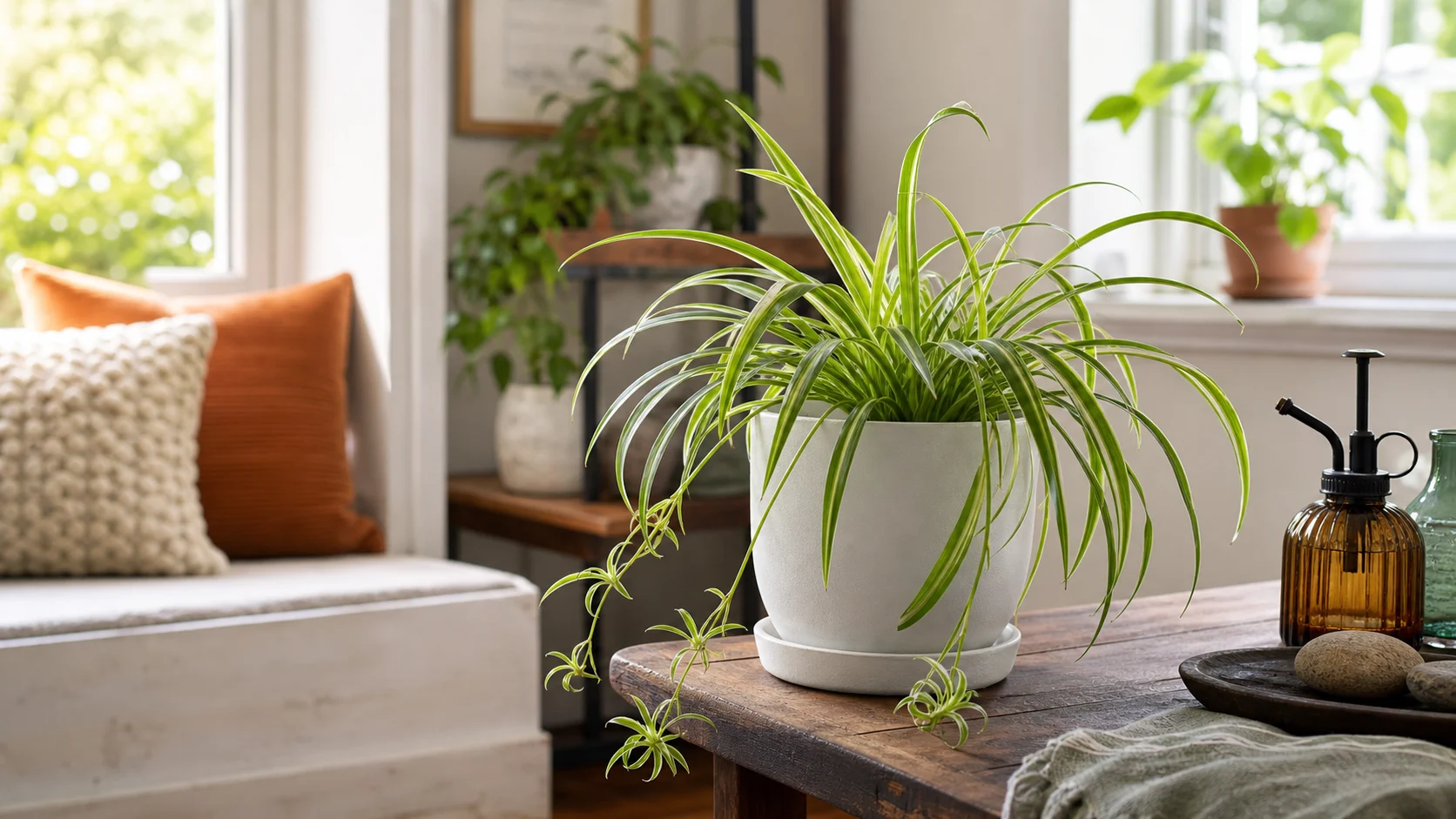
A bright living space, draining pot, and visible spiderettes make this an approachable plant for learning how to read growth and care signals.
For another practical pet-safety check, see Is Spider Plant Toxic to Cats? Why Cats Chew It and What to Do for the risk level and the next steps.
Real User FAQ
How often should I water my spider plant? In spring and summer, check the soil every five to seven days and water when the top inch feels dry. In autumn and winter, let the soil dry for ten to fourteen days between checks. The soil is more reliable than any calendar.
Why does my spider plant have brown tips? The most common cause, by a wide margin, is fluoride or chlorine sensitivity from tap water. Try filtered water or let tap water sit overnight before using it. Fertilizer salt buildup from overfeeding is the second most common cause, especially if you’ve been feeding through winter. Low humidity, inconsistent watering, and proximity to heat vents can also contribute. If only the very tip is brown and the rest of the leaf is green and firm, trim it at a slight angle and adjust one variable at a time.
When will my spider plant produce babies? Runners and spiderettes appear once the plant is mature, slightly root-bound, and getting adequate light. A recently repotted plant or one in a dim spot often holds back until conditions improve. Give it a full growing season in a bright spot before worrying.
Can I keep a spider plant in low light? It will survive, but it won’t thrive. Growth slows, variegation fades toward green, and runner production drops. Bright indirect light is what the plant needs to look its best and reproduce regularly. A north-facing windowsill is typically too dim for long-term health.
How do I propagate a spider plant? Pin the spiderette into moist soil while it’s still attached to the parent, or cut it and root it in water. Both methods work within one to three weeks. Wait until roots are at least an inch long before potting water-rooted cuttings into soil.
Do spider plants clean the air? The 1989 NASA Clean Air Study found spider plants removed approximately 95% of formaldehyde from sealed test chambers within 24 hours. Real home conditions differ from sealed chambers, so the effect is less dramatic in practice. That said, spider plants contribute to air quality alongside good ventilation, and our air-purifying indoor plants guide explains where that claim holds up and where it gets overstated.
Why are my spider plant’s leaves pale and yellowing? Pale overall color usually points to too much direct sun or overwatering. Yellow leaves progressing from the base up often indicate root rot from consistently wet soil. Check the roots: healthy roots are white and firm. Brown, mushy roots mean the plant has been sitting in wet conditions too long. Repot into fresh soil, ease back on watering, and give the plant a few weeks to recover. If you need a calmer walkthrough for that reset, follow the step-by-step repotting guide.
Should I cut off the runners if I don’t want more plants? Yes. Removing the runners redirects energy back into the main plant. If the parent looks sparse or tired, cutting the runners for a season while improving light and the feeding routine can help it fill back out.
Methodology Note
This guide was refreshed using live SERP review for spider plant care, Reddit snippet discovery for recurring owner pain points, and fact checks against Wisconsin Horticulture, The Spruce, and ASPCA. Extension and safety sources were treated as the source of record for care and pet-safety claims. Community snippets were used only as qualitative signal for what readers keep getting stuck on.
Ready to keep track of your spider plant’s watering schedule, fertilizing windows, and seasonal care shifts without trying to hold it all in your head? Download KnowYourPlant for personalized care reminders built around your plant and your home: https://knowyourplant.app