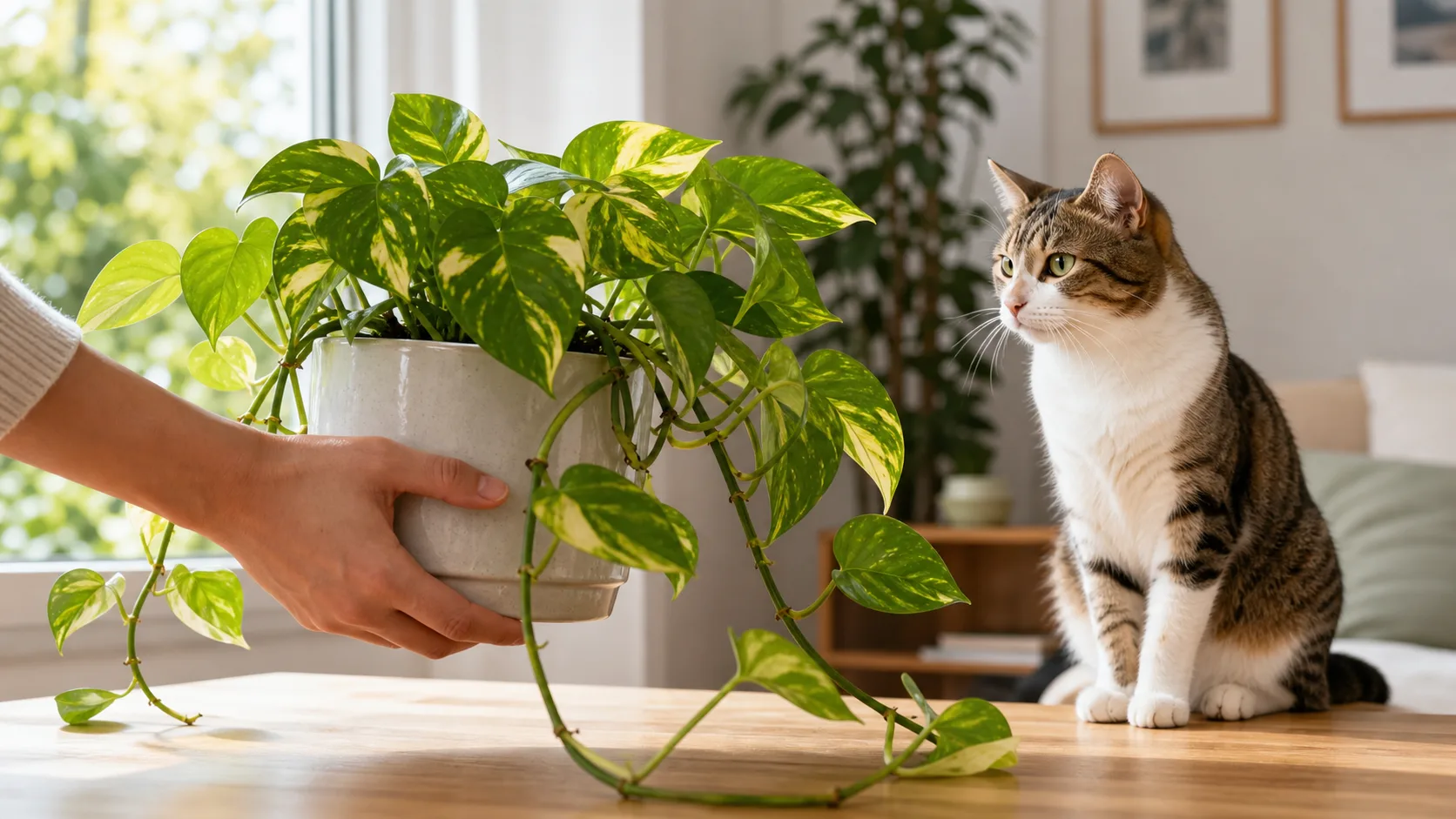
If your cat just bit a pothos leaf and now she is drooling, licking her lips, or looking deeply offended by her own mouth, I know how fast this search turns scary. The short answer is yes, pothos is toxic to cats, but the usual problem is not the same kind of emergency people picture when they hear about true lilies. In most cases, pothos causes painful mouth and throat irritation from insoluble calcium oxalate crystals.
That difference matters. It tells you what to check first, how urgent the situation may be, and whether you are dealing with a watch-closely problem or a go-now problem.
The short answer
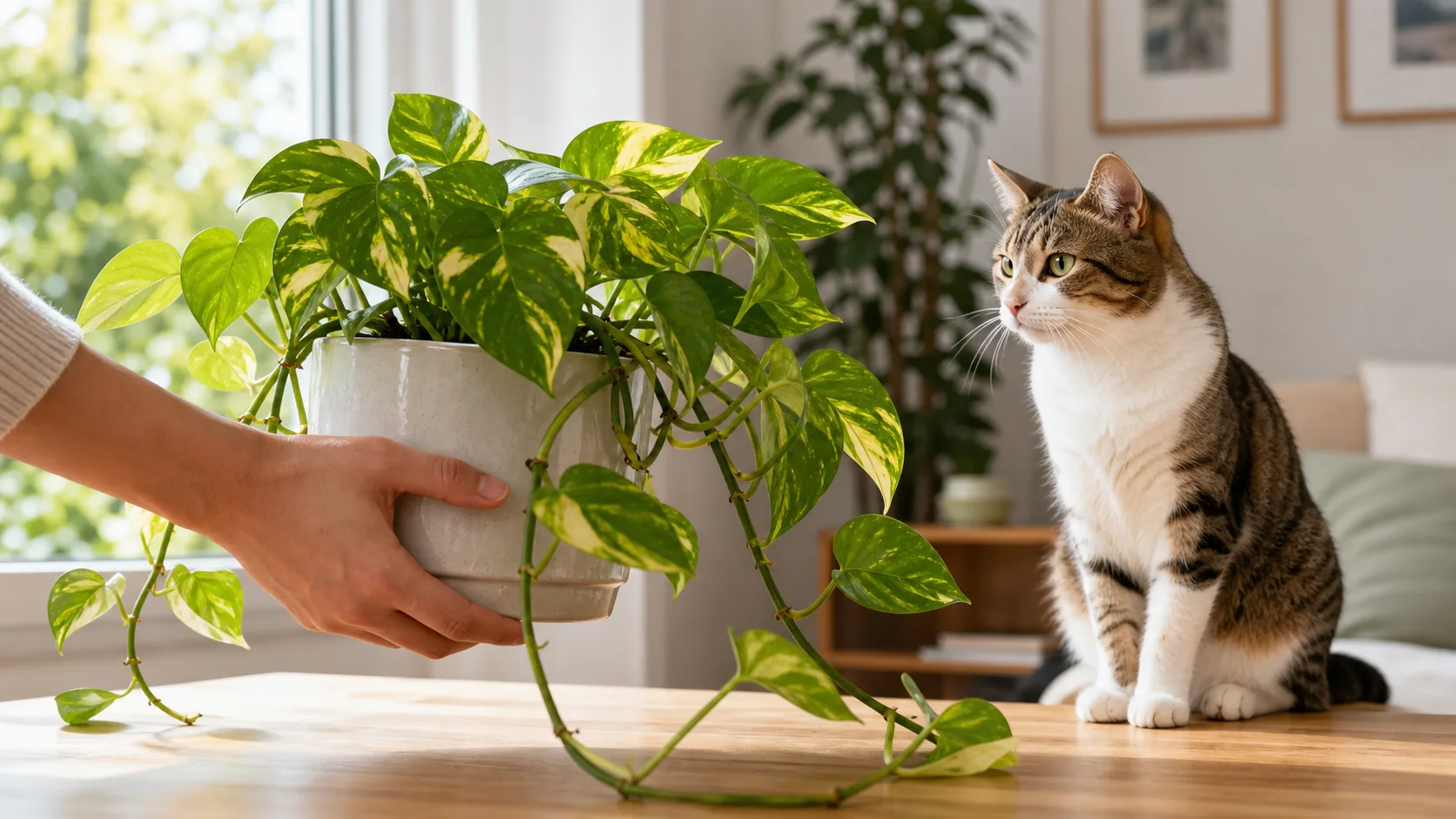
Pothos contains irritating calcium oxalate crystals, so moving the vine away is the first practical step.
Yes. Golden pothos, pothos, and devil’s ivy, usually Epipremnum aureum, are toxic to cats. ASPCA also lists satin pothos, Scindapsus pictus, as toxic to cats, even though it is a different plant that often gets folded into the same conversation.
The practical takeaway is this: pothos toxicity usually acts like an oral irritation problem first. A cat chews the leaf or stem, the tiny crystals hit the tissues in the mouth, and the reaction can look dramatic very quickly.
Common signs include:
- drooling
- pawing at the mouth
- lip smacking or repeated swallowing
- mouth pain
- vomiting
- trouble swallowing
Rarely, swelling can become serious enough that breathing difficulty becomes an emergency.
What most care guides miss
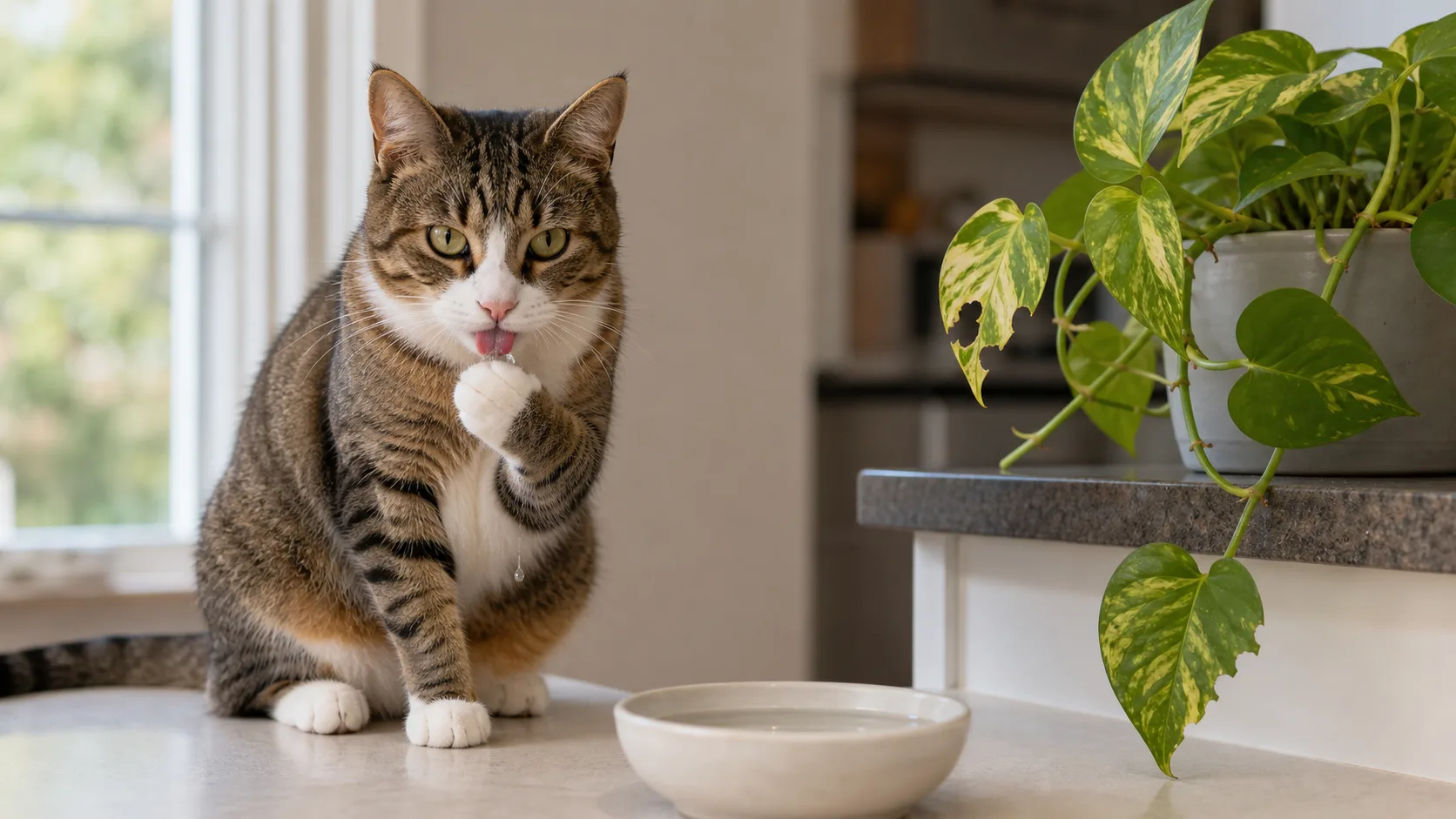
Fresh chew marks with rapid lip licking, pawing, or drooling make Pothos exposure more likely than an unrelated stomach issue.
Most articles stop at, “Yes, it is toxic,” then hand you a symptom list. That is not enough when your cat is pacing across the floor and you are trying to decide what to do in the next five minutes.
The common misdiagnosis is thinking toxic must mean one of two extremes:
- instantly deadly, so every exposure is a worst-case crisis, or
- basically nothing, so you can just wait and see without calling anyone.
Both shortcuts miss the real pattern.
With pothos, the better first check is simple: look for proof of chewing, then look at mouth behavior before anything else. Fresh bite marks on a leaf plus drooling, gagging, pawing at the mouth, or a sudden refusal to eat is a much more useful signal than the word toxic by itself.
Cornell’s poisonous plants guidance explains why this feels so dramatic. When a cat bites pothos, microscopic oxalate crystals cause burning and painful irritation in the mouth tissues. That is why even a small nibble can create a big reaction.
Start with the pattern, not one cause
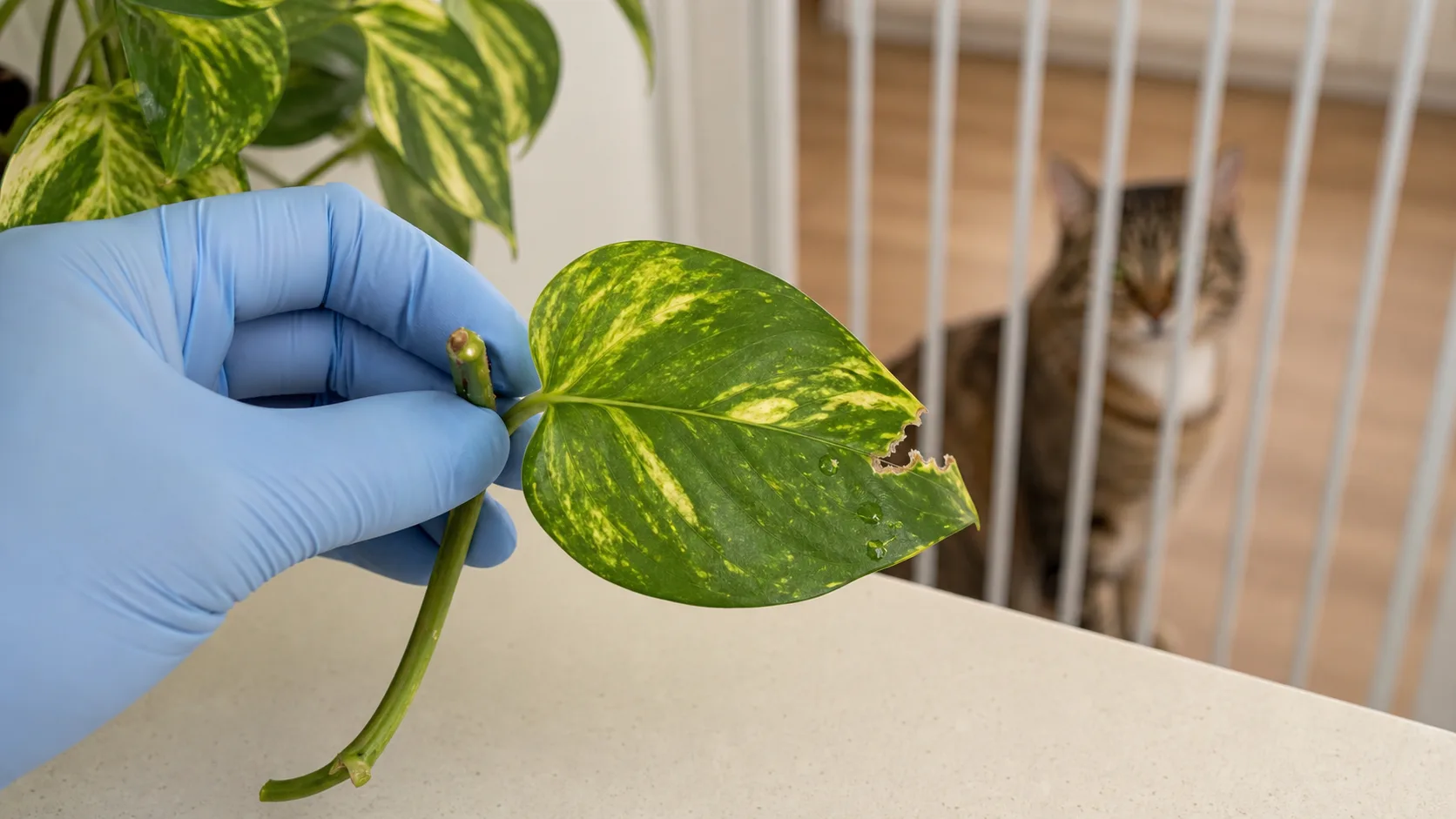
Confirm access and plant damage before treating one vague symptom as proof of poisoning.
If your cat ate pothos, do not jump straight to quantity. Owners often ask, “But it was only one bite.” With this plant, one bite can still hurt a lot because the crystals irritate on contact.
Think in this order instead:
- Did she definitely chew it?
- Is this mostly mouth discomfort, or is it escalating beyond that?
- Can she swallow and breathe normally?
That sequence helps you avoid the two biggest mistakes: underreacting because the bite looked small, or overreacting without checking the specific symptom pattern.
Quick symptom diagnosis card
| What you notice | What it often means | What to do |
|---|---|---|
| No bite marks, no symptoms, normal behavior | She may have brushed the plant or sniffed it without chewing | Monitor for several hours and keep the plant out of reach |
| Drooling, lip smacking, pawing at mouth, sudden fussiness after chewing | Typical pothos oral irritation pattern | Call your vet or a pet poison service the same day for guidance |
| Repeated vomiting, obvious swelling, trouble swallowing, breathing changes, collapse | Escalating reaction that needs urgent help | Seek veterinary care right away |
Cat ate pothos, what to do right now
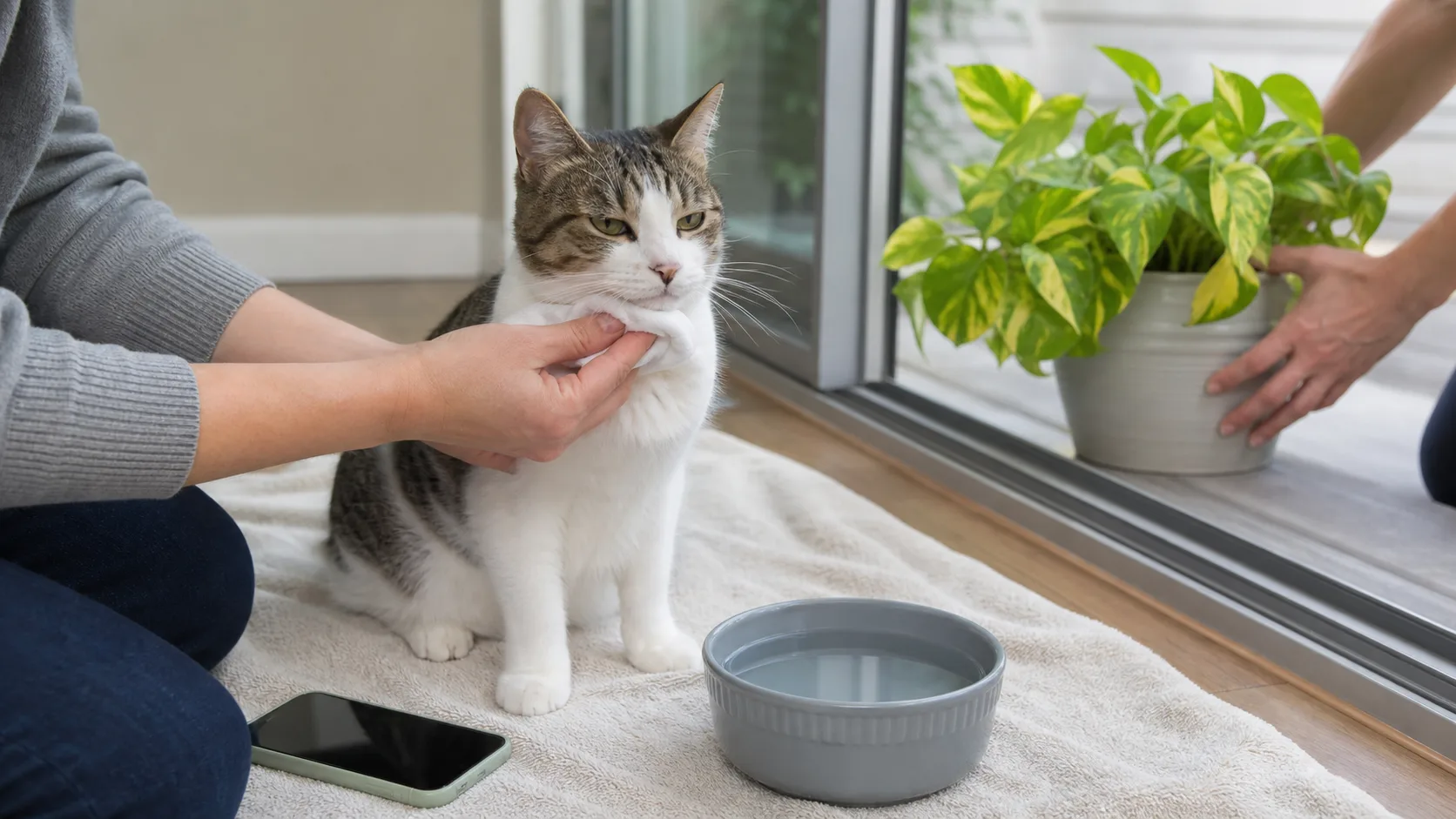
Calm first steps are to remove access, wipe reachable saliva, offer water if wanted, and call for guidance.
1. Remove access to the plant
Take the pothos away immediately so there is no second bite. If vines are hanging down, move the whole pot, not just the damaged leaf.
2. Check for a real exposure pattern
You do not need to pry your cat’s mouth open. Look for practical clues:
- fresh chew marks on the leaf or stem
- bits of plant on the floor
- drool on the chin or chest
- repeated swallowing, gagging, or face rubbing
- sudden refusal of treats, food, or water
3. Offer water if she wants it
A small amount of water can help rinse the mouth if your cat drinks willingly. You can gently wipe the mouth area with a damp cloth if she tolerates it. Do not pour liquid into her mouth, and do not force milk, oil, bread, or home remedies.
4. Call a professional
Call your regular vet, an emergency vet, or a pet poison hotline. Tell them:
- the plant name if you know it
- whether it was pothos, golden pothos, devil’s ivy, or satin pothos
- when the chewing happened
- how much seems missing
- what symptoms you are seeing now
5. Go now if red flags show up
Do not wait at home if you notice:
- breathing difficulty
- marked swelling around the mouth or throat
- repeated vomiting
- collapse or unusual weakness
- signs she cannot swallow normally
A practical decision tree for worried cat owners
Most people searching this keyword are really trying to sort one of three situations.
Situation 1: You are not sure she actually chewed it
If you do not see bite marks and your cat is acting normal, you may be dealing with a false alarm. Keep the plant away for now and monitor closely.
Situation 2: She definitely chewed pothos and now seems uncomfortable
This is the classic scenario. Expect mouth-focused symptoms, not vague whole-body illness at first. Call your vet or poison line promptly and follow their guidance.
Situation 3: Symptoms are moving beyond mouth irritation
If vomiting keeps happening, the mouth looks swollen, or swallowing and breathing look difficult, this is no longer a wait-and-watch situation. Go in.
Which plants count as pothos?
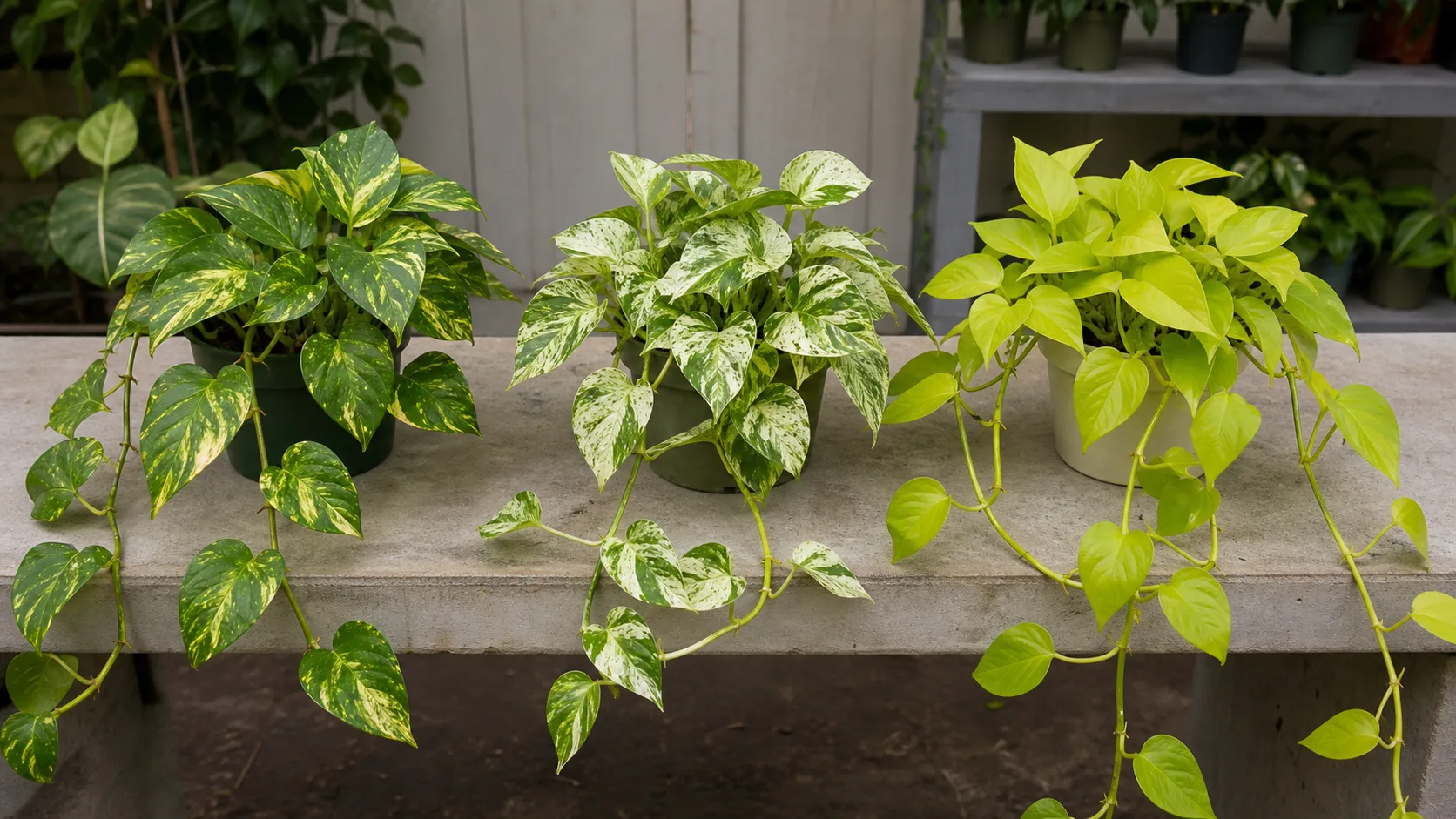
Different leaf colors do not make Golden, Marble Queen, or Neon Pothos safe for cats.
This part trips up a lot of cat owners, especially if the plant came with a vague nursery tag.
| Common name | Typical plant identity | Toxic to cats? | Why it matters |
|---|---|---|---|
| Pothos | Epipremnum aureum | Yes | This is what most people mean by pothos |
| Golden pothos | Epipremnum aureum | Yes | ASPCA lists it directly |
| Devil’s ivy | Epipremnum aureum | Yes | Same plant under another common name |
| Satin pothos | Scindapsus pictus | Yes | Different plant, same cat-safety concern |
ASPCA and extension sources support the overlap between pothos, golden pothos, and devil’s ivy. So if your cat chewed a plant sold as devil’s ivy, do not assume the label makes it safer.
If you are sorting pothos from similar trailing plants, our guide on pothos vs philodendron can help with the ID side.
Why this feels more alarming than it often is
A lot of searchers are really asking, “Is this deadly, or is this painful?” That is the gap most search results leave open.
Pothos is not harmless. But the usual mechanism is local irritation from calcium oxalate crystals, not the same internal-organ emergency people think of with a few other famous toxic plants. That does not mean shrug it off. It means the first value comes from recognizing the right symptom pattern.
ASPCA lists oral irritation, burning of the mouth and tongue, drooling, vomiting, and difficulty swallowing. Pet Poison Helpline also notes that severe throat swelling and breathing difficulty are rare but possible. So the sensible middle ground is: take it seriously, but judge the reaction by symptoms, not panic alone.
Keep it or move it? A realistic cat-home rubric
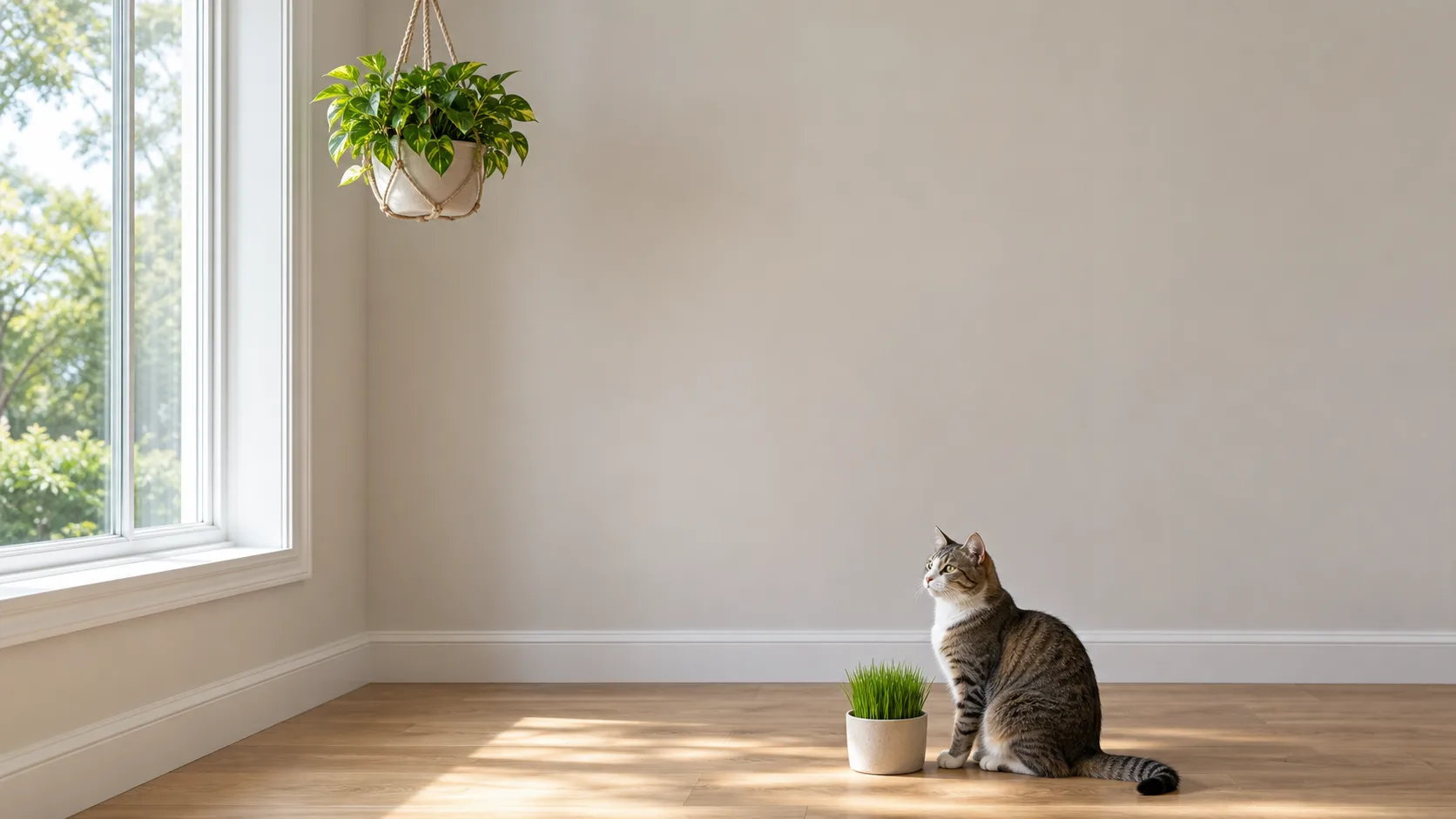
Trimmed vines in a securely anchored high planter are safer than relying on a cat to ignore an accessible trail.
This is the household decision most articles barely help with.
Keeping pothos is higher risk if:
- your cat already chews leaves, cords, ribbon, or grass
- the plant trails below shelf level
- the pot sits on furniture your cat already uses
- you are relying on “probably out of reach”
- the vines keep getting longer than your setup can safely handle
Keeping pothos is somewhat lower risk if:
- the plant is in a true hanging position with no reachable vines
- your cat has shown no interest in chewing plants over a long stretch of time
- you trim trailing growth before it becomes a toy
- the plant lives in a room your cat does not access
Be honest here. A pothos that is safe today can become reachable next month just by growing normally. If you want a lower-stress setup, switching pet-zone plants to options from our cat-safe plants for indoors guide may make life easier.
Common mistakes after a pothos nibble
Waiting because the bite looked tiny
A tiny bite can still create a big mouth reaction. Contact matters more than volume at first.
Treating every toxic plant like the same emergency
That mental shortcut makes it harder to judge what you are actually seeing. Pothos deserves a real response, but the symptom pattern is usually different from the highest-risk plant poisonings cat owners fear most.
Watching only for vomiting
Some cats mostly drool, paw at the mouth, and refuse food. If you wait for dramatic vomiting before taking the chew seriously, you can miss the actual presentation.
Leaving the plant in place after a scare
If your cat went back for a second chew, the setup already told you the answer.
Expert notes worth knowing
A few grounded facts cut through the noise:
- ASPCA lists golden pothos and devil’s ivy as toxic to cats because of insoluble calcium oxalates.
- ASPCA also lists satin pothos as toxic, even though it is a different plant species.
- Cornell explains that the crystals can cause burning and leave the mouth inflamed after a bite.
- Penn State Extension notes how common pothos is in homes and offices, which helps explain why this is such a frequent household problem.
That combination matters because it answers both sides of the question. Yes, the plant is genuinely unsafe for chewing, and yes, the most useful first move is symptom-based triage.
Seasonal note: summer growth quietly raises the risk
Pothos often pushes longer vines during brighter, more active growing months. That means a plant that felt safely tucked away in spring can drift right into batting range by midsummer.
Do a quick seasonal check:
- Are vines now brushing the side of a shelf?
- Did a hanging basket drop lower than you realized?
- Did you move the plant closer to light, but also closer to a jumping route?
This is one of those boring little checks that prevents a very stressful night.
Safer next steps for your home
If your cat is a plant chewer, the safest long-term solution is usually not better luck. It is better plant selection or stricter separation.
You can:
- relocate pothos to a truly cat-free room
- prune trails before they dangle into reach
- replace pothos in shared spaces with safer alternatives
- use care reminders so the plant still thrives after you move it
If you keep pothos, you still need a realistic care setup. A stressed plant with extra-long vines often becomes more tempting and more accessible. If you are keeping one in a safe zone, our guides to pothos care, how often to water pothos, and golden pothos care can help you keep her healthy without turning every shelf into a cat puzzle.
For another practical pet-safety check, see Is Philodendron Toxic to Cats? Symptoms and Safer Alternatives for the risk level and the next steps.
FAQ
Are pothos toxic to cats or just irritating?
They are toxic to cats, but the usual effect is painful irritation from insoluble calcium oxalate crystals rather than the same systemic poisoning pattern people fear with a few other plants. That still deserves a real response.
My cat ate pothos but seems fine. Should I still call the vet?
Yes. If you know chewing happened, it is smart to call for guidance even if symptoms seem mild at first.
Is golden pothos toxic to cats?
Yes. Golden pothos is specifically listed by ASPCA as toxic to cats.
Is satin pothos safer than regular pothos?
No. Satin pothos is a different plant, but ASPCA still lists it as toxic to cats.
Should I make my cat vomit after eating pothos?
No. Do not induce vomiting unless a veterinarian tells you to do that.
Can I keep pothos if I hang it high enough?
Sometimes, but only if the vines truly stay unreachable and your cat has no practical jump path. In many homes, “high enough” stops being high enough once the plant grows.
Methodology and sources
This article was built from KnowYourPlant’s research pack for this keyword, then checked against ASPCA poison-control listings, Pet Poison Helpline, Cornell University’s poisonous plant guidance, and extension horticulture sources including Penn State and North Carolina Extension. Community discussion patterns were used only to understand what cat owners are confused about, not as proof of outcomes or prevalence.