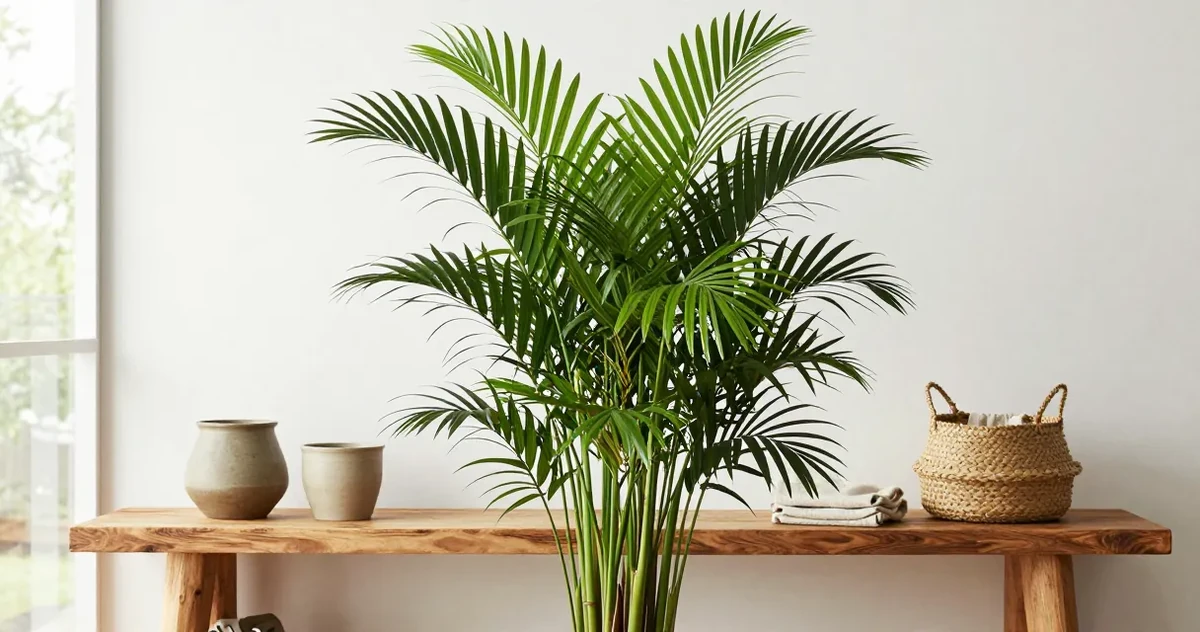
Here is something most areca palm owners discover the hard way: this plant is forgiving enough to survive most beginner mistakes. That is also what makes the cosmetic frustration so confusing. The fronds start browning at the tips. A few leaves turn yellow. The whole plant looks a little off, but it does not collapse, and you cannot tell whether you are doing something wrong or just looking too closely.
Areca palm care gets easier the moment you stop asking, “How often should I water it?” and start asking, “What is the soil actually doing today?” If your palm has yellow leaves, brown tips, or fronds that suddenly look limp, the problem is usually not that you forgot one perfect care rule. It is that areca palms need a better moisture balance than most quick care guides explain, and even a reasonably healthy plant will show cosmetic wear from dry air, tap water minerals, or irregular watering long before it is actually in danger.
This guide works through both: the real problems that damage the plant, and the smaller stresses that just make her look worse than she is.
What most care guides miss
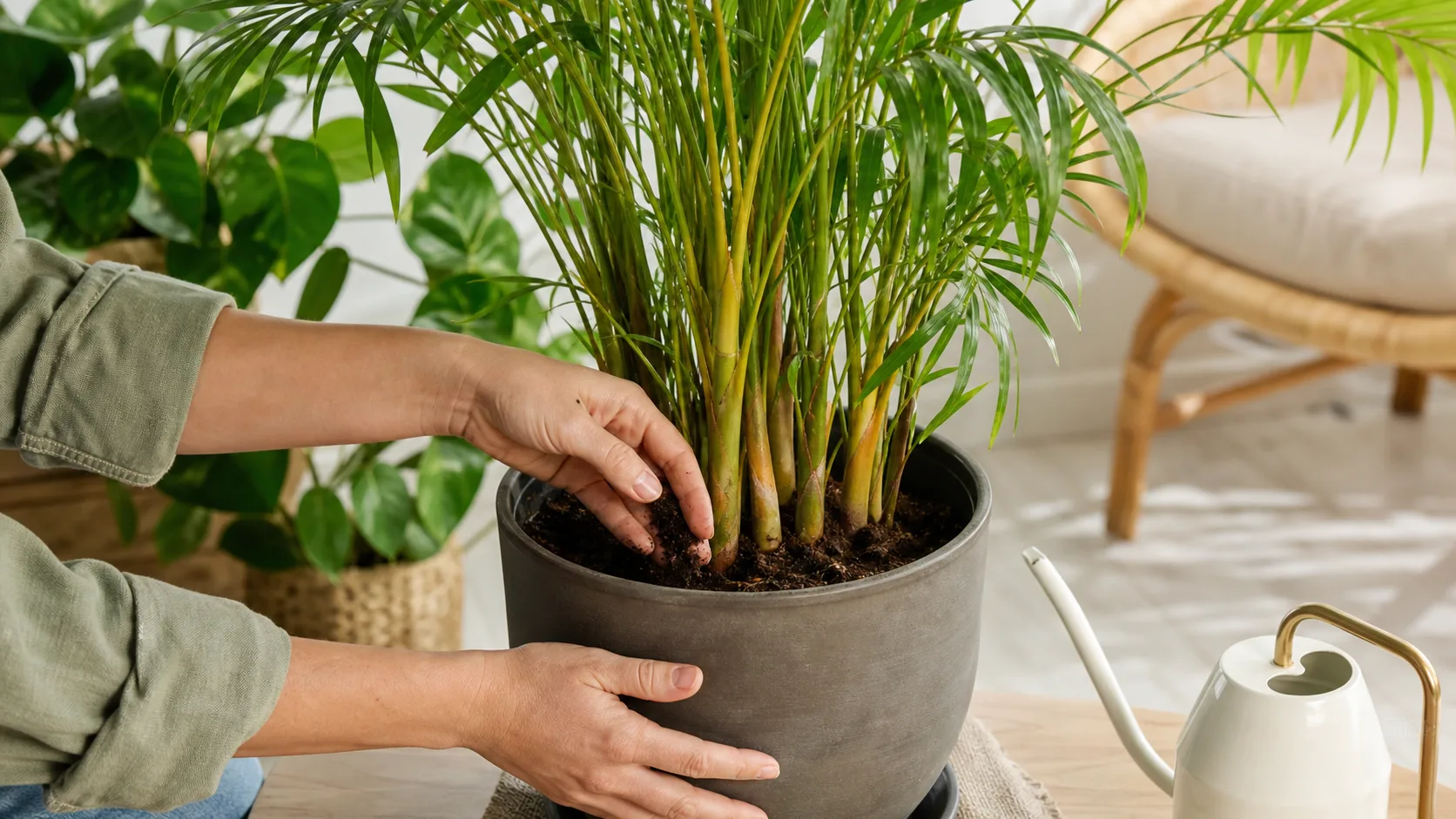
Check deeper soil moisture and pot weight before treating every yellow leaf or brown tip as thirst.
The most common misdiagnosis is treating yellow leaves and brown tips as proof that the plant is thirsty. Sometimes she is. But just as often, an areca palm looks dry because stressed roots are sitting in wet, airless soil and can no longer move water properly.
Generic advice says “keep moist,” and that is true, but it skips the part that actually matters: what moist looks like two inches below the surface, after the top has dried, in your specific pot and mix. A plant with dense muddy soil and poor drainage can look dehydrated and be overwatered at the same time.
So before you water, do one practical check: push a finger two inches into the potting mix and lift the pot slightly. If the top is dry but the deeper mix feels cool and damp and the pot still feels heavy, wait. If the deeper soil is dry and the pot feels much lighter, water thoroughly. That single check prevents a lot of the damage that eventually shows up as yellowing or tip browning.
Areca palm quick profile
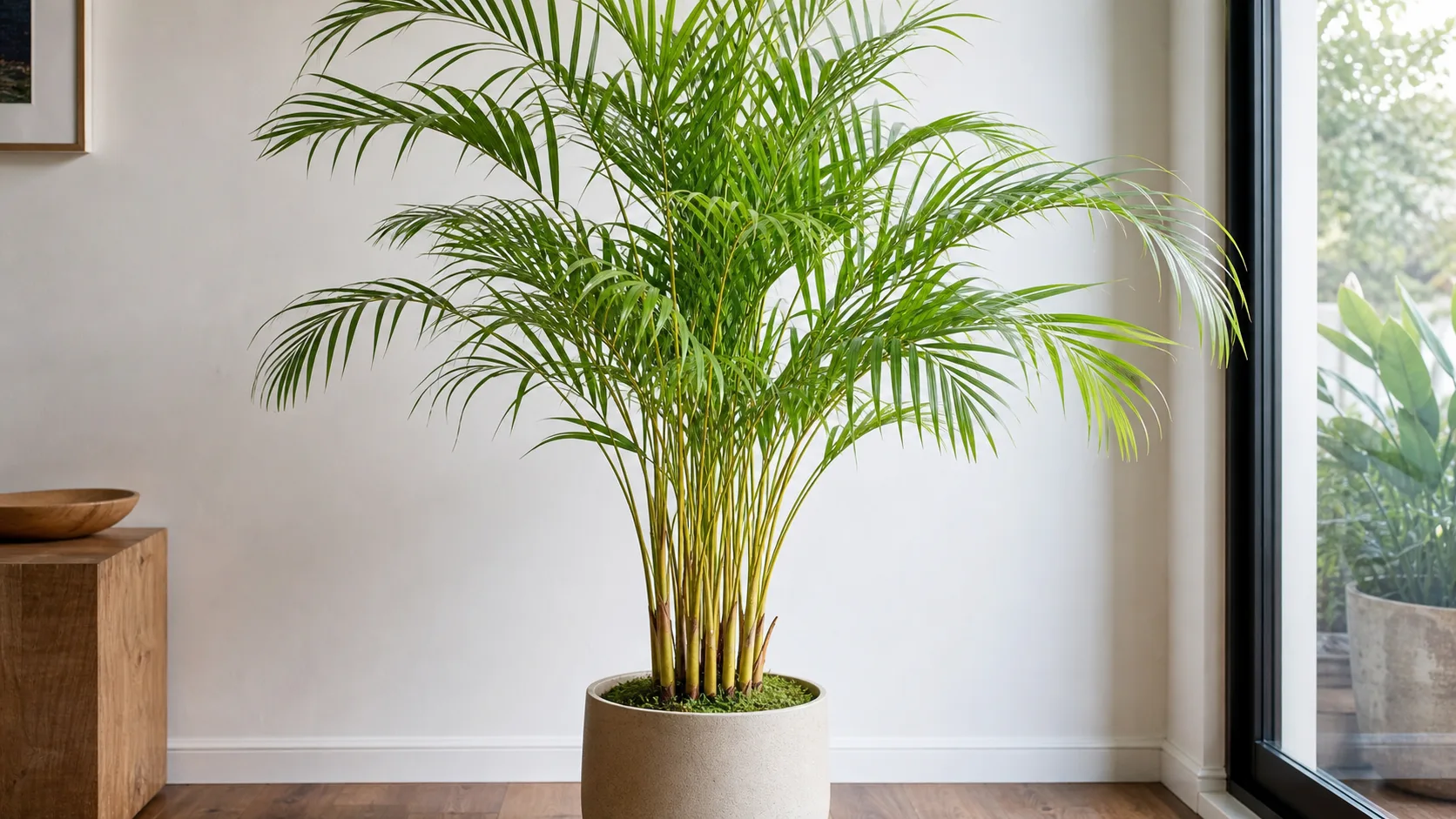
Clustered yellow-green canes and arching feathery fronds are the clearest Areca palm identification clues.
- Botanical name: Dypsis lutescens (also sold under older names including Chrysalidocarpus lutescens)
- Growth habit: Clumping, multi-stemmed palm with long arching fronds
- Best indoor light: Bright indirect or bright filtered light
- Best watering mindset: Lightly moist, never swampy
- Most common indoor problems: Yellow leaves from wet soil, brown tips from salts or dry air, spider mites on stressed plants
- Pet safety: ASPCA lists areca palm as non-toxic to cats and dogs, but always verify the exact plant label before assuming every palm sold as “palm” is equally safe
Where an areca palm will actually feel good indoors
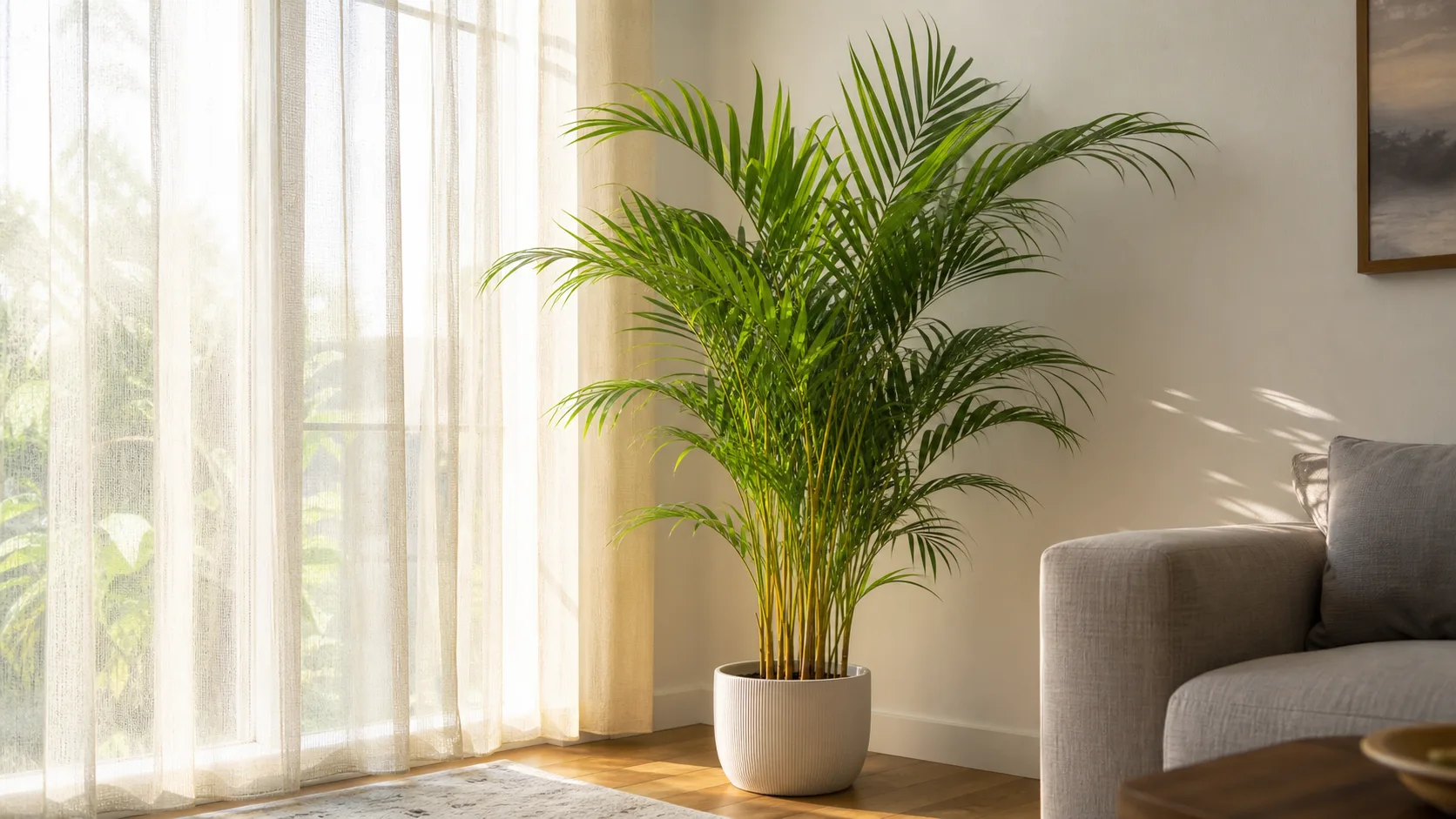
Filtered light near a bright window supports steady growth without scorching the fronds.
Think bright room, soft light, and steady conditions. A spot near an east window or a few feet back from a bright south or west window usually works well if strong afternoon sun is filtered through a sheer curtain.
Missouri Botanical Garden puts it simply: “Houseplants prefer consistent moisture in mostly sunny exposures with high humidity. Direct full sun indoors may scorch the foliage.” That explains why areca palms can look unhappy in two opposite situations: a dim corner that stays wet too long, or a blazing window that bleaches the fronds.
Signs your light is off
- Too much direct sun: yellowing or faded fronds on the window-facing side, or pale patches where the light hits hardest
- Too little light: soft weak fronds, slow growth, and soil that stays wet for days longer than expected
- Light changing with the season: a spot that worked in winter may become too harsh by July
If the pot stays damp for days after watering and the plant is in low light, moving her into brighter indirect light often helps more than adjusting the watering schedule. If you are unsure whether your available light is enough, our guide to grow lights for indoor plants covers the options for supplementing light indoors without scorching tropical foliage.
Watering areca palm indoors: the low-risk approach
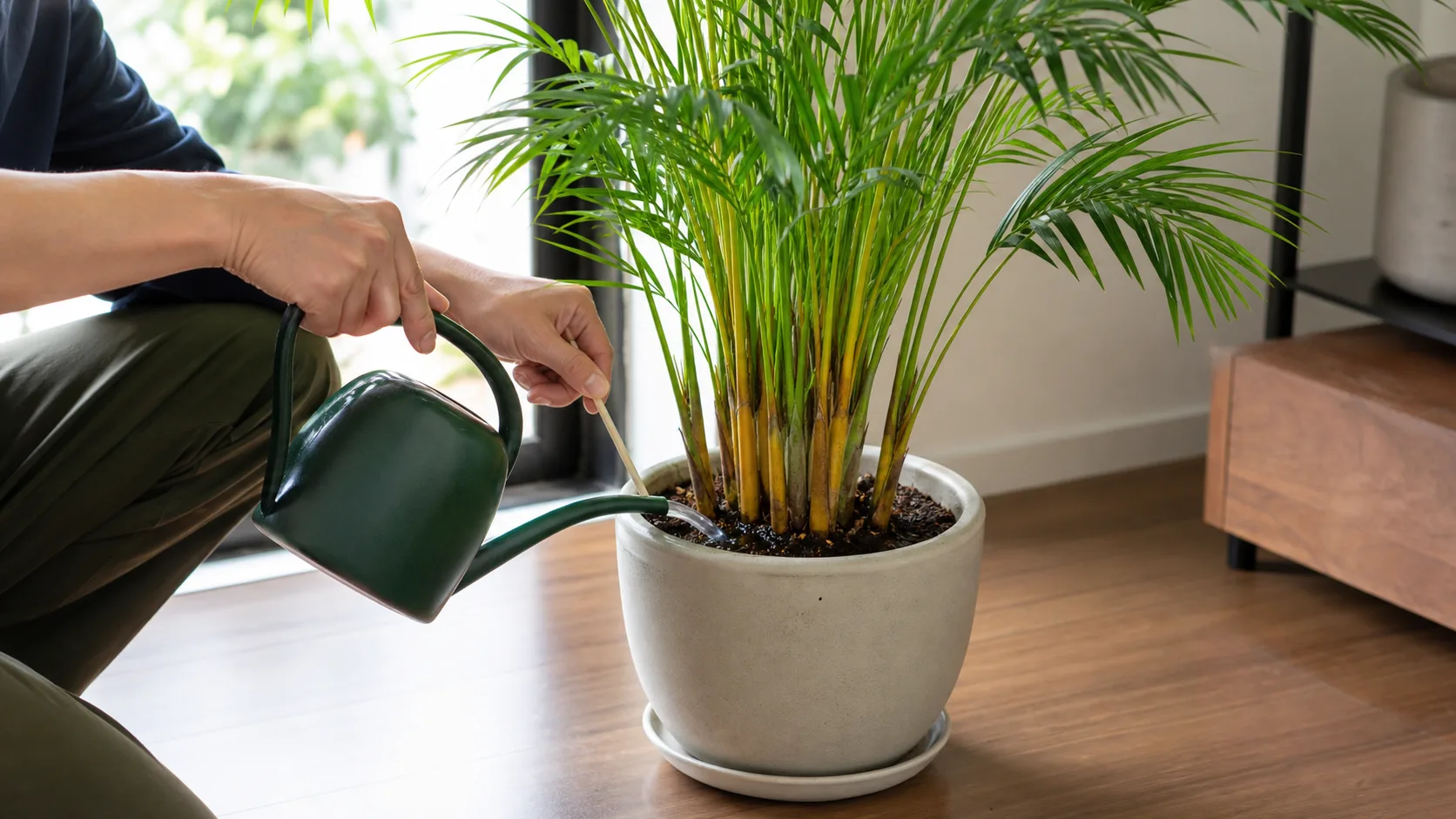
Water the checked root zone evenly, then empty any drainage left in the saucer.
Most of us want a clean schedule. Areca palms usually punish that.
Use this instead:
- Check the top two inches of soil with your finger.
- Notice whether the pot feels heavy or light when you lift it slightly.
- Water only when the upper layer is dry and the root zone is no longer staying cool and damp.
- Water deeply until excess runs from the drainage holes.
- Empty the saucer so the roots are not sitting in pooled runoff.
If you want a simpler rule: moist, not soggy, and never on autopilot.
North Carolina Extension recommends growing areca palm in well-drained potting soil and keeping it “moist but not soggy during the growing season.” That wording matters. Moist does not mean constantly saturated.
A simple areca palm decision tree
If the leaves are yellowing:
- Check soil depth first.
- If the mix is wet several days after watering, think overwatering, low light, compacted soil, or an oversized pot.
- If the mix dries very fast and fronds look dull, check for underwatering or a root ball packed too tightly for the pot.
If the tips are brown:
- Think dry air, inconsistent watering, fertilizer salts, or mineral-heavy tap water before assuming disease.
If the whole plant looks tired even with correct watering:
- Flip the fronds and inspect for spider mites, scale, or whiteflies.
Yellow leaves, brown tips, and what the pattern usually means
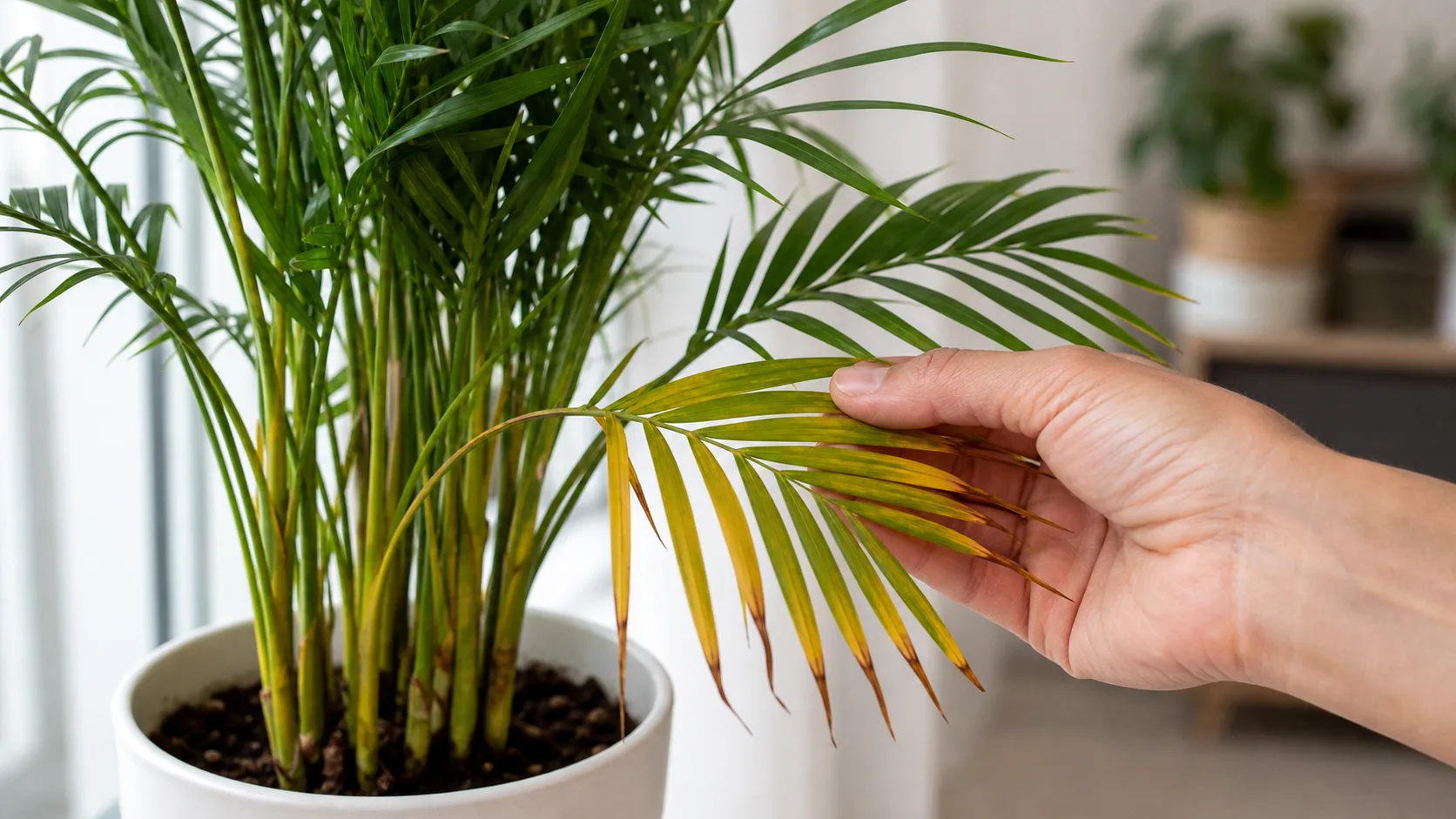
A yellow lower frond and dry tips point to different patterns, so inspect before changing the whole routine.
This is where areca palm care articles tend to stay too generic. The pattern matters more than the symptom name.
Yellow leaves on one older stem
One older frond fading from time to time is normal. If the rest of the plant looks healthy, this is usually not an emergency.
Widespread yellow leaves with wet soil
This is the classic overwatering pattern. Roots staying too wet lose access to oxygen, and the plant starts showing stress from the bottom up.
Look for:
- soil that smells sour or stays cold and damp long after watering
- a nursery pot sitting inside a decorative cachepot with trapped runoff in the bottom
- heavy potting mix that clumps like mud when pressed
Brown tips with otherwise green fronds
This is very common and not always a sign the whole palm is in trouble. Brown tips usually point to one of four things:
- dry indoor air (especially near heaters or AC vents)
- watering swings from bone dry to soaked
- salt buildup from fertilizer over time
- tap water minerals accumulating in the soil
If the rest of the frond is green, you can trim the brown edge for appearance. Just do not cut into healthy green tissue, or the cut edge will also dry and brown.
Pale, dusty, or finely speckled fronds
That can be sun stress, but it can also be spider mites. If the leaves look dusty or stippled, inspect closely before moving the plant or changing the watering routine.
Soil and pot setup: the hidden reason care routines fail
A lot of areca palm frustration is really a soil problem wearing a watering mask.
If the mix turns dense and muddy, your watering routine will never feel right. The plant can look thirsty and overwatered at the same time. A better starting setup is a well-draining indoor potting mix in a pot with drainage holes and a container only slightly larger than the root ball. Our guide to the best potting soil for indoor plants covers what to look for if your current mix is holding too much water.
This matters even more after stress. When owners see root trouble, they often repot into a much larger container to “give the plant room to recover.” That usually backfires, because extra soil holds extra water around already stressed roots and makes the next overwatering cycle faster.
If your drainage setup is not working, also consider how the humidity variable fits in. Our guide on humidity for plants indoors explains why dry rooms create a confusing situation where the same palm can show both brown tips (humidity stress) and wet roots (drainage problem) at the same time.
Seasonal care calendar
Areca palms are not dramatically seasonal indoors, but the shift in light and temperature across the year does change how they use water and how much care they need.
Spring (March to May)
This is when the plant wakes back up after winter’s lower light. Growth picks up, and she will start moving through water faster. It is a good time to check whether the potting mix is still draining well or beginning to compact. Begin light fertilizing once you see new fronds pushing.
Summer (June to August)
Peak growth season. Check soil moisture more often, since higher temperatures and longer days accelerate drying. Watch the window-side fronds for early signs of scorch if light exposure has changed with the sun’s angle. Spider mites prefer hot, dry conditions, so inspect leaf undersides regularly.
Autumn (September to November)
Growth slows as light decreases. Taper fertilizing and start watering more carefully. As central heating comes on, indoor humidity often drops sharply. This is when brown tip complaints tend to increase even if nothing else in the care routine has changed. A humidifier or a pebble tray with water near the plant helps.
Winter (December to February)
Lower light and slower growth mean the same watering volume you used in summer can now be too much. Missouri Botanical Garden notes that areca palms dislike temperatures below 60°F, so keep her away from cold drafts, single-pane windows, and exterior doors. Do not fertilize until you see new growth returning in spring.
Humidity, fertilizer, and tap water: the small stresses that add up
Areca palms are forgiving in some ways, but cosmetically they respond to small stresses quickly. Brown tips are especially common in dry rooms, near vents, or when fertilizer is used a little too enthusiastically.
A few gentle adjustments help:
- keep her away from heater or AC blasts
- use a humidifier if your room air is consistently dry through winter
- flush the pot with water occasionally to reduce salt and mineral buildup from tap water
- fertilize lightly during active growth, not every time you remember
If you are constantly chasing crispy tips, do not just add more water. That often makes the original soil problem worse. Flush the salt out first, check the air conditions, and then reassess.
Pests: especially when the plant looks dull for no clear reason
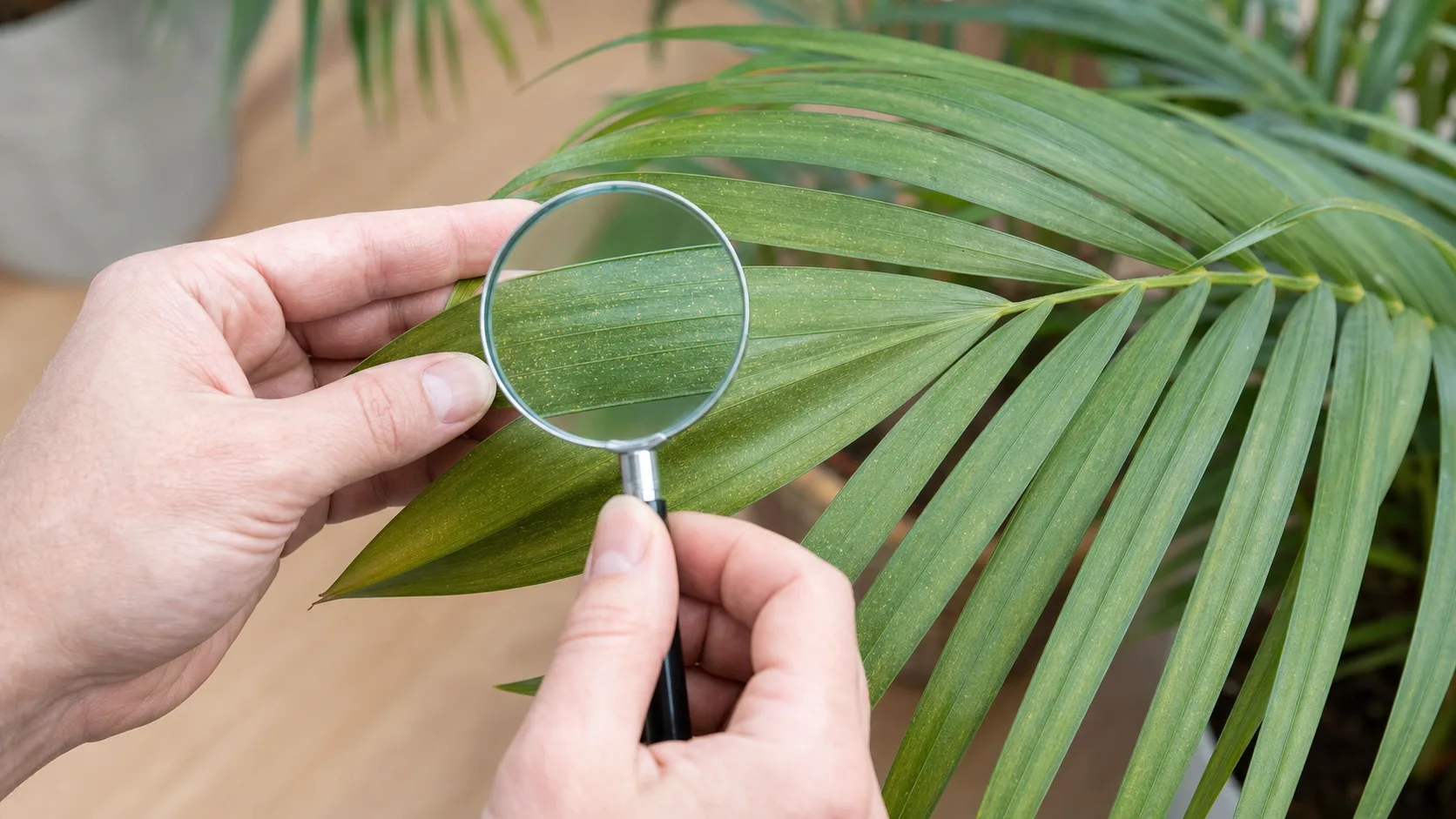
Fine pale stippling on dull leaflets is a reason to inspect frond undersides early for spider mites.
Areca palms can look vaguely unhappy before pests become obvious. Missouri Botanical Garden warns to watch for spider mites, scale, and whiteflies. NC State Extension lists the same pest pattern.
Check the undersides of the fronds for:
- fine webbing near the stem bases
- pale stippling across the leaf surface
- sticky residue on leaves or the floor below
- small bumps along stems or leaf ribs
Pests tend to arrive or multiply when the plant is already stressed by low humidity, root damage, or light changes. If you have caught spider mites on one plant, check all nearby tropicals, since the same conditions that stress one plant often affect the others in the same room.
Common mistakes with areca palm care indoors
1. Watering on a schedule
Still the biggest one. Your areca palm does not care what your phone reminder says. The soil and pot weight are the actual signal.
2. Letting the pot stay swampy
Roots need air. If the soil stays wet for too long, yellow leaves are usually next.
3. Repotting into a much larger container after root stress
It feels protective, but it often slows recovery because the extra soil holds too much water for a plant that is not yet able to drink it.
4. Treating every brown tip like an emergency
Brown tips are common. Look for a pattern before changing three care variables at once. One crispy edge after a dry week indoors is different from widespread browning with pest signs.
5. Missing the pest check
When watering seems right and the plant still declines, flip the fronds over before doing anything else.
Expert-backed numbers worth knowing
A few useful figures help set realistic expectations:
- Missouri Botanical Garden notes that areca palm leaves can reach 3 to 6 feet long, which explains why a “small” palm can quickly outgrow a tight corner.
- Each frond can carry 40 to 60 leaflets per side, so some natural tip wear is spread across a lot of leaf tissue and does not always mean the whole plant is in decline.
- Outdoors in tropical conditions, mature areca palms can reach 12 to 30 feet tall and 8 to 15 feet wide, a reminder that this is a vigorous clumping palm, not a tabletop plant forever.
- NC State Extension recommends repotting every 2 to 3 years, which is a useful rhythm if the mix is breaking down or roots are beginning to circle the pot.
If you are comparing care routines for another houseplant, see Ponytail Palm Care: Light, Watering, and a Healthy Caudex for a focused step-by-step guide.
Pet safety
If you have cats or dogs, areca palm is one of the more reassuring houseplants to bring home. ASPCA lists Dypsis lutescens as non-toxic to dogs, cats, and horses.
The important caution is identity. Garden centers label many palms simply as “palm,” and they are not interchangeable for pet safety. Check the botanical name on the label if pet safety is your reason for choosing this plant. Our guide to cat-safe plants for indoors lists other confirmed non-toxic options if you want to expand your indoor garden.
FAQ
How often should I water an areca palm indoors?
There is no safe universal schedule. Check the top two inches of soil and the pot weight instead. Water when the upper soil is dry and the deeper root zone is no longer staying cool and damp.
Why is my areca palm turning yellow even though I water regularly?
Regular watering can still be too much if the soil is dense, the light is too low, or the pot is oversized. Yellow leaves with wet soil usually point to root stress, not thirst.
Are brown tips normal on an areca palm?
Some brown tipping is very common indoors, especially in dry air or with mineral-heavy water. It becomes more concerning when large sections of fronds are browning, or when the plant also has yellowing, drooping, or visible pest signs.
Can an areca palm take direct sun indoors?
A little gentle morning sun is often fine, but strong direct afternoon sun through glass can scorch or fade the foliage. Bright indirect light is the safer target indoors.
Should I mist my areca palm?
Misting gives a brief humidity bump but is rarely enough on its own in dry rooms. A humidifier, better placement away from vents, and steadier watering are more reliable.
When should I repot an areca palm?
Repot when the mix is breaking down, drainage has slowed, or roots are clearly filling the pot, usually every two to three years. Do not move into a much larger container, especially if the plant is already stressed.
Why does my areca palm look dull or tired even when care seems right?
Check for pests first. Spider mites and scale can create a washed-out or slightly dusty appearance before colonies become obvious. Also check that the humidity is not dropping too low, since dry indoor air is one of the quieter stresses this plant shows cosmetically before anything dramatic happens.
How this guide was built
This article was shaped around the real patterns areca palm owners run into: overwatering after following fixed schedules, brown tips that persist even when the plant is otherwise healthy, difficulty telling root stress from air stress, and confusion after repotting into oversized containers. Factual care, pest, and pet safety claims were verified against North Carolina Extension, Missouri Botanical Garden, University of Florida IFAS, and ASPCA. Community plant-owner signals were used to identify which problems readers actually get stuck on, not as statistical evidence.
If your areca palm looks off today, start with the root zone and the pot, not the calendar. That one shift usually gives you the clearest next step.