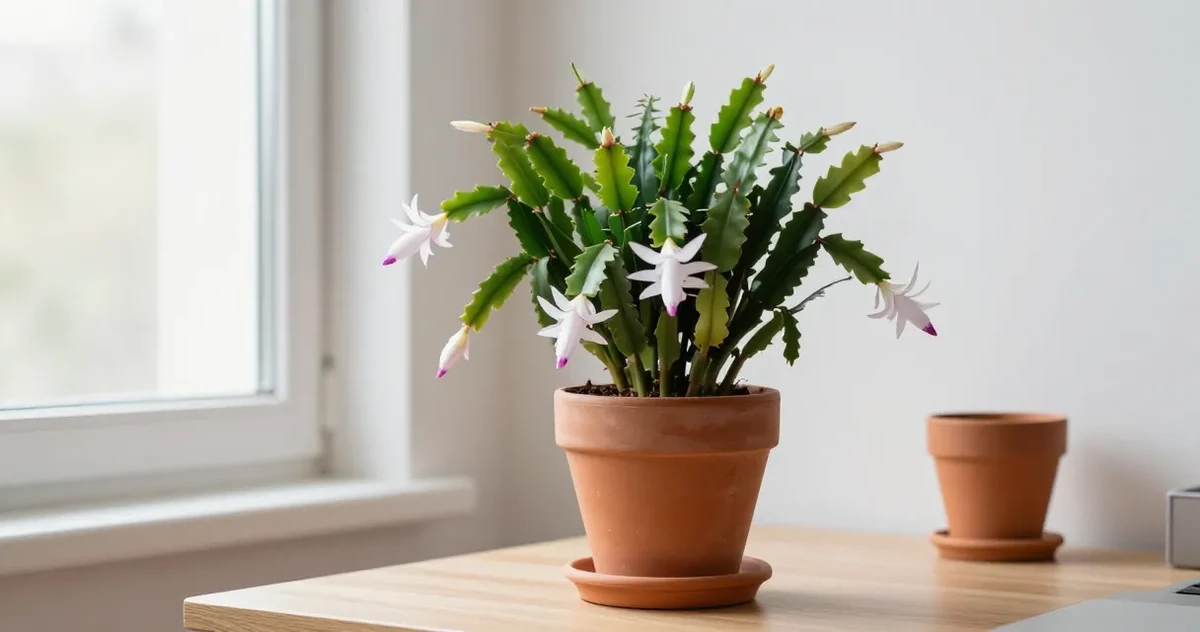
If your Christmas cactus is dropping buds before they open, or you have been treating it like a succulent and wondering why it looks unhappy, the problem almost always starts with a single misconception: this plant is not a desert cactus. If you need a contrast point for true dry-soil plants, our succulent care guide shows the very different watering rhythm that holiday cacti do not want.
Christmas cactus care becomes a lot easier once you understand what it actually is: a tropical epiphyte from the coastal rainforests of southeastern Brazil, where it grows wedged in the notches of trees under filtered canopy light, drawing moisture from humid air and organic debris. That one fact changes how you water it, where you place it, and how you get it to bloom again every year.
What Most Care Guides Miss
Search for “christmas cactus care” and you will find the same advice repeated everywhere: bright indirect light, light watering, and rebloom tips. That is not wrong, but it skips the part that actually helps when things go sideways.
The most common misdiagnosis is responding to bud drop or drooping segments by adjusting water, either more or less, without checking anything else first. Sometimes that fixes it. Often it makes things worse. What most guides miss is that bud drop and drooping each have multiple distinct causes, and the fix depends on which one is actually happening.
The practical first check before you change anything: ask whether the plant was moved recently, whether a heating or cooling vent is nearby, and whether the room it sits in goes fully dark at night. Penn State Extension’s holiday cactus guidance documents saturated soil, drought stress, temperature extremes, and interrupted dark periods as separate, distinct causes of bud drop, meaning environmental shifts cause as many problems as watering mistakes do. Start there before reaching for the watering can.
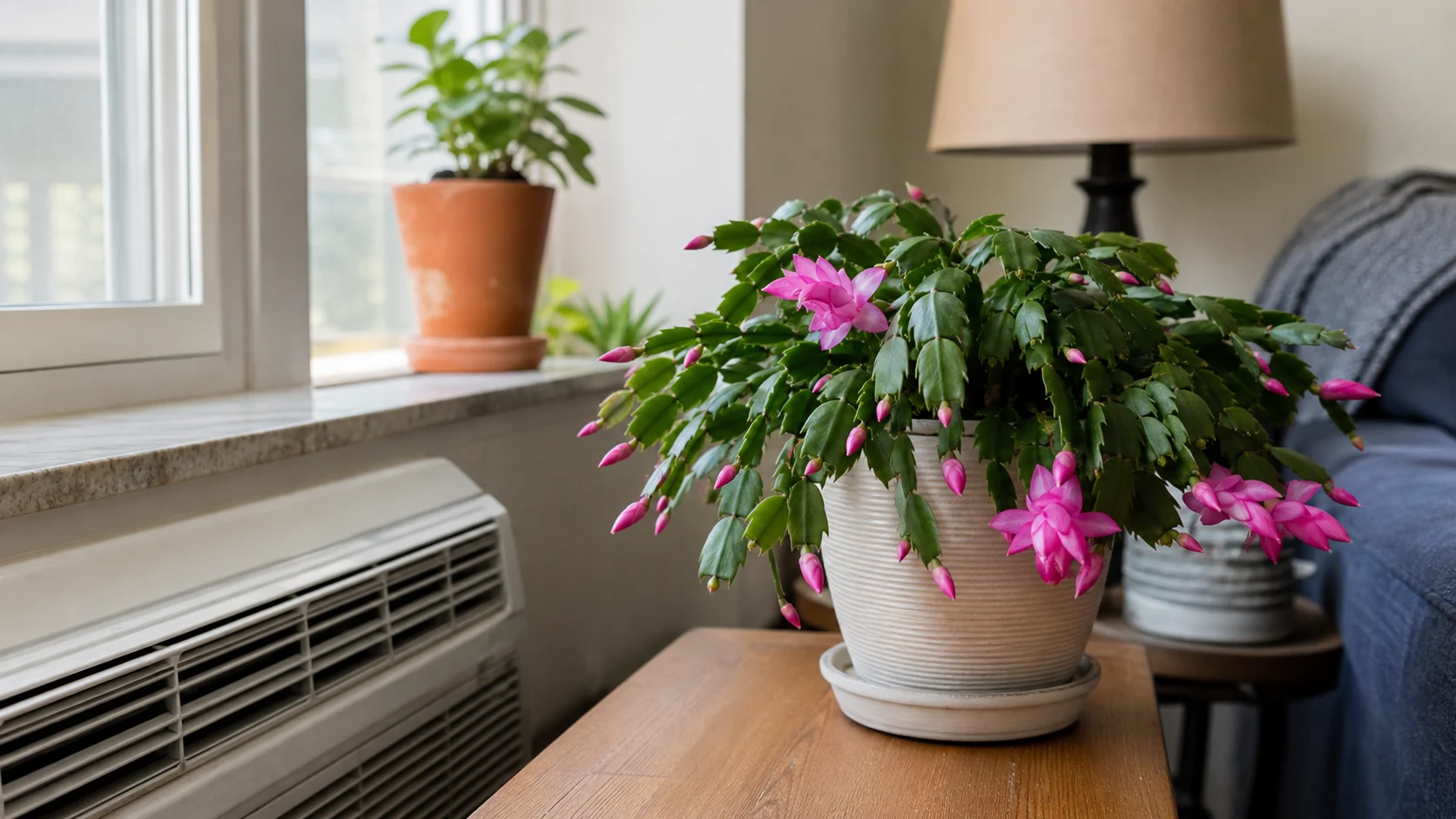
Check nearby light, lamps, drafts, and heating or cooling vents before changing the watering routine.
There is also a second thing most guides overlook: the plant you bought may not actually be a Christmas cactus, and that affects when your dark-period routine should begin.
Expert Note
Penn State Extension, Iowa State University Extension, and University of Illinois Extension all describe holiday cacti as tropical epiphytes rather than desert cacti. That source layer matters because it explains the care rules readers most often get wrong: these plants want an airy mix, thorough but not constant watering, bright indirect light, and a real autumn bloom trigger rather than harsh drought.
Identification Snapshot
According to Iowa State University Extension, most plants sold in stores under the “Christmas cactus” label are actually Thanksgiving cactus (Schlumbergera truncata) or hybrids, not true Christmas cactus (Schlumbergera bridgesii). Stores use the names interchangeably, which creates real confusion when bloom timing feels off.
Lookalikes and Confused-With: Thanksgiving Cactus vs Christmas Cactus
The easiest way to tell them apart is to look at the edges of the leaf segments:
| Feature | Thanksgiving Cactus | True Christmas Cactus |
|---|---|---|
| Segment edges | Pointed, claw-like teeth | Smooth, rounded scallops |
| Typical bloom window | Late October to November | December to January |
| Common in stores? | Very common | Rarer |
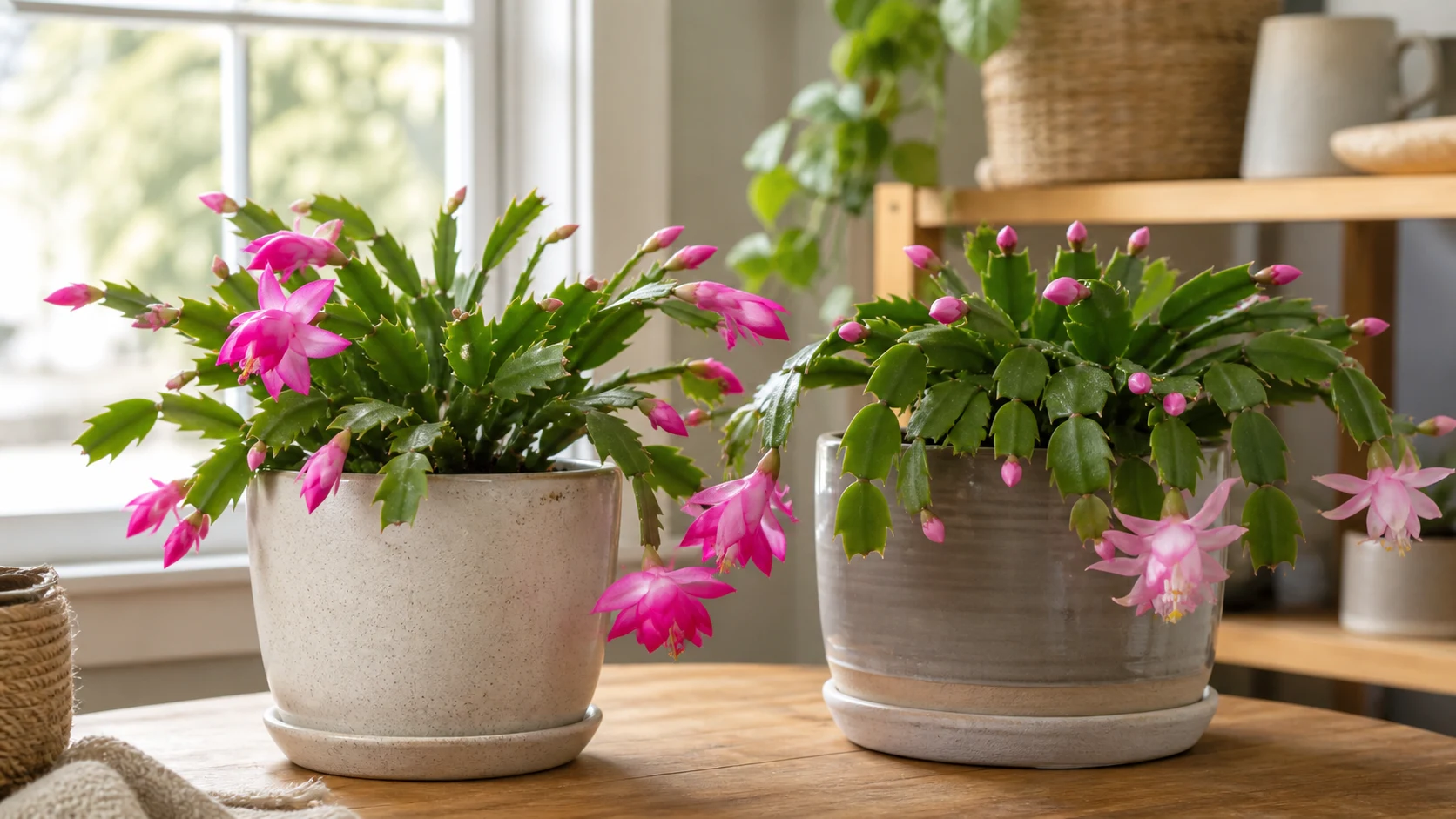
Pointed segment teeth suggest Thanksgiving cactus, while smooth rounded scallops suggest true Christmas cactus.
The care for both is essentially identical. What changes is timing: if your plant reliably flowers in November, it is almost certainly a Thanksgiving cactus, and your dark-period routine should begin in early September, a few weeks earlier than for a true Christmas cactus. Neither is better than the other. Knowing which one you have just means the rebloom advice in this guide will actually match your plant.
Care Cards
| Care card | What to do | What to avoid |
|---|---|---|
| Light | Bright indirect light near an east or north window | Hot direct afternoon sun on the segments |
| Water | Soak thoroughly, then wait until the top inch dries outside bloom season | Tiny sips on a schedule or standing water in a saucer |
| Soil | Use a loose, fast-draining mix with bark or perlite | Dense soil that stays wet for days |
| Bloom trigger | Give at least 12 hours of uninterrupted darkness with cool nights in autumn | Leaving the plant in a lamp-lit room every evening |
Where She Will Be Happy
Because this plant evolved under dappled rainforest canopy, not on a sun-baked hillside, she does best in bright indirect light. A north or east-facing window is a reliable starting spot. A south or west window can work too, but only if she is positioned back from the glass or the light is filtered through a sheer curtain, because direct afternoon sun bleaches segment tips and stresses the plant quickly.
What matters more for Christmas cactus than for most houseplants is what happens to the light in autumn. University of Illinois Extension states that holiday cacti require at least 12 hours of uninterrupted darkness per night for several consecutive weeks to initiate bud set. A room where evening lamps, a hallway light, or even porch light filters in can prevent bud formation entirely. A spare bedroom that genuinely goes dark, or a spot away from evening light sources, works much better during the six to eight weeks of bud initiation.
If your home is too bright year-round and you have struggled to get blooms, grow lights can supplement winter indoor light for the growing season, but the dark-period window in autumn still needs to be real darkness, not just dimmer.
“Holiday cacti are tropical epiphytes rather than desert cacti… [they] require at least 12 hours of uninterrupted darkness with cool temperatures to initiate blooms.” - University of Illinois Extension
How to Water a Plant That Is Not a Cactus
This is where most owners go wrong, because the word “cactus” in the name suggests letting it dry out completely between waterings. That approach causes problems here.
Penn State Extension advises watering holiday cacti thoroughly, then watering again when the growing medium has dried, but not leaving them bone-dry for extended periods. The right approach shifts with the season:
Spring and summer (active growth): Water when the top inch of growing medium feels dry when you push your finger in to the first knuckle. She handles brief dry spells better than she handles sitting in soggy mix for days at a time.
Autumn and winter (bud set and flowering): Keep the medium more evenly moist. Drought stress while buds are forming is one of the fastest ways to trigger drop, and this is not the time to skip waterings or let the pot go very light.
After flowering: Let the medium dry a bit more between waterings. This is her natural rest window, and backing off slightly helps her build energy for next year.
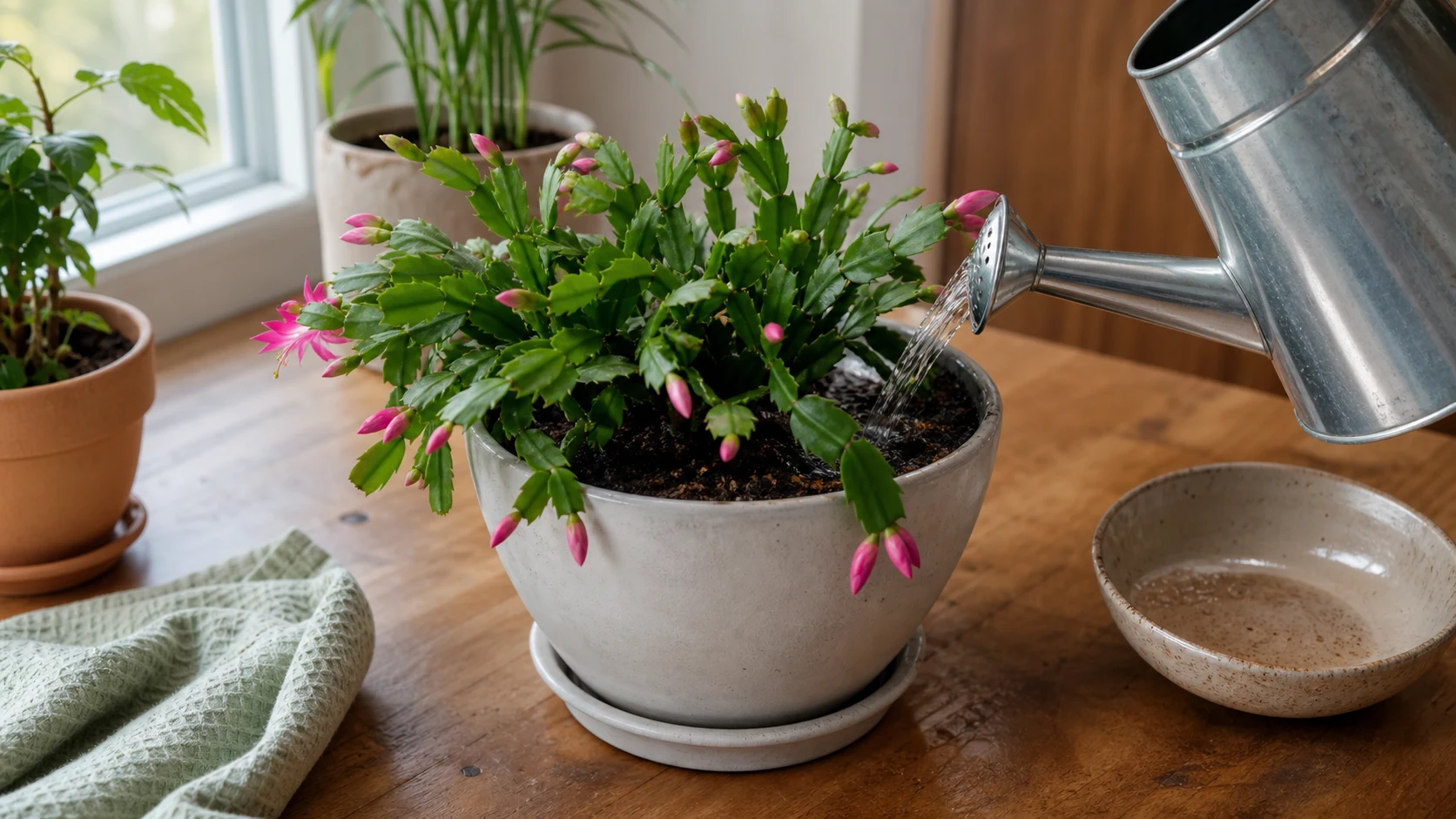
Water the growing medium thoroughly, let excess drain, and adjust the next watering to the season.
“Holiday cacti prefer bright indirect light, evenly moist soil while budding and flowering, [and] drying between waterings when not in flower.” - Iowa State University Extension
One practical note about hidden soil: Many Christmas cacti come in pots with decorative moss or bark topdressing that conceals the growing medium. If you cannot tell whether the root zone is wet or dry, gently move the topdressing aside or judge by the pot’s weight. A pot that feels noticeably lighter than a day ago has dried more than it appears. For a more complete breakdown of moisture cues across different pot sizes and soil types, our guide on how often to water indoor plants is a helpful companion.
Good drainage is non-negotiable. Roots sitting in water at the bottom of a pot will rot quietly, and you often won’t notice until segments start drooping or the stem base goes soft.
Common Problems
Two problems come up more than any others, and both are worth understanding before bloom season.
Symptom Diagnosis Card
| Symptom | Most likely cause | First thing to check |
|---|---|---|
| Buds falling before opening | Recent move, interrupted darkness, temperature swings, or moisture stress | Plant location, nighttime darkness, and current soil moisture |
| Limp segments with a firm crown | Thirst, heat stress, or a root ball that dried too far | Root-zone moisture and nearby vents |
| Limp segments with a soft or mushy base | Root rot from staying wet too long | Remove from pot and inspect roots immediately |
| Healthy plant that will not rebloom | Wrong plant ID, warm nights, or no dark-period trigger | Segment shape, bloom timing, and autumn light exposure |
Bud Drop Decision Tree
Penn State Extension confirms that bud drop has multiple environmental triggers, not just one. Work through this decision tree before you change anything:
- Was the plant moved recently? If yes, stop moving it and give it several stable days.
- Does the room go fully dark at night? If no, fix that first. Evening lamp light can interrupt bud set.
- Is the mix bone-dry or soggy? Correct the moisture extreme, then hold conditions steady.
- Is a vent, drafty window, or heat source nearby? If yes, move the plant away from temperature swings.
- Is direct afternoon sun hitting the buds? If yes, shift to bright indirect light.
If none of those apply, hold steady with consistent care for several days before making any change. Buds sometimes stabilize once conditions settle.
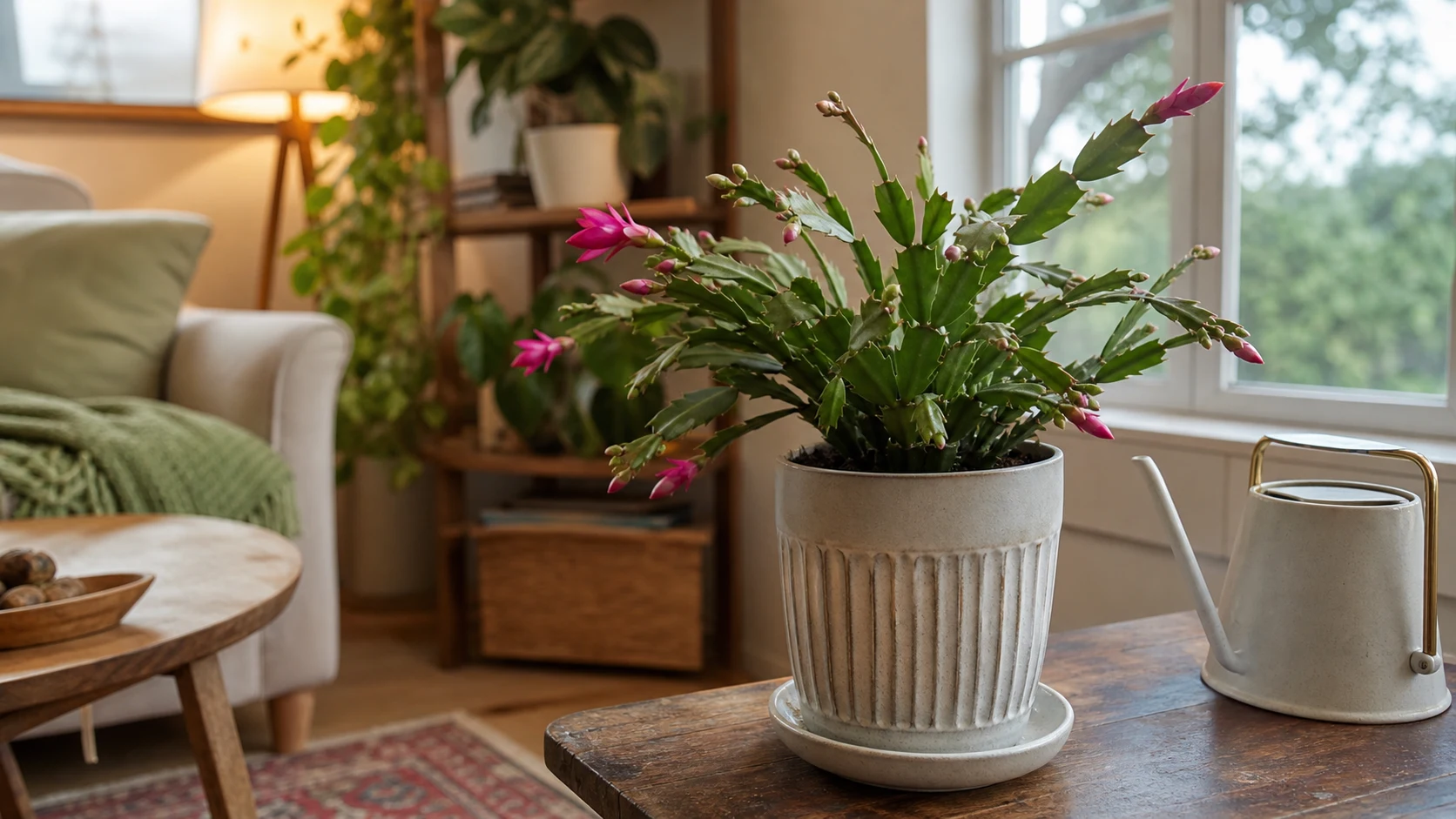
Before changing care, check recent moves, nighttime light, soil moisture, drafts, heat, and direct sun.
Drooping Segments
Drooping can mean two very different things. Mature plants naturally develop arching, pendulous stems as they get heavier, and that is normal growth, not a problem. But segments that feel limp, look slightly translucent, or have a soft or mushy stem base are a different situation.
| What you see | What it likely means | Next step |
|---|---|---|
| Stems arch, feel firm | Normal pendulous growth | No action needed |
| Limp segments, firm base | Underwatering or heat stress | Check moisture; move from vents |
| Limp segments, soft base | Root rot from overwatering | Unpot and inspect roots |
| Limp + pale or translucent | Root rot or severe dehydration | Unpot first; check roots |
A key distinction: overwatered holiday cacti often look like underwatered ones at first. If segments stay limp after you water, the roots are likely already damaged. Our root rot treatment guide covers what to look for when you unpot and how to judge whether the plant can recover. For a broader look at what overwatering looks like in practice across houseplants, our overwatered plant guide has the full picture.
Common Mistakes
- Watering by calendar instead of checking the root zone.
- Leaving decorative moss or bark in place when it hides whether the mix is still wet.
- Treating a holiday cactus like a desert cactus and letting it stay bone-dry during bud set.
- Moving the plant once buds appear, then chasing the damage with more watering.
Temperature and Humidity
She is comfortable in the same temperature range that feels comfortable to most people indoors: roughly 60 to 70F (15 to 21C) during the day. What she dislikes is sudden swings. Cold air from a drafty window in winter, hot air from a heating vent, or an exterior door that opens and closes frequently will all stress her.
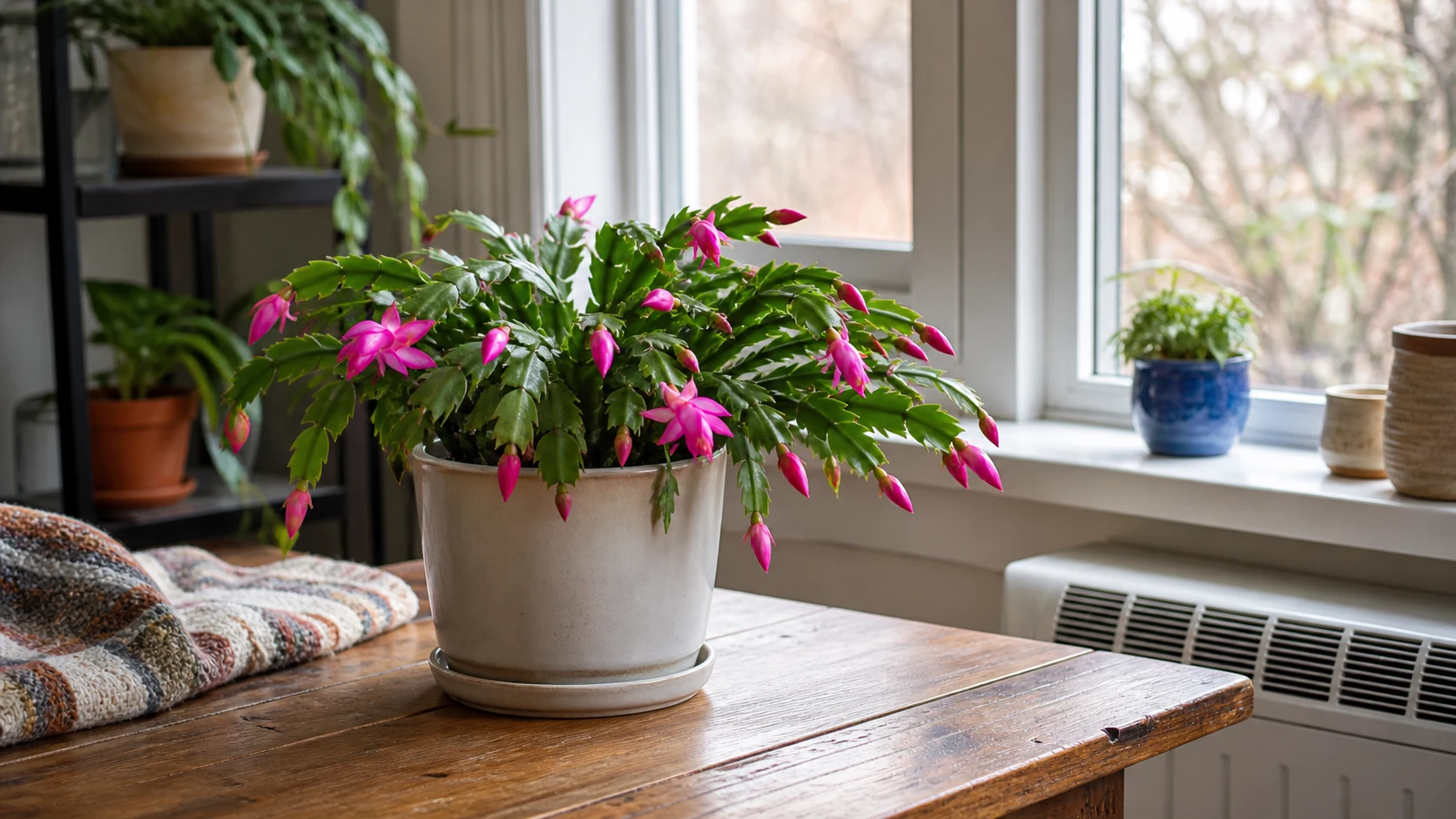
Keep holiday cacti away from winter window drafts, heating vents, and other sudden temperature changes.
For bud initiation in autumn, cool nights make a significant difference. Penn State Extension’s holiday cactus guidance references nighttime temperatures around 50 to 55F (10 to 13C) as ideal for bud set, paired with the long dark-period protocol. An unheated spare room, a cool basement with adequate daytime light, or a sheltered outdoor spot in mild climates during early autumn can give her the temperature cue she needs. If your home stays warm year-round, the darkness protocol becomes even more critical to compensate.
She is not a humidity fanatic the way ferns or orchids are, but she appreciates more moisture in the air than a dry heated room offers in winter. If you also grow epiphytes with similar bright-indirect-light preferences, our orchid care guide for indoor blooms covers the same humidity-versus-airflow balancing act from another angle. A tray of pebbles with water sitting beneath the pot provides a gentle humidity boost without the roots touching the water.
Seasonal Care Calendar
Christmas and Thanksgiving cactus have a clear annual rhythm. Working with it, rather than giving the same care year-round, is what separates plants that reliably rebloom from ones that just sit there.
Spring (March to May) - Recovery and new growth After the post-bloom rest, she will start pushing new segment growth as days lengthen. Resume watering when the top inch dries out. Begin monthly feeding with a diluted balanced fertilizer once you see active growth. This is a good time to repot if she has outgrown her container, using a mix with good drainage such as standard potting mix with added perlite.
Summer (June to August) - Active season This is her most active growing window. Water consistently, checking every few days. Continue monthly fertilizing. If your climate allows it, a summer outdoors in dappled shade, protected from direct afternoon sun and from temperatures below 50F at night, encourages robust growth that sets her up for a better bloom season. Stop fertilizing by late August so she can begin transitioning.
Autumn (September to November) - Bud initiation This is the most important window of the year for blooms. Beginning in early to mid September (earlier for Thanksgiving cactus, closer to late September for true Christmas cactus), move her to a location with at least 12 hours of uninterrupted darkness each night and nighttime temperatures around 50 to 55F. Maintain this for six to eight weeks. Keep watering, but let the medium dry slightly more than in summer. Once you see buds forming, move her to her display spot and resume consistent care.
Winter (December to February) - Bloom and rest Keep moisture consistent while she flowers, because drought stress now causes bud drop. Avoid moving her once buds are open. After blooms fade, reduce watering for four to six weeks. This rest period is genuinely useful: it lets her recover before the spring growth cycle begins again. Skip fertilizer until you see new growth in spring.
Pet Safety
The ASPCA lists Christmas cactus (Schlumbergera bridgesii) as non-toxic to dogs, cats, and horses, one of the reasons it is a popular choice for households with animals.
That said, “non-toxic” does not mean worry-free. Chewing on the segments can still cause stomach upset or vomiting in some animals, the way eating any unusual plant material sometimes does. If a pet keeps returning to the plant and showing GI symptoms, moving her to a higher shelf is a sensible step. For more options to build a pet-safe indoor garden, our guide to cat-safe indoor plants has a broader selection of flowering and foliage plants to choose from.
Getting Her to Bloom Again Next Year
She needs two things to set buds for winter: long dark nights and cool nighttime temperatures, beginning in late summer or early autumn.
Starting around September (earlier for Thanksgiving cactus, closer to late September for true Christmas cactus), move her to a spot that gets uninterrupted darkness for at least 12 hours each night, with nighttime temperatures ideally around 50 to 55F. Maintain this for six to eight weeks, reducing watering slightly but never letting the medium dry out completely.
Once buds appear, move her to her display spot, resume normal watering, and she should flower within four to eight weeks. After flowers fade, give her a short rest with reduced watering for four to six weeks, then resume regular care as she puts on new growth through spring and summer.
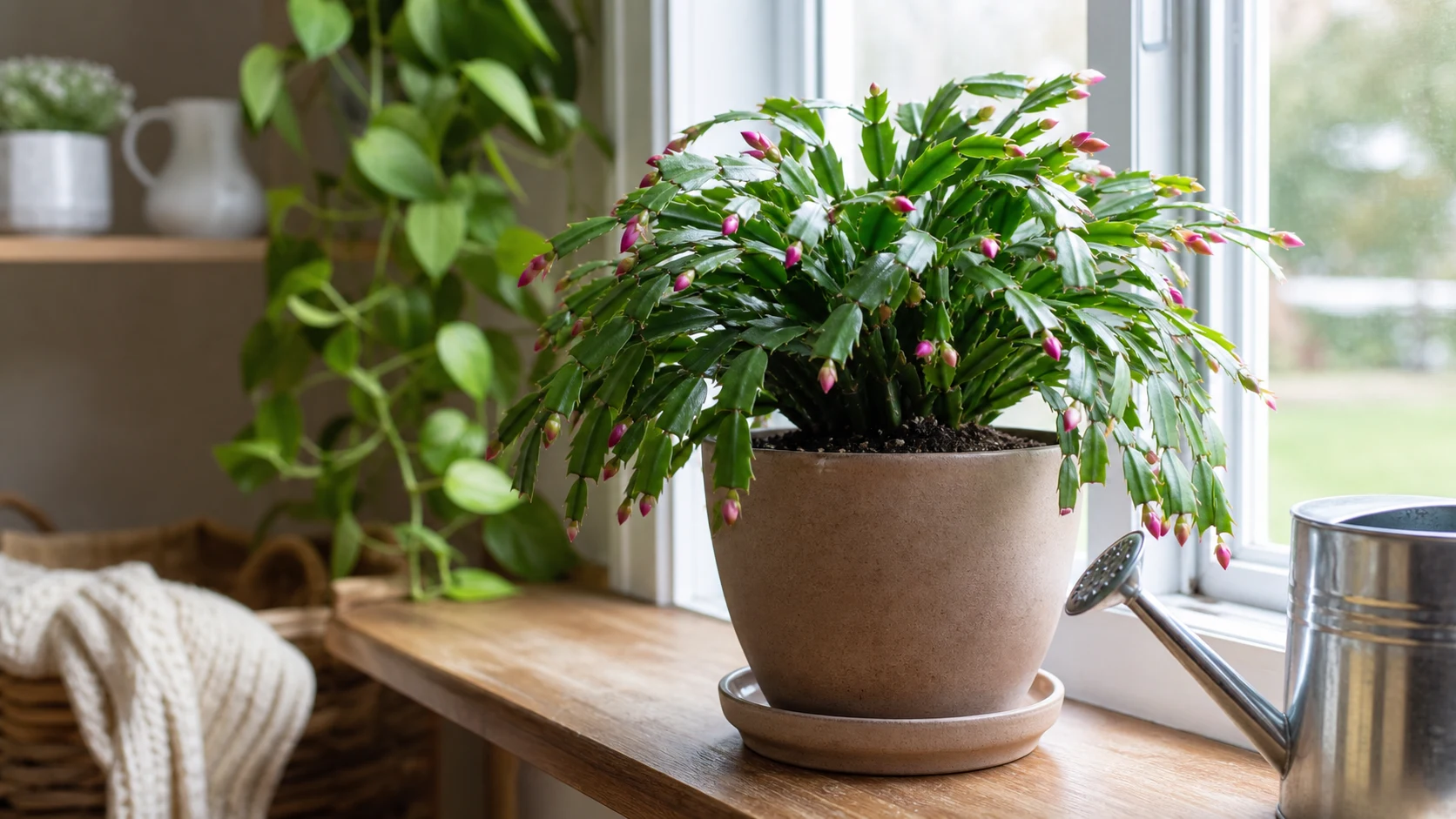
A dense set of new buds shows that the cool, uninterrupted autumn dark period has worked.
One thing worth knowing: Christmas and Thanksgiving cactus are genuinely long-lived houseplants. Well-cared-for plants that bloom reliably every year are common, and some have been passed through families for decades. The longevity comes from consistent seasonal routines, cool dark autumns, consistent moisture during bloom, and a genuine rest period after flowering.
For a related hands-on growing walkthrough, use Christmas Cactus Propagation: Root Healthy Segments Without Rot for the setup and follow-up care.
Freshness Note
Last updated: July 2026. Seasonal note: most garden-center plants labeled “Christmas cactus” are still Thanksgiving cactus or hybrids, so if your plant blooms in November, use the earlier autumn darkness schedule in this guide.
Real User FAQ
How often should I water my Christmas cactus?
There is no reliable single number of days because it depends on pot size, growing medium, season, and home temperature. The more useful method is the finger-check: push your finger into the medium to the first knuckle. Dry? Water thoroughly until it drains from the bottom. Still damp? Wait another day or two. During bud set and flowering, keep moisture more consistent; during the post-bloom rest period, let it dry a bit more between waterings.
Why are my Christmas cactus buds falling off?
Bud drop usually has an environmental trigger rather than a single watering mistake. Common causes include a recent move, a nearby heating or AC vent, a room that does not go fully dark at night, overwatering, underwatering during bud set, or direct sun exposure. Work through the decision tree in the diagnosis section above before changing care, and avoid moving the plant once buds are visible.
Is Christmas cactus toxic to cats and dogs?
No. The ASPCA lists Christmas cactus (Schlumbergera bridgesii) as non-toxic to dogs, cats, and horses. That said, chewing on the plant can still cause stomach upset in some animals. If a pet keeps getting into the plant and showing GI symptoms, moving it out of reach is a sensible step.
What is the difference between Christmas cactus and Thanksgiving cactus?
Check the stem-segment edges. Thanksgiving cactus has pointed, claw-like teeth; true Christmas cactus has smooth, rounded scallops. Thanksgiving cactus also blooms several weeks earlier, typically October through November, while true Christmas cactus flowers closer to December. Most plants sold in stores as “Christmas cactus” are actually Thanksgiving cactus or hybrids, according to Iowa State University Extension.
Why are my Christmas cactus segments drooping?
Mature plants naturally arch and hang as they get heavier, and that is normal growth. If segments feel limp rather than just arching, press the stem base near the soil: firm means the issue may be underwatering or heat stress; soft or mushy means root rot from overwatering is likely. Limp segments that do not recover after watering almost always point to root damage rather than a watering-frequency problem.
How do I get my Christmas cactus to bloom again?
Start the dark-period protocol in September (or earlier for Thanksgiving cactus). Place her somewhere that gets at least 12 hours of uninterrupted darkness each night, with nighttime temperatures around 50 to 55F. Maintain this for six to eight weeks. Once buds appear, move her to her display spot and resume regular care through flowering.
Can I move my Christmas cactus outside in summer?
Yes, with conditions. She can thrive outdoors in summer if temperatures stay above 50F at night and she is kept in dappled shade rather than direct sun. Outdoors she will typically grow more vigorously, which helps set her up for a better bloom season. Bring her back inside before temperatures drop in early autumn, and check carefully for pests before bringing her indoors.
Methodology Note
Care claims in this article were anchored to university extension sources: Penn State Extension (Holiday Cacti Care), Iowa State University Extension (All About Holiday Cacti), and University of Illinois Extension (How to Identify and Care for Holiday Cacti and Get Them to Rebloom), all reviewed July 2026. Pet-safety information comes from the ASPCA Toxic and Non-toxic Plants database (Christmas Cactus entry, accessed July 2026). Identification details and bloom-timing expectations were cross-referenced with hobbyist community discussion to reflect what owners actually encounter in stores and at home.